Kveik
Kveik is a name for traditional Norwegian farm-brewing yeast cultures, especially associated with western Norway. It refers to locally maintained cultures rather than one uniform strain or starter product.
 FermenteaWhere food goes to change
Equipment · Yeast culture carriers
A yeast ring (Norwegian gjærkrans) is an open wooden carrier that holds yeast from a previous brew while it dries for reuse. Lars Marius Garshol documented a linked-block ring in use at a farmhouse brewery in Vestbygda outside Voss.
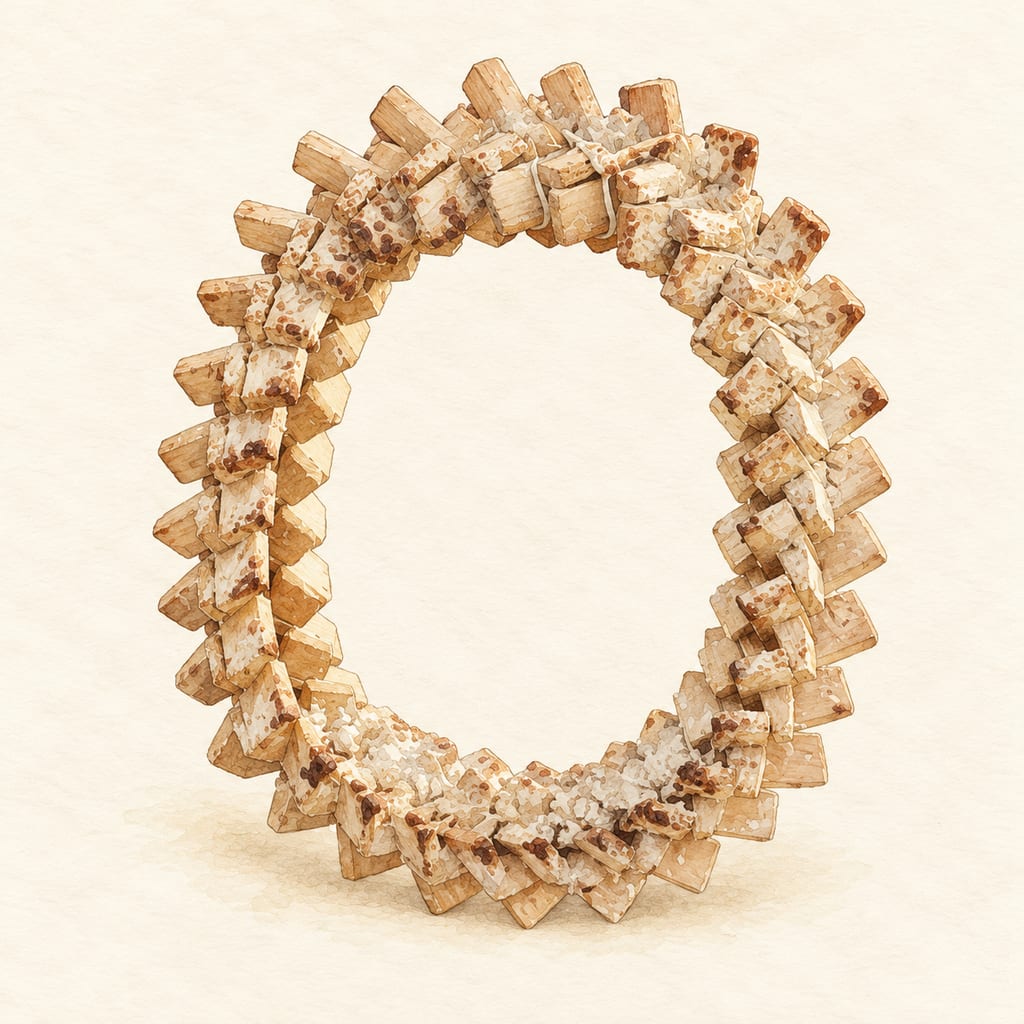
A yeast ring is an open loop made from linked wooden blocks, rather than a jar in which beer ferments. In Norway the name gjærkrans is used for this kind of yeast wreath. A field account by brewing historian Lars Marius Garshol describes the Voss example as an intricate wooden necklace. Its linked pieces make a large, irregular wooden surface that can be moved through yeast and hung up, leaving the culture on the wood as it dries.
The ring carries yeast between brews; it does not create yeast or make beer on its own. In Garshol's account, Sigmund Gjernes showed him the ring during a farmhouse brew in Vestbygda outside Voss. The same household also had a tightly closed glass jar of wet kveik in the refrigerator. The two methods coexisted there, so the ring should not be described as the only or universal way Norwegian brewers preserved yeast.
Garshol's later explanation gives the handling sequence: draw the ring through yeast, either surface foam or slurry, so yeast adheres; hang it until dry; then lower the ring into a little wort when it is time to reuse the culture. The Voss field account says the ring is hung somewhere until the next brew and reports the brewer's belief that dried yeast could remain usable for years. That duration is a reported possibility, not a guarantee for every ring or culture.
This method stores living culture on a solid carrier instead of keeping it as wet slurry. Its practical advantage in the source account is simple transfer and drying between batches. The sources do not specify the timber species, dimensions, block count, joining technique, or a standard cleaning process, so none is implied here. If mould appeared, the Voss brewer discarded that culture and asked a family member for fresh kveik.
The evidence attached to this entry is specific: Garshol observed the ring in a home brewery outside Voss in 2014, and later described how the same brewer used it. These accounts support a Voss example within Norwegian farmhouse brewing; they do not establish the ring's first historical appearance, a single construction pattern across Scandinavia, or an unbroken lineage from an earlier period. Wooden carriers and rings are also mentioned in wider farmhouse-brewing discussions, but their shapes and materials can differ.
Garshol's 2014 field account records a brewer in Vestbygda outside Voss showing him a traditional yeast ring. The archive describes the ring as linked wooden blocks and notes that the same household also kept wet yeast in a separate jar. This establishes a documented example by 2014, not when the form began.
The Voss brewer discarded yeast when mould appeared on the ring and obtained fresh culture from a family member; the source does not establish a cleaning method for a mouldy ring.
Source →A farmhouse brewer in Vestbygda outside Voss showed Garshol the ring; this is one documented example, not an exclusive-origin claim.
Kveik is a name for traditional Norwegian farm-brewing yeast cultures, especially associated with western Norway. It refers to locally maintained cultures rather than one uniform strain or starter product.
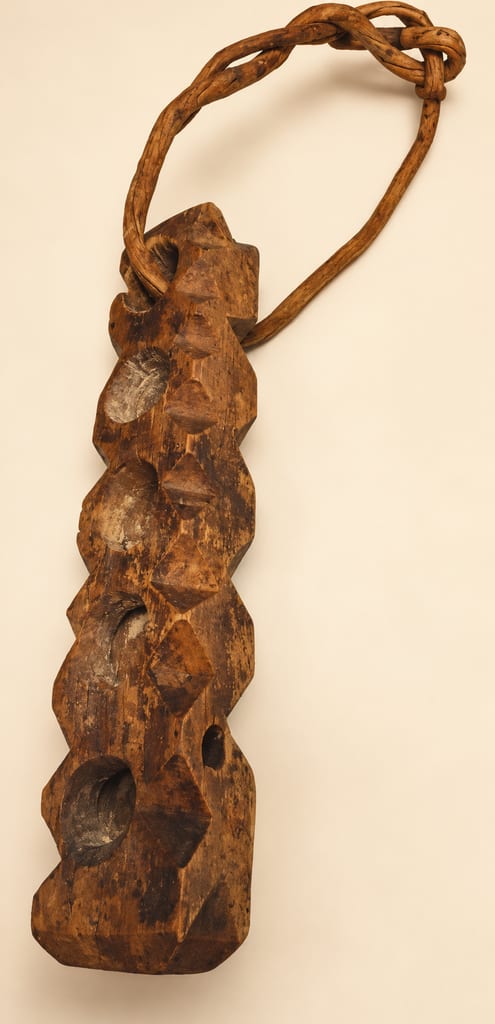
A carved wooden carrier used in Norwegian farmhouse brewing to dry and keep yeast-rich material between batches; its holes and hanging loop distinguish it from a linked wooden yeast ring.
Jars, barrels, skins, leaves, pits and whole rooms decide much of what happens to fermented and cured food. This is how a container works on its contents, and how people in different places chose theirs.
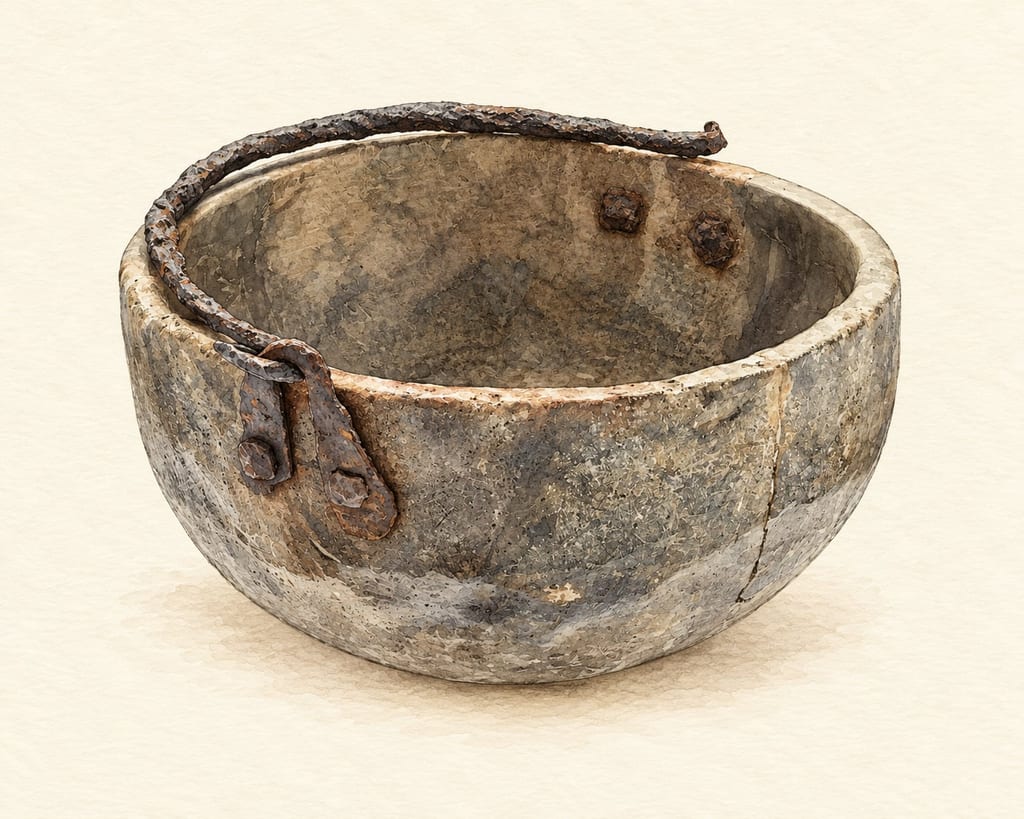
A Viking Age cooking pot carved from soapstone, exemplified by a partly reconstructed Birka grave find with iron handle fittings. Similar vessels were used across Scandinavia, but their forms and later handles changed over time.

Soft, spreadable Calabrian pork sausage made with a great deal of red chilli and fatty pork, stuffed into natural casings, sometimes smoked and matured while staying soft.

A way to add independent temperature logging to an existing food dehydrator without changing its built-in controls or protections. It is a monitoring method, not a rewiring plan.

Pleurotus cystidiosus is the abalone mushroom, a cultivated oyster-type fungus with dark brown caps that grows more slowly and is more demanding than other Pleurotus species.

A dark, balanced vinegar from Emilia-Romagna made by combining cooked or concentrated grape must with wine vinegar, then acetifying and refining it in wood under a protected specification.

A living dairy inoculum that starts controlled cream fermentation, developing acidity and aroma before sour cream or cultured butter is finished.

A small electric incubator holds jars at a selected temperature for yogurt and other documented warm food preparations. Controls, capacity and vessel arrangement vary by model.

Adygean salt is a seasoned table salt associated with Adygea and the wider North Caucasian culinary tradition. Salt is blended with garlic and a variable selection of herbs and spices; the exact mix depends on the named style and maker.

The African Caesar-group mushroom, Amanita masasiensis, is a wild ectomycorrhizal species of central and southern African woodlands, eaten locally. The genus contains deadly poisonous species, so identification needs care.
No community contributions have been published for this entry yet.
Sign in to contribute. Published comments and photos are free to read.
LarsblogHistory · Form · Use · Geography
Brewing with kveikA brewer in Vestbygda outside Voss showed Garshol a traditional wooden yeast ring in a 2014 farmhouse-brewing field account.
The ring collected yeast from the top of the fermenter; the yeast dried on the wood and the ring was hung until the next brew.
The brewer also kept wet kveik in a separate glass jar.
The brewer discarded culture when mould appeared.
Cited in: A wooden carrier for saved yeast; Gathering, drying and reusing the culture; A documented regional example
LarsblogMethod · Use
When did people start reusing yeast?Garshol describes moving a ring through foam or slurry so yeast adheres, hanging it to dry, and dipping it into a little wort for reuse.
He also mentions cloth, wooden branches and straw rings as other culture-retention methods, showing preservation forms vary.
Cited in: Gathering, drying and reusing the culture; A documented regional example