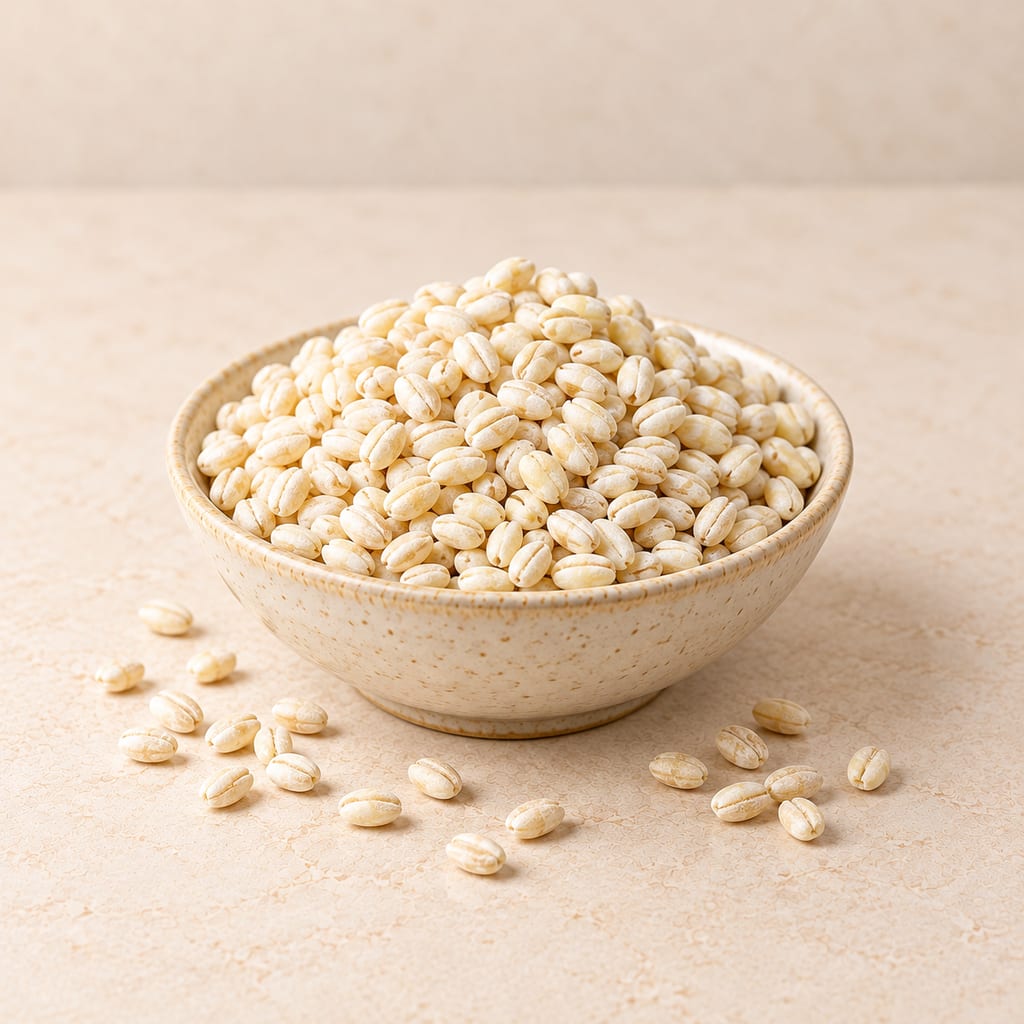
Barley
Barley is a hardy cereal, domesticated in the Middle East over 10,000 years ago, eaten whole, pearled or milled, malted for brewing, and grown with koji mold for barley miso.
 FermenteaWhere food goes to change
Equipment · Mills, mortars and crushers
quern · hand mill
A rotary quern is a hand-operated mill with a runner turning over a fixed bedstone to grind grain. Scandinavian household use of rotary querns increased around the beginning of the Viking Age.
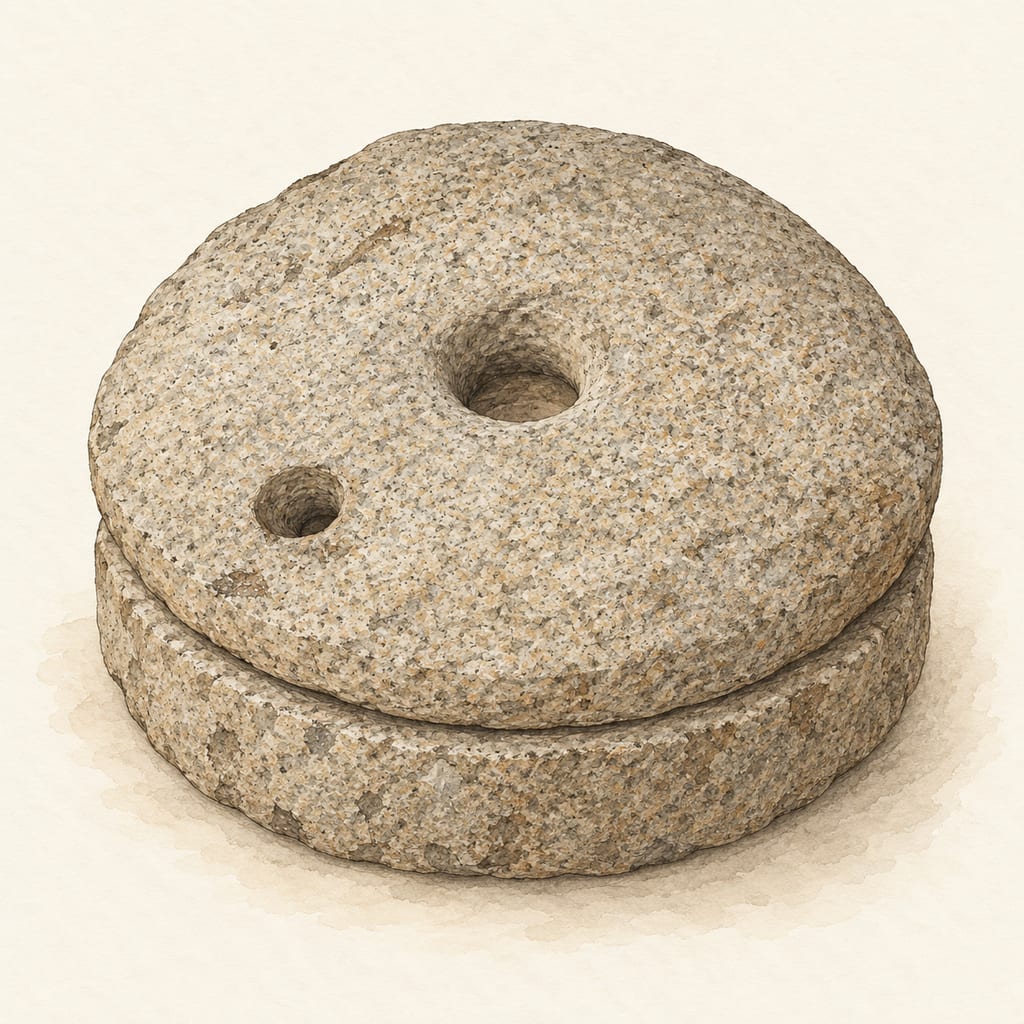
A rotary quern grinds grain between two stones: a fixed lower bedstone and a runner above it that turns by hand. The Swedish History Museum describes the runner for object 44279_HST as moved by a rod placed in one of its holes. Its catalogued stone is dated 800–1100 and measures 450 mm across by 85 mm thick; these figures describe one archaeological stone, not a universal size.
The tool predates the Viking Age in Scandinavia. Irene Baug writes that rotary querns became part of daily household routines around the beginning of the Viking Age, approximately AD 700–800. Households generally kept grain unground and milled only what they needed for current meals, so grinding was a repeated chore rather than a one-time conversion of the entire harvest.
The runner rests on the bedstone. Grain is fed between the stones and crushed as the upper part revolves; this continuous rotary action distinguishes the quern from a saddle quern worked back and forth. A surviving runner may preserve its central opening and turning socket even when the paired lower stone is absent. The National Museums Scotland collection, for example, catalogs an upper stone from Freswick Links in Caithness, while the Swedish History Museum describes a two-stone set from Småland.
These museum records document specific finds and should not be treated as a kit specification. The Swedish stone is circular and has a central opening plus a smaller off-centre rod hole; the Scotland entry describes a flat oval upper stone. The archaeological record therefore cautions against assuming that every Viking-period quern had an identical outline or handle arrangement.
Baug describes regional differences in stone and supply. Garnet mica schist was common in Norwegian quernstones, and Hyllestad quarrying may reach back to the 800s; large-scale distribution is documented from the second half of the 900s. Finds from Hyllestad reached parts of Scandinavia and the North Atlantic, while other regions used different stone sources. A quarry's reach does not establish that every household bought its quern from that centre.
The quern let a household process stored grain as meals were needed, but the sources do not provide a single capacity, a full set of dimensions, or a standard care routine. Watermills later expanded milling beyond household demand, yet Baug notes that hand querns continued in use. This entry describes one tool family and documented examples, not a reconstructed universal Viking kitchen.
The Swedish History Museum records quernstone 44279_HST at this findspot; one object, not a regional standard.
Baug identifies Hyllestad as a quernstone production and distribution centre; this does not mean every quern was made there.
National Museums Scotland records an upper stone from this findspot; one archaeological example, not a region-wide type.
Barley is a hardy cereal, domesticated in the Middle East over 10,000 years ago, eaten whole, pearled or milled, malted for brewing, and grown with koji mold for barley miso.

Crushed or milled barley cooked in water until the starch softens and the mixture thickens, the plainest way a northern household turned stored grain into a meal, here with apple and hazelnut.
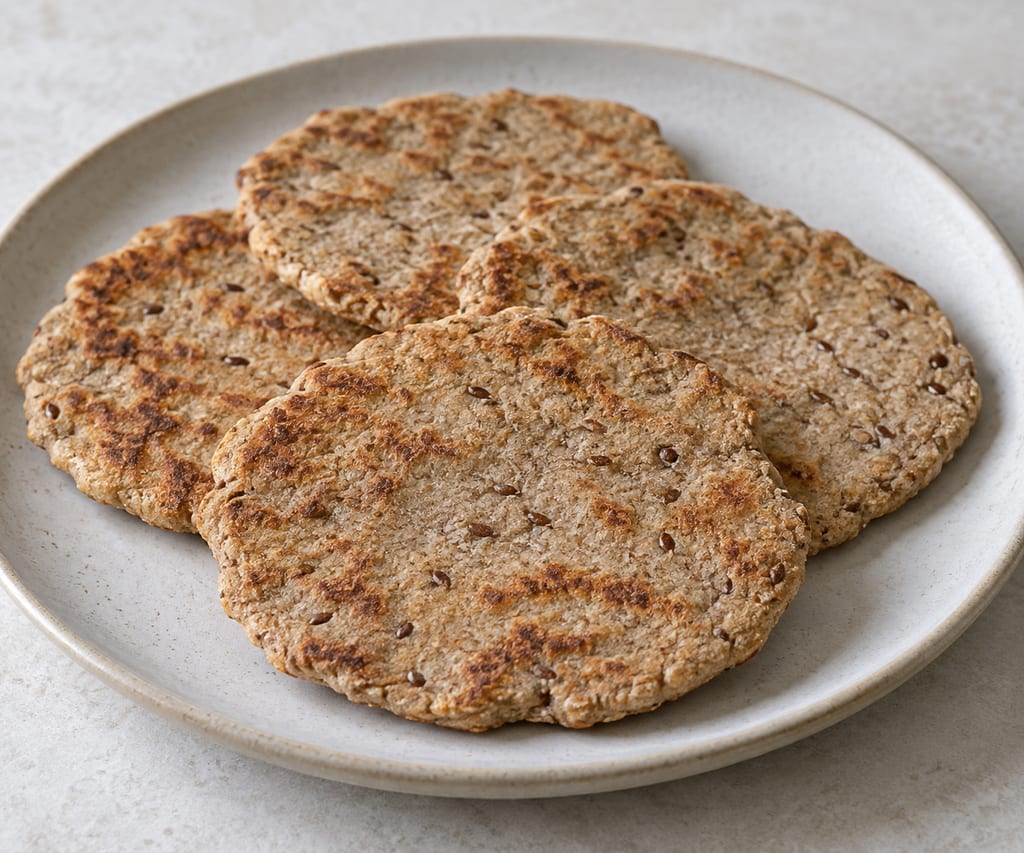
A small, dense cake of ground barley mixed with liquid and cooked against a hot surface, the form a low-gluten northern cereal takes when a household turns stored grain into bread.
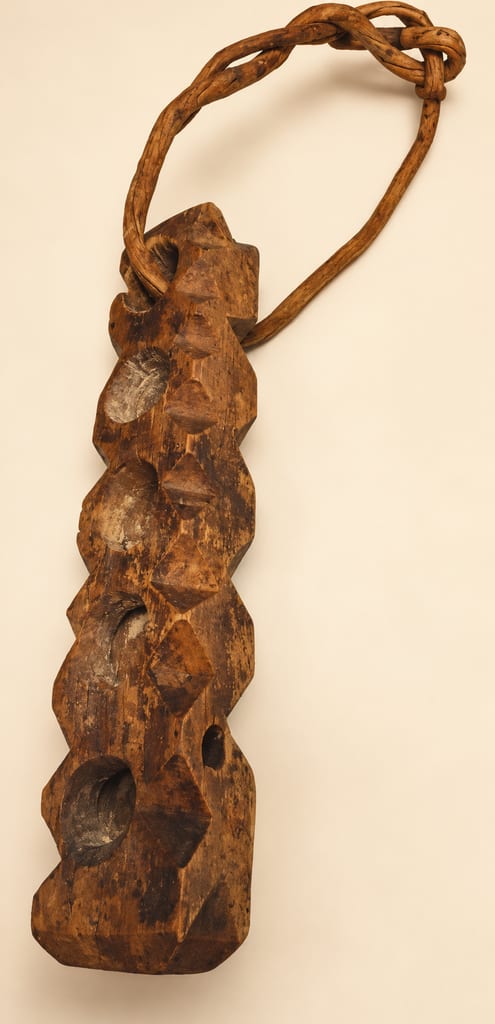
A carved wooden carrier used in Norwegian farmhouse brewing to dry and keep yeast-rich material between batches; its holes and hanging loop distinguish it from a linked wooden yeast ring.

Protected Italian vinegar made only from cooked grape must, fermented and aged in a battery of wooden barrels for at least 12 years: sweet, sharp and syrupy.
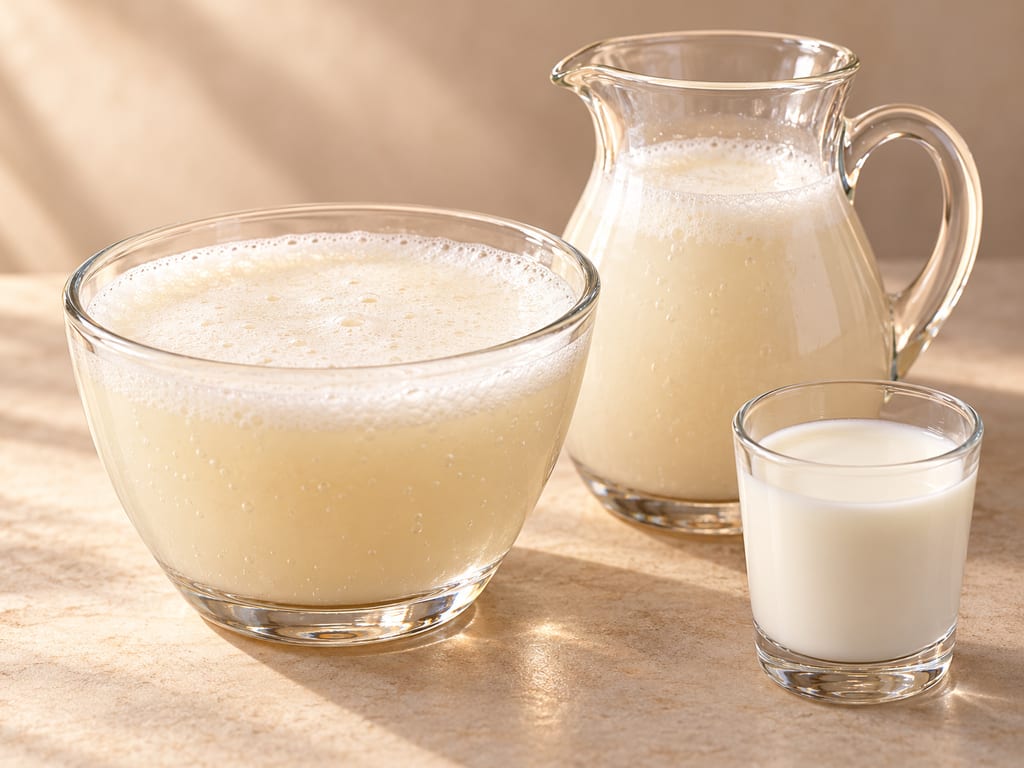
Airag is Mongolia’s fermented mare’s-milk drink, traditionally churned with saved starter in a reusable cowhide khokhuur.

Appam, or hoppers, are South Indian and Sri Lankan rice pancakes made from a fermented coconut-and-rice batter and cooked in a curved pan to a crisp lacy rim and a soft, spongy centre.
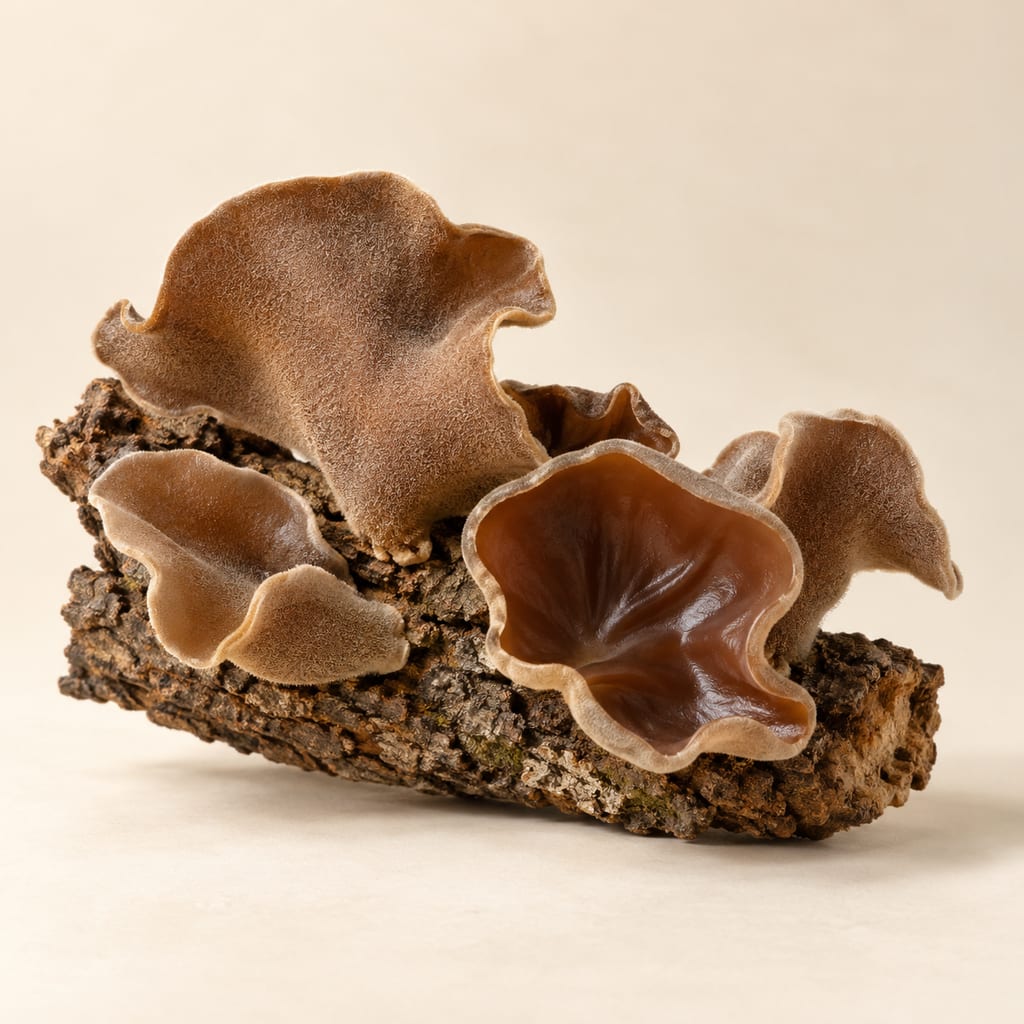
Auricularia tremellosa is a wood ear fungus of the genus that supplies most dried wood ear sold in China; its own food record is thin, and the culinary practice described here comes from the closely related wood ear species.

Ayran is Turkey’s cold, savoury yogurt drink: plain yogurt is loosened with water and lightly salted, then whisked smooth or aerated into a soft cap of foam.
A thin stone griddle used over an open hearth. Norwegian archaeology documents the established tradition from the early Middle Ages; a Viking-period origin is only a cautious suggestion linked to Shetland.
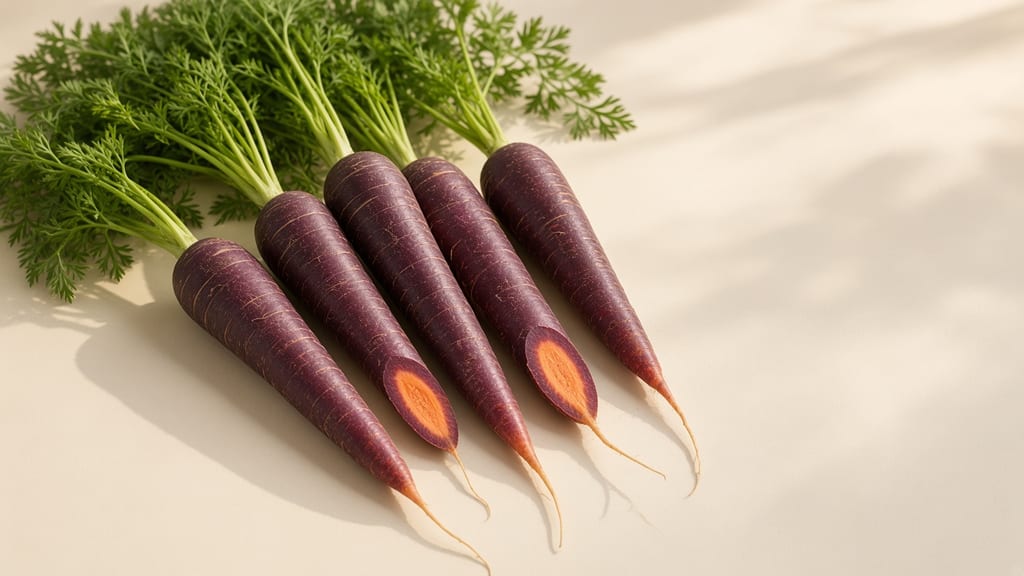
Black carrot is the anthocyanin-pigmented Eastern carrot (Daucus carota var. atrorubens), the purple root that preceded orange types and still colours kanji and şalgam.
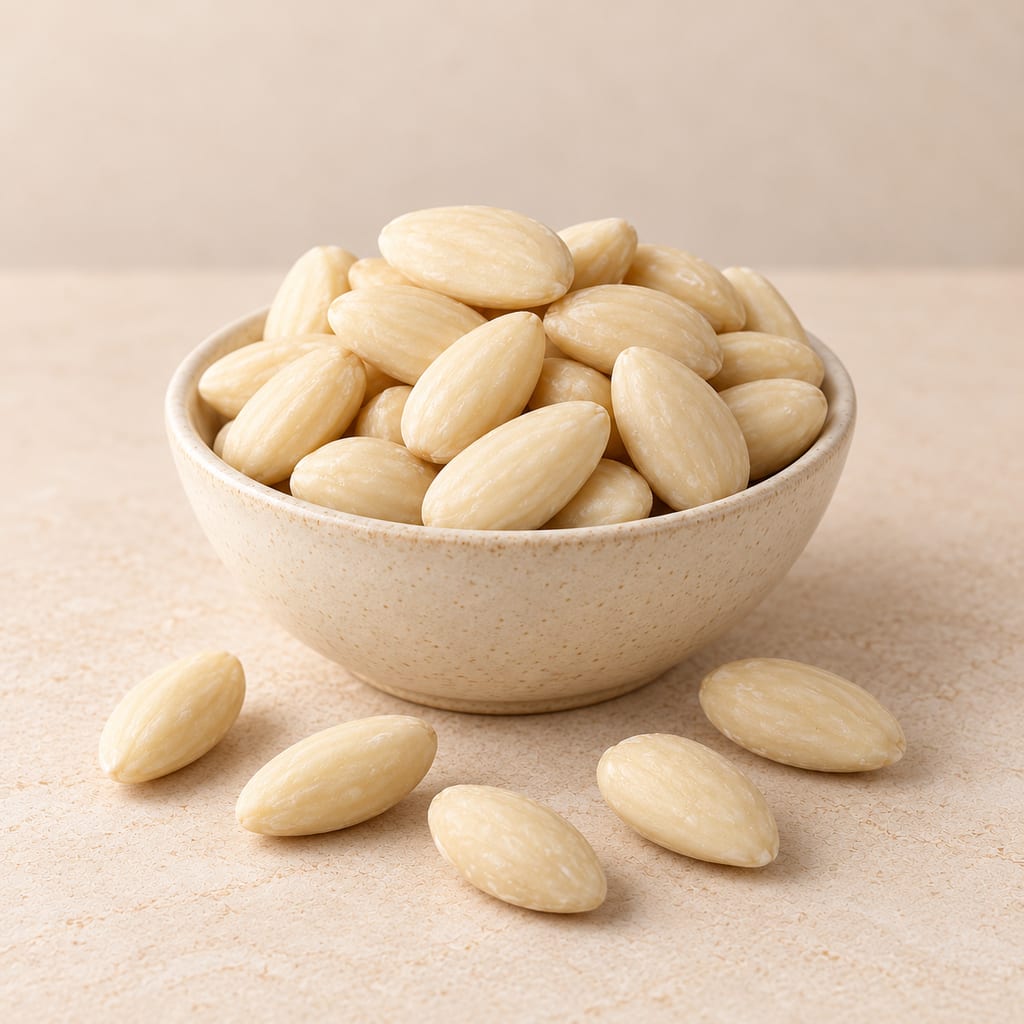
Blanched almonds are sweet almond kernels with the brown seed coat removed. A documented amla murabba cooks ten optional slivered kernels into the finishing syrup with spices and saffron.
No community contributions have been published for this entry yet.
Sign in to contribute. Published comments and photos are free to read.
The Swedish History Museum / Statens historiska museerForm · Dimensions · Geography · History
Kvarnsten (Rotary quern), object 44279_HSTThe museum dates the stone to 800–1100 and places its findspot at Odenslanda, Vederslöv Parish, Småland, Sweden.
The object record lists a stone 450 mm in diameter and 85 mm thick.
The museum describes a fixed bedstone and moving runner; a rod inserted in one of two runner holes turns it.
Cited in: A household mill in the Viking Age; Two stones and a turning motion
University of Bergen Archaeological Series (UBAS 8)History · Geography · Use · Materials
Stones for Bread: Regional Differences and Changes in Scandinavian Food Traditions Related to the Use of Quernstones, Bakestones and Soapstone Vessels c. AD 800–1500Baug reports that rotary querns became part of daily Scandinavian household routine around the beginning of the Viking Age, approximately AD 700–800, although rotary-quern use predates that period.
Grain was generally stored unground and household amounts were ground for current consumption, daily or several times a week.
Norwegian quernstone production at Hyllestad may date to the 800s, with wider distribution from the later 900s; Hyllestad stones reached Norway, Denmark, Sweden, Northern Germany, Iceland and the Faroes.
Stone sourcing and distribution varied regionally; garnet mica schist was common in Norway.
Cited in: A household mill in the Viking Age; Stone sources and household reach
National Museums ScotlandForm · Geography · History
Rotary quern / upper stone, X.IL 607The collection records a stone upper half of a rotary quern from Freswick Links, Caithness, dated to the Viking period, 800–1100.
The object description identifies it as a flat oval upper stone.
Cited in: Two stones and a turning motion; Stone sources and household reach
Wikimedia CommonsImage · Rights
Kvarnsten – Historiska museet – DIG 53886This photograph depicts the runner stone catalogued as SHM object 44279_HST.
The image is licensed CC BY 4.0 and is credited to Helena Bonnevier, Historiska museet / SHM.