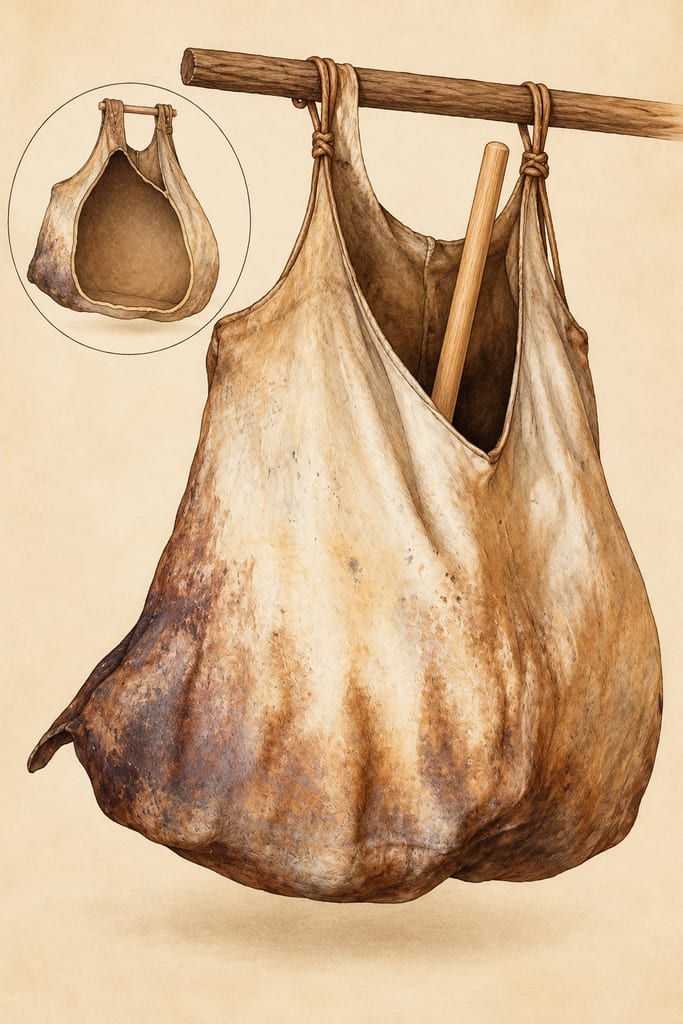
Khokhuur
The khokhuur is a traditional Mongolian airag vessel made from prepared cowhide. Its flexible leather body holds mare’s milk while it is churned with a separate wooden buluur paddle.
 FermenteaWhere food goes to change
airag · айраг
Airag is Mongolia’s fermented mare’s-milk drink, traditionally churned with saved starter in a reusable cowhide khokhuur.

Airag (айраг) is fermented mare’s milk associated with Mongolian pastoral life. UNESCO ties it to the khokhuur, a reusable cowhide vessel, a long-handled paddle, household skills and hospitality. A little ferment is retained to seed later milk, so airag belongs to a continuing household practice as much as to a single batch.
The gallery shows the working vessel and churning alongside airag served for drinking. These are different moments: the khokhuur is not the finished drink, and a serving bowl cannot tell us how a particular household fermented its milk.
William of Rubruck’s account of his 1253–1255 journey mentions cosmos, fermented mare’s milk, in Mongol settings. This is a dated written witness to the drink’s presence, not evidence of when it began or a modern recipe.
UNESCO inscribed the traditional khokhuur technique in 2019 and records family knowledge, equipment, daily use, celebrations and ritual offerings. Neither source is an origin story. Airag is historically attested and culturally continuous, while its beginnings remain unknown in the sources used here.
Mare’s milk is the principal material. Previously fermented airag serves as starter, carrying a mixed microbial community into fresh milk. Studies find lactic acid bacteria and yeasts, with composition varying by sample and conditions. Lactobacillus species are prominent in published investigations.
Lactic acid bacteria metabolize milk sugars and produce lactic acid, increasing acidity and contributing tang. Yeasts can produce ethanol and carbon dioxide from fermentable sugars. Together these activities help explain descriptions of airag as mildly alcoholic and sometimes lightly effervescent. The balance varies, so no generic recipe can promise a fixed sourness, aroma, alcohol content or amount of bubbles.
Saved airag is not necessarily a commercial defined culture. It carries forward a changing community from one batch to another. This makes the process continuous, but also means outcomes depend on starter condition and local handling. These sources describe a tradition; they do not establish a controlled home-fermentation protocol.
UNESCO describes fresh mare’s milk cooled and added to a khokhuur that already contains starter. The maker repeatedly churns it with a buluur, a wooden paddle; the account describes more than five hundred strokes. The motion mixes new milk with retained ferment. The khovoo is another named implement in the associated equipment.
That stroke count belongs to this description. It is not a universal threshold, a fermentation guarantee or a substitute for conditions the source does not specify. The account is cultural documentation, not a validated safety recipe with measured temperature, acidity or endpoint controls.
Airag is a beverage rather than a set curd. It is served for drinking; scientific papers report acidification and, in some samples, alcohol production. Exact sensory qualities cannot be promised from a tradition-wide description.
In three households studied in Mogod County, Bulgan, in 2024, researchers observed previous-day airag mixed with mare’s milk, stirring for roughly three hours, an overnight rest and reuse of leftover airag as starter. This reports those households and that research period, not a universal schedule.
A separate 2016 paper describes another practice with previously prepared airag and a hide bag, using a different starter proportion. The figures must stay attached to their respective studies: combining one paper’s ratio with another’s timing would invent a method. The 2024 container comparison also found that vessel material affected measured microbial outcomes. This shows equipment matters, but does not prove one container will produce the same result everywhere.
A 2014 survey found microbial diversity across samples from several Mongolian provinces. Variation is part of the evidence. Local milk, starter, vessel and handling shape the ferment; research snapshots do not represent every household.
UNESCO describes airag in household life, celebrations, offerings and ritual blessings. Making and serving link hospitality with knowledge passed through families. These roles cannot be captured by ingredients alone.
Rubruck’s account places cosmos among foods and drinks encountered in Mongol camps. Read with contemporary heritage documentation, it shows a long record of fermented mare’s milk while allowing for change in tools and practice. It does not prove that today’s method has remained unchanged for centuries.
The traditional and research sources describe fresh mare’s milk and household fermentation, but do not give a complete validated safety procedure for home production. Raw milk can contain harmful pathogens. Sour taste, bubbles, fermentation, vessel choice or appearance cannot demonstrate that a batch is safe.
This entry records the tradition and distinguishes published observations from tested controls. It does not prescribe raw-milk handling, a safe temperature, a reliable pH endpoint or a pasteurization adaptation. Food safety cannot be inferred from heritage descriptions or the studies cited here.
Scientific studies make the variability visible by sampling real products rather than defining a single ideal airag. The 2014 survey compared airag with other fermented dairy foods and collected products across Mongolia. A 2016 investigation characterized samples gathered in Ulaanbaatar and isolated bacteria and yeasts. The 2024 container study followed three households in one county. These projects ask different questions, use different sample sets and cannot be collapsed into one controlled recipe.
Microbial findings also describe populations, not a guarantee that every ferment contains the same organisms in the same proportions. The studies support the broad explanation of mixed lactic and yeast activity, but do not make a home batch predictable. This is why the narrative avoids promising a particular alcohol level, acidity, fermentation time or sensory endpoint.
The khokhuur is not decorative context. UNESCO’s account places it at the centre of the named technique: a prepared cowhide vessel holds the milk and retained starter while the maker works it with a paddle. Reuse connects one preparation with the next. The vessel is also a skilled object, alongside implements whose names and use form part of the inherited knowledge.
Modern research reinforces the need to treat equipment as part of the process. The 2024 study specifically compared containers and measured microbial differences. That finding does not rank all traditional and modern containers for every household, nor establish that a material alone determines quality. It does show why changing the vessel is not a neutral editing choice when describing a local practice.
Airag is a Mongolian name for this fermented mare’s-milk drink; Rubruck’s translated medieval account uses the form cosmos for a related drink encountered among Mongols. The spelling difference reflects the written record and language of transmission rather than a claim that all historical and contemporary preparations are identical.
Mongolia’s fermented dairy repertoire includes other products such as tarag and khoormog, which research sometimes samples alongside airag. These names should not be treated as interchangeable: the products use different milk sources or processes and occupy distinct places in the food landscape. Airag’s mare’s milk, mixed fermentation and churning in a khokhuur provide a specific identity.
In the documented khokhuur method, churning is a repeated, deliberate operation rather than a brief stir before the milk is left alone. The buluur moves through the vessel many times, bringing the fresh milk and retained ferment together. UNESCO records the intensity of this work as more than five hundred strokes in the described tradition. This detail communicates learned technique and labour; the source does not call it a measured microbiological endpoint.
The equipment and movement also help explain why descriptions of airag cannot be transferred unchanged to any vessel and any stirring schedule. The 2024 household study looked directly at containers and found that vessel type was associated with differences in observed microbial communities. It did not establish a universally superior material or a one-size-fits-all method. The sensible reading is that container and handling belong to the context of each practice.
Keeping starter from an earlier preparation gives the process a continuity that a packet culture would not represent. The retained airag carries microorganisms selected by the history of that household’s milk, vessel and repeated handling. UNESCO describes starter left in the khokhuur, while the 2024 household observations describe leftover previous-day product being used again. Both accounts support the importance of carry-over, though they do not establish that every household refreshes or stores starter in exactly the same way.
Carry-over also explains why a traditional practice is resistant to a short ingredient list. The written list can name milk and starter, but it cannot specify the character of a living community, the prior condition of the vessel or the accumulated knowledge of the maker. This is not a reason to romanticize or guarantee the outcome. It is a reason to describe the practice faithfully and to keep unknown conditions unknown.
The short method records only the sequence supported by the UNESCO heritage description: a vessel with retained starter, cooled fresh milk, repeated churning, and service as a drink. It does not interpolate a fermentation duration, a temperature range, a target acidity or a storage period. Those omissions are deliberate because the cited traditional account does not provide a universal set of measured values.
The research studies offer additional snapshots, including one group of households that stirred for hours and left the mixture overnight. That detail appears in the narrative as an observed practice, not as an instruction silently appended to the UNESCO method. The 2016 paper discusses yet another documented approach. Keeping these accounts separate lets a reader see variation without manufacturing a hybrid recipe.
UNESCO treats airag making as associated customs and knowledge, not simply a way to preserve milk. Its account connects preparation and serving with everyday life and with celebrations and ritual offerings. A reusable vessel, the labour of churning and starter carried forward all make the household an active participant in the ferment. The social function of offering the drink is therefore part of its history, not an optional garnish to a technical recipe.
Rubruck’s account is valuable because it records a traveller’s encounter with cosmos centuries before heritage documentation used today’s terminology. It should be read as a situated medieval account translated into English, with the limits of that genre in mind. It can establish that fermented mare’s milk figured in the settings he described; it cannot tell us what every household drank or prove an uninterrupted, unchanged chain of practice.
Each source has a different evidentiary job. The UNESCO listing describes a recognized heritage practice and its associated implements and customs. Rubruck offers a medieval traveller’s account, preserved in a later translation. Microbiome studies analyse sampled products with methods that answer questions about organisms or vessels. The CDC gives public-health advice about raw milk. No one source answers all these questions, and a scientific sample does not replace a community’s account of cultural meaning.
Keeping these forms of evidence distinct prevents two common mistakes: treating heritage description as a laboratory protocol, or treating one laboratory sample as the definitive version of a traditional food. The recipe fields state what UNESCO documents, while research gives examples of observed household practice and microbial mechanisms. Neither is presented as the sole valid airag.
A reader may notice that this preparation has no fixed volume of milk or starter and no promised number of hours. The sources are descriptive rather than a common production standard. UNESCO’s count of strokes is preserved as a reported detail, but no unreported batch size or duration is attached. Research observations are scoped to named samples and studies, not converted into universal directions.
This distinction matters for a food shaped by household knowledge and a mixed culture. A precise formula can look helpful while claiming evidence the sources do not provide. The record explains the materials, vessel, repeated churning, cultural use and broad microbial activity, but cannot promise a particular result or certify a safe home process.
William of Rubruck’s 1253–1255 account mentions cosmos in Mongol settings. This is a written attestation, not evidence of origin or an unchanged recipe. UNESCO inscribed the traditional technique in 2019.
Scaling: source batch only
Raw milk can carry foodborne pathogens.
Hazard sourceThe cited tradition and studies do not provide validated safety controls. Sourness, bubbles, smell or appearance cannot establish safety.
UNESCO documents the Mongolian tradition at country level; this does not claim a precise locality or origin.
The khokhuur is a traditional Mongolian airag vessel made from prepared cowhide. Its flexible leather body holds mare’s milk while it is churned with a separate wooden buluur paddle.
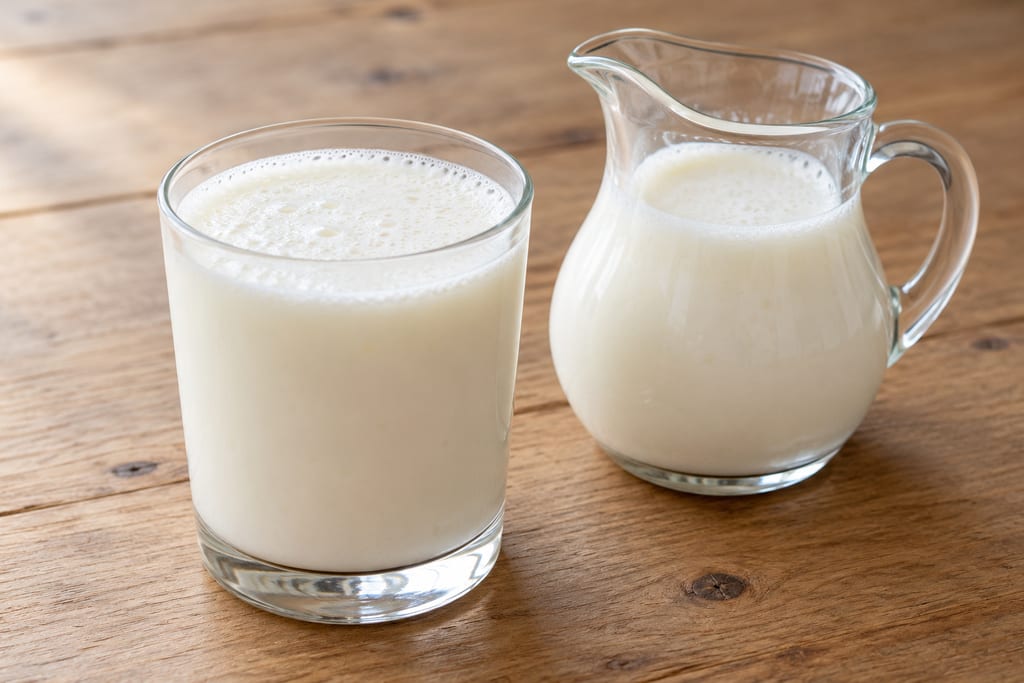
Khurunga is a traditional Buryat fermented milk made with a kept mixed bacteria-and-yeast starter, giving a sour, lightly alcoholic and often fizzy drink that is also the base for milk spirit and curds.
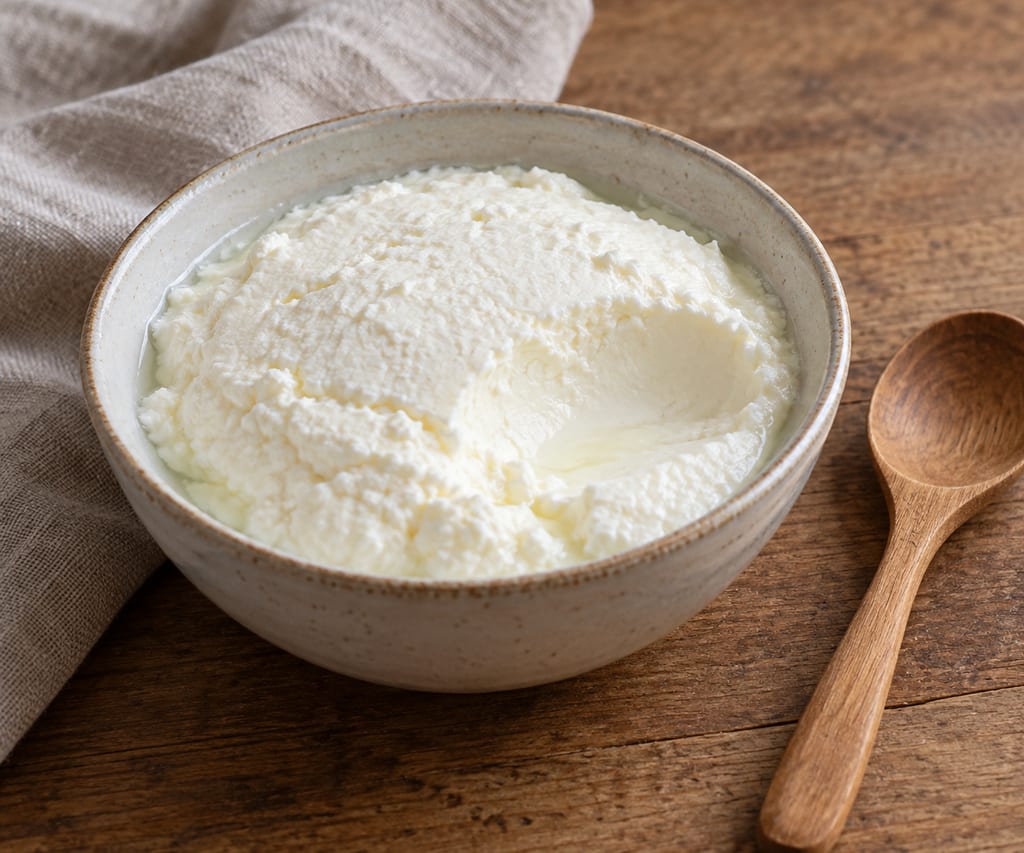
Tarag is a traditional Mongolian fermented milk made by culturing heated cow, yak, sheep or goat milk with a retained starter into a sour, softly set or drinkable yoghurt.
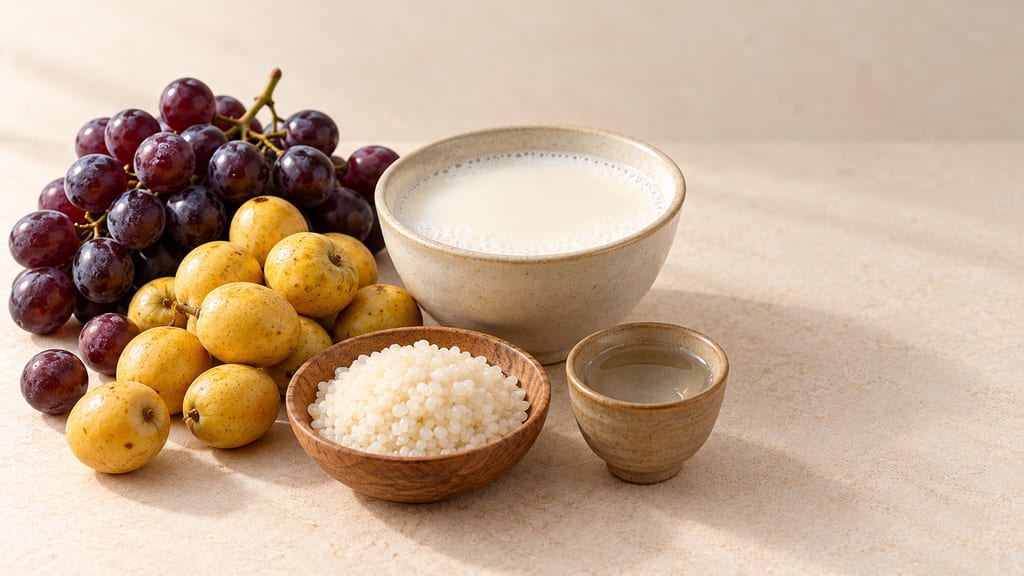
A marula harvest, a rice mash and a bowl of fermented mare’s milk reveal different ways to make alcohol, and different kinds of knowledge behind the drink.
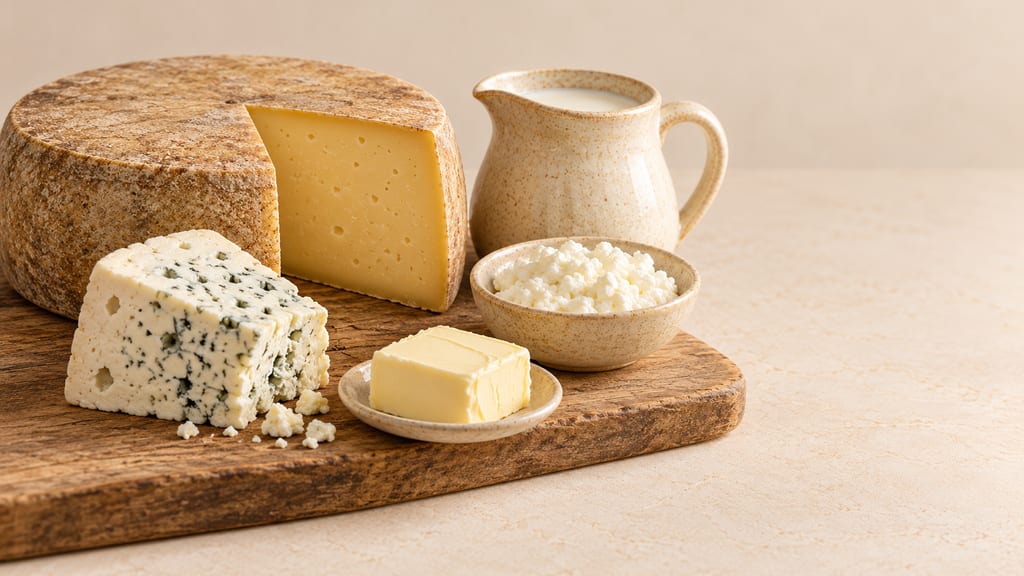
Follow milk into cheese, cultured drinks, butter, dried curds and sweets: a journey through the animals, seasons and household decisions behind the world's dairy foods.
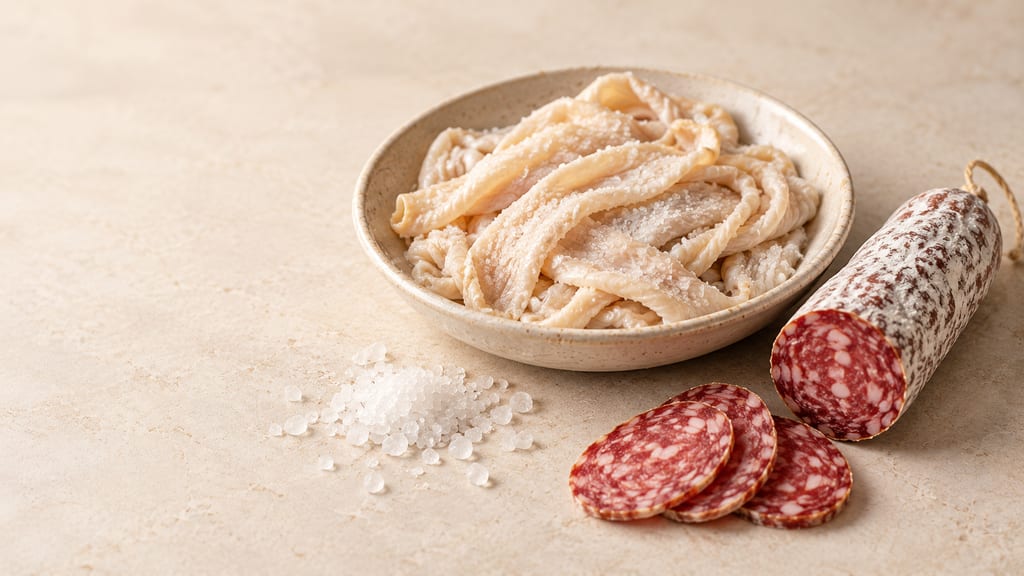
Gut, stomach, bladder, caul and skin have held food for as long as recipes have been written down. Which part of the animal a cook chose still decides a food's shape, how it dries and smokes, and how it is eaten.
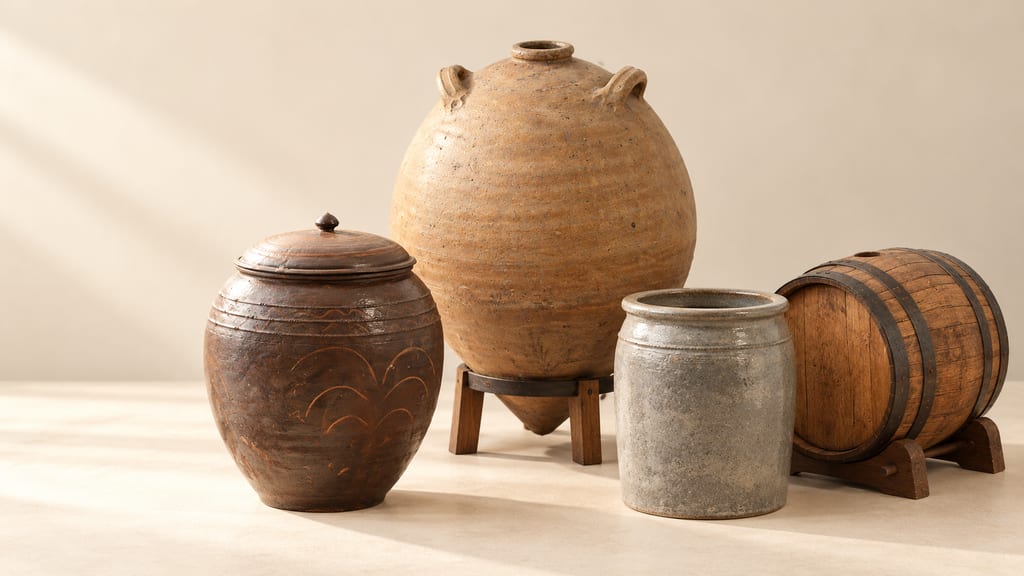
Jars, barrels, skins, leaves, pits and whole rooms decide much of what happens to fermented and cured food. This is how a container works on its contents, and how people in different places chose theirs.
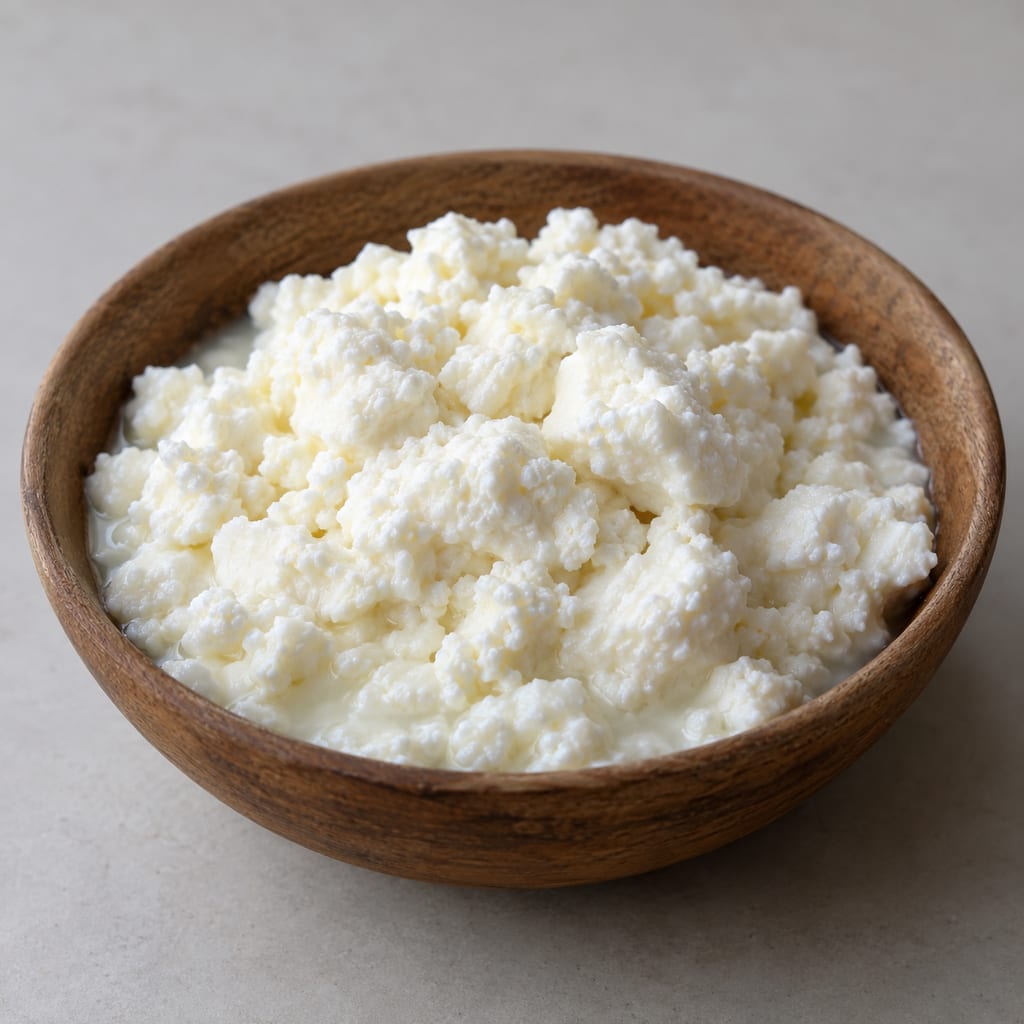
Aarts is a soft Mongolian curd made by draining boiled fermented yogurt; it remains wet, unlike aaruul, which is dried.

Firm Mongolian fried pastries made from an unyeasted wheat dough enriched with butter and sweetened with sugar; the dense dough is rested, cut or knotted, and fried until golden.
A Buryat milk spirit distilled from khurenge, the backslopped sour dairy ferment, in a cauldron still: a distillate that keeps milky and cheese-like aromas from the dairy it came from.

Mongolian pan-fried flatbreads made by folding sugar and oil through a simple wheat dough.

Ayran is Turkey’s cold, savoury yogurt drink: plain yogurt is loosened with water and lightly salted, then whisked smooth or aerated into a soft cap of foam.
A soft cheese made by setting aside part of the day's milk kefir, draining it in a cloth and salting it through the evening, ready the next morning.
Koumiss is a sour, lightly alcoholic mare-milk drink made by lactic bacteria and yeasts. This technical method uses pasteurized milk, a previous-batch starter and staged cooling.
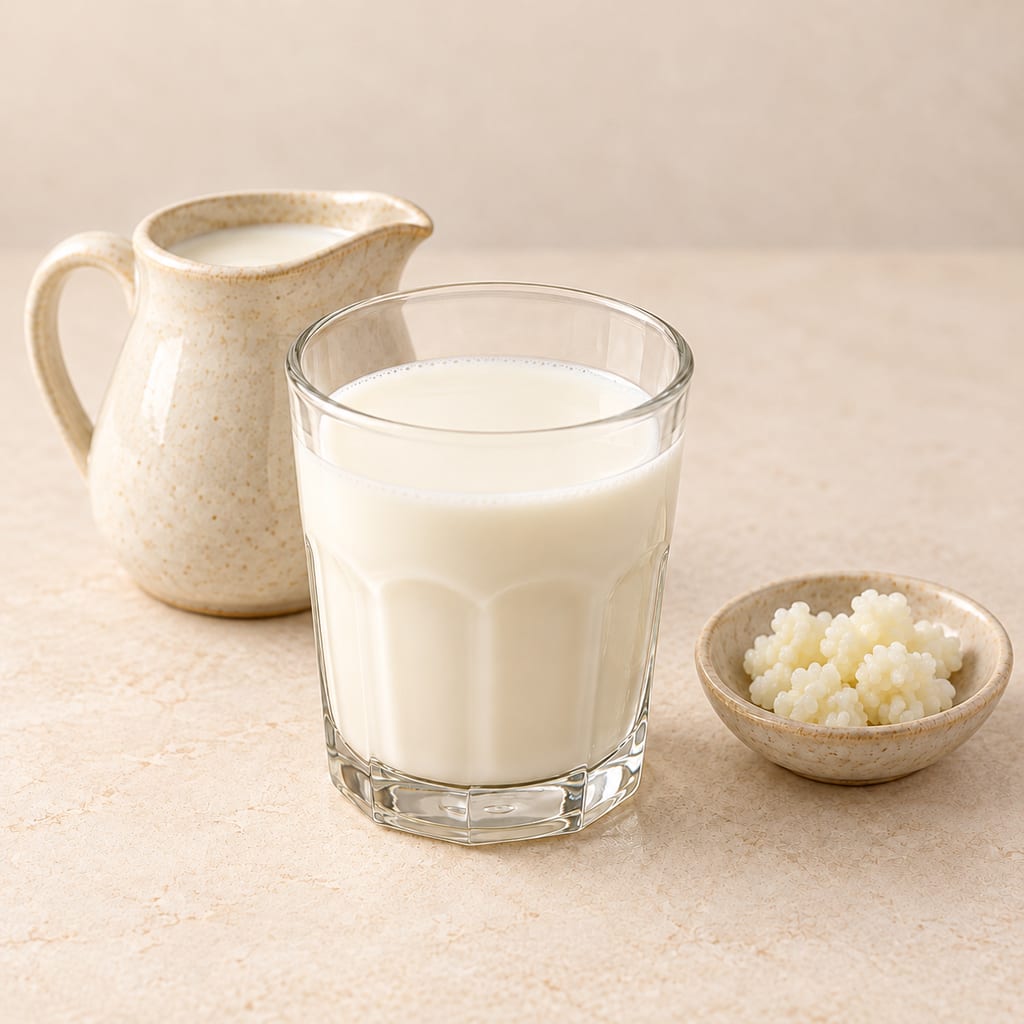
Milk kefir is a tangy fermented drink made with reusable grains of bacteria and yeasts. Grain fermentation can give the milk a light fizz and some alcohol.
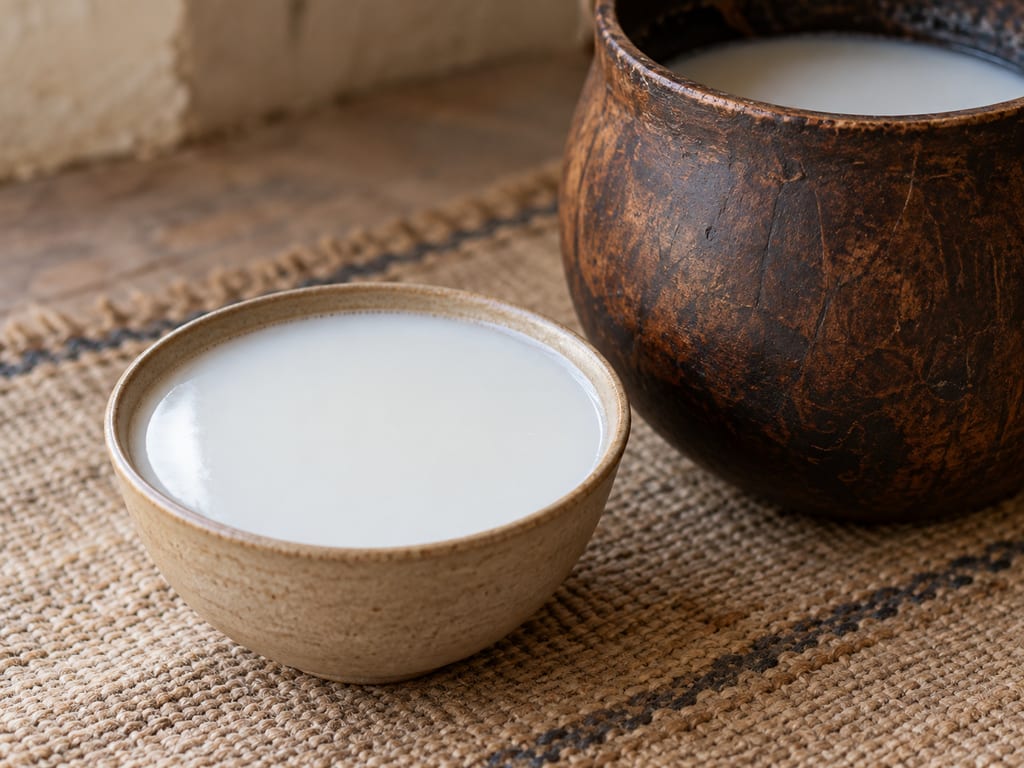
Suusac is a traditional fermented camel-milk drink of Somali pastoral communities in Kenya and Somalia, soured spontaneously in smoke-treated vessels into a thin, acid, smoky milk.
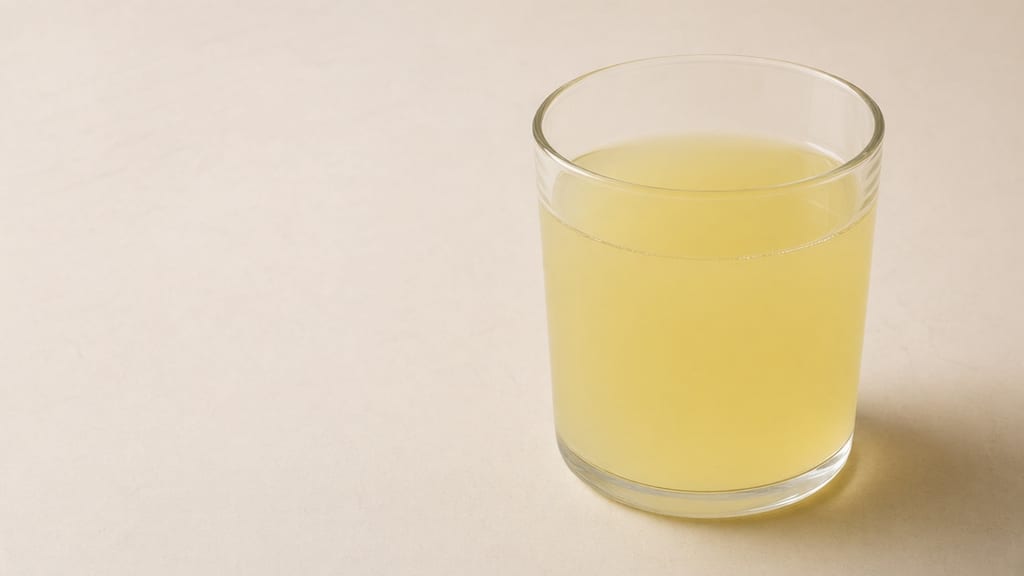
Sýra is Icelandic soured skyr whey kept as a household acid store: a drink when diluted, and historically the medium for súrmatur. Fresh leftover whey is not the same material.

Protected Italian vinegar made only from cooked grape must, fermented and aged in a battery of wooden barrels for at least 12 years: sweet, sharp and syrupy.

Appam, or hoppers, are South Indian and Sri Lankan rice pancakes made from a fermented coconut-and-rice batter and cooked in a curved pan to a crisp lacy rim and a soft, spongy centre.
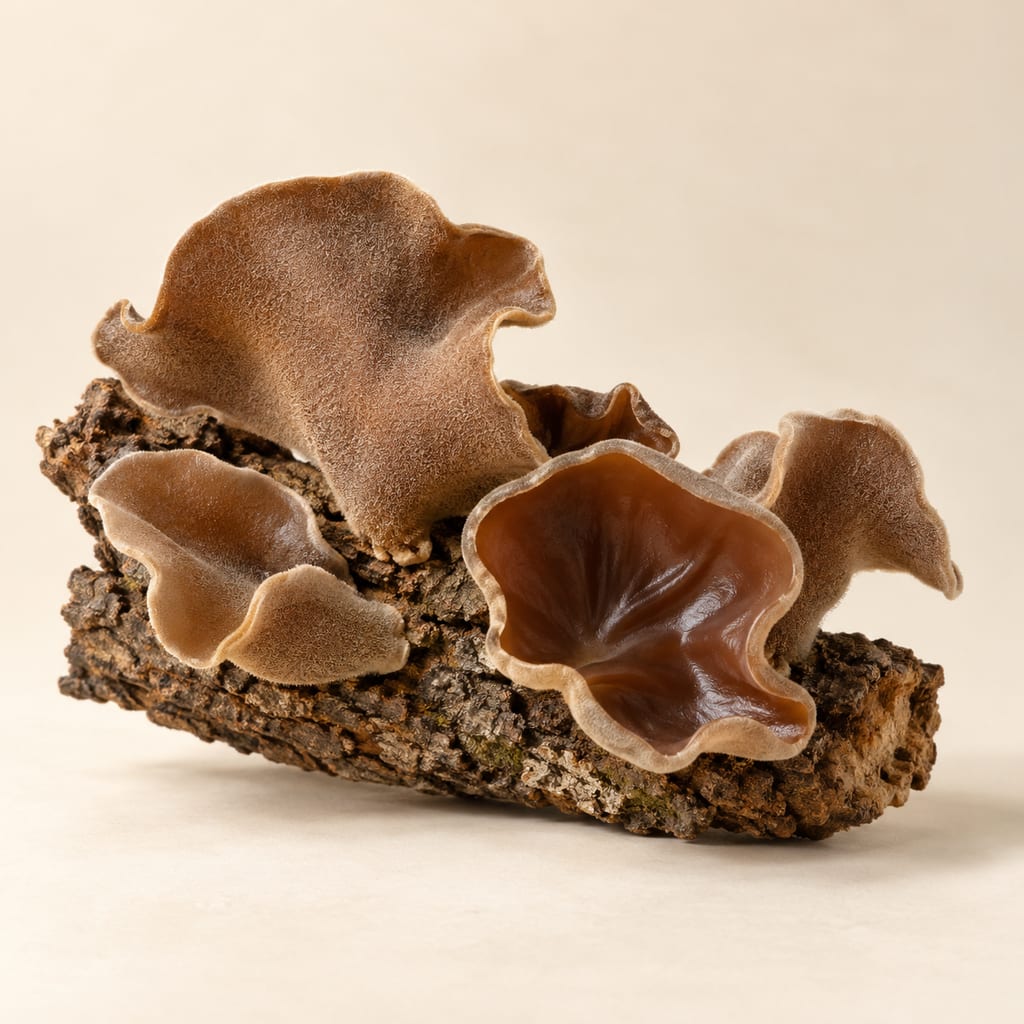
Auricularia tremellosa is a wood ear fungus of the genus that supplies most dried wood ear sold in China; its own food record is thin, and the culinary practice described here comes from the closely related wood ear species.
A thin stone griddle used over an open hearth. Norwegian archaeology documents the established tradition from the early Middle Ages; a Viking-period origin is only a cautious suggestion linked to Shetland.

Crushed or milled barley cooked in water until the starch softens and the mixture thickens, the plainest way a northern household turned stored grain into a meal, here with apple and hazelnut.
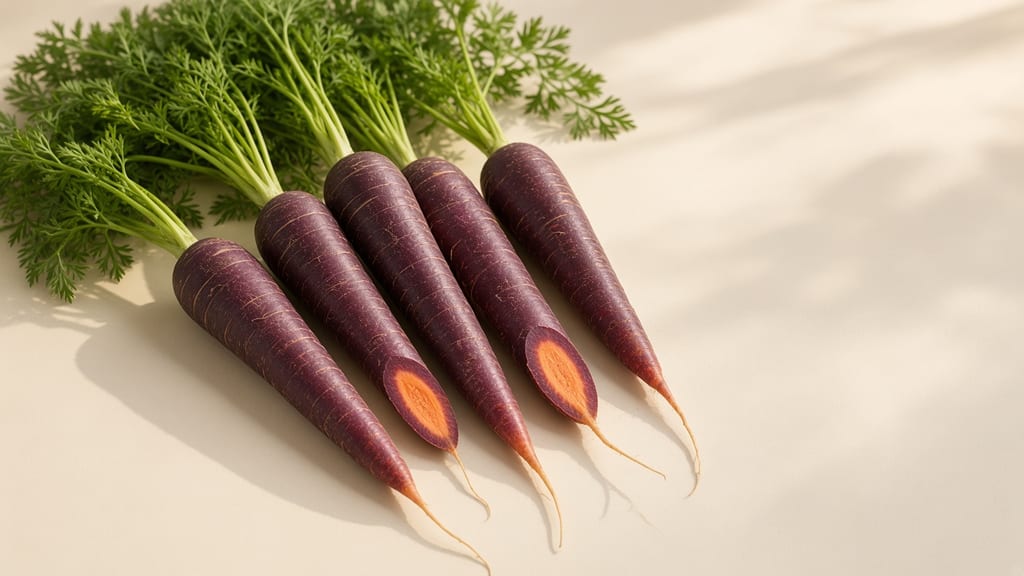
Black carrot is the anthocyanin-pigmented Eastern carrot (Daucus carota var. atrorubens), the purple root that preceded orange types and still colours kanji and şalgam.
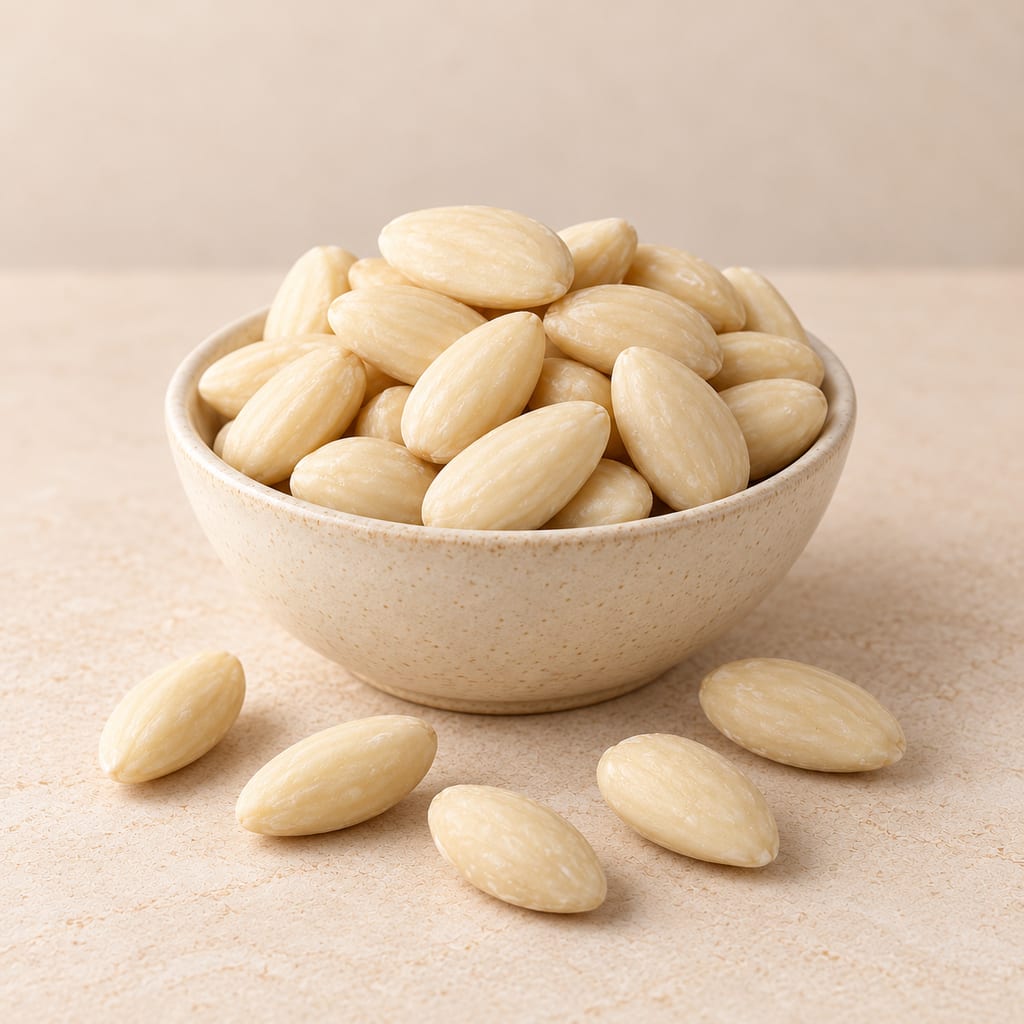
Blanched almonds are sweet almond kernels with the brown seed coat removed. A documented amla murabba cooks ten optional slivered kernels into the finishing syrup with spices and saffron.
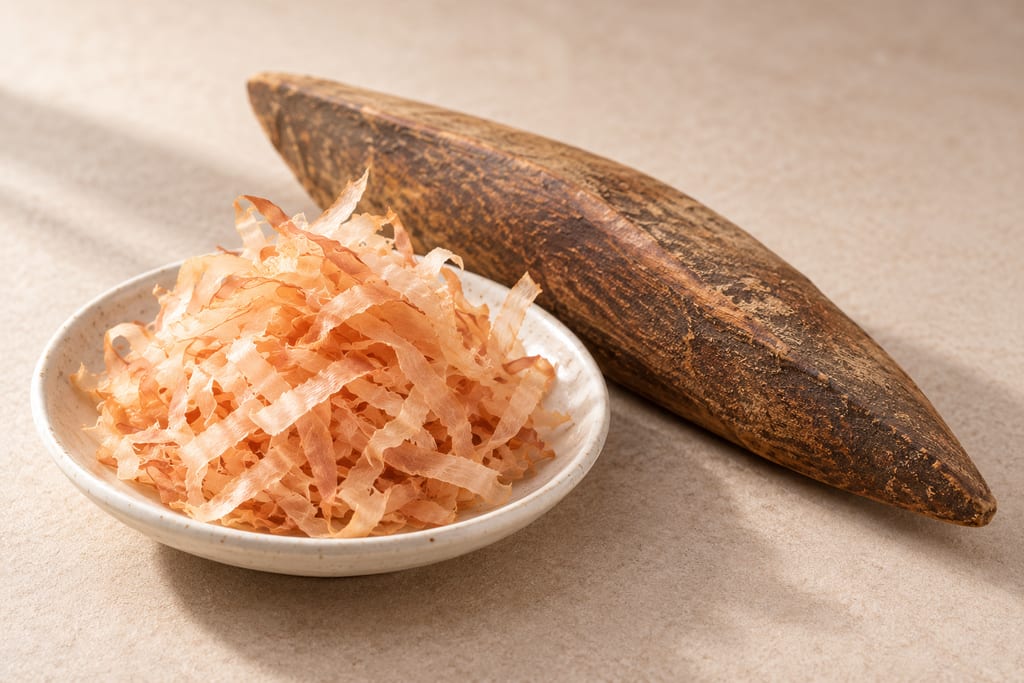
Katsuobushi is skipjack tuna cooked, smoked and dried into a hard block that is shaved into flakes for dashi and toppings. Some styles stop at the smoke-dried stage; others receive carefully managed mold maturation.
No community contributions have been published for this entry yet.
Sign in to contribute. Published comments and photos are free to read.
UNESCO Intangible Cultural HeritageMethod · History · Culture · Geography
Traditional technique of making Airag in Khokhuur and its associated customsAirag is fermented mare's milk traditionally churned in a cowhide khokhuur; UNESCO describes repeated churning, starter retained in the vessel and associated customs.
Inscribed in 2019; documents everyday, celebratory and ritual contexts, without establishing an origin date.
Cited in: A living drink in a living vessel; History and the limits of the record; The documented khokhuur method; Serving and social meaning; Safety and limits; The vessel as a participant in the process; What churning contributes; A continuous household ferment; How to read the method on this page; Hospitality, work and transmission; An intentionally unstandardized account
Silk Road Seattle, University of WashingtonHistory · Use
The Mission of Friar William of RubruckRubruck's account of his 1253–1255 journey mentions cosmos in Mongol settings; a dated written attestation, not proof of origin.
Cited in: History and the limits of the record; Serving and social meaning; Names and neighboring traditions; Hospitality, work and transmission
Bioscience of Microbiota, Food and Health; J-STAGEMethod · Science · Variation
Impact of container type on the microbiome of airag, a Mongolian fermented mare’s milkA 2024 study observed three households in Mogod County, Bulgan; previous-day airag was mixed with mare’s milk, stirred about three hours, left overnight and reused as starter. This is local observation, not universal instruction.
Cited in: Milk, starter and fermentation; Documented household variations; Safety and limits; Reading the research carefully; The vessel as a participant in the process; What churning contributes; A continuous household ferment; How to read the method on this page; Comparing evidence without flattening it; An intentionally unstandardized account
Journal of Animal Science and TechnologyScience · Variation
Characterization of airag collected in Ulaanbaatar, Mongolia with emphasis on isolated lactic acid bacteriaLactic acid bacteria acidify milk and yeasts can produce ethanol and carbon dioxide; this paper describes a separate starter proportion and hide-bag practice.
Cited in: Milk, starter and fermentation; Documented household variations; Reading the research carefully; Comparing evidence without flattening it
Food Science and Technology ResearchScience · Variation
Isolation and Identification of new Lactic Acid Bacteria with Potent Biological Activity and Yeasts in Airag, a Traditional Mongolian Fermented BeverageA 2016 study isolated lactic acid bacteria and yeasts from airag samples and describes inoculation with previous airag.
Cited in: Milk, starter and fermentation
Bioscience of Microbiota, Food and HealthScience
Pyrosequencing Analysis of the Microbial Diversity of Airag, Khoormog and Tarag, Traditional Fermented Dairy Products of MongoliaA 2014 survey sampled airag across Mongolian provinces and found lactic acid bacteria, including Lactobacillus species, prominent.
Cited in: Milk, starter and fermentation; Reading the research carefully; Names and neighboring traditions; Comparing evidence without flattening it
Centers for Disease Control and PreventionSafety
Raw MilkRaw milk can carry pathogens; fermentation or sensory signs are not substitutes for validated controls or pasteurization.
Cited in: Safety and limits