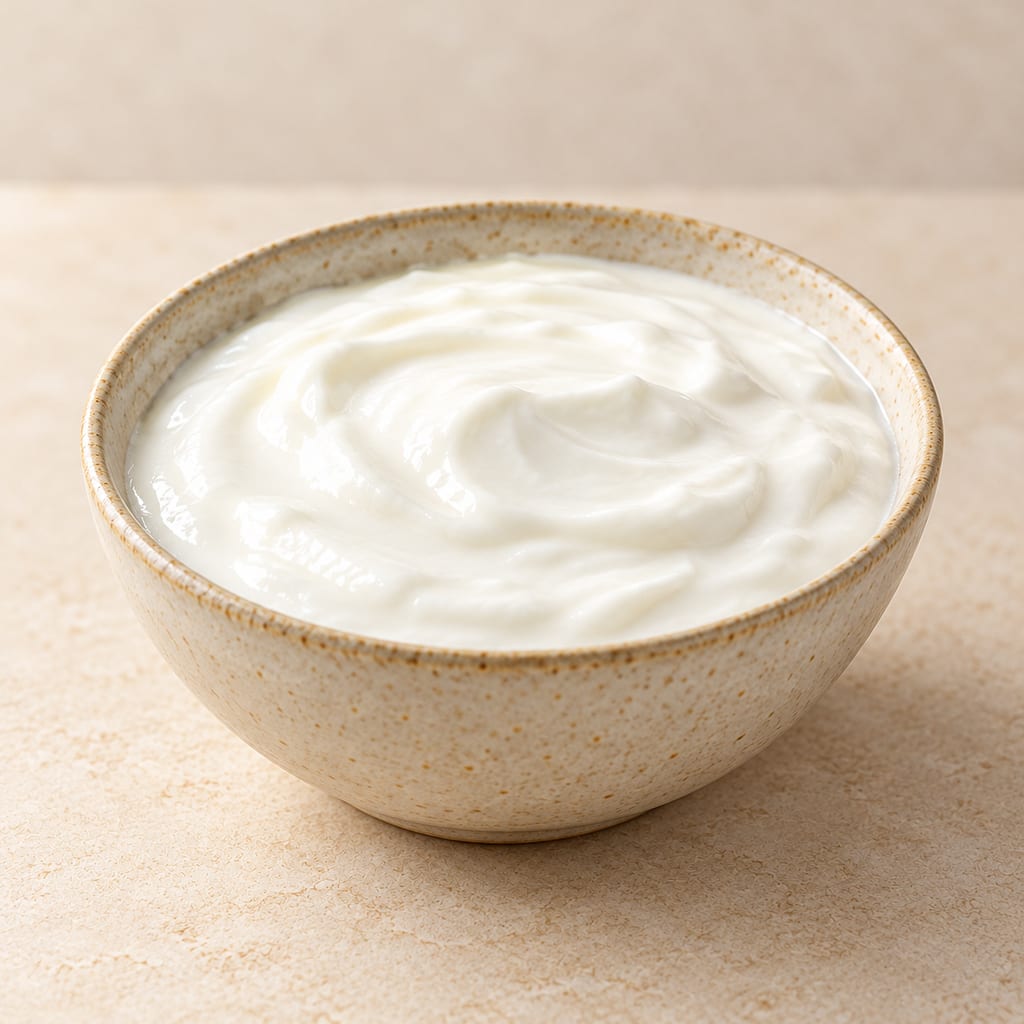
Katyk (qatiq)
Katyk is a traditional fermented milk of Turkic-speaking peoples, made by souring heated milk with lactic bacteria, often with a spoonful of the last batch, into a thick, sour curd.
 FermenteaWhere food goes to change
Traditional method
Suusac · Suusac · Susa · Suusa · Susac · Fermented Somali camel milk · Somali sour camel milk · Traditional Kenyan fermented camel milk · Somali fermented camel milk
Suusac is a traditional fermented camel-milk drink of Somali pastoral communities in Kenya and Somalia, soured spontaneously in smoke-treated vessels into a thin, acid, smoky milk.
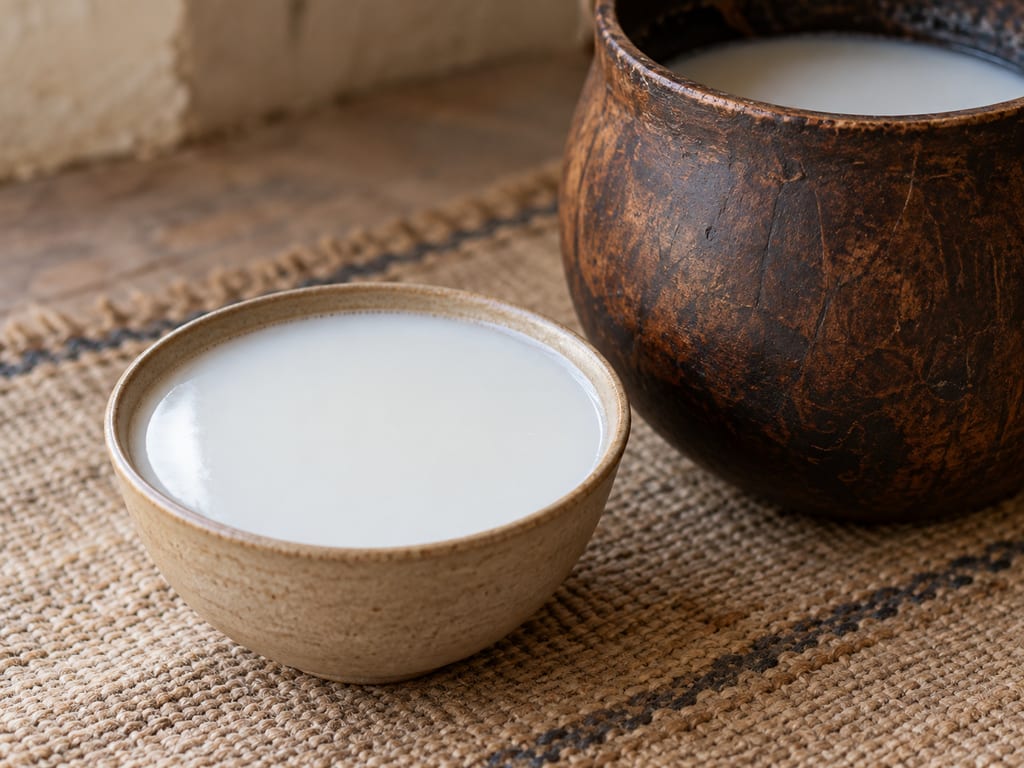
Suusac is a sour camel-milk drink of Somali herding communities, above all in northern and north-eastern Kenya and in Somalia. Fresh camel milk ferments in a vessel treated with smoke. The drink is usually white, acid, slightly astringent and much more fluid than cow's-milk yoghurt, with a taste that joins fermented-dairy acidity to aromas from the smoked container. It is drunk, not spooned.
The name suusac is recorded in the Somali community Tezira Lore studied in 2004, an earlier 1990 dairy-science paper calls the same milk Susa, and later work uses susac and suusa. Somali is written in the Latin alphabet, so no separate original spelling is needed. Gariss, dhanaan, shubat and chal are fermented camel milks of other regions and are not automatic synonyms, since their ingredients, starters and methods may differ.
The raw material is milk of the one-humped camel, Camelus dromedarius. The Isiolo fieldwork records two containers: a small milking vessel, toobke or bire, tied to wood of the garas tree, Dobera glabra, and a larger storage and fermentation vessel, haan or dhiil. English-language studies often call them gourds together. Smoking used smouldering Acacia seyal, now botanically Vachellia seyal, and milk moved into the larger vessel ferments spontaneously.
It is mainly a lactic acid fermentation, with yeasts and other fungi isolated from finished samples. The most common lactic bacterium in the 2004 and 2005 Kenyan work was Leuconostoc mesenteroides subsp. mesenteroides, with Lactiplantibacillus plantarum, Latilactobacillus curvatus, Ligilactobacillus salivarius and Lactococcus raffinolactis, plus yeasts and fungi once named Candida krusei, Geotrichum penicillatum and Rhodotorula mucilaginosa. These are isolates, not a starter recipe. Camel milk has a different protein balance from cow's milk and forms a weaker acid gel, and traditional suusac has no defined yoghurt culture, so the thin body is not a processing failure.
Suusac belongs to the dairy practice of Somali camel herders in eastern Africa. Camels give milk in hot, dry country where other dairy animals may not thrive, and milk is drunk fresh and also soured. Traditional vessels, local wood and spontaneous souring make up the system. Fermentation let households use milk where there was no refrigeration, though it did not keep all stored milk microbiologically safe.
The earliest direct scientific documentation found is from 1990. FAO's The Technology of Traditional Milk Products in Developing Countries lists suusac among Somali acidified milks, drawing on international questionnaires from the late 1980s, and notes that Somali sour-milk traditions may use different animal milks and mixtures, so the entry gives the name and wider family and does not prove every Somali suusac was camel milk alone.
A primary study by Zakaria Farah, Thomas Streiff and Marc Bachmann in the Journal of Dairy Research in May 1990 worked in Garissa, north-eastern Kenya, and identified a spontaneously fermented camel milk called Susa. They collected milk from nomadic herds and compared locally fermented milk with laboratory preparations from selected mesophilic cultures, and noted inconsistent flavour and poor hygiene as problems of spontaneous production.
Tezira Lore's 2004 University of Nairobi thesis gives the fuller ethnography for Somali communities in Isiolo District: the vessels, the smoking material, moving fresh milk, spontaneous fermentation and skimming before drinking, and it supplied samples for microbiological analysis. Lore, Samuel Mbugua and John Wangoh published the peer-reviewed findings in March 2005. In 2019 Isaac Maitha and colleagues examined suusac sold in Nairobi's Eastleigh from north-eastern Kenya and found substantial contamination, showing that fermentation and traditional handling did not reliably control hazards; recent reviews discuss pasteurisation, selected starters and hygienic processing as improvements.
The evidence supports an established Somali pastoral food, directly documented by 1990 and in detail by 2004. It does not give an origin date, a single Somali place or an unchanged historical recipe, and the age of camel pastoralism does not date this preparation.
Suusac is mainly lactic acid fermentation with other microbes. Lactic bacteria use lactose, the main sugar of camel milk, and make acid that lowers the pH and destabilises the milk proteins. The drink turns sour and may carry suspended protein particles but stays fairly fluid. Yeasts add aroma and affect bacterial growth, though finding them does not mean much alcohol forms in every batch.
Lore's 2004 work gives the species-level evidence. Fifteen traditional samples yielded 45 lactic bacterial and 30 yeast isolates, with Leuconostoc mesenteroides subsp. mesenteroides 24 per cent of the 75, Candida krusei 20, Lactobacillus plantarum 16, L. curvatus 8, L. salivarius 8, Lactococcus raffinolactis 4, Geotrichum penicillatum 12 and Rhodotorula mucilaginosa 8. These are frequencies of recovered isolates and not the abundance of live organisms. Names have since changed: L. plantarum is Lactiplantibacillus plantarum, L. curvatus is Latilactobacillus curvatus, L. salivarius is Ligilactobacillus salivarius and Candida krusei is also Pichia kudriavzevii.
Beta-galactosidase splits lactose, glycolysis follows, and lactate dehydrogenase reduces pyruvate to lactic acid, regenerating NAD+. About 60 per cent of Lore's lactic isolates were homofermentative, and heterofermentative Leuconostoc strains may also make acetate and carbon dioxide. Titratable acidity in the traditional samples was equivalent to 0.46 to 0.67 per cent lactic acid. Most isolates except Lactococcus raffinolactis were proteolytic, they differed in making diacetyl, Latilactobacillus curvatus was especially active in flavour assays, and the yeasts assimilated few carbohydrates but could affect flavour and sometimes protein breakdown. In laboratory trials Candida krusei with L. plantarum or L. curvatus acidified camel milk faster than either alone, which is not a safety-approved starter recipe.
Camel milk's protein explains the thin body. Compared with cow's milk it has little kappa-casein, more beta-casein and none of the major bovine whey protein beta-lactoglobulin, and acid destabilises the casein micelles into a weaker network. Farah and colleagues saw fine protein flocs and not a firm coagulum. The smoked vessel adds a separate source of aroma compounds, whose substances and amounts have not been established for the Isiolo process.
The Isiolo method begins with fresh dromedary milk, which supplies lactose, protein that responds to acid, fat and other nutrients. No measured starter is added: the microbes come from the milk, the vessels and the surroundings. Lore's fieldwork records no heating of the milk before fermentation, which is a historic characteristic and also a microbiological risk that keeps the process from being recommended as an unmodified modern home recipe.
Milk is first collected in the smaller vessel, toobke or bire, long and narrow with a capacity usually of 2 to 4 litres, tied to the garas tree. Its inside is cleaned, smoothed and smoke-treated: it is rinsed in cold water, hot smoking chips of Acacia seyal are put in, and the vessel is covered for a few minutes, left to cool and cleared of residual charcoal with root fibres. No quantities or validated sanitation endpoint are given.
The fresh milk, dhaay, goes into the larger vessel, haan or dhiil, which is rounder with a short neck and held in a woven basket. It is closed and left at ambient conditions. No batch size, vessel capacity or inoculum percentage is given, and the smoke treatment may add flavour while microbes tied to the system do the fermenting.
The time differs within the source. Lore's thesis abstract gives one to two days and the detailed Isiolo chapter two to three, with daytime ambient temperatures of about 26 to 29 C during fieldwork, which describe the environment and not a controlled incubation. The milk sours, and because camel milk does not gel like cow's milk it stays fairly fluid.
When fermentation is judged done, the upper fat layer is taken off and the milk is mixed before drinking. Lore describes it as white, thin, smoky and astringent. On standing, some whey and protein sediment separates and shaking restores an even suspension. The fieldwork records keeping it in a cool place at ambient temperature for up to a week, a historical observation and not a modern shelf life.
Farah, Streiff and Bachmann's 1990 controlled adaptation heated whole camel milk to 85 C for 30 minutes, cooled it, inoculated 2 per cent of a 24-hour mesophilic starter and incubated at 27 C for 24 hours, using two commercial mixed cultures. The products were preferred in tasting against local Susa from Garissa. It shows a possible controlled route and does not reproduce the smoked-gourd tradition or give a complete modern safety specification.
The fullest preparation record is from Somali households in Isiolo District, northern Kenya: fresh camel milk, separate milking and fermenting vessels, Acacia seyal smoke, spontaneous fermentation, then skimming and mixing. It is one authenticated regional example, and the research does not show that all Somali households use the same vessel materials, smoking wood, fermentation time or fat removal.
Garissa is a second example. Farah and colleagues did consumer research there, using locally bought traditional Susa as the comparison, and describe natural fermentation without initial heating and variable flavour and hygiene, without the vessel sequence Lore later recorded for Isiolo, so Isiolo details should not be assigned to Garissa.
FAO's 1990 inventory ties Somalia to the name, including suusac among Somali acidified milks and discussing spontaneous souring of milks from several animals, with camel milk sometimes added to mixtures. Later reviews call suusac fermented camel milk, so the name may have been used more widely than in the camel-milk examples studied in Kenya, and a fully documented Somalia-specific recipe is a gap.
Published descriptions of the vessels also vary. Lore identifies the Dobera glabra vessel and a larger container in a woven basket, while reviews speak more generally of smoked gourds, wooden buckets or pumpkin-like vessels, which may reflect real differences, translation or simplification and do not show every container was Lagenaria siceraria. Some reviews mention Olea africana or other smoking woods, but the directly documented Isiolo method names Acacia seyal. Milk from different herds and seasons also varies in composition, which changes acidity, flavour and consistency.
Related camel-milk ferments are separate: Sudanese gariss, Ethiopian dhanaan and Central Asian shubat or chal share camel milk and microbial acidification but may use skin containers, repeated milk additions, retained starters or different times. The defining features of the Isiolo product are its Somali setting, camel milk, smoked containers and spontaneous lactic souring.
Suusac is drunk sour. It is fluid enough to pour or drink from the vessel, acid and a little astringent, usually smoky, and may carry small particles of acidified protein. The traditional Isiolo method removes the fat layer and mixes the milk before drinking, and if whey and sediment have separated, gentle shaking brings back an even look.
It has a practical place in Somali pastoral food. Camel milk gives liquid and nutrients in arid country where households may depend on their animals, and souring changes the flavour and stretches the use of milk past the day it was drawn. Farah and colleagues describe traditional fermented camel milk as widely drunk around Garissa, and note that local production and no reliable cold chain kept sales close to the herds.
Some reviews describe suusac as useful on journeys where water is short. That records historic food and fluid habits and is no evidence that unrefrigerated fermented milk meets modern standards, and the 2019 market study shows the need to separate cultural usefulness from verified hygiene.
On standing, whey separates from precipitated protein and the product looks layered, which suits camel milk's weak gel and does not by itself show a failed fermentation, and the fractions are mixed back for drinking rather than strained as for yoghurt or cheese. Suusac also reaches city buyers: the 2019 study bought it in Nairobi's Eastleigh market from suppliers linked to north-eastern Kenya, without a documented standard of refrigerated packaging, shelf life or safe retail process, so commercialisation raises hygiene, transport, temperature and starter-standardisation questions.
In the 1990 tasting Somali and other consumers preferred two controlled-culture camel milks to the traditional drink, which shows controlled fermentation can be acceptable and does not make the smoked flavour, vessels or community unimportant. Neither the 1990 nor the 2004 research establishes a ceremonial use, named dish accompaniment or standard seasoning for suusac.
Typical suusac is white, fluid and distinctly sour, with a smoky aroma and astringent taste. Thin body is expected and is not automatically a failure, since camel milk forms weaker acid gels than cow's milk, and small suspended curds or some separation on standing may be normal. A pleasant sour smell does not show a batch is microbiologically safe.
The 2004 and 2005 work measured traditional samples at a mean of about 6.77 log10 colony-forming units per millilitre of lactic bacteria and about 2.05 of yeasts, with titratable acidity of 0.46 to 0.67 per cent as lactic acid. These are sample measurements, not targets, and titratable acidity is not pH and cannot be turned into one pH value without more data. The proportions of isolates do not reveal the living community in every vessel, the identification tests predate modern genomics, and strain-level identification, metabolic testing and safety evaluation would be needed before using an isolate as a starter.
Candida krusei, now also Pichia kudriavzevii, was isolated by Lore and improved acidification and flavour with selected lactic bacteria in trials, but it is also linked to opportunistic infection and antifungal resistance, and food-microbiology reviews caution against choosing Candida as a starter without safety evaluation. Rhodotorula mucilaginosa and Geotrichum penicillatum likewise do not become suitable bought cultures by being found.
Safety findings from different studies stay separate. Lore's 2004 research reported low average coliform counts in 15 traditional samples, whereas a 2019 study of 28 market-sold samples from north-eastern Kenya found Escherichia coli in every sample, Staphylococcus aureus in about 63 per cent, Shigella in about 88 and Klebsiella in about 77 per cent. They concern those samples and not every producer, but show that spontaneous acidification and smoked vessels cannot be assumed to ensure safety. A 2016 study separated intentionally fermented suusa, made over about three days, from milk that soured by accident in transport and was then sold as suusa, with no controlled process, and found poor equipment hygiene, pooling of milk from many suppliers, dirty plastic containers, dust, slow transport and too little refrigeration.
The raw-milk process carries risk before acid develops. Camel milk has natural antimicrobial proteins, which do not replace pasteurisation, and the CDC lists Campylobacter, pathogenic E. coli, Listeria, Brucella and Salmonella as possible in raw milk. Smoking may change the vessel's microbes and flavour and has not been validated as sanitation, and claims that smoked suusac keeps safely unrefrigerated for days need product-specific challenge studies.
For modern preparation use pasteurised camel milk, clean equipment, an authenticated food-grade culture, controlled incubation and a measured acid endpoint; the 1990 experiments give starting conditions for selected mesophilic cultures but are not a full safety validation of traditional suusac. Do not rescue a failed batch by extending warm storage. Reject mould, offensive smell, odd colour or excess gas, and remember dangerous microbes can be present without visible spoilage. No safe homemade shelf life, alcohol content or proven probiotic benefit has been established.
Documented by 1990; earlier history undated.
Traditional suusac starts with raw camel milk, which can carry infectious bacteria that spontaneous fermentation does not guarantee to remove.
Hazard sourceThere is no characterised starter or measured inoculation; microbes come from the raw milk, vessels and environment, and acidification and community vary between batches.
Hazard sourceA 2019 study of 28 market samples found E. coli in every sample, Staphylococcus aureus in about 63%, Shigella in about 88% and Klebsiella in about 77%; this describes that supply chain and shows substantial hazard.
Hazard sourceA 2016 study separated intentionally fermented suusa from milk that soured in transport and was later sold as suusa, which had no controlled process.
Hazard sourcePoor equipment hygiene, pooling milk from many suppliers, dirty plastic containers, dust, delay and weak refrigeration were sources of contamination.
Hazard sourceSpore-forming bacterial counts rose along the informal camel-milk chain, and acidity alone did not stop microbes of concern persisting.
Hazard sourceWood and gourd vessels can retain microbes; smoking changes the population and flavour but is not validated as complete sanitation.
Hazard sourceIncomplete combustion of wood in a milk-contact vessel leaves residues that depend on wood and conditions, and no complete chemical safety assessment exists.
Hazard sourceCandida krusei (Pichia kudriavzevii) was isolated from suusac and is linked to opportunistic infection and fluconazole resistance; detection in food does not make it a suitable starter.
Hazard sourceGeotrichum penicillatum and Rhodotorula mucilaginosa were recovered, and their presence does not make either necessary, beneficial or safe as a bought culture.
Hazard sourceSourness and protein separation do not show harmful microbes are absent, and without a validated starter, temperature and acid schedule a batch may stay unsafe.
Hazard sourceThe reported week of ambient storage is not a validated shelf life, and acidified camel milk can remain contaminated.
Hazard sourceUse commercially pasteurised camel milk for modern edible production.
Control sourceUse a defined food-grade starter assessed for safety and validated for fermented camel milk.
Control sourceKeep the traditional description separate from a validated modern procedure.
Control sourceClean and sanitise vessels and utensils and use potable water.
Control sourceUse measured incubation for the chosen culture and not ambient temperature alone.
Control sourceMonitor acidification against a validated product-specific endpoint.
Control sourceDo not use Candida krusei or other isolated fungi as starters without strain-level safety assessment.
Control sourceDo not treat accidentally spoiled milk as a finished fermented product.
Control sourceRefrigerate promptly after a validated fermentation.
Control sourceUse a separately validated protocol for fermented camel milk made for public consumption.
Control sourceThis is a documented traditional process, not a validated recipe for fermenting raw camel milk at home.
Raw milk and spontaneous fermentation should not be reproduced for consumption without a validated food-safety system.
Do not leave pasteurised camel milk warm without an active, validated starter.
No fixed batch quantity or yield is given.
The 2 to 4 litre figure is for the collection vessel and not the fermentation vessel.
The 26 to 29 C range is ambient, not a validated incubation range.
The thesis gives 1 to 2 and 2 to 3 days, and neither is a safe limit.
No pH endpoint or minimum acidification rate is supplied.
Do not rebuild a starter from the bacteria and yeasts listed in studies.
Pichia kudriavzevii (Candida krusei) in a traditional product is no reason to use it in food.
Smoke treatment does not sterilise the vessel.
Do not use unverified wood species or untreated combustion residues in food vessels.
Do not sell milk that soured by accident in transport as a controlled ferment.
Acidification does not guarantee removal of E. coli, S. aureus, Shigella or Klebsiella.
Sourness, smoke aroma, thin texture and separation are not safety tests.
Some hazards leave no visible sign.
Storage for up to a week at ambient temperature is not shelf-life advice.
The 1990 controlled-culture experiment is a separate adaptation with heated milk and should not be mixed with the smoked-vessel process.
Its culture formulations must be independently verified before use.
No alcohol content or proven probiotic benefit can be assigned.
No validated refrigerated shelf life exists.
Gariss, dhanaan, shubat and chal are related camel milks and not synonyms.
Region-level.
Spontaneously fermented camel milk documented there.
Region-level.
Country-level.
A fully documented Somalia-specific camel-milk recipe has not been verified.
Katyk is a traditional fermented milk of Turkic-speaking peoples, made by souring heated milk with lactic bacteria, often with a spoonful of the last batch, into a thick, sour curd.

From sour breads and milk to savoury seeds, cassava staples and living beers, African fermentation follows the crop, the community and the work of transformation.
Follow milk into cheese, cultured drinks, butter, dried curds and sweets: a journey through the animals, seasons and household decisions behind the world's dairy foods.
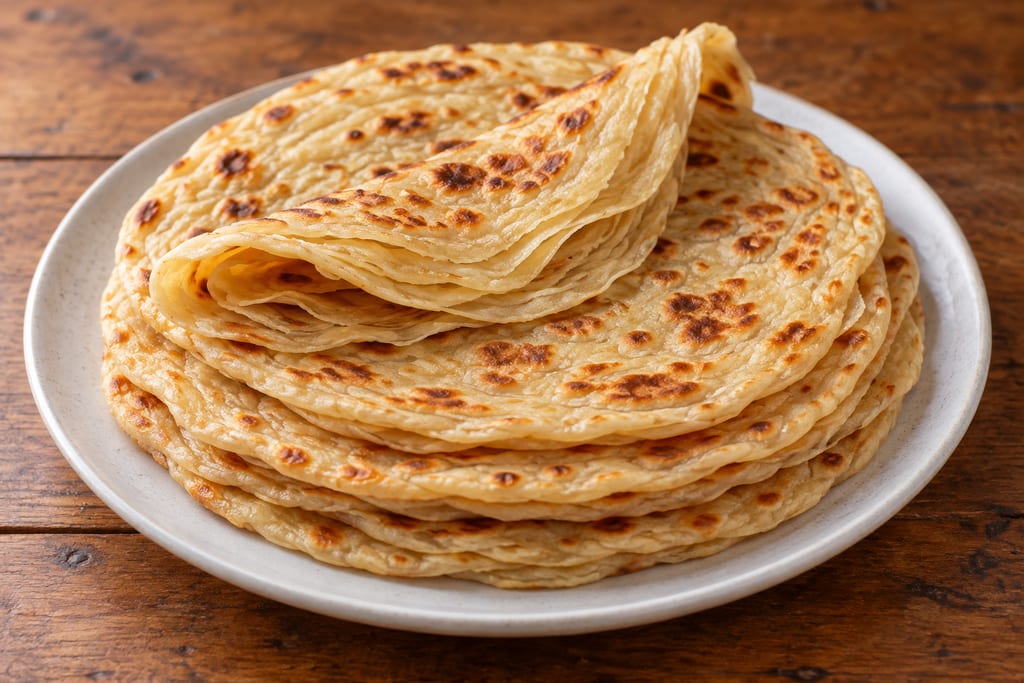
Six Kenyan layered wheat flatbreads, pleated with ghee, coiled and cooked on a griddle.
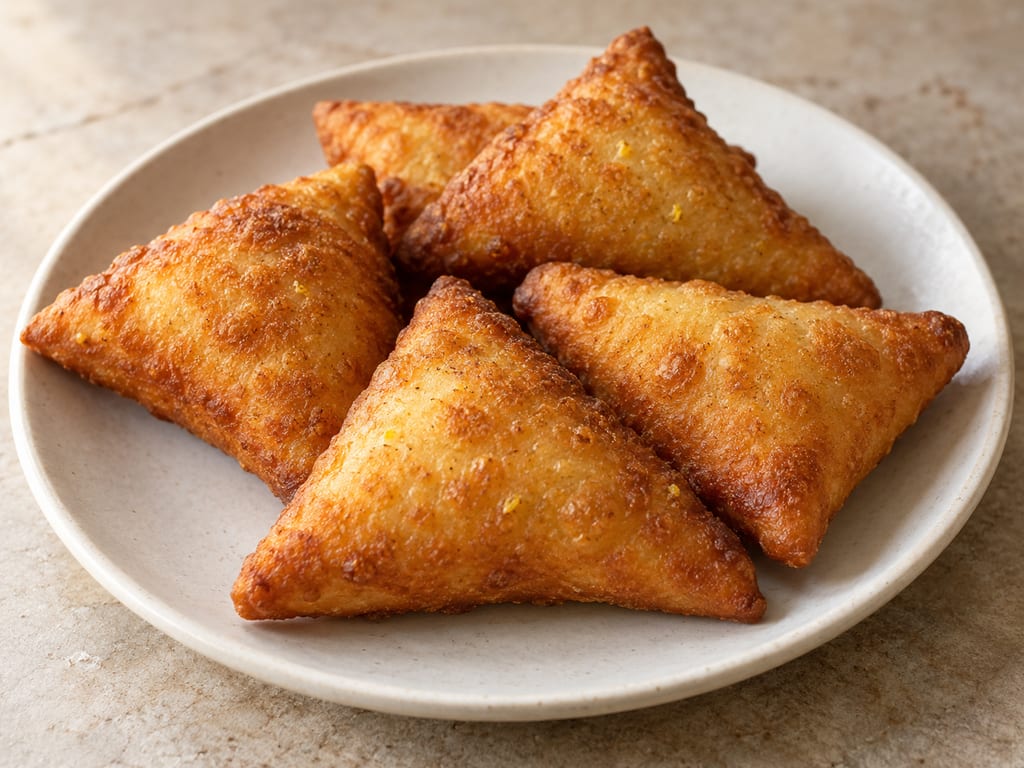
A Kenyan mandazi made with self-raising flour, lemon and optional cardamom, cut into triangles and deep-fried. This baking-powder-raised version is distinct from yeast-raised coastal mahamri.
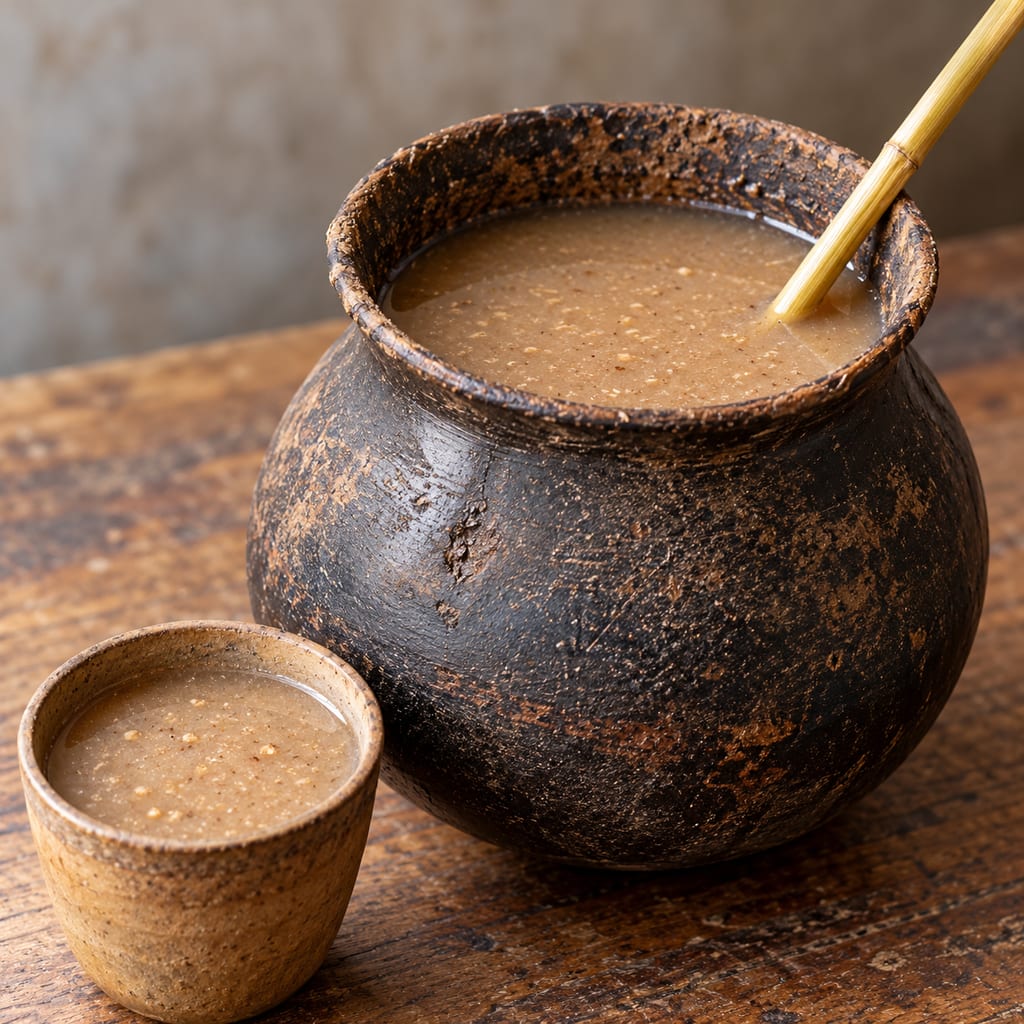
An opaque Kenyan maize beer: fermented maize paste is roasted into tsimbale, then mixed with finger-millet malt called kimera at ten to one and fermented a second time.
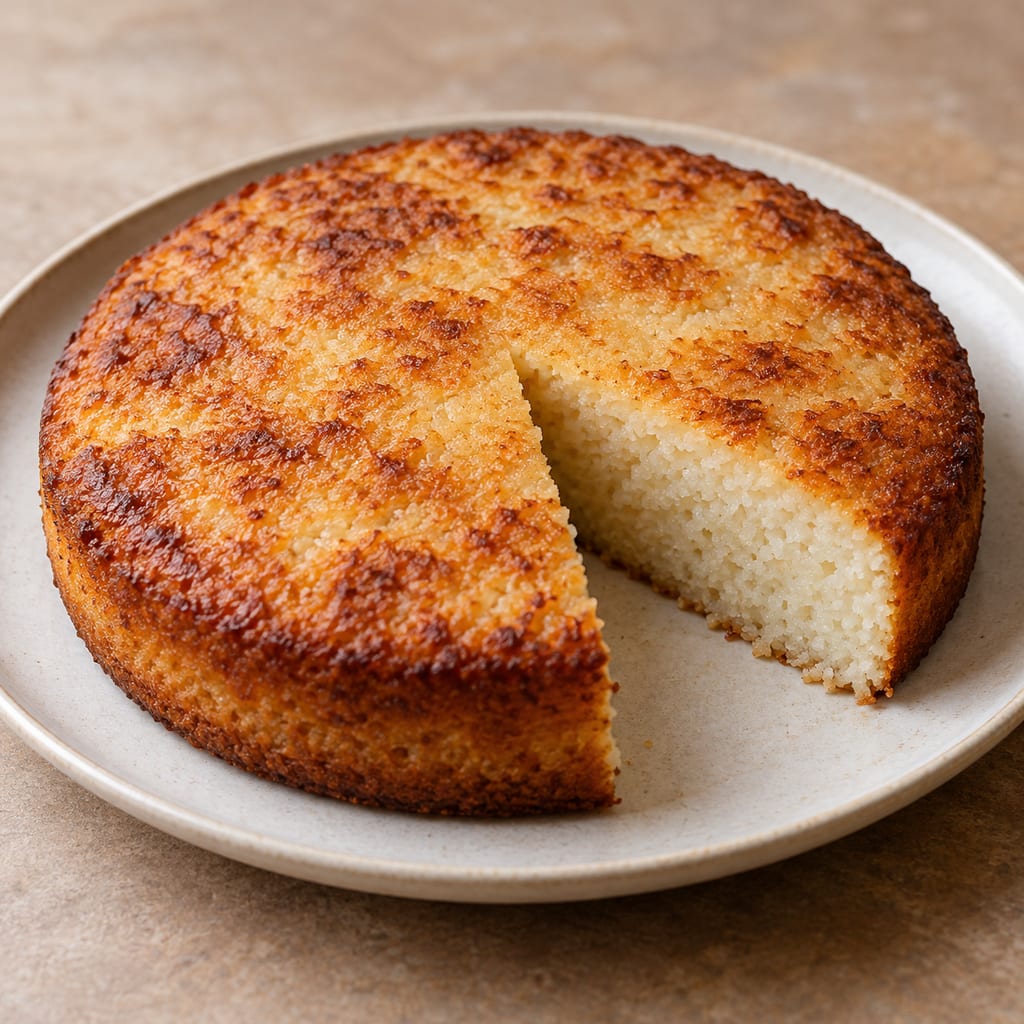
Fauzia’s Mombasa mkate wa sinia blends soaked rice with coconut milk, sugar, cardamom and yeast, then sets it covered on the hob and browns the top under a grill.
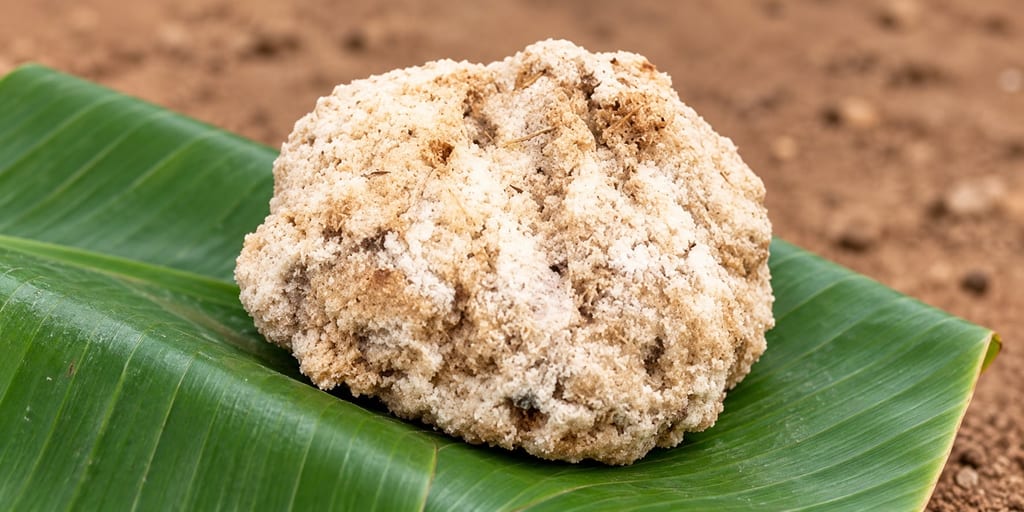
Nzoia River reed salt is a Bukusu seasoning made by leaching and evaporating the ash of mature muchua reeds. Its sources document a local method, but provide neither a measured formula nor verified mineral composition.
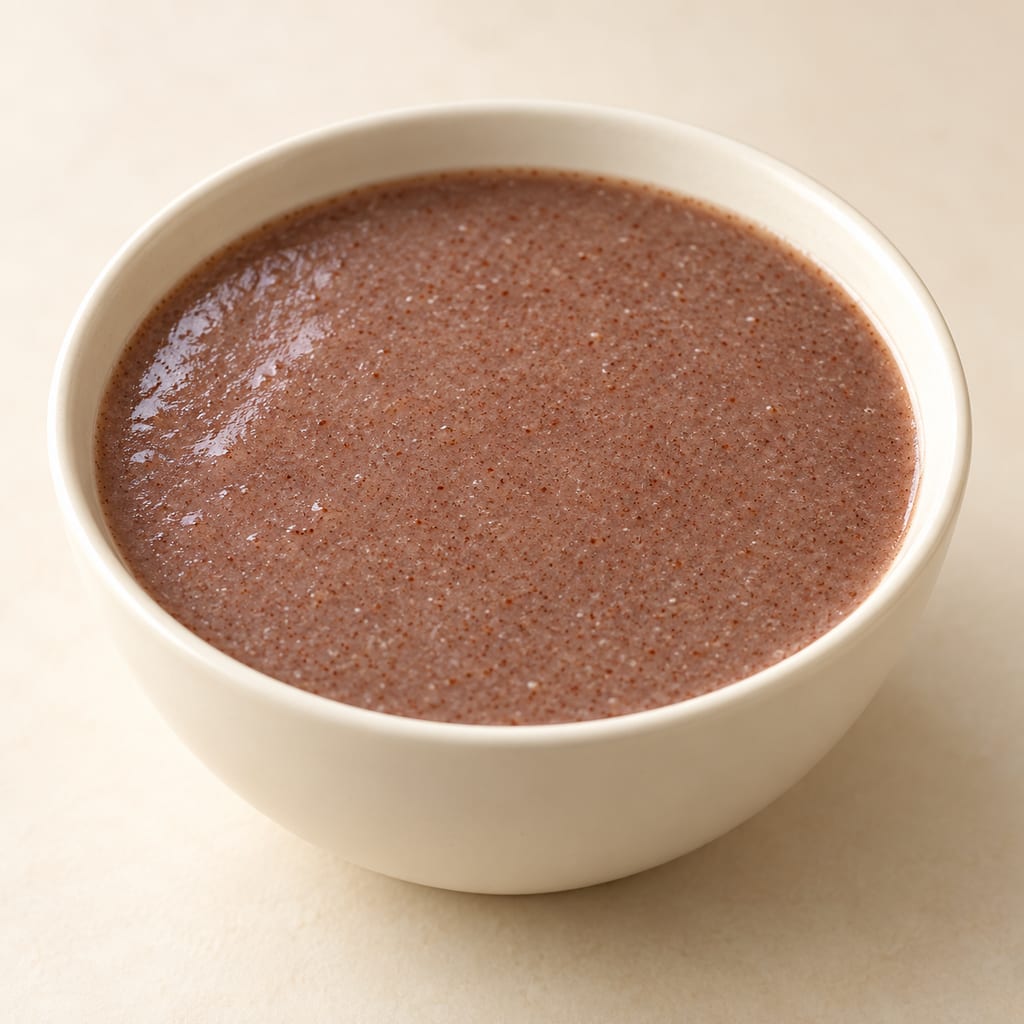
A thin, sour porridge of western Kenya made by fermenting unroasted finger-millet flour in water for a day or two, then diluting it and cooking it through.

Airag is Mongolia’s fermented mare’s-milk drink, traditionally churned with saved starter in a reusable cowhide khokhuur.

Ayran is Turkey’s cold, savoury yogurt drink: plain yogurt is loosened with water and lightly salted, then whisked smooth or aerated into a soft cap of foam.
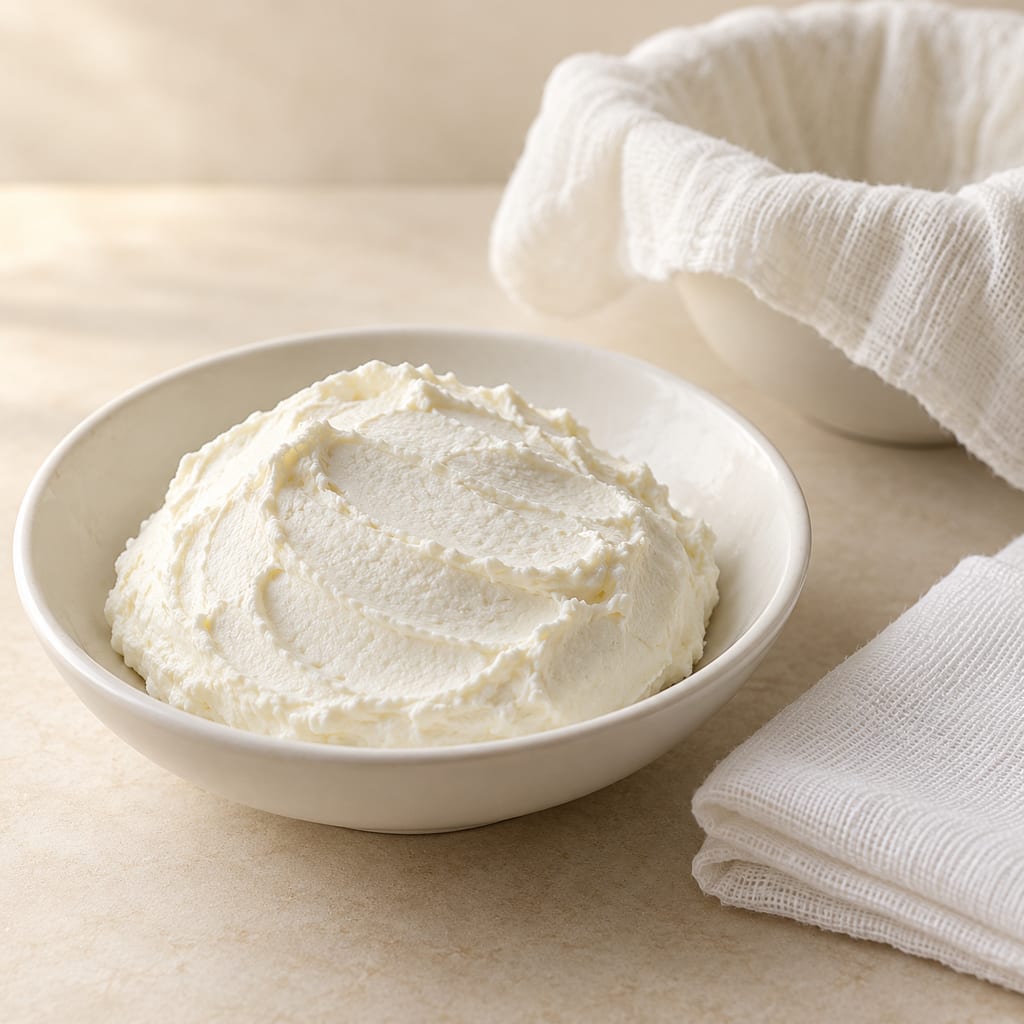
A soft cheese made by setting aside part of the day's milk kefir, draining it in a cloth and salting it through the evening, ready the next morning.
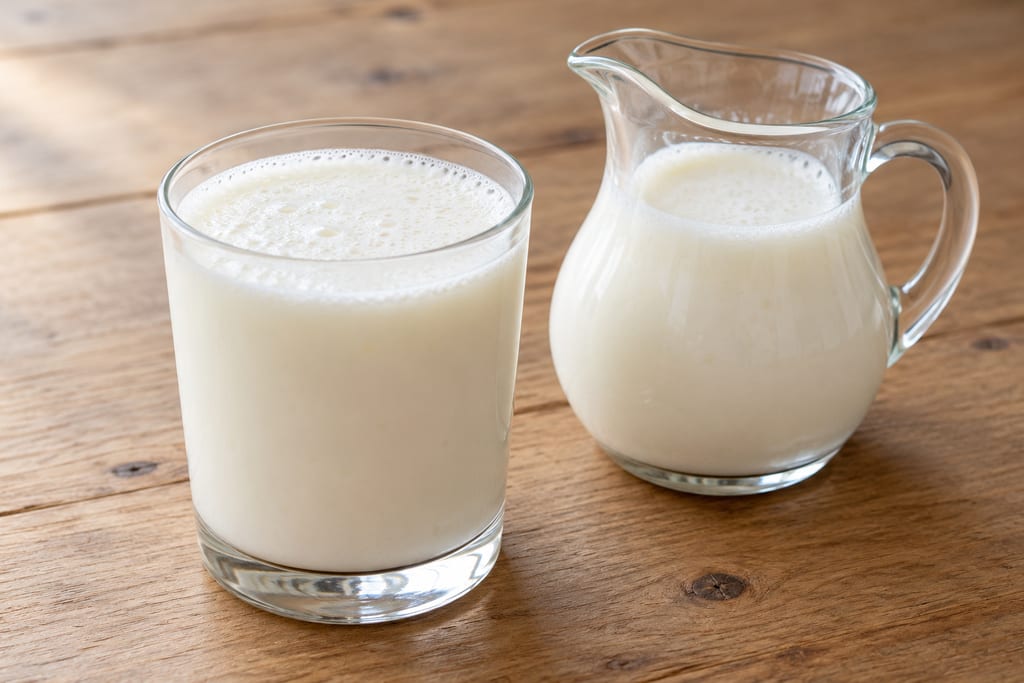
Khurunga is a traditional Buryat fermented milk made with a kept mixed bacteria-and-yeast starter, giving a sour, lightly alcoholic and often fizzy drink that is also the base for milk spirit and curds.
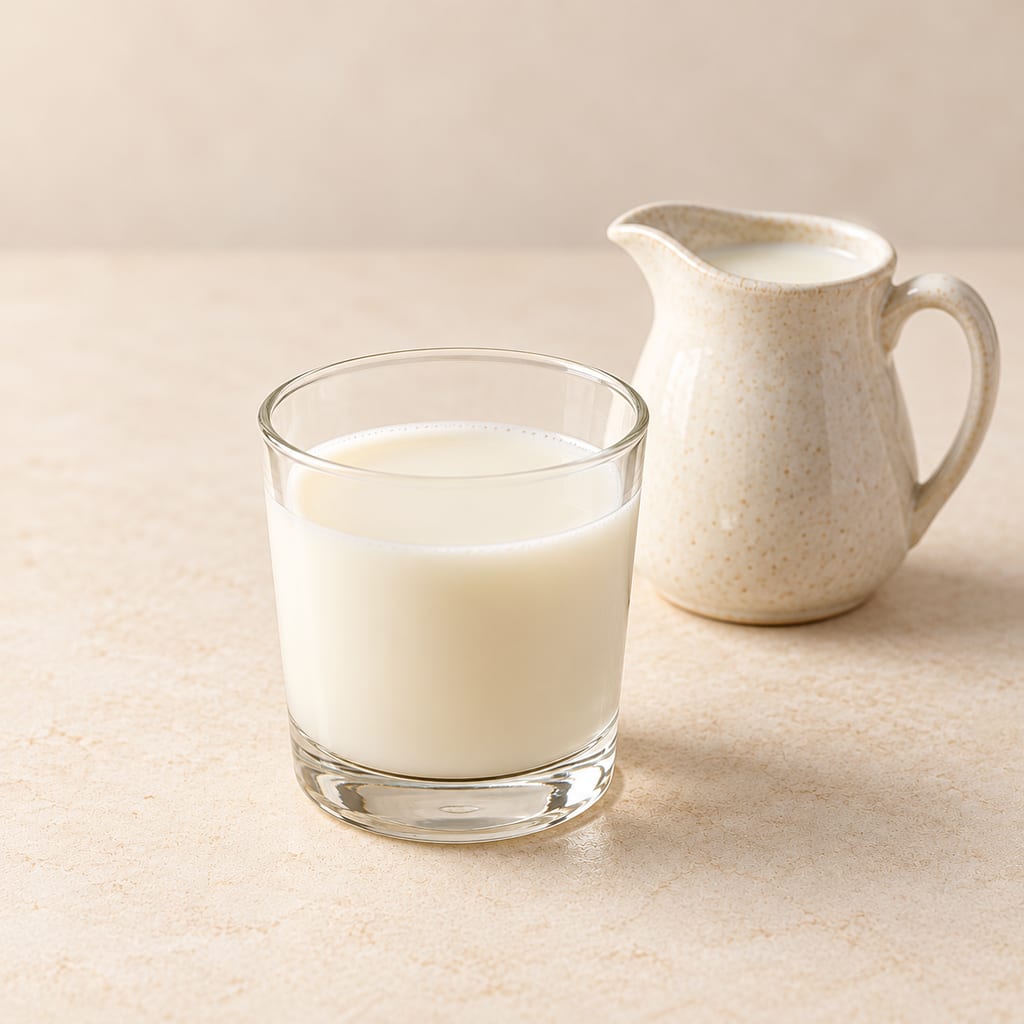
Koumiss is a sour, lightly alcoholic mare-milk drink made by lactic bacteria and yeasts. This technical method uses pasteurized milk, a previous-batch starter and staged cooling.
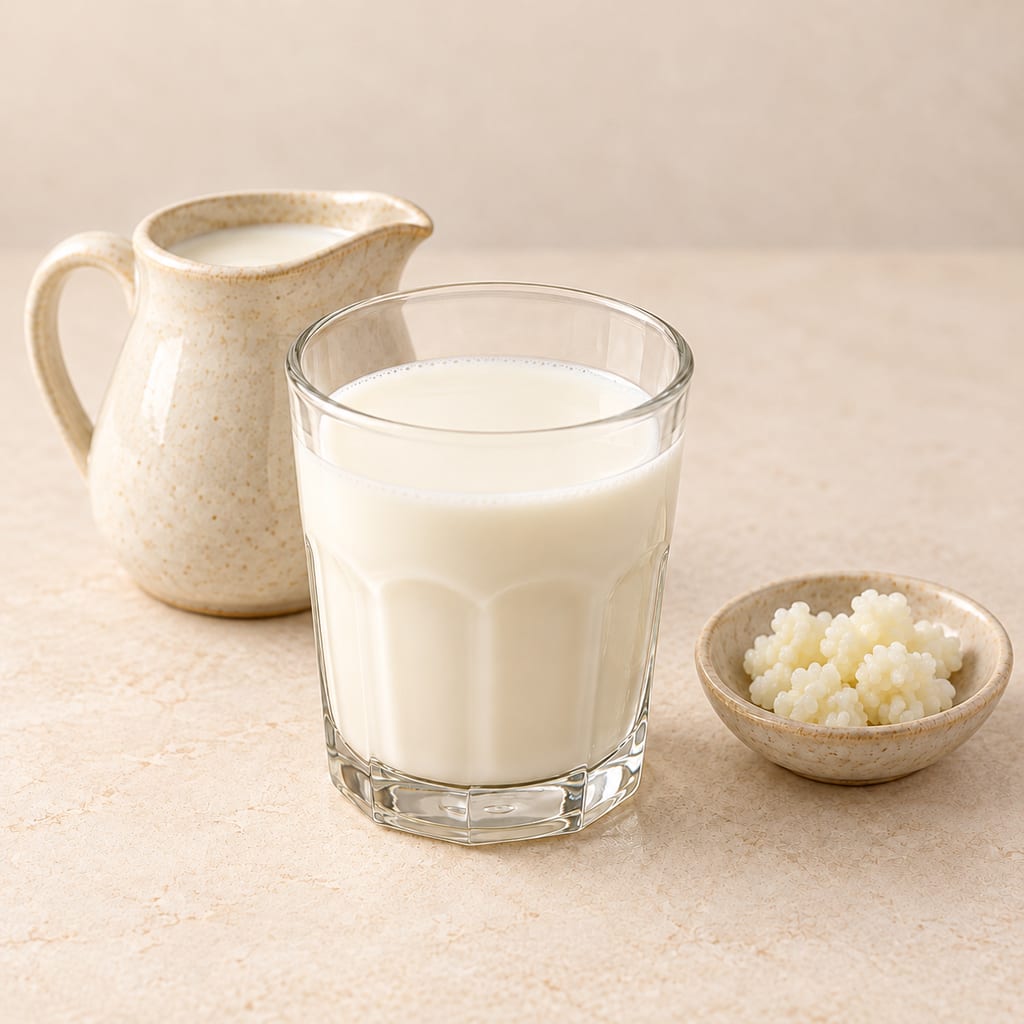
Milk kefir is a tangy fermented drink made with reusable grains of bacteria and yeasts. Grain fermentation can give the milk a light fizz and some alcohol.
Sýra is Icelandic soured skyr whey kept as a household acid store: a drink when diluted, and historically the medium for súrmatur. Fresh leftover whey is not the same material.

Soft, spreadable Calabrian pork sausage made with a great deal of red chilli and fatty pork, stuffed into natural casings, sometimes smoked and matured while staying soft.

A way to add independent temperature logging to an existing food dehydrator without changing its built-in controls or protections. It is a monitoring method, not a rewiring plan.

Pleurotus cystidiosus is the abalone mushroom, a cultivated oyster-type fungus with dark brown caps that grows more slowly and is more demanding than other Pleurotus species.

A dark, balanced vinegar from Emilia-Romagna made by combining cooked or concentrated grape must with wine vinegar, then acetifying and refining it in wood under a protected specification.

A living dairy inoculum that starts controlled cream fermentation, developing acidity and aroma before sour cream or cultured butter is finished.

A small electric incubator holds jars at a selected temperature for yogurt and other documented warm food preparations. Controls, capacity and vessel arrangement vary by model.

Adygean salt is a seasoned table salt associated with Adygea and the wider North Caucasian culinary tradition. Salt is blended with garlic and a variable selection of herbs and spices; the exact mix depends on the named style and maker.

The African Caesar-group mushroom, Amanita masasiensis, is a wild ectomycorrhizal species of central and southern African woodlands, eaten locally. The genus contains deadly poisonous species, so identification needs care.
No community contributions have been published for this entry yet.
Sign in to contribute. Published comments and photos are free to read.
University of Nairobi, Department of Food Technology and Nutrition, MSc thesis, 2004Method · Science
Studies on the Microflora in Suusac, a Kenyan Traditional Fermented Camel Milk ProductIsiolo vessels toobke/bire and haan/dhiil; Acacia seyal smoking; fermentation 1 to 2 or 2 to 3 days; 15 samples, 75 isolates; 26 to 29 C ambient
Cited in: What suusac is; What is on record; Camel milk, lactic acid and smoke; How the Isiolo producers make it; Places and relatives; Drinking it; Reading results and problems
University of Nairobi Digital RepositoryMethod
Studies on the Lactic Acid Bacteria and Yeasts in Susa, a Traditional Fermented Camel Milk Product of the Somali Community in Kenya (full text)full text of the thesis
Cited in: What suusac is; How the Isiolo producers make it
LWT - Food Science and Technology 38(2), 2005Science
Enumeration and Identification of Microflora in Suusac, a Kenyan Traditional Fermented Camel Milk Productlactic counts about 6.77 log10 cfu/ml; yeasts about 2.05; titratable acidity 0.46 to 0.67% lactic acid
Cited in: What suusac is; What is on record; Camel milk, lactic acid and smoke; How the Isiolo producers make it; Reading results and problems
Journal of Dairy Research 57(2), 1990History · Method
Preparation and Consumer Acceptability Tests of Fermented Camel Milk in KenyaSusa in Garissa; controlled culture at 85 C for 30 minutes, 2% starter, 27 C for 24 hours
Cited in: What suusac is; What is on record; Camel milk, lactic acid and smoke; How the Isiolo producers make it; Places and relatives; Drinking it
Food and Agriculture Organization of the United Nations, 1990History
The Technology of Traditional Milk Products in Developing Countries, part II: Acidified Milkssuusac among Somali acidified milks
Cited in: What is on record; Places and relatives
International Journal of Food Contamination 3, 18, 2016Safety
Hygienic Assessment of Spontaneously Fermented Raw Camel Milk (Suusa) Along the Informal Value Chain in Kenyaintentional suusa of about three days versus milk soured in transport; poor hygiene along the chain
Cited in: Reading results and problems
Asian Food Science Journal 8(2), 2019Safety
Microbial Quality and Safety of Traditional Fermented Camel Milk Product Suusac Sampled from Different Regions in North Eastern, Kenya28 market samples: E. coli in all, S. aureus about 63%, Shigella about 88%, Klebsiella about 77%
Cited in: What is on record; Drinking it; Reading results and problems
Food Production, Processing and Nutrition, 2023History · Safety
Camel Milk Products: Innovations, Limitations and Opportunitiessuusac as Somali fermented camel milk; smoked gourds in reviews
Cited in: What suusac is; Places and relatives; Drinking it
Frontiers in Microbiology, 2019Safety
Occurrence and Importance of Yeasts in Indigenous Fermented Food and Beverages Produced in Sub-Saharan AfricaCandida as a starter needs safety evaluation
Cited in: Reading results and problems
European Food Safety AuthoritySafety
Qualified Presumption of Safety (QPS) Assessmentsafety assessment of starter organisms
US Centers for Disease Control and PreventionSafety
Raw Milkraw milk pathogens; choose pasteurised milk
Cited in: Reading results and problems
Utah State University ExtensionSafety
Tips to Safely Ferment at Homemeasure acidity; control time and temperature
Cited in: Reading results and problems