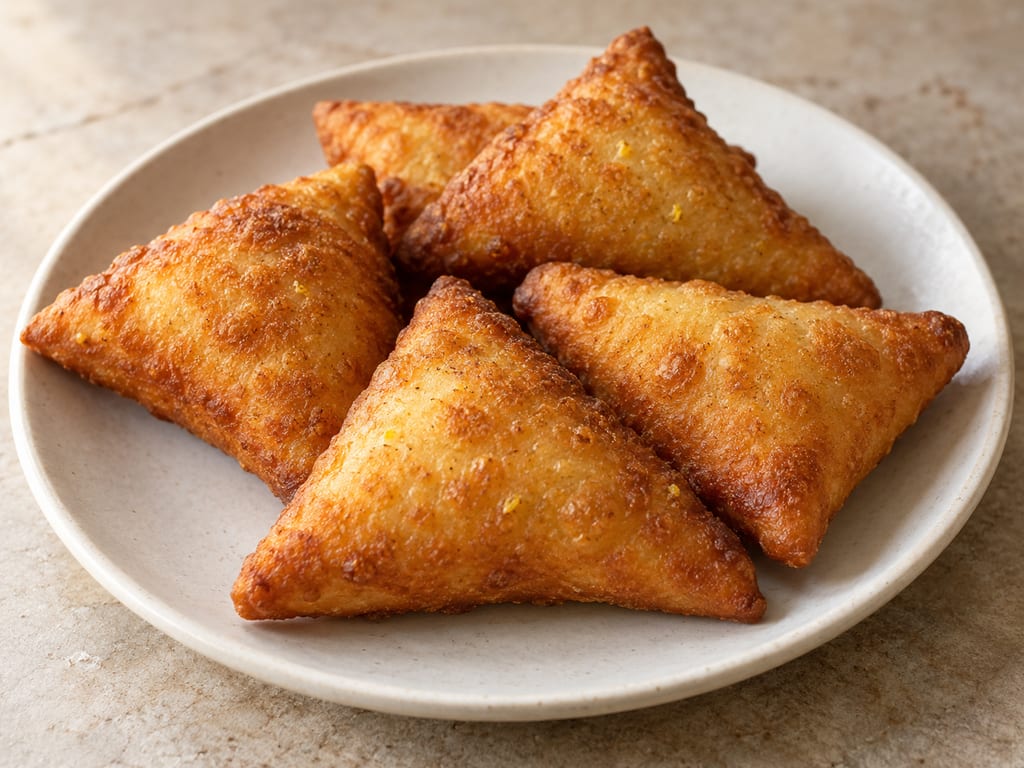
Kenyan mandazi (self-raising flour)
A Kenyan mandazi made with self-raising flour, lemon and optional cardamom, cut into triangles and deep-fried. This baking-powder-raised version is distinct from yeast-raised coastal mahamri.
 FermenteaWhere food goes to change
Modern adaptation
chapo
Six Kenyan layered wheat flatbreads, pleated with ghee, coiled and cooked on a griddle.
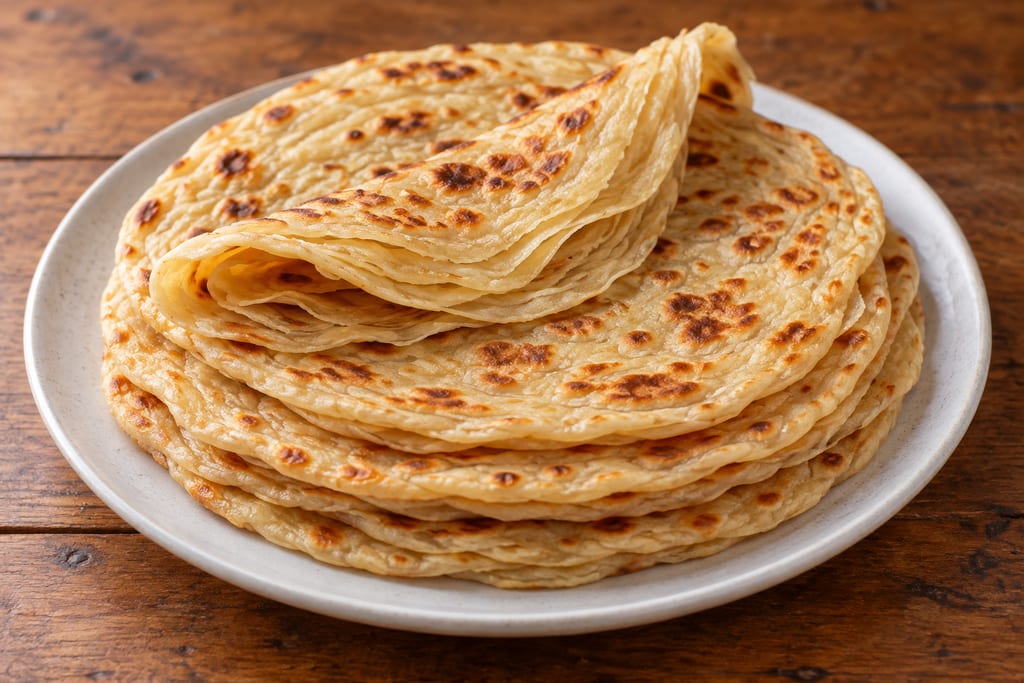
This Kenyan version folds and coils wheat dough with ghee before griddle cooking. The Smithsonian documents chapati in Kenyan cooking and describes connections with Indian and Pakistani cuisines. Other East African recipes use different fats and shaping methods.
At the 2014 Smithsonian Folklife Festival, Alice and Emily Oduor demonstrated Kenyan chapati. The accompanying account describes it with beef or chicken stew and with hot tea, and places it within Kenya's adoption of foods connected with Indian and Pakistani cuisines. It does not date the first arrival of chapati in Kenya.
Magical Kenya also identifies chapati among the foods of Mwembe Tayari in Mombasa. This adds a documented coastal street-food setting without making Mombasa the bread's birthplace. The named Kenyan recipe here remains one preparation within the wider East African range.
The Together Women Rise recipe pleats each rolled piece, coils the strip and rolls it again. Those steps are retained with its six-piece batch. The Oduors' separate Smithsonian recipe supplies cultural context, rather than replacement ingredient quantities or a reason to remove the pleating.
The source's extra ghee brushing is still disclosed without an invented amount. Likewise, neither account supplies a measured griddle temperature or a validated storage duration. The bread is cooked and served hot, with attention to both sides.
The Smithsonian documents chapati in Kenyan cooking and its connections with Indian and Pakistani cuisines; the first attestation is not established.
Yield 6 flatbreads · Scaling: source batch only
Contains wheat and milk (ghee).
Do not taste raw dough; raw flour can contain harmful germs. Wash hands and surfaces after handling it.
Use care with the hot griddle and fat.
Both sources document Kenyan chapati; no precise birthplace is established.
A Kenyan mandazi made with self-raising flour, lemon and optional cardamom, cut into triangles and deep-fried. This baking-powder-raised version is distinct from yeast-raised coastal mahamri.
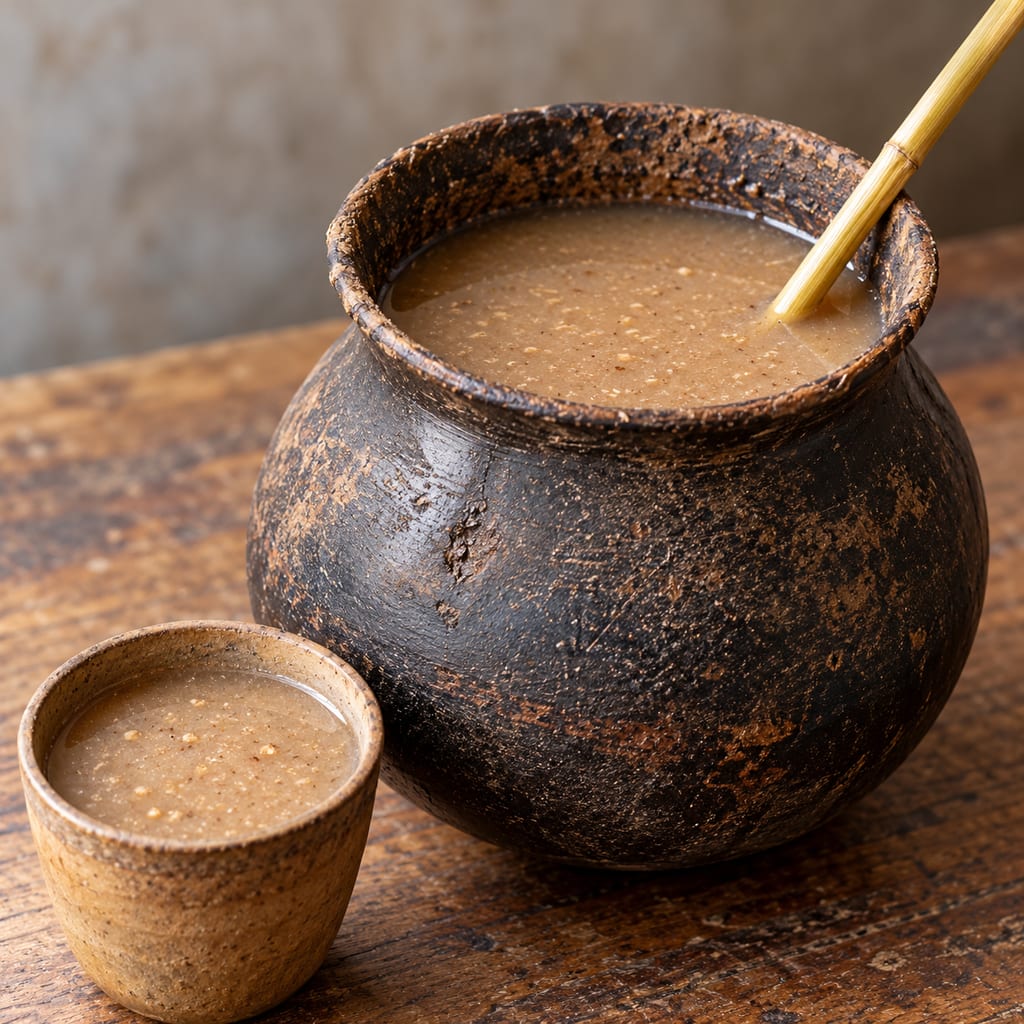
An opaque Kenyan maize beer: fermented maize paste is roasted into tsimbale, then mixed with finger-millet malt called kimera at ten to one and fermented a second time.
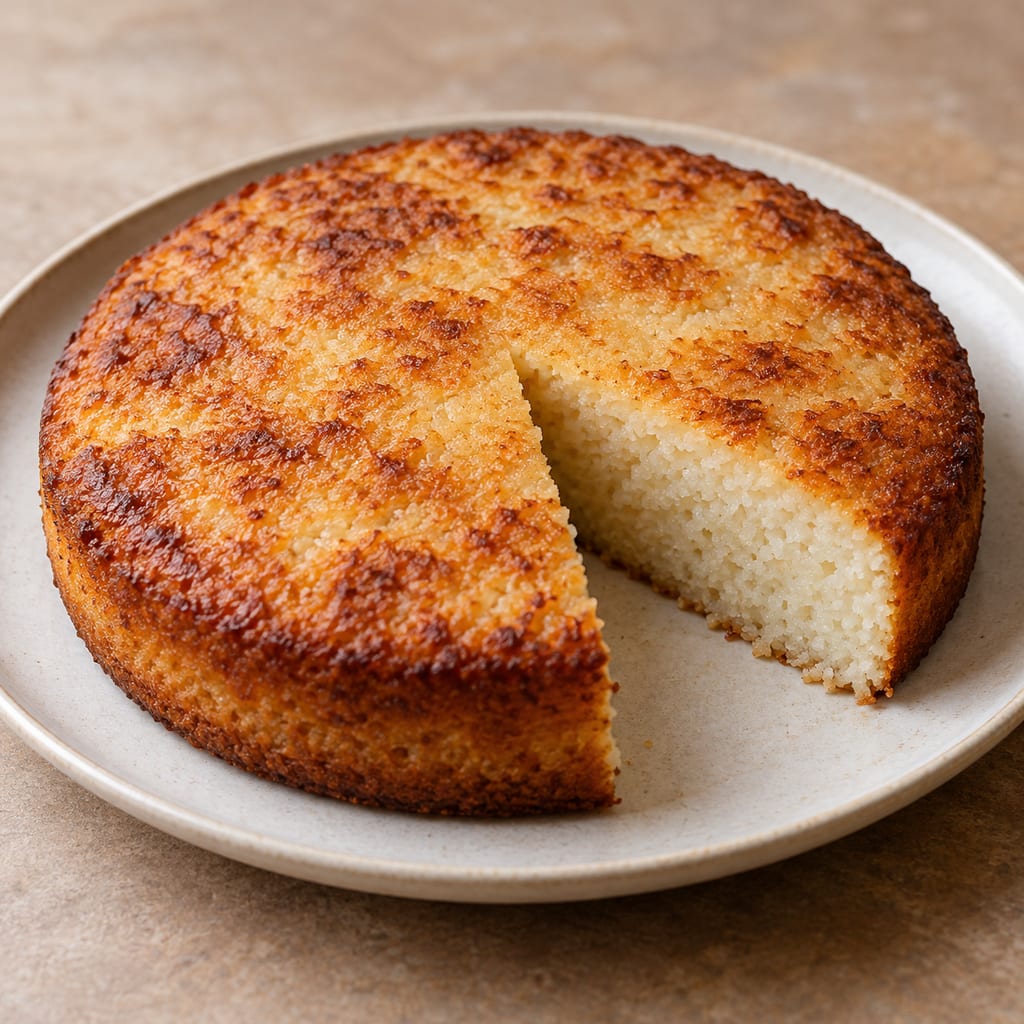
Fauzia’s Mombasa mkate wa sinia blends soaked rice with coconut milk, sugar, cardamom and yeast, then sets it covered on the hob and browns the top under a grill.
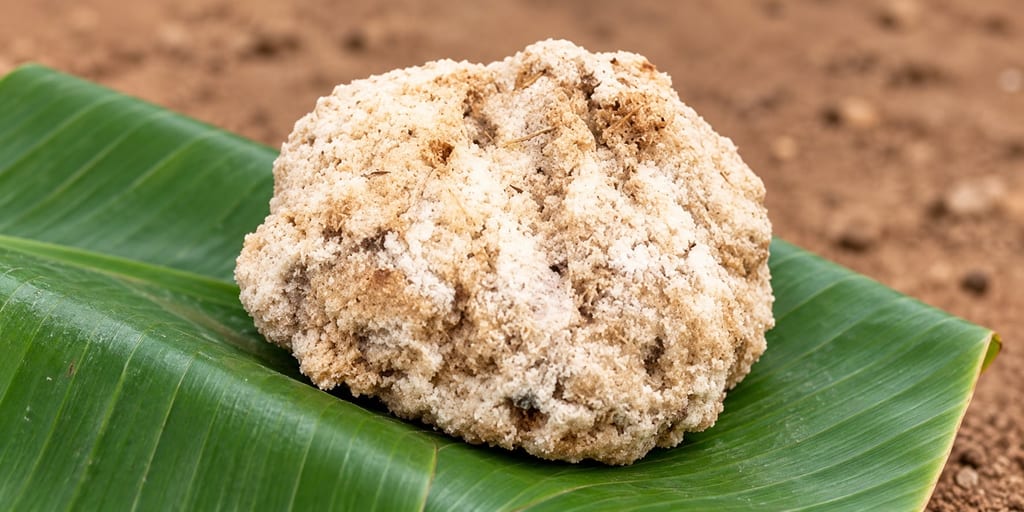
Nzoia River reed salt is a Bukusu seasoning made by leaching and evaporating the ash of mature muchua reeds. Its sources document a local method, but provide neither a measured formula nor verified mineral composition.
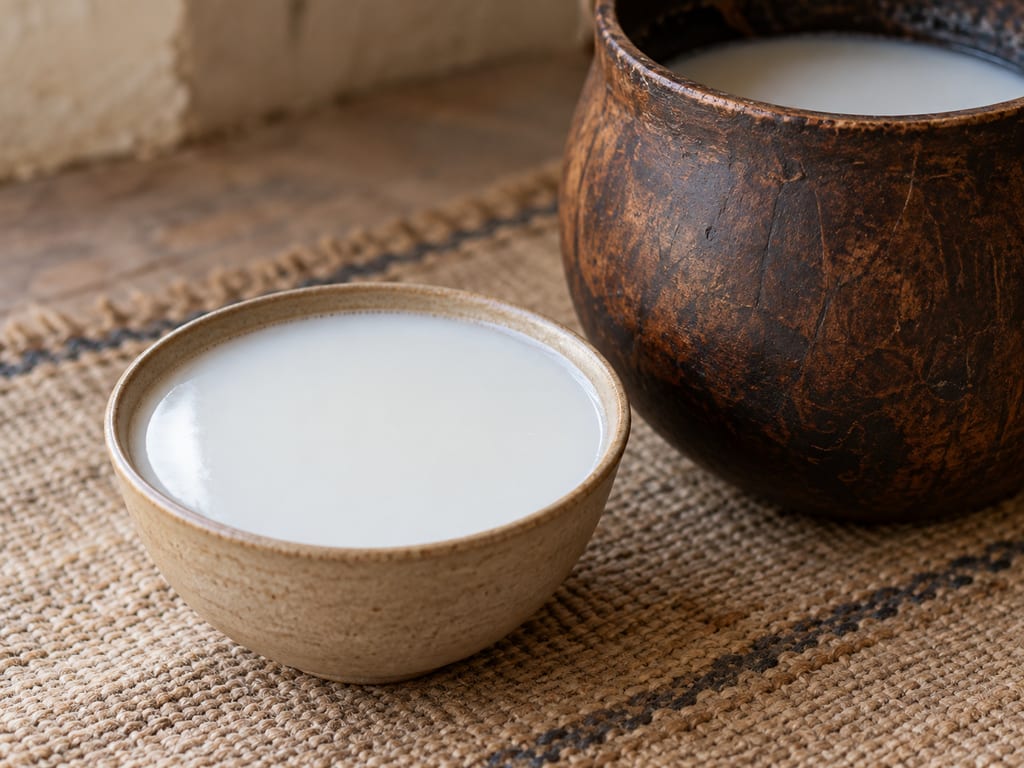
Suusac is a traditional fermented camel-milk drink of Somali pastoral communities in Kenya and Somalia, soured spontaneously in smoke-treated vessels into a thin, acid, smoky milk.
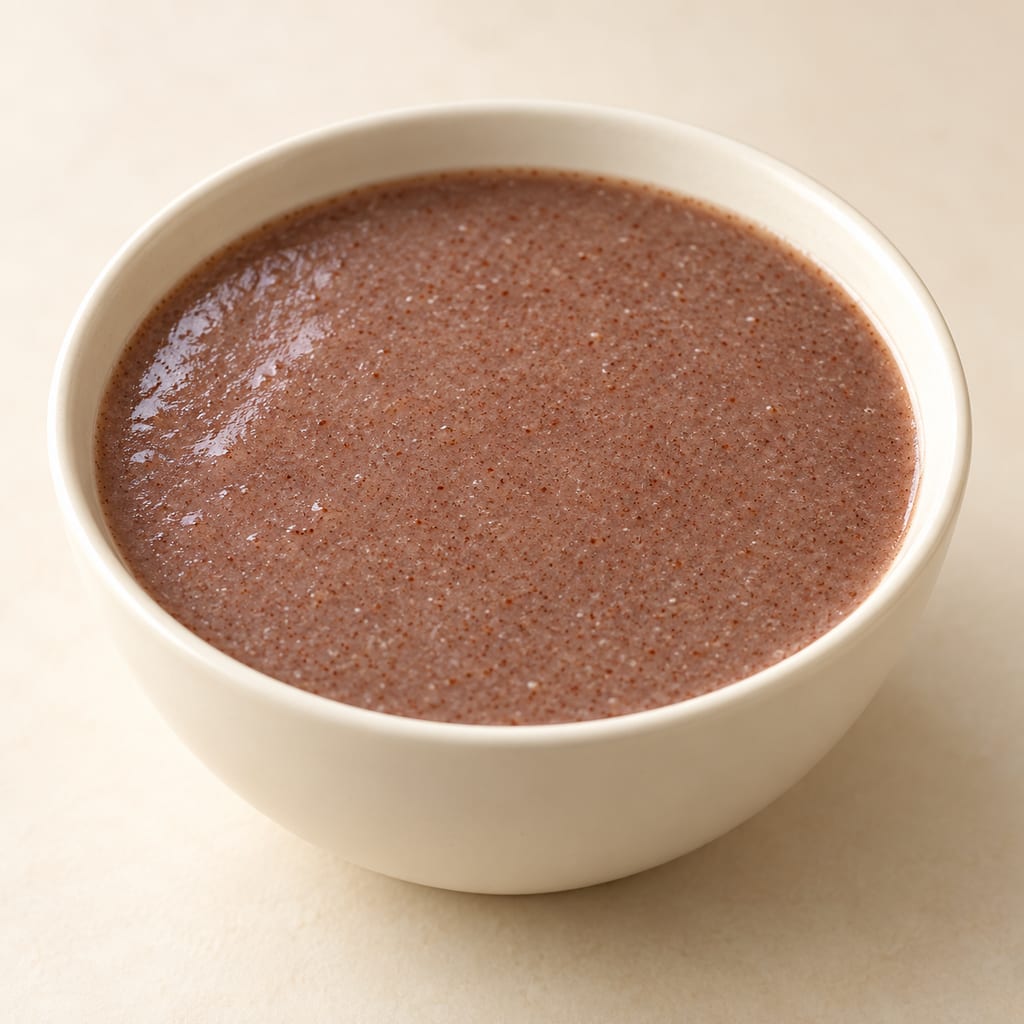
A thin, sour porridge of western Kenya made by fermenting unroasted finger-millet flour in water for a day or two, then diluting it and cooking it through.
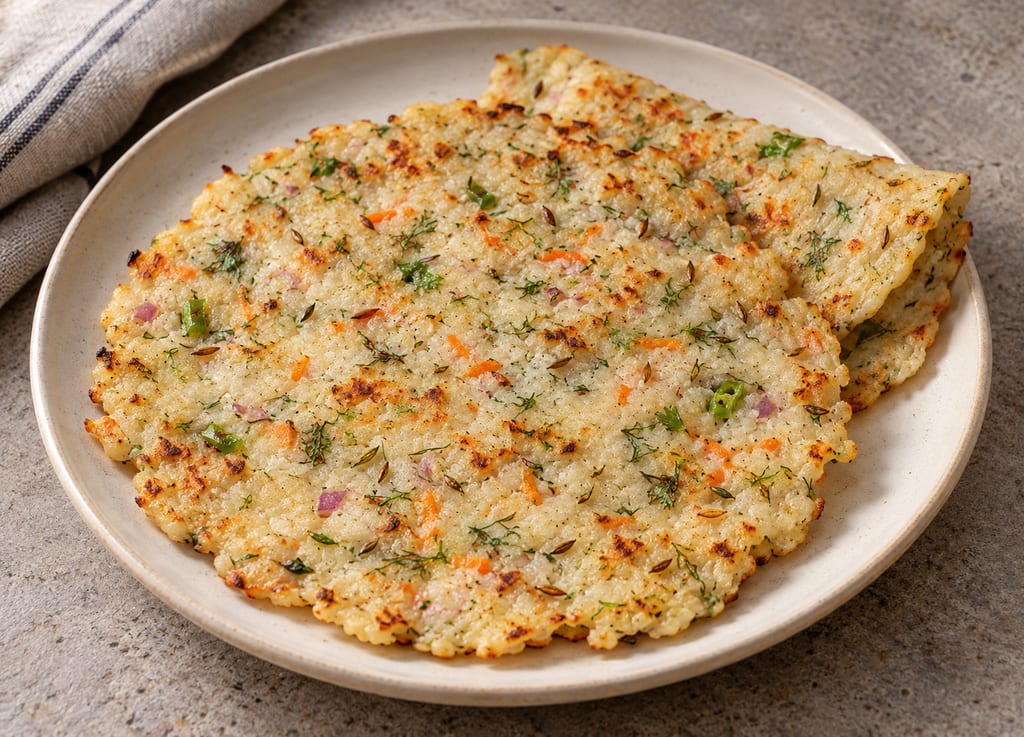
This Karnataka-style akki rotti mixes fine rice flour with vegetables, coconut, herbs and spices, then hand-pats and griddle-cooks the dough.
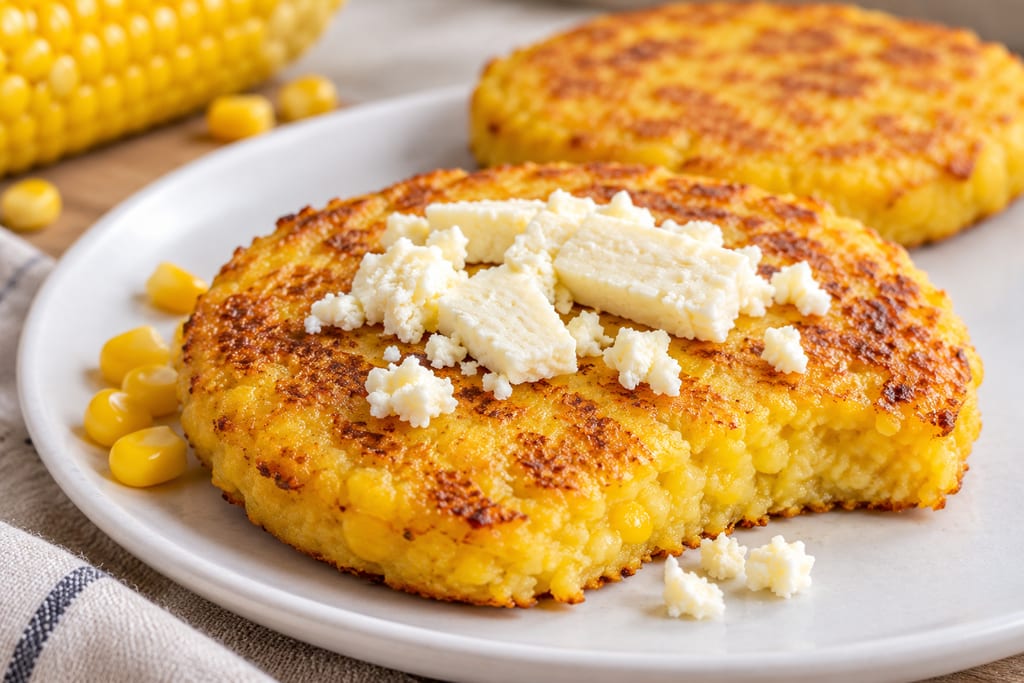
A Colombian Andean griddle cake made from fresh sweet-corn batter, cooked in butter and served with white cheese.
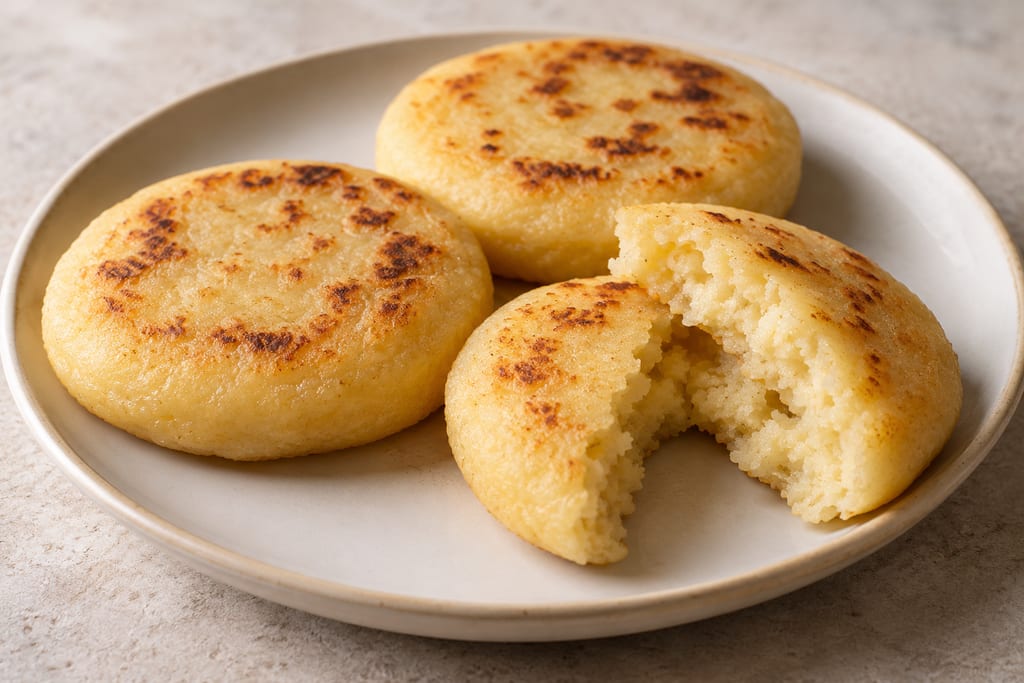
This household version combines precooked corn flour, warm water and salt, then cooks thick rounds on a lightly oiled skillet or griddle. It is one source-specific arepa method, not a universal Colombian or Venezuelan formula.
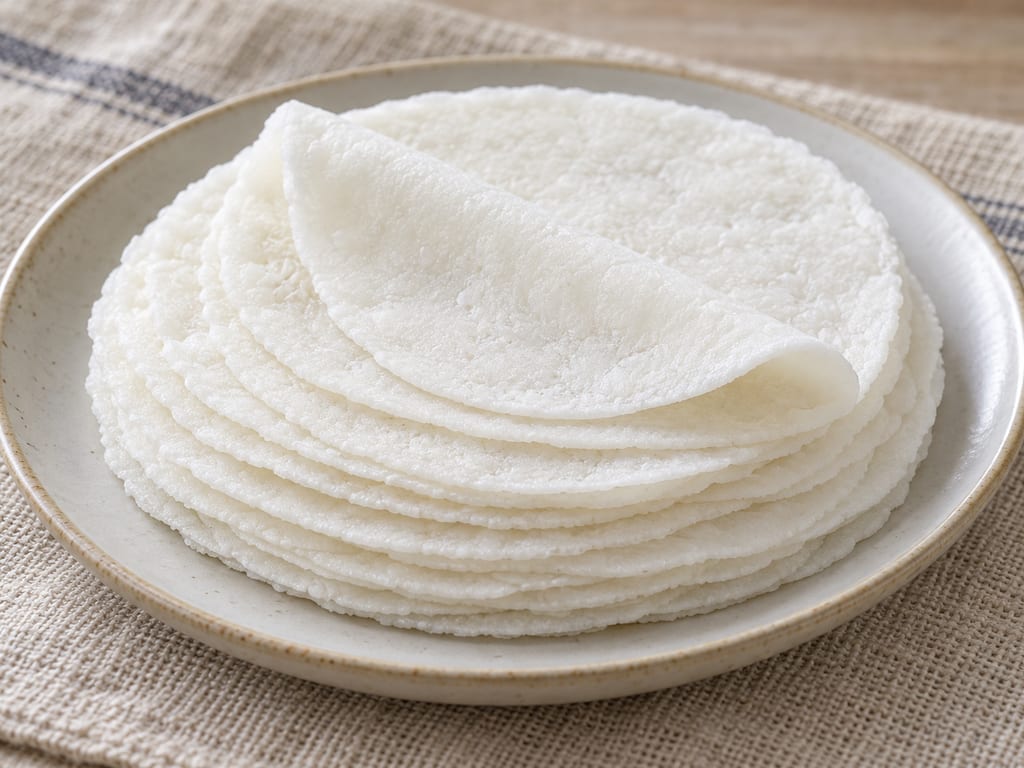
Thin Malabar rice-flour rounds made from roasted rice flour cooked into salted boiling water, kneaded after cooling, and rolled to about 1 mm. They cook on a hot griddle without taking on colour.
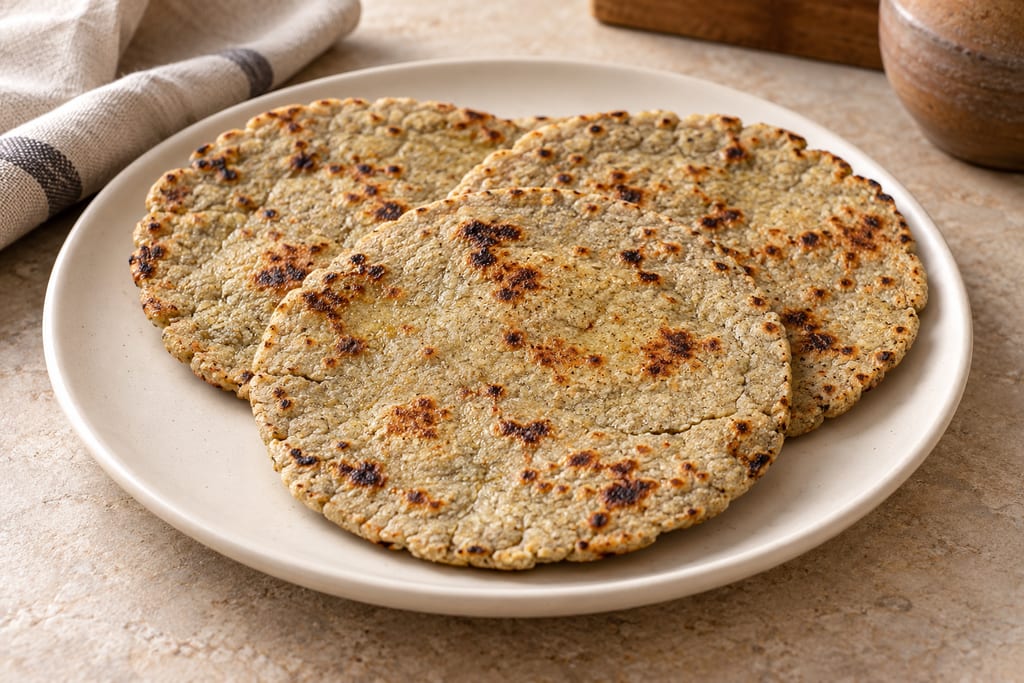
A pearl-millet flatbread shaped between sheets and cooked on a hot tawa. This home batch makes eight.
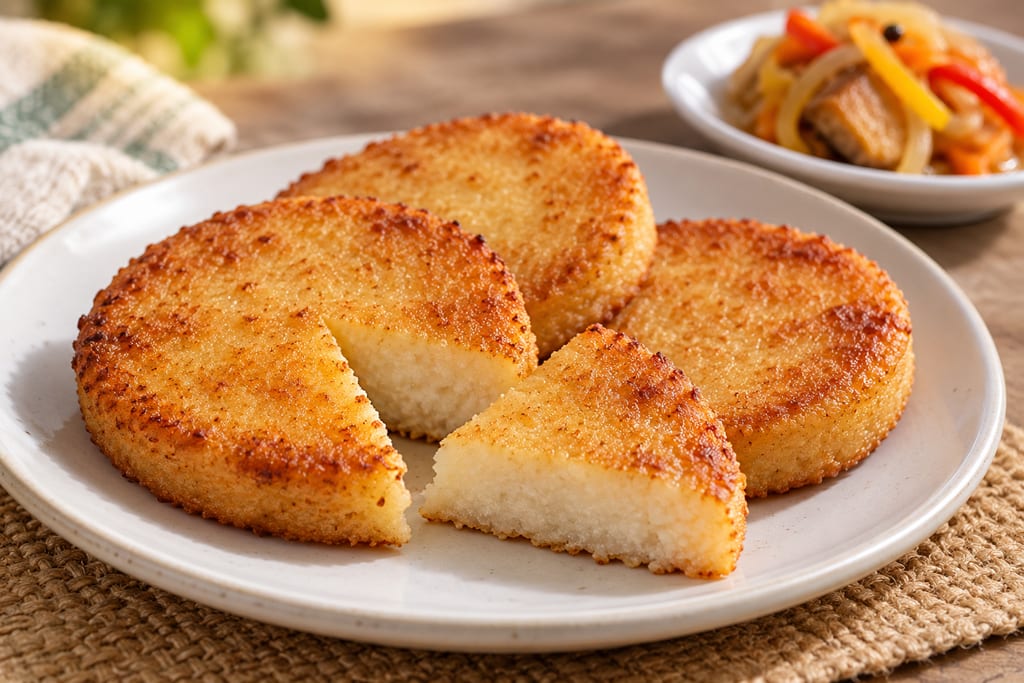
A serving method for approved, prepared bammy rounds: soak them in coconut milk and refry until golden. It does not process raw cassava.
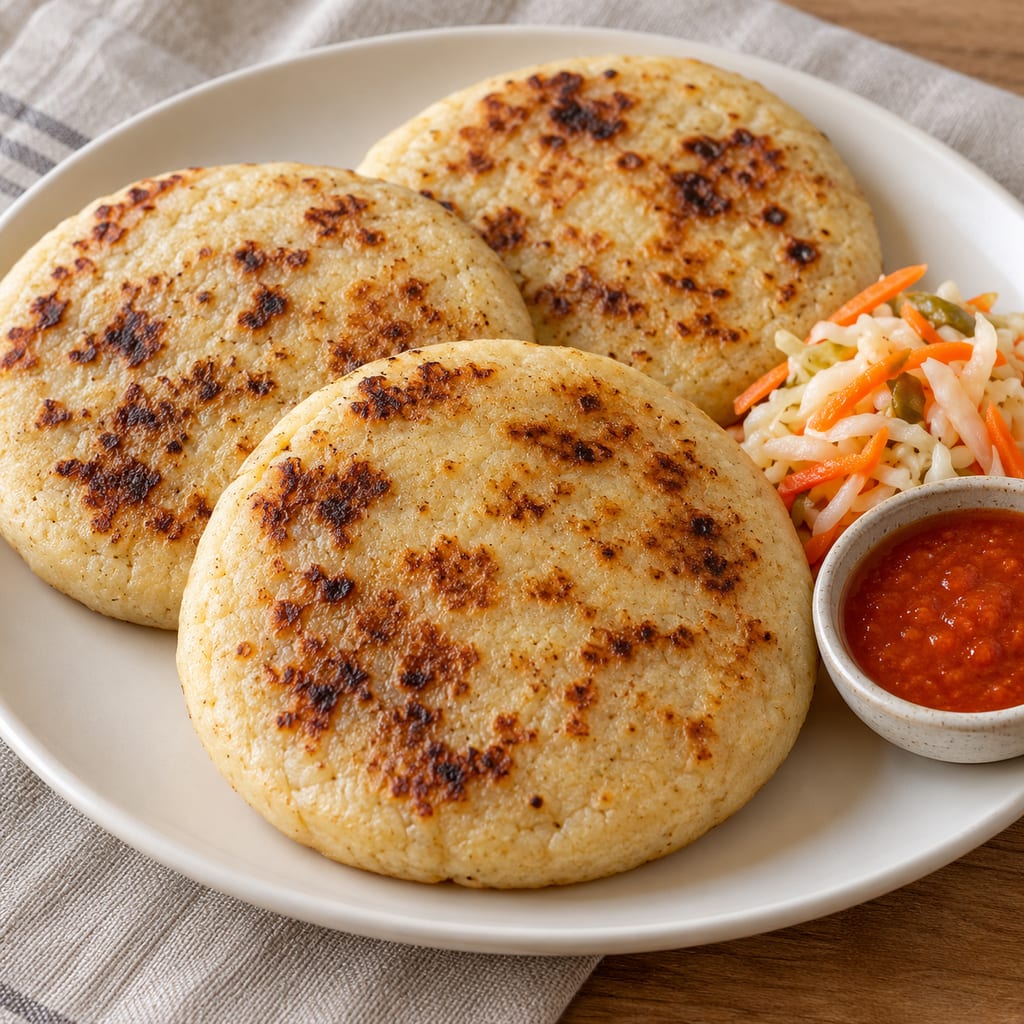
Salvadoran-style masa harina cakes filled with refried beans and cheese, sealed and cooked on an oiled skillet.
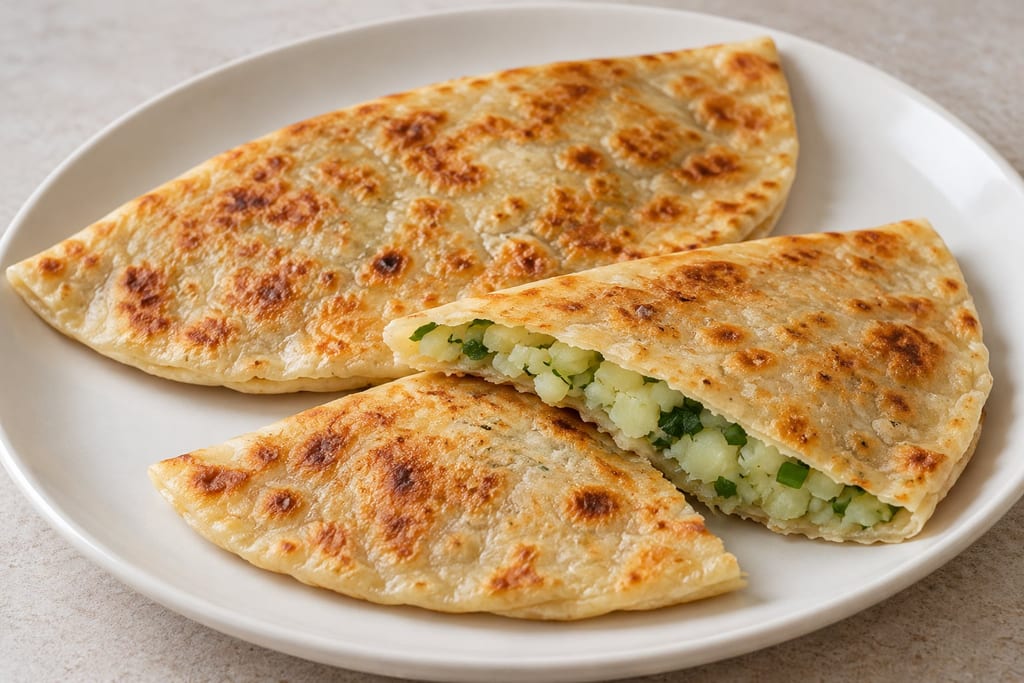
A thin, unleavened Afghan flatbread filled with mashed potato, scallion and cilantro, folded and pan-browned. This version uses a dough made from scratch.
No community contributions have been published for this entry yet.
Sign in to contribute. Published comments and photos are free to read.
Together Women RiseInspiration · Method · Geography
Kenyan Chapati (Chapo)Measured six-piece dough, ghee pleating, resting and griddle method.
Cited in: A layered Kenyan chapati; Layering belongs to the chosen method
Smithsonian Folklife FestivalContext · Geography
Recipe from Kenya: ChapatiKenyan chapati and its links with Indian and Pakistani cuisines.
Cited in: A layered Kenyan chapati; With stew, tea and street food; Layering belongs to the chosen method
Magical KenyaContext
Street FoodIdentifies chapati among foods sold in Mombasa's Mwembe Tayari area.
Cited in: With stew, tea and street food
Wikimedia Commons / safaritravelplusImage reference
Chapati-1.jpgKenyan/East African chapati, 9 March 2022; file-level CC0 reviewed by Leoboudv in 2024. Visually confirmed round cooked breads with browned patches and layered edges; approved linked-281f106f75d43f57. Same photographer and session as the companion photograph, distinct composition.
Wikimedia Commons / safaritravelplusImage reference
Chapati kenya.jpgKenyan/East African chapati, 9 March 2022; file-level CC0 reviewed by Leoboudv in 2024. Visually confirmed round cooked breads with browned patches and layered edges; approved linked-95cc4da2efd3728e. Same photographer and session as the companion photograph, distinct composition.