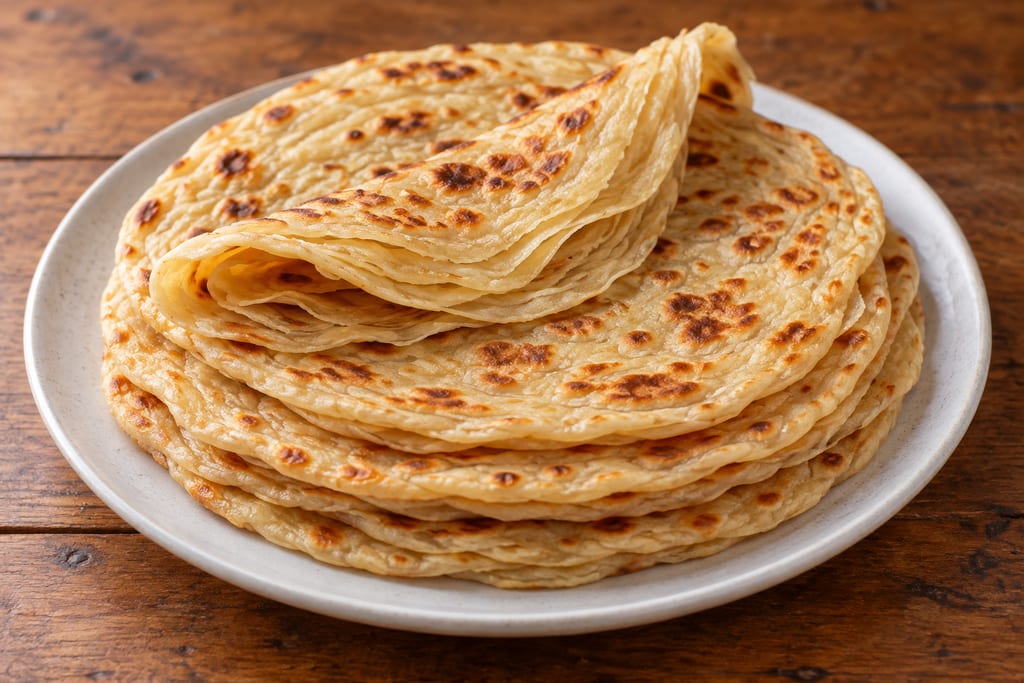
Kenyan chapati
Six Kenyan layered wheat flatbreads, pleated with ghee, coiled and cooked on a griddle.
 FermenteaWhere food goes to change
Traditional method
Bukusu reed salt
Nzoia River reed salt is a Bukusu seasoning made by leaching and evaporating the ash of mature muchua reeds. Its sources document a local method, but provide neither a measured formula nor verified mineral composition.
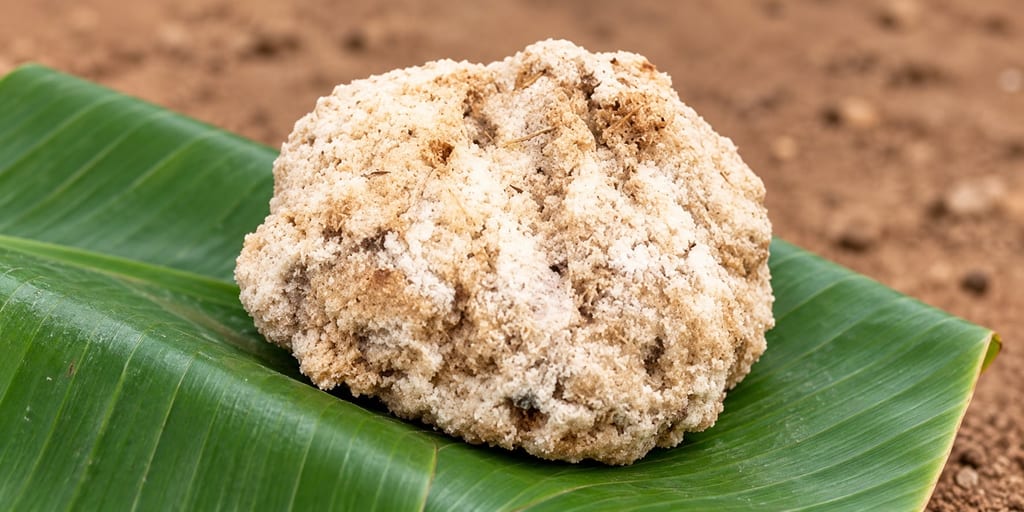
Nzoia River reed salt is a seasoning associated with the Bukusu community of western Kenya. Its raw material is not seawater or rock salt but muchua, a thin reed growing in wet ground along the Nzoia. Producers dry and burn the plant, leach material from its ash with hot water, and evaporate the filtered liquid. The remaining salty material is collected and traditionally wrapped in banana leaves. It is a preparation recipe because the finished seasoning is made through a sequence of operations; the evidence does not establish fermentation.
The name may suggest that salt is extracted directly from river water. The documented method is more particular: reeds are harvested after maturing, reduced to ash, and that ash is leached. The source calls what remains a salty mixture but does not report a laboratory analysis of its mineral profile. It should not be described as chemically equivalent to sodium chloride, iodized table salt or any other salt on the basis of appearance or taste.
Accounts describe a pale, soft or block-like product and sometimes a pepper-seasoned version. These are observations from particular reports, not a uniform specification: no standard colour, texture, moisture level or pepper amount is provided. There is no measured batch size, yield or concentration from which a home formula could be scaled.
Slow Food locates the living practice in Nabuyole, in the Webuye area of Bungoma County, western Kenya. It identifies muchua as a thin reed in the Nzoia wetlands and describes a dry-season harvest from September through March. The harvest signs are seasonal and botanical: the flowers have wilted and the upper leaves are nearly dry. Slow Food describes the plant as around two metres tall when ready and that an earlier harvest yields too little salt. That height is an observation in this account, not a universal identification rule.
The sources compare muchua with papyrus but do not establish a taxonomic identification. They provide no specimen, scientific description or analysis showing that every plant called muchua is one species. Keeping the community name is more accurate than assigning the ingredient a definite species.
The Presidium account says traditional production continues in Nabuyole and links the plant to wetlands. It reports that reduced river levels and loss of marsh habitat have put pressure on the resource. A project account also identifies further quality analysis as a need. That is evidence that testing was sought, not a test result. The available sources do not establish where the practice began, even though they document a present production locality.
The method has several physical stages. Drying removes some water from the gathered plant. Slow burning converts the dried reeds to ash. Hot water dissolves water-soluble material from that ash; filtration separates the liquid from larger insoluble particles. Boiling drives water away until a residue remains. These are drying, combustion, extraction, filtration and evaporation operations, not microbial fermentation.
This explains the order without claiming more chemistry than the evidence supports. The publications do not quantify mineral content in reed or ash, the fraction recovered in the filtrate, or what remains behind after filtration. They give no laboratory values for sodium, potassium, chloride, trace minerals, contaminants, moisture or iodine. “Salt” identifies the culinary preparation, not a complete compositional analysis.
Evaporation is central because water carrying dissolved material must be removed before the residue can be collected. Yet no source gives a temperature, ash-to-water ratio, pan dimensions or instrument-based endpoint. A cook cannot infer a reliable yield or repeatable concentration from the instruction to boil until the liquid is gone. This account records the described sequence rather than a validated scaled procedure.
In the Slow Food account, bunches of reeds are set on stones by the river to dry and then heated over a slow fire for up to three days. The resulting ash is mixed with hot water and filtered. The filtrate is boiled in a large pan until its water has evaporated, leaving a salty residue. Producers collect it, wrap it in banana leaves and dry it under hot ash overnight. Pepper is sometimes added, but the source gives no amount or fixed point at which it enters every batch.
A 2022 producer account gives a different schedule: four days of sun drying, three days of burning and a final three hours over ash, for an overall process of about eight days. It also describes leaching through a pot with a drainage hole into an aluminium pan. Because this differs from the overnight final drying in the Slow Food entry, the two accounts are kept separate rather than combined into one timetable. Neither provides measured temperature or an instrument-based endpoint.
No weights or proportions are reported for reeds, water or pepper. No yield, storage period, packaging specification or shelf life is established. The steps here are a record of a reported traditional sequence, not instructions to improvise with unidentified plants, river water or ash. The available material does not establish food-grade qualification or a validated process for a particular batch.
Slow Food presents reed salt as a response to western Kenya's historical distance from established salt routes. It says the Bukusu migration from the Congo toward the east coast is thought to date to the seventeenth century and suggests the practice was handed down afterward. This is an attributed origin tradition, not a dated record proving when the method began. The sources consulted do not establish an earlier written attestation or archaeological date for the technique.
The same account connects imported marine salt with British colonization and says it displaced much of the laborious reed method. The broad economic context is that locally gathered wetland plants could provide seasoning where traded salt was difficult to obtain, while imported salt could become easier to buy than a process taking days. The publications provide no historical prices, household consumption figures or continuous trade series, so the scale of change cannot be quantified.
Slow Food says a Presidium was created in 2009 after a study with the University of Gastronomic Sciences at Pollenzo. It has supported processing equipment, promotion and commercialization. The Nabuyole producers' group prepared production rules, while reforestation work aims to restore marshes where the reeds grow. These are modern conservation and market activities, distinct from the older practice they seek to sustain.
Sources describe the product as a local seasoning and report sales to local customers and hospitality businesses. One chef quoted in a Kenyan news account describes a soft texture and sharp taste. This is one person's description, not a sensory standard. The documents do not list particular dishes or provide cooking tests, so uses beyond seasoning should not be invented.
Pepper is the clearest documented variation. Slow Food says it is sometimes added and gives the salt a spicier flavour. The publications do not identify a pepper species, quantity, grind or stage of addition. It is a small variation within the same preparation, not a separate recipe or fixed proportion.
The reported drying schedules differ, but the evidence is insufficient to define distinct regional variants. One account says final drying under hot ash overnight; a producer report says three hours. The difference could reflect variation or reporting, and the sources do not resolve it. Keeping each attribution visible is more faithful than creating a composite timing.
The images and captions in two contemporary reports also differ in how they present the finished salt: a Kenyan article labels one side of a collage moist red salt and the other dried, ready-to-use salt, while a Business Insider photograph shows a pale porous chunk. These are descriptions of particular samples, not a grading standard. The publications do not give moisture or mineral measurements that explain the contrast, so colour alone cannot identify composition, quality or a separate named type.
The supplied research dossier leaves two questions open: botanical identity of muchua and the chemical composition and food-grade qualification of the finished salt. The cited publications provide no independent test report. A cultural account can establish that a food is made and valued without establishing the composition of every batch. This page therefore does not claim that the residue is pure sodium chloride, assign it a nutritional profile, or tell readers to substitute it spoon for spoon for table salt.
The phrase “pure salty mixture” in one account describes what remains after evaporation; it is not an analytical or regulatory certificate of purity. Ash extraction depends on the plant and its environment, and the publications do not quantify those effects for this product. No medicinal or health benefit is asserted here as fact; such claims found in some cultural summaries are not supported by clinical evidence in the sources used for this method account.
For readers, the useful distinction is between documenting the practice and validating a modern batch for use. The first can be described from community and producer accounts. The second would require reliable botanical identification, assessment of suitable raw materials and water, and compositional testing. Until such evidence is available, this remains a careful record of the reported method without a measured formula or safety assurance.
The slow sequence helps explain why this salt remains a small-scale product. The contemporary producer account describes several days drying and burning, followed by leaching, evaporation and final drying. Slow Food calls the method demanding and time-consuming. Those are direct costs of labor and fuel; the sources do not give a complete household budget or a standardized output per day, so they do not support a precise productivity estimate.
The 2022 Kenyan report says a producer supplied local buyers and hotels, and relays a high retail price estimate for that period. It also reports that a Kenyan salt received recognition at Salone del Gusto and Terra Madre in 2014. Those details show that the product has entered specialist culinary and heritage markets; neither is a current price list or a chemical quality specification. A chef's description of sharpness and softness also remains a personal tasting report, not a measured sensory standard.
The Slow Food Presidium's role is to support the producers' own rules and improve processing equipment, while promoting sales. The social-report account of banana-leaf wrapping shows that packaging is part of the making tradition, not just a later label. Yet none of these sources reports a shelf life, storage temperature or stability test. Readers should not infer long storage from the dry final appearance or from the traditional package.
The territory is part of the process: producers depend on a reed growing in the wetland season and on fuel for slow burning and evaporation. Slow Food links reduced marsh areas with deforestation and falling river levels, and describes reforestation as a way to restore habitat. This makes the salt's future a question of ecology and knowledge transfer as well as market demand. The cited reports identify the producer group but do not provide a full account of how skills are taught across generations.
Slow Food describes reed-salt making among the Bukusu in western Kenya and says the practice is thought to date from the community's migration eastward from the Congo, sometimes placed in the seventeenth century. This is an attributed origin account, not a dated first attestation. Slow Food records imported marine salt, brought with British colonization, later displaced much of the labor-intensive local production. Slow Food records a 2009 Presidium formed after a study with the University of Gastronomic Sciences, equipment and promotion support, producer rules, and reforestation intended to restore reed-growing marshes.
Scaling: source batch only
The supplied research record says the chemical composition and food-grade qualification have not been independently verified. These descriptions do not establish that an untested batch is safe or provide a substitution ratio for ordinary salt.
Slow Food identifies Nabuyole as a present production area; this does not establish an origin or exclusive birthplace.
Six Kenyan layered wheat flatbreads, pleated with ghee, coiled and cooked on a griddle.

A Kenyan mandazi made with self-raising flour, lemon and optional cardamom, cut into triangles and deep-fried. This baking-powder-raised version is distinct from yeast-raised coastal mahamri.
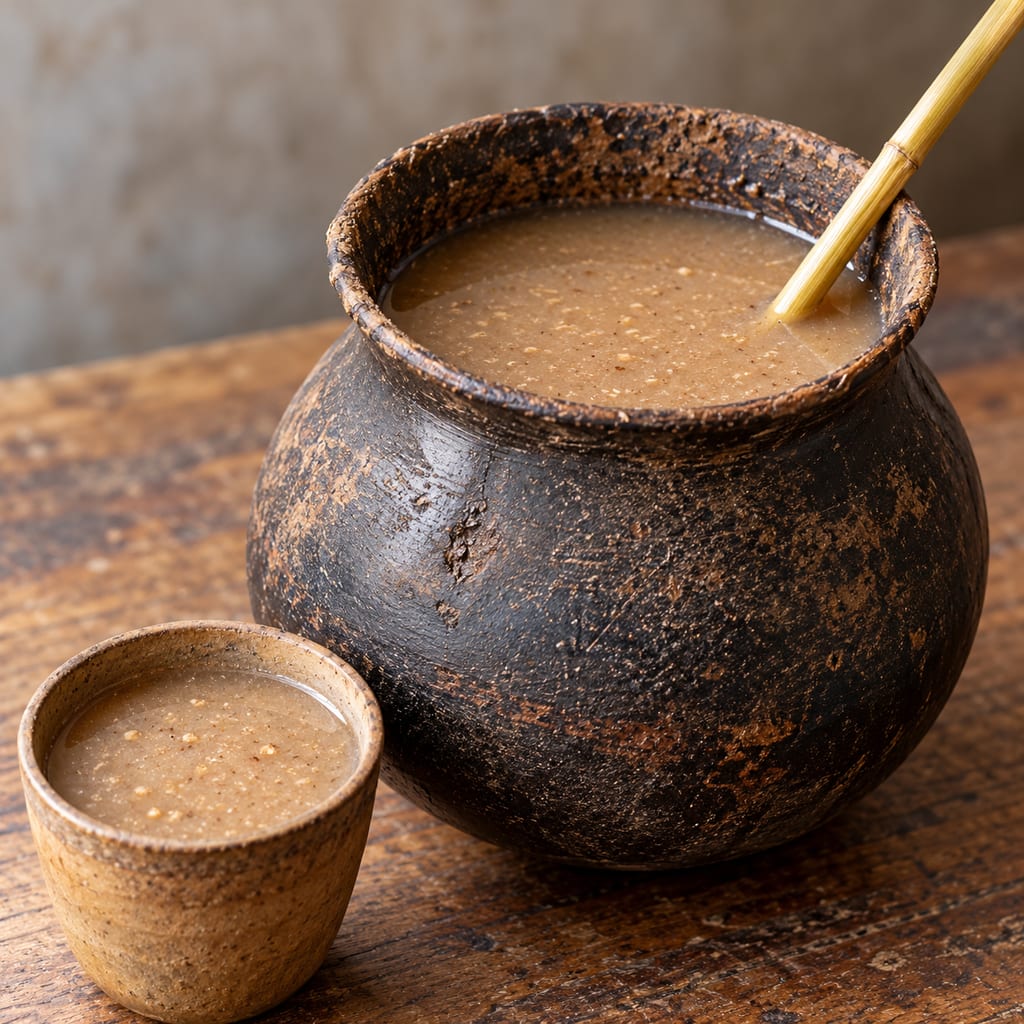
An opaque Kenyan maize beer: fermented maize paste is roasted into tsimbale, then mixed with finger-millet malt called kimera at ten to one and fermented a second time.
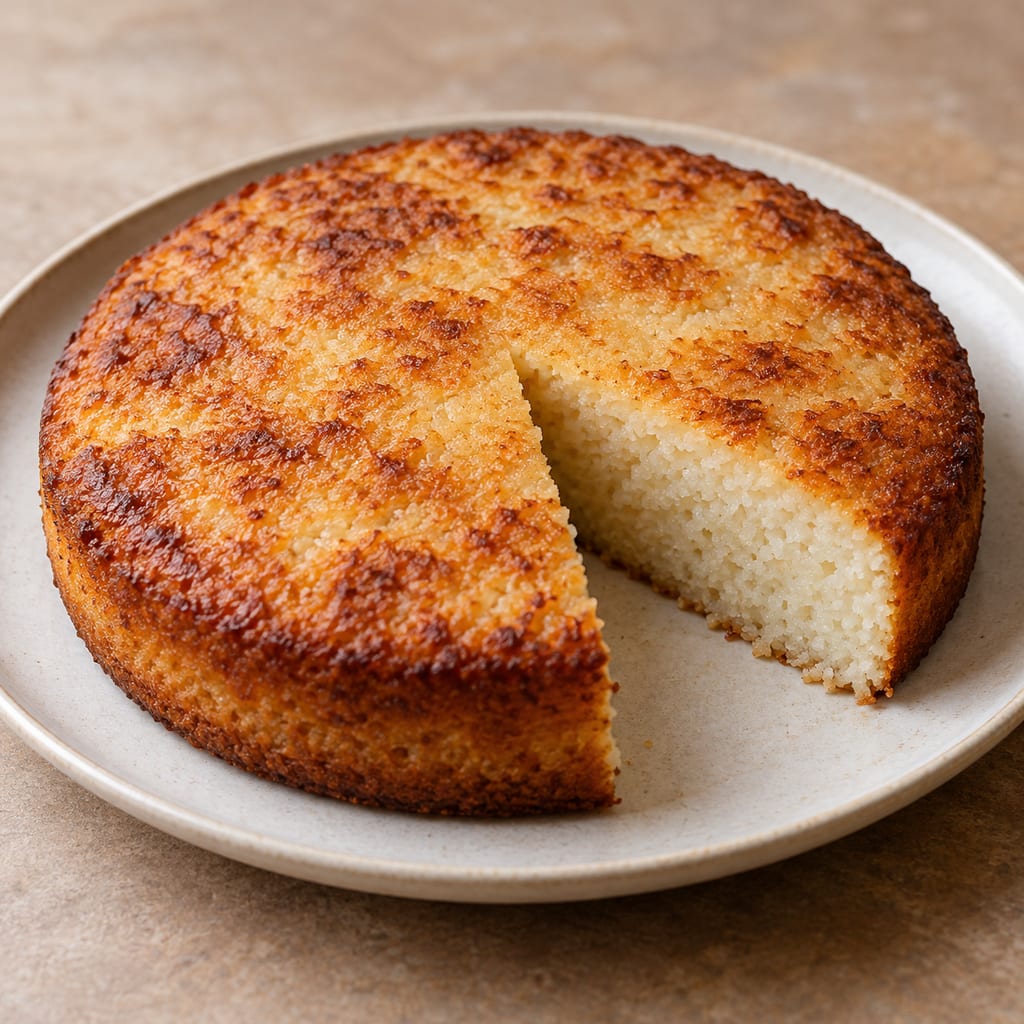
Fauzia’s Mombasa mkate wa sinia blends soaked rice with coconut milk, sugar, cardamom and yeast, then sets it covered on the hob and browns the top under a grill.
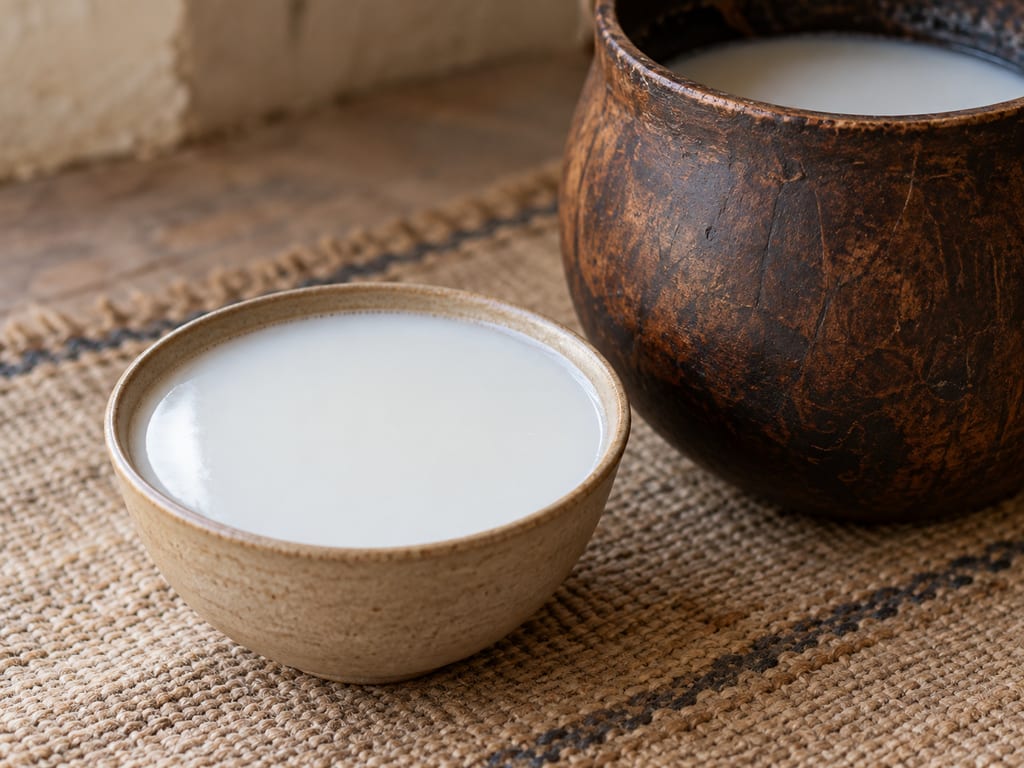
Suusac is a traditional fermented camel-milk drink of Somali pastoral communities in Kenya and Somalia, soured spontaneously in smoke-treated vessels into a thin, acid, smoky milk.
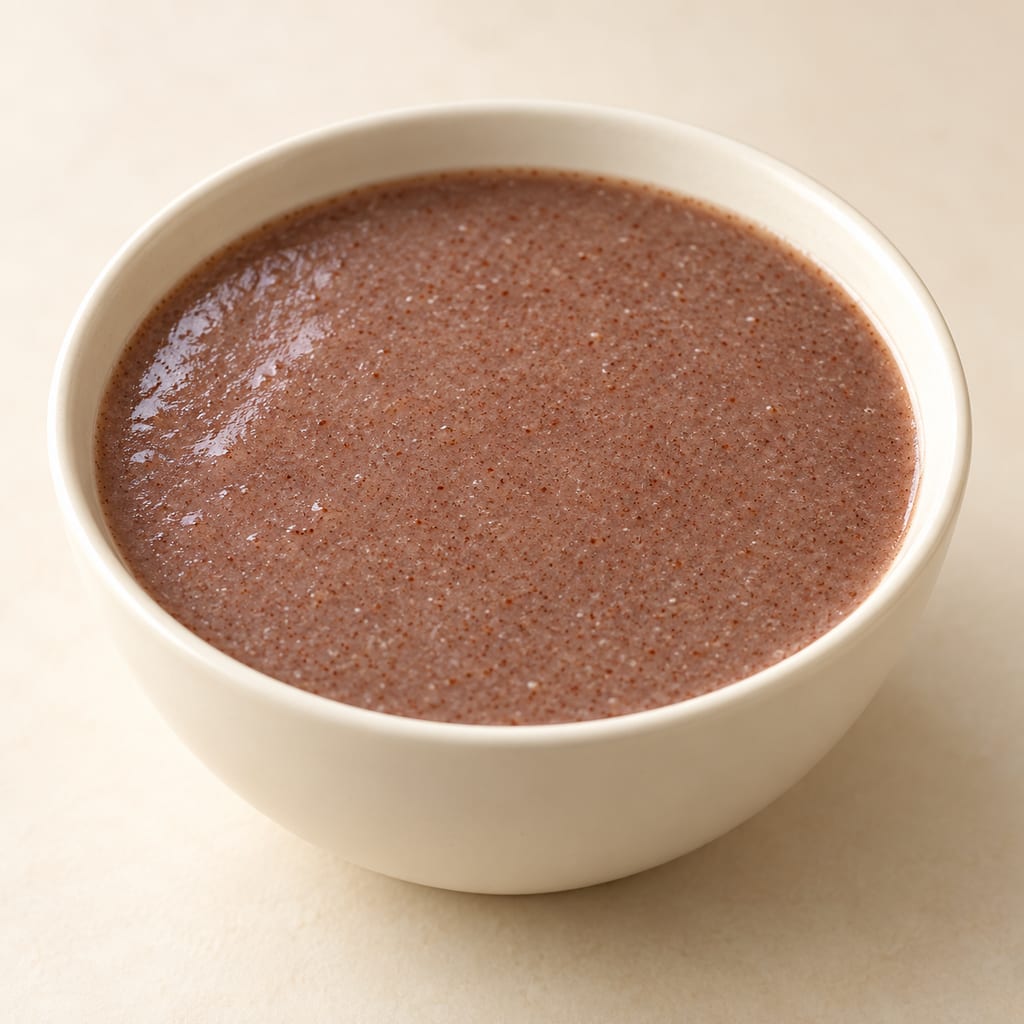
A thin, sour porridge of western Kenya made by fermenting unroasted finger-millet flour in water for a day or two, then diluting it and cooking it through.

Adygean salt is a seasoned table salt associated with Adygea and the wider North Caucasian culinary tradition. Salt is blended with garlic and a variable selection of herbs and spices; the exact mix depends on the named style and maker.
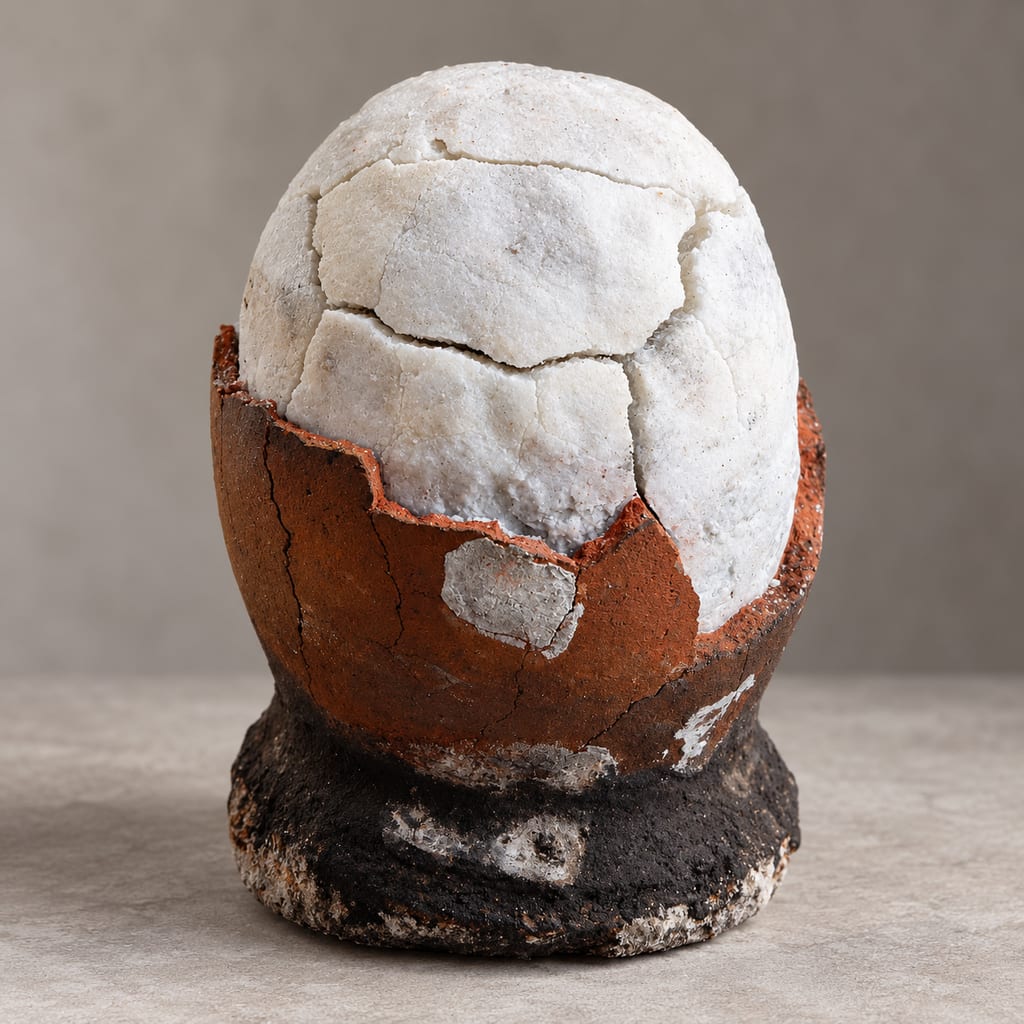
Asin tibuok is a Boholano salt-making craft that turns seawater-soaked coconut husks into a salt-rich ash, brine and formed sea salt in specialized clay pots. This record follows one published account of the community process; it is not a validated household formula.
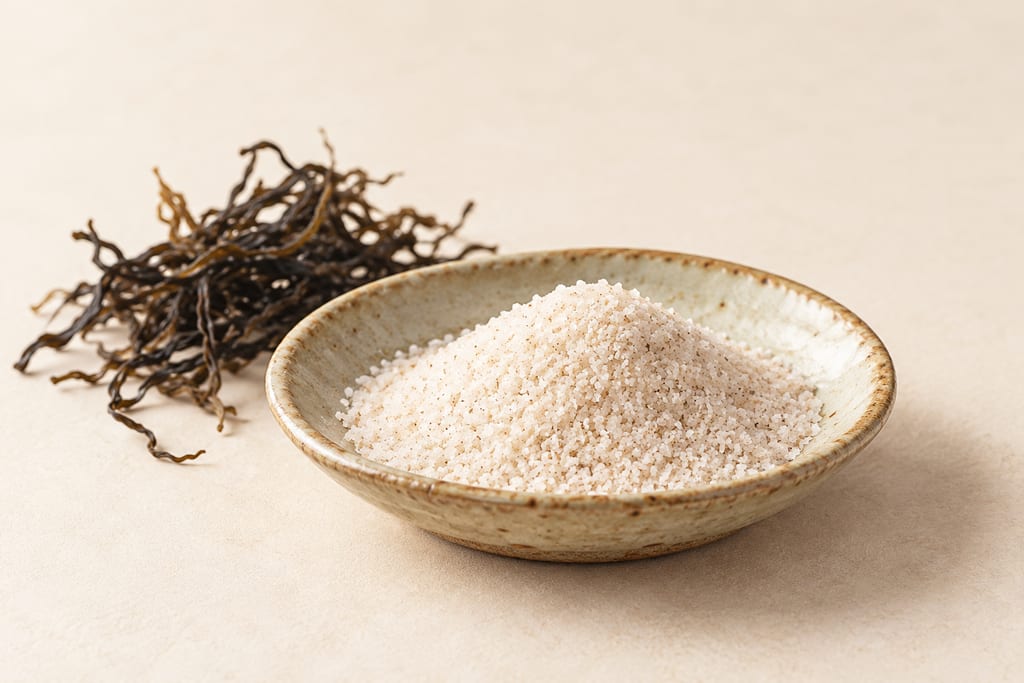
Amabito no Moshio is a modern, pale beige Japanese seaweed salt made from Seto Inland Sea water and hondawara seaweed. Its documented factory method concentrates filtered brine in kettles, then separates and dries the salt.
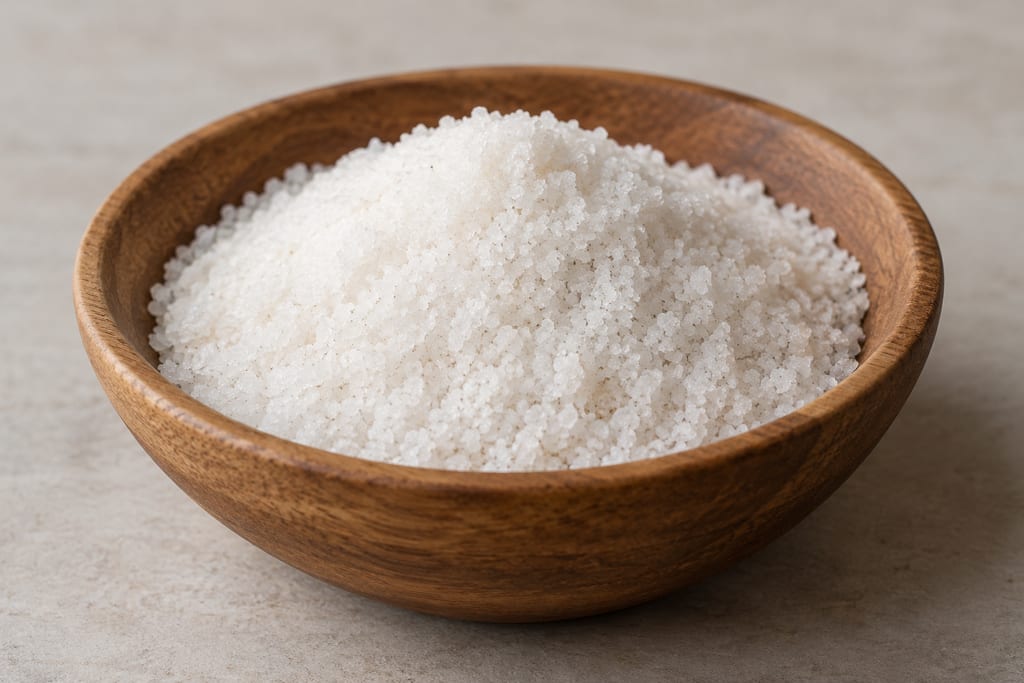
Asin sa buy-o is a fine sea salt made in Panayunan, Botolan, and packed in a woven nipa pouch called a buy-o. Salt-bearing coastal earth is leached with seawater, and the brine is boiled to crystals.
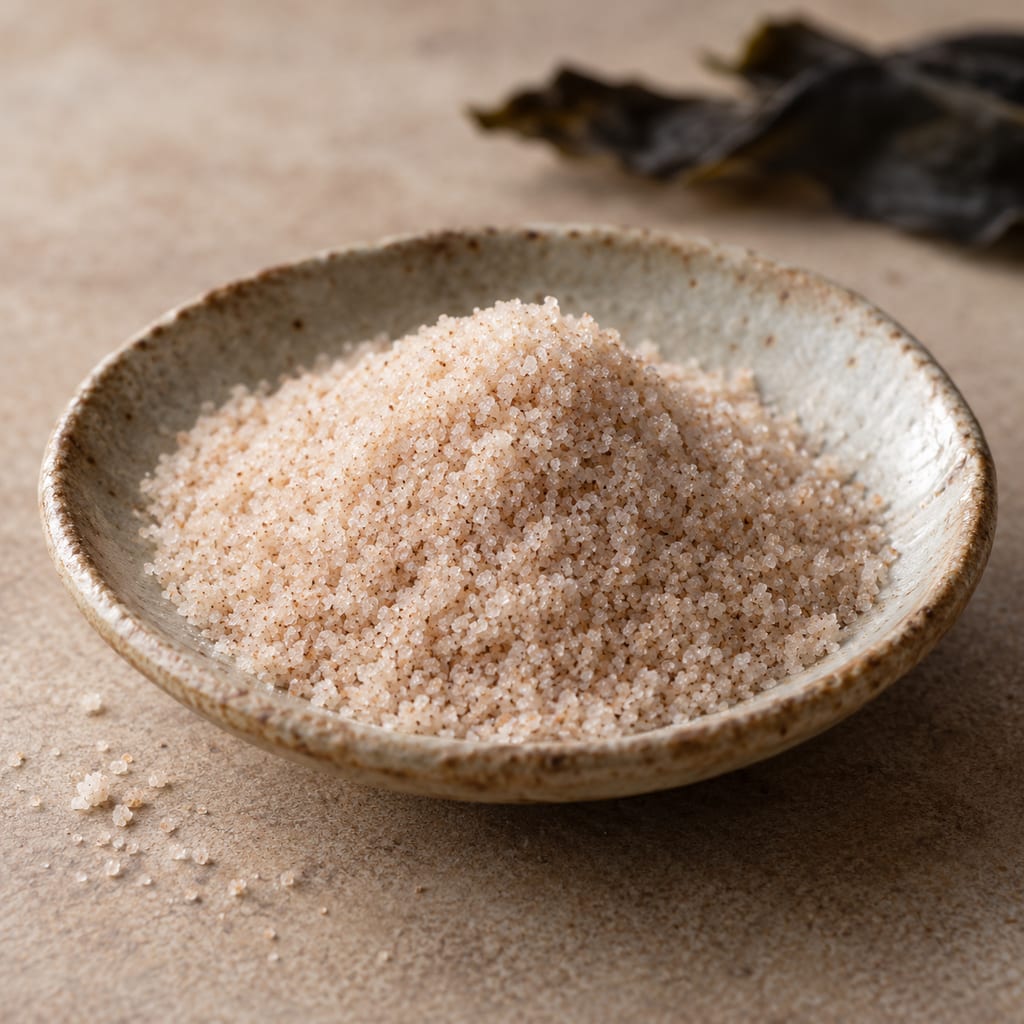
Awaji moshio is a modern Japanese seaweed salt made by TaDa PHILOSOPHY from Awaji Island seawater and seaweed. Its premium process concentrates brine, extracts seaweed flavor, then crystallizes, separates, dries and grades the salt.
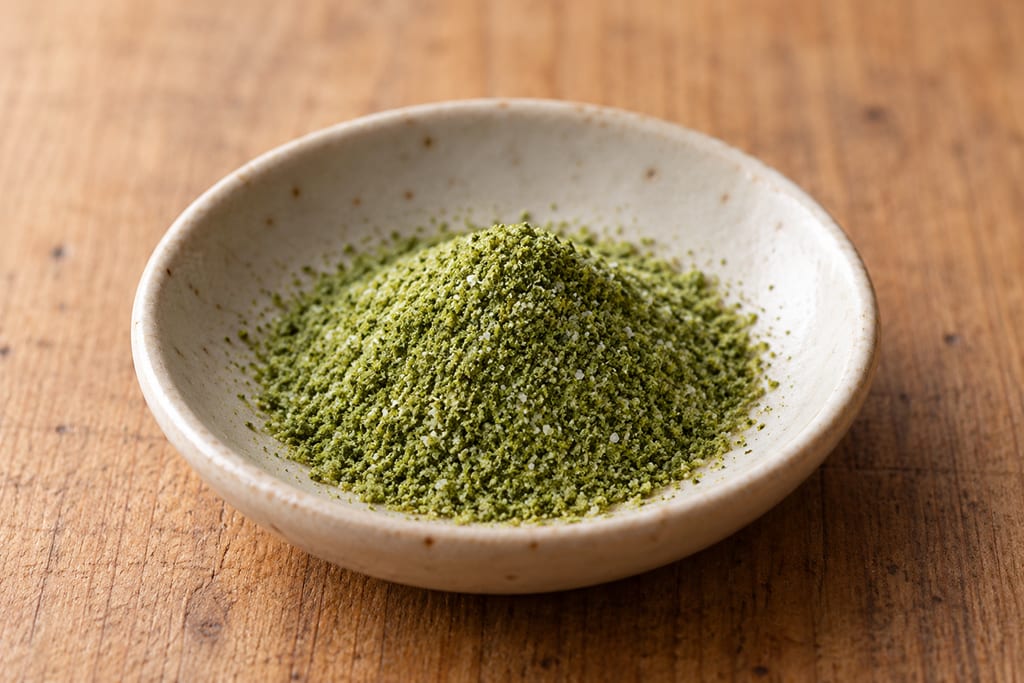
Green tea leaf salt is a dry seasoning made by grinding tea leaves, sieving them and mixing the powder with fine salt. This Japanese-style version follows a documented equal-parts method.
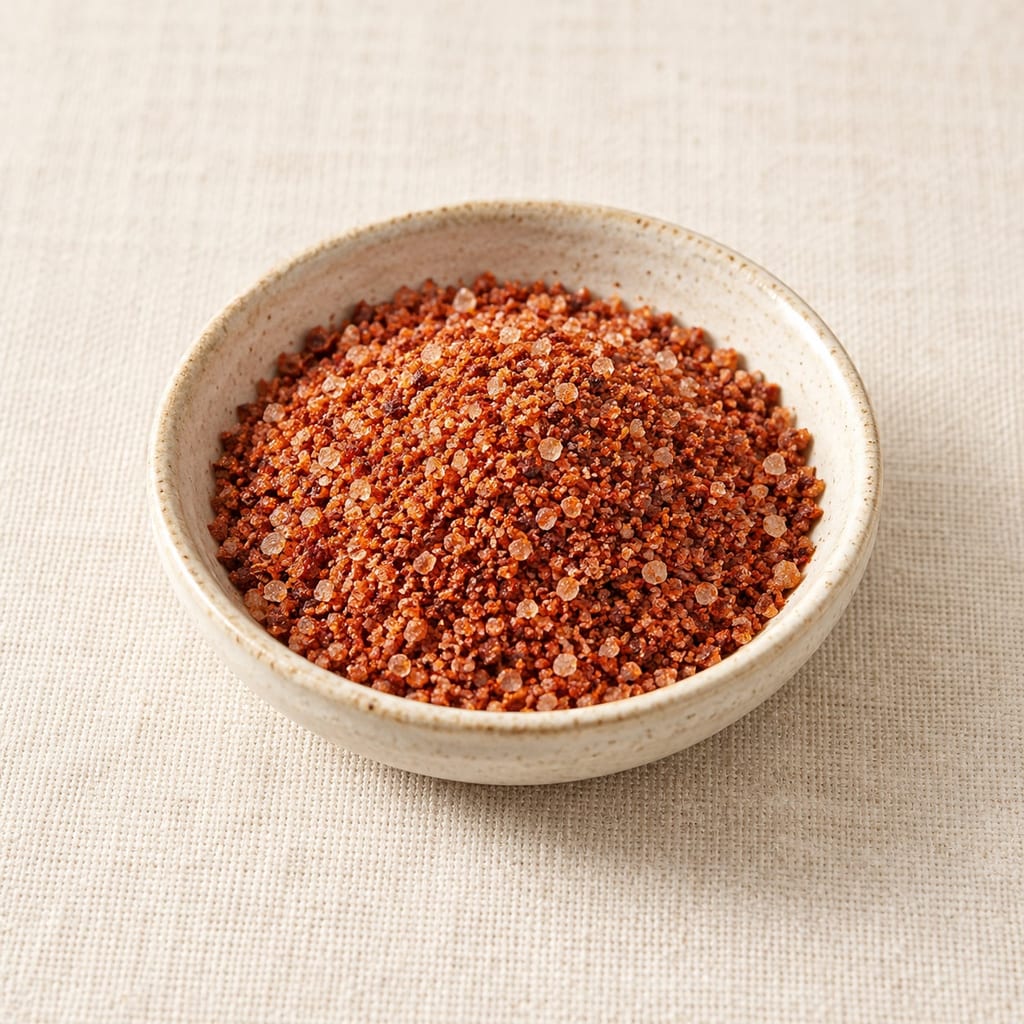
A dry Mexican seasoning of maguey worm, salt and chile, most closely associated in published accounts with Oaxaca and commonly served with mezcal, citrus and fruit.
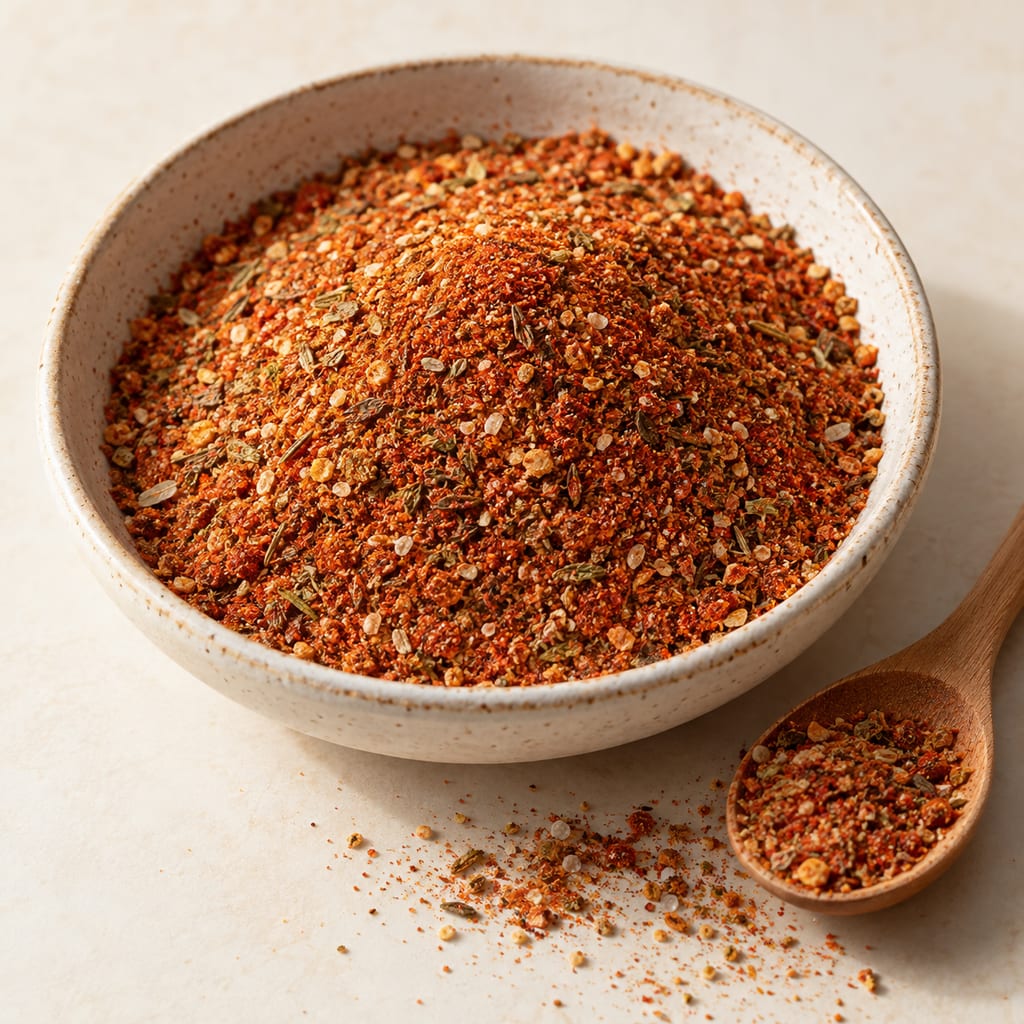
Bulgarian dry seasoning of salt, paprika, dried herbs and spices, with household and regional variations.
No community contributions have been published for this entry yet.
Sign in to contribute. Published comments and photos are free to read.
Slow Food Foundation for BiodiversityMethod · History · Geography
Nzoia River Reed SaltPresent production is associated with Bukusu producers in Nabuyole, Webuye.
Muchua is harvested in the dry season when flowers wilt and upper leaves are nearly dry.
The method dries reeds, burns them slowly for up to three days, leaches ash with hot water, filters, boils to evaporation, packs in banana leaves and dries under hot ash overnight.
Pepper is sometimes added.
The seventeenth-century migration context is presented as a belief, not a first attestation.
A Presidium was created in 2009; producer rules and marsh restoration are described.
Cited in: A salt made from reeds; Wetland plant and place; What the process does; The documented method; History without a fixed founding date; Seasoning and variation; Using the account responsibly; Labor, markets and the present-day revival
University of Gastronomic Sciences, PollenzoMethod · History · Identity · Geography
The Ark of Taste in KenyaThe product is linked to the Bukusu community and Nabuyole, Webuye, Bungoma County.
The entry names muchua and water and describes ash extraction and evaporation.
It describes banana-leaf wrapping, overnight drying and occasional pepper.
It reports limited production and pressure from imported salt and wetland change.
Cited in: A salt made from reeds; Wetland plant and place; What the process does; The documented method; History without a fixed founding date; Seasoning and variation
Kenyans.co.keProducer account · Method · Use
How Kenya's Award-Winning Salt that Costs Ksh11K a Kg is ProcessedA producer account gives four days of sun drying, three days burning, leaching and filtration, banana-leaf packaging, three hours final drying and about eight days overall.
It reports demand among local buyers and hotels and quotes a chef describing soft texture and sharp taste.
Cited in: The documented method; Seasoning and variation; Labor, markets and the present-day revival
4Cities4Dev / Slow FoodHistory · Method · Quality context
Slow Food Nzoia River Reed Salt PresidiumThe project account offers a seventeenth-century migration context as an attributed belief.
It describes reed salt production in the Webuye area.
It records further quality analysis as a project need but supplies no test results.
Cited in: Wetland plant and place; History without a fixed founding date; Using the account responsibly
Slow Food FoundationHistory · Packaging
Slow Food Foundation Social Report 2010The report describes dried muchua, slow burning and banana leaves dried under hot ash then folded into salt packages.
Cited in: Labor, markets and the present-day revival
Slow Food Kenya / University of Embu repositoryProducer context · Geography
Ark of Taste in Kenya, second editionThe entry identifies the Nabuyole Self Help Group, a Presidium formed in 2009, producer rules and a marsh restoration project.
Business InsiderProduct appearance · Producer process
Why river reed salt produced in Kenya is so expensiveThe article's video description reports an eight-day process.
Its image shows a hand-sized pale, porous chunk of river reed salt.
Cited in: Seasoning and variation