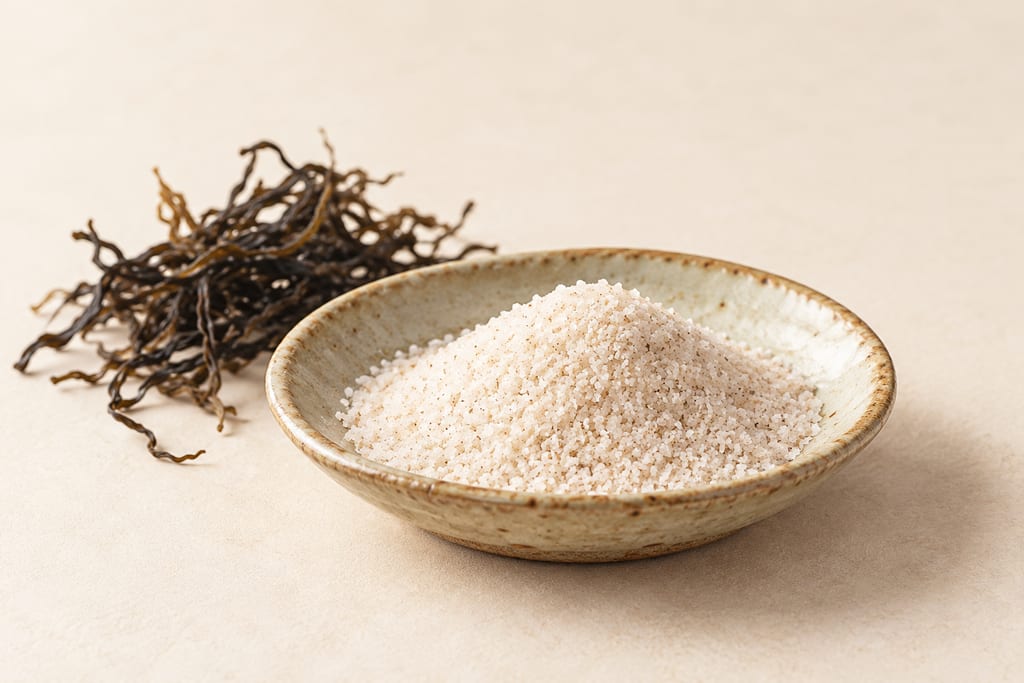
Asin sa buy-o is a fine sea salt made in Panayunan, Botolan, and packed in a woven nipa pouch called a buy-o. Salt-bearing coastal earth is leached with seawater, and the brine is boiled to crystals.
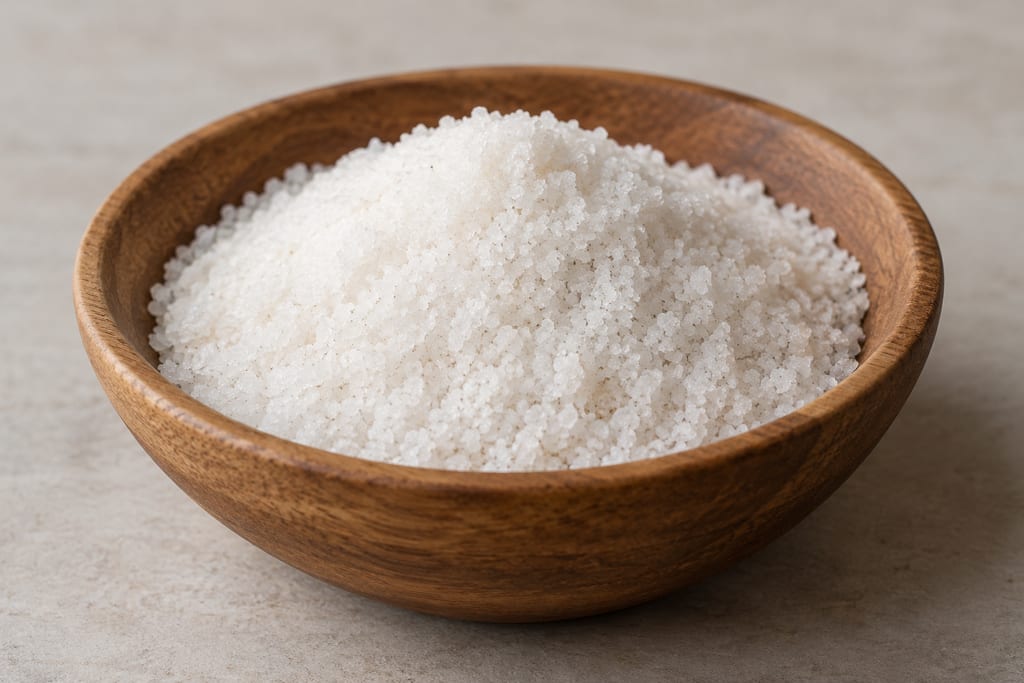
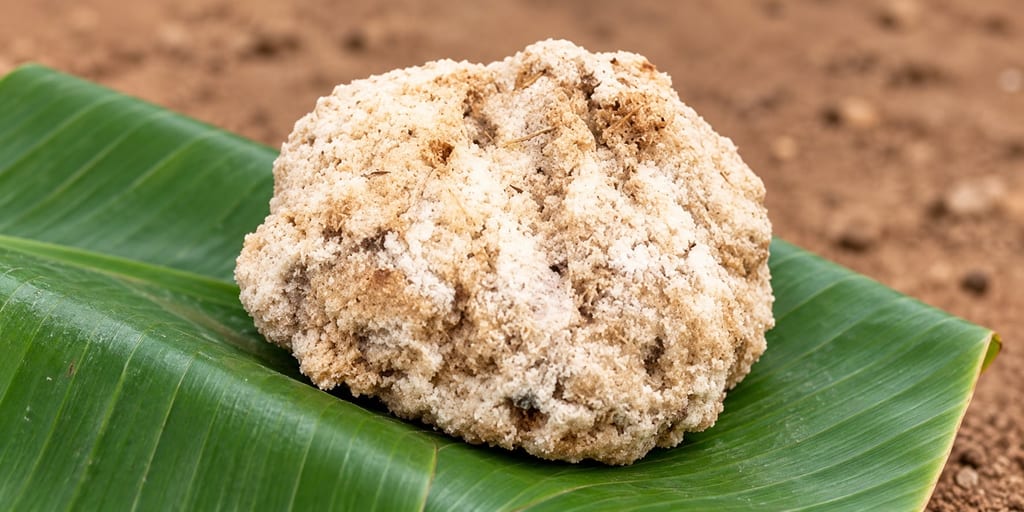
Asin sa buy-o is a fine sea salt made in the Panayunan community of Botolan, Zambales. The Tagalog word asin means salt; buy-o names the cylindrical container woven from nipa palm leaves in which the finished salt is packed. The pouch gives the salt its local name and recognizable presentation, but it is not an ingredient in the salt itself. The finished product is loose white salt, while the package is a separate woven basket-like container.
The name refers to a particular coastal craft and its place, not to a single mineral species or an internationally standardized grade. Sellers describe it as fine sea salt, and government research records crystals forming after brine from salt-bearing shore soil is boiled. The sources do not publish a laboratory composition for this particular salt, a crystal-size measurement, or a standard that separates it chemically from other sea salts. Its identity rests on the documented Panayunan process and buy-o presentation.
A community partner reports that Panayunan's Asin sa Buy-o began in 1888 through a partnership with Nicolas R. Camara. That date is a local institutional account rather than a contemporaneous record reproduced here, so it marks the tradition as reported by the community, not a proven first year of salt making in Zambales. A 2024 field report traces the craft through families: one maker learned it from her mother, and another described learning from her grandmother and teaching her own children. These accounts show transmission within households, not a single inventor whose name explains every practice.
The same field report recalls an earlier coast lined with small salt works, from the old Asinan center toward Dawey-Dawey near the Bancal River. Salt moved in larger woven baskets and stores when held in bulk; nipa pouches held smaller amounts given or sold. In 2002, makers organized a local association. The report recounts changing membership, a revival effort, and difficulties with replacement cooking equipment that led makers back to their familiar iron kawa. This history is about local work and its changing market, tools, and organization; it does not establish a national origin date for Philippine sea salt.
The Panayunan method does not begin with salt crystals collected from a conventional evaporation pond. Salt-bearing earth near a tidal estuary is the source material. The field account describes a bog-like area enriched by tides during the rainy months. Makers clear vegetation, work the soil, and collect darker sandy earth after the rains, when it is loose enough to rake and carry. This difference matters: the salt is recovered by leaching minerals from earth rather than by simply scooping a crop from a seawater pond.
The calendar is part of the method. In the 2024 report, field clearing begins around November; stockpiling earth and cooking collected brine runs from January into June. Rainwater during July and later rainy months dilutes what can be extracted, so production pauses and the cycle begins again in November. Sambali Beach Farm gives a December-to-May dry-season window. These reports describe related but differently framed seasonal periods; neither provides a fixed schedule for every year or every household.
The collected soil is a production medium, not a seasoning to scatter into food. At Panayunan, salt makers gather and rake sandy earth, move it by hand, and place it in a leaching vat woven from palm leaves. Seawater passes through the material and dissolves salt that has accumulated in it. The brine that drips from the filter is caught in earthenware jars and held until there is enough to cook. The leaf-lined basket serves as a filter and support; the brine is the liquid that moves to the next stage.
The sources do not give a measured quantity of soil, a fixed volume of seawater, a salinity reading, or a household ratio. The field report describes repeated work with stockpiled earth and jars; the government account describes a wooden funnel-shaped strainer, rinsed with a final round of seawater. A product seller also describes a leaf-lined wooden filter. These are compatible descriptions of a leaching stage, but details of filter construction and rinsing sequence vary across accounts. They should not be collapsed into a precise universal apparatus specification.
When sufficient brine has collected, makers pour it into a kawa, a large iron cooking vat set over a wood-fired earthen stove. They boil it at high heat for hours. As water leaves as vapor, dissolved salts become more concentrated; once sodium chloride in the liquid reaches saturation, solid crystals can form. The local research account describes white crystals appearing at the bottom of the pan. This is evaporation and crystallization, a physical separation process. No starter culture, microbe, or fermentation is involved.
The account does not give a temperature, a measured endpoint, a crystal size, or a clock time for an individual batch. 'For hours' describes the documented practice, not a timer that applies to every volume of brine or every kawa. The evaporation rate depends on vessel, fire, brine amount and strength, and weather; the source record gives no standardized readings for those variables. A reader should preserve the source's sequence and avoid inventing a temperature or a finish test.
In the NFRDI account, makers scoop newly formed crystals with a split-bamboo basket. The basket lets liquid drain away, after which the salt is dried and packed into buy-o. The field report describes the familiar green nipa wrapping and the iron vat, and current product listings show the woven pouch as a retail form. The sources do not establish that every maker uses the same scoop, drying surface, or sequence; the government account is the clearest description of draining and drying.
The pouch is a made container, not a chemical treatment. The field report describes it as a woven basket with a reinforced base and a mouth secured at the top; exact designs may differ by maker. The pouch helps distinguish this product in trade and carries local craft alongside the salt. It does not prove a batch's sodium content, iodine status, contaminant profile, or food-grade certification. No source here specifies a validated drying time or moisture endpoint.
The field report describes production in a community setting: earth is stockpiled, brine is collected in large jars, and cooking may run through a long workday. It reports that a batch yields roughly seven to eight kilograms of salt. The same article's body says three large jars of brine serve two batches, while a photograph caption says two jars are needed for one batch of about eight kilograms. The account does not state jar capacity, so those statements cannot be converted into a reliable volume or ratio. This recipe records the reported yield but leaves input amounts unspecified.
The work includes hand clearing, raking, carrying earth, tending the fire, handling a heavy hot vat, draining crystals, and weaving the container. The process depends on purpose-built local equipment and brine generated from a particular landscape. A kitchen pot and a scoop of beach sand are not documented equivalents. The available sources describe a community method, not a tested small-scale home adaptation, and do not support scaling the batch by multiplying an invented ingredient ratio.
Seawater contains dissolved ions, with sodium and chloride among the most abundant. Salt-bearing earth can hold dissolved material left by tidal water; passing seawater through it recovers some soluble salt in a brine. Boiling removes water, concentrating dissolved material until crystals separate. The process is not fermentation: no organism converts sugar or other food into acids, alcohol, gas, or flavor compounds. Heat drives evaporation, while the mineral solution supplies the material that crystallizes.
That general chemistry explains the sequence, but it is not a chemical analysis of Asin sa buy-o. The recipe sources do not report the concentration of sodium chloride in local brine, the proportions of other dissolved minerals, or which compounds remain in the crystals. One cannot infer a particular mineral profile, health effect, or flavor intensity from the words 'sea salt' or from the color of a pouch. The field accounts call the result fine or white; retailers use broader sensory descriptions, but no controlled sensory panel for this salt is cited here.
Retail descriptions present Asin sa buy-o as an everyday culinary salt. Its fine form can season food during cooking, when it dissolves into broths and other wet preparations, or be added in small amounts at the table. Sellers mention broths, fish, vegetables, and general seasoning. These examples document how the product is marketed and used; they are not a single inherited dish or a prescribed salt dose. The available recipe sources do not provide a conversion between this salt and another salt by volume.
A 2024 study tested Asin sa Buy-o as one of three artisanal salts in a padas bagoong preparation. That is evidence of a documented modern use in a fish-fermentation experiment, not proof that the salt originated as a bagoong ingredient or that the study's experimental formula is a household recipe for the salt itself. The salt is the seasoning input in that study; it is not fermented when it is made. Keeping those stages separate prevents the salt's production history from being confused with the fermentation of a later food.
Asin sa buy-o belongs to the cooked, leached-salt family of methods, but Philippine artisanal salts are not interchangeable recipes. The NFRDI account records more than one preparation route for salt-bearing shore sand: one gathers earth already soaked by the sea at low tide; another wets and sun-dries a bed of sand before collecting it for leaching. The Panayunan field account follows tide-enriched soil from a local estuary and documents the sequence from field work through brine to the kawa. These are documented routes within accounts of the same regional product, not a license to combine every step into one exact formula.
Other named Philippine salts use distinct source materials, equipment, and finishing forms. The NFRDI research describes Asin Tibuok, Tultul, and other artisanal practices separately; a salt formed in a vessel or cooked with additional materials is not simply a variant of the buy-o method. This page keeps Asin sa buy-o as one preparation. Slight differences in field collection, filter shape, or pouch weave belong in the account of local practice unless a source documents a sufficiently distinct product to warrant a separate recipe.
The product pages sell this salt for cooking, but a regional name and a traditional method are not laboratory results. Philippine Republic Act No. 11985 distinguishes artisanal salt from an automatic food-grade classification and retains the Food and Drug Administration's role over salt for human consumption. The Codex standard defines food-grade salt by composition and contaminant requirements. None of the recipe sources supplies a test report, iodine analysis, contaminant result, or batch registration record for the salt shown in reference photos. Do not treat this recipe account as proof of a particular batch's compliance.
The process uses a large vat of boiling brine over a wood-fired stove. The field accounts do not state a burn-control procedure, protective equipment, or a tested household setup; this page therefore does not invent one. The sources also give no validated shelf life, humidity limit, storage temperature, or method for assessing microbial or chemical hazards in collected earth and water. A retailer recommends refrigeration in humid conditions, but gives no measured moisture target or shelf life. That is a product-specific seller instruction, not a general safety validation.
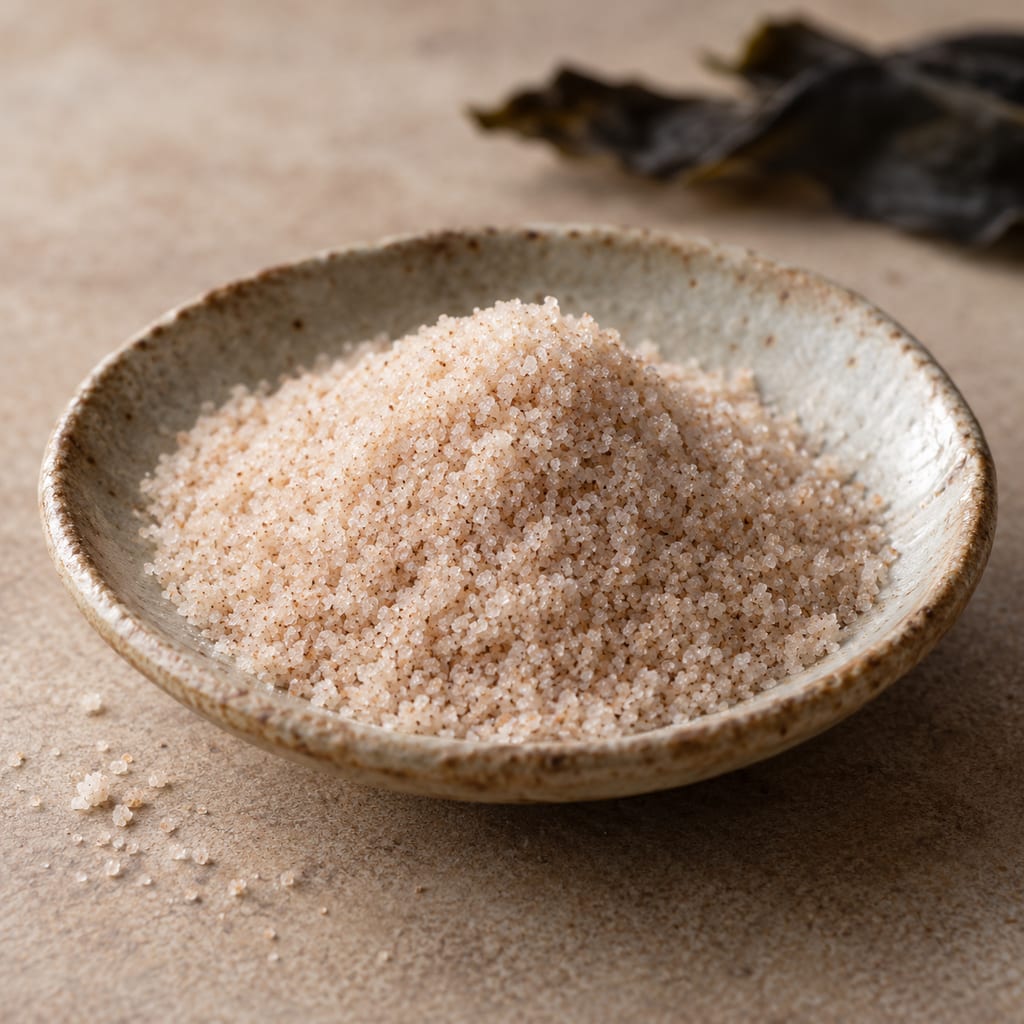
The documentary descriptions support a restrained picture of the product: loose white or pale salt crystals, fine enough for ordinary seasoning, with a separate cylindrical buy-o made from nipa leaves. The research account describes crystals forming at the bottom of a boiling pan and being drained before packing. It does not provide a target grain size, a moisture reading, a sodium percentage, or a color range. Variation in crystal size or shade cannot be used on its own to judge food-grade status or diagnose a process failure.
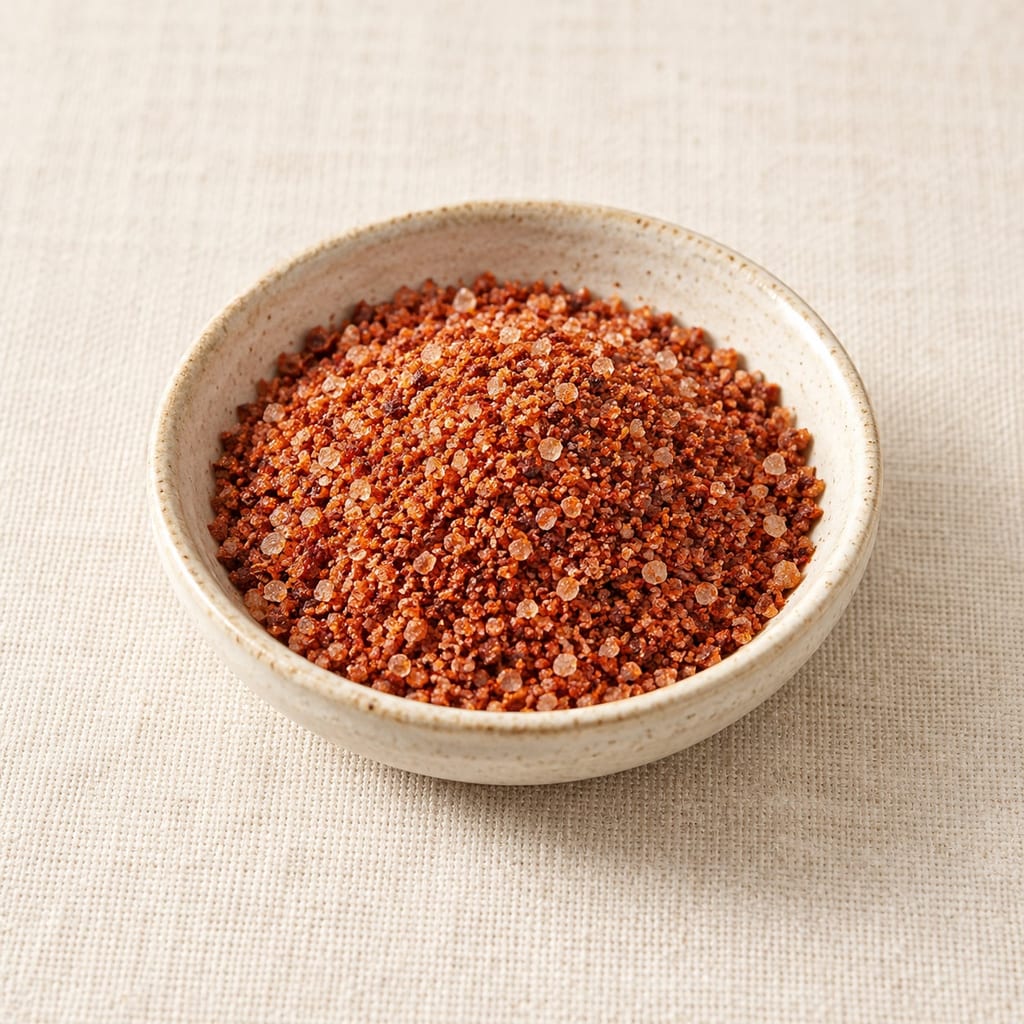
The most useful practical distinctions are about provenance and method. Look for whether a source identifies the salt as the Botolan or Panayunan product, whether it documents the leached-earth and boiled-brine route, and whether the pouch is described as buy-o rather than as a different mineral ingredient. Retail photographs help show packaging and product form, while the field and government reports document the work. Neither images nor sensory impressions replace a chemical or regulatory check.
A community partner dates Panayunan Asin sa Buy-o to 1888. In 2024, salt makers described family transmission across generations, nipa pouches and community organization; the date is a local account and does not establish the first salt production in the region.
Ingredients
Scaling: source batch only
SeawaterUsed to leach salt-bearing coastal earth; the sources give no measured volume.
Not specified.
Method
Risks and precautions · Standard risk
High-heat brine and hot iron vat
The field report describes hours of high-heat boiling in an iron kawa over a wood-fired stove.
Hazard source
The field report documents high-heat brine boiling but gives no burn-control procedure for handling the hot pan or liquid.
The research and product sources do not provide a batch-specific food-grade test, iodine analysis or contaminant analysis. A traditional name or product photograph does not establish those results.
At Panayunan, clear the work field and work the soil after the rains; the field account describes weeding, plowing and harrowing the tide-enriched ground.
Rake and gather the salt-bearing sandy earth. The field account describes carrying it by hand to a palm-leaf leaching vat; the NFRDI account also documents salt-soaked shore sand collected at low tide and a sun-dried-sand route.
Pass seawater through the salt-bearing earth in the leaf-lined vat or strainer. Collect the resulting brine in earthenware jars; the sources give no measured water volume or salt concentration.
When enough brine has collected, pour it into a large iron kawa over a wood-fired earthen stove and boil at high heat until salt crystals form. The field account says the brine cooks for hours but gives no measured temperature or universal cooking duration.
Scoop the crystals with a split-bamboo basket to drain, as described by NFRDI. Dry the crystals as that account describes.
Pack the finished salt into a buy-o, the woven cylindrical nipa pouch. The sources give no standard pouch size or batch-specific storage period.
Places
Botolan
Traditional preparation · Locality evidence
Documents the Panayunan, Botolan method and tradition; it is not a claim of birthplace or first production.
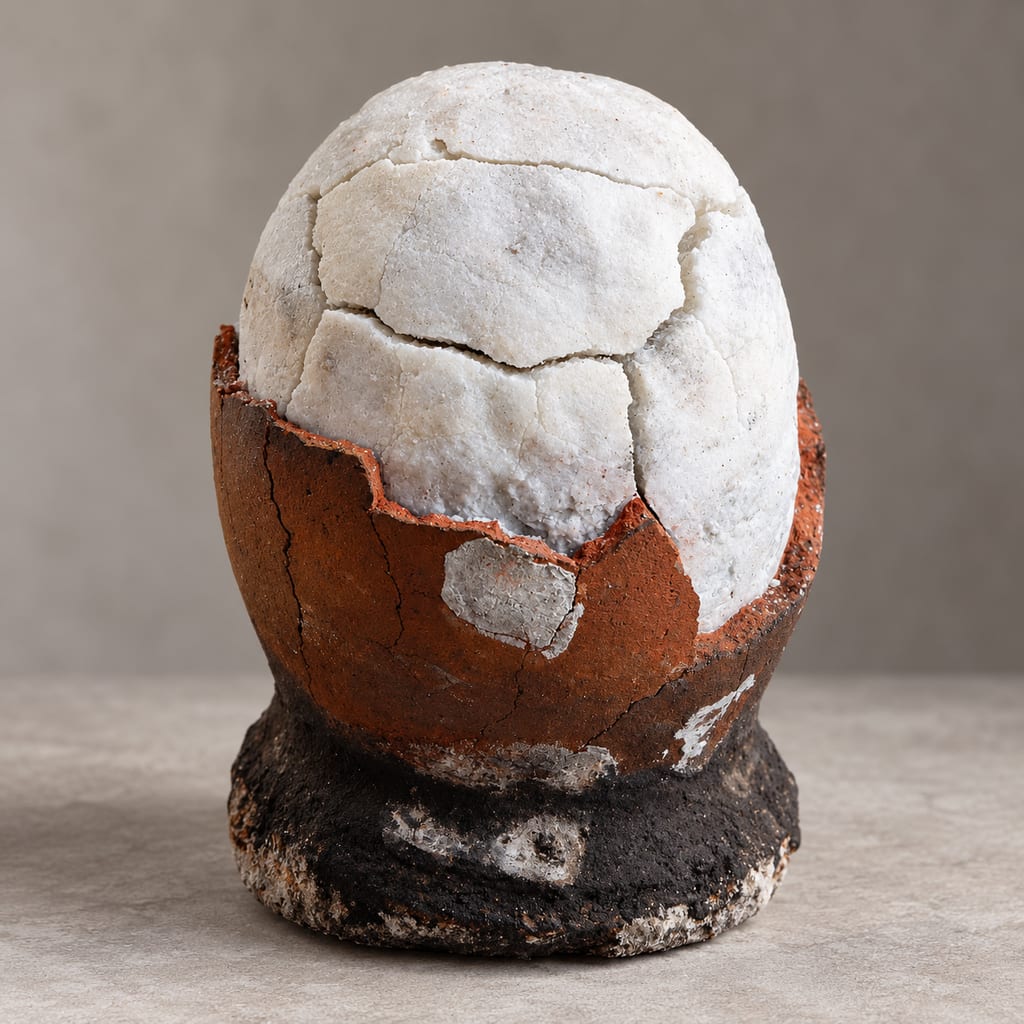
Asin tibuok is a Boholano salt-making craft that turns seawater-soaked coconut husks into a salt-rich ash, brine and formed sea salt in specialized clay pots. This record follows one published account of the community process; it is not a validated household formula.
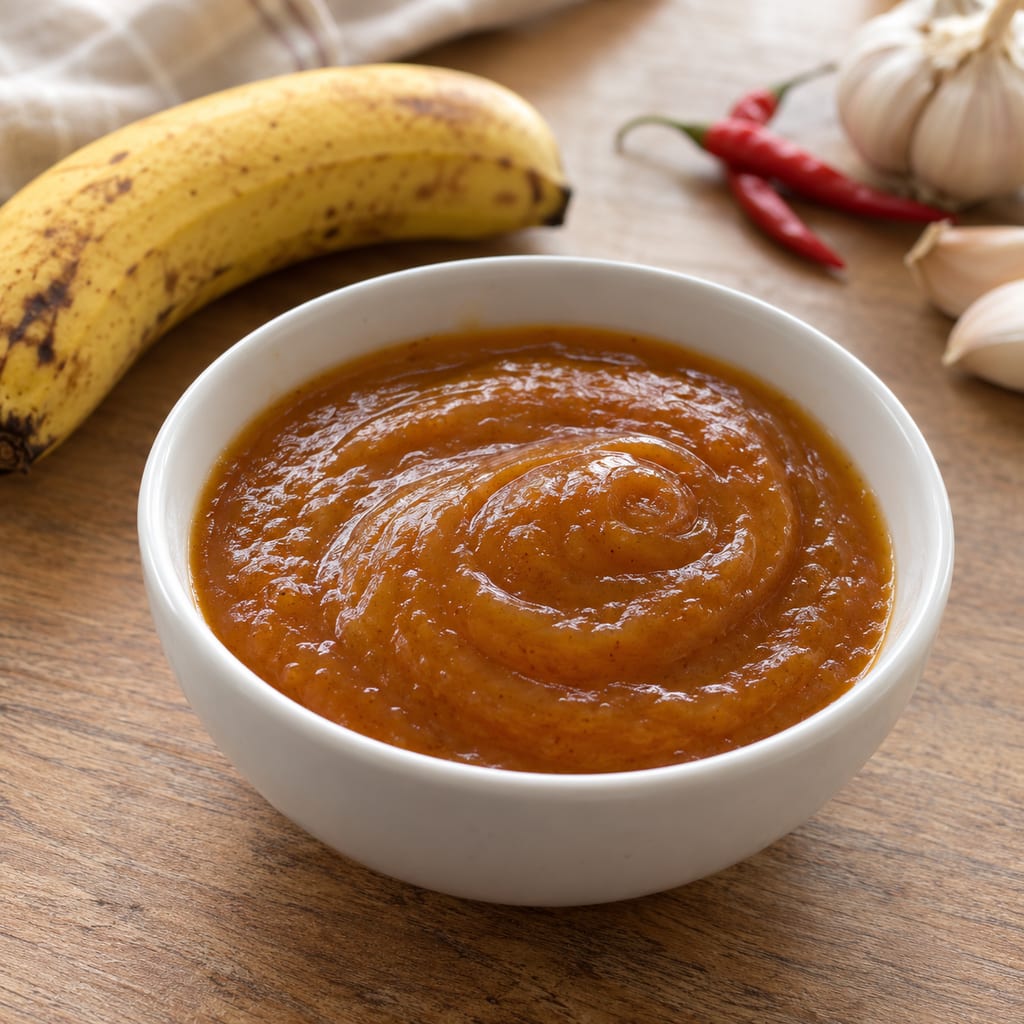
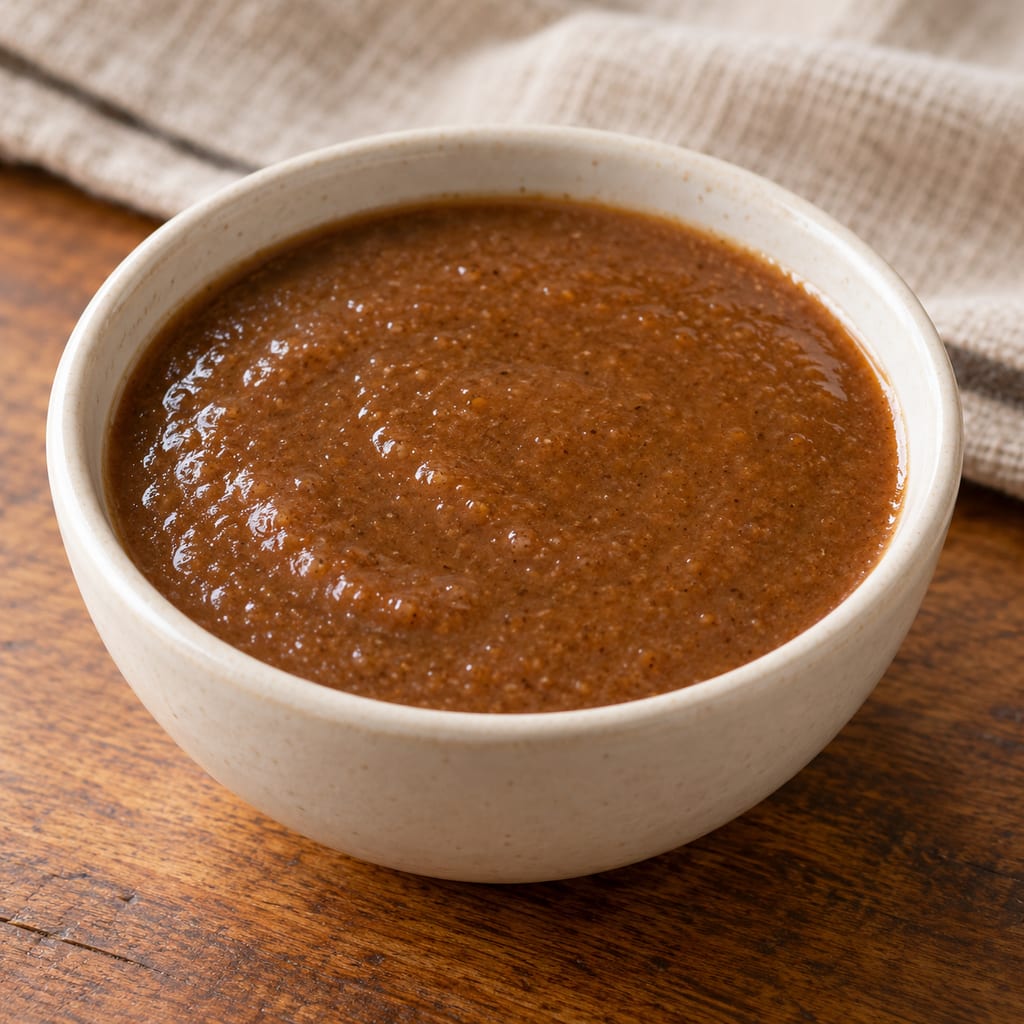
A sweet-hot table sauce of ripe banana simmered with vinegar, sugar, onion, garlic and fresh chilli, in the manner of Philippine banana ketchup. An untested development batch of about 500 g.
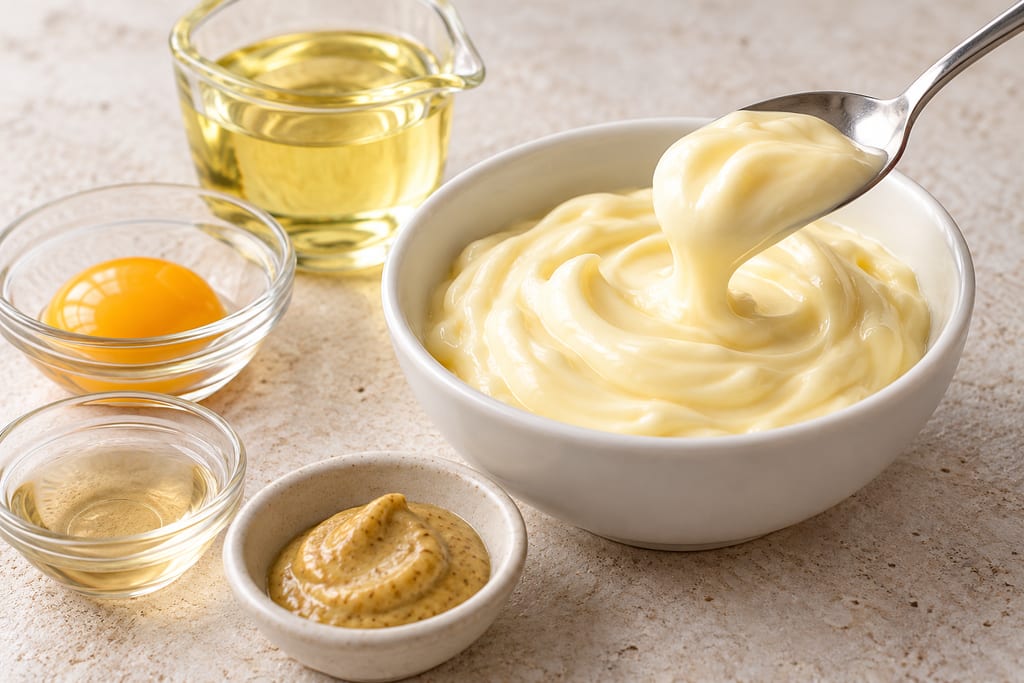
A plain mayonnaise of 200 g refined neutral oil emulsified into pasteurised yolk, vinegar, water and a little Dijon mustard: a clean base for tasting, comparing and flavouring.
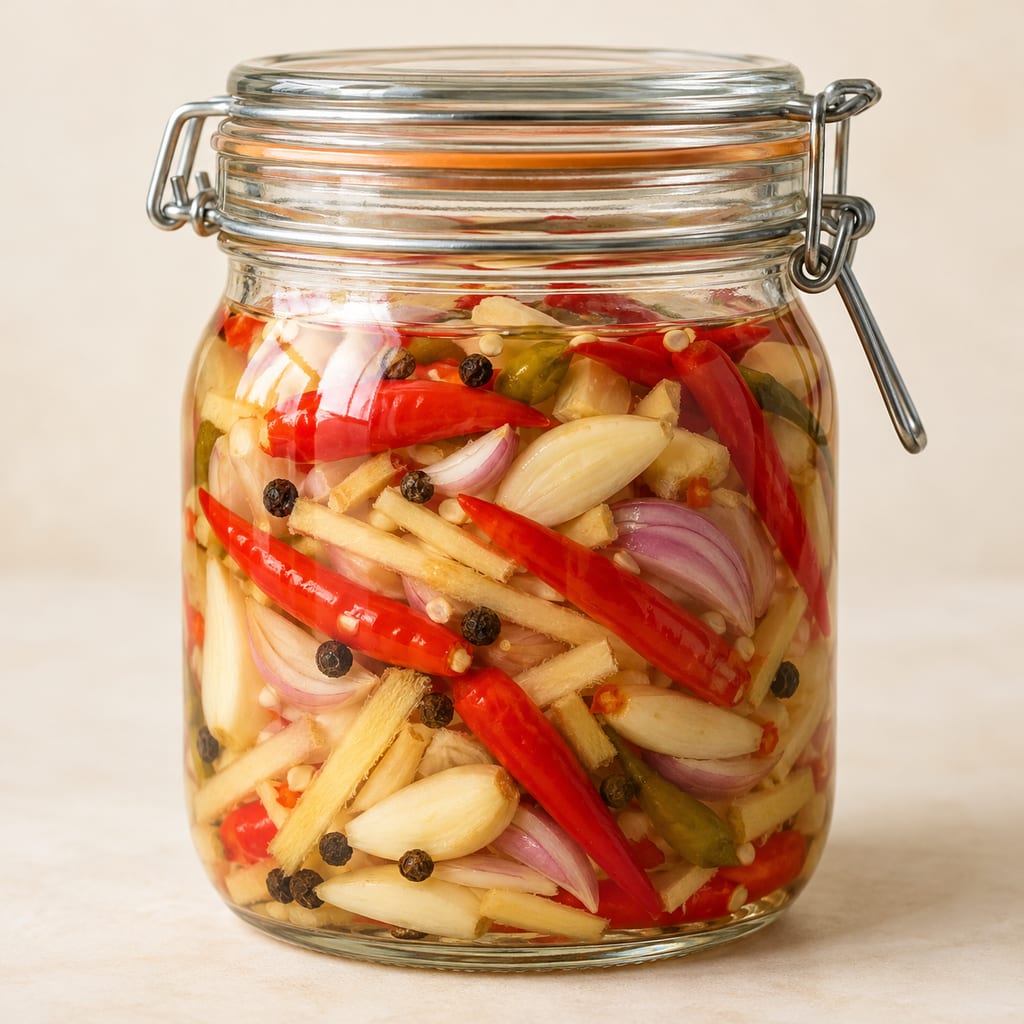
Sinamak is a Philippine spiced vinegar: white, cane or coconut vinegar steeped with chilies, ginger, garlic, onion and peppercorns for days or weeks until it is ready to use as a condiment.
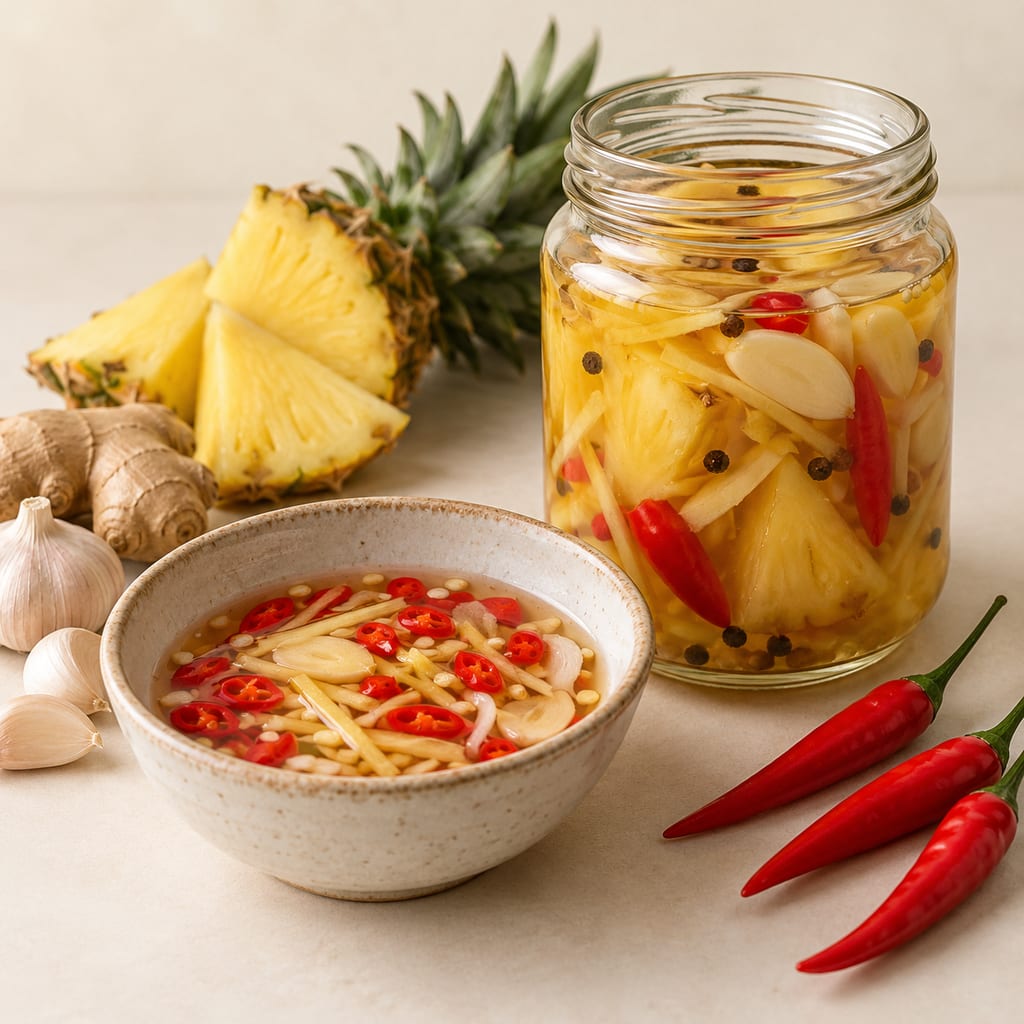
Filipino vinegar dips: vinegar steeped or mixed with chilli, garlic, ginger and other aromatics, from the pineapple sinamak of Iloilo to coconut-vinegar sawsawan. Not a single formula.
Toyomansi is a Filipino table dip of soy sauce and calamansi juice, served with grilled or fried foods; this version adds sliced chilli and optional sugar.
Adygean salt is a seasoned table salt associated with Adygea and the wider North Caucasian culinary tradition. Salt is blended with garlic and a variable selection of herbs and spices; the exact mix depends on the named style and maker.
Amabito no Moshio is a modern, pale beige Japanese seaweed salt made from Seto Inland Sea water and hondawara seaweed. Its documented factory method concentrates filtered brine in kettles, then separates and dries the salt.
Awaji moshio is a modern Japanese seaweed salt made by TaDa PHILOSOPHY from Awaji Island seawater and seaweed. Its premium process concentrates brine, extracts seaweed flavor, then crystallizes, separates, dries and grades the salt.
Green tea leaf salt is a dry seasoning made by grinding tea leaves, sieving them and mixing the powder with fine salt. This Japanese-style version follows a documented equal-parts method.
Nzoia River reed salt is a Bukusu seasoning made by leaching and evaporating the ash of mature muchua reeds. Its sources document a local method, but provide neither a measured formula nor verified mineral composition.
A dry Mexican seasoning of maguey worm, salt and chile, most closely associated in published accounts with Oaxaca and commonly served with mezcal, citrus and fruit.
Wine-infused salt is coarse food salt carrying wine colour and aroma after a wine-and-salt mixture is reduced and dried. This version follows a Missouri Wines method at a one-to-three salt-to-wine ratio.
A Cap-Pelé boucanière is an Acadian herring-smoking building. The documented Willie Niles example is a one-storey wood-frame structure with a ridge smoke vent and interior bays for hanging fish-bearing cannes.
Achcharu is a family of Sri Lankan vinegar pickles made with mixed vegetables or seasonal fruit and a piquant spice dressing. This version is a quick, refrigerated, non-fermented mixed-vegetable pickle.
The acocote is a long, hollowed and dried gourd used to draw aguamiel from a mature maguey. It is a harvesting tool: the sap is transferred to a separate vessel before it ferments into pulque.
Parkia biglobosa seeds are fermented into regional West African seasonings, including nététou, iru, dawadawa and soumbala. The yellow fruit pulp is a separate food, and names and methods vary by place.
Japanese reddish-brown vinegar from sake lees matured about three years, turned to vinegar by acetic bacteria; the vinegar of Handa and Edomae sushi rice.
The almond mushroom, Agaricus subrufescens, was cultivated in eastern North America in the 1800s, lost its market, and returned as a cultivated mushroom from Brazil, where it is grown under several names.
Community
No community contributions have been published for this entry yet.
Share what you made
Sign in to contribute. Published comments and photos are free to read.
Documents shore sand collected at low tide or deliberately saturated and sun-dried, then loaded into a strainer and rinsed with seawater.
Describes brine collection, boiling in a cast-iron kawa, crystal formation, scooping with a split-bamboo basket, draining, drying and packing in buy-o.
Identifies Asin sa Buy-o as a Zambales artisanal sea salt.
Cited in: The name and the salt; Tide, soil and the working season; Leaching the salt-bearing earth; From brine to crystals; Scooping, drying and wrapping; The scale of a batch and the limits of the record; What the chemistry explains—and what it does not; Local method and neighboring salt traditions; Reading the finished result
Accessed 2026-10-28
BusinessMirrorMethod · History · Geography · Seasonality · Yield · Equipment · Use
Field report and interviews describe Panayunan's salt-bearing soil, field clearing, plowing and harrowing, brine leaching, earthenware jars, wood-fired kawa, and nipa packaging.
Reports seasonal work, family transmission, community organization and a 2024 production snapshot.
Reports a batch yield and inconsistent brine-jar counts between the article body and a photo caption; this page preserves the discrepancy.
Cited in: A Panayunan tradition carried by families; Tide, soil and the working season; Leaching the salt-bearing earth; From brine to crystals; Scooping, drying and wrapping; The scale of a batch and the limits of the record; Local method and neighboring salt traditions; Food-grade status, storage and cautions; Reading the finished result
The community partner says Panayunan Asin sa Buy-o began in 1888, describes its collaboration with Nicolas R. Camara, and gives a dry-season window of December to May. The date is presented as the partner's community account.
Cited in: A Panayunan tradition carried by families; Tide, soil and the working season; Scooping, drying and wrapping
Uses Asin sa buy-o for the Botolan salt and explains buy-o as a cylindrical woven nipa pouch.
Describes salt-bearing earth, a leaf-lined filter, concentrated brine and boiling into fine salt.
Cited in: The name and the salt; Leaching the salt-bearing earth; Scooping, drying and wrapping; Using the salt in food; Food-grade status, storage and cautions; Reading the finished result
The study includes Asin sa Buy-o as one of three artisanal salts tested in a padas bagoong product; this is a documented modern application, not a historical recipe or safety validation.
Defines artisanal salt and states that farmer-produced salt is not automatically categorized as food grade; retains FDA jurisdiction over salt for human consumption and makes artisanal salt iodization optional.
Defines food-grade salt as predominantly sodium chloride and sets compositional and contaminant requirements; recipe sources contain no product-specific test.