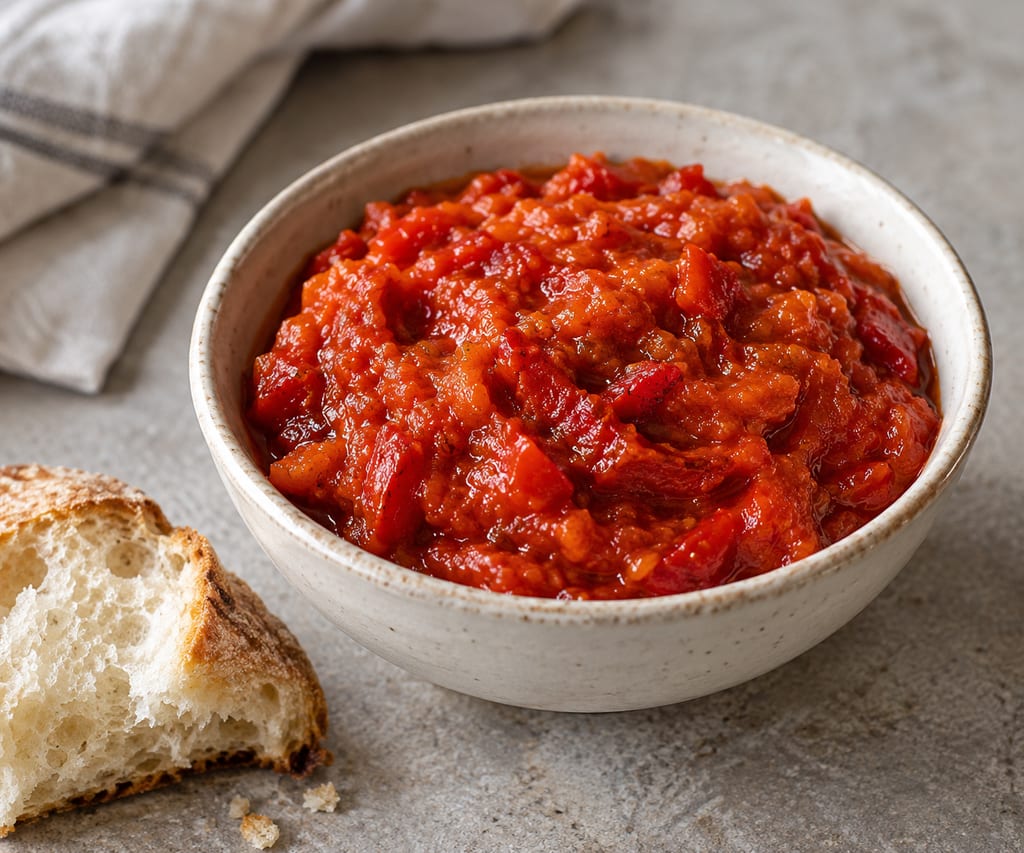
Lyutenitsa (lutenica)
A Balkan relish of cooked peppers, tomatoes, aubergine and garlic in oil, sometimes made hot, served cold and named for its spiciness.
 FermenteaWhere food goes to change
Traditional method
Шарена сол · Sharena salt · Colourful salt · Mixed salt
Bulgarian dry seasoning of salt, paprika, dried herbs and spices, with household and regional variations.
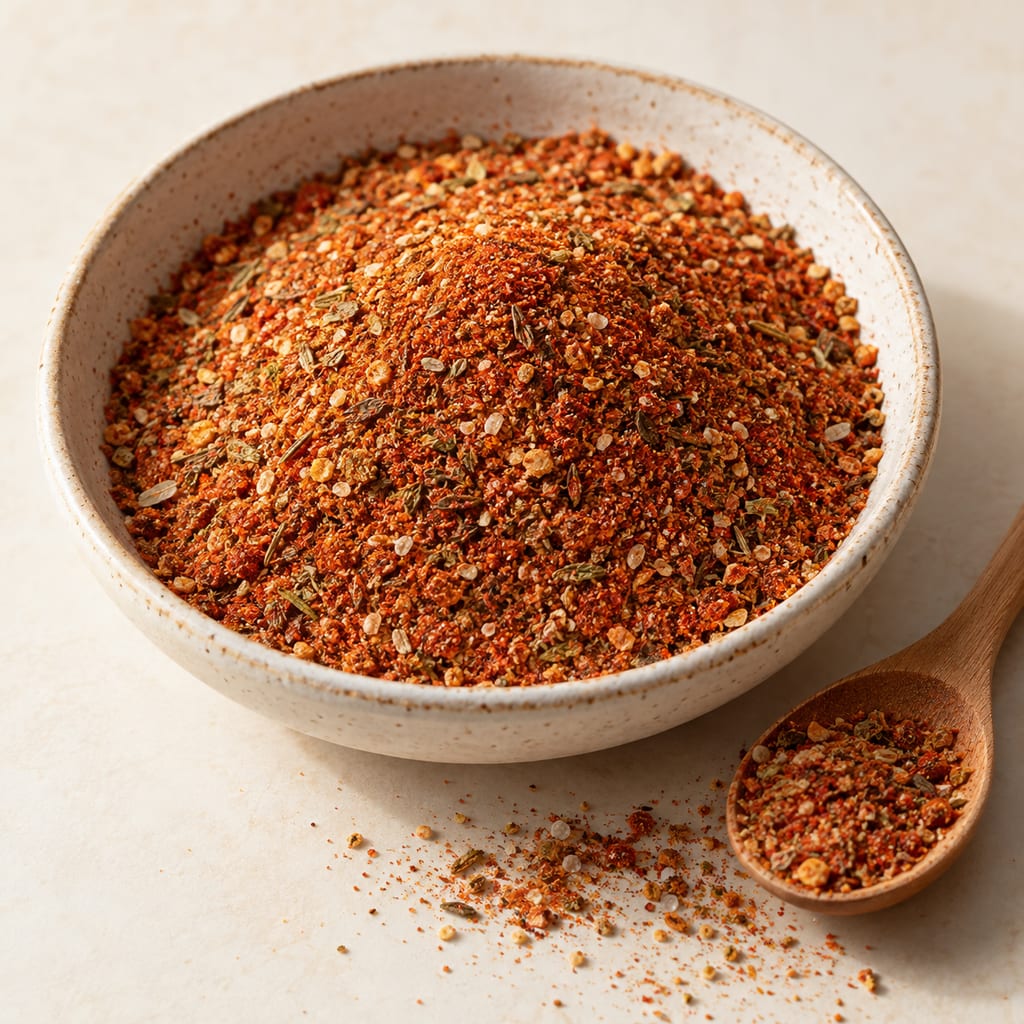
Sharena sol (шарена сол) means “colourful” or “mixed salt”: Bulgarian table seasoning made by bringing salt together with dried herbs, spices and, in some versions, other dry ingredients. It is not a single protected formula. The red of paprika, the green-brown flecks of herbs and the pale crystals of salt give the mixture its variegated appearance, while each ingredient contributes its own aroma. The name describes the blend’s visible and culinary character rather than a fixed list of ingredients.
Salt, paprika and savory form the most persistent core in the Bulgarian accounts consulted here. Summer savory—chubritsa in Bulgarian—is particularly significant: an ethnobotanical conference study identifies Satureja hortensis as the required herb and notes that sharena sol is sometimes affectionately called chubrichka, a diminutive built from chubritsa. The same account stresses that other herbs depend on place, family taste and what is grown in home gardens or bought. This gives the seasoning a recognizable family resemblance without erasing local recipes.
This recipe records one measured professional formula published by the American Culinary Federation in 2015. It combines equal amounts by weight of paprika and dried summer savory, with smaller amounts of garlic powder, cumin, fenugreek and sea salt. That formula is useful as a reproducible version, not as a claim that every Bulgarian household uses those proportions or ingredients. In particular, it is not interchangeable with the Staro Zhelezare mix or the museum-collected Gabrovo-region recipe described below.
The documented role of sharena sol is unusually close to the everyday table. The Etar open-air ethnographic museum’s 2020 cookbook introduction describes Bulgarian bread as a constant presence and notes that salt could be mixed with paprika, savory, pounded roasted corn and other ingredients to make the colourful seasoning. The entry is one sentence in a broad account of food collected through fieldwork, festivals and competitions; it offers context, not a date for the invention of the blend.
The 2023 ethnobotanical conference abstract broadens that account. It describes the seasoning as a daily companion to bread, eaten at home or taken along, and also as food used in ritual settings, including life-cycle ceremonies and celebrations. Household preparation is remembered as a skilled domestic practice: the most experienced woman in the home adjusted ingredients by eye and taste. Those details show why a single standardized recipe cannot stand in for the whole tradition. The knowledge includes knowing how a household wants the mix to smell, look and taste, as well as the proportions.
Staro Zhelezare in Plovdiv province offers a documented example of food becoming a local emblem. A study abstract describes a community-driven process in which a family seasoning moved into public demonstrations, festivals and identity-making. Slow Food’s account of the village blend likewise presents it as an everyday mixture made for household use, with the community’s House of Traditions giving visitors a place to learn from local makers. These recent forms of public presentation document a living practice; they do not establish an ancient origin or prove that the village version represents every Bulgarian blend.
A measured recipe in an English-language professional magazine and a household recipe collected by a Bulgarian ethnographic museum serve different readers and preserve different kinds of knowledge. The first makes one blend repeatable with ounces and a short grinding method. The second preserves a local sequence and its contributor attribution. Neither cancels the other. Reading them side by side helps separate the practical convenience of a standardized formula from the social life of seasoning that is remembered, adapted and shared in homes.
Paprika gives the American Culinary Federation version its red colour and a pepper aroma. The source does not specify a pepper cultivar, heat level or production style, so the recipe leaves those choices unqualified. Bulgarian sources distinguish sweet and hot paprika in some variants; where heat matters, the choice changes the seasoning’s character rather than creating a separate universal definition.
Dried summer savory supplies the herbal note most closely associated with the blend in the ethnobotanical account. The Staro Zhelezare reports also emphasize savory, there alongside fennel seed and other garden herbs. Dried leaves are brittle enough to grind or pound into a dry mixture, and the traditional accounts show them being dried before crushing. They do not provide a universal moisture target or storage life, and none is added here.
Garlic powder, cumin and fenugreek appear in the measured ACF formula. They broaden that particular version beyond the simpler core of salt, paprika and savory. They are one formulation’s choices: other versions use different aromatics, including mint, fennel and thyme, and some include toasted or ground corn. No laboratory analysis of these ingredients' flavor compounds is cited here, so the recipe does not assign more precise chemical effects.
Sea salt is the seasoning’s salty base in the ACF recipe. Its quantity is given as one ounce, but the source does not specify crystal size, mineral profile or a Bulgarian salt origin. The recipe therefore makes no terroir claim. Since the mixture is a table condiment, its saltiness is delivered together with the herbs and pepper rather than through a separate brining or preservation step.
The ACF method is short: grind all six measured ingredients together in a mortar or spice grinder, then store the result in an airtight container. Grinding distributes the colors and makes the coarser leaves and seeds easier to use as a unified sprinkle. The source gives no target particle size, so a fine powder is not mandatory. A mortar can leave a visibly coarse seasoning; a grinder can make the mixture more even. The choice is a texture decision, not a fermentation stage.
The local account from Staro Zhelezare makes the tools part of the story. Dry herbs and fennel and cumin seeds were formerly crushed in a large wooden mortar called a kuttel; the account says electric grinders are used today. A Bulgarian Academy of Sciences language-institute page records a Staro Zhelezare potherb method in which savory is picked, washed, cut, dried, pounded and sieved before it is combined with paprika and ground spices. Those steps belong to that local formula, not to the ACF formula, which specifies dried savory and begins at grinding.
Recipe 192 in the Etar museum cookbook gives a third handling sequence: well-dried fenugreek, thyme and savory are exposed to strong sun, then crushed and cleaned by hand or sieved; hot or sweet paprika and salt are added afterward. The recipe is attributed to the community centre in Mladen, Gabrovo region. It preserves a particular community recipe rather than setting a required drying instruction for all sharena sol.
Airtight storage is the only keeping instruction supplied for this measured formulation. The container protects a dry, ground seasoning from open air between uses, but the source does not give a shelf life or a test for freshness. The recipe therefore does not promise a duration. If a cook follows one of the other documented household recipes, its ingredients and handling remain specific to that version.
Variation is central to sharena sol rather than an exception. The Mladen recipe in the Etar collection combines fenugreek, thyme and savory with paprika and salt, and allows either hot or sweet pepper. It does not include the garlic, cumin or sea salt formulation used here. Because the cookbook identifies its contributor as a local community centre, that list should remain attached to its Gabrovo-region attestation instead of being blended into a composite recipe.
Staro Zhelezare’s seasoning uses savory, fennel, cumin, sweet and hot pepper, and mint according to the Slow Food account. It notes that households adjust their own mix; the balance can be sweet or hot, and the distinctive local impression is associated with fennel and savory. The Institute for Bulgarian Language page records a related potherb with black pepper and salt as well. These accounts are close but not identical. They are evidence of a local family of recipes, not authority to treat all listed ingredients as required in every batch.
Other reported household or commercial blends can contain roasted corn, pumpkin seeds or further herbs. The museum introduction mentions pounded roasted corn; the ethnobotanical abstract emphasizes geography, family taste and available herbs. Such differences affect both texture and flavor: a ground grain or seed contributes body, while a higher share of leafy herbs yields a more herb-forward mix. These are qualitative consequences of the documented ingredients, not measured comparisons.
For this reason, “colourful salt” is best read as a recognizable style: salt enlivened with paprika and aromatic herbs, especially savory, with a flexible boundary around additional ingredients. A jar with different proportions can still belong to this tradition. A named village version deserves its place and its own evidence rather than being forced into the exact ACF proportions.
The ACF account calls its formula an all-purpose Bulgarian seasoning for meat, fish and vegetables, and mentions it as a dusting over tarator, the chilled yogurt-and-cucumber soup. This is a finishing use: a small amount of the dry blend is scattered over the food so its color and aroma remain distinct at the surface. No dose is specified, so this recipe leaves seasoning quantity to the cook.
At Staro Zhelezare, Slow Food reports sharena sol with kebabs, steaks, cooked eggs and warm bread. Bread is particularly revealing because it lets the seasoning stand on its own: salt and herbs cling to a simple surface without needing a cooked sauce. A spooned portion beside a meal also lets diners add it to taste. These serving patterns make the blend both seasoning and table condiment.
The same mix need not be limited to traditional pairings. The sources establish broad use on savory food, but do not validate every modern adaptation. A cook can begin with a light dusting, taste the food, and decide whether more is wanted; that is a serving suggestion, not a safety control or a prescribed dose. On already-salty foods, the mix adds salt as well as spice, so its salt component should be considered in the dish’s overall seasoning.
The ACF recipe is a dry mixture, not a ferment: it includes no water, starter, incubation or maturation stage. Grinding is a mechanical operation that breaks and combines ingredients; it does not transform them through fermentation. For readers comparing recipes, keeping that distinction clear prevents an aromatic seasoning from being mistaken for a preserved food.
The method’s chief practical choice is grind. If the leaves and spices remain coarse, the finished blend will have a more visible, varied texture; a longer grind makes the distribution finer. The source gives no endpoint beyond grinding together, so neither a fixed time nor a precise fineness is imposed. Likewise, the recipes that begin with fresh savory and dry it are separate methods; this ACF version calls for dried savory and should not be changed silently into a fresh-herb recipe.
The evidence does not establish a single birthplace, an earliest date, a canonical proportion, a required base-salt origin, a universal shelf life or a safety validation for home drying. It does establish a Bulgarian identity, repeated use of salt, paprika and savory, and several named community formulations. Keeping those limits visible lets the cook follow the measured recipe while recognizing the wider tradition it belongs to.
Sharena sol is documented as a Bulgarian seasoning, but the sources used here do not establish when or where the broader tradition began. Museum-collected recipes and contemporary accounts document several different formulations and household practices.
Scaling: source batch only
The sources document sharena sol as Bulgarian; this country-level association is not a claim of a precise birthplace.
A documented local family of versions; not an exclusive origin or a formula for all Bulgarian sharena sol.
The museum cookbook attributes one recipe to the community centre in Mladen; it does not establish a birthplace or date.
A Balkan relish of cooked peppers, tomatoes, aubergine and garlic in oil, sometimes made hot, served cold and named for its spiciness.
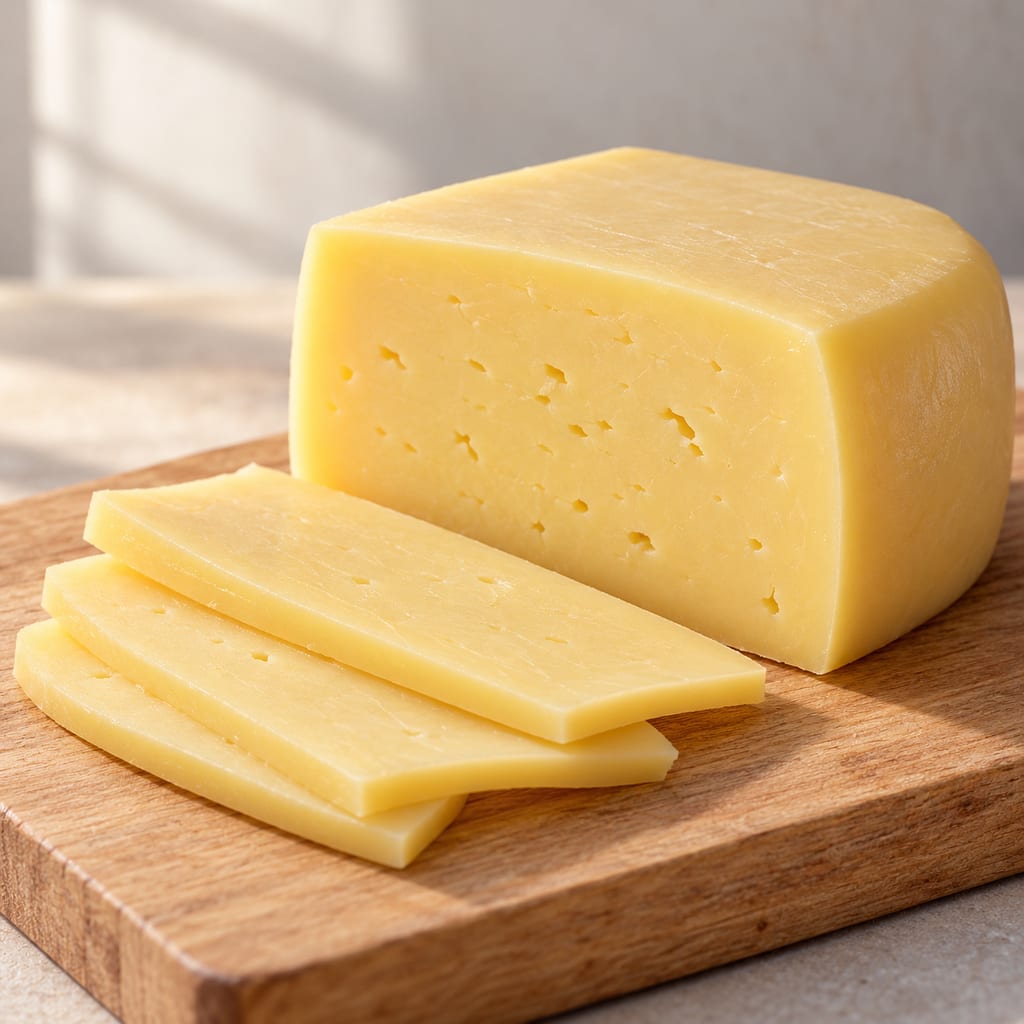
A yellow stretched-curd cheese made by acidifying, draining and kneading curd in hot brine. This small-batch kashkaval uses a commercial starter and a brine finish.
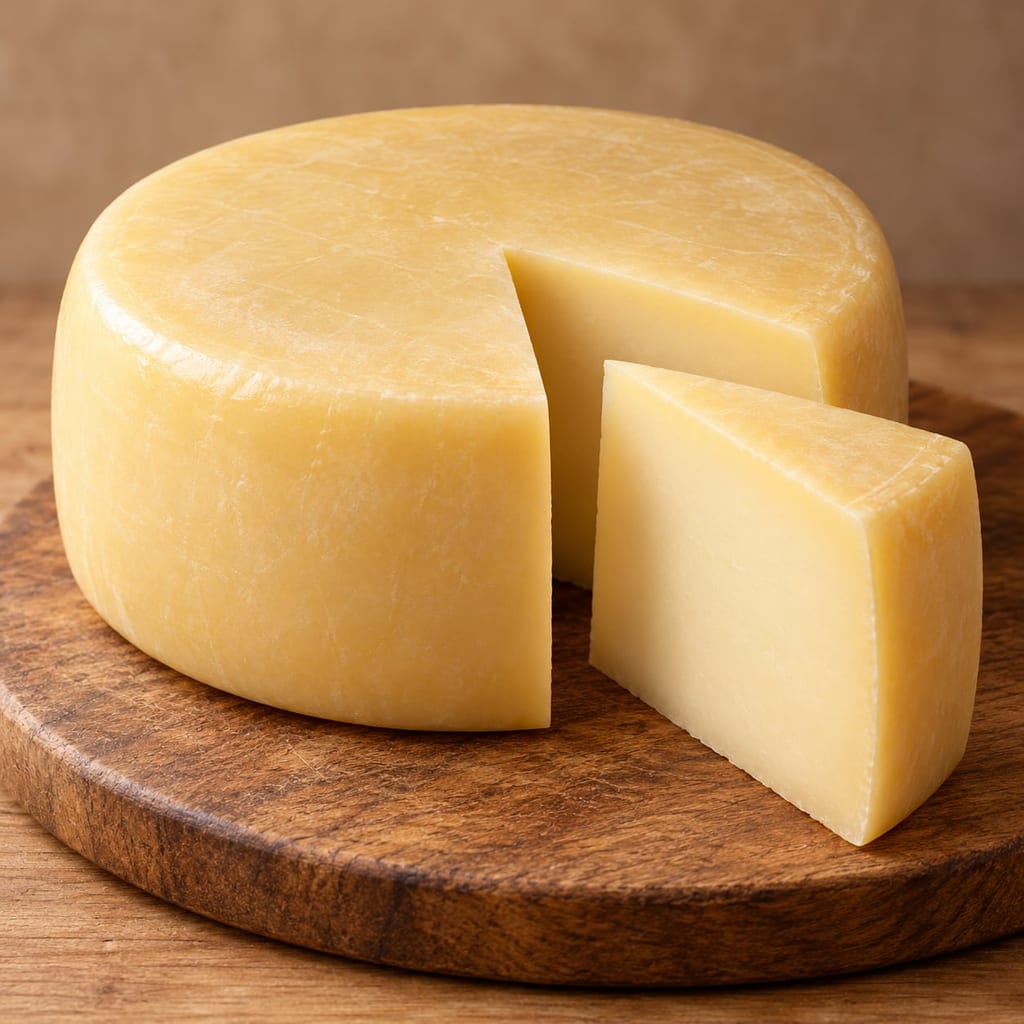
Kashkaval is a firm sheep-milk cheese whose acidified curd is worked in hot brine. This large-batch method finishes with repeated dry salting, wax coating and cool ripening.
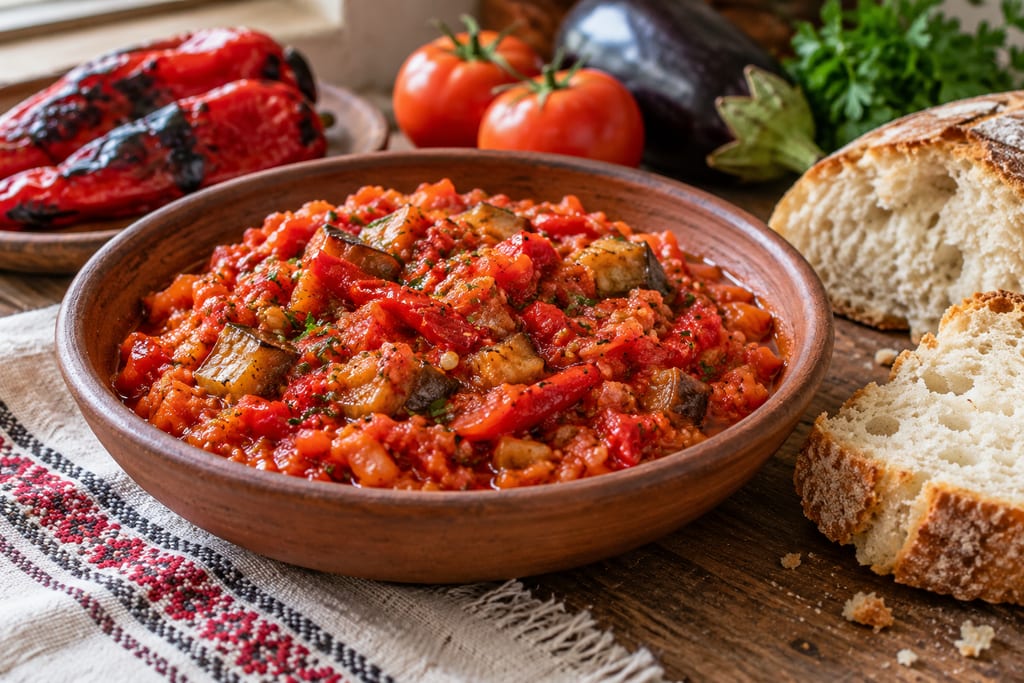
A Balkan relish of roasted red peppers and tomatoes, often with aubergine and garlic, cooked down into a spread for the winter store.

A cold dip, soup or sauce of strained yogurt, cucumber and garlic, eaten across Greece, Turkey and the wider Balkans and Levant under names that include cacık and tarator.

Adygean salt is a seasoned table salt associated with Adygea and the wider North Caucasian culinary tradition. Salt is blended with garlic and a variable selection of herbs and spices; the exact mix depends on the named style and maker.
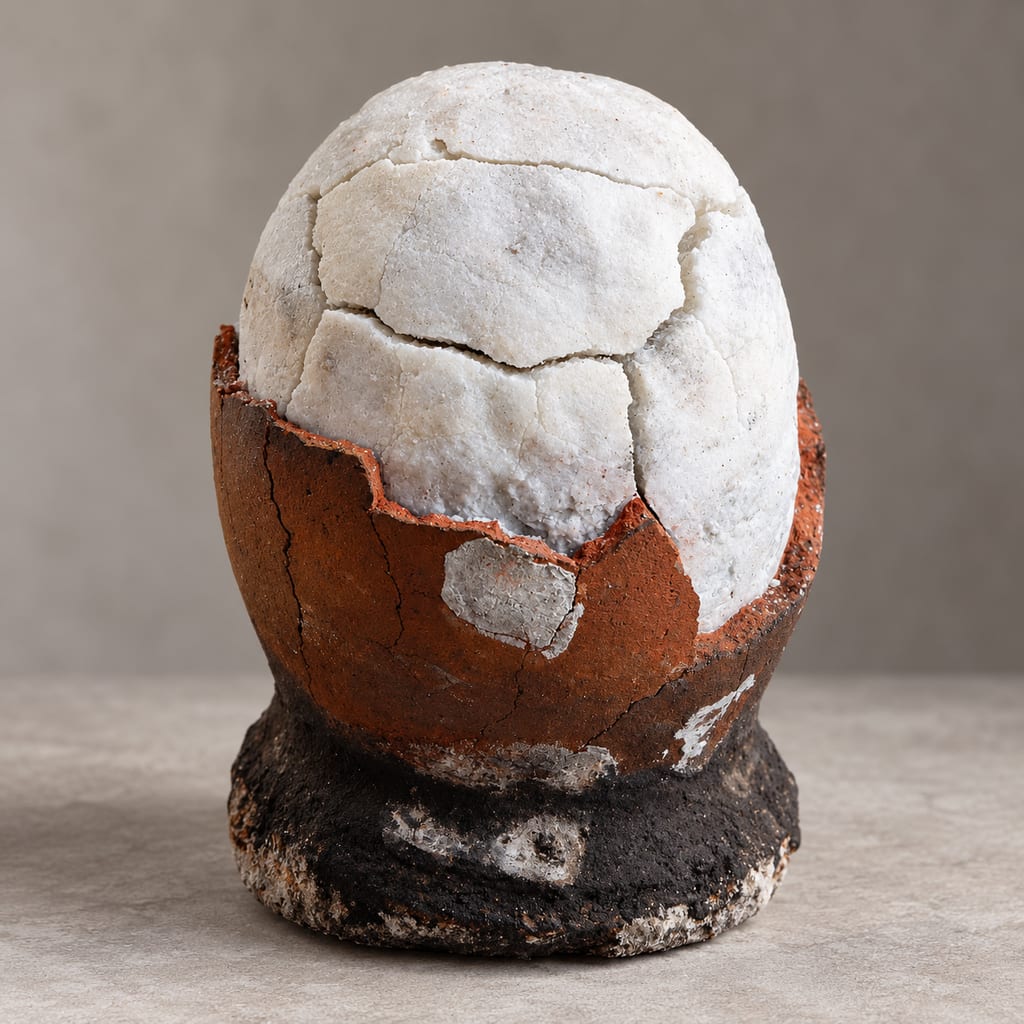
Asin tibuok is a Boholano salt-making craft that turns seawater-soaked coconut husks into a salt-rich ash, brine and formed sea salt in specialized clay pots. This record follows one published account of the community process; it is not a validated household formula.
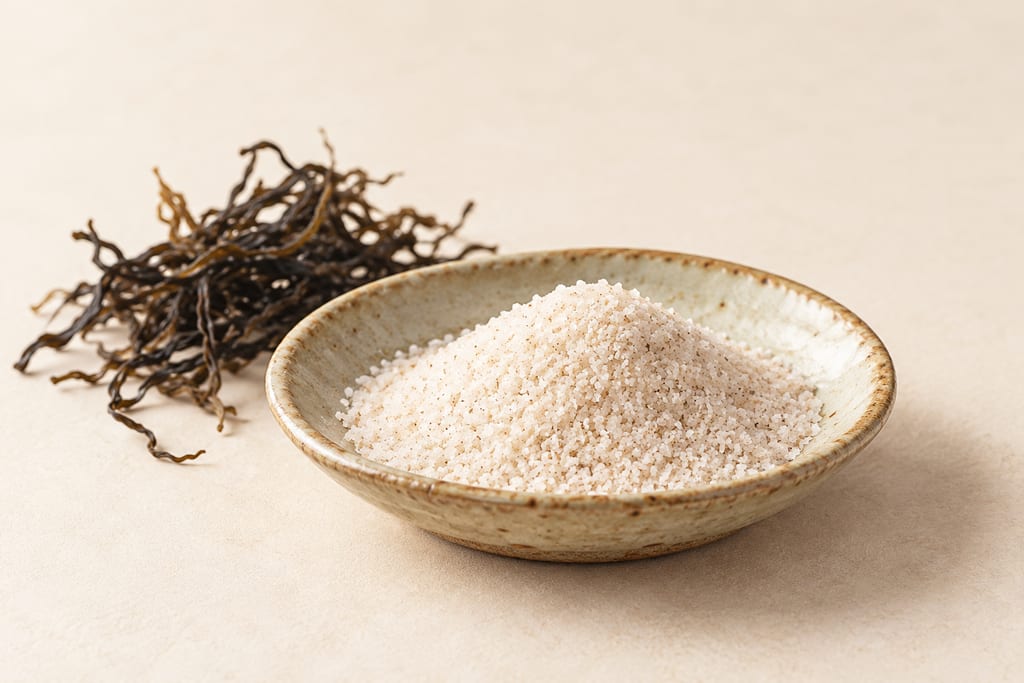
Amabito no Moshio is a modern, pale beige Japanese seaweed salt made from Seto Inland Sea water and hondawara seaweed. Its documented factory method concentrates filtered brine in kettles, then separates and dries the salt.
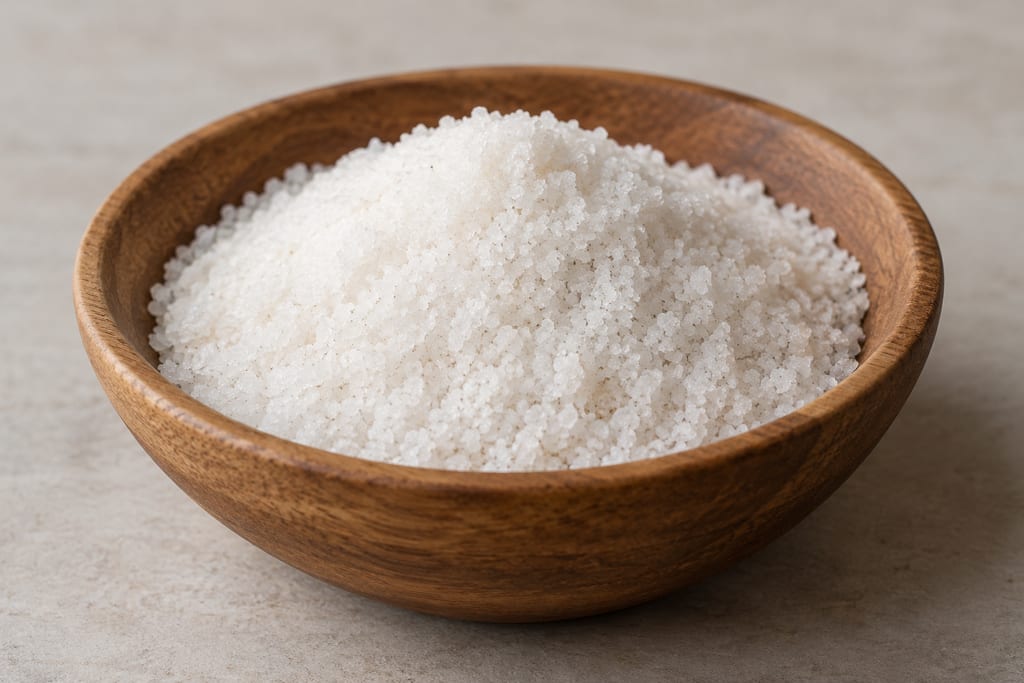
Asin sa buy-o is a fine sea salt made in Panayunan, Botolan, and packed in a woven nipa pouch called a buy-o. Salt-bearing coastal earth is leached with seawater, and the brine is boiled to crystals.
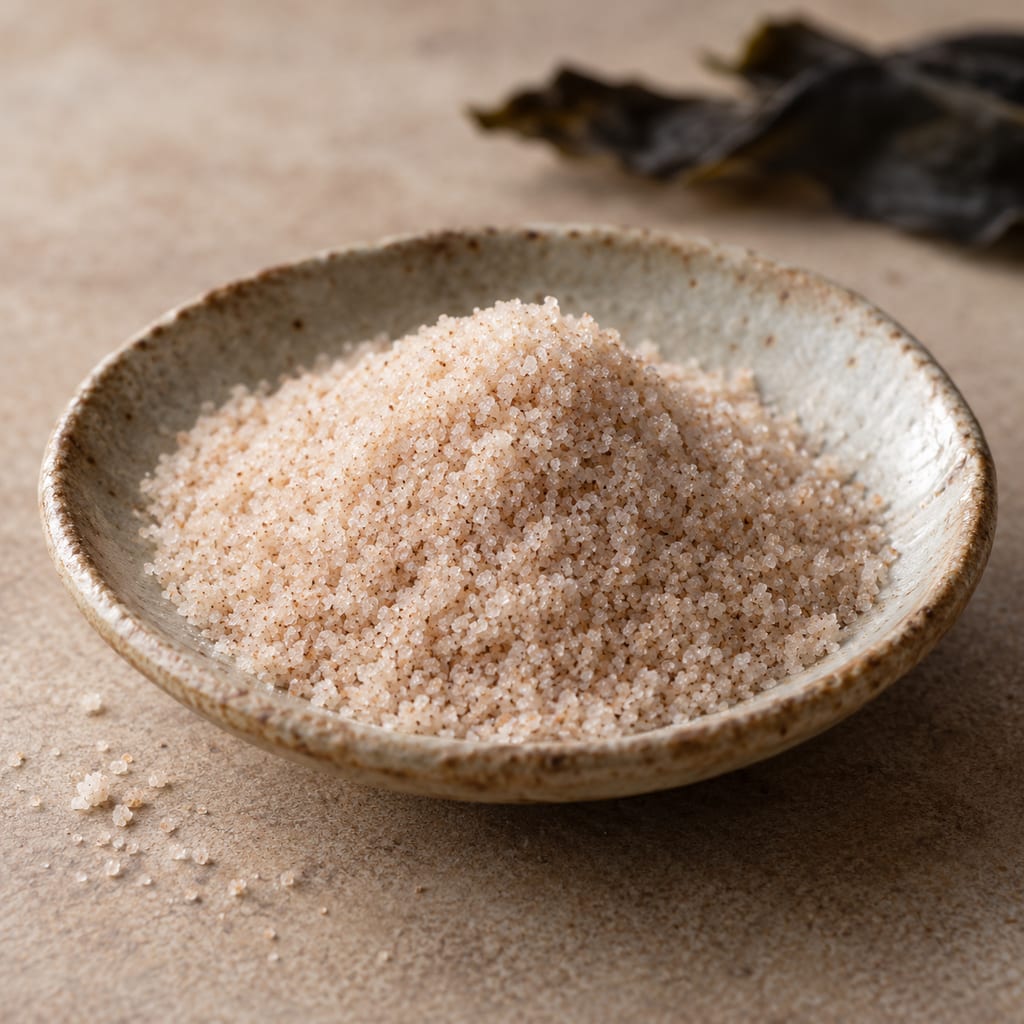
Awaji moshio is a modern Japanese seaweed salt made by TaDa PHILOSOPHY from Awaji Island seawater and seaweed. Its premium process concentrates brine, extracts seaweed flavor, then crystallizes, separates, dries and grades the salt.
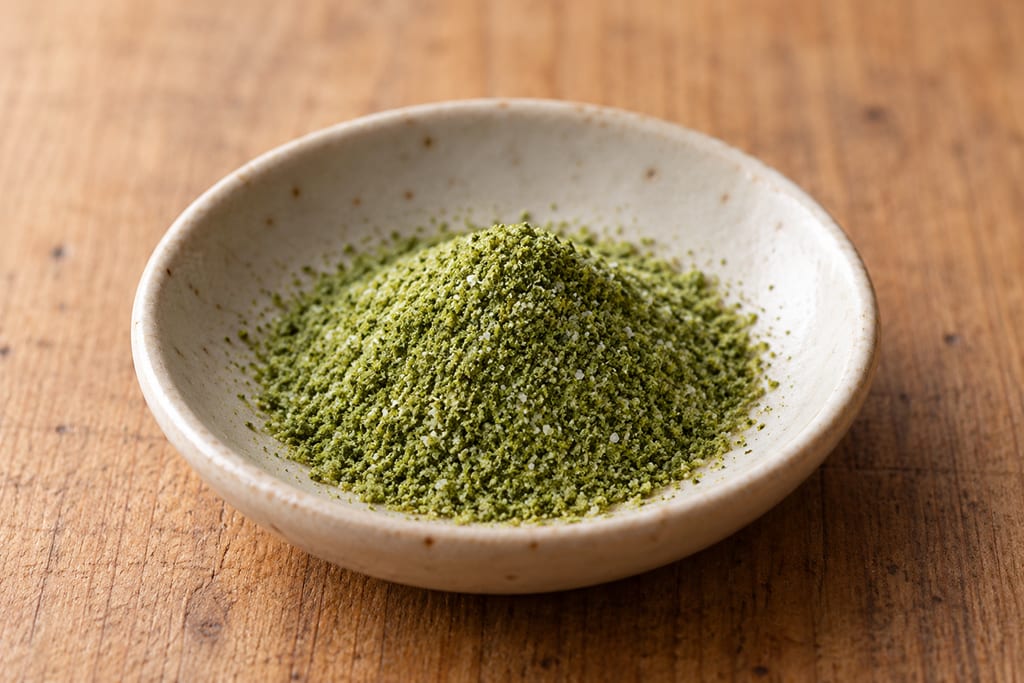
Green tea leaf salt is a dry seasoning made by grinding tea leaves, sieving them and mixing the powder with fine salt. This Japanese-style version follows a documented equal-parts method.
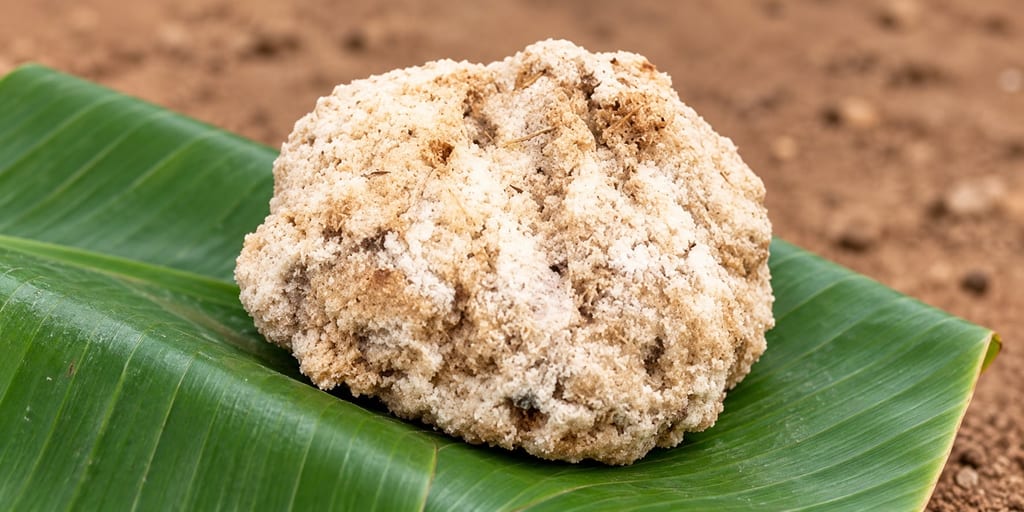
Nzoia River reed salt is a Bukusu seasoning made by leaching and evaporating the ash of mature muchua reeds. Its sources document a local method, but provide neither a measured formula nor verified mineral composition.
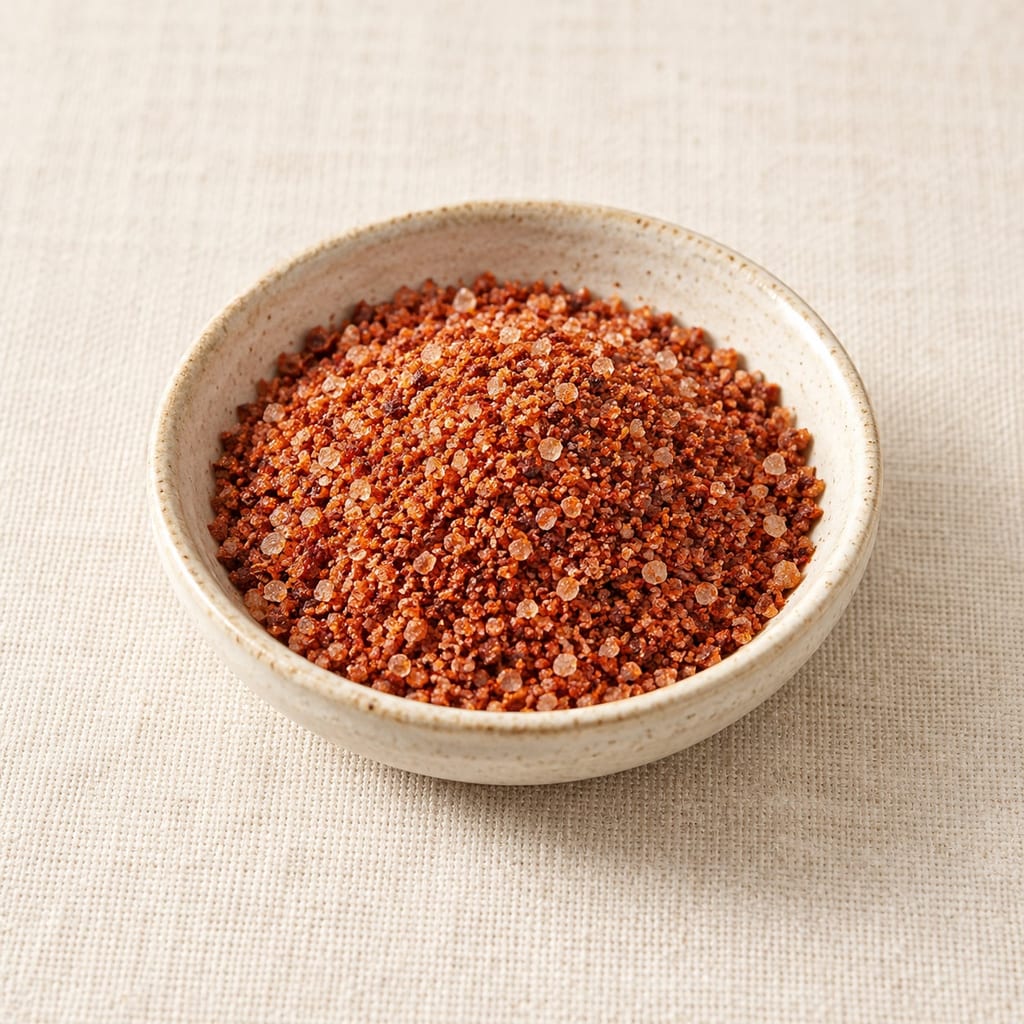
A dry Mexican seasoning of maguey worm, salt and chile, most closely associated in published accounts with Oaxaca and commonly served with mezcal, citrus and fruit.
No community contributions have been published for this entry yet.
Sign in to contribute. Published comments and photos are free to read.
American Culinary Federation, Sizzle, Winter 2015Method · Ingredients · Use
Uncover the Flavors of Bulgarian CuisinePrinted formula: 2 oz paprika, 2 oz dried summer savory, 1 oz garlic powder, 1 oz ground cumin, 1/2 oz ground fenugreek and 1 oz sea salt.
Grind together in a mortar or spice grinder and store airtight.
Identified as a Bulgarian all-purpose seasoning for meats, fish and vegetables; tarator is described with a light dusting.
Cited in: A salt that carries a household’s seasoning; What the measured ingredients contribute; Grinding, texture and keeping the blend dry; How it is eaten; Practical interpretation
Regional Ethnographic Open-Air Museum Etar, 2020History · Method · Variations · Use
Българският код за вкусно: 199 рецепти – записани, съхранени, представени на кулинарни фестивали и конкурсиThe introduction records salt mixed with paprika, savory, pounded roasted corn and other ingredients as sharena sol.
Recipe 192 gives dried fenugreek, thyme and savory, dried in strong sun, pounded, sieved and combined with hot or sweet paprika and salt; attributed to the community centre in Mladen village, Gabrovo region.
The collection draws on field research, festivals and competitions.
Cited in: A salt that carries a household’s seasoning; Everyday bread, ritual occasions and local identity; What the measured ingredients contribute; Grinding, texture and keeping the blend dry; Regional and household variations; Practical interpretation
Paisii Hilendarski University of Plovdiv, conference abstracts, 2023History · Culture · Geography · Variations
Да направиш шарена сол – жизнени преходи и трансформации в една локална общностEthnobotanical study abstract identifies summer savory (Satureja hortensis) as the required herb in sharena sol; salt, paprika and savory are the core ingredients.
Describes everyday use with bread and ritual use at life-cycle ceremonies and celebrations.
Reports household recipes mixed by eye and taste, and the recent use of a Staro Zhelezare formula in building local identity.
Cited in: A salt that carries a household’s seasoning; Everyday bread, ritual occasions and local identity; What the measured ingredients contribute; Regional and household variations; Practical interpretation
Slow FoodGeography · History · Variations · Use
Ark of Taste: Bulgaria Hits 60 – 2 New Products Included in the List of Endangered Food ProductsStaro Zhelezare account lists garden-grown savory, fennel, cumin, sweet and hot pepper, and mint; each household adjusts its blend.
Describes older grinding in a wooden kuttel and contemporary use of electric grinders.
The village blend seasons kebabs, steaks, cooked eggs and warm bread; fennel and savory are highlighted in its characteristic flavor.
Cited in: A salt that carries a household’s seasoning; Everyday bread, ritual occasions and local identity; What the measured ingredients contribute; Grinding, texture and keeping the blend dry; Regional and household variations; How it is eaten; Practical interpretation
Institute for Bulgarian Language, Bulgarian Academy of SciencesMethod · Geography · Variations
Staro ZhelezareThe Staro Zhelezare potherb formula uses savory, sweet and hot paprika, mint, fennel, black pepper, salt and cumin.
Describes savory being picked, washed, cut and dried, then pounded and sifted before mixing with homemade paprika and ground herbs and spices.
Cited in: Grinding, texture and keeping the blend dry; Regional and household variations