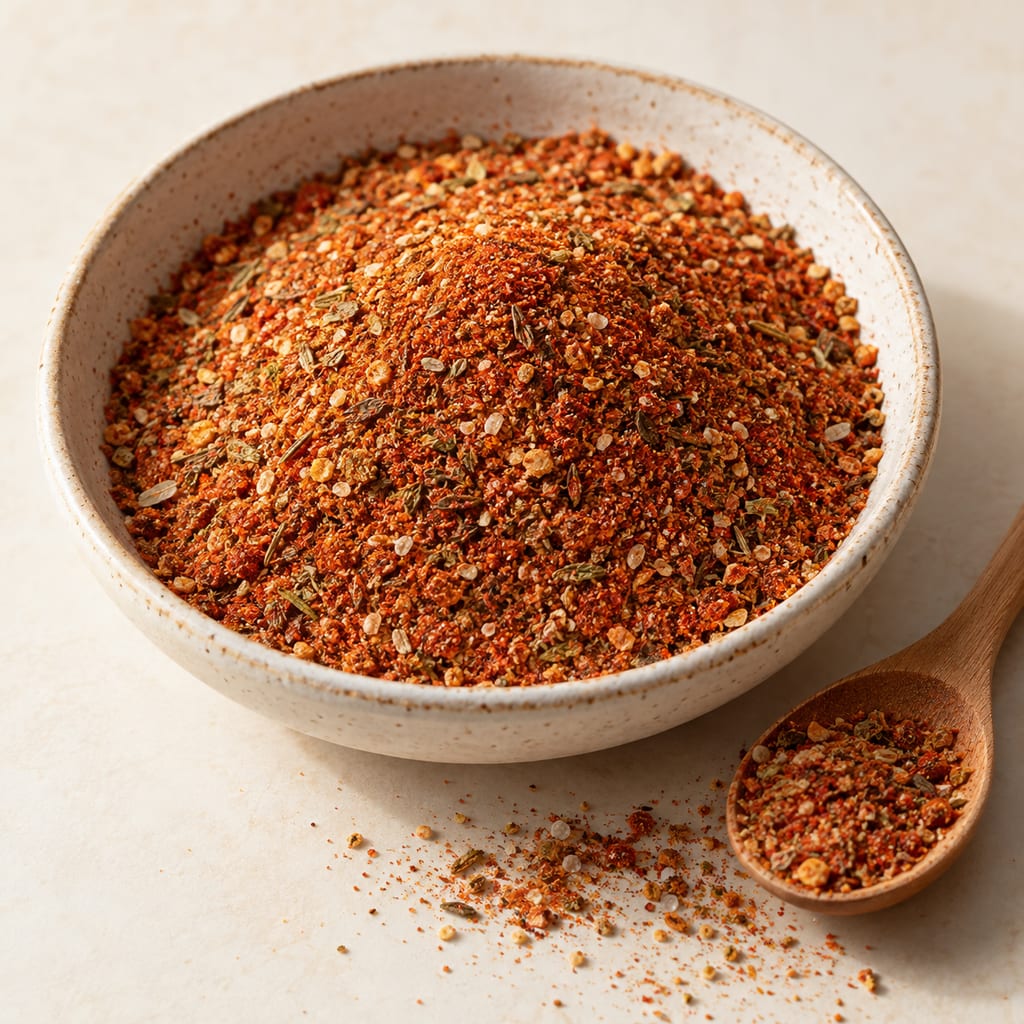
Sharena sol
Bulgarian dry seasoning of salt, paprika, dried herbs and spices, with household and regional variations.
 FermenteaWhere food goes to change
Лютеница (lyutenitsa) · Ljutenica · Lutenica · Lütenitsa · Lyuto
A Balkan relish of cooked peppers, tomatoes, aubergine and garlic in oil, sometimes made hot, served cold and named for its spiciness.
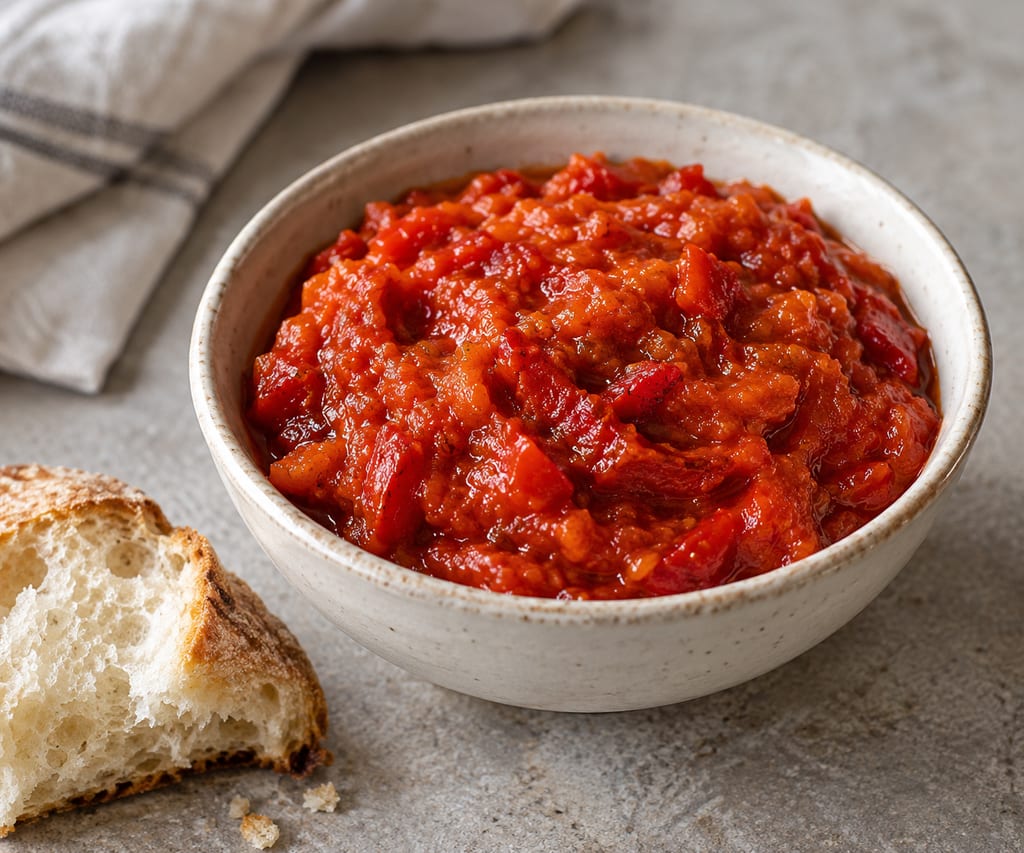
Lyutenitsa is a cooked vegetable relish of the Bulgarian, Macedonian, Serbian and Turkish kitchens. Its name comes from the word for spicy, and the Wikipedia article gives it as lyuto, ljuto or luto in the local languages, as well as the spellings ljutenica and lütenitsa. Depending on the cook it can be spicy hot or mild, and it can be served as a spread, a salad or a relish.
Its base is peppers and tomatoes, cooked with garlic, oil and salt. Aubergine, carrot, sugar and walnut appear in some versions, and chilli gives the hot forms. The texture ranges from smooth to chunky; the Wikipedia article lists smooth, chunky, chilli and aubergine variants as the main kinds.
Lyutenitsa belongs to a family of red-pepper condiments that includes ajvar and pindjur. The Wikipedia article places it beside Kyopolou, an aubergine relish, zacusca, a vegetable spread from Romania, and biber salçası, a Turkish red-pepper paste. The article also links chushkopek, the appliance used to roast peppers for it.
The ingredient lists differ: the Wikipedia article gives tomatoes, carrot and walnut for lyutenitsa, and ajvar is described separately. The sources do not describe a fixed recipe, and this page does not invent one.
The Wikipedia article notes that in recent years industrial production of lyutenitsa and ajvar has grown, and that large-scale production has taken both relishes beyond the Balkans.
The sources read give no shelf life, no processing time and no acidity target for lyutenitsa. Anyone preserving it should use a tested method rather than rely on this page.
Lyutenitsa is a vegetable relish of the Bulgarian, Macedonian, Serbian and Turkish kitchens. Industrial production has grown in recent years and has spread the relish beyond the Balkans, according to Wikipedia. Its first date is not established by the sources read.
Named in Bulgarian cuisine; the source gives no locality.
Named in Macedonian cuisine.
Named in Serbian cuisine.
Named in Turkish cuisine as lütenitsa.
Bulgarian dry seasoning of salt, paprika, dried herbs and spices, with household and regional variations.
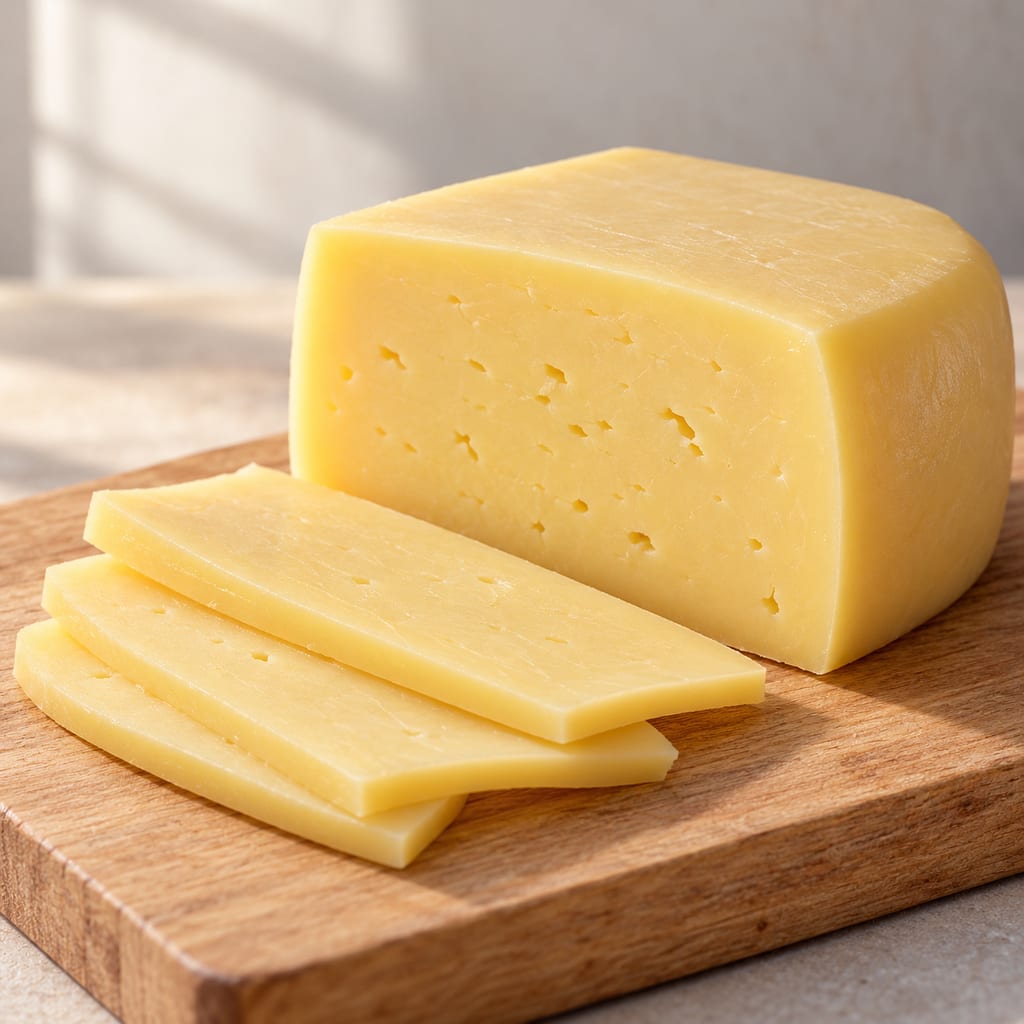
A yellow stretched-curd cheese made by acidifying, draining and kneading curd in hot brine. This small-batch kashkaval uses a commercial starter and a brine finish.
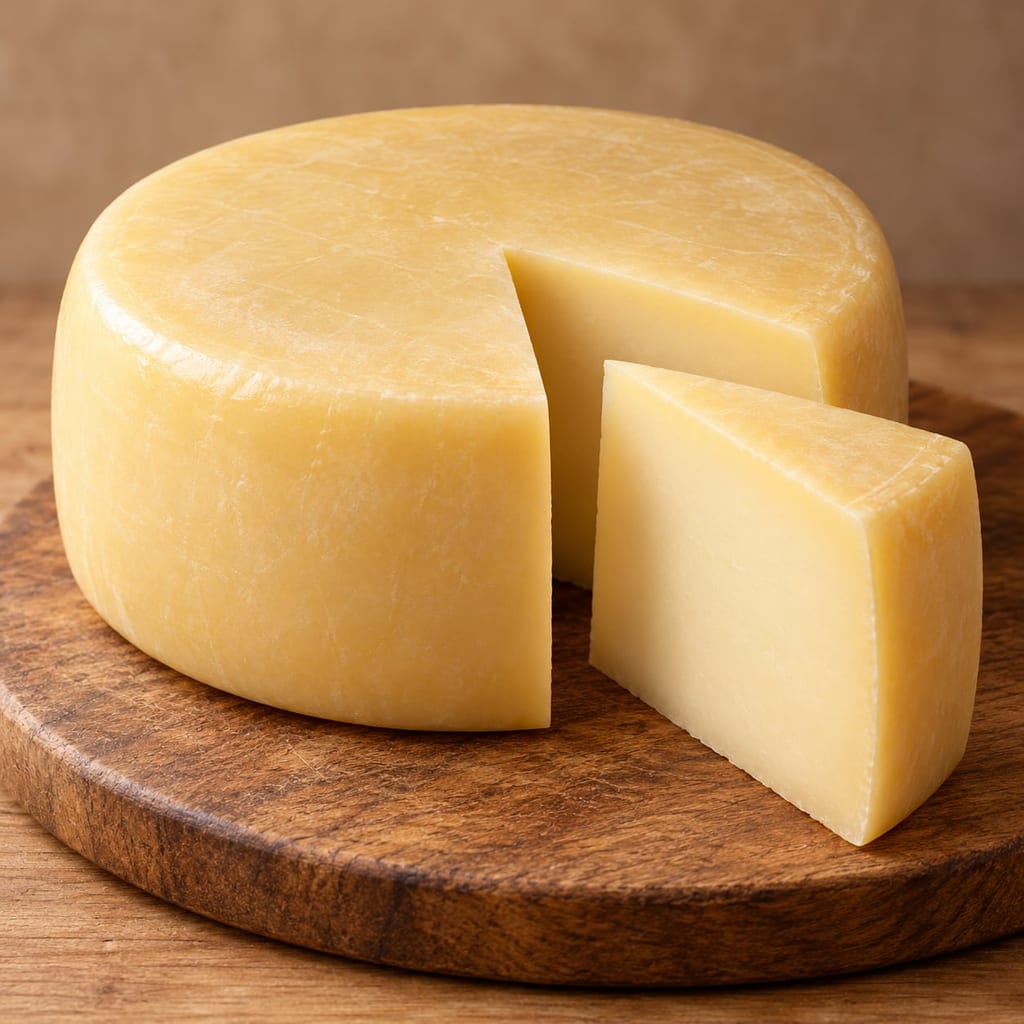
Kashkaval is a firm sheep-milk cheese whose acidified curd is worked in hot brine. This large-batch method finishes with repeated dry salting, wax coating and cool ripening.
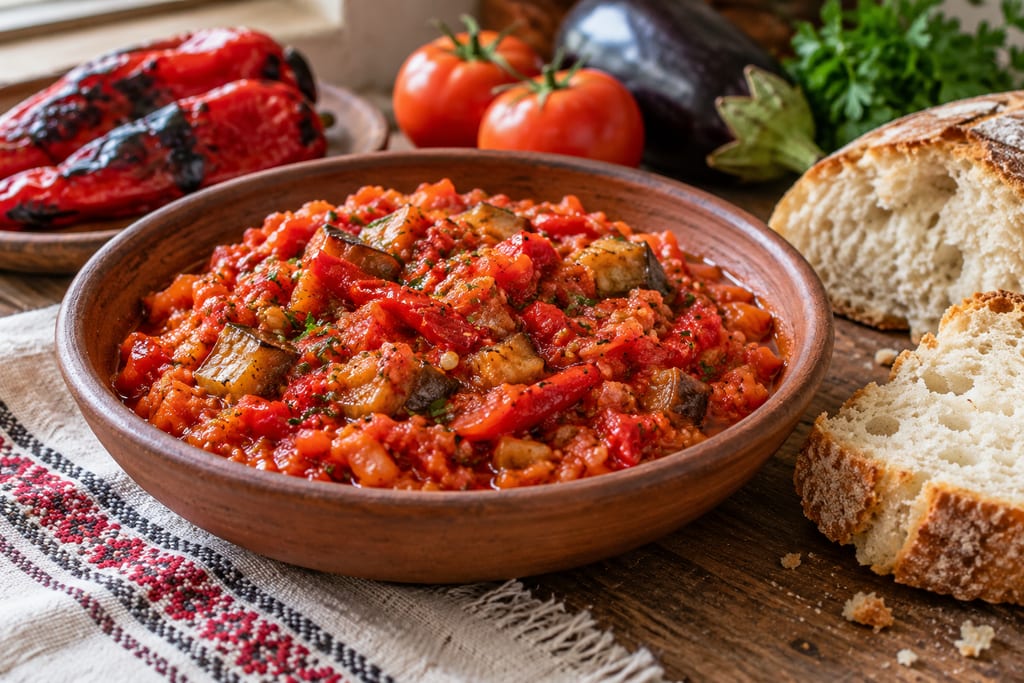
A Balkan relish of roasted red peppers and tomatoes, often with aubergine and garlic, cooked down into a spread for the winter store.

A cold dip, soup or sauce of strained yogurt, cucumber and garlic, eaten across Greece, Turkey and the wider Balkans and Levant under names that include cacık and tarator.

Ajvar is a cooked Balkan pepper preserve built around roasted red peppers, peeled, drained, ground and slowly fried with oil and seasoning. Leskovac’s protected version is a pepper specialty; regional versions vary.

Amlou is a nutty, lightly sweet Moroccan spread of roasted almonds, culinary argan oil and honey. The almonds are ground first, then loosened with oil and sweetened; the balance can range from a thick spread to a dip.

Apple sauce for goose and pork is a plain English accompaniment: cooked apples pulped with water, then sweetened with sugar and finished with a little butter.

A warm dip of garlic, anchovy and olive oil, often enriched with butter, that Piedmont serves over a flame with raw and cooked vegetables and bread.

A sweet-hot table sauce of ripe banana simmered with vinegar, sugar, onion, garlic and fresh chilli, in the manner of Philippine banana ketchup. An untested development batch of about 500 g.

A Georgian walnut sauce of ground walnuts, garlic, vinegar and spices, thinned with water or broth. It is served with poultry, vegetables and bread, and is the sauce of the dish satsivi.

A pourable dessert sauce of brown sugar, butter and cream, with a little corn syrup and salt. It is the sauce form of the butterscotch confection and is made without water, unlike caramel.

Byzantine murrī is a cooked imitation of murrī from the medieval Arabic repertoire, made from scorched honey, toasted bread, walnuts, quince, carob and spices rather than from a long grain fermentation.
No community contributions have been published for this entry yet.
Sign in to contribute. Published comments and photos are free to read.
WikipediaIdentity · Variations · Ingredients · History
LyutenitsaNames lyutenitsa, ljutenica, lütenitsa, lutenica; meaning spicy; relish or chutney in Bulgarian, Macedonian, Serbian and Turkish cuisines; ingredients peppers, aubergines, carrots, garlic, vegetable oil, sugar, salt, tomatoes and walnut; smooth or chunky, with chilli or aubergine, hot or mild; cold serving; industrial production of lyutenitsa and ajvar has grown in recent years
Cited in: A relish named for its heat; Relatives on the table; Industrial and home versions
Wikimedia CommonsImage
File:Lutenica.jpgImage of the lyutenitsa relish; the Commons file page names Off-shell as the author and explicitly licenses the photograph under CC BY-SA 4.0.