Bacillus Bulgaricus Kashkaval starter
A commercial freeze-dried dairy culture for Kashkaval, made in Bulgaria according to its supplier. Its powder includes skim milk material; the published organism list needs clarification of one name.
 FermenteaWhere food goes to change
Modern adaptation
Кашкавал (kashkaval) · Bulgarian kashkaval
A yellow stretched-curd cheese made by acidifying, draining and kneading curd in hot brine. This small-batch kashkaval uses a commercial starter and a brine finish.
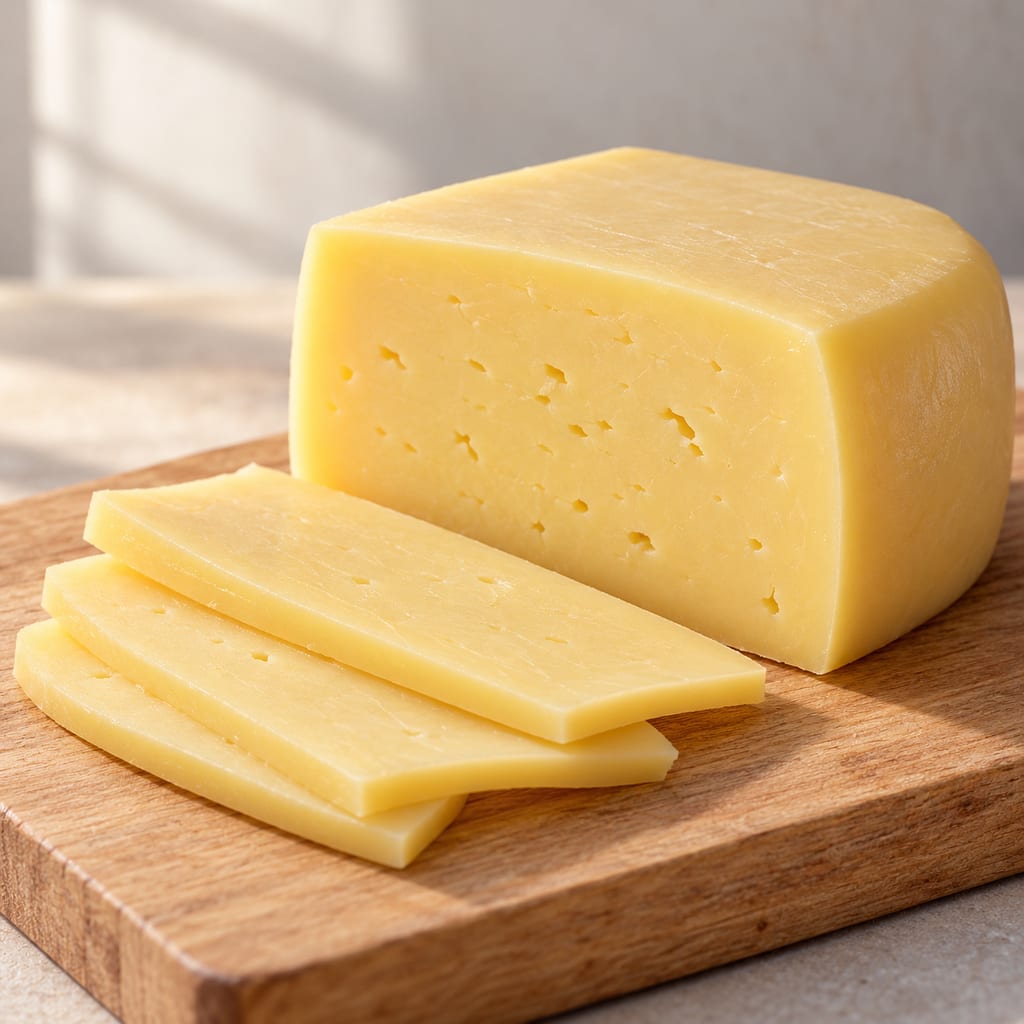
Kashkaval is a family of yellow, stretched-curd cheeses associated especially with Bulgaria and also made in other parts of the Mediterranean. Its defining visual cue is a smooth yellow interior, often with small irregular openings, and a texture that can be sliced, grated or softened by heat. The family name does not identify one immutable recipe: milk species, acidity development, curd handling, salting and maturation can all differ. The cheese in this record is specifically a modern home-scale, cow-milk adaptation using a packaged starter and a brine finish. It should not be mistaken for a documented village formula or for the long-ripened sheep-milk cheeses described in older technical accounts.
The distinction matters because the shared name can make two quite different products seem interchangeable. FAO’s account places kashkaval in the Bulgarian and wider regional stretched-curd tradition, while the supplier’s formula gives a controlled, four-litre method with commercial culture, measured temperature stages and pH readings. The present version follows that supplier’s adaptation and keeps its uncertainties visible. The roughly 800 g yield is an estimate for this batch, not a guaranteed result; moisture retained in the curd and the drain determine the actual weight.
At the table, kashkaval is valued as both a slicing cheese and a cooking cheese. The starter supplier describes uses that include slicing, melting and baking. A young brine-finished block will not behave exactly like a firm cheese ripened for months: it may be milder, moister and less concentrated. That contrast is part of the recipe’s identity rather than a flaw to correct by silently adding a long aging stage.
FAO reports that kashkaval was known in Bulgaria by the sixteenth century and that its manufacture later spread to other Mediterranean countries. This is a historical attestation for the cheese family, not proof that Bulgaria was the sole place of invention or that every present-day cheese bearing the name descends through one uninterrupted recipe. The source does not identify the underlying sixteenth-century document, so the date is best read at the level FAO gives it: a reported early record, not a precise account of origins.
The same technical account describes traditional sheep-milk production and practices such as repeated surface salting, waxing and extended curing. Those details belong to a distinct, longer maturation path. The modern supplier method here uses pasteurized whole cow’s milk and packaged culture, then shapes and finishes the cheese in brine. The two records are related by family and technique, but their milk, scale and finishing differ. They should not be blended into a supposed universal method.
The Bulgarian spelling on the recipe is кашкавал. The listed linguistic source supports the written name; it is not evidence for the home method or the cheese’s safety. The geographic label in this record therefore identifies the family’s historical association and name, while the particular modern adaptation is not assigned a narrower place of origin. This keeps the map from implying that the supplier’s formula is a traditional Bulgarian household recipe.
Cheesemaking combines biological acidification with physical operations such as cutting, heating, draining and stretching. The packaged starter supplies lactic-acid-producing dairy bacteria. As they use milk sugars, acidity rises and the curd's mineral balance changes. That acid development helps prepare the curd for stretching and gives it a clean, lactic flavor. The supplier lists Lactobacillus bulgaricus, Streptococcus thermophilus and Lactococcus lactis, and also prints the name 'Lactococcus helveticus', which is not verified as a culture identity.
Rennet performs a separate task: it coagulates milk proteins into a gel that can be cut and drained. Calcium chloride is included by the recipe’s author as a separate addition to the milk, but the source’s stock-strength and dilution descriptions conflict. The written ingredient line specifies a quarter teaspoon in a quarter cup of cool non-chlorinated water; elsewhere the notes refer to a one-to-ten dilution without establishing the stock strength. The recipe therefore preserves the sourced quantity and flags the inconsistency instead of pretending the two directions are equivalent.
Milk choice is consequential. This method specifies pasteurized whole milk and warns against ultra-high-temperature milk, whose altered protein behavior may interfere with the desired coagulation. Pasteurization reduces hazards associated with raw milk, but it does not make the later curd handling sterile. Every later transfer, cut and kneading step introduces opportunities for contamination, which is why the safety instructions emphasize clean equipment, hands and food-contact surfaces.
The first heating stage, followed by cooling to the culture’s working range, is part of the supplier’s specified process. The starter is hydrated and dispersed before the milk is left to acidify. Once the rennet has set the milk, a clean cut through the curd releases whey. Cutting into small squares increases exposed surface area, allowing whey to drain more readily. The staged warming and stirring help the curd firm and expel whey; the source pairs this sequence with an endpoint around pH 5.6–5.7.
That pH reading describes acid development and the source’s process target; it is not a pathogen-kill step or a guarantee that the cheese is safe. The block then drains and continues to acidify, with the source giving a later target around pH 5.2–5.3. The two readings are checkpoints in the supplier’s curd-development method. They are useful for interpreting texture because the amount of acidification affects how the casein network responds to heat, but they do not validate a home process for pathogen control.
The supplier describes a practical stretch test: warm a few pieces in hot water, then see whether they can be kneaded into a shiny strand. This is a test of curd functionality, not a safety test. If the curd does not stretch, more acid development may be needed; the appearance of a shiny strand cannot reveal microbial safety. The distinction between quality cues and safety controls should remain clear throughout the recipe.
Once the curd reaches the source’s stretch condition, it is cut into thin strips and worked in hot salt brine. Heat softens the acidified casein network so the strips can be gathered, kneaded and shaped into a cohesive mass. Salt seasons the cheese and changes how water moves through it; the working liquid also supplies heat during stretching. In this method, brine is both a processing medium and a salting step, not simply a storage bath.
The supplier specifies a 16–18 percent salt brine for stretching, but does not state whether the percentage is by weight of water or of the finished solution. The later finishing brine is listed at 18–20 percent, with a lemon-juice addition and subsequent dilution, but the final amount of water and final concentration are not given. A percentage without its basis and a dilution without a final quantity do not make a reproducible formula.
After shaping, the block is cooled and then immersed in the finishing brine for two hours before the source’s lemon-and-water adjustment. The stated final hold is refrigerated at around 4°C for the described one-week finish. This brief brine finish differs from the repeated dry salting and lengthy curing described for traditional kashkaval. It yields a home-scale adaptation intended to be eaten young, and no room-temperature maturation or long storage life is established by the supplier’s instructions.
A good result, as the supplier describes it, is a smooth mass that can be pressed into a block after stretching. The finished cheese is expected to be pale yellow and sliceable, with a texture suitable for melting or baking. Moisture, acidity, heat and how thoroughly the curd is worked influence firmness and elasticity. The source does not establish a single sensory profile for every batch, and the approximate yield should not be treated as a quality test.
The method contains several practical ambiguities that limit exact replication: no brine volumes are given; the percentage basis is unstated; the final finishing-brine dilution is unspecified; the calcium-chloride dilution conflicts with a separate description; and the source’s general heating ramp does not align cleanly with its timed heating stages. The recipe keeps the source’s numeric targets where available, while identifying the gaps rather than filling them with invented measures. A batch should not be treated as validated merely because its pH, stretch or appearance resembles the source’s description.
New Mexico State University’s home-cheese guidance identifies contamination risks in fresh cheese handling and emphasizes clean equipment, food-contact surfaces and careful handling. This recipe accordingly calls for pasteurized milk, sanitary tools and prompt refrigeration for the brine finish. The pH endpoints and hot stretching steps here are process instructions, not validated hazard controls. The source does not establish a shelf life beyond the stated one-week finish, and smell, taste, or a clean-looking surface cannot establish safety.
Kashkaval’s versatility comes from the balance between a compact curd and a pliable, meltable texture. The starter supplier names slicing, melting and baking among its uses. Thin slices can be served with bread or arranged with other cheeses; a firmer block can be grated or melted into baked dishes. In cooking, it contributes dairy richness and savory saltiness, but this young brine-finished version may soften and release moisture differently from a cured wheel. For that reason, test it in a small portion of a dish before relying on it as a direct substitute for a drier, aged cheese.
The historical sheep-milk style documented by FAO is a meaningful variation, not an ingredient swap that this four-litre recipe can absorb without changes. It involves a different milk and longer finishing practices. The source-supported contemporary alternative in this recipe’s own materials is the supplier’s separate dry-salting option, described as repeated surface salting over about twenty days. That option is not combined with the brine-finished procedure here; it represents a different finish and should be followed only from its own complete source directions.
Keeping these branches separate helps readers understand why kashkaval varies across makers and regions. Milk species, starter, acidification, moisture removal, stretch conditions, salt application and maturation all shape the result. A wheel aged for months and a short-finished brine block share a family resemblance, but not necessarily the same aroma, moisture, firmness or cooking behavior.
For a simple serving, cut the chilled block with a clean knife and let the pieces lose some refrigerator chill before tasting; this makes the cheese’s aroma and texture easier to notice. Pair it with plain bread, fruit or vegetables when tasting a new batch, so a strongly seasoned dish does not obscure its salt and acidity. For cooking, use slices or grated cheese where melting is useful, and expect the result to differ from a drier aged cheese. The supplier lists baking and melting but does not provide a dish formula, so those are serving suggestions rather than a claim that every batch will melt identically. Keep leftovers refrigerated and handle them with clean utensils; the one-week brine finish in the recipe is not a validated longer shelf-life claim.
Kashkaval belongs to the stretched-curd cheese family associated with Bulgaria and the wider Mediterranean. It was known in Bulgaria by the sixteenth century, and its manufacture spread to other Mediterranean countries. Traditional sheep-milk methods can include repeated surface salting, waxing and lengthy curing. This home preparation instead uses a packaged lactic starter and a short brine finish; it is a distinct method, suited to slicing, melting and baked dishes.
Yield 800 g · Scaling: source batch only
Salmonella, Escherichia coli, Listeria monocytogenes and Staphylococcus aureus are associated with fresh cheese and can be introduced during curd handling.
Hazard sourceStart with pasteurized milk; clean and sanitize equipment and food-contact surfaces, wash hands, and handle and cool curds carefully.
Control sourceKeep the described brine finish refrigerated at around 40°F (4°C).
Control sourceUse pasteurized milk and clean, sanitized tools: curd handling can introduce disease-causing bacteria.
Keep the brine finish refrigerated. Its incomplete dilution instructions do not establish a safe brine concentration or a longer keeping time.
Bacillus Bulgaricus Kashkaval starter — Packaged lactic culture; the supplier lists Lactobacillus bulgaricus, Streptococcus thermophilus and Lactococcus lactis, plus the unresolved label “Lactococcus helveticus”.
No humidity condition is specified for this brine-finished method.
Association of the kashkaval family, not proof of where this home formula was developed.
The supplier does not locate the development of this particular method.
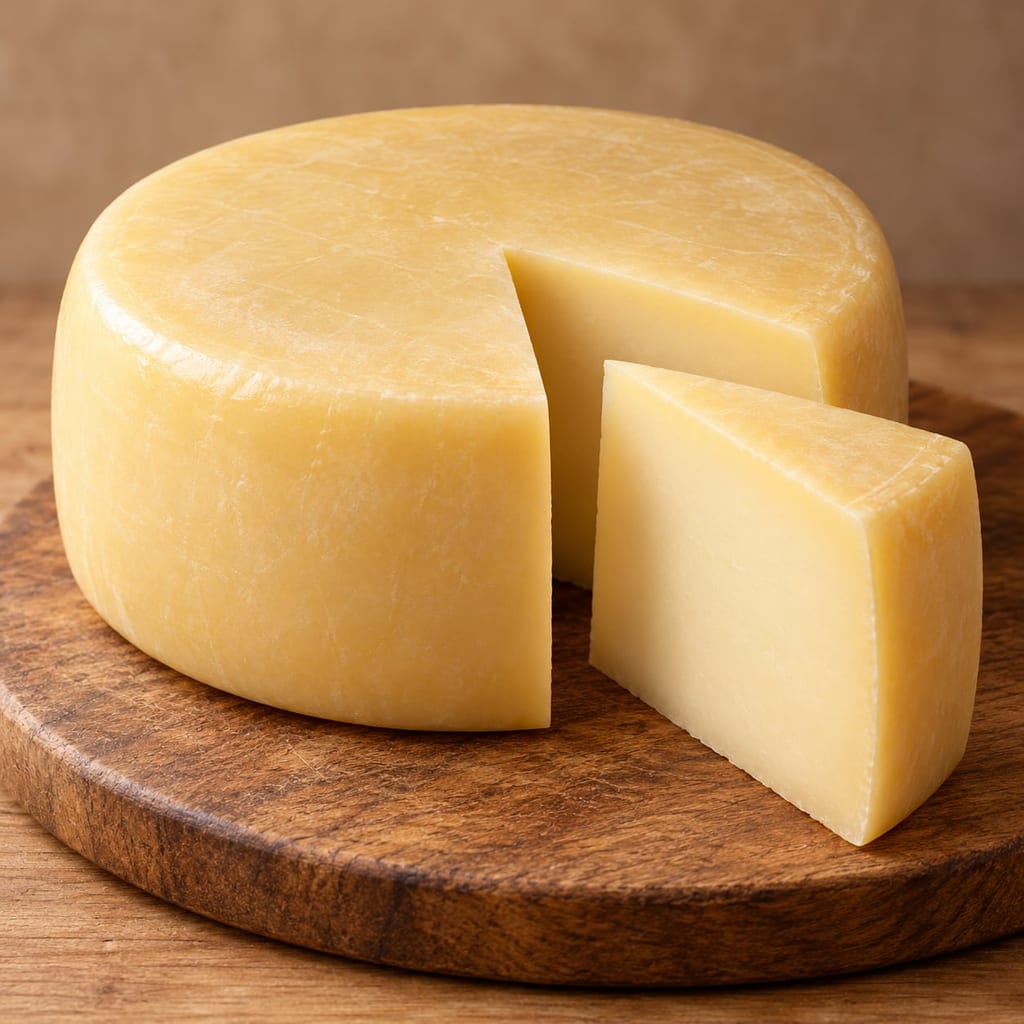
Kashkaval is a firm sheep-milk cheese whose acidified curd is worked in hot brine. This large-batch method finishes with repeated dry salting, wax coating and cool ripening.
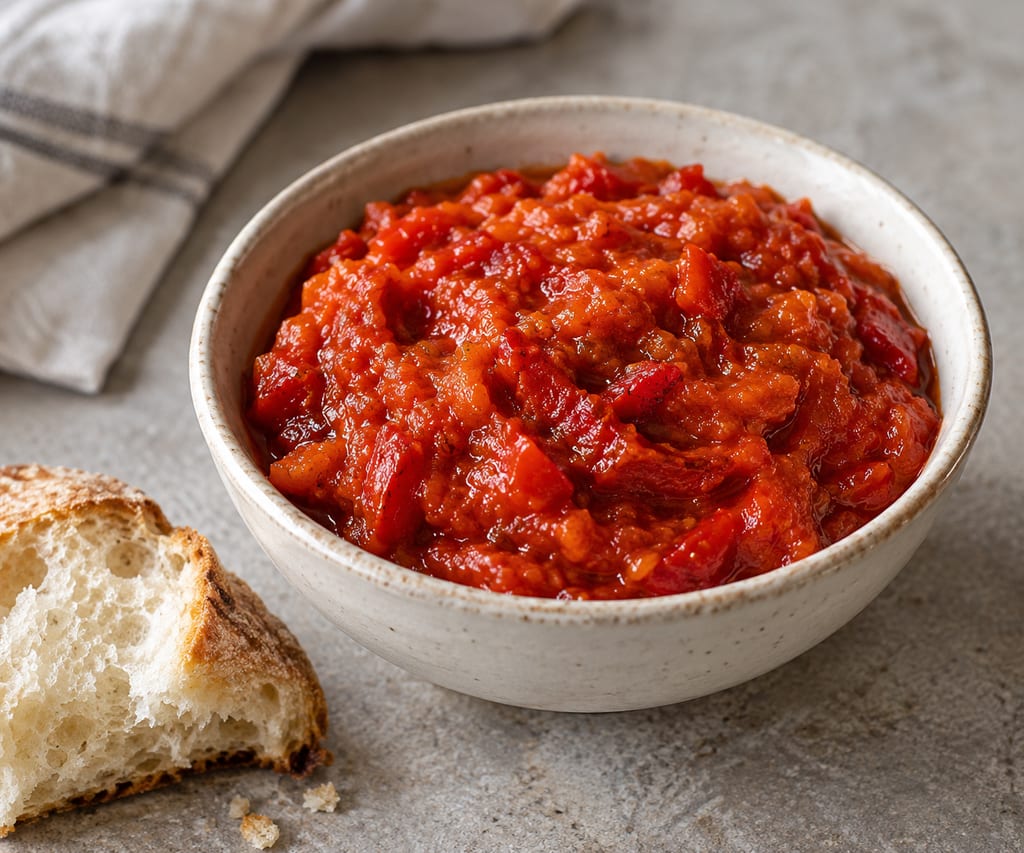
A Balkan relish of cooked peppers, tomatoes, aubergine and garlic in oil, sometimes made hot, served cold and named for its spiciness.
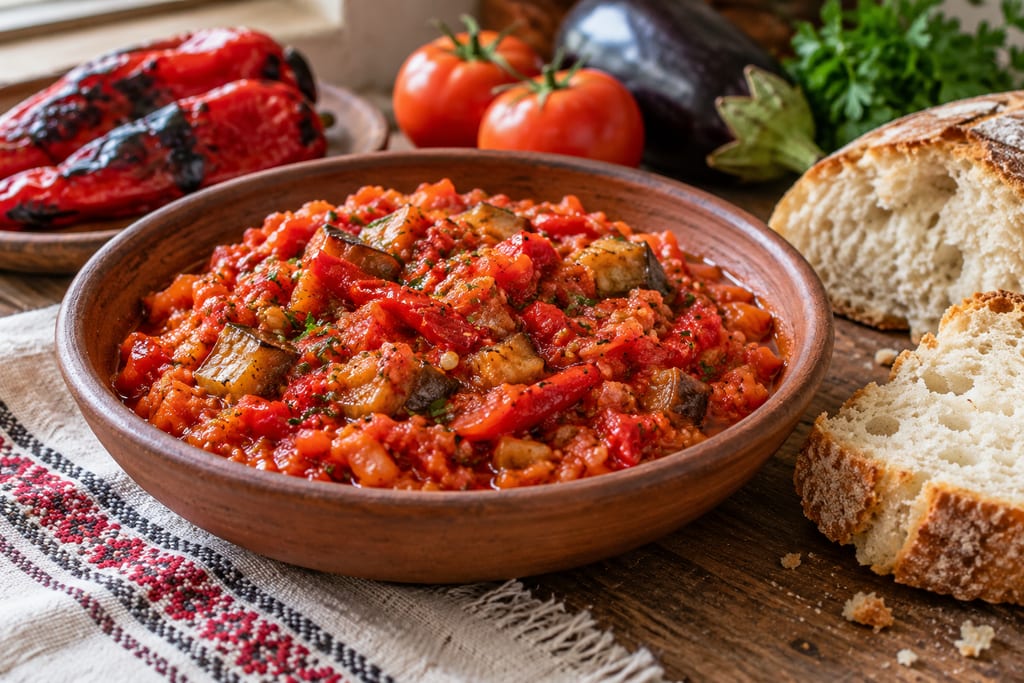
A Balkan relish of roasted red peppers and tomatoes, often with aubergine and garlic, cooked down into a spread for the winter store.
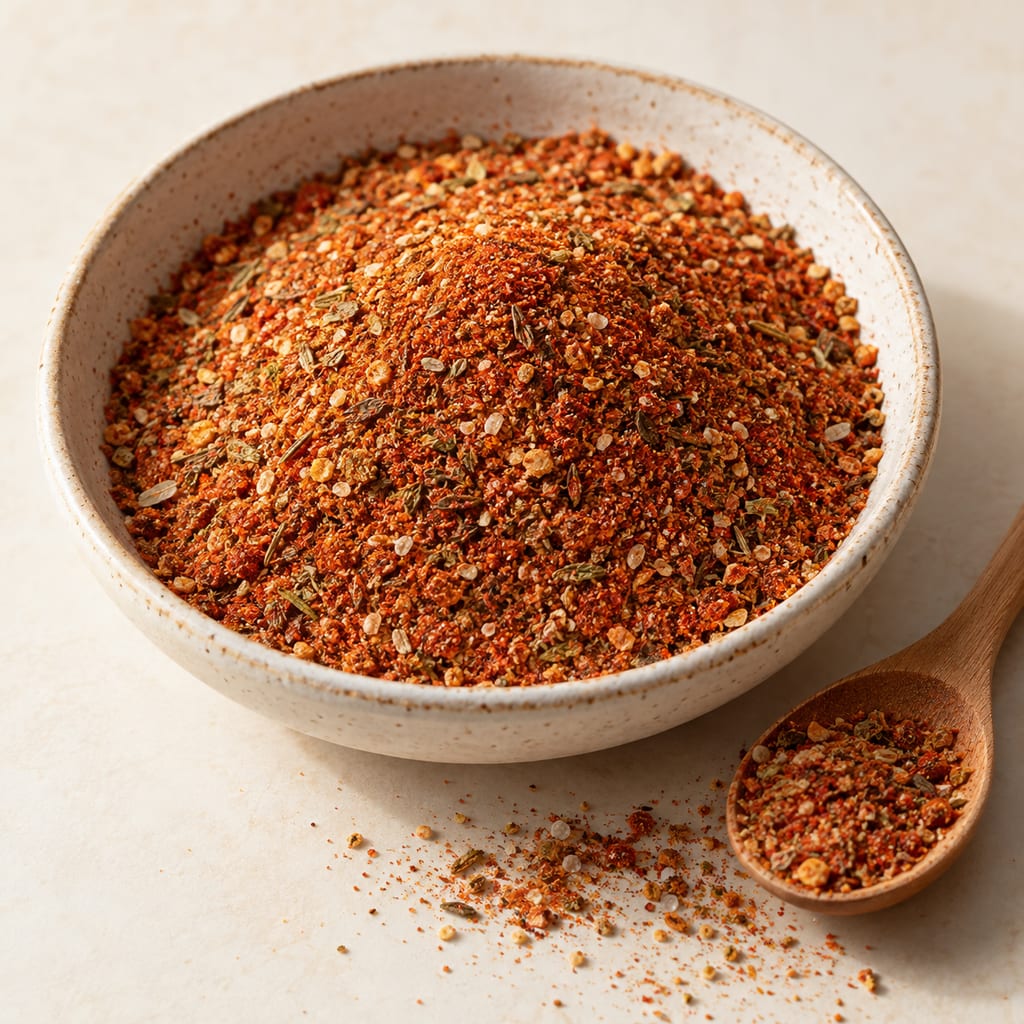
Bulgarian dry seasoning of salt, paprika, dried herbs and spices, with household and regional variations.

A cold dip, soup or sauce of strained yogurt, cucumber and garlic, eaten across Greece, Turkey and the wider Balkans and Levant under names that include cacık and tarator.
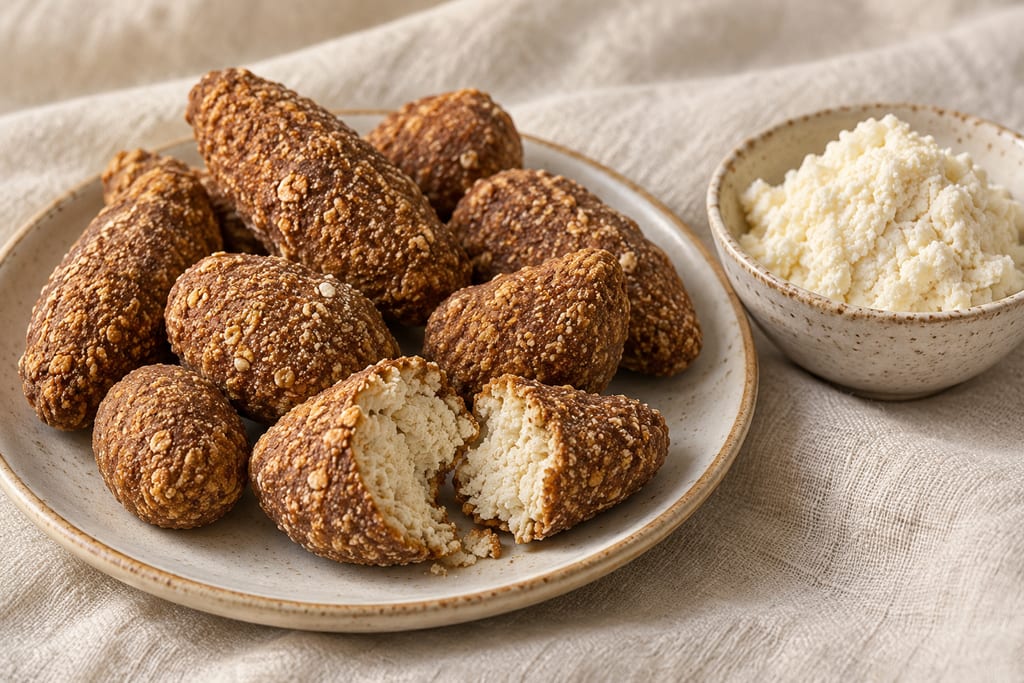
A two-stage Altai dairy preparation: sour chegen is heated into soft aarchi, then portions are drained, pressed and traditionally smoked into firm kurut.
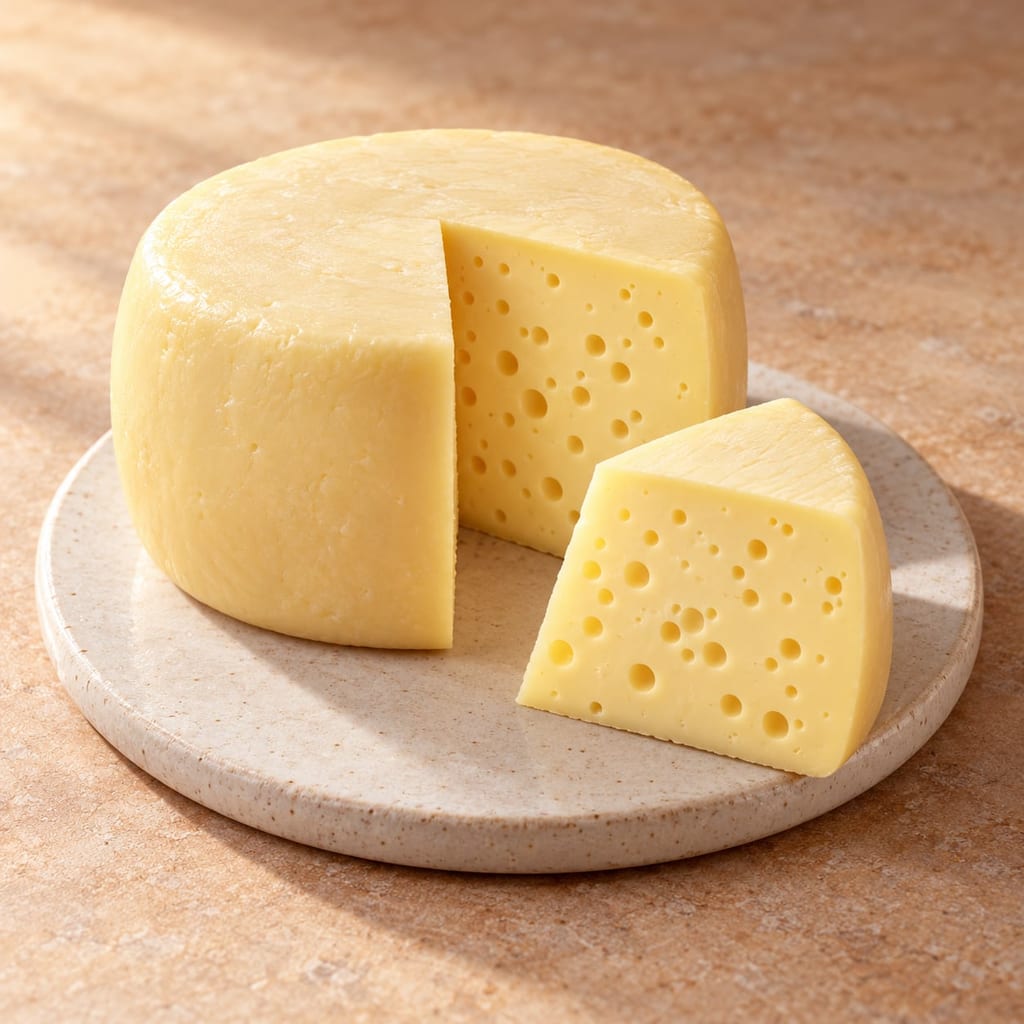
A washed-curd cheese with propionic bacteria, warmed by hot water in two steps and then held in a warm room for weeks so the bacteria can form its holes.

Beyaz peynir is a Turkish white cheese matured in brine. Sheep milk, alone or mixed with other milks, gives a close-textured cheese cut into blocks and packed in cans.
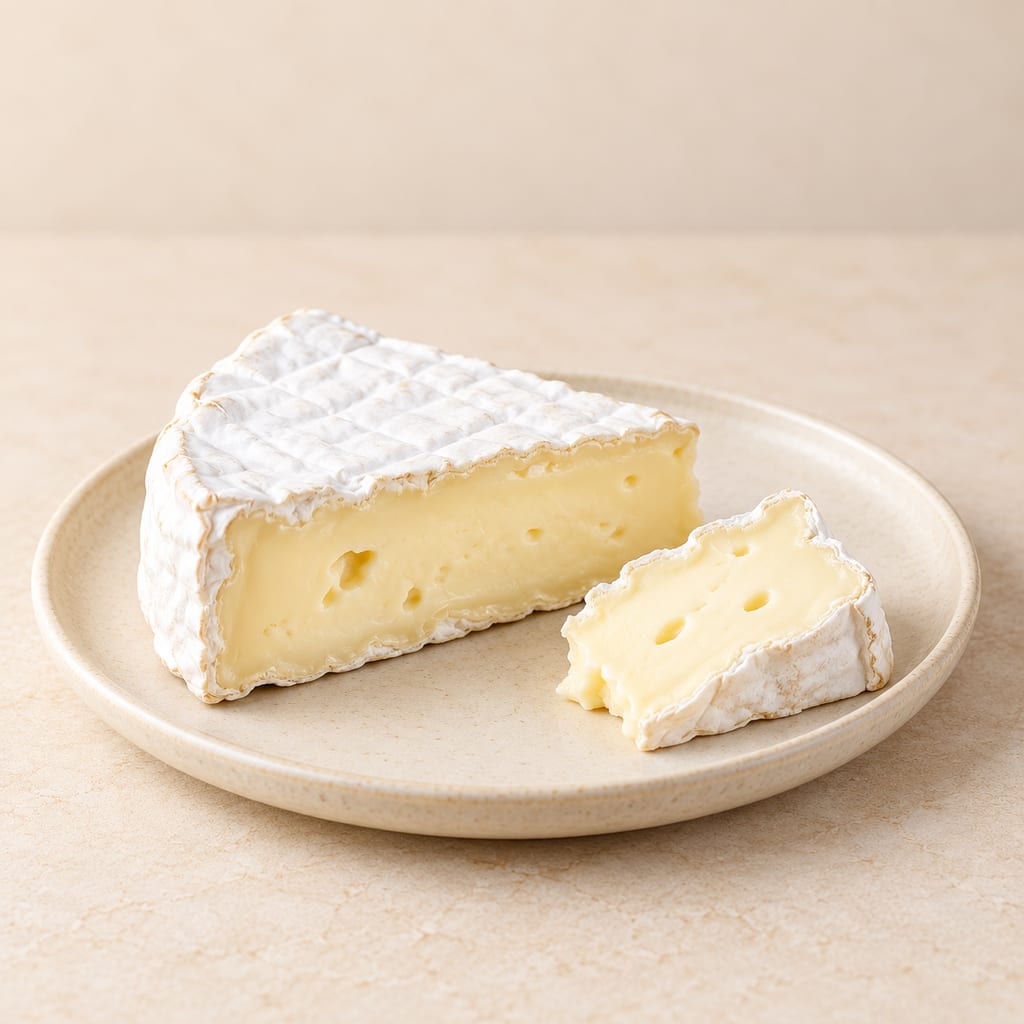
A cream-enriched Brie with a white bloomy rind and a softening center, made from pasteurized milk with lactic and surface cultures.
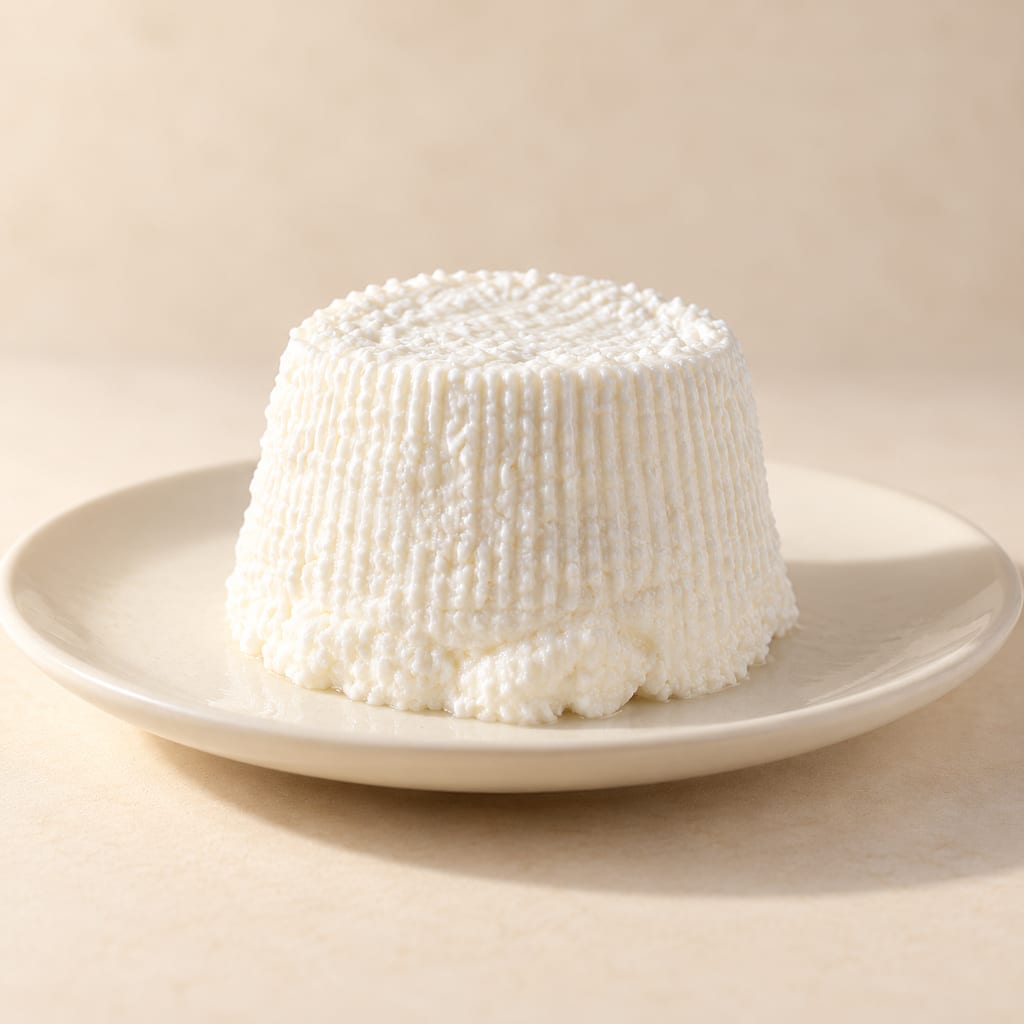
Corsican Brocciu is a whey cheese made by heating sheep's or goat's whey with whole milk and salt, then gently draining the flocculated curds. It is eaten fresh or salted and ripened as Brocciu passu.
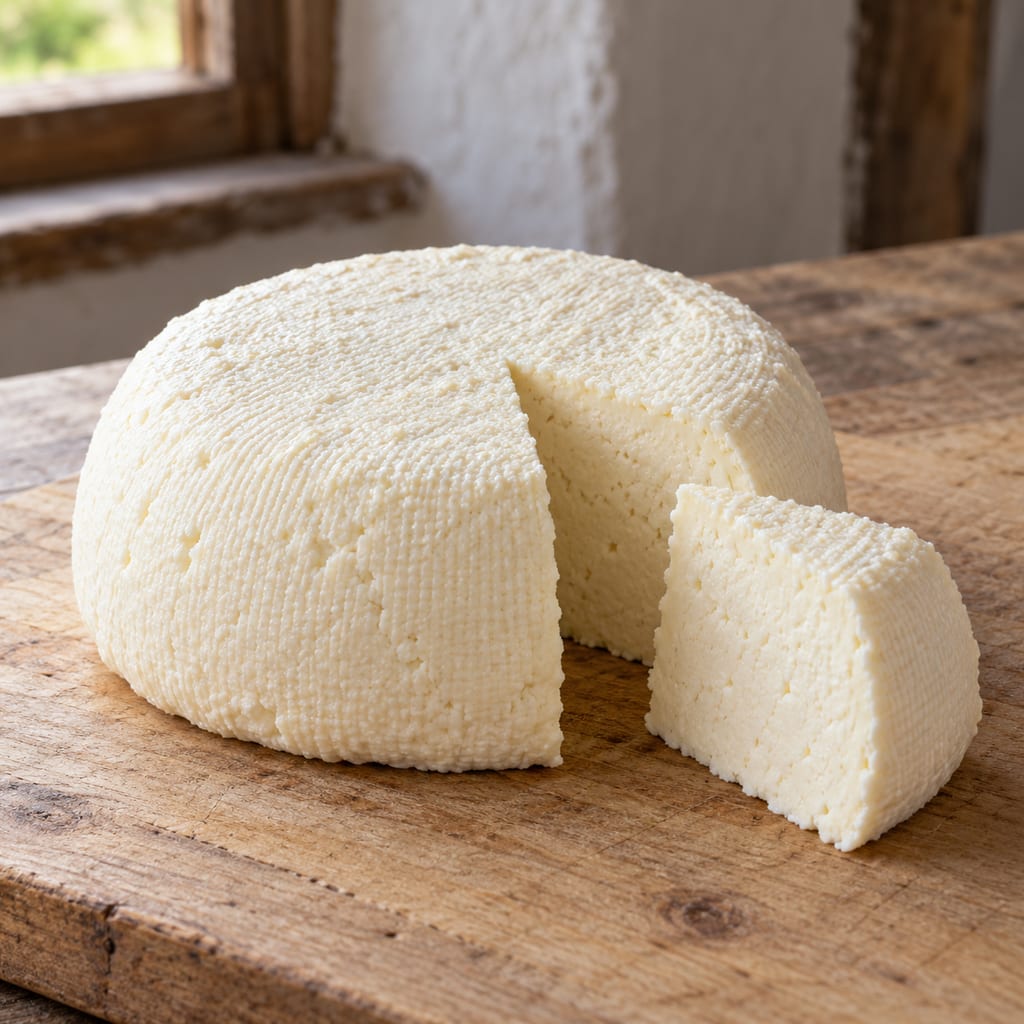
Budz is a traditional Hutsul rennet-set cheese made from sheep, cow or goat milk in the Ukrainian Carpathians, forming a fresh curd that can be eaten, smoked or processed into salted bryndza.
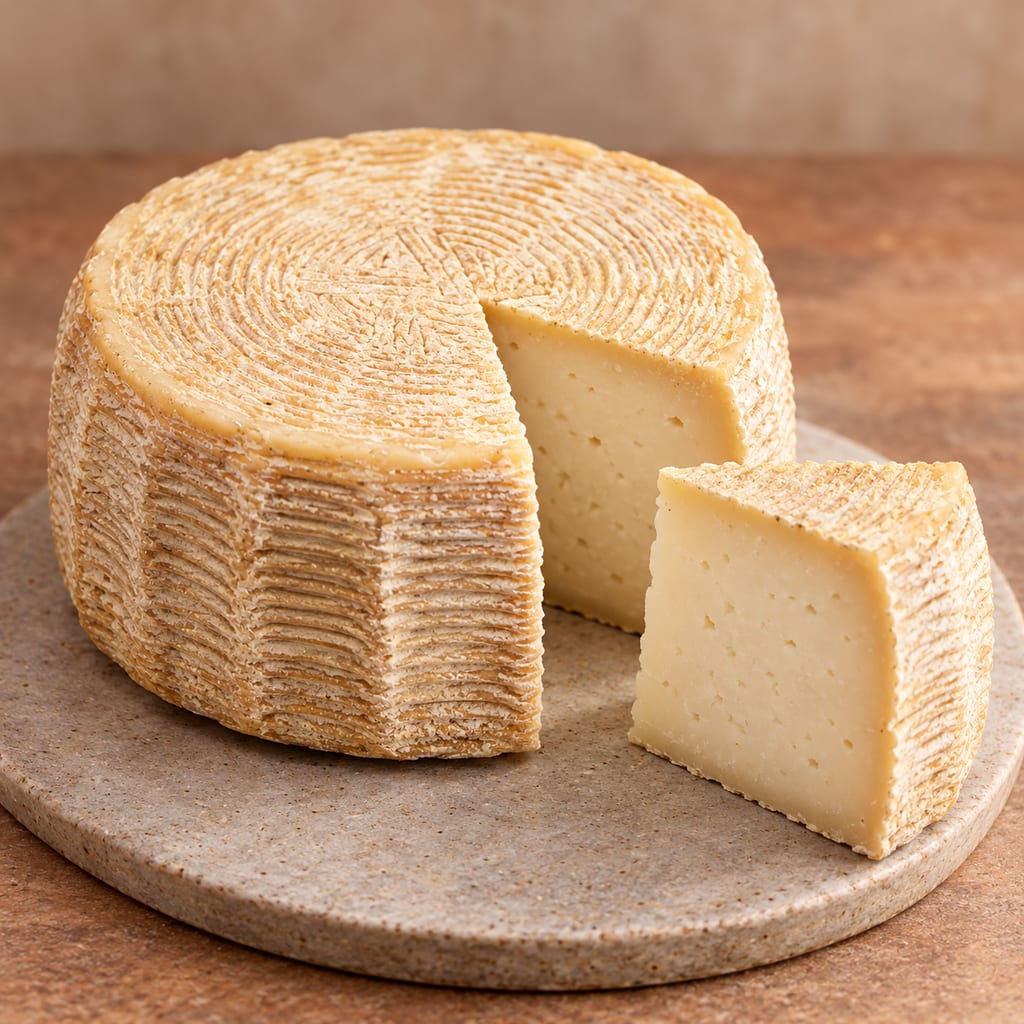
A scalded cheese moulded in baskets and re-cooked in its forms in hot whey, made alongside a ricotta from the same milk, then acidified, brined and aged for months.
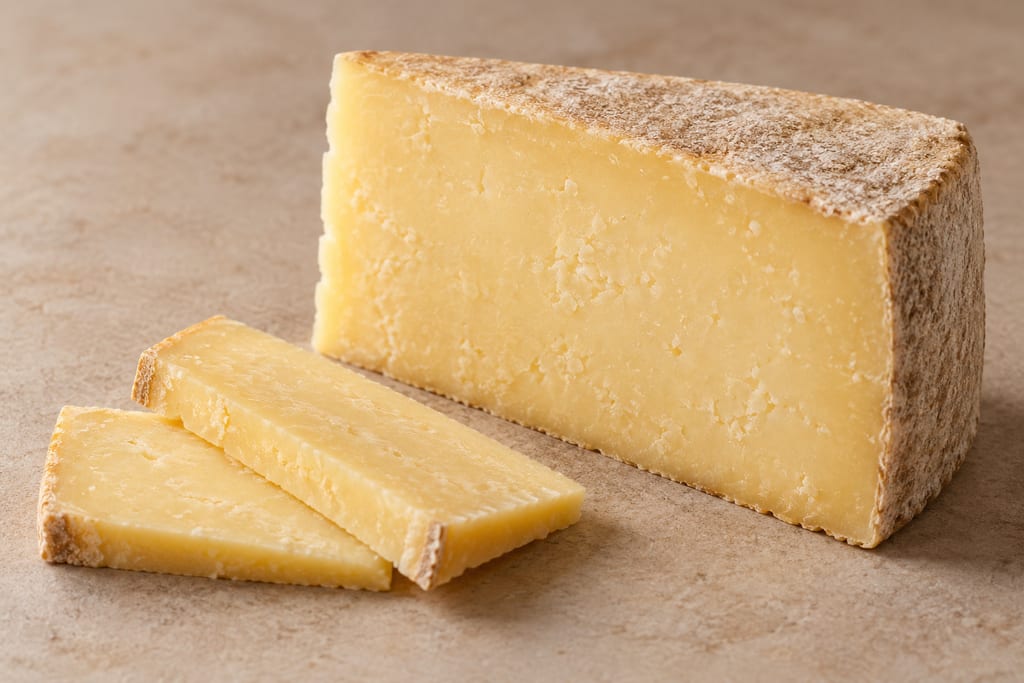
A pressed cheese whose curd is cooked slowly, then cheddared: kept warm in slabs that are turned and stacked for hours before milling, salting and pressing.

A gelling polysaccharide extracted from red seaweeds, sold as kanten strips or powder; it sets firm at a low concentration and stays solid until about 85 °C.

A Dominican table and seasoning condiment of sour orange juice, mixed with lime and salt and bottled raw; garlic, oregano or a hot pepper may be added for meat or a spicier bottle.

Cicerbita alpina is an alpine perennial whose tender shoots and leaves have been eaten raw or cooked. Sámi milk preparations and modern Carnian dishes are distinct uses, with serious identification and preservation limits.

Japanese skipjack tuna cooked, then repeatedly smoked and dried over a wood fire by the hand-fired tebiyama method into a hard block for shaving into dashi: the first stage of katsuobushi.

A Swedish-style spirit vinegar made by fermenting neutral alcohol with live vinegar bacteria, with a separate guide to commercial ättika strengths.

A yeast-raised wheat ring shaped from a firm dough, briefly boiled and baked. This source-batch formula gives a gently malted crust and a chewy crumb.

A warm dip of garlic, anchovy and olive oil, often enriched with butter, that Piedmont serves over a flame with raw and cooked vegetables and bread.

Bechamel is a white sauce of milk thickened with a butter and flour roux, one of the French mother sauces, and the base from which Mornay and other cheese and cream sauces are made.
No community contributions have been published for this entry yet.
Sign in to contribute. Published comments and photos are free to read.
Bacillus BulgaricusProcess
Kashkaval Making Instructions4 L formula, named starter, rennet and calcium chloride, heat stages, pH endpoints, cheddaring, hot brine and finishing options.
Cited in: A Bulgarian cheese family, and one home-scale expression; History and geography without a single-origin story; What the culture and rennet each do; From set curd to stretch-ready curd; Why the hot brine creates a different texture; Reading the result and the boundaries of this formula; Serving and documented alternatives
New Mexico State UniversitySafety
Making Homemade CheeseRevised February 2022. Fresh-cheese pathogens, equipment and food-contact hygiene, handwashing, curd cooling and handling; general guidance does not validate this specific recipe.
Cited in: What the culture and rennet each do; From set curd to stretch-ready curd; Reading the result and the boundaries of this formula
FAOHistory · Identity
The technology of traditional milk products in developing countries, KashkavalKashkaval known in Bulgaria since the sixteenth century; traditional sheep-milk stretched-curd technology differs from the supplier home method.
Cited in: A Bulgarian cheese family, and one home-scale expression; History and geography without a single-origin story; Why the hot brine creates a different texture; Serving and documented alternatives
Bacillus BulgaricusCulture identity · Uses
Kashkaval StarterPack matched to milk volume; live lactic culture list includes unresolved Lactococcus helveticus wording; uses include slicing, melting and baking.
Cited in: A Bulgarian cheese family, and one home-scale expression; What the culture and rennet each do; Serving and documented alternatives
Българска речNames
Млякото в историята на българския езикBulgarian spelling кашкавал; linguistic evidence only, not method or safety.
Cited in: History and geography without a single-origin story