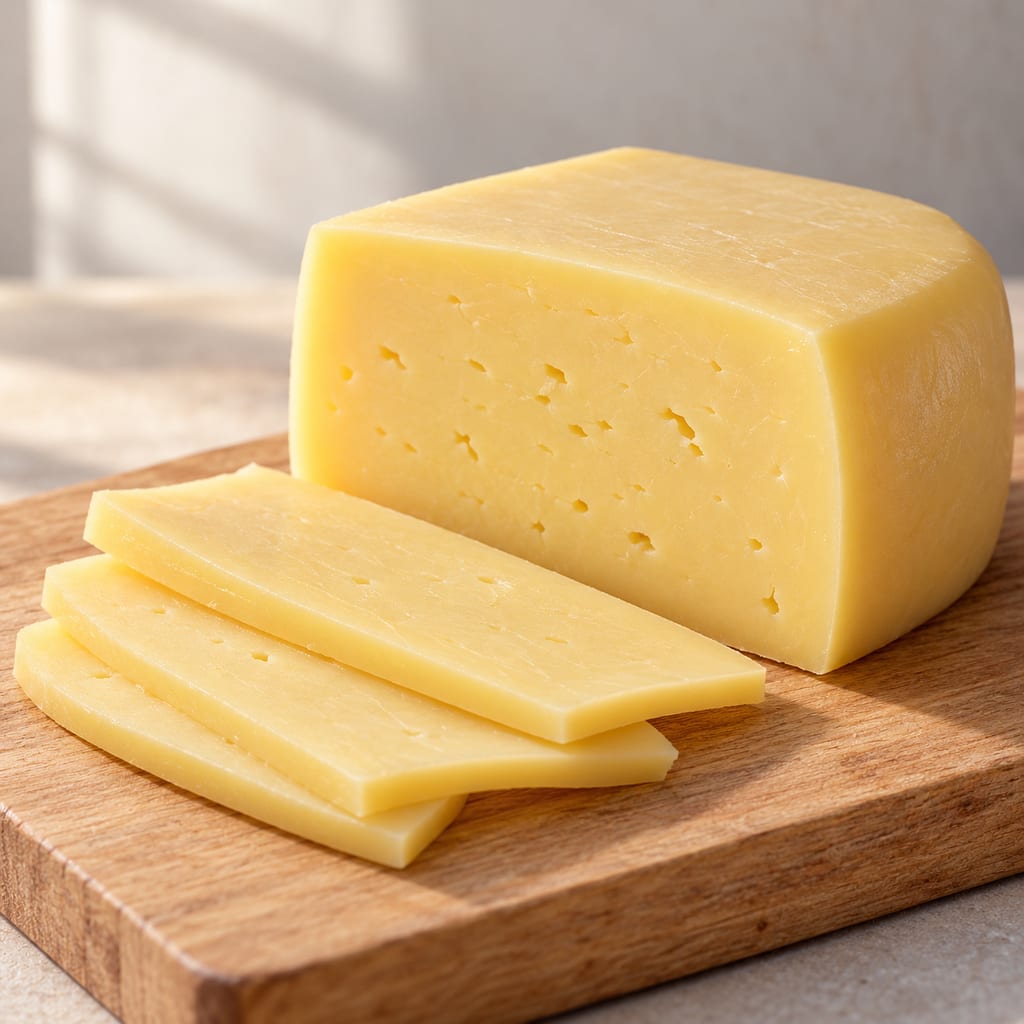
Kashkaval, brine-finished
A yellow stretched-curd cheese made by acidifying, draining and kneading curd in hot brine. This small-batch kashkaval uses a commercial starter and a brine finish.
 FermenteaWhere food goes to change
Cultures
A commercial freeze-dried dairy culture for Kashkaval, made in Bulgaria according to its supplier. Its powder includes skim milk material; the published organism list needs clarification of one name.
Bacillus Bulgaricus Kashkaval starter is a commercial freeze-dried culture supplied as loose powder in a sealed sachet. The seller says it is made and packaged in Bulgaria. Bacillus Bulgaricus is the brand name; it is not evidence that the packet contains organisms in the bacterial genus Bacillus.
The listed cultures include Lactobacillus bulgaricus, Streptococcus thermophilus and Lactococcus lactis. The fourth is printed as Lactococcus helveticus. That wording needs supplier clarification and should not be silently changed to Lactobacillus helveticus. No strain identifiers or proportions are disclosed.
Lactobacillus bulgaricus is an older name associated with the current Lactobacillus delbrueckii subsp. bulgaricus. A taxonomic synonym helps readers connect older dairy literature with current names; it does not reveal a commercial strain's ancestry. The named preparation remains more specific than a generic dairy starter, while its precise biological specification is less complete than a deposited strain or a batch analysis.
Kashkaval belongs to a regional history of dairy production and trade, not just to the story of a modern starter supplier. An institutional account from the Vratsa history project reports a document dated 1558 concerning the Jewish community in Vidin and Kashkaval made by non-Jews. It connects cheese production with social rules and trade rather than presenting cheese simply as an isolated kitchen invention.
The account also describes later production and movement of cheese within the region. It is evidence for how an institution recounts that history; the 1558 archival document itself is not established here as a firsthand reading. The date should not become an unquestioned invention date.
Most importantly, an old reference to Kashkaval does not date a commercial starter blend. Cheesemakers could maintain fermentations and make stretched-curd cheeses long before this powder was sold. The historical cheese and the modern manufactured inoculum have connected uses, but they do not share one automatically inherited provenance.
Kashkaval and related Kaşar traditions cross present-day borders. Harry West's study of food heritage compares several accounts of their movement, including narratives involving Jewish migration, Balkan communities, the Caucasus and connections proposed with Italian caciocavallo. The explanations differ, as do proposed meanings and routes of the names.
These accounts should remain competing explanations rather than be compressed into one birthplace story. People, techniques and trading networks can move together, and a cheese can become locally established after such movement. A present association with Bulgaria need not settle the origin of the entire stretched-curd family.
For this ingredient, Bulgarian manufacture is a supplier statement about the modern product. It does not locate the original collection of every strain or make a packet the unchanged microbial inheritance of an early cheese. The distinction allows a real country-level association without inventing an ancient culture lineage or a precise isolation site.
A dairy starter's lactic acid bacteria ferment lactose into lactic acid. The developing acidity changes milk chemistry and the mineral state of casein, the protein structure that forms much of a cheese curd. The starter therefore prepares a material that will respond differently to draining, heating and later handling.
Rennet acts separately, using enzymes to initiate casein coagulation. Starter acidification and enzyme setting interact, but they are not interchangeable ingredients or two names for the same process. The supplier's cheese method includes both a bacterial culture and animal rennet for that reason.
The rate of acid development helps establish the composition and environment of the young cheese. Later flavor and texture emerge within that environment through several microbial and enzyme activities. A packet's presence alone does not describe those outcomes; the milk, recipe and management of the fermentation remain part of the explanation.
Pasta-filata stretching combines heat with mechanical work. It is not simply the culture making milk elastic. Research on mozzarella explains how acidification changes casein-associated calcium and the hydration of the protein network, preparing curd that can become plastic under appropriate heating and kneading.
During stretching, the protein structure reorganizes and fat and water are redistributed. The result depends on the curd's condition and the heat and mechanical treatment it receives. Acidification, drainage and stretching therefore belong to a sequence: each stage changes the material presented to the next.
Mozzarella research provides a mechanism for understanding this family of cheeses, not a universal Kashkaval endpoint or a measured specification for the Bacillus Bulgaricus product. It does not justify borrowing another cheese's acidity range or hot-water schedule. The named starter must be interpreted within the chosen cheese method rather than treated as a guarantee that any curd will stretch.
Some dairy cultures work through interactions between their members. In experiments with particular Streptococcus thermophilus and Lactobacillus bulgaricus strains, Sieuwerts and colleagues examined growth in milk both separately and together. Their analysis connected the mixed culture's behavior with exchanges involving purine precursors, amino acids and fatty-acid metabolism.
Protein breakdown by the tested lactobacillus helped supply amino acids to both organisms. The results also supported a contribution of compounds such as formic and folic acid from the streptococcus. Growth together altered gene expression in ways that could not be described simply by adding two independent organism names.
This is a useful explanation for why a culture blend can be selected as a working community. It is not a test of the proprietary Kashkaval packet: the experimental strains were identified, while this product's strains are not. Species-level overlap does not establish the same balance, acidification rate or interactions in the finished commercial mixture.
Proteolysis means cutting proteins into smaller fragments. For some dairy bacteria, access to those fragments influences growth as well as later flavor chemistry. Milk may contain plentiful protein while a particular organism remains limited by the rate at which it can break down and take up usable material.
Helinck and colleagues tested Lactococcus lactis with corresponding added proteinases. The cultures grew faster for a period, but the response later changed with enzyme type. Proteinase breakdown, regulation and competition for peptide uptake helped explain the different outcomes in the tested systems.
The result is relevant to understanding what a listed lactococcus might contribute, without assigning an enzyme activity to the product. The name Lactococcus lactis does not specify every strain's proteinase system. Nor does an experiment with added enzyme support changing the packet or adding a supplement to the producer's recipe. Its role is to explain a biological dependency, not supply a new cheesemaking step.
A study by Simov and Ivanov examined proteolytic activity associated with Lactobacillus delbrueckii subsp. bulgaricus and Streptococcus thermophilus in Kashkaval cheese. It provides direct evidence that starter-associated protein transformations can be studied in the cheese itself, beyond observing whether milk initially sets.
Their abstract reports that frozen storage delayed proteolysis in the studied cheeses, with further changes during ripening after thawing. Peptide-size distributions also differed from controls. The environment in which an enzyme system acts therefore matters to the material that accumulates during maturation.
The study does not identify the culture as this Bacillus Bulgaricus product or test its stated mixture. It also does not provide a safe storage schedule for homemade Kashkaval. Its value is showing that ripening is a continuing, condition-dependent set of transformations, and that two species' presence alone does not predict the whole course of flavor development.
The powder in a dry starter represents grown bacterial cells prepared for later use, rather than ground cheese. Freeze-drying aims to retain cells capable of resuming activity while making the culture easier to supply in a dry form. Viability is a biological property that cannot be judged from the powder's appearance.
Bozoglu and colleagues found that their tested Streptococcus thermophilus and Lactobacillus bulgaricus cultures differed in survival during and after freeze-drying. Biomass concentration and storage atmosphere also affected survival. The manufacturing process and protection after drying matter alongside the species name.
Those experiments did not characterize this commercial preparation. They explain why a dry culture needs product-specific handling without establishing how long a particular packet remains active. The manufacturer's statement that its product is freeze-dried is a description of format, not an independently measured viable count after the packet's transport, storage and opening.
A culture's performance is affected by the milk into which it is introduced. In research on milk from antibiotic-treated cows, Morandi and colleagues compared selected dairy strains and monitored acidification. The responses differed between organisms and samples, showing why a culture cannot be assessed independently of its medium.
Some experimental milk samples delayed acid development in the tested cultures. The work does not identify a general failure time or prove that every delay has the same cause. It separates milk-supply conditions from the assumption that a named packet must always behave identically.
For a cheese method, use an appropriate milk supply and follow the actual culture's directions. An unexpectedly slow batch is not an invitation to invent a longer safe fermentation or add an arbitrary amount of powder. Neither a home pH curve nor successful stretching is a test for antibiotic residues or proof that the food's hazards have been controlled.
The supplier discloses a small quantity of dried organic skim milk powder carried into the packet from the culture's growth medium. Treat the purchased starter as containing milk. A statement that bacteria consume that material during incubation does not establish removal of allergenic milk proteins or make the resulting dairy cheese milk-free.
Keep the current packet's ingredient statement and date marking with its directions. The seller recommends freezer storage and protection from moisture after opening; use the current label rather than applying a generic culture shelf life. Product storage claims do not validate cheese storage.
The producer's instructions use a pack matched to a 4 L dairy-milk batch. Follow the size indicated for the purchased packet rather than treating every sachet as the same quantity of culture. The linked Kashkaval, brine-finished recipe is the documented preparation using this named product.
The instructions expressly say the method does not work with non-dairy milk, while the broader product-information page makes a more expansive milk claim. That inconsistency should not be resolved by presenting a validated non-dairy Kashkaval procedure. The actual documented recipe is a dairy-cheese method.
FAO records a separate sheep-milk Kashkaval method with an unnamed mesophilic culture. The shared cheese name does not establish that it uses this commercial blend, and it supplies no supported conversion between the two inocula. Keep the preparations distinct rather than merging their culture identities, doses and later process conditions into a new universal formula.
The producer's willingness to use raw milk is not evidence that a home batch has controlled every pathogen. CDC recommends pasteurized dairy and identifies raw milk and its products as possible routes for harmful organisms. Good farm practices cannot guarantee raw-milk safety.
Use pasteurized milk and a supported cheesemaking process, with clean food-contact equipment and careful handling of culture and curd. New Mexico State University's guidance treats those responsibilities separately. Heat during stretching must be evaluated as part of the actual process; it cannot be assumed to sterilize every curd.
The producer's recipe figures belong to that method, not to a general safety specification for the starter. Sourness, aroma, a stretching curd and a home pH measurement cannot establish safety. The packet supplies a selected inoculum; it does not replace milk controls, validated processing or appropriate storage of the finished cheese.
milk
Supplier-declared manufacture of the commercial starter; not a strain collection site or a unique birthplace for Kashkaval.
A yellow stretched-curd cheese made by acidifying, draining and kneading curd in hot brine. This small-batch kashkaval uses a commercial starter and a brine finish.
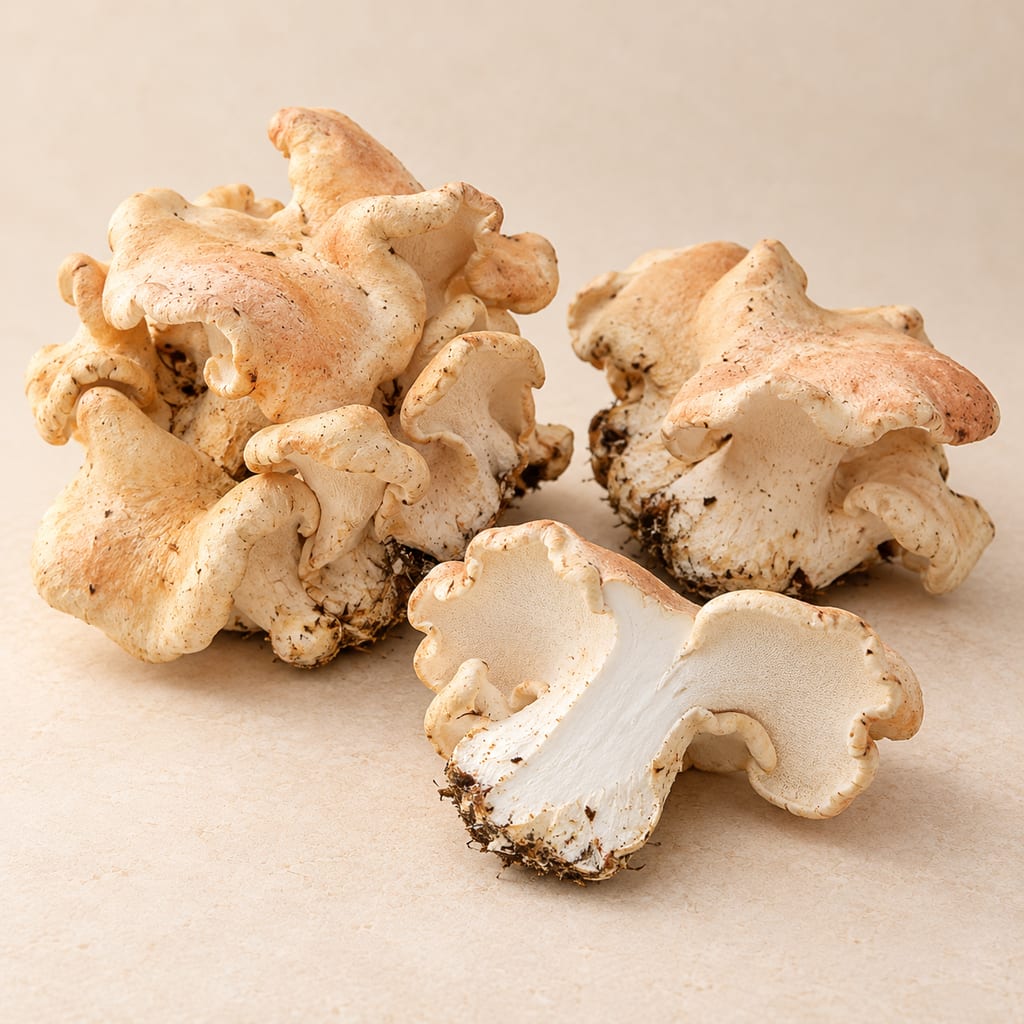
Albatrellus confluens is a ground-growing polypore with fused buff-orange caps. Sources document Chinese market use and regional edibility, but others reject it as too bitter; taxonomy also varies between Albatrellus and Albatrellopsis.
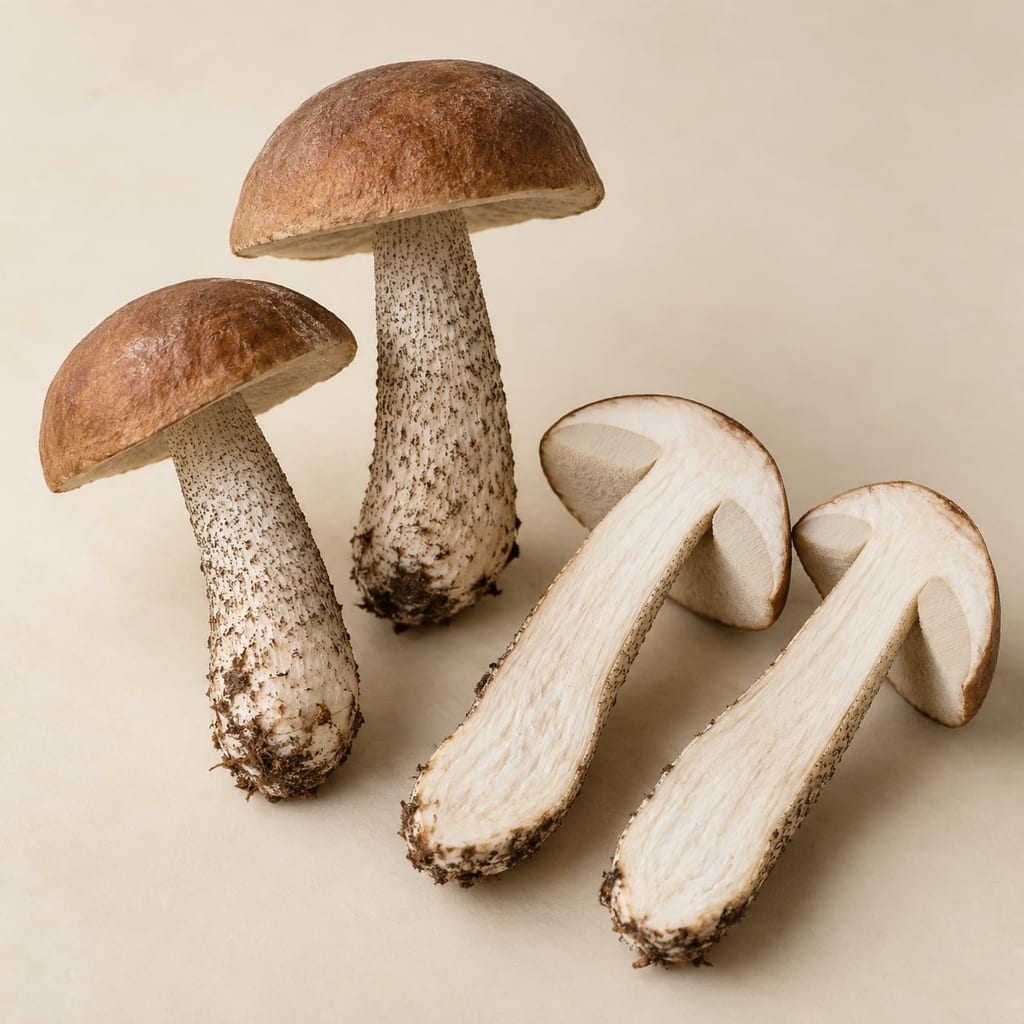
A wild birch-associated bolete eaten in parts of Europe. Its older name, Boletus scaber, remains common in historical sources; regional food records and cooking cautions require source-specific reading.
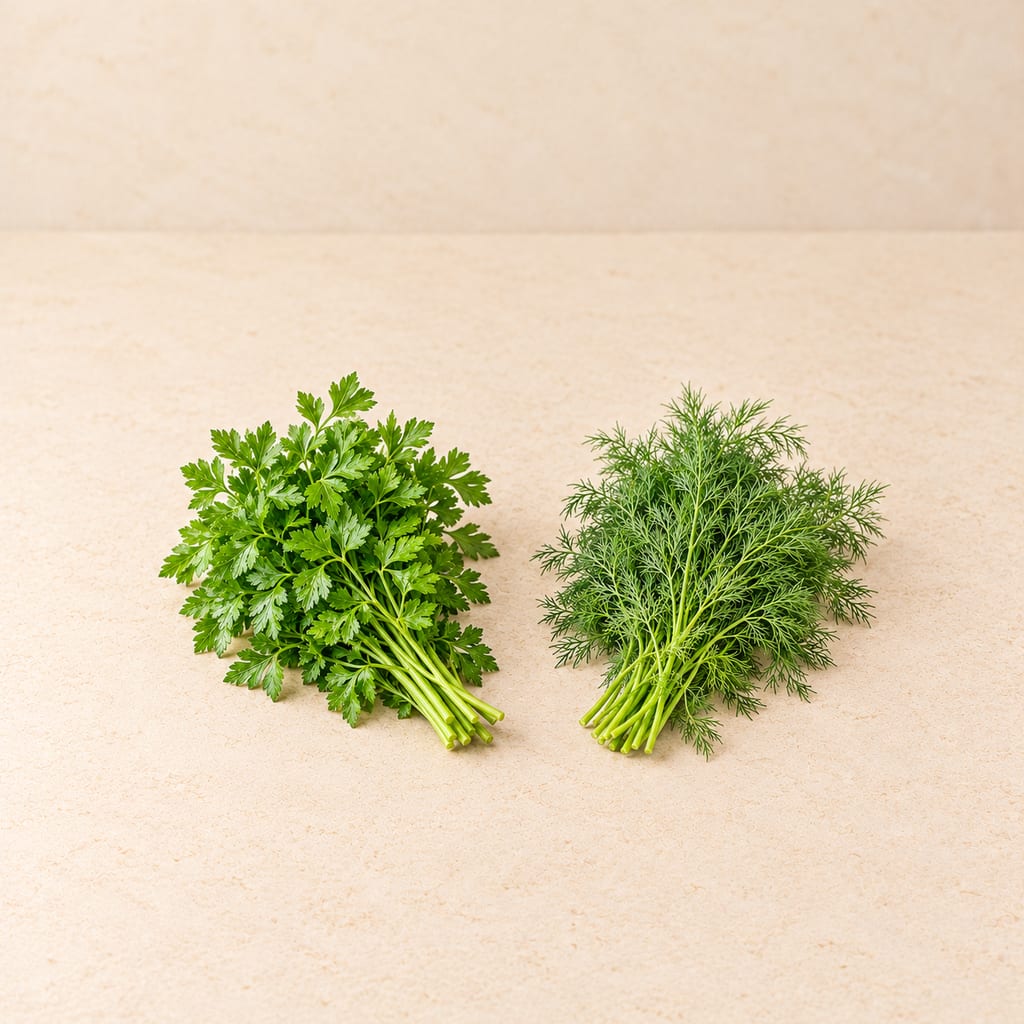
Parsley and dill are two leafy herbs of the carrot family, used fresh for their green, clean flavour. Dill also gives its name to dill pickles, the best-known cucumber ferment.
Unpasteurized sheep milk with its natural fat retained, documented as the starting milk for Kashkaval. Seasonal composition affects curd behavior; raw status does not establish microbiological safety.
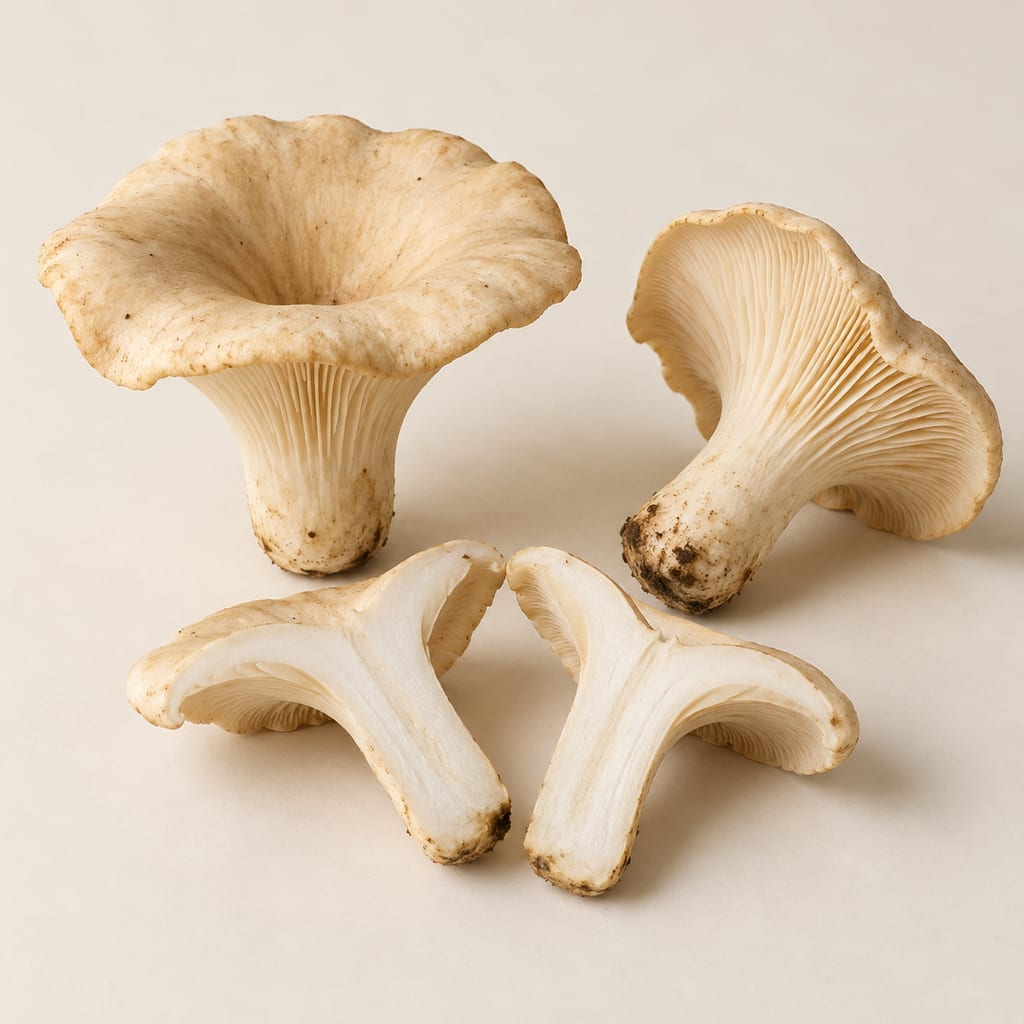
A wild litter-decomposing mushroom with a documented European food and market history. Historical country claims conflict with a recent Chinese catalogue’s toxic label; this account is not an identification or foraging guide.

Soft, spreadable Calabrian pork sausage made with a great deal of red chilli and fatty pork, stuffed into natural casings, sometimes smoked and matured while staying soft.

A way to add independent temperature logging to an existing food dehydrator without changing its built-in controls or protections. It is a monitoring method, not a rewiring plan.

Pleurotus cystidiosus is the abalone mushroom, a cultivated oyster-type fungus with dark brown caps that grows more slowly and is more demanding than other Pleurotus species.

A dark, balanced vinegar from Emilia-Romagna made by combining cooked or concentrated grape must with wine vinegar, then acetifying and refining it in wood under a protected specification.

A living dairy inoculum that starts controlled cream fermentation, developing acidity and aroma before sour cream or cultured butter is finished.

A small electric incubator holds jars at a selected temperature for yogurt and other documented warm food preparations. Controls, capacity and vessel arrangement vary by model.

Adygean salt is a seasoned table salt associated with Adygea and the wider North Caucasian culinary tradition. Salt is blended with garlic and a variable selection of herbs and spices; the exact mix depends on the named style and maker.

The African Caesar-group mushroom, Amanita masasiensis, is a wild ectomycorrhizal species of central and southern African woodlands, eaten locally. The genus contains deadly poisonous species, so identification needs care.
No community contributions have been published for this entry yet.
Sign in to contribute. Published comments and photos are free to read.
Bacillus BulgaricusIdentity · History · Fermentation function · Handling
Kashkaval Starter — product informationFreeze-dried loose powder, Bulgarian manufacture, listed organisms including the printed Lactococcus helveticus, skim milk powder carried from growth medium, package/storage directions. Supplier claims do not establish strain identities or independent activity measurements.
Cited in: A named powder for Kashkaval cheese; This packet contains milk-derived material
Bacillus BulgaricusIdentity · History · Fermentation function · Handling
Kashkaval Making InstructionsSource for the 4 L dairy-cheese method and named starter use; instructions expressly exclude non-dairy milk. Product-page broader milk claim conflicts with the method. No safety validation inferred.
Cited in: A specific dairy-cheese method, not a universal starter dose
DSMZ, List of Prokaryotic names with Standing in NomenclatureIdentity · History · Fermentation function · Handling
Lactobacillus delbrueckii subsp. bulgaricus — LPSNCurrent subspecies and historical Lactobacillus bulgaricus synonym; nomenclature does not identify commercial strains.
Cited in: A named powder for Kashkaval cheese
Карта на времето, Vratsa regional history projectIdentity · History · Fermentation function · Handling
Развитие на млекопроизводството в България и Института по млечна промишленост - ВидинInstitutional historical account reports a 1558 Vidin document concerning Kashkaval trade. The archival original is not reproduced as a directly examined document here.
Cited in: The cheese tradition is older than the commercial sachet
Review of Agricultural, Food and Environmental StudiesIdentity · History · Fermentation function · Handling
Terroir products: a movable heritage feast? — Harry G. West, online 2021, volume 103 (2022), 1–27Kashkaval/Kaşar discussion compares competing migration and etymology narratives; no settled unique birthplace or culture-isolate provenance.
Cited in: A regional name with several accounts of movement
Food Technology and BiotechnologyIdentity · History · Fermentation function · Handling
Mozzarella Cheese Stretching: A Review — Mônica Correia Gonçalves and Haíssa Roberta Cardarelli, 2021General pasta-filata calcium/acidification/heat/mechanical mechanisms; mozzarella literature is not a performance test of this product.
Cited in: Heating and working turn prepared curd into strands
Journal of Industrial Microbiology and BiotechnologyIdentity · History · Fermentation function · Handling
Proteolytic activity of Lactobacillus delbrueckii ssp. bulgaricus and Streptococcus thermophilus in frozen-stored Kashkaval cheese — Zhelyazko I. Simov and Galin Y. Ivanov, 2005Abstract reports delayed proteolysis during frozen storage and altered peptide accumulation after thawing; studied cheese cultures are not identified as this brand.
Cited in: Kashkaval ripening chemistry has been measured in other cultures
Applied and Environmental MicrobiologyIdentity · History · Fermentation function · Handling
Mixed-Culture Transcriptome Analysis Reveals the Molecular Basis of Mixed-Culture Growth in Streptococcus thermophilus and Lactobacillus bulgaricus — Sander Sieuwerts et al., 2010S.thermophilus CNRZ1066 and L.bulgaricus ATCC BAA-365 experiments support metabolic exchanges; not the undisclosed strains in the named starter.
Cited in: Mixed bacteria can exchange growth-supporting compounds
FAOIdentity · History · Fermentation function · Handling
The technology of traditional milk products in developing countries — FAO, 1990, §4.13 KashkavalA separate sheep-milk Kashkaval method uses unnamed mesophilic culture; regional cheese association does not identify the commercial blend or prove equivalence.
Cited in: A specific dairy-cheese method, not a universal starter dose
Microbiology SpectrumIdentity · History · Fermentation function · Handling
The Basics of Cheesemaking — Paul S. Kindstedt, 2013Acidification alters casein mineral state and curd; distinction between acid and enzyme coagulation.
Cited in: Acid development changes the curd before it stretches
Applied and Environmental MicrobiologyIdentity · History · Fermentation function · Handling
The effects of adding lactococcal proteinase on the growth rate of Lactococcus lactis in milk depend on the type of enzyme — S. Helinck, J. Richard and V. Juillard, 1997Original abstract: casein degradation limited growth in tested strains; adding proteinase stimulated growth transiently.
Cited in: Proteolysis links bacteria with nutrients and ripening
Enzyme and Microbial Technology; OpenMETU author repositoryIdentity · History · Fermentation function · Handling
Survival kinetics of lactic-acid starter cultures during and after freeze-drying — F. Bozoglu, M. Ozilgen and U. Bakir, 1987Original abstract: organism, biomass and storage atmosphere affected survival; no assigned-ingredient shelf life.
Cited in: Freeze-drying is a process applied to living cells
International Journal of Dairy TechnologyIdentity · History · Fermentation function · Handling
Legally admissible amounts of antibiotics in milk affect the growth of lactic acid bacteria — Stefano Morandi et al., 2024Original methods and results: tested strains responded differently to milk from treated cows; not a home residue test.
Cited in: Milk and culture performance must be considered together
New Mexico State University ExtensionIdentity · History · Fermentation function · Handling
Making Homemade Cheese — Guide E-216, revised by Nancy C. FloresProtect cultures from contamination; food-contact hygiene, milk treatment and cheese handling address separate hazards.
Cited in: Starter activity and stretching are not safety validation
CDCIdentity · History · Fermentation function · Handling
Raw Milk — January 31, 2025Raw milk may carry pathogens; farm hygiene cannot guarantee safety; choose pasteurized dairy.
Cited in: Starter activity and stretching are not safety validation
FDAHandling
Raw Milk Questions & Answers — updated November 1, 2011Allergenic milk proteins remain present in raw and pasteurized milk; milk-protein allergy differs from lactose intolerance.
Cited in: This packet contains milk-derived material