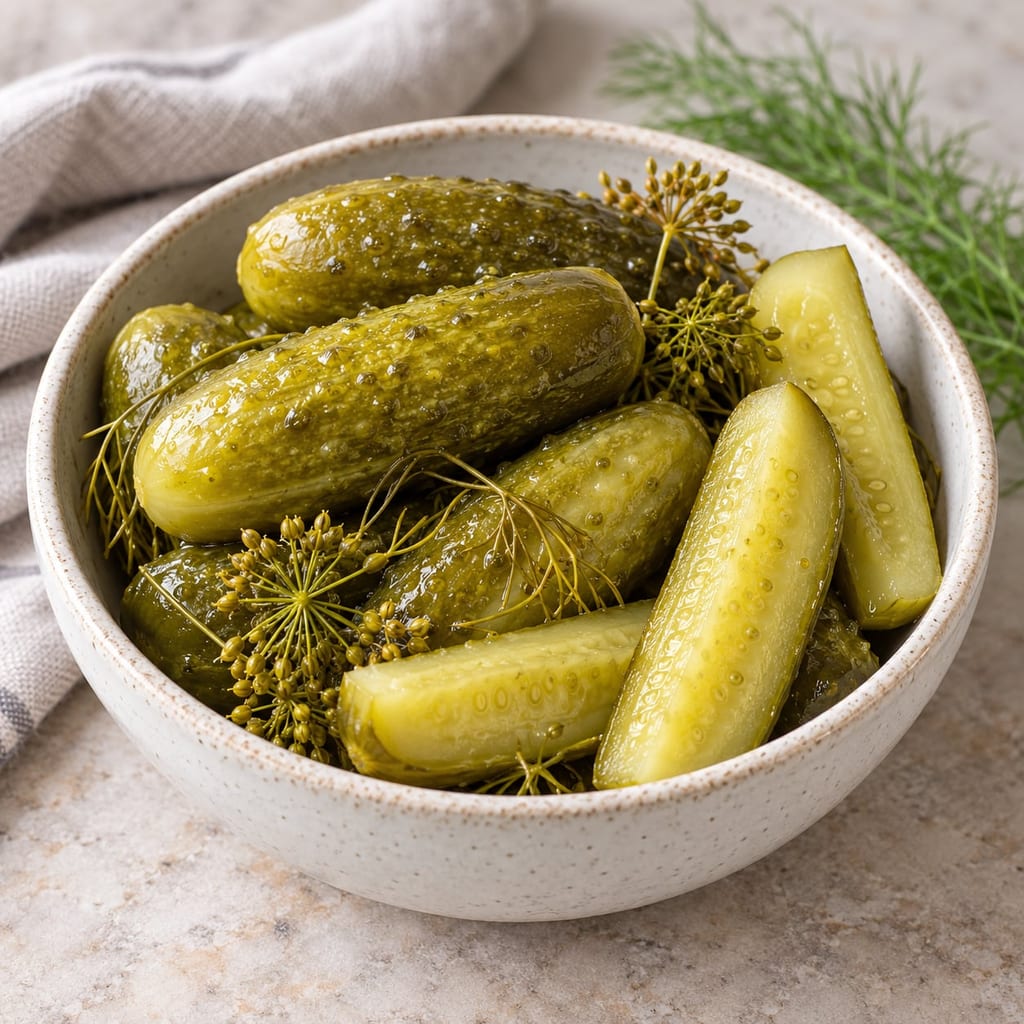
Fermented dill pickles
Trimmed cucumbers layered with dill and covered with a salt brine containing 5% vinegar, weighted and fermented three to six weeks.
 FermenteaWhere food goes to change
Spices and aromatics
Parsley and dill are two leafy herbs of the carrot family, used fresh for their green, clean flavour. Dill also gives its name to dill pickles, the best-known cucumber ferment.
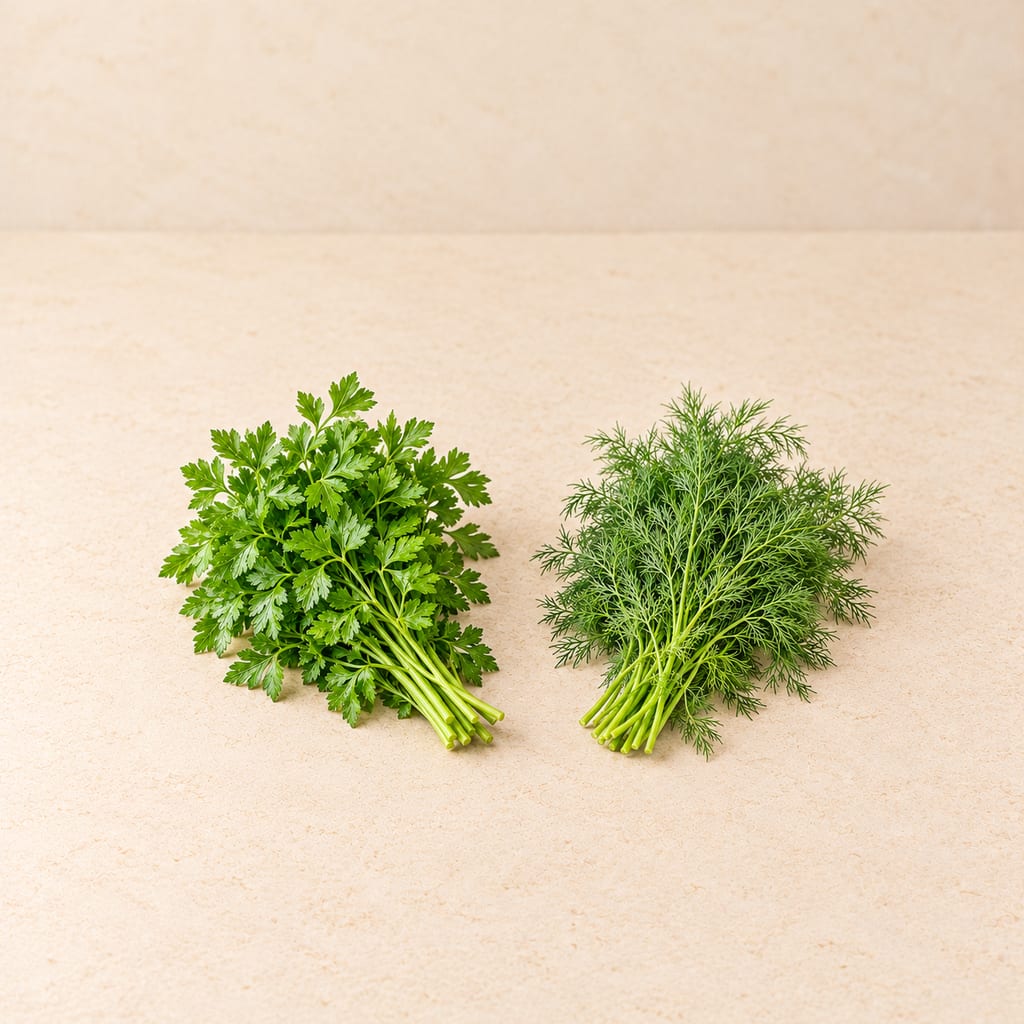
Parsley, Petroselinum crispum, and dill, Anethum graveolens, belong to the Apiaceae, the carrot family, which also holds celery, coriander, fennel and caraway. The family makes finely divided leaves, flowers in flat umbrella-like heads called umbels, and aromatic oils in nearly every part, and many of its members are grown for the leaf, the root or the seed. Parsley and dill sit side by side in the kitchens of Central and Eastern Europe, where cooks strew both over soups, potatoes, salads and sauces.
They look different and behave differently. Parsley is a biennial that grows a rosette of dark green, three-times-divided leaves 10 to 25 centimetres long on a taproot in its first year, and only in the second year sends up a flowering stem as tall as 75 centimetres with yellow-green flowers. Dill is an annual, with feathery blue-green foliage on a stem from half a metre to 1.5 metres tall and flat yellow umbels that ripen into seeds 4 to 5 millimetres long. The word "dill" on a pickle jar can mean the leaf, the flower head or the seed, and the three are not the same ingredient.
Parsley's home is the Mediterranean basin: Greece, the Balkans, Algeria and Morocco are its native range. It began as a cultivated plant on the Mediterranean coast in the late third century BCE, where it was grown for decoration and seasoning. The name comes from the Greek petroselinon, rock-celery. Horticultural books say parsley reached England in 1548, but literary evidence suggests it was in use there as early as the Anglo-Saxon period.
Three forms matter in the kitchen. Curly or moss-curled parsley, called French in some books, has tightly crimped leaves and is the one used as a garnish on a plate. Flat-leaf parsley, called Italian, is preferred for cooking by chefs and many gardeners and is described as the more flavourful, though whether it is actually stronger is disputed. The third form is Hamburg or turnip-rooted parsley, grown for its thick white root, which is common in the soups and stews of central and eastern Europe.
Parsley's cooking is often a matter of quantity. In tabbouleh, the Levantine salad, and in ghormeh sabzi, the Iranian herb stew, it is the main substance of the dish and not a trimming. Parsley is a component of the Brazilian seasoning cheiro-verde, and a sprig of it has a place on the Passover Seder plate. In most of the rest of the world it is a finishing herb, added at the end for a clean, grassy note.
Dill has been known since antiquity. A food science paper describes it as wild in the Mediterranean region, where it was known to the ancient Greeks and Romans. The genus name Anethum is the Latin form of a Greek word that meant both dill and anise, and the origin of the English word dill is unknown.
Where dill began is not agreed. One account puts its native range in North Africa, Iran and the Arabian Peninsula, while another describes it as native to southern Europe and western Asia. The two descriptions overlap around the eastern Mediterranean and western Asia.
From there dill went north and east. It is now a staple herb across Central and Eastern Europe, alongside chives and parsley. In Poland a dill and sour cream sauce dresses mizeria, a cucumber salad; in Bulgaria it goes into tarator, a cold yoghurt soup; in Sweden it flavours gravlax, herring and the boiled crayfish of late summer, where the flower heads are called krondill; in Iran it scents shevid polo, a rice dish; and in China it fills dumplings and buns, baozi and jiaozi. Leaves flavour borscht, soups, fish and, above all, pickles.
Both herbs get their character from essential oils held in the leaf, and in neither case is the oil constant. In a field trial in western Turkey parsley oil content peaked at about 0.7 per cent, and the proportion of the oil that is apiol rose from 26 per cent at the first cutting in May to 44 per cent by September, while myristicin ran between 10 and 21 per cent. Early in the season the oil is dominated by a lighter hydrocarbon, beta-phellandrene, and later the heavier phenylpropanoids, apiol and myristicin, take over. The make-up of the oil, and with it the flavour, changes through the season, and apiol is what the plant lays down as it matures. The oil content was highest at the second cutting, in early July, and had fallen to about 0.4 per cent by September, when the leaf yield was greatest; four cuttings between May and September gave 55 volatile compounds in all.
Dill leaf is a much weaker source of oil than dill seed. Reported oil content is as low as 0.08 to 0.3 per cent in leaves, 1.1 to 3.2 per cent in flowers, and 3.2 to nearly 5 per cent in ripe seed. The oils also differ in kind. Seed oil is dominated by carvone, which smells of caraway and spearmint, at about 46 to 50 per cent in a Serbian trial, with limonene, a citrus-smelling hydrocarbon, at 38 to 44 per cent; across countries, carvone has been reported anywhere from 34 per cent in Algerian seed to 75 per cent in Romanian. Leaf oil leans to alpha-phellandrene, which made up 62.7 per cent of the leaf oil in dill leaf oil, and dill oil is also listed with apiole, dillapiole and myristicin. As the plant matures the oil in the green parts falls and the carvone share rises. A recipe that asks for "dill" without saying which part it means can therefore give different results depending on the answer.
Neither herb feeds a ferment. The sugar that lactic acid bacteria turn into acid in a jar of cucumbers comes from the cucumbers, and the herb is there for flavour. Dill is the eponymous ingredient of dill pickles. The US National Center for Home Food Preservation gives a salt-fermented version per gallon of container: 4 pounds of 4-inch pickling cucumbers, 2 tablespoons of dill seed or 4 to 5 heads of fresh or dry dill weed, half a cup of salt dissolved with a quarter cup of 5 per cent vinegar in 8 cups of water. Half of the dill goes on the bottom of the container and half on top, the brine is poured over, and the container is covered and weighted. It ferments at 70 to 75 °F (21 to 24 °C) for about three to four weeks, in 5 to 6 weeks if kept at 55 to 65 °F, and warmth above 80 °F makes the pickles soft. The recipe lists dill as an ingredient and does not describe its function.
Dill seed oil has antibacterial activity in the laboratory. In disk tests with 10 microlitres of seed oil, the largest clear zone was against Escherichia coli, 15 to 18 millimetres wide; Bacillus subtilis and Proteus vulgaris gave zones of about 11 to 12 millimetres, Klebsiella pneumoniae 11 to 13, and there was no activity against Staphylococcus aureus or Candida albicans. The activity against E. coli was attributed to carvone. These were extracted oils tested alone. A pickle jar holds a few heads or a spoonful of seed in several litres of brine, and the oil content of the leaf is a fraction of that of the seed. Whether dill alters the course of a cucumber ferment is not established. Dill is a flavour, not a starter or a preservative, and a recipe should not rely on it as one.
Choose bright green, fresh-looking bunches. Parsley that has overwintered runs to seed in its second year and its leaves become tough and bitter, which is why gardeners start new plants each year. To keep parsley, wash the leaves, let them drip dry, put them in a plastic bag and refrigerate. The same treatment suits dill leaf, which wilts quickly.
Both herbs are better fresh. Dill in particular loses its flavour rapidly when dried; dried leaf is sold as dill weed, and freeze-dried leaf keeps its flavour relatively well for a few months. Dill seed is the more stable form: harvest the heads two to three weeks after the flowers appear, hang them in a paper bag in a cool, dry, airy place, let the seeds fall, and store them in a sealed container.
Parsley is rich in vitamins K and C: 100 grams of raw parsley holds about 1,640 micrograms of vitamin K, 133 milligrams of vitamin C, 152 micrograms of folate and 6.2 milligrams of iron, for only 36 kilocalories. Eating it in food amounts is considered safe. Very large quantities may have an effect on the uterus, so pregnant women are advised against eating excessive amounts, and parsley seeds, which carry high levels of apiol, are best avoided.
Parsley grows best in moist, well-drained soil in full sun, at temperatures from 22 to 30 °C, though it will take partial shade outdoors. The seed is slow to germinate, four to six weeks, partly because the seed coat carries furanocoumarins, and soaking it in water overnight helps. Leaf parsley is spaced about 10 centimetres apart and root parsley 20. Leaves can be cut any time after the plant is large enough.
Dill wants full sun and moist, well-drained soil, and it grows best where summers are warm to hot; partial shade reduces the yield substantially. Because of its taproot it does not transplant well, so it is sown directly in spring, one to two weeks before the last frost, and sown again every two weeks for a steady supply of leaf. Plants decline soon after flowering. The variety Fernleaf is slow to go to seed and Green Sleeves resists bolting, both useful for a leaf crop. Leaves can be cut at any time. Dill is an annual with a short growing season: the vegetative phase lasts about 90 days after sowing, and some 210 days pass from sowing to ripe seed. Its young twigs with needle-like leaves are used as a spice in dishes, fresh salads and processed vegetables, and in Polish cuisine fresh dill is the most widely used herbal spice. In a Serbian field trial the seed was harvested 45 to 70 days after flowering, in early September, before it began to fall, and yielded 1.6 to 2.1 tonnes per hectare. Dill grown at low density gives less leaf mass and more seed-bearing umbels than a dense stand, and it can be grown as a sole crop or alongside onions and carrots.
Whether flat-leaf parsley really tastes stronger than curly is disputed. The native range of dill is described in two ways that do not match exactly. The effect of dill heads or seed on the microflora of a cucumber ferment is not established. The apiol and myristicin figures for parsley come from one Mediterranean field trial and vary with strain and climate.
Native range given for parsley; a precise point of origin is not established.
Dill is described as wild in the Mediterranean and known to the ancient Greeks and Romans; its precise native range is not agreed.
Dill and sour cream sauce on mizeria, a cucumber salad.
Dill with gravlax, herring and crayfish; the flower heads are krondill.
Dill in tarator, a cold yoghurt soup.
Dill in shevid polo; parsley in ghormeh sabzi.
Parsley in the cheiro-verde seasoning bundle.
Trimmed cucumbers layered with dill and covered with a salt brine containing 5% vinegar, weighted and fermented three to six weeks.
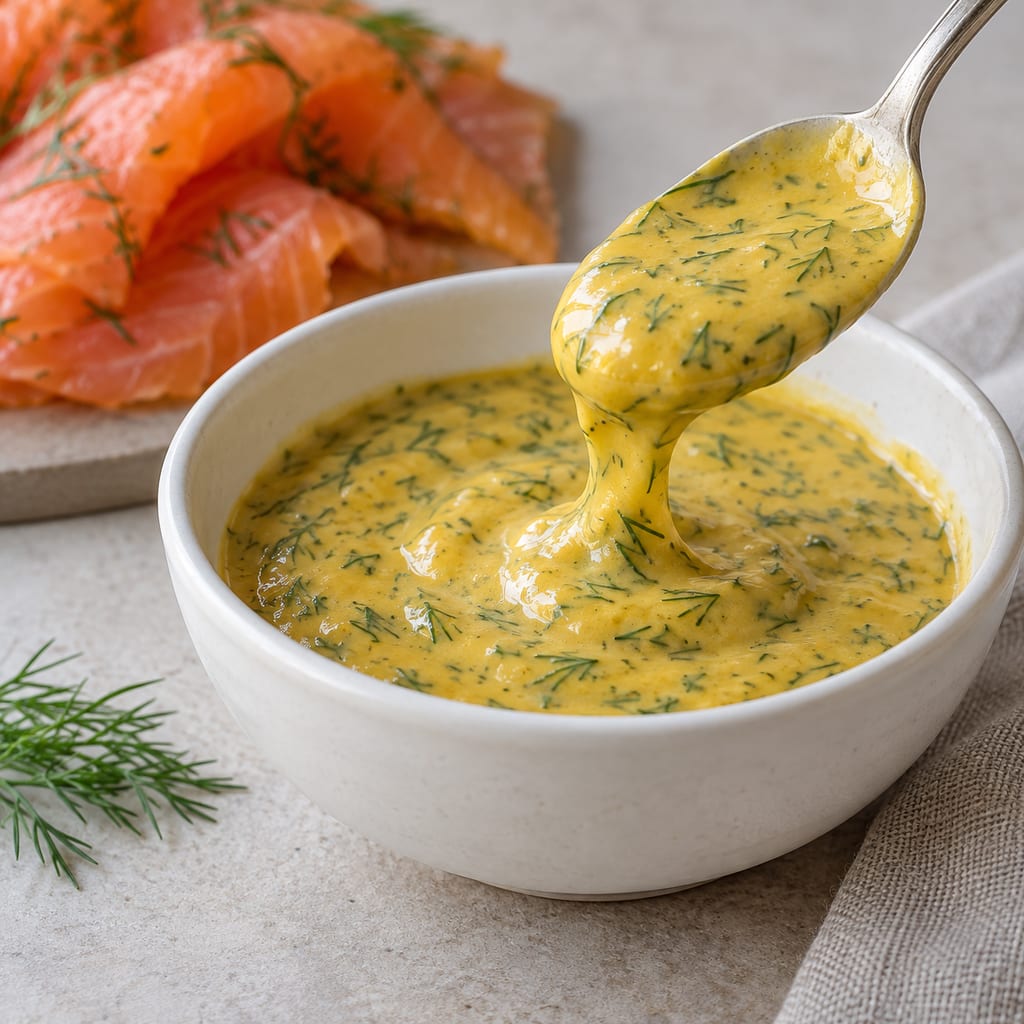
Sweet mustard and Dijon whisked with sugar and white-wine vinegar, thickened with oil added slowly and finished with fresh dill: a hovmästarsås-style sauce for salmon.
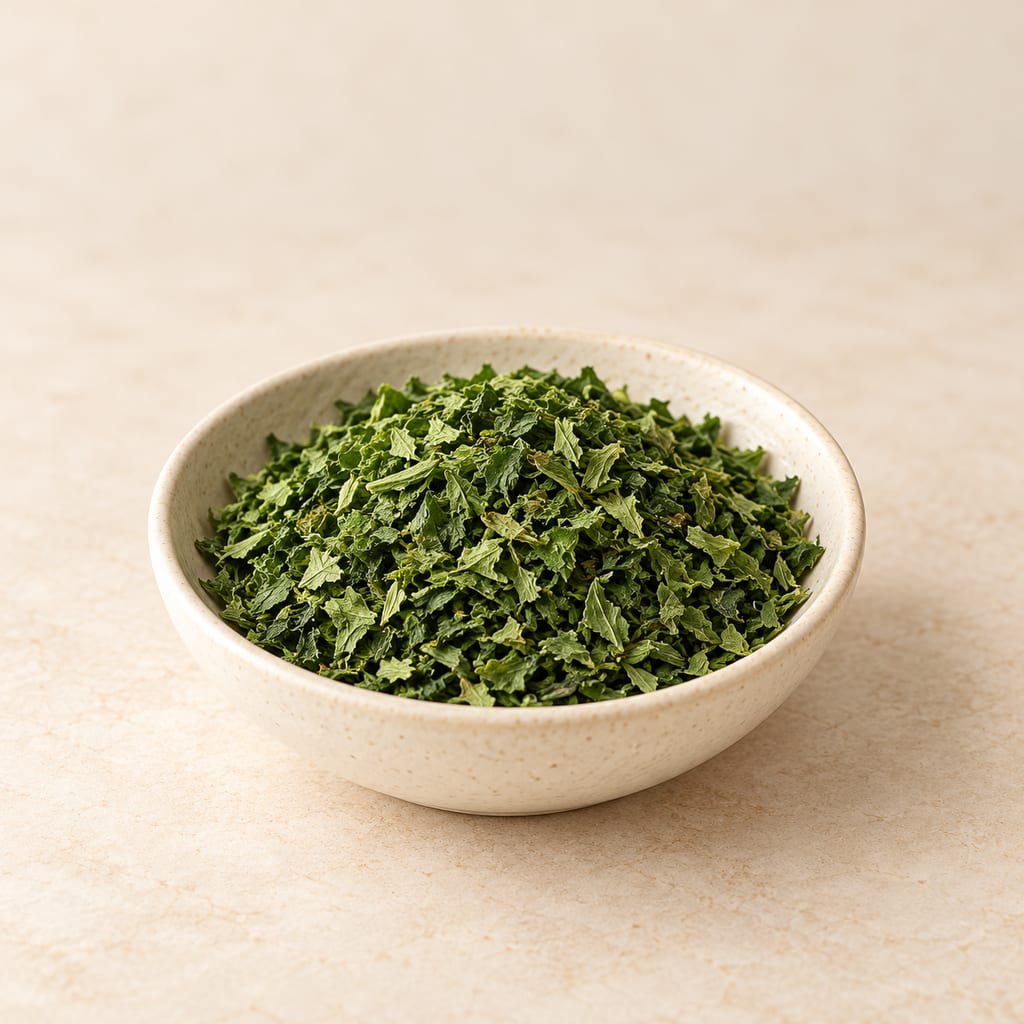
Dried parsley is the dehydrated leaf of Petroselinum crispum, sold as flakes, granules or powder for its herbal aroma and green flecks.
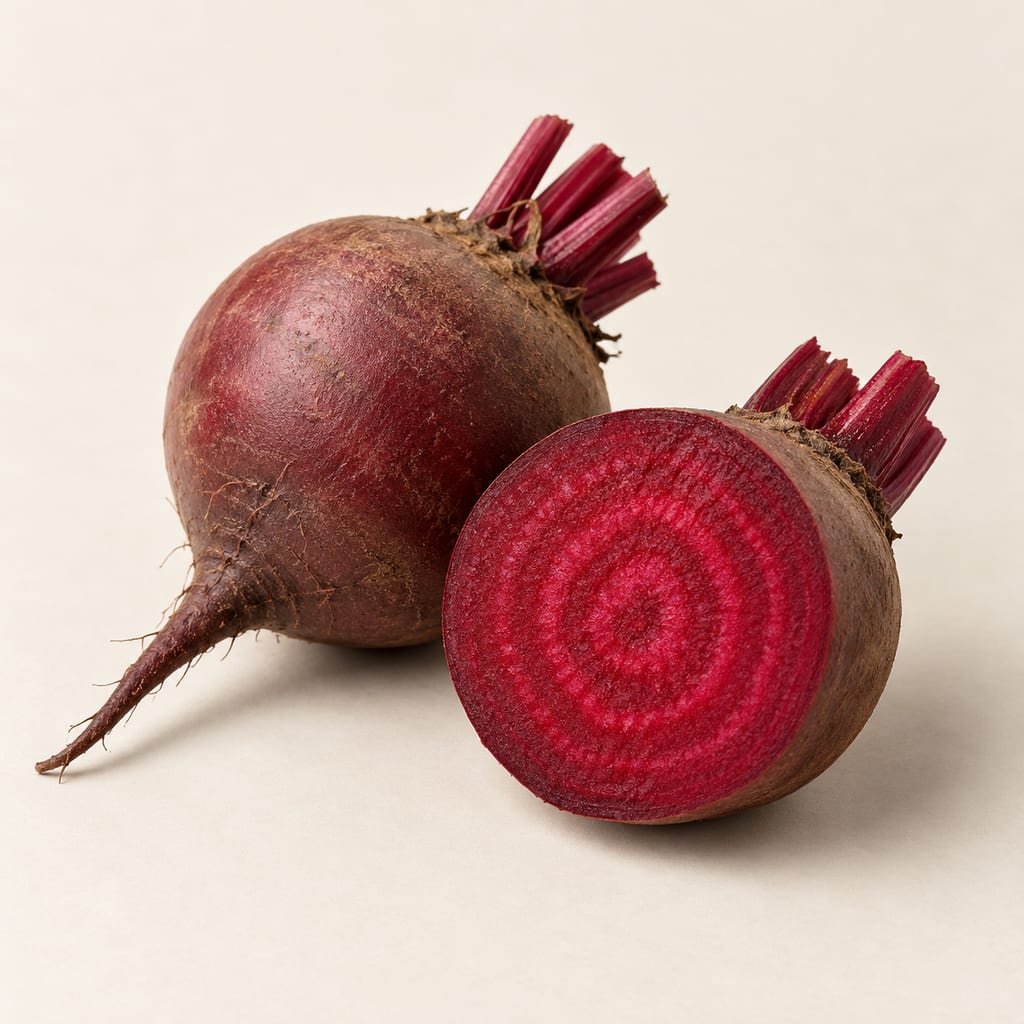
Beetroot is the red taproot of Beta vulgaris. In Poland its soured juice replaced hogweed as the base of barszcz from the eighteenth century, and beet leaven is still made for Christmas Eve.
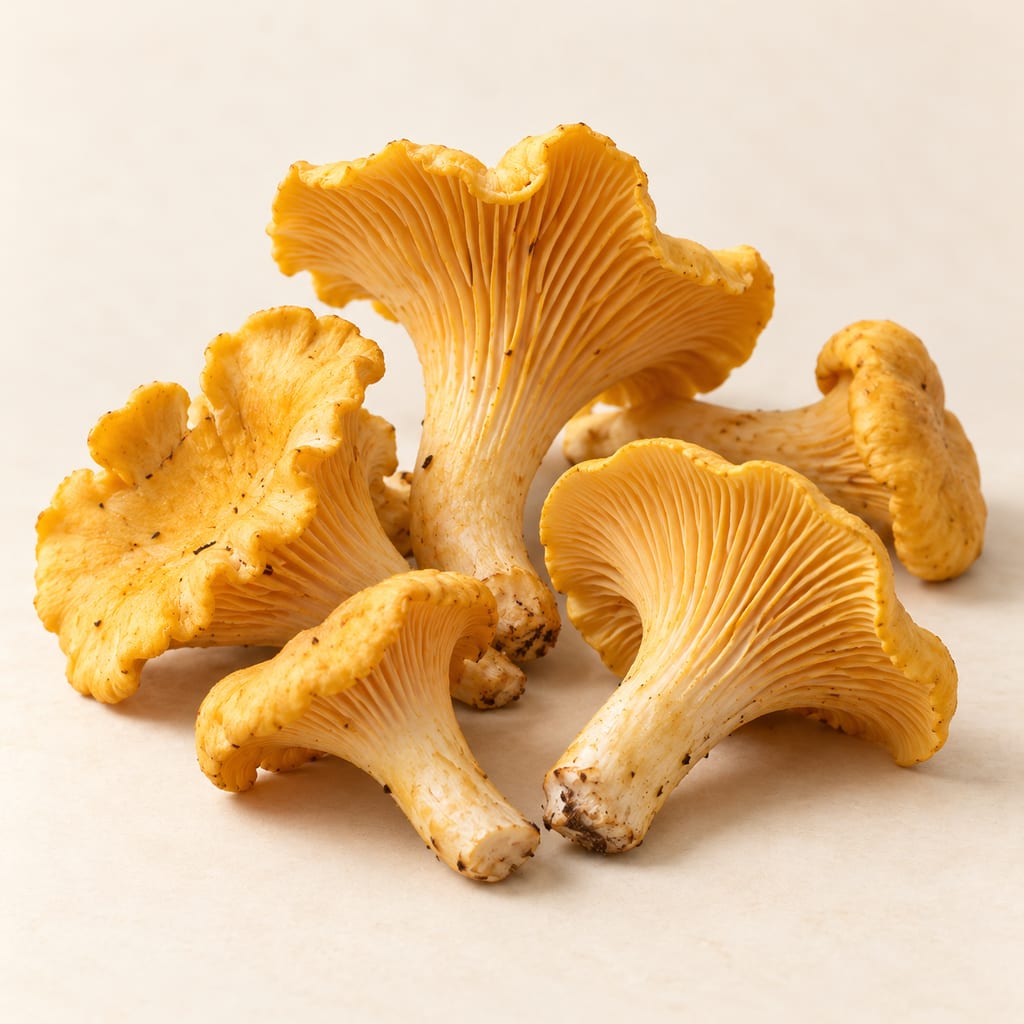
Chanterelles are wild, tree-associated edible mushrooms, particularly the European golden chanterelle Cantharellus cibarius, prized for their firm flesh, fruity aroma and use fresh, frozen, dried or pickled.
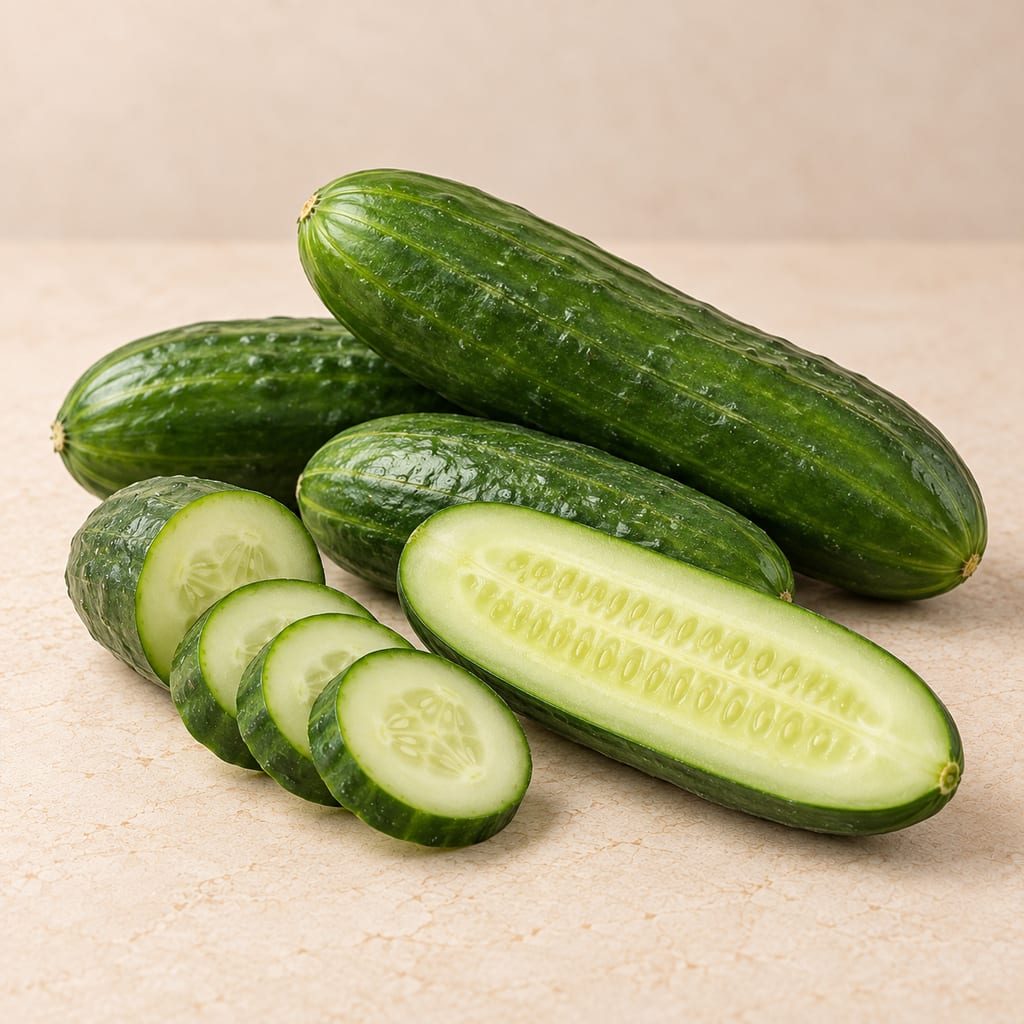
Cucumber is the watery fruit of Cucumis sativus, domesticated in India, and the classic raw material of brine pickles from New York dills to Nepali khalpi and Korean oi-sobagi.
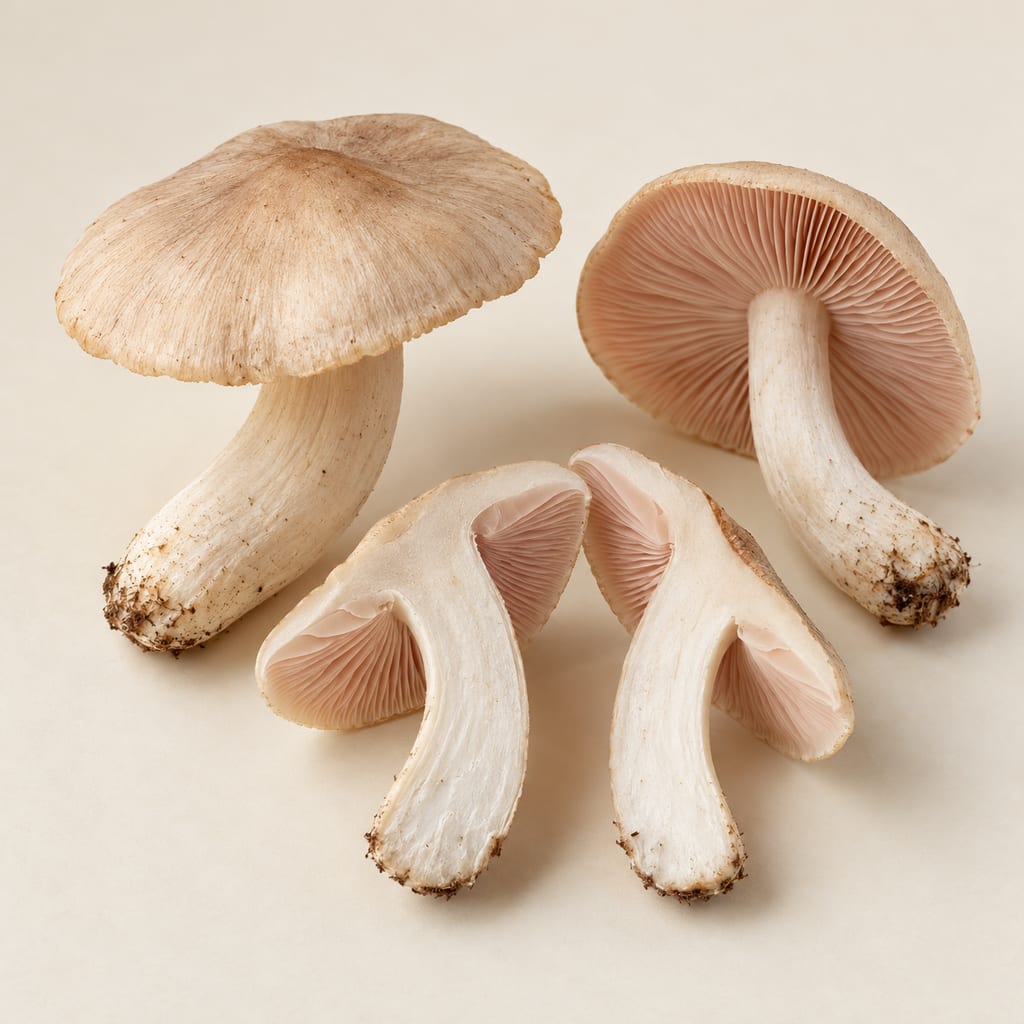
Entoloma sepium is a spring pinkgill associated with Rosaceae. Chinese and European sources list it as edible or conditionally edible, while taxonomic uncertainty and a poisonous lookalike warrant caution.
Cortinarius caperatus, formerly Rozites caperatus, is a wild food appreciated in northern Europe and parts of North America. Identification and contaminant risks require care.
Hogweed, Heracleum sphondylium, is the meadow plant of the carrot family that gave barszcz its name. Its young leaves were soured into soup; its sap burns skin in sunlight.
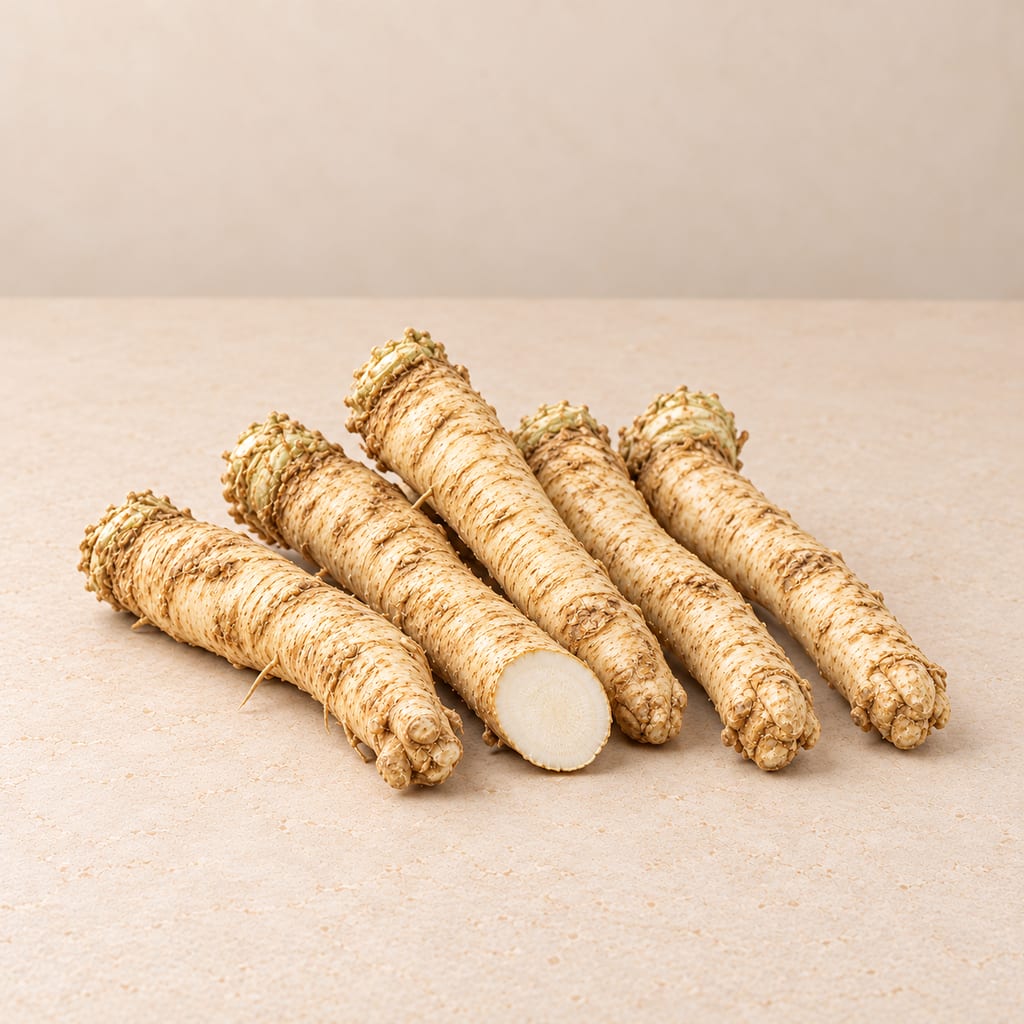
Horseradish is the long white root of Armoracia rusticana, a perennial of the mustard family. Grated, it releases a sharp, nose-clearing heat that vinegar fixes in the sauce.
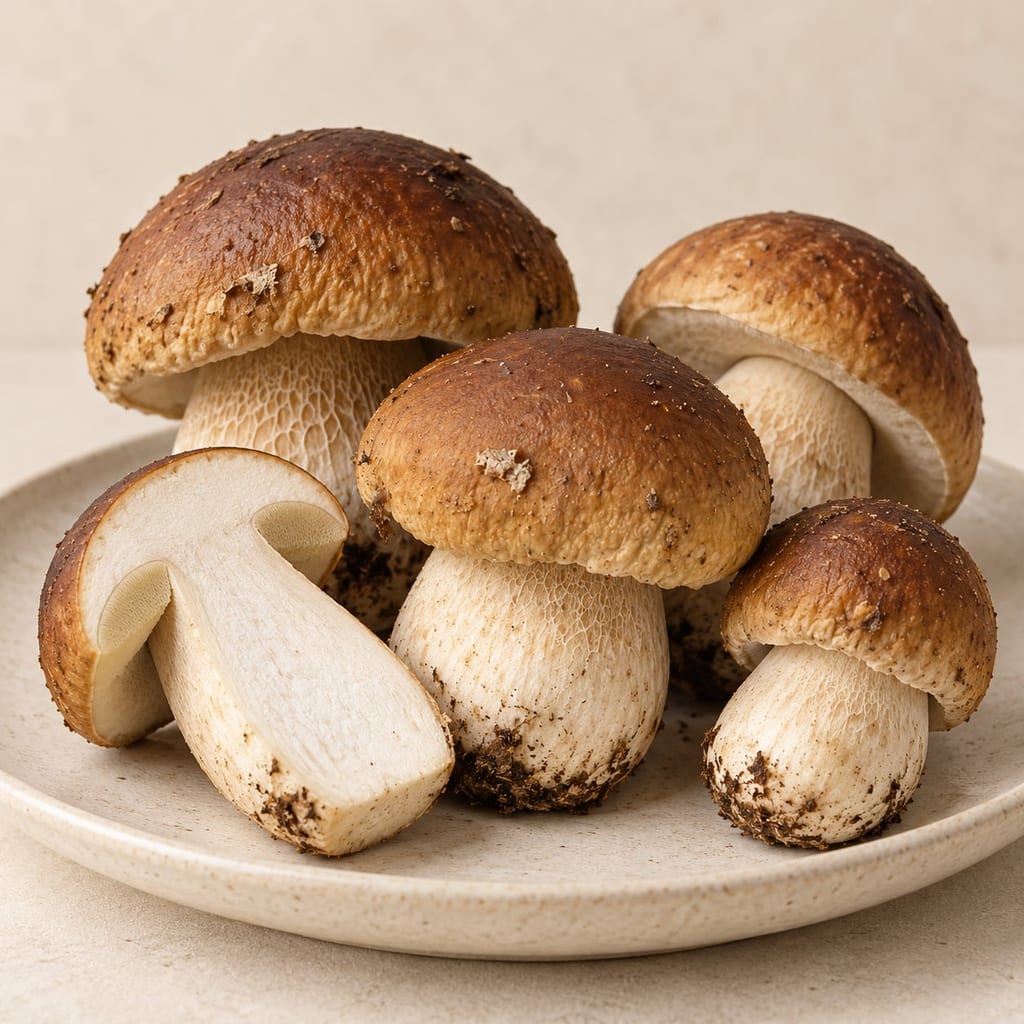
Porcini are prized wild ectomycorrhizal mushrooms from several closely related Boletus species, harvested chiefly from forests and sold fresh, dried or frozen for their firm texture and concentrated savoury aroma.

At North Abydos in Egypt, a fixed early Dynastic brewery comprised parallel semi-subterranean installations with rows of ceramic mash vats; excavation reports revise their number, scale and estimated batch capacity.

Ají amarillo is the orange-yellow Peruvian chilli cultivar group of Capsicum baccatum, used to colour and season huancaína sauce and ají de gallina. Published heat estimates do not establish one range for the named cultivar.

Toasted almonds are whole sweet almond kernels dry-roasted until golden to brown. Heat replaces their marzipan note with a roasted, nutty one; they thicken and flavour romesco.

Kodiak salmon, halibut and cod cut as seg'aq and hung on an initaq rack to become tamuuq, with kac'amaasaq and kupcuunaq named as different results.

Aniseed is the dried ripe fruit of Pimpinella anisum, an aromatic Apiaceae spice commonly called a seed. It adds a sweet, warm aroma to breads such as Moroccan krachel and South African mosbolletjies, and is distinct from star anise.

A fixed Late Chalcolithic installation in Areni-1 cave combined a shallow clay pressing basin with a large jar set into the cave floor and storage vessels nearby.

Ripe avocado flesh is the soft, buttery, fat-rich pulp of Persea americana, eaten raw. It is low in acid, so it is a fresh ingredient that needs care in chilled dishes.

A portable dome and pan used over a hearth, with embers on the lid and heat from below. Regional peka and saç forms share this principle while differing in materials, pan shape and how the food is cooked.
No community contributions have been published for this entry yet.
Sign in to contribute. Published comments and photos are free to read.
WikipediaIdentity · History · Cultivation · Secondary
ParsleyBotany, native range, name, cultivars, nutrition per 100 g, cultivation and germination, safety note on pregnancy and seeds, uses in tabbouleh, ghormeh sabzi, cheiro-verde and the Seder plate.
Cited in: Two herbs from one family; Parsley: a Mediterranean herb that became a garnish; Growing them; Open points
WikipediaIdentity · History · Culinary · Secondary
DillBotany, native range, etymology, leaf and seed oils, loss of flavour on drying, uses by country.
Cited in: Two herbs from one family; Dill: an old herb of the Near East and Europe; What gives them their flavour; What they do in fermented food; Choosing and keeping them; Growing them; Open points
University of Illinois ExtensionCultivation · Storage
ParsleyCurly and flat-leaf types; biennial grown as annual; slow germination; storage wrapped in plastic in the refrigerator.
Cited in: Choosing and keeping them; Growing them
University of Illinois ExtensionCultivation
DillAnnual; full sun; direct sowing; bolting; Fernleaf and Green Sleeves; seed harvest and drying; seed in pickling and vinegar.
Cited in: Choosing and keeping them; Growing them
Food Science and Nutrition, Wiley (Avci and colleagues)Chemistry
Harvest Stage-Dependent Variation in Essential Oil Chemotype and Agronomic Yield of Parsley (Petroselinum crispum (Mill.) Fuss)Essential oil content peaked at 0.7 per cent; apiol rose from 26 to 44 per cent and myristicin ranged 10 to 21 per cent across four harvests; beta-phellandrene dominates early.
Cited in: What gives them their flavour; Open points
Plants (Basel), MDPI (Milenković and colleagues)Chemistry · Antimicrobial
Chemical Composition and Bioactivity of Dill Seed (Anethum graveolens L.) Essential Oil from Plants Grown under ShadingDill native range as described; oil in leaves 0.08 to 0.3 per cent, flowers, seeds; carvone and limonene shares; carvone by country; disk-test zones (E. coli 15 to 18 mm, none against S. aureus or Candida).
Cited in: Dill: an old herb of the Near East and Europe; What gives them their flavour; What they do in fermented food; Growing them
Horticulture Research (Wang and colleagues)History · Taxonomy
Origin, evolution, breeding, and omics of Apiaceae: a family of vegetables and medicinal plantsParsley originated in the late third century BCE on the Mediterranean coast and was used for decoration and seasoning; the family's leaves, stems and roots are used for pickling and fresh.
Cited in: Two herbs from one family; Parsley: a Mediterranean herb that became a garnish
National Center for Home Food Preservation, University of GeorgiaMethod · Fermentation
Dill Pickles (fermented)Ingredient amounts per gallon including dill seed or heads; placement; fermentation temperature ranges and times; warning on heat above 80 F.
Cited in: What they do in fermented food