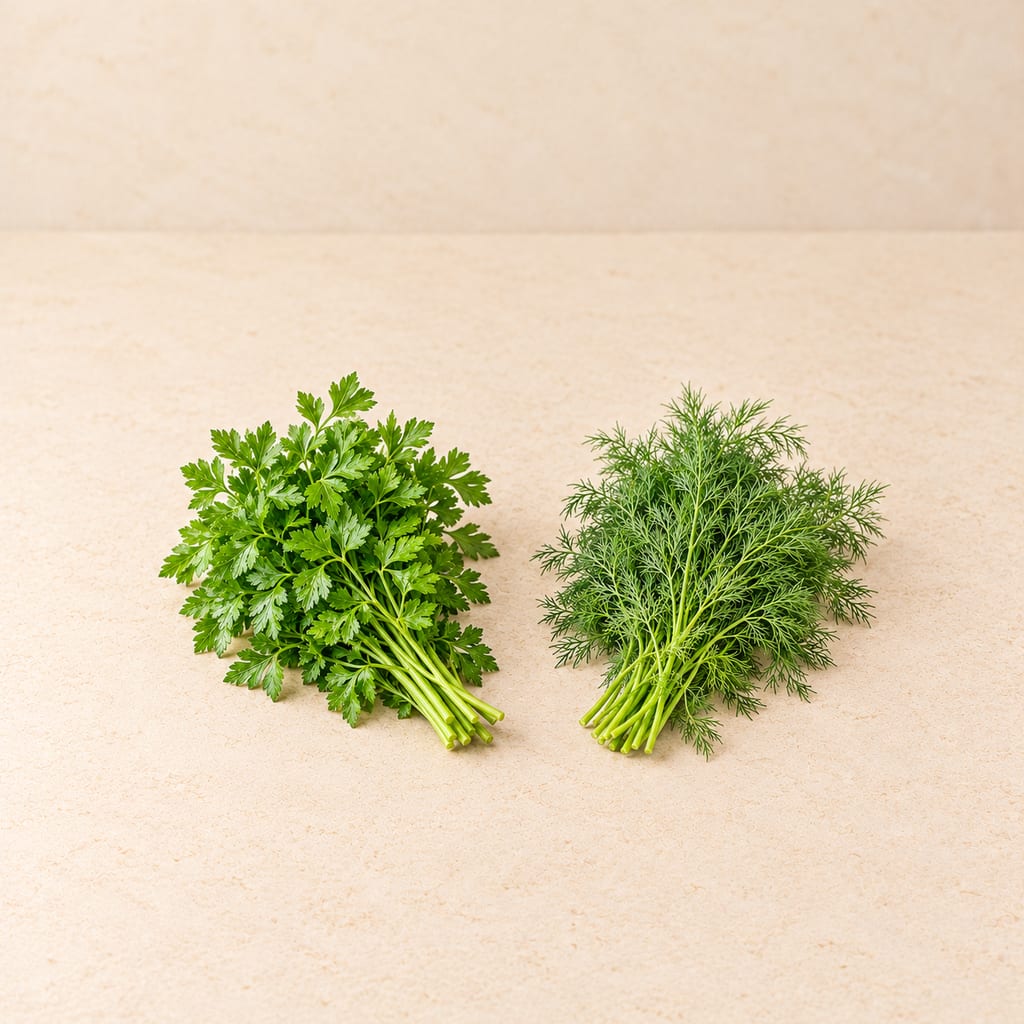
Parsley and dill
Parsley and dill are two leafy herbs of the carrot family, used fresh for their green, clean flavour. Dill also gives its name to dill pickles, the best-known cucumber ferment.
 FermenteaWhere food goes to change
Hovmästarsås · Swedish mustard and dill sauce · Hovmästarsås-style sauce · Mustard sauce for gravlax
Sweet mustard and Dijon whisked with sugar and white-wine vinegar, thickened with oil added slowly and finished with fresh dill: a hovmästarsås-style sauce for salmon.
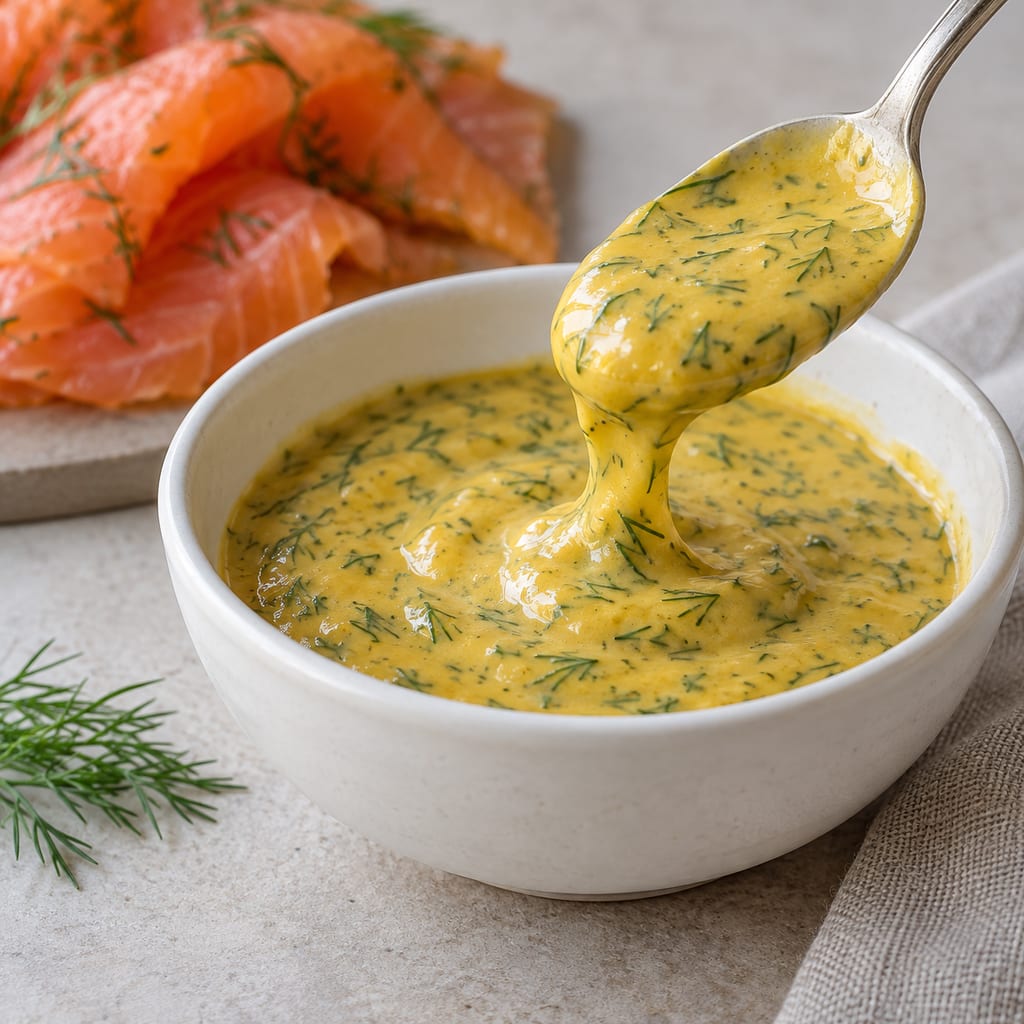
Hovmästarsås is a Swedish mustard and dill sauce, sweet and sharp at once and thick enough to sit on a slice of fish. ICA, the Swedish grocery chain, publishes its own recipe and calls it a classic, perfect served the traditional way with gravad lax, the cured salmon, while adding that it suits other dishes too. Its ingredient list explains the sauce: two tablespoons of Swedish mustard and one of Dijon, a tablespoon of sugar, half a teaspoon of salt, a pinch of black pepper, a tablespoon of white wine vinegar, two decilitres of oil and a pot of dill, chopped.
ICA's method is the method of an emulsion. The mustards, sugar, salt, pepper and vinegar are mixed first; the oil then goes in drop by drop or in a thin stream, with vigorous stirring, until the sauce turns thick; the chopped dill is stirred in last. Whisking oil gradually into a smaller volume of water-based liquid breaks it into fine droplets, and the thick mustard base helps hold them apart, which is where the body of the sauce comes from. If the oil goes in too quickly the sauce stays thin or separates; added slowly, it thickens as it goes.
That makes hovmästarsås a prepared sauce made with mustard, sweet, tangy and emulsified with oil, rather than a mustard you could swap for the contents of a jar.
This version weighs everything and keeps ICA's architecture: two mustards, 70 g of a mild sweet prepared mustard and 20 g of Dijon; white-wine vinegar; sugar; salt; oil whisked in gradually; 15 g of chopped fresh dill folded through at the end. It leaves out the black pepper and adds 4 g of water to help the 25 g of sugar dissolve. The largest difference is the oil. ICA uses two decilitres of oil against three tablespoons of mustard; this formula uses 90 g of oil against 90 g of mustard, so its sauce leans more on the mustard and less on the oil for body. Treat it as an interpretation, with ICA's recipe as the published Swedish point of comparison. It also uses less oil than some traditional recipes do.
Choose the sweet mustard with care, because it carries much of the sweetness: if yours is already very sweet, use less added sugar in the next batch. Serve the sauce cold with cured or cooked salmon, with potatoes or with another cold dish. Dill and the other fresh ingredients turn a jar of mustard into a new perishable sauce, so the unopened mustard's shelf life does not carry over. The formula has not been kitchen-tested or checked for keeping; refrigerate it promptly and use it within 48 hours or freeze it, a house convention rather than a measured shelf life.
The 20 g of Dijon brings its own question, because a supermarket Dijon is not necessarily what its name suggests. Maille's US Dijon Originale lists water, mustard seed, vinegar, salt, citric acid and sodium metabisulphite, and no wine: fine texture, concentrated mustard character, sharp acidity and little deliberate sweetness. Maille's UK freshly pumped Dijon Originale is a distinct product containing 20% white wine. Wholegrain or à l'ancienne mustard is a third thing, distinguished by coarse grinding and visible seed fragments, and French rules define it separately from smooth mustard. Any of them will make the sauce, but each will make a slightly different one.
Nor does Dijon promise that the seeds grew near Dijon or that the jar was made there. Edmond Fallot, a Burgundy mustard house, describes Dijon mustard as a generic denomination, made in France and in many other countries. Moutarde de Bourgogne is different: a protected geographical indication registered by the EU in 2009, whose specification requires the seed to be grown, and every operation from storage to manufacture to take place, within a defined area of the Côte-d'Or, Nièvre, Saône-et-Loire and Yonne. It must be made with Burgundy appellation white wine, at least 25% of the dilution liquid for the smooth, sieved version and 15% for the à l'ancienne version. A home sauce made elsewhere can use a Dijon-style mustard; it cannot acquire Burgundy's protected origin by adding a bottle of Burgundy wine.
An untested modern interpretation of Swedish hovmästarsås. ICA documents the Swedish mustard-and-dill sauce and its service with gravad lax, but the origin and date of this particular house formula are not recorded.
Scaling: source batch only
The sauce contains prepared mustard; identify mustard for people with mustard allergy.
Hazard sourceThe fresh dill and mixed ingredients make a new sauce whose keeping time is not established by the mustard jars.
Hazard sourceIdentify mustard as an allergen and check the labels of the prepared mustards used.
Control sourceChill promptly and follow the supplied report's conservative 48-hour household convention or freeze suitable portions while fresh; this is not a measured shelf life for this formula.
Control sourceContains mustard, an allergen. Check the ingredient and allergen statements on both prepared mustards.
This untested formula has no measured shelf life. Refrigerate promptly, use only the supplied report's conservative 48-hour household convention or freeze while fresh, and do not keep it at room temperature or can it.
The sauce is a new perishable preparation; it does not inherit the shelf life of either mustard jar.
ICA documents hovmästarsås as a Swedish mustard-and-dill sauce for gravad lax. This country-level association records the documented style comparison, not the birthplace of this house formula.
Parsley and dill are two leafy herbs of the carrot family, used fresh for their green, clean flavour. Dill also gives its name to dill pickles, the best-known cucumber ferment.
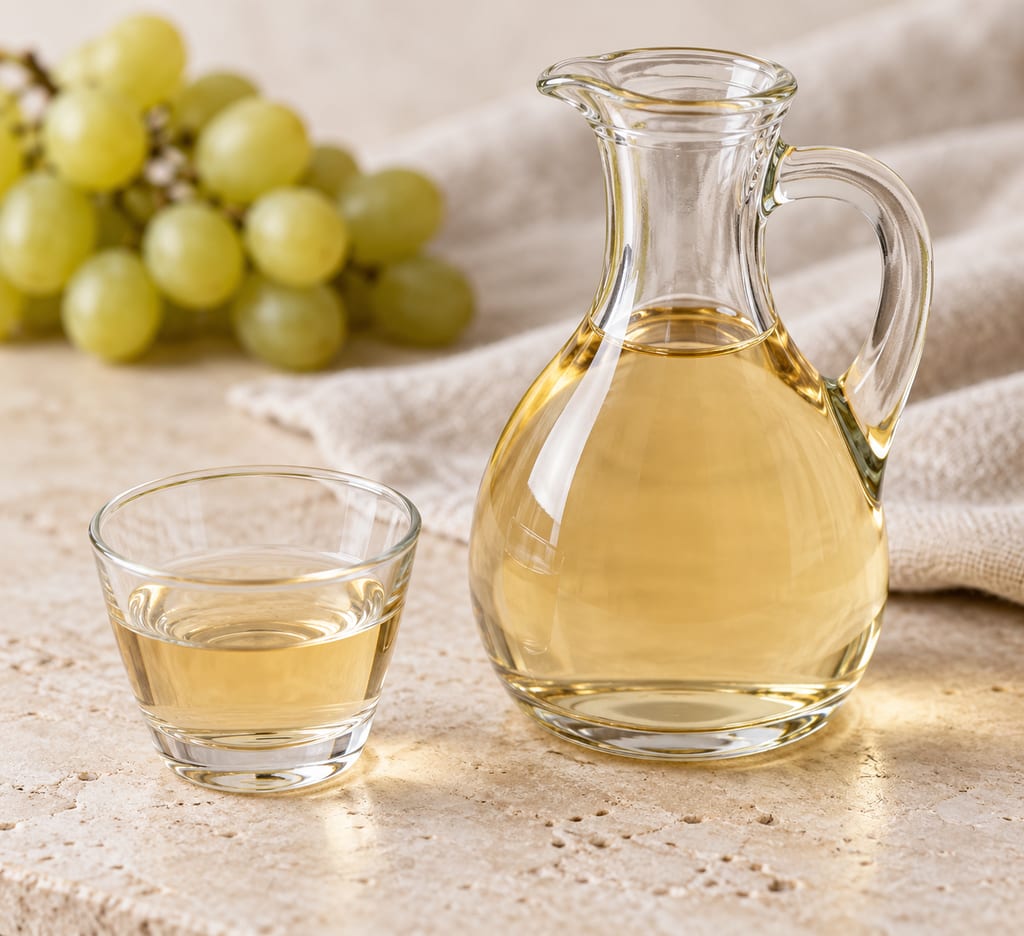
White-wine vinegar is made when acetic acid bacteria oxidise the alcohol in finished white grape wine, yielding a pale, wine-derived souring condiment for dressings, sauces and cooking.

A Swedish-style spirit vinegar made by fermenting neutral alcohol with live vinegar bacteria, with a separate guide to commercial ättika strengths.
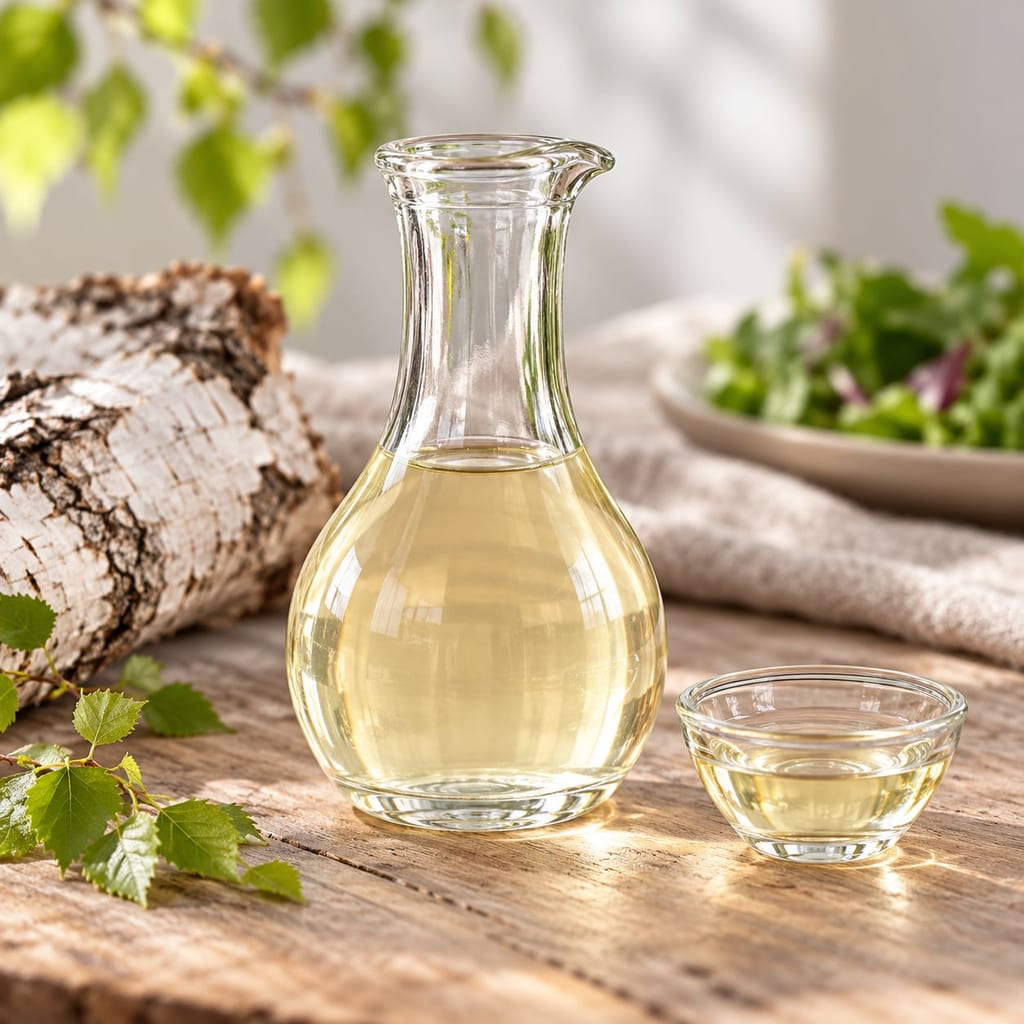
Vinegar from spring birch sap fermented to alcohol and then acetic acid, usually with added sugar or honey because the sap is so dilute; made in Sweden and described in older eastern European accounts.
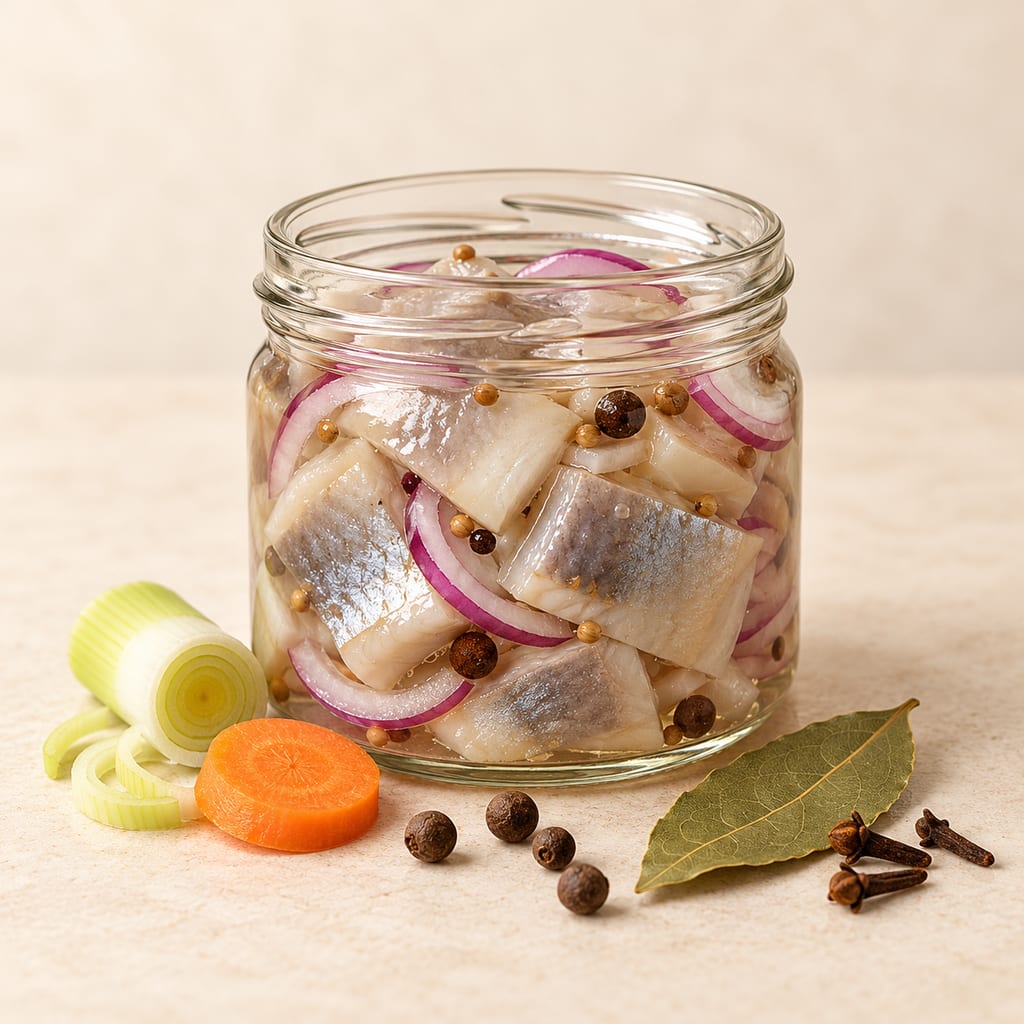
A Swedish ready-to-dress herring preparation: add the classic sliced aromatics and spices to already prepared herring, then serve or chill for fuller flavour.
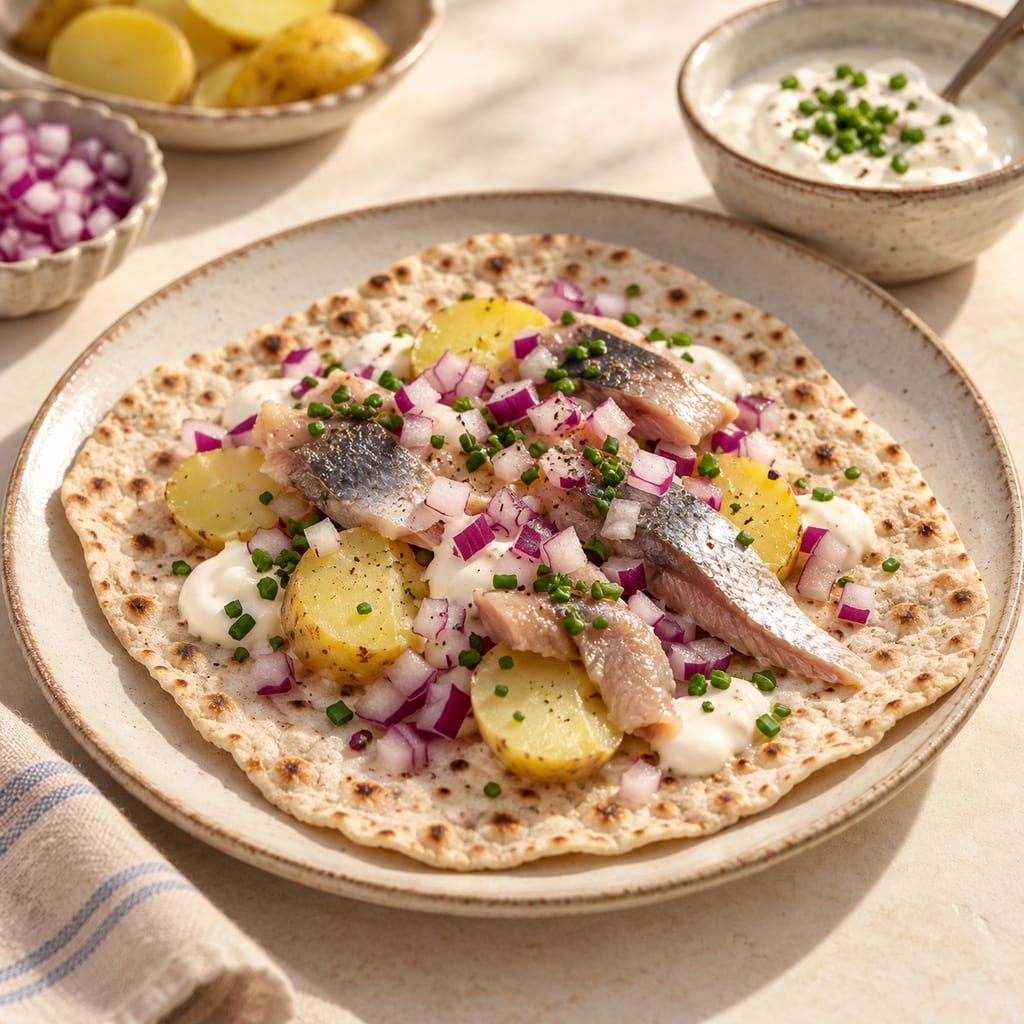
A Swedish late-summer meal of commercially prepared surströmming, tunnbröd, potatoes, onion and cultured cream. This is a serving preparation; the specialist fish fermentation is not made at home here.

Crushed or milled barley cooked in water until the starch softens and the mixture thickens, the plainest way a northern household turned stored grain into a meal, here with apple and hazelnut.
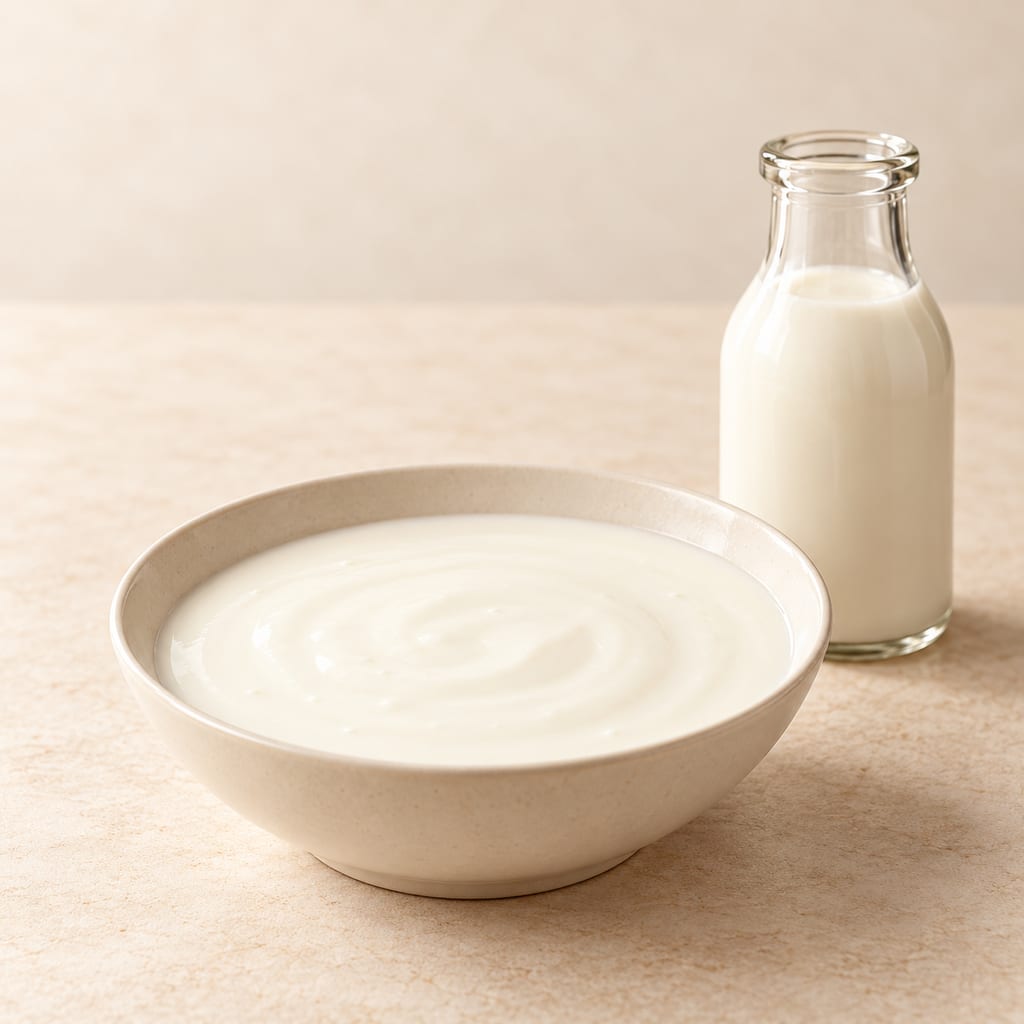
Filmjölk is a Swedish cultured milk with mild acidity and a spoonable body. This recurring batch uses filmjölk from the previous batch to culture fresh milk.
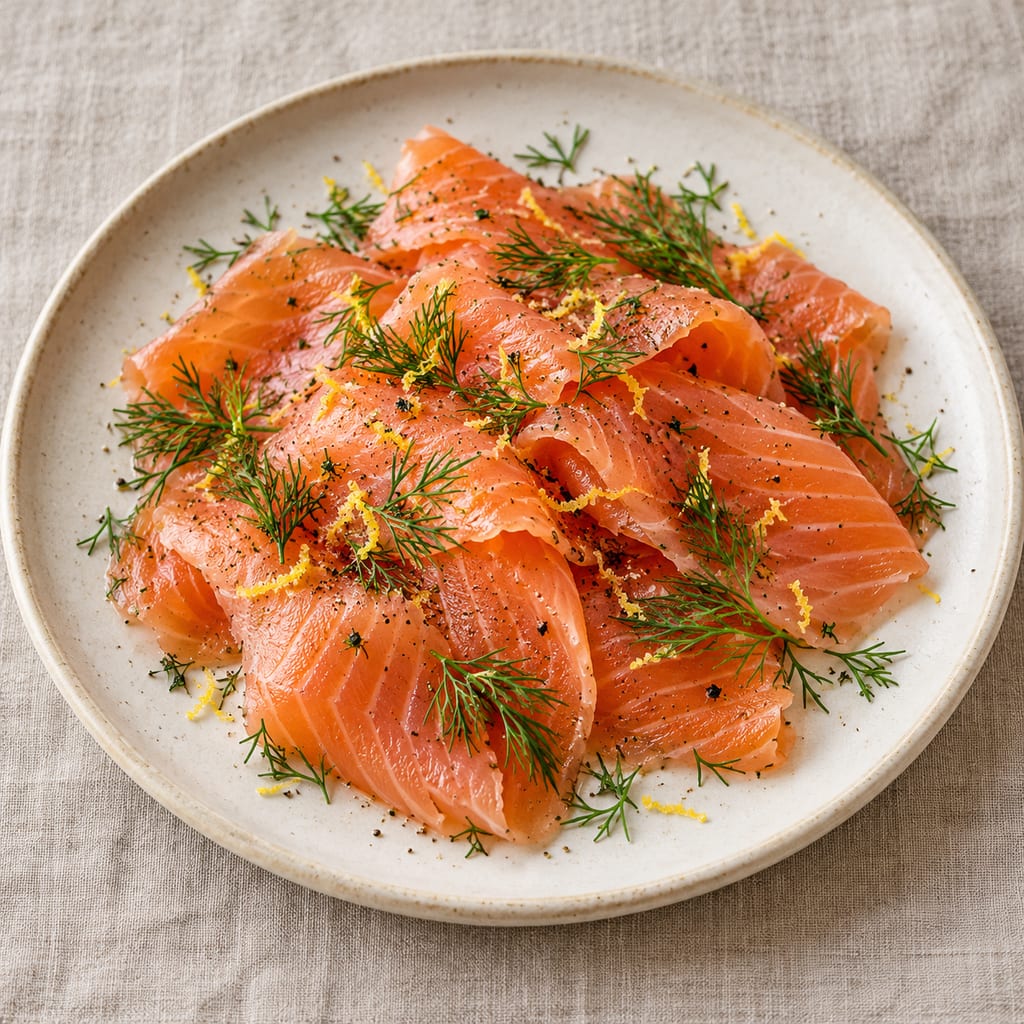
Salmon is cured with salt, sugar, pepper, dill and lemon zest under refrigeration.

Soft Swedish wheat buns filled with butter, sugar and cinnamon. This 20-bun home batch uses fresh yeast, two short proofs and pearl sugar.

Ajvar is a cooked Balkan pepper preserve built around roasted red peppers, peeled, drained, ground and slowly fried with oil and seasoning. Leskovac’s protected version is a pepper specialty; regional versions vary.

Amlou is a nutty, lightly sweet Moroccan spread of roasted almonds, culinary argan oil and honey. The almonds are ground first, then loosened with oil and sweetened; the balance can range from a thick spread to a dip.

Apple sauce for goose and pork is a plain English accompaniment: cooked apples pulped with water, then sweetened with sugar and finished with a little butter.

A warm dip of garlic, anchovy and olive oil, often enriched with butter, that Piedmont serves over a flame with raw and cooked vegetables and bread.

A sweet-hot table sauce of ripe banana simmered with vinegar, sugar, onion, garlic and fresh chilli, in the manner of Philippine banana ketchup. An untested development batch of about 500 g.

A Georgian walnut sauce of ground walnuts, garlic, vinegar and spices, thinned with water or broth. It is served with poultry, vegetables and bread, and is the sauce of the dish satsivi.

A pourable dessert sauce of brown sugar, butter and cream, with a little corn syrup and salt. It is the sauce form of the butterscotch confection and is made without water, unlike caramel.

Byzantine murrī is a cooked imitation of murrī from the medieval Arabic repertoire, made from scorched honey, toasted bread, walnuts, quince, carob and spices rather than from a long grain fermentation.
No community contributions have been published for this entry yet.
Sign in to contribute. Published comments and photos are free to read.
ICA (Sweden)
Hovmästarsås (ICA recipe, 4 portioner)Cited in: A mustard sauce for cured salmon; How this formula differs
Food Standards Agency (published on GOV.UK)
How to chill, freeze and defrost food safely - GOV.UKCited in: How this formula differs
Ministère de l'agriculture et de l'alimentation (Bulletin officiel 2021-36); INAO as service compétent
Cahier des charges de l'indication géographique protégée Moutarde de Bourgogne, homologué par arrêté du 23 août 2021Cited in: The Dijon in the bowl
La Moutarderie Edmond Fallot
La Moutarde en Bourgogne (La Moutarderie Edmond Fallot)Cited in: The Dijon in the bowl
Food Standards AgencySafety
Mustard: allergen definitionMustard is listed as an allergen in UK food information requirements.