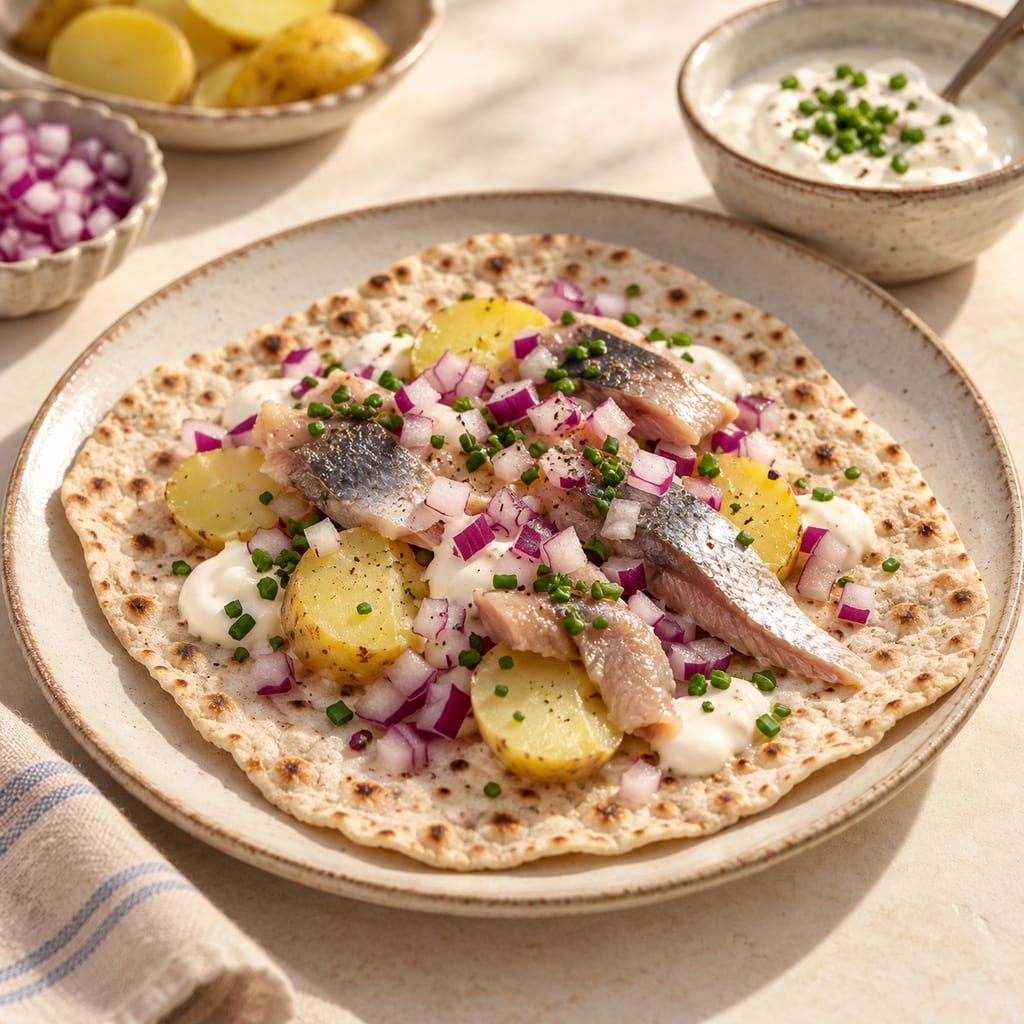
A surströmming meal
A Swedish late-summer meal of commercially prepared surströmming, tunnbröd, potatoes, onion and cultured cream. This is a serving preparation; the specialist fish fermentation is not made at home here.
 FermenteaWhere food goes to change
Modern adaptation
ready-to-dress herring · five-minute herring
A Swedish ready-to-dress herring preparation: add the classic sliced aromatics and spices to already prepared herring, then serve or chill for fuller flavour.
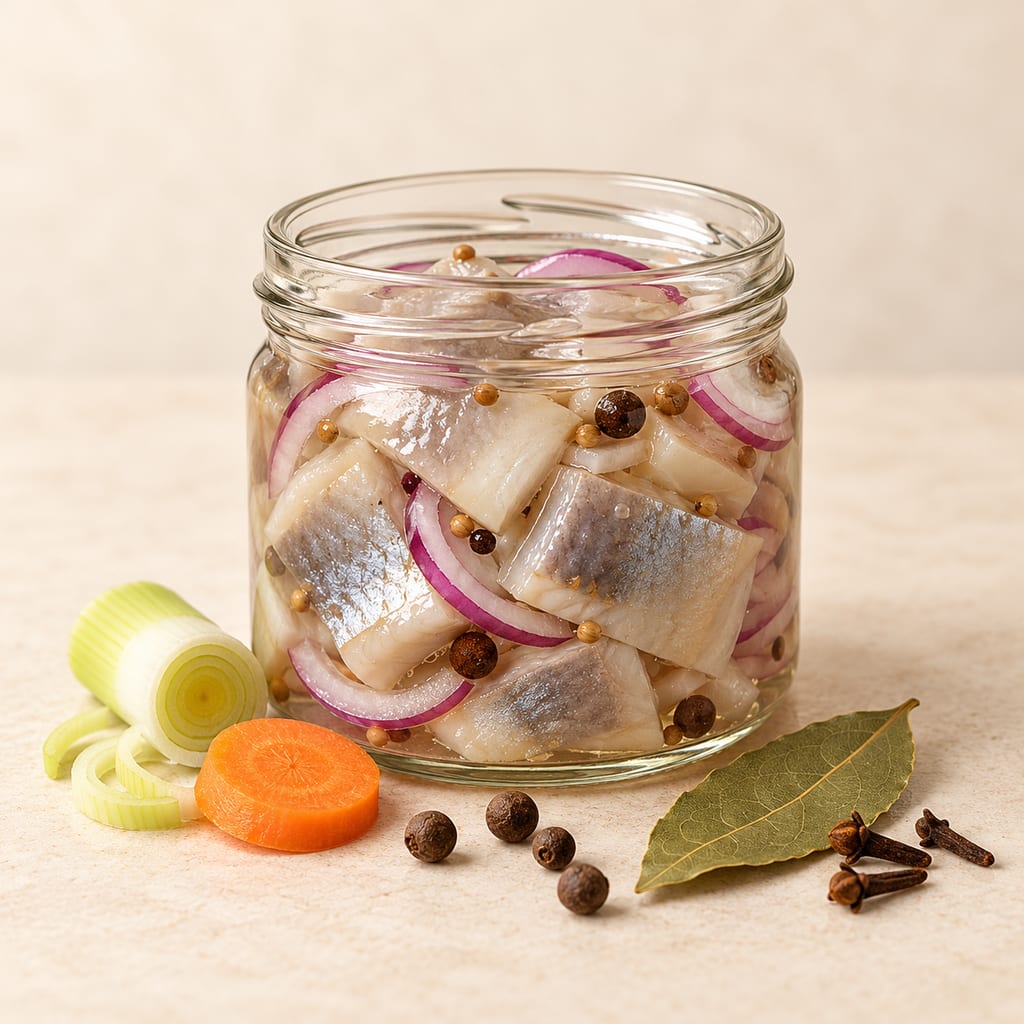
5-minuterssill is a convenient Swedish route to a seasoned inlagd sill: the fish is already prepared, so the cook adds aromatics and returns it to the brine. Abba describes its product as herring that has been desalted, cut into pieces, placed in a classic sweet-and-sour 1-2-3 liquor and made ready for seasoning. The five-minute name refers to this shortcut in kitchen preparation. It does not describe a way to preserve raw fish in five minutes. This recipe follows Abba’s separately listed method for the prepared product, rather than combining it with their from-scratch 1-2-3 brine.
The finished preparation consists of pale herring pieces, onion and spices immersed in the liquid retained from the packet. It can be served straight away, while a cold rest lets the added seasonings spread through the liquid and fish. That distinction—ready to eat now, more seasoned later—is useful: the later wait is for flavour, not a second preservation stage. The package is the process input and the authority for its product-specific handling instructions.
Herring has been a practical staple around Sweden’s coasts and inland markets because large catches could be salted, dried or smoked for later use. The Swedish Agriculture Board’s Smaka Sverige account connects the scale of the catch to the need to preserve fish for the future. The Institute for Language and Folklore’s Matkult overview similarly describes salting, souring and drying as common older fish-preservation methods. These were different techniques with different products; they should not be collapsed into one generic idea of “pickling.”
Smaka Sverige dates the brännvinsbord, a standing first course of bread, butter, cheese, salted fish and meat accompanied by spirits, to the mid-seventeenth century. It describes this table as a predecessor of the smörgåsbord’s opening courses and notes that the pattern returns at Christmas, Easter and Midsummer. Its account says spiced pickled herring is documented from at least the mid-eighteenth century, while vinegar and familiar spice dressings became more common in the nineteenth century. Those dates concern the broader practice of Swedish spiced herring, not this exact branded five-minute product.
The Swedish University of Agricultural Sciences’ herring chronicle places herring in a wider northern European food and cultural history. It is useful context for why a small jar of seasoned fish can function as more than a quick weekday condiment: herring is a recurring festive dish with a place in the structure of a meal. The modern shortcut inherits that culinary setting while moving the preservation work upstream to a commercial supplier.
The fish used here has already been desalted, cut and held in an acidified, sweetened dressing before it reaches the home kitchen. Abba lists herring, sugar, salt, vinegar or acetic acid, cinnamon-containing natural flavour and sodium benzoate on the product page. Its own product and process specifications belong to the supplier. The home method in this recipe adds vegetables and spices; it does not reproduce that industrial preparation or establish its preservation controls.
Acetic acid makes a sour environment and sugar contributes sweetness, but the named product description alone does not give a household pH, salt target, validated time-temperature schedule or shelf-life after opening. The Swedish Food Agency’s guidance on commercial herring preparations discusses controlled production and the distinction between salt-matured and acidified fish. Those commercial controls cannot be inferred from the short home method. Here, no organism is being cultivated and no fermentation is taking place: this is a non-fermented assembly and flavouring step using an already prepared product.
The packet liquid matters because it is the dressing the supplier paired with that herring. The recipe explicitly saves and reuses it, rather than pouring it away and replacing it with water or a newly improvised vinegar mixture. Keeping the original liquid also keeps the source method intact. It does not make this liquid a validated preservation brine for fresh fish or for a different quantity of fish.
One packet of ready-to-dress herring supplies the fish and its measured package liquor. In Abba’s method, red onion, leek and optional carrot are sliced and layered with the fish. Onion contributes a direct allium note and a crisp, pale-purple accent; leek brings a milder allium flavour. Carrot is explicitly optional and adds colour and a faint sweetness. The source does not specify vegetable weights, so the ingredient list keeps them as one onion, a ten-centimetre piece of leek and half a carrot rather than inventing gram amounts.
White pepper and allspice are measured in half-teaspoon quantities and crushed; one bay leaf and five cloves complete the seasoning. Crushing the peppercorns and allspice opens their aroma into the dressing, while the whole bay leaf and cloves remain identifiable pieces that can be lifted out at serving. The official ingredient list names these exact spices. It does not call for dill, mustard, lemon, cream or potatoes in this version, even though other herring dishes use different accompaniments.
There is no separate salt, sugar, water or vinegar in this method. They belong to the packet liquor and adding them anew would turn the published shortcut into a different, unmeasured dressing. The recipe’s four-serving yield comes from Abba’s recipe page, not from a calculated fish weight. Pack sizes can differ by market or change over time, so use one package matching the method and follow its current label.
Begin by preparing clean, dry cutting equipment and a clean lidded container. Slice the herring into serving pieces only if the package format requires it; the product page describes the version in pieces, while the recipe page’s fillet version says to cut it to the desired size. Slice the red onion and leek, and the optional carrot. Crush the measured white pepper and allspice. This small amount of knife work makes the aromatics easy to distribute without changing the product’s underlying preparation.
Save every drop of the package liquor. Layer herring, sliced vegetables and spices in the container, then pour the saved liquor over them. The purpose of layering is practical and culinary: it distributes the seasonings among the fish instead of leaving them all at the top. Keep the solids in the package liquor. Do not cook the liquid; the source method calls for using it as supplied.
The dish may be eaten once assembled. For a more integrated seasoning, Abba says the product can stand in the refrigerator for one to two days; its product page says the fish tastes more after a day in the refrigerator. These are flavour-resting suggestions for this ready-made product, not a universal fish-preservation schedule. Refrigeration slows the movement of flavour compared with a warm rest and maintains the supplier’s specified cold storage, but neither appearance nor aroma verifies safety.
Abba’s product page says to refrigerate at a maximum of 8 °C. Keep the unopened package and the finished dish cold, return them promptly to refrigeration after serving, and use the current package instructions for opening and storage. The cited recipe supports a one-to-two-day refrigerated rest for flavour; it does not state how many days a home-mixed jar keeps after opening. This account therefore supplies no invented opened-jar shelf life.
Use only the prepared herring product specified by the recipe. Five minutes is not enough to salt, acidify, or otherwise control raw herring. The commercial product’s prior processing, its ingredient declaration and its refrigeration requirement are part of the method. This recipe gives no validated home process for raw fish, no room-temperature storage method, and no claim that the finished jar is shelf stable. Fish is an allergen; check the current package label for the complete ingredient and allergen information.
The culinary tradition described here is Swedish: the historical sources address Swedish herring preservation, spiced herring and its role at festive meals. The place association for the broader preparation should remain country-level; those sources do not establish that Sweden was the sole origin of pickled herring across northern Europe. The SLU chronicle itself gives a wider cultural frame.
Abba names Kungshamn on Sweden’s west coast as the location of its ageing cellar and says the company stores herring there before packaging. That is a documented modern manufacturing association for this branded product, not evidence that the household recipe originated in Kungshamn. The product page identifies its herring as coming from viable stocks in the Northeast Atlantic, specifically the Norwegian Sea or North Sea. Fishing origin, storage location and culinary tradition are three different geographic facts.
Swedish herring appears on the Christmas julbord and at Easter and Midsummer. Smaka Sverige describes the herring course as the opening of the traditional julbord, after which diners move through other fish, warm dishes, cheeses and sweets. The same salted-fish first-course pattern has a history in the brännvinsbord and smörgåsbord. The prepared jar is therefore at home beside bread, potatoes or other dishes already chosen for the table, although this exact Abba seasoning recipe does not prescribe a complete menu.
The product maker presents five-minute herring as a base for a cook’s own seasoning and suggests modern directions such as coriander with lime and chili or sun-dried tomato with parmesan and basil. Those are the manufacturer’s examples of variation, not changes to the measured classic recipe above. The classic combination in the linked recipe uses onion, leek, optional carrot, white pepper, allspice, bay and cloves. Keeping those variations separate helps the reader understand that the quick product is a flexible starting point, while each dressing has its own identity.
Ordinary inlagd sill is a broad family of herring preparations in a sour dressing. Abba’s recipe page presents two routes: use already prepared five-minute herring, or start with desalted pickling herring and make a classic 1-2-3 liquor of vinegar, water and sugar. In the latter route, the liquid is cooked and cooled before the fish is dressed; that is a separate method with a separate raw-material stage. Its quantities and steps should not be spliced into this packet-based version.
Matjessill is another distinct product. Swedish Agriculture’s historical account describes matjes as the only lagged or aged herring common in the present-day market in its interview, and ICA’s food explainer treats matjes as a named variety with its own processing and seasoning identity. The fact that a cook could season matjes as an alternative does not make it interchangeable with the desalted, already dressed 5-minute product. Likewise, salt-matured herring, fermented or soured fish and smoked herring are different preparations, not merely alternate names for this recipe.
The title is a convenience label, not a complete process description. The product page explains that the supplier has done the substantial preparation—desalting, cutting, making the 1-2-3 liquor and placing the herring in it—before sale. The home cook spends a few minutes slicing the remaining ingredients, layering them and returning the saved liquor to the fish. A longer wait is optional for flavour. This division between supplier work and home seasoning is the defining technique.
Because the supplier’s product specification can change, the exact package in hand is part of the evidence. Read its current ingredient list and cold-storage direction, keep its brine, and do not infer a raw-fish method from the name. Within those boundaries, the recipe is straightforward: measured classic spices, sliced aromatics and a cold rest if desired. It is a small contemporary adaptation of a much older Swedish habit of serving seasoned herring, with the preservation work shifted to a commercial product.
Spiced herring belongs to a documented Swedish festive food tradition; the five-minute product is a modern commercial shortcut.
Yield 4 portions · Scaling: source batch only
Herring is the main ingredient; check the package's current allergen declaration.
Hazard sourceKeep the package and dressed herring refrigerated at no more than 8°C, following the product label.
Control sourceThe five-minute name applies to the supplier's already prepared herring; it is not a method for preserving raw fish.
The sources give no validated home shelf life after opening or seasoning; follow the current package directions.
Swedish sources document herring preservation and festive use; this does not claim exclusive origin.
Abba names Kungshamn for its herring storage and sauce production; this is a modern manufacturing association, not the recipe's historical origin.
A Swedish late-summer meal of commercially prepared surströmming, tunnbröd, potatoes, onion and cultured cream. This is a serving preparation; the specialist fish fermentation is not made at home here.

A Swedish-style spirit vinegar made by fermenting neutral alcohol with live vinegar bacteria, with a separate guide to commercial ättika strengths.

Crushed or milled barley cooked in water until the starch softens and the mixture thickens, the plainest way a northern household turned stored grain into a meal, here with apple and hazelnut.
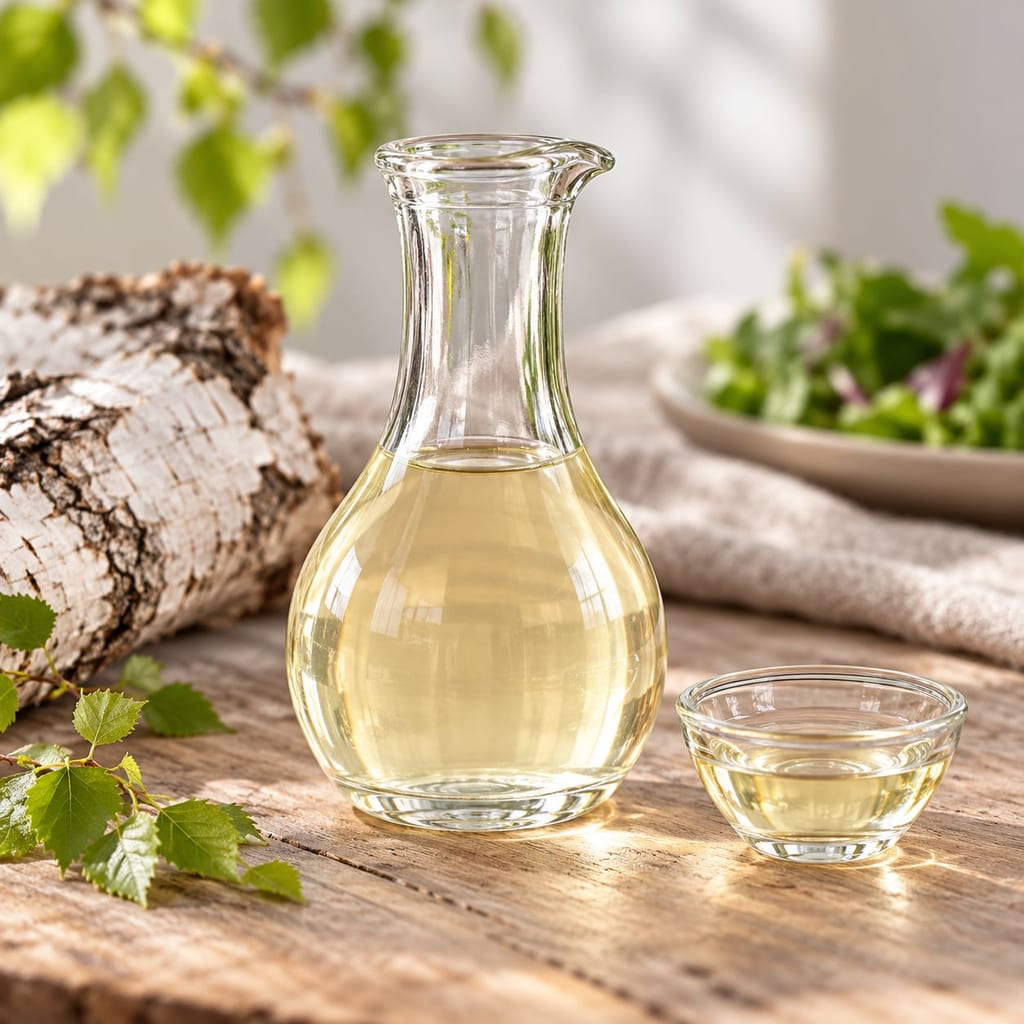
Vinegar from spring birch sap fermented to alcohol and then acetic acid, usually with added sugar or honey because the sap is so dilute; made in Sweden and described in older eastern European accounts.
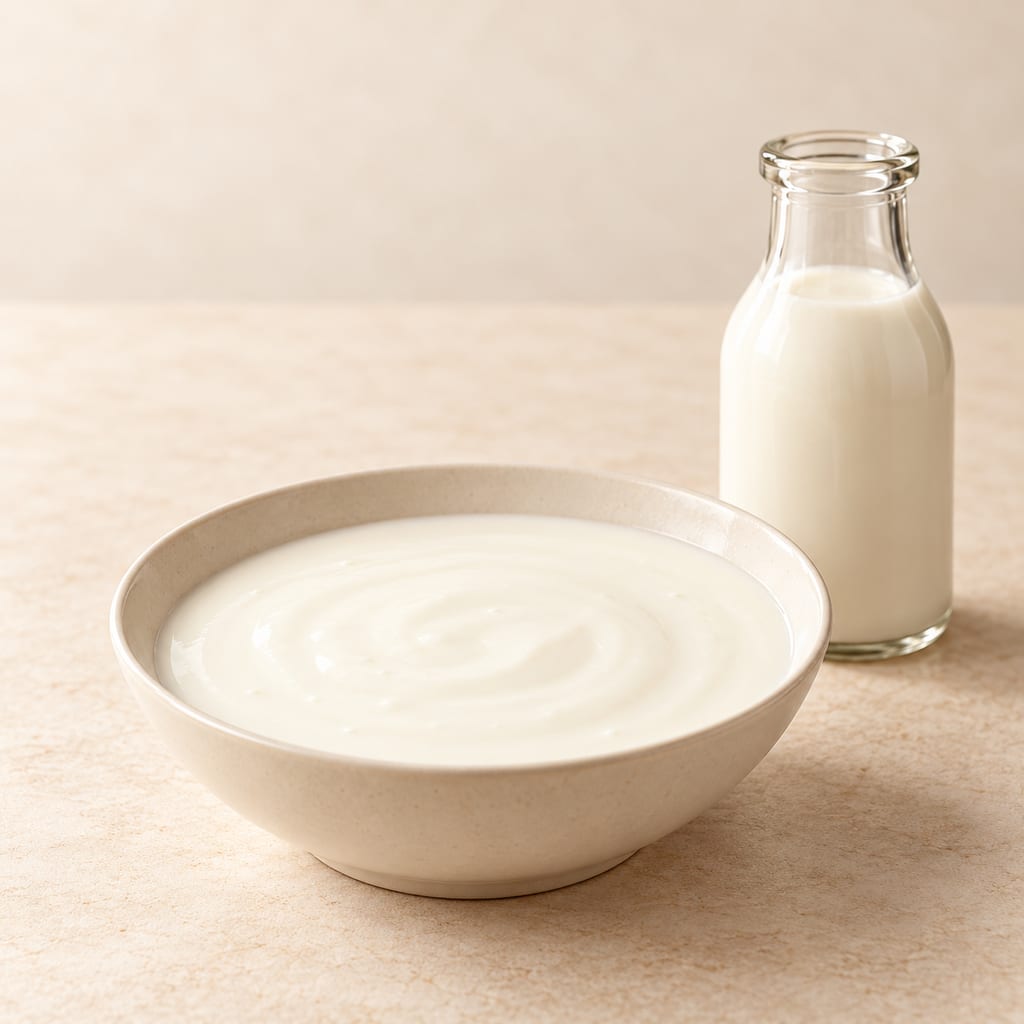
Filmjölk is a Swedish cultured milk with mild acidity and a spoonable body. This recurring batch uses filmjölk from the previous batch to culture fresh milk.
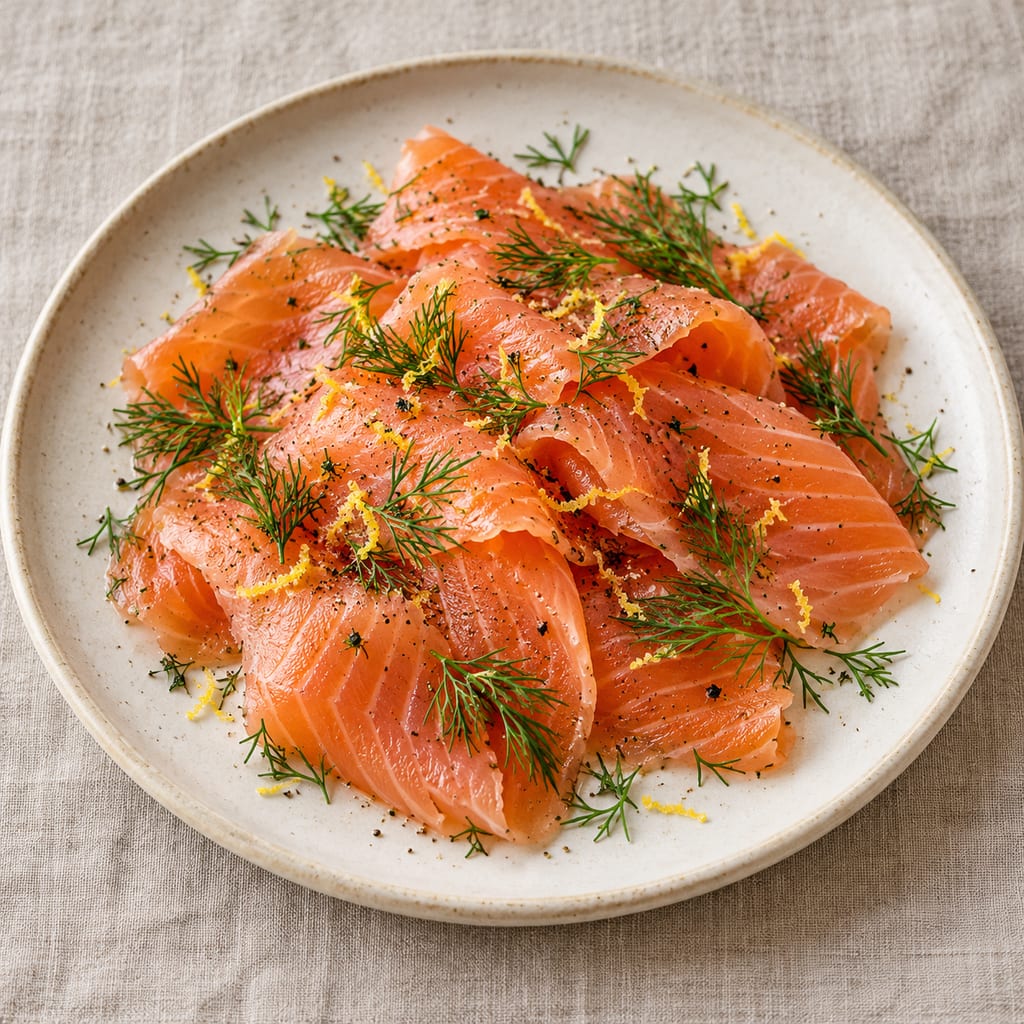
Salmon is cured with salt, sugar, pepper, dill and lemon zest under refrigeration.

Soft Swedish wheat buns filled with butter, sugar and cinnamon. This 20-bun home batch uses fresh yeast, two short proofs and pearl sugar.
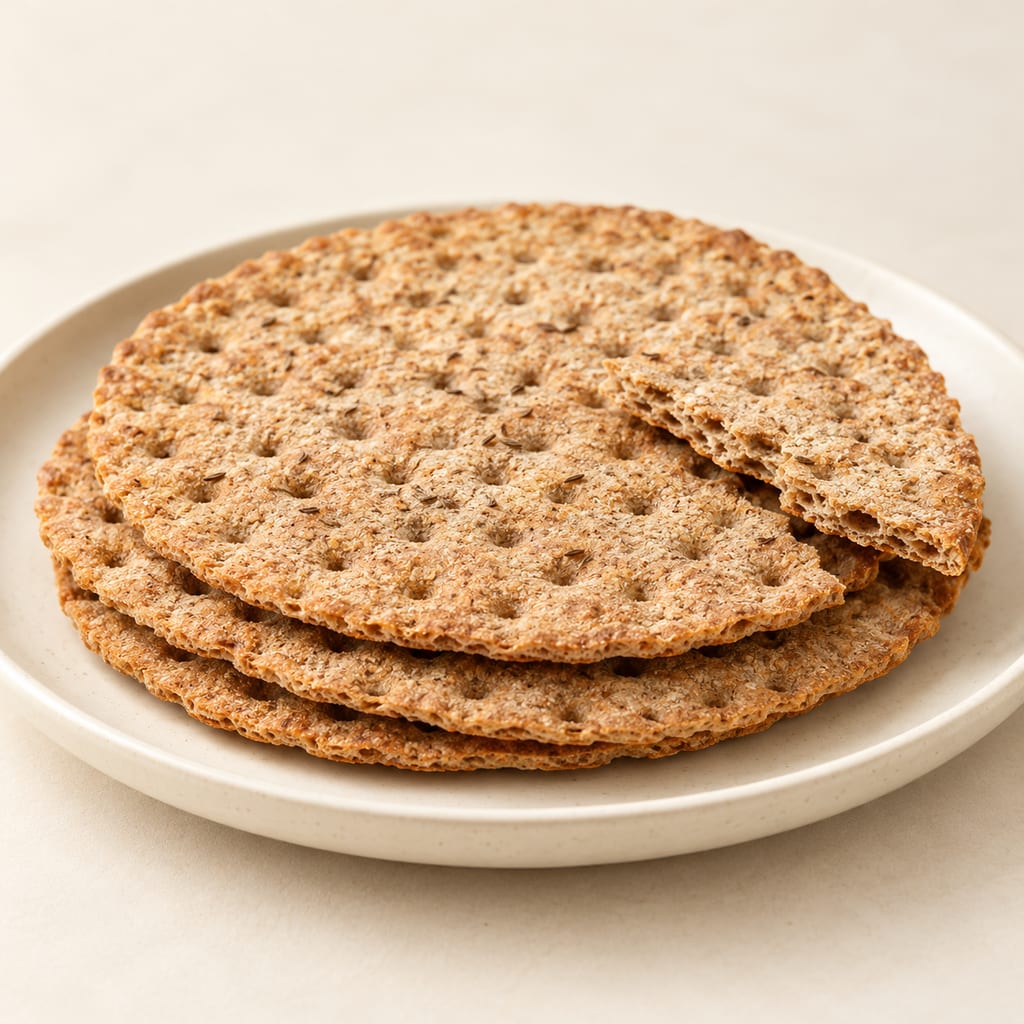
A Swedish home batch of eight thin rye-and-wheat crispbreads, yeast-risen once and baked until hard.

Achcharu is a family of Sri Lankan vinegar pickles made with mixed vegetables or seasonal fruit and a piquant spice dressing. This version is a quick, refrigerated, non-fermented mixed-vegetable pickle.
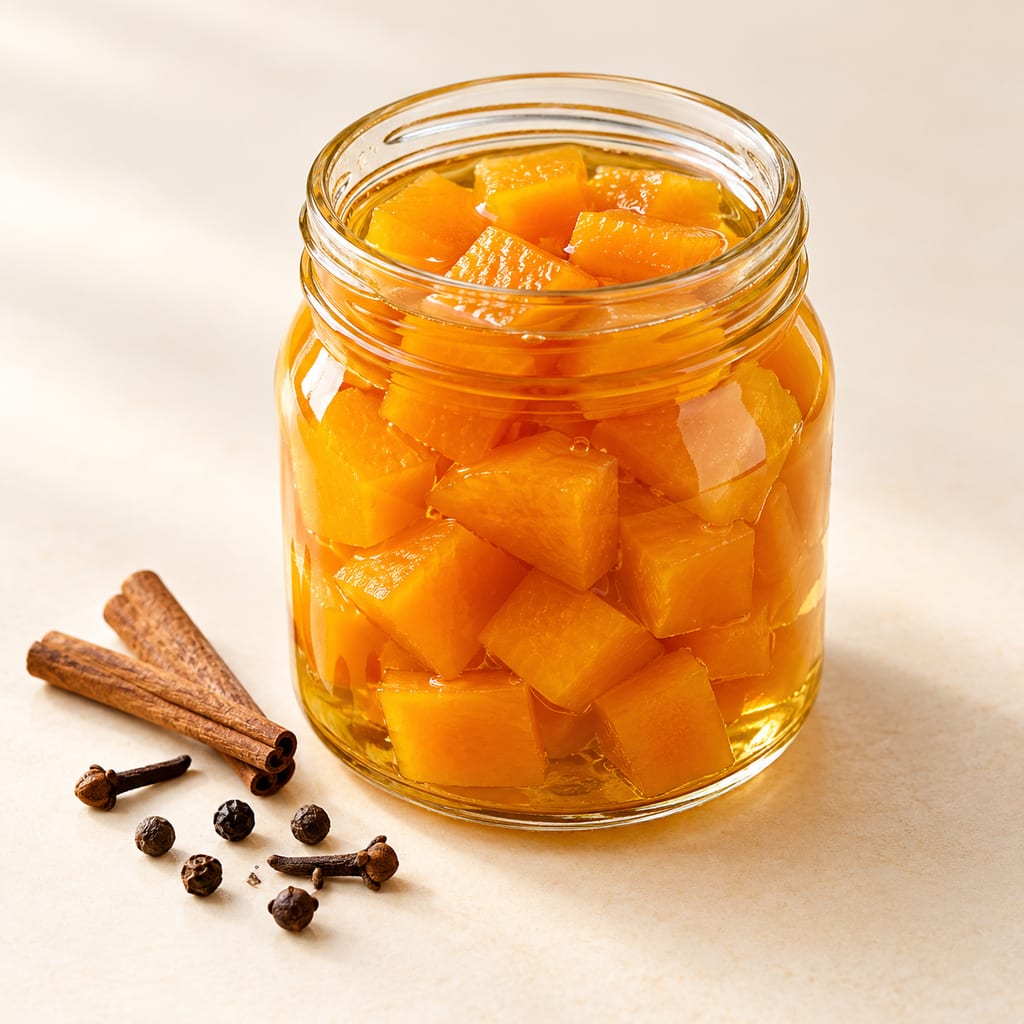
Ball sweet pumpkin pickles: Cupboard: exact published Ball formulation and water-bath process.
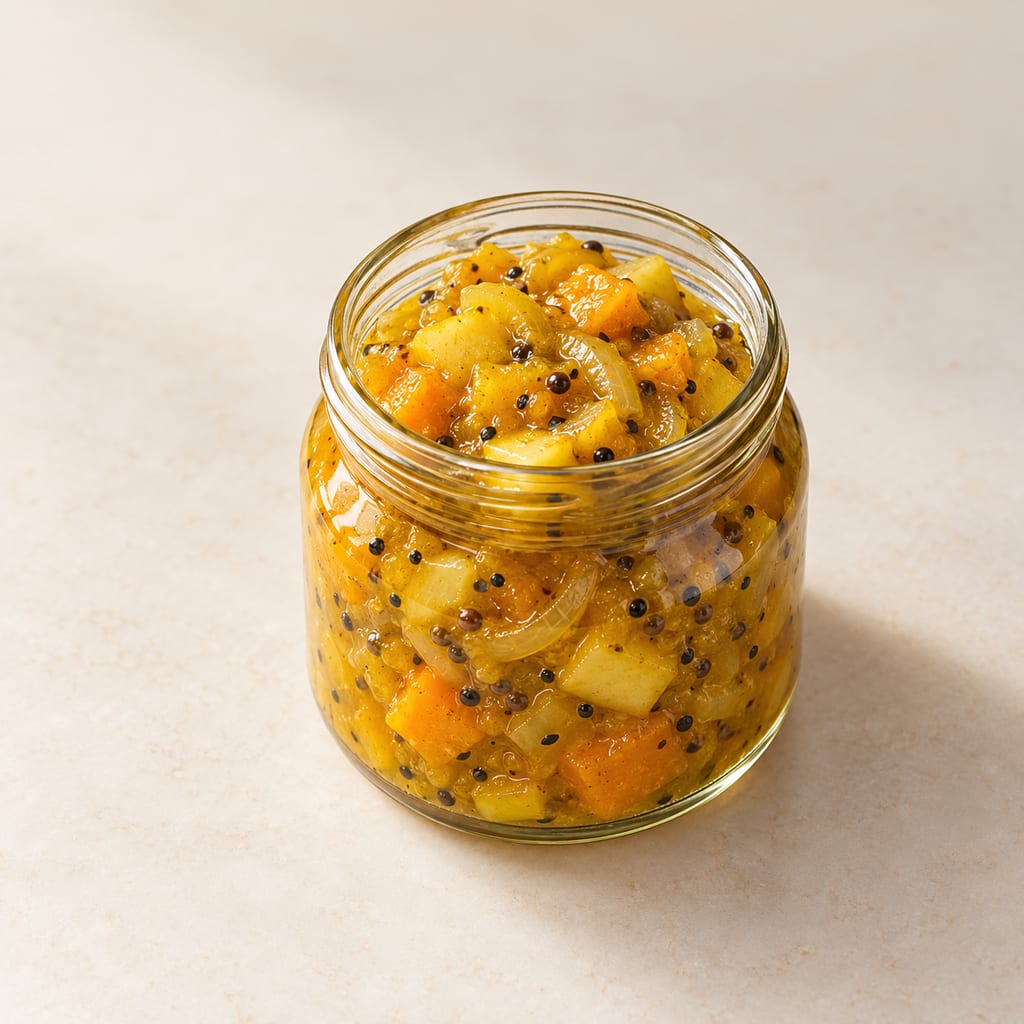
British pumpkin, apple and mustard pickle: Freeze for winter; small fresh portion refrigerated up to 48 hours.
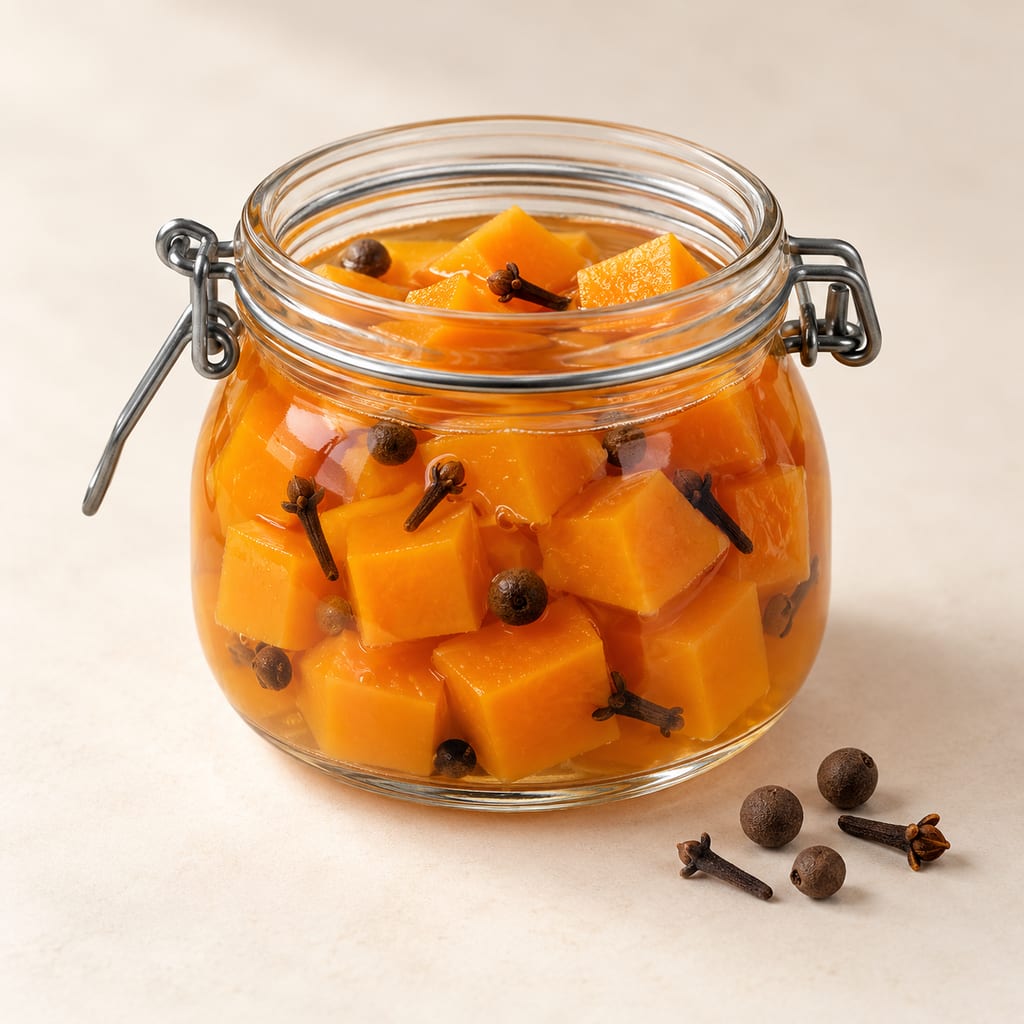
Dynia marynowana: Freeze for winter; small fresh portion refrigerated up to 48 hours.
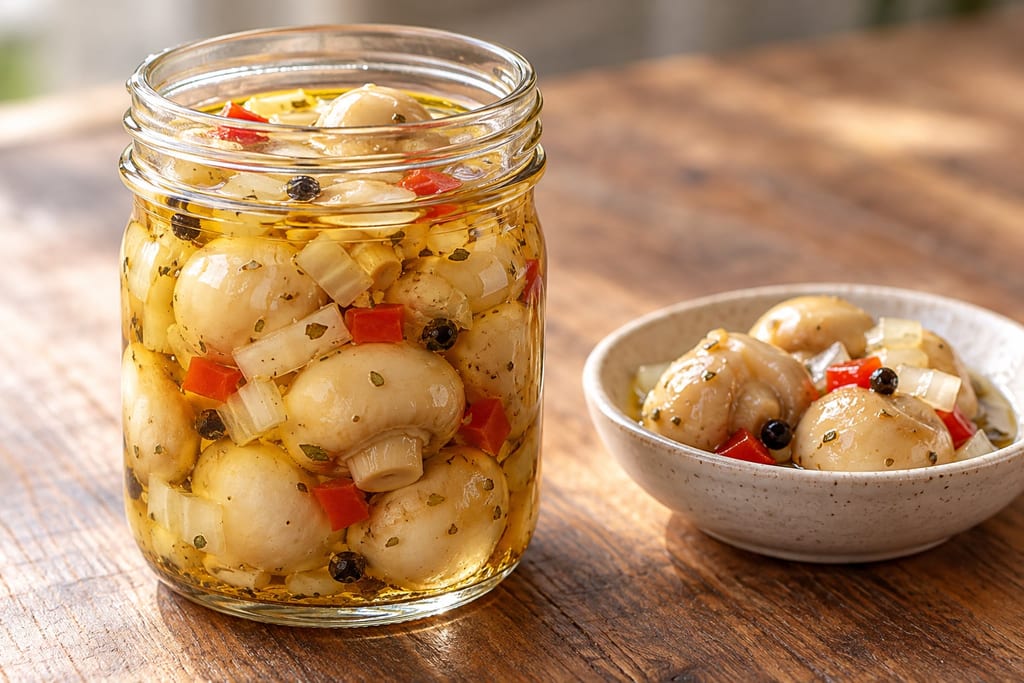
Small edible mushrooms are briefly cooked and packed in a seasoned vinegar marinade, a sweet-sour preserve served cold in Poland and neighbouring cuisines.

Fried or cooked food covered in a vinegar-based preparation, the heat and the externally supplied acid working together; a family of methods whose early form is a Roman instruction for treating fried fish with hot vinegar.
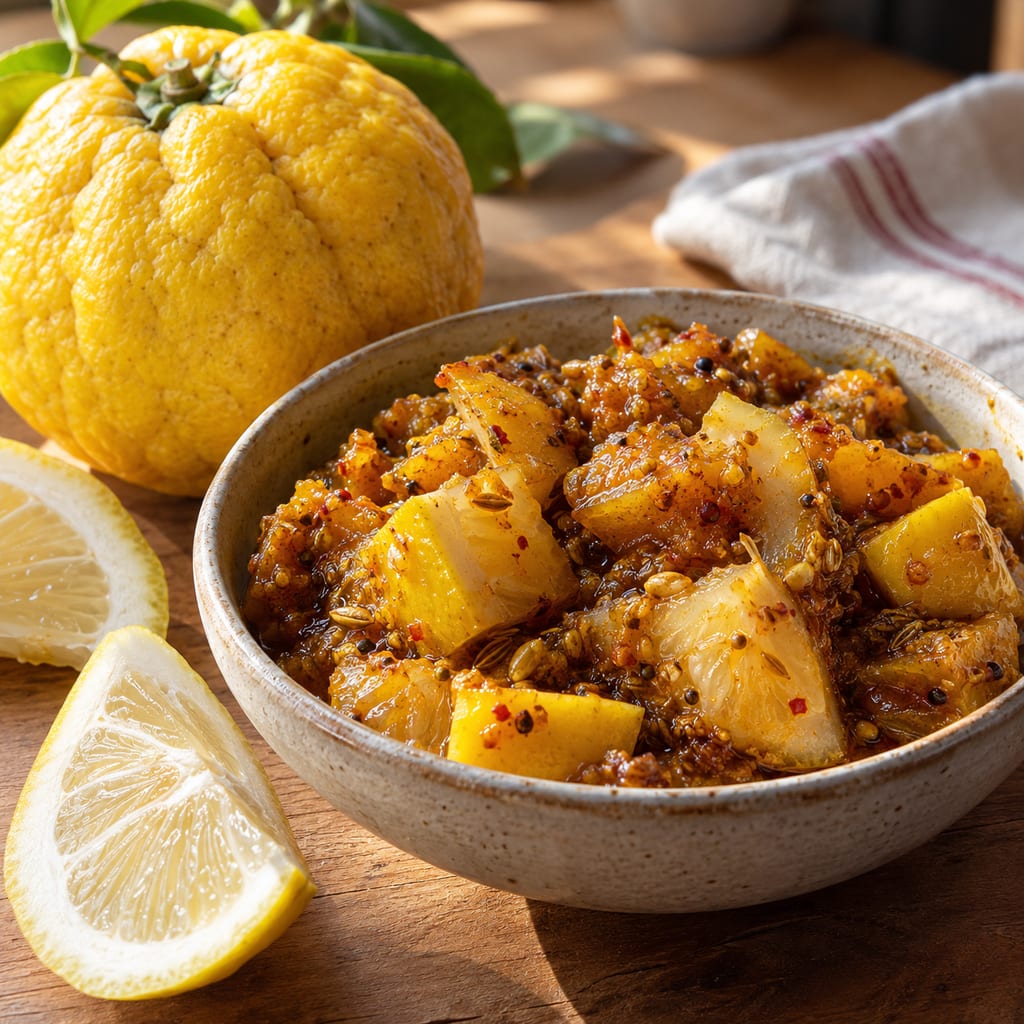
Ripe Himalayan galgal is boiled, sun-dried and cooked with mustard oil, spices and jaggery before a further rest in a ceramic jar.
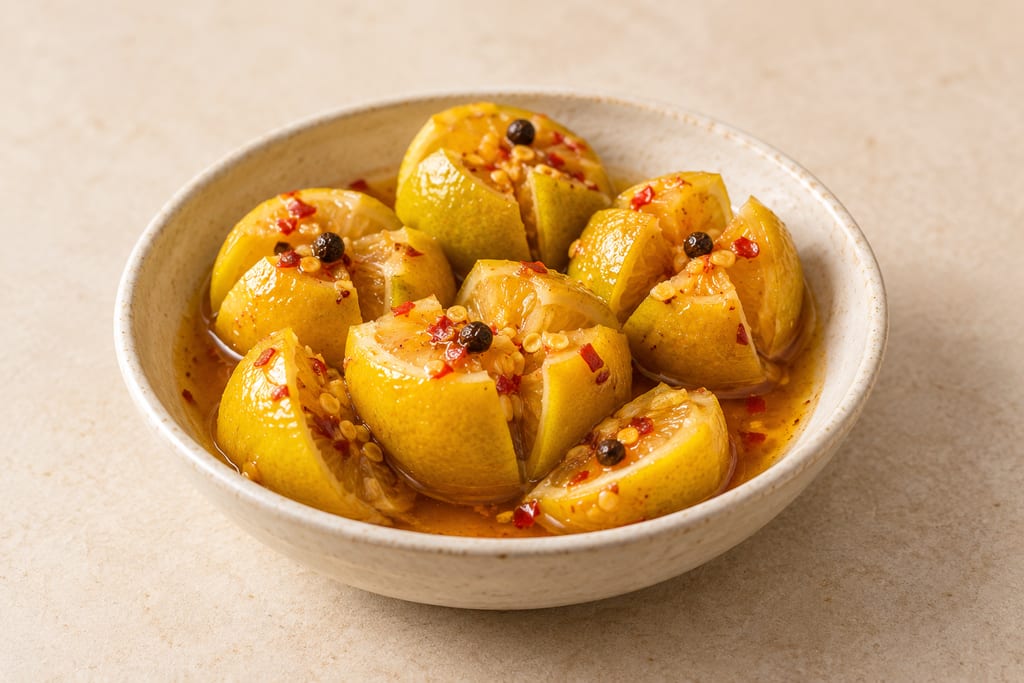
Peter Kuruvita’s published lime pickle stuffs 20 limes with rock salt, then simmers them in vinegar, sugar and chilli before a two-week rest.
No community contributions have been published for this entry yet.
Sign in to contribute. Published comments and photos are free to read.
AbbaProduct identity · Ingredients · Geography · Storage
5-minuterssill (i bitar)The fish is desalted, cut and packed in classic 1-2-3 liquor, ready for seasoning.
It may be eaten immediately or rested in the refrigerator for fuller flavour.
Product storage instruction is max 8°C.
Product ingredients and the maker’s Kungshamn and Northeast Atlantic statements.
Cited in: A ready-to-dress Swedish herring; What the preparation changes; Ingredients and their roles; Storage and the limits of the evidence; Where the product sits geographically; From festive herring to everyday menus; Distinguishing related herring preparations; A practical way to read the five minutes
AbbaMethod · Ingredients · Serving
Inlagd sill receptFour portions; one packet of five-minute herring, half-teaspoon quantities of white pepper and allspice, one bay leaf, five cloves, one red onion, ten centimetres of leek and optional half carrot.
The packet brine is saved and reused; sliced vegetables and spices are layered with the herring.
The prepared product can be served immediately or rested one to two days refrigerated.
Cited in: A ready-to-dress Swedish herring; What the preparation changes; Ingredients and their roles; Method and the reason for each stage; Storage and the limits of the evidence; Distinguishing related herring preparations; A practical way to read the five minutes
Institute for Language and Folklore, MatkultHistory · Preservation context
Konservering och tillagningOlder fish preservation included salting, souring and drying as distinct methods.
Salted herring and sprat were eaten directly from barrels or cooked; other fish preparations used their cooking liquid.
Cited in: A long herring tradition and a modern shortcut
Swedish Board of Agriculture, Smaka SverigeHistory · Cultural use · Variations
Sillätande genom 400 årLarge catches were salted, dried or smoked for future use.
The brännvinsbord is described from the mid-seventeenth century and as a predecessor of the smörgåsbord opening.
Spiced herring is described as eaten since at least the mid-eighteenth century; familiar spice dressings became more common with vinegar in the nineteenth century.
Herring remains associated with Christmas, Easter and Midsummer tables.
Cited in: A long herring tradition and a modern shortcut; From festive herring to everyday menus; Distinguishing related herring preparations
Swedish University of Agricultural Sciences, SLU Future FoodHistory · Regional context · Cultural use
Sillen – historia, samtid, framtid och ett omistligt kulturarvHerring has a broad northern European cultural and culinary history and is associated with Christmas, Easter and Midsummer in Sweden.
Cited in: A long herring tradition and a modern shortcut; From festive herring to everyday menus
Swedish Food Agency, KontrollwikiProcess distinction · Safety context
SillinläggningarCommercial herring preparations are controlled processes; salt maturation and acidification are distinct.
Commercial process controls are not automatically household validation.
Cited in: What the preparation changes; Storage and the limits of the evidence; A practical way to read the five minutes
ICAVariation distinction
Fakta om matjessillMatjessill is a distinct named herring product and preparation, not synonymous with five-minute herring.
Cited in: Distinguishing related herring preparations