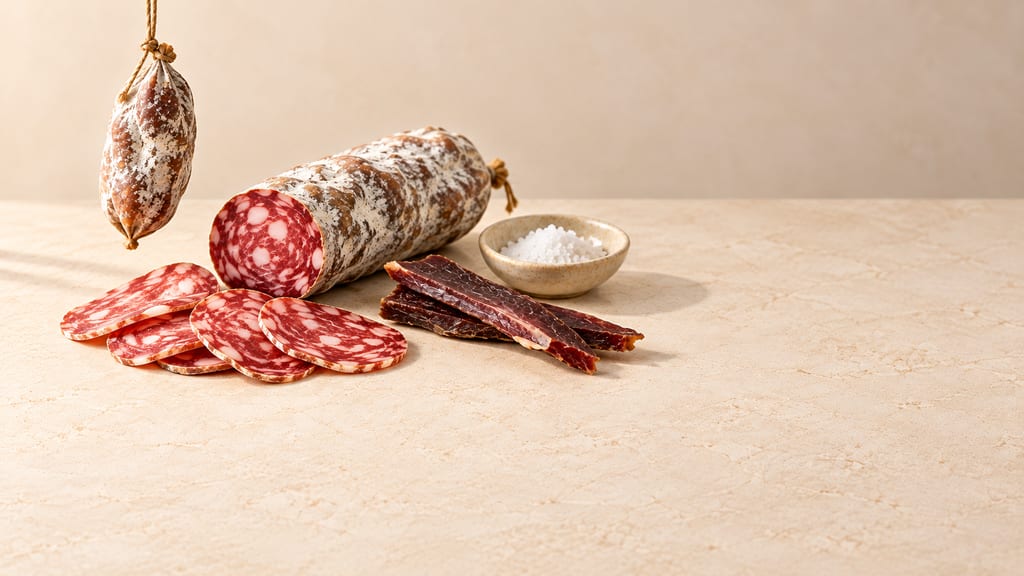
Fermented meat around the world
Dry salami, sour pork with rice, matured sheep and aged blubber follow different paths from animal to food. Their stories connect microbes with climate, slaughter, migration and the meals people share.
 FermenteaWhere food goes to change
Spices and aromatics
Allspice is the dried unripe berry of Pimenta dioica, a Caribbean and Central American tree, used whole or ground in jerk seasoning, sauces, pickles, sausages and baking.
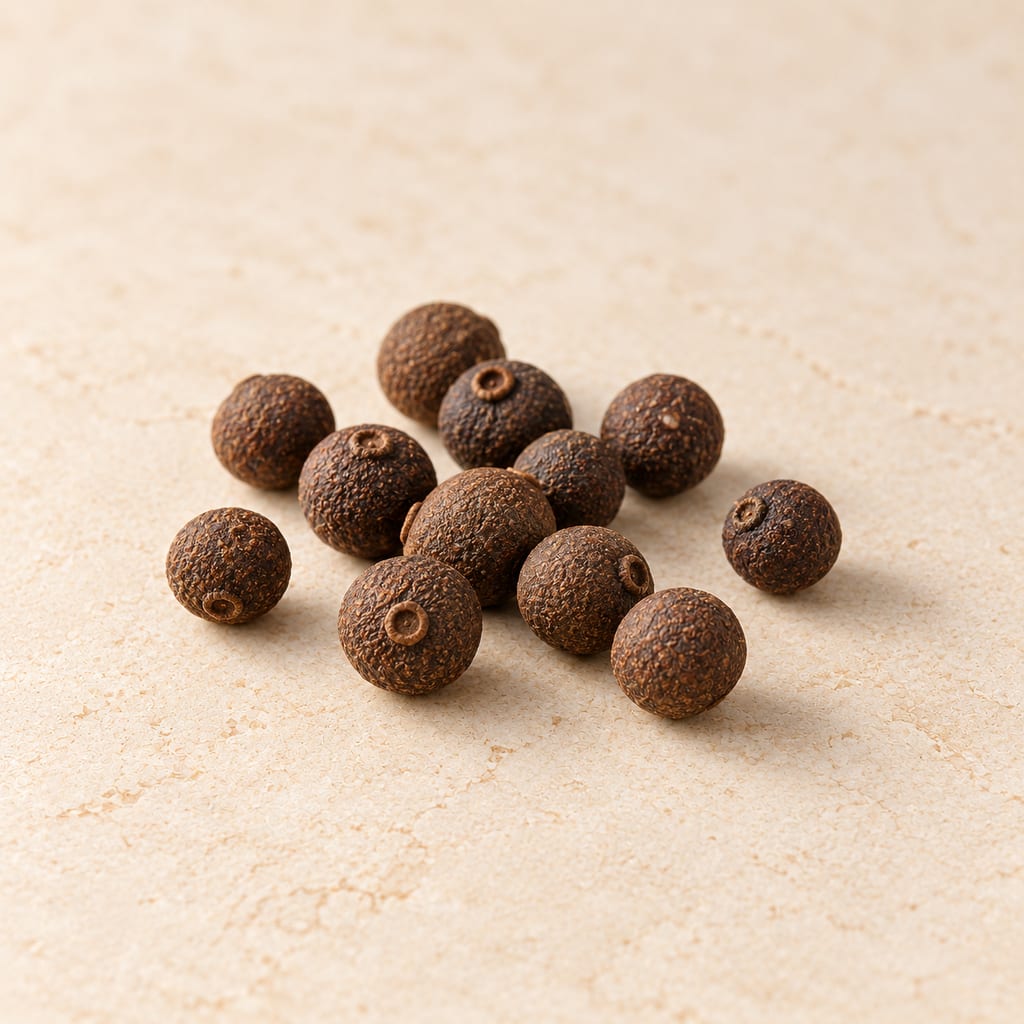
Allspice is made from the dried, unripe fruit of Pimenta dioica, an evergreen tree of the myrtle family, Myrtaceae. Descriptions of the tree range from roughly 7 metres to 18 metres tall; one Singapore flora record gives up to 15 metres. The leaves are leathery, opposite and dotted with glands that release a scent like the spice when crushed. Small white, aromatic flowers open in branched clusters. The species name means two houses: individual trees are functionally male or female. The fruit is a small berry, 4 to 6 millimetres across, green when unripe and glossy purple to black when ripe.
The tree is native to the West Indies and Central America, and grows on rainforest hillsides there. It is also planted in warm regions elsewhere, partly as a fragrant ornamental.
English speakers had the name allspice by 1621, because the flavour seemed to combine cinnamon, nutmeg and clove. It is not a mixture of spices. Other names are Jamaica pepper, myrtle pepper, pimenta and, in Jamaica, pimento; outside Jamaica pimento usually means a red sweet pepper. In Mexico the spice is called pimienta gorda and in Poland ziele angielskie, English herb. Ecuadorian cooks use the name pimienta de dulce for it.
The berries are picked green and sun-dried until they turn brown and smooth, looking like large peppercorns. Drying has to be careful so that the volatile oils survive. The main volatile oil named is eugenol, the compound also associated with clove. The taste is usually described as a blend of cinnamon, clove and nutmeg, with a peppery edge.
Jamaica is the leading source and is credited with more than half of the world supply; the Indian spices institute also records extensive cultivation there and a small scale of cultivation in India. The spice has naturalised in places such as Tonga and parts of Hawaii.
The whole berry or the ground spice seasons food across the Caribbean and well beyond it. It is a key ingredient of Jamaican jerk seasoning, and wood and leaves of the tree are traditionally used to smoke jerk meat. Pimento dram, a Jamaican liqueur, steeps the ripe fruit in rum or another spirit.
In Mexico it appears in many dishes, in the Levant in stews, meat dishes and tomato sauce, and in Northern Europe and North America in sausages, curry powders and pickling brines. Swedish, Finnish and Norwegian kitchens use it in soups, stews, meatballs and cakes, and British brown sauce contains it. In North America it is one of the spices of pumpkin pie spice and Cincinnati-style chili.
The Indian spices institute lists bakery products, sauces, pickles, confectionery, beverages and meat preparations among its uses, and a Singapore flora record says the ground dried fruit is used commercially as a flavouring and as a curing agent in processed meats and bakery products. In a 2025 Jamaican Easter bun feature, Yanikie Tucker's recipes use ground allspice in both yeast and no-yeast versions.
Fresh leaves resemble bay leaves and are used in a similar way. The fruit's essential oil goes into soaps and perfume, and a decoction of the fruit is reported in folk use against colds and stomach-ache. That report is a record of folk use, not evidence of effect.
No source consulted dates the first use of allspice in baking, or in a fermented or cured food, and none names the place where those uses began. Some widely repeated claims about its history, such as seed germination only after passing through birds, are not given a firm source here and are left out.
Country-level documented bun use and cultivation; this is not an origin claim.
Native range of the tree as the sources give it; a regional statement, not a birthplace for any use.
Dry salami, sour pork with rice, matured sheep and aged blubber follow different paths from animal to food. Their stories connect microbes with climate, slaughter, migration and the meals people share.
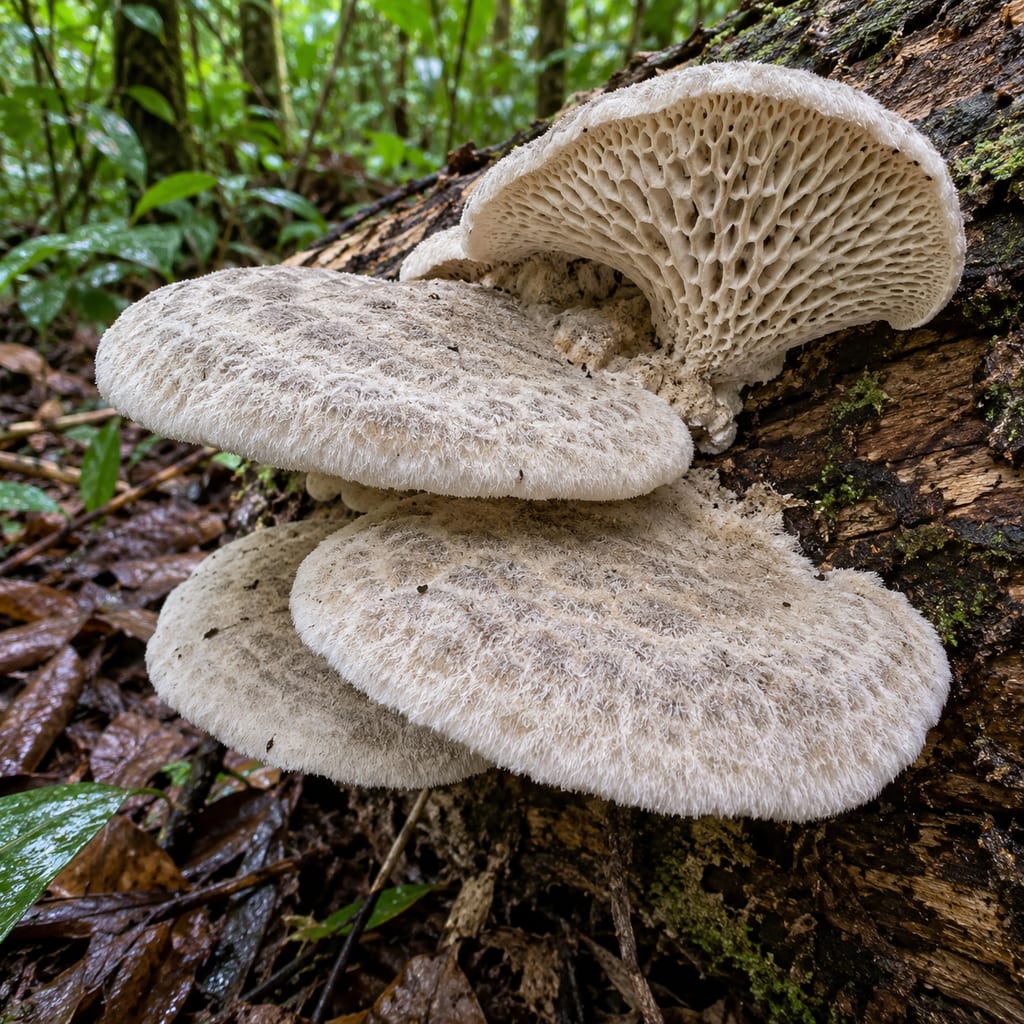
Favolus tessellatus is a tropical wood-decaying polypore with a tessellated cap and honeycomb pores. Brazilian sources record it as food, but the evidence does not establish one traditional recipe or a universal harvest season.
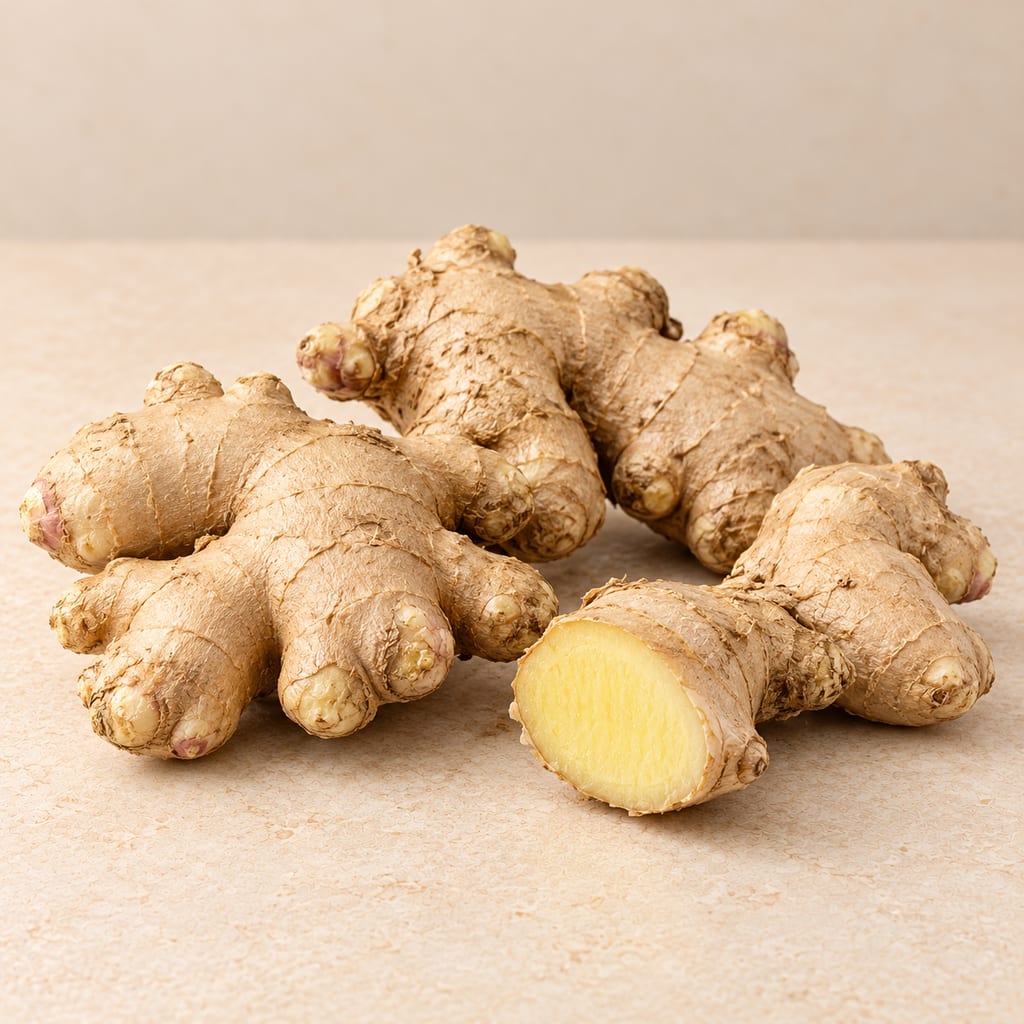
Ginger is the aromatic rhizome of Zingiber officinale, used fresh, dried and preserved. Historical ginger wines sliced or bruised it to flavour a sugar-based ferment.
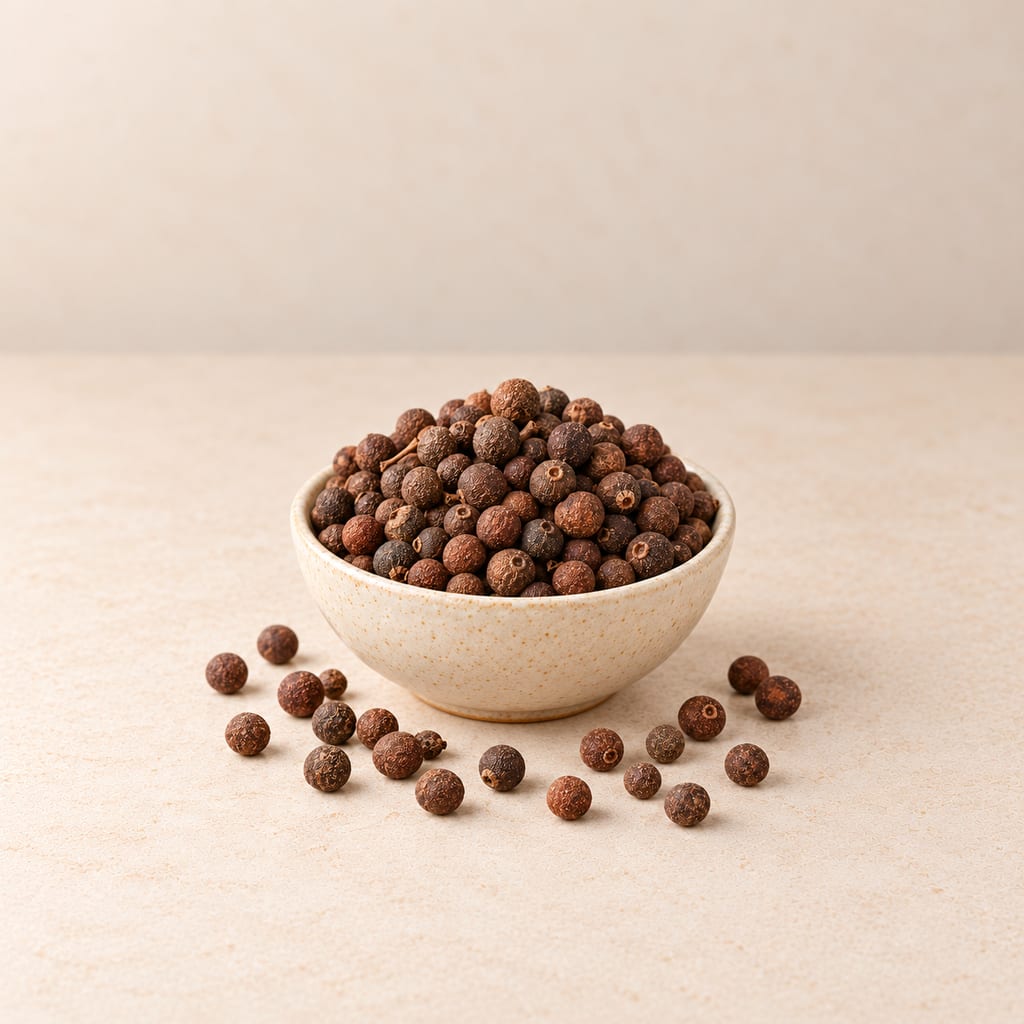
Pimienta de dulce is the Ecuadorian culinary name for allspice (Pimenta dioica), a dried tropical berry. Distinct from true peppers, it offers a complex aroma of clove, cinnamon, and nutmeg, and is used whole in chicha de jora.
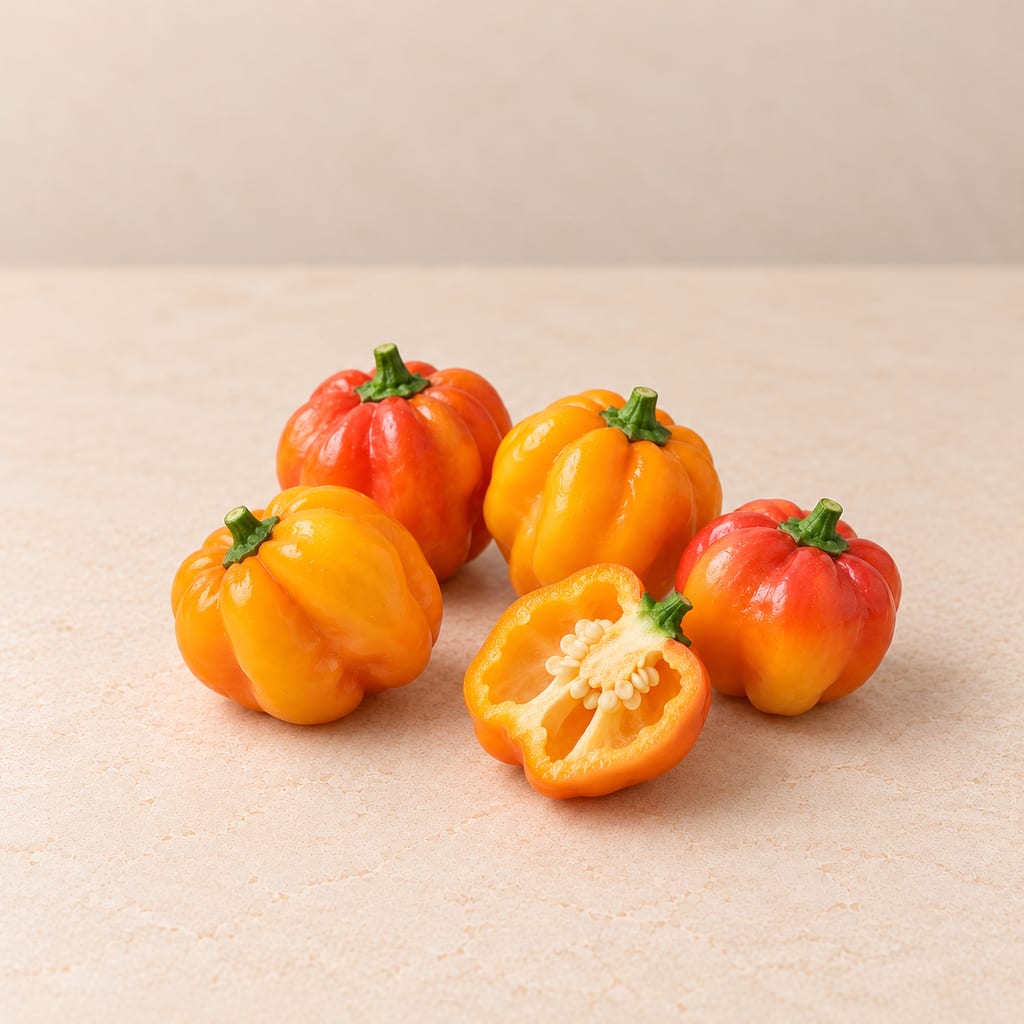
The Scotch bonnet is the squat, fiercely hot, fruity chilli of Jamaican jerk and Caribbean pepper sauces, a Capsicum chinense cousin of the habanero.
No community contributions have been published for this entry yet.
Sign in to contribute. Published comments and photos are free to read.
ICAR–Indian Institute of Spices ResearchIdentity · Uses · Geography
AllspiceIdentifies allspice as dried unripe berries of Pimenta dioica in Myrtaceae.
Lists bakery products, sauces, pickles, confectionery, beverages and meat preparations among uses.
Reports native range as West Indies and parts of Central America, and extensive cultivation in Jamaica.
Flavour like cinnamon, clove, nutmeg and pepper.
Cited in: The tree and its name; Harvest and flavour; Use in food; What the sources do not say
The Jamaica GleanerDocumented preparation
Yanikie Tucker shares Easter bun recipe with a twistReports Jamaican Easter bun recipes by Yanikie Tucker, including yeast and no-yeast versions, each with ground allspice.
Cited in: Use in food; What the sources do not say
WikipediaIdentity · Uses · History
AllspiceTree native to the Greater Antilles, southern Mexico and Central America; height 10 to 18 metres.
Name allspice in English by 1621; other names; not a mixture of spices.
Berries picked green and sun-dried; eugenol the main volatile oil.
Uses in jerk, pimento dram, Mexican, Levantine, Northern European and North American cooking; leaves and wood for smoking.
Cited in: The tree and its name; Harvest and flavour; Use in food; Leaves and other uses
NParks Flora and Fauna Web, SingaporeIdentity · Uses
Pimenta dioicaTree up to 15 m, leaf, flower and berry description; functionally male or female trees.
Ground dried fruit used as a flavouring and a curing agent in processed meats and bakery products.
Pimento dram; essential oil in soaps and perfume; fruit decoction in folk use.
Cited in: The tree and its name; Use in food; Leaves and other uses
Plants of the World Online, Royal Botanic Gardens, KewIdentity
Pimenta dioica (L.) Merr. general informationAccepted name and native range of Pimenta dioica.
Cited in: The tree and its name
Useful Plants, Naturalis Biodiversity CenterIdentity · Geography
Pimenta dioicaSmall evergreen tree of rainforest hillsides in Central America and the Caribbean; Jamaica supplies more than half of world production.
Cited in: Harvest and flavour