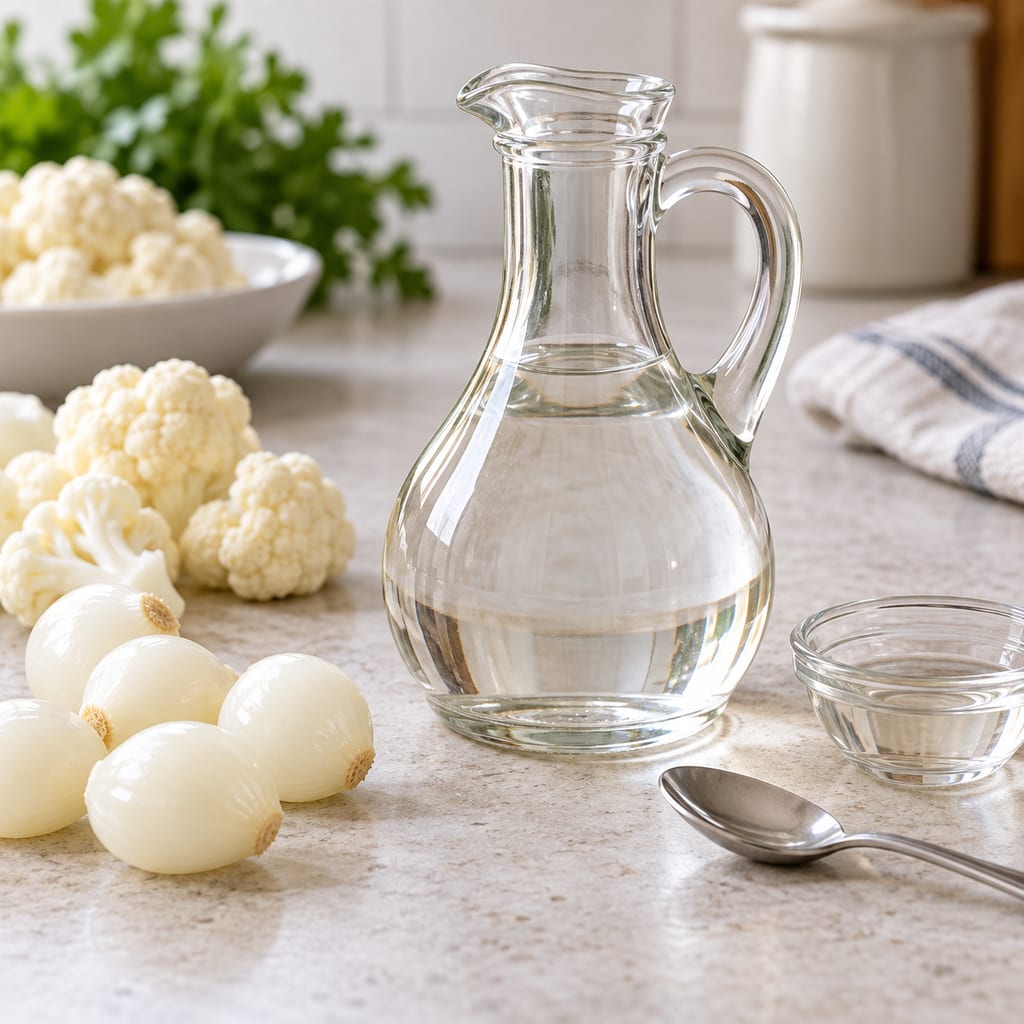
Spirit / distilled white vinegar
A clear, sharp vinegar made by acetifying alcohol. Its restrained color and aroma suit pickles, sauces and dressings where darker or more aromatic vinegars would change the result.
 FermenteaWhere food goes to change
Modern method
Ball sweet pumpkin pickles: Cupboard: exact published Ball formulation and water-bath process.
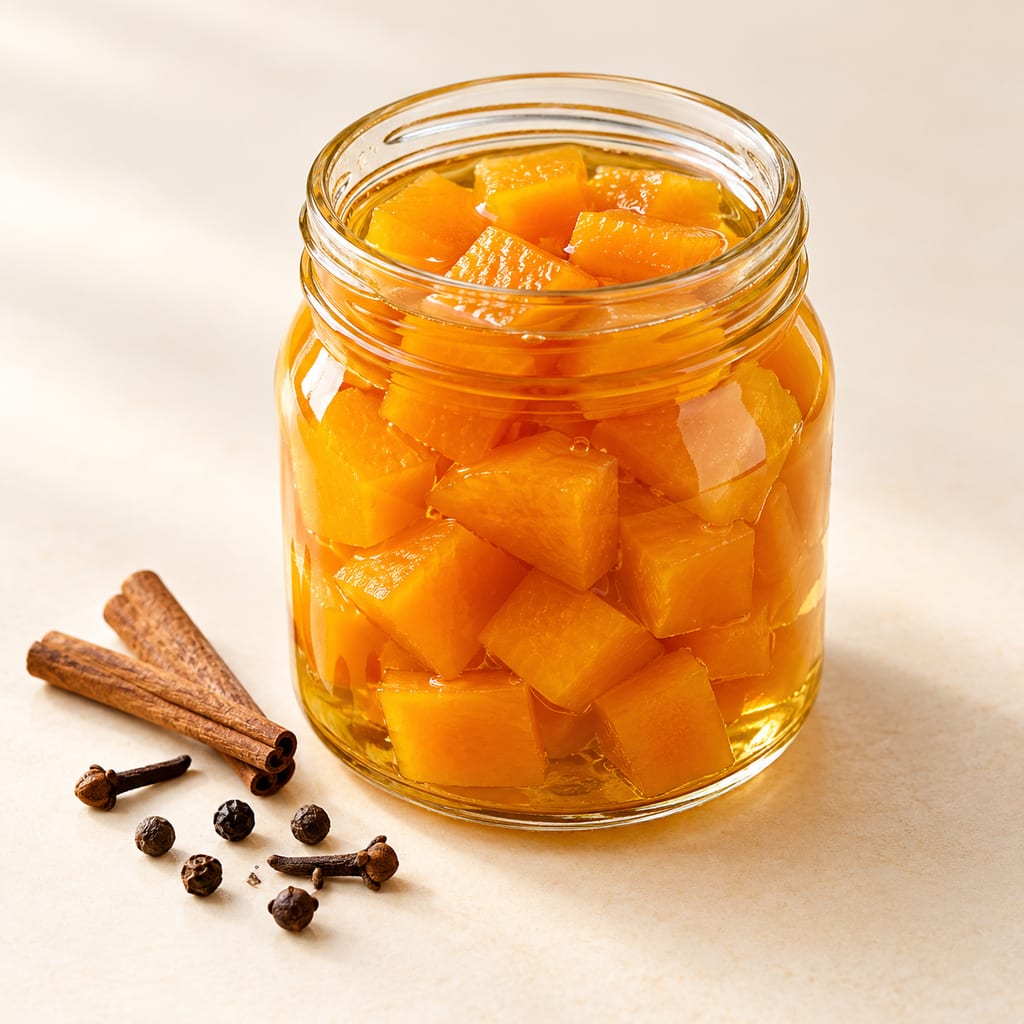
These are a documented home-canning recipe for sweet, spiced pumpkin cubes. The University of California's San Joaquin Master Food Preservers republished the recipe in 2020, attributing it to page 301 of the 2012 Ball Complete Book of Home Preserving. Its warm spice profile sits alongside the sweet-sour pumpkin preserves familiar in northern and central Europe, but this entry follows the specified North American canning formulation.
The UC web page omits the jar size and yield. Those details were checked in the original 2006 Ball/Bernardin book text, where the same recipe specifies approximately six pint (500 ml) jars. This is a source-completed transcription of the process facts, with newly written instructions, rather than a recipe assembled by averaging informal versions.
For approximately six pint (500 ml) canning jars:
The metric figures above are the original book's volume measurements, including the sugar; they are not kilograms. Follow either that complete metric set or the source's cup set consistently. Use 5% food vinegar, as Ball specifies for preserving. Do not replace it with homemade vinegar of unknown acidity or dilute it.
Have additional jars of the same approved size ready in case the yield differs. Do not pack more densely or reduce the covering liquid to force the batch into exactly six jars. Yield is approximate; the ingredient proportions, piece size, headspace and process are the controls.
Elevation, feet: 0–1,000; Time for pint (500 ml) jars: 20 minutes.
Elevation, feet: 1,001–3,000; Time for pint (500 ml) jars: 25 minutes.
Elevation, feet: 3,001–6,000; Time for pint (500 ml) jars: 30 minutes.
Elevation, feet: 6,001–8,000; Time for pint (500 ml) jars: 35 minutes.
Elevation, feet: 8,001–10,000; Time for pint (500 ml) jars: 40 minutes.
The base recipe gives twenty minutes; the remaining rows add Bernardin's published altitude adjustments. Do not use a larger jar with this schedule.
Store correctly sealed jars in a cool, dry, dark place and rotate within one year for best quality. Refrigerate after opening. The shelf-storage recommendation applies to the complete published formulation and process; a different pumpkin-to-vinegar ratio, added onion, larger pieces or an unprocessed hot-filled jar is a different product.
These are a documented home-canning recipe for sweet, spiced pumpkin cubes. The University of California's San Joaquin Master Food Preservers republished the recipe in 2020, attributing it to page 301 of the 2012 Ball Complete Book of Home Preserving. Its warm spice profile sits alongside the sweet-sour pumpkin preserves familiar in northern and central Europe, but this entry follows the specified North American canning formulation.
Scaling: source batch only
Cool dry dark cupboard while sealed; refrigerate after opening
Hazard sourceCool dry dark cupboard while sealed; refrigerate after opening
Control sourceCool dry dark cupboard while sealed; refrigerate after opening
Do not transfer a canning schedule from a different pumpkin preparation.
Geographical association of this documented version, not an asserted origin.
A clear, sharp vinegar made by acetifying alcohol. Its restrained color and aroma suit pickles, sauces and dressings where darker or more aromatic vinegars would change the result.
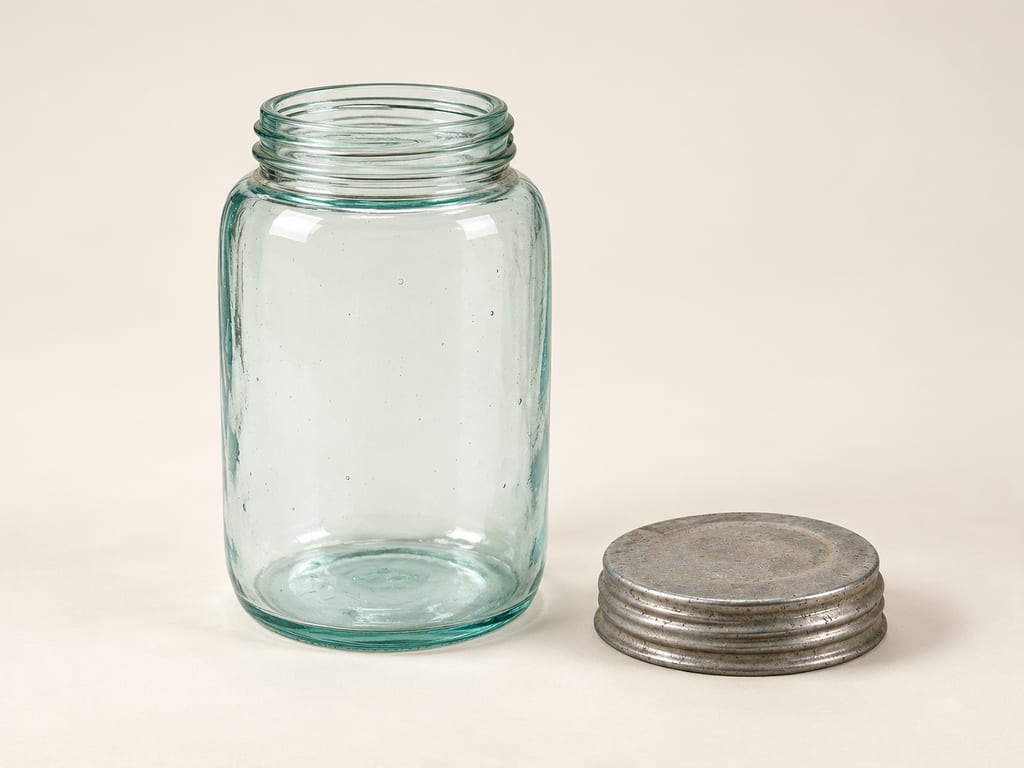
Threaded, heat-processing jars hold food and a fitted lid during a tested canning process; jar size and process belong to the specific recipe.
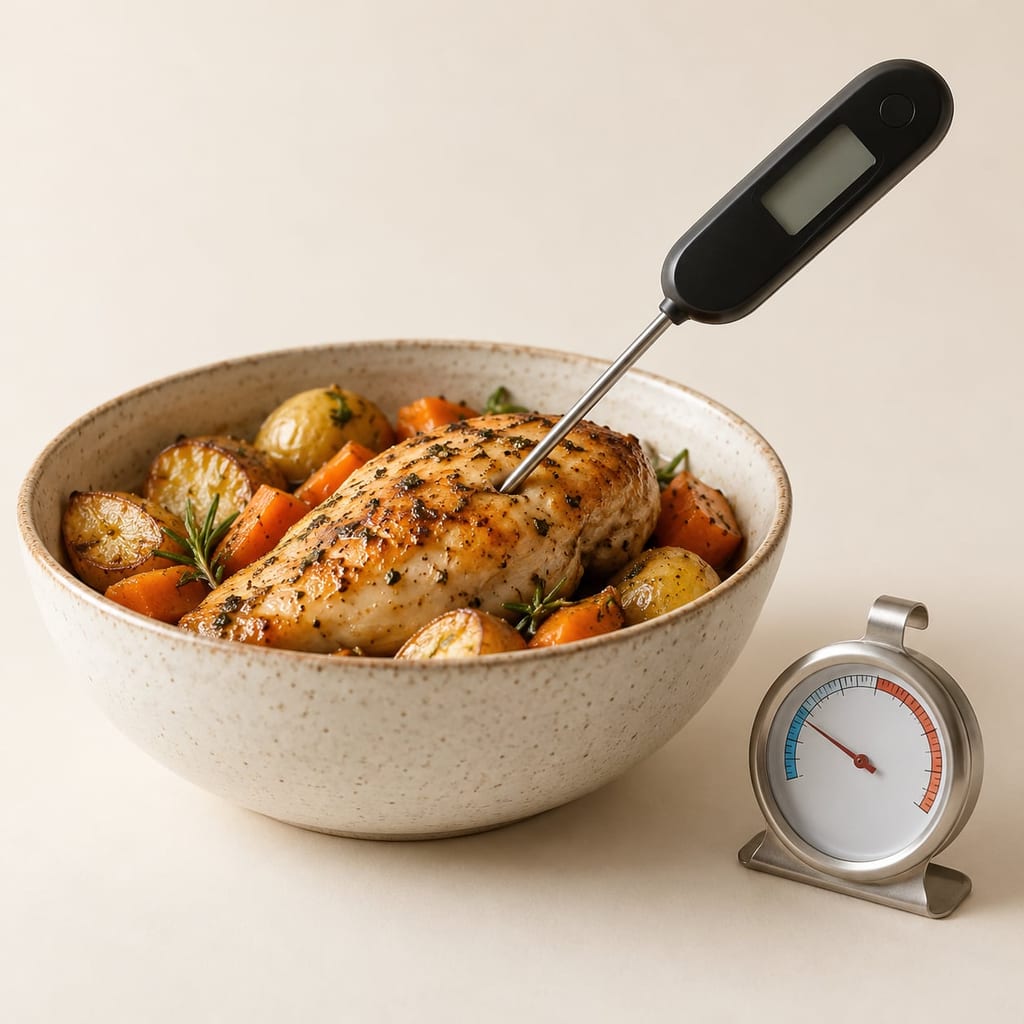
A food probe measures the temperature inside food at the probe tip; a refrigerator thermometer measures the cold storage environment. They answer different questions and cannot establish acidity or validate a preservation process.
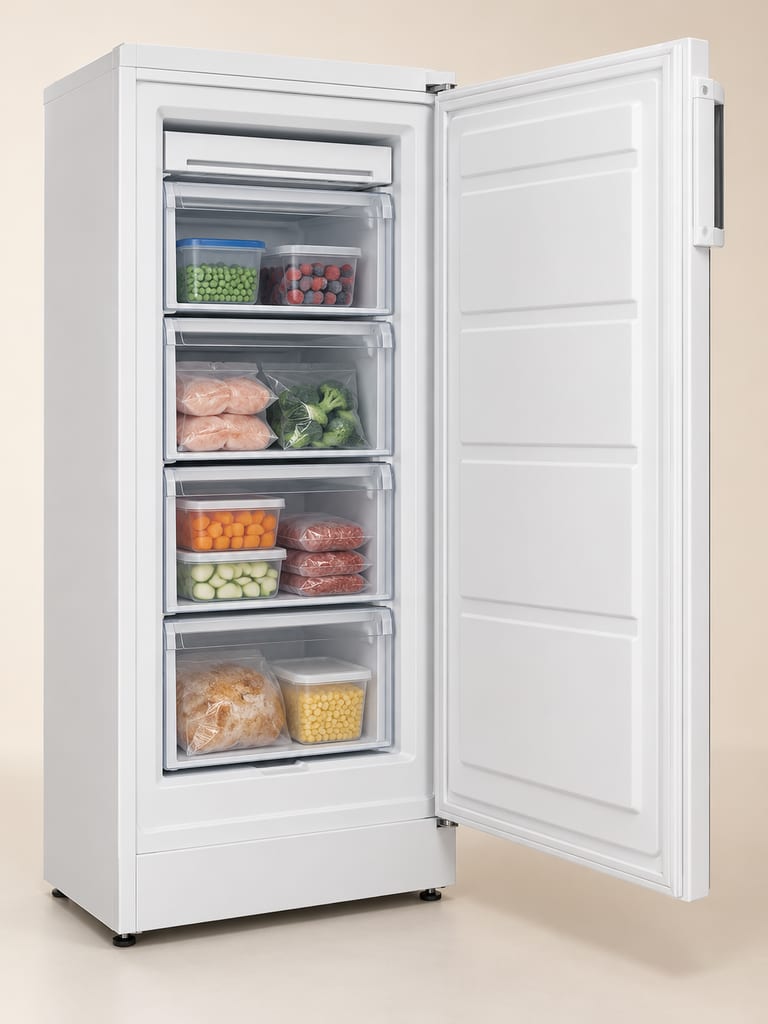
A household freezer holds food in a frozen state for storage and selected texture or separation work; its batch-storage role differs from industrial equipment that freezes individual pieces separately.
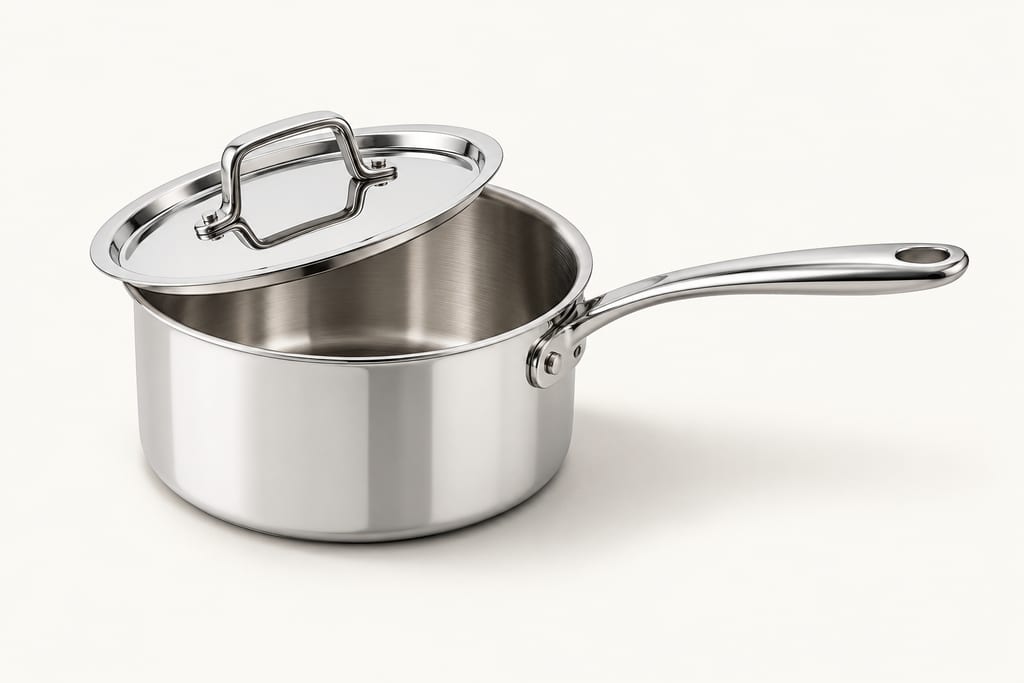
A modern, portable stovetop pan with a stainless-steel cooking surface for sauces and other small simmering jobs. Size, cladding, lid, compatibility and care vary by model.
An ordinary household refrigerator used to store selected fresh produce in vented crates or drawers, at low temperature and at a humidity chosen by the drawer. Not every crop benefits from cold.
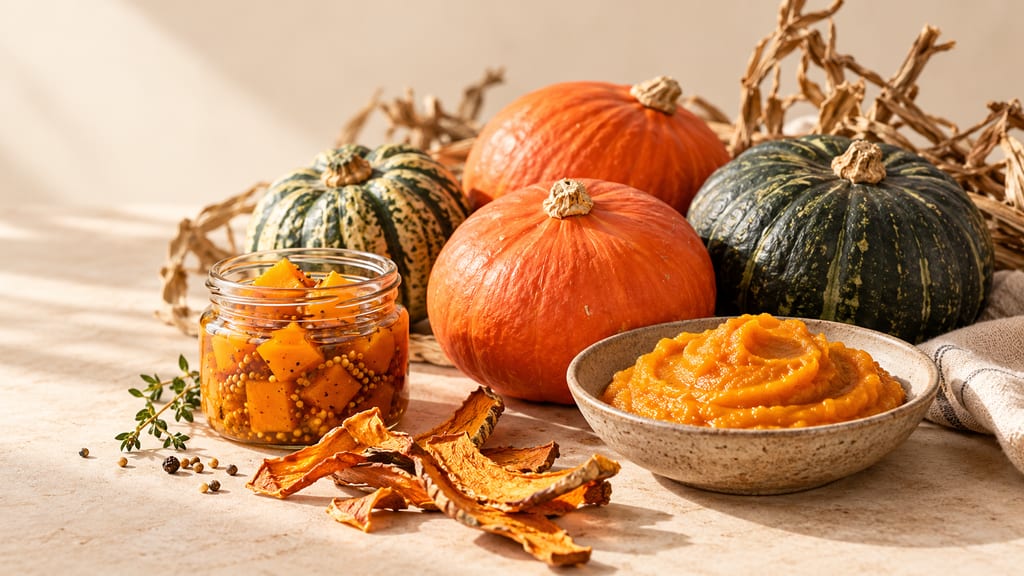
A full harvest-to-pantry guide to keeping pumpkins whole, drying and freezing them, and making pickles and sweet preserves around the world—with the exact distinction between tested canning and cold storage.
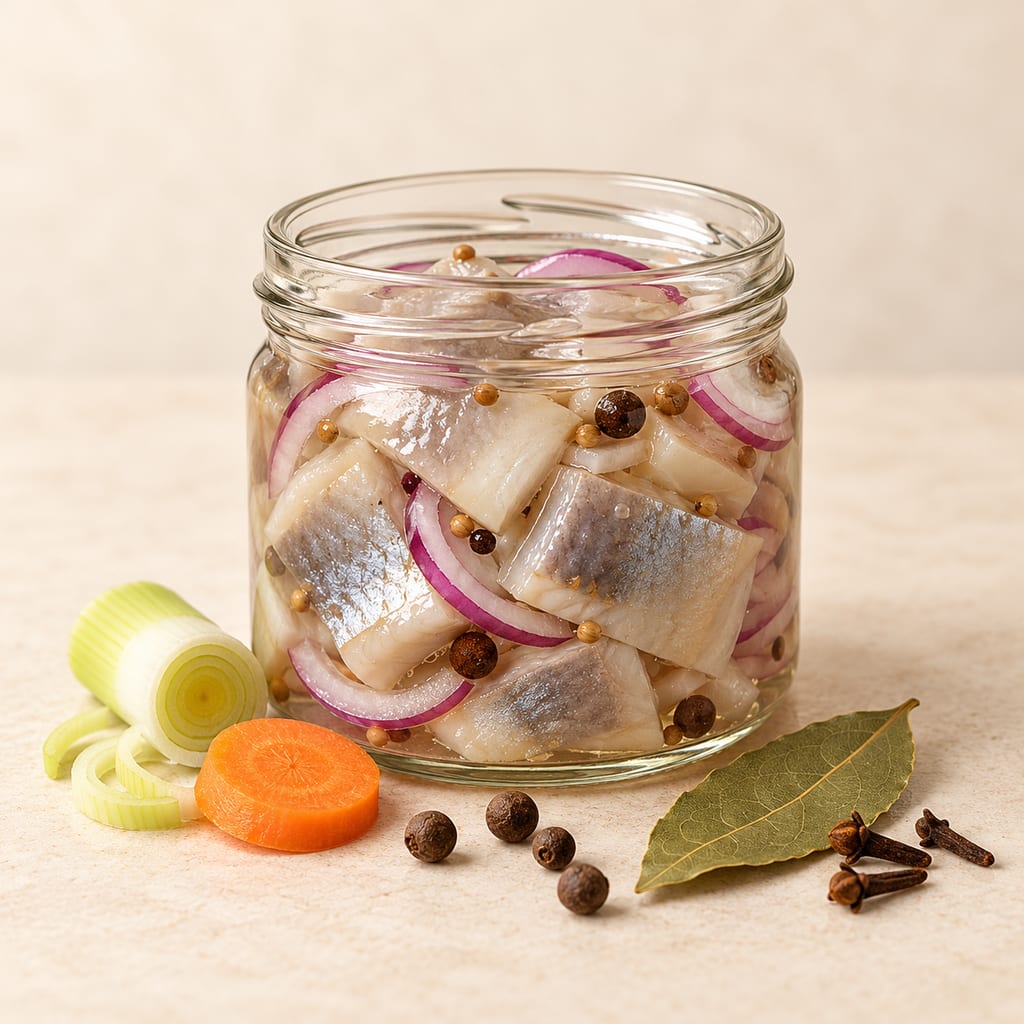
A Swedish ready-to-dress herring preparation: add the classic sliced aromatics and spices to already prepared herring, then serve or chill for fuller flavour.

Achcharu is a family of Sri Lankan vinegar pickles made with mixed vegetables or seasonal fruit and a piquant spice dressing. This version is a quick, refrigerated, non-fermented mixed-vegetable pickle.
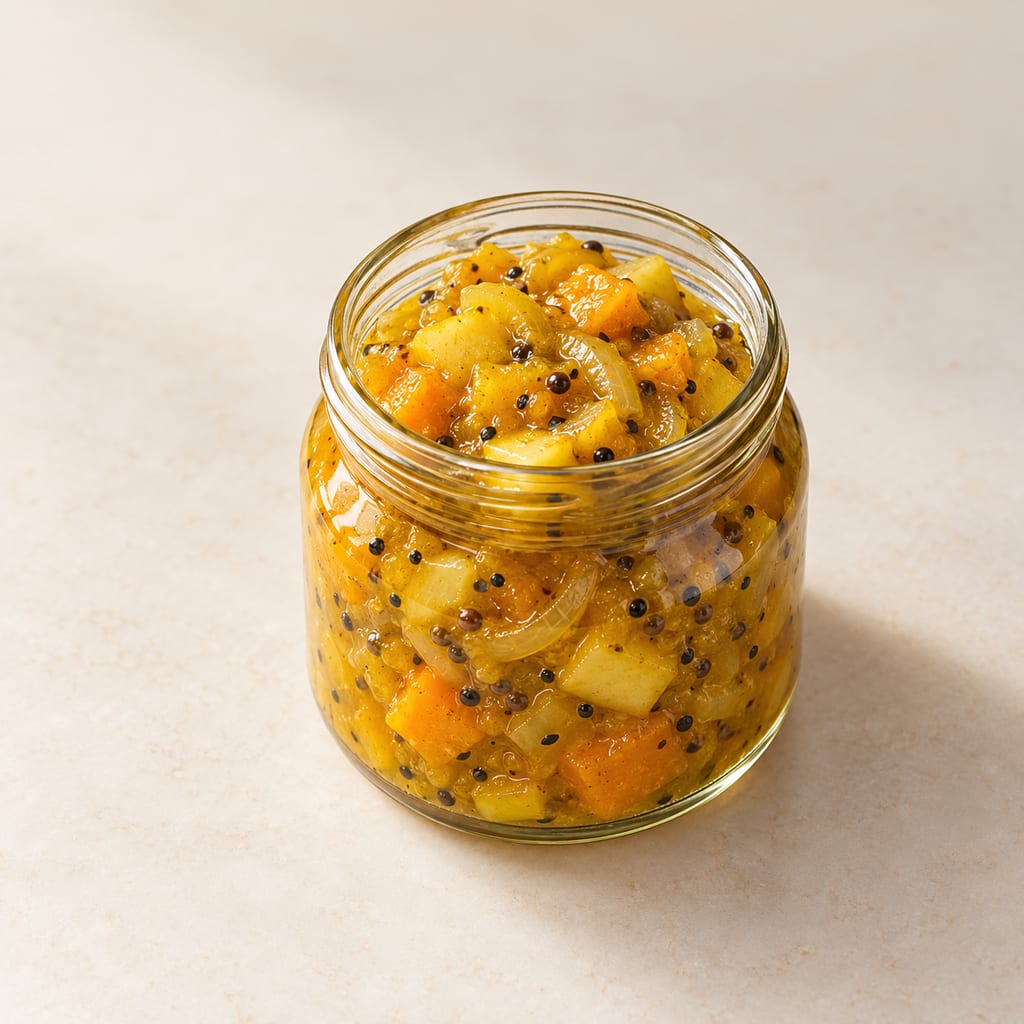
British pumpkin, apple and mustard pickle: Freeze for winter; small fresh portion refrigerated up to 48 hours.
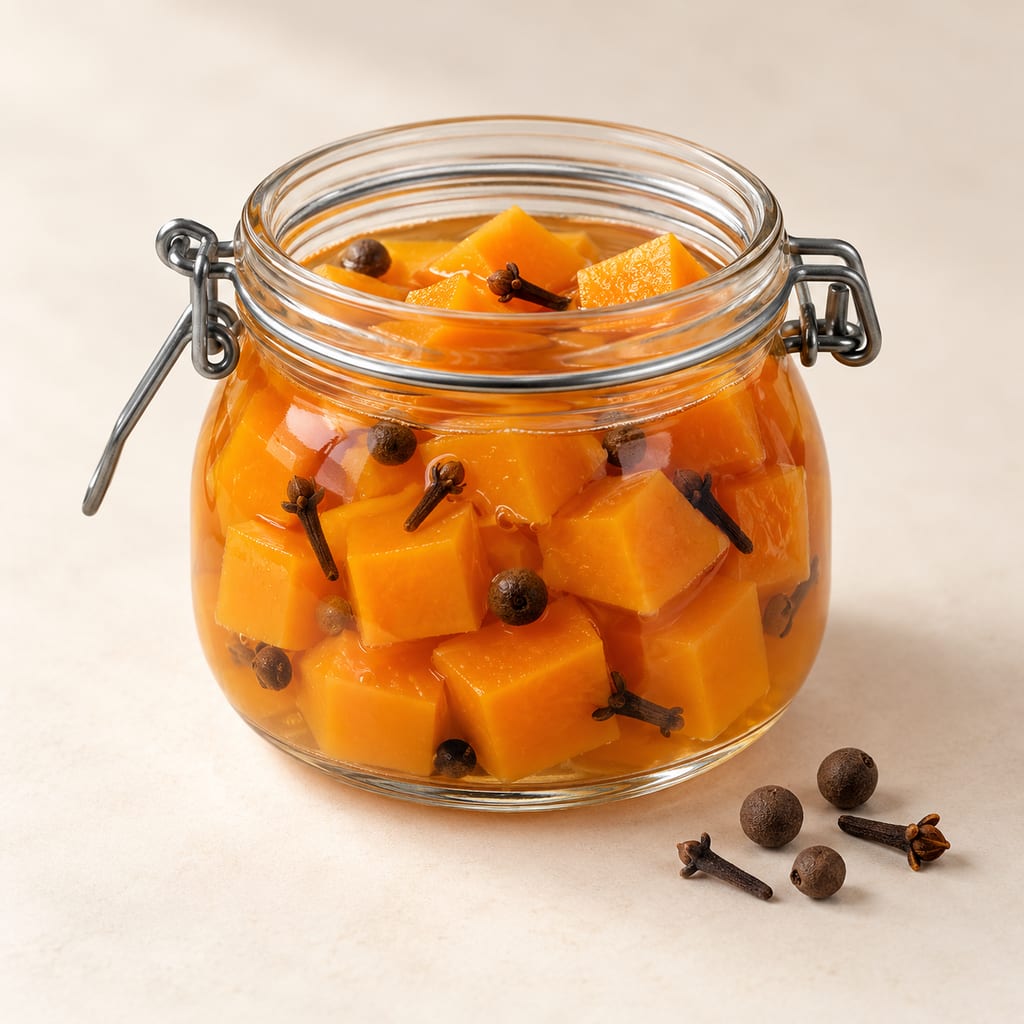
Dynia marynowana: Freeze for winter; small fresh portion refrigerated up to 48 hours.
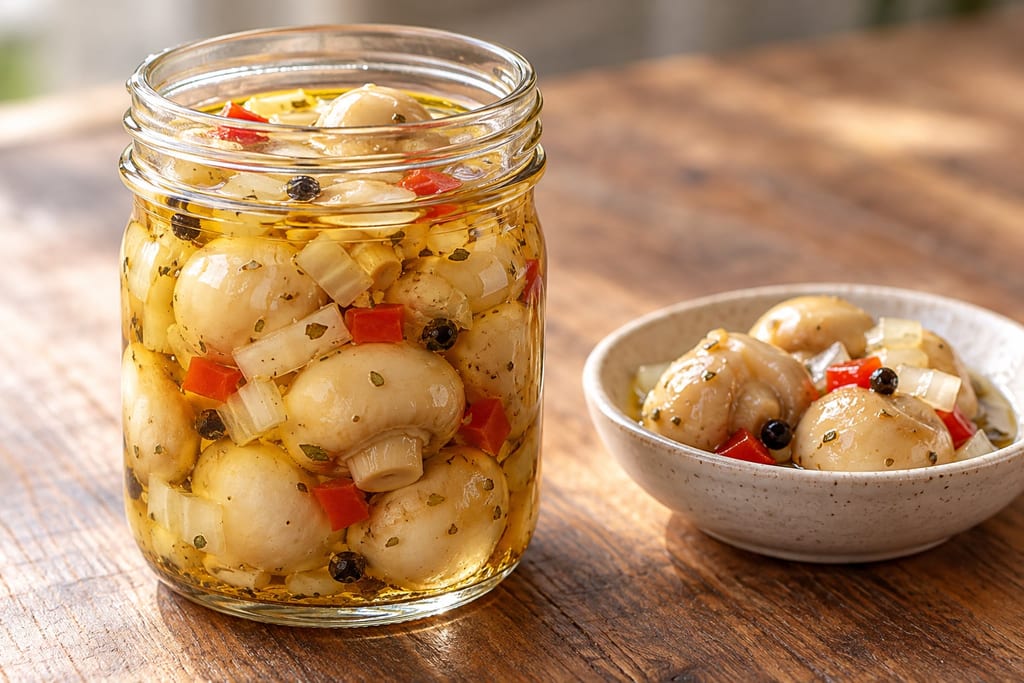
Small edible mushrooms are briefly cooked and packed in a seasoned vinegar marinade, a sweet-sour preserve served cold in Poland and neighbouring cuisines.

Fried or cooked food covered in a vinegar-based preparation, the heat and the externally supplied acid working together; a family of methods whose early form is a Roman instruction for treating fried fish with hot vinegar.
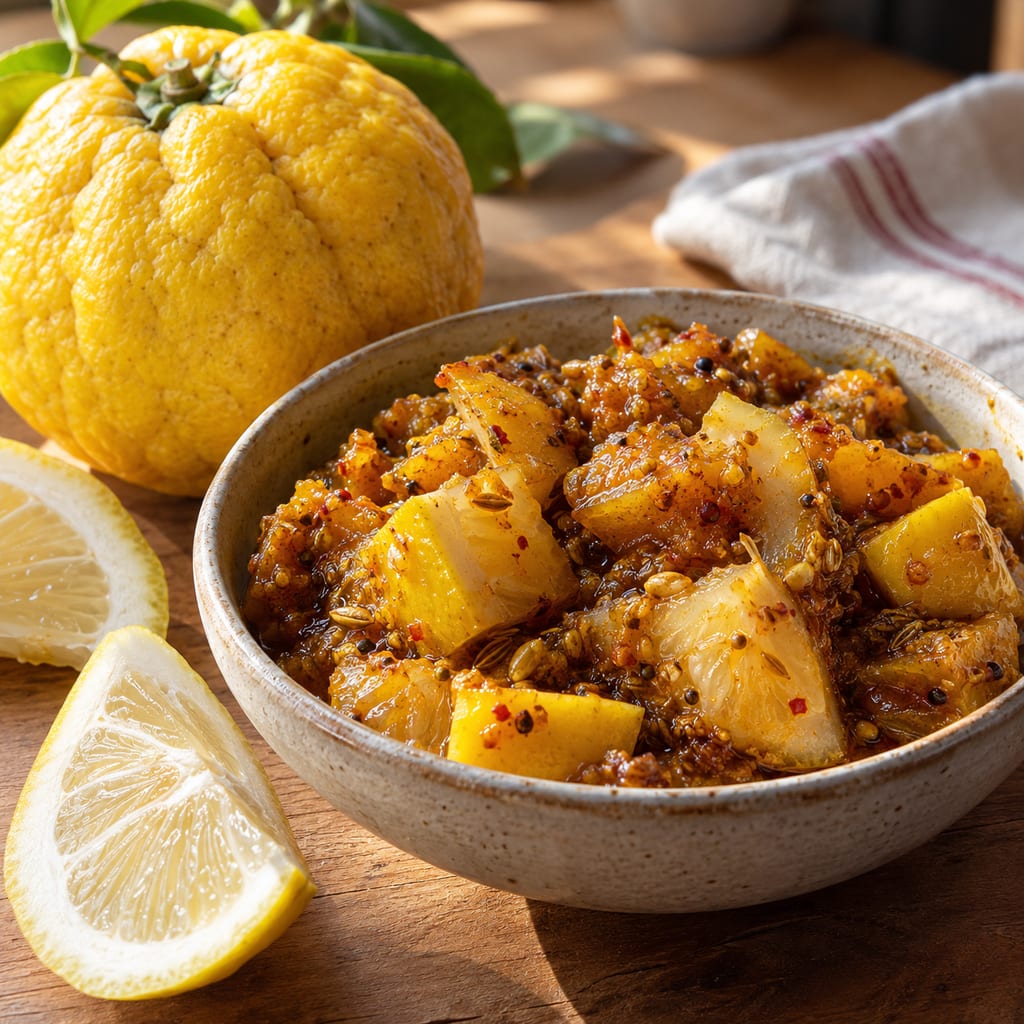
Ripe Himalayan galgal is boiled, sun-dried and cooked with mustard oil, spices and jaggery before a further rest in a ceramic jar.
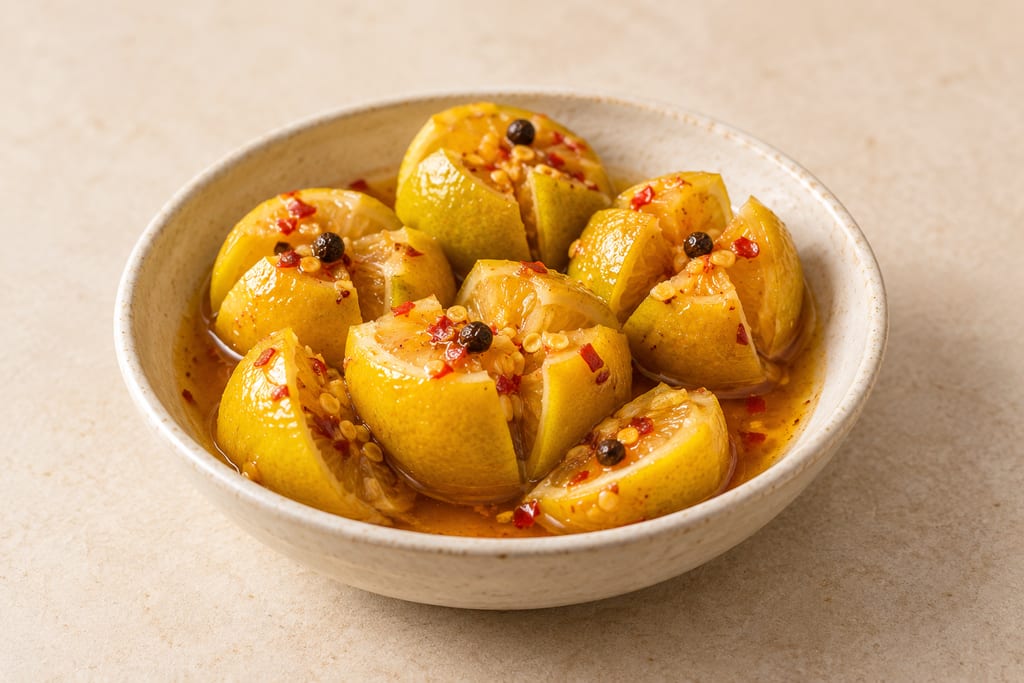
Peter Kuruvita’s published lime pickle stuffs 20 limes with rock salt, then simmers them in vinegar, sugar and chilli before a two-week rest.
No community contributions have been published for this entry yet.
Sign in to contribute. Published comments and photos are free to read.
ucanr.eduMethod · Context · Handling
UC Master Food Preservers: Sweet Pickled Pumpkin, 2020, from Ball Complete Book of Home Preserving p301Documented preparation, regional context or preservation handling, with the limits stated in the text.
Cited in: The preserve; Ingredients; Boiling-water time; Storage and scope
www.scribd.comMethod · Context · Handling
Kingry and Devine, eds: Ball/Bernardin Complete Book of Home Preserving, p301, original book text consulted for jar sizeDocumented preparation, regional context or preservation handling, with the limits stated in the text.
Cited in: The preserve; Ingredients; Boiling-water time; Storage and scope
www.ballmasonjars.comMethod · Context · Handling
Ball. Canning terms glossary, distilled white vinegar entry; 5% acidity.Documented preparation, regional context or preservation handling, with the limits stated in the text.
Cited in: The preserve; Ingredients; Boiling-water time; Storage and scope
www.bernardin.caMethod · Context · Handling
Bernardin. Frequently asked questions, altitude adjustments.Documented preparation, regional context or preservation handling, with the limits stated in the text.
Cited in: The preserve; Ingredients; Boiling-water time; Storage and scope
nchfp.uga.eduMethod · Context · Handling
National Center for Home Food Preservation. Using boiling-water canners.Documented preparation, regional context or preservation handling, with the limits stated in the text.
Cited in: The preserve; Ingredients; Boiling-water time; Storage and scope
nchfp.uga.eduMethod · Context · Handling
National Center for Home Food Preservation. Storing home-canned foods.Documented preparation, regional context or preservation handling, with the limits stated in the text.
Cited in: The preserve; Ingredients; Boiling-water time; Storage and scope