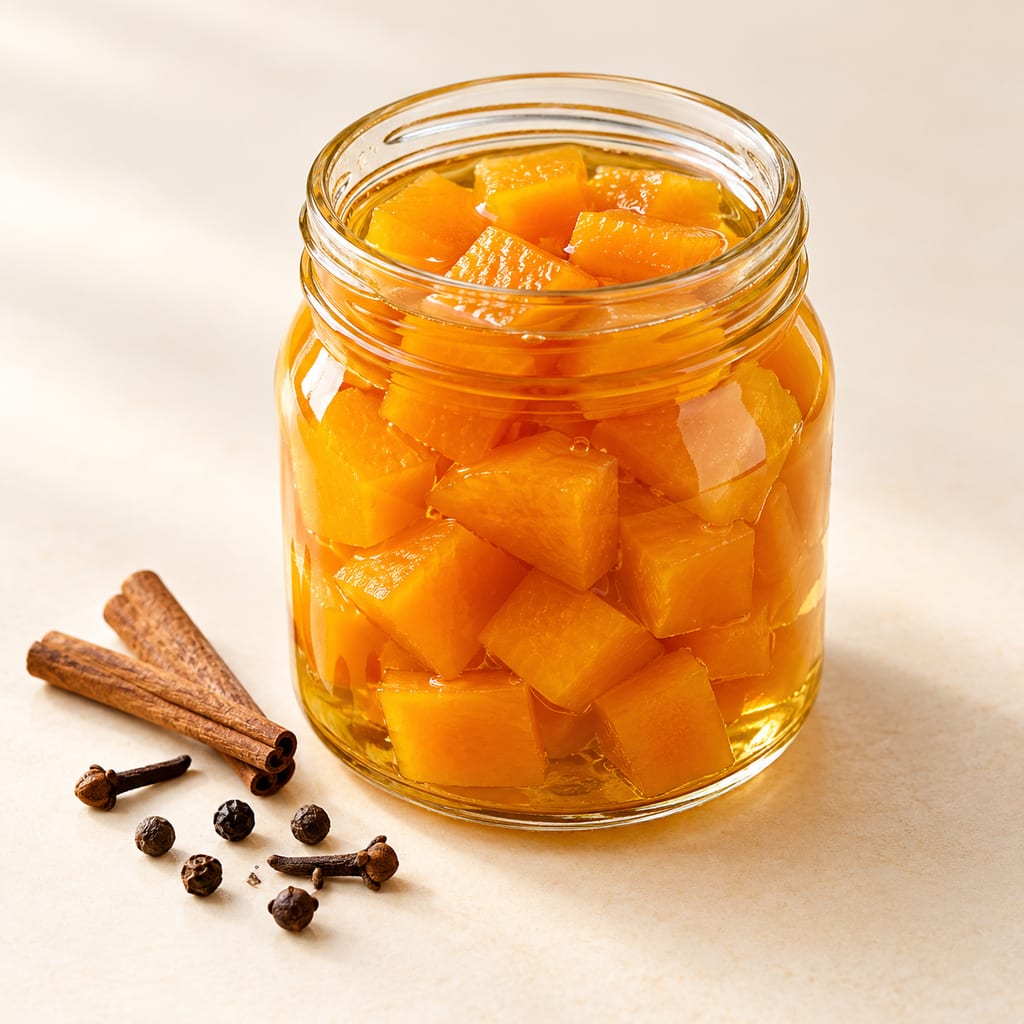
Ball sweet pumpkin pickles
Ball sweet pumpkin pickles: Cupboard: exact published Ball formulation and water-bath process.
 FermenteaWhere food goes to change
Distilled white vinegar · distilled vinegar · white vinegar
A clear, sharp vinegar made by acetifying alcohol. Its restrained color and aroma suit pickles, sauces and dressings where darker or more aromatic vinegars would change the result.
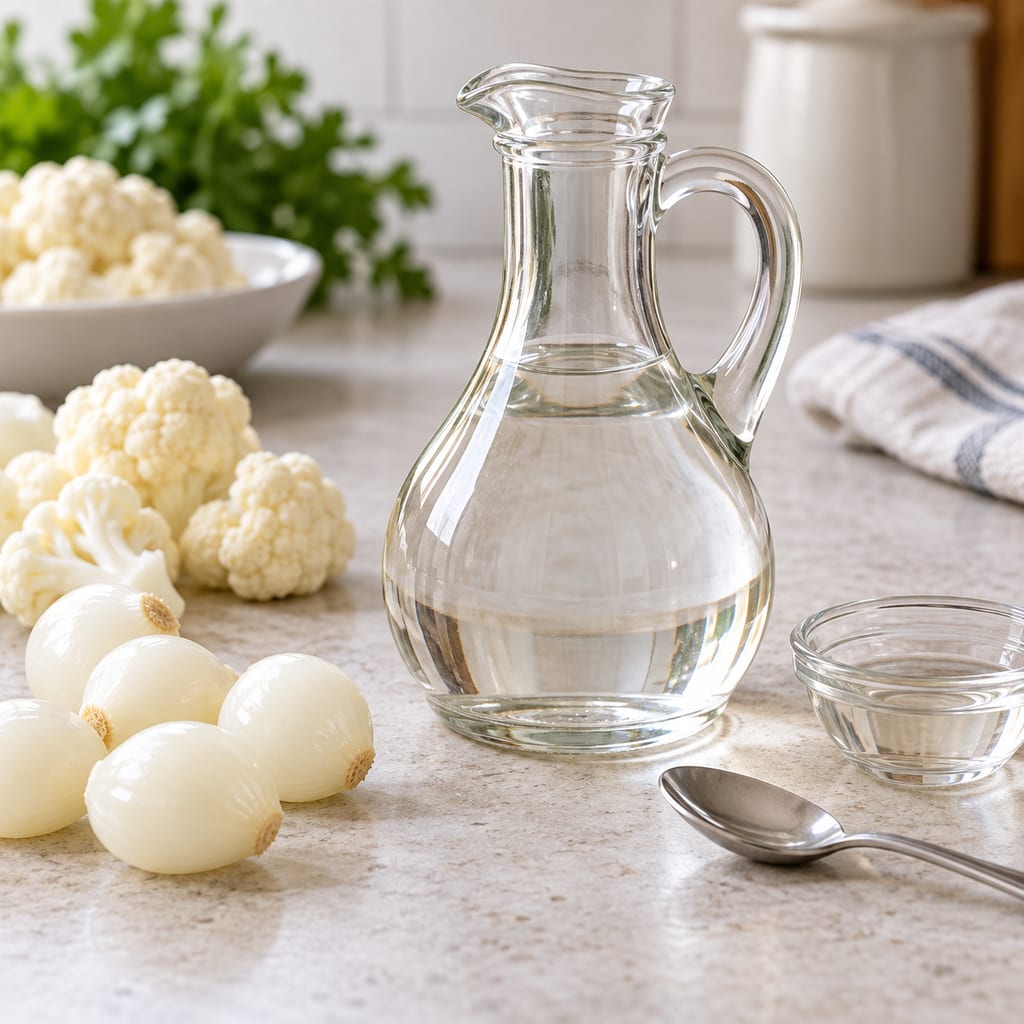
Spirit vinegar and distilled white vinegar are names used for a clear, sharp, alcohol-derived vinegar. In the United States, University of California food-preservation guidance describes white vinegar as derived from grain alcohol; an individual branded product may identify a particular grain, as Heinz does for its corn-derived example. The point of the category is the resulting vinegar, not one universal crop or factory recipe. It is colorless or nearly so, strongly sour, and less aromatic than vinegars whose source wine, malt, rice or fruit contributes a distinctive flavor.
The word “distilled” can mislead. Distilled white vinegar should not be confused with distilled acetic acid or with an instruction to distill vinegar at home. Producers differ in what they ferment, how they acetify it, and how they clarify or standardize the finished product. The Heinz product page, for example, describes a fermented corn-and-water mixture and boiling/condensation, while general vinegar literature describes vinegar as acetic fermentation of ethanol. These descriptions belong to a specific commercial product and the broader category, respectively; neither is a universal formula for all bottles sold as white vinegar.
Vinegar is among the oldest deliberately used souring liquids, but its beginnings cannot be assigned to one inventor or place. Wine and other alcoholic drinks left exposed to air can sour; the French-derived word vinaigre means “sour wine,” though modern vinegar may start from alcohol made from many materials. The historical review by Bourgeois and Barja surveys evidence for vinegar use across ancient Mediterranean and Asian societies and traces production from empirical methods toward controlled acetification. Such early evidence concerns vinegar broadly, not necessarily the modern colorless spirit-vinegar category.
Before microbiology explained the change, makers relied on the observable transformation of alcoholic liquid into a sour one. The same historical review describes the long practical development of vinegar-making equipment. Modern commercial manufacture uses controlled culture and aeration, but the underlying biological transformation remains recognizable: ethanol is converted into acetic acid. A historical account by Allgeier, Nickol and Conner also cautions that older references to “distilled vinegar” may describe concentrated or distilled acetic preparations rather than today’s common bottled white vinegar. Similar wording across centuries does not guarantee the same product.
Vinegar-making follows alcoholic fermentation. Yeasts first produce ethanol in an alcoholic liquid; acetic acid bacteria then oxidize ethanol in the presence of oxygen. The bacteria are obligate aerobes, meaning they need oxygen for this metabolism. Their oxidation of ethanol yields acetic acid and water, releasing heat. This is not the same process as lactic fermentation in a vegetable brine: the acid is produced by a different group of microbes through a different substrate and oxygen relationship.
Industrial vinegar systems solve the oxygen-transfer problem in different ways. In surface processes, the culture sits at the liquid-air boundary; trickling generators spread liquid over packing so air can contact a large surface; submerged systems keep bacteria dispersed in the liquid and provide intense aeration. Gullo, Verzelloni and Canonico review submerged acetic fermentation and describe the need for strains that tolerate both ethanol and the acetic acid that accumulates. These production choices affect throughput and process control. They do not imply that all vinegar needs the same starter, temperature, duration or vessel, so no single household schedule can be inferred from the category name.
After acetification, finishing steps such as filtration, dilution and bottling are physical operations rather than additional fermentation. Filtration can remove haze; dilution can set a labelled acidity; neither creates the acetic acid. Some vinegars are sold unfiltered with a visible “mother,” the cellulose-rich film associated with acetic-acid bacteria. Clear white vinegar is commonly filtered or otherwise clarified, so a bottle’s appearance should not be treated as a test of how it was fermented.
Acetic acid contributes a direct, clean sourness. Because the vinegar contributes little color and relatively little source-specific aroma, it can sharpen sauces, dressings and marinades without the darkening or fruit, wine or malt notes that another vinegar might bring. UC Agriculture and Natural Resources notes its use where a clear liquid is wanted for pale fruits and vegetables; Oregon State Extension likewise names onions and cauliflower as examples. It is also used as a base in quick pickles, where the vegetables are acidified by vinegar rather than preserved by a lactic fermentation.
That distinction matters for flavor and method. A fermented cucumber develops acidity through microbes acting on sugars in a salt brine; a quick pickle receives acid from the vinegar solution. Vinegar pickles may be left to equilibrate for flavor, but that is not a new fermentation stage. A sauce made with vinegar is likewise not a vinegar fermentation. Where this database has related vinegar-based preparations, the finished vinegar is their ingredient, while this page describes the vinegar itself.
Vinegar strength varies. A familiar North American food vinegar is labelled 5% acidity, but products can be weaker or stronger and some high-acid products are sold for cleaning rather than food. “Grain” is another label expression: Penn State Extension explains that 5% acidity may be stated as 50 grain. Read the actual bottle, and use only a food-grade product intended for the recipe. The Heinz example is diluted with water to 5% acidity; that is one product’s specification, not a direction to dilute other vinegars.
For home canning and shelf-stable pickling, use a research-tested recipe and the vinegar strength it specifies. The National Center for Home Food Preservation emphasizes a minimum, uniform acid level throughout the mixed product and recommends white distilled or cider vinegar at 5% acidity. Oregon State and University of California guidance warn against reducing vinegar or substituting homemade vinegar of unknown acidity in tested recipes. Adding more water or less vinegar changes the final acid concentration; sour taste, a sealed jar, or a measured amount of an untested formula cannot establish safety. Do not improvise canning ratios from this page.
White distilled vinegar is chosen when color and a restrained aroma matter. Cider vinegar brings apple-derived aroma and can darken a pale pickle; wine vinegar carries wine character; malt vinegar retains cereal and malt notes. Rice vinegar is not the same product, and seasoned rice vinegar also contains added ingredients. These vinegars can share acetic acid as their souring component while differing in aroma, color, acidity and sometimes residual material. They are not automatically interchangeable in a recipe.
Regional practice reflects ingredients and local taste. Grain-alcohol-derived clear vinegar is a prominent North American pantry product; across Europe, malt vinegar remains culturally familiar in Britain, while wine-based vinegars are associated with grape-growing cuisines. Rice vinegars are established in East Asian food traditions. This broad geography describes families of vinegar, not a claim that white spirit vinegar has one exclusive national origin. The product page for a specific bottle is the right evidence for that bottle’s feedstock and declared strength.
Keep the bottle sealed and follow its label for storage and date guidance. The general vinegar literature describes acetic acid as the defining component, but no single shelf life follows for every concentration, additive profile or package. A cloudy film or sediment can arise in some unfiltered vinegars; it is not a reliable safety assessment, and a clear appearance does not validate an altered canning recipe. Use clean utensils and avoid confusing food vinegar with cleaning vinegar.
Vinegar has many household uses, but this recipe record is about food-grade spirit vinegar. Do not use a cleaning-strength product in food, and do not drink vinegar undiluted as a remedy. The historical use of vinegar in medicine is not evidence of a treatment. In cooking, its strongest contribution is straightforward: sourness, clarity and a predictable labelled acidity when the bottle is chosen and used as directed.
The percentage printed on a vinegar bottle is a measure of acid content, commonly expressed as acetic acid; it is not the same thing as a direct pH reading. The International Organisation of Vine and Wine determines vinegar’s total acidity by neutralizing acids with an alkali and reporting the result as acetic acid. A 5% label helps a cook choose a product whose declared acid strength matches a tested recipe. It does not say that every food mixed with that vinegar reaches a particular pH: the food buffers and dilutes the acid, and proportions matter. This is why preservation guidance stresses tested ratios rather than taste or a kitchen pH strip.
The raw material behind an alcohol-derived vinegar may contribute little to the final flavor after it has first been fermented to alcohol and then acetified, but it remains part of the manufacturing story. Producers need an alcoholic liquid with suitable ethanol content; commercial formulations specify the base, the culture and the finishing method. The evidence supports grain-derived alcohol as a common source for white vinegar in the United States, and Heinz identifies corn as the source for one branded example. It does not support assigning corn, a particular yeast or one bacterial strain to every bottle. Named manufacturing ingredients should follow the actual label or producer disclosure, not be guessed from a clear appearance.
Some vinegar production relies on a visible surface film, and traditional vinegar may retain a cloudy “mother” associated with acetic-acid bacteria. Commercial submerged fermentation instead keeps organisms dispersed and supplies oxygen mechanically. Filtration may then remove cells and suspended material. These differences help explain why two bottles can be equally sour yet look different. A clear, filtered product is useful when a cook wants a bright-looking brine, but clarity cannot establish whether the vinegar has enough acidity for preservation. The mother likewise does not guarantee that homemade vinegar has a known strength. Appearance, microbial life and labelled acid concentration are separate properties.
Vinegar does more than preserve vegetables. Cooks use it to balance fatty or sweet foods, brighten soups and sauces, season salads and provide a sharp counterpoint to fried food. The useful variety depends on the dish: malt vinegar brings cereal notes; wine and fruit vinegars add aromatic character; rice vinegar can be softer and may be seasoned; plain white vinegar keeps the taste direct and the liquid pale. These are practical contrasts rather than strict culinary boundaries, and commercial formulas vary. Vinegar’s long history includes seasoning and preservation alongside other uses, but historical medicinal use is not evidence of treatment. Choosing white vinegar is usually a choice of neutrality and visual restraint.
“White vinegar,” “distilled white vinegar” and “spirit vinegar” can overlap in retail language, but labels still matter. Check that the bottle is food grade, read its acidity percentage, and distinguish cooking vinegar from stronger cleaning products. Penn State Extension notes that 5% acidity may also be written as 50 grain; a cleaning product or higher concentration is not a substitute in a tested recipe. Where products are sold at another strength, use them only in a recipe designed for that concentration. Feedstock, fermentation culture, final acid percentage and intended use are separate pieces of information. The bottle’s actual label prevents assumptions from one region’s familiar product being carried into another.
Vinegar as a broad food category has ancient historical attestations, but the supplied archive does not establish an earliest date for the specific modern product called spirit or distilled white vinegar. The term has shifted historically; an older “distilled vinegar” reference may describe a different acetic preparation.
Heinz documents a U.S.-market example made from fermented American-grown corn and water; this does not define all spirit vinegar.
Ball sweet pumpkin pickles: Cupboard: exact published Ball formulation and water-bath process.
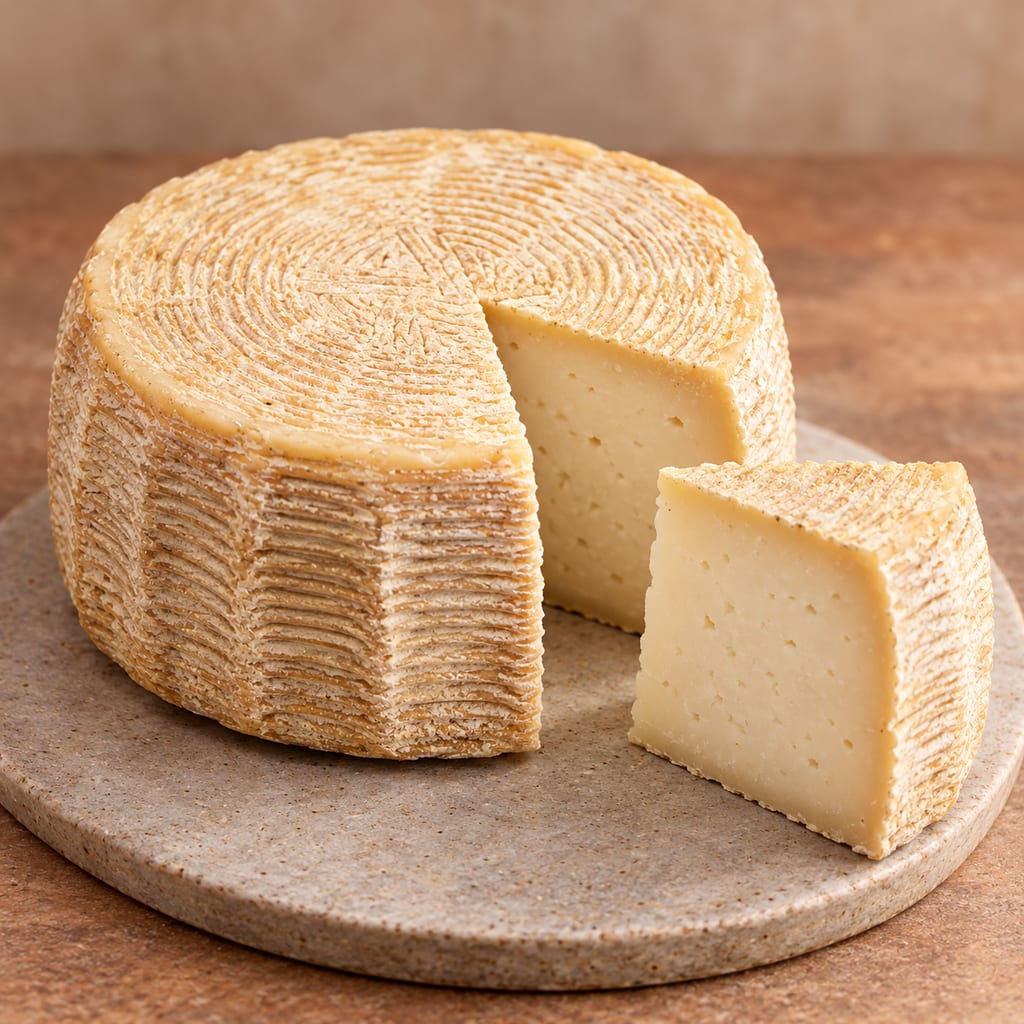
A scalded cheese moulded in baskets and re-cooked in its forms in hot whey, made alongside a ricotta from the same milk, then acidified, brined and aged for months.
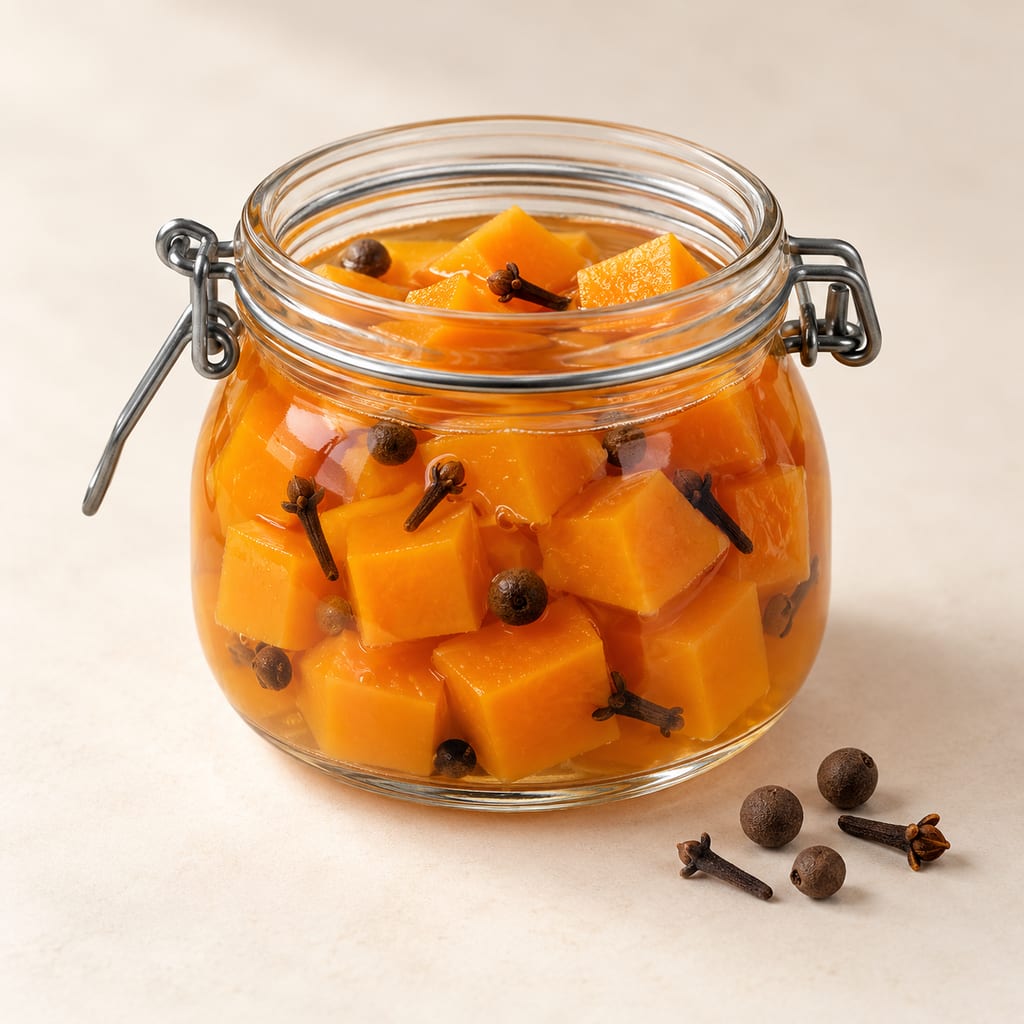
Dynia marynowana: Freeze for winter; small fresh portion refrigerated up to 48 hours.
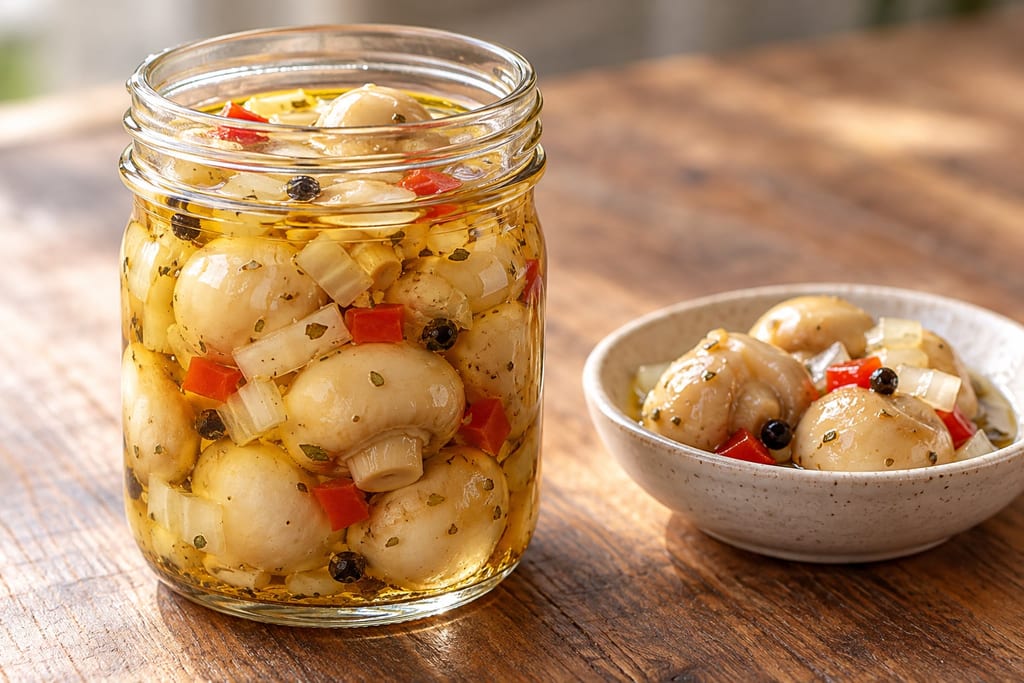
Small edible mushrooms are briefly cooked and packed in a seasoned vinegar marinade, a sweet-sour preserve served cold in Poland and neighbouring cuisines.
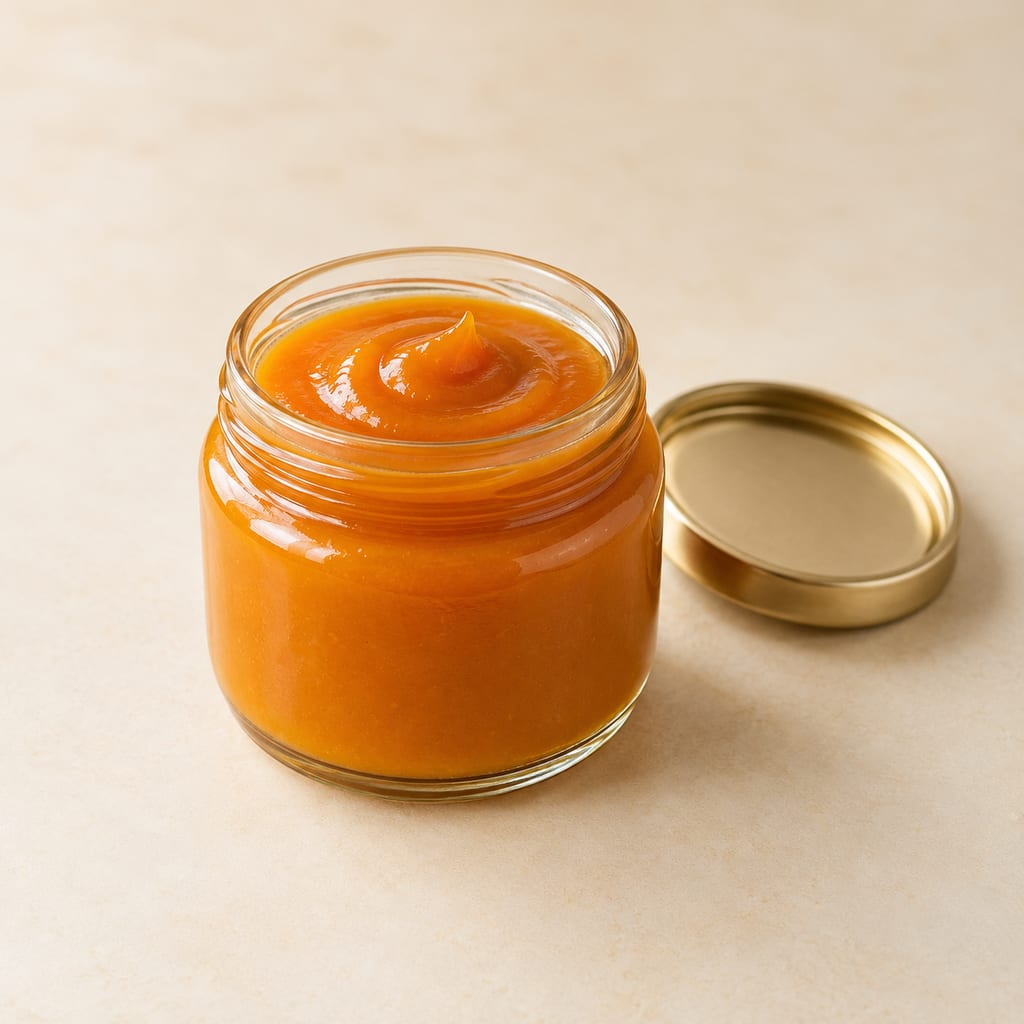
Kalabasa catsup: Freeze for winter; small fresh portion refrigerated up to 48 hours.
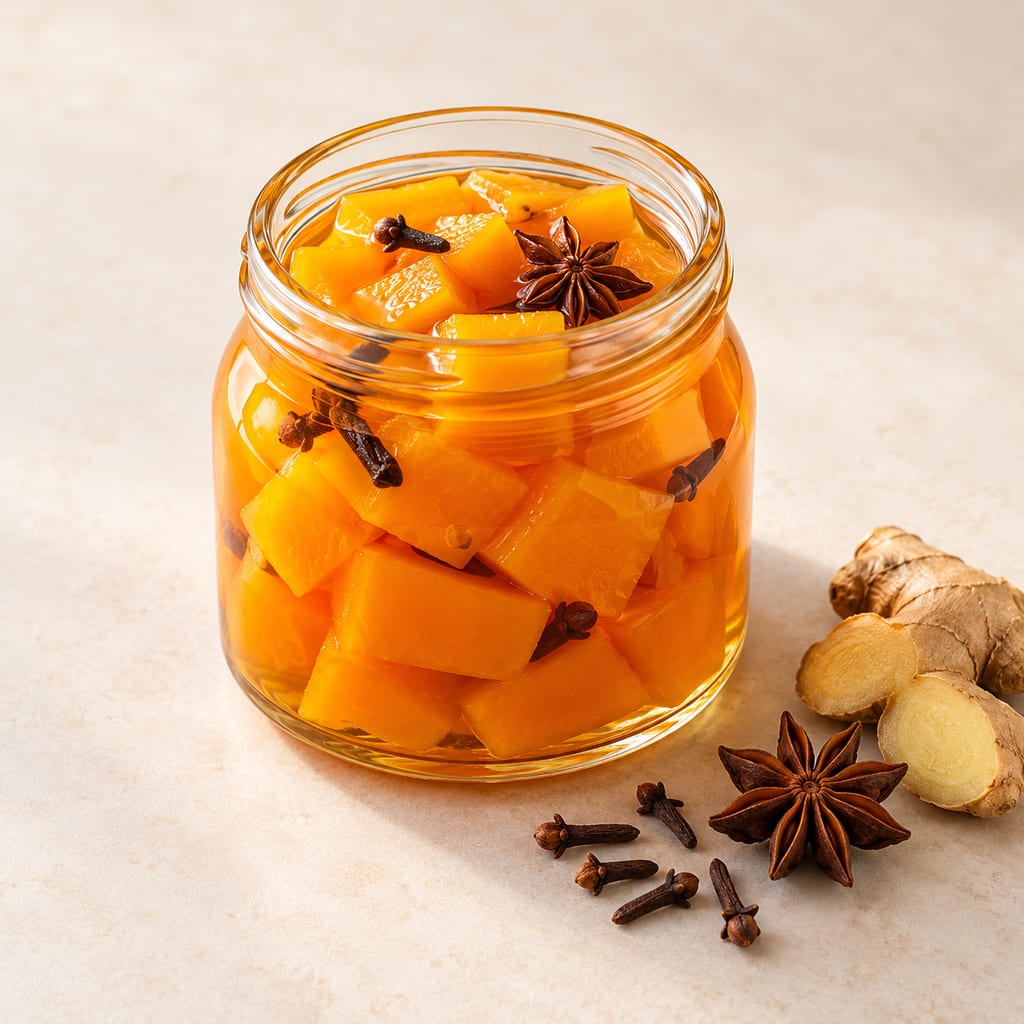
Marineeritud kõrvits: Freeze for winter; small fresh portion refrigerated up to 48 hours.
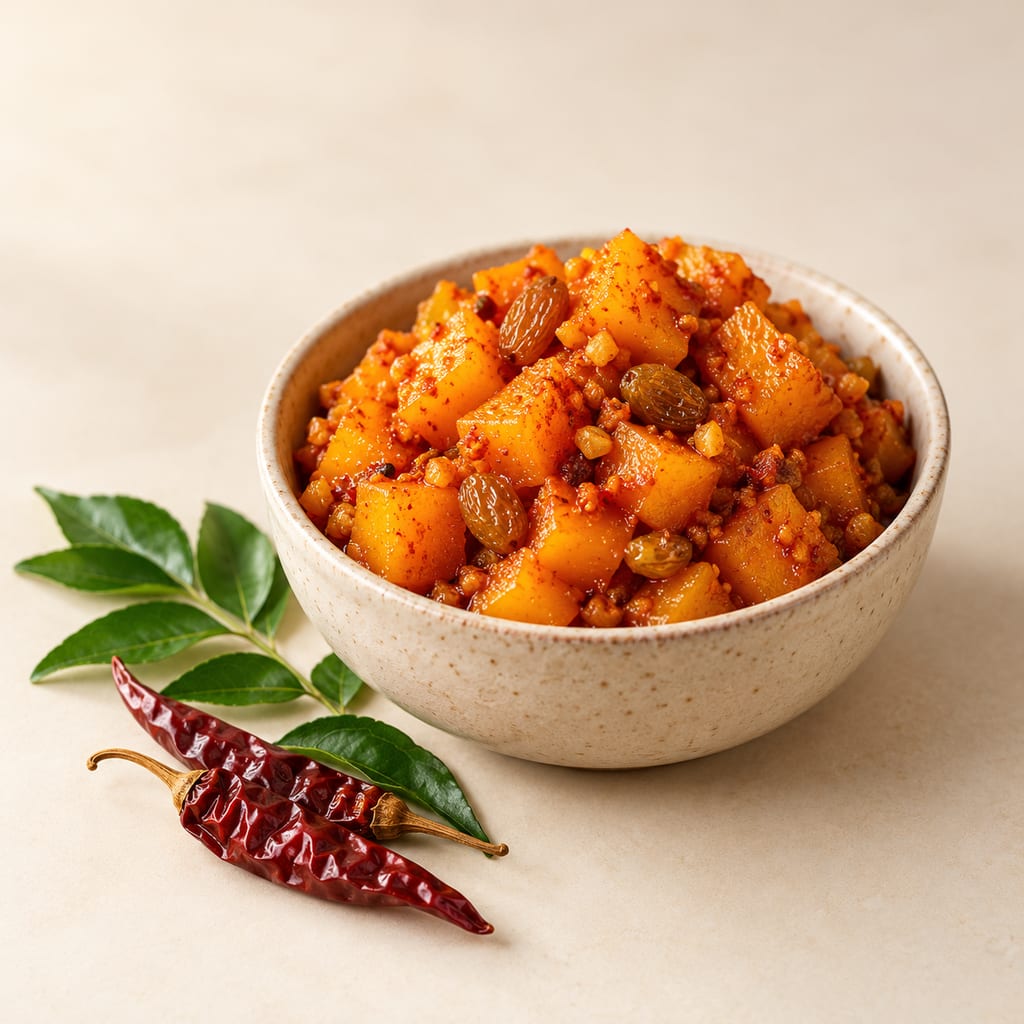
Mathanga achar: Freeze for winter; small fresh portion refrigerated up to 48 hours.
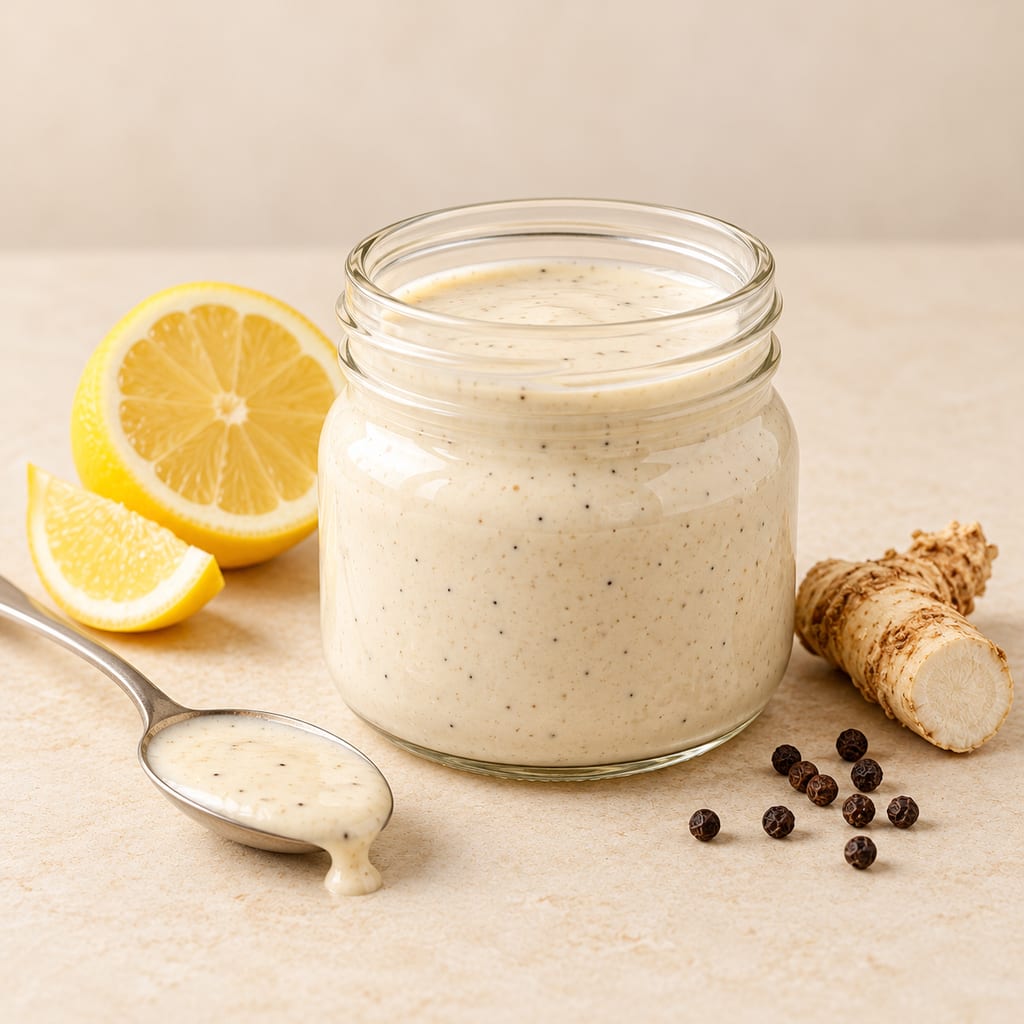
A whisked, mayonnaise-based Alabama-style sauce with vinegar, lemon, honey and horseradish. The measured batch below comes from a contemporary published recipe; it is not presented as Big Bob Gibson’s original or secret formula.

A Swedish-style spirit vinegar made by fermenting neutral alcohol with live vinegar bacteria, with a separate guide to commercial ättika strengths.
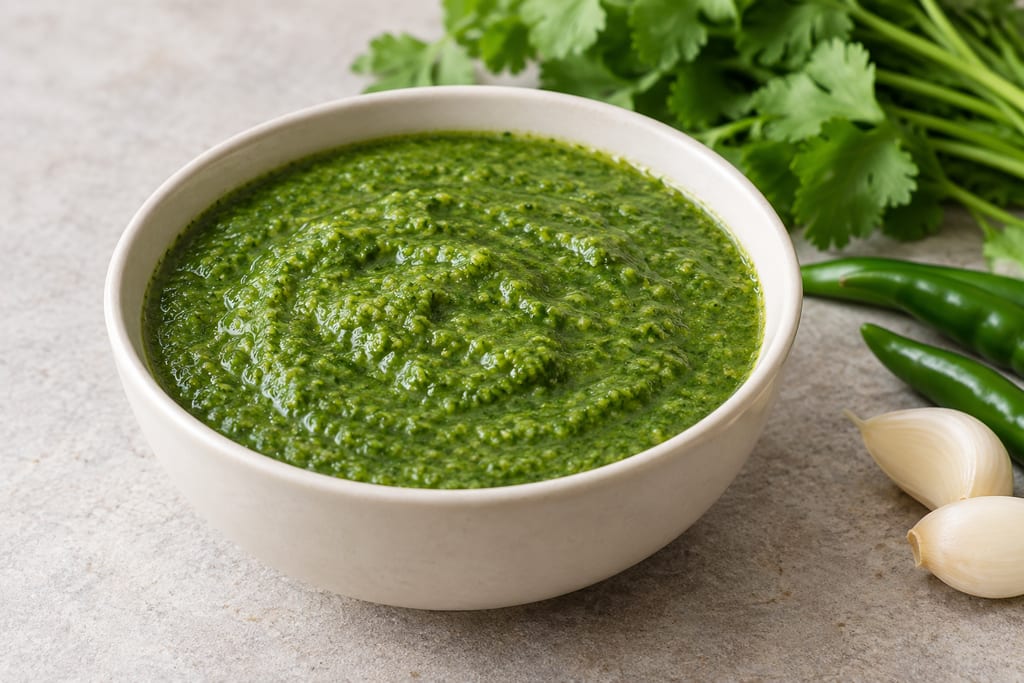
Afghan coriander chatni is a sharp, hot herb sauce with garlic and vinegar. A 2008 Afghanistan manual records green or red pepper and optional walnut; heat and household versions vary.
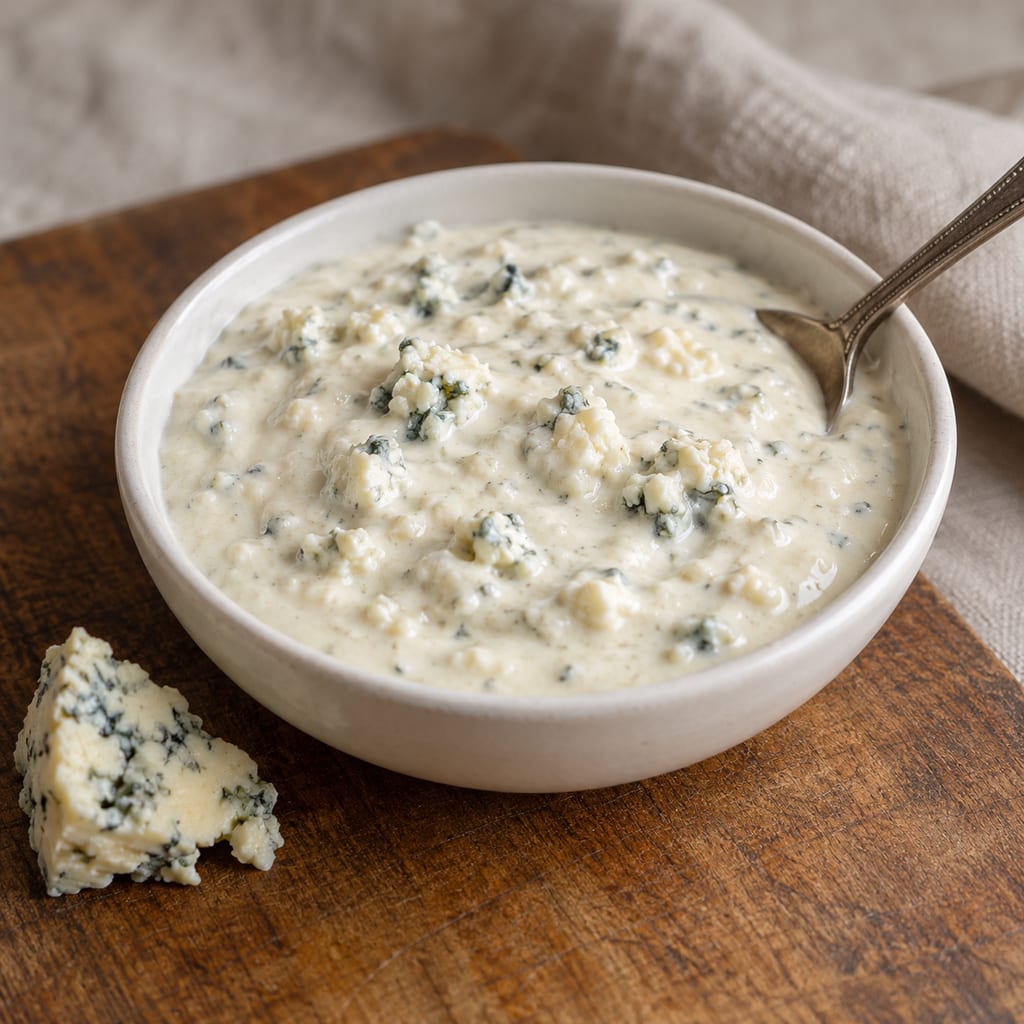
Blue cheese dressing is a creamy dressing built on crumbled blue cheese mashed into buttermilk, with sour cream, mayonnaise, vinegar and seasoning, and kept cold for up to two weeks.
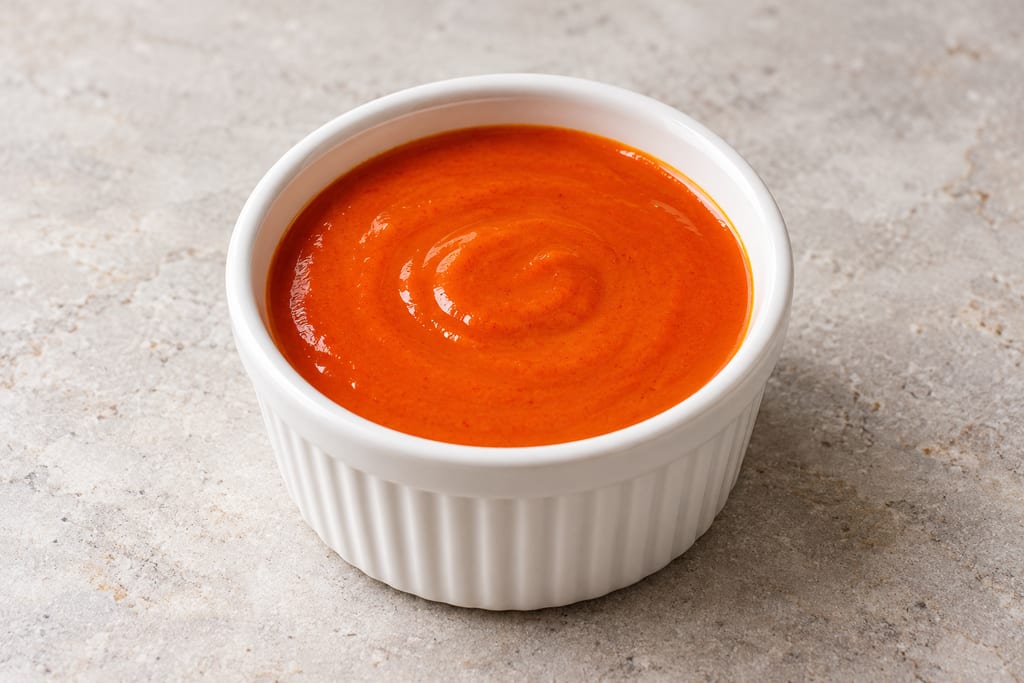
A warm, buttery cayenne sauce made by melting butter into a hot pepper sauce, first tossed onto fried chicken wings in Buffalo, New York.
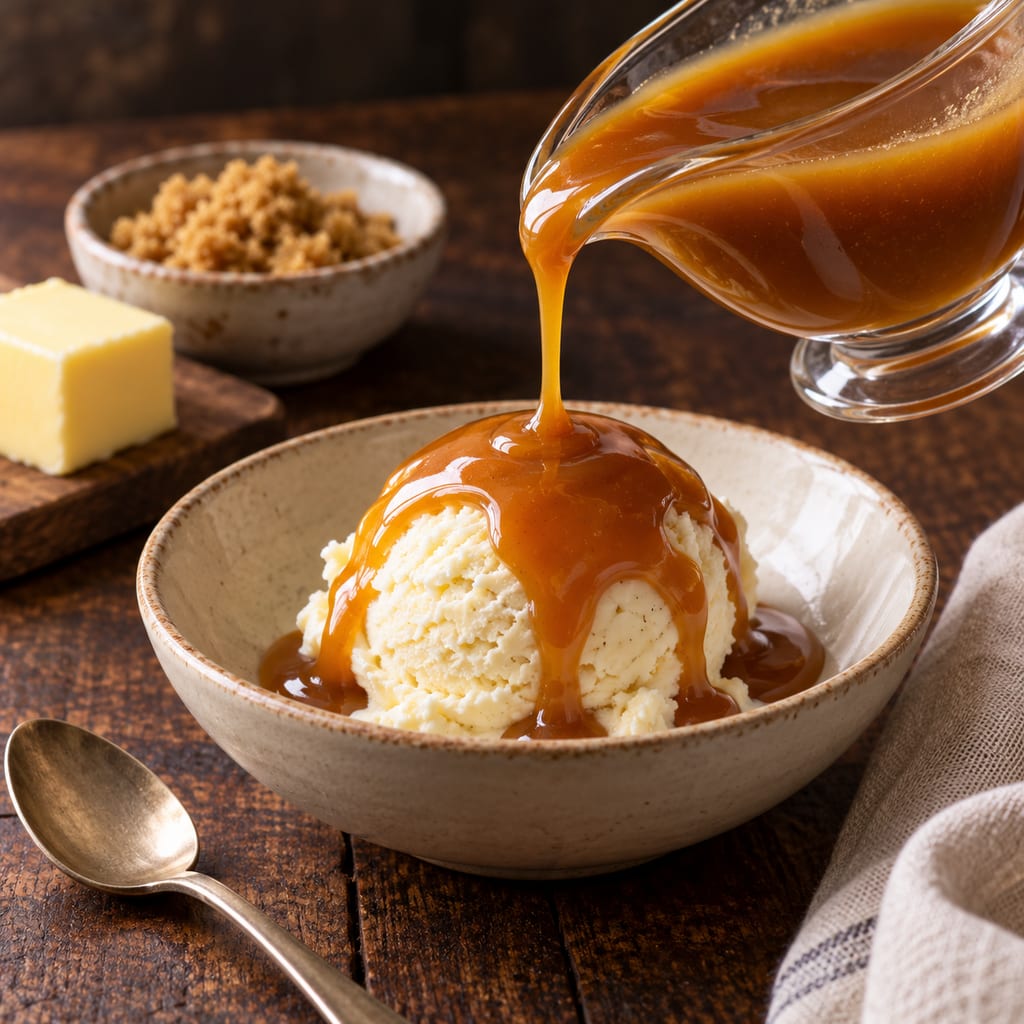
A pourable dessert sauce of brown sugar, butter and cream, with a little corn syrup and salt. It is the sauce form of the butterscotch confection and is made without water, unlike caramel.
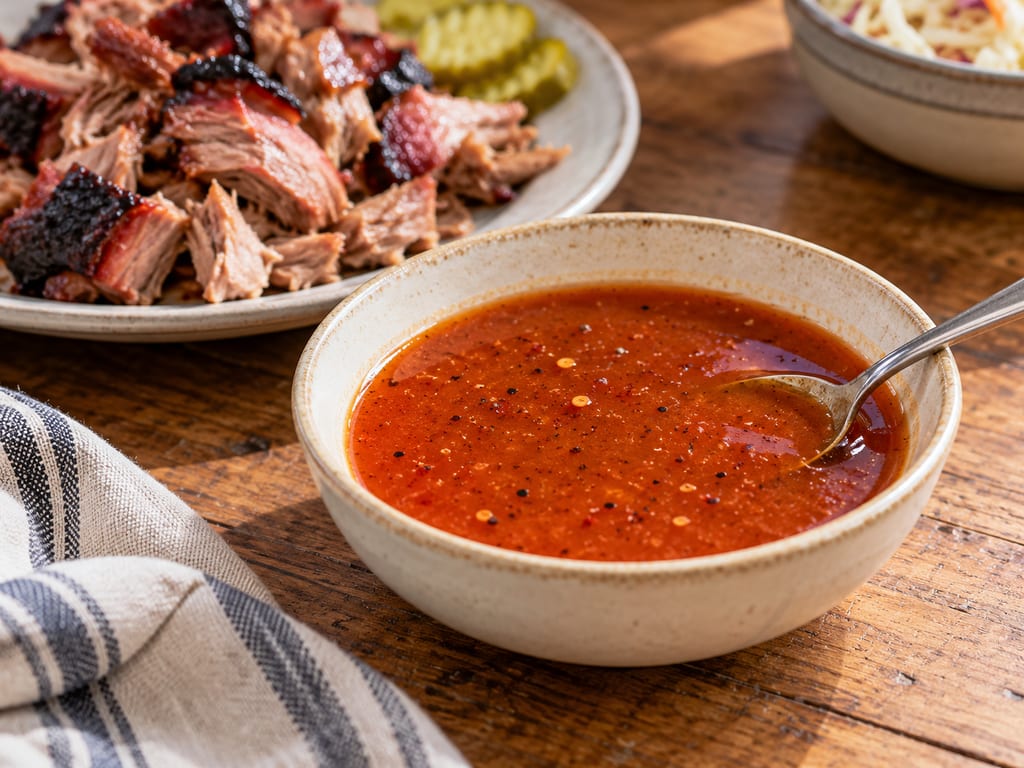
Light tomato barbecue sauce is a thin, sharp South Carolina sauce: a vinegar and pepper base with a small amount of ketchup, sitting between the clear vinegar sauce and the sweeter tomato sauces.
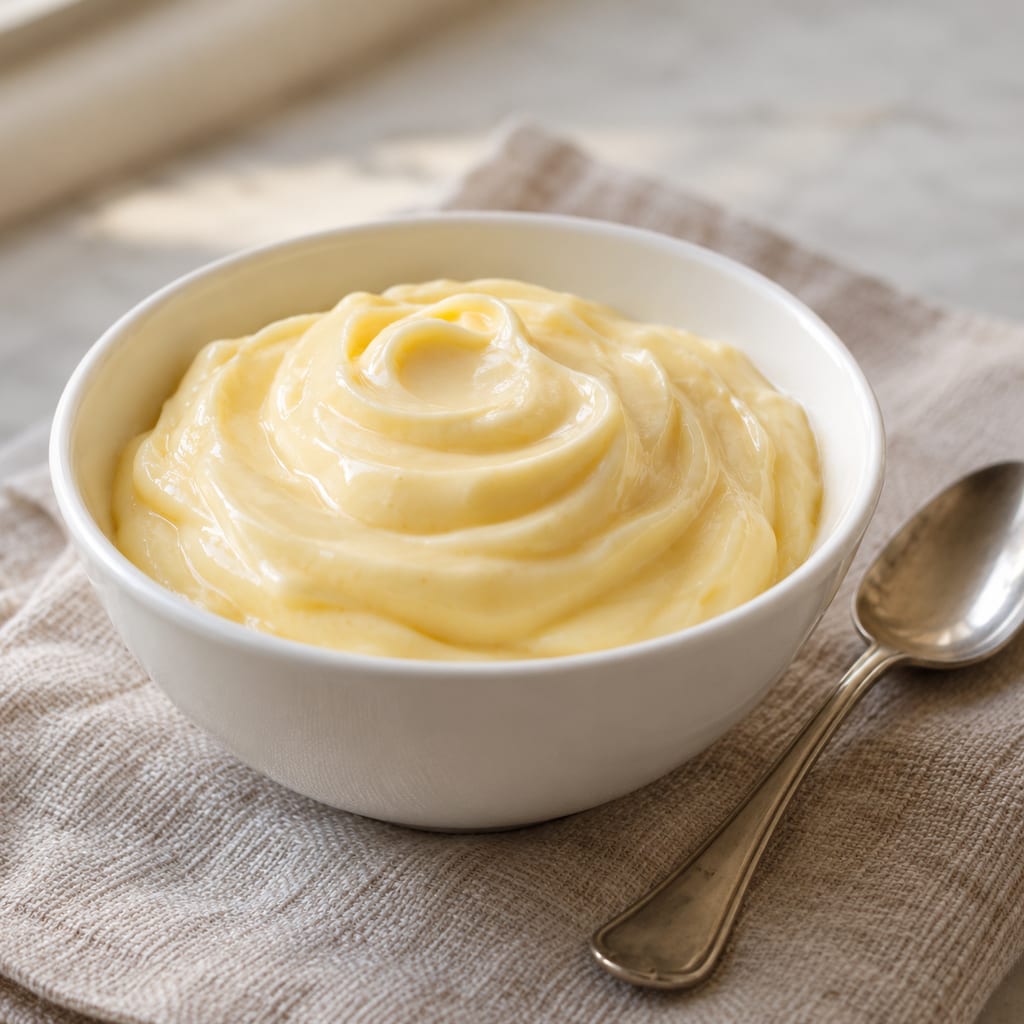
A cooked-yolk mayonnaise documented in the University of Tennessee Extension’s 2007 Egg University Handbook. The egg mixture is heated before oil is emulsified into it.
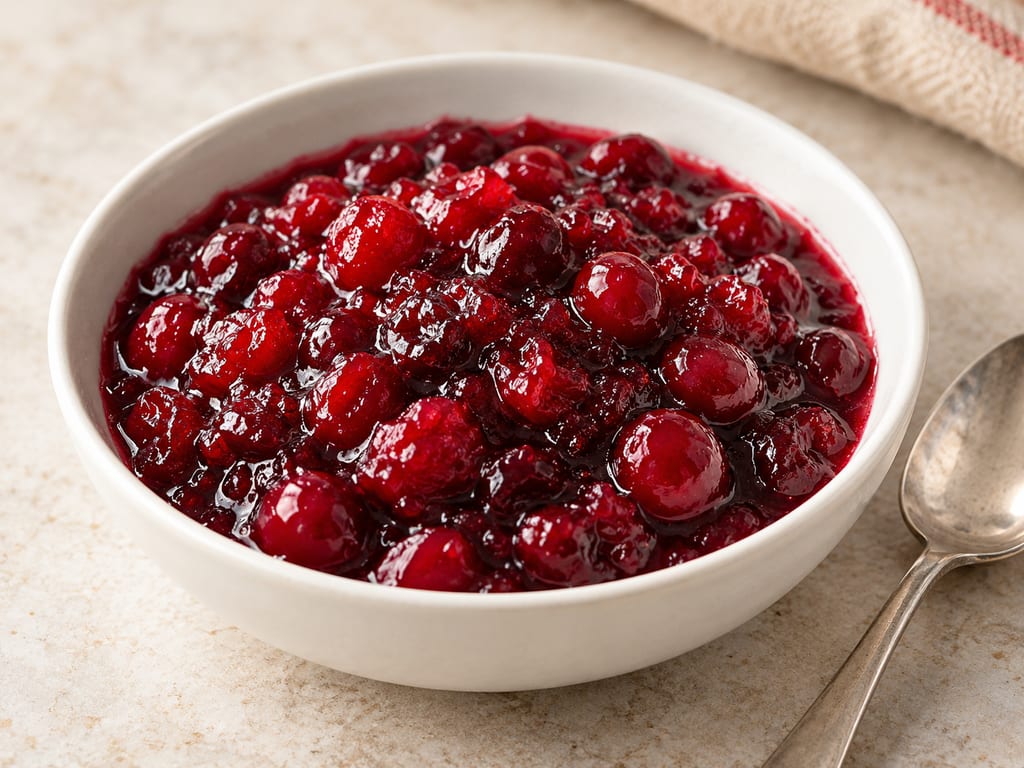
Cranberry sauce is a sauce of cranberries cooked in sugar syrup until the berries burst and thicken, served with roast turkey, pork, chicken and ham.
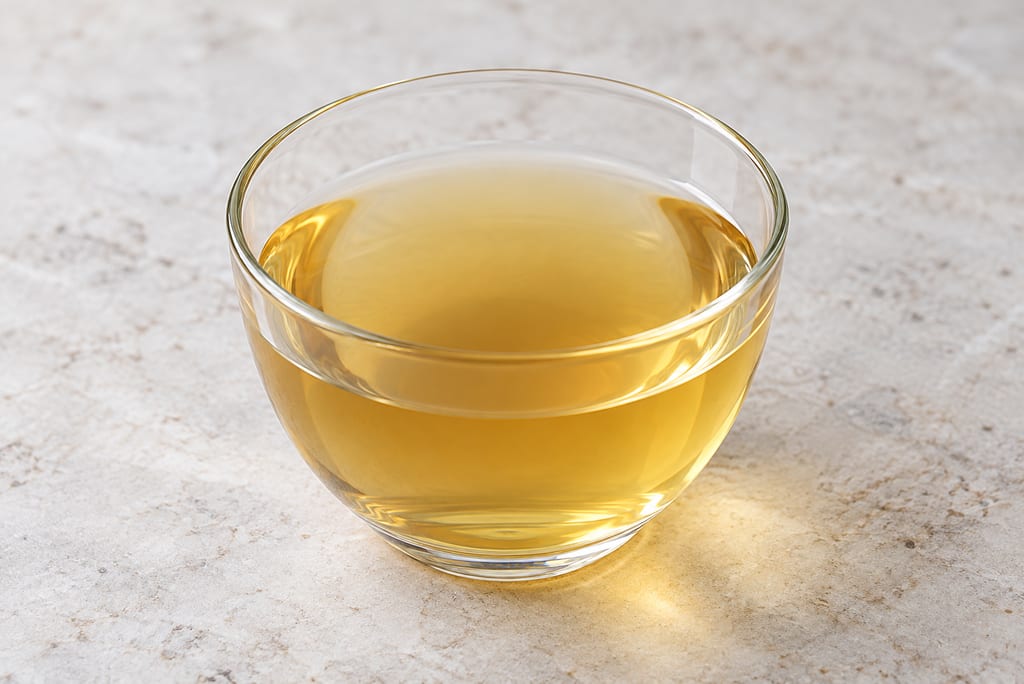
A liquid set with a little gelatin, frozen solid, then thawed through cloth in the refrigerator so that clear liquid drips out and the cloudy gel stays behind.

Protected Italian vinegar made only from cooked grape must, fermented and aged in a battery of wooden barrels for at least 12 years: sweet, sharp and syrupy.

A Dominican table and seasoning condiment of sour orange juice, mixed with lime and salt and bottled raw; garlic, oregano or a hot pepper may be added for meat or a spicier bottle.

Japanese reddish-brown vinegar from sake lees matured about three years, turned to vinegar by acetic bacteria; the vinegar of Handa and Edomae sushi rice.
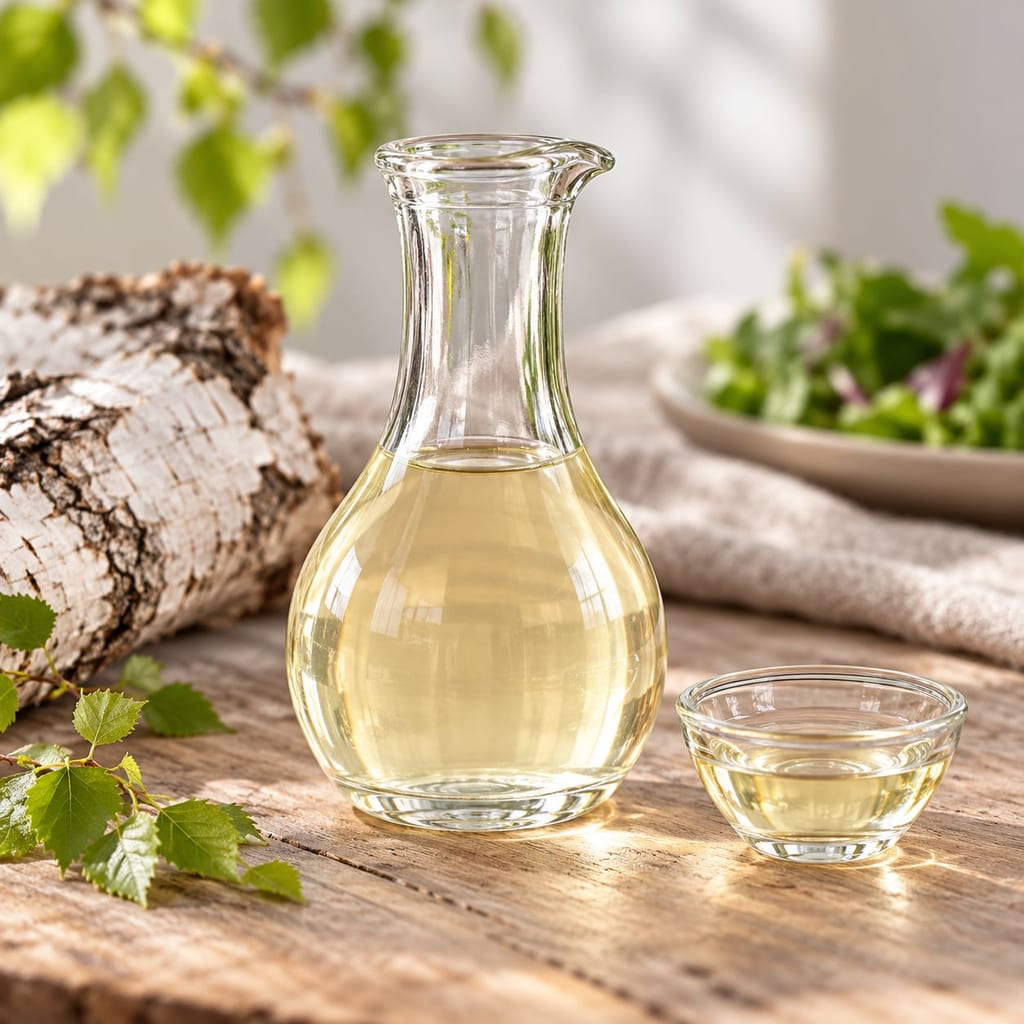
Vinegar from spring birch sap fermented to alcohol and then acetic acid, usually with added sugar or honey because the sap is so dilute; made in Sweden and described in older eastern European accounts.
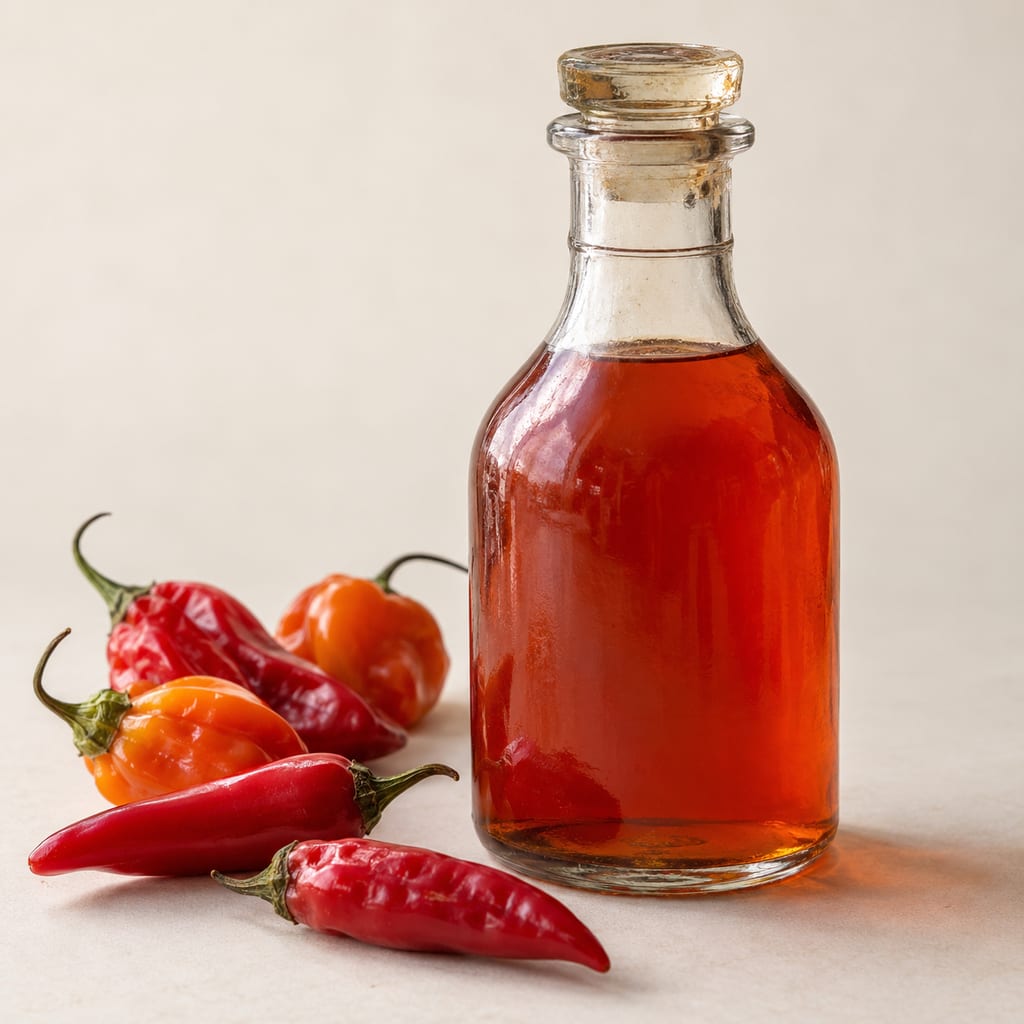
Mary Randolph's pepper vinegar: ripe pepper pods simmered in vinegar until the liquid is reduced to one quart, then strained for use in gravies and catsups. From The Virginia Housewife.
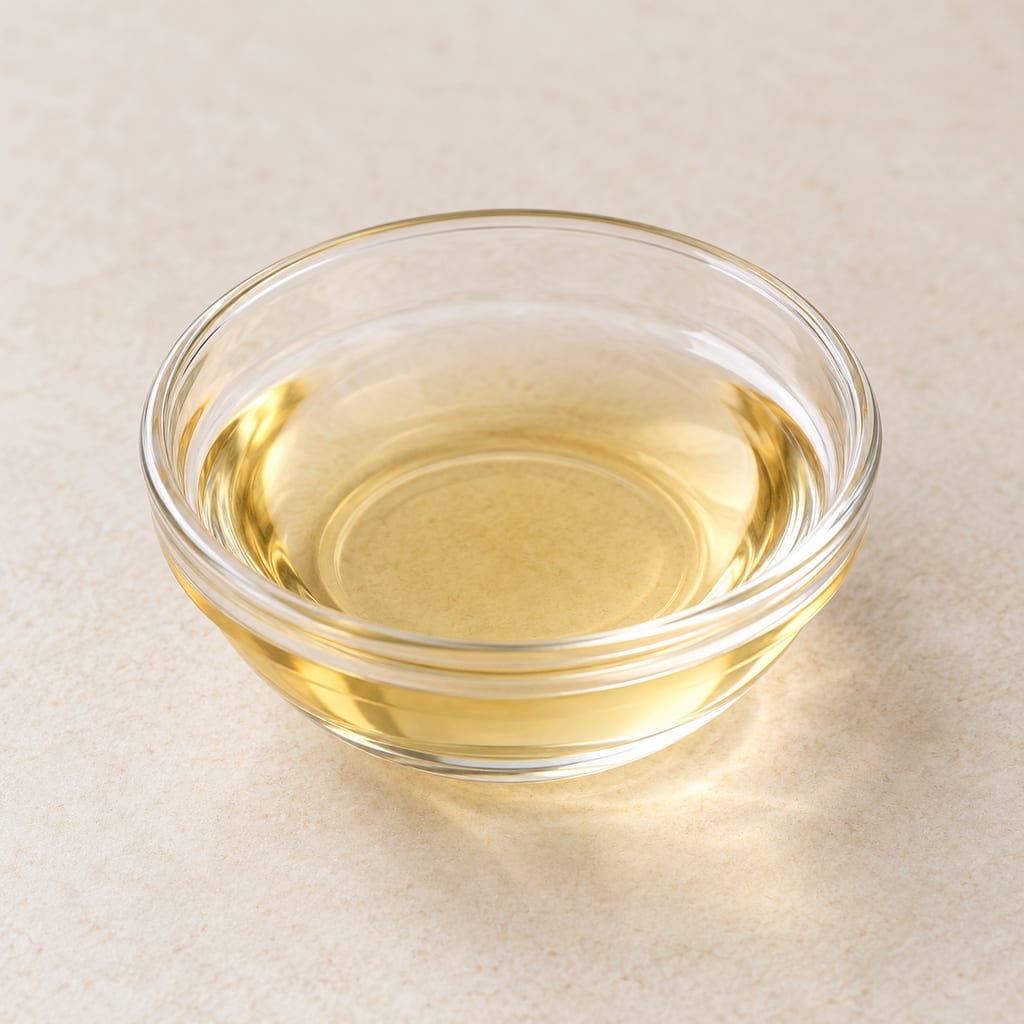
A Japanese mixed seasoning of vinegar, sugar and salt for sushi rice. Ratios vary with the rice batch and style; this version follows Marukan Vinegar's formula for two go of rice.
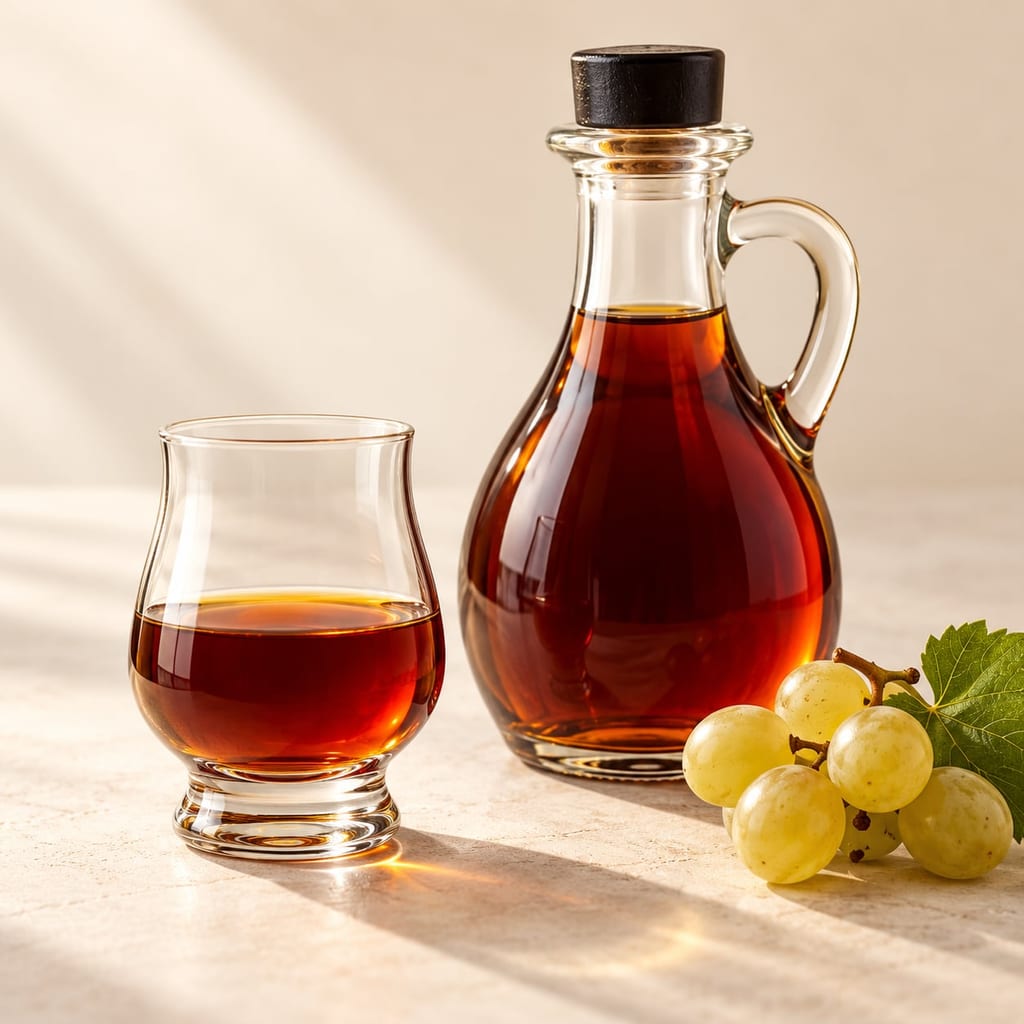
Vinagre de Jerez is made by acetifying eligible Jerez wines and ageing the vinegar in wood. Its protected name belongs to a defined Andalusian zone and a cellar tradition joining wine, oxygen, acetic bacteria and long ageing.
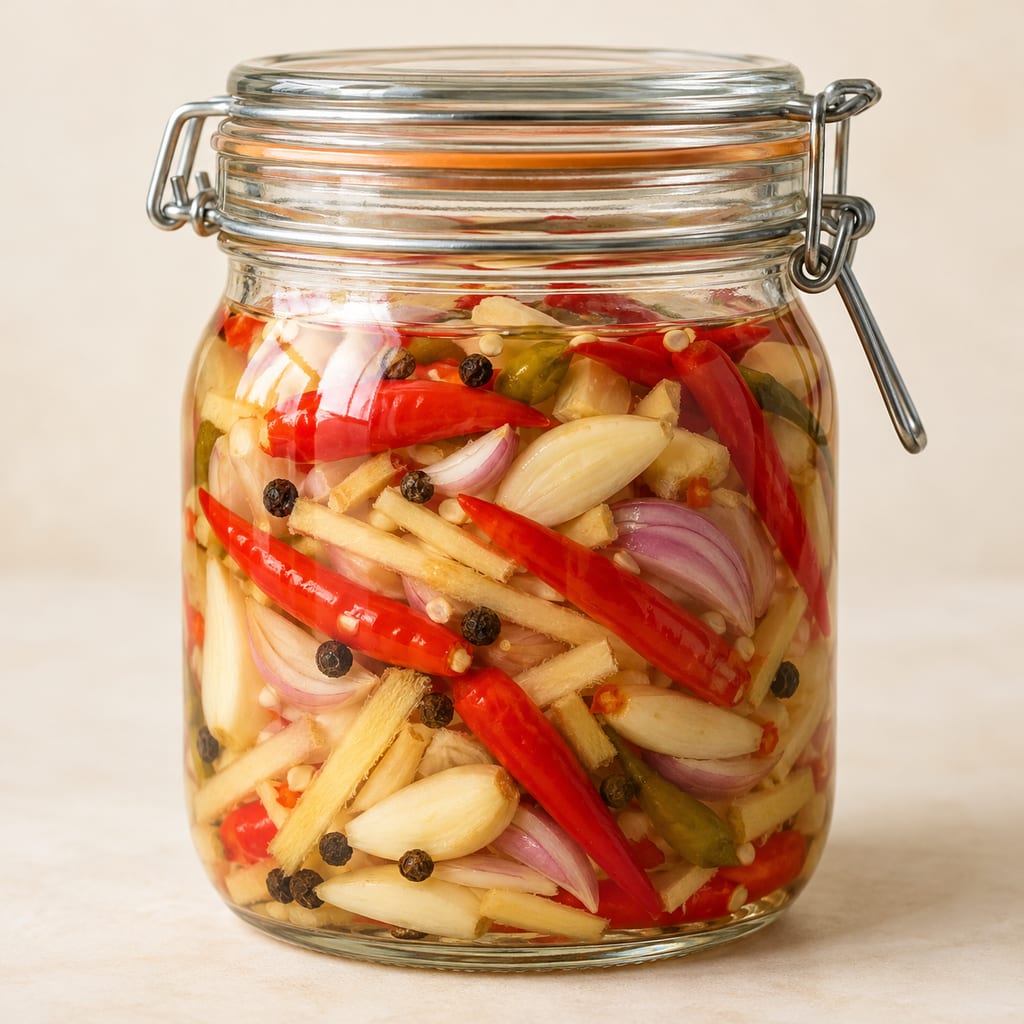
Sinamak is a Philippine spiced vinegar: white, cane or coconut vinegar steeped with chilies, ginger, garlic, onion and peppercorns for days or weeks until it is ready to use as a condiment.
No community contributions have been published for this entry yet.
Sign in to contribute. Published comments and photos are free to read.
U.S. Food and Drug AdministrationDefinition · History
CPG Sec 525.825 Vinegar, Definitions - Adulteration with Vinegar EelsFDA notes that no federal standard of identity for vinegar has been established under the FD&C Act and summarizes historical labeling policy.
The agency discusses a 1924 Supreme Court case distinguishing vinegar made from dried apples from vinegar made from fresh apples.
Cited in: Storage and practical limits; Reading labels
University of California Agriculture and Natural ResourcesMethod · Safety · Use
Use vinegar or white vinegar of 5% acidityWhite vinegar is derived from grain alcohol in this guidance.
The guidance says use food vinegar labelled 5% acidity for pickling; white distilled vinegar is useful where a clear, colorless result is desired.
Tested pickling proportions should not be altered; homemade vinegar has unknown acidity.
Cited in: A clear vinegar with an industrially variable origin; Why a plain acid is useful in the kitchen; Acidity is a labelled property, not a guess; Choosing among white, fruit, wine and malt vinegars; Feedstock shapes the process; Vinegar as a culinary tool
HeinzMethod · Use · Product example
Distilled White Vinegar with 5% AcidityThis specific product is described as made through boiling and condensation from a fermented mixture of American-grown corn and water.
Its ingredient statement says distilled white vinegar diluted with water to 5% acidity.
The product is promoted for pickling, sauces, dressings and preserving light-colored produce.
Cited in: A clear vinegar with an industrially variable origin; Choosing among white, fruit, wine and malt vinegars; Feedstock shapes the process
Process Biochemistry / ElsevierScience · Method
Aerobic submerged fermentation by acetic acid bacteria for vinegar production: Process and biotechnological aspectsAcetic acid bacteria are strictly aerobic and convert ethanol to acetic acid.
Submerged vinegar production provides high acetic acid titres; industrial strains need tolerance to ethanol and acetic acid.
Cited in: The second fermentation: ethanol becomes acetic acid; Feedstock shapes the process; A finished vinegar and its living culture
Advances in Applied Microbiology / Academic PressHistory · Method
Vinegar: Its History and DevelopmentThe chapter describes vinegar as acetous fermentation of ethanol from multiple sources.
It surveys vinegar’s historical development and commercial manufacture methods, including trickling and submerged culture.
Cited in: A clear vinegar with an industrially variable origin; From accidental souring to controlled acetification; The second fermentation: ethanol becomes acetic acid; Choosing among white, fruit, wine and malt vinegars; Storage and practical limits; Vinegar as a culinary tool
Archives des SciencesHistory
The history of vinegar and of its acetification systemsThe article reviews vinegar’s historical evidence and the development of acetification systems, emphasizing that early methods were empirical.
Cited in: From accidental souring to controlled acetification
Vinegar InstituteHistory
Vinegar: History and DevelopmentThis historical review distinguishes older uses of distilled vinegar from modern white distilled vinegar and traces industrial development.
Cited in: From accidental souring to controlled acetification
National Center for Home Food Preservation, University of GeorgiaSafety · Use
General Information on PicklingTested proportions and a uniform minimum acid level matter in pickled products.
The Center recommends white distilled or cider vinegar labelled 5% acidity in its canning guidance.
Cited in: Acidity is a labelled property, not a guess; What a percentage of acidity tells you
Oregon State University Extension ServiceSafety · Use
Pickling VegetablesThe guide identifies 5%-acidity vinegar for quick pickles and warns against reducing vinegar or increasing water in a recipe.
White distilled vinegar has pungent taste and is suggested when color matters in pale vegetables.
Cited in: Why a plain acid is useful in the kitchen; Acidity is a labelled property, not a guess
Penn State ExtensionSafety
Advice about VinegarPenn State explains that vinegar strength varies and that 5% acidity may also be marked as 50 grain.
Its guidance says to read the label and use the acidity level specified by research-tested recipes.
Cited in: Acidity is a labelled property, not a guess; Storage and practical limits; What a percentage of acidity tells you; A finished vinegar and its living culture; Reading labels
University of California Master Food PreserversUse · Safety
Advice about VinegarWhite distilled vinegar is colorless and used where color matters.
The guide distinguishes vinegar types and calls for labelled 5% acidity in home canning.
Cited in: The second fermentation: ethanol becomes acetic acid; A finished vinegar and its living culture
University of Illinois ExtensionUse · Safety
PicklingPickling can occur by lactic fermentation in brine or by immersion in vinegar.
Quick-process pickles use vinegar and tested preservation directions.
Cited in: Why a plain acid is useful in the kitchen
International Organisation of Vine and WineScience · Definition
Methods of analysis for vinegars: Determination of total acidity contentOIV defines total acidity determination for vinegar by neutralizing acids with an alkali solution.
The standardized method reports total acidity as acetic acid; it is an analytical method, not a home safety test.
Cited in: What a percentage of acidity tells you