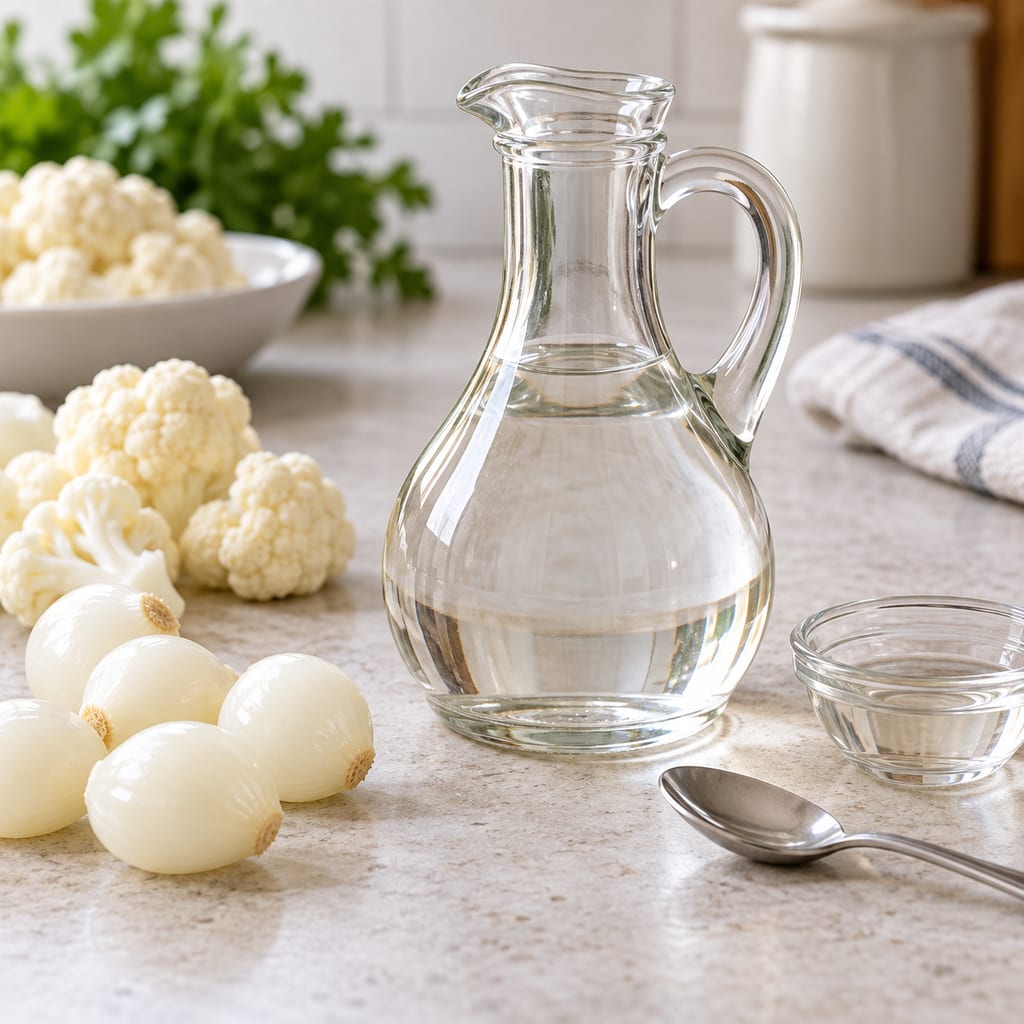
Spirit / distilled white vinegar
A clear, sharp vinegar made by acetifying alcohol. Its restrained color and aroma suit pickles, sauces and dressings where darker or more aromatic vinegars would change the result.
 FermenteaWhere food goes to change
Modern method
Mathanga achar: Freeze for winter; small fresh portion refrigerated up to 48 hours.
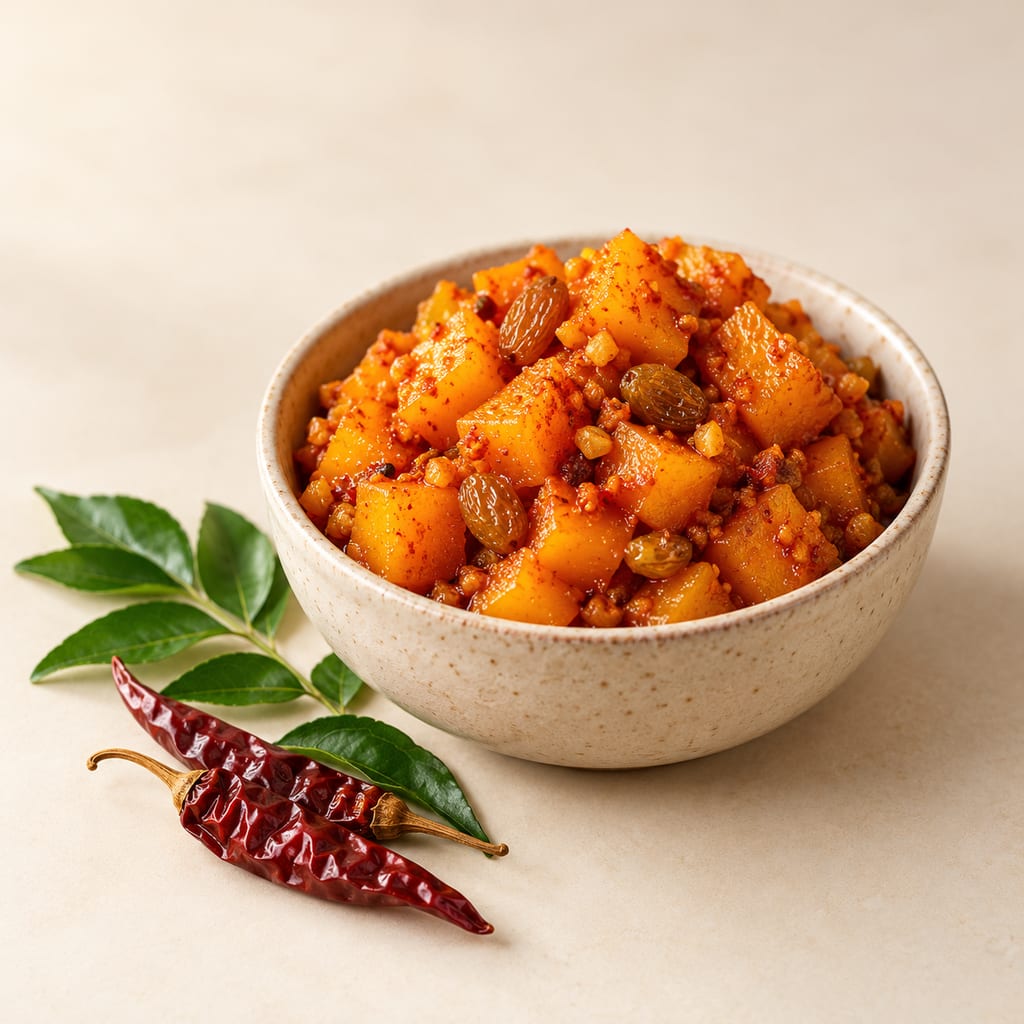
Onmanorama records a pumpkin pickle by Kuriakku Thomas, a caterer working around Chalakudy and other parts of Thrissur, Kerala. The 2020 article describes a preparation popular at contemporary events. Its use of pumpkin is therefore directly documented, but the source does not establish antiquity or a single canonical Kerala formula.
Batch: 500 g prepared pumpkin, producing roughly 750–900 g condiment. This is an editorial small-batch size: the original specifies a small pumpkin without giving its weight. Storage: chilled briefly or frozen. It is not a substitute for a tested canning recipe.
The original is deliberately loose about the pumpkin size, ginger, salt and vinegar adjustment, and describes “dry fruits” without identifying a particular mix. The measured 500 g batch above resolves those gaps for a home preparation, choosing raisins and cooking the pumpkin through. Its ingredient amounts are an adaptation, not a proportional reduction that can be traced to a known original weight.
That distinction matters. A culinary formula may be made reproducible without making it shelf stable. The adapted oil and vinegar quantities are for flavour and handling; no final pH, water activity or canning schedule has been established. The original's brief instruction to store the cooled pickle in jars is not a storage validation.
If a less hot version is wanted, choose a mild Kashmiri-style chilli powder and reduce the fresh chillies in the portion being prepared for immediate use. Do not assume a spicier batch preserves better. Capsicum heat is not a replacement for a verified storage method. Similarly, do not add a decorative oil seal and then transfer the jars to a kitchen cupboard.
Make the condiment while processing a sound pumpkin, retain one small refrigerated portion and freeze the rest the same day in 100–150 g portions. These are suggested portion sizes, not required safety parameters. Label the batch with its preparation date and allergens: mustard, and wheat where present in a compounded asafoetida product.
Cool in small portions and refrigerate at 0–5°C within one to two hours. Use the refrigerated portion within 48 hours under the collection's conservative cooked-food rule. Thaw frozen portions in the refrigerator and use within 24 hours of complete defrosting. Freezing is what makes this adapted preparation an overwintering method; “achar” in the title alone does not establish a long unrefrigerated life.
Onmanorama records a pumpkin pickle by Kuriakku Thomas, a caterer working around Chalakudy and other parts of Thrissur, Kerala. The 2020 article describes a preparation popular at contemporary events. Its use of pumpkin is therefore directly documented, but the source does not establish antiquity or a single canonical Kerala formula.
Scaling: source batch only
Freeze for winter; small fresh portion refrigerated up to 48 hours
Hazard sourceFreeze for winter; small fresh portion refrigerated up to 48 hours
Control sourceFreeze for winter; small fresh portion refrigerated up to 48 hours
Do not transfer a canning schedule from a different pumpkin preparation.
Geographical association of this documented version, not an asserted origin.
A clear, sharp vinegar made by acetifying alcohol. Its restrained color and aroma suit pickles, sauces and dressings where darker or more aromatic vinegars would change the result.
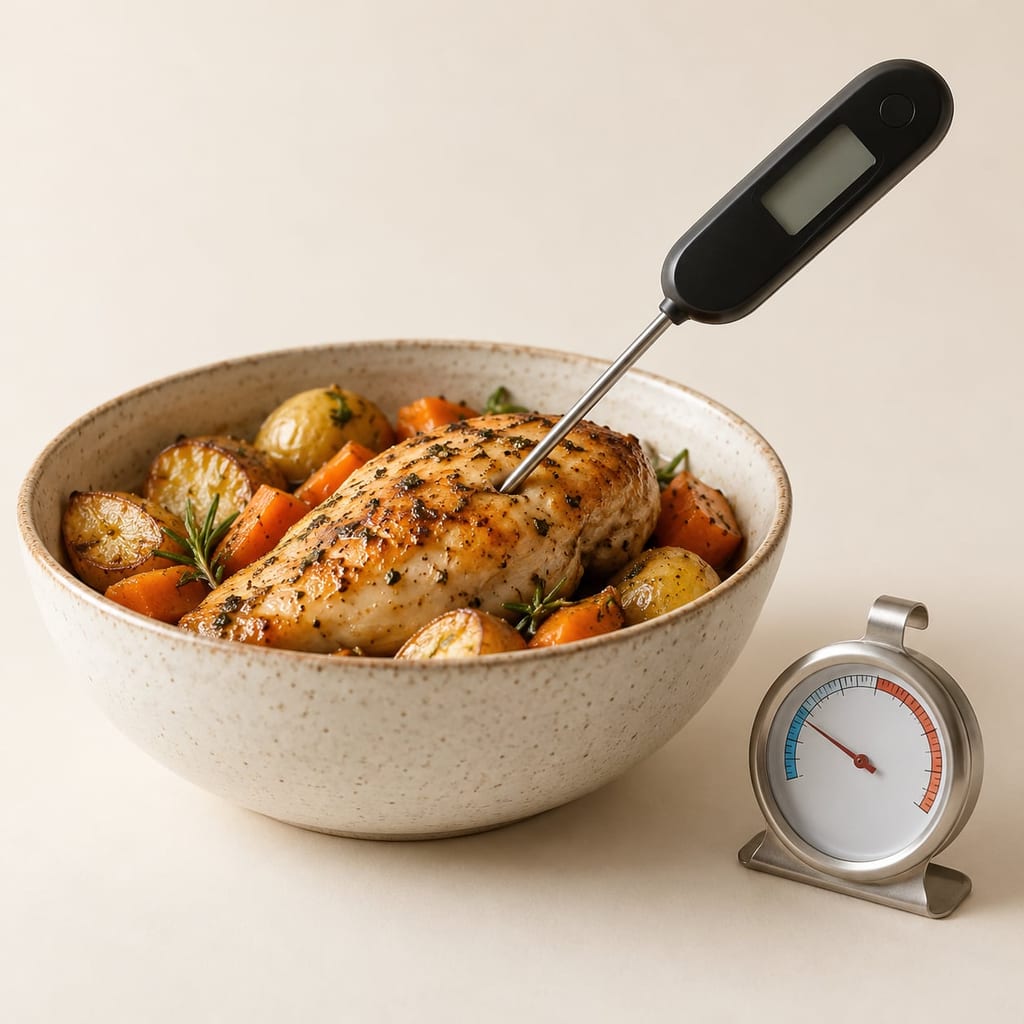
A food probe measures the temperature inside food at the probe tip; a refrigerator thermometer measures the cold storage environment. They answer different questions and cannot establish acidity or validate a preservation process.
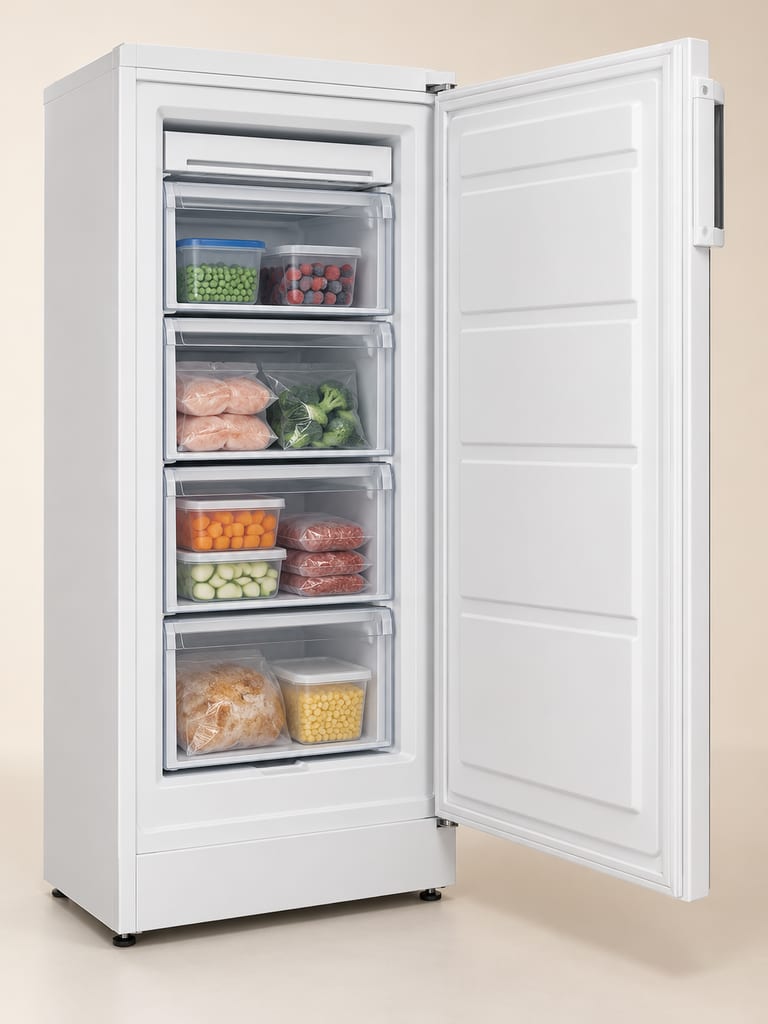
A household freezer holds food in a frozen state for storage and selected texture or separation work; its batch-storage role differs from industrial equipment that freezes individual pieces separately.
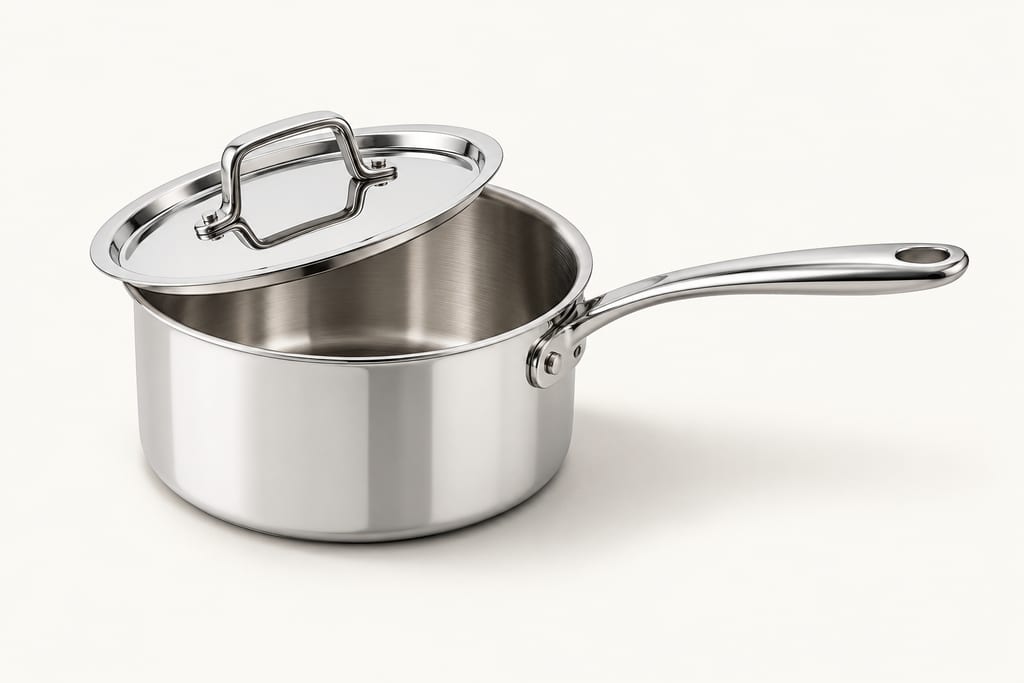
A modern, portable stovetop pan with a stainless-steel cooking surface for sauces and other small simmering jobs. Size, cladding, lid, compatibility and care vary by model.
An ordinary household refrigerator used to store selected fresh produce in vented crates or drawers, at low temperature and at a humidity chosen by the drawer. Not every crop benefits from cold.
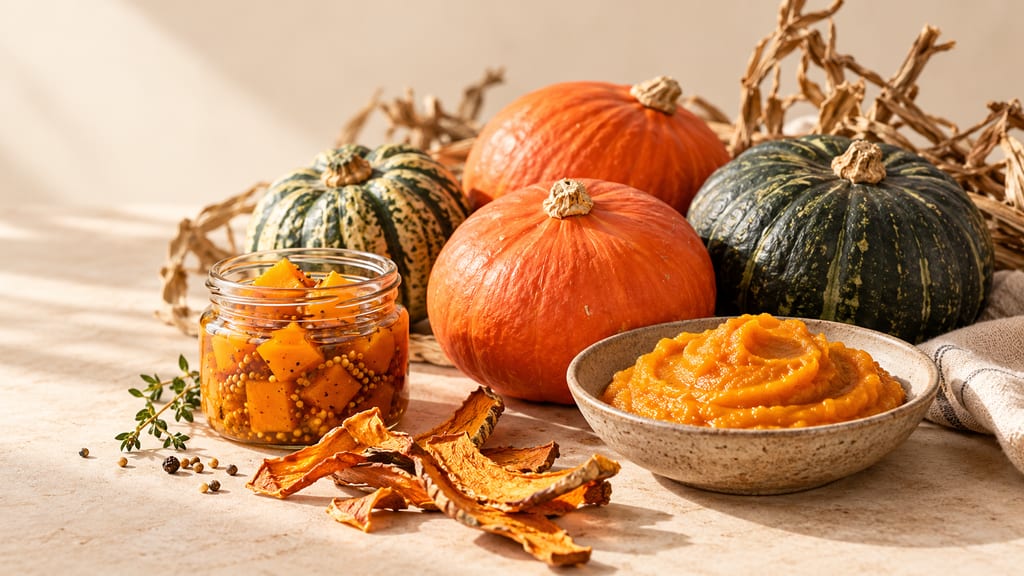
A full harvest-to-pantry guide to keeping pumpkins whole, drying and freezing them, and making pickles and sweet preserves around the world—with the exact distinction between tested canning and cold storage.
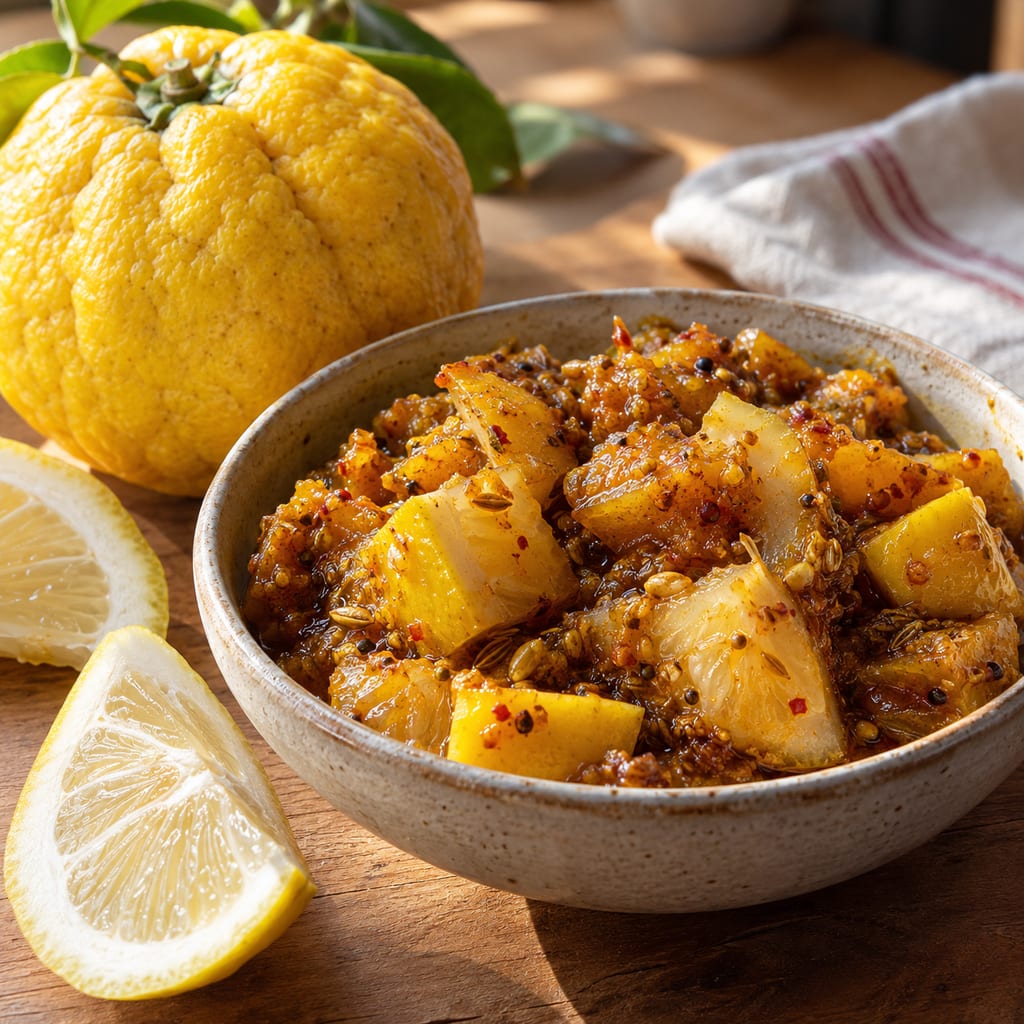
Ripe Himalayan galgal is boiled, sun-dried and cooked with mustard oil, spices and jaggery before a further rest in a ceramic jar.

Aam panna is a tart Indian summer drink made by cooking unripe green mango until its flesh softens, then blending the pulp with sweetener, salt and spices and diluting it with water.
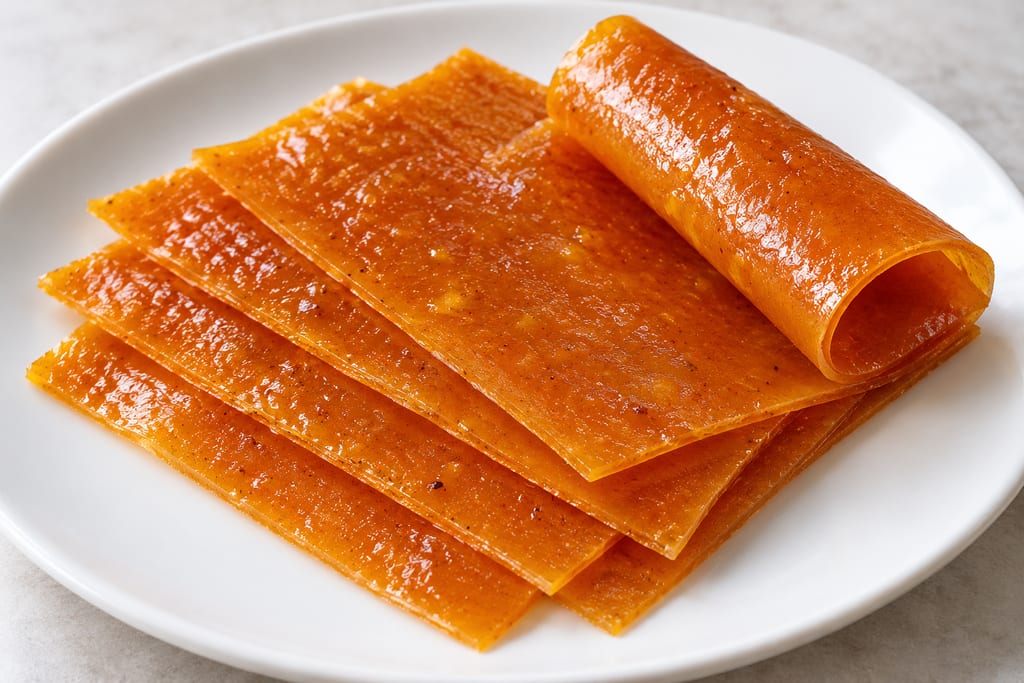
Ripe mango pulp spread thin and dried as a chewy fruit leather. This entry records one controlled unsweetened experiment and distinguishes it from Bengali sun-dried aamshotto and sweetened or spiced variants.

Adrak murabba preserves young ginger in sugar syrup, a sweet South Asian preparation recorded in Indian cookery and food-processing sources.
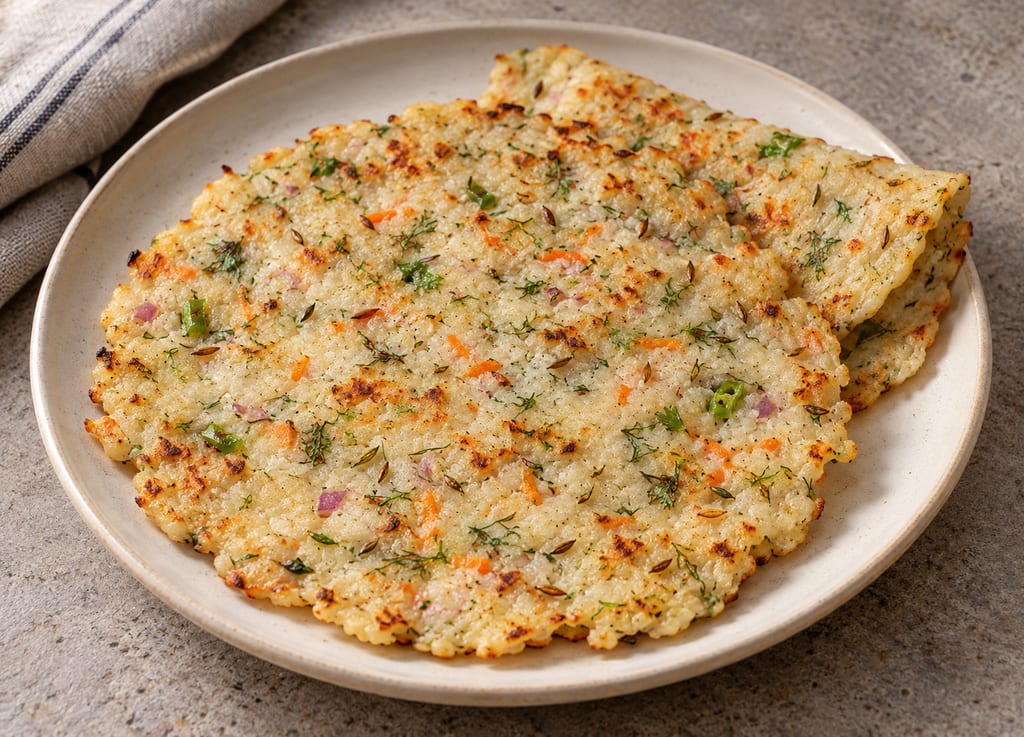
This Karnataka-style akki rotti mixes fine rice flour with vegetables, coconut, herbs and spices, then hand-pats and griddle-cooks the dough.
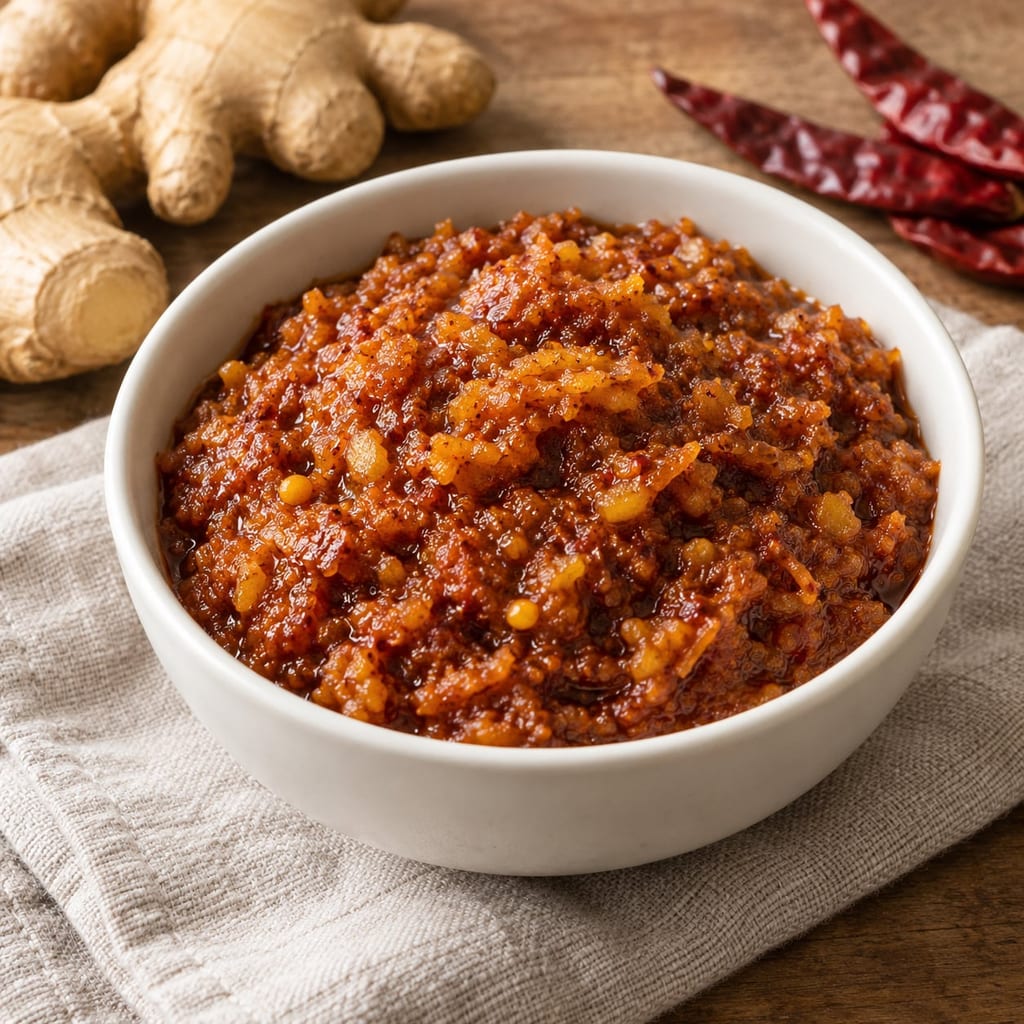
An Andhra ginger-and-urad chutney in which browned dal and briefly fried ginger and chillies are cooled, then ground with jaggery to a coarse paste.
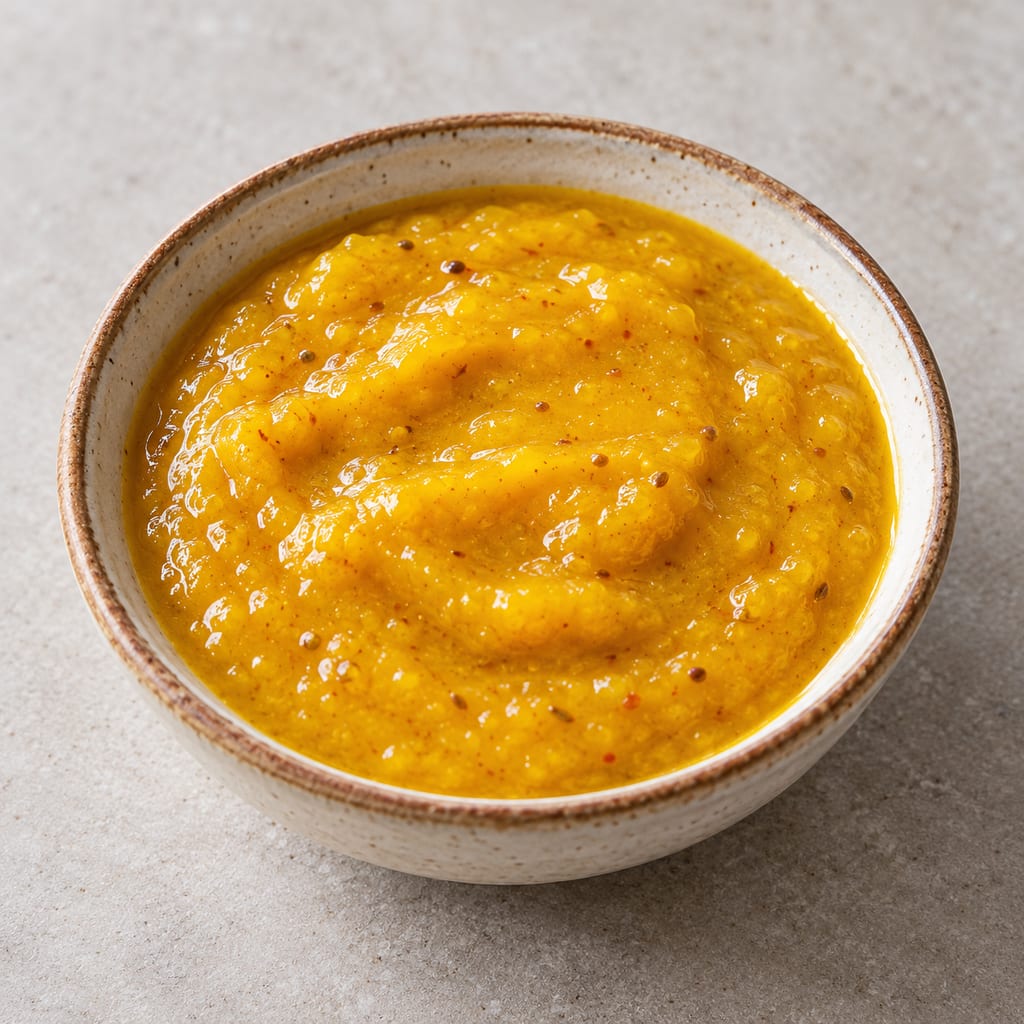
This cooked amba follows a Jewish Food Society recipe that simmers ripe mango with onion, garlic, mustard seed and warm spices into a tangy Middle Eastern condiment.
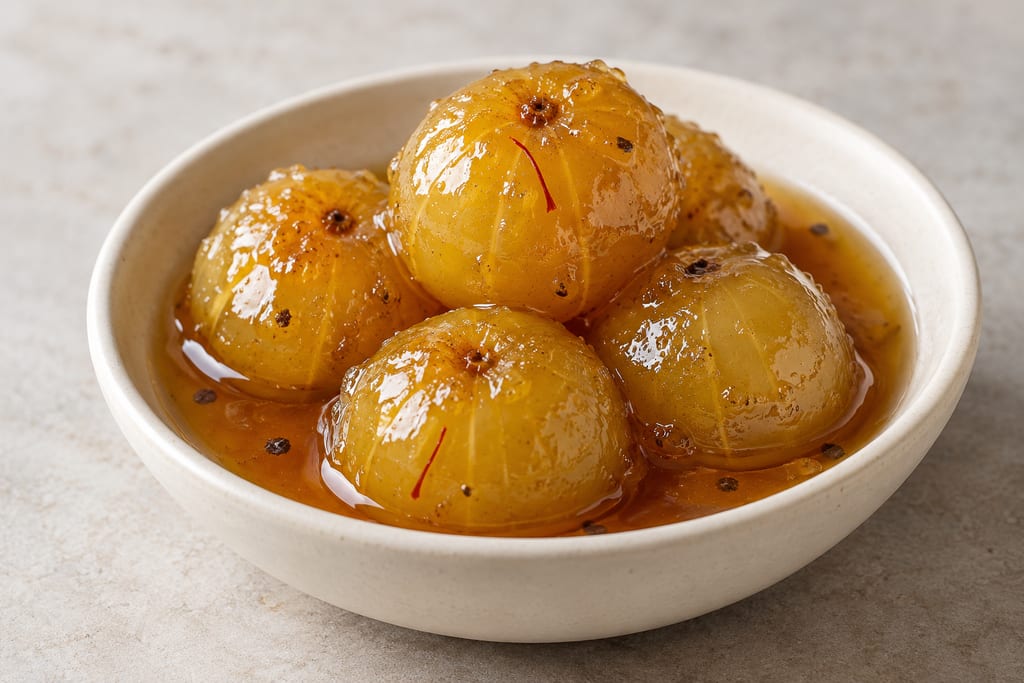
Amla murabba preserves whole Indian gooseberries in a heavy sugar syrup scented with cardamom and sharpened with pepper and black salt. This household method soaks the fruit before cooking.
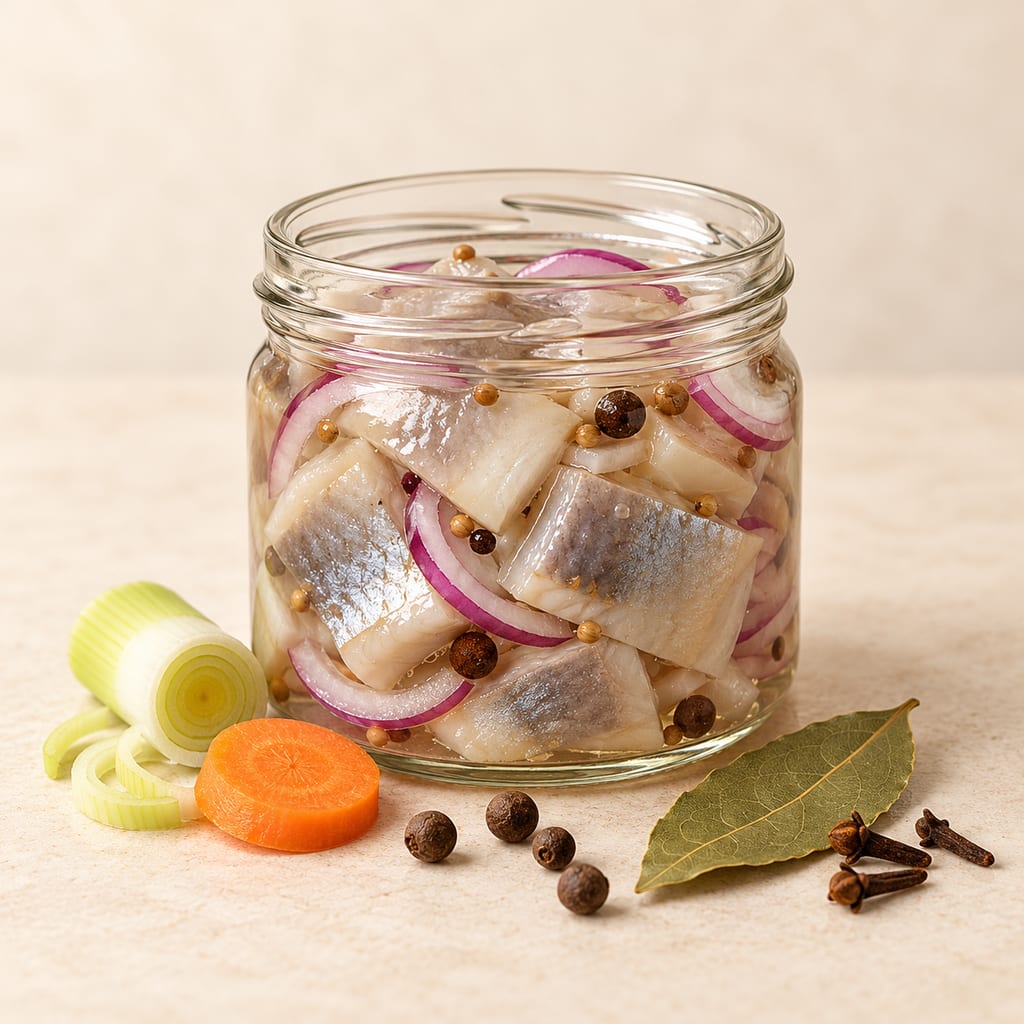
A Swedish ready-to-dress herring preparation: add the classic sliced aromatics and spices to already prepared herring, then serve or chill for fuller flavour.

Achcharu is a family of Sri Lankan vinegar pickles made with mixed vegetables or seasonal fruit and a piquant spice dressing. This version is a quick, refrigerated, non-fermented mixed-vegetable pickle.
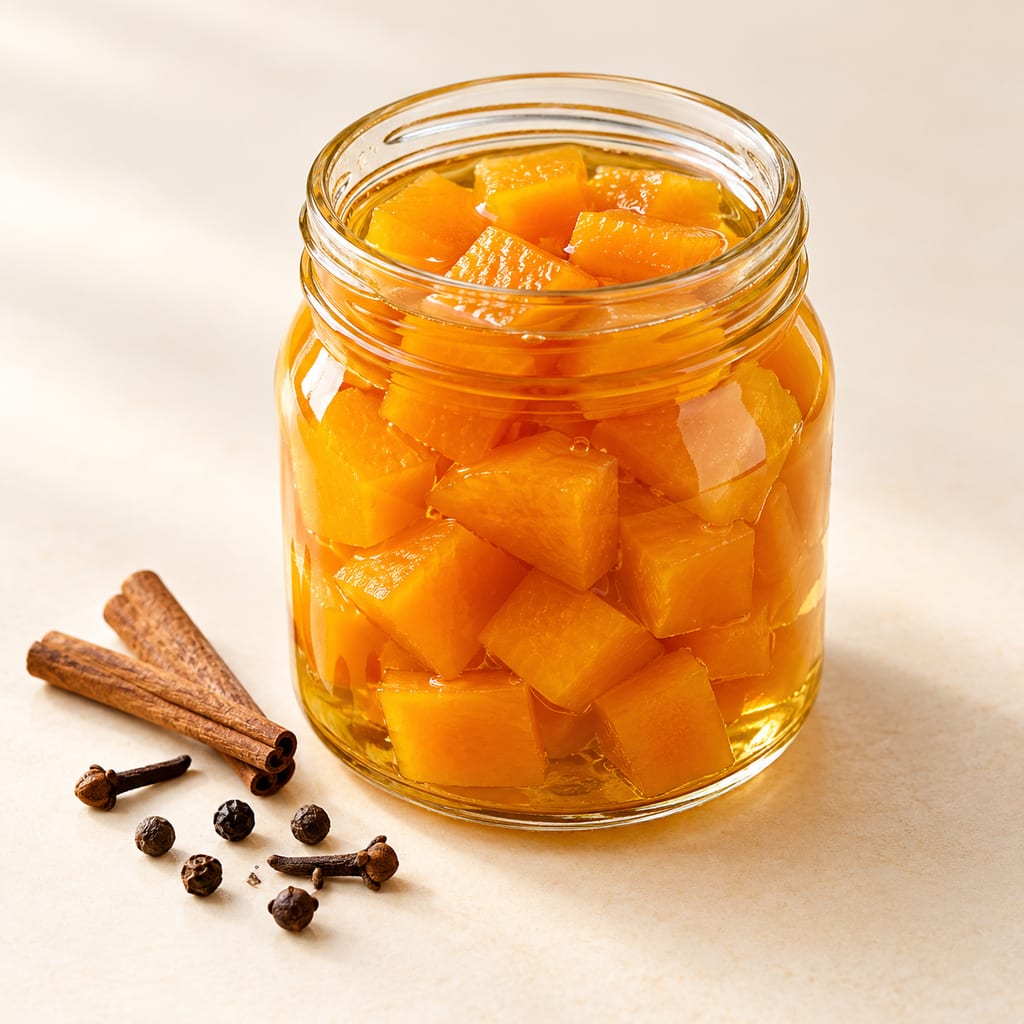
Ball sweet pumpkin pickles: Cupboard: exact published Ball formulation and water-bath process.
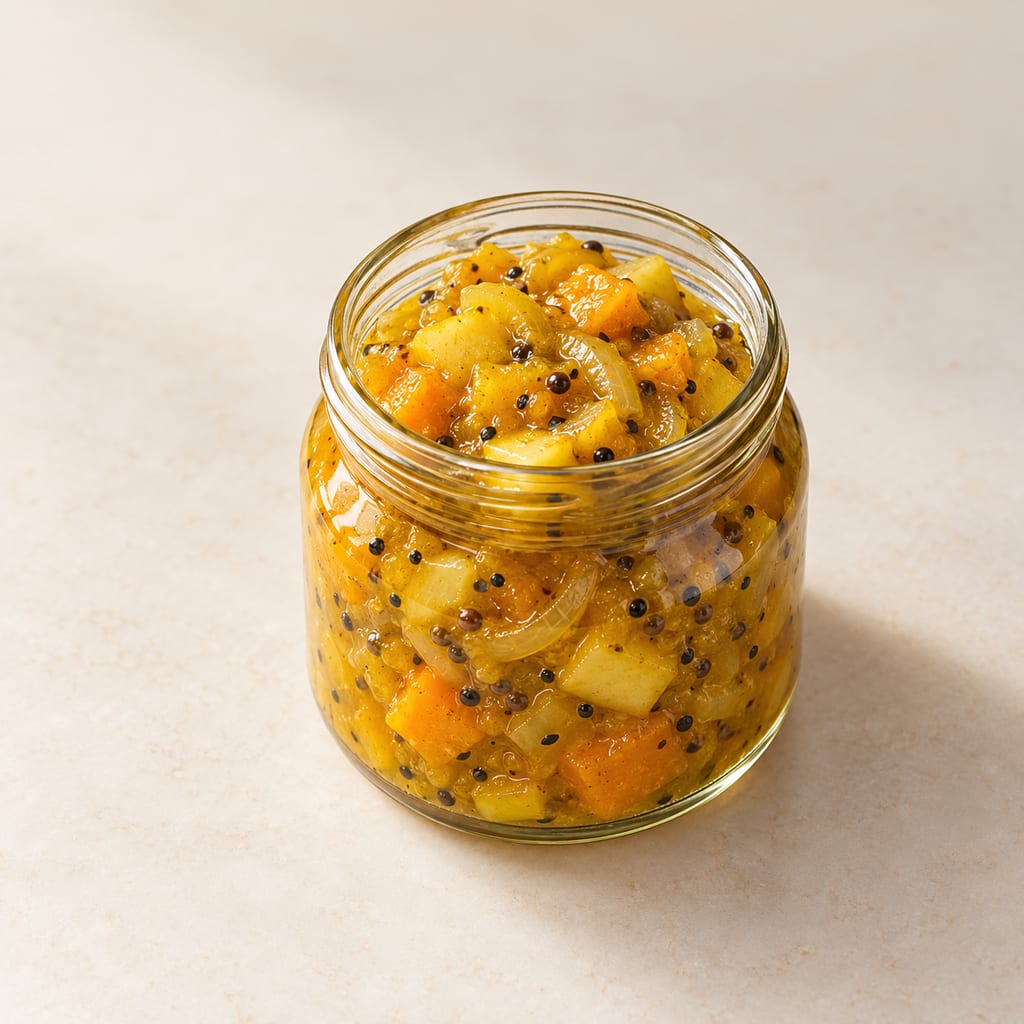
British pumpkin, apple and mustard pickle: Freeze for winter; small fresh portion refrigerated up to 48 hours.
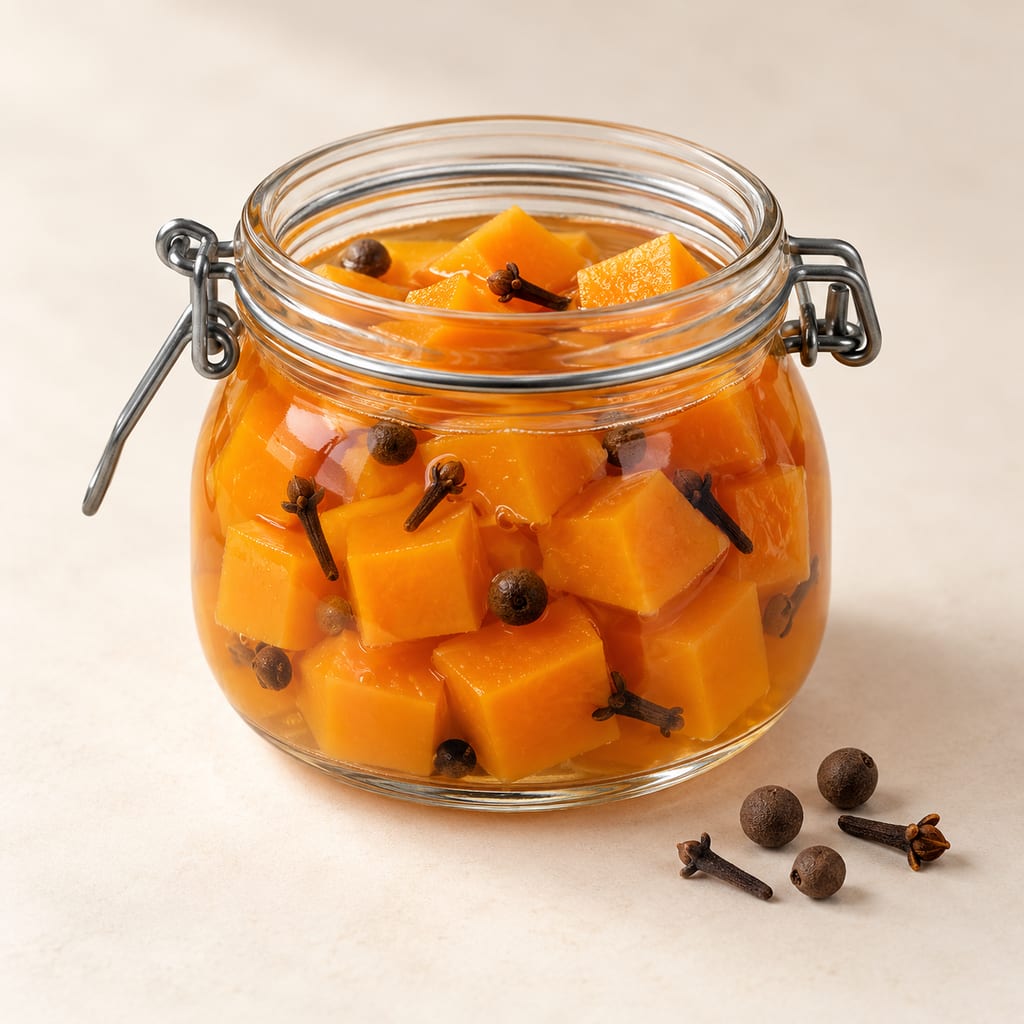
Dynia marynowana: Freeze for winter; small fresh portion refrigerated up to 48 hours.
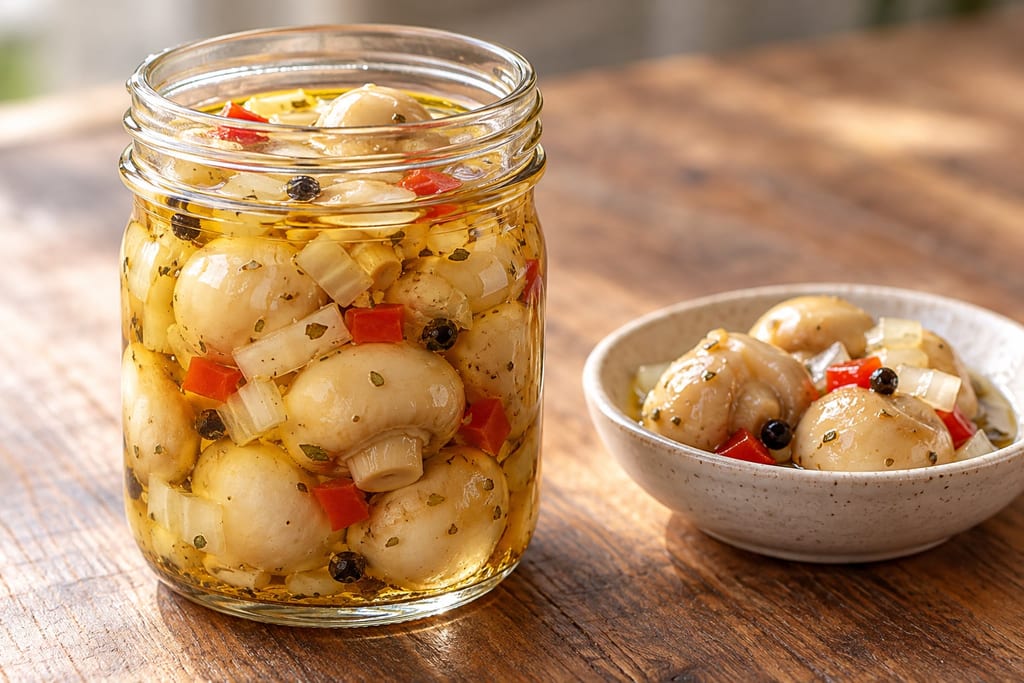
Small edible mushrooms are briefly cooked and packed in a seasoned vinegar marinade, a sweet-sour preserve served cold in Poland and neighbouring cuisines.

Fried or cooked food covered in a vinegar-based preparation, the heat and the externally supplied acid working together; a family of methods whose early form is a Roman instruction for treating fried fish with hot vinegar.
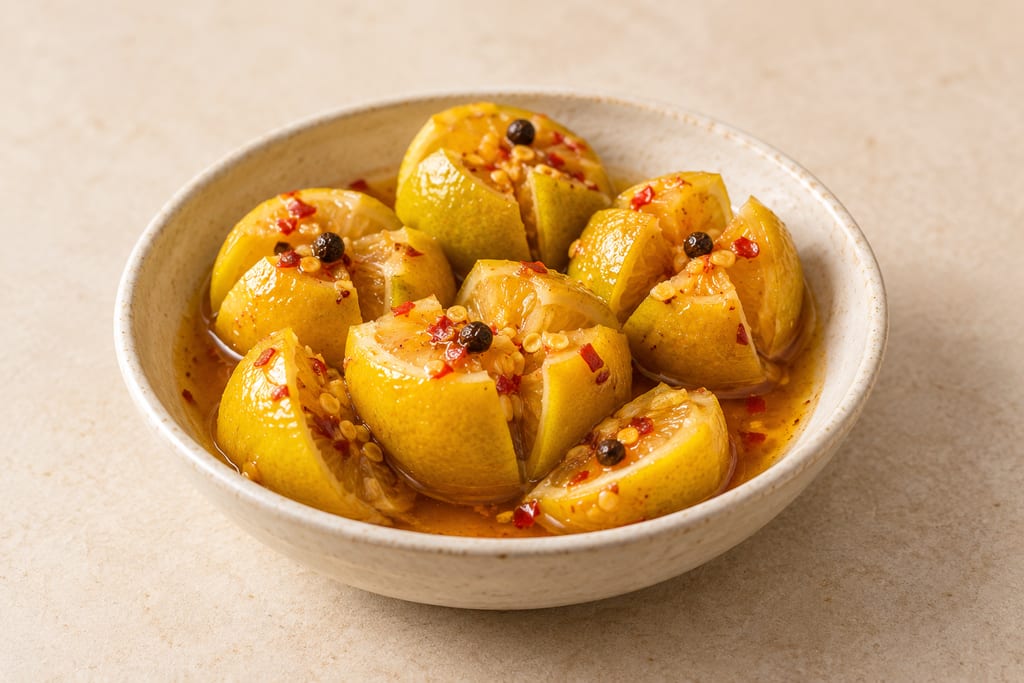
Peter Kuruvita’s published lime pickle stuffs 20 limes with rock salt, then simmers them in vinegar, sugar and chilli before a two-week rest.
No community contributions have been published for this entry yet.
Sign in to contribute. Published comments and photos are free to read.
www.onmanorama.comMethod · Context · Handling
Onmanorama, 2020: Kerala pumpkin pickle, from a named local catererDocumented preparation, regional context or preservation handling, with the limits stated in the text.
Cited in: The preserve; What is editorial here; A practical winter-stock workflow
www.gov.ukMethod · Context · Handling
Food Standards Agency / GOV.UK, How to chill, freeze and defrost food safelyDocumented preparation, regional context or preservation handling, with the limits stated in the text.
Cited in: The preserve; What is editorial here; A practical winter-stock workflow