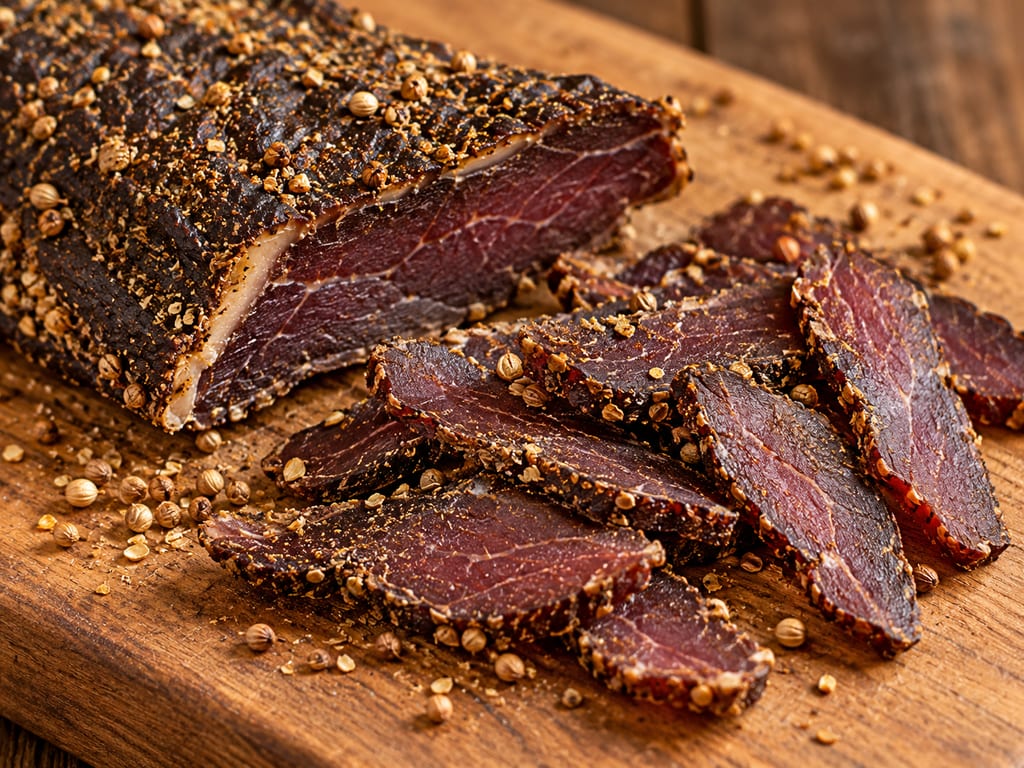
Biltong
Strips of whole-muscle beef or game seasoned with salt, vinegar, roasted coriander and pepper and air-dried without cooking, sold anywhere from soft and moist to hard and very salty.
 FermenteaWhere food goes to change
Spices and aromatics
Coriander seed is the dried, aromatic fruit of Coriandrum sativum, used whole, cracked or ground in spice blends, pickles and cooked dishes.
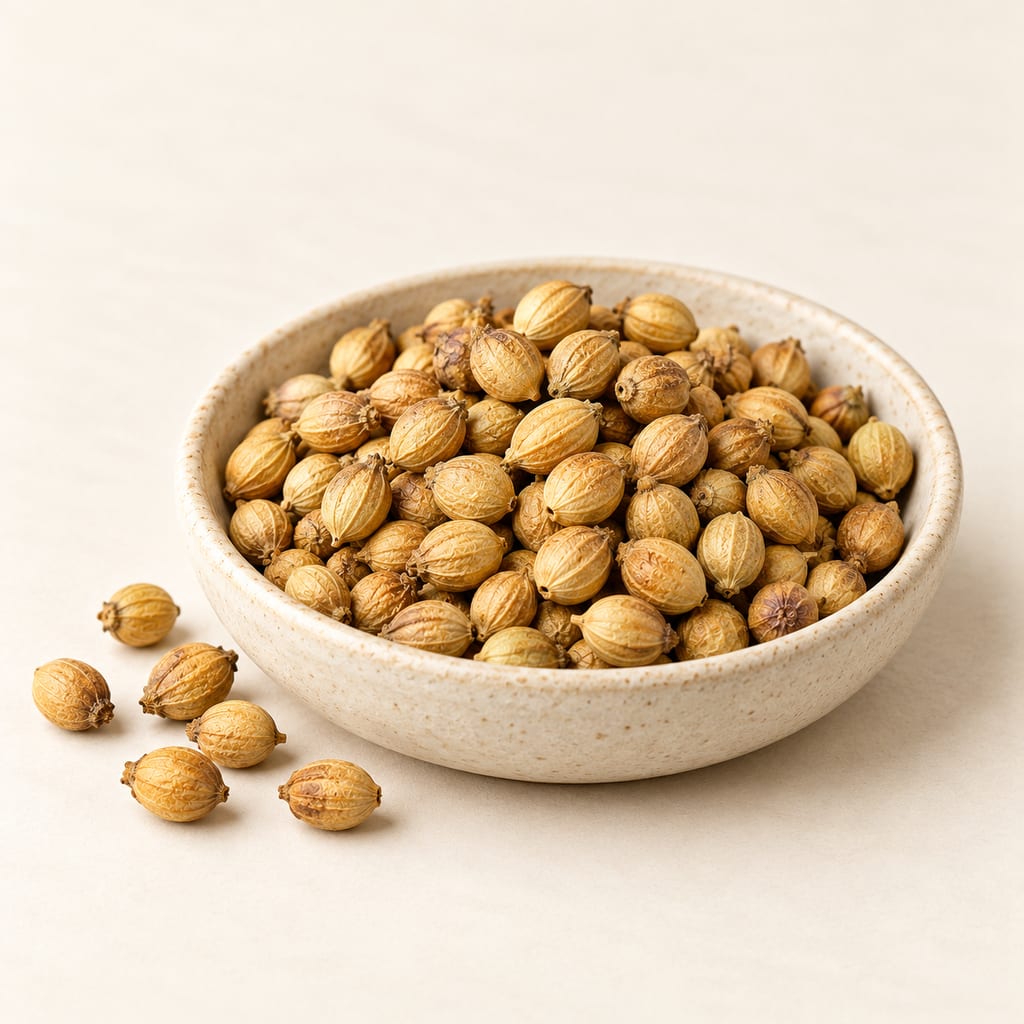
The round, ridged spice called coriander seed is botanically the dry fruit of Coriandrum sativum L., an annual herb in the carrot family, Apiaceae. Its fruit is a schizocarp: at maturity it can split into two one-seeded halves called mericarps. In commerce and kitchens, those dry fruits are still called seeds, and the familiar spice jar name is not a mistake for ordinary cooking. Whole fruits are small, firm and ribbed; some retail lots contain split halves. They can be crushed coarsely, pounded in a mortar or milled to powder, each form changing how quickly the aroma spreads through food.
The name shifts with language and with which part of the plant is meant. In English, coriander commonly names both the plant and its seeds; in North American usage cilantro usually means the fresh leaves and stems, while coriander means the spice. Elsewhere, both parts may be called coriander. Iranica records Persian names including gešnīz, while the Singapore flora profile also lists Chinese parsley and Chinese names for the plant. These names do not erase the ingredient distinction: a recipe calling for coriander seed asks for the mature dry fruit, not a handful of green leaves.
The fruit and foliage are distinct culinary ingredients. A comparative essential-oil analysis of coriander grown in Uttarakhand found seed oil dominated by monoterpenoids, with linalool the largest measured component; the leaf oil in that same study was dominated by different aliphatic compounds, including aldehydes. The values describe distilled oils from particular plants, not the percentage composition or aroma of every spice jar. They help explain why fresh cilantro leaves and dry coriander fruit are not interchangeable: different plant parts carry different volatile profiles and are used differently in cooking.
Kew accepts C. sativum and records its native range from the eastern Mediterranean to western Pakistan. The species was formally published in Species Plantarum in 1753. That taxonomic date is not a date for domestication or first culinary use. The plant’s broad native range and long cultivation make a single birthplace harder to defend than a precise ingredient identity: in the kitchen, the dry fruit is coriander seed and the same species supplies leaves called cilantro in some English-speaking markets.
Coriander’s history is better told through documented uses than through a single origin story. Kew’s botanical record gives a broad native range, while Encyclopaedia Iranica describes the herb as indigenous to the Mediterranean, Caucasus and Persia and traces it through Persian medical and culinary writing. The evidence does not identify one place where people first domesticated the plant, nor does it establish the earliest use of its fruit as a seasoning. A familiar spice’s wide geography is not proof of one simple route from an original center to every later kitchen.
Persian food writing offers an older record of coriander as a kitchen plant. Encyclopaedia Iranica finds the herb in Persian texts and dishes across centuries, but those descriptions often do not make clear whether a cook used the fresh leaves or dry fruit. A named herb in a rice dish, soup or pickle cannot automatically be taken as evidence for ground coriander spice. The secure point is a long culinary presence for the species, with the plant part depending on the particular text.
In Nepal, a 2016 home recipe provides a narrower modern attestation: its author describes tasting a lapsi achar in Bhadaure near Pokhara, then preparing her own version after returning to Kathmandu. The ingredient list names coriander seed in English, with no local-language synonym, cultivar or source region. This is the story of one cook’s experience and adaptation, not evidence that the particular pickle originated in Bhadaure or that coriander seed is used identically across Nepal.
These sources give coriander a broad food geography, but they do not trace one route from an original center to every kitchen. The fruit's dry, portable form helps explain its life as a traded spice; the fresh leaf has its own shorter keeping life and different aroma. The first cultivation event and first fruit seasoning remain unknown in this record.
Coriander is an annual plant with finely divided leaves and small flowers gathered in compound umbels. After flowering, each flower can develop a dry, rounded fruit. Kew describes the ripe fruit as 4–6 millimetres long, with strongly undulating primary ribs and two mericarps that remain firmly attached; the Singapore flora profile calls the fruit a small, round schizocarp that splits into smaller segments. This structure matters to identification. A whole spice unit is often a pair of joined mericarps, while cracked coriander reveals the two inner halves. The spice is not a separate seed harvested from inside a pod: the dry fruit itself, containing the seed, is the unit cooks buy and crush.
Harvest timing depends on the crop and the region. A Rajasthan Agricultural Competitiveness Project value-chain report on Hadauti and Kota describes coriander harvested when about half the fruits have turned yellow, after a crop cycle reported as 110–125 days after sowing. It warns that waiting until the crop is too dry can increase fruit shattering and field loss. These are local production observations in a commercial report, not a universal calendar for all climates, varieties or household gardens. The plant is grown under different seasonal patterns elsewhere, and a garden crop harvested for fresh leaves follows a different purpose from a field grown through fruit set for spice.
After harvest, green plant material is separated and the fruits are dried and cleaned. The same Rajasthan report recommends storage below 10 percent moisture, removal of green material, and aeration or natural-air drying during early storage, describing a curing period for the harvested seed. It specifically cautions against hot-air drying on the grounds that coriander oil is volatile. The figures and handling advice belong to that report’s regional post-harvest context; they should not be copied as a home drying specification without local agricultural guidance. For the cook, the useful distinction is simpler: the spice sold as coriander seed has been harvested as fruit and dried, whereas cilantro is collected as fresh foliage before seed maturity.
Commercial grades and cultivars differ in fruit size, color, oil content and yield, and the Rajasthan report documents named Indian varieties selected for those traits. Those figures are agricultural measurements, not a quality score for a jar at home. A pale, clean lot and a darker one may both be coriander; broken fruits may release aroma faster but look different and can grind differently. The exact cultivar and farm origin are usually not given on a generic spice packet. A recipe naming coriander seed therefore identifies the species-level ingredient and form but cannot, by itself, identify the crop variety or the production region.
The aroma of coriander fruit comes in part from volatile essential oil held in small structures in the fruit wall. Crushing exposes more of that material to air, so the scent becomes stronger just as a cook begins to grind it. A primary analysis of Tunisian fruit collected at different ripeness stages found linalool to be the largest identified part of its distilled oil throughout maturation, while other compounds shifted. This is evidence for the character and variability of the fruit's oil, not a fixed chemical specification for whole coriander seed in every jar.
A second primary analysis compared seed and leaf essential oils from coriander grown in the tarai region of Uttarakhand, India. The seed oil’s major components included linalool, geranial, myrcene and alpha-humulene; the leaf oil was instead dominated by aliphatic compounds such as (E)-2-decenal and decanal. Together, the studies show why the same plant can offer two different kitchen ingredients. They also caution against treating ‘coriander aroma’ as one fixed chemical recipe: maturity and growing place influence the mix, and distilled oils concentrate compounds far beyond their level in a spoon of whole fruit.
The chemical profile helps explain the fruit’s aromatic character, but no one compound defines the flavor of a spoonful of whole spice. Iranica describes coriander as valued for its aromatic leaves and seeds. The studies here measured extracted essential oil, not a tasting panel of retail coriander or a cooked dish. A fruit can smell mild before crushing and more pronounced after it is broken; the prepared food adds heat, fat, salt, acid, other spices and its own aromas. The experience at the table is the result of that mixture, not linalool acting alone.
Roasting is a familiar culinary stage, but it should not be confused with the plant’s maturation chemistry or with extraction of commercial essential oil. A pan warms the whole fruits; grinding then breaks them down and distributes their flavor. The linked Nepali cook says she lightly roasts coriander with cumin and carom for a few minutes before grinding the mixture. Her account gives a sensory preference and a practical sequence, not a controlled temperature or a measured aroma study. The available maturation research does not test that household roast, so no exact chemical change from her specific pan method can be assigned here.
Nirmala’s 2016 lapsi ko achar recipe specifies half a teaspoon of coriander seed for a batch using two kilograms of ripe lapsi. Cumin seed and carom seed are each listed at the same half-teaspoon amount. While the fruit boils, she puts the three spices into a shallow pan and lightly roasts them for a few minutes, then hand-grinds the mixture in a stone mortar until it is fine. That sequence shows the form clearly: the spices begin as seeds rather than a pre-ground powder and end as a shared fine seasoning. The recipe does not name a coriander cultivar or source region.
The fine spice mixture joins cooked, peeled lapsi, salt and sugar after mustard oil has been heated with fenugreek and turmeric. Coriander is one part of a trio, measured in teaspoons against kilograms of fruit. The result is the writer's sweet-sour achar, eaten beside a meal. The fruit, oil and seasonings make the dish; the coriander contributes flavor rather than fermentation or a known preservation barrier.
The Nepali pickle differs from Persian soups, rice dishes and pickles in its fruit base and its small toasted-seed blend. Iranica records coriander in those Persian foods without always identifying the plant part, so the examples show culinary breadth for the species rather than a lineage for this particular achar. Nirmala's method supplies the exact seed use here.
The recipe writer says hand grinding in a stone mortar gives a richer flavor. That is her stated preference for this preparation; it does not establish that stone is required or that a mechanical grinder would make a different food. The mortar also helps turn the lightly roasted seed mixture into the fine powder she describes. If a reader follows this specific method, the grind is the endpoint the source gives. If a cook uses pre-ground coriander, the resulting distribution and aroma may differ, but that substitution is not tested in the recipe. The ingredient record keeps the original seed form and method visible rather than presenting an unreported alternative as equivalent.
Whole coriander fruit holds its shape until it is cracked or ground. Coarse crushing leaves little fragments that can be noticed in a bite; fine powder disappears into a spice mixture and spreads aroma throughout. Ground fruit has more exposed surface and loses volatile aroma more readily in storage. A packaging study of coriander powder found that the pouch material affected moisture entry and volatile-oil loss; it supplies a reason to protect the powder, not a shelf life for every retail jar.
For everyday cooking, store the dry spice in a closed container away from moisture, heat and prolonged air exposure, and grind only what the recipe needs when practical. The research supports protecting ground coriander from moisture and volatile loss, but it does not provide a universal expiry date. Follow the package date and discard a spice that has become damp, visibly contaminated or clearly off in smell. Aroma fading is a quality change; it is not, by itself, a test that proves safety or danger.
In the lapsi pickle, coriander remains a dry plant spice chosen for seasoning. It is not the source of the fruit's acidity or a starter for fermentation. The recipe does not attribute keeping quality to coriander, and its jar-storage statement gives no measured acidity or validated preservation process. The spice's useful role is culinary: a warm, lightly citrus-like note within the roasted three-seed blend.
The recipe author says she prepared this coriander-seed lapsi achar after returning to Kathmandu; it does not establish a birthplace for the spice or dish.
Strips of whole-muscle beef or game seasoned with salt, vinegar, roasted coriander and pepper and air-dried without cooking, sold anywhere from soft and moist to hard and very salty.
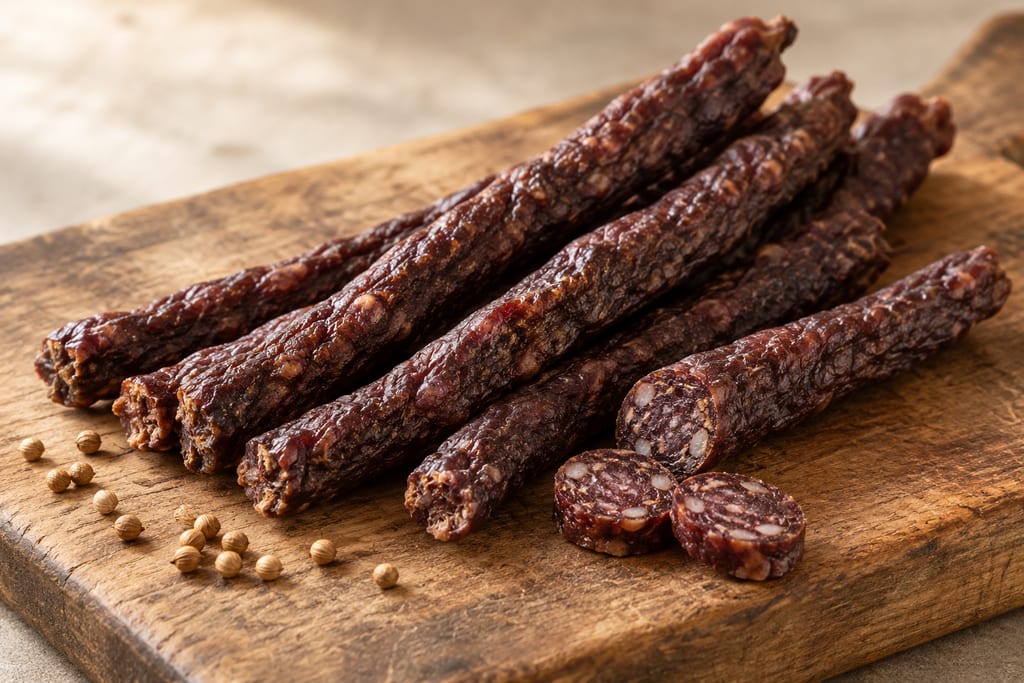
South Africa's dried sausage: seasoned minced meat in narrow casings, dried until it can be eaten without cooking, which makes it a far more demanding product than fresh boerewors.
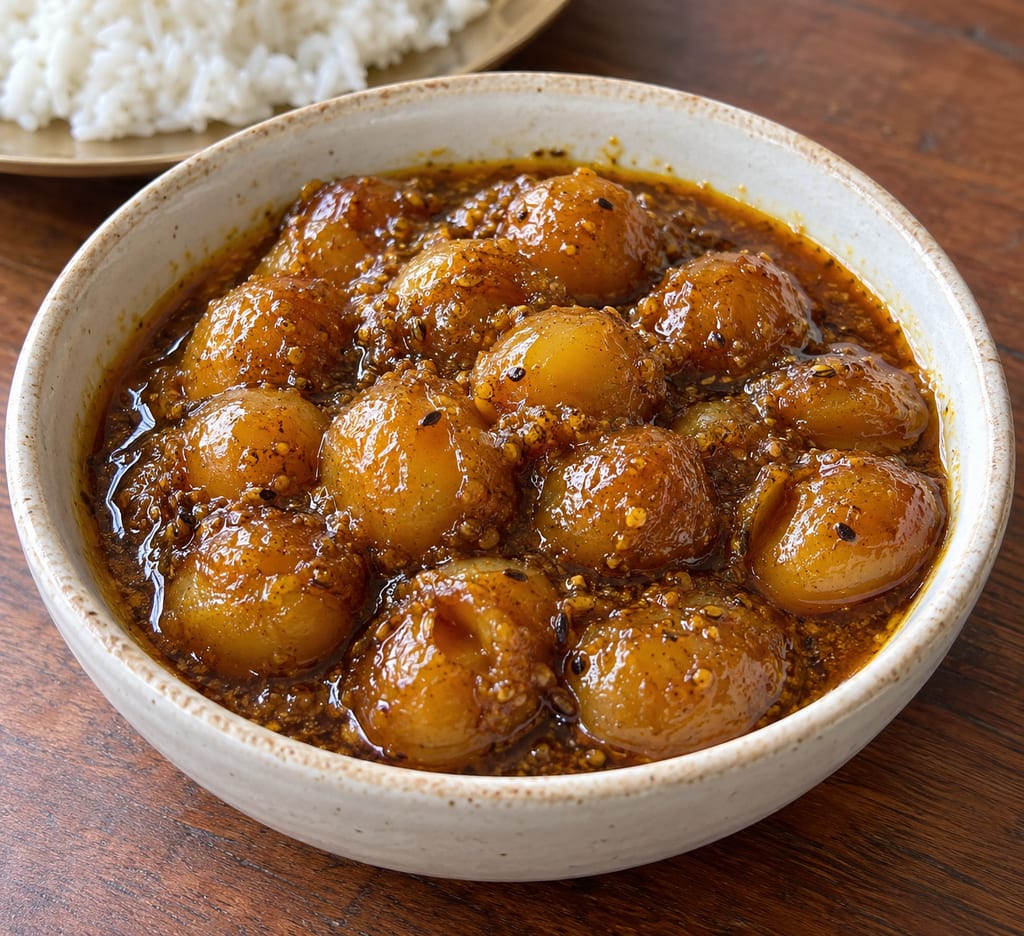
Ripe Nepali lapsi is boiled, peeled and cooked with mustard oil, salt, sugar and roasted spices to make a sweet-sour achar served alongside a meal.
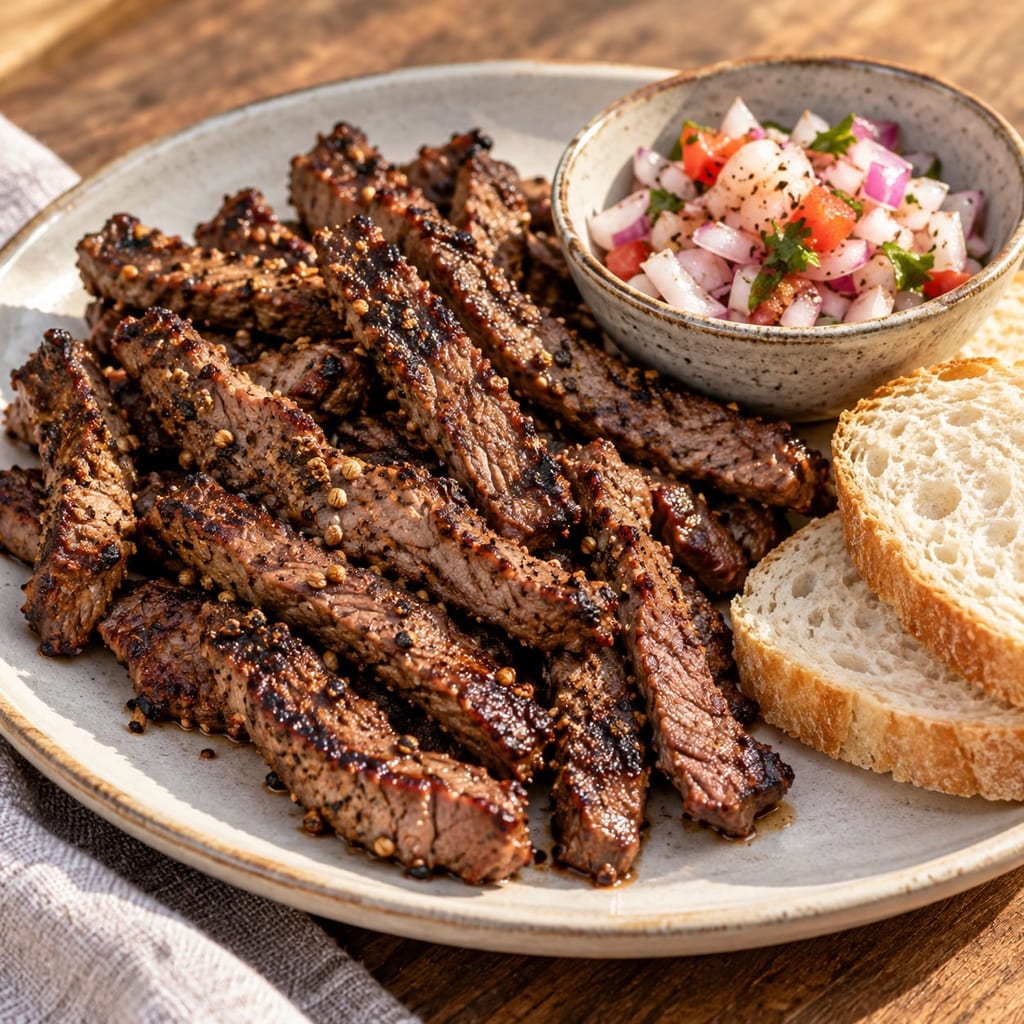
Beef rump takes vinegar, toasted coriander and pepper from the flavour family of tassal, then meets a thermometer-checked braai fire as a fresh-cooked meal.
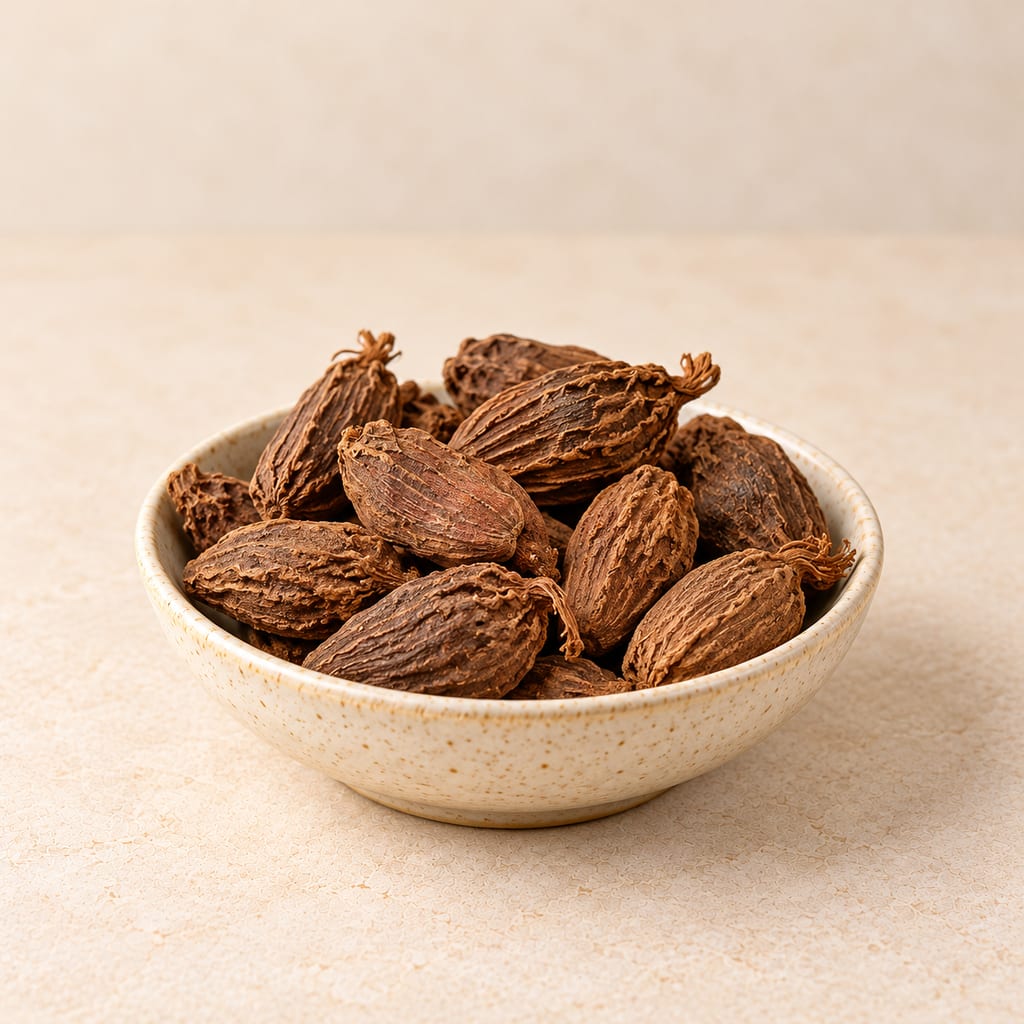
Alainchi is the large or black cardamom of the eastern Himalaya, the dark, smoke-dried pods of Amomum subulatum. Its camphor-cool, smoky seeds season Himalayan and North Indian cooking and a sweet Nepali lapsi achar.

Bamboo shoots are the young culms of many bamboo species, eaten after boiling or leaching in Asia, and fermented into sour and preserved foods in the Himalayas, northeast India and Burma.
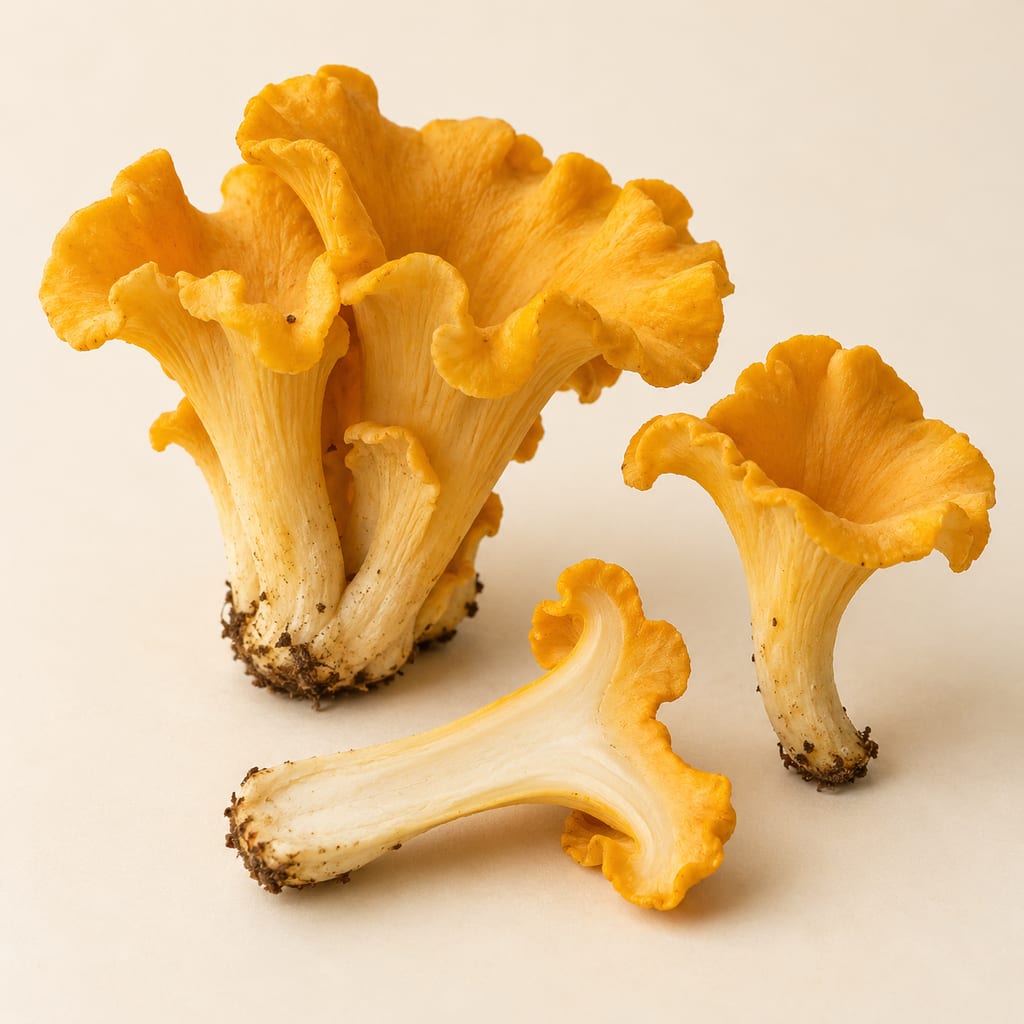
Cantharellus odoratus, the fragrant chanterelle, is a North American and Central American oak-woodland fungus. It was sold in a Veracruz market in the 1980s and in Guatemala in 2002, and its name is still disputed.
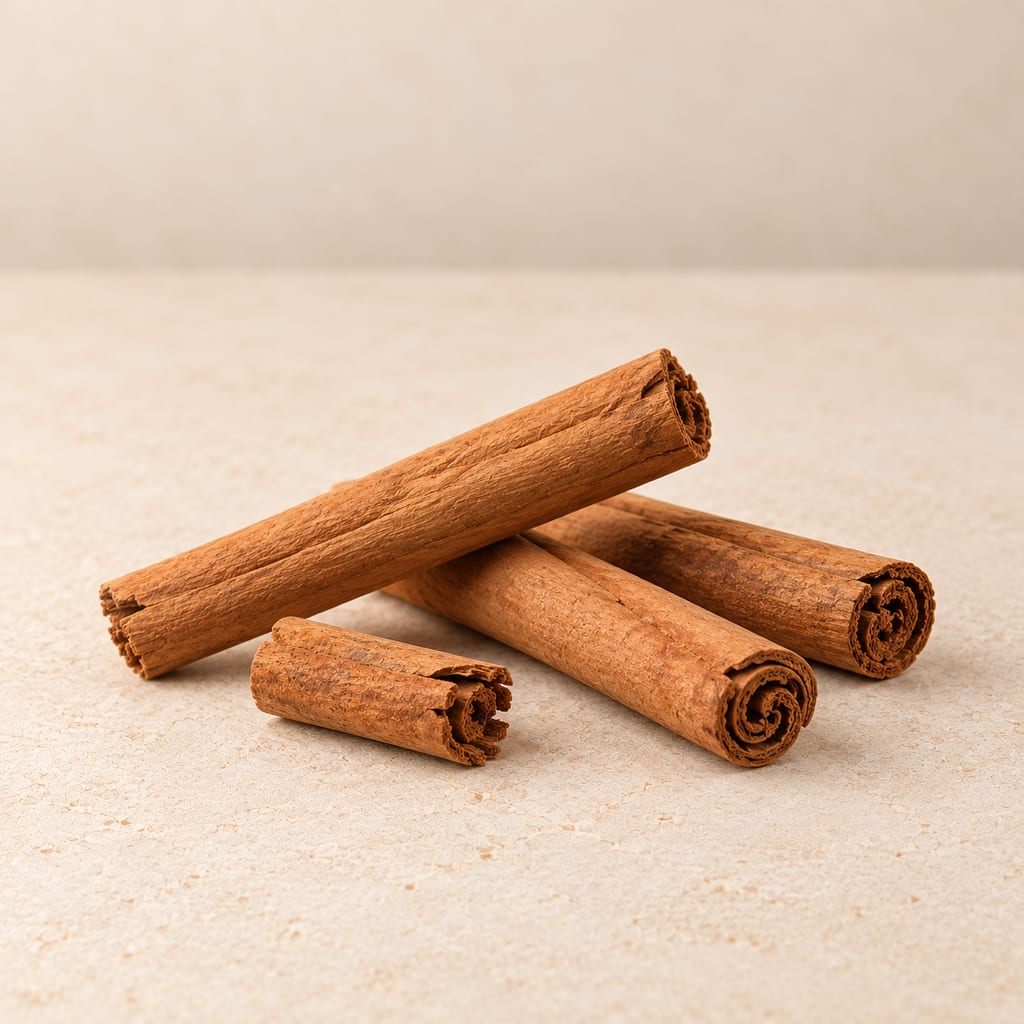
Cinnamon is the dried inner bark of Cinnamomum trees, rolled into quills or ground; Ceylon cinnamon comes from C. verum of Sri Lanka and cassia from related species.
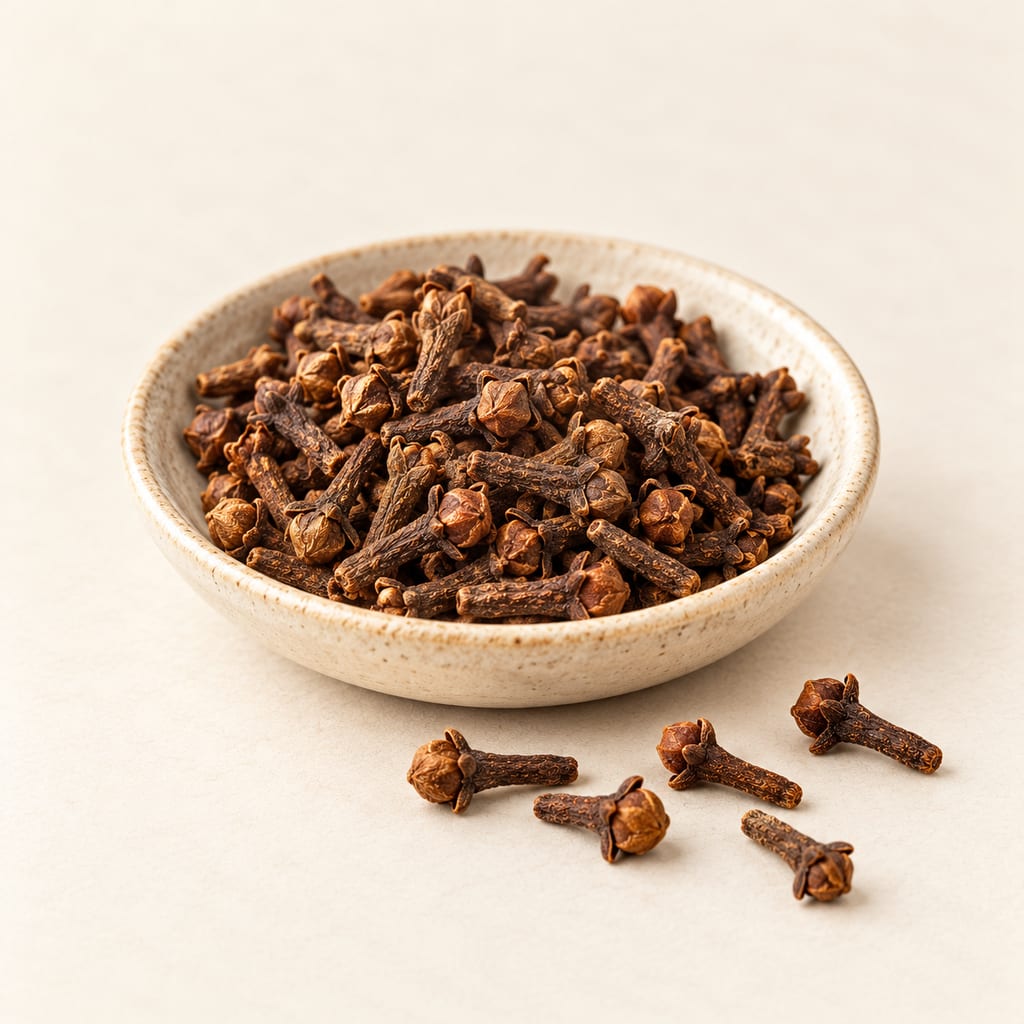
Cloves are the dried unopened flower buds of Syzygium aromaticum. Whole buds infuse liquids and can be removed; ground clove disperses its intense aroma through food.
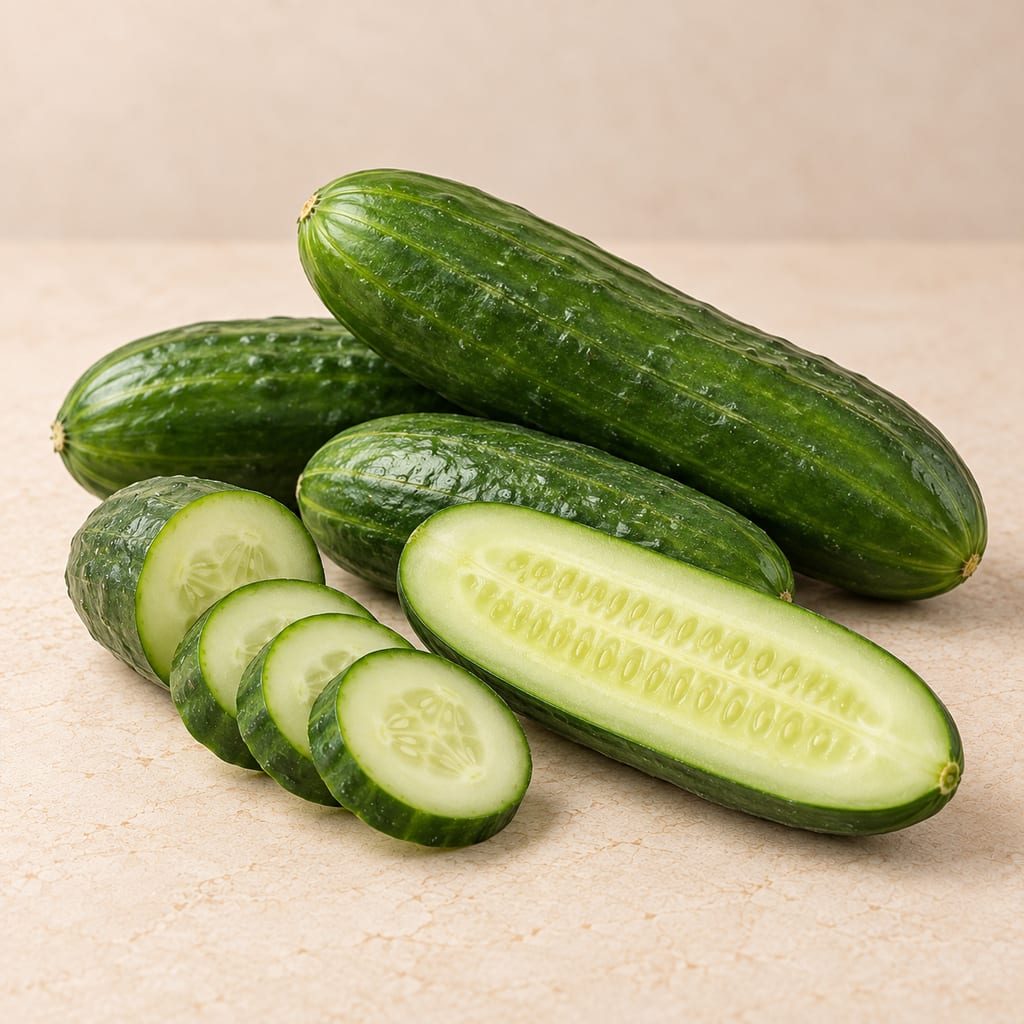
Cucumber is the watery fruit of Cucumis sativus, domesticated in India, and the classic raw material of brine pickles from New York dills to Nepali khalpi and Korean oi-sobagi.
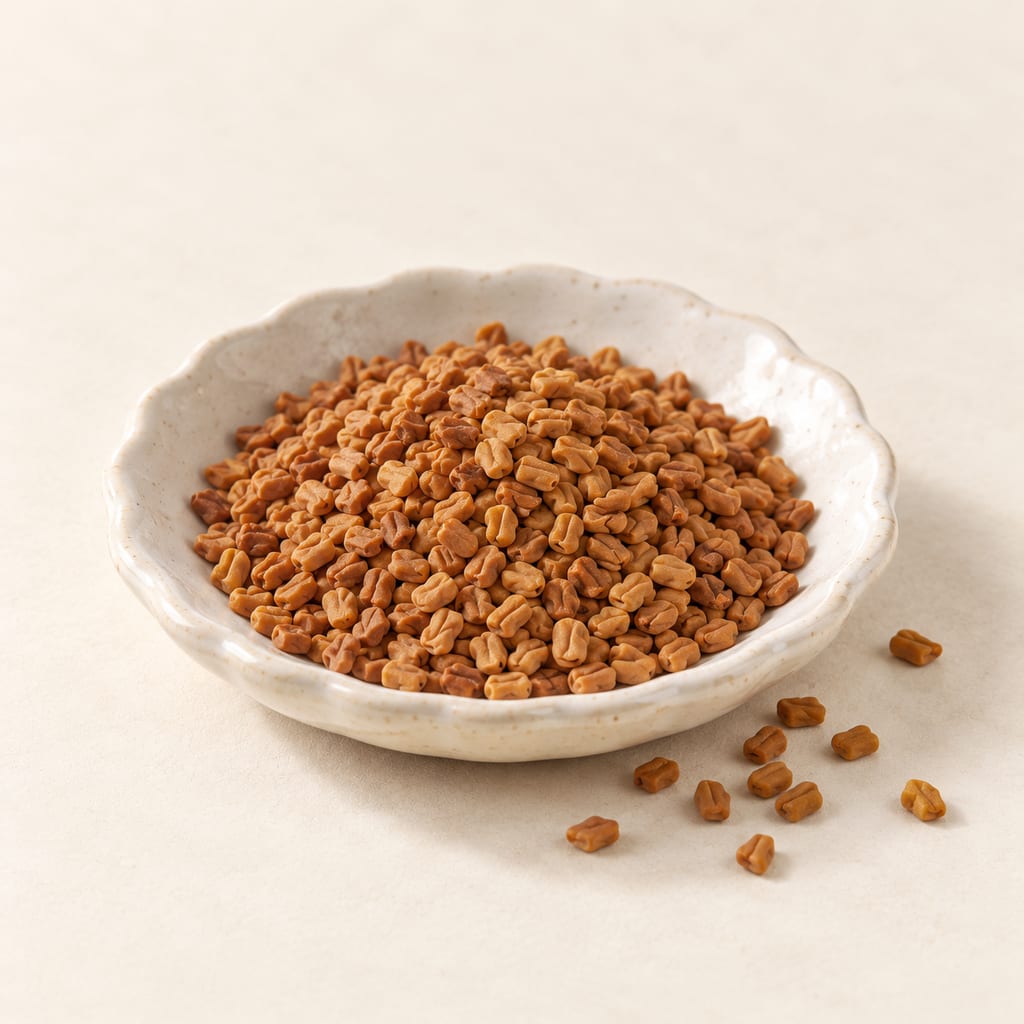
Fenugreek seed is the bitter, fragrant dry seed of Trigonella foenum-graecum, used in tempering, pickles, breads and spice mixtures.
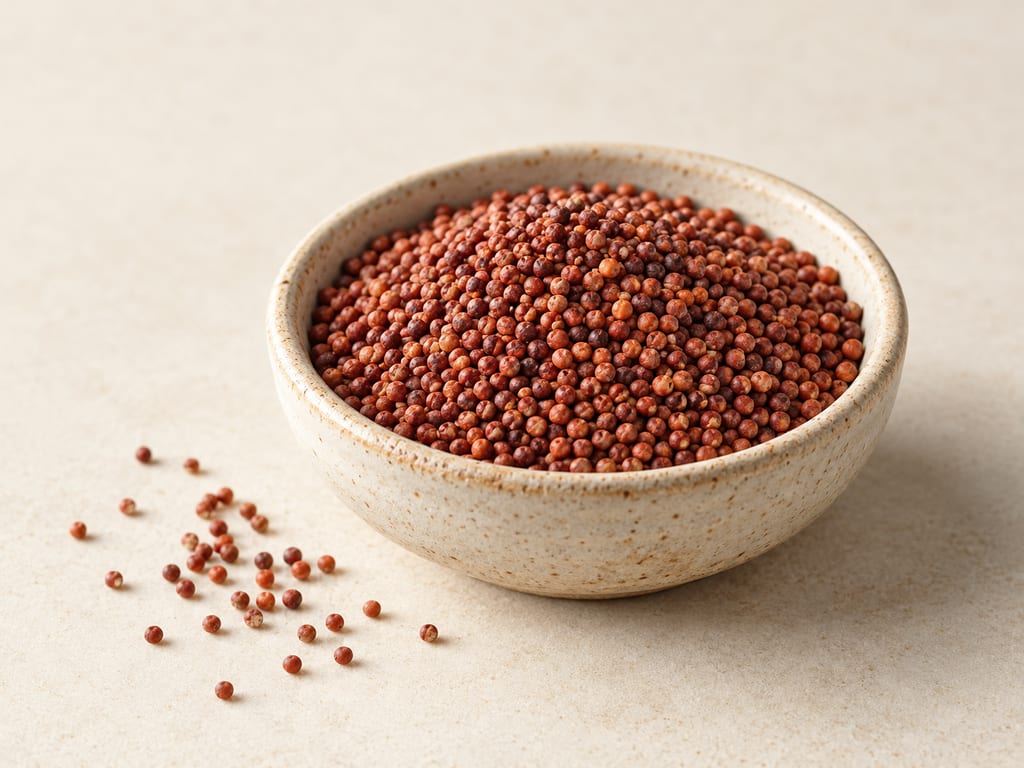
Finger millet (Eleusine coracana) is a small-grained cereal grown across parts of Africa and Asia. It is milled, cooked, malted and fermented in distinct food traditions.
No community contributions have been published for this entry yet.
Sign in to contribute. Published comments and photos are free to read.
Royal Botanic Gardens, Kew, Plants of the World OnlineTaxonomy · Native range · Botanical identity
Coriandrum sativum L.Accepted species and Apiaceae classification; native range eastern Mediterranean to western Pakistan; annual; formal name first published in 1753; ripe fruits 4–6 mm with ribbed mericarps.
Cited in: The fruit sold as a seed; A broad range, a layered history; From flowering herb to dry spice
National Parks Board, Singapore, Flora & Fauna WebMorphology · Names · Botanical distinction
Coriandrum sativumAnnual herb, umbels, dry rounded schizocarp that splits; common names; North American distinction between cilantro leaves and coriander seeds versus broader naming elsewhere.
Cited in: The fruit sold as a seed; From flowering herb to dry spice
Nirmala’s Delight (Nirmala cuisine)Linked recipe identity · Specific ingredient quantity · Method · Nepal household context
How to make Lapsiko Achar (Hog Plum pickle)Directly read recipe: 2 kg ripe lapsi; coriander, cumin and carom seed each 1/2 tsp; author lightly roasts the three spices and grinds them fine in a stone mortar; describes tasting a different achar in Bhadaure and making her version after returning to Kathmandu.
Cited in: A broad range, a layered history; Whole, toasted and ground in a Nepali pickle
Rajasthan Agricultural Competitiveness Project, Agri Business Promotion FacilityCultivation · Harvesting · Post harvest handling
Value Chain Analysis: CorianderDirect PDF text inspected, pp. 6 and 40: Hadauti/Kota harvest when about 50% of fruits yellow after 110–125 days; avoid over-drying and shattering; report recommends <10% moisture, removal of green material, aeration/natural-air drying and avoiding hot-air drying in that regional context.
Cited in: From flowering herb to dry spice
Encyclopaedia IranicaHistorical identity · Persian culinary history · Names
Coriander (Coriandrum sativum L.)Directly read entry: Persian names and broad historic range; Safavid cookbook uses; named foods; Mirza Ali-Akbar’s nineteenth-century court dishes under Nasir al-Din Shah (1848–1896). Does not date a first culinary use.
Cited in: The fruit sold as a seed; A broad range, a layered history; What the aroma contains; Whole, toasted and ground in a Nepali pickle
Journal of Food Biochemistry, WileyPrimary aroma chemistry · Fruit maturity
Variations in Essential Oil Composition during Maturation of Coriander (Coriandrum sativum L.) FruitsDirect abstract read: GC-FID and GC-MS analysis of essential oils from four maturity stages; linalool 36.69–72.35% of extracted oil and changes in other constituents. Values apply to the Tunisian study samples and extracted oil.
Cited in: From flowering herb to dry spice; What the aroma contains; Whole, toasted and ground in a Nepali pickle
U.S. Environmental Protection Agency, Health and Environmental Research OnlinePrimary comparative aroma chemistry
Characterization of Coriander (Coriandrum sativum L.) Seeds and Leaves: Volatile and Non Volatile ExtractsDirectly read journal-abstract record: seed and leaf essential oils had different major volatile compounds; seed oil included linalool, while leaf oil included (E)-2-decenal and related aldehydes. No sensory or health claims inferred.
Cited in: The fruit sold as a seed; What the aroma contains; Whole, toasted and ground in a Nepali pickle
Indian Spices, Central Food Technological Research Institute repositoryGround spice storage · Packaging
Packaging and storage studies of ground coriander (Coriander sativum L.) in flexible consumer packagesDirect repository abstract read; ground coriander pouch study measured moisture and volatile/fixed oils; packaging affected moisture entry and volatile-oil loss. Full PDF restricted; no universal shelf-life inferred.
Cited in: Forms, storage and practical use
Wikimedia CommonsLinked subject photo lead
File:Coriander Seeds.jpgPixel-inspected 1280×853 view shows dry tan-yellow whole, longitudinally ribbed Coriandrum fruits and some split mericarps; own work; CC BY-SA 4.0; direct image https://upload.wikimedia.org/wikipedia/commons/thumb/8/86/Coriander_Seeds.jpg/1280px-Coriander_Seeds.jpg. Attribution: Sanjay Acharya. License: https://creativecommons.org/licenses/by-sa/4.0/.
