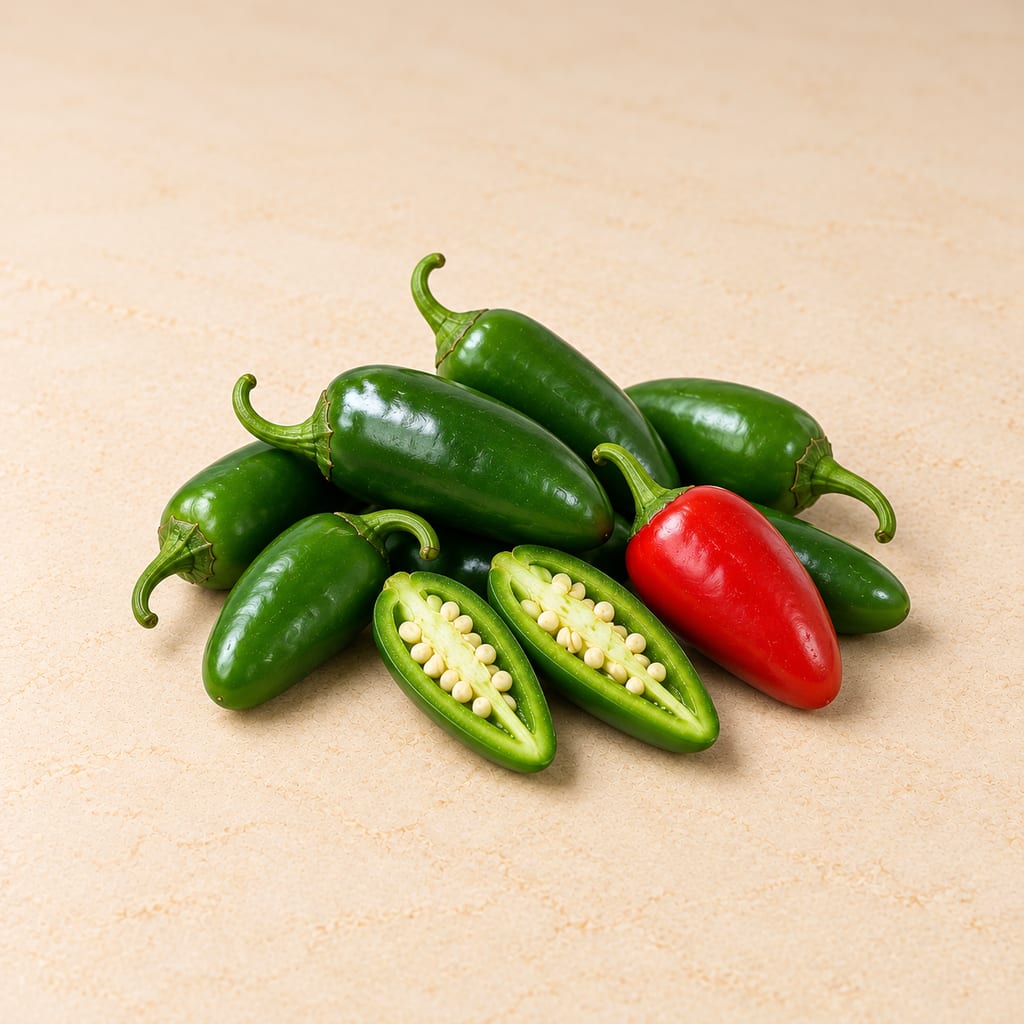
Jalapeño
Jalapeño is a named type of Capsicum annuum, usually sold green and also eaten red when ripe. It has a fresh green aroma and a reported heat range of about 2,000–8,000 Scoville units.
 FermenteaWhere food goes to change
Mushrooms
Cantharellus odoratus, the fragrant chanterelle, is a North American and Central American oak-woodland fungus. It was sold in a Veracruz market in the 1980s and in Guatemala in 2002, and its name is still disputed.
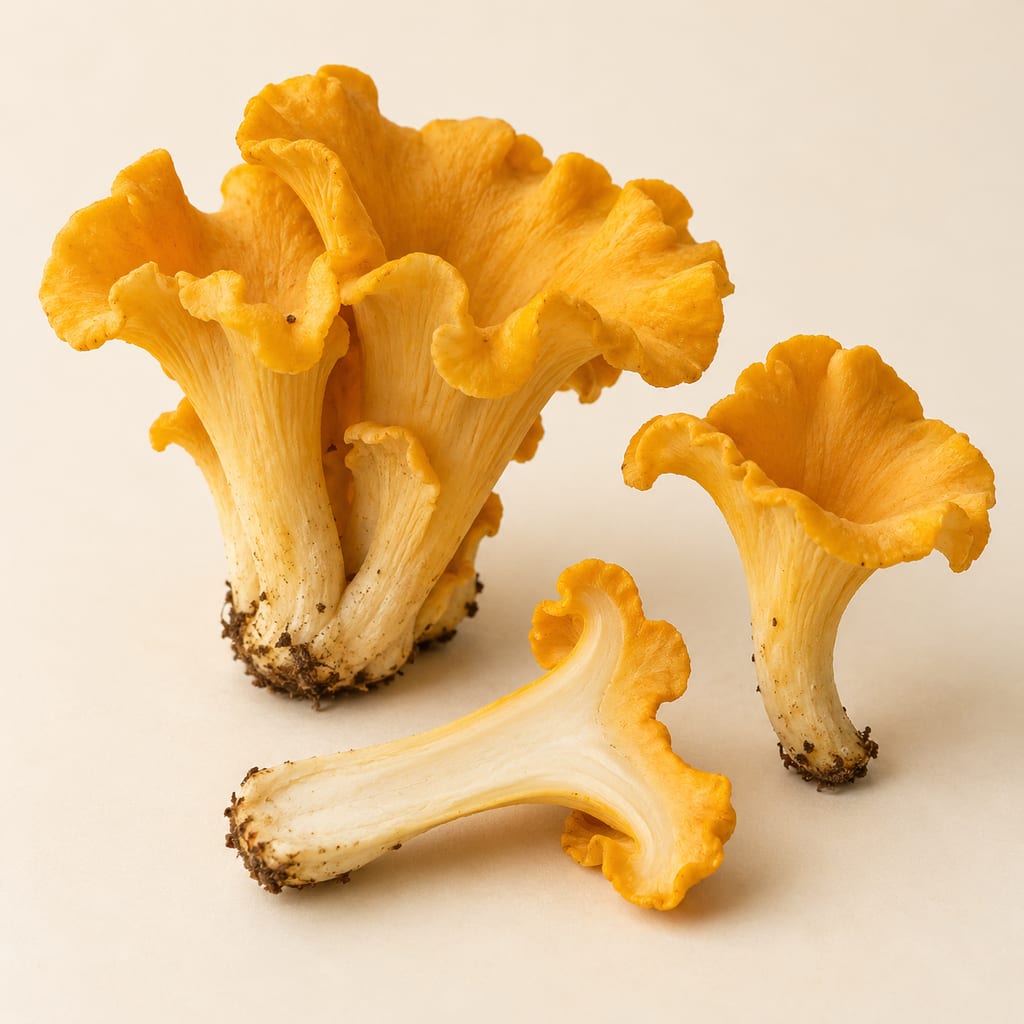
Cantharellus odoratus is an oak-associated chanterelle with a fragrant smell and a yellow to orange colour. It appears in older literature under the names Craterellus odoratus and Craterellus confluens. Species Fungorum keeps the Cantharellus combination, while other recent sources place it in Craterellus. The contemporary species concept is not settled, and the 2024 Mexican reassessment shows that records under the old name can include other taxa.
A market name, an orange colour or a fragrant smell does not establish the species.
Guzman and Sampieri's 1984 study of Veracruz describes ten Mexican localities and calls the mushroom edible and popular at the Huatusco market, where it was sold as hongo de encino. Specimens bought there went into a dish that won a mushroom-cooking competition in 1983. The article gives no recipe.
A 2002 Guatemalan survey found mushrooms identified as C. odoratus for sale in Mixco and San Juan Sacatepequez, and summarised earlier distribution records from several departments. Those records are historical literature entries rather than a current survey.
FAO's global overview lists C. odoratus as edible, citing a Nepalese report. A later Nepal Department of Plant Resources list says several named chanterelles, including C. odoratus, are mixed with other Cantharellus species in markets. That supports a historical edible checklist claim, but it does not show that the Nepalese material was this species alone.
A North American assessment describes fruiting in summer and autumn under oak. Mexican collections give a July to October window at the studied sites, plus a December collection that the authors question. Texas photographic records span April to October. Those are dated observations at particular places, and they do not give one season for the species.
The historical market records show that this chanterelle has been sold and cooked, but they are not a toxicology study or a guarantee for every specimen. No preparation, serving amount or storage limit is documented for safe use. Use only correctly identified material from a source that can confirm the species. This entry does not encourage foraging.
Sold as hongo de encino; the 1984 study names ten Mexican localities.
Market sale recorded; earlier distribution records cited from several departments.
Checklist and mixed-market record; not a species-specific food account.
Jalapeño is a named type of Capsicum annuum, usually sold green and also eaten red when ripe. It has a fresh green aroma and a reported heat range of about 2,000–8,000 Scoville units.
No community contributions have been published for this entry yet.
Sign in to contribute. Published comments and photos are free to read.
Sociedad Mexicana de MicologiaFood use · Distribution · Season
Guzman and Sampieri 1984, Veracruz wild mushroom studyTen Mexican localities; edible and popular at Huatusco market as hongo de encino; 1983 cooking competition dish
Cited in: Food in Mexico and Guatemala; Safety
Universidad de San Carlos de GuatemalaFood use · Distribution
Guatemalan mushroom survey, 2002Market sale in Mixco and San Juan Sacatepequez; historical distribution records
Cited in: Food in Mexico and Guatemala
FAOFood status
Wild edible fungi: a global overview, Annex 3 entriesEdible classification citing a Nepal report
Cited in: Nepal and the wider record
Department of Plant Resources, NepalFood status
Department of Plant Resources journal 2014Named chanterelles mixed with other Cantharellus species in markets
Cited in: Nepal and the wider record
Species FungorumTaxonomy
Species Fungorum synonymy for Cantharellus odoratusAccepted combination and synonyms
Cited in: Overview
IUCNTaxonomy · Food status
Cantharellus odoratus, IUCN Red List accountTaxonomic note on placement in Craterellus
Cited in: Overview; Safety
Revista Mexicana de BiodiversidadTaxonomy
2024 Mexican reassessment of Cantharellus recordsRecords under the old name can include other taxa
Cited in: Overview; Season
PubMed CentralSeason
North American Cantharellus assessmentOak-associated fruiting in summer and autumn
Cited in: Season
Texas MushroomsSeason
Texas Mushrooms dated record, 14 July 2018Dated photographic observation
Cited in: Season