Nepal

Recipes by the places recorded in their sources.

Nepal

16 recipes

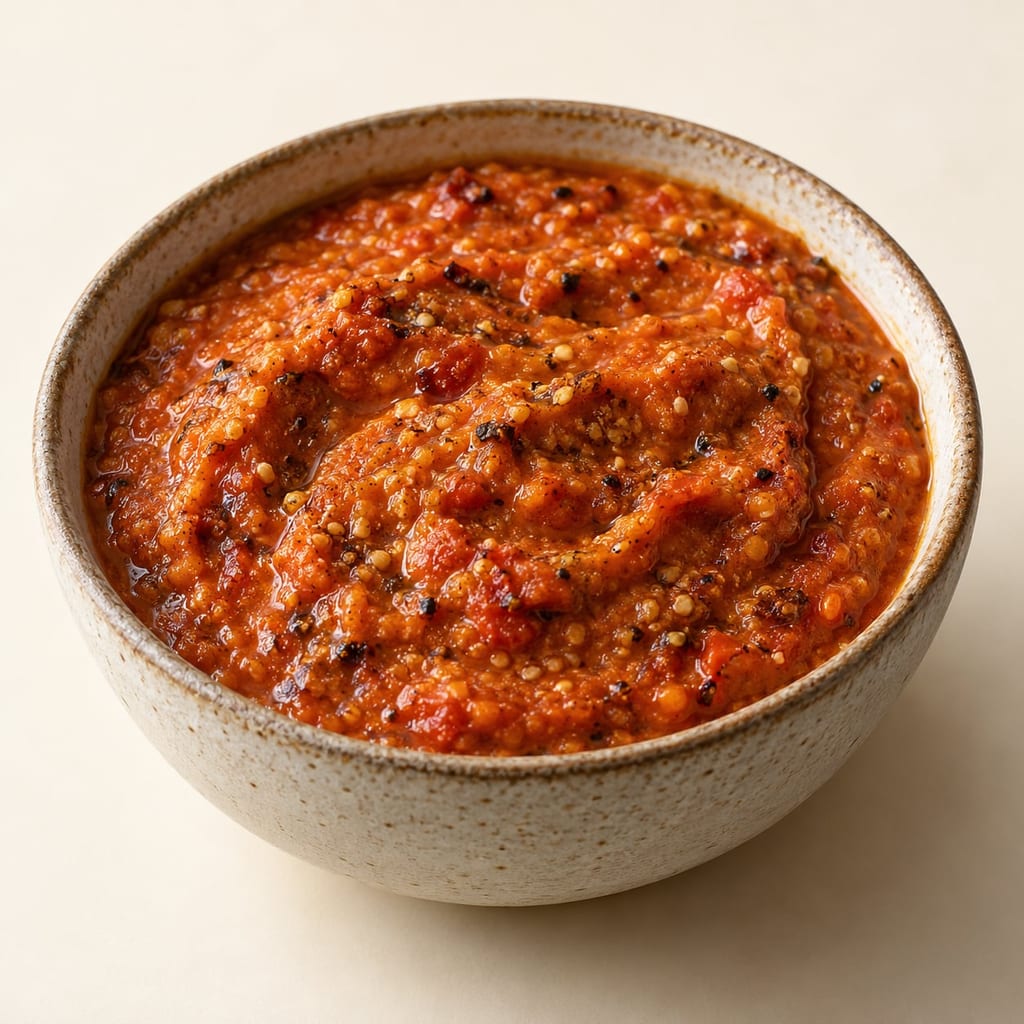
Photograph of Nepalese tomato-sesame timur achar for momo.

Nepalese tomato-sesame timur achar for momo

A roasted tomato dip thickened with toasted sesame and seasoned with dried chilli, cumin and timur. This measured version follows a contemporary published momo achar recipe; it is one documented formula, not a national standard.
Kathmandu Valley · Modern adaptation
· Condiments
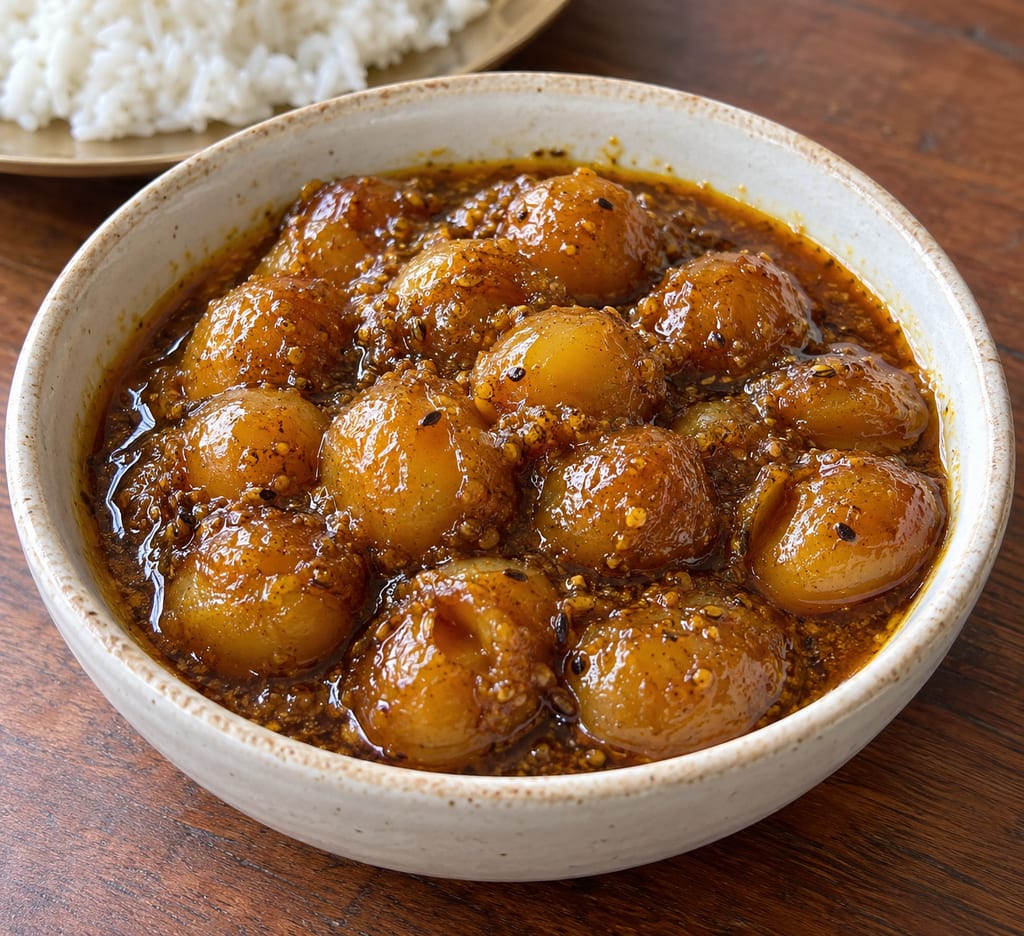
A bowl of cooked Nepali lapsi ko achar with whole softened fruit in a thick mustard-oil, sugar and roasted-spice sauce, made in the published Nirmala cuisine style.

Lapsi ko achar with mustard oil

Ripe Nepali lapsi is boiled, peeled and cooked with mustard oil, salt, sugar and roasted spices to make a sweet-sour achar served alongside a meal.

Kathmandu · Modern adaptation
· Fruit
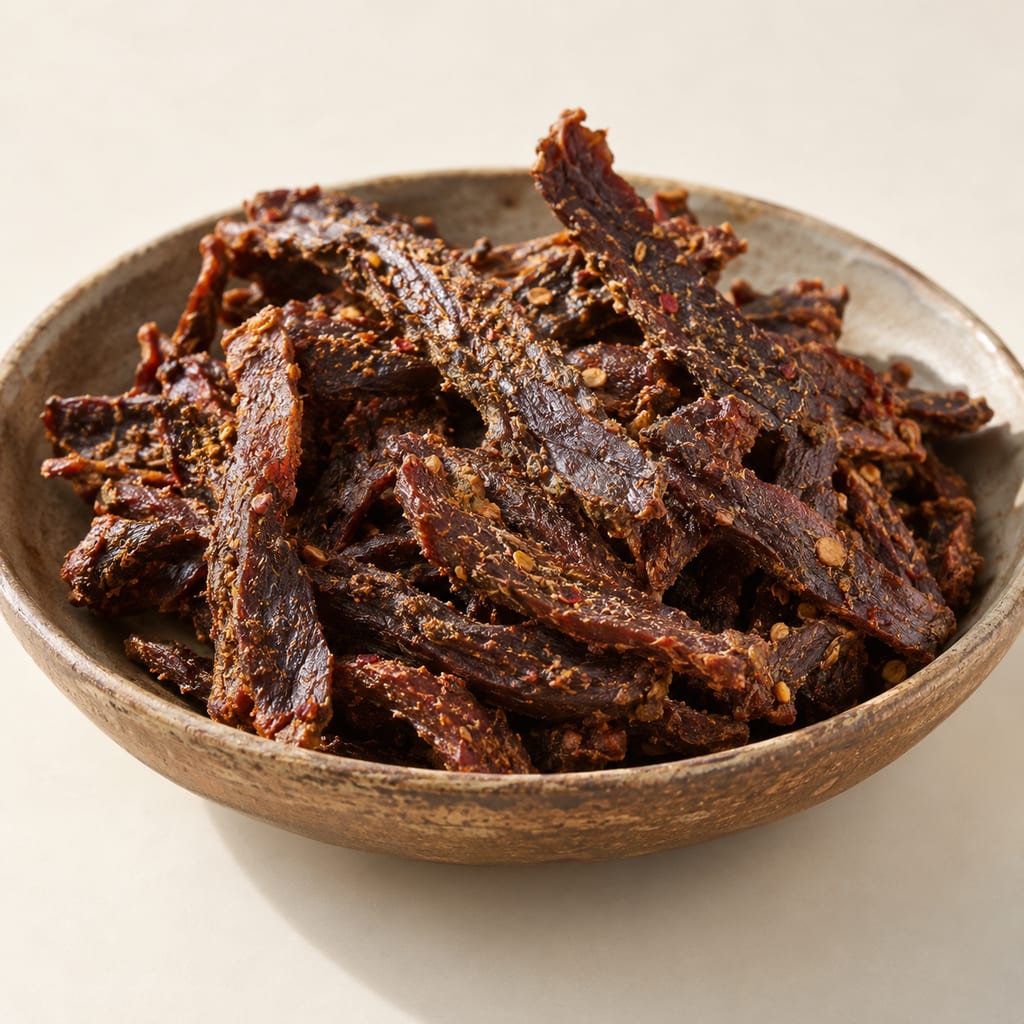
Photograph of Sukuti.
Elevated risk

Sukuti

Sukuti is Nepali dried meat, most often buffalo, cut into thin strips, seasoned with spices, dried over smoke or in the sun, and later fried or roasted before eating.

Nepal
Meat
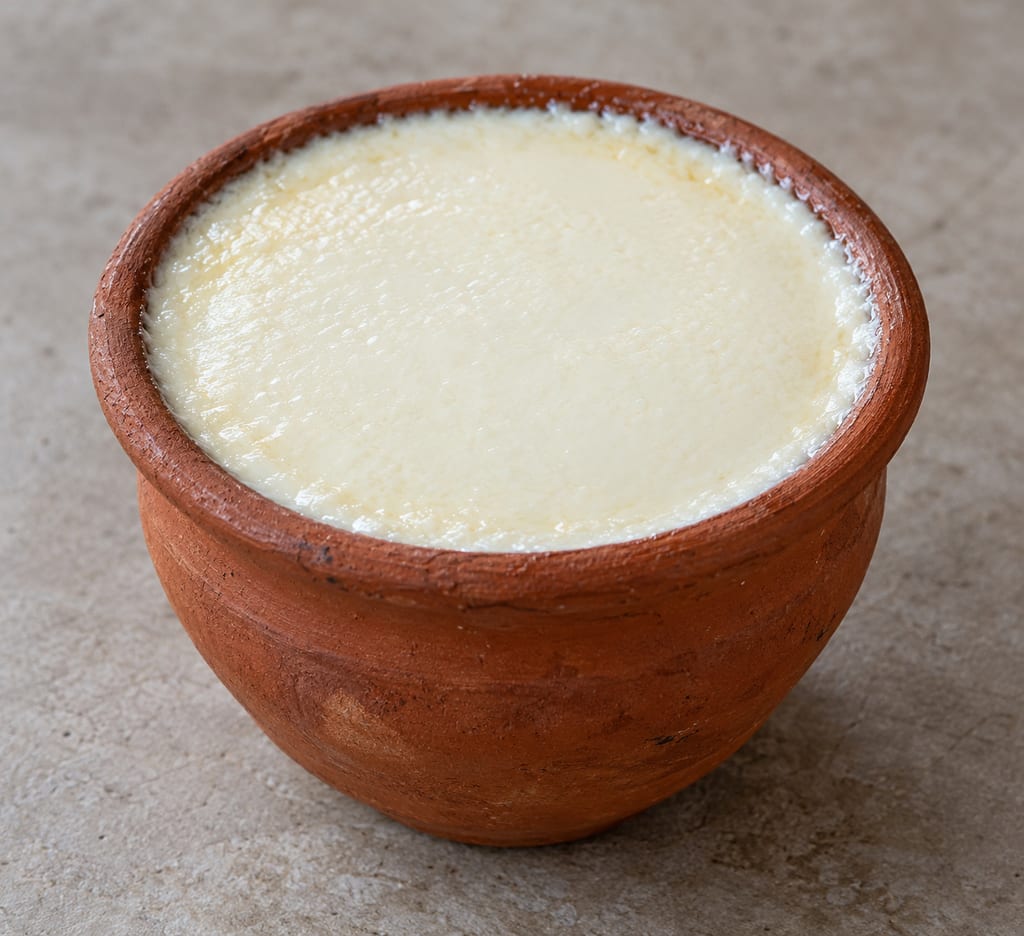
Plain Juju dhau, a thick Newar cultured buffalo-milk curd, set in an unglazed earthenware kataro.
Elevated risk

Juju dhau

Juju dhau is a rich Newar cultured milk associated with Bhaktapur, Nepal. A local account describes buffalo milk concentrated by boiling, inoculated with previous-day curd and set in earthen pots.

Bhaktapur
· Dairy
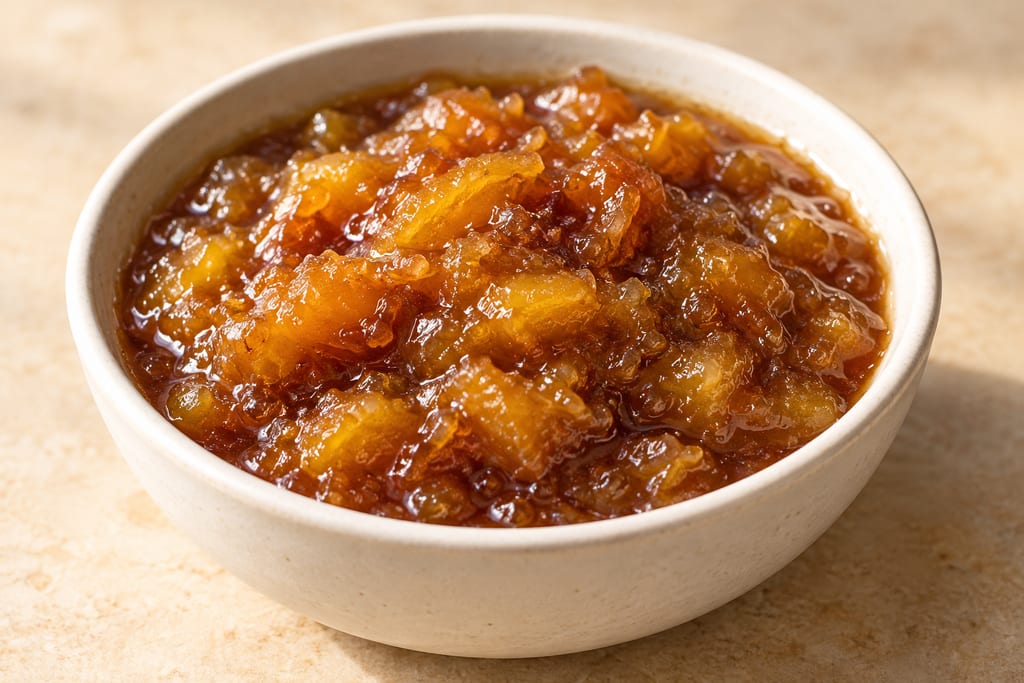
Illustrative image of Suryabinayak-style cooked lapsi pulp achar in sugar syrup; the municipal source does not record the batch's exact appearance.

Lapsi ko achar, Suryabinayak pulp method

A Suryabinayak municipal recipe cooks ripe lapsi pulp in sugar syrup with cloves, cardamom, cinnamon, sukumel and ginger juice to make a sweet Nepali achar.

Suryabinayak Municipality · Modern method
· Fruit
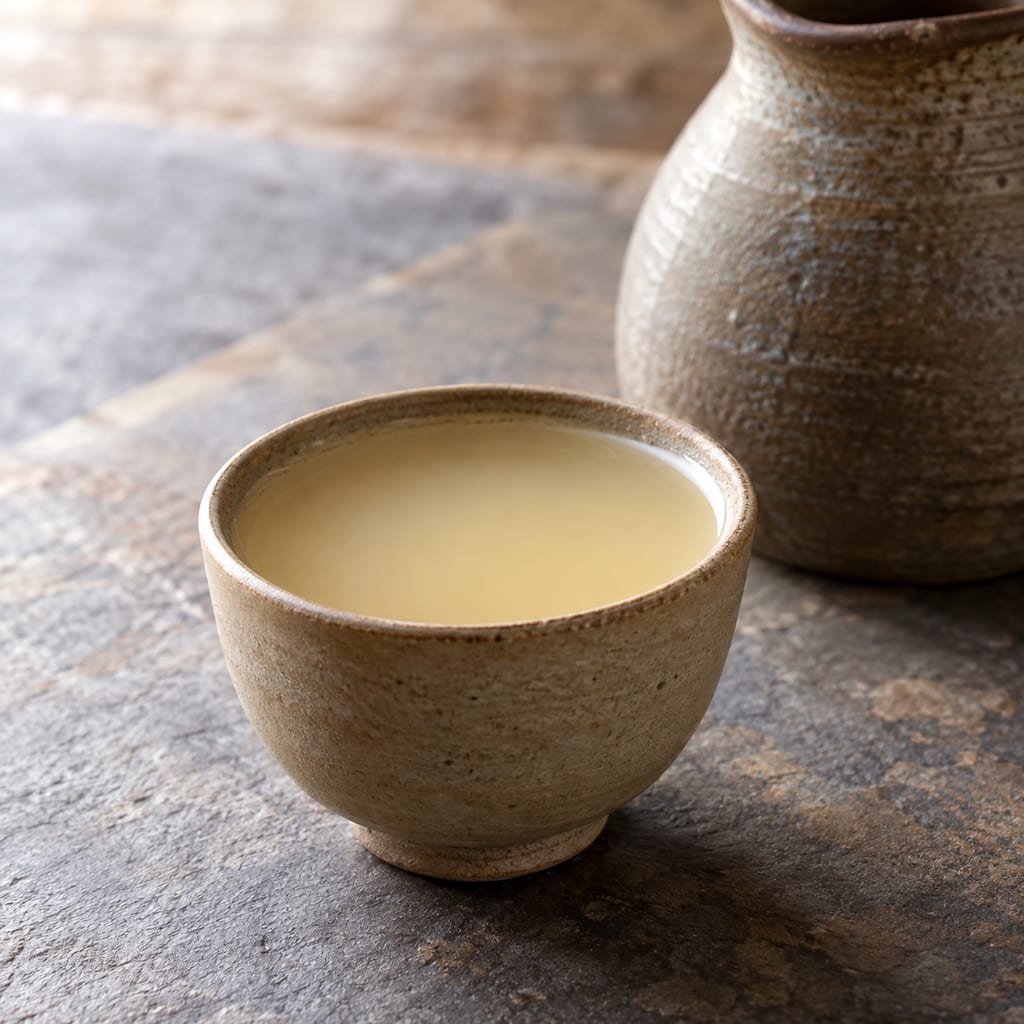
A cloudy, pale straw-gold serving of Tibetan chang in a plain ceramic cup.

Tibetan chang

A 2005 Tibetan account describes cooked barley mixed with changdzi, fermented as moist grain, then steeped in water for an alcoholic drink. Grain and water amounts, starter dose and a verified safety endpoint are absent.

Qiangqin (Qiangji) Village, Qonggyai County · Traditional method
· Drinks
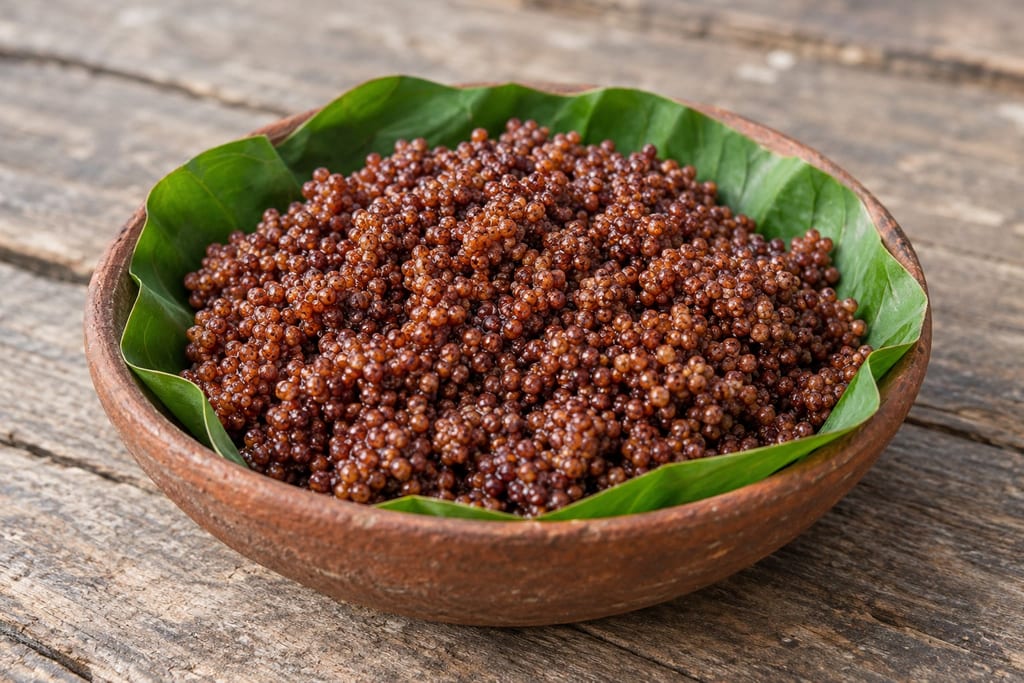
Moist dark reddish-brown fermented finger millet grains in a leaf-lined earthenware bowl, showing Kodo ko jaanr before warm-water extraction.
Elevated risk

Kodo ko jaanr (finger millet beer)

Finger millet fermented with marcha in surveyed Darjeeling and Sikkim communities. Tongba is the later warm-water extraction from the fermented grain. The cited accounts do not establish a complete or validated home batch.

Eastern Nepal · Traditional method
· Drinks
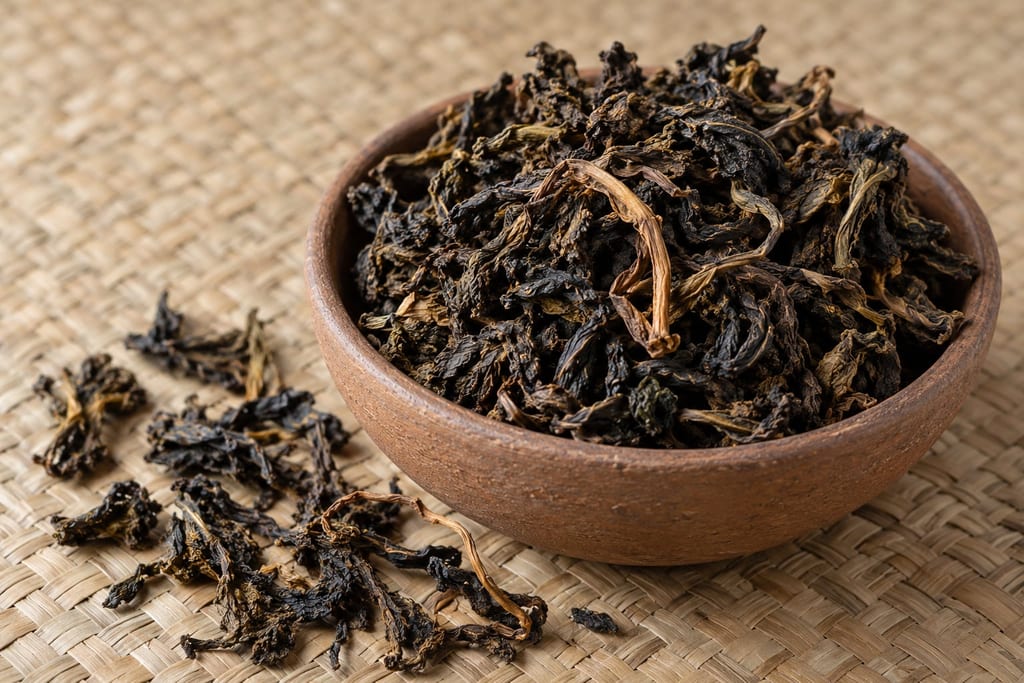
Illustrative close-up of dried mustard-leaf gundruk, dark fermented leaves in a plain earthenware bowl; not a documented photo of a particular batch.
Elevated risk

Mustard-leaf gundruk (Brassica juncea)

Mustard leaves wilted, bruised and packed tight into an earthenware vessel to sour without salt, then sun-dried into dark tangled pieces that carry Himalayan meals through the year.

Nepal · Traditional method
· Vegetables
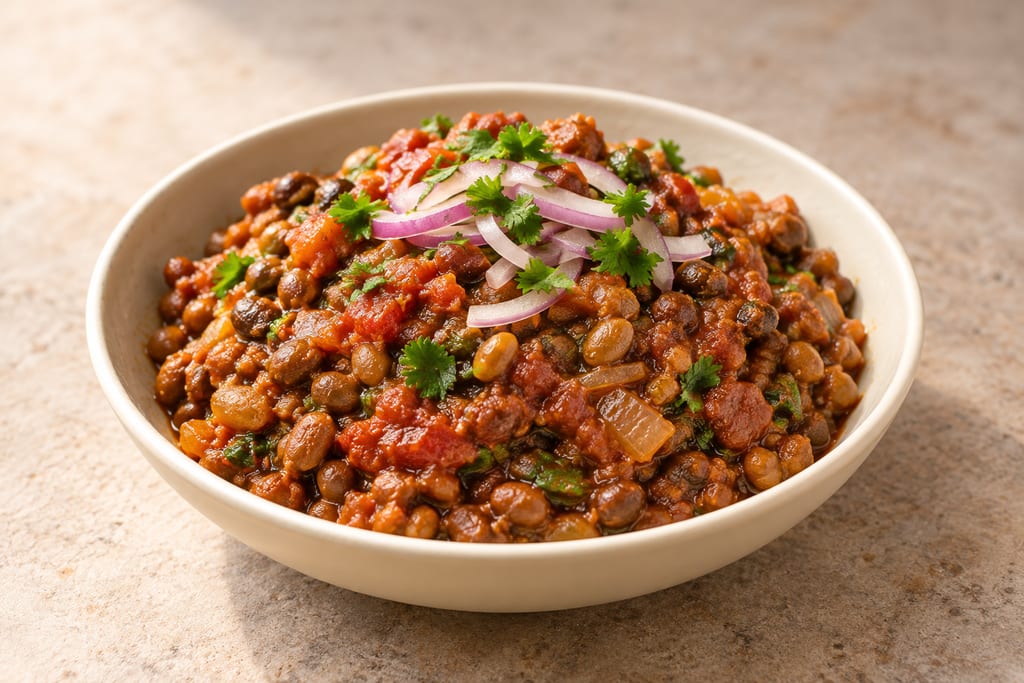
A thick, glossy red-brown kinema and tomato achar in a shallow ivory bowl, finished with sliced red onion and coriander.

Kinema tomato achar

Kinema ra golbheda ko achar combines already-fermented soybean kinema with tomatoes, onion, garlic and spices, finished with sesame powder and fresh garnish, and is eaten with rice or toast.

Nepal · Modern method
· Condiments
Several pale, dry, round Marcha starter cakes on a plain ceramic plate.
Elevated risk

Marcha

An ethnographic record of marcha (murcha), a dry starter cake used in Eastern Himalayan cereal fermentations. This page documents source-specific community knowledge and is not a recipe for making or storing starter.

Sunsari district · Traditional method
Drinks
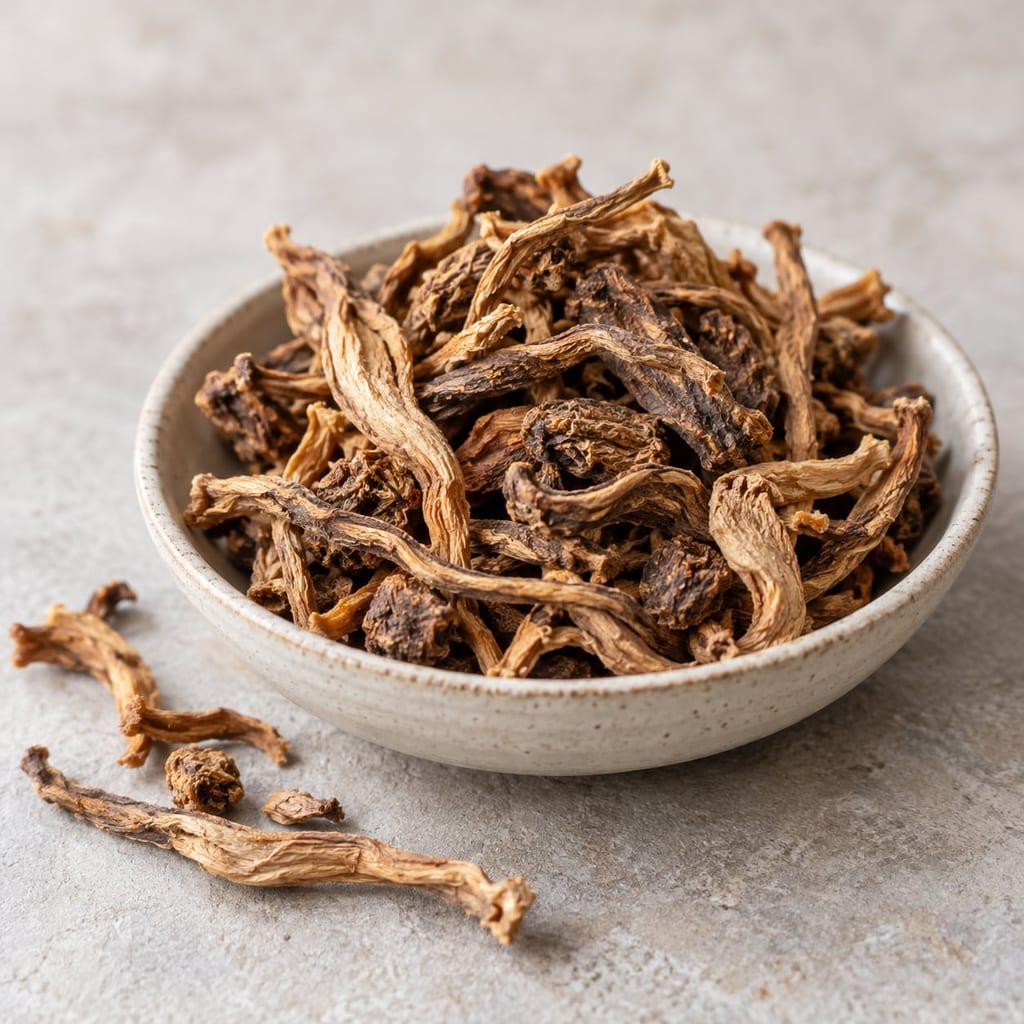
Illustrative finished Sinki, dried fermented radish-root shreds in muted tan and brown tones, loosely arranged in a plain bowl.
Elevated risk

Sinki

Sinki is a salt-free, fermented radish-taproot product dried after fermentation. Published jar and pit accounts use different conditions; neither supplies a validated home-preservation endpoint.

Himalaya, Nepal · Traditional method
· Vegetables
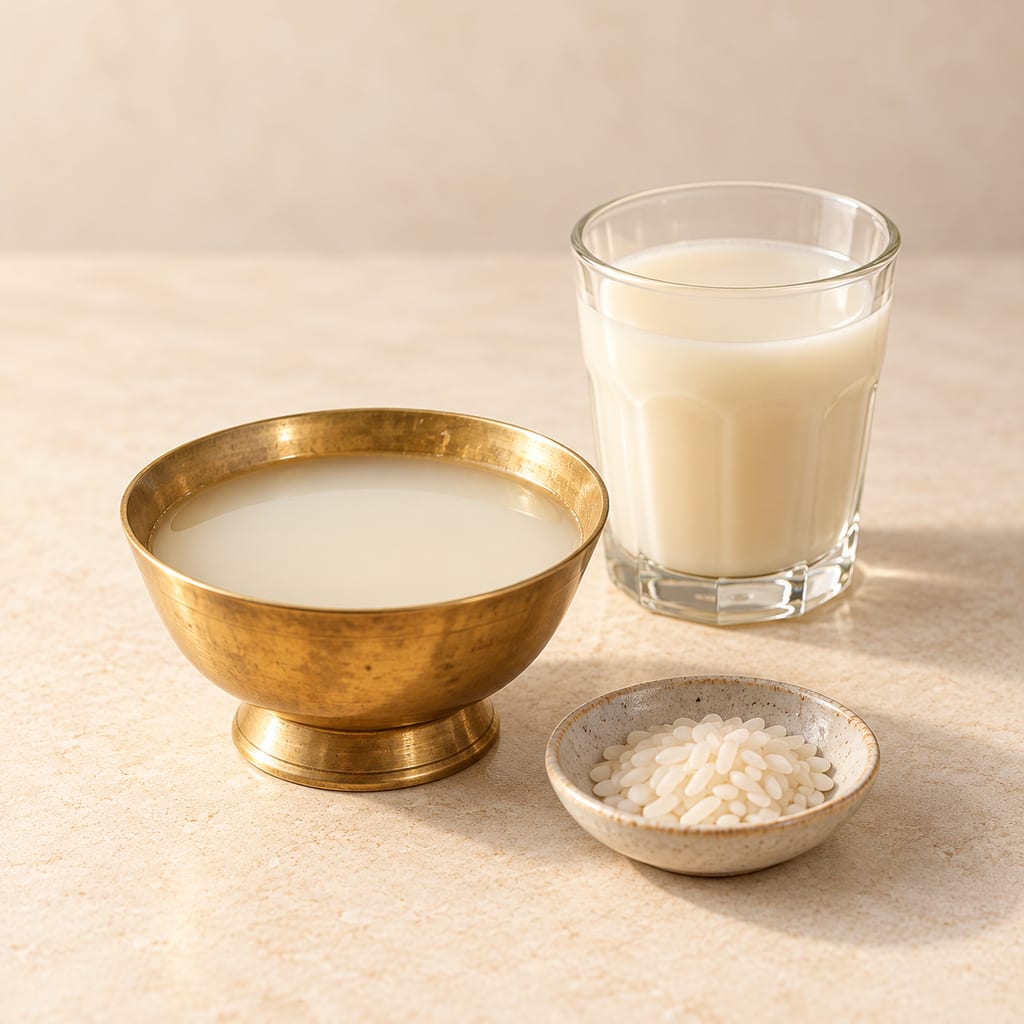
Cloudy pale chhyang in a plain brass bowl and clear glass, with white rice beside it.
Elevated risk

Kathmandu chhyang with marcha starter

A Kathmandu rice beer in which a marcha starter saccharifies and ferments cooked white rice, the mash later thinned with water for drinking.

Patan · Traditional method
· Drinks
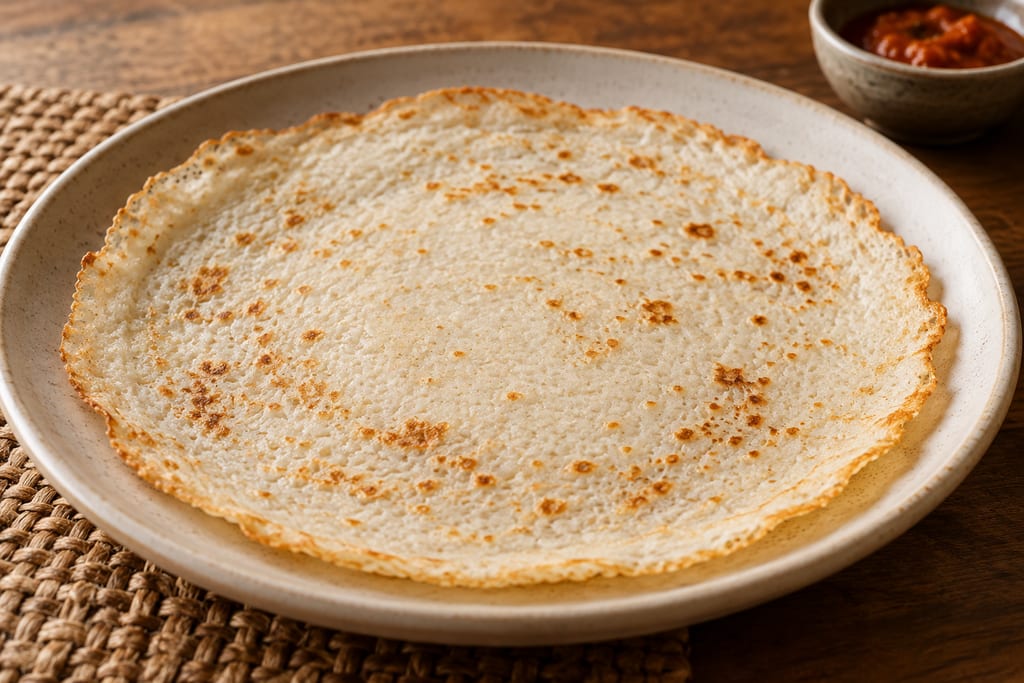
Plain round chatamari rice-flour crepe on a ceramic plate with a small separate bowl of chutney.

Plain chatamari

A Newar rice-flour crepe cooked covered on a pan. This Nepal Tourism Board method serves it plain with accompaniments.

Nepal · Modern adaptation
· Grains and starches
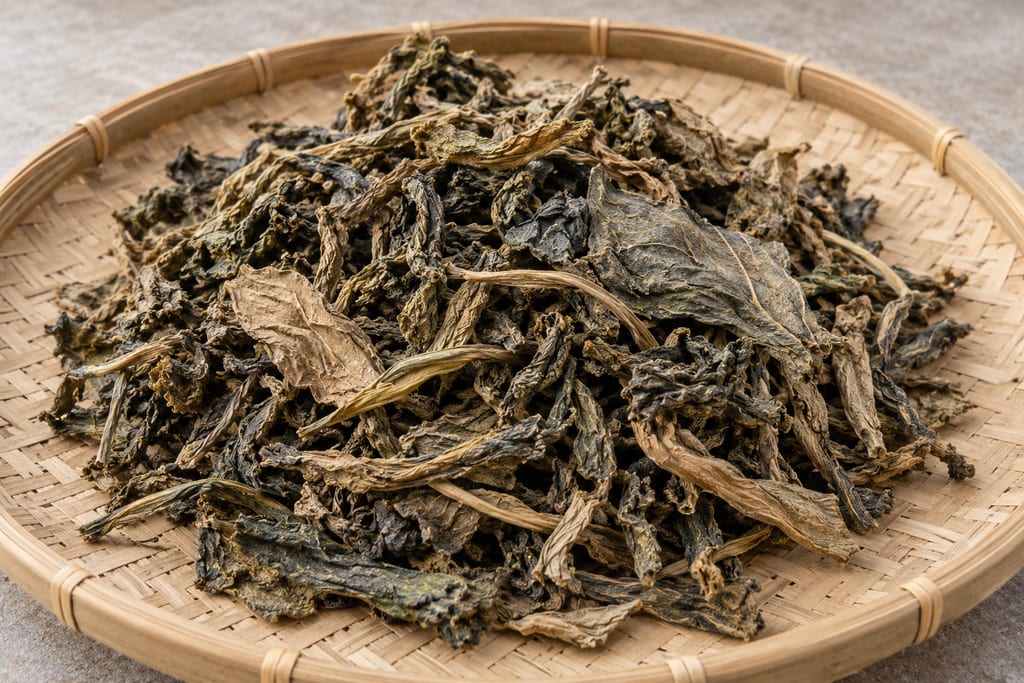
Original editorial depiction of dried Rayo-sag gundruk as dark, crinkled fermented leaves on a woven drying tray; the plant variety is not visually identifiable.
Elevated risk

Rayo-sag gundruk

Wilted and shredded Brassica rapa rayo-sag leaves, packed under warm water in earthenware, fermented five to seven days, then sun-dried as Nepali gundruk.

Himalaya, Nepal · Traditional method
· Vegetables
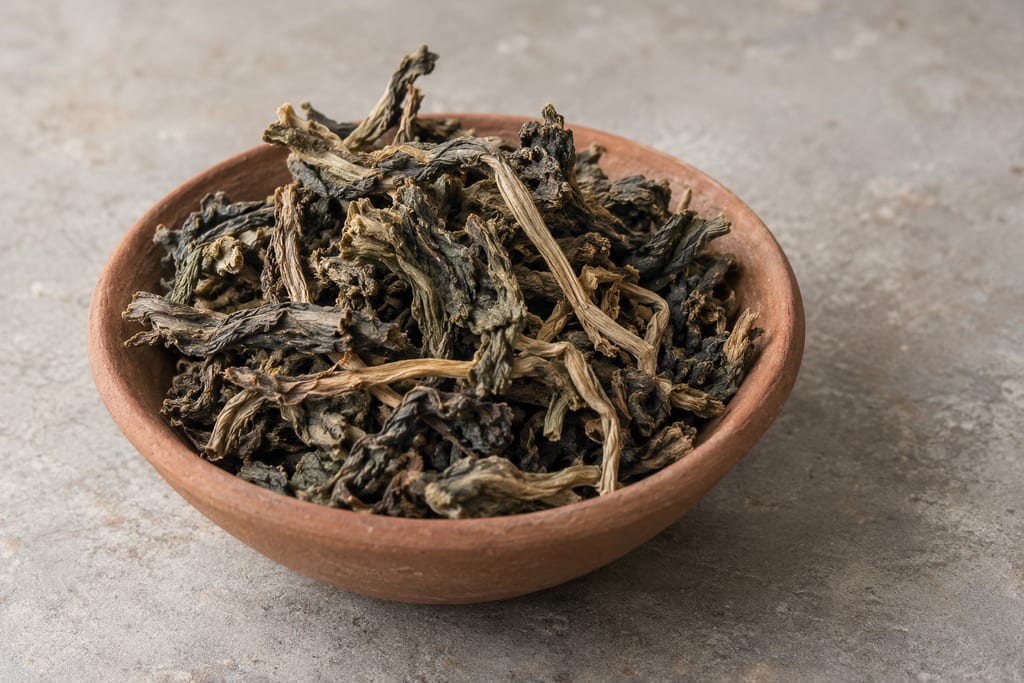
An original editorial depiction of dried radish-leaf gundruk, dark fermented greens in an earthenware bowl.
Elevated risk

Radish-leaf gundruk

Radish greens wilted, packed into an earthen pot with warm water and fermented without salt, then sun-dried into Nepal's dark, sour gundruk.

Himalaya, Nepal · Traditional method
· Vegetables
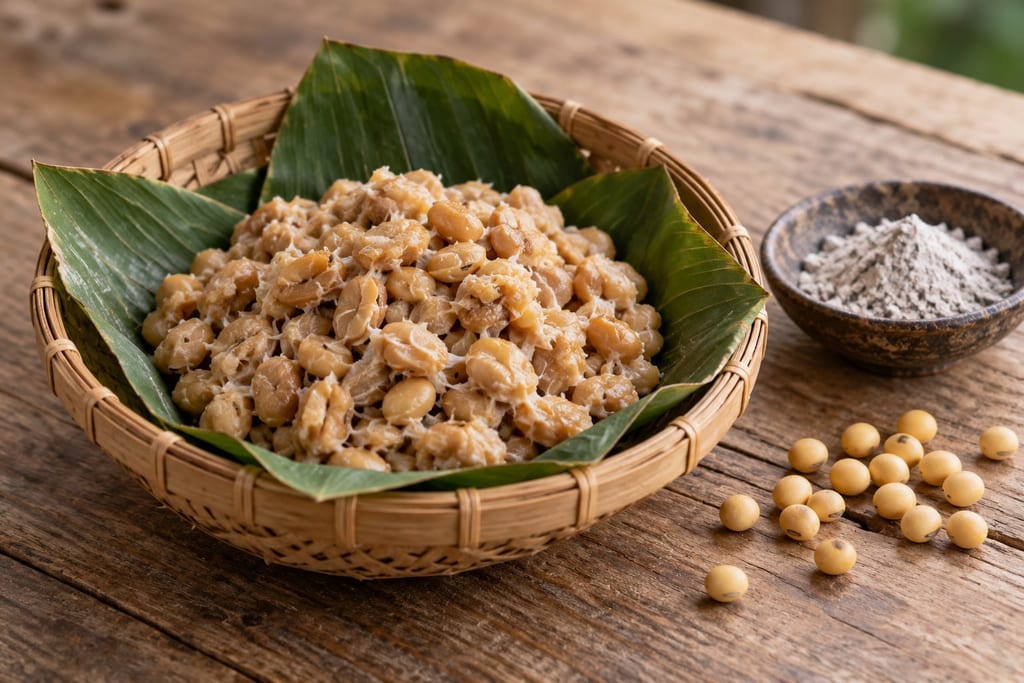
Kinema’s sticky split soybeans arranged in a leaf-lined woven basket, with dry soybeans and a separate dish of wood ash.
High risk

Kinema with firewood ash

A sticky fermented soybean food of the eastern Himalaya, made here with a measured addition of firewood ash as an alkaline aid to the bacteria that drive it.

Eastern Nepal · Modern method
· Legumes and seeds