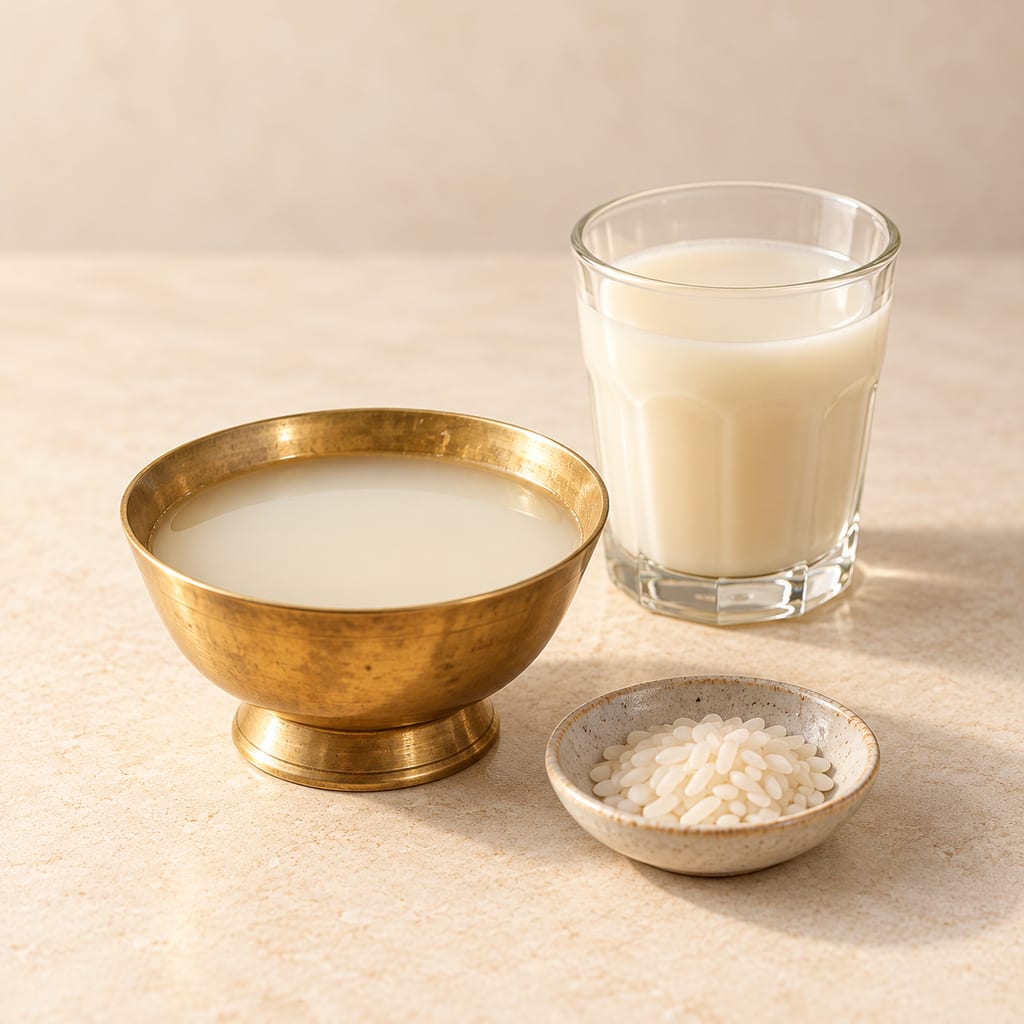
Kathmandu chhyang with marcha starter
A Kathmandu rice beer in which a marcha starter saccharifies and ferments cooked white rice, the mash later thinned with water for drinking.
 FermenteaWhere food goes to change
Traditional method
murcha
An ethnographic record of marcha (murcha), a dry starter cake used in Eastern Himalayan cereal fermentations. This page documents source-specific community knowledge and is not a recipe for making or storing starter.

Marcha, also spelled murcha, is a made starter cake used in Eastern Himalayan alcoholic cereal fermentations in parts of eastern Nepal, Sikkim, the Darjeeling hills and Bhutan. It is a preparation rather than a single yeast or defined commercial strain. A Sikkim study describes marcha as an amylolytic starter associated with jaanr, and an ethnobotanical paper documents starter-making knowledge in Sunsari district, Nepal.
The name covers evidence from distinct makers and places. This page retains one documented Sunsari account separately from studies that sampled marcha in Nepal, Darjeeling, Sikkim and Bhutan. The evidence does not establish that all these cakes share one formula, species composition or care practice. The 2019 study separately names starters phab, paa, pee and phut; these are not folded into marcha.
A Nepal yeast study records a different local name in different communities, including khesung, bharama, bopkha or khabed, phab, and buth/thanbum. The terms should not be treated as interchangeable products. One paper also uses phab for a separate Bhutanese maize starter, an overlap that needs confirmation from local sources.
Deokota and Chhetri report observations and interviews in Gadedanda, Panmari and Bajagaar in Sunsari district during 2006–2007. Their account records knowledge among local communities, especially women, and associates marcha with jand and raksi. It describes nearby plant knowledge as culturally embedded and records differences in flavour and reported effects. This page does not list plants or provide collection, preparation, fermentation, drying or storage directions.
This is a source-specific ethnographic account, not a transferable home method. The cited paper does not validate plant safety, a reproducible starter process or storage conditions. Its measurements and descriptive observations are not instructions or safety limits.
A separate Sikkim field account documents marcha knowledge involving local plant materials and leaf wrapping, and connects the starter with regional grain-fermentation practice. It is evidence of a distinct community-specific tradition, not a validated home method; this page does not reproduce preparation steps.
Pradhan and Tamang's 2019 study analysed dry-starter samples from several Eastern Himalayan locations, including marcha collected in Nepal, Darjeeling, Sikkim and Bhutan. It found substantial bacterial diversity and differences between sampled places, and distinguished marcha from other regional starters. A separate study compared bacterial and fungal communities in marcha and in Thiat, a starter of Meghalaya. Isolates and sample profiles describe what researchers recovered under their methods; they are not a universal ingredient list, a validated starter culture or a home-care protocol.
Tsuyoshi and colleagues' 2005 paper examined six Sikkim marcha samples and reported multiple yeast groups, with ethanol-producing and amylolytic isolates. A 2024 study isolated yeasts from marcha in Nepal. Together these studies support the broad functional description of a mixed starter that can contribute starch conversion and alcohol production. They do not prove that every marcha cake has the same organisms or that a single isolated strain can substitute for a community starter.
Field sources connect marcha with grain beverages such as jaanr and chhyang. The published Kathmandu chhyang account mentions marcha or mannapu as a starter in a specific household method in Patan. A separate kodo ko jaanr account names marcha in a finger-millet beverage. These sources document cultural uses and local naming, not one universal starter lineage or a method for making marcha.
The Sunsari account, sampled Sikkim starter, Kathmandu household use and kodo ko jaanr source each have their own scope. This record does not claim they describe one identical preparation.
The sources do not establish a standardised plant roster, safe substitutions, a reproducible fermentation or drying endpoint, or validated storage conditions. The one-month storage statement in the 2010 account is descriptive and is not a tested safety limit. The scientific studies characterise collected material; they do not validate a home-made starter or a downstream beverage.
No source here provides a transferable batch, measured temperature, safety endpoint or failure criteria. Sensory cues and the finished-cake description cannot establish safety. Local-language evidence is still needed to confirm name boundaries, regional histories and seasonal practices.
A 2010 paper documents ethnobotanical field visits and interviews in three Sunsari district villages during 2006–2007. A 2019 study reports sampled dry starters from Nepal, Darjeeling, Sikkim and Bhutan. These records document practices and samples but do not date marcha's origin, a single birthplace or a regular production season.
Scaling: source batch only
The field account describes locally selected plants, including plants used for flavor and reported intoxicating effects. Its species and community knowledge are not a safe foraging or substitution guide.
The cited accounts do not establish validated controls for starter preparation, drying, storage or downstream beverage fermentation. Do not infer safety from appearance, smell, taste or elapsed time.
Deokota and Chhetri report field observations and interviews in three Sunsari villages in 2006–2007; this is one community- and source-specific account, not a claim of origin or a universal method.
The 2019 study sampled marcha from Nepal as part of a cross-regional study, and a 2024 study isolated yeasts from Nepali marcha; neither establishes one Nepal-wide formula.
The cited studies report sampled marcha from Darjeeling and Sikkim, and a Sikkim field account describes its making; sample results do not define every maker's starter.
The 2019 study sampled Bhutanese marcha and separately identifies phab as another starter; this place association is sample scope, not proof of origin.
A Kathmandu rice beer in which a marcha starter saccharifies and ferments cooked white rice, the mash later thinned with water for drinking.
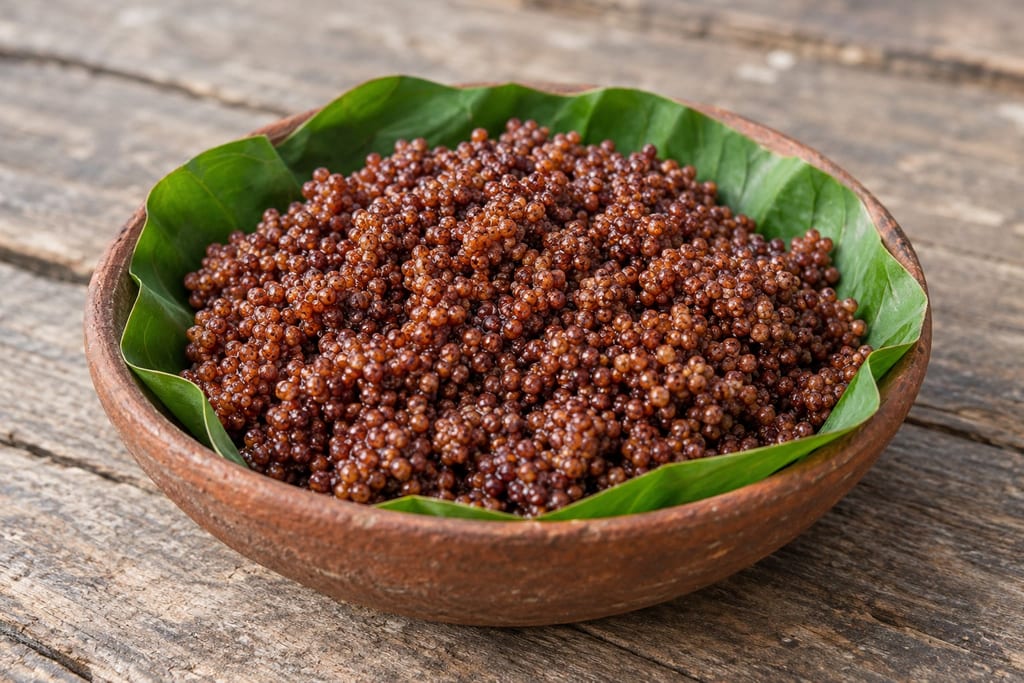
Finger millet fermented with marcha in surveyed Darjeeling and Sikkim communities. Tongba is the later warm-water extraction from the fermented grain. The cited accounts do not establish a complete or validated home batch.
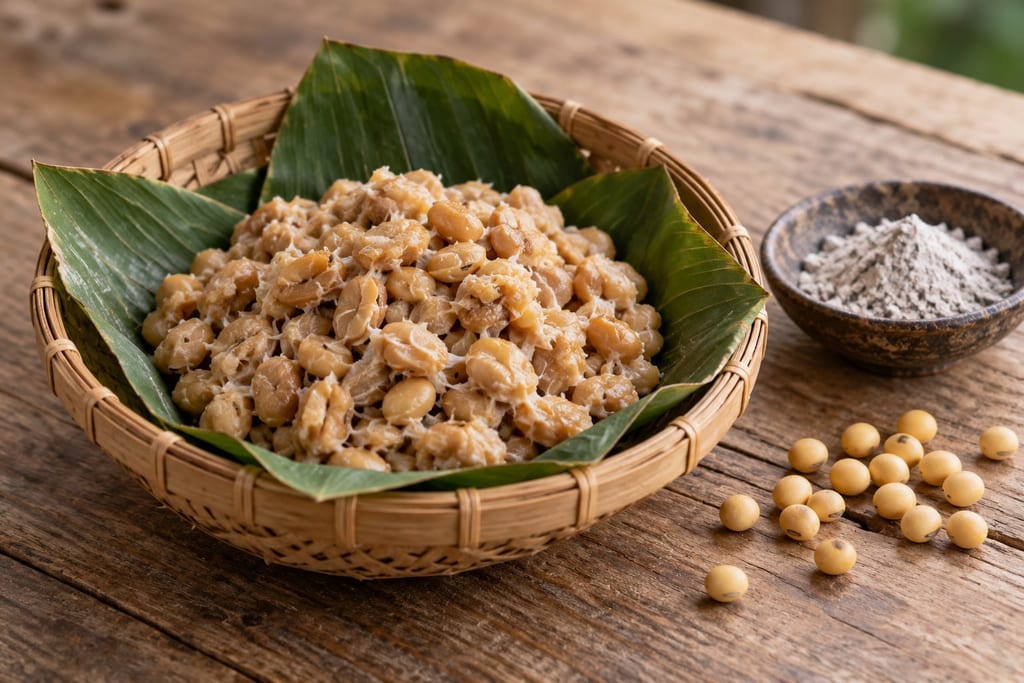
A sticky fermented soybean food of the eastern Himalaya, made here with a measured addition of firewood ash as an alkaline aid to the bacteria that drive it.

A thick, naturally sweet rice-and-koji preparation used to add body and sweetness to marinades, dressings and sauces. This method follows a published Marukome home recipe and is an enzyme-conversion hold, not a way to grow koji mould.
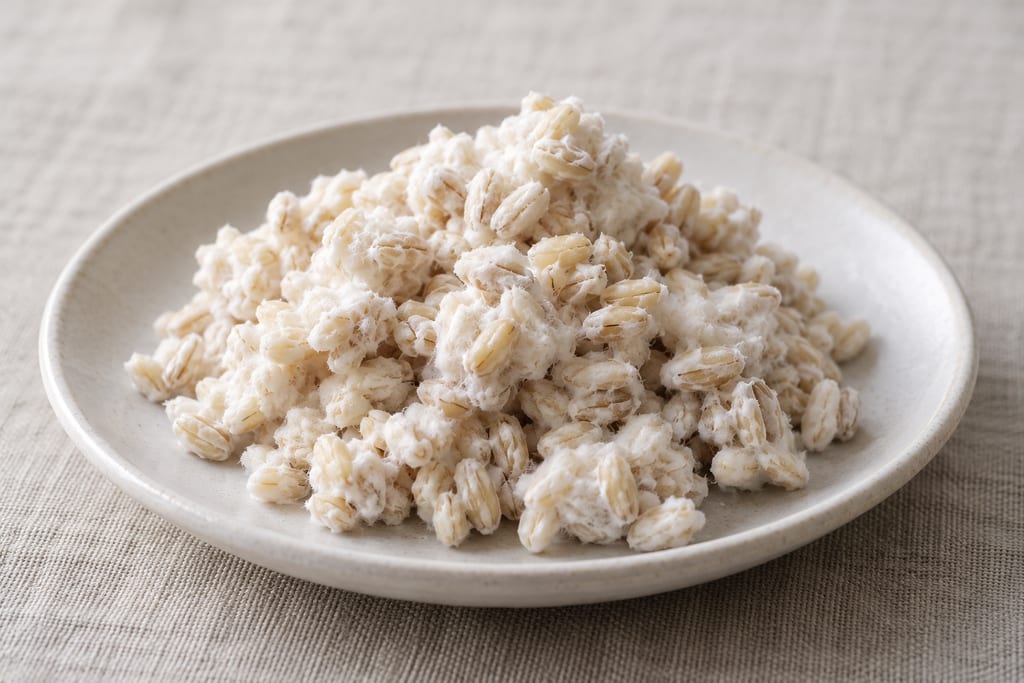
Steamed pearled barley grown into a white koji cake with Aspergillus oryzae over about 36 hours in a 30 °C chamber, turned three times under a damp cloth.
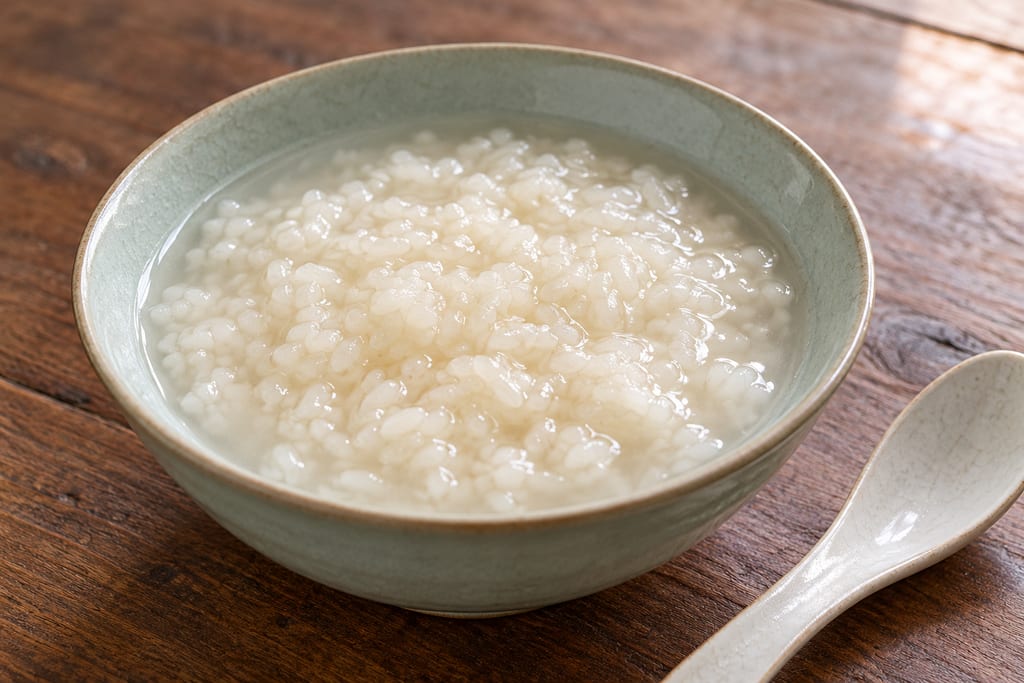
Chinese sweet fermented glutinous rice: steamed rice and a mixed jiuqu starter, where mould enzymes release sugar and yeast makes a little alcohol, eaten with its sweet liquid.

Rice koji is steamed white rice through which koji mold has grown. It carries the enzymes that turn rice starch into sugar, and it is the starting point of sake, sweet miso, amazake and shio koji.
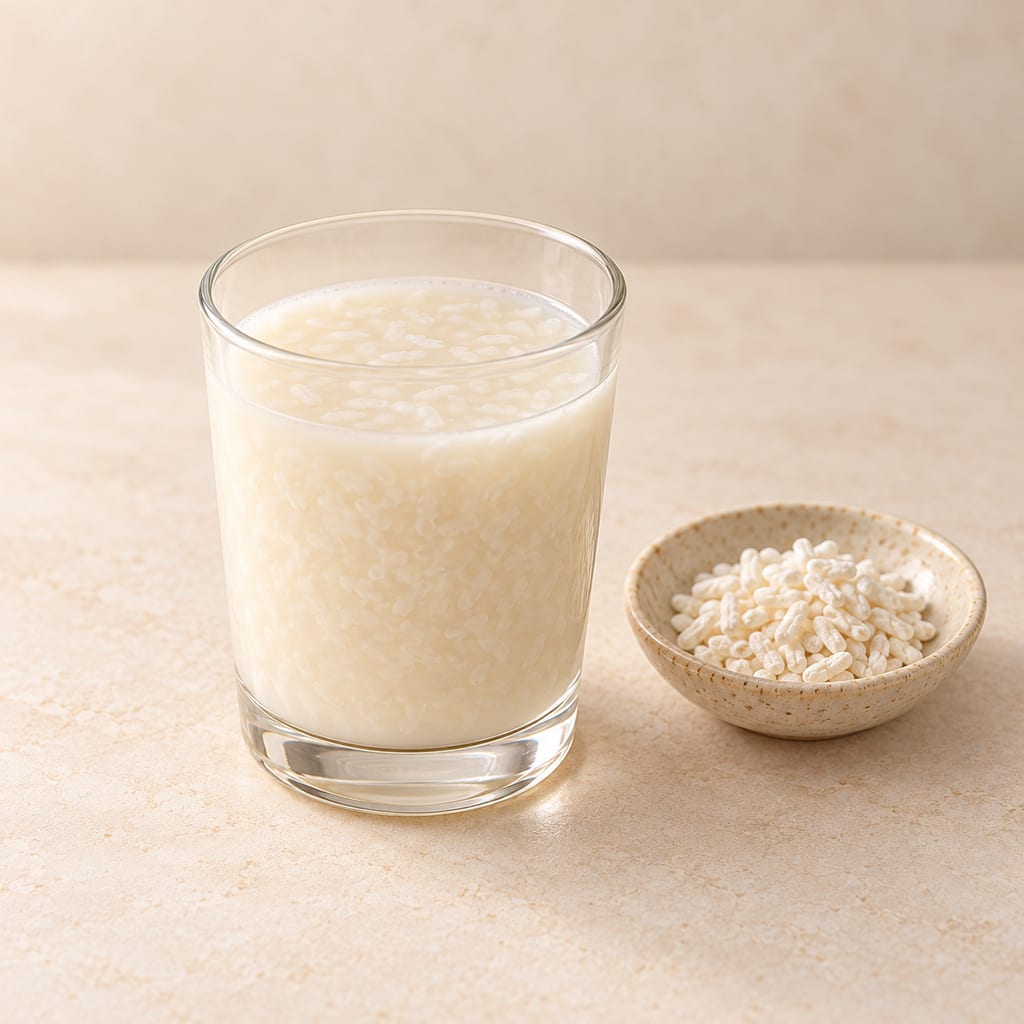
Cooked rice, rice koji and water are held warm for hours so koji enzymes turn the rice starch to sugars, giving a naturally sweet Japanese drink with no added sugar and no second fermentation.
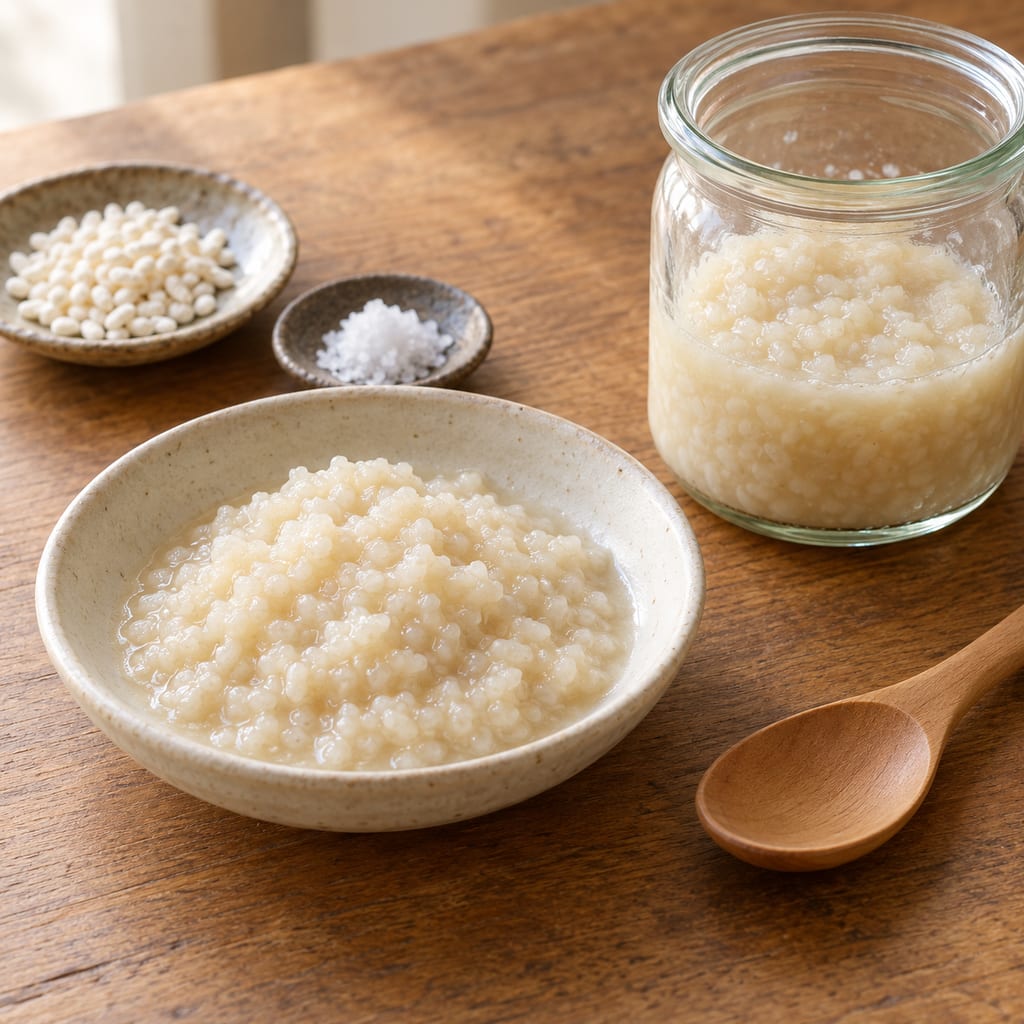
A Japanese seasoning of rice koji, salt and water, left at room temperature until the koji's enzymes and its microbes turn it into a savoury, salty paste for marinades and dressings.
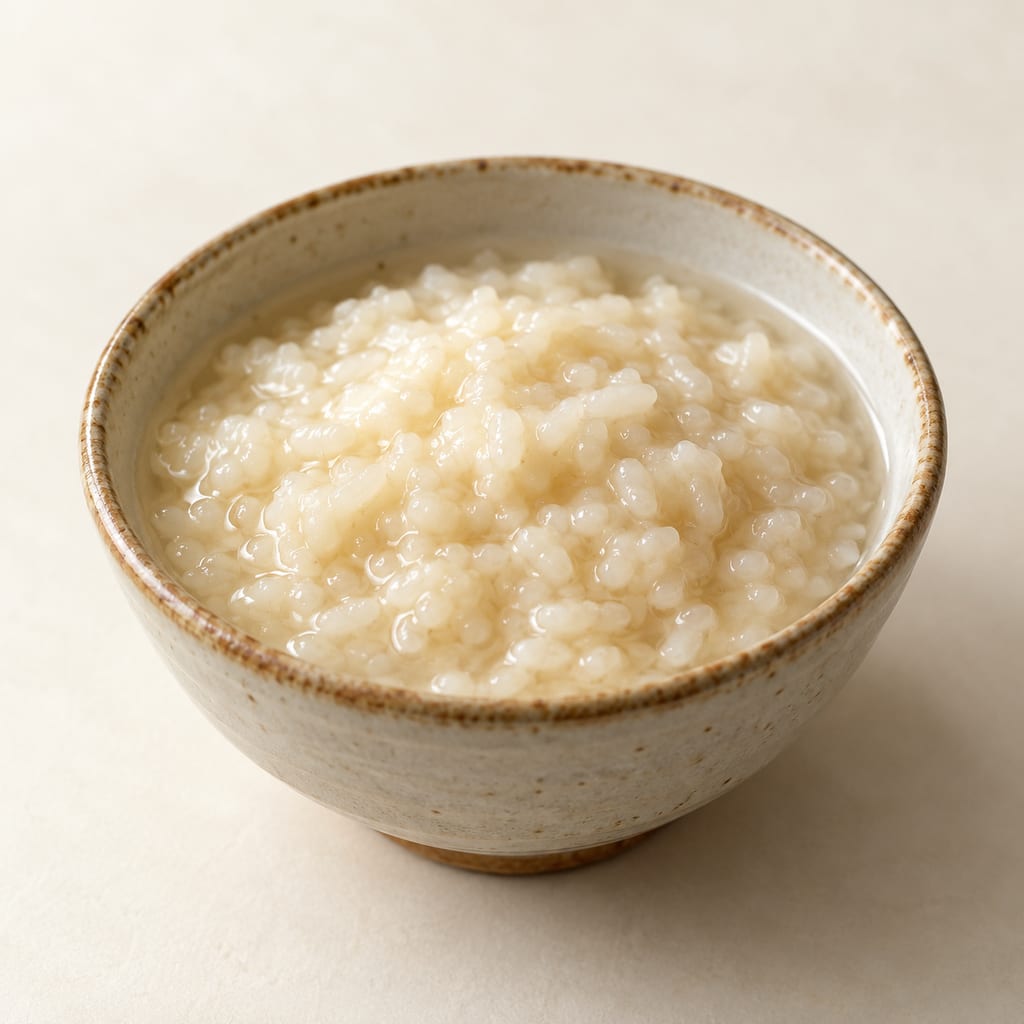
Shio-koji is a Japanese seasoning of rice koji, salt and water, left at room temperature until the grains soften and turn sweet and the mixture thickens.
No community contributions have been published for this entry yet.
Sign in to contribute. Published comments and photos are free to read.
Indian Journal of Traditional KnowledgeMethod · History · Geography
Traditional lore on the preparation of Marcha in Sunsari district, NepalFieldwork and interviews in Gadedanda, Panmari and Bajagaar, Sunsari district, during 2006–2007; the paper records preparation knowledge among local communities, especially women.
In this one account, rice flour is the stock material, locally selected plant parts are dried and powdered, and previous marcha powder is applied to palm-pressed cakes.
The paper reports approximately 300 g plant powder per kilogram of flour, cakes around 4–6 cm in diameter, seasonal fermentation, drying and about one month of shaded storage.
These observations do not establish a universal or validated recipe. Plant selection and safety are not established as transferable.
Cited in: Identity and scope; A documented Sunsari preparation; Unresolved method and safety evidence
Frontiers in MicrobiologyScience · Geography
Phenotypic and Genotypic Identification of Bacteria Isolated From Traditionally Prepared Dry Starters of the Eastern HimalayasThe study analyzed 35 dry-starter samples, including marcha collected in Nepal, Darjeeling, Sikkim and Bhutan, alongside distinct starter types from Arunachal Pradesh and Bhutan.
It reports bacterial diversity and regional sample differences; results do not define a standard marcha community or safe propagation method.
The paper discusses possible contamination and broader fermented-beverage safety questions but does not validate household controls for marcha.
Cited in: Identity and scope; Local names; What the microbial studies show; Unresolved method and safety evidence
PubMed; International Journal of Food MicrobiologyScience
Identification of yeast strains isolated from marcha in Sikkim, a microbial starter for amylolytic fermentationThe abstract reports 20 yeast strains isolated from six Sikkim marcha samples, with some groups producing ethanol and another group showing high amylolytic activity.
All tested samples contained starch-degrading and ethanol-producing yeasts; this is a result from the sampled Sikkim material, not a fixed recipe or universal composition.
Cited in: Identity and scope; What the microbial studies show
The Kathmandu PostMethod · Geography
Chhyang: A recipe awayPatan household method whose ingredient line names marcha or mannapu starter mixture; this is evidence of a specific Kathmandu Valley beverage use, not a universal starter-making formula.
Cited in: Relation to named beverages
Journal of the Institute of BrewingMethod · Geography
Development of a traditional fermented finger millet beverage, Kodo ko jaanr, in the Eastern HimalayaThe published Kodo ko jaanr record names marcha as starter for a separate finger-millet fermentation; beverage process is not a universal marcha manufacturing procedure.
Cited in: Relation to named beverages
Indian Journal of Traditional Knowledge; Sikkim University repositoryMethod · Culture
Traditional skill of ethnic people of the Eastern Himalayas and North East India in preserving microbiota as dry amylolytic startersSikkim field account of a rice-based cake using older marcha as inoculum, local plant materials and leaf wrapping, followed by fermentation and drying.
Field sources connect marcha with grain beverages such as jaanr and chhyang.
Cited in: A Sikkim variant; Relation to named beverages
Scientific ReportsScience
Analysis of bacterial and fungal communities in Marcha and Thiat, traditionally prepared amylolytic starters of IndiaBacterial and fungal communities in sampled marcha and in Thiat, a starter of Meghalaya.
Cited in: What the microbial studies show
International Journal of Food ScienceScience · Culture
Isolation and Identification of Yeasts in Marcha, a Rice Wine Starter Culture From NepalYeasts isolated from Nepali marcha; local names khesung, bharama, bopkha or khabed, phab and buth/thanbum used by different communities.
Cited in: Local names; What the microbial studies show