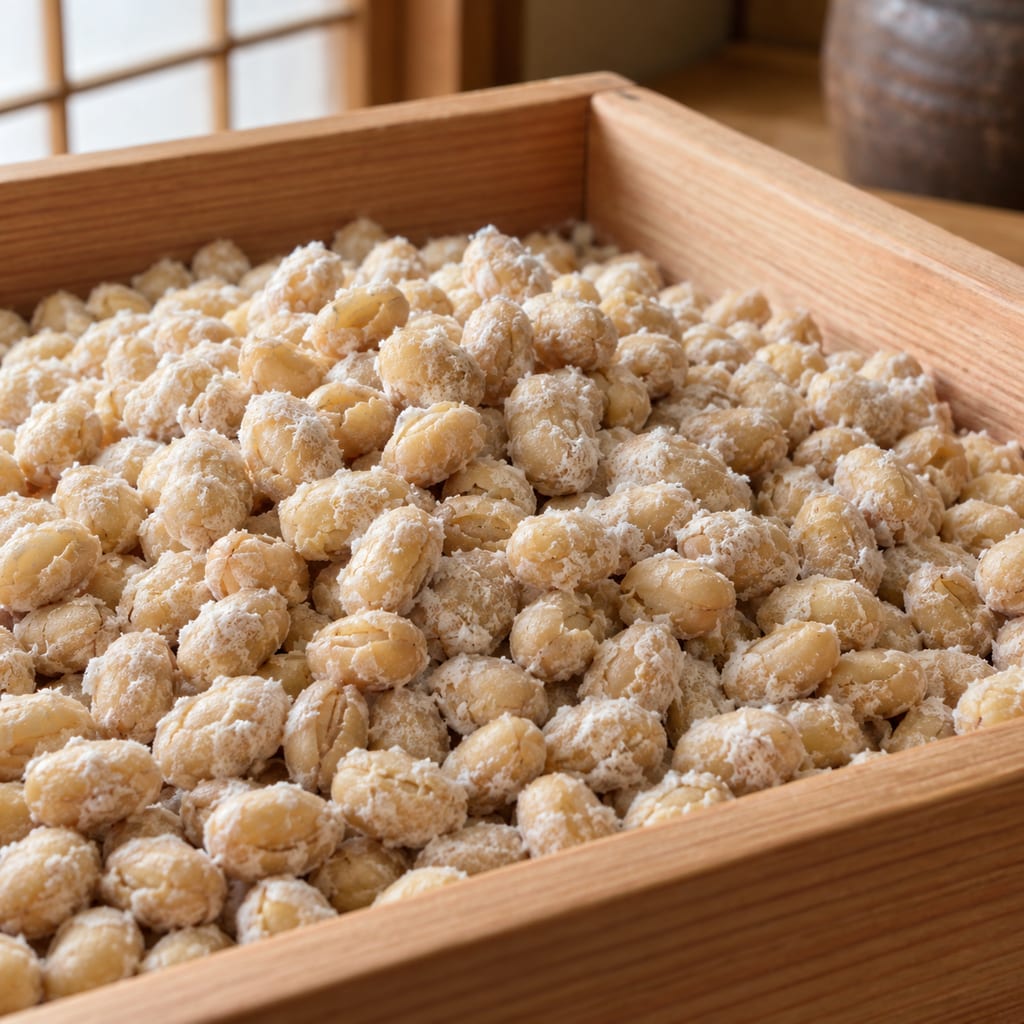
Mame-koji
Japanese soybean koji: steamed soybeans, loose or formed into balls, grown over with Aspergillus mould to make the enzymes for mame-miso, tamari and regional soybean condiments.
 FermenteaWhere food goes to change
甘麹 · sweet koji
A thick, naturally sweet rice-and-koji preparation used to add body and sweetness to marinades, dressings and sauces. This method follows a published Marukome home recipe and is an enzyme-conversion hold, not a way to grow koji mould.

Ama-koji (甘麹) is a thick, sweet preparation made from cooked rice and rice koji. In Marukome's published example, the porridge is mixed with dried rice koji and held warm for eight hours. The resulting preparation is denser than a drink and is used as a seasoning ingredient. The feature calls it a condensed form of amazake, but that comparison should not blur their different consistencies and uses.
Its sweetness comes from enzymes in prepared koji acting on rice starch. Cooked rice provides the starch-rich substrate; rice koji brings enzymes developed during its earlier manufacture. This is an enzyme-conversion step in a kitchen recipe, not the growth of a new mould culture in the warm container.
The title itself combines ama, sweet, and koji, but the word koji refers here to the rice inoculated and cultivated before it reaches the cook. The recipe uses that prepared food ingredient. It does not provide a way to culture mould or make rice koji from spores.
This method is anchored to a contemporary published recipe, not to a claimed ancient formula. Marukome presents ama-koji as a home preparation made in a rice cooker or yogurt maker and used in sauces and marinades.
Japan's Ministry of Agriculture, Forestry and Fisheries describes amazake as a traditional Japanese drink made either with rice koji or with sake lees. It notes that the Nihonshoki contains an early reference to amanotamuzake and that amazake was popular among townspeople during the Edo period, including as a summer drink sold by street vendors. This is context for the broader sweet-rice-drink family; it does not date the thicker ama-koji seasoning or prove that today's method is unchanged from those earlier preparations.
Keeping these claims separate matters because the name amazake has covered more than one preparation. A historical reference to a sweet drink is not evidence for the precise rice-to-koji formula, consistency, holding appliance or seasoning role of a present-day ama-koji recipe. The safest historical statement is the narrow one: the method published here is modern, while the larger drink tradition has a longer documented history.
Research on koji amazake identifies glucose produced from rice starch by enzymes from Aspergillus oryzae as a principal source of sweetness. In a controlled study, measured glucose was highest at 50°C among the temperatures compared, with lower values at 40°C, 60°C and 70°C. Those results explain why temperature matters to enzyme conversion, but they are not a separate validation of this thicker ama-koji formula.
The range in Marukome's ama-koji recipe is 55–60°C for eight hours. The key variable is the food temperature, not the number displayed by a rice cooker. The maker warns that below 50°C bacterial growth may occur and saccharification may slow; it also cautions that excessive heat can inactivate enzymes. A thermometer helps distinguish a controlled hold from an appliance setting that runs too hot or cool.
The enzymes act on cooked rice during the warm stage. This explains the transformation from a relatively plain porridge into a sweetened, thick ingredient without treating the procedure as microbial growth. The starting rice texture and the amount of water also affect how concentrated the final batch feels, but the recipe does not quantify porridge water or publish a yield. A reader should not treat the unreported water amount as a hidden standard ratio.
The relatively concentrated rice base produces a spoonable mixture. Less free water than in drinkable amazake helps it cling to vegetables or coat fish and meat in a dressing or marinade. Blending after conversion is optional; it smooths texture but does not change the method into a different fermentation.
Marukome's example uses 100 g rice, 50 ml cold water and 100 g dried rice koji. Cook the rice into a slightly firm porridge, then add the cold water to bring it to about 50°C. The quantity of water used to cook the rice, finished yield, rice variety and adjustments for fresh rather than dried koji are not stated. These gaps matter: extra water or a wetter ingredient changes concentration, and no tested conversion is provided.
Cool the porridge before stirring in the koji. The initial target is about 50°C; the subsequent holding range is 55–60°C for eight hours. Choose a rice cooker or yogurt maker capable of sustaining the food temperature and check the mixture with a clean probe. Marukome names both household appliances but does not provide a troubleshooting schedule for every model.
After the hold, the mixture is ready as a sweet ingredient. The interviewee suggests an optional four-to-five-day refrigerated rest, during which sweetness deepens and a lactic sour note becomes more noticeable. This is a source-specific flavor variation, not a required fermentation phase.
The source formulation names dried rice koji. Fresh koji has a different water content, but the feature does not give a conversion. It is better to keep the dried form named in the recipe than to imply an equal-weight substitution. The same restraint applies to changing rice types, adding extra water or doubling the batch: none of those variations is tested in the method published here.
Marukome's interviewee uses ama-koji in place of some sweetness and body otherwise supplied by sugar or mirin. She also describes using it to tenderize fish and cuts such as chicken breast, attributing that effect to enzymes acting on proteins. This is a cook's account of use, not a measured tenderization trial.
The published oil-free marinade combines ama-koji with whole-grain mustard, vinegar, a little honey, salt and pepper. The example dresses thinly sliced turnips with smoked salmon and citrus; the author also suggests vegetables such as snap peas, broad beans, onions, tomatoes, carrots and cabbage. The preparation's thickness helps it adhere without oil.
For a simpler dressing, Marukome gives two tablespoons ama-koji, one tablespoon white-wine vinegar and half a teaspoon salt. Since batches vary in thickness and sweetness, this is a starting ratio from the feature, not a universal balance. Adjust at serving time rather than changing the warm-hold formula.
The seasoning's mild sweetness can round sharp vinegar or mustard, while its thick body contributes to the coating of a dressing. It can be diluted or mixed into a sauce, but the final water or acid balance depends on the ingredients it is paired with. These are uses of the finished preparation, not additional fermentation steps.
Koji amazake and ama-koji share rice and prepared rice koji, but their finished forms differ. The Ministry's description covers a drink; Marukome calls ama-koji a condensed preparation used as a cooking ingredient. A thicker texture alone does not make it miso, a live koji culture or an aged seasoning.
Sake-kasu amazake is a distinct preparation made from sake lees and may be sweetened; rice-koji amazake relies on enzymes acting on rice starch. The Ministry distinguishes these types. This method belongs to the cooked-rice and rice-koji branch: it does not add sake lees and is not an alcoholic beverage.
The name should also not be confused with koji itself. Rice koji is a prepared ingredient produced before this recipe begins. Ama-koji uses it for its enzyme activity and then holds it with cooked rice at a warmer saccharification temperature. The recipe neither inoculates raw rice nor describes conditions for producing koji spores, mould or a starter culture.
Marukome's feature says to refrigerate ama-koji and reports about 20 days of refrigerated keeping for the interviewee's preparation. It also describes a four-to-five-day refrigerated rest as a flavor choice. These are the maker's instructions for a household preparation, not an independent shelf-life study or a guarantee for batches made with different ingredients, appliances or temperature histories.
Do not leave the mixture cooling slowly at room temperature or treat it as shelf-stable. The maker warns about bacterial growth when the warm hold drops below 50°C and instructs readers to refrigerate the finished preparation. It does not establish a room-temperature preservation process or a canning schedule.
The published recipe omits cooking-water quantity, final yield and a tested scale-up. It also does not establish how fresh koji should replace dried koji. Keep those uncertainties visible rather than borrowing ratios from a drinkable amazake recipe or another maker's product. If the food temperature cannot be maintained in range, the source does not provide a substitute schedule.
The specific ama-koji method described here is contemporary. Japan's Ministry of Agriculture describes the broader amazake drink tradition and early written evidence, but those dates do not establish the age of ama-koji as a thick seasoning.
Scaling: source batch only
The maker warns that temperatures below 50°C can permit bacterial growth and slow saccharification.
Hazard sourceMaintain the mixture at 55–60°C during the eight-hour hold, then refrigerate it.
Control sourceUse prepared food-grade rice koji; this warm hold saccharifies cooked rice and is not an incubation method for growing koji mould.
Do not infer room-temperature storage or canning safety from this recipe.
The method is published by a Japanese food producer; this does not establish one origin or a single national style for every ama-koji preparation.
Japanese soybean koji: steamed soybeans, loose or formed into balls, grown over with Aspergillus mould to make the enzymes for mame-miso, tamari and regional soybean condiments.

Rice koji is steamed white rice through which koji mold has grown. It carries the enzymes that turn rice starch into sugar, and it is the starting point of sake, sweet miso, amazake and shio koji.
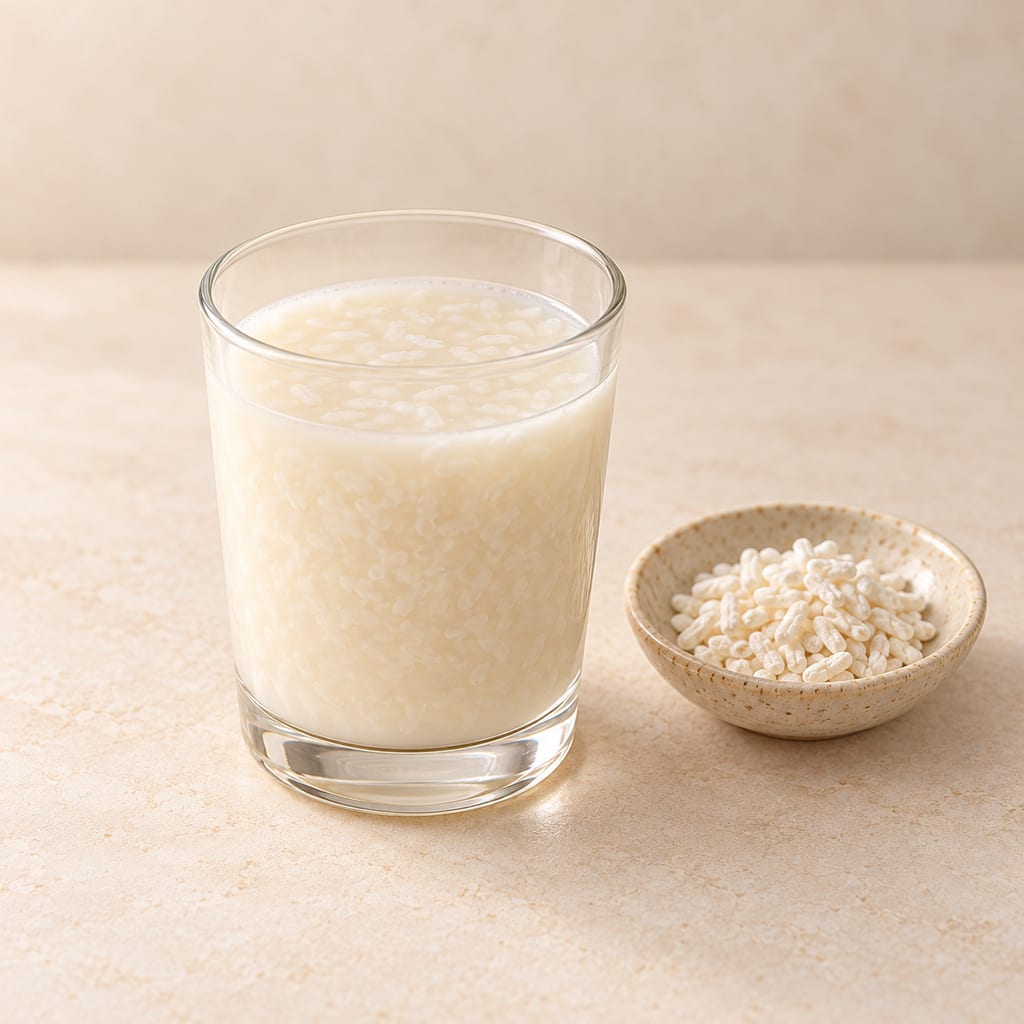
Cooked rice, rice koji and water are held warm for hours so koji enzymes turn the rice starch to sugars, giving a naturally sweet Japanese drink with no added sugar and no second fermentation.
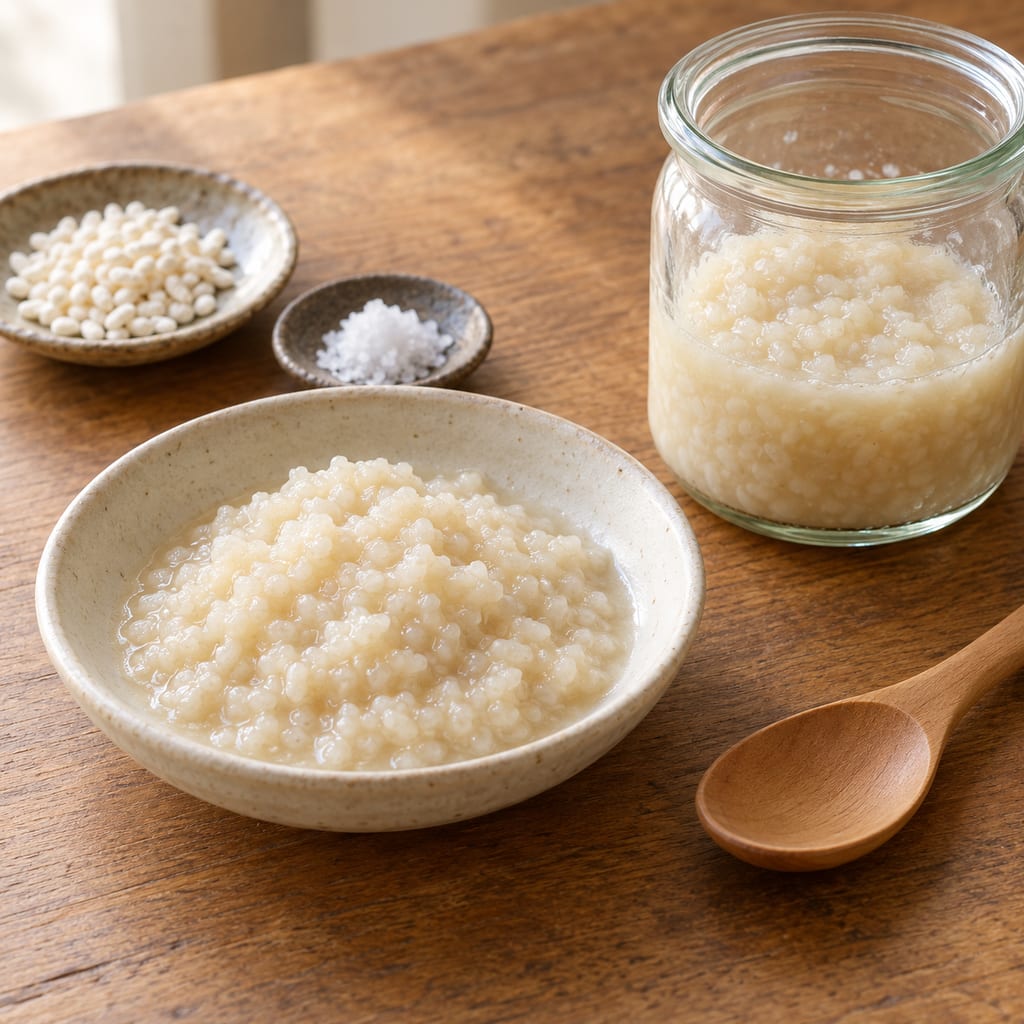
A Japanese seasoning of rice koji, salt and water, left at room temperature until the koji's enzymes and its microbes turn it into a savoury, salty paste for marinades and dressings.
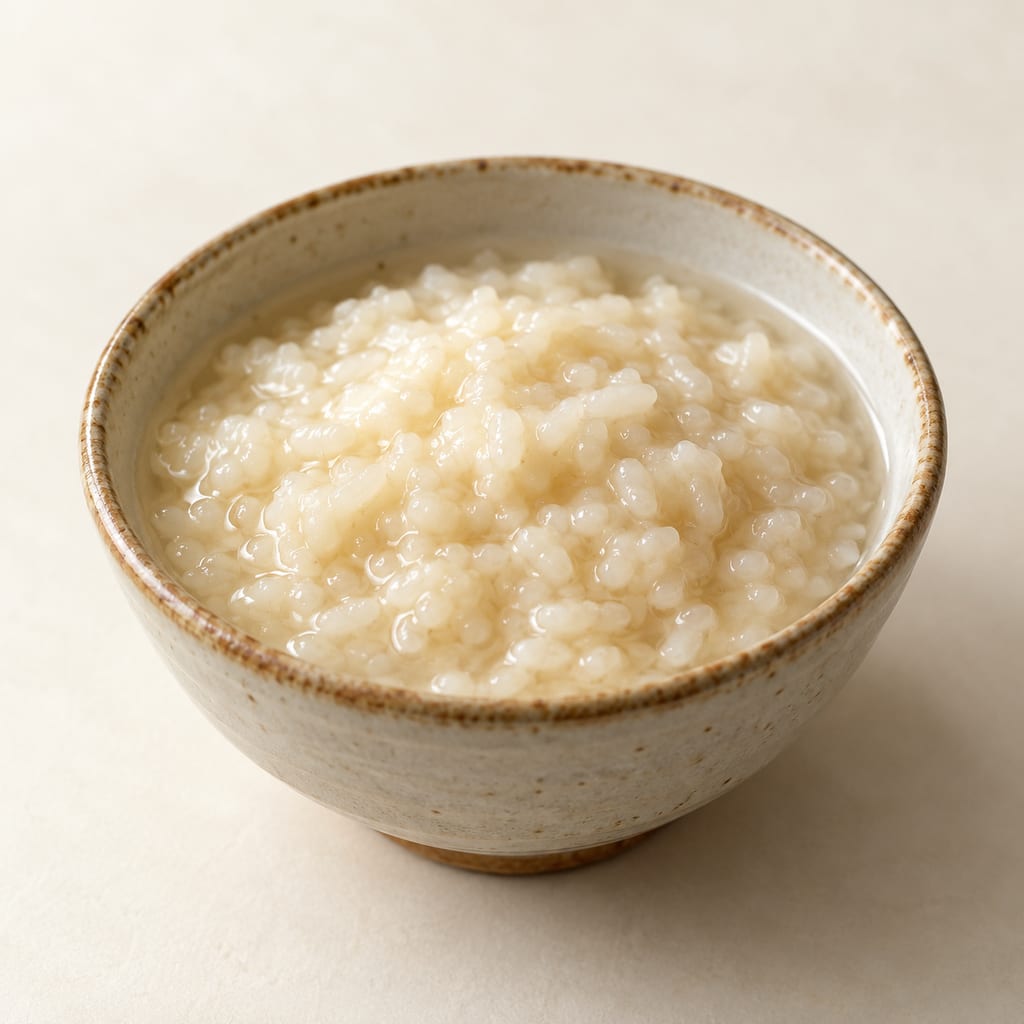
Shio-koji is a Japanese seasoning of rice koji, salt and water, left at room temperature until the grains soften and turn sweet and the mixture thickens.

An Okinawan fermented tofu: dried tofu cubes matured in rice koji, awamori and salt, traditionally with red Monascus koji, until the curd turns smooth and intensely savoury.

Japanese reddish-brown vinegar from sake lees matured about three years, turned to vinegar by acetic bacteria; the vinegar of Handa and Edomae sushi rice.
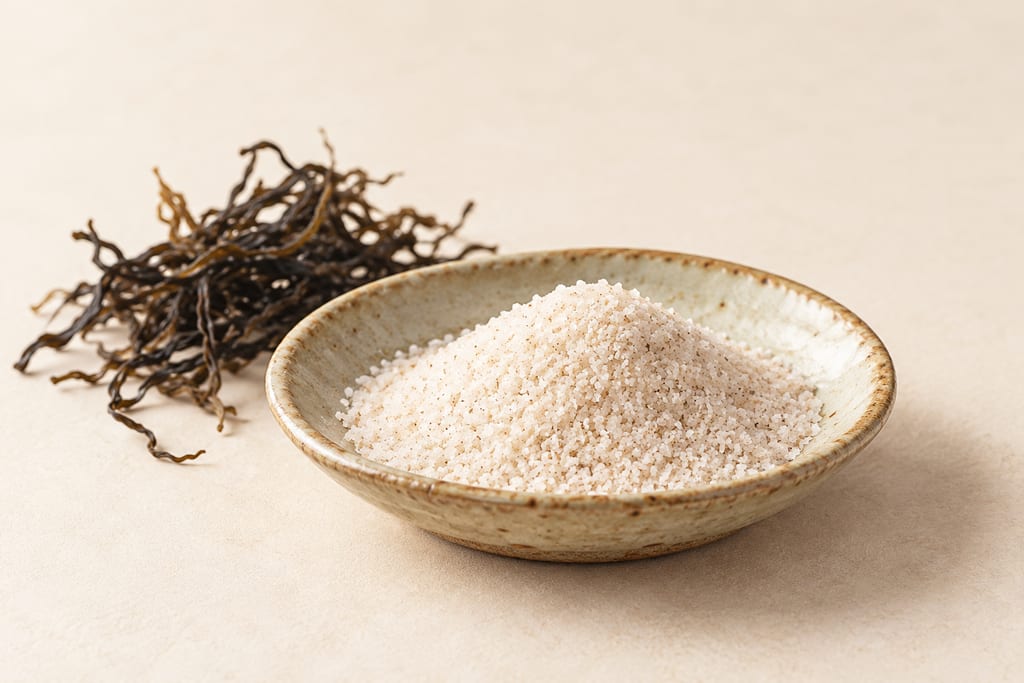
Amabito no Moshio is a modern, pale beige Japanese seaweed salt made from Seto Inland Sea water and hondawara seaweed. Its documented factory method concentrates filtered brine in kettles, then separates and dries the salt.
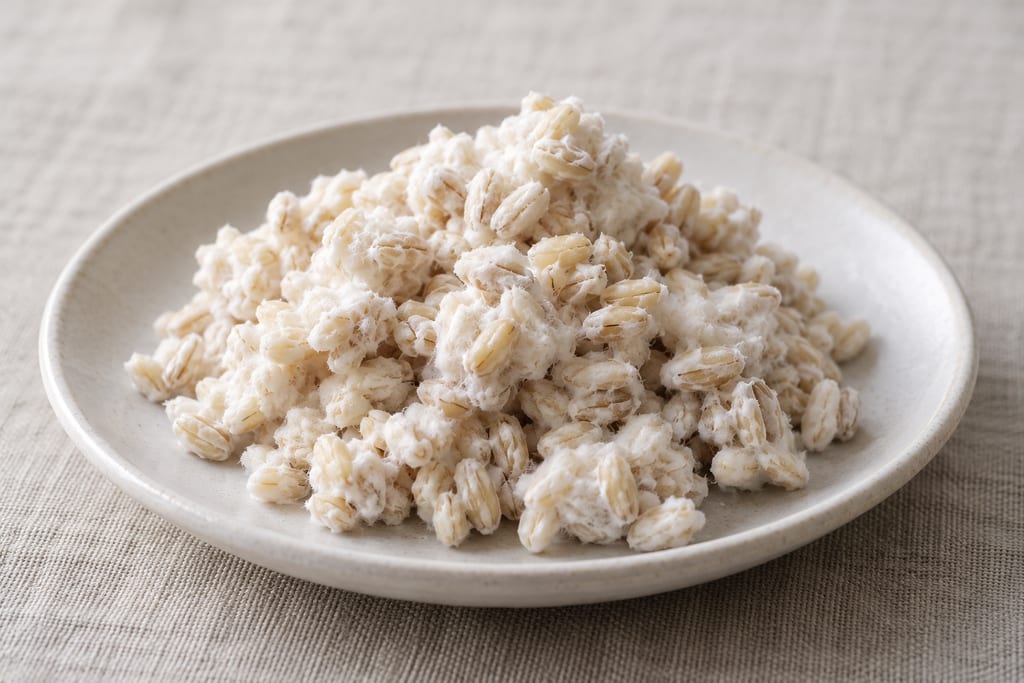
Steamed pearled barley grown into a white koji cake with Aspergillus oryzae over about 36 hours in a 30 °C chamber, turned three times under a damp cloth.
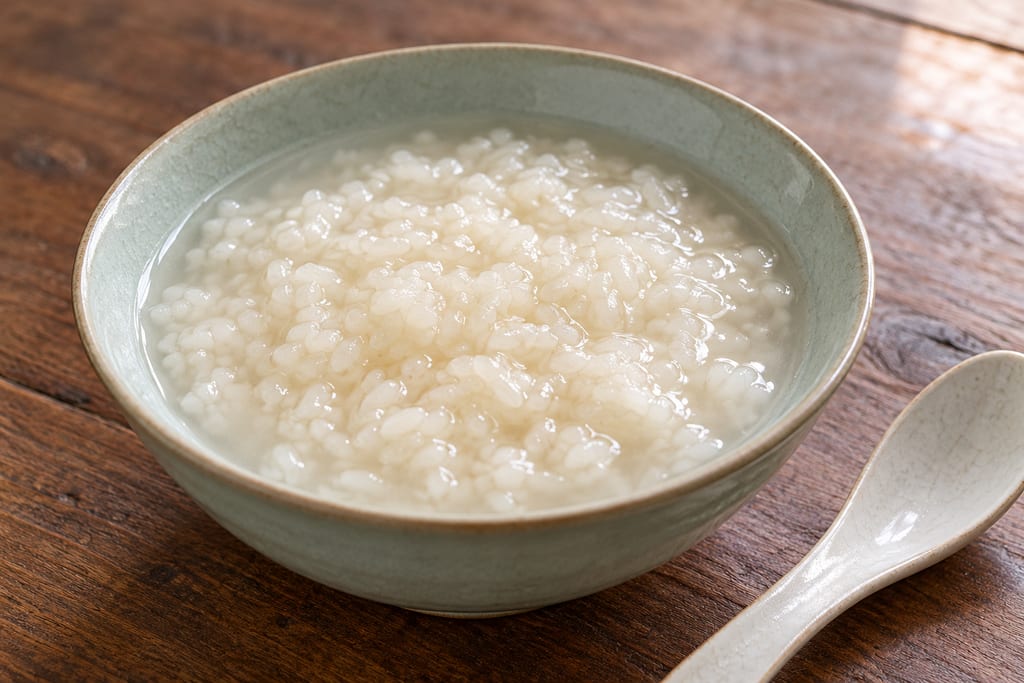
Chinese sweet fermented glutinous rice: steamed rice and a mixed jiuqu starter, where mould enzymes release sugar and yeast makes a little alcohol, eaten with its sweet liquid.

An ethnographic record of marcha (murcha), a dry starter cake used in Eastern Himalayan cereal fermentations. This page documents source-specific community knowledge and is not a recipe for making or storing starter.
No community contributions have been published for this entry yet.
Sign in to contribute. Published comments and photos are free to read.
MarukomeMethod · Ingredients · Uses · Safety
Homemade Whole Grain Mustard MagicAma-koji uses rice, rice koji and water; the published example uses 100 g rice, 50 ml cold water and 100 g dried rice koji.
The porridge is cooled to about 50°C and held at 55–60°C for eight hours.
The maker warns about bacterial growth below 50°C and reports refrigerated storage of about 20 days.
The interviewee describes an optional four-to-five-day refrigerated rest, use in marinades, sweetness in place of sugar or mirin, and a simple dressing ratio.
Cited in: A sweet rice preparation for the kitchen; A modern preparation beside an older drink; What changes during the warm hold; Ingredients and the published method; Ways to use it; Amazake and nearby preparations; Cooling, refrigeration and limits
Ministry of Agriculture, Forestry and Fisheries of JapanHistory · Classification
Beverages: Traditional Foods in JapanAmazake has rice-koji and sake-lees forms; the ministry distinguishes them.
The ministry describes an early Nihonshoki reference to amanotamuzake and Edo-period popularity of amazake.
Rice-koji enzymes acting on rice starch produce sweetness in koji amazake.
Cited in: A modern preparation beside an older drink; Amazake and nearby preparations; Cooling, refrigeration and limits
Journal of Bioscience and Bioengineering / PubMedMethod · Food science
Effect of temperature on saccharification and oligosaccharide production efficiency in koji amazakeThe study describes glucose from enzyme digestion of rice starch as a principal sweetness source in koji amazake.
Among tested temperatures, glucose content was highest at 50°C and lower at 40°C, 60°C and 70°C; this informs the general temperature discussion but does not validate this ama-koji batch.
Cited in: A sweet rice preparation for the kitchen; What changes during the warm hold; Amazake and nearby preparations