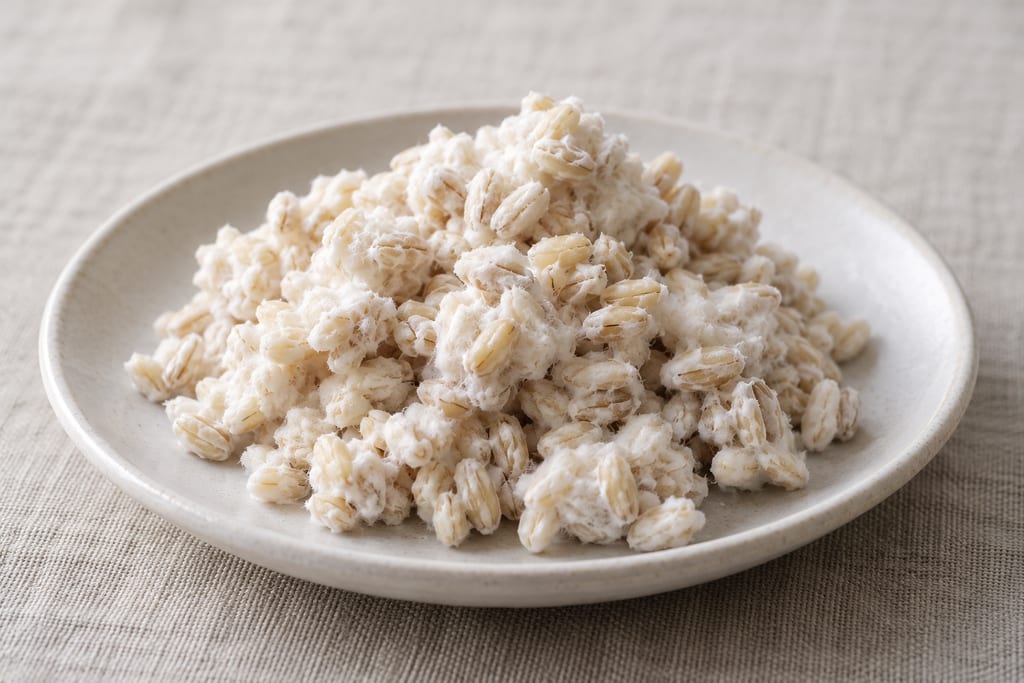
Barley koji
Steamed pearled barley grown into a white koji cake with Aspergillus oryzae over about 36 hours in a 30 °C chamber, turned three times under a damp cloth.
 FermenteaWhere food goes to change
Traditional method
豆麹 · 豆こうじ · Mame kōji · Mame koji · Soybean koji · Bean koji · Soy koji · Soybean bara-koji · 豆ばら麹 · 味噌玉麹 · Miso-dama koji · Misodama-koji · Soybean miso koji · 大豆麹
Japanese soybean koji: steamed soybeans, loose or formed into balls, grown over with Aspergillus mould to make the enzymes for mame-miso, tamari and regional soybean condiments.
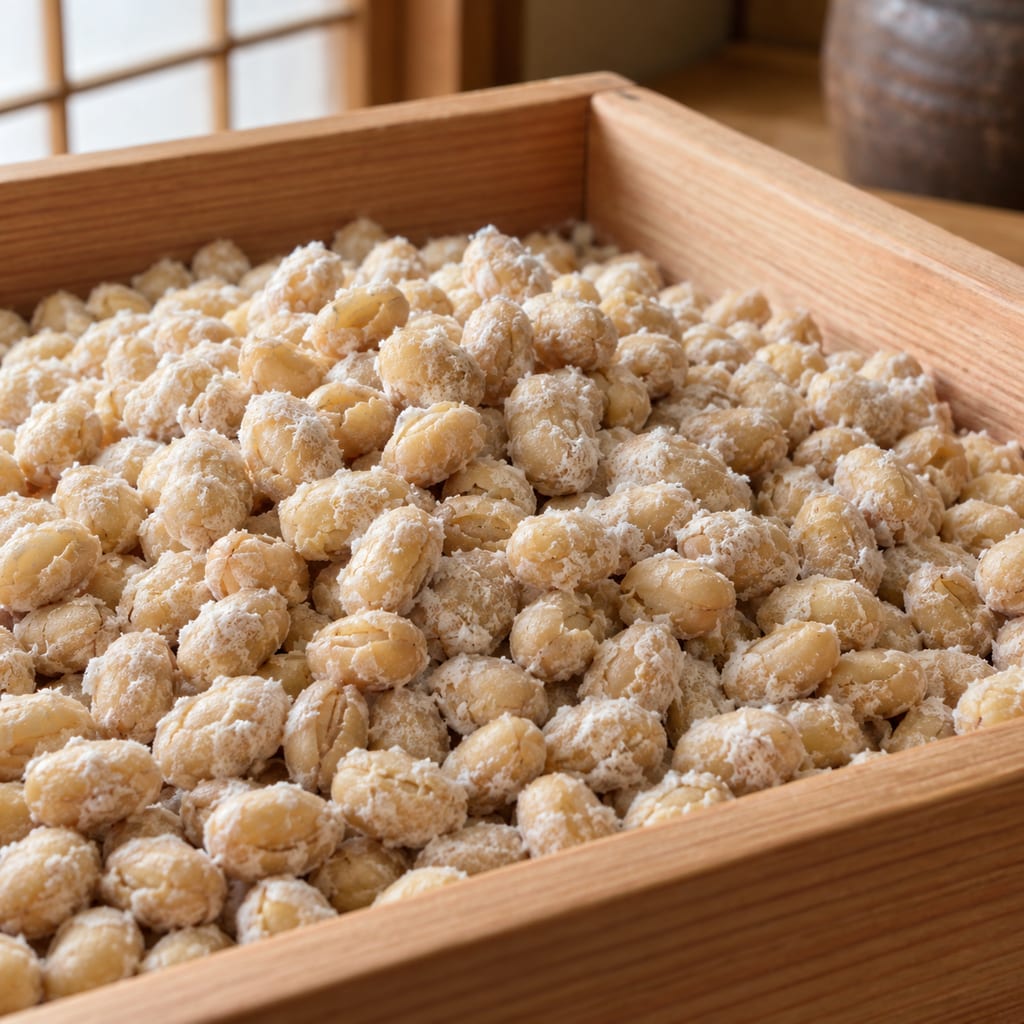
Mame-koji (豆麹) is Japanese koji cultivated directly on soybeans. Cooked soybeans are inoculated with a selected koji mould, usually Aspergillus oryzae, and maintained under conditions that allow fungal mycelium to colonise the substrate and produce enzymes. The result is an intermediate fermentation ingredient rather than a finished miso or ordinary prepared soybean dish. Its principal purpose is to supply the enzymes and prepared soybean material needed for further fermentation and maturation.
Japanese koji is named according to the material on which the mould grows. Kome-koji (米麹) is made on rice, mugi-koji (麦麹) on barley, and mame-koji (豆麹) on soybeans. Although these preparations share the principle of controlled fungal cultivation, their nutrients, moisture, physical structure and enzyme activities differ. Soybeans are particularly rich in protein and oil but contain comparatively little starch, so protein-degrading enzymes are especially relevant to soybean-koji production.
Japan's agricultural standard recognises two forms of soybean koji. Soybean bara-koji consists of separate soybean grains retaining their original granular form. Miso-dama koji is made by crushing or mashing cooked soybeans, forming them into balls or similar masses, and cultivating koji mould on the formed material. These are two recognised production methods, not merely different serving shapes. The form influences aeration, moisture distribution, bacterial activity and enzyme development.
Mame-koji is the defining fermentation intermediate for mame-miso (豆味噌), the dark soybean miso associated particularly with Aichi, Gifu and Mie prefectures. Unlike rice miso, in which rice koji is mixed with cooked soybeans, traditional soybean miso is made by cultivating koji on the soybeans themselves. After koji preparation, salt and water are introduced and the product undergoes prolonged maturation. This later salted stage is separate from the initial koji-making operation.
Another documented use occurs in northern and central Nagano, where mame-koji is made from whole soybeans and incorporated into shoyu mame or shoyu no mi. The Ministry of Agriculture's regional recipe uses steamed soybeans, commercial seed koji and roasted wheat flour. It then combines the finished mame-koji with rice koji, soy sauce and water. This differs from traditional Tokai soybean-miso manufacture, where most or all of the cooked soybeans may be formed into miso balls.
Aspergillus oryzae is the central cultivated organism under Japan's current miso standard. Technical literature also describes Aspergillus sojae in some soybean-koji or related brewing applications. However, the 2025 Japanese Agricultural Standard JAS 0022 specifies A. oryzae for standard-conforming miso manufacture. The technical literature and the current standard do not list the same starter species.
Mame-koji must also be distinguished from natto, kinema, bekang and other Bacillus-led soybean fermentations. Those foods commonly develop sticky polymers and pronounced alkaline aromas through bacterial metabolism. Mame-koji instead deliberately establishes a selected filamentous mould and its enzyme system. A white fungal coating is characteristic of many successful preparations, but appearance alone cannot identify the organism or demonstrate food safety.
Mame-koji belongs to Japan's wider history of fermented soybean seasonings. Miso developed over many centuries from earlier salted and fermented foods, often discussed in connection with Chinese jiang and Japanese hishio. The earliest written references to Japanese fermented soybean seasonings are considerably older than surviving descriptions of modern soybean-koji manufacturing. They cannot establish that present-day mame-koji, with deliberately inoculated Aspergillus and controlled temperature, was made by the same method in ancient Japan.
The history becomes more specific in central Japan. Soybean miso developed a particularly strong regional association with the Tokai area, now including Aichi, Gifu and Mie prefectures. The area's hot, humid summers made koji preparation demanding. Japanese government accounts explain that shaping cooked soybeans into miso balls became an important adaptation to these conditions. The method encourages acid production within the balls while allowing koji mould to grow over the surface, limiting undesirable bacterial competition.
Japan's geographical-indication documentation places the establishment of the miso-dama manufacturing method within the Edo period. One official account identifies the Tenpo, Koka and Kaei eras, covering approximately 1830–1854. This is evidence for the historical regional development of the technique, although it does not prove that the method was invented during those exact decades or used identically by every producer.
The Hatcho-miso brewing tradition provides a longer commercial history. Kakukyu, a manufacturer in Okazaki, describes producing Hatcho miso since 1645. Maruya Hatcho Miso claims a brewing establishment dating to 1337. These are the manufacturers' own historical accounts. Founding dates do not establish that the surviving modern process, including its koji strains, equipment and bean-ball dimensions, existed unchanged at the time the businesses began.
A Japanese brewing review published by Norio Takeuchi in 1988 discusses soybean-miso manufacturing and includes references to earlier technical descriptions, including an 1883 account of mame-miso production. The review treats the miso-ball method as the distinctive technical feature separating traditional Japanese soybean miso from other Asian soybean ferments. It also describes how ingredient ratios, steaming, ball formation and koji cultivation affect finished miso quality.
Modern manufacturing developed machinery for forming miso balls and improved control of temperature, moisture and microbial starters. Selected koji cultures replaced reliance on unidentified environmental mould populations. Nonetheless, traditional producers in Okazaki continue using formed soybean koji followed by maturation in large wooden casks. The surviving method combines established regional practice with modern microbiological understanding and production controls.
Another history belongs to Nagano. The Ministry of Agriculture documents mame-koji preparation within the traditional shoyu mame or shoyu no mi food culture of northern and central Shinshu. Its recipe uses whole steamed soybeans rather than large miso balls. The ministry records the food as a traditional local preparation but does not supply a verified invention century for the specific granular mame-koji process.
The scientific and regulatory record is clearer in recent decades. A technical description of soybean-miso manufacturing appeared in 1988, microbiological studies of Japanese miso communities were published in 2003, and a detailed review of traditional koji and miso manufacture appeared in 2021. Japan established JAS 0022 for miso in 2022 and revised it in July 2025. The revised standard explicitly distinguishes granular soybean koji from miso-dama koji and specifies Aspergillus oryzae as the koji mould used for conforming miso production.
Mame-koji is a controlled solid-state fungal fermentation of cooked soybeans. The principal cultivated mould is Aspergillus oryzae, whose spores germinate on a suitably prepared soybean surface and develop networks of hyphae. The fungus consumes nutrients and releases extracellular enzymes. Its growth produces metabolic heat, consumes oxygen and releases carbon dioxide, so cultivation requires suitable aeration and temperature management. The white surface growth characteristic of young koji consists primarily of developing fungal mycelium, not the sticky bacterial polymer found in natto.
Proteolysis is especially important because soybeans contain large amounts of storage protein. Glycinin and beta-conglycinin are major components of the soybean protein fraction. Koji mould secretes endopeptidases that break these proteins into smaller polypeptides and peptides. Exopeptidases then remove amino acids from the ends of peptide chains. These soluble products provide the basis for the savoury flavour that develops during subsequent soybean-miso maturation.
Different proteases work under different chemical conditions. Research reviewed by Kusumoto and colleagues describes neutral proteases, acidic proteases, alkaline proteases and several classes of carboxypeptidases and aminopeptidases produced by koji mould. Their activities depend on the producing strain, enzyme concentration, pH, salt concentration and substrate accessibility. A visible coating of mould does not show a specific protease activity or that the soybeans have reached a useful enzyme-production endpoint.
One important reaction involves glutamic acid. Proteolysis can release glutamic acid directly from soybean proteins, while fungal glutaminases can convert glutamine into glutamic acid and ammonia. Glutamic acid contributes to umami taste in miso and other fermented soybean seasonings. However, the amount produced in a finished condiment depends on subsequent maturation as well as the initial soybean-koji stage. Glutamate concentrations measured in another type of koji or a laboratory strain cannot automatically be assigned to traditional mame-koji.
Koji mould also produces amylases and other carbohydrate-degrading enzymes. These enzymes can act on starch and accessible soybean carbohydrates, releasing smaller sugars that support later microbial reactions. Soybeans have much less starch than rice or barley, so the balance of enzyme activities differs from kome-koji or mugi-koji. Some soybean-koji methods include a small amount of wheat flour or roasted barley powder, which changes the local substrate available to the mould.
In miso-dama koji, the physical shape creates an additional microbial environment. The outer surface is exposed to oxygen and supports fungal growth, while the inner portion is less aerated. Japanese brewing research describes the development of facultatively anaerobic lactic acid bacteria within formed miso balls. Their production of lactic acid can reduce the local pH and suppress competing Bacillus bacteria. The degree of acidification varies with ball size, moisture, temperature and microbial conditions.
This bacterial contribution is separate from the principal fungal starter. Lactic acid bacteria may participate in the internal ecology of miso-dama, but mame-koji is deliberately made by cultivating koji mould. In fact, uncontrolled Bacillus growth can interfere with fungal cultivation. Some bacterial species desirable in alkaline soybean ferments such as natto can be undesirable competitors during koji production. Their mere detection does not make them approved mame-koji starters.
The microorganisms of finished miso belong partly to a later stage. After soybean koji is combined with salt and water, salt-tolerant yeasts and lactic acid bacteria may participate in maturation. Research describes Zygosaccharomyces rouxii and Tetragenococcus halophilus in Japanese miso fermentation, alongside other organisms. Those populations belong to maturation, not to fresh mame-koji. Studies of rice-koji miso are comparative evidence, not a species-by-species description of every soybean-koji preparation.
During prolonged maturation, further proteolysis, carbohydrate reactions and non-enzymatic browning develop the finished condiment. Amino compounds react with carbonyl compounds through Maillard chemistry, contributing darker colours and new aroma substances. These changes are particularly evident in aged soybean misos. Mame-koji supplies much of the enzyme system that makes the later transformations possible; the dark colour of finished Hatcho miso is not the usually pale surface of freshly cultivated soybean koji.
Mame-koji begins with selecting, washing, soaking and cooking soybeans. Soaking allows water to penetrate the beans, while steaming softens the structure and denatures proteins. These changes make nutrients more accessible to fungal enzymes. Moisture is particularly important because soybeans retain considerable water after cooking. Too much surface moisture can encourage competing microorganisms or cause the beans to stick together, while insufficient moisture can restrict fungal development.
A government-documented method from Nagano provides unusually clear household-style quantities. The Ministry of Agriculture's shoyu mame recipe includes a separate mame-koji preparation using 18 litres of soybeans, one cup of wheat flour and an unspecified amount of prepared seed koji. The soybeans are washed and soaked for one day and night, then steamed for approximately six to seven hours until they can be crushed between the fingers. These are the quantities and cooking conditions of the original regional recipe, not universal proportions for every soybean-koji preparation.
In this Nagano method, the wheat flour is dry-roasted in a heavy pot and allowed to cool. It is then mixed with the seed koji before being distributed over the cooked beans. The flour acts as a carrier that helps disperse the inoculum. It also adds a small amount of carbohydrate-containing material. The inoculum dose and fungal strain are not given, and it is not known whether the flour is necessary in other methods. This particular mame-koji contains wheat and cannot be described as wheat-free.
The cooked soybeans are cooled to 25–30°C before the flour and seed-koji mixture is incorporated. The recipe then specifies maintaining the koji at approximately 24–26°C for three to four days until the beans are covered with white fungal growth. This is a documented regional process. The visible white coating is the traditional completion description, not a verified food-safety endpoint or a substitute for confirming starter identity.
The industrial Tokai method uses a different physical preparation. The soybeans are soaked and usually pressure-steamed, then cooled and formed into balls using a specialised machine called a tamanigiri-ki. Scientific reviews describe miso balls commonly around 19–24 mm in diameter, although other sizes are used. The balls are inoculated with prepared koji spores and cultivated in a controlled environment. Roasted and powdered barley, known as kosen or hattaiko, may be added to help prevent the balls from sticking together and to improve aeration.
The ball-forming stage has a microbiological purpose as well as a mechanical one. The less-aerated interior can support lactic acid bacteria that lower local pH, while the surface supports the aerobic koji mould. Japanese technical literature reports that smaller balls tend to favour enzyme development, whereas larger balls may accumulate more lactic acid. The optimal dimensions therefore depend on the manufacturer and desired miso characteristics. A household method using loose beans cannot simply adopt the temperature and moisture conditions of a large miso-ball factory.
Temperature schedules also differ. A 2021 technical review describes a soybean-miso process beginning around 27–28°C, with later koji temperatures commonly maintained around 33–35°C. Another industry account describes cooling formed balls before inoculation and cultivating them for approximately forty-eight hours. In contrast, the Nagano regional recipe uses 24–26°C for three to four days. These are separate methods and are not averaged into one recipe.
Once the mould has colonised the prepared soybeans, the material is mame-koji. If it is intended for mame-miso, the subsequent operation involves breaking or crushing the soybean koji, adding salt and water, and packing the mixture for longer fermentation and maturation. Those operations belong to the mame-miso recipe rather than the mame-koji preparation itself. Fresh mame-koji is an intermediate with substantial remaining moisture and is not shelf-stable before further processing.
The main regional association of mame-koji is with soybean miso produced in Aichi, Gifu and Mie prefectures. Japanese government classifications identify these three prefectures as the traditional production region for mame-miso. The finished condiment is characteristically dark, strongly savoury and sometimes slightly astringent or bitter. Its particular flavour develops from the soybean-koji system and subsequent maturation rather than from adding ordinary rice or barley koji.
In Aichi, Hatcho miso is the best-known example. The traditional process forms cooked soybeans into miso balls, cultivates koji mould on them, and later combines the resulting soybean koji with salt and water. A government geographical-indication description requires shaped soybean masses before koji cultivation. The GI production method also specifies maturation for at least one year. Individual historic breweries may mature their products for longer, including two years or more in large wooden casks.
The two long-established Okazaki manufacturers provide useful examples of producer-level variation. Kakukyu describes steaming soybeans, forming fist-sized balls, cultivating the mould and ageing the resulting salted mixture under heavy stone weights. Maruya also describes hand-formed or machine-assisted soybean balls and long maturation in wooden vessels. Their finished misos share a regional style, but their production accounts do not establish that every temperature, ball size and microbial strain is identical.
Elsewhere in the Tokai region, producers use different soybean varieties, ball dimensions, inoculation techniques and maturation methods. Some technical descriptions emphasise small machine-formed balls, while others discuss larger masses. These physical choices alter the balance between fungal enzyme production and bacterial acidification inside the balls. Published research therefore treats ball size as a meaningful processing variable rather than a decorative characteristic.
Nagano provides an important alternative use of mame-koji outside the principal mame-miso region. Its traditional shoyu mame or shoyu no mi involves granular soybean koji, rather than the large ball-shaped intermediate associated with Hatcho miso. The Ministry of Agriculture documents a recipe using soybeans, wheat flour and seed koji for the initial fermentation. The finished bean koji is then combined with rice koji, soy sauce and water to make a savoury preparation eaten with rice and vegetables.
The name shoyu mame requires geographical care. The Nagano food made using fermented soybeans is distinct from Kagawa Prefecture's shoyu mame, which is commonly made from broad beans, Vicia faba, seasoned with soy sauce. They are different traditional foods that share a Japanese name. Similarly, a Yamanashi preparation called shoyu no mi can use barley koji and should not automatically be classified as the Nagano soybean-koji recipe.
Tamari production is another related but separate tradition. Tokai tamari is made principally from soybeans, sometimes with a small amount of wheat. Japan's Ministry of Agriculture describes prepared soybean masses fermented with koji mould and subsequently combined with brine. The resulting liquid condiment is tamari soy sauce. Its koji-making stage may resemble soybean-miso production, but the final brine fermentation and liquid extraction differ from the manufacture of solid mame-miso.
Modern adaptations include controlled soybean-koji cultivation, selected Aspergillus cultures and experimental mixed-organism approaches. A 2016 Aichi research-centre study deliberately combined koji mould with natto bacteria to investigate a different soybean-miso product. That was an experimental development, not evidence that ordinary traditional mame-koji is supposed to contain a natto culture. The distinction between heritage production and laboratory innovation is important when describing microbial lineages.
The current Japanese agricultural standard formally recognises both granular soybean koji and miso-dama koji. This modern classification provides a useful way to organise the food without reducing all regional methods to one recipe. Mame-koji covers both forms, while the preparation methods and final products stay distinct.
Mame-koji is primarily used as a fermentation intermediate rather than eaten as a finished food. Its most important traditional application is the production of mame-miso. The mould-grown soybeans supply enzymes and partially transformed proteins that continue to change during the subsequent salted maturation. Once finished, the miso becomes a concentrated seasoning used in soups, sauces, marinades and cooked dishes.
The main regional uses of finished soybean miso are associated with Aichi and the wider Tokai region. Hatcho miso and related dark soybean misos are used in miso nikomi udon, miso katsu, miso oden and other strongly seasoned dishes. These are applications of matured mame-miso, not dishes made by simply mixing fresh mame-koji into hot food. The final salt, acidity, flavour and texture develop during the later processing stage.
Miso nikomi udon is a regional noodle preparation in which soybean miso seasons a hot broth. Miso katsu uses a soybean-miso-based sauce over a fried cutlet. Miso oden uses fermented soybean seasoning in an oden or hotpot preparation. The precise formulation may vary between restaurants and households, but these dishes demonstrate how the characteristic dark and savoury finished miso is used in the regional cuisine.
Mame-koji also contributes to tamari, a traditional soybean-based liquid seasoning. The prepared soybean material is combined with brine and undergoes further fermentation and maturation. Liquid extracted from the mature mixture becomes tamari soy sauce. Because the subsequent process differs from solid miso manufacture, tamari deserves a separate preparation record, even when the initial koji-making technique is closely related.
The Nagano preparation shoyu mame or shoyu no mi demonstrates a different route from mame-koji to a finished food. The Ministry of Agriculture's recipe combines two litres of mame-koji with two litres of rice koji, two cups of soy sauce and three cups of water. The soy sauce and water are warmed before mixing with the prepared koji. The mixture then rests until the seasoning penetrates and the flavour develops. This is a separate dish-production process following the mame-koji stage.
Nagano's finished shoyu mame is used as an accompaniment to warm rice, tofu and vegetables, and can season boiled greens or natto in place of ordinary soy sauce. The regional food is sometimes described as edible soy sauce because the fermented bean mixture is eaten rather than simply poured as a liquid. The Ministry of Agriculture records its association with New Year eating in northern Shinshu.
These examples illustrate why the word koji must be understood precisely. Fresh mame-koji is an enzyme-rich prepared substrate. Mame-miso is a fermented paste made through subsequent salting and maturation. Tamari is a fermented liquid seasoning. Shoyu mame is a separately seasoned whole-bean preparation. Their ingredients, microbial development, preservation conditions and serving methods are not interchangeable.
Mame-koji is the preparation used in recipes that need soybean-based koji. Hatcho miso, Nagoya miso, tamari and Nagano shoyu mame can be linked products with their own ingredients, processes and historical records. Granular and miso-dama koji are different physical forms, not identical ones.
A characteristic fresh mame-koji preparation shows growth of the intended koji mould over cooked soybeans. In the documented Nagano method, the producer waits until the beans become covered with white fungal growth. In miso-dama production, the mould develops on the formed soybean masses while the interior may support a different bacterial environment. These observations help identify the expected appearance and texture, but they do not establish the identity or safety of the fungal culture. Unidentified white mould cannot be treated as Aspergillus oryzae simply because it resembles koji.
Fungal strain identification is the first important control. Aspergillus oryzae belongs to a group containing closely related fungi, some of which can produce harmful secondary metabolites. Japan's agricultural standard defines acceptable koji moulds for miso as non-pathogenic and non-toxin-producing strains, and its 2025 requirements specify A. oryzae for conforming miso manufacture. An unknown environmental Aspergillus, or a culture grown from another food, is not equivalent to a selected commercial tane-koji.
The presence of Aspergillus sojae in technical descriptions requires care. A 2021 brewing review discusses both A. oryzae and A. sojae as organisms historically used in soybean-koji production. However, the current Japanese miso standard explicitly requires A. oryzae. A culture suited to soy sauce, or one used in a laboratory study, may not suit a particular standard-conforming miso. The species, strain, food use and relevant requirements must all be considered.
Soybean-koji cultivation also has important bacterial hazards. Cooked soybeans provide a moist, protein-rich environment in which unwanted bacteria can multiply if the intended mould is slow to establish or the processing conditions are unsuitable. Japanese technical literature specifically identifies Bacillus subtilis as a competitor that can interfere with koji mould cultivation. This is a useful contrast with natto, where selected B. subtilis strains are intentionally used. The species may be functional in one food system and undesirable in another.
Miso-ball formation is one traditional response to this problem. Its relatively low-oxygen interior can favour lactic acid bacteria that lower the local pH, thereby suppressing competing Bacillus growth. However, ball formation alone is not a complete safety guarantee. The extent of acidification depends on the actual microbial community, moisture, size and fermentation conditions. The absence of measured pH and pathogen information prevents treating a particular ball diameter as an independently validated food-safety critical limit.
Temperature control is important because growing fungal mycelium releases heat. The temperature inside a tray or mass of beans may rise above the surrounding air temperature. Poor aeration can create uneven growth, while excess moisture and excessive heat can favour undesirable organisms. The Nagano recipe's 24–26°C range is specific to that method, while industrial soybean-miso methods use other schedules. Neither carries over to an unrelated batch without its own process assessment.
Wheat and barley additions introduce further considerations. The Nagano method explicitly uses roasted wheat flour as a carrier for seed koji, while some traditional miso-ball methods use roasted barley powder to prevent sticking and improve aeration. These ingredients contain gluten. Soybean-based koji cannot automatically be labelled gluten-free merely because soybeans are the principal substrate. Ingredient lists and allergen declarations must reflect the actual materials used.
The finished fresh koji also lacks the preservation barriers of matured miso. The initial fungal cultivation generally occurs before the major salt addition, and the substrate retains moisture. The dark, salty and comparatively stable characteristics of aged mame-miso cannot be assigned to fresh mame-koji. A producer must establish appropriate handling and storage conditions rather than assuming the intermediate can remain at room temperature indefinitely.
Research into the microbial communities of finished miso should also be interpreted cautiously. Lactic acid bacteria, yeasts and aerobic bacteria have been recovered during miso fermentation. One 2003 investigation identified Tetragenococcus halophilus, Enterococcus species and other bacteria, while another detected B. subtilis, B. amyloliquefaciens and several additional organisms. The investigated formulation used rice koji and soybeans, so the full isolate list cannot be presented as a required microbial community for soybean-koji manufacture.
Claims about nutrition or health also need clear limits. Fungal enzymes release amino acids and alter carbohydrate availability, and subsequent miso maturation produces numerous flavour compounds. These transformations do not establish that eating fresh mame-koji delivers a clinically meaningful benefit. Live mould or enzyme activity is not proof of probiotic function, and fermentation does not remove soybean allergens.
A practical production method therefore requires food-grade starter spores, appropriate soybean cooking, verified culture identity, controlled temperature and moisture, hygienic equipment, monitoring of the fermentation and suitable handling afterward. An unfamiliar mould colour, unexpected odour, abnormal texture or evidence of contamination warrants rejection, but normal appearance alone does not guarantee safety. Wild mould on cooked soybeans, or uncharacterised natto cultures, are no substitute.
Japan's geographical-indication records place the Tokai miso-ball method in the Edo period, and one account names the Tenpo, Koka and Kaei eras (1830 to 1854). Hatcho-miso makers claim production since 1645 (Kakukyu) and 1337 (Maruya), but company founding dates do not show which koji process was used. JAS 0022 (2022, revised 2025) recognises both granular soybean koji and miso-dama koji.
Scaling: source batch only
The intended organism in this standard-conforming Japanese miso context is Aspergillus oryzae. Unidentified environmental moulds or incorrectly supplied cultures may have different biological properties and may not be suitable for food. The current Japanese standard requires management of seed koji to prevent mixing with other koji mould cultures.
Hazard sourceSelected food-grade Aspergillus oryzae strains are used for established food fermentation, but the appearance of pale mould cannot establish the identity or safety of an unknown fungus. A correctly characterised starter is necessary rather than spontaneous mould cultivation.
Hazard sourceJapanese soybean-koji research identifies Bacillus species, including B. subtilis, as potential competitors with the intended koji mould. Excessive growth may interfere with enzyme production and product quality. Some related Bacillus species can also cause foodborne illness.
Hazard sourceCooked soybeans retain moisture and nutrients suitable for microbial growth. Inadequate hygiene, cooling or inoculation can allow undesirable organisms to proliferate before the intended koji mould becomes established.
Hazard sourceGrowing Aspergillus mycelium produces metabolic heat. The soybean mass may become warmer than the surrounding air. The temperature of the actual fermenting beans matters more than room temperature alone.
Hazard sourceExcess surface moisture, deep accumulations of beans and poor aeration can cause uneven fungal growth or favour undesirable microorganisms. The Nagano recipe does not specify tray dimensions, bean depth or humidity.
Hazard sourceThe mame-koji preparation is made before the addition of the main salt used in finished miso or the soy sauce used in shoyu mame. Fresh soybean koji therefore cannot be assumed to have the preservation characteristics of the later seasoned product.
Hazard sourceThe principal substrate is soybean, a recognised allergen. Fungal fermentation does not establish that soybean allergenic proteins have been eliminated.
Hazard sourceThe Nagano recipe explicitly contains wheat flour. Wheat is a regulated allergen and contains gluten. This particular preparation must not be described as wheat-free or gluten-free without appropriate substantiation.
Hazard sourceThe traditional recipe specifies the completion of fungal cultivation but no validated storage temperature, water activity, packaging conditions or shelf life for the fresh mame-koji.
Hazard sourceUse an appropriately identified, food-grade Aspergillus oryzae seed-koji product and follow the supplier's instructions for inoculum handling and dosing.
Control sourcePrevent cross-contamination of the starter with other fungal cultures during storage, preparation and inoculation.
Control sourceUse sound food-grade soybeans, clean water and hygienically maintained cooking and fermentation equipment.
Control sourceEstablish a suitable cooking and cooling procedure and minimise contamination before inoculation.
Control sourceMeasure and manage the actual soybean temperature throughout koji cultivation, accounting for heat generated by fungal metabolism.
Control sourceEstablish suitable aeration, moisture and substrate-depth conditions for the selected batch size and equipment.
Control sourceAssess unwanted bacterial and fungal growth and establish appropriate finished-koji acceptance criteria before use in food production.
Control sourceEstablish appropriate handling, storage conditions and shelf life for fresh soybean koji rather than applying finished-miso storage guidance.
Control sourceDeclare soybean and wheat in ingredient and allergen information for this specific recipe.
Control sourceThis is a documented Nagano regional preparation, not a fully validated universal household soybean-koji protocol.
The original seed-koji quantity is unspecified. Do not invent an inoculation dose.
Use identified food-grade Aspergillus oryzae starter, not unidentified environmental mould.
Do not substitute spontaneous bacterial soybean fermentation for controlled koji cultivation.
The published 24–26°C refers to the koji during the Nagano process. It must not be treated as a universal safety limit for every soybean-koji method.
The temperature inside the fermenting soybean mass can differ from the surrounding room temperature.
White fungal coverage is a traditional completion observation, not proof that the culture is correctly identified or free from contamination.
The recipe contains wheat flour and soybeans, both relevant allergens.
Do not assume that soybean-based koji is gluten-free without checking the actual ingredients and production conditions.
The fresh preparation has not yet undergone the salt addition and maturation that produce finished mame-miso or shoyu mame.
No validated final water activity, microbiological release criteria or shelf life is provided for this exact recipe.
Do not transfer the ingredient proportions, temperatures or fermentation duration of industrial miso-dama koji into this granular method.
Do not treat a commercial dried or frozen mame-koji product's shelf life as applicable to freshly prepared household koji.
Suspected contaminated or incorrectly fermented material should not be tasted or used to prepare miso.
A separate validated formulation is required for the subsequent salted maturation of mame-miso or preparation of shoyu mame.
Steamed pearled barley grown into a white koji cake with Aspergillus oryzae over about 36 hours in a 30 °C chamber, turned three times under a damp cloth.
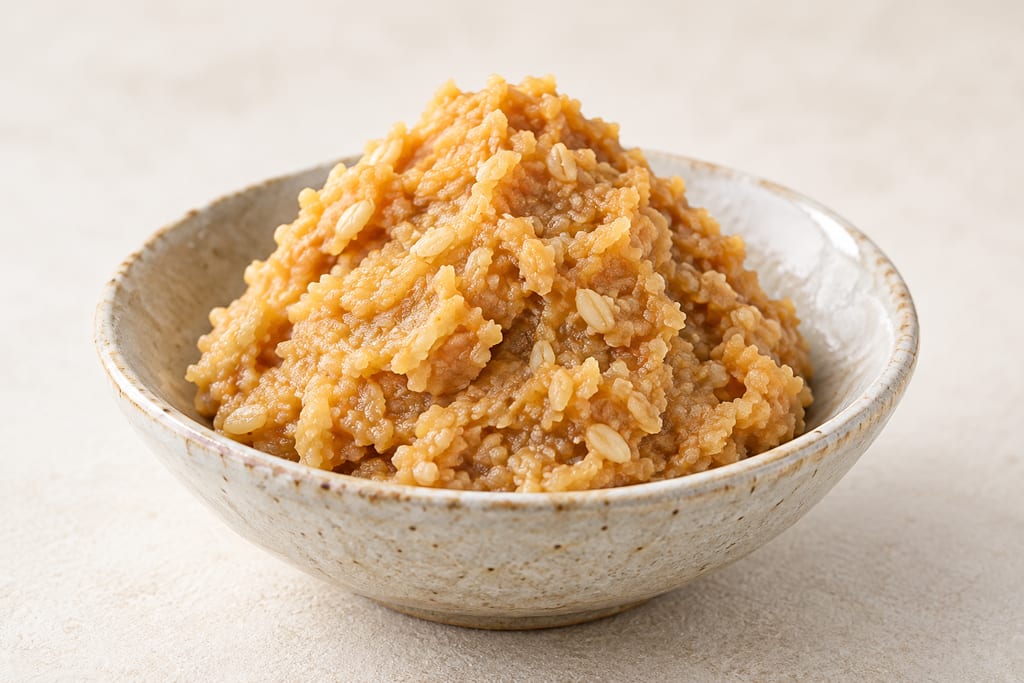
A Japanese soybean paste fermented with barley koji and salt, made mostly in Kyushu, Shikoku and western Japan. It is sweet, savoury and grainy.
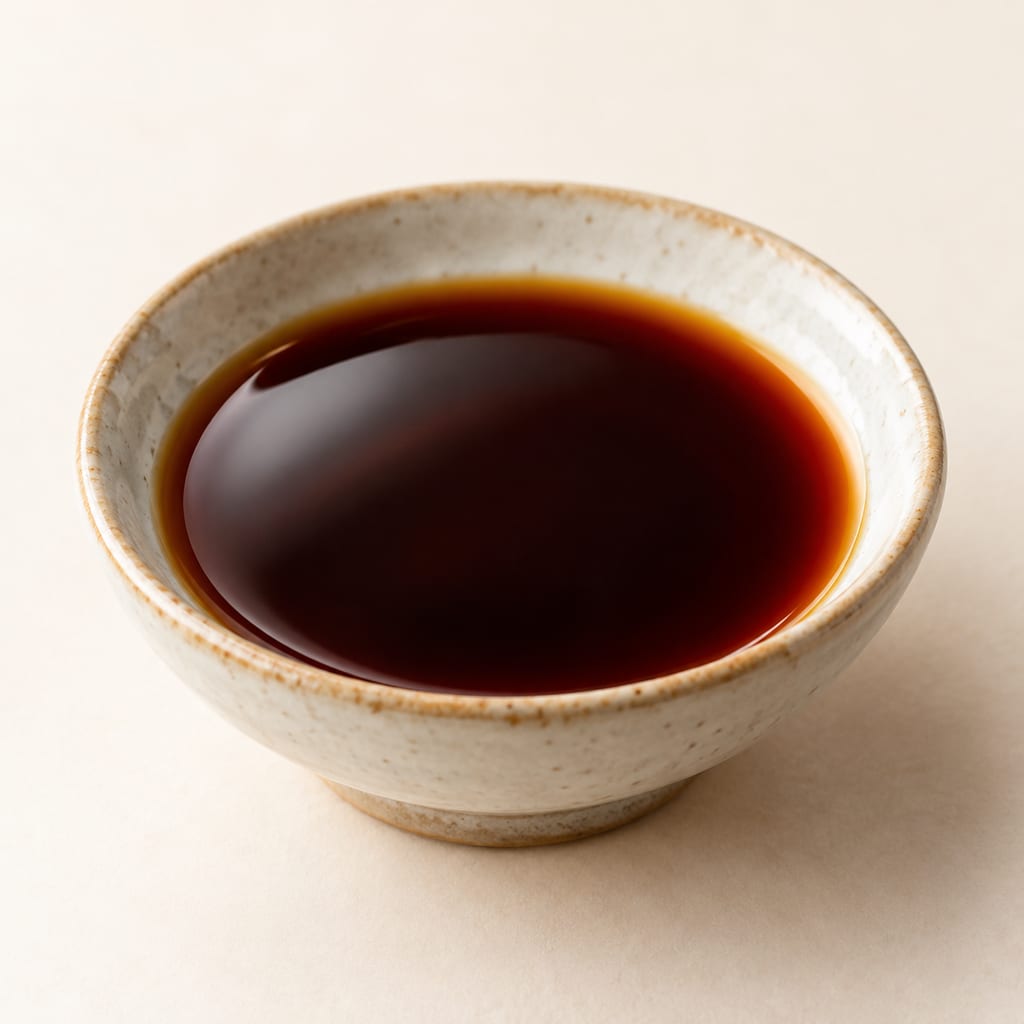
Japan's standard all-purpose soy sauce: soybeans and wheat grown over with koji mould, brined, fermented for months, pressed and usually heated into a reddish-brown, savoury liquid.

Rice koji is steamed white rice through which koji mold has grown. It carries the enzymes that turn rice starch into sugar, and it is the starting point of sake, sweet miso, amazake and shio koji.

An Okinawan fermented tofu: dried tofu cubes matured in rice koji, awamori and salt, traditionally with red Monascus koji, until the curd turns smooth and intensely savoury.

A thick, naturally sweet rice-and-koji preparation used to add body and sweetness to marinades, dressings and sauces. This method follows a published Marukome home recipe and is an enzyme-conversion hold, not a way to grow koji mould.
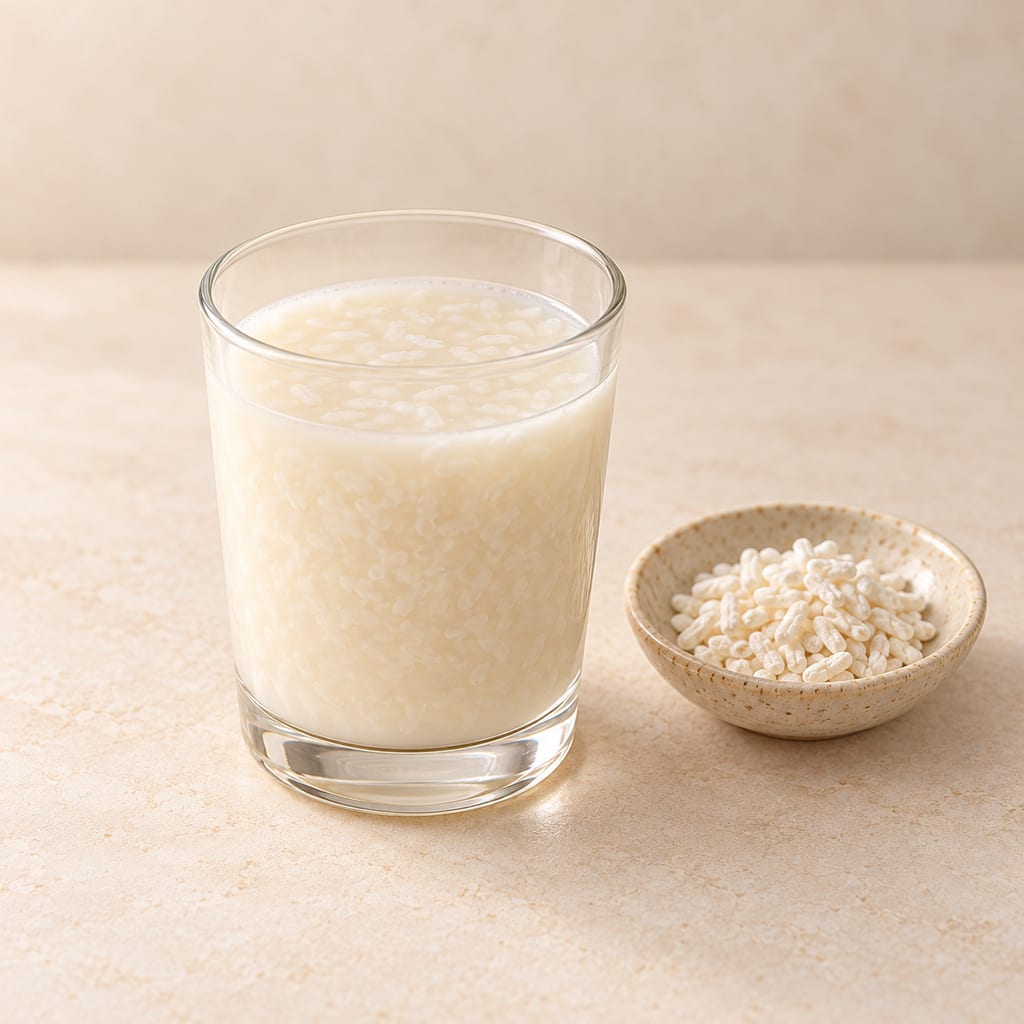
Cooked rice, rice koji and water are held warm for hours so koji enzymes turn the rice starch to sugars, giving a naturally sweet Japanese drink with no added sugar and no second fermentation.
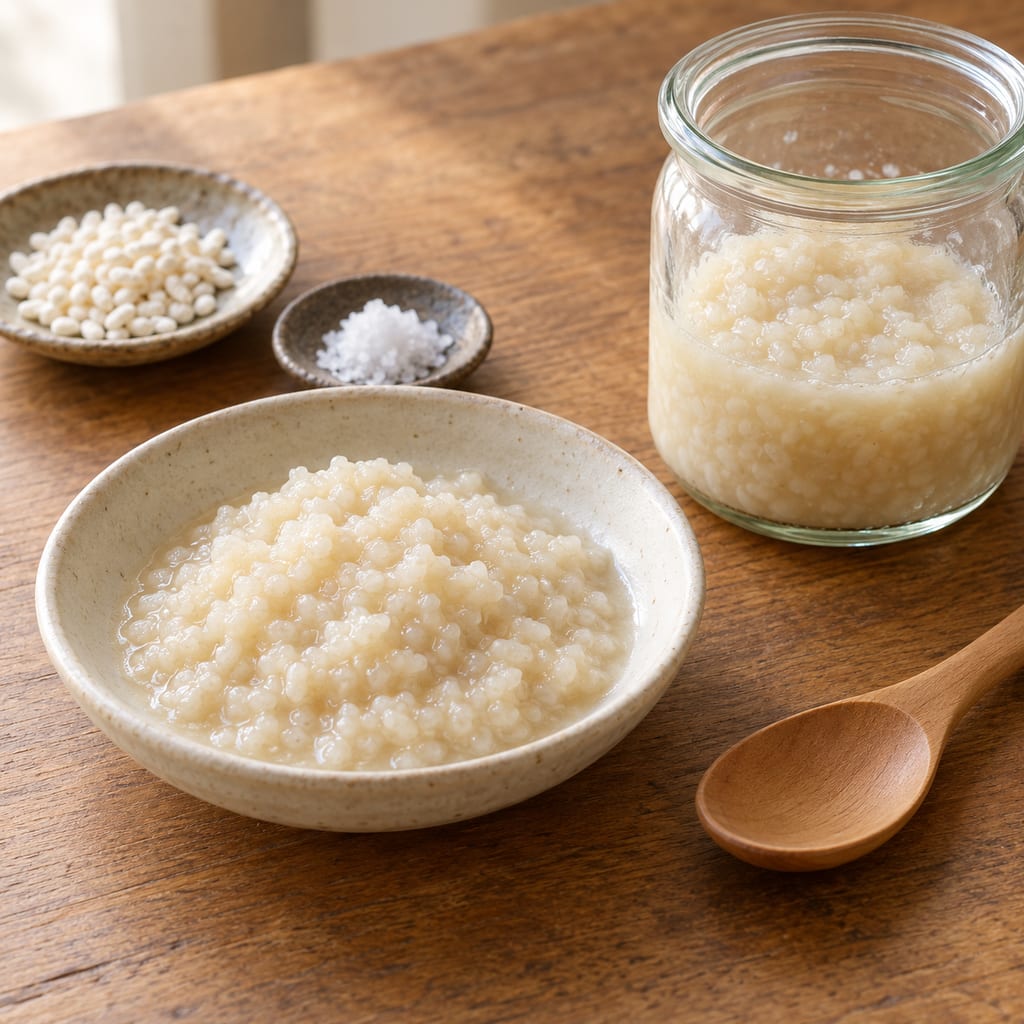
A Japanese seasoning of rice koji, salt and water, left at room temperature until the koji's enzymes and its microbes turn it into a savoury, salty paste for marinades and dressings.
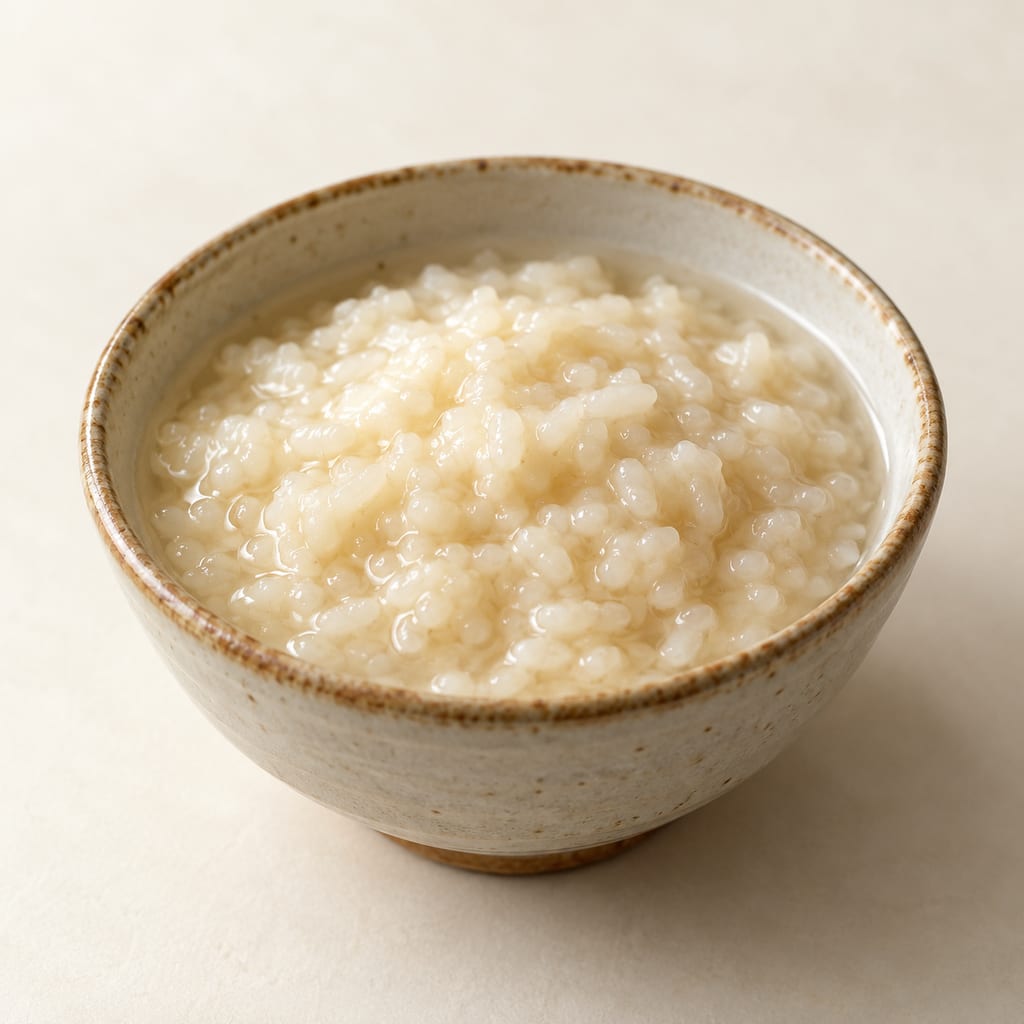
Shio-koji is a Japanese seasoning of rice koji, salt and water, left at room temperature until the grains soften and turn sweet and the mixture thickens.

Japanese reddish-brown vinegar from sake lees matured about three years, turned to vinegar by acetic bacteria; the vinegar of Handa and Edomae sushi rice.
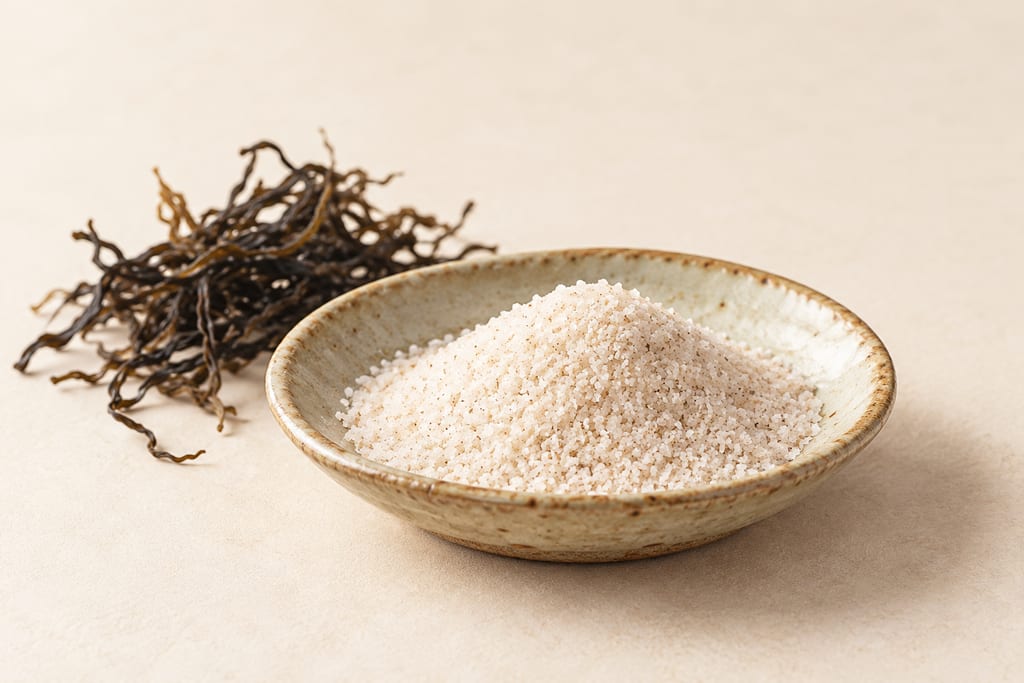
Amabito no Moshio is a modern, pale beige Japanese seaweed salt made from Seto Inland Sea water and hondawara seaweed. Its documented factory method concentrates filtered brine in kettles, then separates and dries the salt.
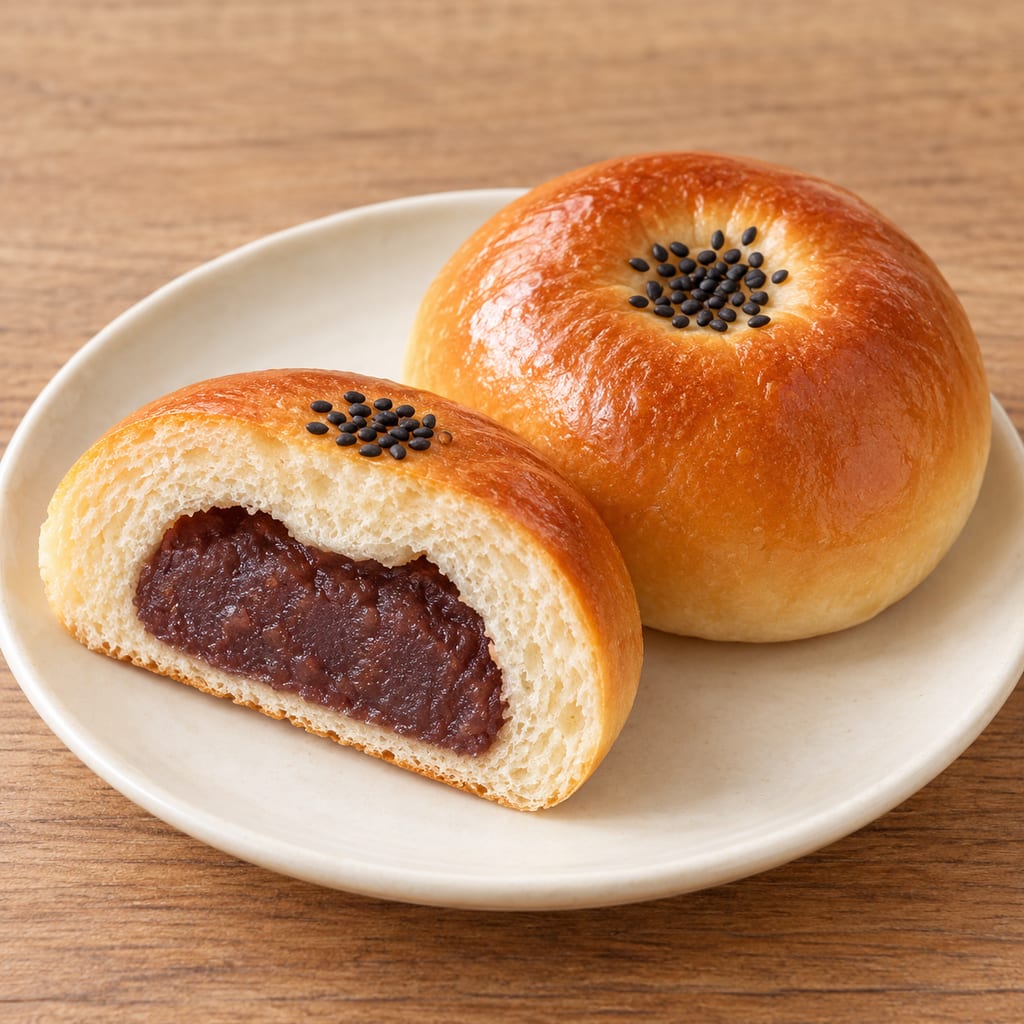
Anpan is a soft wheat bun filled with sweet red-bean paste and finished with egg wash and black sesame. This dough rises with commercial instant yeast.

Japanese skipjack tuna cooked, then repeatedly smoked and dried over a wood fire by the hand-fired tebiyama method into a hard block for shaving into dashi: the first stage of katsuobushi.
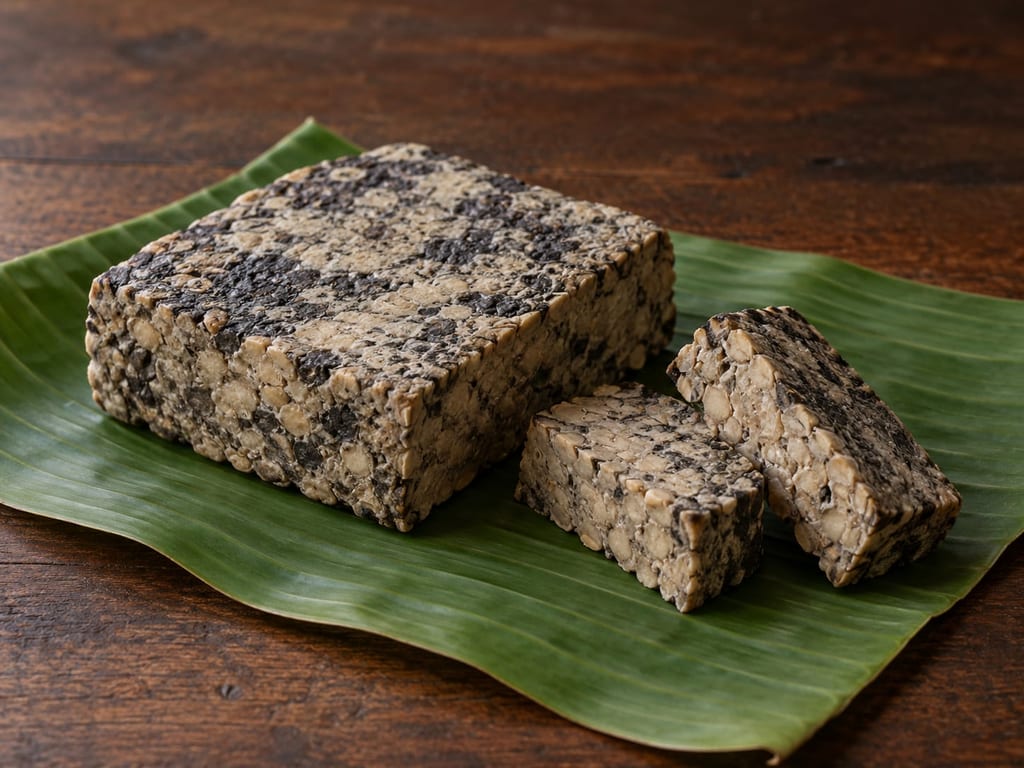
Black oncom is a mould-fermented cake made from defatted peanut cake, pressed to about 2 cm, steamed and then incubated for a day at ambient temperature.
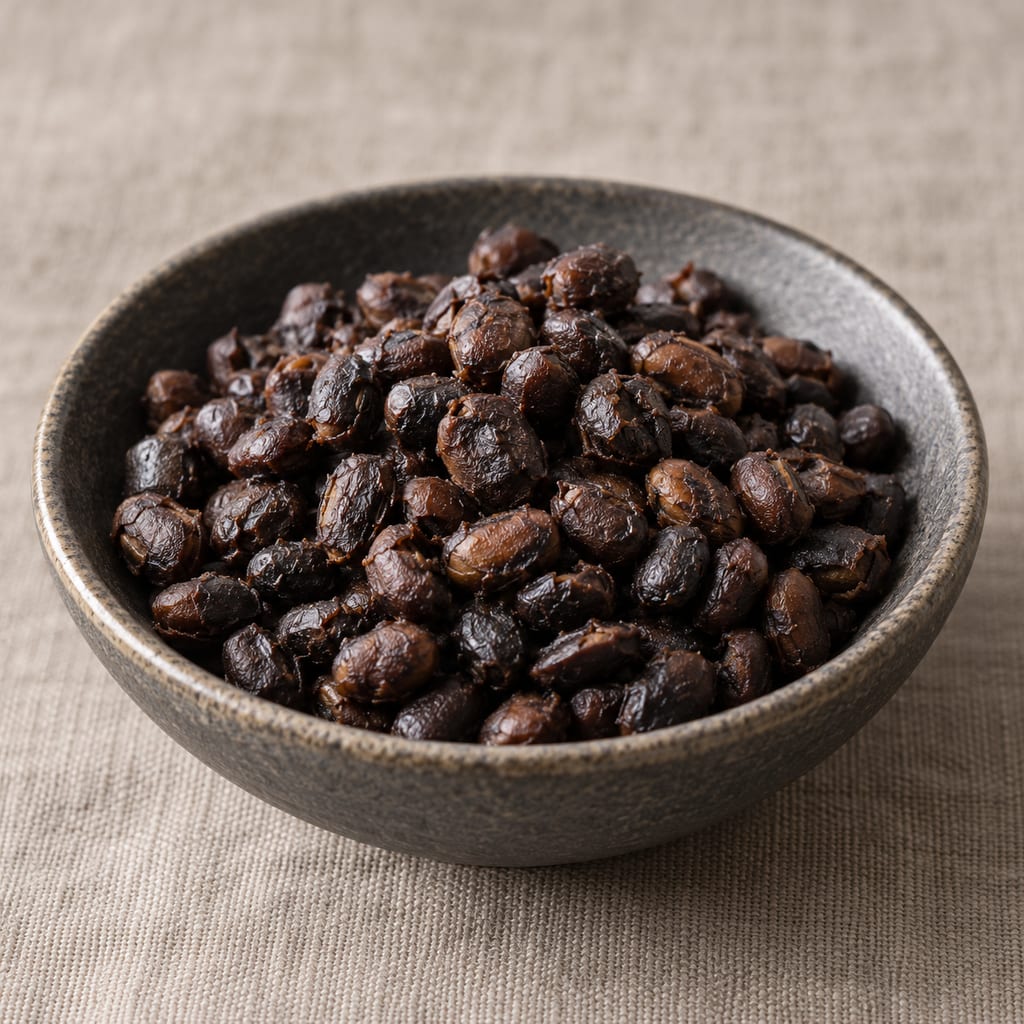
This controlled study protocol makes Aspergillus koji from soybeans and then ferments it with 4% salt. It uses a 150 g jar batch and a defined moisture target; the research method is not a validated home process.
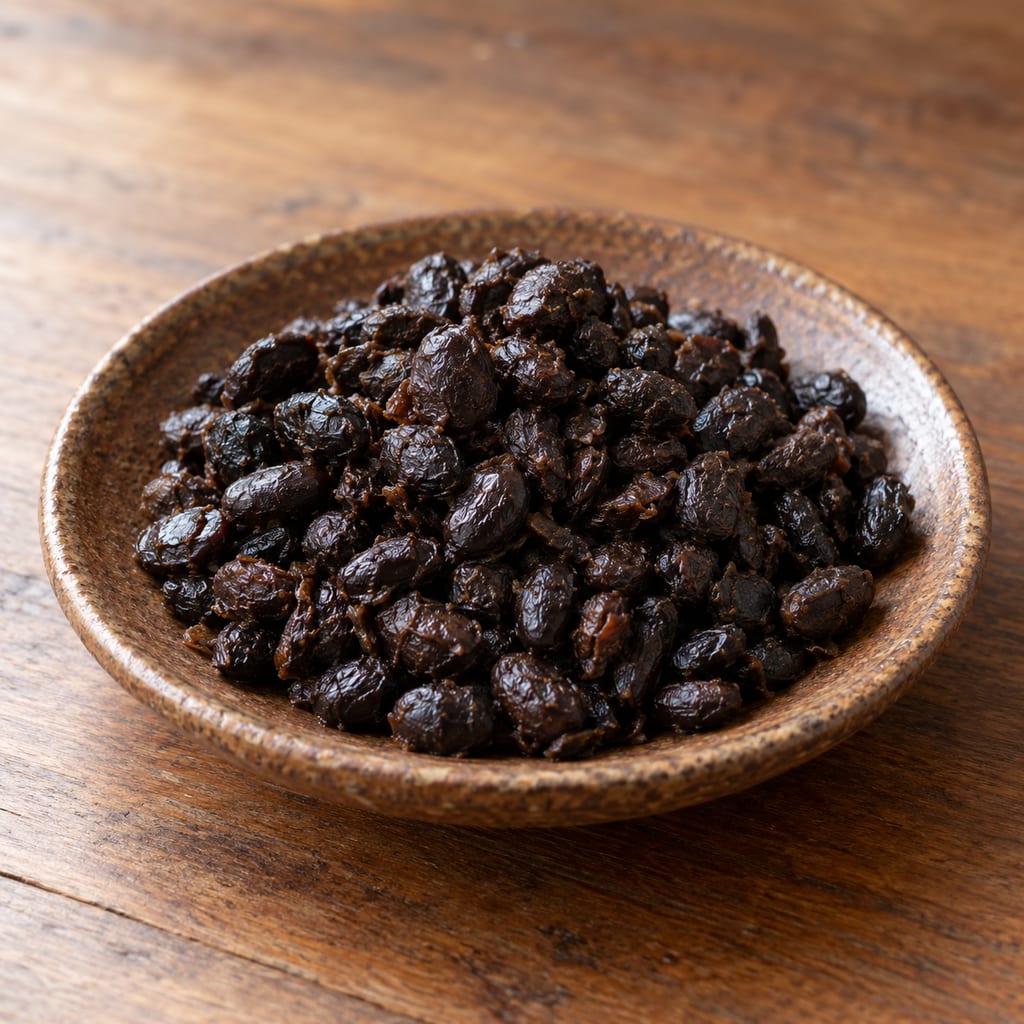
A Chinese fermented soybean condiment from Chongqing and Sichuan, made by growing Mucor-type mould on cooked beans, then salting and maturing them into dark, savoury, soft beans with a concentrated aroma.
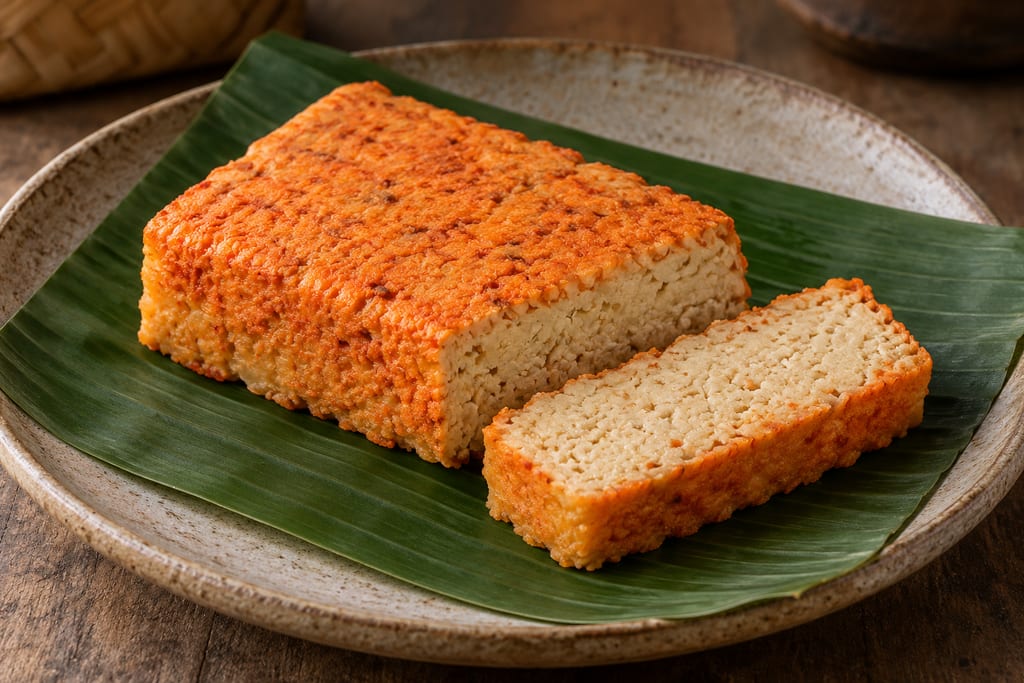
Red oncom is a West Javanese cake fermented from pressed soy pulp with a Neurospora starter, a little tapioca starch and vinegar. It is a different food from black oncom, made on another substrate with another mould.
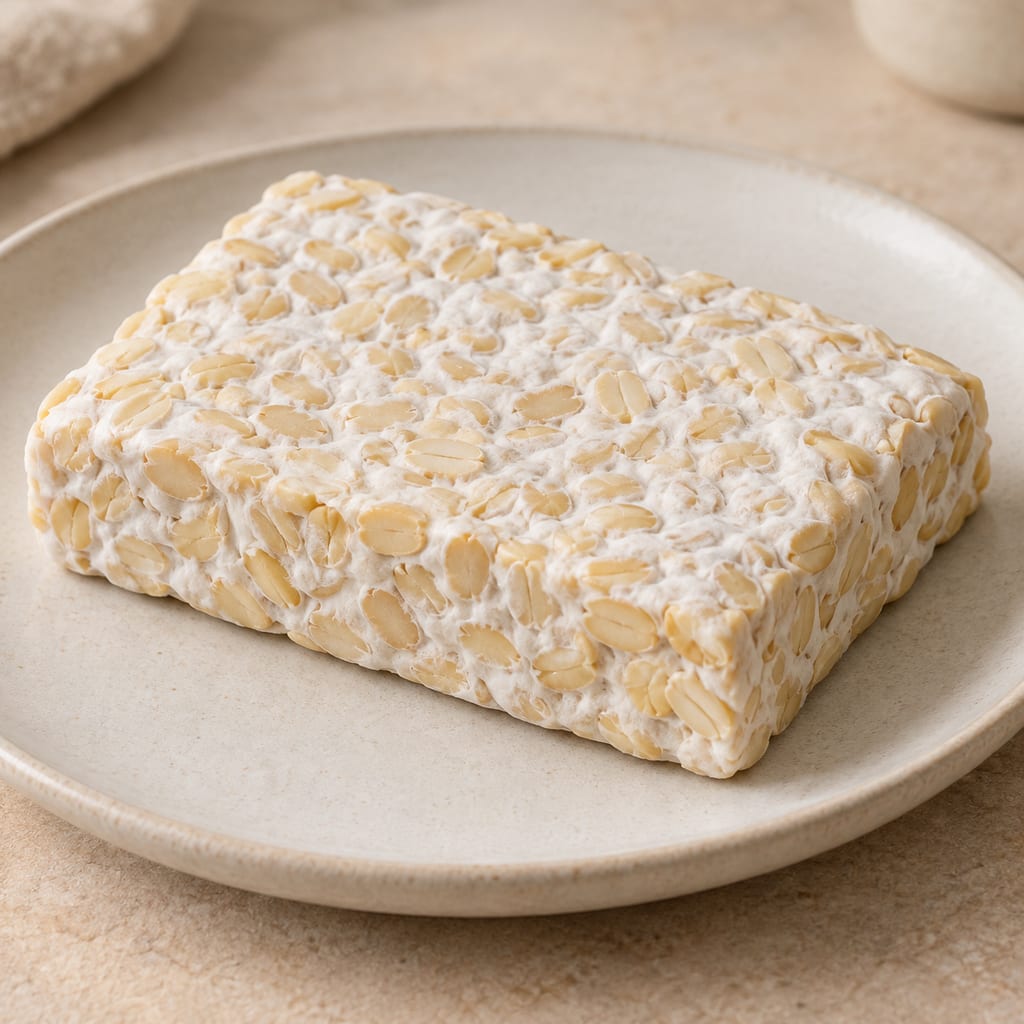
A two-cup soybean batch uses one Cultures for Health tempeh starter packet and vinegar. The supplier describes dehulling, a thin vented layer, controlled early incubation and attention to self-heating; it is not a validated home process.
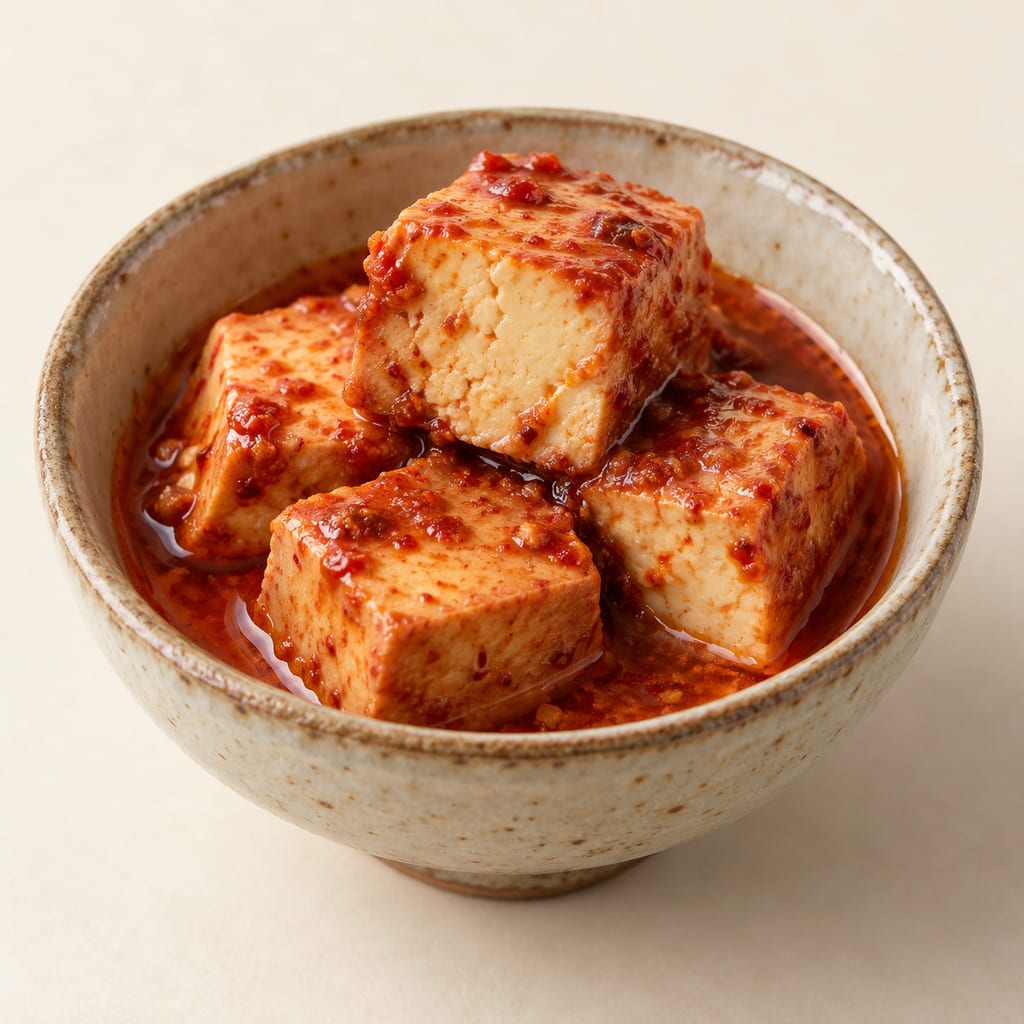
Sufu, or furu, is Chinese fermented tofu: bean curd is salted and ripened, often after a mould stage, into a soft, creamy, intensely savoury condiment.

A Cap-Pelé boucanière is an Acadian herring-smoking building. The documented Willie Niles example is a one-storey wood-frame structure with a ridge smoke vent and interior bays for hanging fish-bearing cannes.

Achcharu is a family of Sri Lankan vinegar pickles made with mixed vegetables or seasonal fruit and a piquant spice dressing. This version is a quick, refrigerated, non-fermented mixed-vegetable pickle.

The acocote is a long, hollowed and dried gourd used to draw aguamiel from a mature maguey. It is a harvesting tool: the sap is transferred to a separate vessel before it ferments into pulque.

Adrak murabba preserves young ginger in sugar syrup, a sweet South Asian preparation recorded in Indian cookery and food-processing sources.

Parkia biglobosa seeds are fermented into regional West African seasonings, including nététou, iru, dawadawa and soumbala. The yellow fruit pulp is a separate food, and names and methods vary by place.

A refined common-wheat flour blended for a broad range of baking; its protein and behavior vary with wheat, milling and market.

The almond mushroom, Agaricus subrufescens, was cultivated in eastern North America in the 1800s, lost its market, and returned as a cultivated mushroom from Brazil, where it is grown under several names.
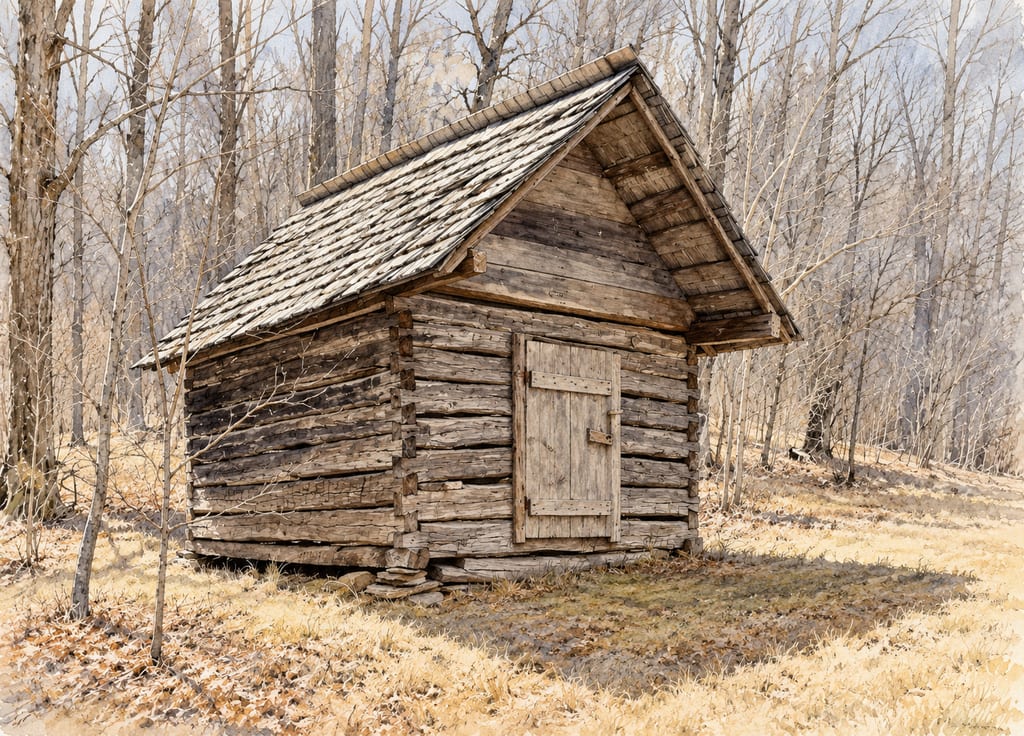
A source-based account of Appalachian meat-curing outbuildings, centered on the Henry Whitehead Place smokehouse at Cades Cove, Tennessee. Regional practice and this one building are kept distinct.
No community contributions have been published for this entry yet.
Sign in to contribute. Published comments and photos are free to read.
Ministry of Agriculture, Forestry and Fisheries, Japan; Our Regional CuisinesMethod · History · Use
Shoyu Mame / Shoyu no Mi (Soy Sauce Beans / Soy Sauce Seeds)Primary source for Block C's granular mame-koji preparation
Traditional production in northern and central Nagano Prefecture
Eighteen litres of soybeans
One cup of wheat flour
Seed koji specified as needed without a numerical amount
Soaking for one day and night
Steaming for approximately six to seven hours
Roasting wheat flour and allowing it to cool
Mixing roasted flour with seed koji
Cooling cooked soybeans to 25–30°C before inoculation
Koji cultivation at approximately 24–26°C
Cultivation lasting three to four days
White fungal growth used as a traditional completion description
Subsequent use in shoyu mame
Distinction between granular mame-koji and the finished seasoned preparation
Absence of measured starter dose, yield and storage instructions
Cited in: What it is; History; How it is made and why each ingredient and step matters; Regional and historical variations; How it is eaten and used; Reading results, identifying problems and understanding safety
Ministry of Agriculture, Forestry and Fisheries, Japan; Japanese-language regional cuisine archiveHistory · Context
しょうゆ豆/しょうゆの実 長野県Japanese-language documentation of Nagano shoyu mame
Regional names and culinary context
Use of soybean koji in traditional fermented condiments
Preparation involving soybeans and seed koji
Relationship between traditional regional foods and modern commercial production
Distinction from the broad-bean shoyu mame of Kagawa Prefecture
Cited in: How it is made and why each ingredient and step matters
Ministry of Agriculture, Forestry and Fisheries, Japan; English translation provided by the Food and Agricultural Materials Inspection CenterSafety · Context
Japanese Agricultural Standard for Miso, JAS 0022:2025Japanese Agricultural Standard established on 31 March 2022
Revision dated 15 July 2025
Official definition of soybean koji
Distinction between soybean bara-koji and miso-dama koji
Definition of koji made by cultivating selected mould on steamed soybeans
Specification of Aspergillus oryzae for standard-conforming miso
Requirement to manage seed-koji cultures against mixing with other koji moulds
Distinction between soybean koji and finished soybean miso
Salt addition and maturation as subsequent processing stages
The English version is an informational translation and the Japanese original remains authoritative
Cited in: What it is; History; How it works: koji moulds, enzymes and microbial chemistry; Regional and historical variations; Reading results, identifying problems and understanding safety
Journal of Fungi, MDPI, Volume 7, Issue 7, Article 579, 2021Science
Japanese Traditional Miso and Koji MakingReview of traditional and modern Japanese koji manufacture
Soybean soaking and restricted water absorption
Pressure steaming in industrial soybean-miso production
Preparation of miso balls from cooked soybeans
Use of a tamanigiri-ki forming machine
Variation in miso-ball dimensions
Role of internal lactic acid bacteria
Suppression of competing Bacillus populations
Differences in enzyme activity between smaller and larger miso balls
Temperature management during soybean-koji cultivation
Protease and peptidase functions of Aspergillus oryzae
Subsequent salt addition and miso maturation
Comparison of rice, barley and soybean koji
Distinction between selected food-grade cultures and spontaneous mould growth
Cited in: How it works: koji moulds, enzymes and microbial chemistry
PubMed Central; Journal of Fungi, 2021Science · Safety
Japanese Traditional Miso and Koji Making — Full Open-Access ArticleFull methods and technical descriptions of soybean-koji production
Section 3.3 on soybean miso
Section 5.3 on soybean koji
Common miso-ball dimensions of approximately 19–24 mm
Reported larger miso balls of 45 mm or more in some processes
Use of roasted barley powder called kosen or hattaiko
Initial koji temperature around 27–28°C in the reviewed industrial method
Subsequent management around 33–35°C
Enzyme production and fungal metabolic heat
Role of bacterial acidification inside formed soybean masses
Importance of distinguishing mould growth from later salted fermentation
Open-access diagrams and scientific references
Cited in: What it is; History; How it works: koji moulds, enzymes and microbial chemistry; How it is made and why each ingredient and step matters; Regional and historical variations; How it is eaten and used; Reading results, identifying problems and understanding safety
Ministry of Agriculture, Forestry and Fisheries, JapanHistory · Context
Soy Sauce, Miso and Other Seasonings — Traditional Foods in JapanClassification of miso by koji substrate
Distinction between rice miso, barley miso and soybean miso
Aichi, Gifu and Mie as principal soybean-miso regions
Conversion of the soybean substrate into koji
Characteristic dark colour and strong savoury flavour of finished soybean miso
Regional names including Hatcho miso, Nagoya miso, Sanshu miso and Tamari miso
Separation of fresh mame-koji from the finished matured condiment
Cited in: What it is; How it works: koji moulds, enzymes and microbial chemistry; Regional and historical variations; How it is eaten and used; Reading results, identifying problems and understanding safety
Ministry of Agriculture, Forestry and Fisheries, Japan; Geographical Indication RegisterHistory · Context
Product Summary (Registration No. 49): Hatcho MisoOfficial geographical-indication record for Hatcho miso
Traditional production area in Aichi Prefecture
Use of soybean-koji preparation
Formation of cooked soybeans into miso balls
Regional manufacturing history
Subsequent maturation requirements
Distinction between the protected finished product and the intermediate soybean koji
Cited in: What it is; History; How it is made and why each ingredient and step matters; Regional and historical variations; How it is eaten and used
San-J / Sanjirushi Brewing Company, JapanMethod · Context
豆みそ・たまりしょうゆができるまで — How Soybean Miso and Tamari Soy Sauce Are MadeModern producer documentation of soybean-koji manufacture
Cleaning, soaking and steaming soybeans
Formation of cooked soybeans into miso balls
Use of koji starter and roasted grain powder
Cultivation of mould on formed soybean masses
Practical explanation of acidification inside miso balls
Suppression of competing Bacillus growth
Differences between subsequent tamari and soybean-miso preparation
Photographs of miso balls and koji cultivation
Producer-level practice rather than a universal household recipe
Hanamaruki Co., Ltd., JapanMethod · Context
みそができるまで — How Miso Is MadeModern description of soybean-miso production
Formation of steamed soybeans into miso balls
Application of seed koji
Use of roasted barley or hulless-barley powder
Definition of mould-grown miso balls as soybean koji
Differences between the manufacturing routes for rice, barley and soybean miso
Separation of koji cultivation from subsequent salt addition and maturation
Kakukyu Hatcho Miso Co., Ltd., Okazaki, Aichi PrefectureHistory · Context
Hatcho Miso — English IntroductionHistorical manufacturer association with Okazaki
Company's claim of continuous miso manufacture since 1645
Use of soybeans and salt in traditional Hatcho-miso production
Long maturation in large wooden casks
Traditional stone-weighting of fermentation vessels
Regional context for soybean-koji production
Distinction between company history and independently established invention dates
Cited in: What it is; History; How it is made and why each ingredient and step matters; Regional and historical variations; How it is eaten and used
Maruya Hatcho Miso Co., Ltd., Okazaki, Aichi PrefectureHistory · Context
Maruya Hatcho Miso — Company and Production InformationTraditional soybean-miso production in Okazaki
Producer-level history of Hatcho miso
Formation of soybean material before koji cultivation
Long maturation in wooden vessels
Traditional regional production context
Commercial practice distinguished from the Nagano granular mame-koji recipe
Cited in: History; How it is made and why each ingredient and step matters; Regional and historical variations
Masuzuka Miso / Noda Miso Co., Ltd., Aichi PrefectureHistory · Context
低温乾燥 豆こうじ 500g — Low-Temperature-Dried Soybean KojiContemporary commercial granular mame-koji
Use of Aichi-produced soybeans
Listed ingredients including soybeans, roasted grain powder and seed koji
Low-temperature drying as a post-cultivation process
Use of prepared soybean koji for making soybean miso at home
Manufacturer's product-specific storage and shelf-life information
Photographs of granular soybean koji and retail packaging
Commercial dried soybean koji distinguished from fresh unsalted koji
Kojiya Sanzaemon Online Store, JapanUse · Safety
生麹 豆麹 1kg — Fresh Soybean KojiContemporary commercial fresh soybean koji
Finished bean-koji product preserved by freezing
Use of Japanese soybeans
Manufacturer's approximately 90-day frozen-storage guidance
Product-specific handling and thawing instructions
Photograph of packaged fresh soybean koji
Evidence that storage depends on the manufacturer's particular product and process
Wano Japan; starter manufactured by Hishi-Roku, KyotoHistory · Context
MAME Koji Kin Starter — Aspergillus oryzae Spores for Red Soybean MisoCommercially available starter specifically marketed for soybean koji
Listed organism Aspergillus oryzae
Distinction between prepared seed-koji spores and finished soybean koji
Illustrative photograph of mould-colonised soybeans
Producer-specified starter handling information
Evidence that a particular commercial starter's dose does not establish the dose for another manufacturer's product
Japanese Cooking Channel, 2020History · Context
What Is Koji and How Is It Used?Photographic illustration explicitly identified as soybean koji
Comparison of rice, barley and soybean koji
Description of cultivated koji mould on cooked substrates
Distinction between the substrate and the resulting mould-grown ingredient
note.com, Japanese independent fermentation writing, 2 August 2024History · Context
失敗しない豆麹作りのために — Making Soybean Koji Without FailurePhotographic documentation of whole-bean mame-koji
Traditional household-style bean preparation
Importance of managing the actual temperature of the soybean mass
Practical considerations concerning hydration, steaming and inoculation
Photographs showing white fungal growth on individual soybeans
Supporting contemporary practice rather than replacing the Ministry's source recipe
UK Food Standards AgencySafety
Allergen Guidance for Food BusinessesRecognition of soybeans as a food allergen
Recognition of wheat and cereals containing gluten as allergens
Importance of identifying all ingredients and processing aids
Allergen relevance to the Nagano recipe's roasted wheat flour
Need to avoid unsupported gluten-free claims
Ministry of Agriculture, Forestry and Fisheries of JapanHistory · Context
今昔、豆の加工品。Miso types and the history of soybean products
Cited in: History; Regional and historical variations
Journal of the Brewing Society of Japan, 1988History · Method
Technical review of soybean miso manufacture (Takeuchi, 1988)An 1883 manufacturing description of soybean miso
Cited in: History; How it works: koji moulds, enzymes and microbial chemistry; How it is made and why each ingredient and step matters
Journal of Food Science, 2021Science
Fermentation and the microbial community of Japanese koji and miso: A reviewKoji moulds, enzymes and temperature schedules for soybean miso
Cited in: What it is; How it works: koji moulds, enzymes and microbial chemistry; Reading results, identifying problems and understanding safety
Information Website on Japan Geographical Indication ProductsHistory
Hatcho MisoMiso-ball cultivation method in the Edo period
Cited in: History; Regional and historical variations; How it is eaten and used
Yamagata Soy Sauce and Miso Industrial CooperativeContext
やまがたの味噌Q&AQuestions and answers on miso
Cited in: How it works: koji moulds, enzymes and microbial chemistry; How it is made and why each ingredient and step matters; Regional and historical variations; Reading results, identifying problems and understanding safety
Food Science and Technology Research, 2003Science
Analysis of Lactic Acid Bacterial Flora during Miso FermentationLactic acid bacteria in miso fermentation
Cited in: How it works: koji moulds, enzymes and microbial chemistry; Reading results, identifying problems and understanding safety
Letters in Applied Microbiology, 2003Science
Time series analysis of aerobic bacterial flora during Miso fermentationAerobic bacteria including Bacillus subtilis and B. amyloliquefaciens in miso fermentation
Cited in: How it works: koji moulds, enzymes and microbial chemistry; Reading results, identifying problems and understanding safety
Our Regional Dishes, Ministry of Agriculture, Forestry and Fisheries of JapanUse · Variation
しょうゆの実 山梨県Shoyu no mi, a regional dish made with soybean koji
Cited in: Regional and historical variations
Our Regional Cuisines, Ministry of Agriculture, Forestry and Fisheries of JapanUse
NimisoRegional dish using miso
Cited in: How it is eaten and used
EFSA Journal, 2016Safety
Risks for public health related to the presence of Bacillus cereus and other Bacillus spp. including Bacillus thuringiensis in foodstuffsBacillus cereus and related species as hazards in foods
Cited in: Reading results, identifying problems and understanding safety
UK Food Standards AgencySafety
Food allergy and intoleranceSoya and wheat as recognised allergens
Cited in: Reading results, identifying problems and understanding safety