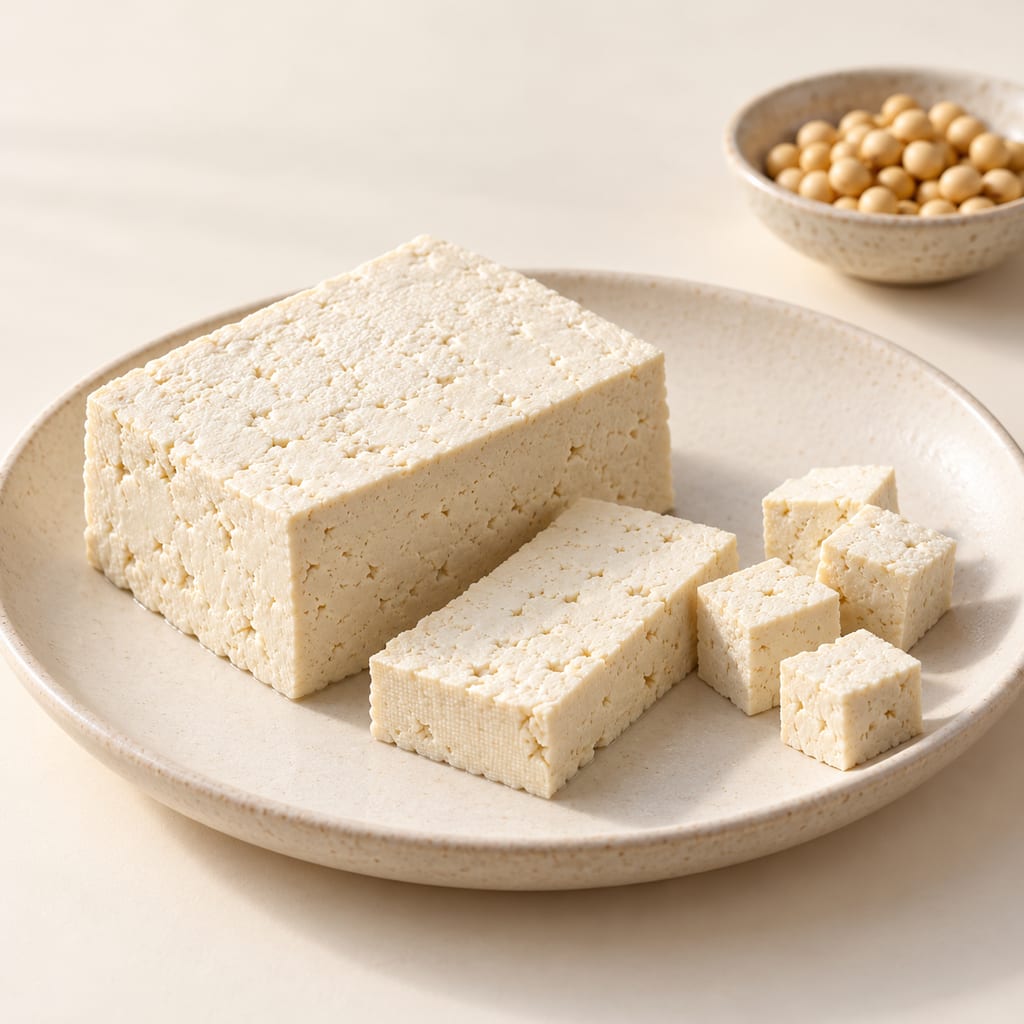
Fresh Firm Tofu
Fresh firm tofu is made by coagulating cooked soybean milk, then draining and pressing the curds into a sliceable block. This version follows a published nigari method and traces tofu’s varied, contested history.
 FermenteaWhere food goes to change
Traditional method
腐乳 · furu · fermented tofu · fermented bean curd · 腐乳 · 豆腐乳
Sufu, or furu, is Chinese fermented tofu: bean curd is salted and ripened, often after a mould stage, into a soft, creamy, intensely savoury condiment.
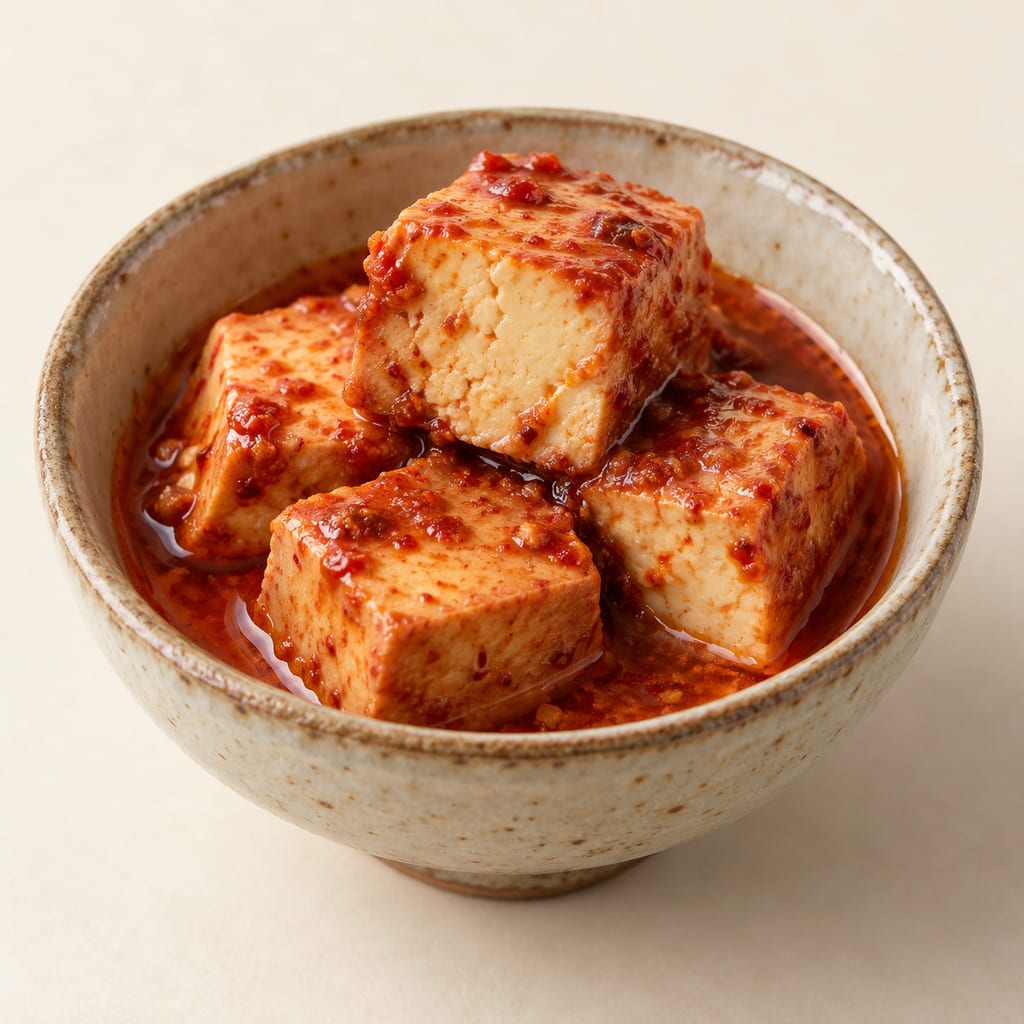
Sufu, also called furu, is a Chinese fermented soy food made from tofu. The literature describes a creamy, spreadable product. It starts with tofu or pehtze, the tofu that has been grown over with mould, then salting and a period of ripening. Red, white, grey and other types are linked to the process or to the dressing the pieces are packed in.
It is a condiment, eaten in small amounts with breakfast rice or steamed bread. A review of the food cites Wei Dynasty written records from 220 to 265 CE. Those statements concern the food in general and do not date or place any single recipe.
Colour labels name the dressing, not the organism. A paper on huase sufu separates red sufu, made with a red colorant, from white sufu without one, and shows that neither label identifies the surface culture.
The method steps above come from three home-cooking videos. They are different batches, not one recipe in three versions.
The first video cuts tofu, covers it with gauze, waits several days while growth appears on the exposed surface, and then moves it into cooled salt water. The starter, the salt concentration and the amount of tofu are not stated.
The second dusts three blocks of old tofu with 6 g of a packet sold as tofu-ru starter, holds them in an unpowered oven or steamer, then coats them with chilli seasoning and liquor and packs them with oil. The packet's brand and contents are not identified. Soy sauce that appears later in the video belongs to a separate duck dish.
The third uses purchased salted, sun-dried tofu layered with pineapple, sugar, rice wine and rice koji. The creator sets it apart from two earlier pineapple batches, one with fermented black beans (douchi) and one with pineapple alone. At one point the captions mark an 80-piece statement as an oral slip, then show the tofu cut in half and the creator saying all 80 pieces are complete, so the count could refer to the bought pieces or to the halves. Piece size and total mass are not stated.
The sufu literature names Actinomucor, Mucor and Rhizopus among the fungi used for some mould-fermented types. That does not show which organism grew in the first video or what the packet in the second contained, and pale or grey growth cannot establish a species.
The pineapple version starts from bought tofu that has been salted and sun-dried, without the mould-grown stage, so whether it ripens like mould-fermented sufu is not established.
Sufu, stinky tofu, plain marinated tofu and fermented beans are not automatic synonyms. One article classes Qing sufu as stinky tofu, while separate research examines the bacterial brine used for stinky tofu. Terminology varies, so these are comparison foods, not aliases. Tofu packed with seasoning but showing no sign of fermentation is not sufu. Douchi appears here only as a flavour the pineapple creator tried in an earlier batch.
The literature gives Chinese food context, not a location for any creator or batch. The Chinese caption codes (zh-CN, zh-HK, zh-TW) do not show where the videos were made. The pineapple creator mentions rice porridge, steamed buns, noodles and noodle dumplings as ways to eat it.
The videos name gauze, jars, a tray, a sieve, an unpowered oven or steamer, a bowl and utensils, but leave out the quantities and controlled conditions an executable home method needs. No chamber dimensions are supported.
No qualified review validates these batches. The first two videos do not identify the surface culture or give measured process controls. Visible growth or a reported wait is not a safety test, and the starter and storage statements stay creator claims, not recommendations. The captions were read as archived text, without the audio or video, and can contain translation or recognition errors.
A review of this Chinese fermented soybean food cites Wei Dynasty written records (220–265 CE) and describes its use with breakfast rice or steamed bread. These food-level statements do not date or locate any creator's batch.
Scaling: source batch only
The videos do not identify the surface culture or give measured process controls, and visible growth or a reported wait does not show that a batch is safe.
Hazard sourceNo qualified review validates these creator batches.
Visible growth, pale or grey colour, smell or a reported waiting time is not a safety test.
Starter and storage statements are creator claims, not recommendations.
Country-level association from the food literature only; it does not locate any creator or batch, and Chinese-language captions do not show where the videos were made.
Fresh firm tofu is made by coagulating cooked soybean milk, then draining and pressing the curds into a sliceable block. This version follows a published nigari method and traces tofu’s varied, contested history.
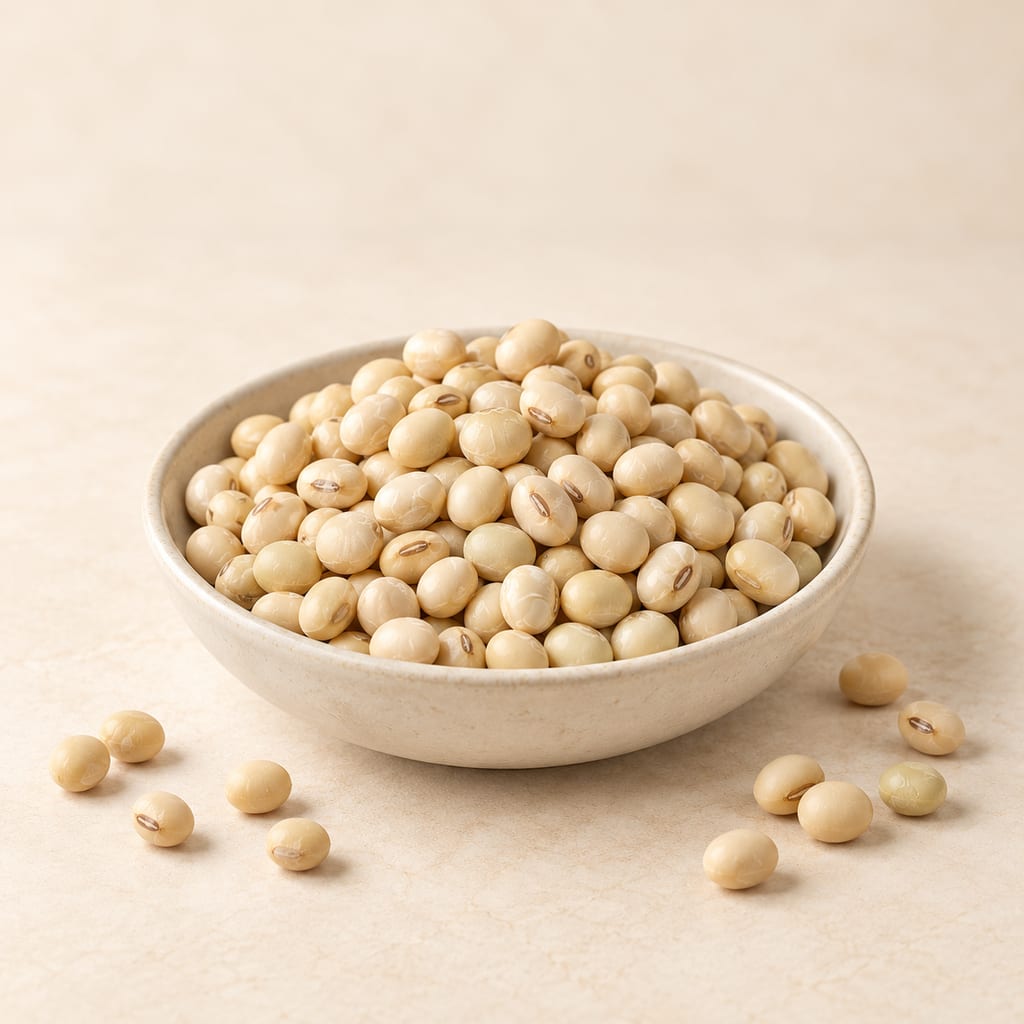
Soybeans are the mature dry seeds of Glycine max, about 40 percent protein and 20 percent oil, the substrate of tempeh, natto, miso, soy sauce and many other fermented foods.
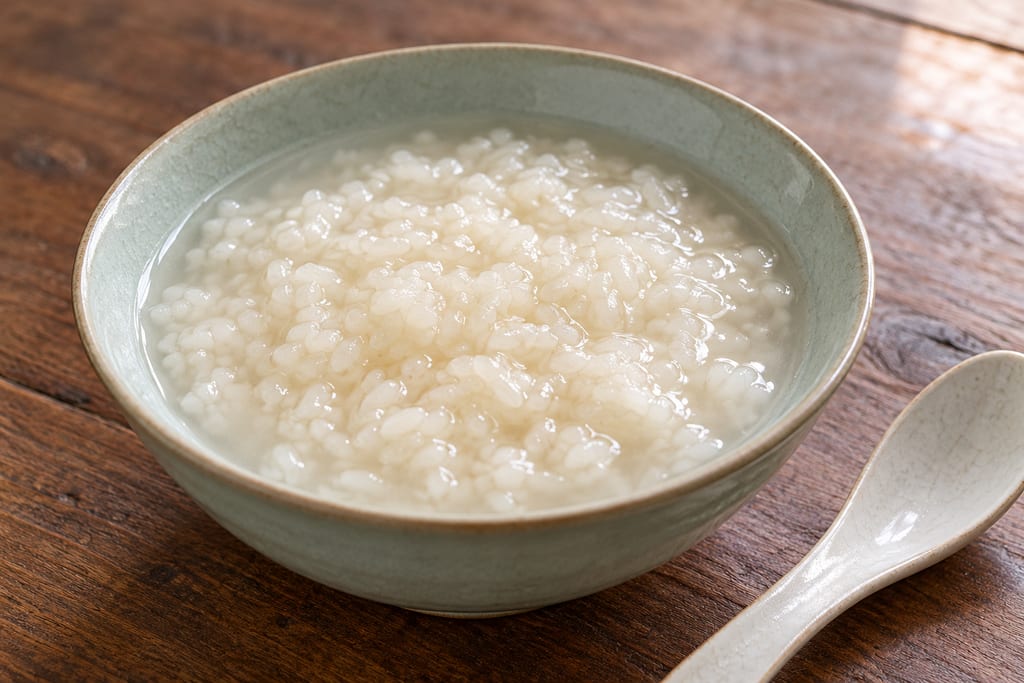
Chinese sweet fermented glutinous rice: steamed rice and a mixed jiuqu starter, where mould enzymes release sugar and yeast makes a little alcohol, eaten with its sweet liquid.
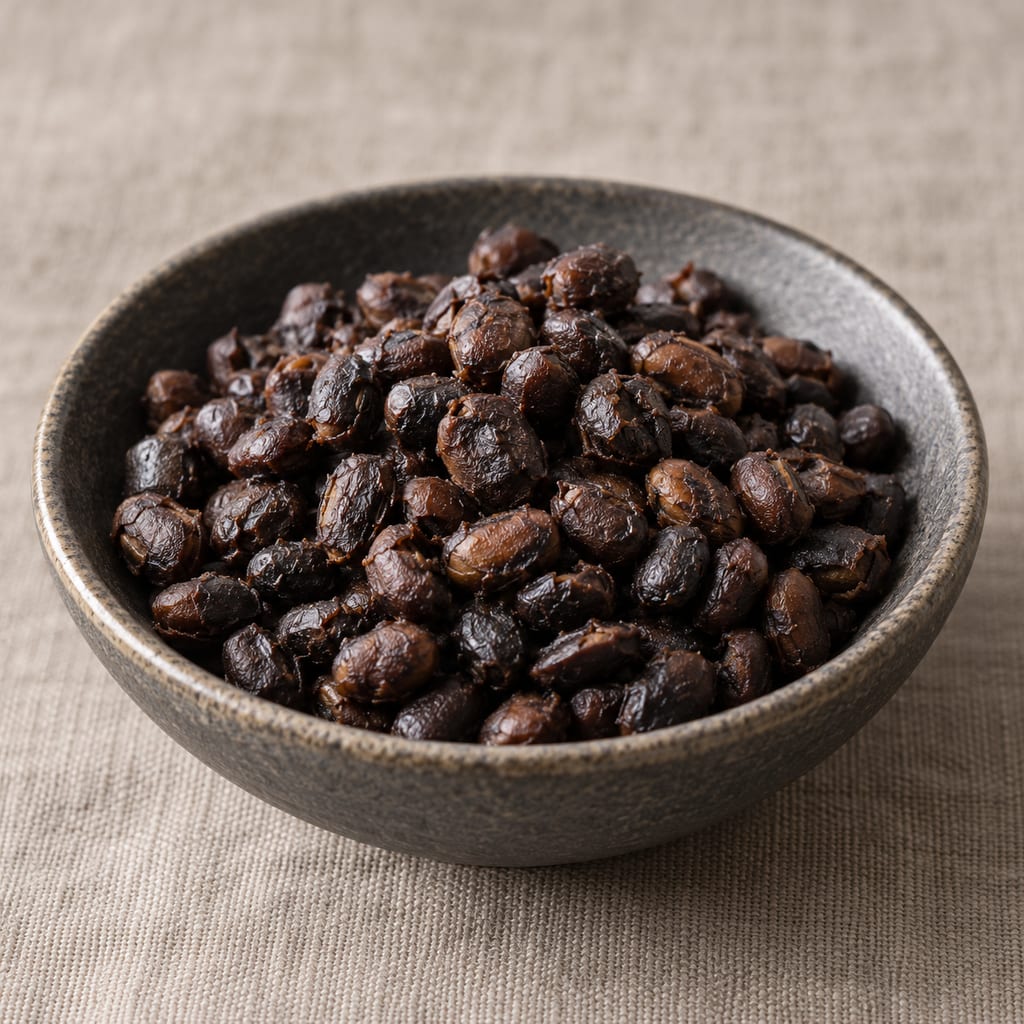
This controlled study protocol makes Aspergillus koji from soybeans and then ferments it with 4% salt. It uses a 150 g jar batch and a defined moisture target; the research method is not a validated home process.
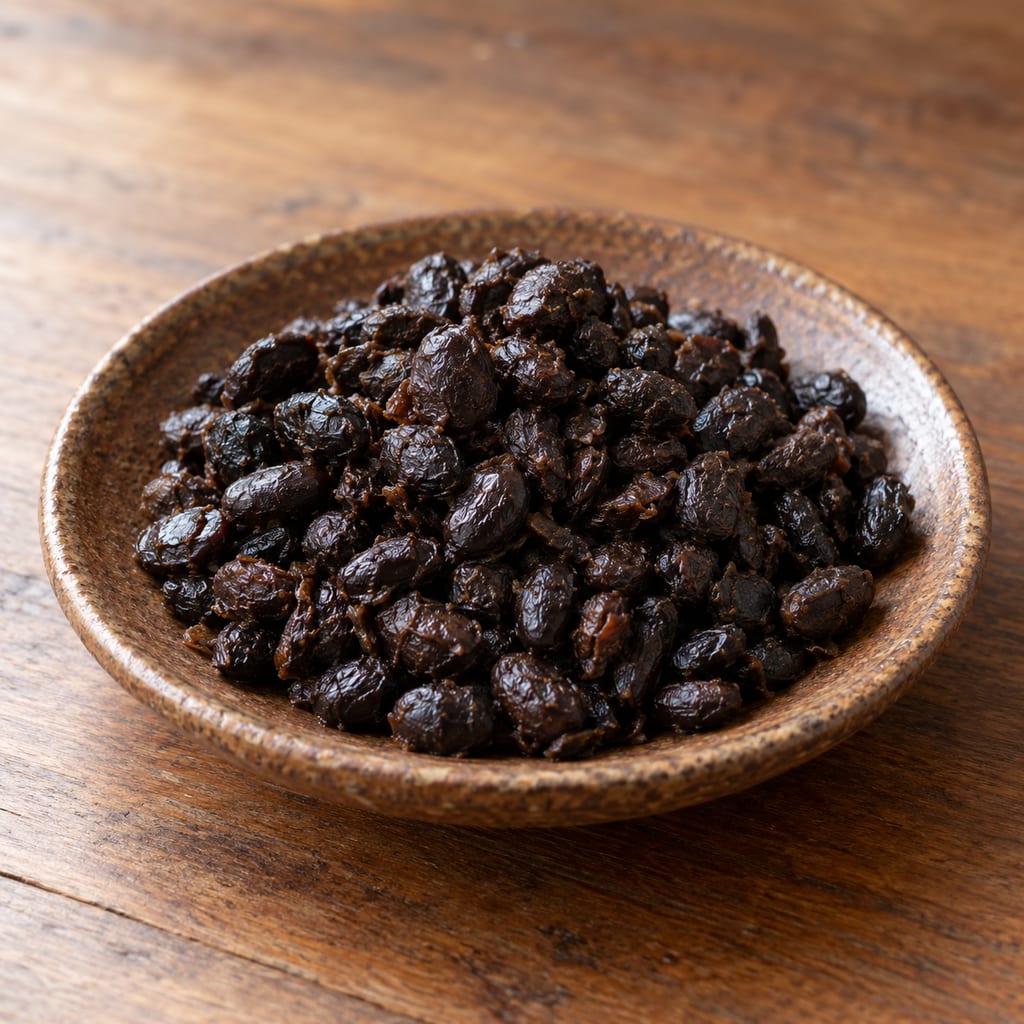
A Chinese fermented soybean condiment from Chongqing and Sichuan, made by growing Mucor-type mould on cooked beans, then salting and maturing them into dark, savoury, soft beans with a concentrated aroma.
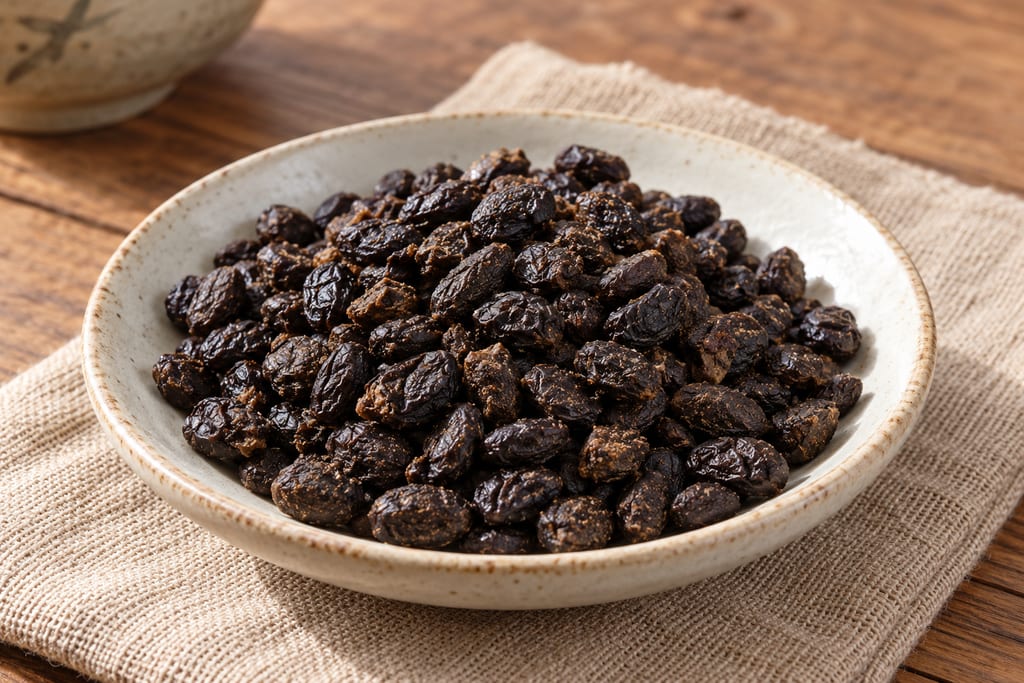
A Chinese fermented soybean condiment in which Bacillus-led bacteria, not moulds, drive the fermentation. Documented in Zunyi, Guizhou, and kept separate from mould-led douchi.
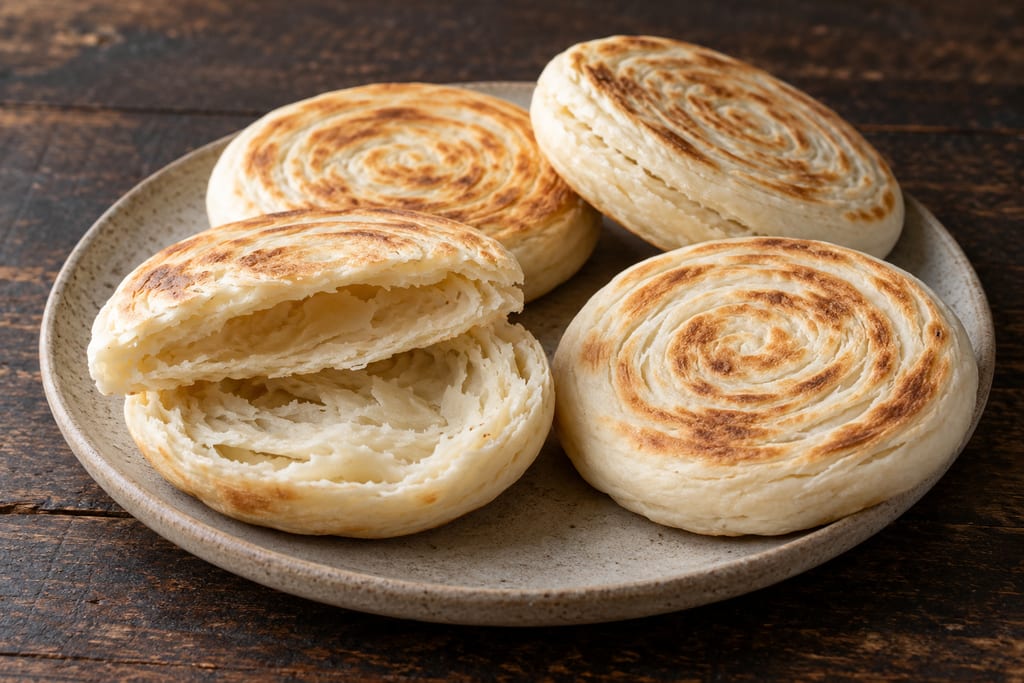
This Shaanxi-associated yeast flatbread uses a simple water dough, coiled shaping and a skillet bake. It is the bread used in roujiamo, not the filled meat dish.
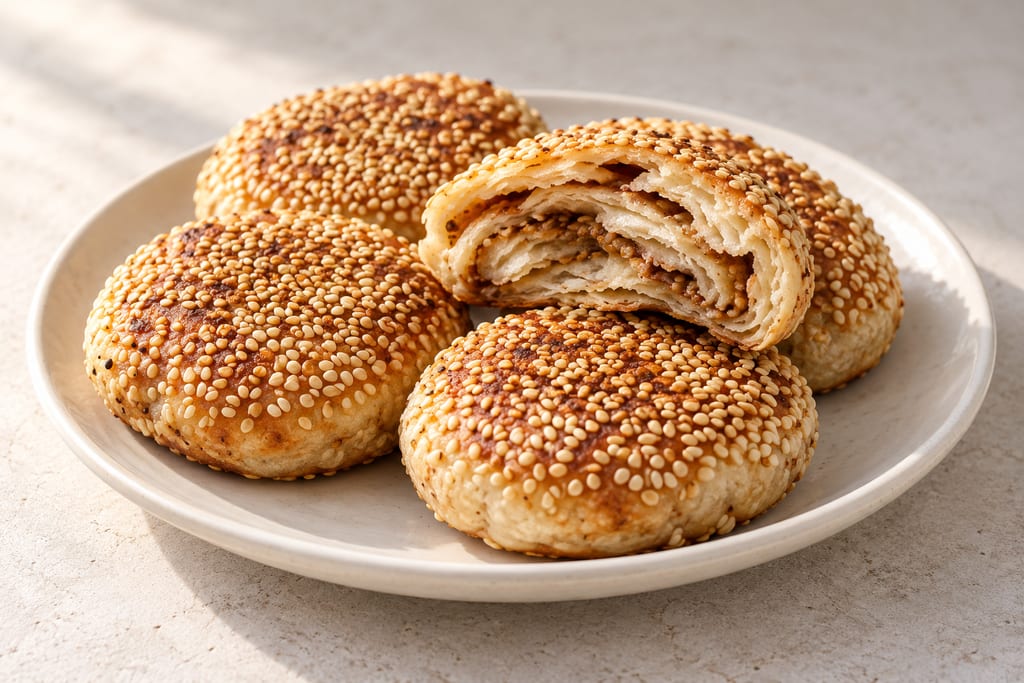
A Beijing-style yeast dough is layered with seasoned sesame paste, sealed into small buns, briefly pan-fried, seeded, and baked.
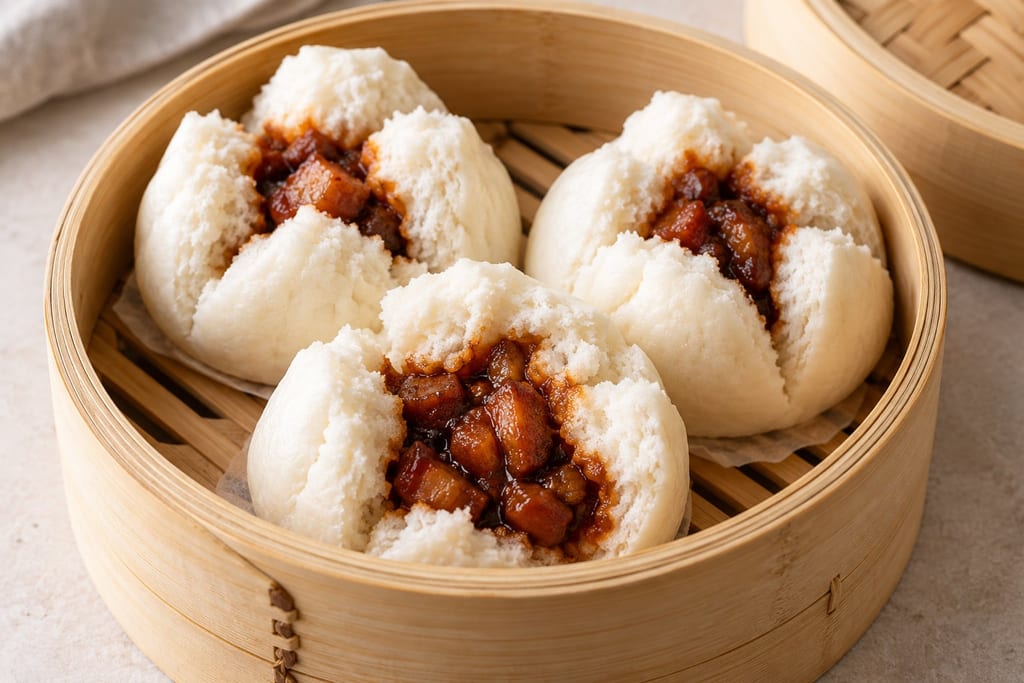
Fourteen fluffy steamed buns filled with cooked char siu and a thickened oyster-soy sauce.
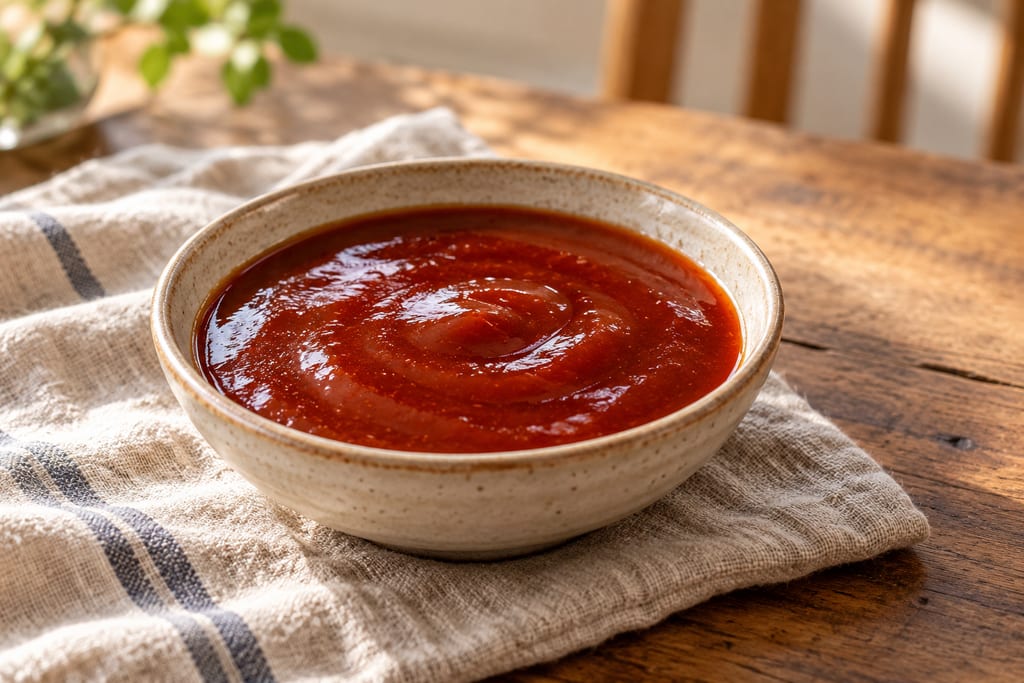
A smooth, tomato-based sweet-and-sour sauce of sugar, vinegar, tomato paste and soy sauce, thickened with starch for dipping or coating; it is not the sauce on Hangzhou's sweet-and-sour ribs.
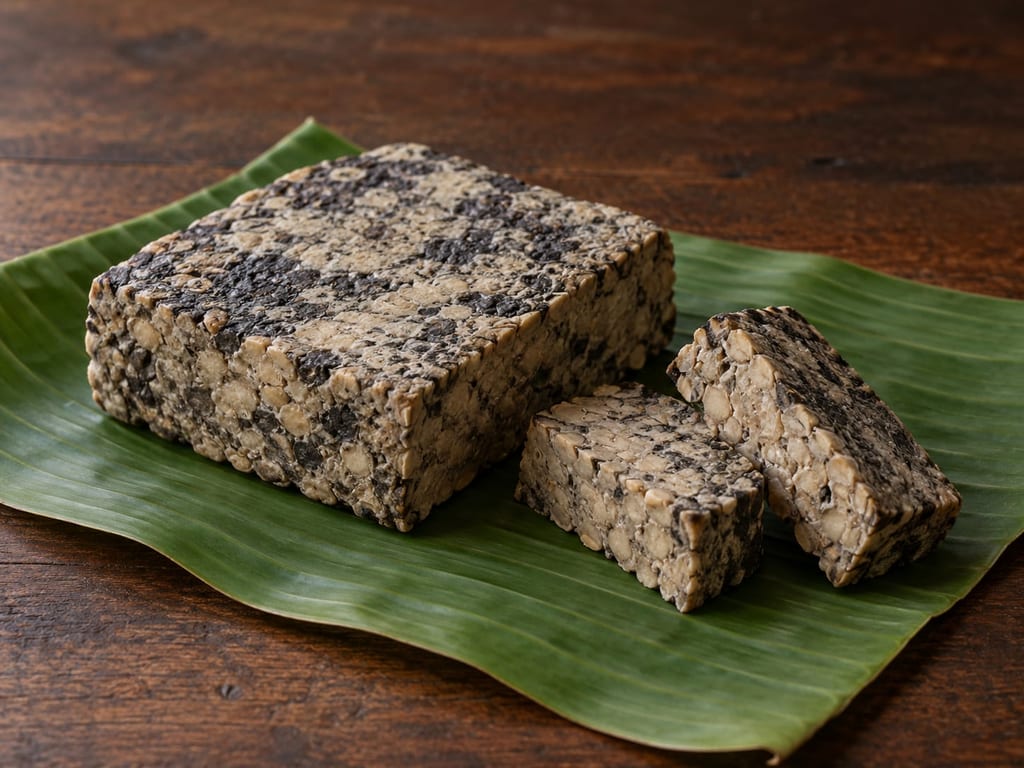
Black oncom is a mould-fermented cake made from defatted peanut cake, pressed to about 2 cm, steamed and then incubated for a day at ambient temperature.
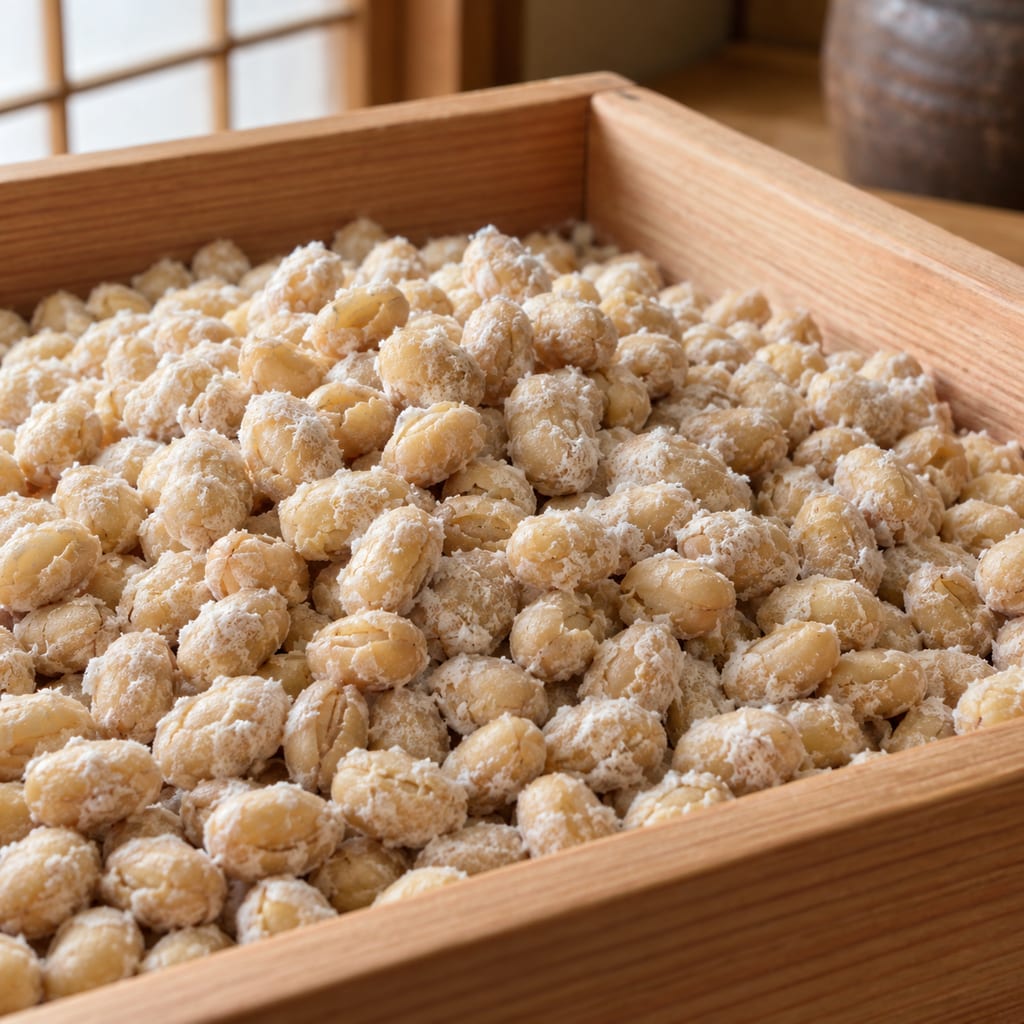
Japanese soybean koji: steamed soybeans, loose or formed into balls, grown over with Aspergillus mould to make the enzymes for mame-miso, tamari and regional soybean condiments.
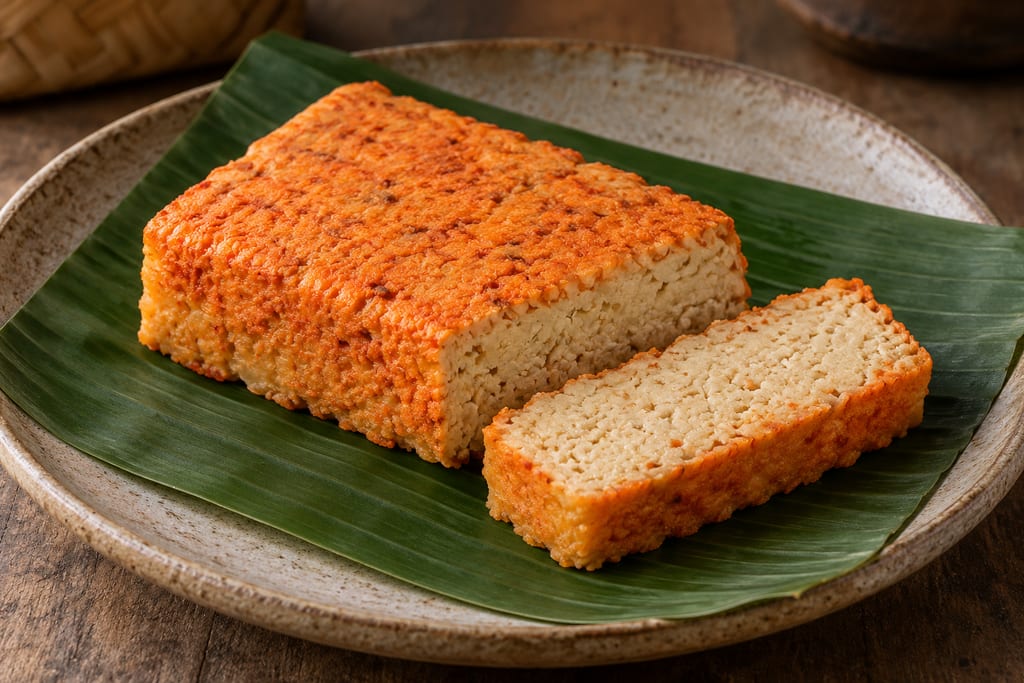
Red oncom is a West Javanese cake fermented from pressed soy pulp with a Neurospora starter, a little tapioca starch and vinegar. It is a different food from black oncom, made on another substrate with another mould.
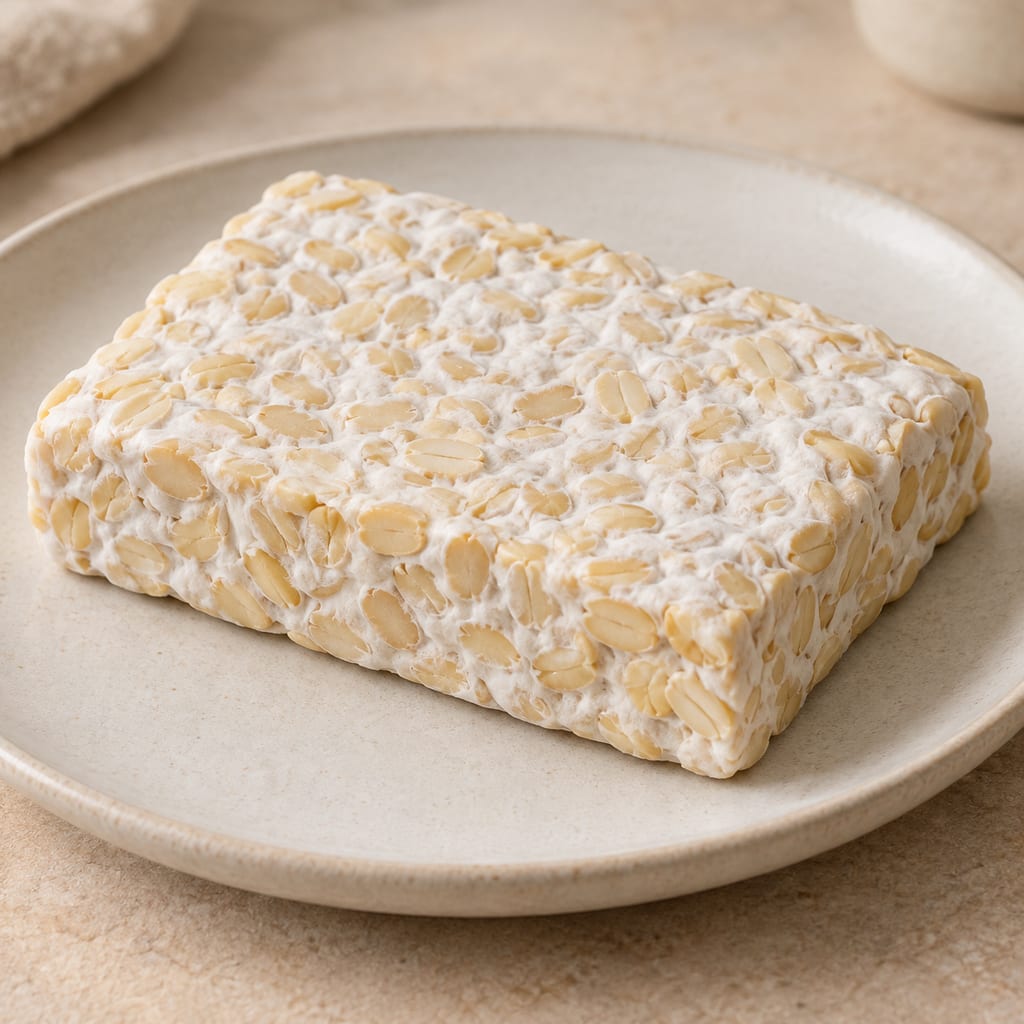
A two-cup soybean batch uses one Cultures for Health tempeh starter packet and vinegar. The supplier describes dehulling, a thin vented layer, controlled early incubation and attention to self-heating; it is not a validated home process.

An Okinawan fermented tofu: dried tofu cubes matured in rice koji, awamori and salt, traditionally with red Monascus koji, until the curd turns smooth and intensely savoury.

At North Abydos in Egypt, a fixed early Dynastic brewery comprised parallel semi-subterranean installations with rows of ceramic mash vats; excavation reports revise their number, scale and estimated batch capacity.

Ají amarillo is the orange-yellow Peruvian chilli cultivar group of Capsicum baccatum, used to colour and season huancaína sauce and ají de gallina. Published heat estimates do not establish one range for the named cultivar.

Toasted almonds are whole sweet almond kernels dry-roasted until golden to brown. Heat replaces their marzipan note with a roasted, nutty one; they thicken and flavour romesco.

Kodiak salmon, halibut and cod cut as seg'aq and hung on an initaq rack to become tamuuq, with kac'amaasaq and kupcuunaq named as different results.

Aniseed is the dried ripe fruit of Pimpinella anisum, an aromatic Apiaceae spice commonly called a seed. It adds a sweet, warm aroma to breads such as Moroccan krachel and South African mosbolletjies, and is distinct from star anise.

A fixed Late Chalcolithic installation in Areni-1 cave combined a shallow clay pressing basin with a large jar set into the cave floor and storage vessels nearby.

Ripe avocado flesh is the soft, buttery, fat-rich pulp of Persea americana, eaten raw. It is low in acid, so it is a fresh ingredient that needs care in chilled dishes.

A portable dome and pan used over a hearth, with embers on the lid and heat from below. Regional peka and saç forms share this principle while differing in materials, pan shape and how the food is cooked.
No community contributions have been published for this entry yet.
Sign in to contribute. Published comments and photos are free to read.
Han, Rombouts and Nout, International Journal of Food MicrobiologyIdentity · History
A Chinese fermented soybean foodSufu or furu is a Chinese fermented soy food made from tofu
Creamy, spreadable product made by preparing tofu or pehtze, salting and ripening; red, white, grey and other types are linked to process or dressing
Wei Dynasty written records (220-265 CE); eaten with breakfast rice or steamed bread
Actinomucor, Mucor and Rhizopus named among the fungi used for some mould-fermented types
Cited in: What sufu is; Culture and growth; Place, use and home feasibility
Food Science and BiotechnologyIdentity · Microbiology
Distinct bacterial community of a solid-state fermented Chinese traditional food huase sufu revealed by high-throughput sequencingDistinguishes red sufu with a red colorant from white sufu without one
Colour labels do not identify the surface organism
One article classifies Qing sufu as stinky tofu
Cited in: What sufu is; Culture and growth; Names and neighbouring foods
International Journal of Food Microbiology / PubMedIdentity
Diversity of lactic acid bacteria in fermented brines used to make stinky tofuSeparate research on the bacterial brines used for stinky tofu, a comparison food rather than a synonym
Cited in: Names and neighbouring foods
兰姐家常菜Method
怎么制作豆腐乳?兰姐豆腐乳教学 How to make Fermentation tofu? Lanjie told you use this wayCut tofu under gauze, several days of exposed surface growth, then cooled salt water; starter, salt concentration and tofu mass unstated
Cited in: Three creator methods; Culture and growth; Place, use and home feasibility; What the evidence does not settle
冯小厨Method
成本不到10元做2大罐豆腐乳,製作簡單發酵快,再也不用去外面買了Three blocks of old tofu dusted with 6 g of an unnamed packet starter, held in an unpowered oven or steamer, coated with chilli seasoning and liquor and packed with oil
Cited in: Three creator methods; Culture and growth; Place, use and home feasibility; What the evidence does not settle
培仁蔬食MAMAMethod · Use
0失敗!五步驟超簡單鳳梨豆腐乳,一吃就愛上,香甜綿密Purchased salted, sun-dried tofu with pineapple, sugar, rice wine and rice koji; creator distinguishes it from earlier pineapple-plus-douchi and pineapple-only batches
Mentions rice porridge, steamed buns, noodles and noodle dumplings as uses
80-piece count ambiguous between bought pieces and halves
Cited in: Three creator methods; Culture and growth; Names and neighbouring foods; Place, use and home feasibility; What the evidence does not settle