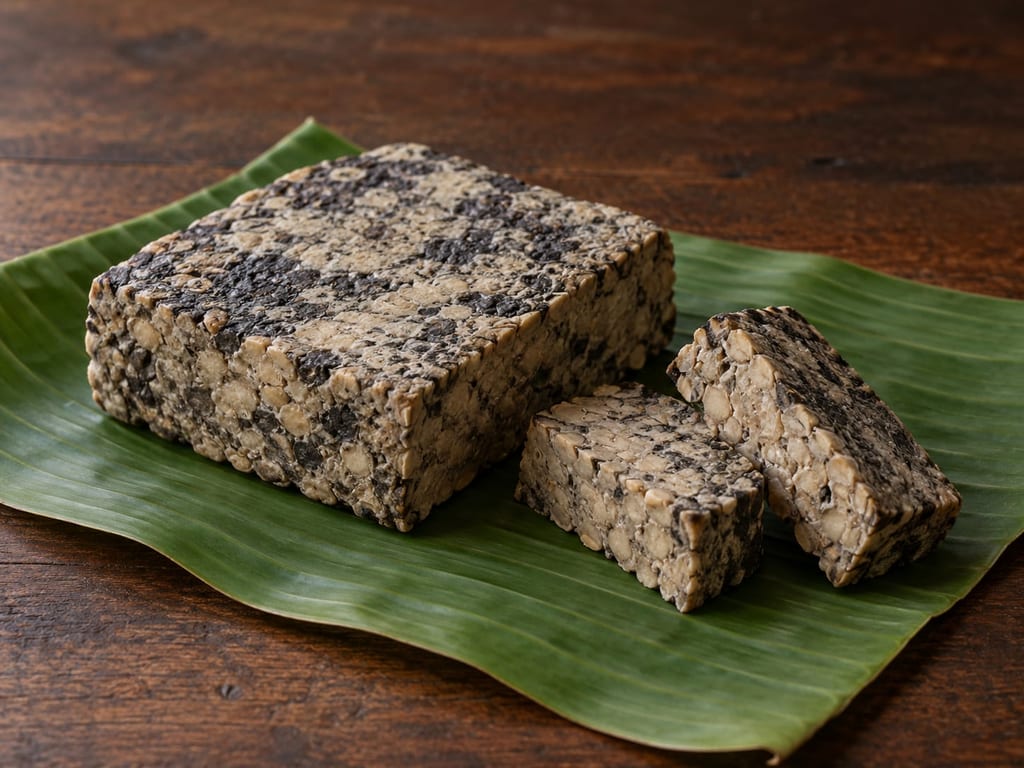
Black oncom is a mould-fermented cake made from defatted peanut cake, pressed to about 2 cm, steamed and then incubated for a day at ambient temperature.
Black oncom is a fermented food traditionally made from the solid residue remaining after peanuts have been pressed for oil.
The residue, or defatted peanut cake, still contains substantial protein, carbohydrates and other nutrients. A mould culture grows through it, transforming the material into a coherent cake with a distinctive flavour and texture.
The Indonesian name is oncom hitam; in Sundanese it is also called oncom hideung, meaning black oncom.
The term black describes the customary category and characteristic appearance. The product may show pale, grey or dark fungal growth depending on the culture and development.
Black oncom is particularly associated with Rhizopus species, including Rhizopus oligosporus, now frequently classified within Rhizopus microsporus.
Other black-oncom traditions include fungi from the genus Mucor.
This means that a visually similar cake does not necessarily contain an identical microbial population.
The preparation is closely related to red oncom in culinary context but differs in substrate and characteristic fungi.
Black oncom belongs to the culinary culture of western Java, especially areas around Bogor and other Sundanese communities.
Its manufacture demonstrates the importance of turning byproducts of oil extraction into edible food.
Peanut pressing removes a proportion of the original oil, but leaves behind a material rich in protein and other solids.
Fermentation transforms its texture and flavour, making it useful in dishes rather than merely a residue of agricultural processing.
The exact historical invention date is not established.
A 2025 photographic study documented black-oncom production at Cimanggu 2 village in Bogor, emphasizing the continuity of family methods and the work of local processors.
This establishes a living production tradition at a specific location without proving when the technique first developed.
The process also resembles the production of tempeh in some respects.
Both may involve Rhizopus cultures and the binding of plant materials into cakes.
But black oncom is not simply tempeh made from peanuts.
Its principal raw material is defatted peanut residue, and its microbial communities and regional culinary identity can differ.
Black oncom is described as a fermented defatted-peanut-cake product, distinct from okara-based red oncom; the cited source presents a general process description rather than a historical date.
Ingredients
Yield 1 kg peanut cake before starter (normalized ratio basis; source yield not reported) · Scaling: source ratios only
Defatted peanut cakesource ratio basis; source describes the peanut cake substrate but not a trial batch mass
1 kg
Identified oncom starterabout 2 g mould starter per kg raw material, with Rhizopus oligosporus identified for black oncom
2 g per kg raw material
Method
Risks and precautions · High risk
Unintended mold or bacterial contamination
This is a moist mold-fermented cake, and a species name or surface color alone cannot establish the identity or safety of growth.
Hazard source
Use only a traceable food-production Rhizopus starter and an independently reviewed process; do not identify or backslop wild mold by appearance.
Control source
This literature process is not professionally validated for home production. Do not treat visible mold, smell, taste, or heating as proof of safety.
Inspect the substrate. Begin with food-grade defatted peanut cake.
Steam. Steam the peanut cake for 45–90 minutes.
Form cakes. Spread the prepared material into cakes approximately 2 cm thick.
Cool. Allow the material to cool before adding the starter.
Inoculate. Distribute approximately 2 g identified Rhizopus starter per kilogram of raw material.
Incubate. Hold the inoculated cakes at ambient temperature for 24 hours.
Assess. The culture is expected to change the cohesion and structure of the cake.
Conditions
Yield1 kg peanut cake before starter (normalized ratio basis; source yield not reported)
Fermentation24 h
Temperature controlAmbient, monitored
Places
West Java, Indonesia
Traditional preparation · Region evidence
The review associates oncom with West Java; the paper distinguishes peanut-cake black oncom from okara-based red oncom.
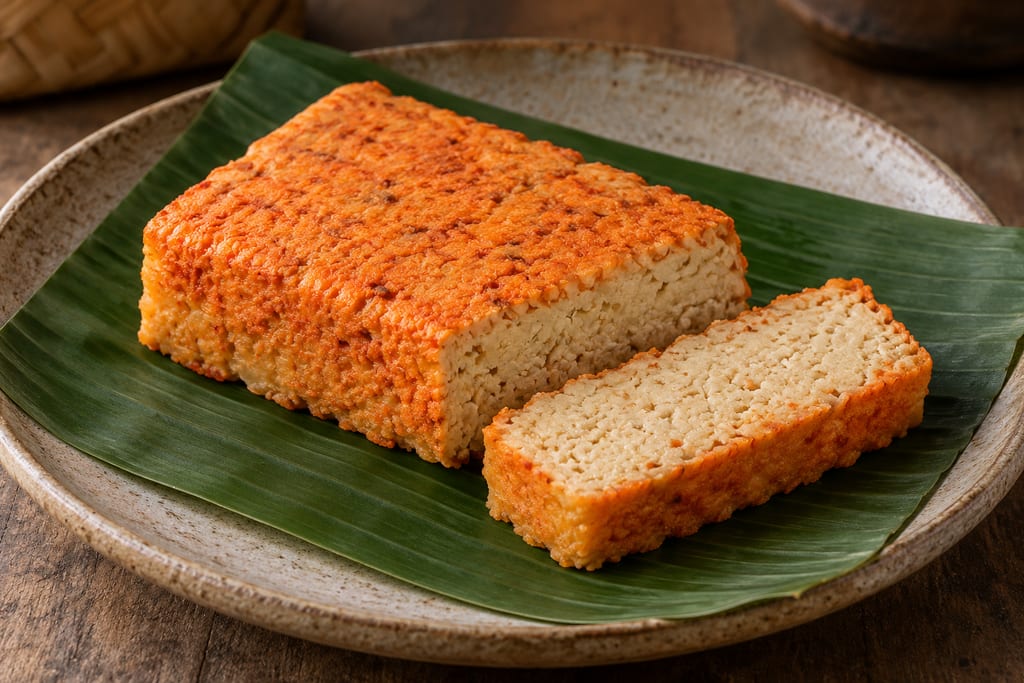
Red oncom is a West Javanese cake fermented from pressed soy pulp with a Neurospora starter, a little tapioca starch and vinegar. It is a different food from black oncom, made on another substrate with another mould.
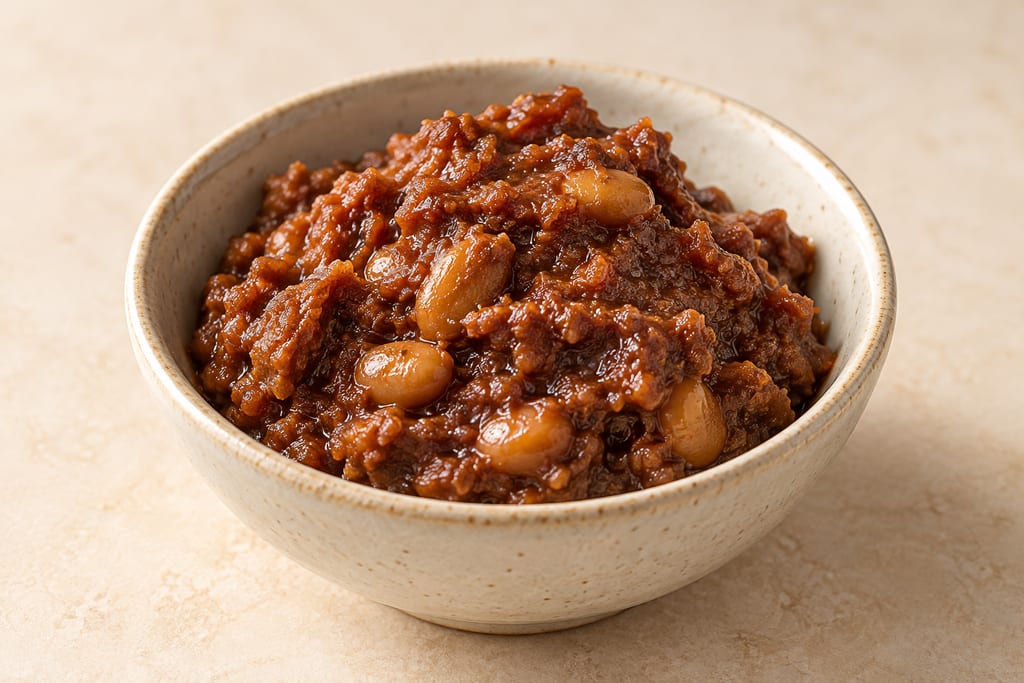
An Indonesian savoury soybean paste built in two stages: cooked beans and roasted flour carry a mould fermentation, then mature in salt brine into a thick, salty seasoning.
This controlled study protocol makes Aspergillus koji from soybeans and then ferments it with 4% salt. It uses a 150 g jar batch and a defined moisture target; the research method is not a validated home process.
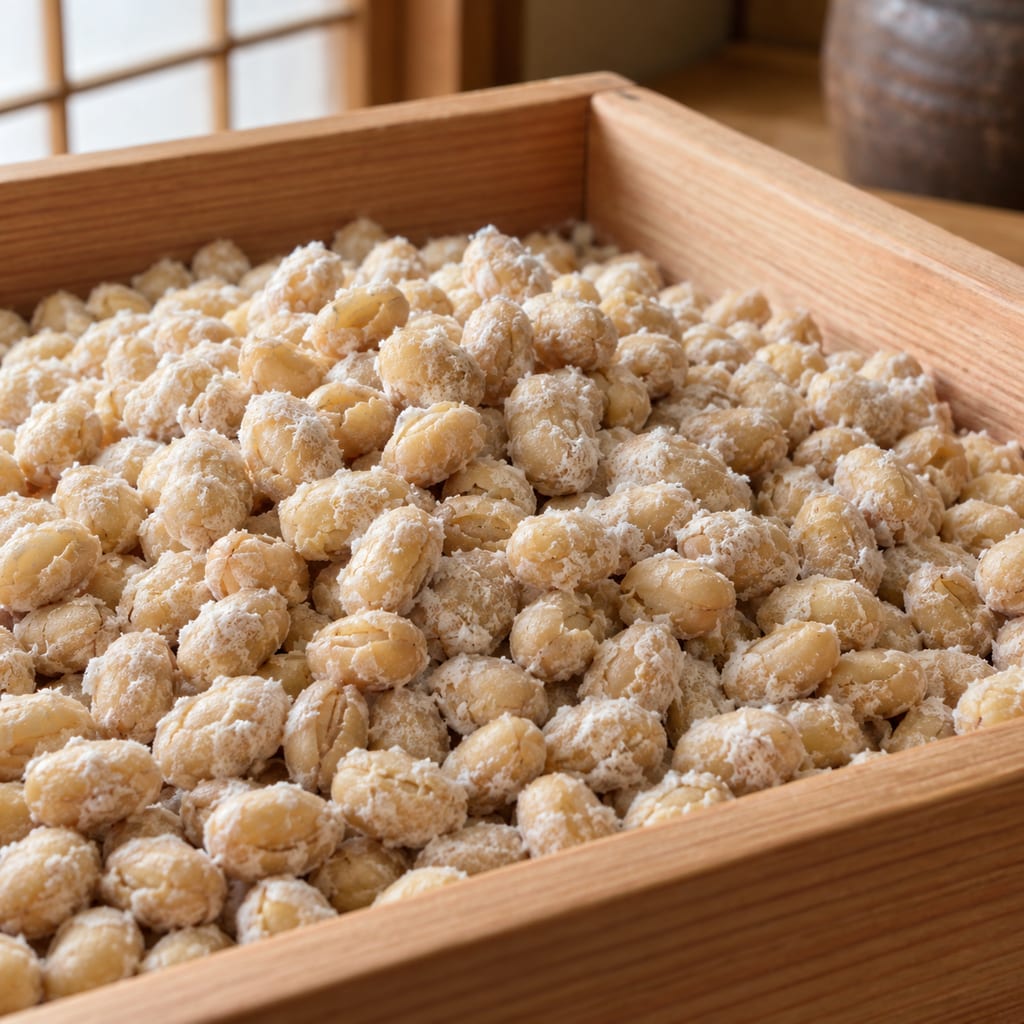
Japanese soybean koji: steamed soybeans, loose or formed into balls, grown over with Aspergillus mould to make the enzymes for mame-miso, tamari and regional soybean condiments.
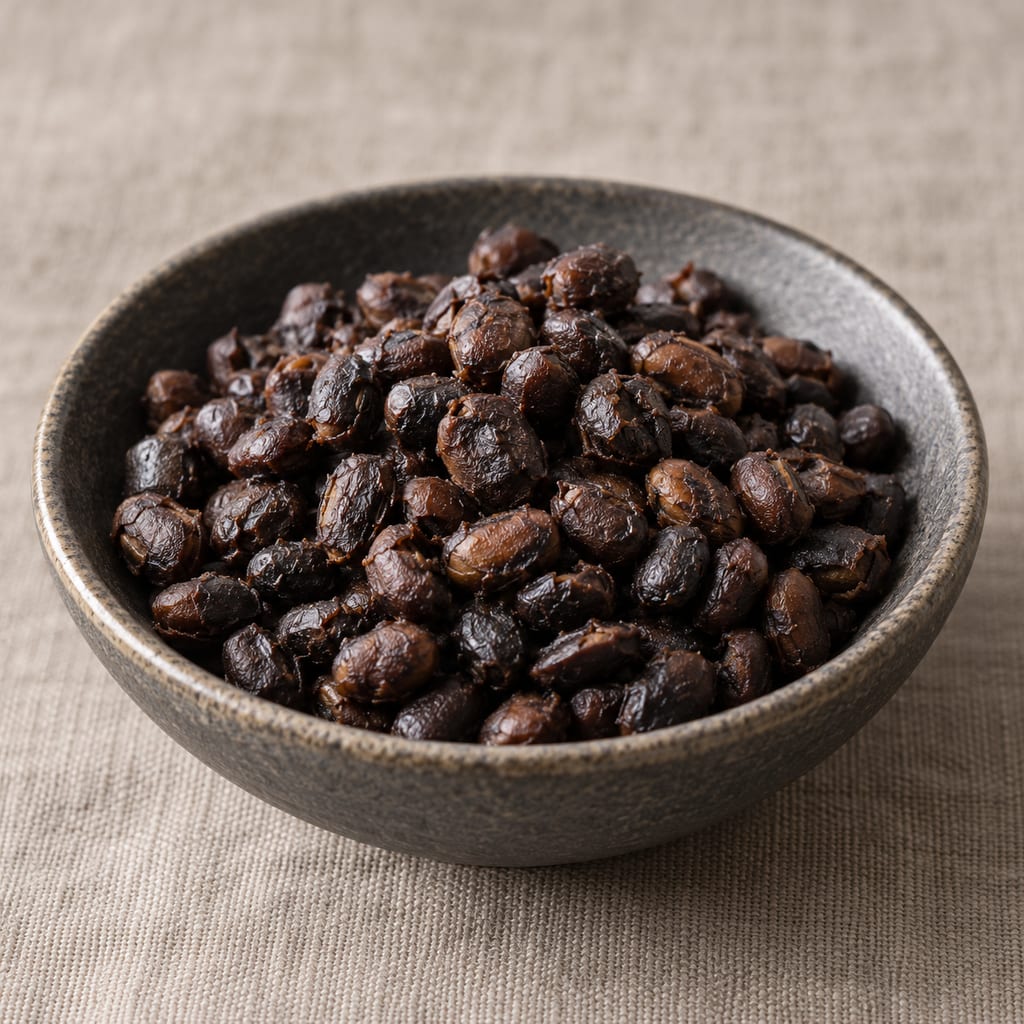
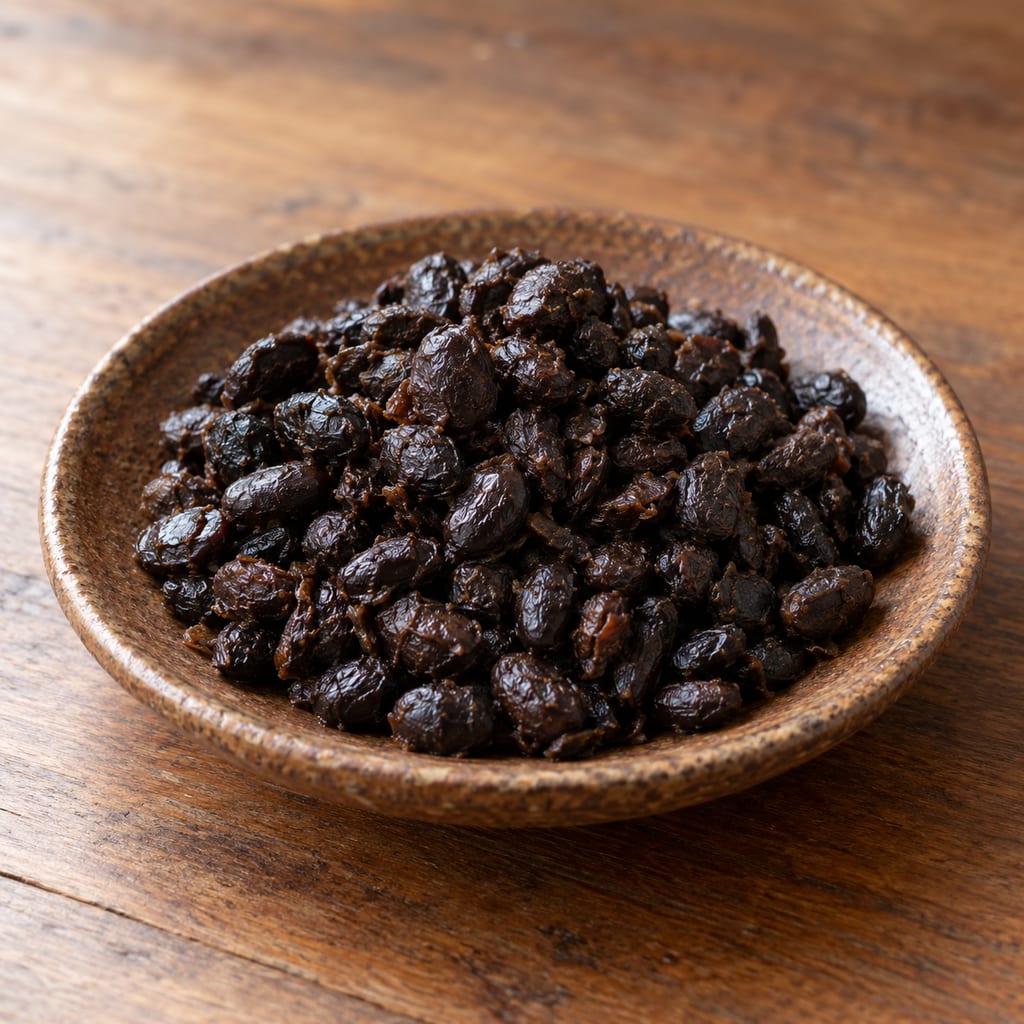
A Chinese fermented soybean condiment from Chongqing and Sichuan, made by growing Mucor-type mould on cooked beans, then salting and maturing them into dark, savoury, soft beans with a concentrated aroma.
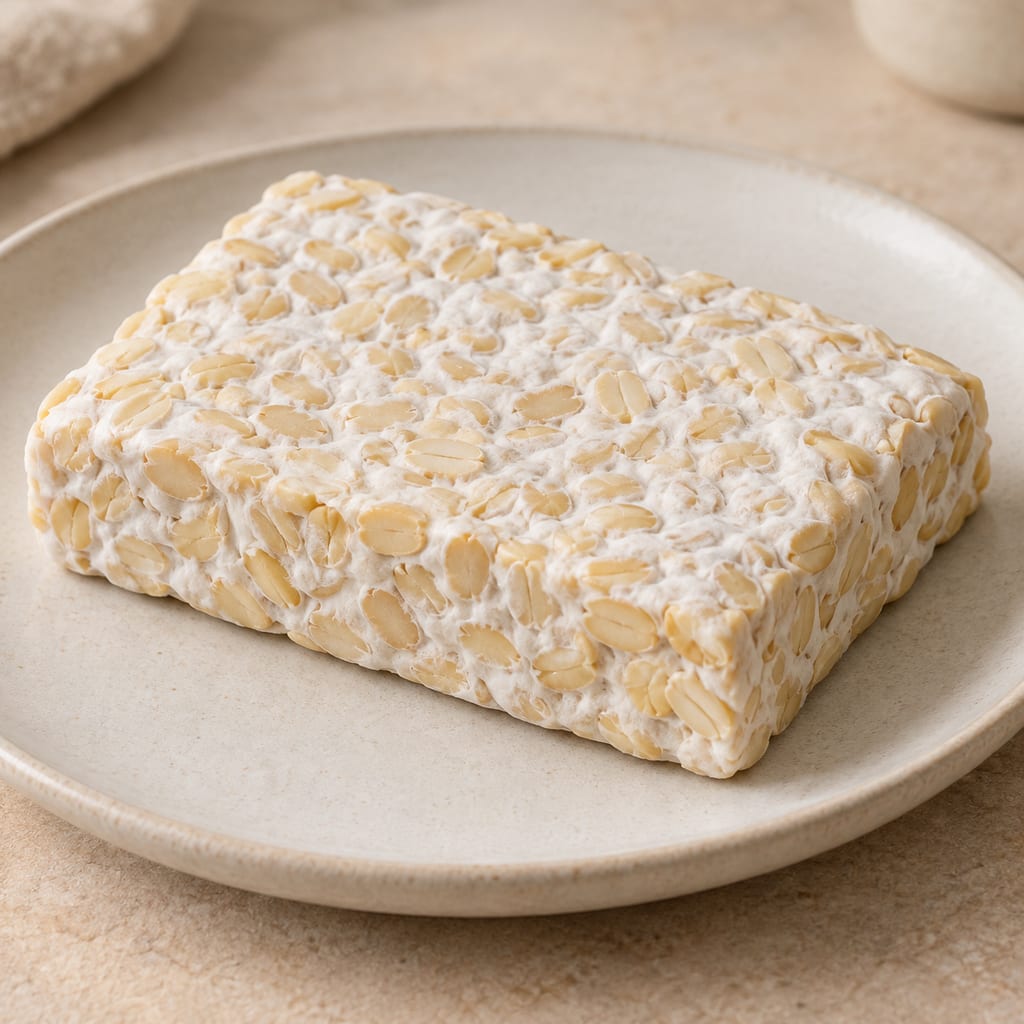
A two-cup soybean batch uses one Cultures for Health tempeh starter packet and vinegar. The supplier describes dehulling, a thin vented layer, controlled early incubation and attention to self-heating; it is not a validated home process.
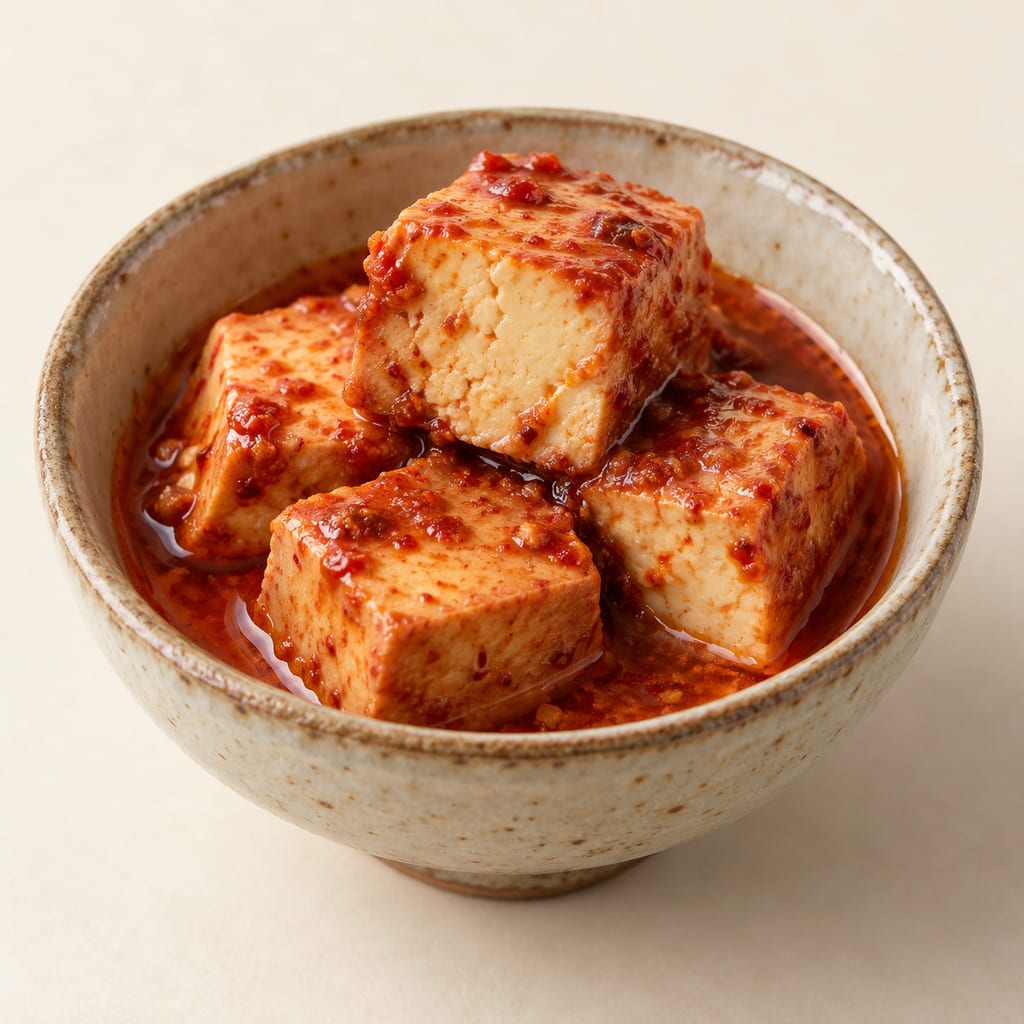
Sufu, or furu, is Chinese fermented tofu: bean curd is salted and ripened, often after a mould stage, into a soft, creamy, intensely savoury condiment.
An Okinawan fermented tofu: dried tofu cubes matured in rice koji, awamori and salt, traditionally with red Monascus koji, until the curd turns smooth and intensely savoury.
Community
No community contributions have been published for this entry yet.
Share what you made
Sign in to contribute. Published comments and photos are free to read.
Black oncom substrate is defatted peanut cake; the reported process steams raw material 45–90 min, forms 2 cm cakes, cools, inoculates at about 2 g/kg, and incubates 24 h at ambient temperature.
Cited in: What is black oncom?; Recipe at a glance; A West Javanese food tradition; Defatted peanut cake — 1 kg; Rhizopus starter — approximately 2 g; Water; Optional cassava residue; Equipment; Method: documented black-oncom process; Stage 1 — Inspect the substrate; Stage 2 — Steam; Stage 3 — Form cakes; Stage 4 — Cool; Stage 5 — Inoculate; Stage 6 — Incubate; Stage 7 — Assess; The microbiology of black oncom; Protein transformation; Carbohydrate metabolism; Lipid changes; Spore formation and colour; Why substrate composition matters; Peanut-cake black oncom; Peanut and cassava residue; Mucor-associated black oncom; Red oncom; How black oncom is eaten; Nasi tutug oncom; Pepes oncom; Fried or sautéed oncom; Sambal oncom; Unintended mould growth; Bacterial contamination; Allergens; Storage; Black oncom as a sustainable food
Accessed 2026-10-25
Journal of Agriculture and Food ResearchGeography · History