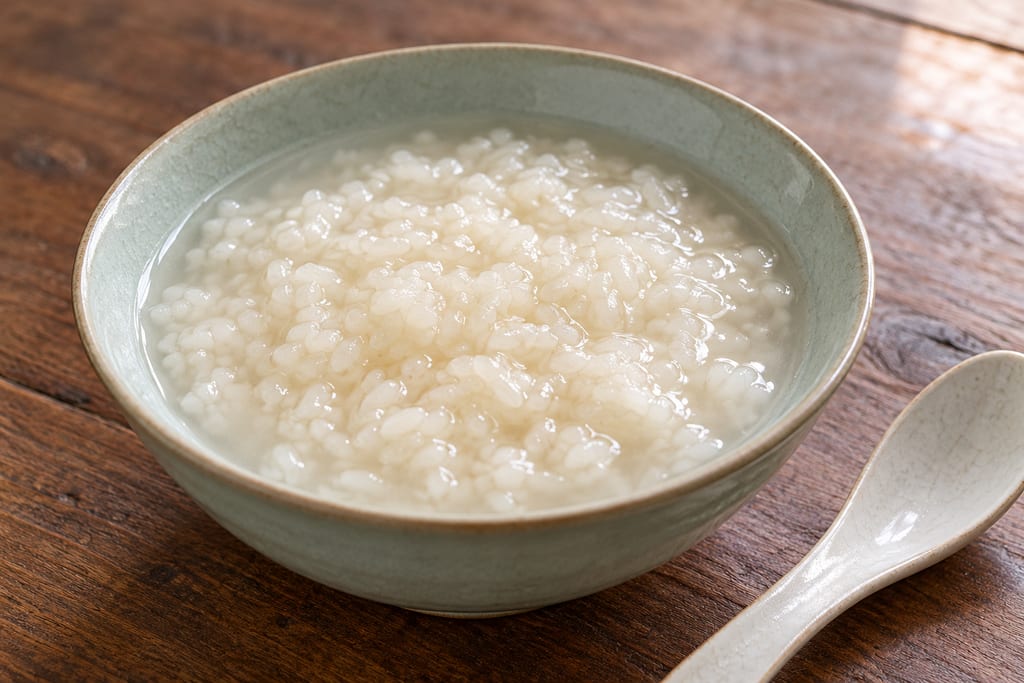
Jiuniang (sweet fermented glutinous rice)
Chinese sweet fermented glutinous rice: steamed rice and a mixed jiuqu starter, where mould enzymes release sugar and yeast makes a little alcohol, eaten with its sweet liquid.
 FermenteaWhere food goes to change
Traditional method
毛霉型豆豉 · 毛霉豆豉 · 豆豉 · Dòuchǐ · Mucor-fermented douchi · Mucor-type fermented soybeans · Mucor-type fermented black beans · Mucor-type dou-chi · Yongchuan douchi · 永川豆豉 · Tongchuan douchi · 潼川豆豉
A Chinese fermented soybean condiment from Chongqing and Sichuan, made by growing Mucor-type mould on cooked beans, then salting and maturing them into dark, savoury, soft beans with a concentrated aroma.
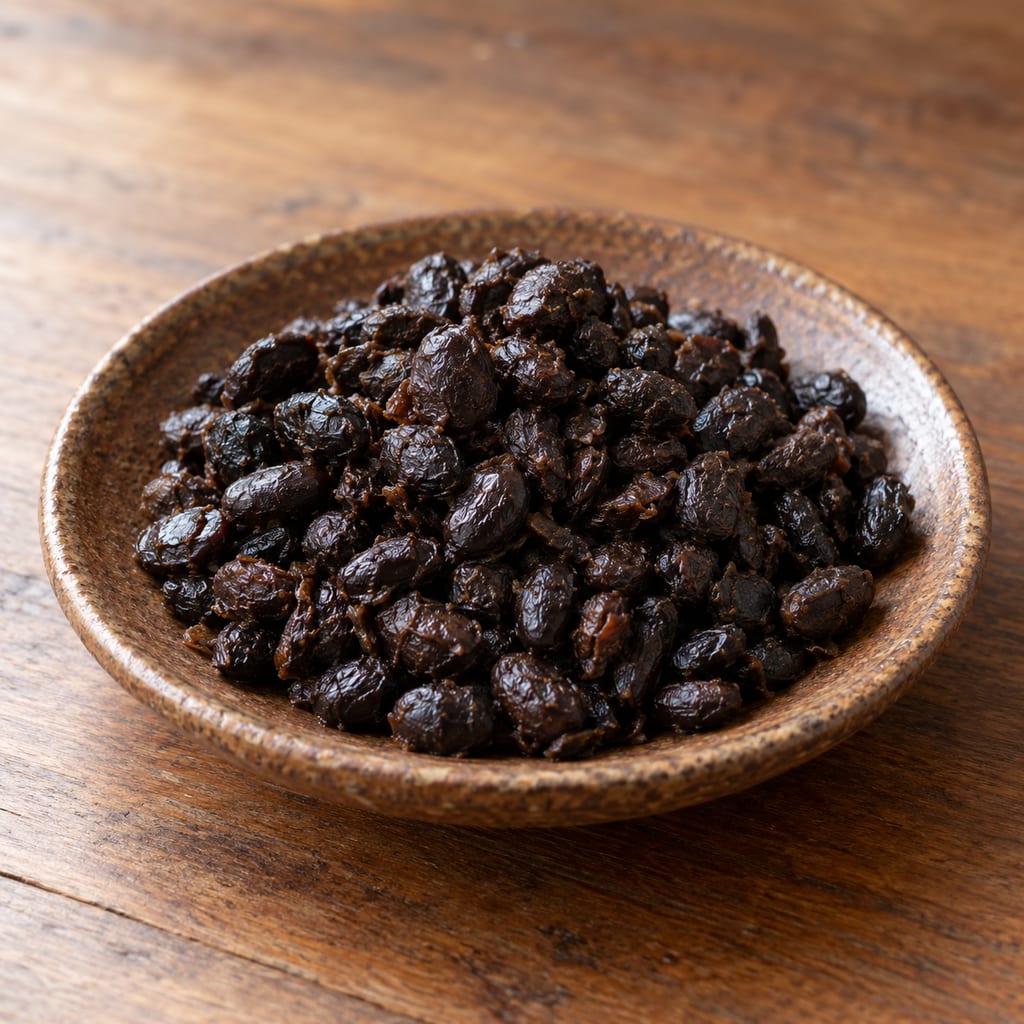
Mucor-type douchi is a Chinese fermented soybean condiment made through a mould-led fermentation followed by salting and maturation. The Chinese name is 毛霉型豆豉 (máoméi xíng dòuchǐ), literally Mucor-type fermented beans. The finished product normally consists of individual dark soybean grains with a concentrated salty, savoury flavour. The beans may be soft enough to crush between the fingers but generally retain their shape. It is a cooking ingredient rather than a fermented bean dish usually eaten by itself.
Douchi is a larger family of Chinese fermented soybean products, not a single standardised fermentation. Scientific literature distinguishes Mucor-type, Aspergillus-type, Rhizopus-type and bacterial-type production. These categories describe the organisms or processes associated with the primary fermentation. They do not mean that every finished product contains only one organism. Mucor-type production is particularly associated with southwestern China, including Yongchuan in Chongqing and Tongchuan in Sichuan. Douchi from other places cannot be assumed to use the same mould, temperature or salting process.
The basic raw material is soybean, Glycine max. Black soybeans are especially associated with dark douchi, but Mucor-type methods also use yellow soybeans. During preparation, cooked beans are colonised by mould and become a fermented intermediate called douqu (豆曲). The mould produces enzymes that begin breaking down the soybean proteins and other substances. After this initial stage, salt and sometimes Chinese liquor, fermented rice or seasonings are added. The beans then mature, during which enzyme activity, other microorganisms and chemical reactions change the flavour further.
Mucor racemosus has been used in controlled experiments, including a study using strain CGMCC8700. Another study used Actinomucor elegans, a related mould in the order Mucorales, isolated from douchi koji. A broader survey of fermented soybean foods also identified Mucor circinelloides and other Mucorales. Finding a species in traditional beans does not make it an intentional or safe starter. The name Mucor-type describes a production tradition; it is not proof that a particular batch contains a pure culture.
The distinction matters when comparing recipes. An experimental M. racemosus process completed its initial mould stage at 25°C, whereas another Actinomucor process used temperatures below 15°C. Traditional regional douchi may take roughly a year to mature, while laboratory processes can be much shorter. Those are different methods with different organisms and outcomes, not interchangeable versions of one universal recipe.
Fermented soybeans have a long documented history in China, but evidence for douchi generally must be distinguished from evidence for the specific Mucor-type process. Among the earliest secure records are fermented black soybeans, historically called shi (豉), associated with Western Han tombs at Mawangdui, near present-day Changsha in Hunan. Tomb No. 1 was sealed around 165 BCE. Its contents included jars and written labels identifying fermented soybean products. This demonstrates that salted fermented soybeans were known by that period. It does not identify the organisms used to ferment them or prove that the beans were manufactured using the same procedure as modern Yongchuan douchi.
The historical literature also contains references to shi in the Shiji, compiled during the Western Han, and later Chinese agricultural and food texts. The sixth-century agricultural treatise Qimin Yaoshu contains descriptions of fermented soybean preparation. These records are useful for establishing continuity in the broader practice of fermenting and preserving soybeans. They cannot establish continuity of a particular Mucor strain, because the microorganisms were not identified by the methods available to modern microbiology.
The regional history is more specific. China's national intangible cultural heritage record attributes the beginning of Yongchuan douchi production to approximately 1644, near the end of the Ming dynasty. The same record describes the local conditions and the use of Mucor-led production. For Tongchuan douchi, the national heritage record cites the Santai county chronicle and describes the Qiu family's arrival from Jiangxi around 1670, followed by the development of a local Mucor-koji technique. These dates are retrospective regional historical accounts. They should not be described as contemporary laboratory evidence or independently proven invention dates.
The Tongchuan heritage account also reports that the product was presented as tribute in 1678 and describes the later development of the family's sauce-making business. These details belong to the local tradition and rest on later accounts, not on an excavated object. Both Yongchuan and Tongchuan douchi-making techniques were included in China's second batch of national intangible cultural heritage entries in 2008, providing secure modern documentation of their recognised regional significance.
Microbiologists have since separated the traditional fermentation community from deliberately chosen starters. Work published in 2016 compared natural maturation with an Actinomucor starter and selected salt-tolerant organisms for the later stage. A 2019 study followed the metabolites of a Mucor racemosus fermentation, a 2020 study compared natural and artificial Yongchuan douchi, a 2025 survey described the bacterial and fungal communities of seven Sichuan and Chongqing products, and a 2026 study followed flavour change through a long maturation of Tongchuan douchi. Each describes one process under its own conditions, so none of them shows that a laboratory procedure reproduces every historical method.
Mucor-type douchi begins with solid-state fungal fermentation. The cooked beans contain water, proteins, lipids and carbohydrates, providing nutrients for mould growth. A suitable Mucorales fungus germinates from its spores and develops branching hyphae over the soybean surface. The mycelium releases extracellular enzymes that begin digesting the substrate outside the fungal cells. The soluble products can then be absorbed by the mould or remain in the beans, where they contribute to subsequent flavour development.
Proteolysis is one of the central transformations. Soybeans contain substantial quantities of storage proteins, particularly glycinin and beta-conglycinin. Proteases cut peptide bonds within these proteins, producing progressively smaller peptides. Peptidases can break these fragments down further into free amino acids. Glutamic acid and aspartic acid are important contributors to savoury taste, while other amino acids become precursors for aroma compounds. The amount released depends on the strain, the available enzymes, substrate condition and duration of fermentation. Mould growth alone does not demonstrate that a particular enzyme has reached a useful concentration.
Other hydrolytic enzymes also affect the beans. Carbohydrate-degrading enzymes can release smaller sugars from accessible soybean carbohydrates. Phytase can break down phytic acid and release phosphate and inositol-containing products. In a 2019 Mucor racemosus experiment, myo-inositol increased substantially during fermentation, consistent with changes involving phosphorus-containing compounds. Several amino acids and putrescine also rose, while malic acid fell. These are figures from one fermentation and do not hold for all Mucor-type douchi.
After the mould-growing stage, salt changes the environment by lowering water activity and limiting the growth of many microorganisms. Salt does not immediately inactivate every enzyme, so chemical changes can continue during maturation. Liquor and fermented rice, when included, contribute ethanol and additional fermentation-derived compounds. Alcohols can interact with organic acids to produce esters, while amino-acid metabolism can generate aldehydes, alcohols and acids. Darkening and changes in aroma can also involve oxidation and non-enzymatic browning reactions, including Maillard chemistry.
Maturation is a mixed biological and chemical process even when the initial stage is mould-led. Surveys of finished douchi have detected Bacillus, Tetragenococcus, Weissella, yeasts and several fungal genera. A 2025 study of seven douchi products identified sixteen amino acids and one hundred volatile compounds. It found associations between particular microorganisms and compounds such as phenylacetaldehyde, 1-octen-3-ol and esters. Such correlations do not prove that the detected species produced those chemicals directly. Controlled inoculation and metabolite measurements are needed to establish individual microbial functions.
The changing aroma is therefore not a simple measure of fungal growth. Proteins first become soluble peptides and amino acids; later reactions consume some of those compounds while generating new flavour molecules. A 2019 experimental fermentation showed substantial metabolite changes during its early stages and comparatively little separation between samples after day fifteen. That finding describes the metabolic behaviour of one controlled M. racemosus process. It does not mean traditional douchi finishes maturing after fifteen days.
The first operation is selecting, cleaning and soaking the soybeans. Removing damaged beans and foreign material improves raw-material consistency. Soaking allows water to penetrate the beans so they can cook evenly. Cooking softens the bean structure, denatures proteins and reduces naturally occurring antinutritional factors. It also reduces the initial microbial population, giving the intended starter a better opportunity to establish itself. The cooking stage must be appropriate to the actual beans and equipment; soybeans that remain hard inside are not equivalent to thoroughly cooked beans.
The next stage is cooling and inoculation. The beans must be cool enough that the fungal inoculum is not damaged. In a 2019 experiment, soaked soybeans were steamed at 115°C for twenty minutes, cooled to 35°C and inoculated with Mucor racemosus CGMCC8700. The inoculated beans were incubated at 25°C for forty-eight hours. This produced the initial mould-fermented intermediate, after which 1% distilled wine and 8% sodium chloride were added and maturation continued at 25°C. Their distilled wine contained 45% alcohol before mixing. No household batch weight or reproducible inoculum quantity is given for it.
The two stages have different purposes. During initial incubation, fungal growth and enzyme production prepare the beans for further breakdown. After the addition of salt and liquor, conditions change: many microorganisms are inhibited, while enzymes, remaining microbial populations and chemical reactions continue altering the substrate. Maturation was followed for twenty-five days, and fifteen days was roughly the point beyond which the metabolomic profiles showed little further separation. This is a finding for that experimental system, not a safety-tested universal maturity endpoint.
Another published method used Actinomucor elegans rather than M. racemosus. In that study, soybeans were steamed at 100°C for 120 minutes, cooled below 40°C and inoculated with a prepared A. elegans culture. Initial cultivation continued for fifteen days below 15°C. The resulting douqu was combined with 12% salt, 5% fermented rice and 5% liquor, then matured in pottery jars for periods of one to five years. These conditions differ markedly from the faster M. racemosus method. They remain separate protocols.
Salt distributes through the beans during mixing and maturation, while liquor and fermented rice change the flavour environment. Even distribution is important because unevenly salted areas may support unwanted growth. Traditional regional methods can include further handling such as breaking up the mould-grown mass, managing surface growth, adding spices or seasoning, and storing the beans in sealed vessels. Such operations are specific to individual production traditions, not universal instructions for every Mucor-type douchi.
Neither laboratory method is a home recipe. The starter preparation, inoculation rate, moisture and water-activity limits and acceptance criteria for the finished beans all have to be set for a given process, and copying the temperatures and times from a laboratory protocol does not make a spontaneous fermentation safe.
Yongchuan douchi is one of the best documented traditional Mucor-type products. It originates in Yongchuan, now a district of Chongqing Municipality. China's national intangible cultural heritage record describes a production sequence involving selection, cleaning, soaking, cooling, mould cultivation, mixing, filling vessels and further fermentation. The process traditionally includes prolonged maturation under changing temperatures. The heritage record describes fermentation lasting around a year, considerably longer than the short processes used in some controlled laboratory studies.
Traditional Yongchuan manufacture is associated with cooler seasonal conditions. Studies of natural-type Yongchuan douchi describe the initial mould cultivation as taking place in the colder months, approximately November through February. The commonly cited production organism is a Mucor mould, although taxonomic descriptions and natural microbial populations are not always identical between studies. An investigation published in 2020 found that natural-type Yongchuan douchi contained greater microbial diversity than the artificial-type product used for comparison. It also showed higher amino nitrogen, more umami-related amino acids and a broader set of detected volatile compounds.
Tongchuan douchi comes from Santai County in Sichuan, historically known as Tongchuan. It should not be confused with the modern city of Tongchuan in Shaanxi. The regional heritage account connects its manufacture to the Qiu family and describes mould cultivation followed by further processing and long maturation. Black beans are steamed and left to grow Mucor for about twenty days, then mixed with salt and rice wine lees and matured in large jars for about a year, with the jars turned several times a year; aromatic seasonings and dehydration also feature in the local account. Its use of Mucor koji is explicitly part of the recognised local technique.
Long maturation remains important to Tongchuan's flavour. A study published in 2026 compared samples fermented for six, twelve, eighteen and thirty-six months. Both volatile and non-volatile compounds changed from stage to stage. Longer maturation was associated with increased development of certain esters, pyrazines and other aroma components. The study demonstrates that a product's chemical profile can continue changing long after the initial mould fermentation, even when visible fungal growth is no longer the main activity.
Modern production has also introduced selected cultures and accelerated methods. Some artificial-type Yongchuan production that has been studied used Aspergillus-led cultivation rather than the traditional Mucor-led route. It produced a different microbial community and flavour profile, with a shorter maturation period. It should therefore be classified by its actual fermentation process, not assigned to the Mucor category simply because it uses the Yongchuan name.
Regional methods, industrial adaptations and laboratory protocols must be kept distinct. Mucor racemosus can be used in a controlled process at a temperature different from that associated with traditional winter production. Actinomucor elegans has also been used experimentally. The wider existence of Rhizopus-type or bacterial-type douchi shows that similar-looking finished soybeans can result from different microorganisms and production techniques. Their methods and historical claims should not be transferred automatically between categories.
Mucor-type douchi is primarily a seasoning. The finished beans contribute salt, savoury amino acids, fermentation-derived aromas and a concentrated soybean taste to cooked food. Unlike fresh soybean ferments served in comparatively large portions, mature douchi is generally used in smaller quantities alongside other ingredients. It can be added whole, crushed or chopped, depending on the dish and the texture of the finished product.
Yongchuan douchi is closely associated with Sichuan and Chongqing cooking. Its recorded uses include twice-cooked pork, fermented-black-bean fish preparations and pork ribs. Beans can be chopped with garlic, warmed in cooking oil or included in a sauce before the main ingredients are added. Heating distributes the flavour into the oil and surrounding liquid. The fermented beans provide their own salt, so the amount of additional seasoning in a dish depends on the product being used.
Fish and meat dishes commonly use douchi as a concentrated seasoning rather than as a separate garnish. In steamed preparations, crushed beans can be distributed over the main ingredient together with aromatics. In stir-fries, they can be mixed into a sauce or briefly cooked with garlic and other seasonings. The same principle applies to vegetables and tofu: douchi supplies fermented soybean flavour without needing a large quantity of whole beans. These are applications of the finished condiment, not additional stages in making the douchi itself.
The maturity and form of the beans affect their use. A comparatively dry product can be chopped into distinct pieces, while a softer or moister preparation may mix more readily into sauces. Some commercial products are plain fermented beans; others include chilli, oil or additional seasoning. Those prepared sauces are not equivalent to an unseasoned batch of fermented douchi, and their ingredient composition should be recorded separately.
Regional foods also differ in their balance of salt, aroma and sweetness. Natural and artificial Yongchuan douchi differ in amino nitrogen, free amino acids and volatile compounds, while aged Tongchuan douchi develops further flavour changes with longer maturation. Consequently, two packages labelled douchi may give noticeably different results in the same dish. A recipe developed around one regional product need not taste identical when prepared with another.
Mucor-type douchi is the prepared condiment. Black-bean fish, twice-cooked pork and stir-fries are dishes that use it, and chilli douchi or black bean garlic sauces are separate products whose added ingredients and processing differ from plain matured beans.
A successful Mucor-type douchi fermentation depends on the intended organism growing under suitable conditions, producing the necessary enzymes and being followed by controlled salting and maturation. During the initial stage, visible fungal growth may appear as a pale, filamentous covering on the cooked beans. Its appearance alone is not a reliable way to identify the species. Many unrelated moulds produce pale or hairy colonies, and the appearance of a culture can change as it develops. A wild mould-covered bean cannot be identified as food-grade Mucor racemosus simply by inspecting or smelling it.
The final beans are commonly dark, salty, fragrant and relatively soft while retaining a recognisable grain structure. Traditional descriptions of Yongchuan and Tongchuan douchi refer to dark colour, characteristic aroma and a texture that breaks down readily during eating. These are useful descriptions of established products, not laboratory safety criteria. Unexpected colours, abnormal surface growth, putrid odours, persistent unexplained slime or evidence of mishandling are reasons to reject an uncontrolled batch, but the absence of those signs does not establish that the food is safe.
One major problem is microbial contamination. A 2025 investigation examined fifty-six traditional fermented soybean-food samples from China, including douchi, furu and dajiang. It identified thirteen Mucorales species, with Mucor circinelloides and Mucor racemosus among the most frequently isolated across the combined sample set. Some members of the order are opportunistic human pathogens under particular conditions. Their detection in fermented food does not mean every isolate causes disease, but it demonstrates why identifying the organism and its strain matters.
Biogenic amines are another concern. Microorganisms can produce these compounds by decarboxylating amino acids released during protein breakdown. Histidine can become histamine, tyrosine can become tyramine, and other pathways can generate putrescine, cadaverine and phenethylamine. A 2018 study measured six common biogenic amines in fifteen douchi samples. Although total amine concentrations were below the study's cited overall threshold, some samples exceeded reference levels cited for individual compounds, including histamine and beta-phenethylamine. These results concerned douchi samples generally and should not be represented as prevalence figures specifically for Mucor-type production.
The Mucor racemosus metabolomics experiment also found substantial increases in putrescine and phenylethylamine. This illustrates an important trade-off: protein hydrolysis supplies amino acids that can improve taste, but some organisms can convert amino-acid precursors into undesirable amines. Starter selection, hygiene and control of the microbial community therefore affect safety as well as flavour. Laboratory testing is needed to determine the actual amine content of a batch. Smell, dark colour and a strong savoury taste cannot measure histamine or other biogenic amines.
Production faults can begin before salting. Uneven cooking, unsuitable moisture, excessive accumulation of heat or poor inoculation can allow unwanted organisms to compete with the intended mould. Later, uneven mixing may leave areas with insufficient salt. A traditional Yongchuan producer interviewed in 2025 specifically identified undercooked beans, uneven cooling and poorly distributed salt as practical causes of defective fermentation. A salt percentage or fermentation time taken from a laboratory protocol is not a universal safety limit without measurements of the final product.
A metabolite profile that stops changing after fifteen days, as it did in the 2019 Mucor racemosus fermentation, shows that the chemistry had largely settled under those conditions. It does not show that pathogens are eliminated, that toxins are absent or that the beans will keep. Sequencing likewise shows which organisms are present, not which of them are active or responsible for a given aroma compound. Soybeans remain an allergen after fermentation. Beans meant for eating or sale need an identified food-grade starter, a validated process, testing, hygienic handling and verified storage conditions. A batch with unidentified mould or other signs of failure is not tasted or rescued by adding salt.
Salted fermented soybeans (shi) were buried in a Western Han tomb at Mawangdui sealed around 165 BCE, but that find does not identify the mould or the method. China's heritage records date Yongchuan douchi to about 1644 and the Qiu family's Tongchuan douchi to about 1670; both rest on later regional accounts, not on surviving seventeenth-century laboratory evidence.
Scaling: source batch only
Mucor-type fermentation relies on particular fungi. Unidentified environmental moulds may be contaminants or unsuitable strains. Appearance alone cannot establish organism identity or food suitability.
Hazard sourceResearch on natural Yongchuan douchi detected diverse fungal and bacterial populations, including potentially undesirable microorganisms. Warm, moist cooked soybeans can support competing organisms during fermentation.
Hazard sourceDouchi can contain histamine, tyramine, putrescine, cadaverine and other biogenic amines. A study of fifteen commercial douchi samples found elevated individual amine concentrations in some products. These observations concern douchi generally, not specifically the 2015 Actinomucor protocol.
Hazard sourceSalt inhibits microorganisms partly by reducing available water, but the final water activity depends on the complete formulation and processing conditions. A nominal salt addition does not independently establish product stability.
Hazard sourceSoybeans are a recognised food allergen. Fermentation does not establish that the finished food is suitable for people with soya allergy.
Hazard sourceUse a correctly identified, food-appropriate Actinomucor elegans starter prepared under controlled conditions, rather than collecting unidentified mould from the environment.
Control sourceFollow a validated soybean preparation and cooking process, with appropriate hygiene and protection against contamination before inoculation.
Control sourceControl incubation conditions and verify that the intended starter has established itself without unacceptable contamination.
Control sourceDistribute salt uniformly and establish final preservation conditions using a validated process and measurements, including water activity where appropriate.
Control sourceEvaluate biogenic amine risks through appropriate starter selection, process control and analytical testing.
Control sourceEstablish microbiological specifications, storage requirements and shelf life before supplying the product for consumption.
Control sourceThis is a published laboratory production method and not a validated home-fermentation recipe.
Do not substitute wild mould, visibly mouldy food or an unidentified fungal culture for the specified starter.
Do not combine the temperatures and times of this Actinomucor elegans protocol with those of the separate Mucor racemosus CGMCC8700 experiment.
The salt percentage, temperature and maturation time are processing conditions, not established safety-critical limits.
No validated final water activity, microbiological acceptance criteria or shelf life exists for this method.
Appearance, aroma and flavour cannot show the absence of pathogens, toxins or biogenic amines.
A suspected contaminated batch is not tasted or rescued by adding more salt.
Contains soybeans, a recognised allergen.
Chinese sweet fermented glutinous rice: steamed rice and a mixed jiuqu starter, where mould enzymes release sugar and yeast makes a little alcohol, eaten with its sweet liquid.
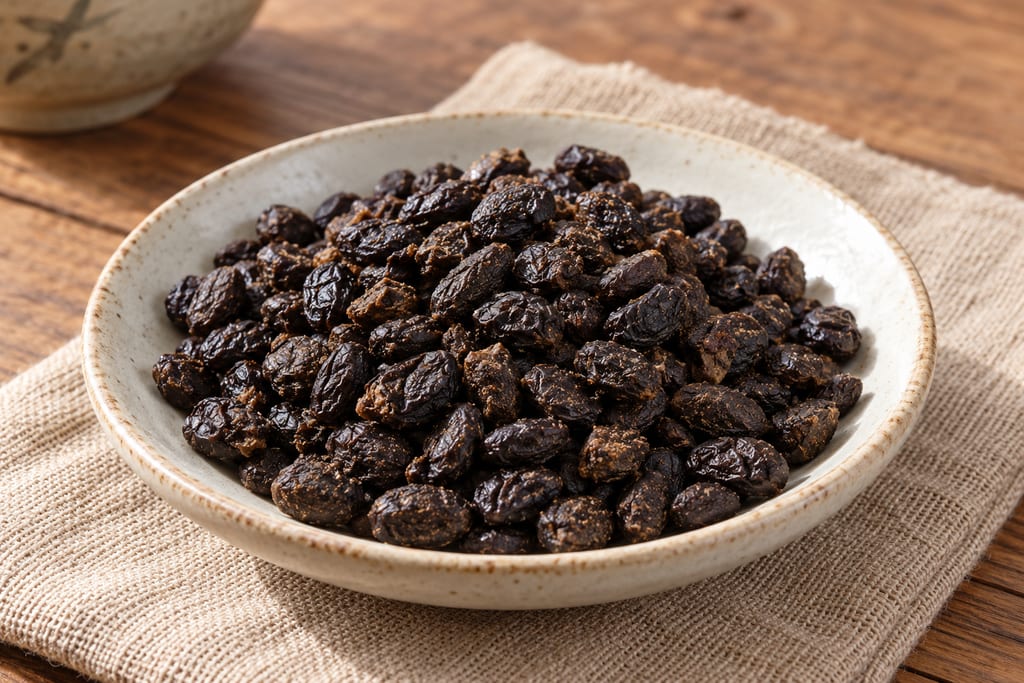
A Chinese fermented soybean condiment in which Bacillus-led bacteria, not moulds, drive the fermentation. Documented in Zunyi, Guizhou, and kept separate from mould-led douchi.
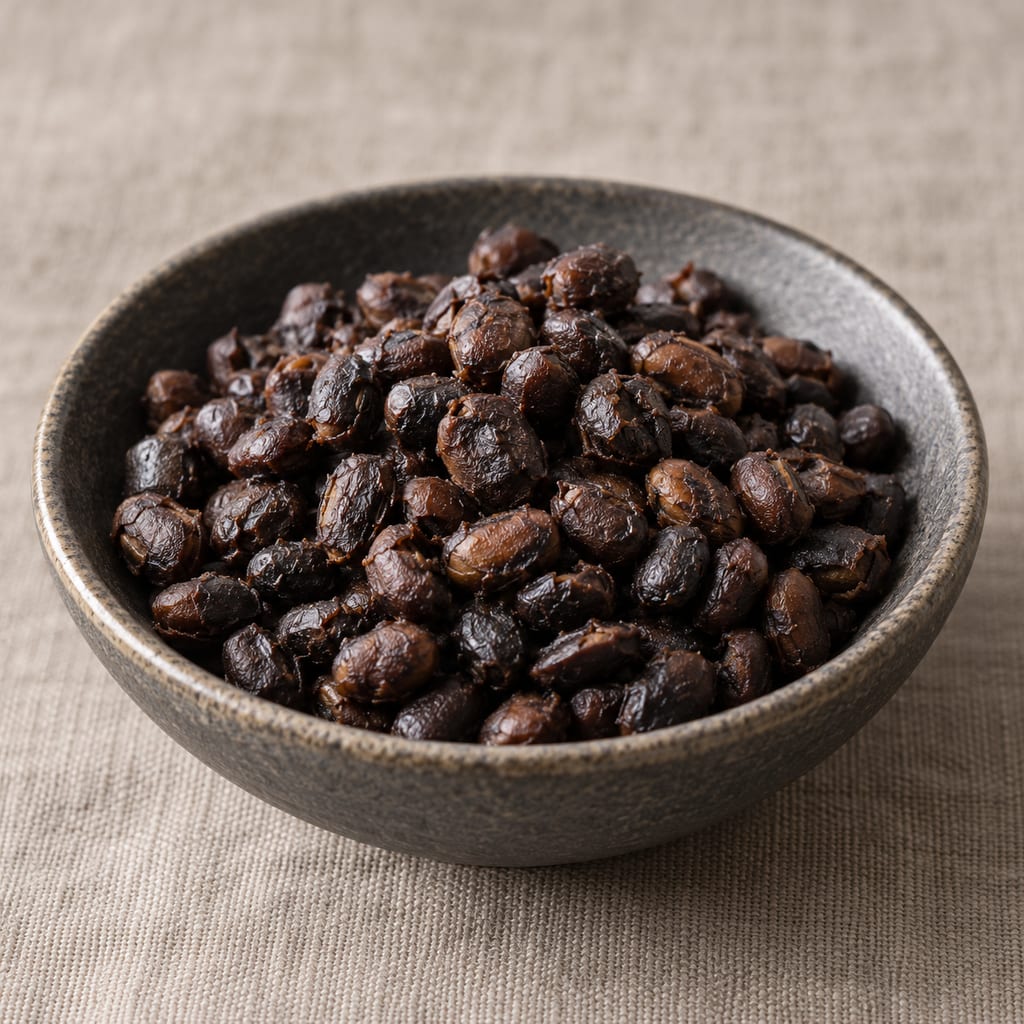
This controlled study protocol makes Aspergillus koji from soybeans and then ferments it with 4% salt. It uses a 150 g jar batch and a defined moisture target; the research method is not a validated home process.
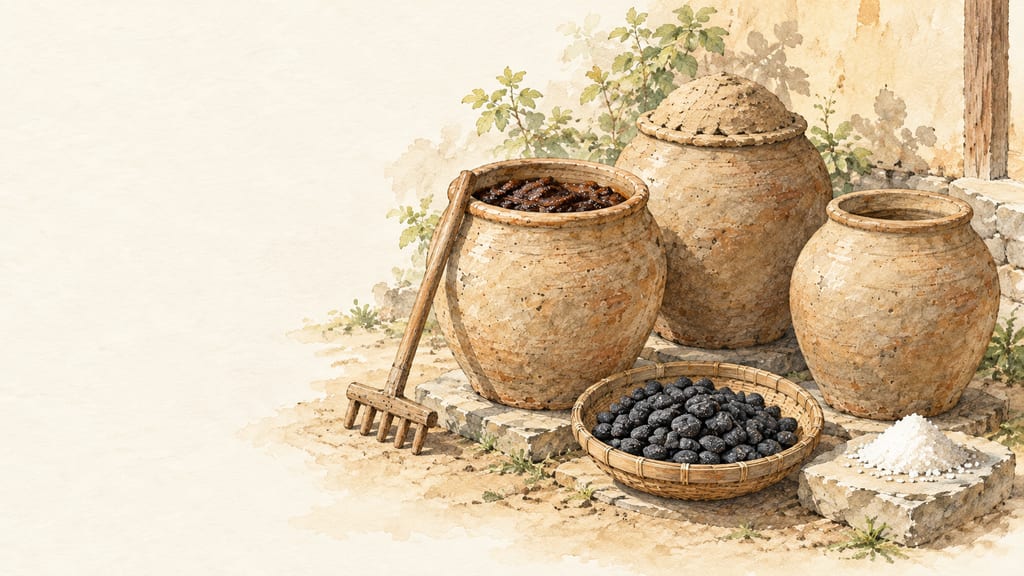
Around 544 CE, Jia Sixie wrote down how a Chinese farm turned soybeans into jiang paste and fermented shi beans: the winter start, the mould-coated wheat, the armpit-warm bean room and the hundred-day jar.
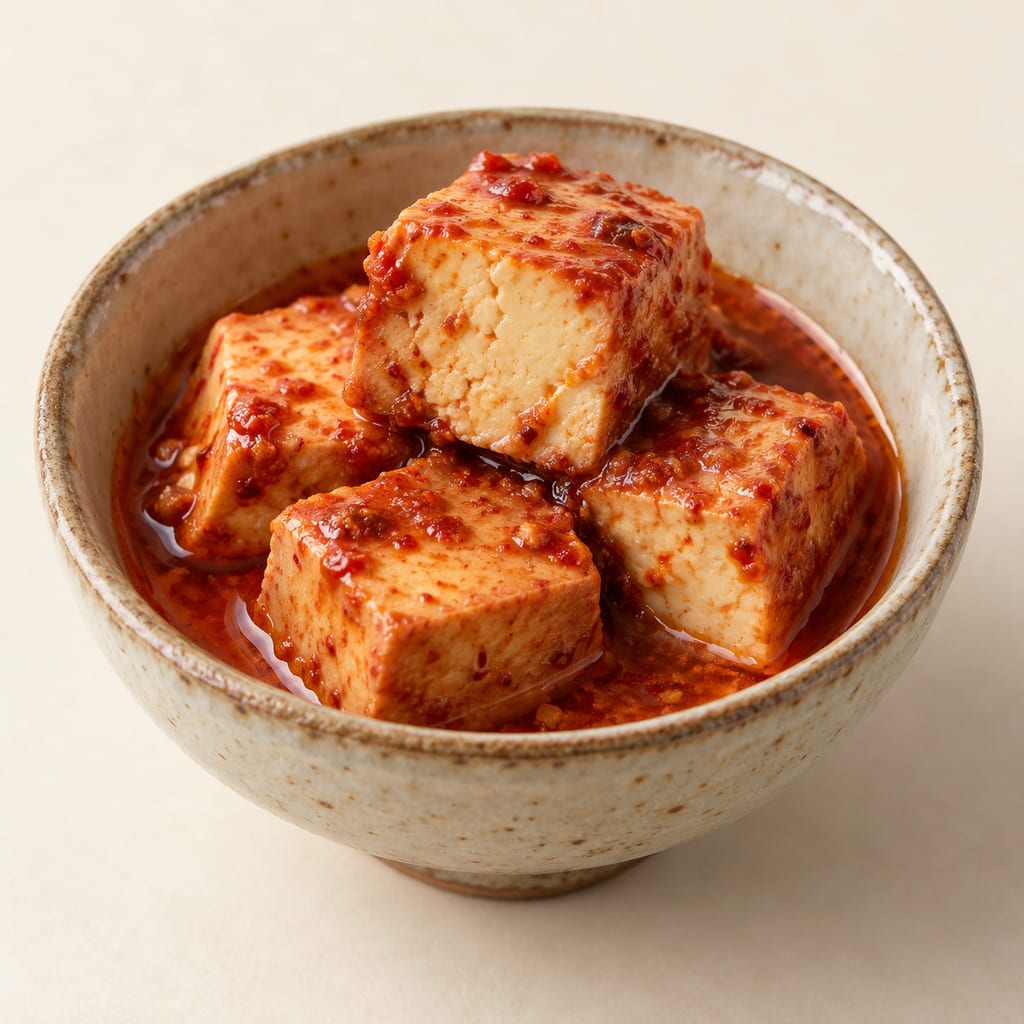
Sufu, or furu, is Chinese fermented tofu: bean curd is salted and ripened, often after a mould stage, into a soft, creamy, intensely savoury condiment.
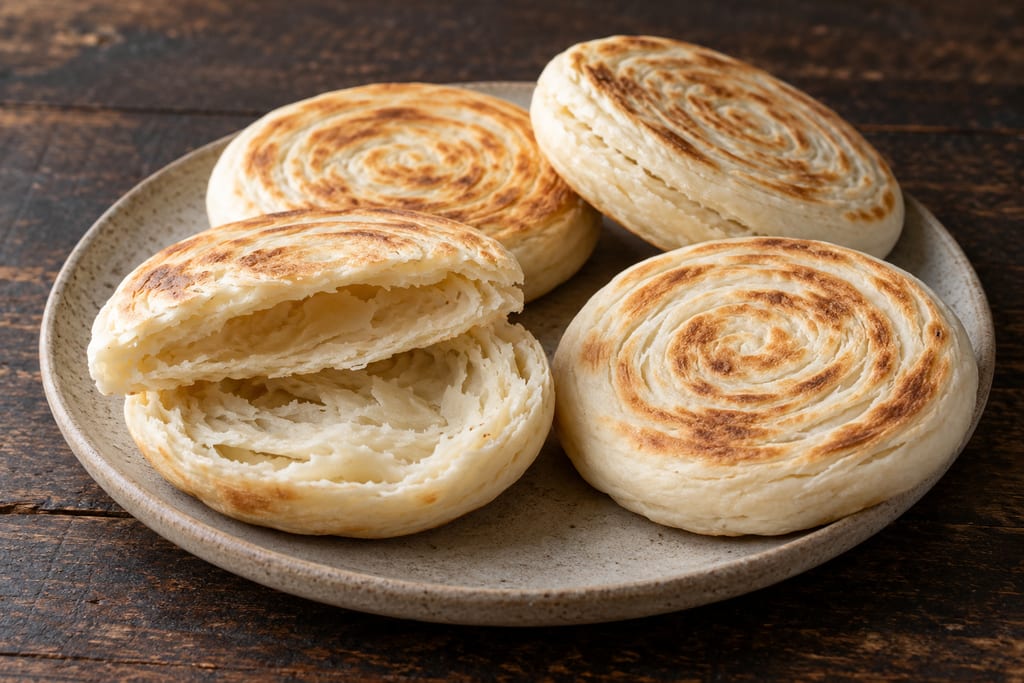
This Shaanxi-associated yeast flatbread uses a simple water dough, coiled shaping and a skillet bake. It is the bread used in roujiamo, not the filled meat dish.
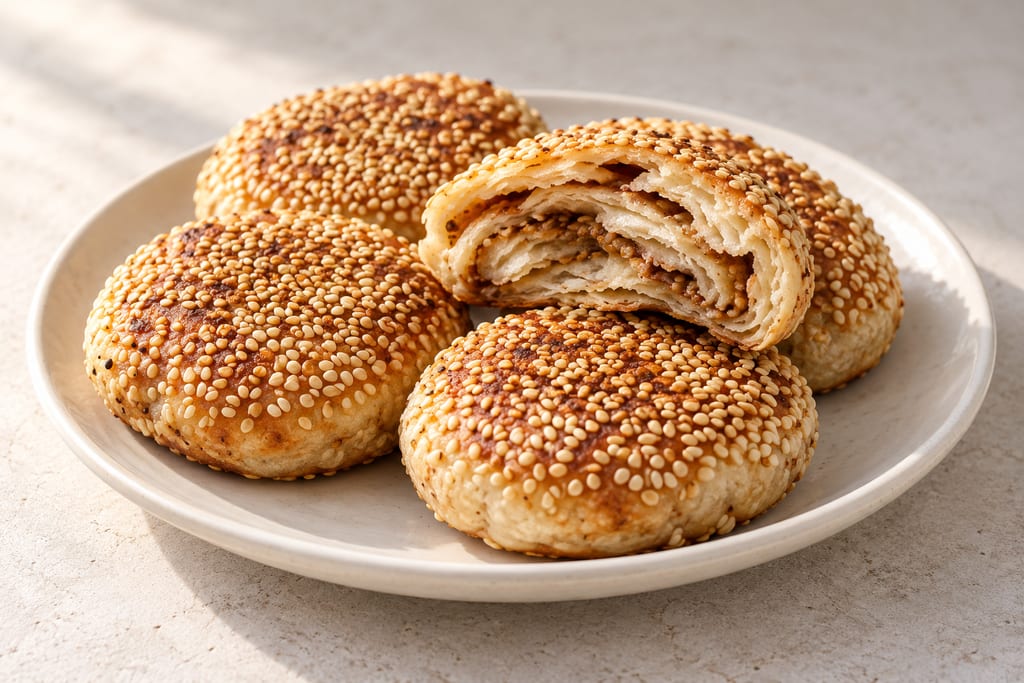
A Beijing-style yeast dough is layered with seasoned sesame paste, sealed into small buns, briefly pan-fried, seeded, and baked.
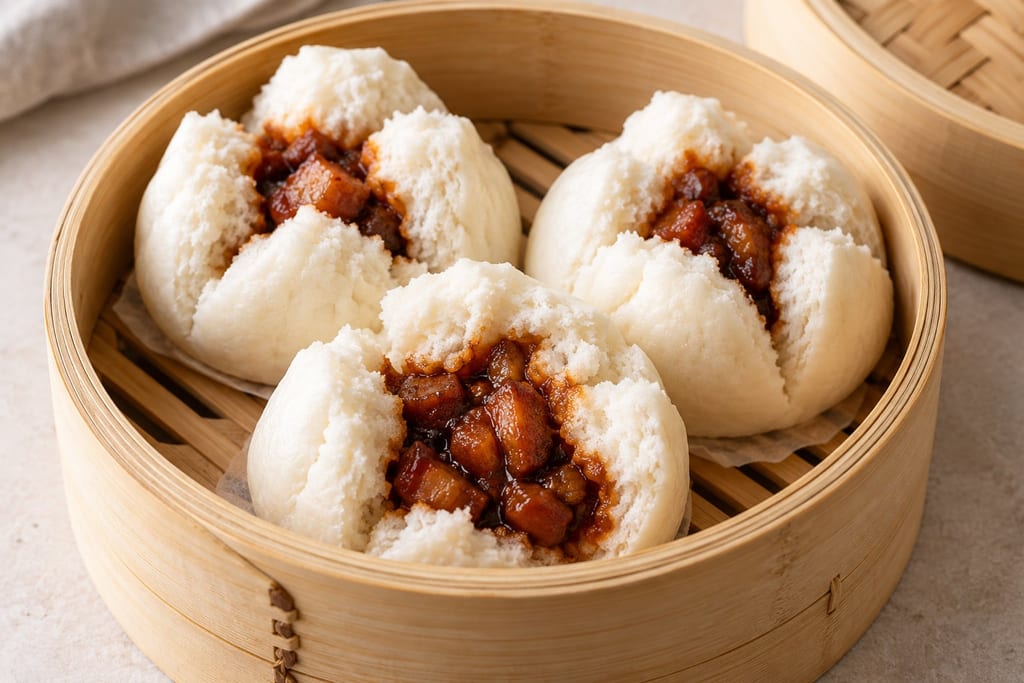
Fourteen fluffy steamed buns filled with cooked char siu and a thickened oyster-soy sauce.
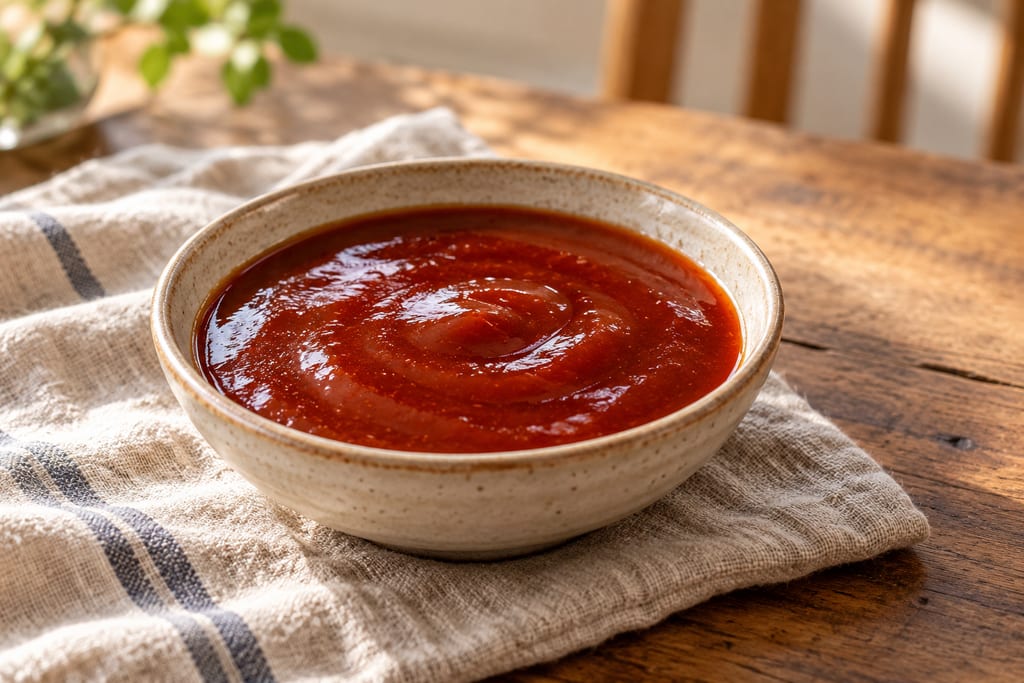
A smooth, tomato-based sweet-and-sour sauce of sugar, vinegar, tomato paste and soy sauce, thickened with starch for dipping or coating; it is not the sauce on Hangzhou's sweet-and-sour ribs.
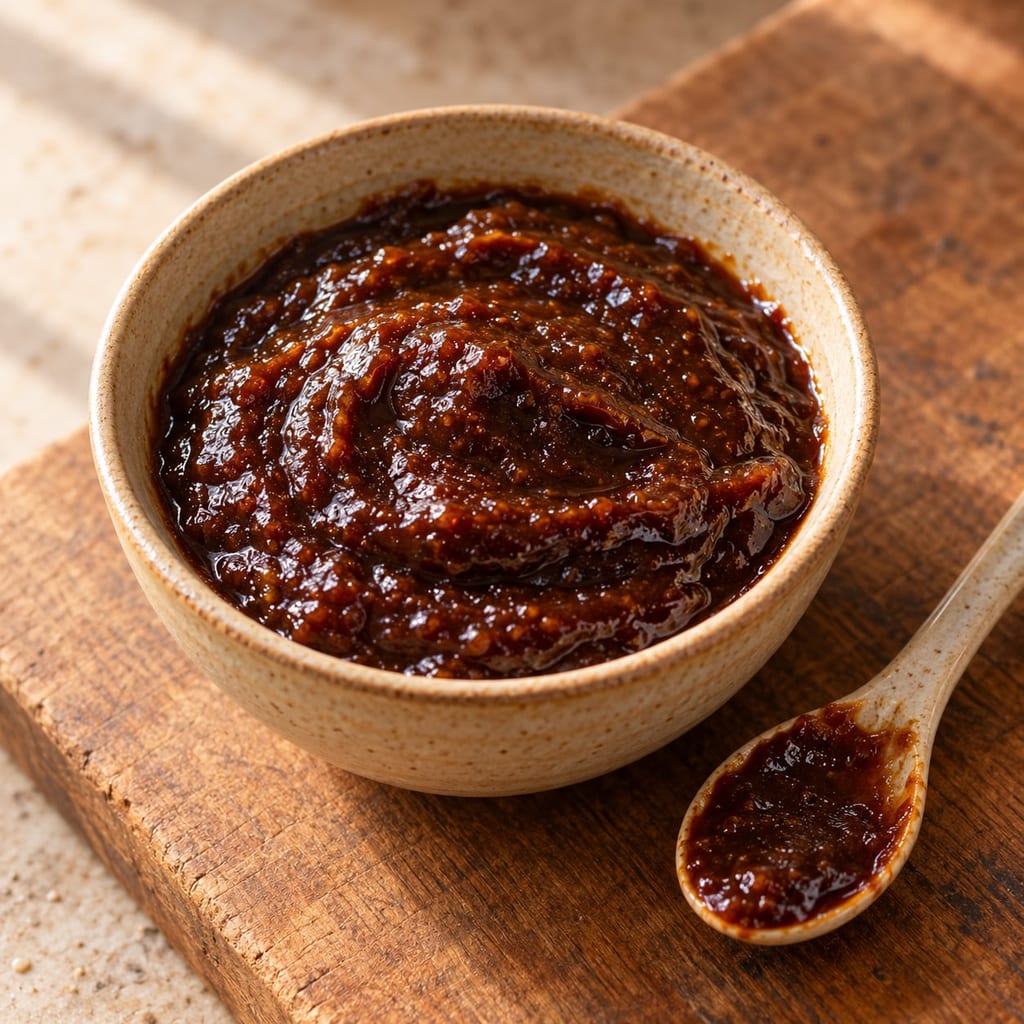
Chu hou is a sweet, savoury Cantonese paste of fermented soybeans, fermented bean curd, garlic, ginger and sesame, used mainly to braise meat.
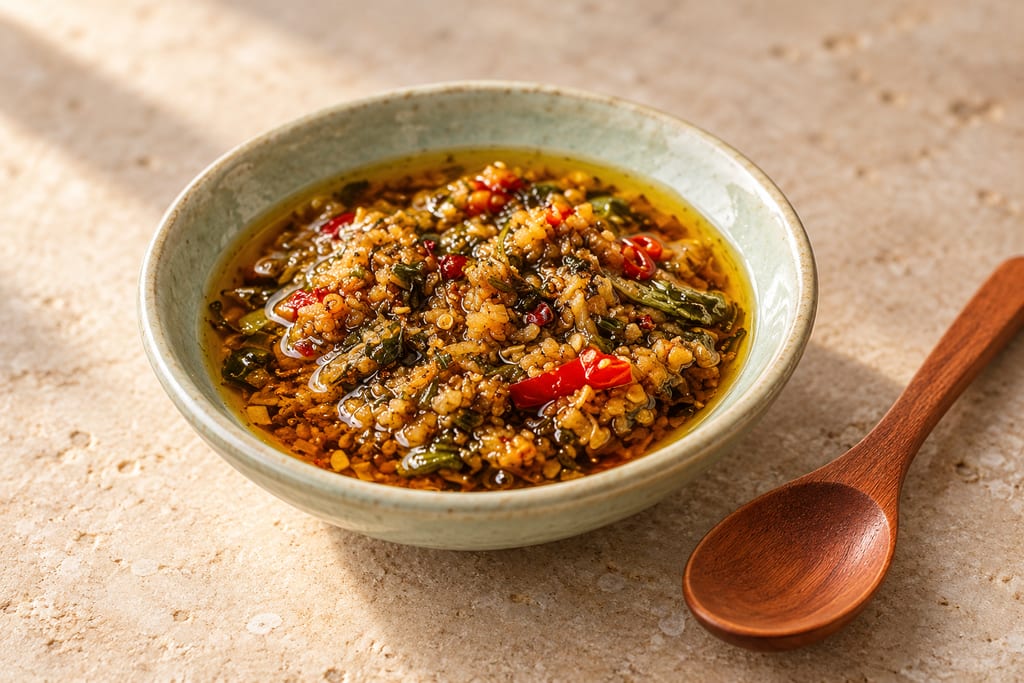
A Cantonese condiment of ginger, garlic, scallion and fresh chilli fried slowly in oil and seasoned with soy sauce, sugar, wine and salt, served over roast meats and poached chicken.
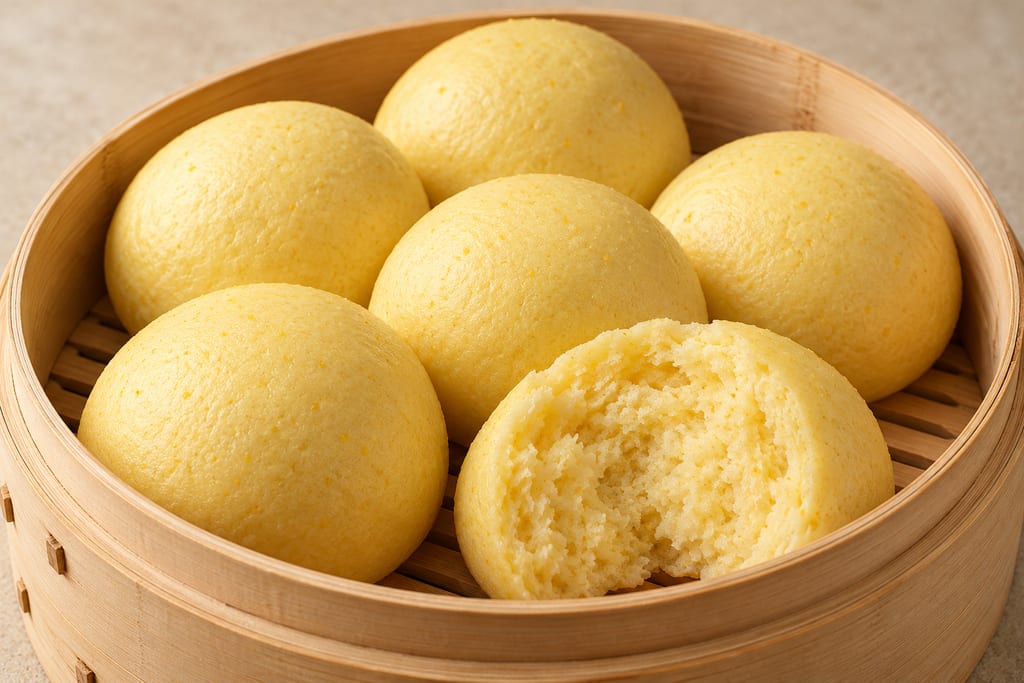
A Chinese cornmeal mantou made with wheat flour, cornmeal, water and yeast. The dough rises until doubled, is shaped into ten rounds, proofed briefly and steamed.
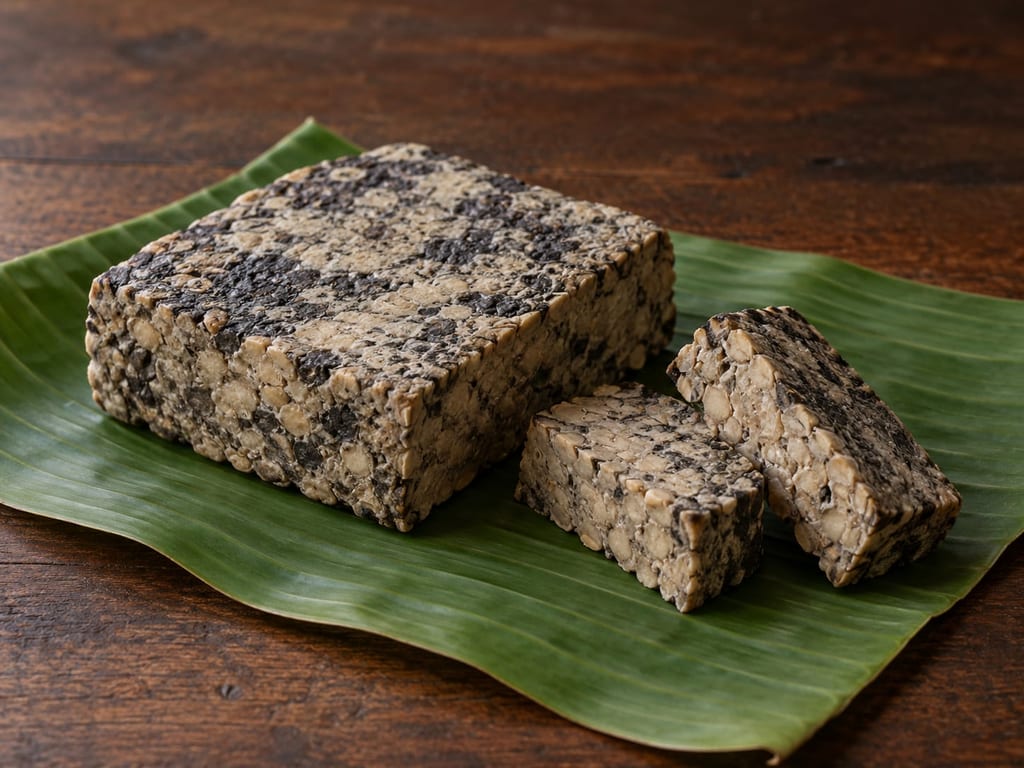
Black oncom is a mould-fermented cake made from defatted peanut cake, pressed to about 2 cm, steamed and then incubated for a day at ambient temperature.
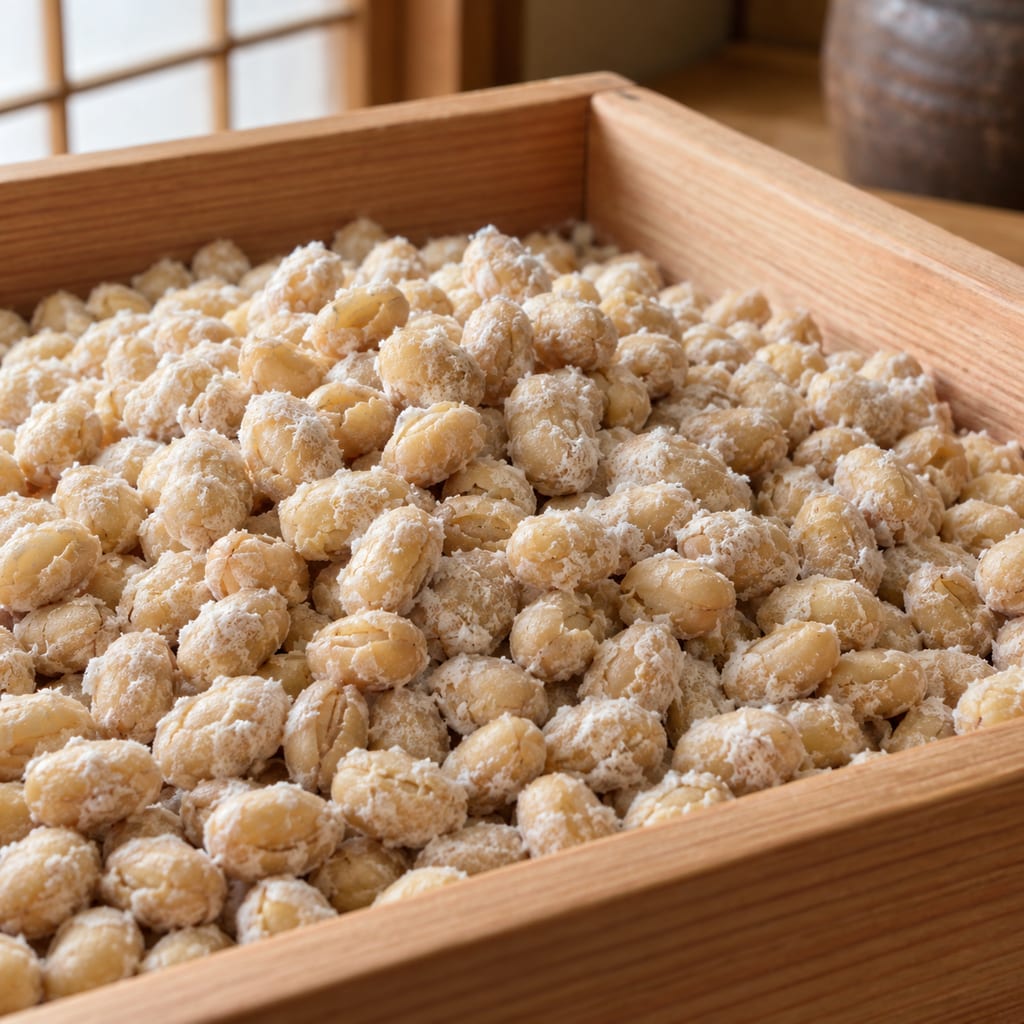
Japanese soybean koji: steamed soybeans, loose or formed into balls, grown over with Aspergillus mould to make the enzymes for mame-miso, tamari and regional soybean condiments.
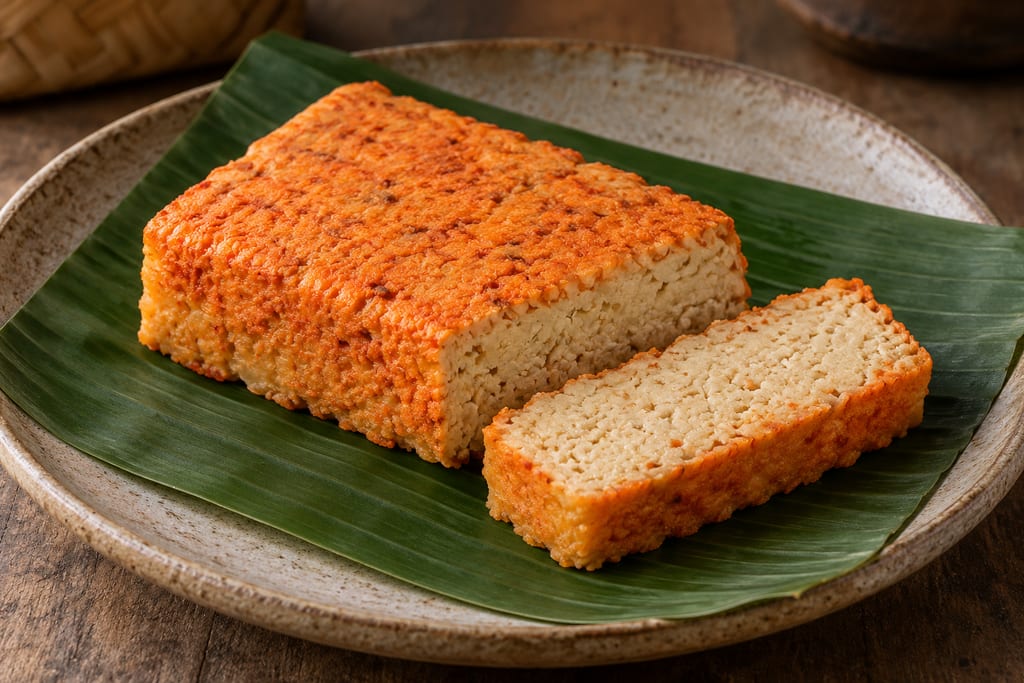
Red oncom is a West Javanese cake fermented from pressed soy pulp with a Neurospora starter, a little tapioca starch and vinegar. It is a different food from black oncom, made on another substrate with another mould.
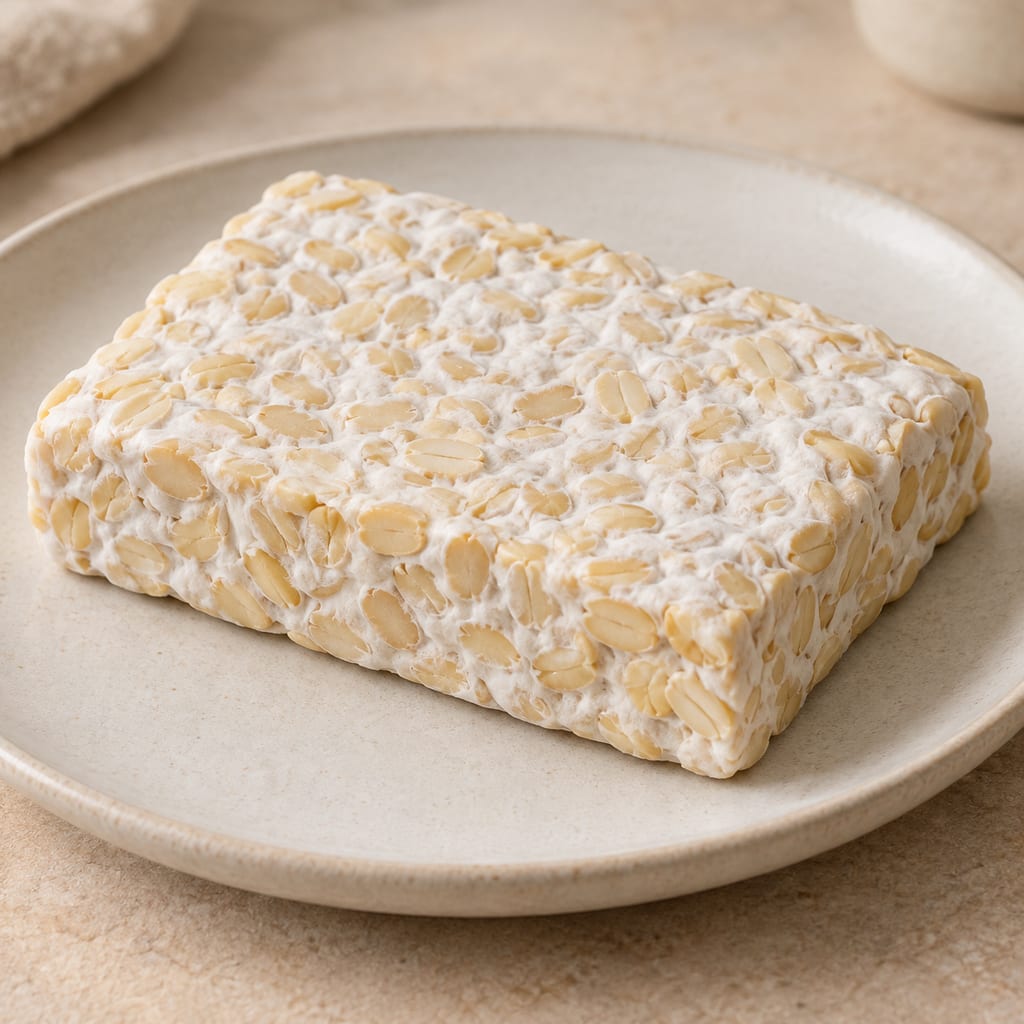
A two-cup soybean batch uses one Cultures for Health tempeh starter packet and vinegar. The supplier describes dehulling, a thin vented layer, controlled early incubation and attention to self-heating; it is not a validated home process.

An Okinawan fermented tofu: dried tofu cubes matured in rice koji, awamori and salt, traditionally with red Monascus koji, until the curd turns smooth and intensely savoury.

A gelling polysaccharide extracted from red seaweeds, sold as kanten strips or powder; it sets firm at a low concentration and stays solid until about 85 °C.

A Dominican table and seasoning condiment of sour orange juice, mixed with lime and salt and bottled raw; garlic, oregano or a hot pepper may be added for meat or a spicier bottle.

Cicerbita alpina is an alpine perennial whose tender shoots and leaves have been eaten raw or cooked. Sámi milk preparations and modern Carnian dishes are distinct uses, with serious identification and preservation limits.

Japanese skipjack tuna cooked, then repeatedly smoked and dried over a wood fire by the hand-fired tebiyama method into a hard block for shaving into dashi: the first stage of katsuobushi.

A Swedish-style spirit vinegar made by fermenting neutral alcohol with live vinegar bacteria, with a separate guide to commercial ättika strengths.

A yeast-raised wheat ring shaped from a firm dough, briefly boiled and baked. This source-batch formula gives a gently malted crust and a chewy crumb.

A warm dip of garlic, anchovy and olive oil, often enriched with butter, that Piedmont serves over a flame with raw and cooked vegetables and bread.

Bechamel is a white sauce of milk thickened with a butter and flour roux, one of the French mother sauces, and the base from which Mornay and other cheese and cream sauces are made.
No community contributions have been published for this entry yet.
Sign in to contribute. Published comments and photos are free to read.
International Journal of Food Properties, Taylor & Francis, 2015Method · Science
Correlation Between Protein Hydrolysates and Color During Fermentation of Mucor-Type DouchiPrimary source for Block C's experimental Actinomucor elegans production method
Soybean soaking, steaming and preparation
Pure-culture inoculation rate
Mould cultivation temperature, humidity and duration
Salt, fermented glutinous rice and distilled spirit proportions
Post-fermentation maturation conditions
Relationship between protein hydrolysis, peptides, amino acids, Maillard reactions and darkening
Food Science & Nutrition, Wiley, 2019Method · Science
Untargeted metabolomics analysis of Mucor racemosus Douchi fermentation process by gas chromatography with time-of-flight mass spectrometryControlled fermentation using Mucor racemosus CGMCC8700
Alternative experimental soybean-steaming and mould-cultivation conditions
Addition of sodium chloride and distilled wine
Separation of koji-making and post-fermentation stages
Identification of 114 metabolites
Changes in amino acids, organic acids, putrescine and other metabolites
Observed metabolic changes over the experimental maturation period
Cited in: What it is; How it works: moulds, enzymes and chemistry; How it is made and why each step matters; Reading results, identifying problems and understanding safety
International Journal of Food Science & Technology, 2016Science
Comparing the differences of characteristic flavour between natural maturation and starter culture for Mucor-type DouchiAlternative Actinomucor elegans experimental production protocol
Low-temperature mould cultivation
Use of salt, fermented rice and liquor
Extended maturation in pottery jars
Use of selected microorganisms in post-fermentation
Comparison between natural maturation and starter-culture-assisted production
食品科学 (Food Science), 2015Science
永川毛霉型豆豉在发酵过程中微生物总量与区系变化规律Direct microbiological investigation of traditional Yongchuan Mucor-type douchi
Natural mould fermentation and microbial succession
Presence of Mucor racemosus and additional fungal species
Involvement of bacteria during mould cultivation and maturation
Reported traditional addition of 13–14 g salt per 100 g during mixing
Changes in microbial populations following addition of salt, liquor and fermented rice
Concerns about contaminating organisms in spontaneous fermentation
食品科学 (Food Science), 2015Science
永川豆豉发酵过程中香气的变化Traditional Yongchuan douchi processing stages
Documented fermentation sampling intervals
Relationship between fermentation progression and aroma development
Reported salt addition and post-fermentation conditions
Foods, MDPI, 2022Science
Co-Fermentation of Edible Mushroom By-Products with Soybeans Enhances Nutritional Values, Isoflavone Aglycones, and Antioxidant Capacity of Douchi KojiComparison of fungal starters used in douchi production
Experimental use of Mucor racemosus and Actinomucor elegans
Protease and beta-glucosidase enzyme activity
Importance of mould strain selection
Enzymatic transformations during the koji-making stage
Foods, MDPI, 2025Science
Exploring the Core Functional Microbiota Related to Flavor Compounds in Douchi from the Sichuan–Chongqing RegionRegional importance of Mucor-type douchi in Sichuan and Chongqing
Microbial profiles of seven douchi products
Identification of amino acids and volatile flavour compounds
Microbial associations with flavour-related metabolites
Distinction between mould types and the broader microbial communities found in finished douchi
Cited in: What it is; How it works: moulds, enzymes and chemistry; How it is eaten and used
Scientific Reports, Nature Portfolio, 2018Science
Biogenic amines analysis and microbial contribution in traditional fermented food of DouchiMeasurement of six biogenic amines in fifteen douchi samples
Detection of histamine and beta-phenethylamine above cited reference levels in some samples
Association between microbial populations and biogenic amine formation or degradation
Importance of individual microbial strains for controlling amine accumulation
Evidence that total amine concentration alone does not describe every potential risk
Cited in: Reading results, identifying problems and understanding safety
China Intangible Cultural Heritage Digital MuseumHistory · Method
豆豉酿制技艺(永川豆豉酿制技艺)Official heritage recognition of Yongchuan douchi production in 2008
Retrospective regional origin date around 1644
Classification of Yongchuan douchi as Mucor-type
Traditional production stages
Regional and historical context
Prolonged fermentation and characteristic finished-product qualities
Cited in: What it is; History; How it is made and why each step matters; Regional and historical variations; How it is eaten and used; Reading results, identifying problems and understanding safety
China Intangible Cultural Heritage Digital MuseumHistory · Method
豆豉酿制技艺(潼川豆豉酿制技艺)Heritage recognition of Tongchuan douchi
Regional production tradition in Santai County, Sichuan
Historical accounts of Qiu-family production
Use of Mucor-koji methods
Traditional regional manufacturing differences
Cited in: What it is; History; How it is made and why each step matters; Regional and historical variations
Chongqing Daily / Hualong, 2021Method · History
绝活亮出来⑥ | 奇妙!从黄豆到豆豉的生命之旅Interviews with Yongchuan douchi heritage practitioners
Traditional low-temperature mould cultivation
Turning and handling of mould-grown beans
Use of baijiu, fermented rice and salt
Ten-month traditional maturation
Photographic documentation of Yongchuan production
UK Food Standards Agency, MyHACCPSafety
Preparatory Stage E: Describe the productRole of water activity in microbial growth
Effects of salt and moisture on preservation
Importance of processing conditions, packaging, storage and shelf life
Need to establish product-specific microbiological controls rather than assuming safety from ingredient quantities
UK Food Standards AgencySafety
Food Standards Agency Codes: SoyaRecognition of soybeans as an allergen
Allergen relevance to fermented soybean products
LWT, Elsevier, 2021Science · Variation
Correlation between the quality and microbial community of natural-type and artificial-type Yongchuan DouchiNatural-type Yongchuan douchi compared with artificial-type product
Higher microbial diversity, amino nitrogen and umami amino acids in the natural type
Winter mould cultivation, roughly November to February
Cited in: History; How it works: moulds, enzymes and chemistry; How it is made and why each step matters; Regional and historical variations; How it is eaten and used; Reading results, identifying problems and understanding safety
International Journal of Food Science & Technology, Oxford University Press, 2016Method · Science
Comparing the differences of characteristic flavour between natural maturation and starter culture for Mucor-type DouchiActinomucor elegans douqu cultivated below 15 °C for fifteen days
12% salt, 5% fermented rice and 5% liquor, matured in pottery jars for one to five years
Cited in: What it is; History; How it works: moulds, enzymes and chemistry; How it is made and why each step matters; Regional and historical variations
Food Research International, Elsevier, 2026Science · Variation
Unraveling the dynamic flavor profile of Tongchuan Douchi: an integrated multi-omics and flavor characterizationTongchuan douchi sampled after 6, 12, 18 and 36 months of maturation
Stage-dependent changes in esters, pyrazines and other volatile and non-volatile compounds
Cited in: History; How it works: moulds, enzymes and chemistry; Regional and historical variations; How it is eaten and used
Ministry of Commerce of the People's Republic of ChinaHistory · Method
潼川 (Tongchuan), Time-honoured Brands Digital MuseumBrand dated to 1670 and the Qiu family from Jiangxi
Tribute status in 1678
About twenty days of mould growth, then salt and rice wine lees and about a year in jars turned several times a year
Cited in: History; Regional and historical variations; How it is eaten and used
One Health MycologyScience · Safety
Mucorales in Fermented Soybean Foods in ChinaFifty-six traditional fermented soybean food samples, including douchi, furu and dajiang
Thirteen Mucorales species, with Mucor circinelloides and Mucor racemosus among the most frequent
Some Mucorales are opportunistic human pathogens
Cited in: What it is; How it works: moulds, enzymes and chemistry; Reading results, identifying problems and understanding safety
Soyinfo CenterHistory
History of Fermented Black Soybeans (165 B.C. to 2011)Fermented black soybeans in Mawangdui Han Tomb No. 1, sealed around 165 BCE
Early Chinese textual references to shi
Cited in: History
Food Science and Human Wellness, Tsinghua University PressScience
Comparative evaluation of commercial Douchi by different molds: biogenic amines, non-volatile and volatile compoundsDouchi made with different moulds compared for biogenic amines and flavour compounds
Cited in: How it is made and why each step matters
China Youth Daily, reprinted by Zhejiang Information Centre, 2 January 2025Use · Safety
她准备用一生演绎“大豆魔法”Yongchuan douchi in twice-cooked pork, braised fish and spare ribs
Producer's account of faults: undercooked beans, uncontrolled koji temperature, unevenly mixed salt
Cited in: How it is eaten and used; Reading results, identifying problems and understanding safety
Food Additives & Contaminants Part A, 2014Safety · Science
Determination of biogenic amines in traditional Chinese fermented foods by reversed-phase high-performance liquid chromatography (RP-HPLC)Biogenic amines measured in traditional Chinese fermented foods including douchi
Cited in: Reading results, identifying problems and understanding safety