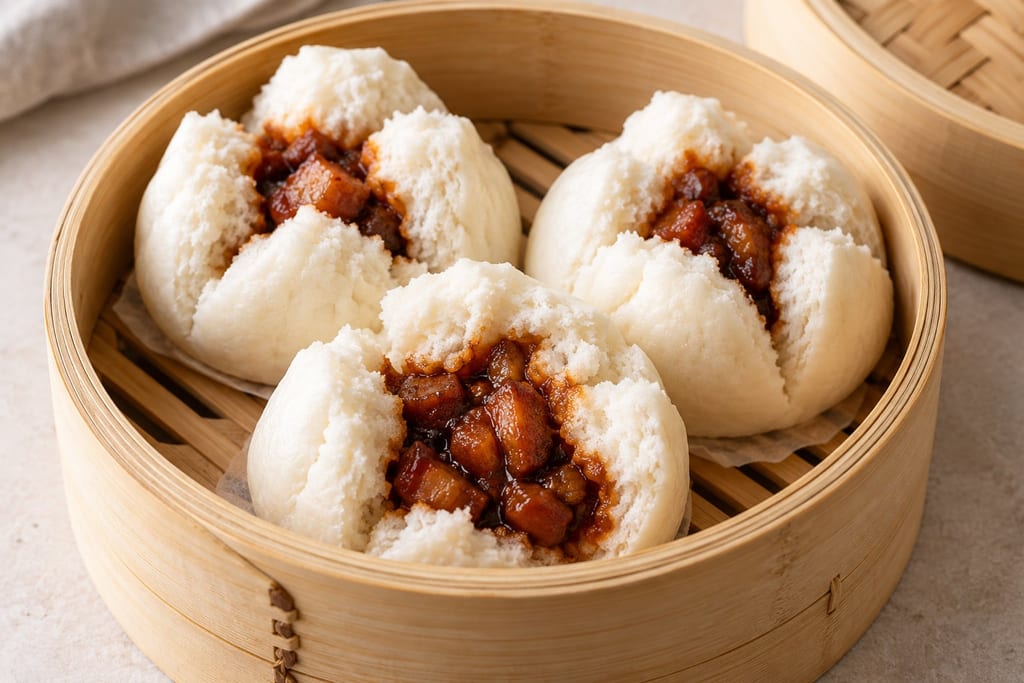
Char Siu Bao (Wei Guo’s 14-bun recipe)
Fourteen fluffy steamed buns filled with cooked char siu and a thickened oyster-soy sauce.
 FermenteaWhere food goes to change
柱侯醬
Chu hou is a sweet, savoury Cantonese paste of fermented soybeans, fermented bean curd, garlic, ginger and sesame, used mainly to braise meat.
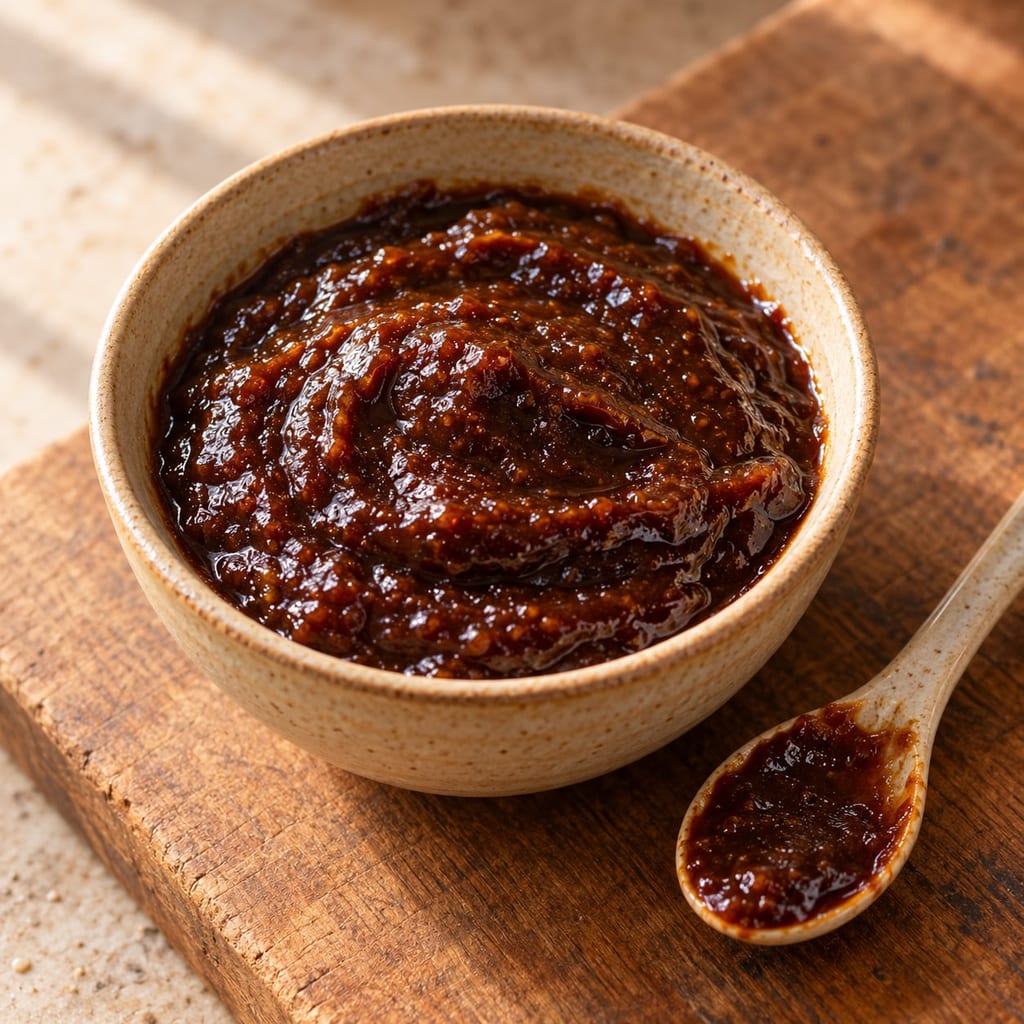
Chu hou (Mandarin zhùhóu jiàng, 柱侯醬, also written chee hou) is a thick Cantonese paste built on fermented soybeans. The Woks of Life describes it as similar to hoisin sauce but seasoned differently, with ingredients such as salted garlic, salted plums, salted lemon and fermented bean curd that change from brand to brand. It is quite sweet, and it is used mainly in braised dishes, where it seasons and thickens the liquid. Hoisin is the usual stand-in. One retail paste lists fermented soybean paste, fermented bean curd, sesame, ginger, garlic and spices, which is a good picture of its character: salty-sweet, savoury, and aromatic rather than hot.
A typical household use is a rib stew. The Woks of Life makes one with pork ribs, dried tofu skin (foo jook) and bought chee hou sauce. That recipe documents how the sauce is used, not how it is made.
A Lee Kum Kee account from Xinhui describes the factory method in outline: a fermented paste of soybeans and wheat is combined with seasonings and cooked. Nothing more is given, so the factory proportions, times and temperatures are not known.
The home formula above is a different thing: a blog's adaptation that starts from ready-made salted bean paste and red bean curd, fries minced garlic, ginger and shallots in oil, and stirs the rest in with sugar until the paste is thick and fragrant. It borrows hoisin and chicken powder to supply sweetness and savour, so it is a shortcut to the flavour rather than the traditional product. The page it comes from also mentions sesame paste, oyster sauce and chicken essence in its method without listing them, which is why those are left out here. In both routes the fermentation has already happened in the bean paste and the bean curd. Cooking only blends and concentrates them.
The origin story belongs to one cook, Liang Zhuhou, and the accounts disagree about him. The Lee Kum Kee Xinhui account places him at the Three Pin Lou restaurant in the Qing Jiaqing period. A Chancheng local biography instead says his birth and death dates are unknown and puts him in Foshan during the Daoguang and Tongzhi periods. A 2020 Macao Daily article by chef Huang Chihua tells a third version: the dish linked to a busy Beidi temple fair, with the chicken dish coming before the sauce.
These are later retellings, from a manufacturer, a local biographical site whose authority is not established, and a newspaper reminiscence. None is an archival record, so the page treats Foshan and the Qing period as the shared setting and leaves the date and the inventor open.
No independently verified earliest record, controlled endpoint for the factory process, or tested storage period for a homemade batch was found. Bought chu hou is kept refrigerated once opened; the home formula has no storage advice at all.
Later company, local-history and chef accounts tie chu hou to Liang Zhuhou in Foshan or Xinhui in the Qing period, but they disagree and none is archival proof. No independent record of the earliest sauce is established.
Scaling: source batch only
The formula is built on fermented soybean products and soy sauce, and finishes with sesame oil; the retail Lee Kum Kee paste also lists sesame.
Hazard sourceThe home formula comes with no storage instruction. Only the retail advice to refrigerate an opened jar is given, for bought paste.
Hazard sourceKeep a homemade batch refrigerated and treat it as perishable; no shelf life is established for it.
Control sourceThe home formula is one untested blog adaptation that uses hoisin sauce and chicken powder; it is not a reconstruction of the traditional product.
Check labels on bought pastes and sauces for soy, wheat and sesame.
Later company and local-history accounts place the sauce's maker in Foshan or Xinhui; they disagree on details and give no archival proof.
Fourteen fluffy steamed buns filled with cooked char siu and a thickened oyster-soy sauce.
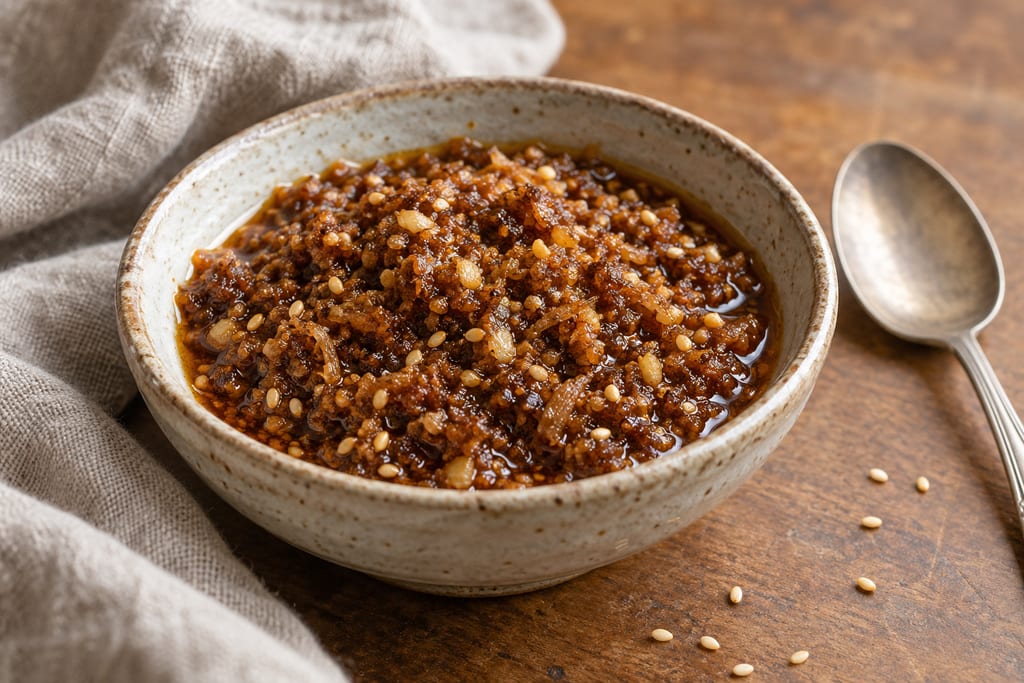
Shacha is a savoury, granular Fujian, Teochew and Taiwanese condiment of oil, garlic, shallot and dried seafood, often sold as Chinese barbecue sauce.
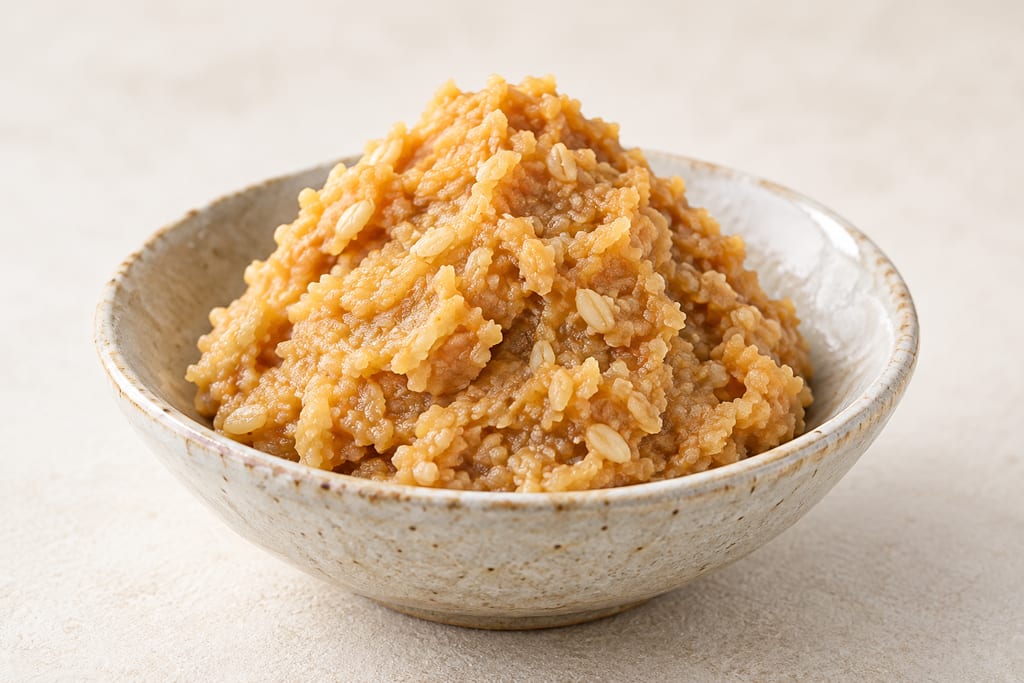
A Japanese soybean paste fermented with barley koji and salt, made mostly in Kyushu, Shikoku and western Japan. It is sweet, savoury and grainy.
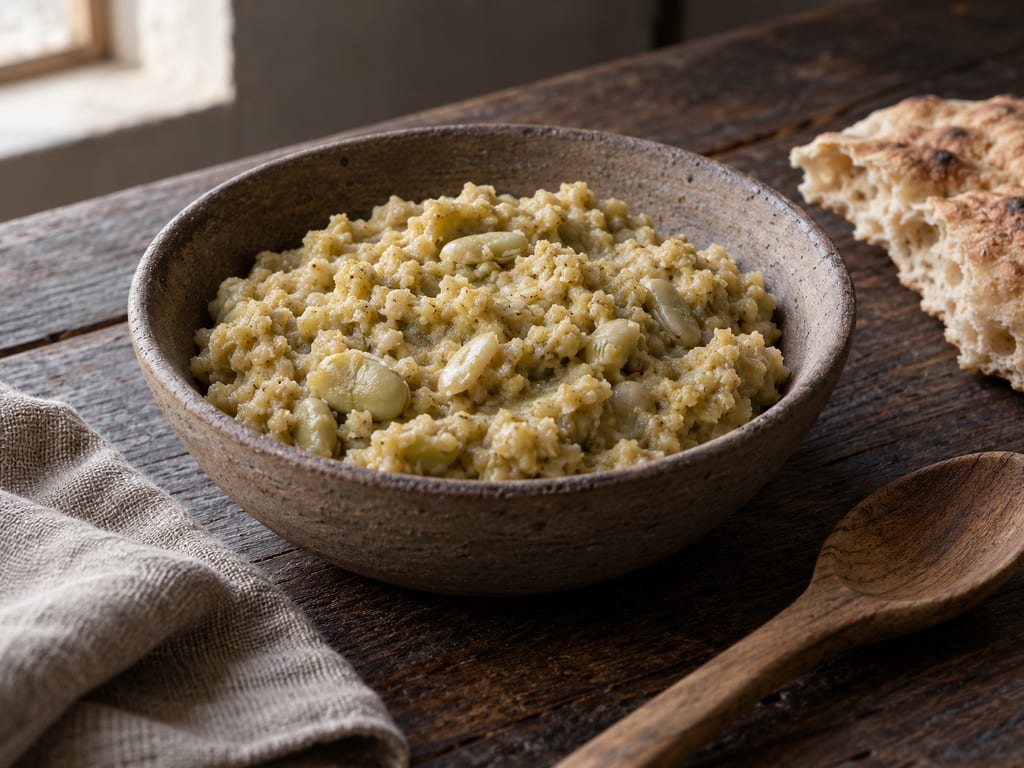
Cooked broad beans crushed to a thick paste with garlic and salt, a museum preparation built on the one European pulse that was already old when the Viking Age began.
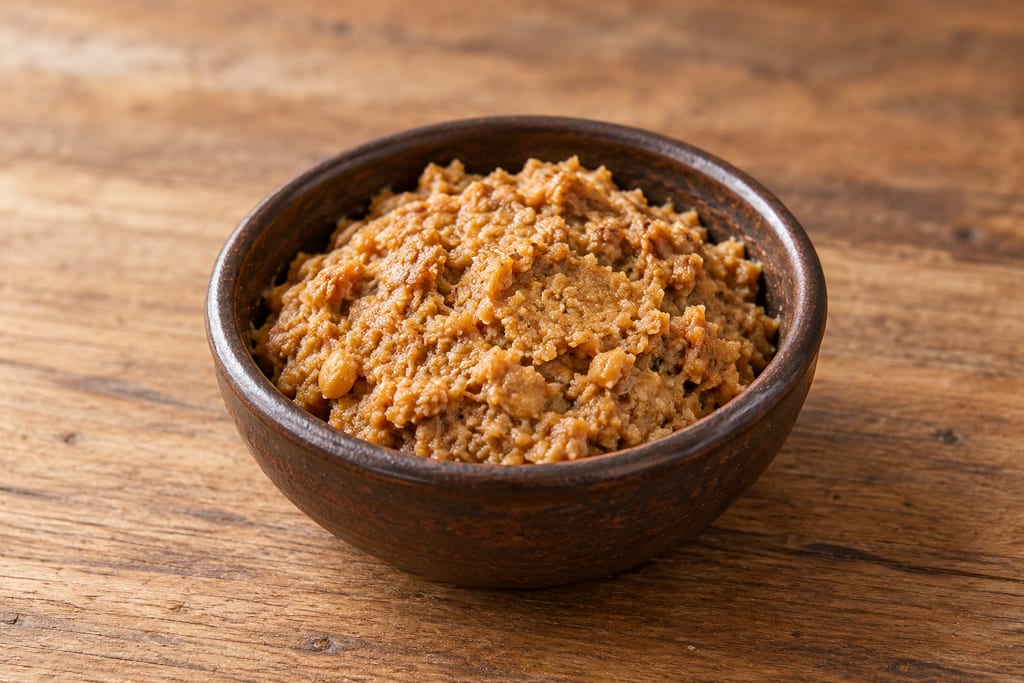
Doenjang (된장) is a Korean fermented soybean paste made by brining meju, separating ganjang, then mashing and aging the solids. This recipe follows one documented Sunchang processing study.
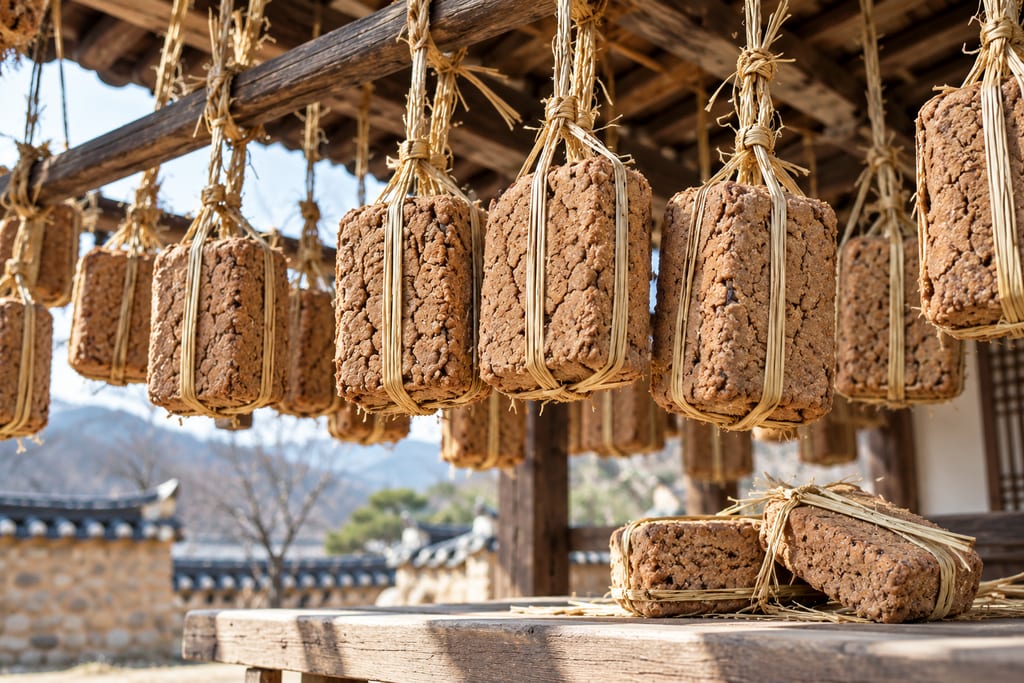
A cooked soybean brick, shaped and dried, that is fermented as a solid and later brined to make the Korean soy paste doenjang and the soy sauce ganjang.
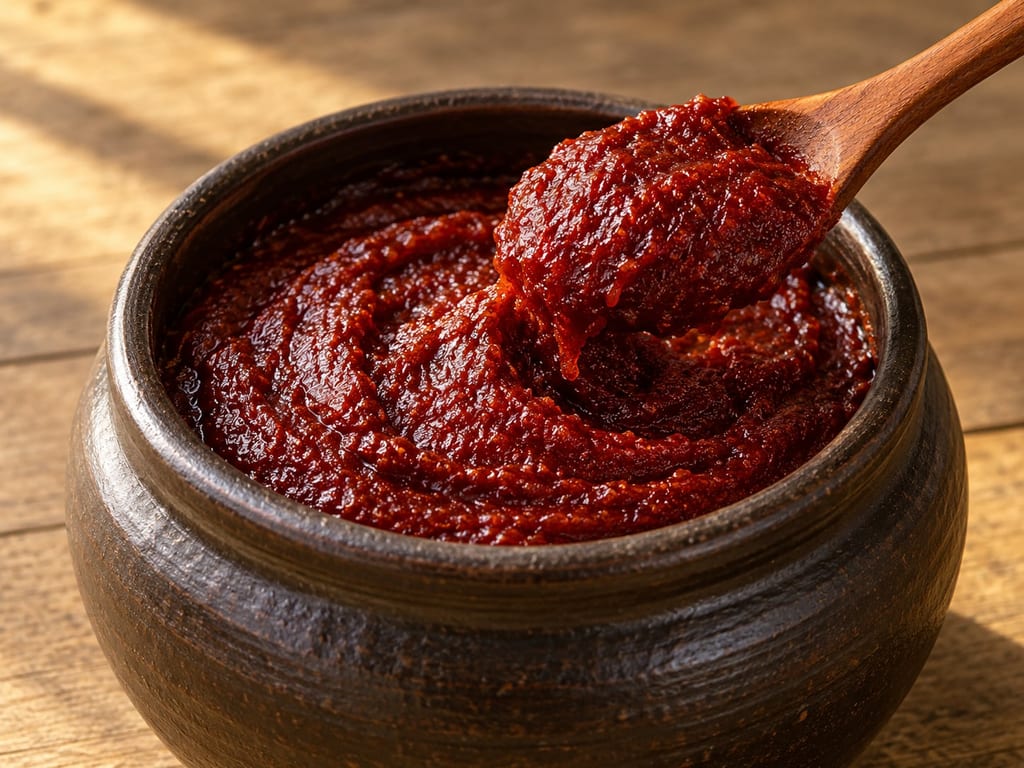
Korea’s sweet, savoury and fiery red paste of glutinous rice, barley-malt enzymes, fermented soybean meju powder and chilli powder, matured in earthenware.
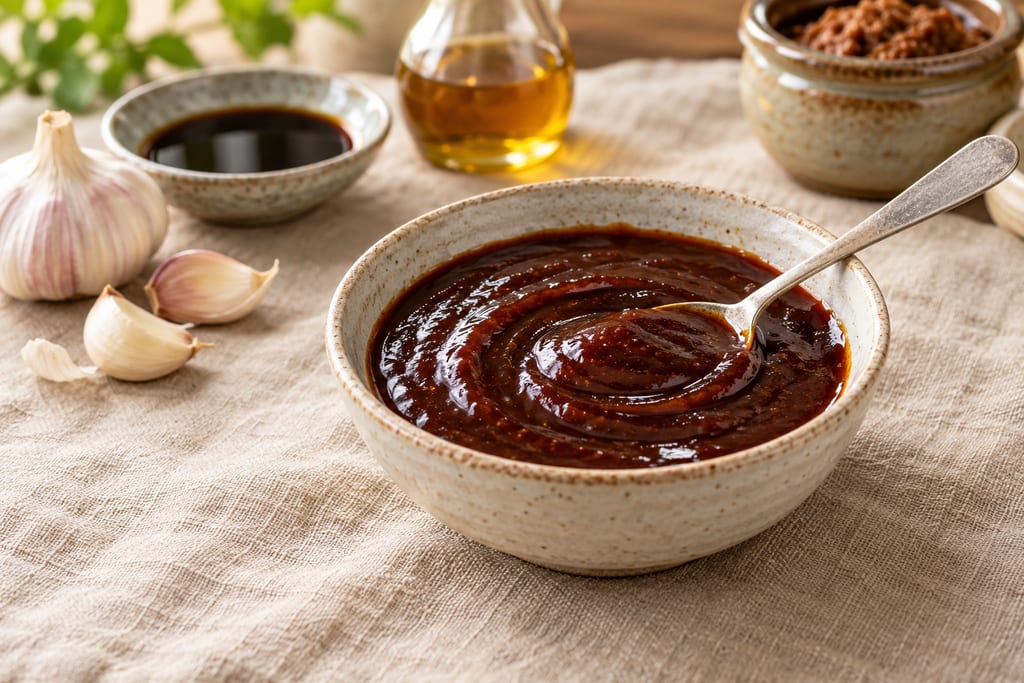
A thick, dark, sweet-salty Chinese condiment built on fermented soybean paste. This page gives one quick home version and records how commercial formulas differ.
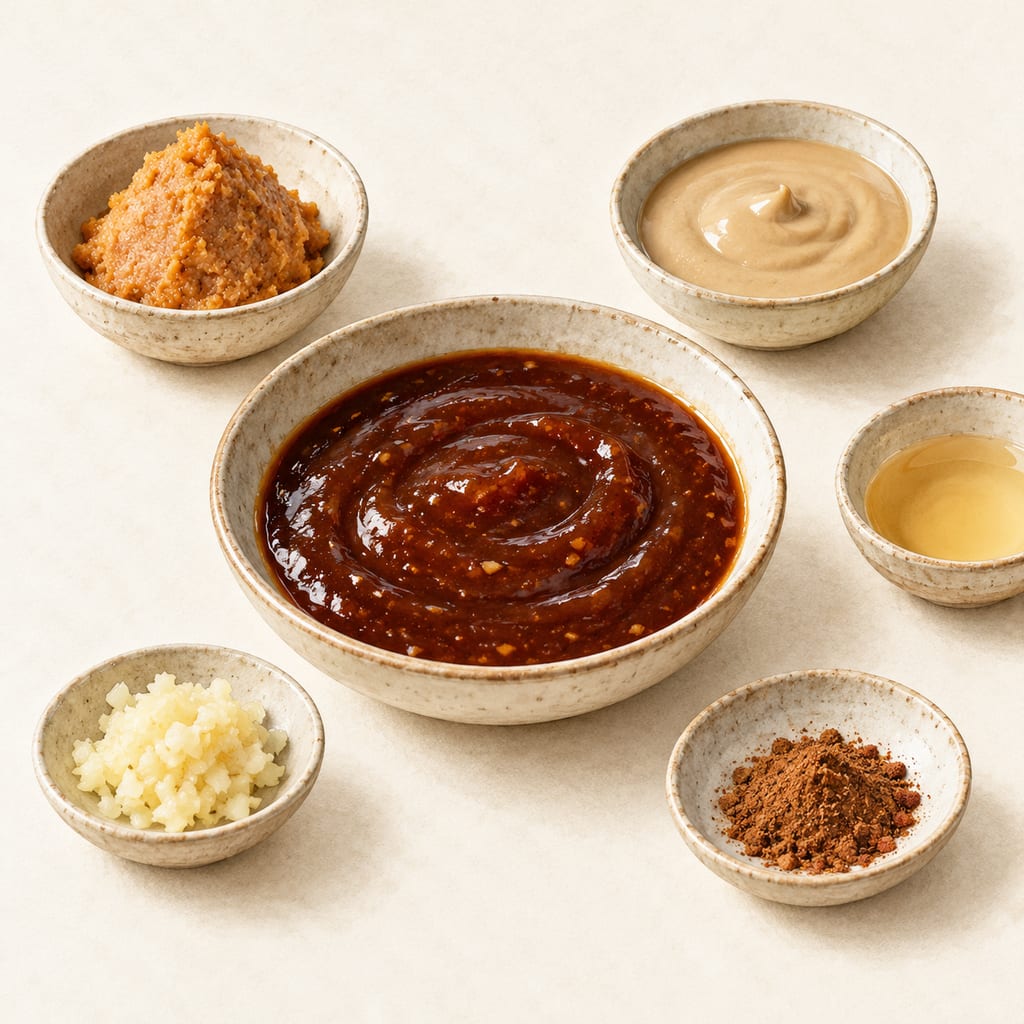
An untested modern miso-based sauce inspired by hoisin's sweet, savory profile; this prototype is not traditional hoisin or a copy of a commercial brand.
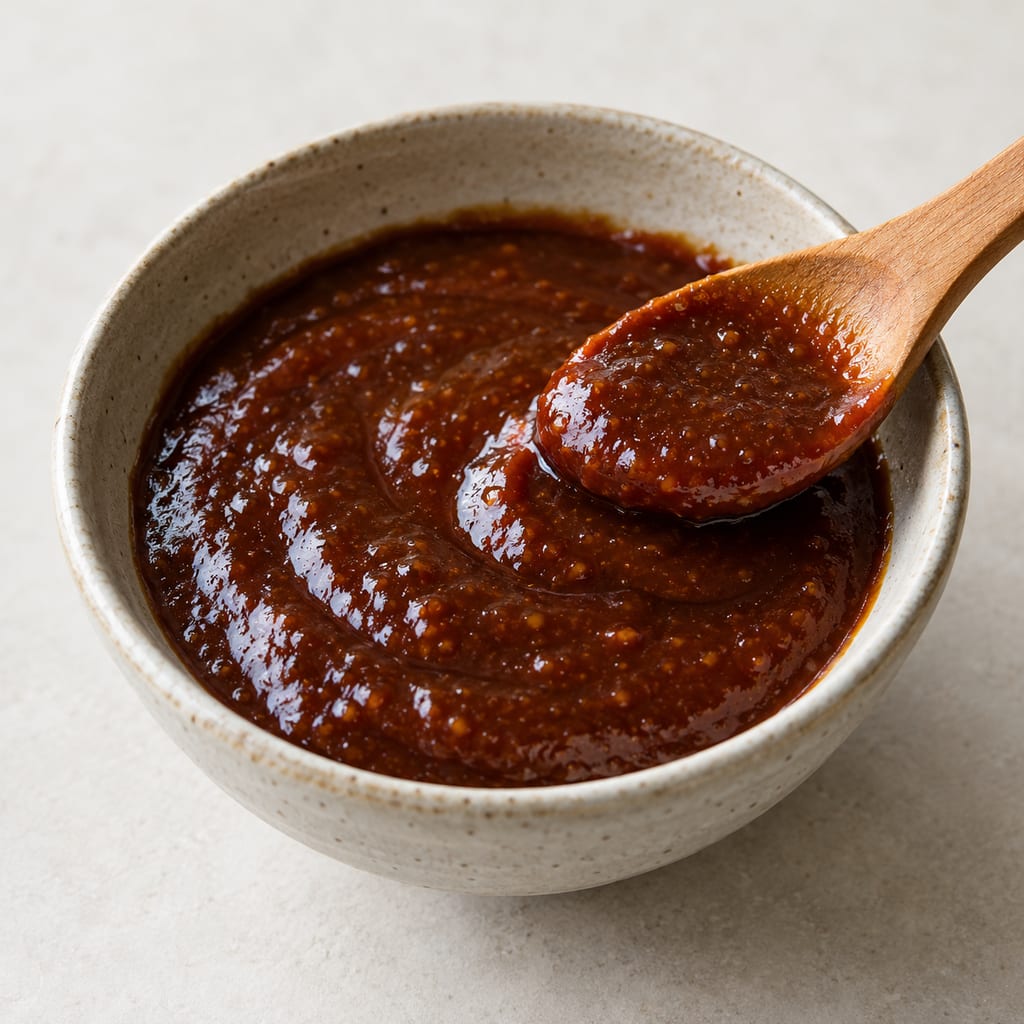
A sweet-salty Japanese glaze of miso, mirin, sake and sugar, warmed until thick and spread on grilled tofu, eggplant, daikon or konnyaku. Regional versions in Aichi use red miso and dashi.
No community contributions have been published for this entry yet.
Sign in to contribute. Published comments and photos are free to read.
Pantry & LarderRecipe · Method
9 Best Chu Hou Sauce Substitutes + 1 To AvoidA homemade chu hou formula: salted bean paste, red bean curd, hoisin, soy sauces, chicken powder, sugar, minced shallot, garlic and ginger, five-spice, white pepper and sesame oil, stir-fried and simmered 10 to 15 minutes until thick; 5 minutes preparation, 25 minutes cooking, 12 servings.
The page's method also mentions sesame paste, oyster sauce and chicken essence that its ingredient list omits, and gives no oil amount or storage advice.
Cited in: How the sauce is made; Open questions
The Woks of LifeIdentity · Use
Chee Hou SauceChee hou (zhu hou jiang) is a fermented soybean sauce similar to hoisin but seasoned differently, with ingredients such as salted garlic, salted plums, salted lemon and fermented bean curd that vary by brand.
It is quite sweet, is used mainly in Cantonese braised dishes, is kept refrigerated once opened, and hoisin sauce is the named substitute.
Cited in: A sweet bean paste for braising; Open questions
Lee Kum Kee USAIngredients · Commercial product
Chu Hou PasteOne retail product lists fermented soybean paste, fermented bean curd, sesame, ginger, garlic and spices.
Cited in: A sweet bean paste for braising
The Woks of LifeUse
Pork Rib Stew with Foo Jook and Chee Hou SauceA household rib stew with tofu skin and seasonings that uses bought chee hou sauce.
Cited in: A sweet bean paste for braising
China Food Safety NewsHistory · Method
李锦记牌柱侯酱A Lee Kum Kee Xinhui account describes a fermented soybean-and-wheat paste base combined with seasonings and cooked, and places Liang Zhuhou at Three Pin Lou in the Qing Jiaqing period.
Cited in: How the sauce is made; Who made it first
rw.ttdm.cn, Chancheng biographical entry; institutional authority unverifiedHistory
Liang Zhuhou (梁柱侯), Qing Dynasty figures of ChanchengA Chancheng local biography says Liang's birth and death dates are unknown and places him in Foshan during the Daoguang and Tongzhi periods.
Cited in: Who made it first
Macao DailyHistory
柱侯醬與柱侯雞A 2020 retrospective by chef Huang Chihua links the dish to a busy Beidi temple fair and says the chicken dish came before the sauce.
Cited in: Who made it first