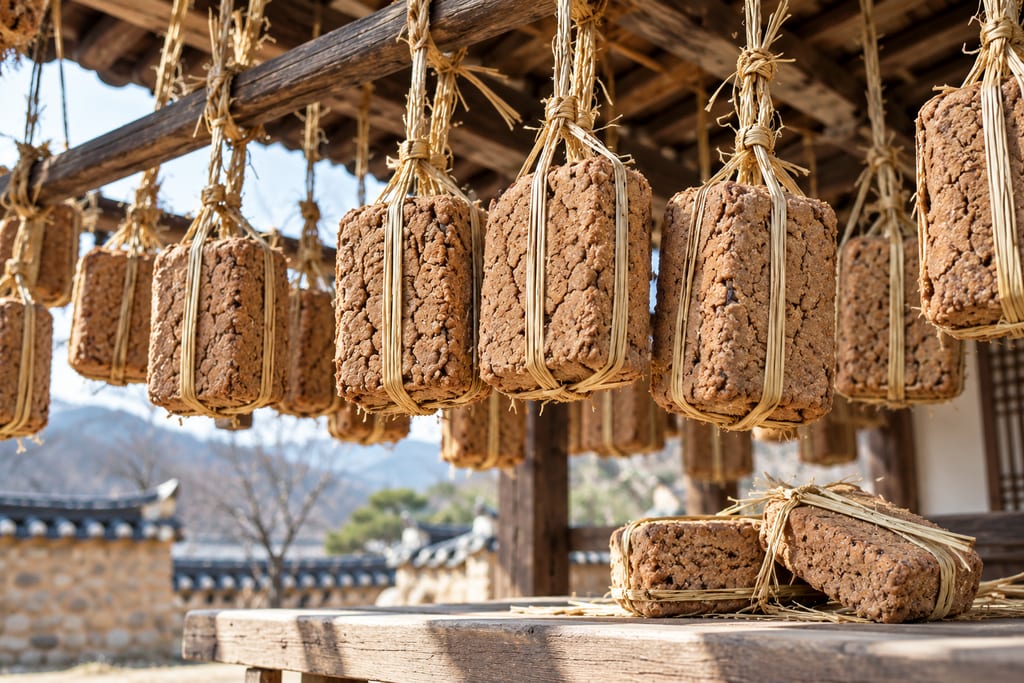
Doenjang meju
A cooked soybean brick, shaped and dried, that is fermented as a solid and later brined to make the Korean soy paste doenjang and the soy sauce ganjang.
 FermenteaWhere food goes to change
된장 · Korean fermented soybean paste
Doenjang (된장) is a Korean fermented soybean paste made by brining meju, separating ganjang, then mashing and aging the solids. This recipe follows one documented Sunchang processing study.
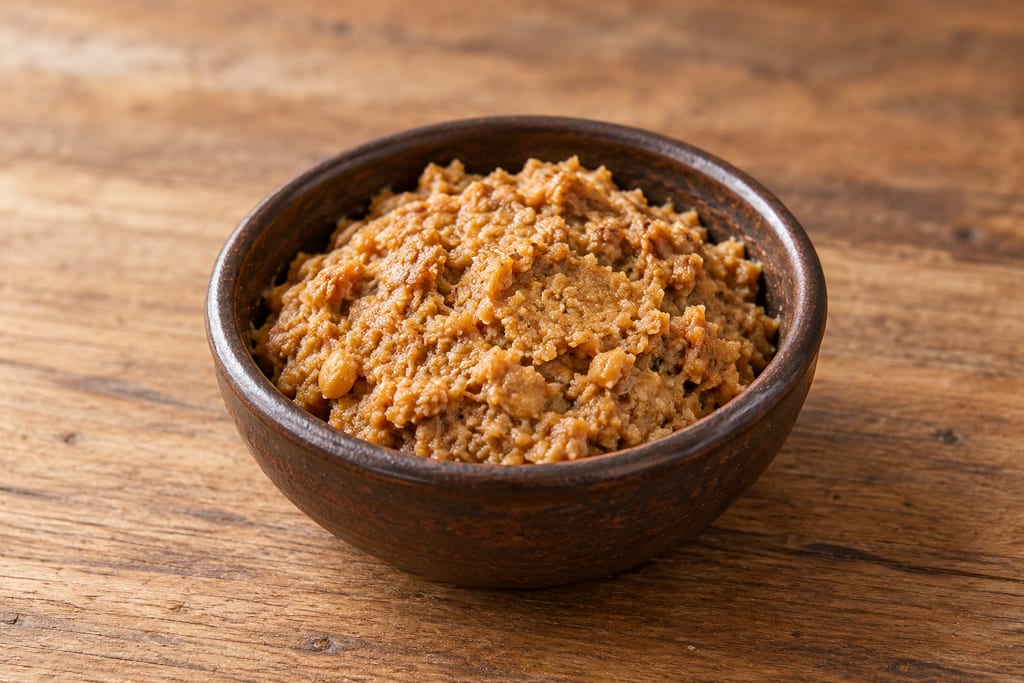
Doenjang (된장) is a thick fermented soybean paste and one member of the Korean family called jang. The word is often translated simply as soybean paste, but the food is not interchangeable with Japanese miso or with every bean paste in East Asia. In the traditional Korean route described in scientific and cultural sources, whole soybeans are first made into meju, brined in a vessel, and later divided: the liquid is drawn off as ganjang, while the softened solids are mashed and aged as doenjang. One fermentation vessel therefore gives two related seasonings, but the liquid and solid take separate paths after the brining stage.
The finished paste is opaque and spoonable, with soybean pieces or a more even mash depending on how thoroughly it has been worked. Its colour runs from tan-brown to deep brown across products and ages. Doenjang tastes salty and savoury, and carries the concentrated aroma of fermented soy; commercial and household products differ in graininess, moisture, salt level, and intensity. A precise sensory profile belongs to a particular batch. This recipe describes one documented processing study, not a sensory standard for every doenjang.
Jang includes doenjang, ganjang, and gochujang, among other preparations, but each has its own ingredients and stages. Gochujang adds grain, chili and sweetening ingredients; it is not a hotter variety of doenjang. Cheonggukjang is another soybean preparation with a much shorter, distinctive fermentation. Grouping these under jang explains their cultural relationship without implying that their methods or flavors are the same.
UNESCO inscribed knowledge and practices related to jang-making in the Republic of Korea in 2024. The inscription treats it as a living practice that includes preparing beans and other materials, managing fermentation and aging, storing the sauces, and using them at table. Families pass on formulas and practical judgments; neighborhood groups, schools and universities also help transmit the work. It is not a single official recipe. Household differences are part of the practice, and the jar, place in the household, timing and accumulated taste all belong to the work.
The written record shows that fermented soybean seasonings have a deep history, but the name of a modern food should not be pasted onto every earlier recipe. Han and Kim’s study of the early Joseon cookbooks Sangayorok, Suunjapbang and Gyemiseo identifies many preparations under categories including meju, chungjang, si, mixed jang and other jang. The documents date from the mid-fifteenth century through 1554. Their breadth points to multiple solutions for making salty soybean seasonings, not one unchanging formula identical to a current household doenjang.
The same distinction matters when comparing historical evidence with present-day production. A text can show that a paste family existed; a later processing study can describe its own meju, brine ratio and aging schedule. Neither source alone proves every family used that exact set of quantities. This page keeps one reproducible research method beside the broader cultural history, and leaves the other household variations as variations rather than blending them into a synthetic universal method.
The central ingredient is dried meju, a soybean block whose preparation is its own fermentation. Beans are soaked, cooked by steaming or boiling, crushed and shaped; the blocks then ripen in open air under conditions chosen by their makers. In naturally ripened meju, a succession of microorganisms develops on and within the block. The organisms and their enzymes contribute the biochemical tools that will keep acting after the meju enters brine. Buying or making meju is therefore not a minor ingredient choice: its microbial history, moisture and degree of drying shape the material that enters the next stage.
Salt does more than season. At the high concentrations used in many traditional methods, it selects for salt-tolerant organisms and slows organisms that cannot tolerate the environment. Research tracking doenjang communities found that the microbial populations change as meju enters brine and ripens; salt-tolerant bacteria become more important during the later stages. Different salt concentrations also alter fermentation speed and the resulting metabolites. In Kim, Heo and Kwak’s study, 8%, 12%, 16% and 20% brines were compared rather than presented as interchangeable choices. Lower-salt batches fermented more actively, and their 8% samples were less accepted by the panel in that study.
The study method used here begins with finished dried meju, not raw beans. Its 1:1 mass-to-volume relation is taken from the processing study: 400 kg of dried meju were treated with 400 L brine. The one-litre household scale preserves that ratio while making no claim that the scaled vessel behaves exactly like a 400-litre plant batch. The 20% brine is one of the study’s treatment arms. Do not dilute it by following a different salt ratio from another household or factory recipe; that would create a different process with a different fermentation trajectory.
During aging, soybean proteins are progressively hydrolysed into peptides and amino acids. That breakdown is not the same thing as the physical mashing step: enzymes and microorganisms alter the proteins, while a pestle, masher or hand does the mechanical work of breaking softened solids. Amino acids contribute savory depth; peptides, sugars, acids and volatile compounds shift as fermentation continues. The brine study reported increases in metabolite levels during a year of aging and associated brown colour with non-enzymatic reactions involving amino acids and reduced sugars.
The method starts with dried, already fermented blocks because meju-making is a substantial preparation in its own right. Using dried blocks also matches the Sunchang processing study, which described dried meju before brining. A separate meju page can explain soybean selection, soaking, cooking, block formation and the fermentation that happens before this recipe begins. A ready block should be intact enough to submerge and not already spoiled; the research method gives no buying grade or visual rule, so this page does not invent one.
The brine is measured by concentration and final volume. A 20% weight-per-volume brine means 200 g salt per litre of finished solution, not 200 g added to a full litre of water. Dissolving the salt and topping up to a total litre keeps the source concentration clear. More salt would not simply make the same doenjang saltier: salt changes the microbial selection and the pace of protein breakdown. Less salt cannot be substituted casually because the study observed different fermentation and acceptance outcomes.
Submerging meju brings the dried blocks into contact with salt water and allows brining and ripening to proceed. Brining proceeds at 23°C for 40 days in this batch, rather than borrowing a more familiar household period. It does not ask the cook to judge readiness from bubbling, aroma or surface appearance. Those sensory signs are not safety tests. No at-home corrective schedule is established here if the temperature or brine departs from the stated process.
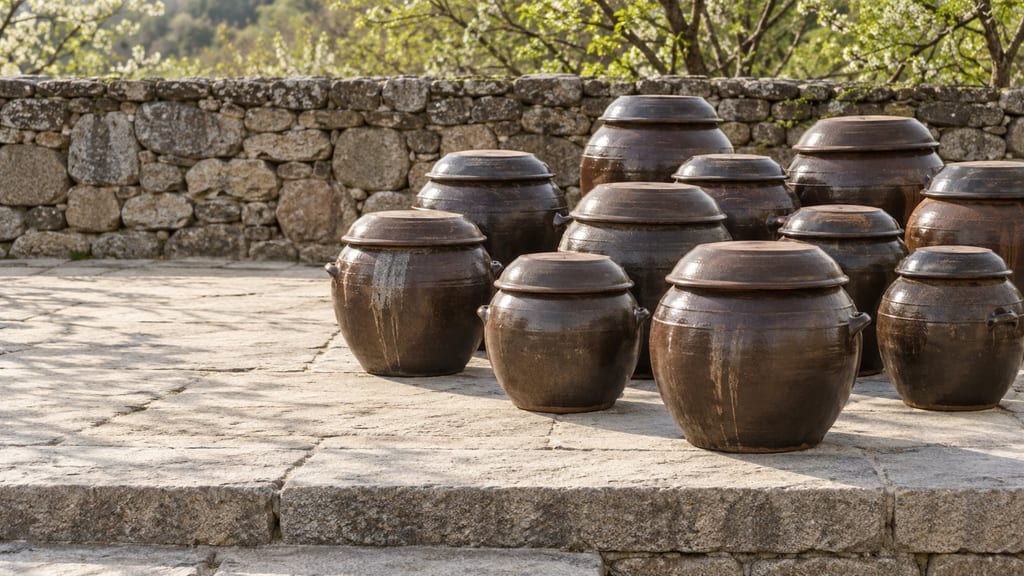
Separation is the point at which two products emerge. After brining, the liquid is ganjang and the softened soybean solids become the base for doenjang. The solids are mashed and packed compactly into a separate pot. Aging continues for one year. The pot is covered and set outdoors; no precise home storage vessel or temperature-controlled alternative is established. This recipe therefore does not promise a shelf life or room-temperature safety.
Traditional Korean methods commonly begin with naturally ripened meju, then brine and age it in a ceramic vessel. Research summaries report long aging, often six months or more, while one Sunchang study separated a 40-day brining stage from a further year of paste aging. These are not contradictory universal clocks: different studies describe different stages and batches. A paste’s maturation time, meju preparation, salt level and vessel all influence the outcome, so a quick factory method should not be presented as merely a younger version of a household jar.
Commercially modified doenjang may use a different starter or production sequence. A review of Korean fermented foods distinguishes traditional meju-and-brine production from methods that use inoculated koji to accelerate or standardize production. Those products remain doenjang, but they do not make the same fermentation environment as a naturally ripened household meju. Some producers combine or vary ingredients and processing steps; the label and producer’s account matter when describing a specific commercial paste.
Households also differ in the time of year, the kind of soybean and salt they use, vessel and handling practices, and the point at which they separate the liquid and solid. UNESCO’s account explicitly emphasizes this variation and transmission. Those differences can change texture and strength without making one household’s formula the definitive version. This recipe records a published processing study’s method, while its historical and cultural description leaves room for the many other Korean preparations that carry the name.
Doenjang is most useful as a seasoning. Korea Tourism Organization lists doenjang-guk, soup made with doenjang, as well as namul and jang-tteok among its uses. It is also stirred into stews, sauces and marinades, or served with vegetables and wrapped foods. A little can give a broth savory depth; a larger amount makes the paste’s salt and fermented soybean character more prominent. Adjust other salty ingredients in the dish rather than treating doenjang as a neutral thickener.
The paste’s texture is part of its use. A coarse, hand-mashed paste can leave softened soybean fragments in soup or cling to vegetables; a smoother commercial style dissolves more readily. Cooking softens and disperses the paste but does not erase its salt, so tasting the broth near the end helps prevent over-seasoning. When it is used uncooked in a dip or wrap, the aroma is more direct and the texture remains visible.
In everyday meals, jang is not only an ingredient but a stored household flavor. UNESCO describes families keeping aged soy sauce and passing down practices for managing the jars. Doenjang shares that wider culture of preparation and care, while its own role remains distinct from ganjang’s liquid seasoning. In a meal, doenjang may season a soup, complement vegetables, or anchor a dipping mixture; the table can place it beside rice, kimchi and other banchan without making it the only fermented flavor in the meal.
The process and science described here come from studies of specified materials and batches. The 20% brine treatment, 23°C brining period, plant scale and year-long aging belong to the cited Sunchang protocol. The microbial community paper follows its own samples and does not show that every jar has an identical collection of organisms. General statements about enzyme activity should not be mistaken for a prediction that a home batch will mature at the same rate or acquire a particular flavor.
The article does not claim that salt makes the paste shelf-stable, nor does it give a safe home storage duration. Its research source does not establish validated process limits or a safe room-temperature storage life after opening. Salt is essential to the documented style, yet the measured concentration of a finished paste changes with recipe and aging. Commercial doenjang is often sodium-rich; use it as a seasoning and consider that when balancing a meal.
Doenjang contains soy and should be treated as a soy allergen. Products may differ in additional ingredients, including wheat or other grains, so check a commercial label where allergies or dietary restrictions matter. The home method here uses only meju, salt and water, but the source study does not certify any particular purchased meju. If the process conditions cannot be maintained as described, use a commercially prepared paste instead of improvising another fermentation.
Korean jang-making is a living household and community practice, recognized by UNESCO in 2024. A 2020 study of early Joseon cookbooks found varied soybean pastes and seasonings in texts from the mid-fifteenth to mid-sixteenth centuries; those records establish an older family of jang preparations, not the exact modern doenjang recipe on this page.
Scaling: source batch only
Soybeans and meju are soy products; doenjang contains soy.
Hazard sourceDoenjang is a concentrated salty seasoning. The exact sodium content varies by batch and aging.
Hazard sourceThis page describes a published processing method and a smaller scale-down, not a validated home-preservation process. Do not treat time, salt concentration, appearance, smell or taste as proof of safety; no household storage life is established here.
If the stated process conditions cannot be maintained, do not improvise a different fermentation schedule; use commercially prepared doenjang until suitable controls are established.
UNESCO documents Korean jang-making as cultural practice; it does not establish one birthplace for doenjang.
The cited study prepared its batch at a processing plant in Sunchang-gun; this is not an origin claim.
A cooked soybean brick, shaped and dried, that is fermented as a solid and later brined to make the Korean soy paste doenjang and the soy sauce ganjang.
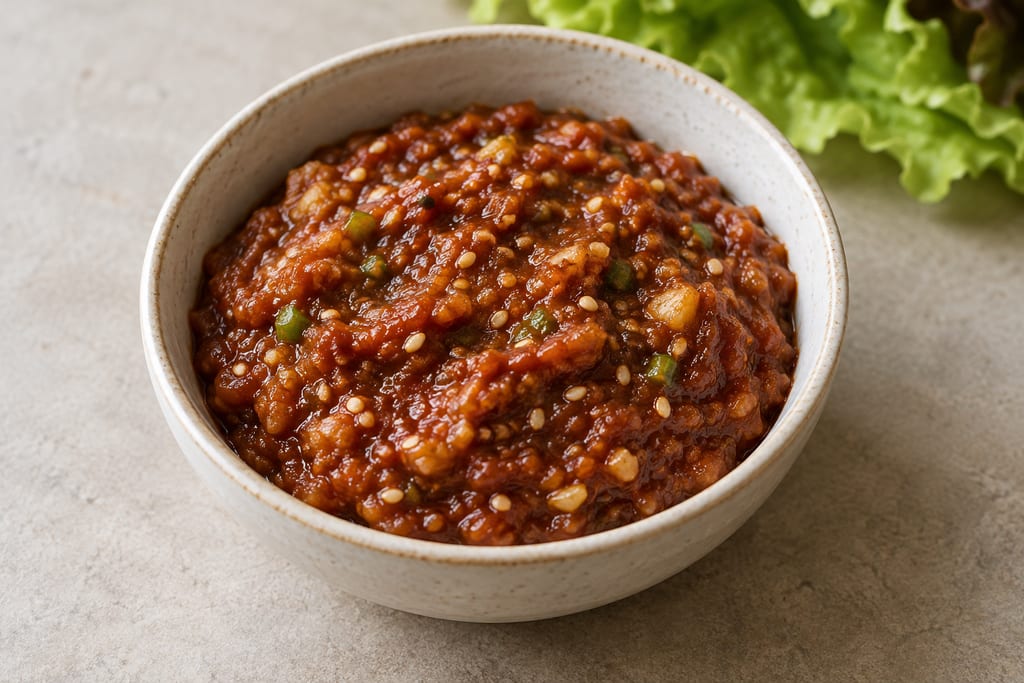
Doenjang and gochujang stirred together with sesame oil and seeds, a little honey, water, raw garlic and spring onion: a thick, savoury sauce for lettuce wraps with rice.
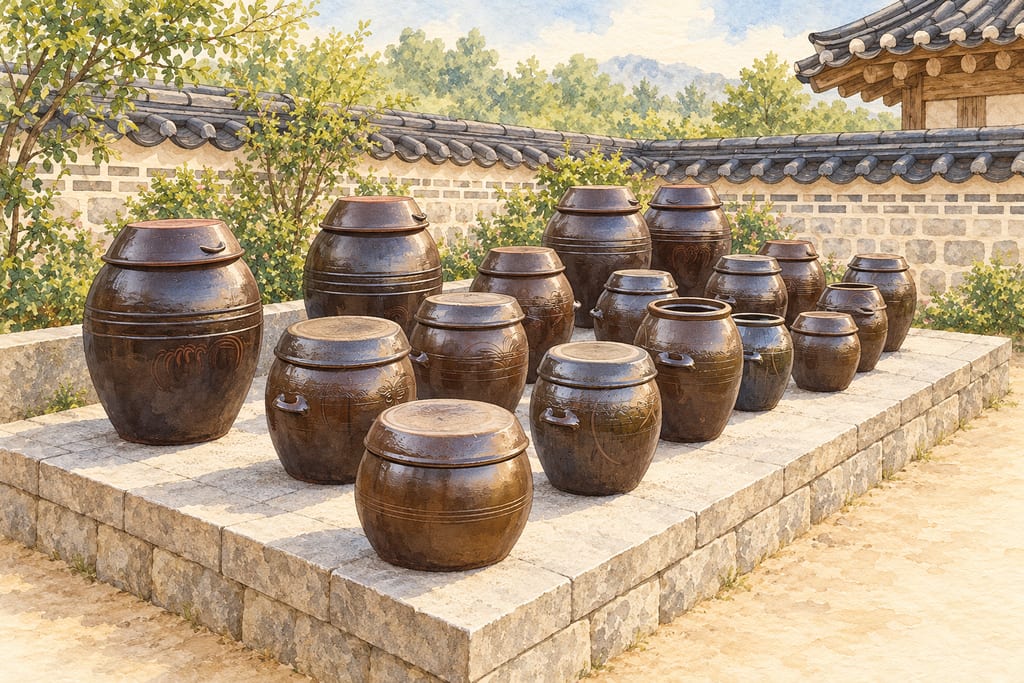
An outdoor platform where households arrange onggi jars for fermenting, aging and storing Korean jang sauces. Platform materials and layouts vary; no single standard design is established.
A Silla king’s bride was sent 135 loads of provisions, jang among them. The chronicle that says so was written 462 years later and never says what the jang was. What the record can carry, and what Korea added.
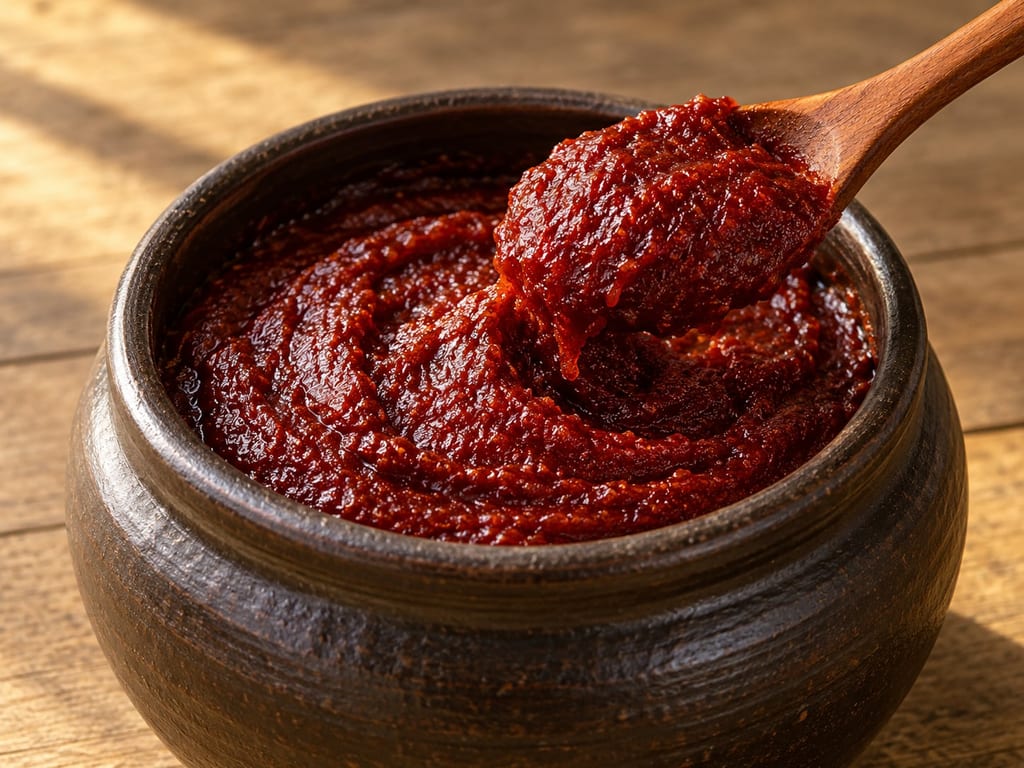
Korea’s sweet, savoury and fiery red paste of glutinous rice, barley-malt enzymes, fermented soybean meju powder and chilli powder, matured in earthenware.
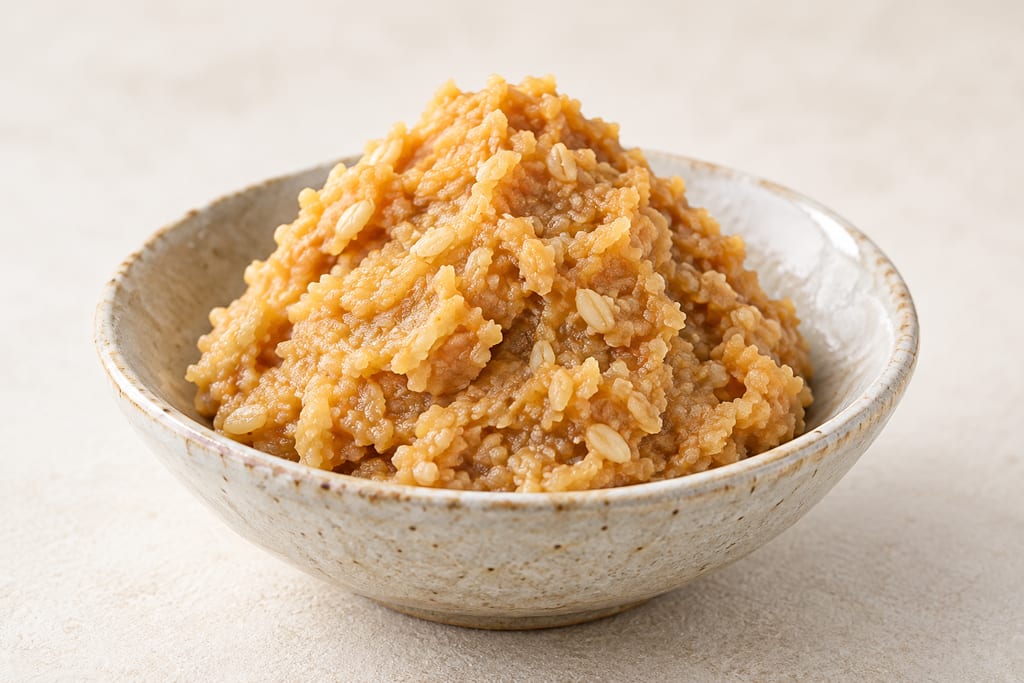
A Japanese soybean paste fermented with barley koji and salt, made mostly in Kyushu, Shikoku and western Japan. It is sweet, savoury and grainy.
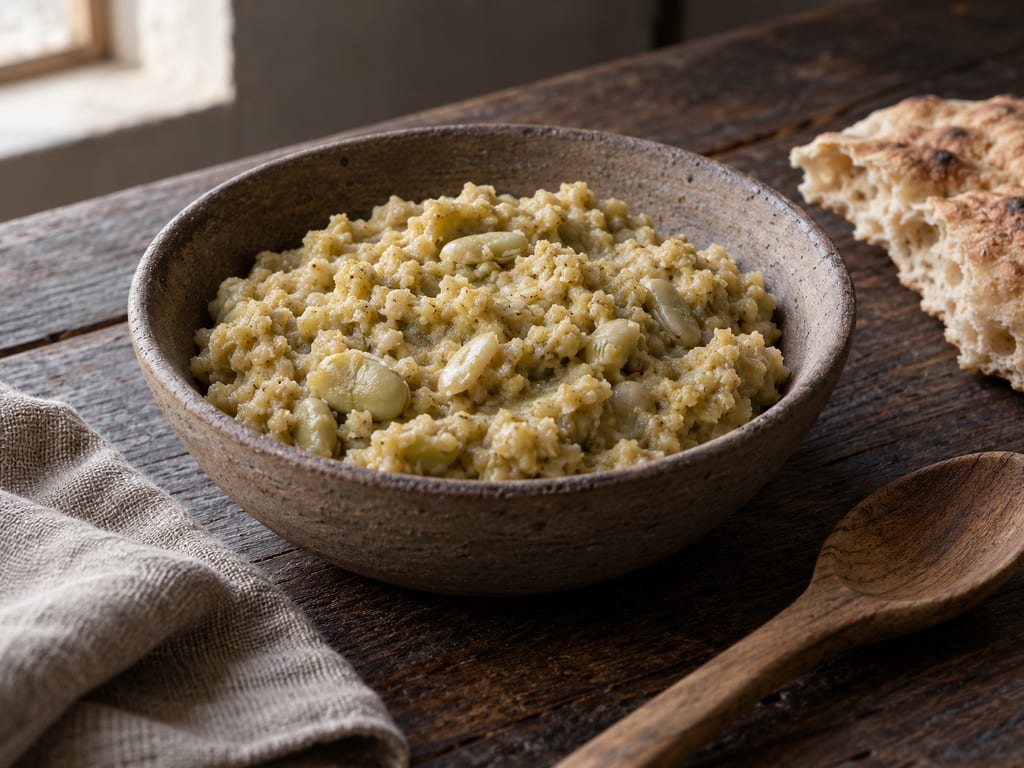
Cooked broad beans crushed to a thick paste with garlic and salt, a museum preparation built on the one European pulse that was already old when the Viking Age began.
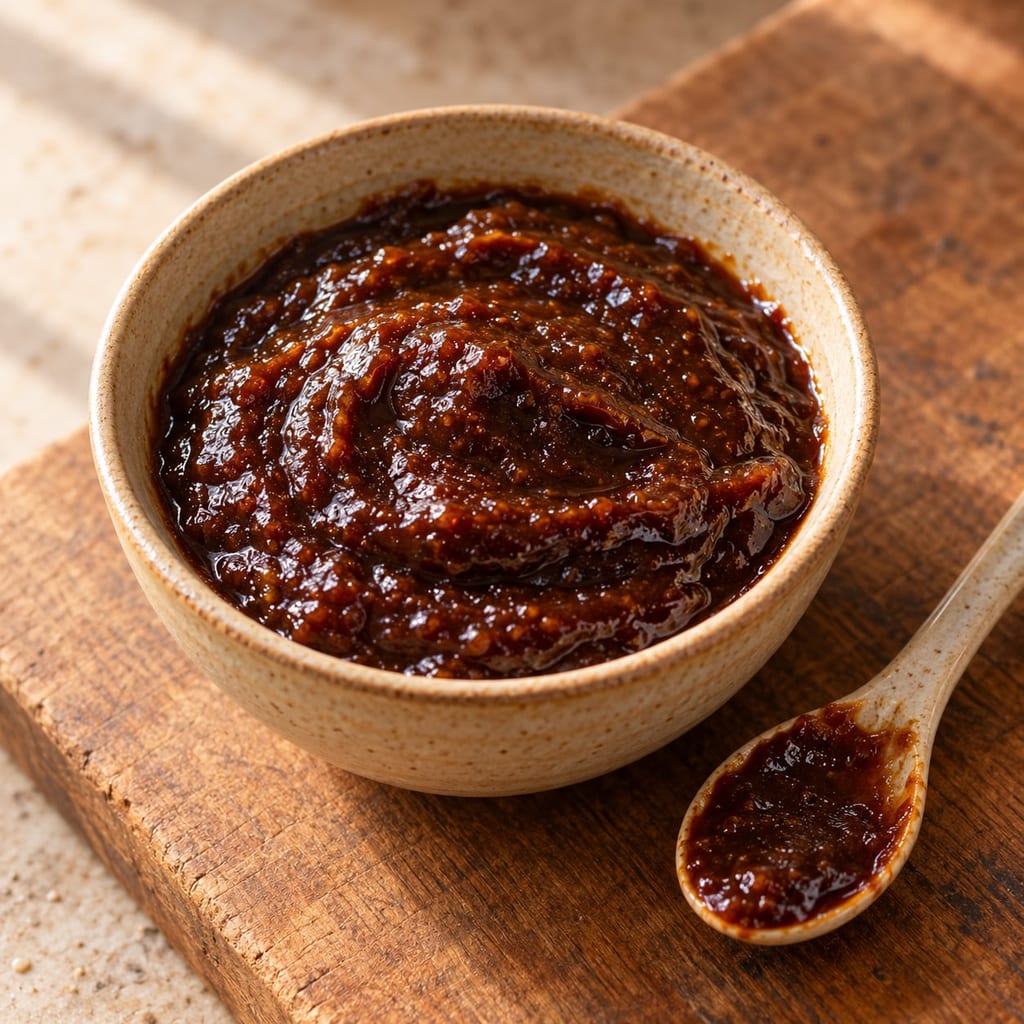
Chu hou is a sweet, savoury Cantonese paste of fermented soybeans, fermented bean curd, garlic, ginger and sesame, used mainly to braise meat.
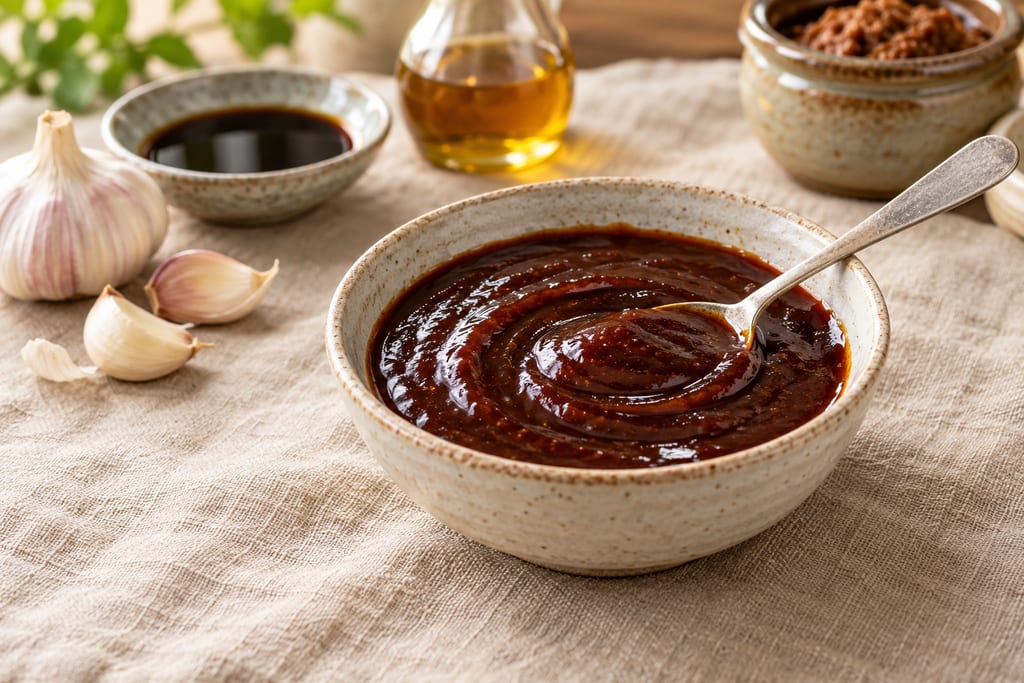
A thick, dark, sweet-salty Chinese condiment built on fermented soybean paste. This page gives one quick home version and records how commercial formulas differ.
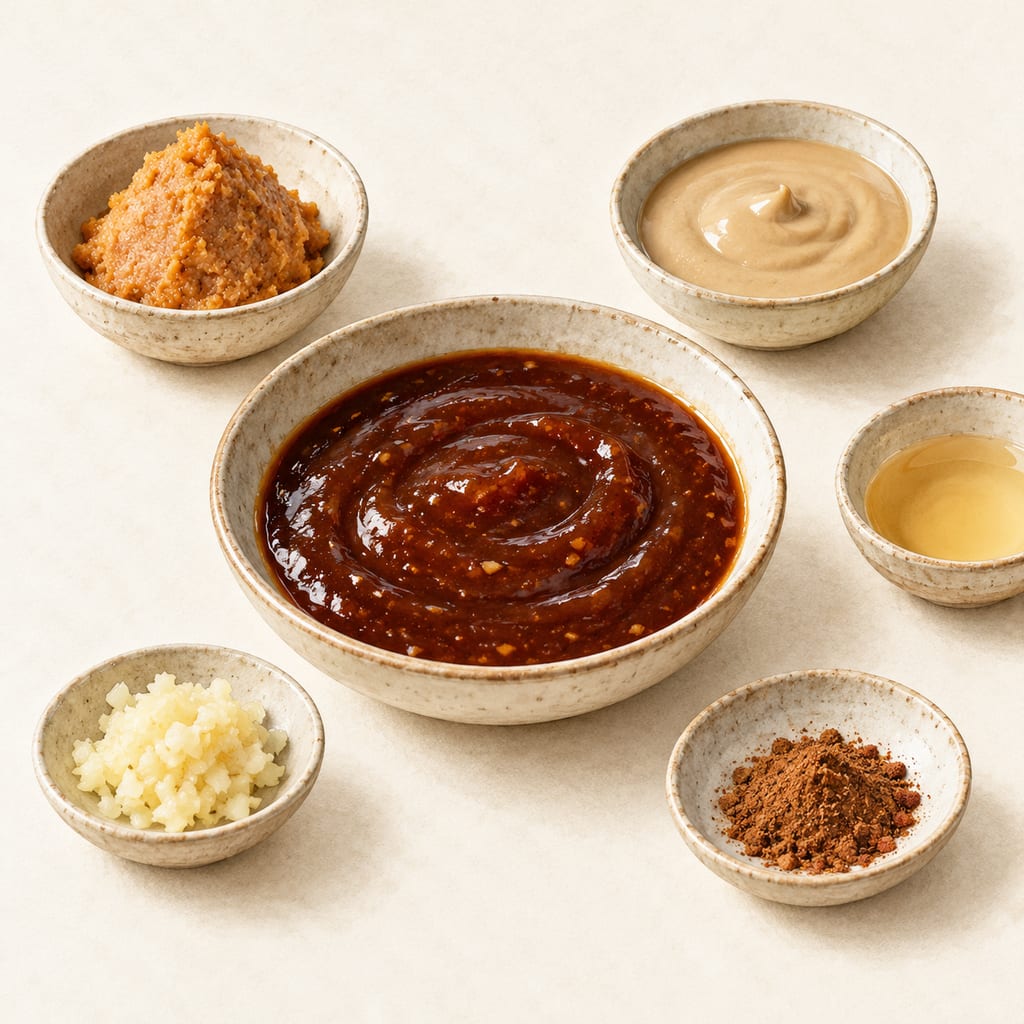
An untested modern miso-based sauce inspired by hoisin's sweet, savory profile; this prototype is not traditional hoisin or a copy of a commercial brand.
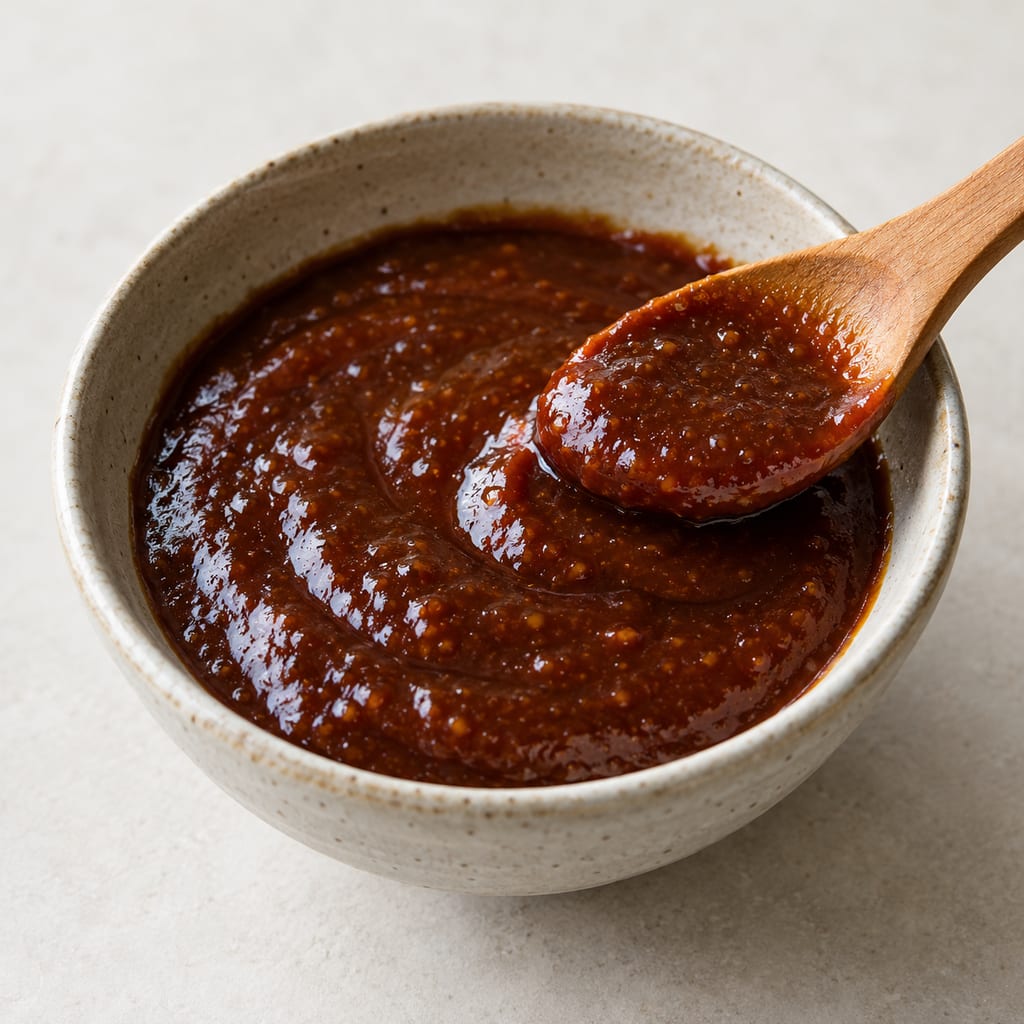
A sweet-salty Japanese glaze of miso, mirin, sake and sugar, warmed until thick and spread on grilled tofu, eggplant, daikon or konnyaku. Regional versions in Aichi use red miso and dashi.
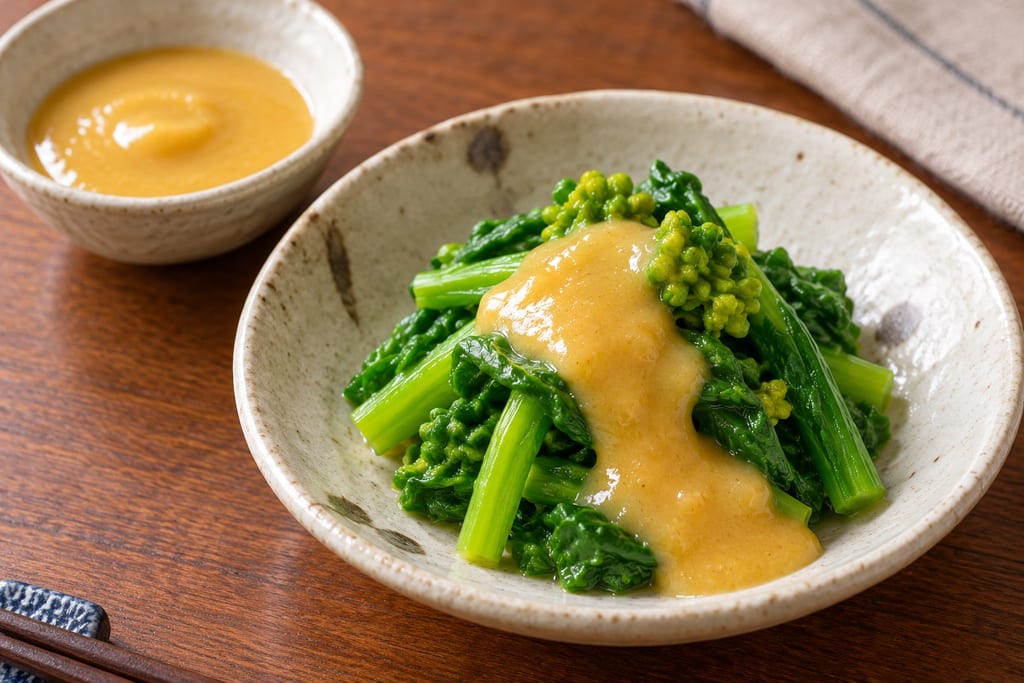
Karashi-su-miso is a smooth Japanese sauce of sweet miso, rice vinegar and hot mustard, stirred together for vegetables, seafood or poached fish.
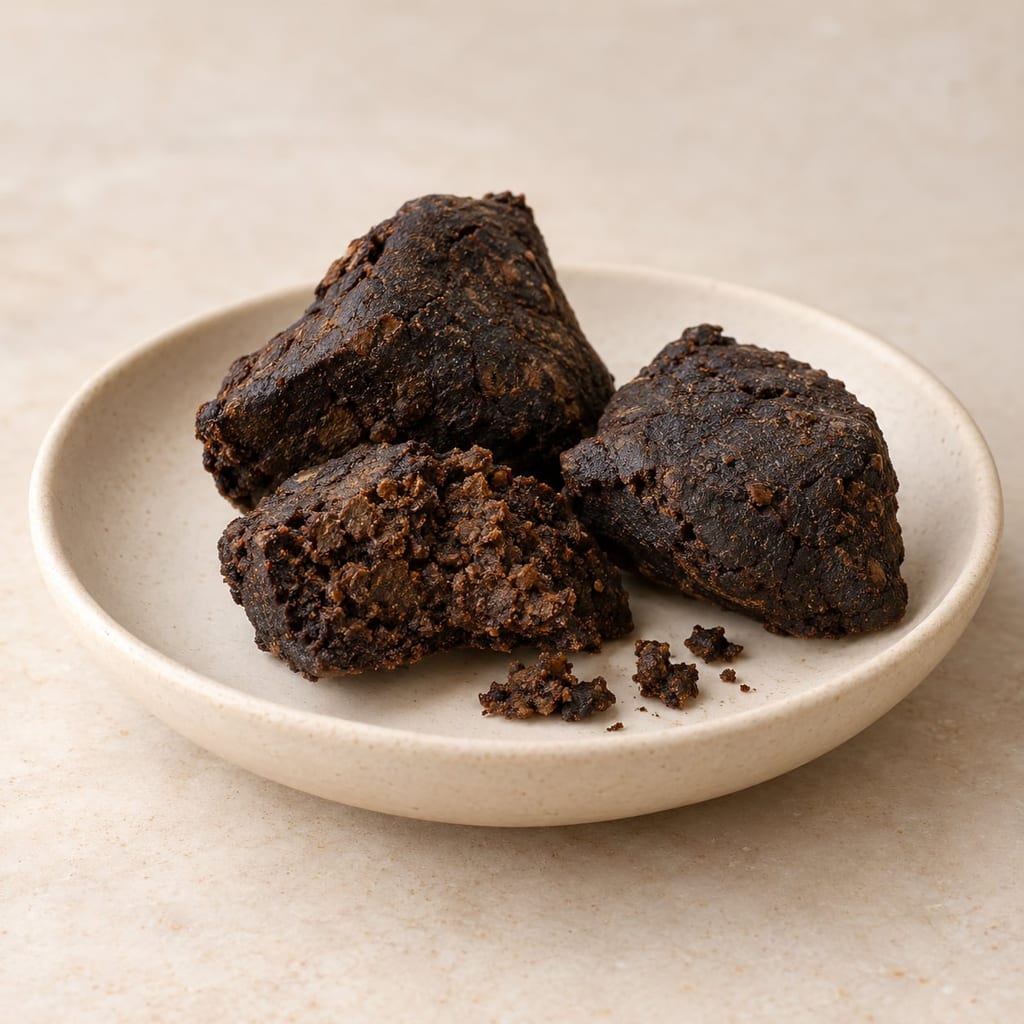
Okpiye, also written okpeye, is a Nigerian condiment from fermented Prosopis africana seeds; published studies describe laboratory batches, not a validated home method.

Protected Italian vinegar made only from cooked grape must, fermented and aged in a battery of wooden barrels for at least 12 years: sweet, sharp and syrupy.

Airag is Mongolia’s fermented mare’s-milk drink, traditionally churned with saved starter in a reusable cowhide khokhuur.

Appam, or hoppers, are South Indian and Sri Lankan rice pancakes made from a fermented coconut-and-rice batter and cooked in a curved pan to a crisp lacy rim and a soft, spongy centre.

Auricularia tremellosa is a wood ear fungus of the genus that supplies most dried wood ear sold in China; its own food record is thin, and the culinary practice described here comes from the closely related wood ear species.

Ayran is Turkey’s cold, savoury yogurt drink: plain yogurt is loosened with water and lightly salted, then whisked smooth or aerated into a soft cap of foam.
A thin stone griddle used over an open hearth. Norwegian archaeology documents the established tradition from the early Middle Ages; a Viking-period origin is only a cautious suggestion linked to Shetland.

Crushed or milled barley cooked in water until the starch softens and the mixture thickens, the plainest way a northern household turned stored grain into a meal, here with apple and hazelnut.

Black carrot is the anthocyanin-pigmented Eastern carrot (Daucus carota var. atrorubens), the purple root that preceded orange types and still colours kanji and şalgam.
No community contributions have been published for this entry yet.
Sign in to contribute. Published comments and photos are free to read.
UNESCO Intangible Cultural HeritageHistory · Culture · Use
Knowledge, beliefs and practices related to jang making in the Republic of KoreaUNESCO inscribed jang-making in 2024 as a Korean practice encompassing preparation, fermentation, aging, storage and consumption.
Jang practices vary between households and are transmitted through families and community groups.
Jang can season vegetables, fish and meat, preserve foods, and form part of everyday meals.
Cited in: A paste built from the solid half of jang; A household practice with a long written record; Eating doenjang at the Korean table
Journal of The Korean Society of Food Culture / Korea Citation IndexHistory
A Literature Study on the Jang (Fermented Soybean Sauce) in the First Half of the Joseon DynastyThe authors compare soybean-paste records in Sangayorok (1450s), Suunjapbang (1540s), and Gyemiseo (1554).
They classify early Joseon pastes as meju, chungjang, si, mixed jang, and other jang, emphasizing historical variety rather than a single modern formula.
Cited in: A household practice with a long written record
Journal of Microbiology and BiotechnologyProcess · Science · Ingredients
Bacterial Community Migration in the Ripening of Doenjang, a Traditional Korean Fermented Soybean FoodThe paper describes meju as soaked, steamed, crushed and molded soybean that ripens under natural conditions.
It describes doenjang as meju ripened in high-salt brine, with the liquid separated as ganjang and the solids mashed and fermented further.
The authors identify changing bacterial communities, including salt-tolerant groups, during meju and doenjang ripening.
Cited in: Meju, salt and the work of the brine; Why the stages are separate; Methods vary, and the names matter; What the research does and does not establish
International Journal of Food Science & TechnologyProcess · Science · Safety
Effects of ageing and salt concentrations on metabolite profiles and their correlation with consumer acceptance in Korean traditional doenjang (fermented soybean paste)The processing-plant study used dried meju and brines of 8%, 12%, 16%, and 20% (w/v), held at 23°C for 40 days.
A 40 kg paste sample was placed in a 57 L pot, covered, and aged outdoors for one year.
During aging, soy proteins were degraded into peptides and amino acids; lower-salt samples fermented more actively, and the 8% samples had lower consumer acceptance in this study.
Cited in: Meju, salt and the work of the brine; Why the stages are separate; Methods vary, and the names matter; What the research does and does not establish
Journal of The Korean Society of Food CultureHistory
Distinctive Features and Classification of Korean Jang Manufacturing Technology in Early Joseon CookbooksThe paper studies early Joseon cookbook methods and names of jang preparations.
It supports keeping historical pastes distinct rather than projecting one current doenjang recipe onto all earlier pastes.
Cited in: A household practice with a long written record
Korea Tourism OrganizationUse · Ingredients
Ingredients of Korean Food: SeasoningsKorea Tourism Organization describes doenjang as the thick solid ingredient left from fermented soy seasoning.
It lists doenjang-guk and doenjang-based namul and jang-tteok among customary uses.
Cited in: A paste built from the solid half of jang; Eating doenjang at the Korean table
FermentationProcess · Variations
Fermented Foods of Korea and Their FunctionalitiesThe review distinguishes traditional meju-and-brine doenjang from modified commercial methods using inoculated koji.
It describes traditional paste as a strongly flavored product matured for at least six months and notes that methods and salinity differ.
Cited in: Meju, salt and the work of the brine; Methods vary, and the names matter