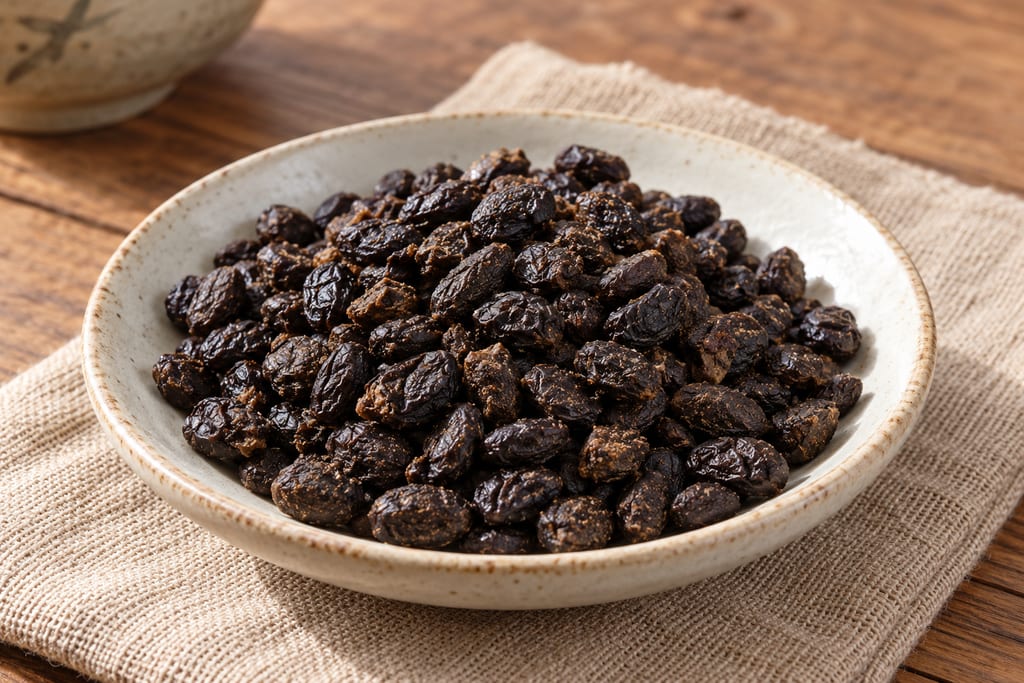
Bacterial-type douchi
A Chinese fermented soybean condiment in which Bacillus-led bacteria, not moulds, drive the fermentation. Documented in Zunyi, Guizhou, and kept separate from mould-led douchi.
 FermenteaWhere food goes to change
Modern method
海鮮醬 · hǎixiān jiàng · hoisin · 海鲜酱
A thick, dark, sweet-salty Chinese condiment built on fermented soybean paste. This page gives one quick home version and records how commercial formulas differ.
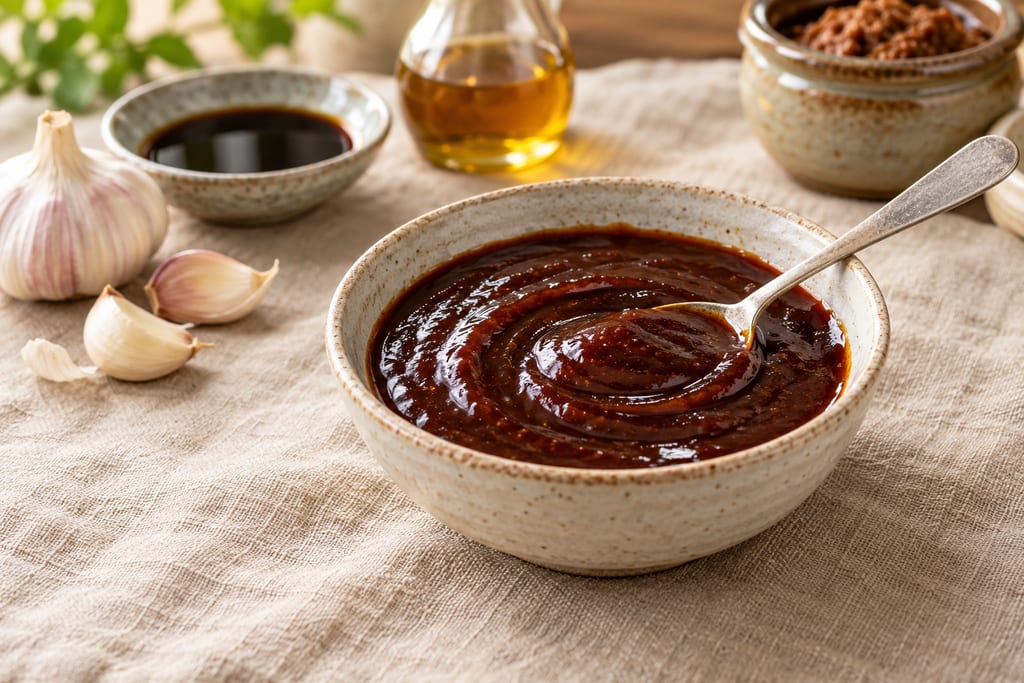
Hoisin (海鮮醬, hǎixiān jiàng) is a thick, dark Chinese condiment that is sweet and salty at once. Its base is fermented soybean paste, softened with sugar and starch, and lifted with garlic, spices, sesame and chilli. It is a cooking sauce and a table sauce: brushed on meat before it is roasted, spooned beside duck pancakes, stirred into noodle soups.
The name literally means seafood sauce in Cantonese, but the sauce contains no seafood. A culinary reference calls the origin of the name unclear, and no source consulted dates the sauce or names its birthplace. It should not be confused with sweet bean sauce or sweet bean paste (tianmianjiang), a related but different sauce.
Commercial hoisin is made to market-specific formulas. The ingredients of a Canada-market Lee Kum Kee jar run: sugar, water, fermented soybean paste (itself water, salt, soybeans and wheat flour), salt, sweet potato powder, caramel, modified corn starch, sesame paste, dehydrated garlic, spices, salted chilli peppers, acetic acid and a red colour. The label gives no quantities and no process. The same maker's Singapore product lists fermented soy paste, sugar, sweet-potato starch, sesame paste, garlic, spices and salted chilli, and its China-market product adds red fermented bean curd.
These are labels, not a traditional recipe, and nothing in them says the finished sauce is fermented again. The fermentation sits in the soybean paste, which the maker buys or produces separately. Allergens follow the formula: the Canada jar declares soybeans, wheat and sesame, while the Australian product declares soy and sesame and is marked gluten free. Check the package in your hand.
No traditional from-scratch method with fermentation controls and batch quantities turned up in the sources consulted, so this page records the one home version that was read in full. It is a shortcut: light soy sauce, natural peanut butter, honey, rice vinegar, sesame oil, grated garlic and black pepper, with a small spoon of ready-made fermented paste. Everything is stirred together in a bowl, and the batch makes about half a cup.
The author is open about what the shortcut cannot do. Real hoisin takes its flavour from fermented beans, which common pantry spices do not reproduce, so the recipe leans on a fermented or chilli paste for that depth. In her tests miso and doubanjiang (spicy fermented broad bean paste) came closest to the store-bought sauce; gochujang with five spice, and Thai chilli sauce with five spice, were the other tested options, and all four gave satisfying results. The peanut butter stands in for the sesame paste and starch that body a commercial sauce, and readers suggest almond butter or tahini where peanut is a problem, which the author did not test.
The Woks of Life describes hoisin with Cantonese barbecue, with Peking duck in Beijing, and in the Chinese-American dish moo shu, and notes its use with Vietnamese phở. Its char siu recipe marinates pork in retail hoisin. A marinade that contains hoisin is a dish, not a way of making the sauce, so it is not described here as a method.
The home version is also used in marinades and glazes. Because it is a fresh blend with garlic and nut butter, it is made in small amounts.
The recipe card says to keep the sauce in an airtight jar in the refrigerator for up to a month. In a reply to a reader the author wrote that a week or so is fine and that freezing works. The two statements differ, so the shorter one is the safer. Neither is a tested shelf life, and the storage statements printed on commercial jars apply to those products and packages only.
The sources consulted do not give a dated first record, a birthplace or a traditional from-scratch production method. The Woks of Life says the origin of the name is unclear.
Yield 8 servings · Scaling: source batch only
Lee Kum Kee's Canada label declares soybeans, wheat and sesame; its Australia product declares soy and sesame and is marked gluten free. This home version adds peanut butter. Labels vary by market and product.
Hazard sourceContains soy and sesame, and peanut as written. Check the labels of the soy sauce and bean paste for wheat.
The recipe card says the sauce keeps up to a month in the refrigerator, while the author's reply to a reader says a week or so is fine. Treat the shorter window as the limit; neither figure is a validated shelf life.
Described as a Chinese sauce used in Cantonese-style cooking and with Peking duck in Beijing; this is not a precise birthplace.
Reported with phở; this records use, not origin.
A Chinese fermented soybean condiment in which Bacillus-led bacteria, not moulds, drive the fermentation. Documented in Zunyi, Guizhou, and kept separate from mould-led douchi.
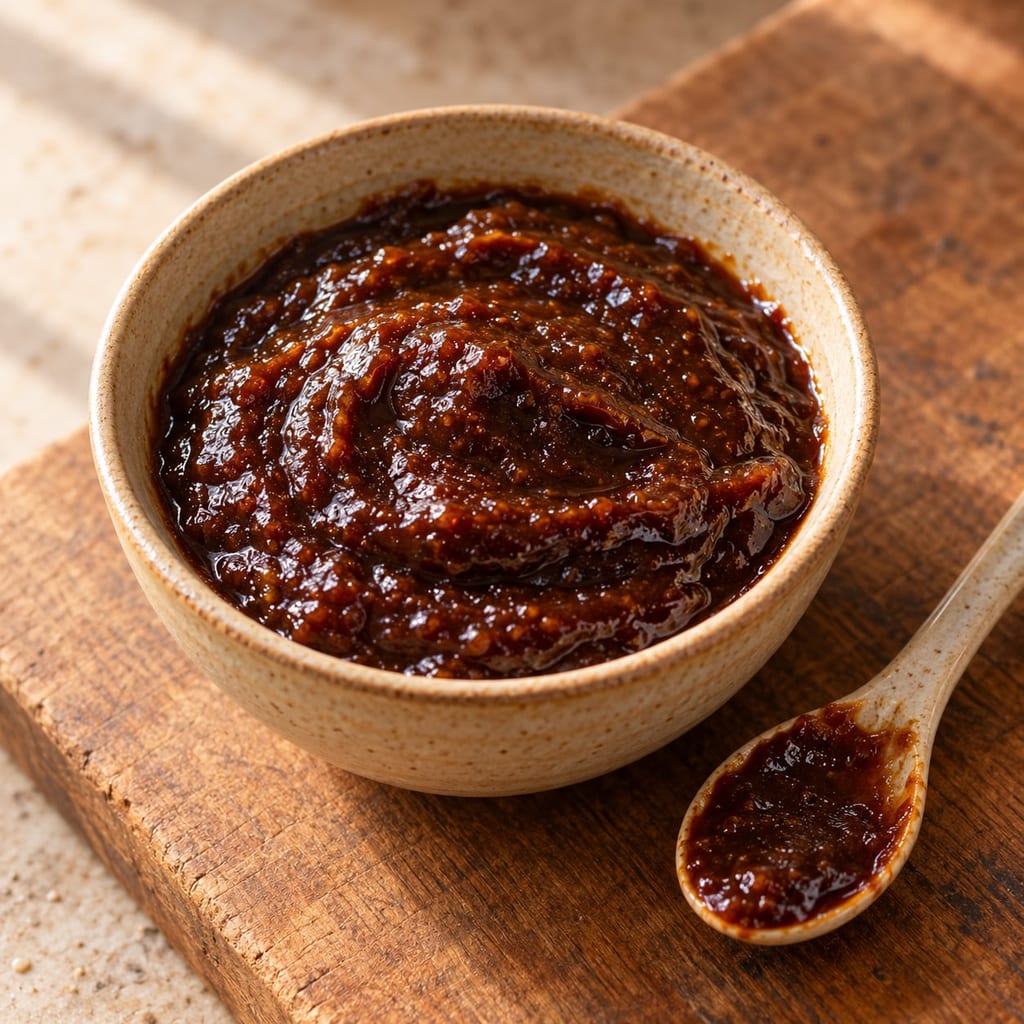
Chu hou is a sweet, savoury Cantonese paste of fermented soybeans, fermented bean curd, garlic, ginger and sesame, used mainly to braise meat.
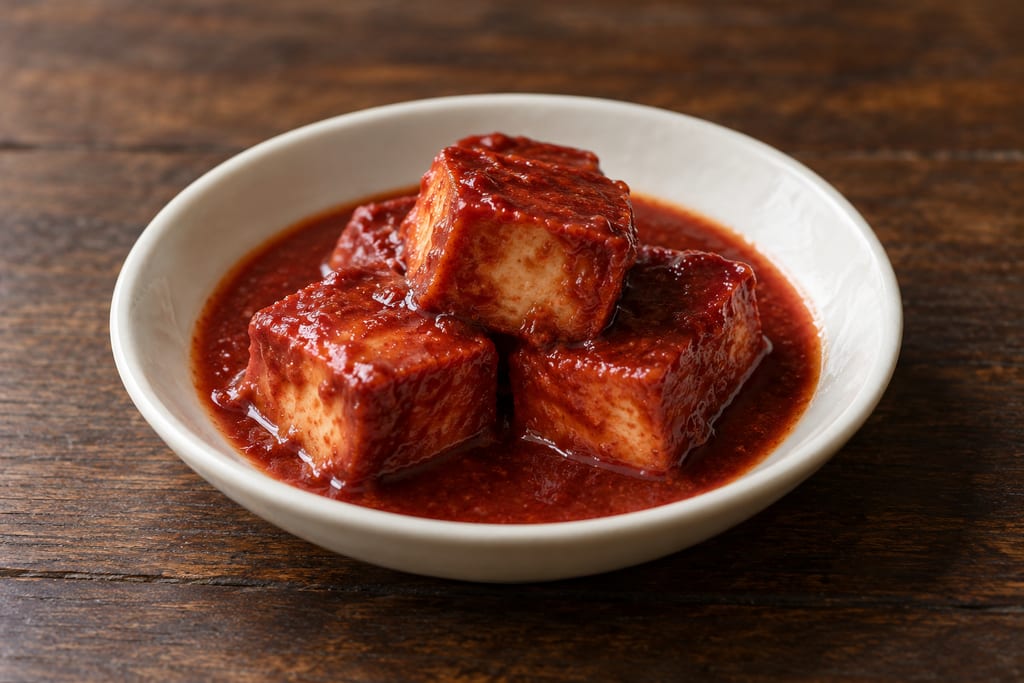
Red sufu is tofu grown with an identified Mucor racemosus mould, salted, seasoned with red pepper and zanthoxylum, then matured under brine for 180 days.
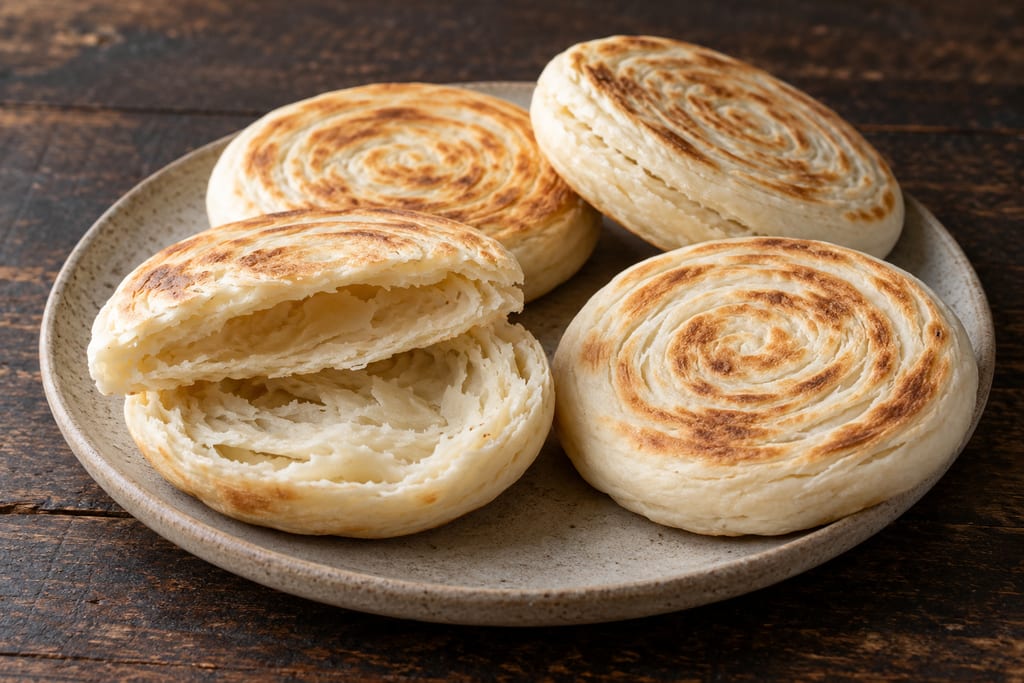
This Shaanxi-associated yeast flatbread uses a simple water dough, coiled shaping and a skillet bake. It is the bread used in roujiamo, not the filled meat dish.
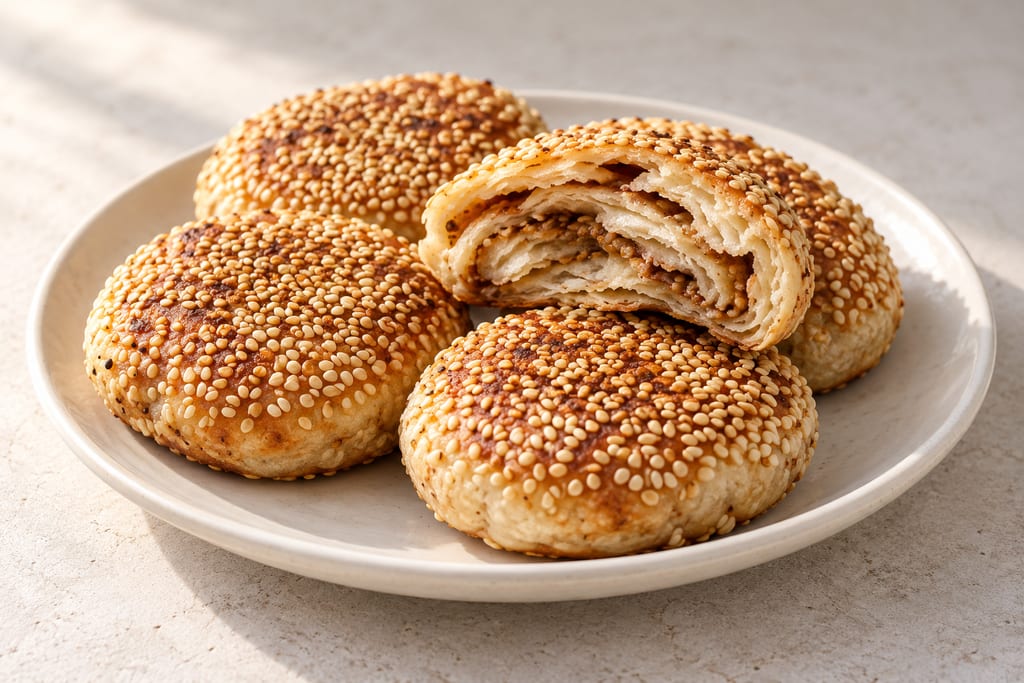
A Beijing-style yeast dough is layered with seasoned sesame paste, sealed into small buns, briefly pan-fried, seeded, and baked.
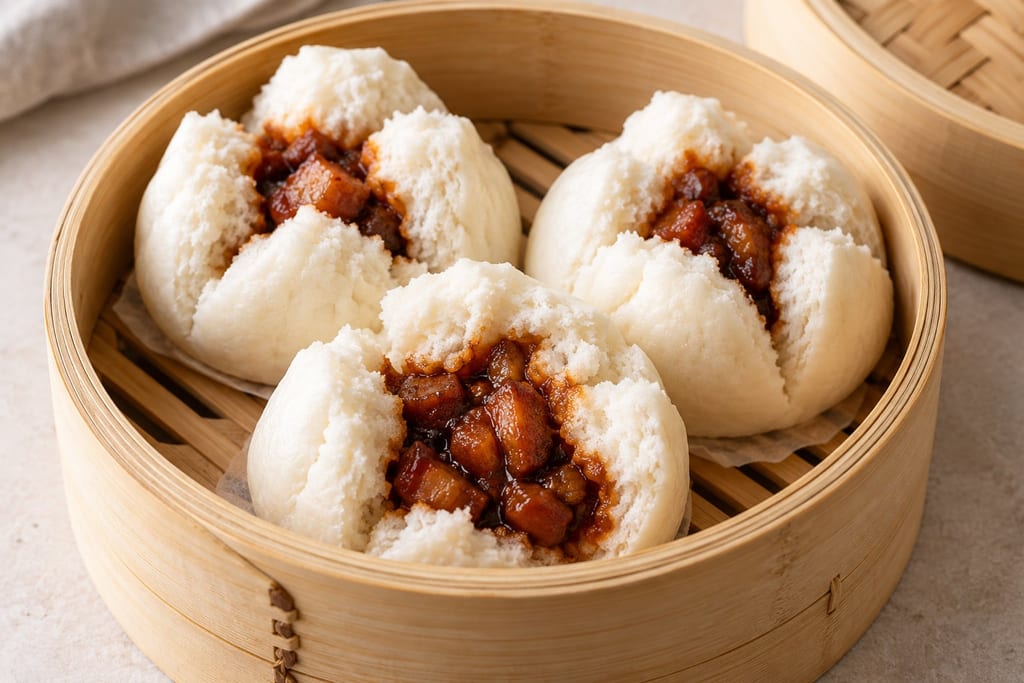
Fourteen fluffy steamed buns filled with cooked char siu and a thickened oyster-soy sauce.
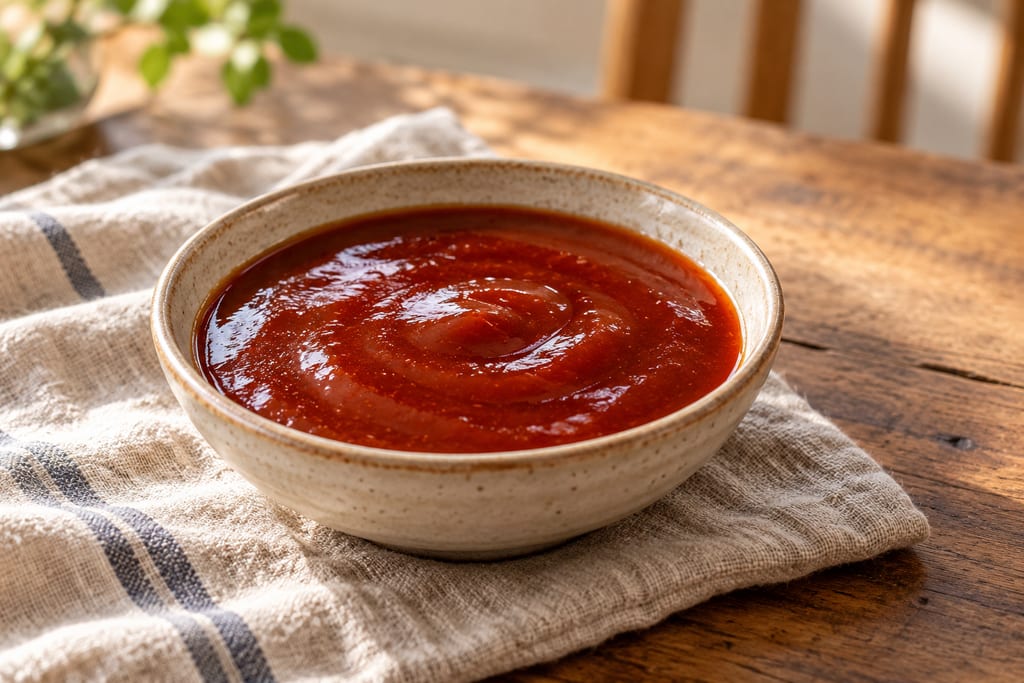
A smooth, tomato-based sweet-and-sour sauce of sugar, vinegar, tomato paste and soy sauce, thickened with starch for dipping or coating; it is not the sauce on Hangzhou's sweet-and-sour ribs.
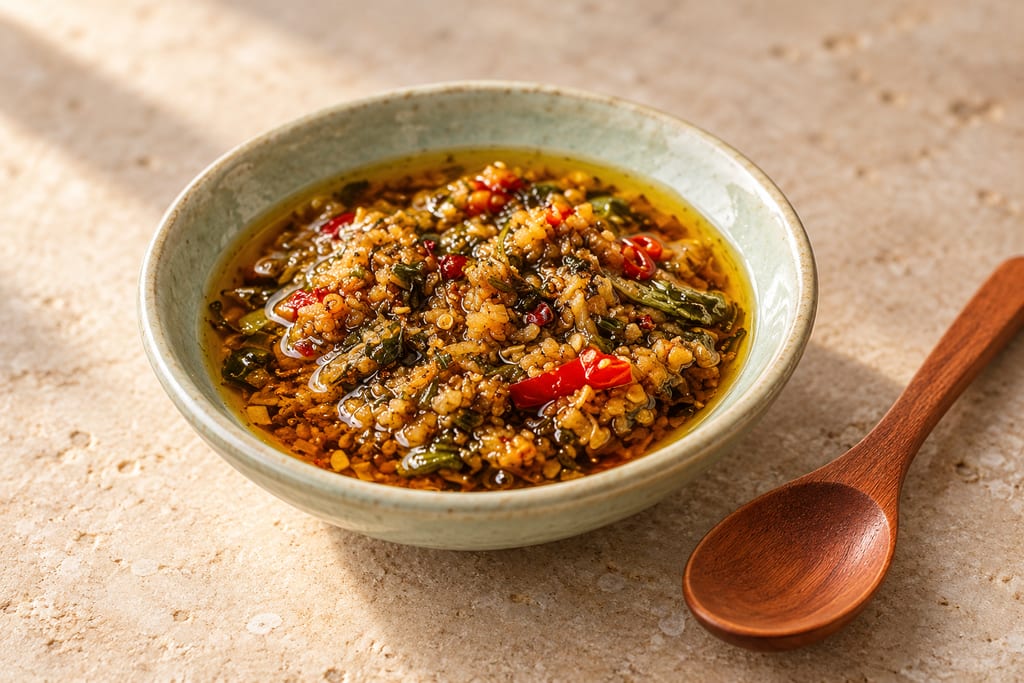
A Cantonese condiment of ginger, garlic, scallion and fresh chilli fried slowly in oil and seasoned with soy sauce, sugar, wine and salt, served over roast meats and poached chicken.
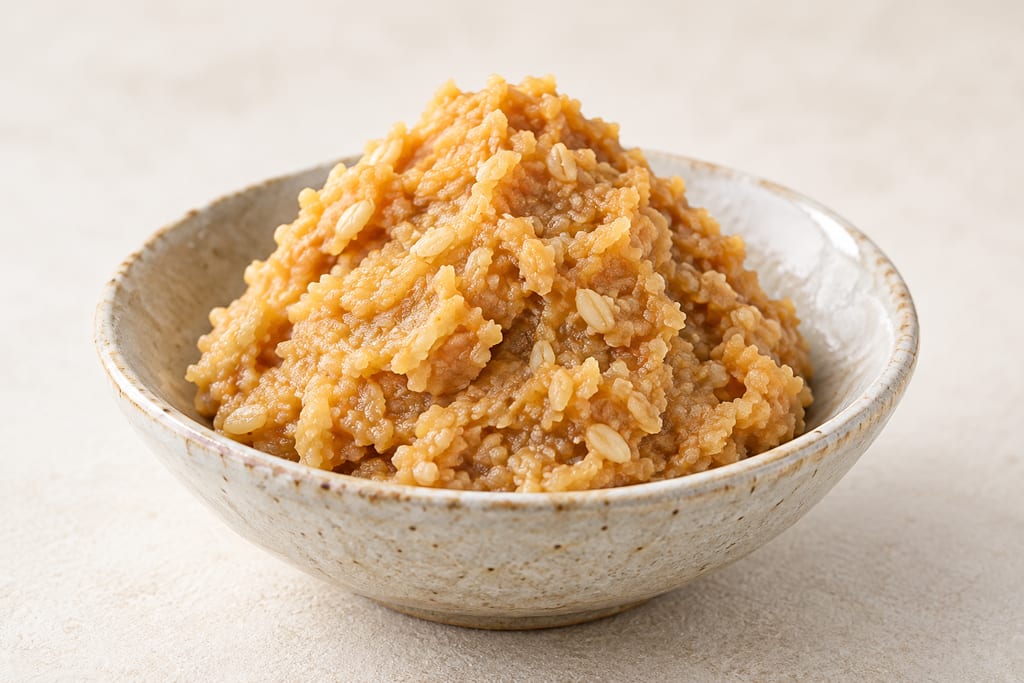
A Japanese soybean paste fermented with barley koji and salt, made mostly in Kyushu, Shikoku and western Japan. It is sweet, savoury and grainy.
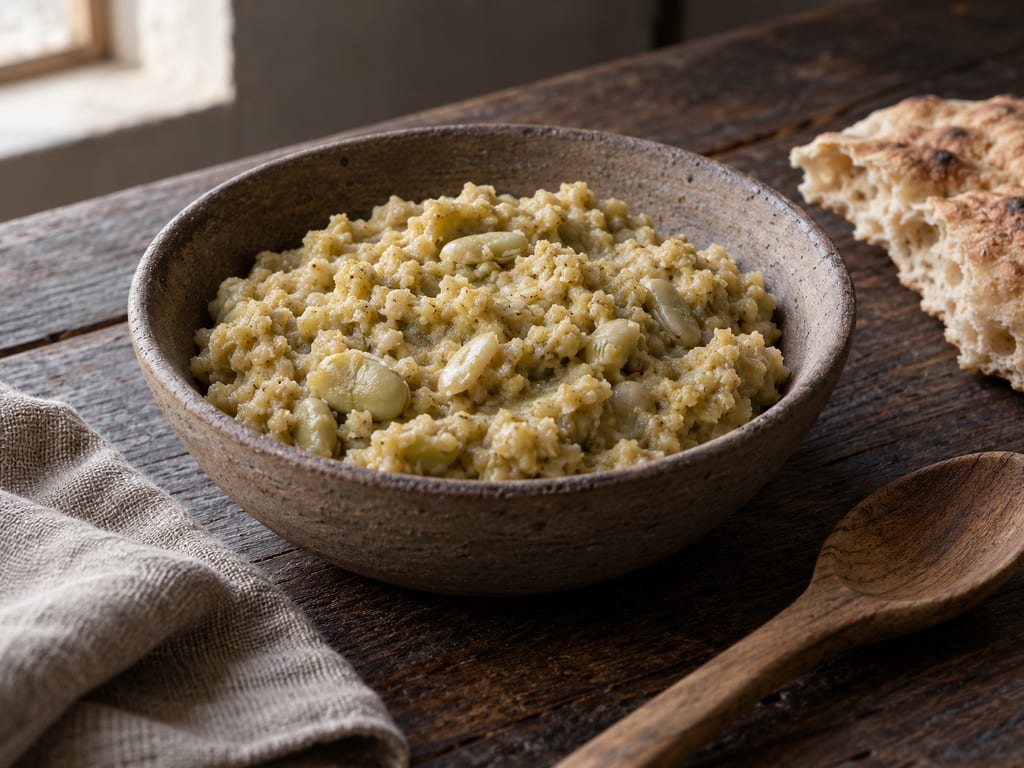
Cooked broad beans crushed to a thick paste with garlic and salt, a museum preparation built on the one European pulse that was already old when the Viking Age began.
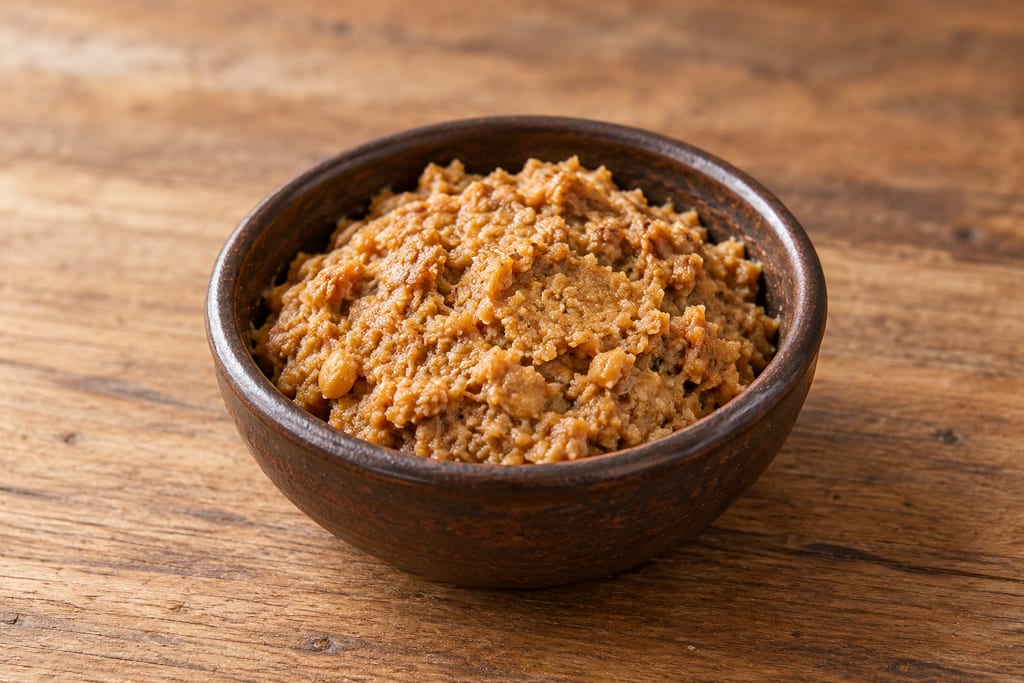
Doenjang (된장) is a Korean fermented soybean paste made by brining meju, separating ganjang, then mashing and aging the solids. This recipe follows one documented Sunchang processing study.
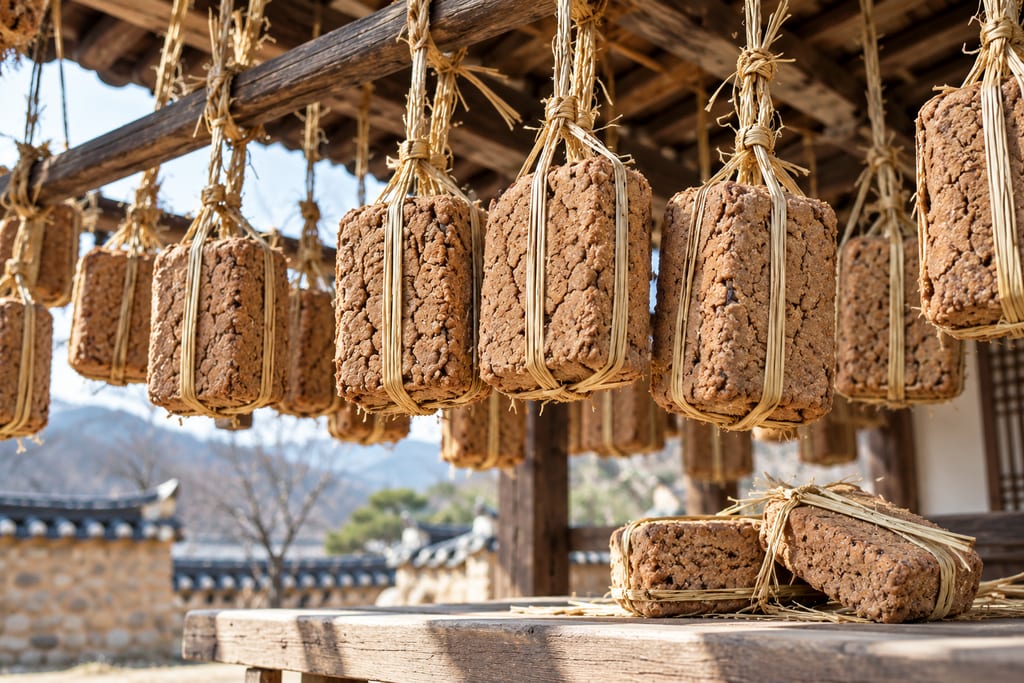
A cooked soybean brick, shaped and dried, that is fermented as a solid and later brined to make the Korean soy paste doenjang and the soy sauce ganjang.
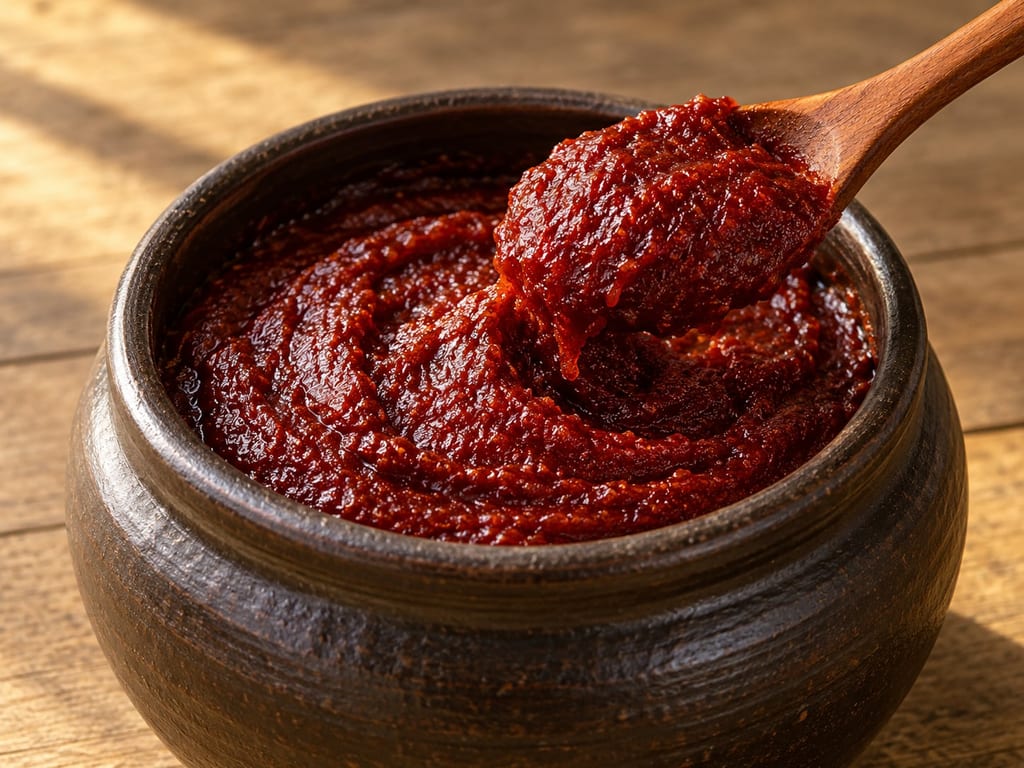
Korea’s sweet, savoury and fiery red paste of glutinous rice, barley-malt enzymes, fermented soybean meju powder and chilli powder, matured in earthenware.
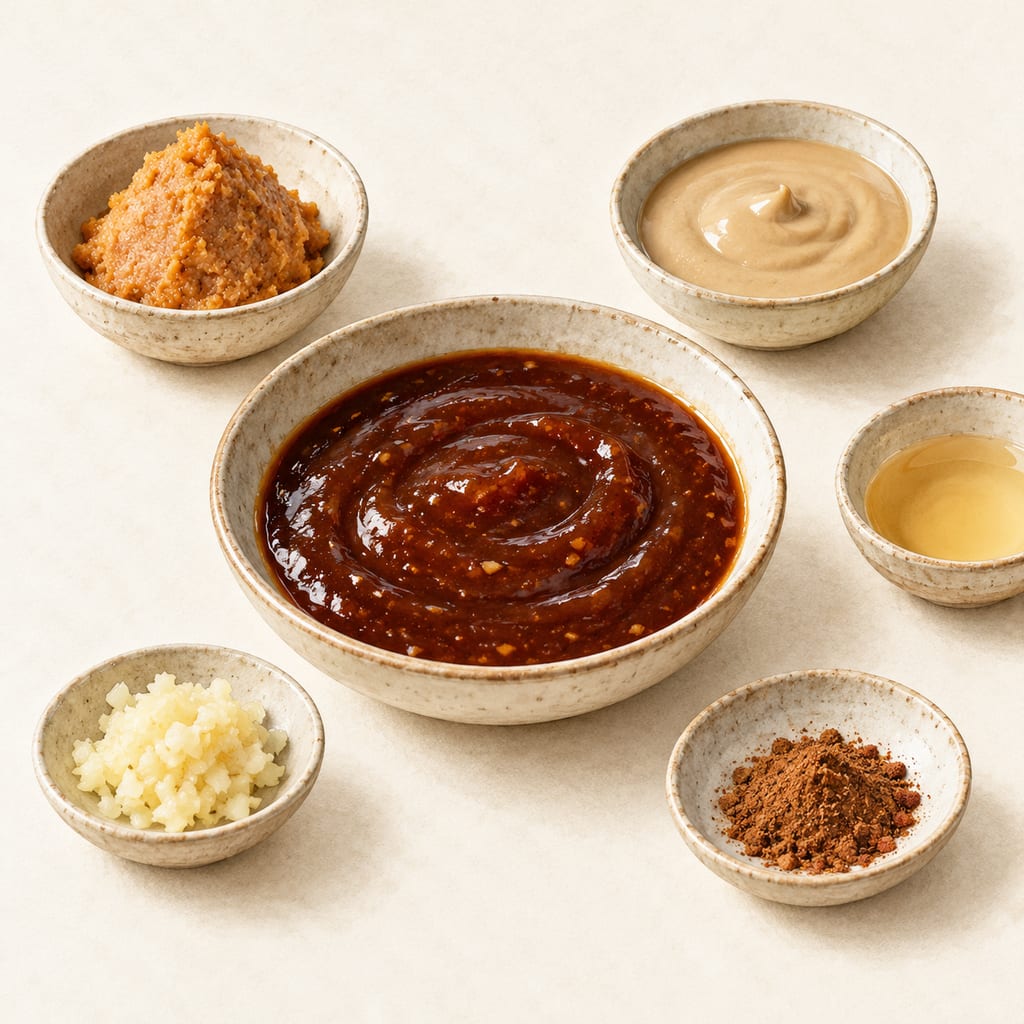
An untested modern miso-based sauce inspired by hoisin's sweet, savory profile; this prototype is not traditional hoisin or a copy of a commercial brand.
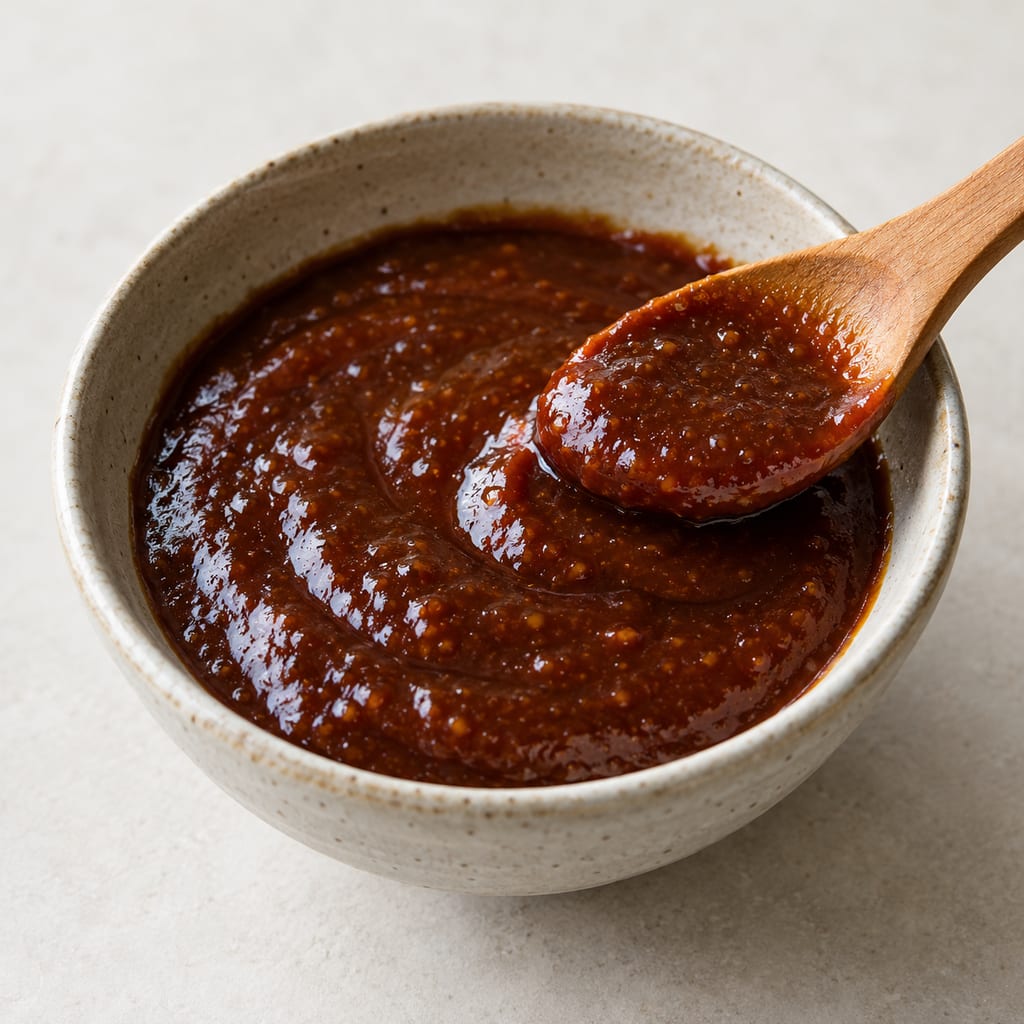
A sweet-salty Japanese glaze of miso, mirin, sake and sugar, warmed until thick and spread on grilled tofu, eggplant, daikon or konnyaku. Regional versions in Aichi use red miso and dashi.
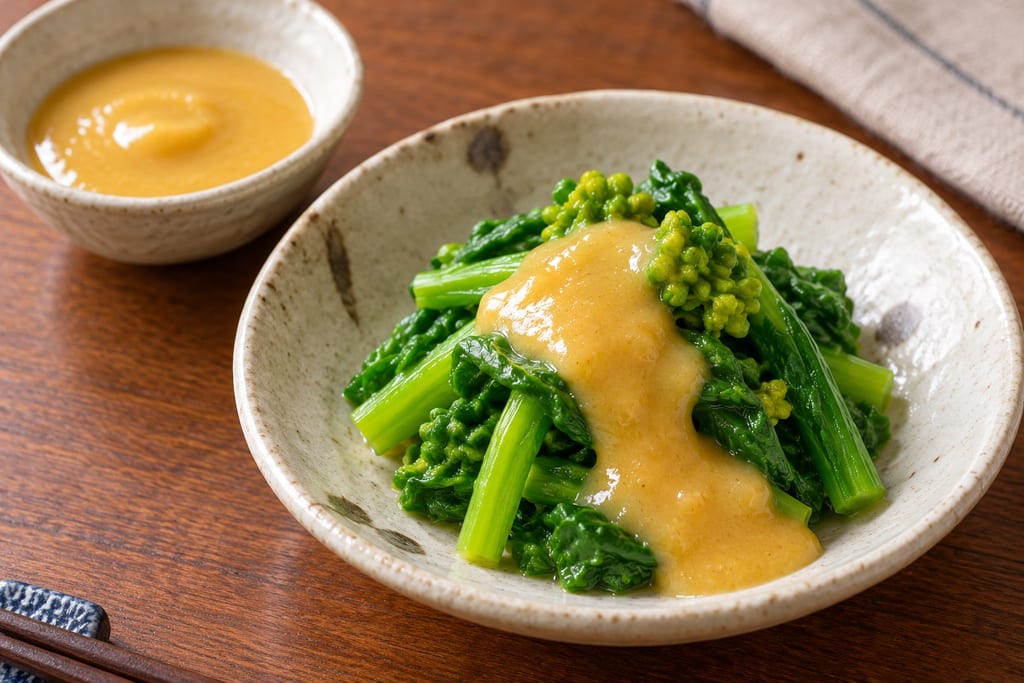
Karashi-su-miso is a smooth Japanese sauce of sweet miso, rice vinegar and hot mustard, stirred together for vegetables, seafood or poached fish.
No community contributions have been published for this entry yet.
Sign in to contribute. Published comments and photos are free to read.
Omnivore's CookbookMethod · Variation
Homemade Hoisin SauceIngredient quantities, the single mixing step and the storage statements of the quick home version; the author's note that real hoisin gets its flavour from fermented beans, and that miso and doubanjiang came closest to the store-bought sauce in her tests.
Reader-suggested substitutes for peanut butter, which the author did not test.
Cited in: A quick version at home; How it is used; Keeping it
The Woks of LifeIdentity · Name · Use
Hoisin Sauce: What Is It and How Do You Use It?Thick, dark, sweet-salty Chinese sauce with fermented soybean paste and seasonings; uses with Cantonese barbecue, Peking duck, Chinese-American moo shu and Vietnamese phở; name origin unclear; the literal 'seafood sauce' does not mean it contains seafood; distinct from sweet bean sauce.
Cited in: A sweet, salty, dark paste; How it is used
The Woks of LifeUse
Chinese BBQ Pork (Char Siu)Char siu marinade uses retail hoisin sauce; a marinade is a dish application, not a way of making hoisin.
Cited in: How it is used
Lee Kum Kee Home CanadaComposition · Allergens
Hoisin Sauce (Jar)Canada-market ingredient declaration in order: sugar, water, fermented soybean paste (water, salt, soybeans, wheat flour), salt, sweet potato powder, caramel, modified corn starch, sesame paste, dehydrated garlic, spices, salted chili peppers, acetic acid, Allura Red; allergens soybeans, wheat, sesame. No quantities or process disclosed.
Cited in: What is in the jar
Lee Kum Kee AustraliaComposition · Allergens · Market variation
Hoisin SauceAustralia-market product has a different declared formula, declares soy and sesame and carries a gluten-free claim.
Cited in: What is in the jar
Lee Kum Kee SingaporeComposition · Market variation
海鮮醬 / Hoisin Sauce 240gSingapore product lists fermented soy paste, sugar, sweet-potato starch, sesame paste, garlic, spices and salted chili.
Cited in: What is in the jar
Lee Kum Kee ChinaComposition · Market variation
李锦记海鲜酱China-market formula is related but not identical and also includes red fermented bean curd.
Cited in: What is in the jar