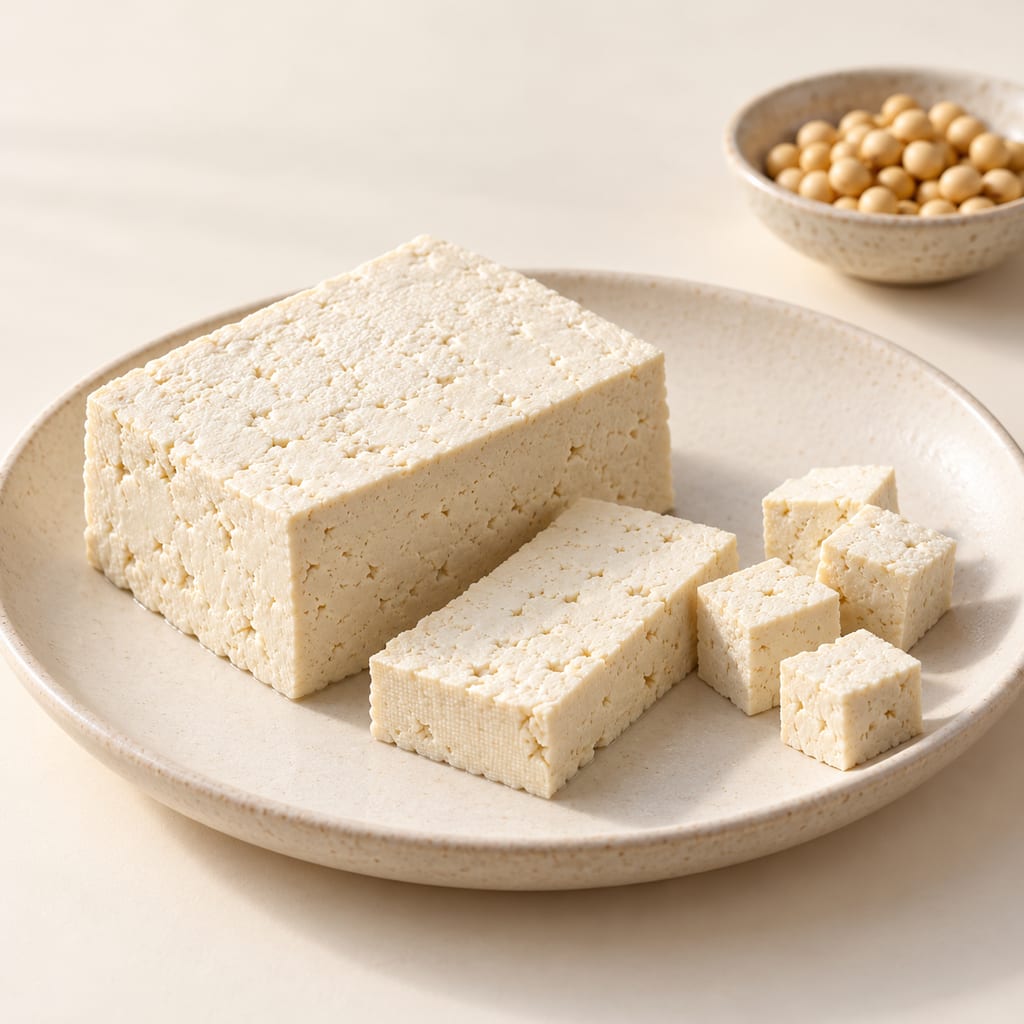
Fresh Firm Tofu
Fresh firm tofu is made by coagulating cooked soybean milk, then draining and pressing the curds into a sliceable block. This version follows a published nigari method and traces tofu’s varied, contested history.
 FermenteaWhere food goes to change
Modern method
腐乳 (fǔrǔ) · red sufu
Red sufu is tofu grown with an identified Mucor racemosus mould, salted, seasoned with red pepper and zanthoxylum, then matured under brine for 180 days.
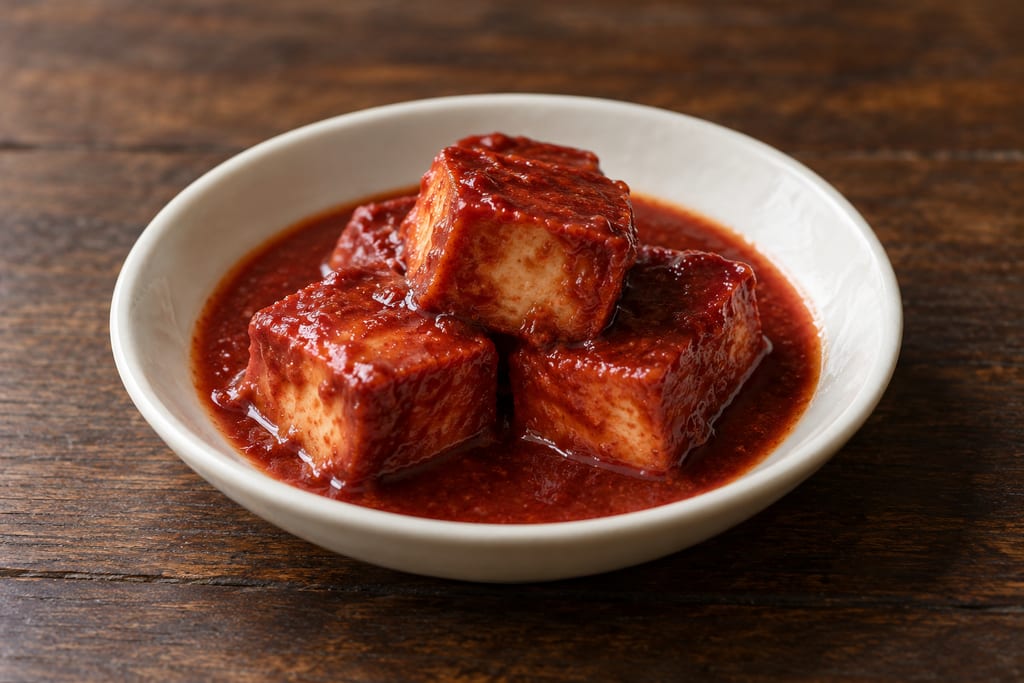
Red sufu is a type of Chinese fermented tofu in which small pieces of bean curd mature into soft, rich, savoury cubes surrounded by a red seasoning liquid.
The colouring ingredient is different from the white moulds that may be used to begin the tofu fermentation.
Traditional red sufu can involve Mucor, Actinomucor or related food-production fungi.
The red fermented rice is usually associated with Monascus cultures.
These microorganisms serve different roles.
The initial tofu mould contributes enzymes that soften the curd. Red fermented rice influences colour, aroma and the final dressing.
A red finished cube does not establish which fungal species produced its initial pehtze.
Main substrate — Tofu from Glycine max
Initial moulds — Food-production Mucor, Actinomucor or related cultures
Mould cultivation — Approximately 3–7 days under traditional cool-season conditions
Reported seasonal temperature — 10–20°C
Initial salting — Approximately 3–4 days
Red colouring — Red fermented rice / anka koji
Dressing — Wine, salt, red fermented rice and regional seasonings
Example brine concentration — Approximately 20% NaCl in one documented traditional process
Jar filling — Approximately 80% of vessel volume in that account
Ripening — Approximately 3–6 months
Safety status — Historical manufacturing process; not validated for home use
These are parameters from a general historical process. They are not a verified recovered recipe for a particular Mucor strain.
Sufu belongs to China's extensive tradition of soybean processing.
Tofu manufacture requires extracting soy milk, coagulating its proteins and separating a curd.
Fermenting the curd creates an entirely different food.
Fermented tofu has been documented in Chinese culinary history for centuries.
Its development reflects the same broad interest in enzyme-rich foods seen in Chinese fermented grain and soybean condiments.
However, an exact first date for modern red sufu is not established here.
Particular brands and regional styles appeared at different times.
The colour and seasoning became important distinctions as producers developed different types of sufu.
Red, white, chilli-seasoned and wine-flavoured fermented tofu may share an initial curd-processing stage but diverge during dressing and maturation.
It would be inaccurate to treat all these types as a single formula with only a colour change.
The main ingredient is prepared soybean curd.
Traditional sufu producers often use tofu that is firmer and contains less water than ordinary soft tofu.
Its moisture content matters because overly wet curd may not support the desired surface growth and subsequent ripening.
The initial fermentation requires a suitable food-production mould.
Some traditional descriptions refer to Mucor racemosus or other Mucor species.
Modern commercial manufacture may use Actinomucor elegans or related cultures.
The exact organism must be identified before a production method can be validated.
Wild surface mould is not an acceptable substitute.
Salt is used after initial mould growth.
It affects the water available to microorganisms and influences enzyme activity and flavour.
A documented traditional process describes salt absorption over 3–4 days.
Another stage uses brine at approximately 20% NaCl.
Those figures do not specify the precise final salt concentration inside each tofu cube.
Red fermented rice supplies colour and contributes additional biochemical complexity.
Food-grade red koji is necessary.
Products made with Monascus species require particular attention to strain selection because some strains can produce citrinin, an undesirable mycotoxin.
A red colour is not proof that the rice culture is safe.
Rice wine contributes alcohol and flavour.
Its exact quantity and alcohol concentration vary among sufu types.
The traditional process source summarized here does not specify one universal wine concentration for red sufu.
Some regional red-sufu types include chilli, anise, sugar or other seasonings.
These ingredients should be recorded as variant components rather than assigned to every preparation.
Red sufu commonly involves a solid-state mould fermentation followed by a wetter ripening stage.
Fresh tofu cubes are exposed to a selected culture.
The mould develops visible mycelium on the curd.
During growth, extracellular enzymes begin breaking down soy proteins.
The tofu becomes pehtze, the traditional name for mould-covered curd used in sufu manufacture.
The pehtze is salted and transferred into dressing liquid.
The liquid can contain wine, salt, red fermented rice and other flavourings.
Enzymes continue to alter the curd.
Proteins break down into peptides and amino acids.
The texture becomes softer and more spreadable.
Additional chemical transformations produce the characteristic aroma.
This is a historical manufacturing description. It is not a safe home-fermentation protocol without qualified process validation.
Soybeans are cleaned, soaked and ground with water.
The resulting slurry is heated and filtered.
A suitable food-grade coagulant is added to produce curd.
The historical description does not provide one universal soybean-to-water ratio.
Some sufu processes use a larger amount of coagulant than ordinary table tofu.
The tofu is pressed or otherwise prepared until suitable for mould cultivation.
An overly wet curd can delay or disrupt the intended fermentation.
The general review describes a concern when the curd water content exceeds 60%, but it does not establish a universal safe moisture target for all Mucor strains.
Cut the tofu into manageable blocks.
Typical commercial sufu cubes vary, often with sides around a few centimetres.
Exact dimensions are not given for this stage.
Introduce the identified food-grade mould under suitable conditions.
Traditional spontaneous inoculation sometimes involved exposing tofu to materials such as rice straw.
That practice can introduce unwanted microorganisms and should not be treated as a validated home method.
Controlled commercial production uses selected cultures.
In a documented cool-season traditional process, mould growth develops at approximately 10–20°C over 3–7 days.
These are historical process conditions, not safe instructions for every modern strain or curd.
Transfer the pehtze to appropriate salting vessels.
Salt is applied and absorbed over approximately 3–4 days in the documented process.
The amount needed for a batch is not given for this stage.
Combine appropriate red fermented rice and other dressing components.
The traditional description includes anka koji and soy mash in red sufu.
The exact mass of each ingredient is not supplied.
Arrange the prepared curd and dressing in the ripening vessel.
A general traditional process describes filling jars to approximately 80% capacity and adding brine containing about 20% sodium chloride.
These details are tied to that process, not universal requirements for red sufu.
Leave the product to ripen under the controlled conditions of its manufacturing process.
Traditional maturation may take approximately 3–6 months.
Temperature, salt content, alcohol concentration and microbial controls must all be validated for the specific formulation.
The mature curd should have a soft texture and developed flavour.
The final product may be stored in its dressing.
Shelf life, exact finished pH and water activity are not given for this stage.
Soy protein is initially held in a coagulated network.
Mould-produced proteases begin cutting that network into smaller components.
Over time, the physical structure weakens.
The curd becomes soft and can be spread or mashed.
Peptides and amino acids accumulate, influencing savoury, bitter and other flavours.
Lipases may act on residual soybean fats, creating fatty acids that contribute to flavour chemistry.
The combination of enzymes, salt, wine and time gives sufu its unusual texture.
This is not equivalent to simply soaking tofu in red salty liquid.
Without the appropriate biochemical transformations, the result would remain seasoned tofu rather than mature sufu.
Red fermented rice is made through the cultivation of selected Monascus fungi on rice.
The organisms can produce red, orange and yellow pigments.
These pigments create the characteristic colour of red sufu.
They may also contribute metabolites influencing aroma.
However, the colour cannot identify the exact strain or confirm that citrinin is absent.
This is why food-grade, tested cultures are particularly important in red sufu production.
Red fermented rice is the defining colouring ingredient.
The flavour can vary from sweet and aromatic to strongly salty and fermented.
White sufu generally omits the red fermented rice and is lighter in colour.
It is often used with rice porridge or vegetable dishes.
Some products contain a substantial amount of chilli.
These should be distinguished from ordinary red sufu, where the red colour may come principally from fermented rice.
Regional descriptions include red koji with additional chilli and anise.
The flavour differs from a simpler red rice-wine dressing.
Vietnamese fermented tofu is a related culinary category, commonly served with rice or used in dipping sauces and marinades.
It should not be treated as an identical Chinese red-sufu formula.
Red sufu is usually used in small quantities.
Its flavour is concentrated, and one cube can season a larger dish.
The curd may accompany plain rice or congee.
Its saltiness and savouriness contrast with the neutral starch.
Red sufu is used in some Chinese braised pork preparations.
It contributes colour, aroma and fermented soybean flavour to the sauce.
A small piece can be mashed into a seasoning for vegetables.
Sufu may be combined with other seasonings to produce dipping sauces or marinades.
Such sauces become separate prepared foods and require suitable storage.
A controlled initial fermentation should develop the intended mould rather than a mixture of unidentified growths.
The curd should soften progressively during maturation.
However, softness alone cannot establish safety.
Unexpected black, green or other mould growth, gas, slime or putrid odours may indicate contamination.
A red colour cannot prove that the dressing contains safe Monascus strains.
Strong salt or alcohol flavours do not establish appropriate preservation throughout the curd.
Red sufu involves several important hazards.
The first is contamination of the initial mould culture.
The second is mycotoxin risk associated with unsuitable fungal strains, including potential citrinin formation in red fermented rice.
The third is accumulation of biogenic amines during prolonged protein breakdown.
The fourth is failure to maintain appropriate salt, alcohol and other preservation barriers throughout the product.
A home producer cannot reliably test these hazards through tasting or visual inspection.
The described traditional process is not sufficient for validated modern manufacture.
Red sufu is an example of several fermentation technologies being combined.
Soybeans are first transformed into tofu.
A selected mould then begins degrading the curd.
Salt and wine alter the maturation environment.
Red fermented rice supplies colour and additional fermentation-derived compounds.
The final result is a concentrated condiment that differs fundamentally from ordinary tofu.
Its complexity makes it valuable to study, but also unsuitable for improvisation with unidentified moulds.
The study tests a defined Mucor racemosus process. Sufu is a traditional Chinese fermented soybean food, but the exact laboratory formula is a modern research preparation.
Yield 100 parts salted pehtze as seasoning-ratio basis; original tofu batch mass not reported · Scaling: source ratios only
Measured sufu samples show large variation in biogenic amines; toxin levels cannot be judged by appearance or taste.
Hazard sourceMold-fermented tofu requires an identified starter; visible mycelium does not identify species or rule out contaminants.
Hazard sourceUse a traceable food-production Mucor culture and an independently reviewed sufu process. Do not substitute unidentified wild mold or infer safety from mold color.
Control sourceThe research protocol is not professionally validated. The brine volume and pre-fermentation temperature are not stated; the study’s analytical results do not establish safety for a home batch.
The study’s Mucor racemosus strain MD-102 was isolated from sufu produced in Mouding; the experiment used that identified strain, not a claim that the product originated there.
Fresh firm tofu is made by coagulating cooked soybean milk, then draining and pressing the curds into a sliceable block. This version follows a published nigari method and traces tofu’s varied, contested history.
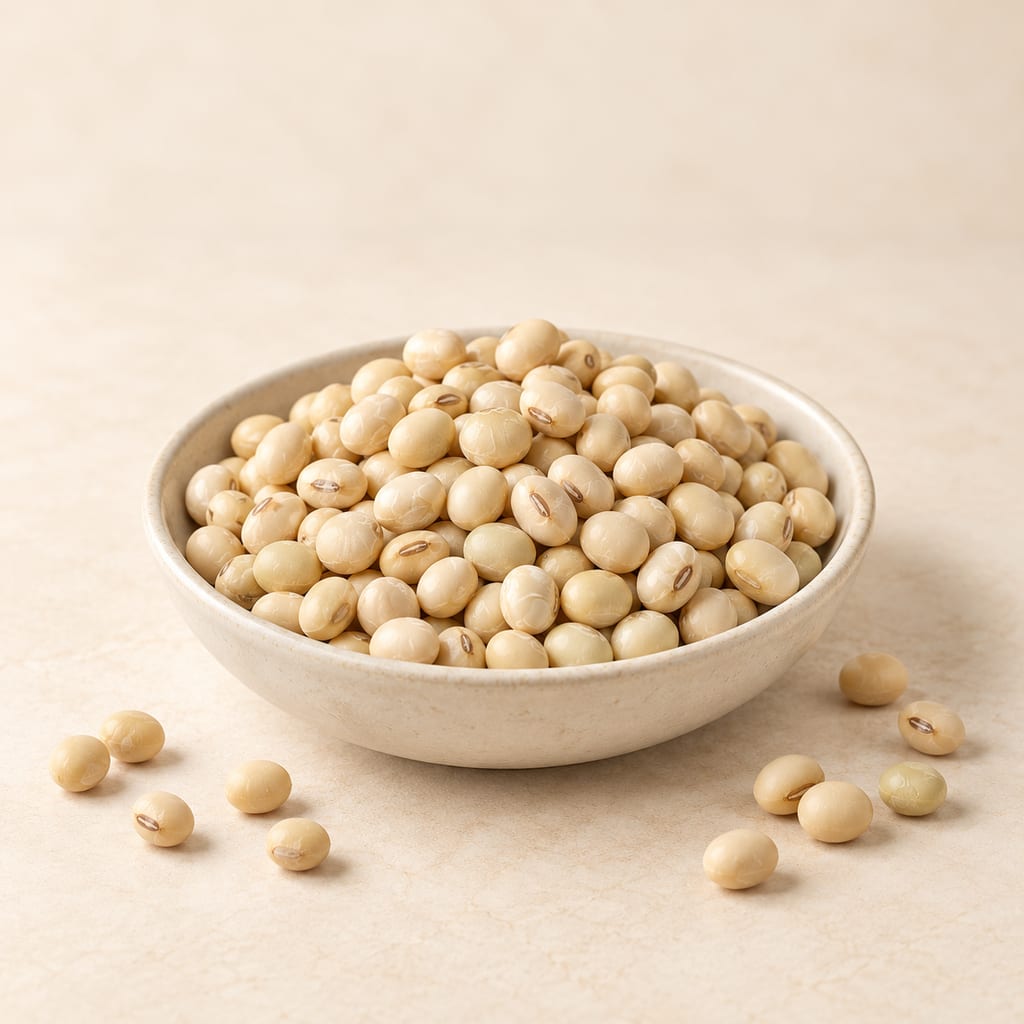
Soybeans are the mature dry seeds of Glycine max, about 40 percent protein and 20 percent oil, the substrate of tempeh, natto, miso, soy sauce and many other fermented foods.
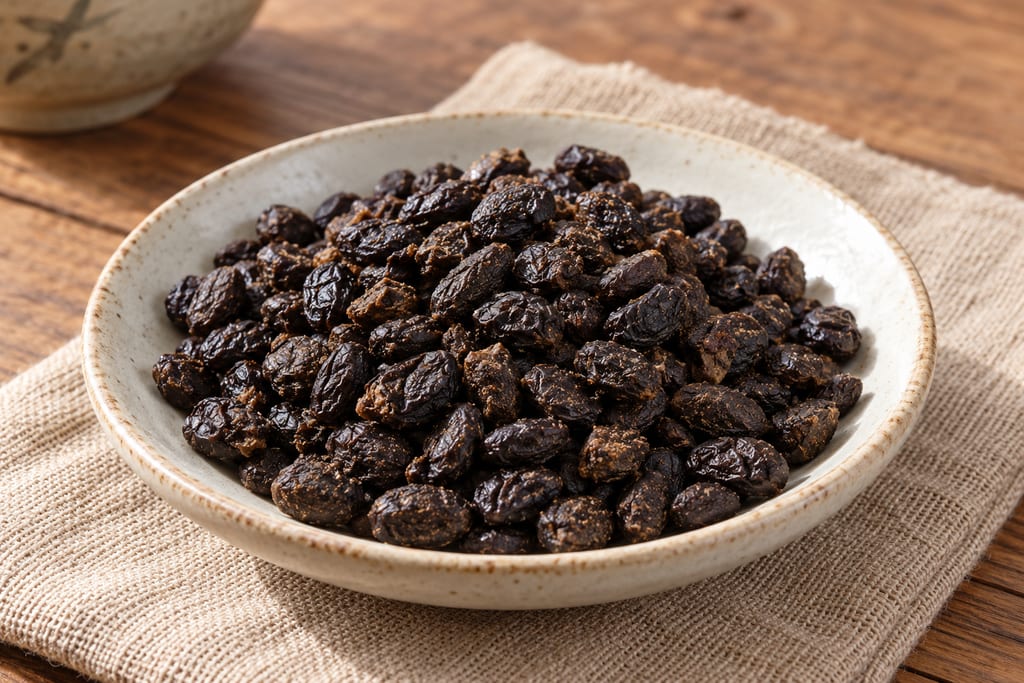
A Chinese fermented soybean condiment in which Bacillus-led bacteria, not moulds, drive the fermentation. Documented in Zunyi, Guizhou, and kept separate from mould-led douchi.
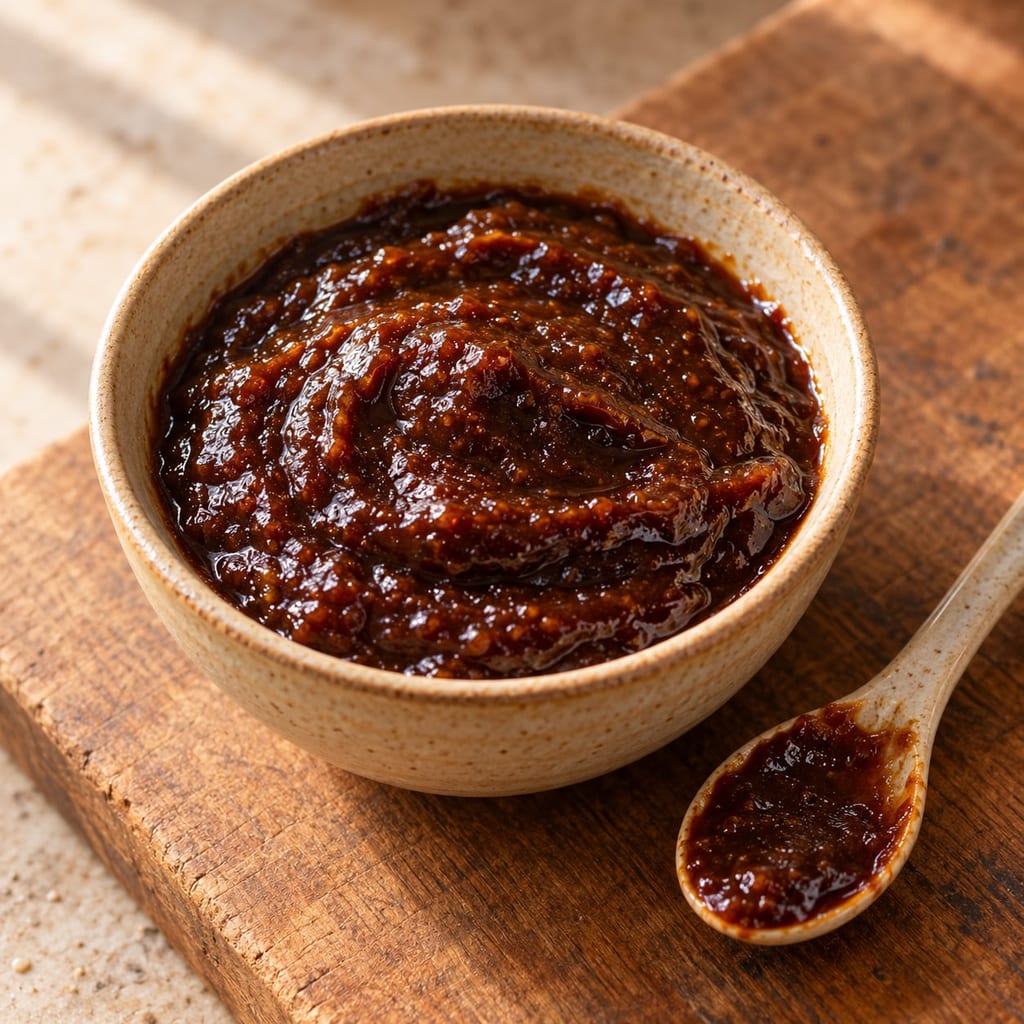
Chu hou is a sweet, savoury Cantonese paste of fermented soybeans, fermented bean curd, garlic, ginger and sesame, used mainly to braise meat.
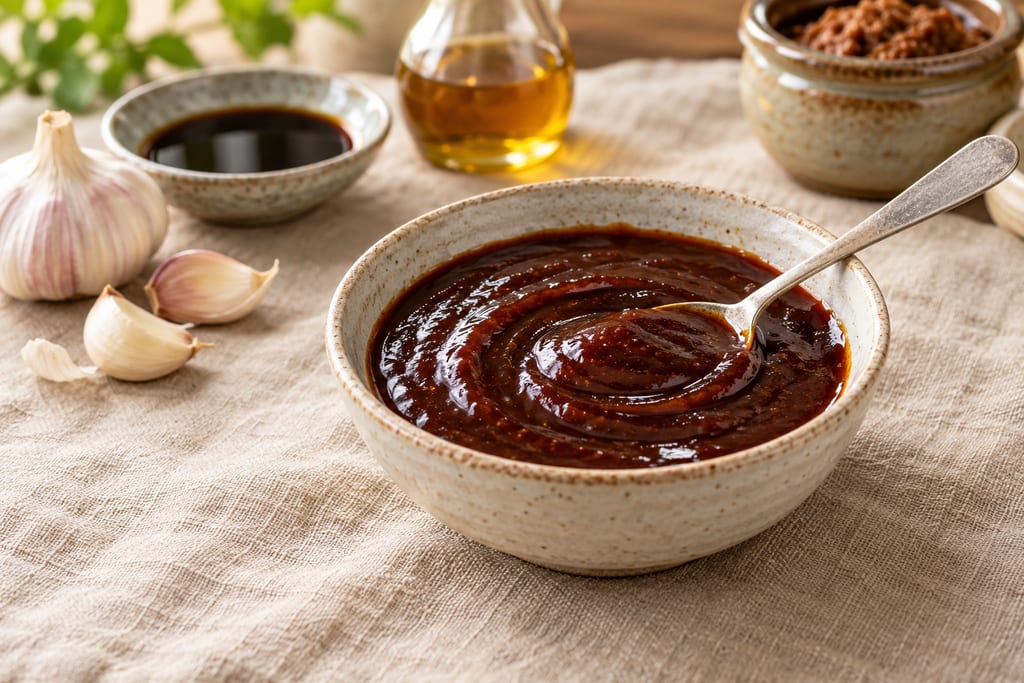
A thick, dark, sweet-salty Chinese condiment built on fermented soybean paste. This page gives one quick home version and records how commercial formulas differ.
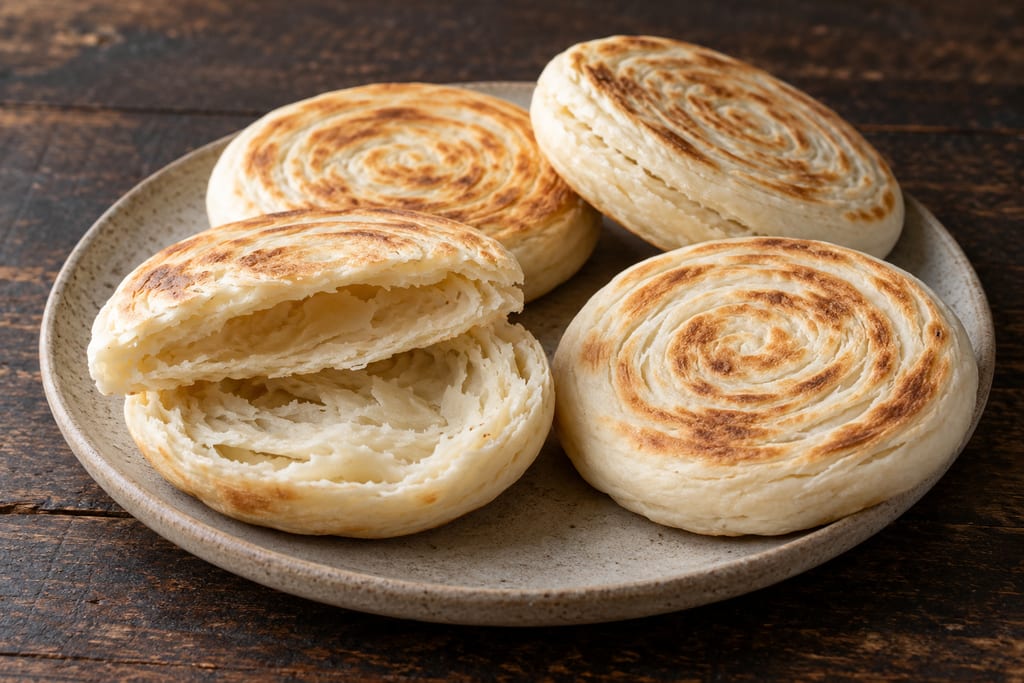
This Shaanxi-associated yeast flatbread uses a simple water dough, coiled shaping and a skillet bake. It is the bread used in roujiamo, not the filled meat dish.
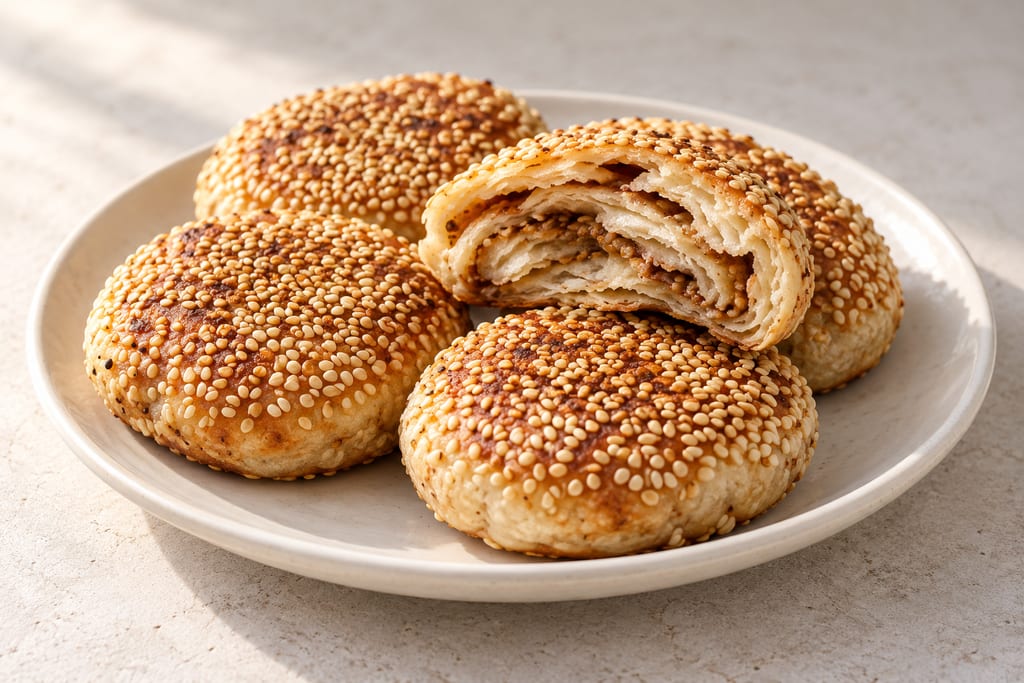
A Beijing-style yeast dough is layered with seasoned sesame paste, sealed into small buns, briefly pan-fried, seeded, and baked.
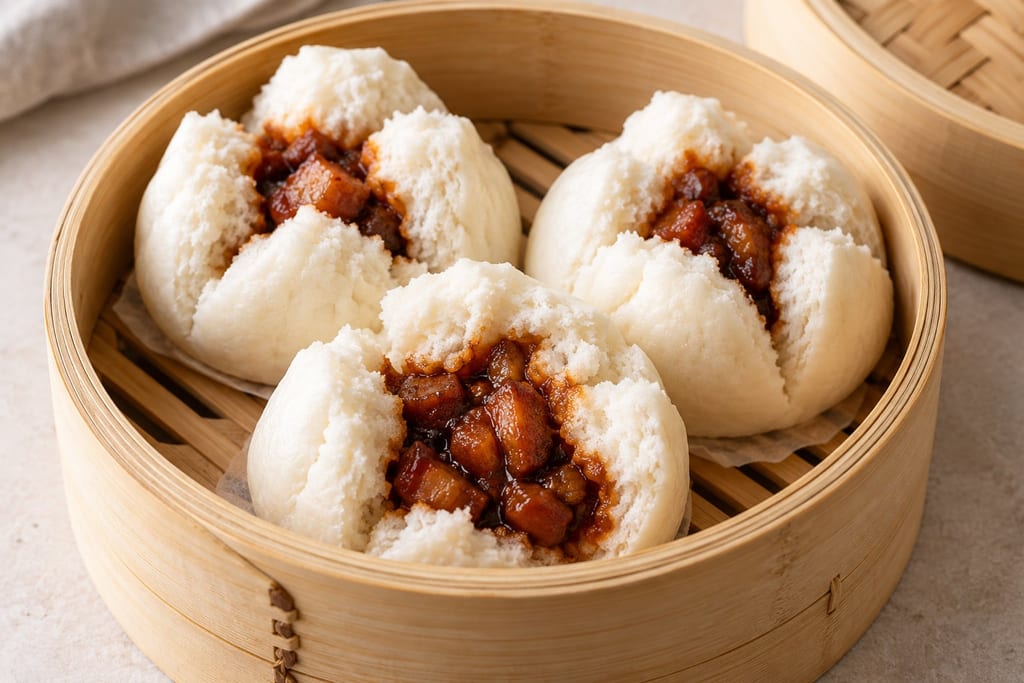
Fourteen fluffy steamed buns filled with cooked char siu and a thickened oyster-soy sauce.
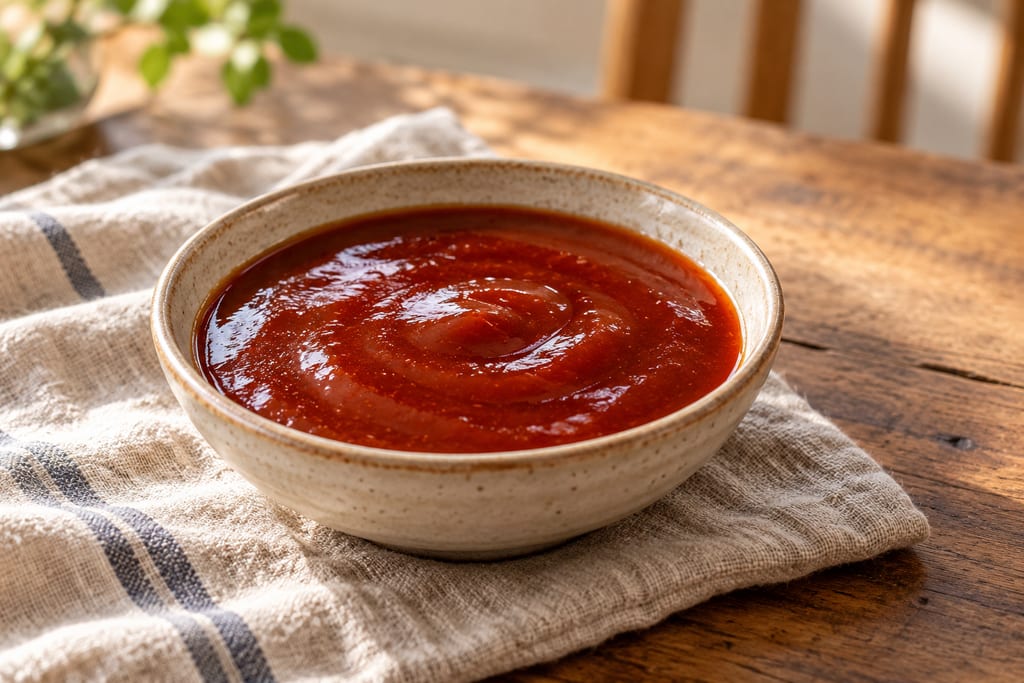
A smooth, tomato-based sweet-and-sour sauce of sugar, vinegar, tomato paste and soy sauce, thickened with starch for dipping or coating; it is not the sauce on Hangzhou's sweet-and-sour ribs.
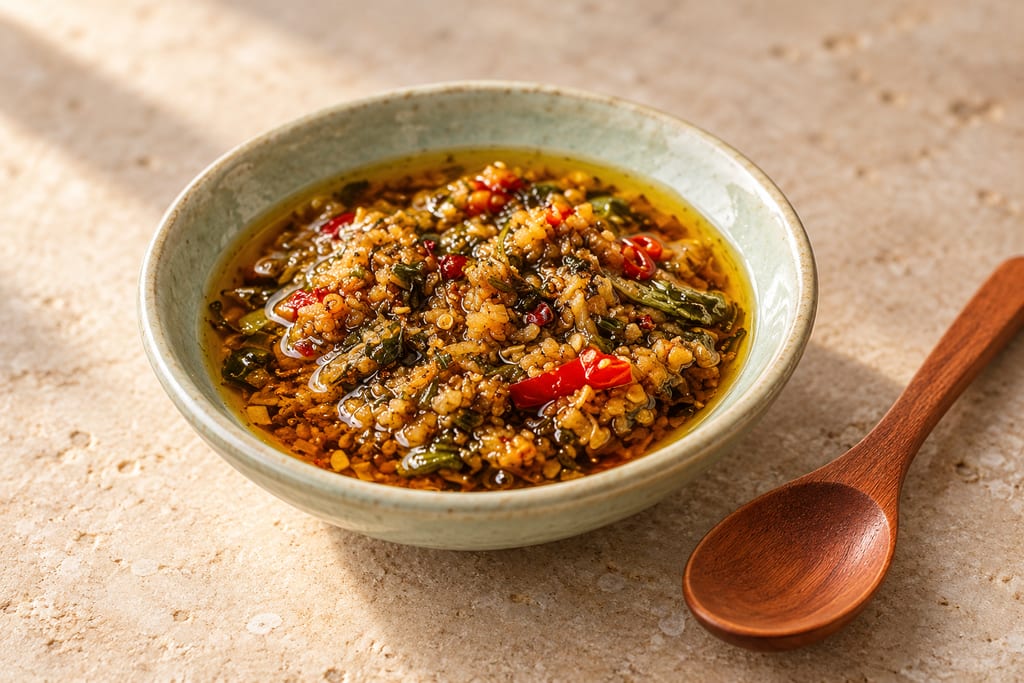
A Cantonese condiment of ginger, garlic, scallion and fresh chilli fried slowly in oil and seasoned with soy sauce, sugar, wine and salt, served over roast meats and poached chicken.
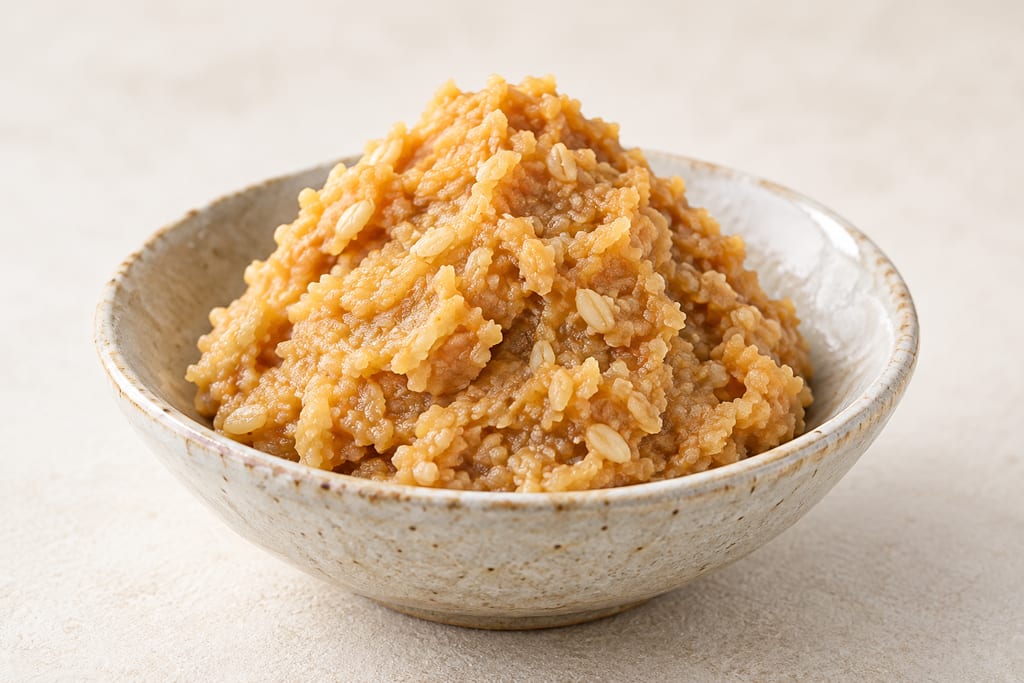
A Japanese soybean paste fermented with barley koji and salt, made mostly in Kyushu, Shikoku and western Japan. It is sweet, savoury and grainy.
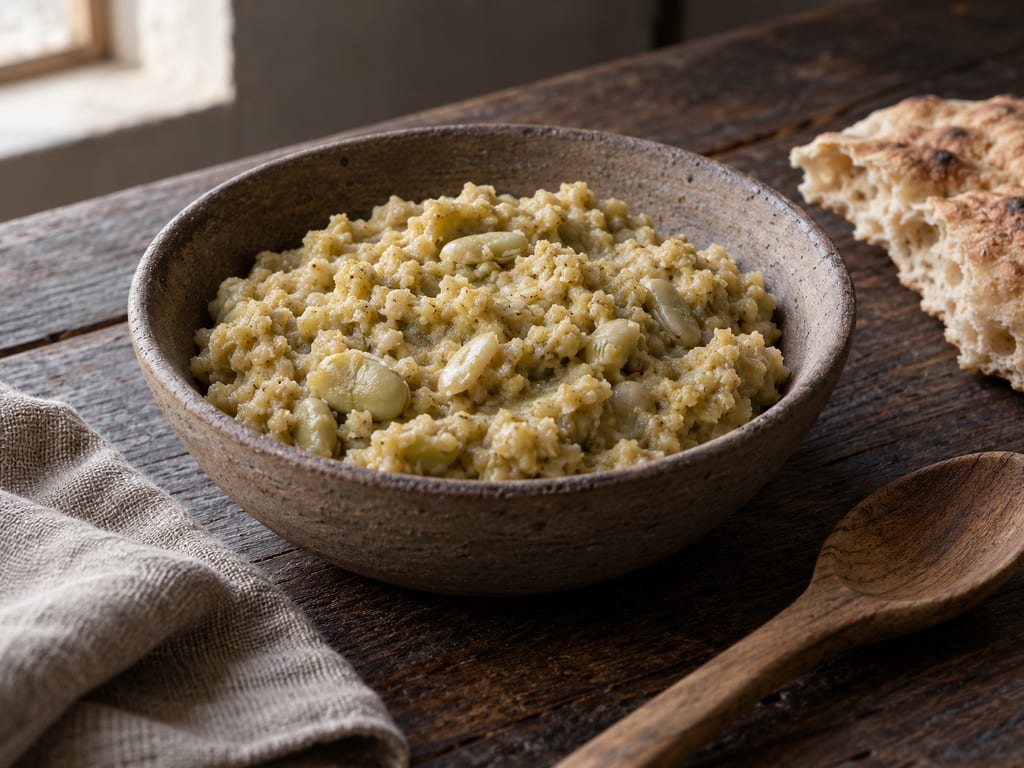
Cooked broad beans crushed to a thick paste with garlic and salt, a museum preparation built on the one European pulse that was already old when the Viking Age began.
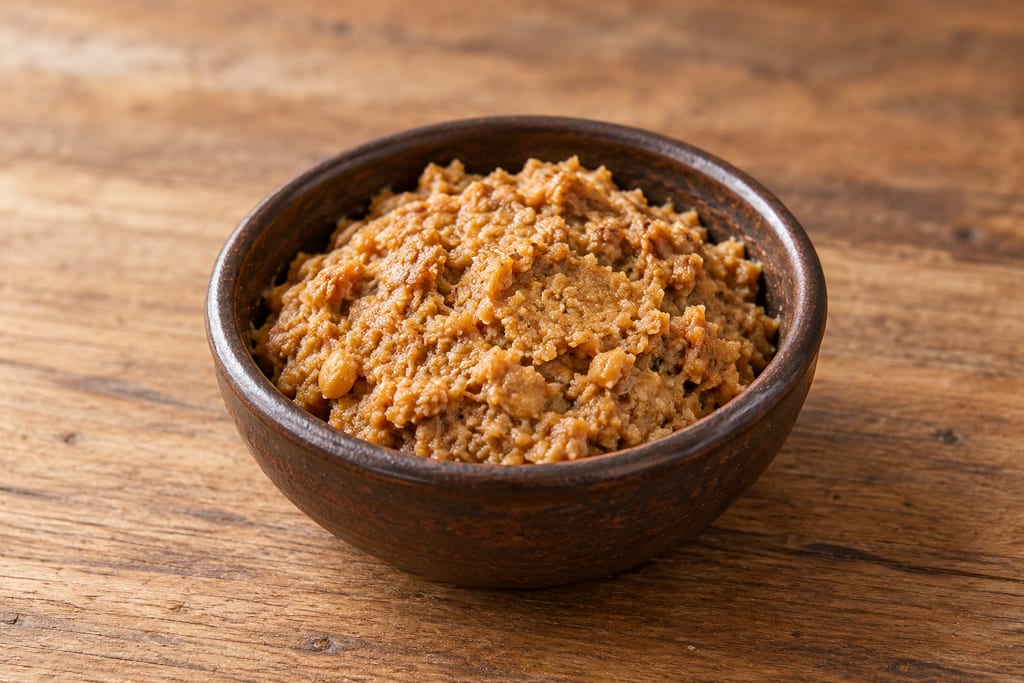
Doenjang (된장) is a Korean fermented soybean paste made by brining meju, separating ganjang, then mashing and aging the solids. This recipe follows one documented Sunchang processing study.
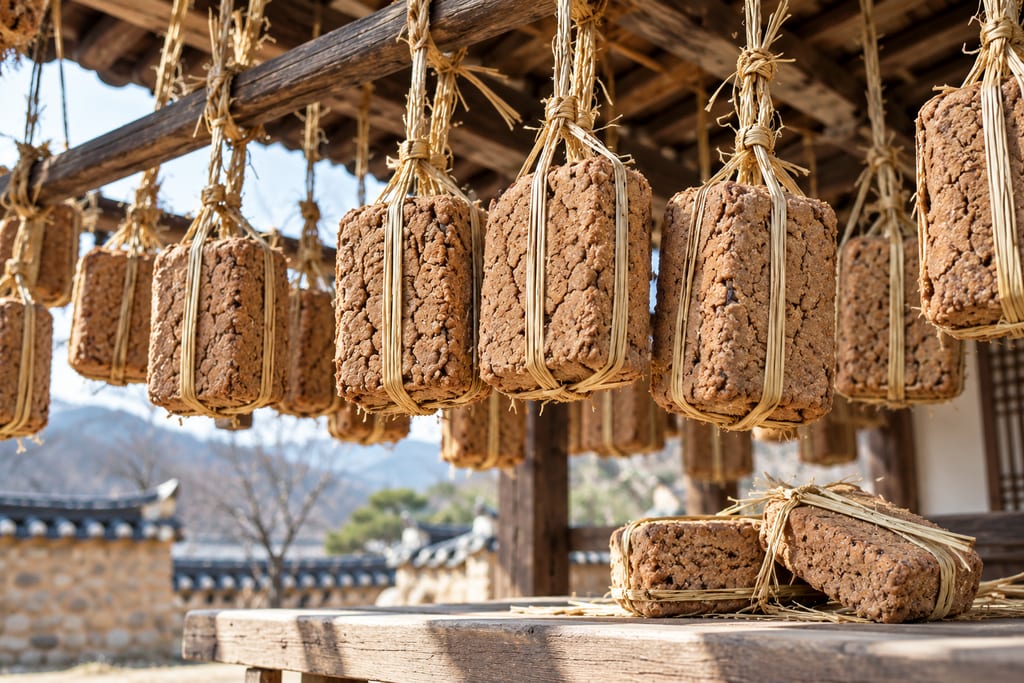
A cooked soybean brick, shaped and dried, that is fermented as a solid and later brined to make the Korean soy paste doenjang and the soy sauce ganjang.
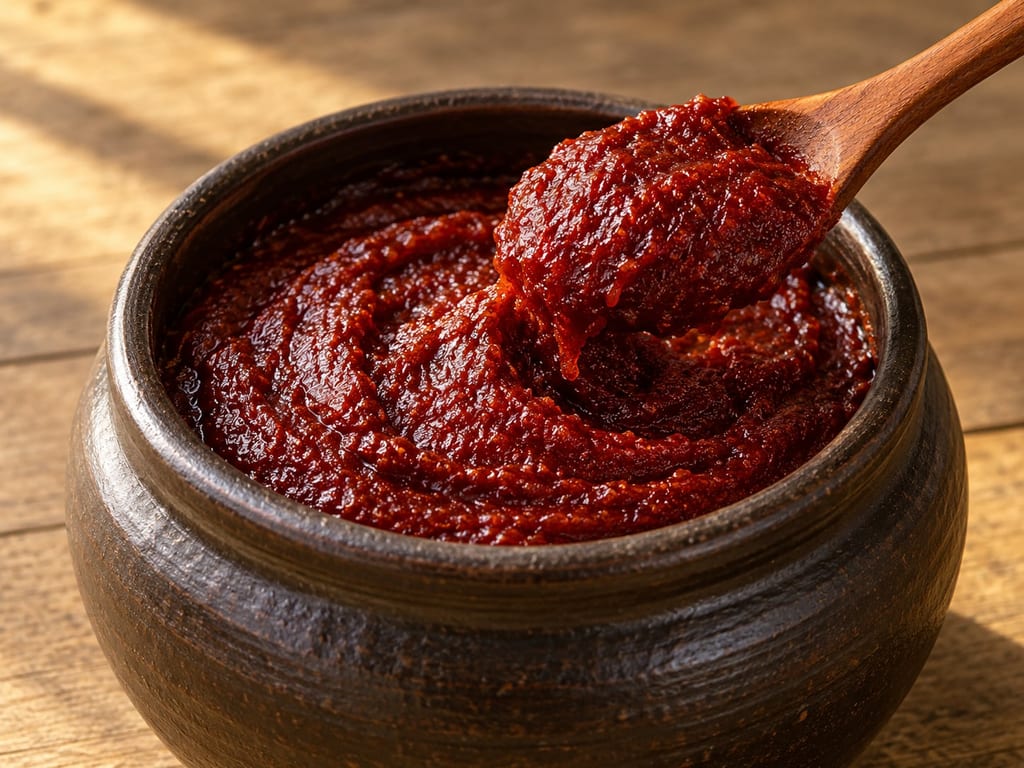
Korea’s sweet, savoury and fiery red paste of glutinous rice, barley-malt enzymes, fermented soybean meju powder and chilli powder, matured in earthenware.
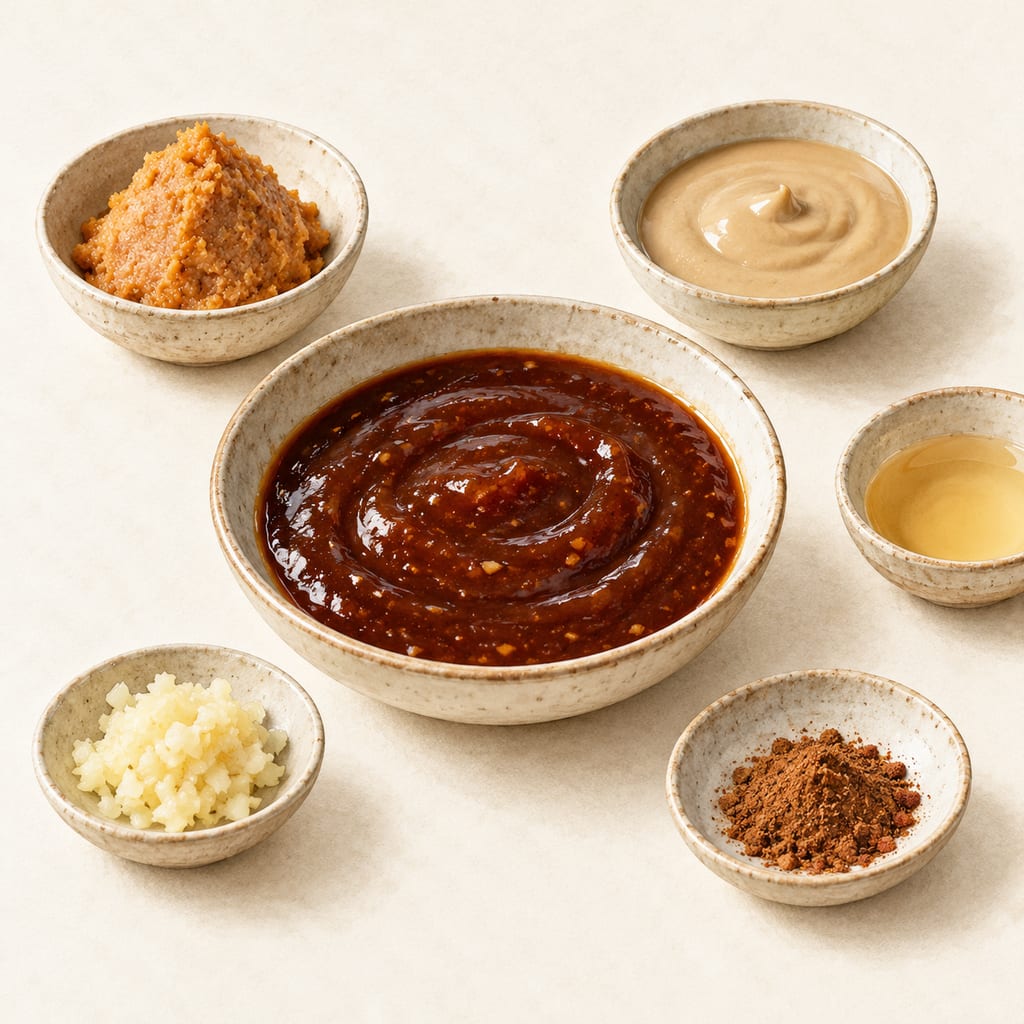
An untested modern miso-based sauce inspired by hoisin's sweet, savory profile; this prototype is not traditional hoisin or a copy of a commercial brand.
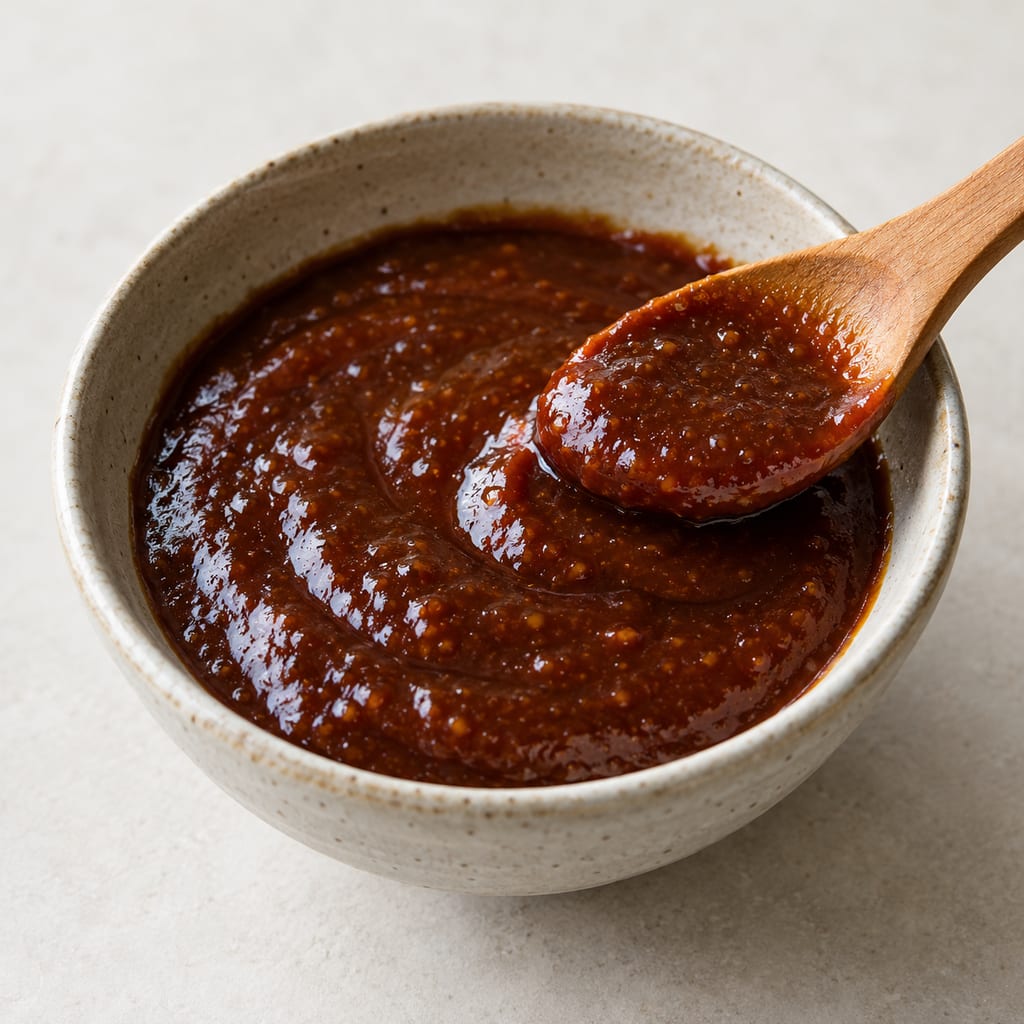
A sweet-salty Japanese glaze of miso, mirin, sake and sugar, warmed until thick and spread on grilled tofu, eggplant, daikon or konnyaku. Regional versions in Aichi use red miso and dashi.
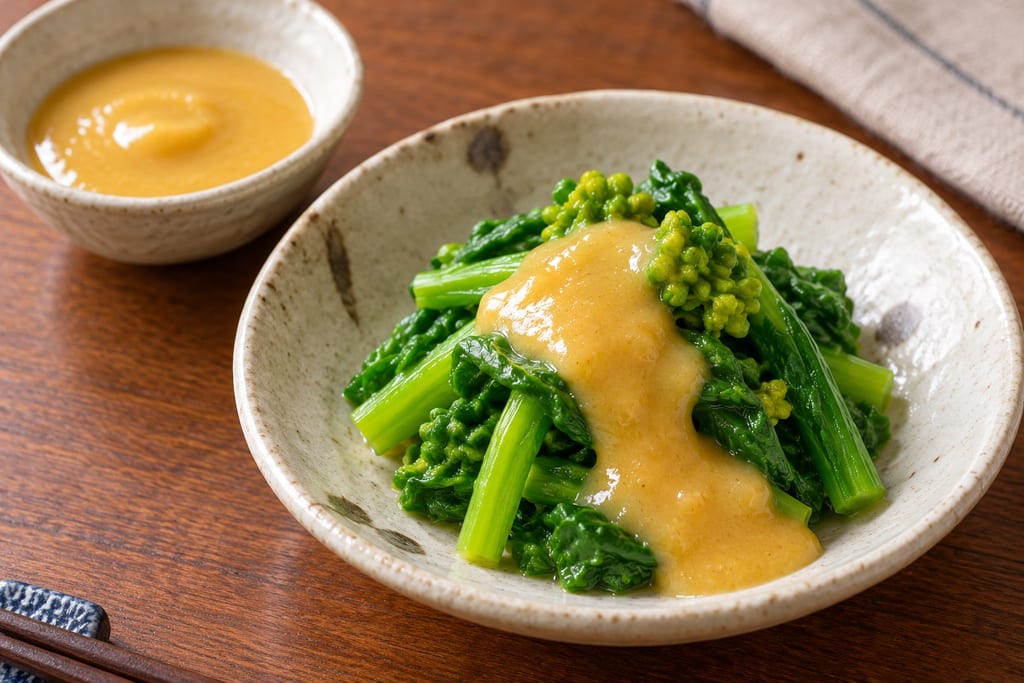
Karashi-su-miso is a smooth Japanese sauce of sweet miso, rice vinegar and hot mustard, stirred together for vegetables, seafood or poached fish.
No community contributions have been published for this entry yet.
Sign in to contribute. Published comments and photos are free to read.
FoodsInspiration · Process · Geography
Evaluation of Sufu Fermented Using Mucor racemosus M2: Biochemical, Textural, Structural and Microbiological Properties3.5 × 3.5 × 1.5 cm tofu pieces; 10^5 spores/mL at about 0.5 mL per piece; three-day pre-fermentation; 100:8:0.5:10 seasoning ratio; 4% salt and 3% ethanol; 180 days at 25 ± 2°C.
Cited in: What is red sufu?; Firm tofu; Food-grade Mucor culture; Salt; Red fermented rice; Rice wine; Optional aromatics; How the two-stage fermentation works; Why the curd becomes creamy; The role of red fermented rice; Red sufu; White sufu; Chilli-flavoured sufu; Rice and porridge; Braised pork; Vegetable dishes; Dipping sauces; Why red sufu is distinctive
Journal of Agricultural and Food ChemistrySafety
Safety assessment of the biogenic amines in fermented soya beans and fermented bean curdBiogenic amines varied widely in tested sufu samples, including high-risk samples.
Cited in: How the two-stage fermentation works; Why the curd becomes creamy; Chilli-flavoured sufu; Recognising problems; Safety; Why red sufu is distinctive
BC Centre for Disease ControlSafety
Fermented Foods Safety GuidanceGuidance on starter cultures and process-specific review; does not validate this recipe.
Cited in: Recipe at a glance; The history of fermented tofu; How the two-stage fermentation works; First stage: pehtze; Second stage: salting and ripening; Documented process stages; Stage 1 — Prepare tofu; Stage 2 — Reduce excess moisture; Stage 3 — Cut into pieces; Stage 4 — Inoculate; Stage 5 — Grow pehtze; Stage 6 — Salt; Stage 7 — Prepare red dressing; Stage 8 — Pack; Stage 9 — Mature; Stage 10 — Finish; Kwantung-style preparations; Vietnamese chao; How red sufu is eaten; Recognising problems; Safety
BC Centre for Disease ControlSafety
Fermented Foods Safety Guidance: Section 1, Introduction to Fermented FoodsStarter identification and process-specific hazards; does not validate this sufu method.
Cited in: Recipe at a glance; How the two-stage fermentation works; First stage: pehtze; Second stage: salting and ripening; Documented process stages; Stage 1 — Prepare tofu; Stage 2 — Reduce excess moisture; Stage 3 — Cut into pieces; Stage 4 — Inoculate; Stage 5 — Grow pehtze; Stage 6 — Salt; Stage 7 — Prepare red dressing; Stage 8 — Pack; Stage 9 — Mature; Stage 10 — Finish; Kwantung-style preparations; How red sufu is eaten; Recognising problems; Safety
Ethnic Fermented Foods of the World: An OverviewReference
Ethnic Fermented Foods of the World: An Overview — Journal of Ethnic Foods, 2024Cited by the written account of this record.
Cited in: How the two-stage fermentation works; Why the curd becomes creamy; Chilli-flavoured sufu; Why red sufu is distinctive
Wageningen UniversityReference
Wageningen University — Sufu, a Chinese Fermented Soybean FoodCited by the written account of this record.
Cited in: Recipe at a glance; The history of fermented tofu; How the two-stage fermentation works; First stage: pehtze; Second stage: salting and ripening; Documented process stages; Stage 1 — Prepare tofu; Stage 2 — Reduce excess moisture; Stage 3 — Cut into pieces; Stage 4 — Inoculate; Stage 5 — Grow pehtze; Stage 6 — Salt; Stage 7 — Prepare red dressing; Stage 8 — Pack; Stage 9 — Mature; Stage 10 — Finish; Why the curd becomes creamy; Chilli-flavoured sufu; Kwantung-style preparations; Vietnamese chao; How red sufu is eaten; Recognising problems; Safety; Why red sufu is distinctive
mdpi.comReference
Effects of Cold Post-Fermentation on Sufu Microbial Communities and Quality — Foods, 2025Cited by the written account of this record.
Cited in: How the two-stage fermentation works; Why the curd becomes creamy; Chilli-flavoured sufu; Why red sufu is distinctive
Liu et al.Reference
Liu et al. — Bacterial Sufu Fermentation, for ComparisonCited by the written account of this record.
Cited in: How the two-stage fermentation works; Why the curd becomes creamy; Chilli-flavoured sufu; Why red sufu is distinctive
BC Centre for Disease ControlReference
BC Centre for Disease Control — Food-Mould Culture Safety GuidanceCited by the written account of this record.
Cited in: The history of fermented tofu; Vietnamese chao; Recognising problems; Safety