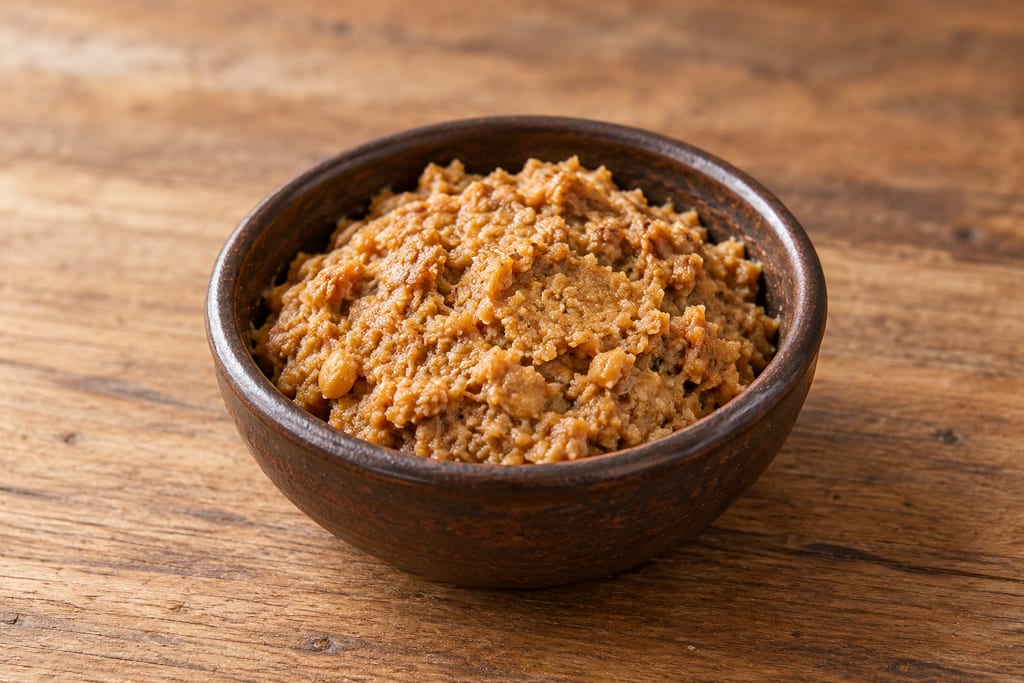
Doenjang
Doenjang (된장) is a Korean fermented soybean paste made by brining meju, separating ganjang, then mashing and aging the solids. This recipe follows one documented Sunchang processing study.
 FermenteaWhere food goes to change
메주 (meju) · Meju · Maljang · Maljang-hunjo · Mejo · Doenjang-meju
A cooked soybean brick, shaped and dried, that is fermented as a solid and later brined to make the Korean soy paste doenjang and the soy sauce ganjang.
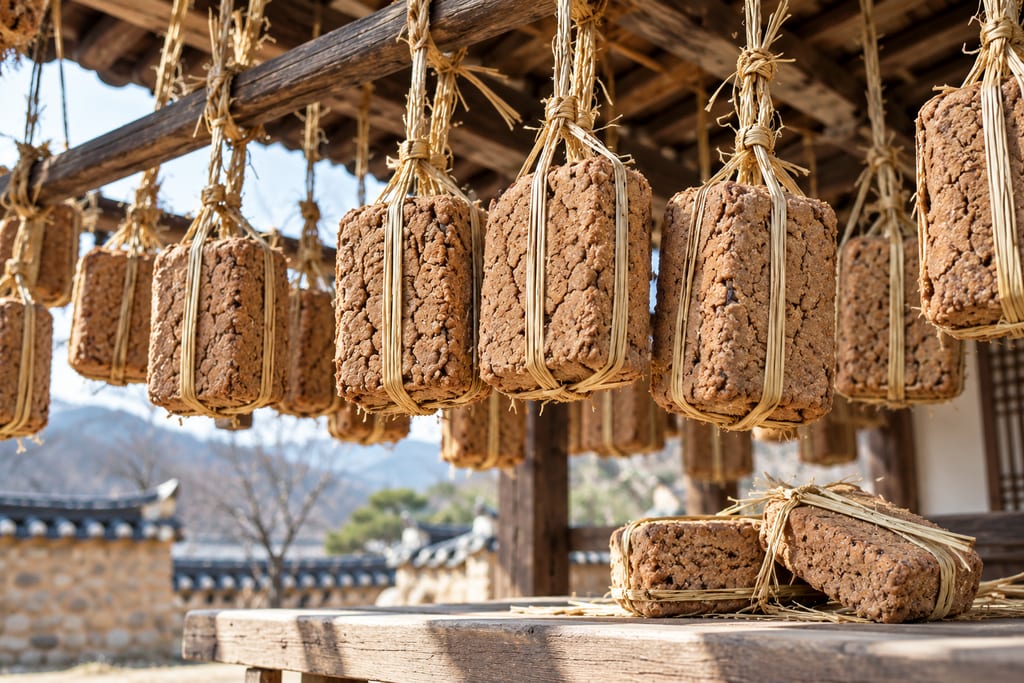
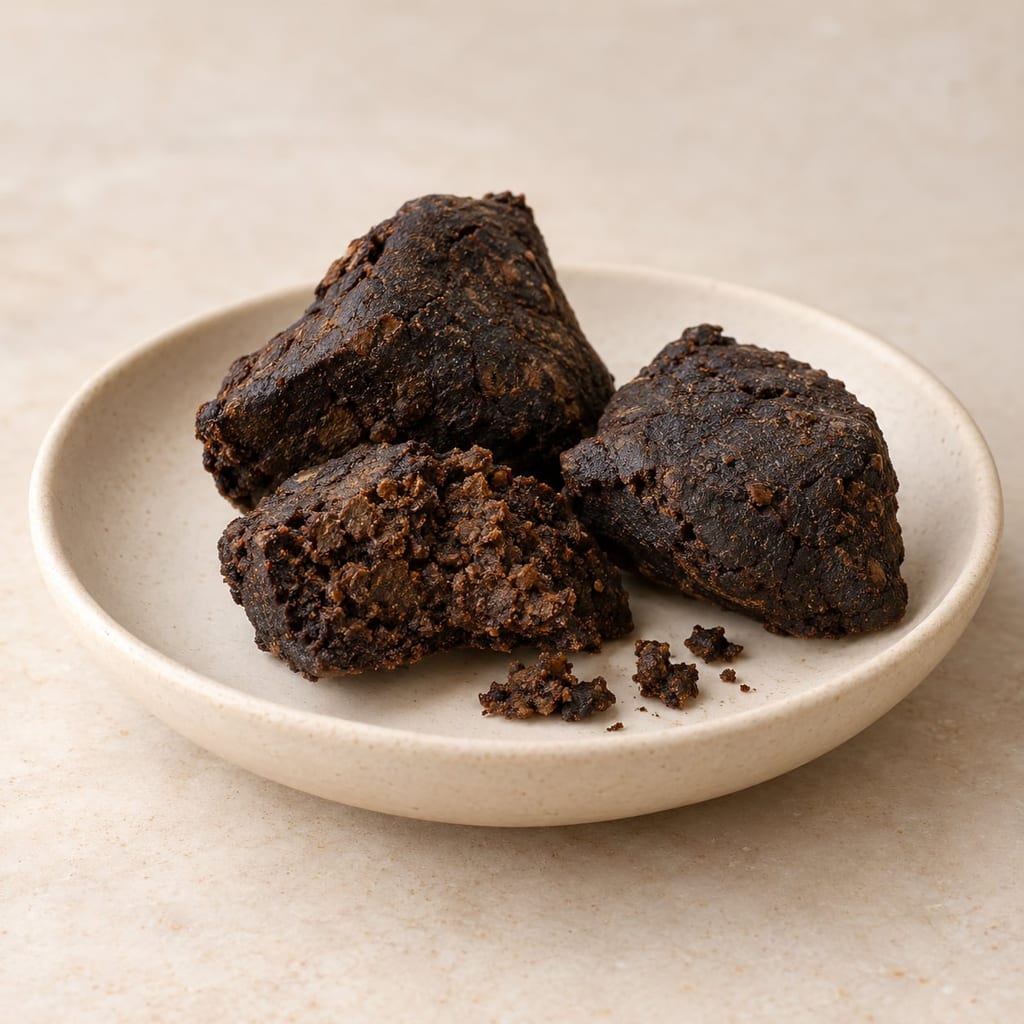
Meju is cooked soybean mass formed into a brick or another regional shape and fermented as a solid. It is not a finished seasoning. Its job is to become the raw material for Korean jang: the brick is brined later, and its liquid and paste fractions become ganjang (soy sauce) and doenjang (soybean paste).
The word covers several related products. Historical sources use maljang, mejo and meju, and the Academy of Korean Studies entry treats them as names for the same brick material. Gochujang-meju is a different form that may include grain and a different shape, and it is not the subject of this page.
The Academy of Korean Studies entry quotes a maljang method from the Joseon-period Sangayorok, with instructions for the first and second lunar months. It also records a wooden tablet from the Mado 1 shipwreck, dated 1207–1208, that lists maljang among the cargo collected in southern coastal waters and sent toward Songdo. The shipment context shows the material moving in trade in the medieval period. It does not show when meju was first made.
Seasonal references vary. The same entry cites a November reference in the Nongawollyeongga, so the calendar in the records is not a single rule.
The National Folk Museum of Korea presents an Angye-ri account of winter meju-making around Ipdong, the beginning of winter. Soybeans are sorted and rinsed, then cooked slowly in an iron cauldron for about six to seven hours according to an interview. The hot beans are pounded in a stone mortar, shaped in a wooden mould lined with hemp, bound with rice straw and hung under the eaves to dry and ferment through the winter. The account names a sorting board, cauldron, mortar and pestle, mould, straw and eave-drying place as the tools of this practice.
The account gives no soybean quantity, brick size, measured temperature, endpoint or storage protocol. It describes one community practice and is not a validated recipe for a home kitchen.
Traditional meju is not made with a selected starter. A 2014 study of doenjang-meju made at a manufacturer, with soybeans soaked overnight, steamed at 120°C for two hours, cooled, crushed and moulded, found that the brick exterior and interior communities differed. Bacillus predominated on the outside, while the interior had more facultative and anaerobic groups. The authors trace bacteria largely to the moulding equipment and fungi mainly to the environment, including shelves, air and rice straw.
A 2022 study of eight makers from different regions found distinct bacterial community patterns, including Bacillus-dominant and lactic acid bacteria-dominant examples. A 2024 study of a sample from Icheon used its own staged drying and fermentation schedule. Together these studies describe mixed communities that vary by batch, maker and position within the brick. They do not establish a universal inoculum, and the Bacillus, Mucor, Geotrichum and Aspergillus names summarize organisms detected in samples, not a recipe to copy.
A 2013 mycoflora study of soybeans used for meju adds that the grain itself carries fungi, so both the raw material and the environment matter.
Jang-making takes the dried brick further. The brick is brined, and over months the salt and the microbes change it. The liquid fraction is separated as the soy sauce, ganjang, and the solid fraction is mixed and aged as doenjang. A 2020 household survey reports that 71.3 percent of surveyed households used homemade meju for doenjang.
The brick is therefore an intermediate. Judging it alone does not tell a cook whether the later product is sound.
A 2018–2019 household survey found that 50.7 percent of respondents who answered the season question made meju in November–December and 36.3 percent in September–October. Provinces at higher latitude more often reported September–October, and lower-latitude groups more often reported November–December. The survey used a non-probability snowball sample and its Jeju sample was small, so the figures describe reported practice and are not a national calendar.
Locations also vary. Households reported yards, rooms and balconies. The 2014 study and the 2022 study sampled makers at specific sites, and those sites are study locations, not origins.
No source reviewed establishes a validated household method for meju. The sources do not give a home shelf life, a contamination response, or a safe endpoint for drying and fermentation. Mould on the surface is not a test of safety, and neither are smell, taste or appearance.
Overly thick or large bricks dry slowly, and the museum account names a local concern about unwanted mould. These are folk observations, not validated rules. Anyone making meju at home should treat it as an uncontrolled traditional process and seek food-safety guidance before relying on it.
The Academy of Korean Studies entry records the historical names maljang, mejo and meju, and quotes a Joseon-period maljang method from the Sangayorok. A wooden tablet from the Mado 1 shipwreck (1207–1208) lists maljang among cargo sent toward Songdo. These records establish a medieval attestation and a shipment context. They do not establish the first invention or a precise birthplace.
Country-level association. Specific households and regions vary; no single birthplace is supported.
Doenjang (된장) is a Korean fermented soybean paste made by brining meju, separating ganjang, then mashing and aging the solids. This recipe follows one documented Sunchang processing study.
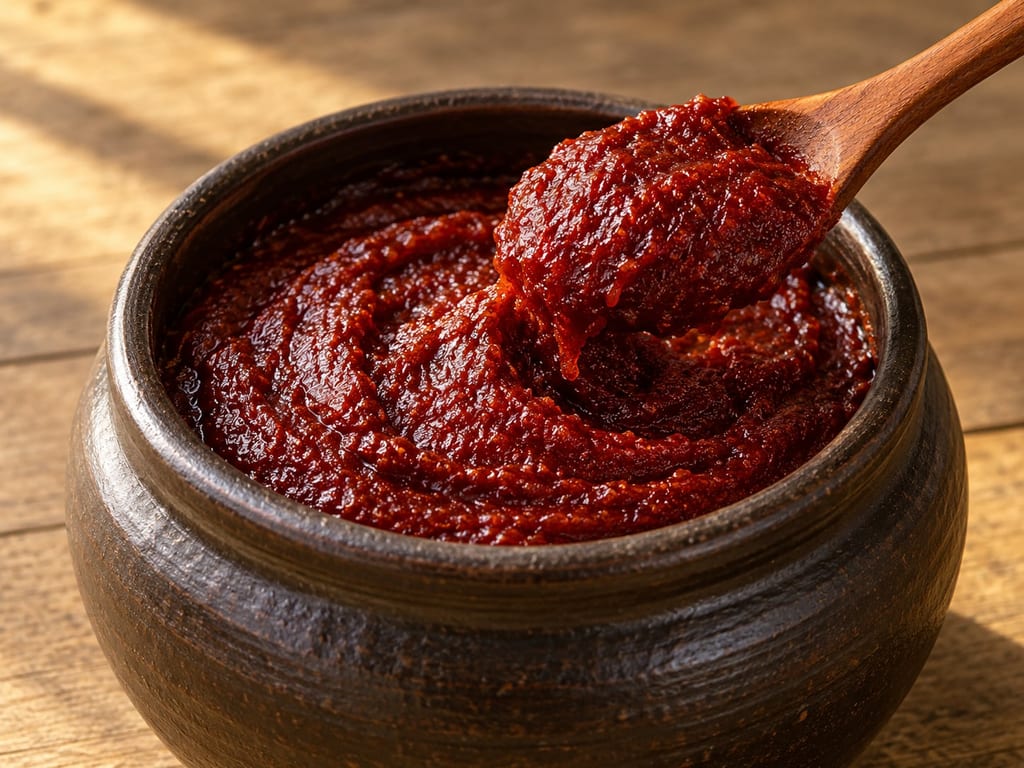
Korea’s sweet, savoury and fiery red paste of glutinous rice, barley-malt enzymes, fermented soybean meju powder and chilli powder, matured in earthenware.
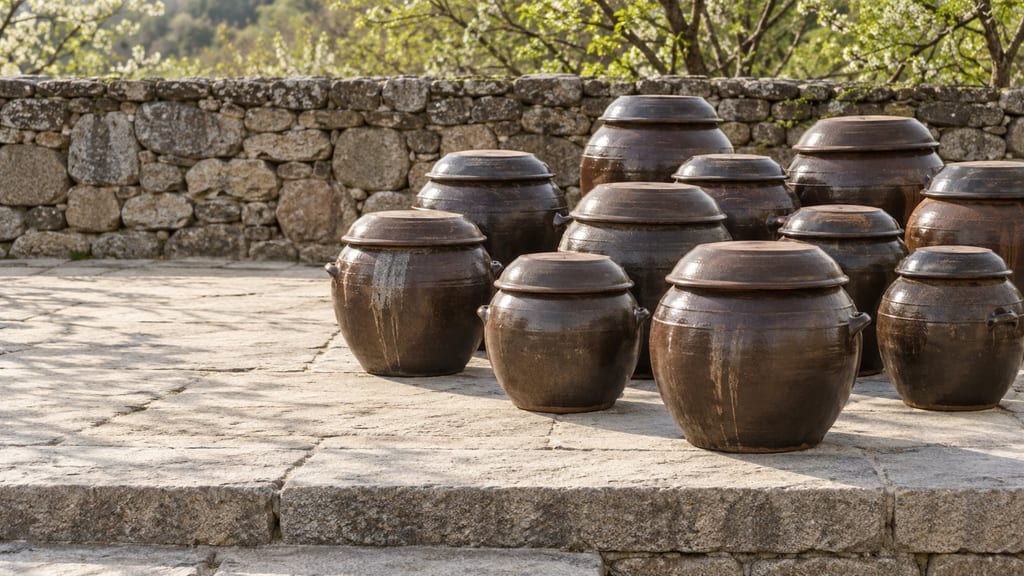
A Silla king’s bride was sent 135 loads of provisions, jang among them. The chronicle that says so was written 462 years later and never says what the jang was. What the record can carry, and what Korea added.
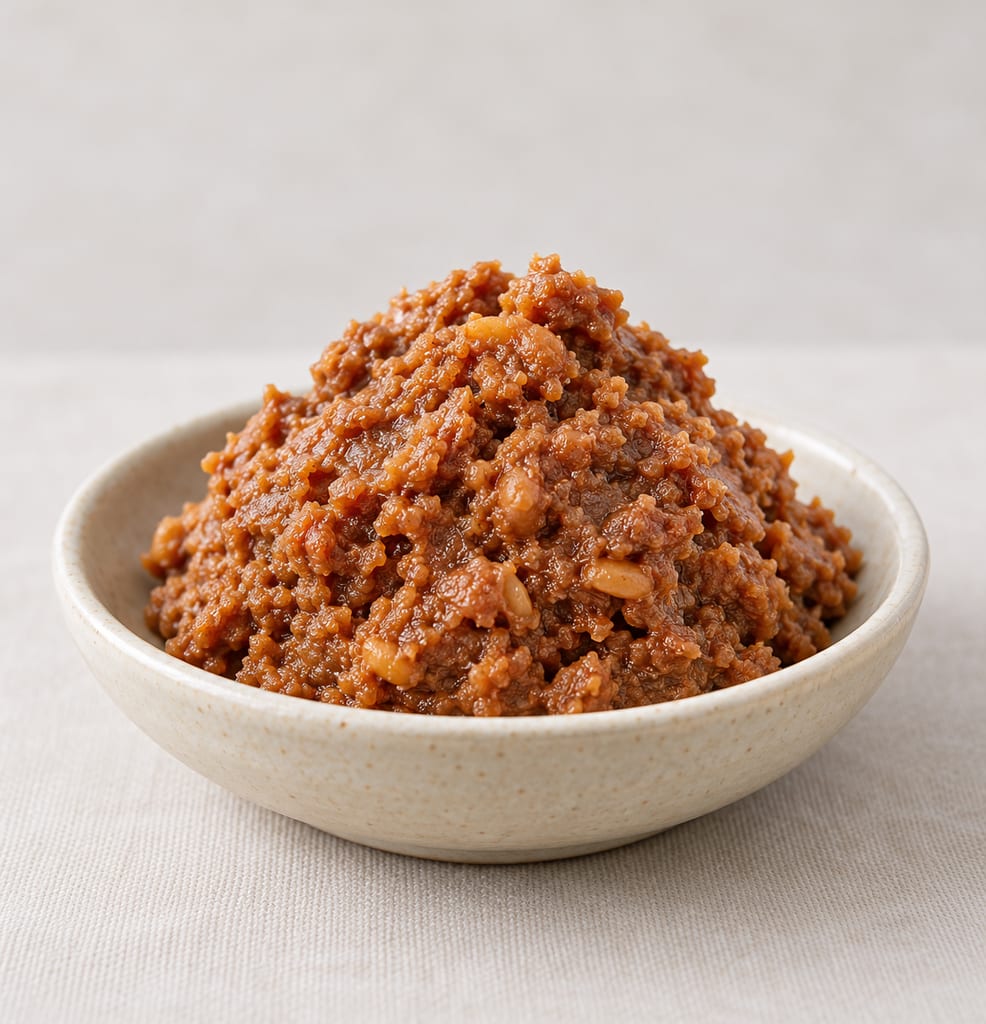
A Korean fermented soybean paste built on rice koji instead of traditional meju blocks, matured warm for thirty days with salt holding the water activity down.
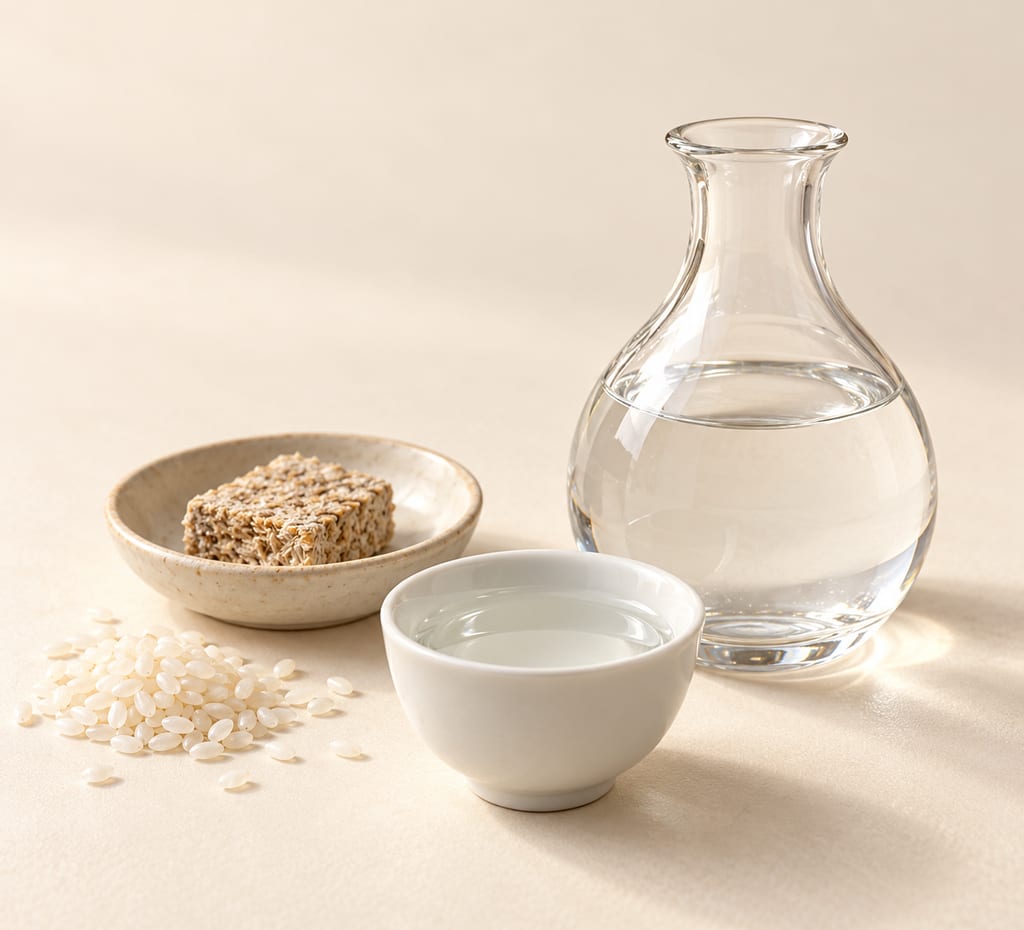
Andong soju is a rice spirit from North Gyeongsang, distilled from steamed rice and wheat nuruk. This method makes the starter before fermenting the rice mash in a jar.
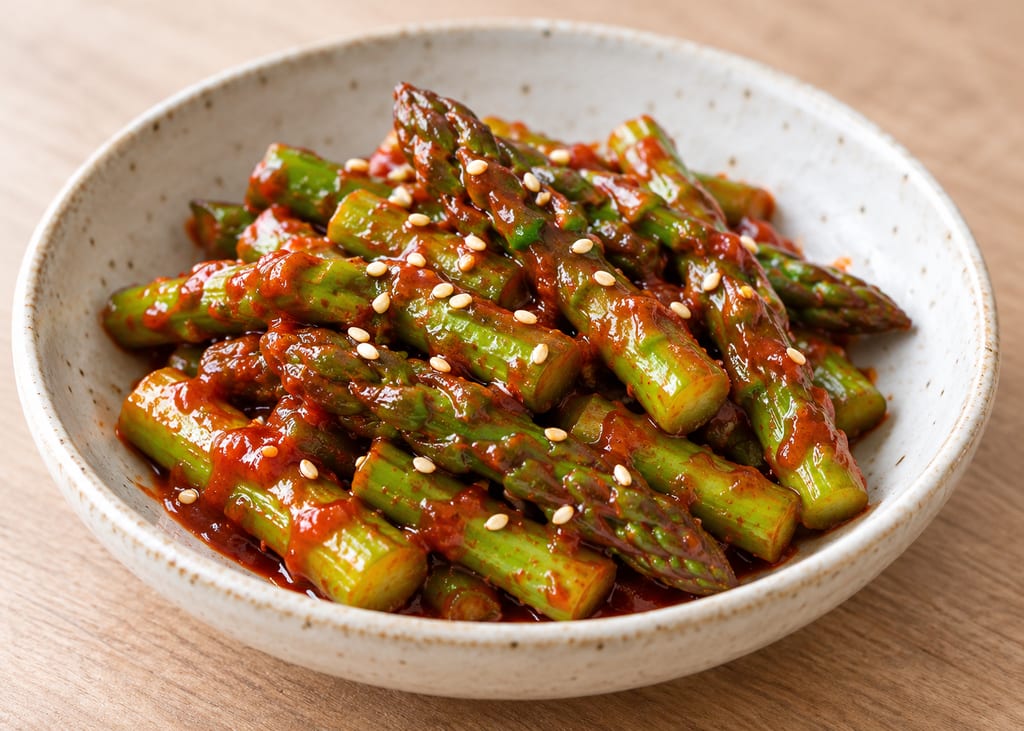
A Korean banchan of blanched asparagus dressed with a sweet-sour cho-gochujang sauce; Hyosun's version cools the spears in ice water before tossing.
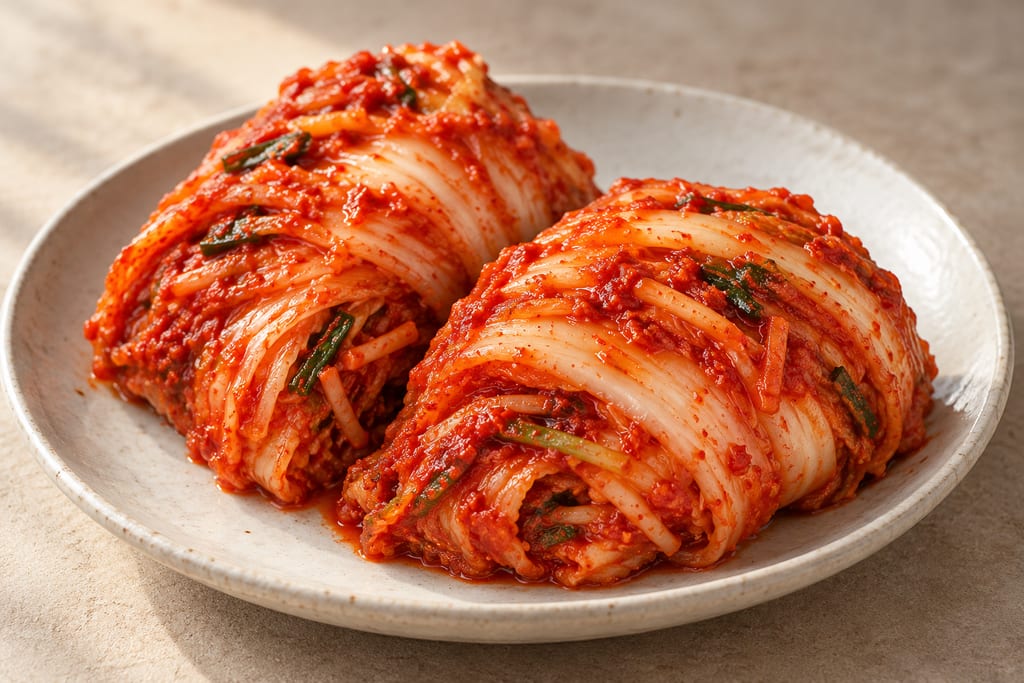
Napa cabbage salted, seasoned with a paste of gochugaru, garlic, ginger and salted seafood, and left to sour through lactic fermentation; Korea's everyday winter preserve.
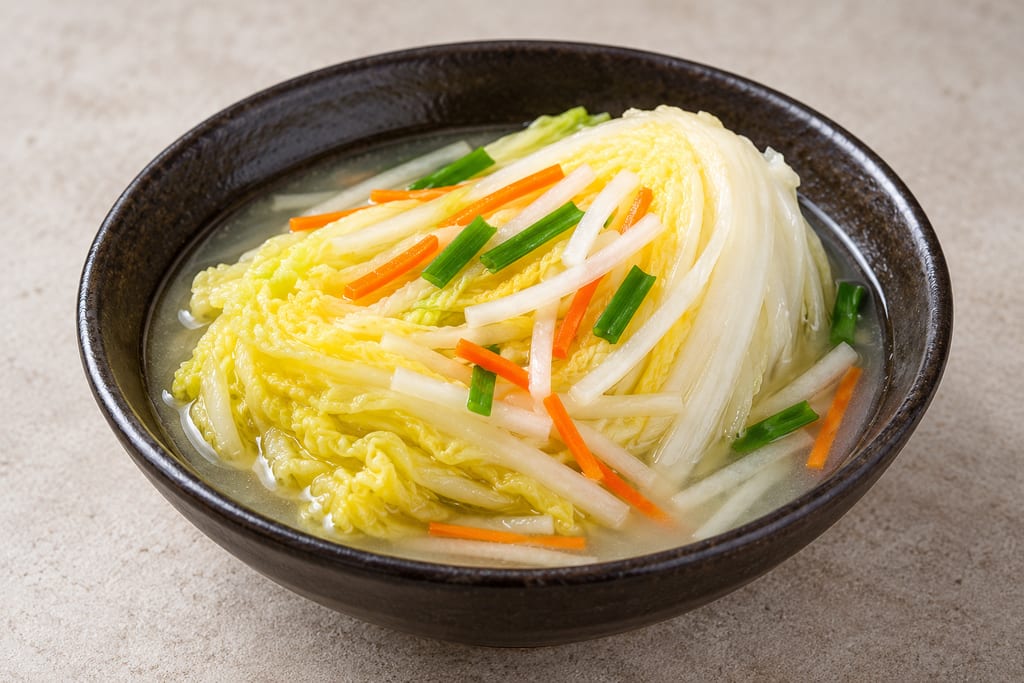
Napa cabbage is brined and filled with pear, radish, alliums, chives and fruit; this Korean kimchi omits red pepper flakes.
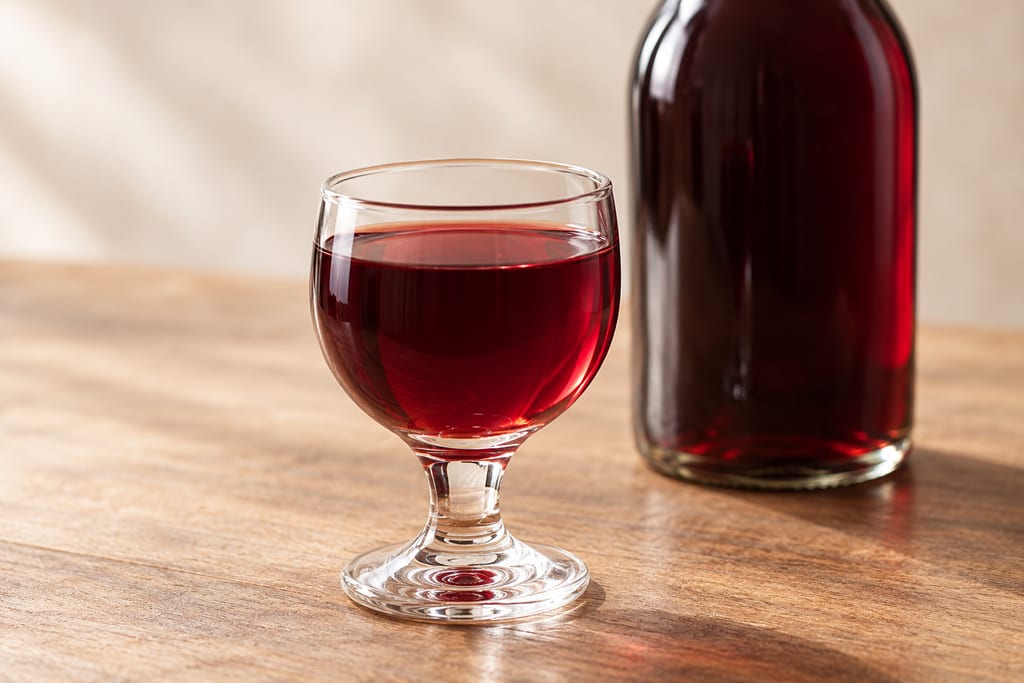
Korean black raspberry wine: crushed bokbunja berries with their seeds, sweetened to 20 °Brix, fermented 15 days at 25 °C with wine yeast, filtered and matured three months.
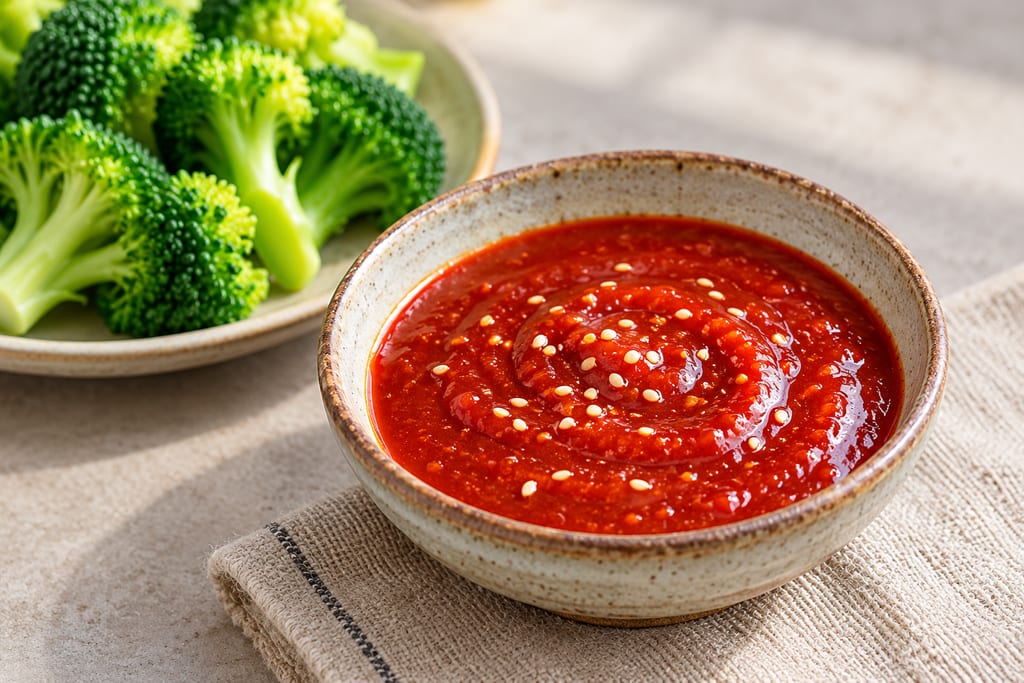
Chogochujang is a Korean sweet-sour sauce made by seasoning gochujang with vinegar and sugar. This development batch adds water and toasted sesame seeds, with optional garlic for the portion being served.
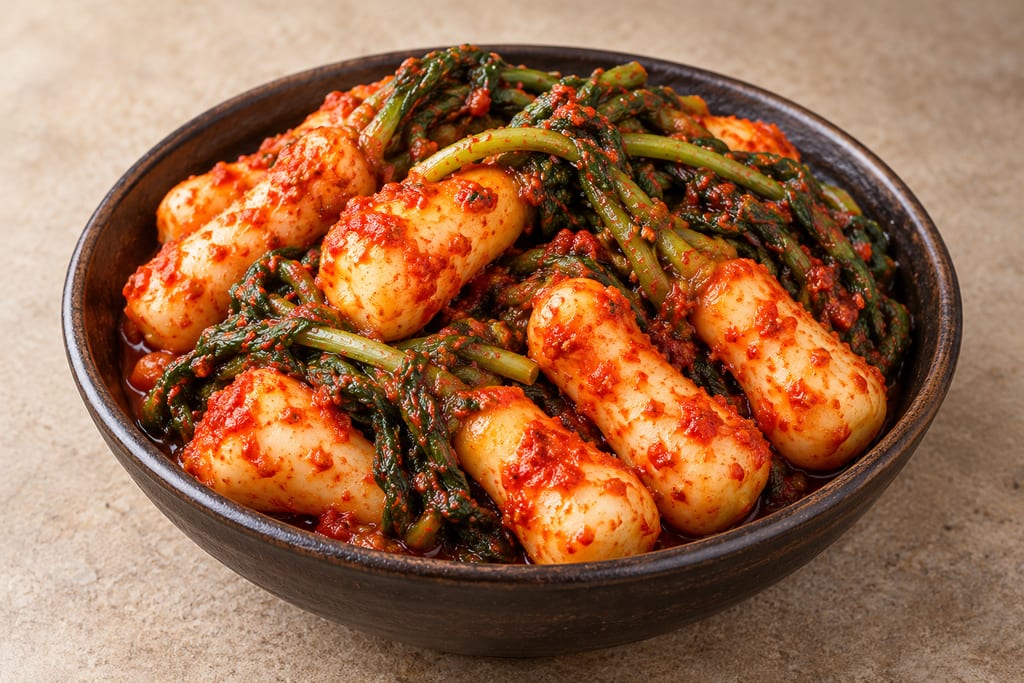
Small ponytail radishes keep their greens attached and ferment in a flour-and-chile seasoning paste.
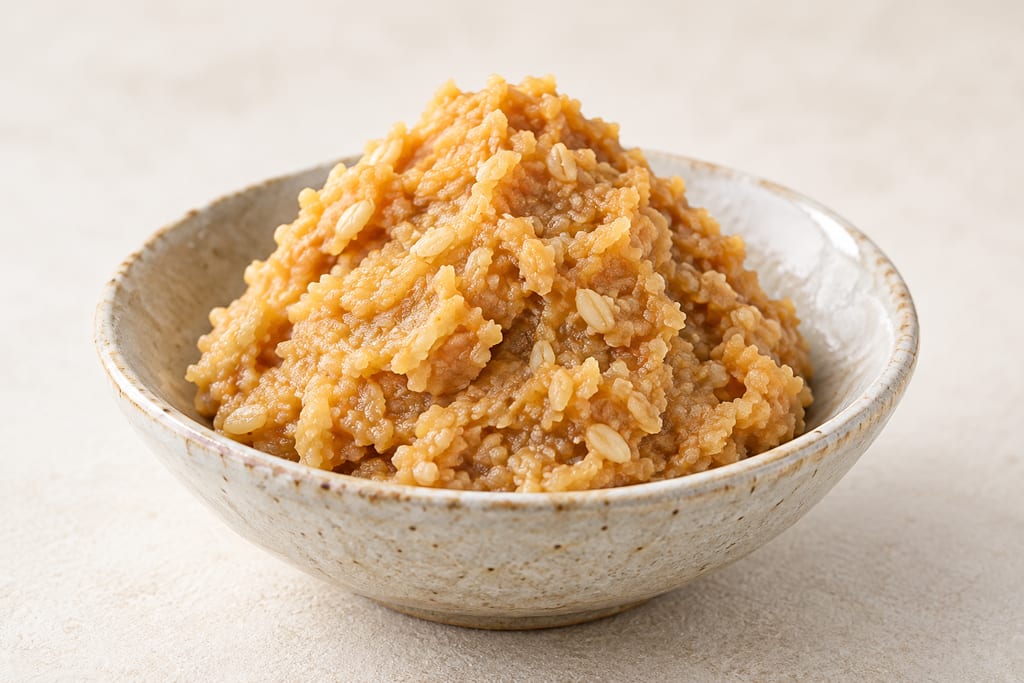
A Japanese soybean paste fermented with barley koji and salt, made mostly in Kyushu, Shikoku and western Japan. It is sweet, savoury and grainy.
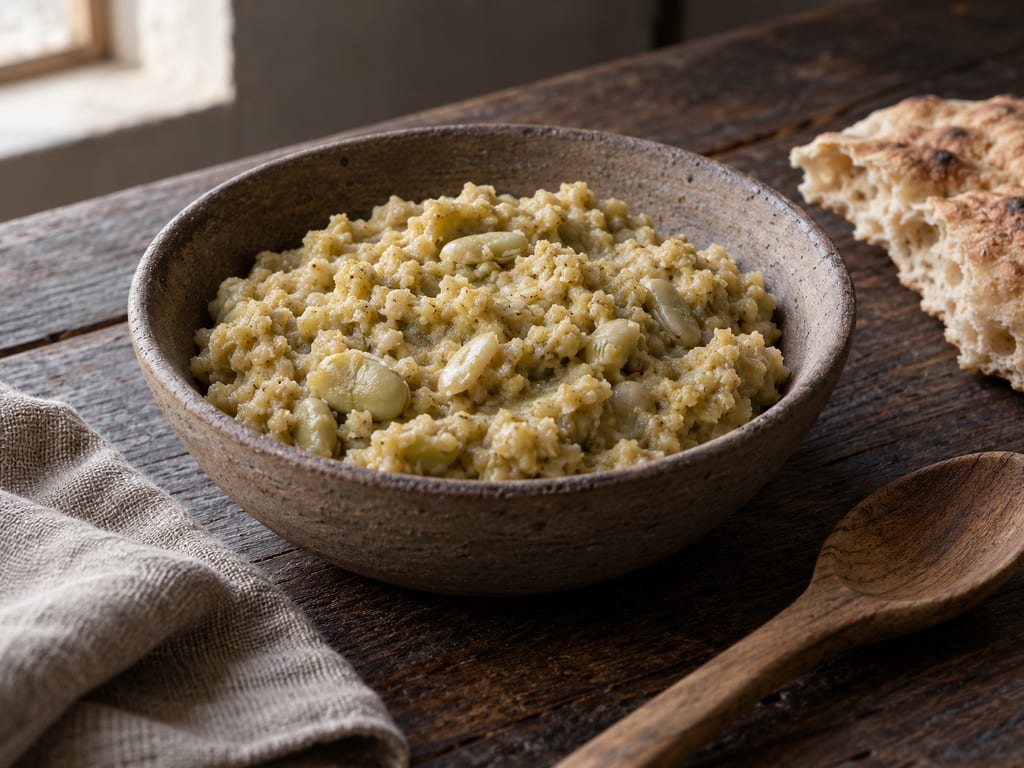
Cooked broad beans crushed to a thick paste with garlic and salt, a museum preparation built on the one European pulse that was already old when the Viking Age began.
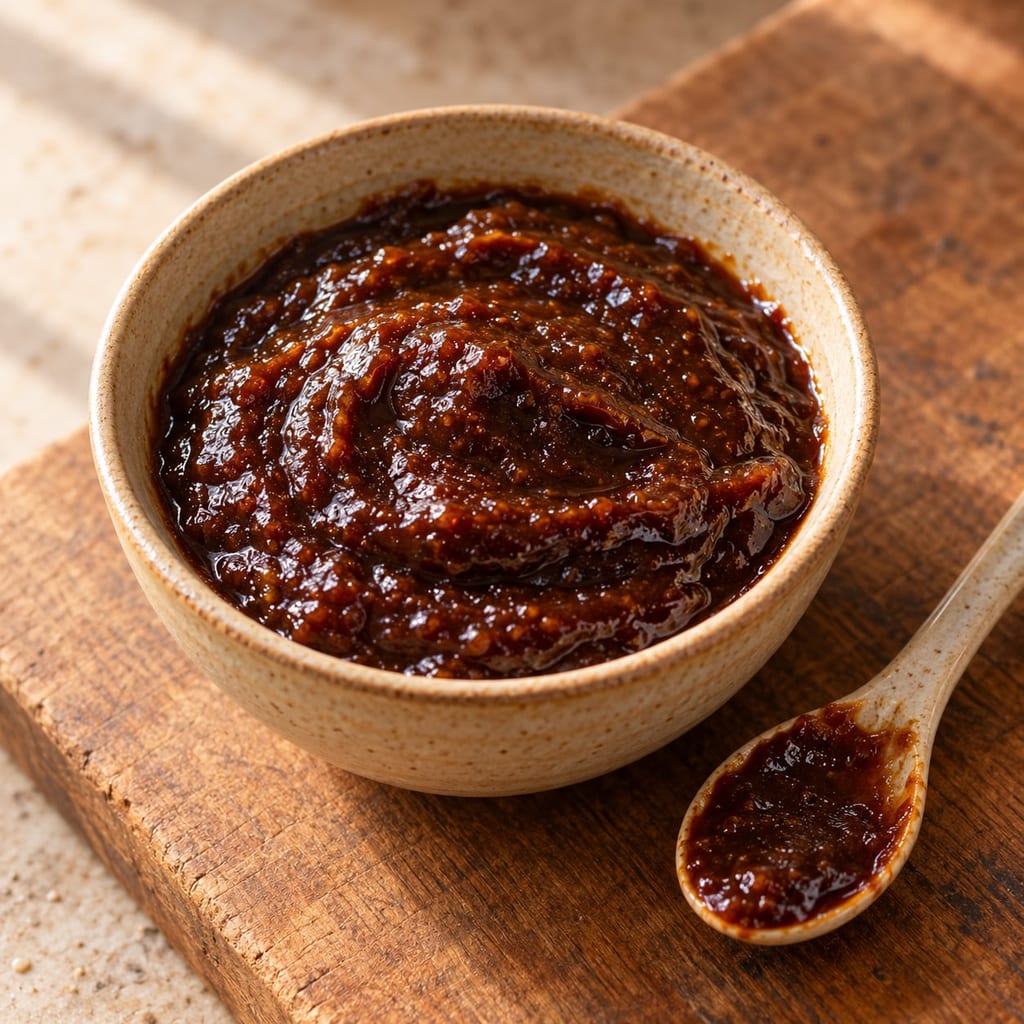
Chu hou is a sweet, savoury Cantonese paste of fermented soybeans, fermented bean curd, garlic, ginger and sesame, used mainly to braise meat.
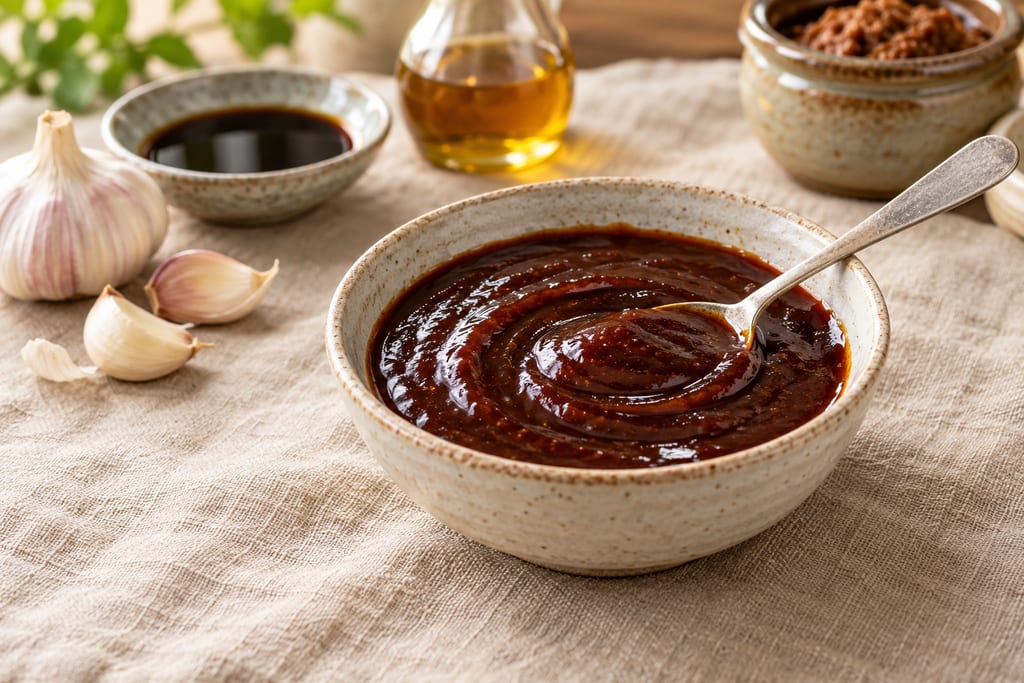
A thick, dark, sweet-salty Chinese condiment built on fermented soybean paste. This page gives one quick home version and records how commercial formulas differ.
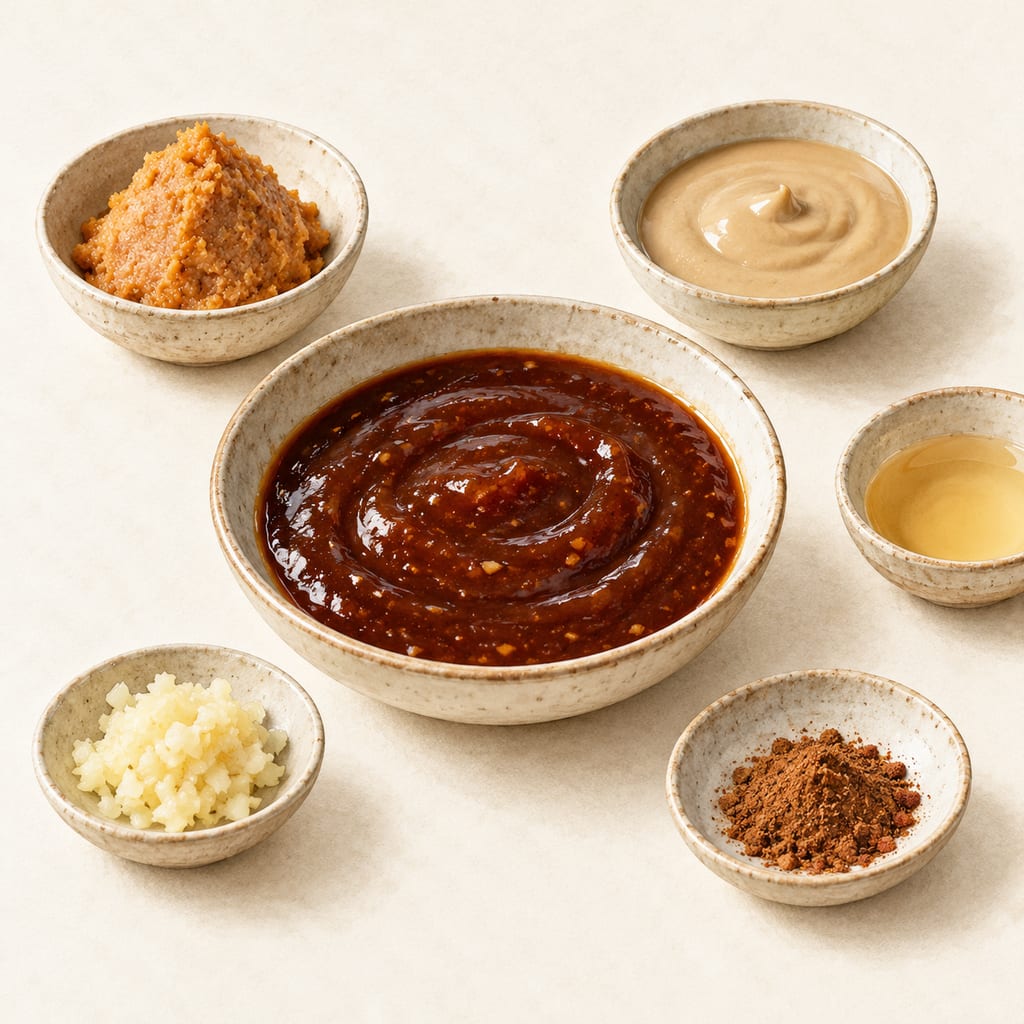
An untested modern miso-based sauce inspired by hoisin's sweet, savory profile; this prototype is not traditional hoisin or a copy of a commercial brand.
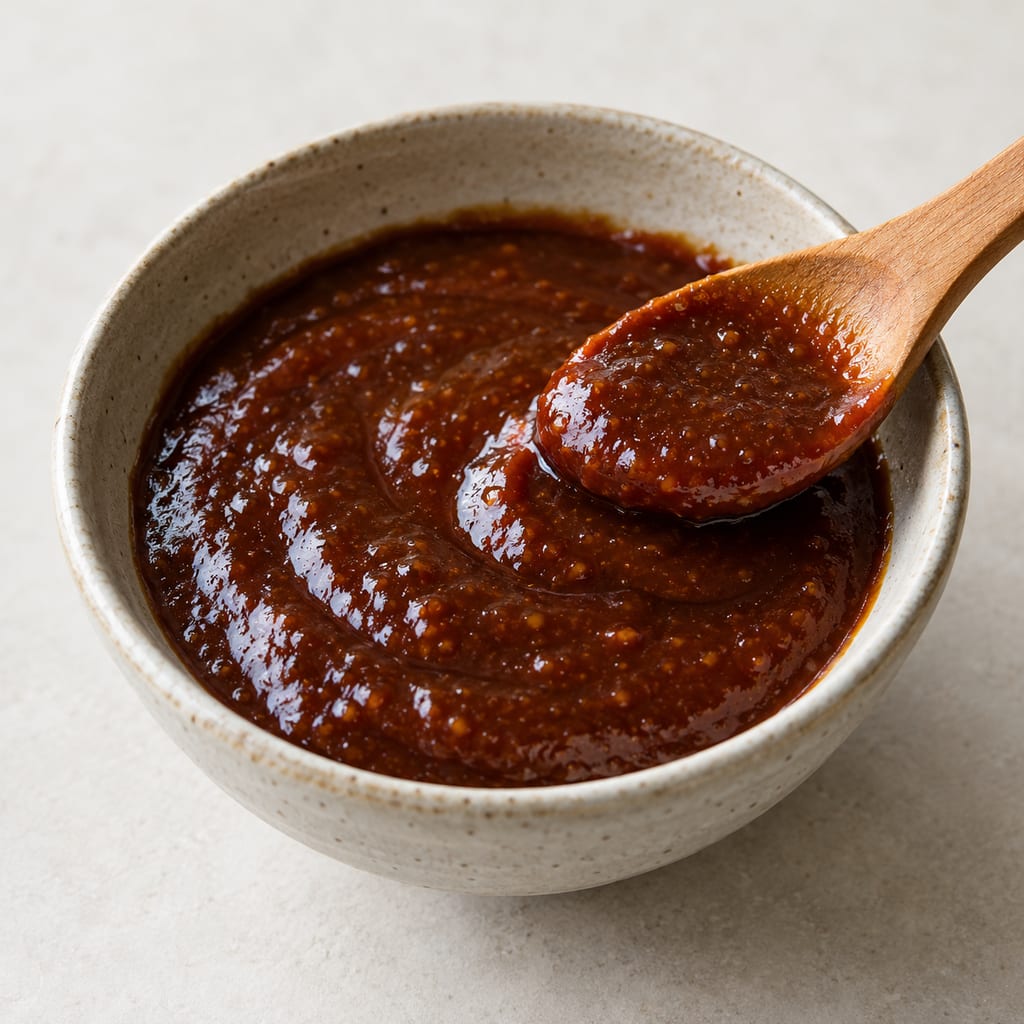
A sweet-salty Japanese glaze of miso, mirin, sake and sugar, warmed until thick and spread on grilled tofu, eggplant, daikon or konnyaku. Regional versions in Aichi use red miso and dashi.
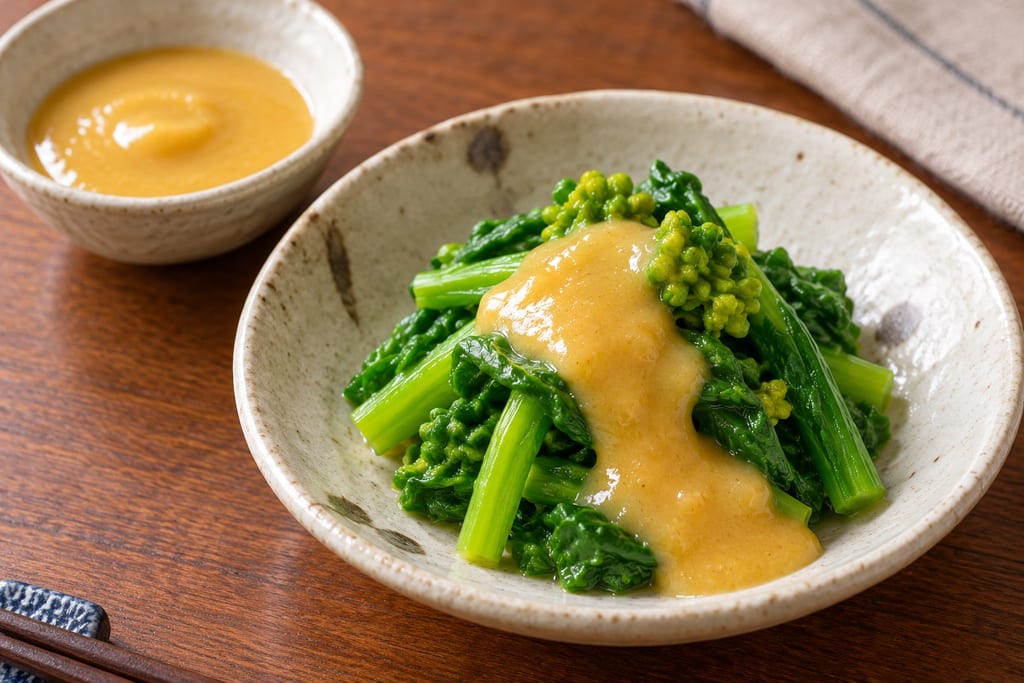
Karashi-su-miso is a smooth Japanese sauce of sweet miso, rice vinegar and hot mustard, stirred together for vegetables, seafood or poached fish.
Okpiye, also written okpeye, is a Nigerian condiment from fermented Prosopis africana seeds; published studies describe laboratory batches, not a validated home method.

Protected Italian vinegar made only from cooked grape must, fermented and aged in a battery of wooden barrels for at least 12 years: sweet, sharp and syrupy.
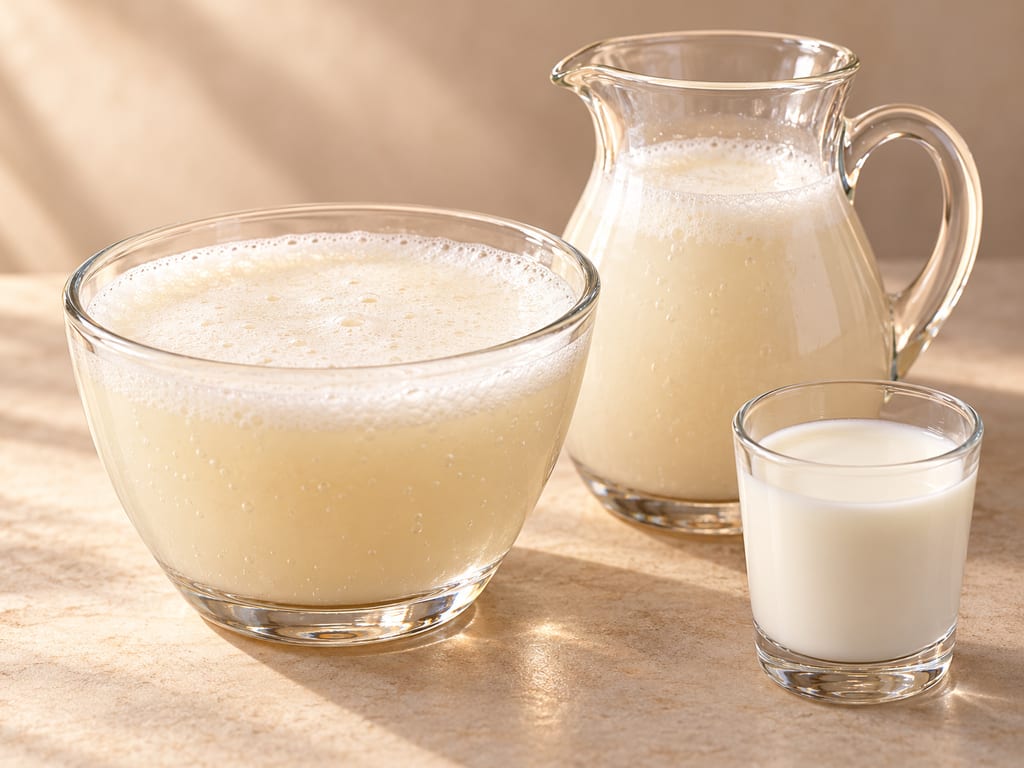
Airag is Mongolia’s fermented mare’s-milk drink, traditionally churned with saved starter in a reusable cowhide khokhuur.

Appam, or hoppers, are South Indian and Sri Lankan rice pancakes made from a fermented coconut-and-rice batter and cooked in a curved pan to a crisp lacy rim and a soft, spongy centre.
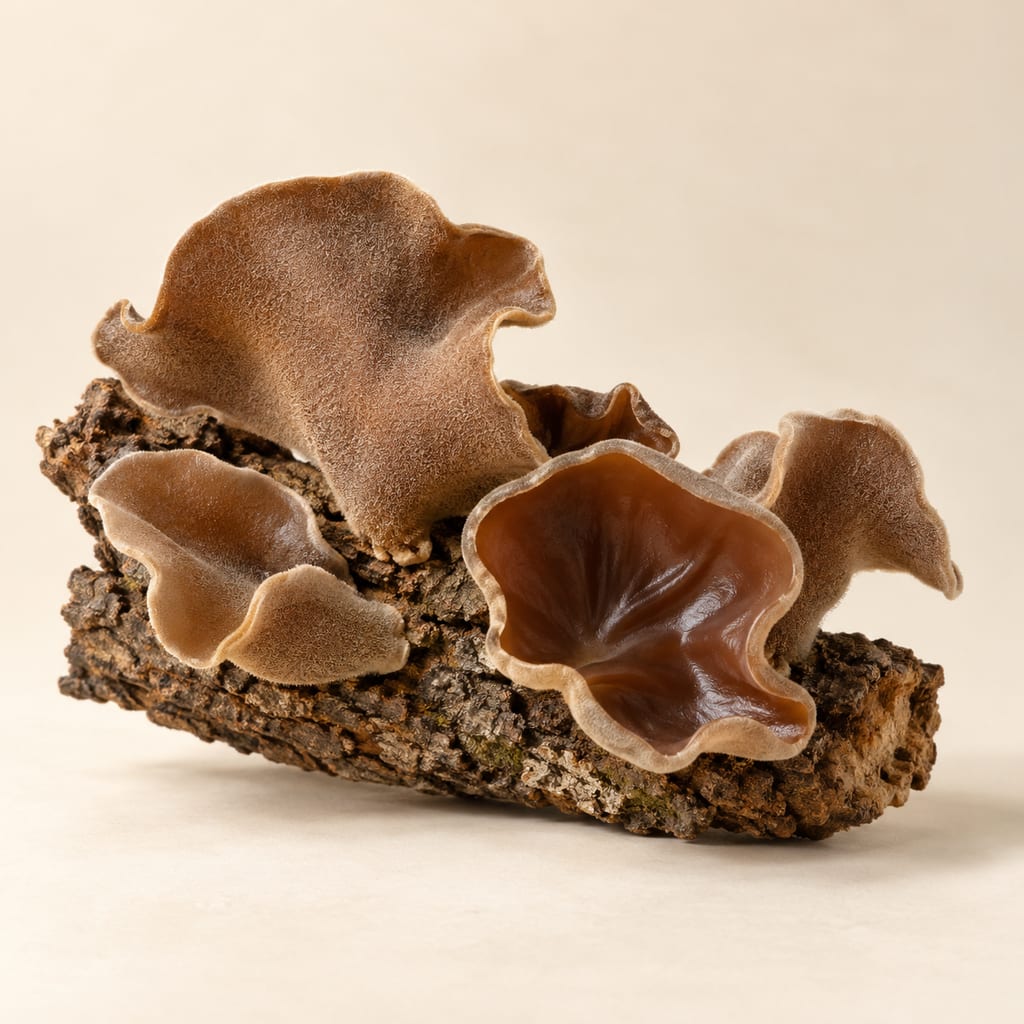
Auricularia tremellosa is a wood ear fungus of the genus that supplies most dried wood ear sold in China; its own food record is thin, and the culinary practice described here comes from the closely related wood ear species.

Ayran is Turkey’s cold, savoury yogurt drink: plain yogurt is loosened with water and lightly salted, then whisked smooth or aerated into a soft cap of foam.
A thin stone griddle used over an open hearth. Norwegian archaeology documents the established tradition from the early Middle Ages; a Viking-period origin is only a cautious suggestion linked to Shetland.

Crushed or milled barley cooked in water until the starch softens and the mixture thickens, the plainest way a northern household turned stored grain into a meal, here with apple and hazelnut.
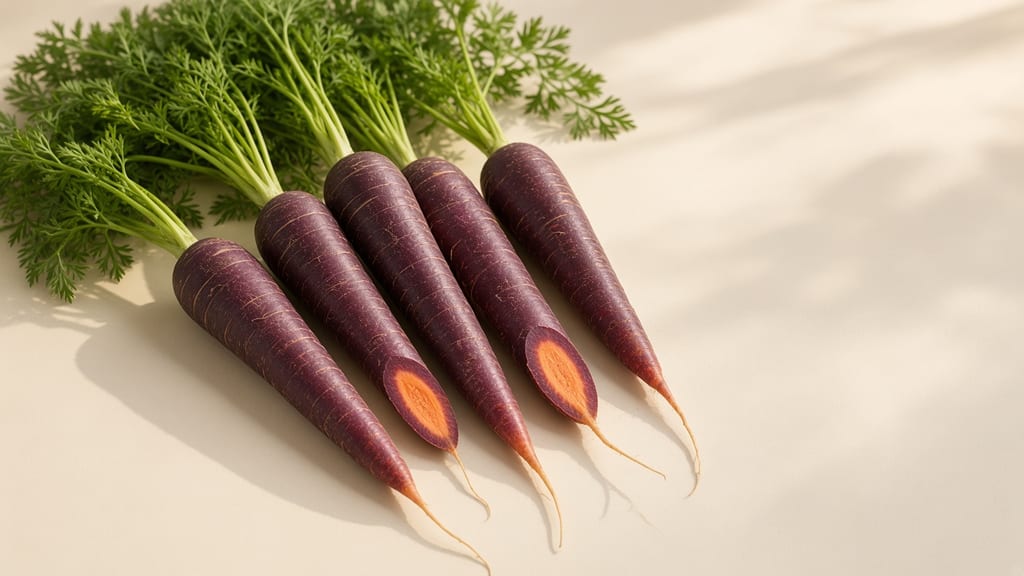
Black carrot is the anthocyanin-pigmented Eastern carrot (Daucus carota var. atrorubens), the purple root that preceded orange types and still colours kanji and şalgam.
No community contributions have been published for this entry yet.
Sign in to contribute. Published comments and photos are free to read.
Academy of Korean Studies, Korean Studies Promotion ServiceHistory · Method
Maljang (末醬), Dictionary of the Annals of the Joseon DynastyCited in: What meju is; Attestation and the Joseon record
National Folk Museum of Korea, Folk Culture in ActionMethod · Tools · Season
Ipdong (Beginning of the Winter) Meju Making in Angye-riCited in: How a household brick is made; Safety and what is not established
International Journal of Food Microbiology 185:112–120, ElsevierMicrobiology · Method
Microbial community dynamics during fermentation of doenjang-meju, traditional Korean fermented soybeanCited in: What the microbes do; Safety and what is not established
Journal of the Korean Society of Food Culture 35(4):342–350Season · Household practice
Questionnaire Survey of the Methods Used in Household Doenjang Production in KoreaCited in: From brick to doenjang and ganjang; Season and regional practice
Food Research International 155:111085, ElsevierMicrobiology · Variation between makers
Dynamics and correlation of microbial communities and metabolic compounds in doenjang-meju, a Korean traditional soybean brickCited in: What the microbes do; Season and regional practice
Food Science and Biotechnology 33:2815–2823, Springer NatureMicrobiology · Drying and fermentation schedule
Microbial communities in the fermentation of Meju, a Korean traditional soybean brickCited in: What the microbes do
Mycobiology 41(2):100–107Microbiology · Fungal sources
Mycoflora of soybeans used for meju fermentationCited in: What the microbes do