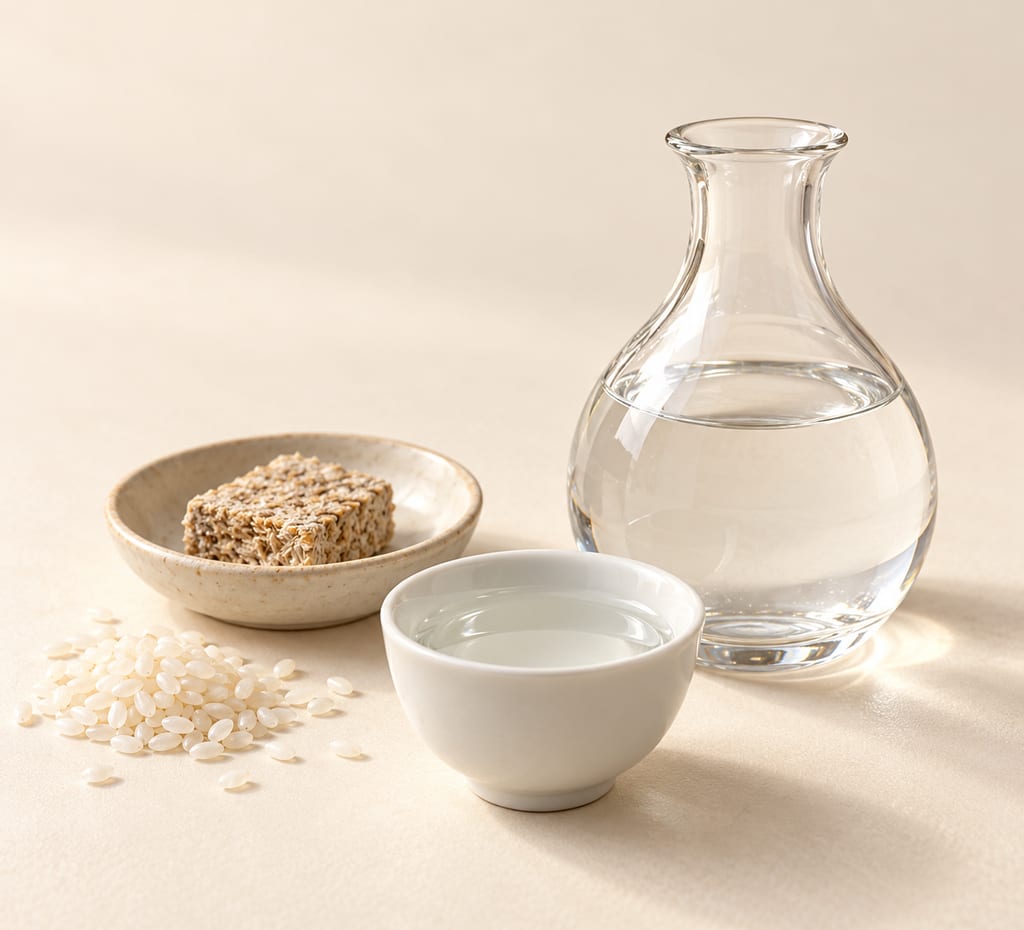
Andong soju
Andong soju is a rice spirit from North Gyeongsang, distilled from steamed rice and wheat nuruk. This method makes the starter before fermenting the rice mash in a jar.
 FermenteaWhere food goes to change
Traditional method
복분자주 (覆盆子酒) · Bokbunjaju · Bokbunja ju · Bokbunja wine · Bokbunja-joo · Bokbunjajoo · Bokbunja liquor · Korean black raspberry wine · Korean raspberry wine · Black raspberry fruit wine · 복분자주 · 覆盆子酒 · 복분자와인 · 고창복분자주 · Gochang bokbunja wine
Korean black raspberry wine: crushed bokbunja berries with their seeds, sweetened to 20 °Brix, fermented 15 days at 25 °C with wine yeast, filtered and matured three months.
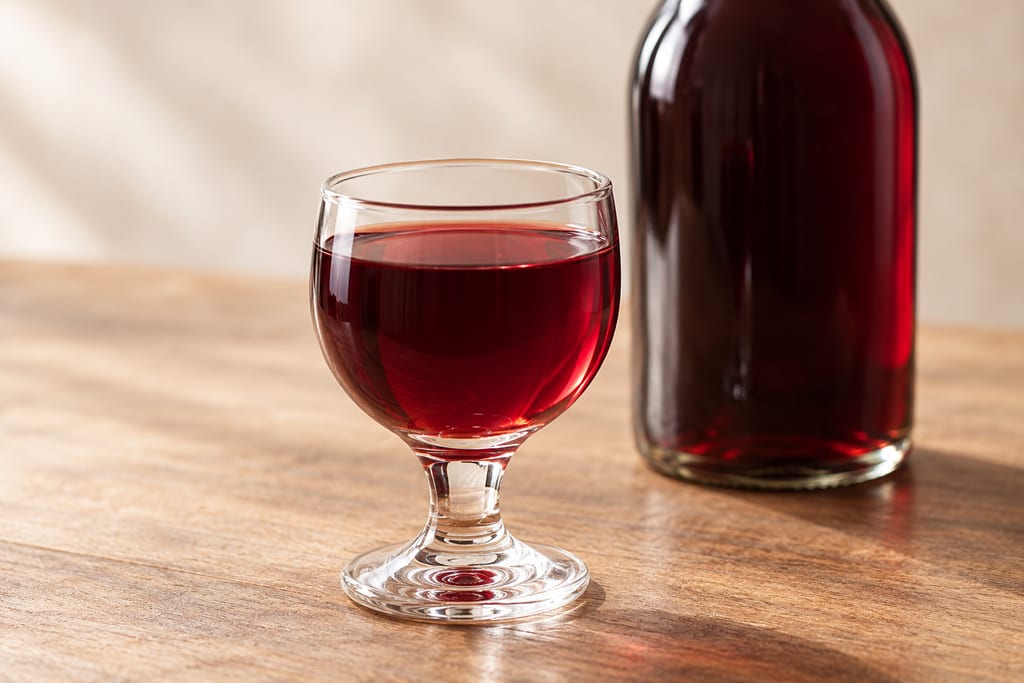
Bokbunja-ju (복분자주, 覆盆子酒) is a Korean fruit wine made from bokbunja, a dark raspberry. The berries are crushed, the sugar level of the must is adjusted, and yeast turns the fruit sugars into alcohol. The wine is deep red to purple, with a berry aroma, clear acidity, and sweetness and astringency that vary from maker to maker. Raspberries already hold fermentable sugar, so the wine needs no nuruk or koji, which separates it from Korean rice wines. It is not a distilled spirit.
In Korean, bokbunja is the fruit and ju is an alcoholic drink. The name bokbunja sul, meaning bokbunja liquor, also covers a different product: berries steeped with sugar in soju. A Jeju recipe on the Korea Traditional Knowledge Portal uses 1 kg of raspberries, 100 g of sugar and 1.8 L of soju, with no fermentation. That is an infusion, because the alcohol goes in at the start instead of being made from the berries' sugar. This page covers only the fermented wine.
What bokbunja actually is has been disputed. Papers and labels usually say Rubus coreanus, a raspberry native to East Asia. A 2014 review showed that much of the black raspberry grown commercially in Korea under that name is Rubus occidentalis, the North American black raspberry. The two look alike and sell under one name, but they are different species with different anthocyanin profiles. A label or paper that says bokbunja does not prove which species went into the wine unless the fruit was tested.
The berry supplies glucose and fructose, a little sucrose, organic acids, anthocyanin pigments and tannins. A 2006 study measured about 10 °Brix in the fruit, and the 2012 wine in the recipe started at about 10.2 °Brix. That is too little sugar for a wine of useful strength, so makers add sugar. Yeast strain, added water, how the fruit is crushed and whether the seeds stay in all shape the finished wine.
Bokbunja-ju is not raspberry juice, syrup or a medicinal extract. It is also not a probiotic food: the yeast may be removed or inactivated, and the name carries no live-culture standard.
The fruit has an older history than the wine. Bokbunja has long been used in Korean food and traditional medicine, and the characters 覆盆子 appear in East Asian herbal writing. These records show the fruit was known and used. They do not show that anyone fermented its juice into wine, and a note on dried or unripe berries as medicine is no evidence for a fruit wine.
The wine's documented history begins in Gochang County in the south-west, around Seonunsan. Commercial growing of berries sold as Rubus coreanus began to expand in the late 1960s, and bokbunja drinks became far more visible on the market around 2004. One Gochang producer, Myeongsanpum, reports that it was founded in October 1994 and finished its factory in May 1995. Bohae Brewery launched its Bokbunjajoo in 2003 and describes it as a commercial form of household alcohol-making. Neither account gives a dated household recipe.
On 15 January 2004 Korea's National Agricultural Products Quality Management Service registered Gochang Bokbunjaju as geographical indication no. 3. The fruit, Gochang Bokbunja, was registered separately as no. 35 in 2007. The two registrations protect different products. They show that by the early 2000s the regional wine had enough standing for formal protection.
Research followed. A 2005 Korean study compared yeast strains and a pectin-digesting enzyme during fermentation, and a 2006 study looked at sugar, fruit preparation, sulphite and sensory quality. Later work covered anthocyanins, seeds, added water, yeast aroma and contaminants in finished wines.
No dated recipe for fermented bokbunja wine from before the 2000s has been found. Older Korean fruit liquors made by steeping in soju do not show that the fruit was ever fermented into wine. The record divides into three parts: old use of the fruit, household alcohol-making that cannot be dated, and commercial and scientific production from the early 2000s.
Bokbunja-ju is a plain alcoholic fruit fermentation. Yeast takes in the berries' glucose and fructose and runs them through glycolysis to pyruvate. Pyruvate decarboxylase turns pyruvate into acetaldehyde and carbon dioxide, and alcohol dehydrogenase reduces the acetaldehyde to ethanol. That last step recycles the NAD+ that glycolysis needs to continue. The alcohol that results depends on the sugar available, how well the yeast performs, the conditions, and how much sugar is left unfermented.
Yeast choice matters. In 2005, Korean researchers compared Saccharomyces cerevisiae KCCM 12224, a yeast isolated from bokbunja (Bok-3), a yeast isolated from yakju (Yak-7) and a mixture. After ten days the wines held 11.08%, 10.62%, 10.18% and 10.26% alcohol. The strains differ even on the same fruit. These were experimental cultures, and none is a standard bokbunja starter.
The fruit is naturally acidic. A 2006 study found citric acid at 14.57 mg/mL and malic acid at 2.24 mg/mL in its fruit. Both fell during fermentation, and acetic and formic acids appeared. Citric acid changes drove most of the shift in titratable acidity. Acidity shapes sourness, yeast performance and competition from other microbes, but a single reading does not show a wine is safe. Harvests, dilution and strains all give different acid profiles.
Anthocyanins give the deep purple-red colour. Their colour depends on their structure, acidity, oxygen and what else is in the wine. During fermentation the pigments are extracted from the fruit, broken down, taken up by yeast cells or converted to other compounds. In the 2012 study, anthocyanin content fell by about half. Wines made with pulp and seeds kept different amounts of pigment and phenolics than the juice-only wine. A darker wine is not a stronger one.
Phenolic compounds add bitterness and astringency. Tannins and proanthocyanidins from skins, pulp and seeds bind salivary proteins and give the drying feel of an astringent wine. The 2012 study found that adding pulp and seeds raised the phenolic content and gave the highest sensory scores, while a 2006 study found that removing seeds slightly reduced astringency. Both can be true: more extraction can add depth to one wine and too much grip to another.
Yeast also makes aroma compounds. Higher alcohols come partly from sugar and amino acid metabolism, and esters form from alcohols and organic acids. In 2012, isobutanol, n-propanol, isoamyl alcohol, ethyl acetate and isoamyl acetate all rose during fermentation. Pectinase helps extraction by breaking down pectin in the cell walls, but breaking pectin down also releases methanol, so the enzyme is not harmless in every setting.
The wine needs raspberries, wine yeast and, in most recorded modern methods, added sugar. Some methods add water, pectinase or sulphite. The berries give juice, natural sugar, acidity, pigment and aroma precursors. The yeast makes the alcohol. Added sugar raises the alcohol the yeast can reach. Water dilutes the must and changes extraction. Pectinase frees juice and soluble compounds from the fruit tissue, and sulphite is used by some makers to limit oxidation and unwanted microbes.
The fruit is sorted, cleaned, then crushed or pressed. How hard the fruit is crushed decides how much skin, pulp and seed stays in the juice. A juice-only ferment ends up different from one that keeps pulp and seeds, in pigment, phenolics, aroma and astringency. Taking the seeds out can soften harshness, and leaving them in can add compounds that suit some styles. The recipe above keeps everything together.
Sugar is the main adjustment. A 2006 study raised the must from about 10 °Brix to between 18 and 28 °Brix. With KCCM 12224 the wines reached roughly 9.8 to 14.8% alcohol, depending on the starting sugar. Adding the sugar as a 50% weight-per-volume solution avoided undissolved crystals and made no difference to the taste scores. The recipe above sets the must to 20 °Brix with high-fructose corn syrup.
The 2012 study reports sodium sulphite at 70 ppm, a 3 to 4 hour wait, then dry wine yeast at 200 ppm. It does not define the basis of either ppm value, so those numbers cannot be turned into weighed additions for another batch. A separate 2006 trial tested potassium metabisulphite at 200 ppm; that different salt and formula cannot fill the missing dose basis.
Fermentation in the recipe runs 15 days at 25 °C with stirring twice a day. Another study favoured 8 to 10 days under its own conditions, and found that pectinase at 500 ppm raised the alcohol by 0.1 to 1.5 percentage points in some treatments. The recipe uses no pectinase. Ten days is not a universal endpoint.
The study filtered the wine, closed it in wooden-stoppered bottles and held it for three months at 15 °C. It did not give a measurable completion or bottle-stability criterion. This is a laboratory account with unresolved dosage and finishing details, not a complete household method. Figures from other studies are not combined with it.
Gochang is the best-documented centre of bokbunja wine, and the fruit around Seonunsan supplies several wine brands. The region's link to the wine was formally recognised in January 2004, when Gochang Bokbunjaju received geographical indication no. 3. Local producers named at the time included Seonunsan, Myeongsanpum and Goindol. The designation protects a named regional product. It does not make Gochang the only place that ferments raspberry wine.
Producers sell wines at moderate strength. Baesangmyun Brewery's Bokbunja-Um is a naturally fermented Gochang wine at 12% alcohol, Kooksoondang's Myungjak Bokbunja is labelled 13%, and Gaeul Bokbunja, described as fermented and aged, is 13%. Baesangmyun's Bingtanbok is a carbonated version made with selected yeast and a long, cool fermentation. These are individual products and not standard strengths or old regional styles.
Methods vary a good deal among true fermented wines. A 2014 study added water at zero, one, two, three and four times the weight of fresh berries. More water gave more wine and changed the acidity, the fermentation and the amount of phenolics drawn out per unit of fruit. The 2012 study compared juice, juice with pulp, and juice with pulp and seeds, and found differences in colour, astringency and volatile compounds.
Yeast and enzymes are further variables. A 2015 study compared twelve commercial S. cerevisiae strains on thawed, crushed Jeongeup berries set to 24 °Brix. It found 67 volatile compounds, with esters and terpenes driving the fruity and floral notes, and one strain, M1, scored highest overall. A 2017 study described a large-scale method: a starter made from 200 kg of must, then 800 kg more fruit must and 80 kg of sucrose, adjusted to 24 °Brix, fermented seven days at 25 °C and fined with bentonite at 2 g/L. Enzyme preparations containing beta-glucosidase released bound aroma compounds, and the wine made with CYTOLASE PCL5 was preferred. This industrial method is a separate recipe and not a continuation of the 2012 one.
A different tradition steeps berries in spirit. The Jeju soju infusion described above belongs in its own entry, not here.
Botany adds another layer. Wines labelled bokbunja may use Rubus coreanus, Rubus occidentalis or both. Region, fruit species and method are three separate facts, and none can be inferred from the others.
Bokbunja-ju is drunk as a fruit wine, not eaten with the berry solids. Commercial wines run from moderately sweet to fairly dry, with a berry aroma, clear acidity and some astringency. The name does not fix a serving temperature, an alcohol level or a sweetness. Gaeul Bokbunja, for example, is sold to be drunk without mixers, with a fruit aroma, moderate sweetness and a drier finish, and sparkling versions exist too. No required glass, pairing or ceremony is recorded.
The wine is strongly tied to Gochang's food and drink trade. Its regional identity shows in producer names, packaging, the geographical indication and products sold with Seonunsan fruit. These producer descriptions show how the wine is sold today. They are not historical serving rules.
The berries have other uses. Bokbunja is made into juice, syrup, extracts and other foods, and because the fresh fruit spoils quickly, wine and juice are major outlets. Keep these separate from the fermented wine when reading ingredient lists: a raspberry syrup contains no alcohol from fermentation unless something else adds it.
A soju infusion of bokbunja is a related drink with a different chemistry. Fruit compounds are drawn into ready-made alcohol, and the colour and fruit aroma can look like the fermented wine, so the method of making is a more reliable way to tell them apart than appearance.
Herbal writing and marketing link bokbunja to vitality, circulation and other health effects. Do not repeat these as proven benefits of the wine. Studies of anthocyanins, polyphenols and antioxidant activity measure chemistry, not clinical outcomes, and drinking the wine carries the usual risks of alcohol.
The studies track sugar, alcohol and acidity to describe fermentation, but give no validated completion or bottling criterion for another batch. Bubbles and foam show carbon dioxide production, not that fermentation is done. A refractometer reads sugar in fresh must; after ethanol forms, its reading needs correction or a different method. Sweetness alone does not show a wine is stable enough to bottle.
The published trials give useful benchmarks. KCCM 12224 reached 11.08% alcohol in ten days, against 10.18 to 10.62% for the other cultures, and 8 to 10 days was favourable in that study. Another study found that raising the starting sugar from 18 to 28 °Brix changed the alcohol obtained. Neither sets a universal duration or alcohol target, and a batch made with a different yeast, fruit or sugar level can behave differently.
Astringency is a common fault. The amount of phenolics drawn out depends on crushing, time on skins and seeds, and pressing. Removing seeds softened the wine in one trial, yet the best-scoring wine in the 2012 study kept the juice, pulp and seeds together. Treat seed removal as a style choice to taste-test, not a fix that every batch needs.
Colour can fade. A wine can lose anthocyanins and still look red. The 2012 wines lost about half their anthocyanins during fermentation, and kept more when pulp and seeds were included. A darker wine is not more stable or more alcoholic. Because Rubus coreanus and Rubus occidentalis have different anthocyanin profiles, the berry species also changes the colour.
Added water does more than dilute. In the 2014 study, adding up to four times the berry weight in water changed acidity, fermentation rate and phenolic extraction per unit of fruit. More wine did not mean the same wine. Record the actual water-to-fruit ratio, and tie any sugar or pH reading to its batch and stage.
Watch for spoilage. Acetic acid bacteria add volatile acidity when oxygen is present, and uncontrolled yeasts or bacteria can disturb the fermentation. Sulphite use is limited by law in many countries, and its effect depends on the product. Pectinase aids extraction but can raise methanol.
A 2022 analysis of Korean fruit wines, including commercial bokbunja wine, measured acetaldehyde, cyanide and ethyl carbamate alongside sulphur dioxide, pH, acidity and diacetyl. The ranges reported cover all wine types, so they cannot be read as bokbunja figures alone. Its point is that taste cannot show a wine is free of hazardous compounds.
Finishing is the weak point of any home batch. A wine that looks finished can still hold sugar and live yeast and restart in the bottle, making alcohol and pressure. No finishing pH, alcohol threshold, storage temperature or shelf life has been established for home-made bokbunja-ju, and sensory quality is a separate matter from stability.
The 2012 experiment did measure methyl alcohol in its three laboratory wines. It reported 266.38 ± 6.37 mg/L for juice wine, 301.67 ± 14.20 mg/L for juice-pulp wine, and 299.28 ± 3.06 mg/L for juice-pulp-seed wine. The last formulation is the one described in this method. These results correct the earlier statement that the batch was not tested, but they do not set the methanol concentration of another home batch or every product sold as bokbunja-ju.
Bohae Brewery launched Bokbunjajoo in 2003, and Gochang Bokbunjaju became Korean geographical indication no. 3 on 15 January 2004. A Korean food-science study published in August 2005 describes fermenting the berries with selected yeasts. These dates establish the modern commercial and scientific record. They do not date household raspberry wine, and no earlier recipe for the fermented wine is known.
Crushed berries are moist and sugary, so wild yeasts, moulds and bacteria can grow alongside the wine yeast and spoil the batch. The study used sulphite and a selected yeast but did not validate them as a pathogen control for home use.
Hazard sourceSulphites can trigger reactions in sensitive people, and wine sold above 10 mg/L sulphur dioxide must carry an allergen label in the UK. The study reports 70 ppm sodium sulphite without a defined dose basis; it cannot be treated as a legal or safe dose for another batch.
Hazard sourceA 2022 analysis of Korean fruit wines, including commercial bokbunja wine, measured ethyl carbamate, acetaldehyde and cyanide. Levels differed between wine types and samples, and taste and smell cannot show them.
Hazard sourceThe 2012 study measured methyl alcohol in all three wine forms: 266.38 ± 6.37 mg/L in juice wine, 301.67 ± 14.20 mg/L in juice-pulp wine and 299.28 ± 3.06 mg/L in juice-pulp-seed wine. The recipe follows the juice-pulp-seed form. These values describe the laboratory samples; they do not predict the concentration of a new home batch or every commercial product.
Hazard sourceAcetic acid bacteria turn alcohol into acetic acid when oxygen reaches the wine, which gives volatile acidity and a sharp smell. Stirring twice a day brings air into the must, and the study did not set a way to manage oxygen in later stages.
Hazard sourceLeftover sugar and living yeast can start fermenting again after bottling, making more alcohol and carbon dioxide. Wooden stoppers do not show the wine is stable, and a sealed bottle can build pressure.
Hazard sourceBokbunja-ju is an alcoholic drink. The berries' pigments and antioxidants do not offset the health risks of alcohol, and its sweetness and berry flavour do not make it a soft drink or a medicine.
Hazard sourceStart from sound berries and clean jars, spoons and bottles. Throw out mouldy or spoiled fruit.
Control sourceKnow which raspberry you are using. Commercial Korean bokbunja is often Rubus occidentalis sold as Rubus coreanus, and the two have different pigments and flavour.
Control sourceSet the sugar by measurement to 20 °Brix. This is a recipe target, not a safety limit.
Control sourceThe study identifies Fermiblanc Arom dry wine yeast but gives no usable weighed dose or pitching preparation. Its 200 ppm figure needs a defined basis before it can be applied.
Control sourceCheck sulphite use against the rules for your country and product. Added sulphite and measured sulphur dioxide in the wine are different figures.
Control sourceLog the temperature every day and track sugar, alcohol and acidity. The study used 25 °C and 15 days and set no test for when fermentation is finished.
Control sourceThe study does not define fermentation gas management or a measurable bottle-stability endpoint. Its wooden-stoppered storage result does not establish that another batch can be sealed.
Control sourceIf you sell the wine, test it for contaminants, sulphur dioxide, alcohol, acidity and microbial stability to the standard for your product and country.
Control sourceThis is a published laboratory method, not a tested home-winemaking safety plan.
The amount of high-fructose corn syrup is not given. Add it by measuring the must.
The study reports 70 ppm sodium sulphite and 200 ppm dry yeast without saying what mass or volume each ppm value refers to. Do not calculate or weigh additions from these figures.
Do not replace sodium sulphite with potassium metabisulphite at the same weight. The two give different amounts of sulphur dioxide.
The sulphite dose does not guarantee that harmful microbes are controlled.
Twenty-five degrees for 15 days are the study's settings, not proof of safety or of a finished fermentation.
Do not seal the fermenting jar. Carbon dioxide must escape.
Three months at 15 °C in wooden-stoppered bottles is a study observation, not a stability test. The paper gives no criterion for safely closing or storing another batch.
A pleasant berry smell and a dark colour do not show the wine is safe.
Bokbunja-ju contains alcohol. Do not present it as a health treatment because raspberries contain anthocyanins.
The main commercial centre of bokbunja wine, around Seonunsan. The berries in the recipe came from here. No dated household recipe from the area is known.
Wine-making trials and analyses of commercial wines are recorded from 2005. A country-level association only.
Andong soju is a rice spirit from North Gyeongsang, distilled from steamed rice and wheat nuruk. This method makes the starter before fermenting the rice mash in a jar.
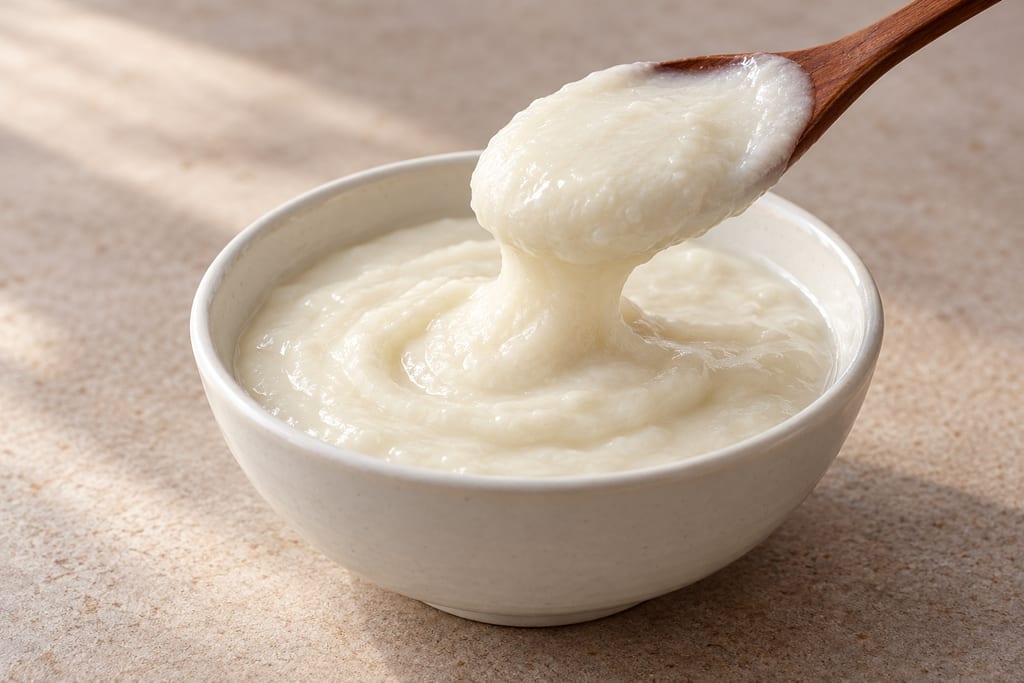
Thick, sweet Korean rice wine made with a rice-based starter called ihwagok and almost no added water, fermented into a paste that is eaten with a spoon or thinned with cold water.
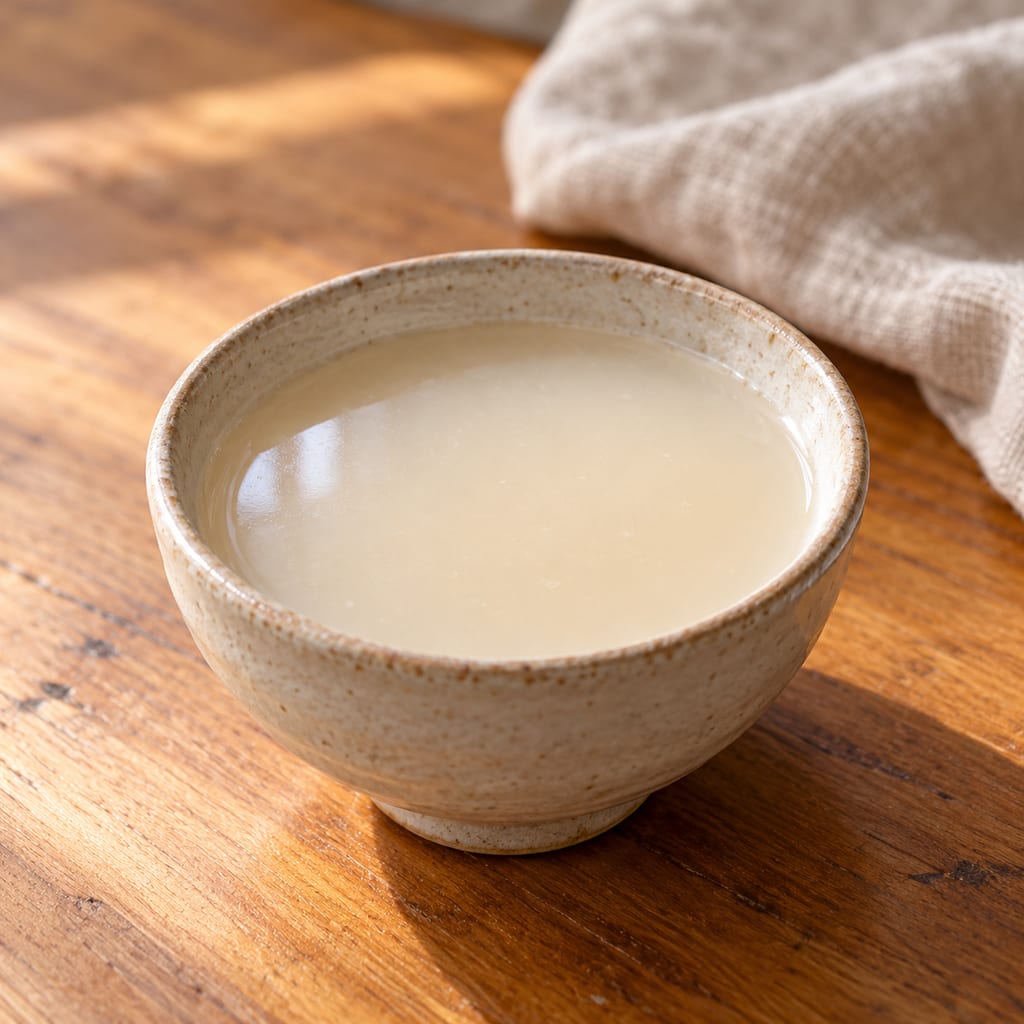
An alcoholic Korean rice drink of steamed glutinous rice and nuruk, mashed in a single stage and fermented for 7 to 14 days.
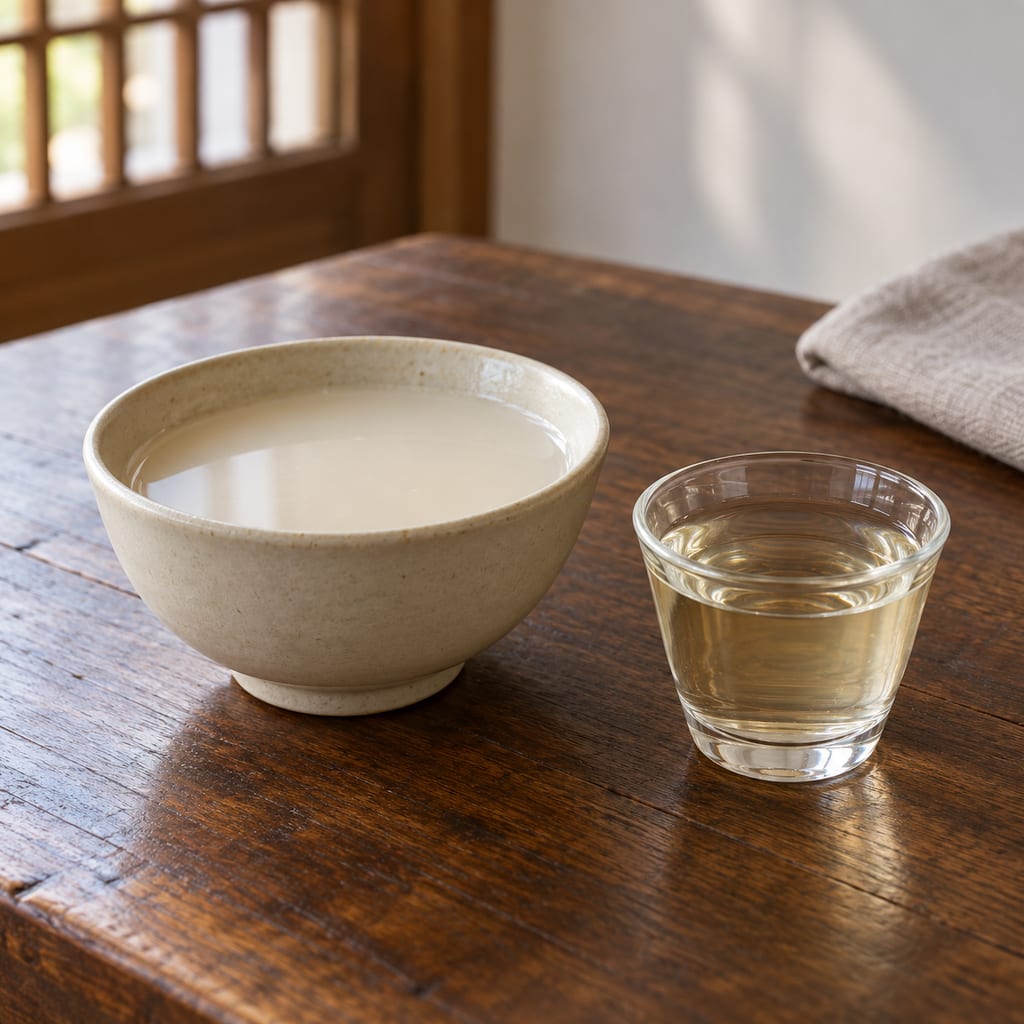
A Korean grain wine fermented from steamed rice, nuruk and yeast in two mash additions, drawn off clear as yakju or blended cloudy with rice solids and water as makgeolli.
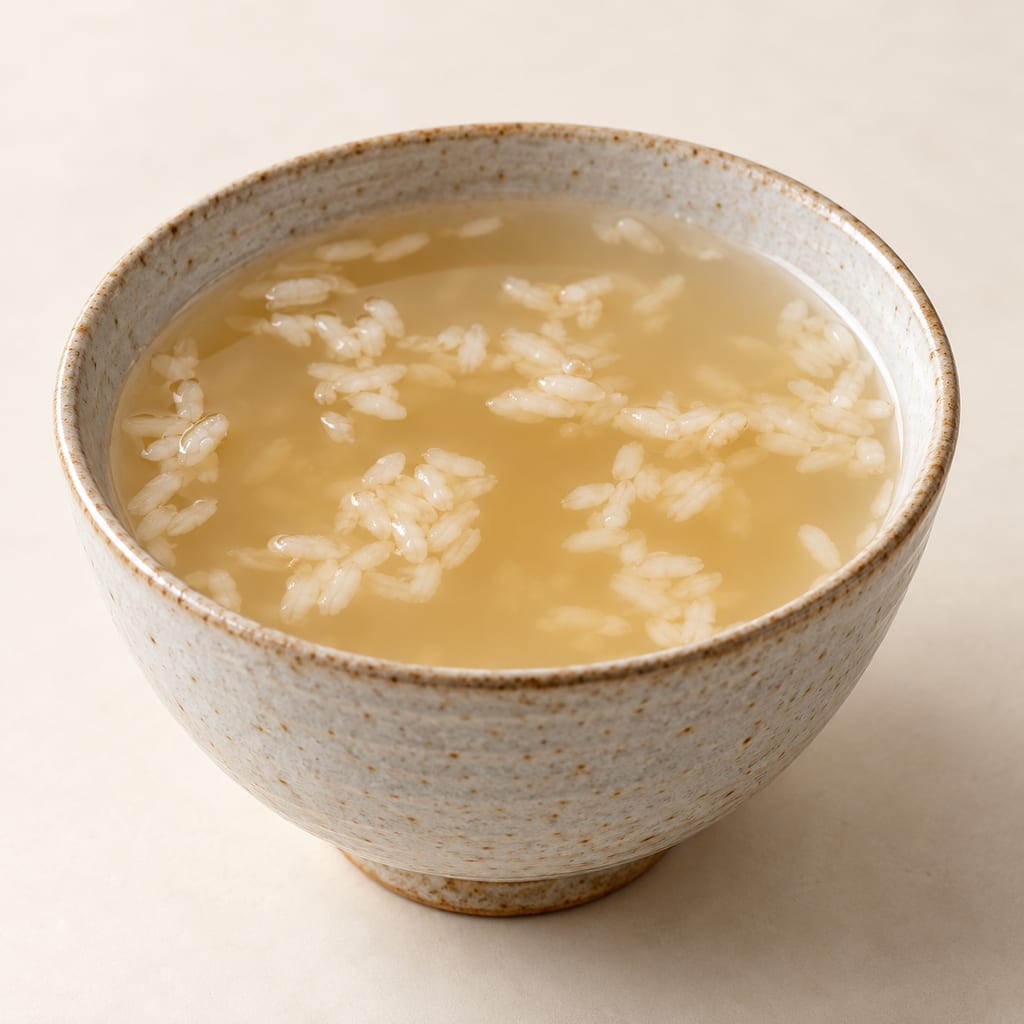
A Korean sweet rice drink made by holding cooked rice in water drawn off barley malt until the grains float, then boiling and chilling it.
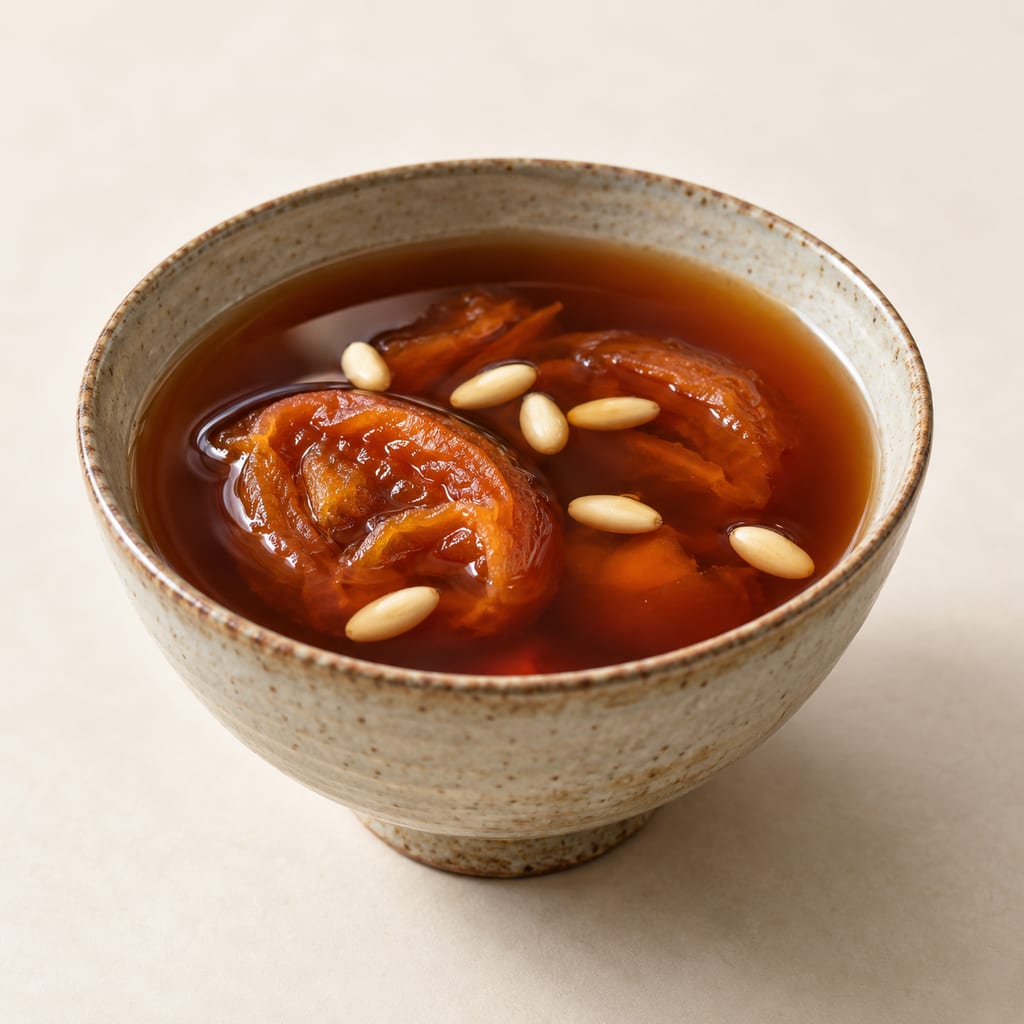
A chilled Korean dessert punch of cinnamon and ginger boiled in water, sweetened and poured over dried persimmons.
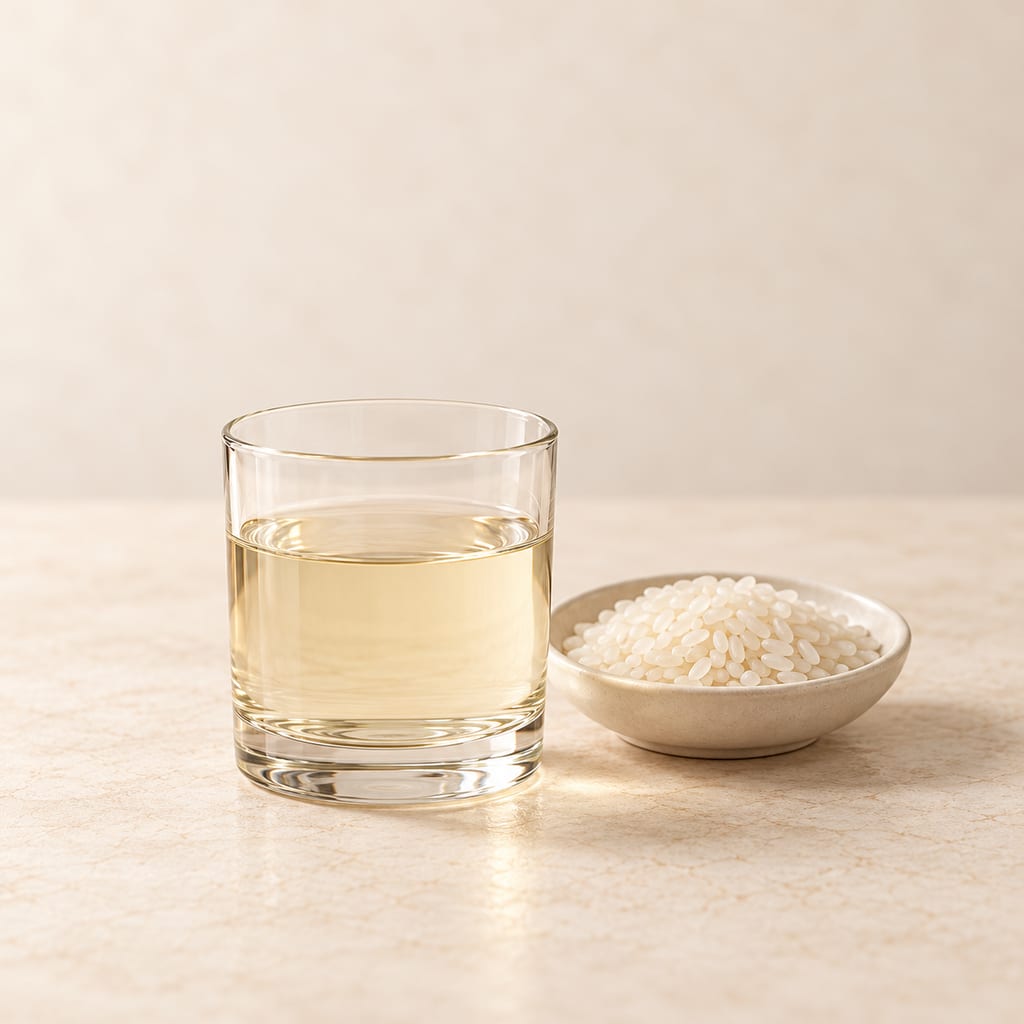
A 2021 study's white-rice yakju: steamed Hanareum rice ferments with rice-flour nuruk and takju yeast for 11 days, then the clear upper liquid is filtered and centrifuged.
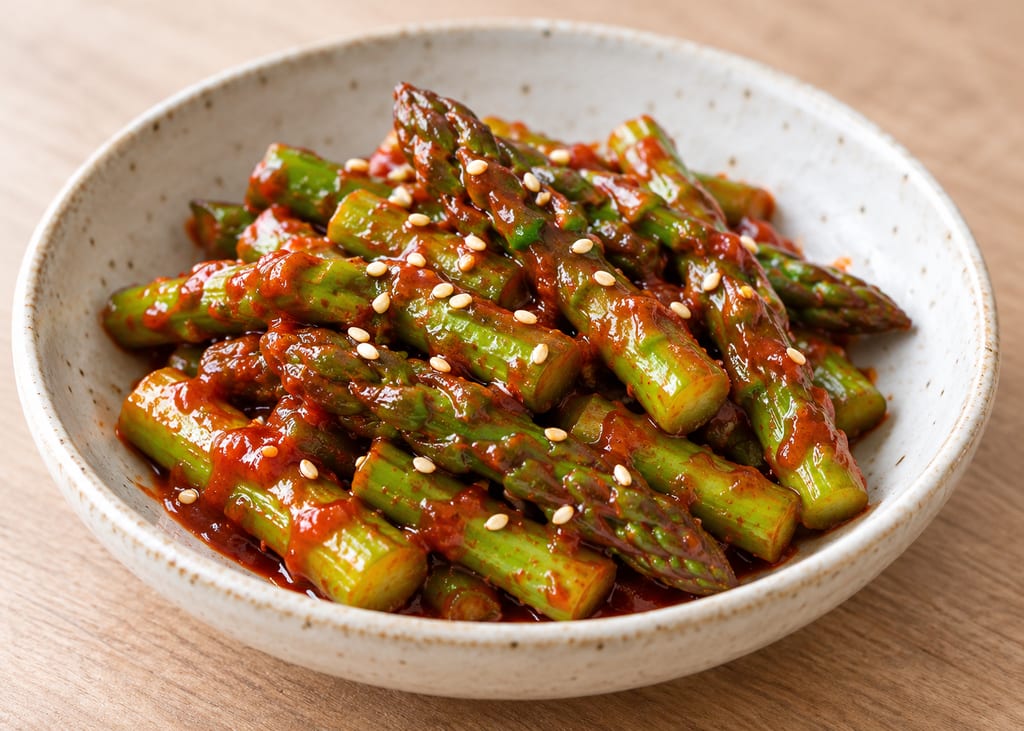
A Korean banchan of blanched asparagus dressed with a sweet-sour cho-gochujang sauce; Hyosun's version cools the spears in ice water before tossing.
The Rwandan urwina is a conical, leaf-lined earth pit that warms green brewing bananas before they are peeled, crushed for juice and fermented separately.
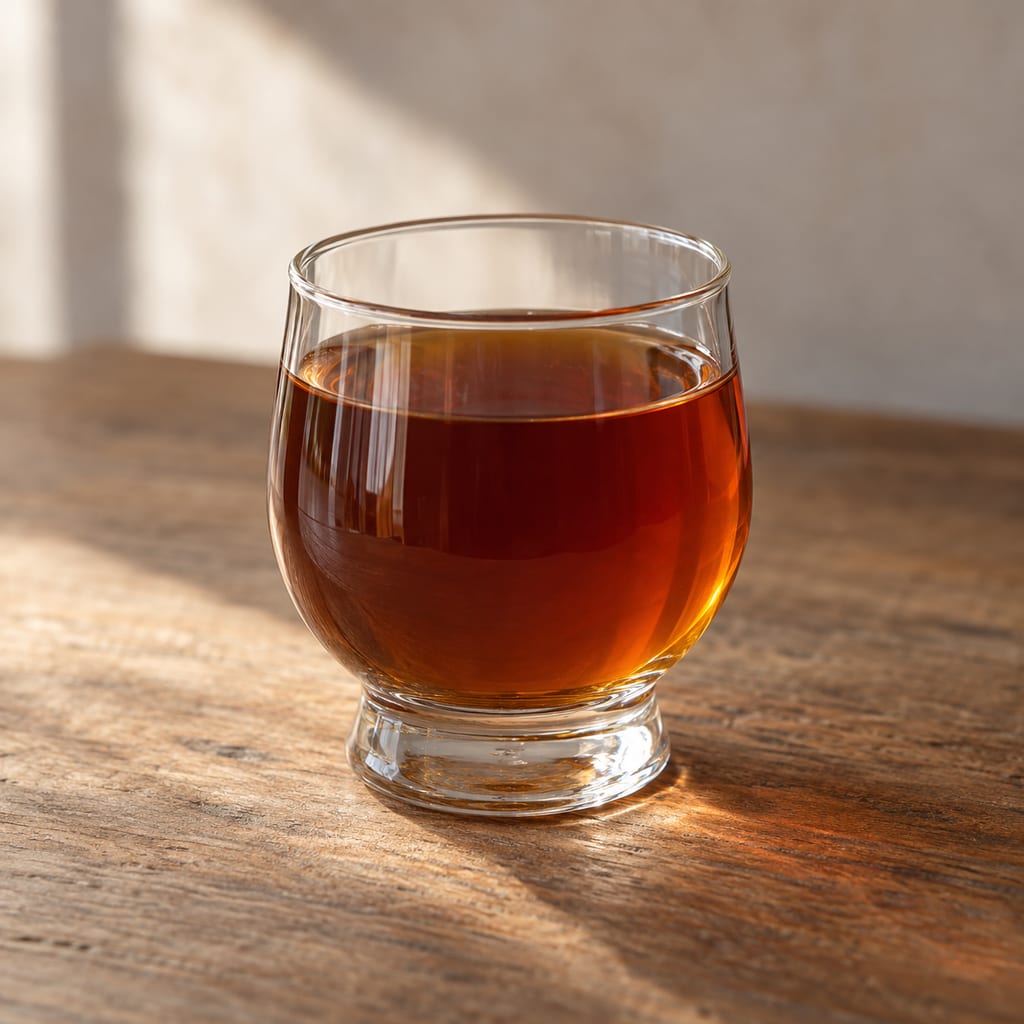
Musalais is a fermented grape drink documented among Uyghur producers in A’wati, southern Xinjiang. A studied process combines grape juice and heated pomace extract before spontaneous fermentation.
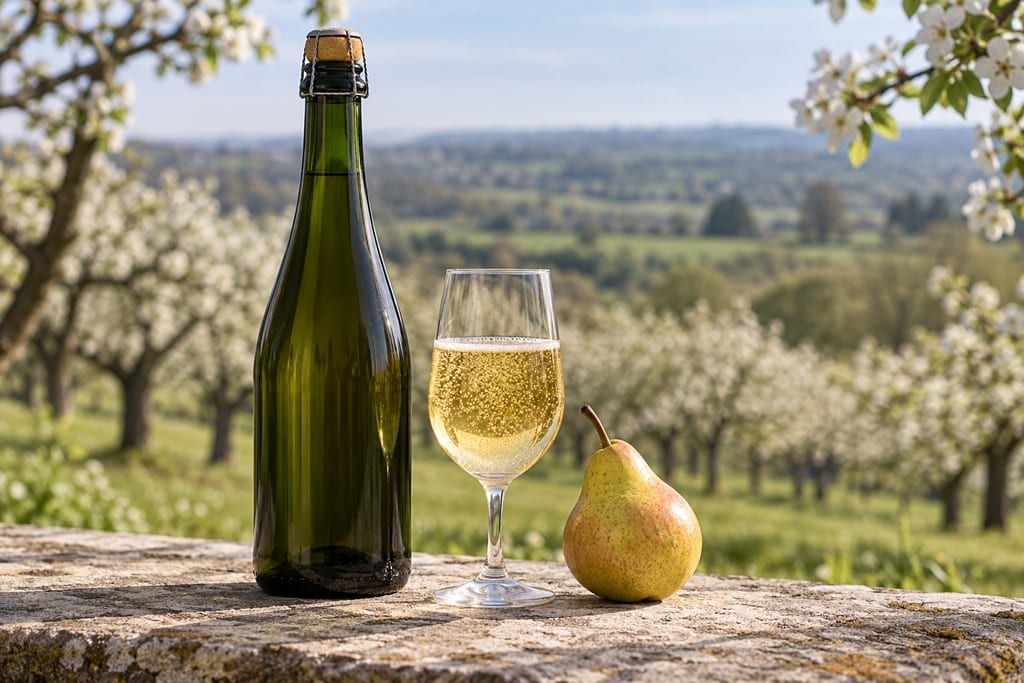
Naturally sparkling perry from the Bas Domfrontais in Normandy, pressed from high-stem orchard pears with at least 40% Plant de Blanc and carbonated by fermentation in the bottle.
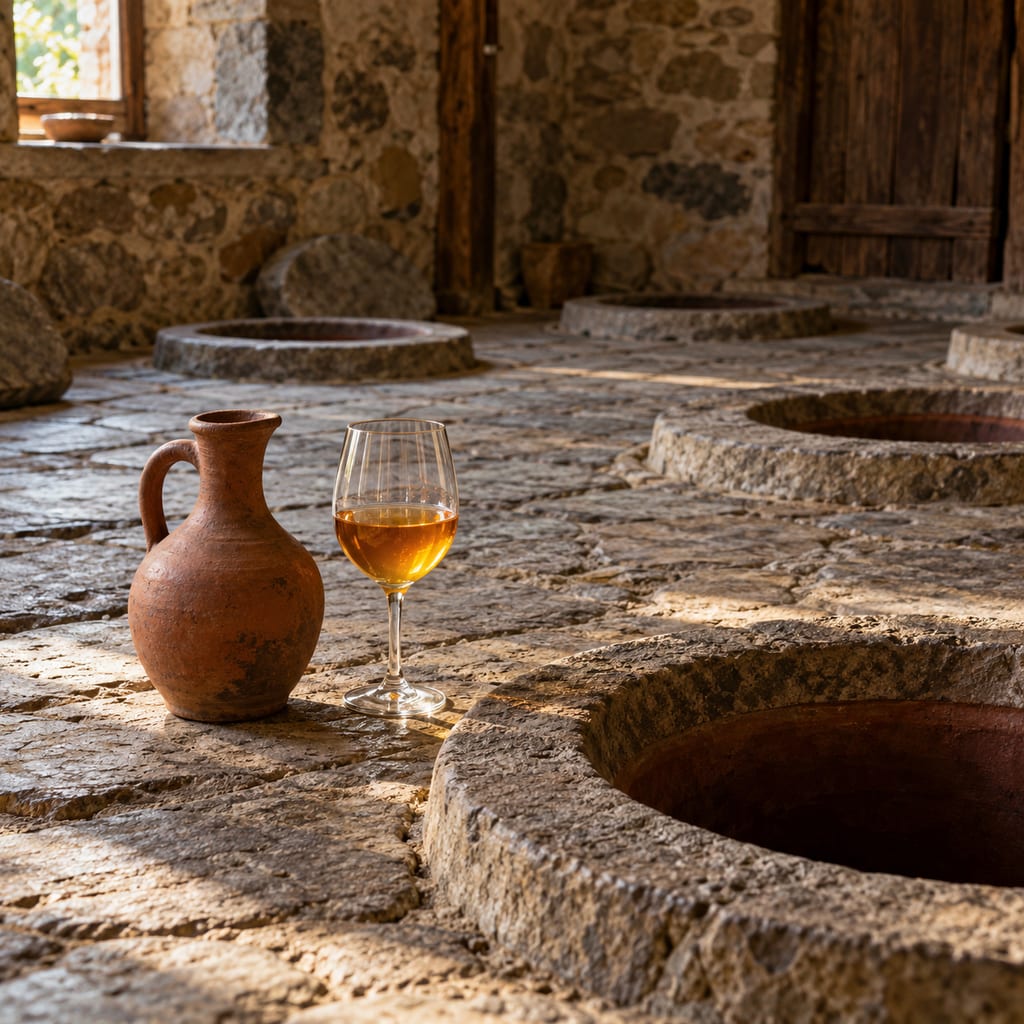
Georgian wine fermented and matured in buried clay vessels called qvevri, usually with grape skins, pips and sometimes stems, in styles from amber to red that differ by region.
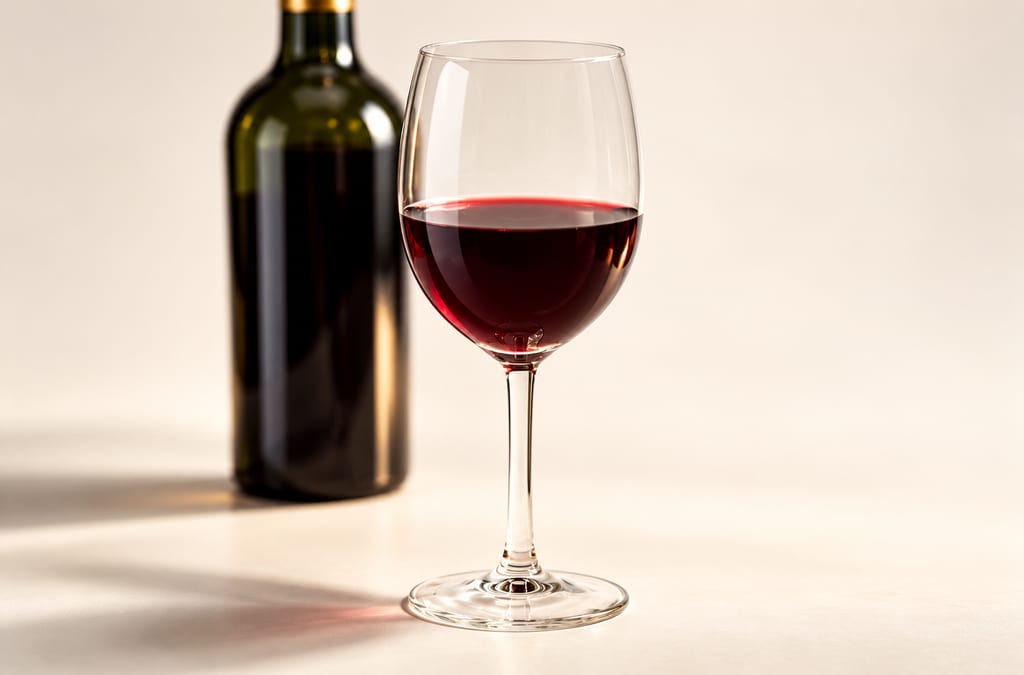
Red wine is grape must fermented with the skins and other solids, then separated from the pomace. Grape, cellar and regional choices shape its colour, structure and style.
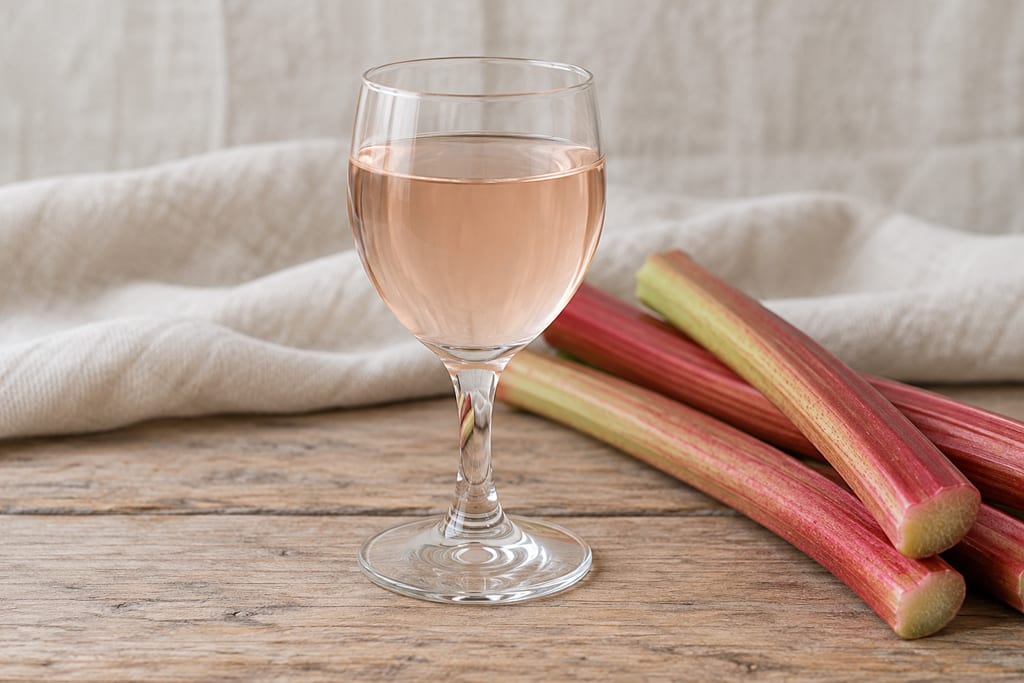
S. O. Beeton’s 1861 household book records rhubarb wine made with rhubarb pulp, water, loaf sugar, lemon rind and isinglass; its historical directions do not establish a safe modern fermentation endpoint.
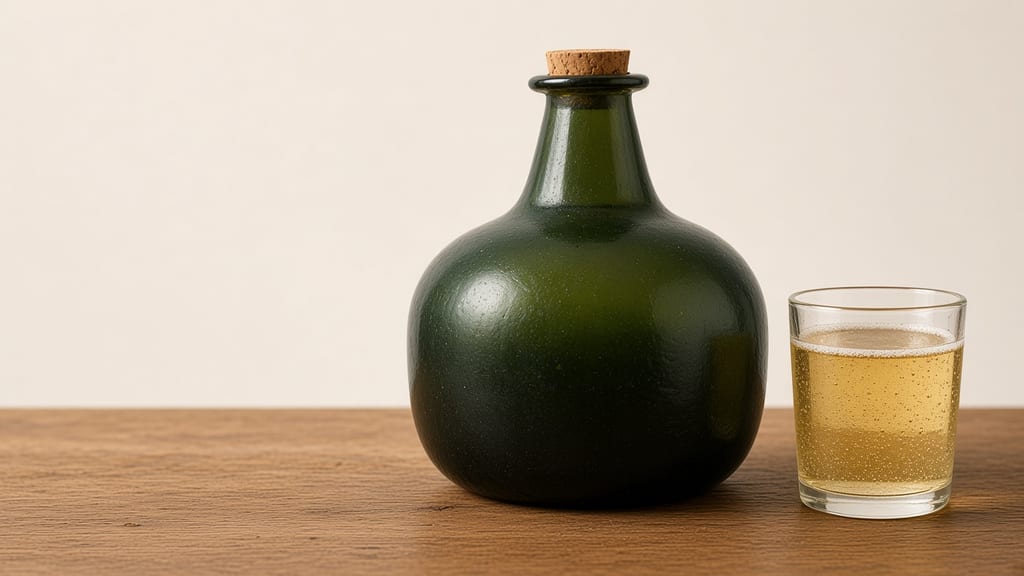
A lightly sparkling cider bottled before it had finished fermenting, as Sir Paul Neile described it in 1664, with a measured modern method for safe bottle conditioning.
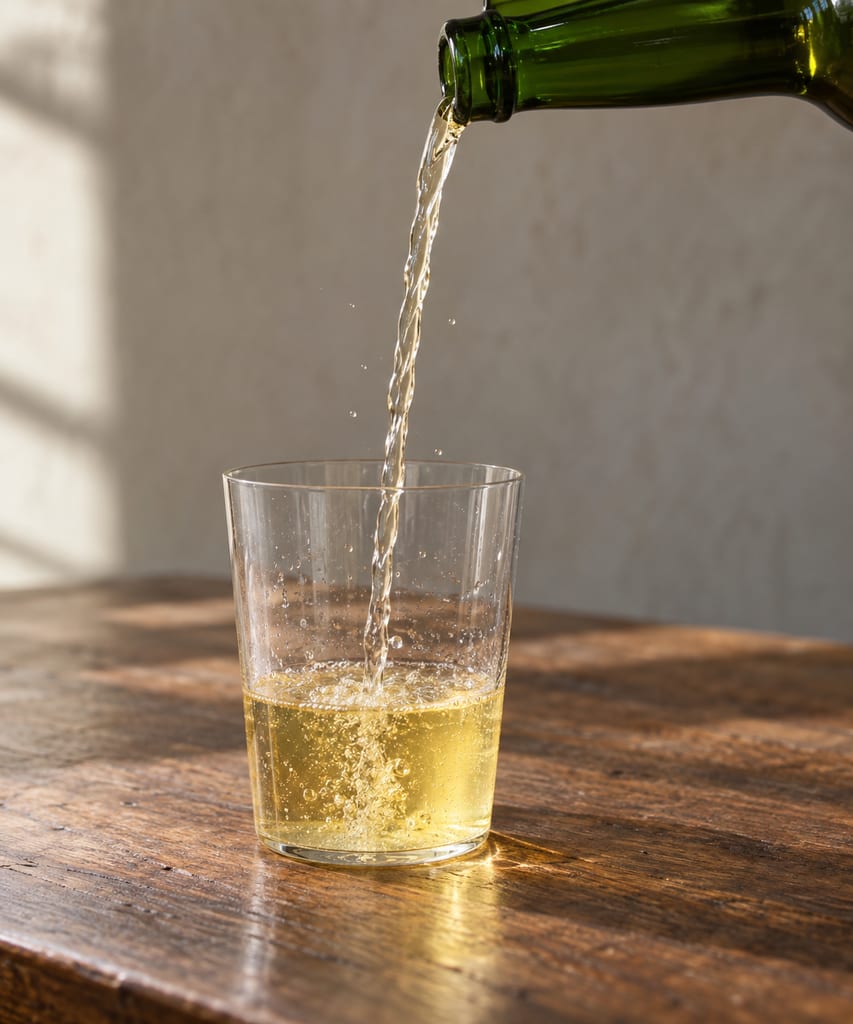
Dry, lightly sparkling cider from Asturias in northern Spain, pressed from cider apples, fermented without added sugar, matured through the winter and poured from a height.

Soft, spreadable Calabrian pork sausage made with a great deal of red chilli and fatty pork, stuffed into natural casings, sometimes smoked and matured while staying soft.

A way to add independent temperature logging to an existing food dehydrator without changing its built-in controls or protections. It is a monitoring method, not a rewiring plan.

Pleurotus cystidiosus is the abalone mushroom, a cultivated oyster-type fungus with dark brown caps that grows more slowly and is more demanding than other Pleurotus species.

A dark, balanced vinegar from Emilia-Romagna made by combining cooked or concentrated grape must with wine vinegar, then acetifying and refining it in wood under a protected specification.

A living dairy inoculum that starts controlled cream fermentation, developing acidity and aroma before sour cream or cultured butter is finished.

A small electric incubator holds jars at a selected temperature for yogurt and other documented warm food preparations. Controls, capacity and vessel arrangement vary by model.

Adygean salt is a seasoned table salt associated with Adygea and the wider North Caucasian culinary tradition. Salt is blended with garlic and a variable selection of herbs and spices; the exact mix depends on the named style and maker.

The African Caesar-group mushroom, Amanita masasiensis, is a wild ectomycorrhizal species of central and southern African woodlands, eaten locally. The genus contains deadly poisonous species, so identification needs care.
No community contributions have been published for this entry yet.
Sign in to contribute. Published comments and photos are free to read.
International Journal of Food Science and Technology, 47(5), 918-926, Wiley, 2012Method · Science · Safety
Component Analysis and Sensory Evaluation of Korean Black Raspberry (Rubus coreanus Mique) WinesThe laboratory juice-pulp-seed wine used 12 kg of crushed fruit in a 20 L glass jar; the study leaves the ppm dose basis and a measurable bottling-stability endpoint unspecified.
Gochang berries stored at −20 °C and thawed at 25 °C; crushed by hand; about 10.2 °Brix, adjusted to 20 °Brix with high-fructose corn syrup.
70 ppm sodium sulphite, a 3 to 4 hour wait, then 200 ppm Fermiblanc Arom dry yeast.
15 days at 25 °C with stirring twice a day; filtered through NA-050 paper; 2 L wooden-stoppered bottles held at 15 °C for three months.
Anthocyanin content fell by about half during fermentation; pulp and seeds changed polyphenols, volatile compounds and sensory scores.
No final yield, stabilisation step or shelf life was reported.
The study measured methyl alcohol at 266.38 ± 6.37 mg/L in juice wine, 301.67 ± 14.20 mg/L in juice-pulp wine, and 299.28 ± 3.06 mg/L in juice-pulp-seed wine; these are results from the three laboratory wine samples, not predictions for another batch.
Cited in: What it is; How it works; How it's made and why each ingredient and step matters; Regional and historical variations; Reading results and problems
Korean Journal of Food Science and Technology, 37(4), 574-578, Korean Society of Food Science and Technology, August 2005History · Science
Changes in Physicochemical Characteristics of Bokbunja (Rubus coreanus Miq.) Wine during FermentationFour yeast treatments (KCCM 12224, Bok-3, Yak-7 and a mix) gave 11.08, 10.62, 10.18 and 10.26% alcohol after ten days.
Pectinase at 500 ppm raised measured alcohol by 0.1 to 1.5 percentage points in selected treatments.
Eight to ten days of fermentation was favourable under the study's conditions.
Changes in organic acids and in colour intensity during fermentation.
Cited in: History; How it works; How it's made and why each ingredient and step matters; Reading results and problems
Korean Journal of Food Science and Technology, 38(4), 543-547, Korean Society of Food Science and Technology, August 2006Science
Alcoholic Fermentation of Bokbunja (Rubus coreanus Miq.) WineFruit at about 10 °Brix with glucose, fructose and a little sucrose; citric acid 14.57 mg/mL and malic acid 2.24 mg/mL.
Must adjusted from 18 to 28 °Brix gave about 9.8 to 14.8% alcohol with KCCM 12224.
A 50% weight-per-volume sugar solution mixed better than crystals with no sensory difference.
Potassium metabisulphite at 200 ppm performed best of the sulphite treatments compared.
Removing seeds slightly reduced astringency.
Cited in: What it is; History; How it works; How it's made and why each ingredient and step matters; Reading results and problems
Korean Journal of Food Science and Technology, 46(1), 33-38, February 2014Science
Quality Characteristics of Korean Black Raspberry Bokbunja Wines Produced Using Different Amounts of Water in the Fermentation ProcessWater added at zero to four times the weight of fresh fruit.
More water raised the volume of wine and changed acidity, fermentation behaviour and phenolic extraction per unit of fruit.
Cited in: Regional and historical variations; Reading results and problems
Journal of the Institute of Brewing, 121(1), 87-94, Wiley, 2015Science
Volatile Aroma and Sensory Analysis of Black Raspberry Wines Fermented by Different Yeast StrainsTwelve commercial Saccharomyces cerevisiae strains compared on thawed, crushed Jeongeup berries adjusted to 24 °Brix.
67 volatile compounds identified; esters and terpenes drive fruity and floral aroma.
Strain M1 had the highest overall sensory preference.
Cited in: Regional and historical variations
Journal of the Institute of Brewing, 123(2), 277-283, Wiley, 2017Method · Science
Enhancement of Volatile Aromatic Compounds in Black Raspberry Wines via Enzymatic TreatmentLarge-scale method: a yeast starter from 200 kg of must, then 800 kg more fruit must and 80 kg sucrose, adjusted to 24 °Brix.
Seven days at 25 °C, and clarification with bentonite at 2 g/L.
Enzyme preparations with beta-glucosidase released bound aroma compounds; the CYTOLASE PCL5 wine scored highest.
Cited in: Regional and historical variations
Molecules, 19(7), MDPI, 2014History · Science
Mistaken Identity: Clarification of Rubus coreanus Miquel (Bokbunja)Rubus coreanus and Rubus occidentalis are separate species with different anthocyanin profiles.
Much of the black raspberry grown commercially in Korea under the bokbunja name is Rubus occidentalis.
Commercial cultivation expanded from the late 1960s, and bokbunja drinks became far more visible around 2004.
Cited in: What it is; History; Regional and historical variations; Reading results and problems
Foods, 11(19), article 3047, MDPI, September 2022Safety · Science
Method Validation and Assessment of Hazardous Substances and Quality Control Characteristics in Traditional Fruit WinesCommercial Korean fruit wines, including bokbunja wine, tested for acetaldehyde, cyanide, ethyl carbamate, sulphur dioxide and diacetyl.
pH and titratable acidity differed between wine types.
Appearance and taste cannot show these compounds, so laboratory testing is needed.
Berries are perishable, and wine and juice are major products made from them.
Cited in: How it's eaten and used; Reading results and problems
UK Government, Department for Environment, Food and Rural AffairsSafety
Wine LabellingSulphites in wine are an allergen and must be declared where sulphur dioxide exceeds 10 mg/L.
Added sulphite and measured residual sulphur dioxide are different figures.
Rules depend on the country and the wine category.
Jeonbuk Ilbo, Republic of Korea, January 2004History
고창 복분자주 지리적표시제 등록 (Registration of the Gochang Bokbunjaju Geographical Indication)Gochang Bokbunjaju registered as Korean geographical indication no. 3 on 15 January 2004.
Gochang named as the regional centre of bokbunja wine, with the participating local producers.
Cited in: History; Regional and historical variations
Jeonbuk Ilbo, Republic of Korea, 2007History
Registration of Gochang Bokbunja (the fruit) as a geographical indicationGochang Bokbunja, the fruit, registered as geographical indication no. 35 in 2007, separately from the wine.
Cited in: History
Gochang Myeongsanpum Bokbunjaju, South KoreaHistory
고창명산품복분자주: Company HistoryThe producer reports it was founded in October 1994 and completed its factory in May 1995.
It confirms geographical indication no. 3 in January 2004.
Cited in: History
Korea Traditional Knowledge Portal, Rural Development Administration, Republic of KoreaHistory · Method
Bokbunja sul: Jeju recipeA Jeju bokbunja sul made by steeping 1 kg of raspberries with 100 g of sugar in 1.8 L of soju and keeping it somewhere cool and shaded; no fermentation stage.
Cited in: What it is; History; How it's eaten and used
K-Foodtrade, Korea Agro-Fisheries & Food Trade CorporationHistory
Bokbunja wine producer and product listing (catalog 98991)Bohae Brewery launched its Bokbunjajoo in 2003 and describes it as a commercial form of a household alcohol-making tradition.
Cited in: History
K-Foodtrade, Korea Agro-Fisheries & Food Trade CorporationHistory
Bokbunja wine product listing (catalog 79021)Commercial bokbunja wines made with Gochang fruit from the Seonunsan area, with their alcohol strengths and styles.
Cited in: Regional and historical variations; How it's eaten and used
K-Foodtrade, Korea Agro-Fisheries & Food Trade CorporationHistory
Bokbunja wine product listing (catalog 79022)Commercial bokbunja wine products, including a carbonated version made with selected yeast and a long, cool fermentation.
Cited in: Regional and historical variations
K-Foodtrade, Korea Agro-Fisheries & Food Trade CorporationHistory
Bokbunja wine product listing (catalog 122057)A commercial fermented and aged bokbunja wine at 13% alcohol, sold as a drink to take without mixers.
Cited in: Regional and historical variations; How it's eaten and used
Kooksoondang, global siteHistory
Bokbunja product pageA Gochang-fruit bokbunja wine labelled 13% alcohol, presented as a fruit wine with acidity, sweetness and slight astringency.
Cited in: Regional and historical variations; How it's eaten and used