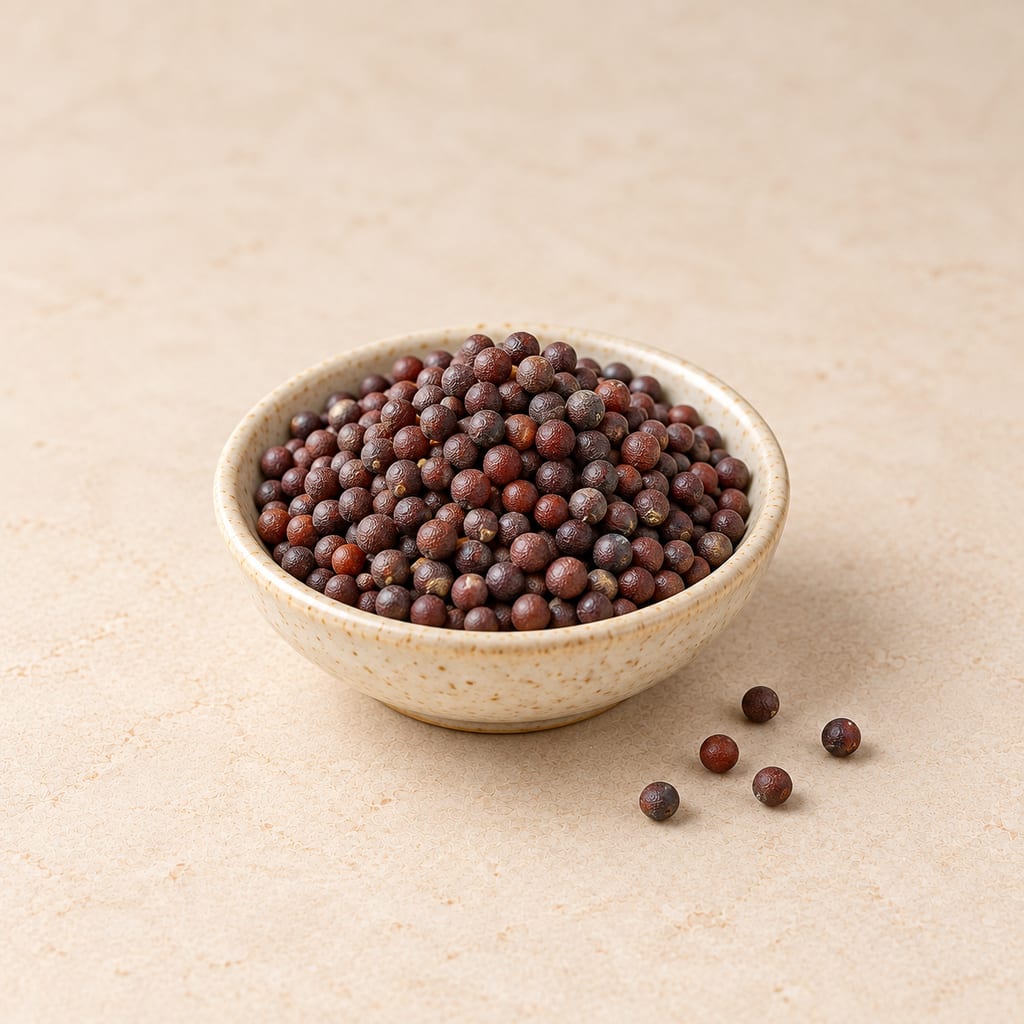
Black mustard seed
Black mustard seed is the small, dark, very pungent seed of Brassica nigra, the hottest of the three mustards. It gives its bite through sinigrin, which turns into allyl isothiocyanate when the crushed seed meets water.
 FermenteaWhere food goes to change
Cultures
A living culture selected to ferment fruit sugars into alcohol, sold in forms whose strain, handling and flavour contribution depend on the product.
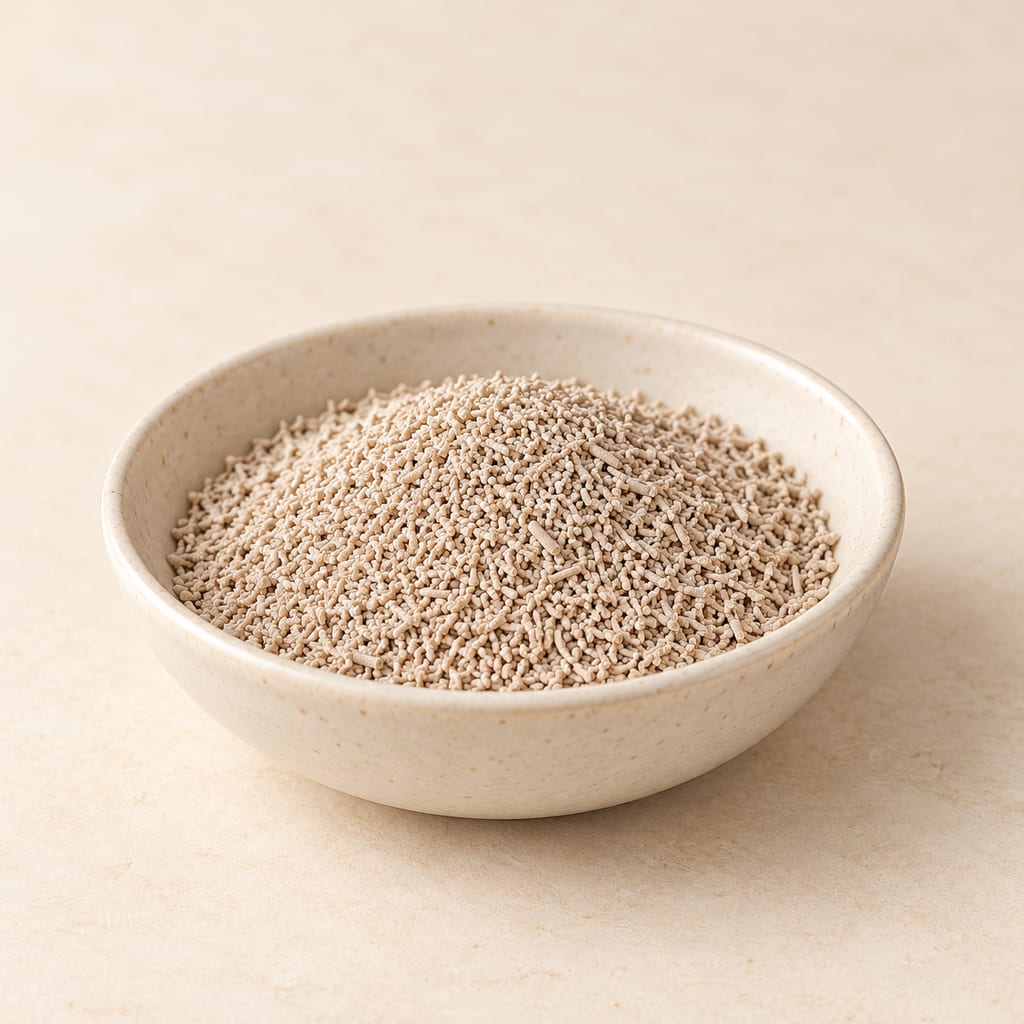
Wine yeast is a culture chosen to turn the sugars of fruit juice into alcohol. It is a small ingredient with an unusually large consequence: after inoculation, living cells multiply and metabolize within the juice, changing its composition as fermentation proceeds. The yeast is distinct from the fruit, the sugar available to it and any nutrient preparation added alongside it. Buying a culture means choosing organisms for a job, rather than adding the taste of yeast to an otherwise finished drink.
The familiar bought form is a pale beige to light-brown dry culture, supplied as small granules or short, irregular pellets. Those visible particles are a manufactured preparation containing many microscopic cells. They are not single oversized yeast cells. Liquid cultures and retained winery populations offer other ways to introduce organisms. Their concentration, condition and handling differ, so the broad name wine yeast cannot establish how much of any one preparation should enter a batch.
Saccharomyces cerevisiae is the species most commonly used for alcoholic wine fermentation. Its cells reproduce by budding and can be spherical to oval. Wine yeast remains a functional name rather than a single strain designation, however. Cultures sold for winemaking can have different identities, and specialist methods also use non-Saccharomyces organisms. A recipe that gives only this broad ingredient name does not identify the contents of a particular branded sachet.
Wine existed before its makers could identify a yeast species. Nineteenth-century microbiology changed the explanation of what happened in a fermenting vessel. Louis Pasteur's Études sur le vin appeared in Paris in 1866, addressing wine diseases and preservation. The questions surrounding wine were practical as well as scientific: why one vessel fermented usefully while another deteriorated, and how the living material associated with the liquid affected its future.
Pasteur's work helped distinguish the activity of living yeast from the idea that fermentation was merely the decay of material in the juice. Experiments with grape washings also separated organisms arriving from the fruit's exterior from the juice inside an uninjured grape. These investigations made the inoculum something that could be studied and managed. They did not identify one universal wine yeast or establish the ancestry of every culture now available.
Modern strain selection asks a more specific question: which culture suits this juice and the intended wine? The answer may concern fermentation reliability, aroma, settling or a later fermentation in the bottle. A commercial culture provides a named, reproducible starting choice. The must and the conditions remain active parts of the result, so selection does not remove the need to understand the fruit or follow the preparation through its stages.
In alcoholic fermentation, yeast uses fermentable sugar and produces ethanol and carbon dioxide. Heat is released too. A fermenting must is therefore changing chemically and thermally while gas leaves the liquid. The sugar concentration falls as fermentation proceeds, and alcohol accumulates. This explains why a sweet juice can become a dry wine and why the state of the liquid cannot be judged simply by comparing its appearance with the juice at the beginning.
The conversion is part of the cell's metabolism. Sugar supplies material and energy for the organism, rather than acting only as something the yeast passes unchanged through a machine. The cells also require other constituents for growth. Juice composition and the condition of the inoculum influence how well the population establishes itself. A nutrient product has a separate role from a viable culture; adding one does not automatically replace the other.
In the linked dry red muscadine preparation, wine yeast initiates fermentation of a particular fruit mixture. The grapes and the rest of that formulation define the medium, while the culture starts the biological work. Muscadine must provides the cells with a particular balance of sugar, acidity and growth-supporting material. A different fruit changes that environment. The resulting wine develops through the interaction between the selected inoculum and the fruit mixture, rather than from the culture acting independently of the juice.
Yeast affects more than the loss of sweetness. Its metabolism also produces compounds that contribute to aroma and flavour, and strains do not necessarily make the same balance. A comparison of the commercial cultures VIN13 and EC1118 in defined grape-juice media found different sensory and chemical profiles. Changing fermentation temperature changed the outcome as well. Temperature and juice composition work together with strain identity. The aroma of the wine emerges from that combination, so the same chosen culture can contribute differently when its surroundings change.
A relatively neutral culture can leave fruit and other wine characteristics more prominent; it does not mean that fermentation makes no flavour-active compounds. A more expressive culture still works within the possibilities of its must. Selecting a strain is one part of designing the wine, alongside choosing the fruit and managing the conditions in which the organisms grow.
Commercial use can be quite specialized. Lalvin EC1118, for example, is described by its manufacturer as a culture selected in Champagne for base wine and in-bottle secondary fermentation, and it is also sold for other wine and fruit-cider fermentations. That is the history and proposed use of one product. It neither identifies an unnamed wine yeast as EC1118 nor makes Champagne the birthplace of wine yeast as a whole.
Alcoholic fermentation and oxygen are not simple opposites. Saccharomyces cerevisiae uses oxygen in making sterols and unsaturated fatty acids, components important to growing cells. A culture can therefore benefit from oxygen for particular physiological work even while its principal role in the must is alcoholic fermentation. This is different from saying that unlimited exposure of a finished wine to air is desirable.
Oxygen availability can change cell viability and the course of fermentation. Its effect depends on the medium and the stage at which the cells receive it. Growth-related lipid synthesis is one part of that response, alongside other effects on cell survival and activity. A growing population in must and yeast near the end of fermentation are in different physiological conditions, even within the same vessel.
In EC1118 under simulated nitrogen-limited wine conditions, available oxygen changed the balance of respiratory and fermentative metabolism while ethanol production remained important. The relationship involves nutrient availability as well as air. Aeration, transfer and vessel closure occur at particular points in a wine method because the liquid and its population are changing. Oxygen's biological role is therefore connected to the stage at which it reaches the cells.
Yeast has to remain in effective contact with its surroundings while fermentation proceeds. Some strains form aggregates through cell-to-cell binding, a behaviour called flocculation. The clumps can settle more readily than dispersed cells. This can be useful after fermentation when the wine is separated from its biomass, but early settling may remove an active population from the liquid before the sugars have been consumed.
Research screening wine strains for late-fermentation settling illustrates that trade-off. Selected strains improved filtration-related properties or wine recovery after racking in experimental red wines. The useful settling behaviour was a property of the selected cultures. A population that stays dispersed during fermentation and then separates efficiently offers a different practical combination from one that drops out early. Flocculation, sedimentation and completion of fermentation describe different events, even when they happen close together in the same vessel.
Recovering more wine at a transfer and making the remaining wine easier to filter are different benefits. Both concern separation after fermentation, rather than an increase in the amount of sugar that the cells can convert.
Racking transfers wine away from settled material; it does not itself prove that all fermentable sugar is gone. A quiet surface or a compact deposit likewise describes what is visible, rather than the entire biochemical state of the liquid. The preparation's measurements and completion criteria remain necessary. Choosing a culture for its settling behaviour should serve those later stages without replacing them.
Active dry wine yeast is made by drying a concentrated culture. One EC1118 specification describes round or vermiculated pellets packed under vacuum in laminated foil. Its formulation lists Saccharomyces cerevisiae and E491. This shows why the ingredient list belongs alongside the culture name: a commercial dry preparation can include a technological ingredient as well as the living cells it is intended to deliver.
Drying and packaging make a culture available between production and use, while rehydration brings it back into a liquid environment. These are different operations from growing a fresh population through propagation. A dry culture dispersed in water has changed physical condition, but that alone does not establish that the cell population has multiplied. The supplier's directions connect the manufactured form to its intended inoculation procedure.
Keep the identity of the purchased product with it. A strain name, lot and current instructions make it possible to distinguish cultures that look much alike as beige granules. A spoonful taken from an unidentified jar loses that useful context. The exact formulation and handling conditions matter more than whether two dry products appear to have similar colour or particle size.
Rehydration instructions vary between suppliers and preparations. The Australian Wine Research Institute explicitly places the manufacturer's packet directions ahead of its generic guidance, and notes that a procedure suitable for many Saccharomyces cerevisiae cultures may be unsuitable for other cultures. Clean equipment and water without substances that inhibit the yeast are part of preparing the inoculum, rather than optional details added after it is already growing.
Clumps can leave part of a dry preparation unwetted. Gentle dispersion helps expose the material to water, while subsequent adjustment towards the must's temperature reduces an abrupt change in conditions. The order matters: wetting the culture, adjusting it and introducing it to the fruit mixture are separate stages. Their quantities and durations should come from the actual product directions and the wine method.
EC1118 has product-specific rehydration approaches using either water alone or a named accompanying preparation. The ingredients and sequence belong together: a rehydration product adds its own material to the liquid in which the dry culture is wetted. Follow the current routine for the product supplied, including any accompanying preparation, so the water, culture and adjustment stages remain part of one coherent method.
Moisture protection and storage conditions help preserve a dry culture until it is needed. Commercial instructions commonly specify cool, dry conditions and intact protective packaging. A stated shelf life belongs to the product, package and conditions under which it was established. It does not apply automatically to an opened packet, a liquid culture or a retained portion from another fermentation.
The culture's purpose also guides selection. A strain intended for a particular wine style, a difficult must or secondary fermentation brings a different set of priorities from one chosen chiefly for aroma. The manufacturer may describe its expected behaviour, while the recipe provides the fruit mixture and process. Neither an impressive alcohol-tolerance figure nor a familiar brand name guarantees completion in an unsuitable environment.
Wine yeast is a fungal culture rather than a cereal ingredient, but that identity is not an allergen-free certificate for a commercial preparation. Read its ingredient and allergen declarations, including any carrier or processing ingredients. The composition of the eventual wine also includes its fruit and other additions. A dietary claim about the finished drink cannot be inferred from the culture's species name alone.
The generic ingredient does not establish a strain, manufacturer, universal dose, temperature range, alcohol tolerance or storage life. Named product examples illustrate their own forms and uses; the linked wine retains its source-specific method.
The generic wine-yeast ingredient has no named producer or cultivation/sourcing place; no particular branded strain inferred.
Publication place of Pasteur's wine study, not a birthplace or source of the generic culture.
Black mustard seed is the small, dark, very pungent seed of Brassica nigra, the hottest of the three mustards. It gives its bite through sinigrin, which turns into allyl isothiocyanate when the crushed seed meets water.
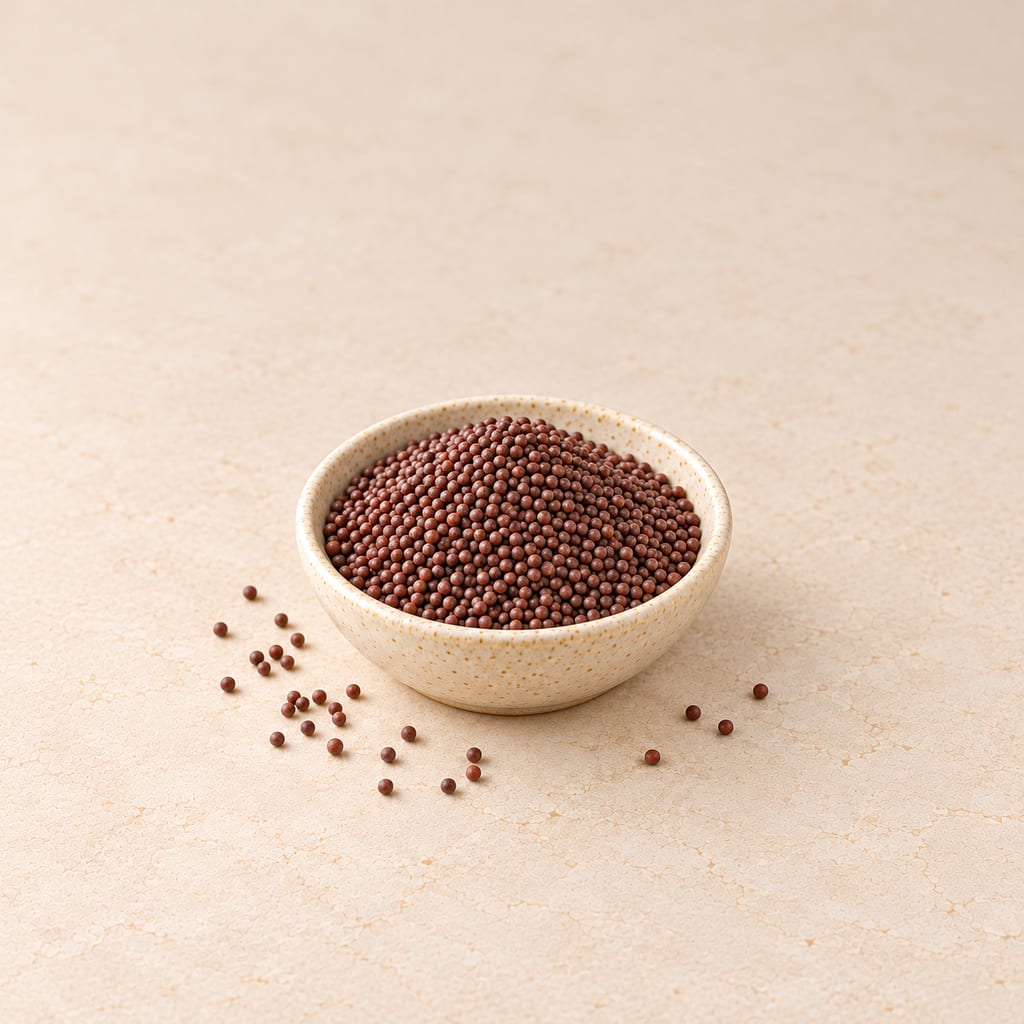
Brown or oriental mustard seed comes from Brassica juncea, a hybrid of black mustard and turnip rape. It is the hot, easily harvested seed behind Dijon, spicy brown mustards and much of the mustard oil of the Indian subcontinent.
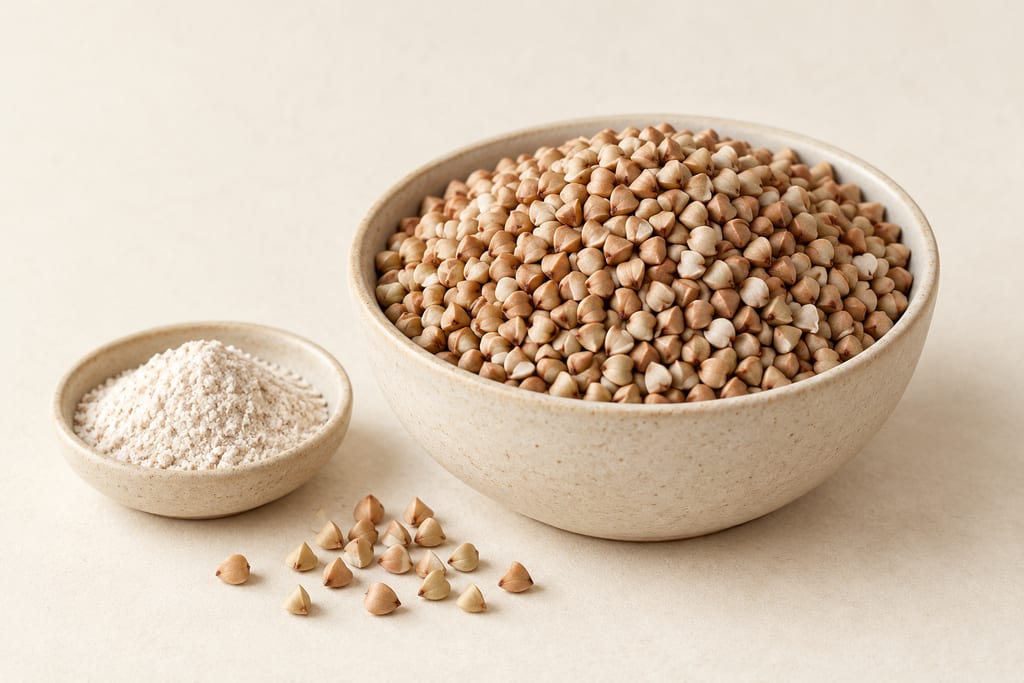
Buckwheat is a triangular-seeded flowering plant whose whole groats and flour cross regional food traditions, from porridge and pancakes to modern sourdough and gluten-free bread.
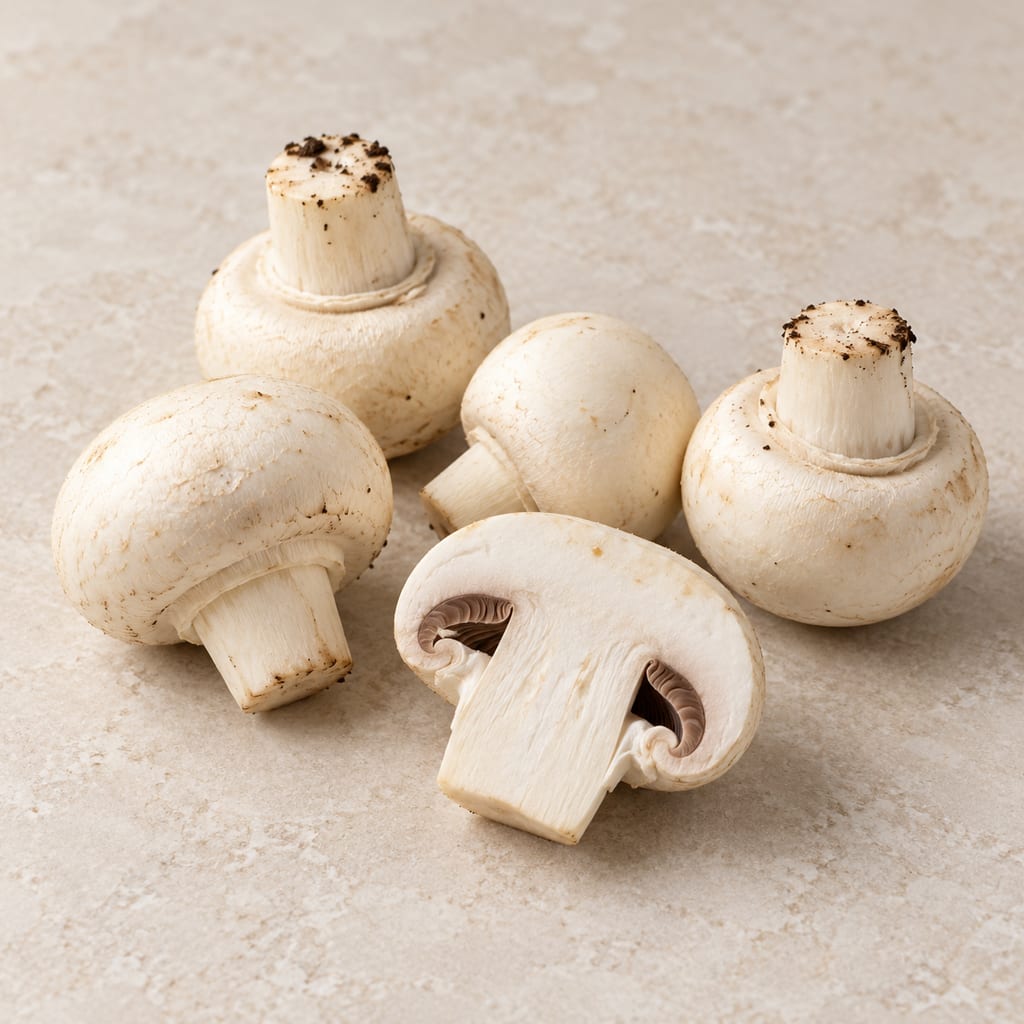
A cultivated form of Agaricus bisporus sold young as a button and at more mature stages as cremini or portobello, used fresh or preserved in everyday cooking.
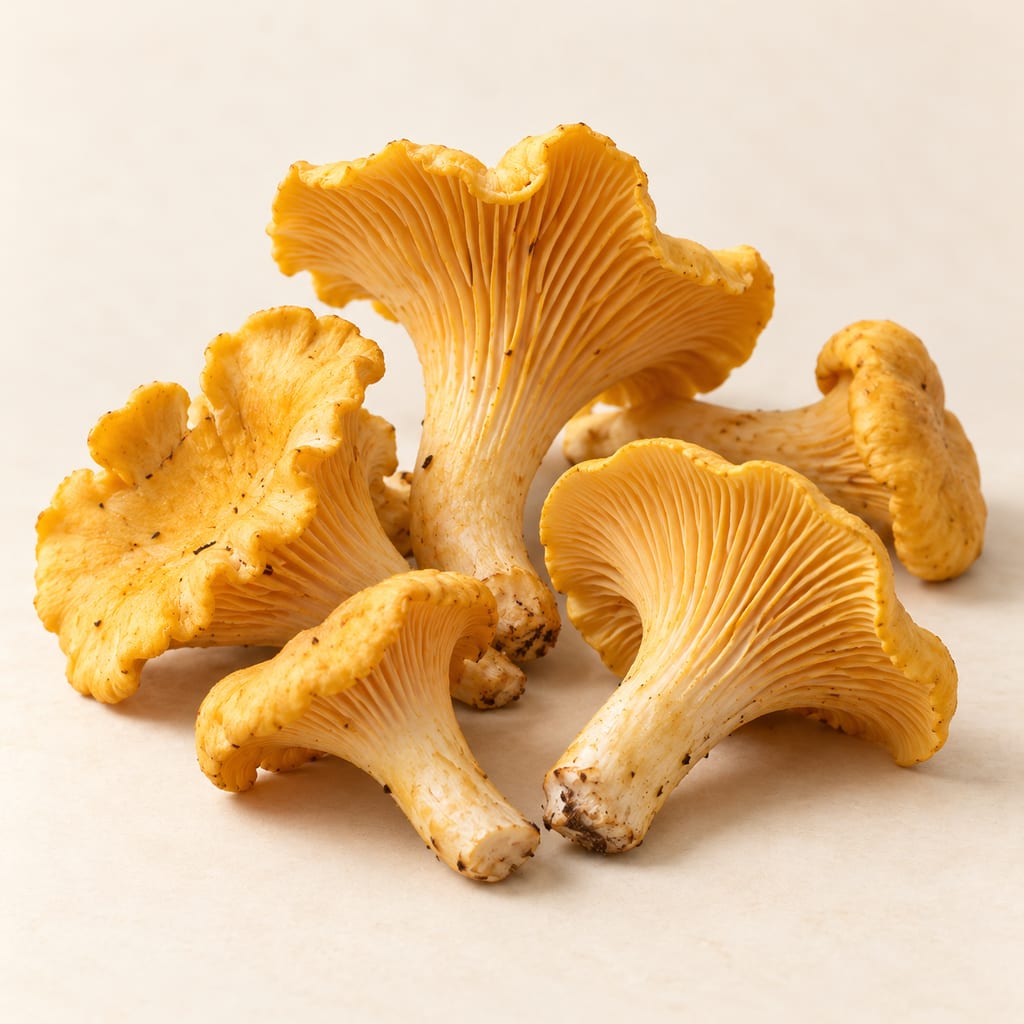
Chanterelles are wild, tree-associated edible mushrooms, particularly the European golden chanterelle Cantharellus cibarius, prized for their firm flesh, fruity aroma and use fresh, frozen, dried or pickled.
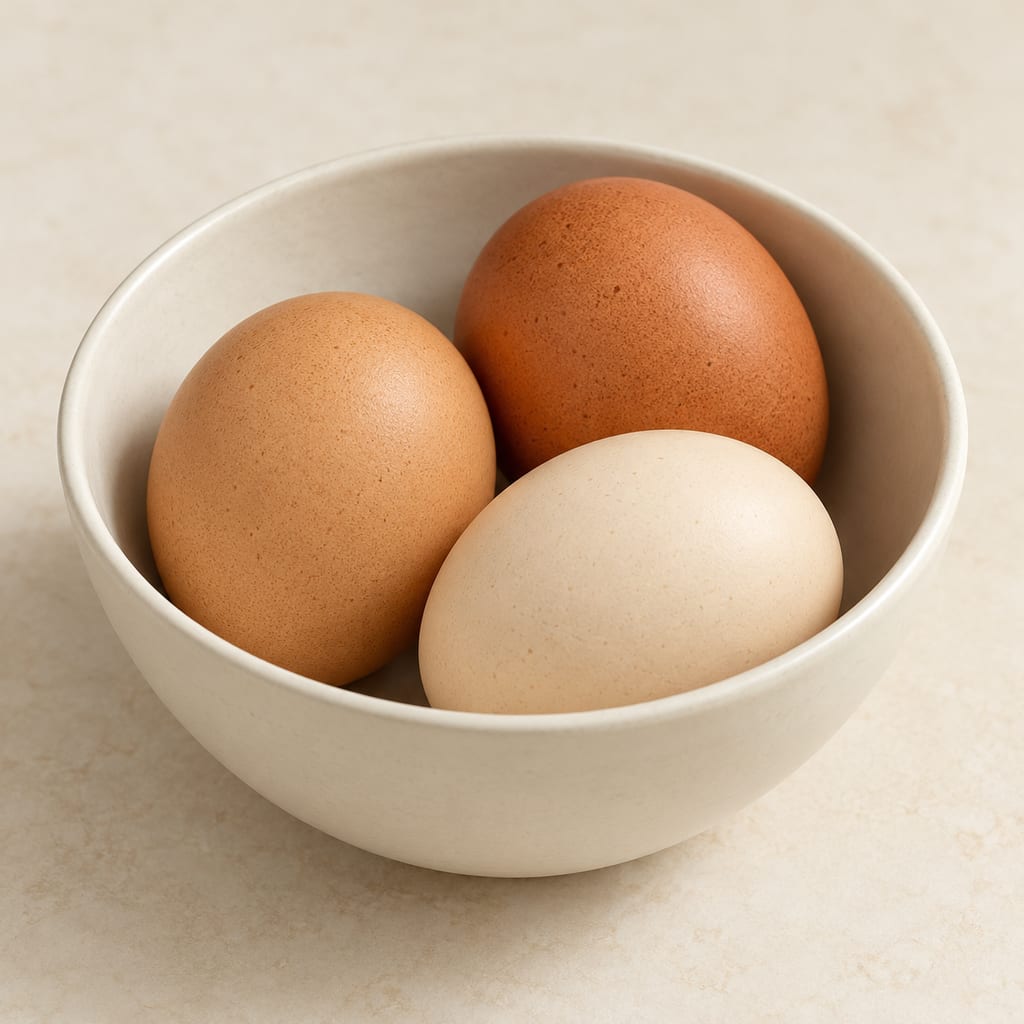
Chicken eggs supply proteins and yolk fats that set and emulsify. Atlas breads use them in enriched doughs, surface washes and a sourdough pancake batter mixed after fermentation.
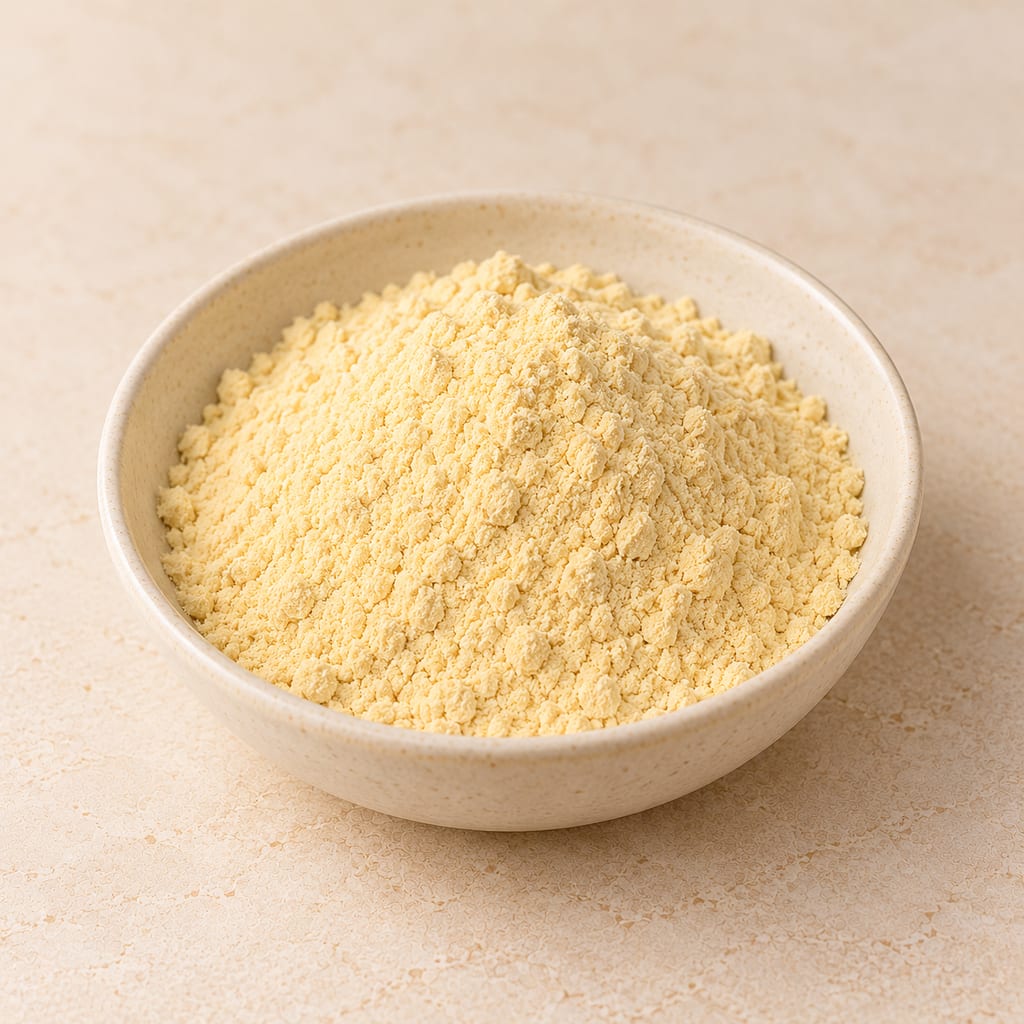
Chickpea flour is milled Cicer arietinum, used as besan in many Indian dishes and as the base of breads such as socca and farinata.
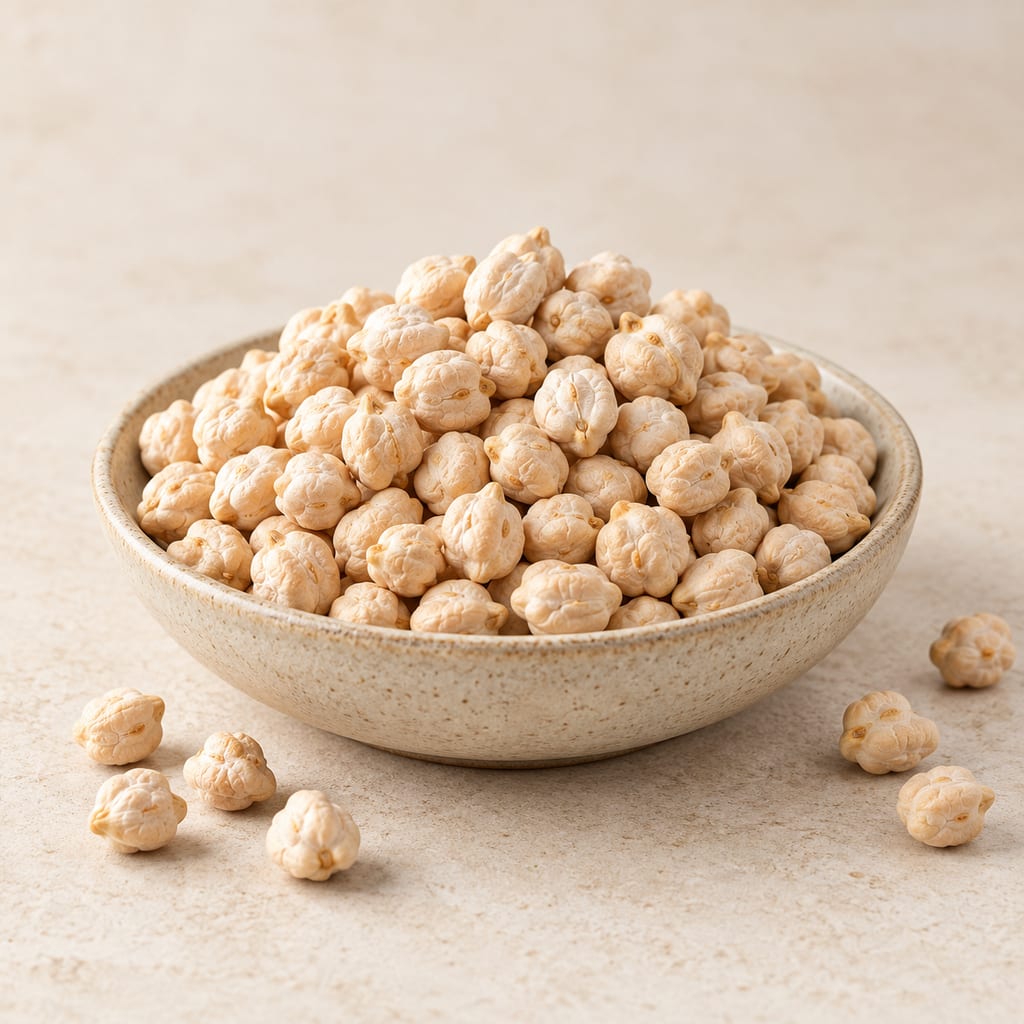
Chickpeas (Cicer arietinum) are dry pulses eaten whole or milled into flour, which gives socca, farinata and other breads a dense, nutty batter or dough.
No community contributions have been published for this entry yet.
Sign in to contribute. Published comments and photos are free to read.
University of California, DavisIngredient context
Saccharomyces cerevisiaeSaccharomyces cerevisiae is a budding yeast commonly used in wine; its glucose fermentation produces alcohol, carbon dioxide and heat.
Cited in: A living ingredient for a changing fruit juice; Sugar becomes alcohol, gas and heat
Danstar Ferment AG / Lallemand, distributor copyIngredient context
LALVIN EC1118 Specification Sheet, issued2020-12-14The product specification describes a dried concentrated yeast culture as beige round or vermiculated particles, packaged under vacuum in foil, with E491.
Cited in: A living ingredient for a changing fruit juice; A dry culture is a deliberately preserved form; Rehydration prepares cells for the must
Louis Pasteur / Science History InstituteIngredient context
Études sur le vinThe institutional catalogue records Pasteur's Études sur le vin published in Paris in 1866.
Cited in: From observed fermentation to chosen cultures
Yeast / James A. BarnettIngredient context
A history of research on yeasts 2: Louis Pasteur and his contemporaries, 1850–1880The historical account describes the development of the living-cell explanation of alcoholic fermentation and experiments involving material washed from grapes.
Cited in: From observed fermentation to chosen cultures
University of Georgia Extension / William C. HurstIngredient context
Winemaking at HomeThe household winemaking guide describes yeast's fermentation role and the use of a fermentation lock and hydrometer in its process.
Cited in: Sugar becomes alcohol, gas and heat; Growing in suspension and leaving a sediment
Food Chemistry / Molina et al.Ingredient context
Differential synthesis of fermentative aroma compounds of two related commercial wine yeast strainsAroma production differed between VIN13 and EC1118 under the study's defined media and temperature conditions.
Cited in: The strain helps shape the wine
LallemandIngredient context
LALVIN EC1118 technical data sheetEC-1118 is a named Champagne-selected culture marketed for base wine, secondary fermentation and fruit cider; its manufacturer supplies its own rehydration protocol.
Cited in: From observed fermentation to chosen cultures; The strain helps shape the wine; Rehydration prepares cells for the must; Keeping a culture and choosing its use; Scope of the name
Applied and Environmental Microbiology / Rosenfeld et al.Ingredient context
Oxygen consumption by anaerobic Saccharomyces cerevisiae under enological conditions: effect on fermentation kineticsOxygen contributes to yeast sterol and unsaturated-fatty-acid synthesis; the study describes effects that depend on medium and fermentation stage.
Cited in: Oxygen has a biological role
Applied and Environmental Microbiology / Aceituno et al.Ingredient context
Oxygen response of the wine yeast Saccharomyces cerevisiae EC1118 grown under carbon-sufficient, nitrogen-limited enological conditionsThe study examines oxygen-dependent metabolic responses under simulated nitrogen limitation.
Cited in: Oxygen has a biological role
Scientific ReportsIngredient context
Identification of flocculant wine yeast strains with improved filtration-related phenotypes through application of high-throughput sedimentation rate assaysYeast cell binding and early settling can affect fermentation, while settling also influences wine recovery and filterability.
Cited in: Growing in suspension and leaving a sediment
Australian Wine Research InstituteIngredient context
Active Dry Wine Yeast (ADWY) rehydrationRehydration and inoculation practices depend on the supplied culture. Wetting, clump formation, water quality and gradual adjustment affect handling.
Cited in: A living ingredient for a changing fruit juice; A dry culture is a deliberately preserved form; Rehydration prepares cells for the must; Keeping a culture and choosing its use; Scope of the name
US Food and Drug AdministrationIngredient context
Food AllergiesIngredient and cross-contact declarations are needed for the actual commercial culture; the generic name does not establish an absence of allergens.
Cited in: Keeping a culture and choosing its use