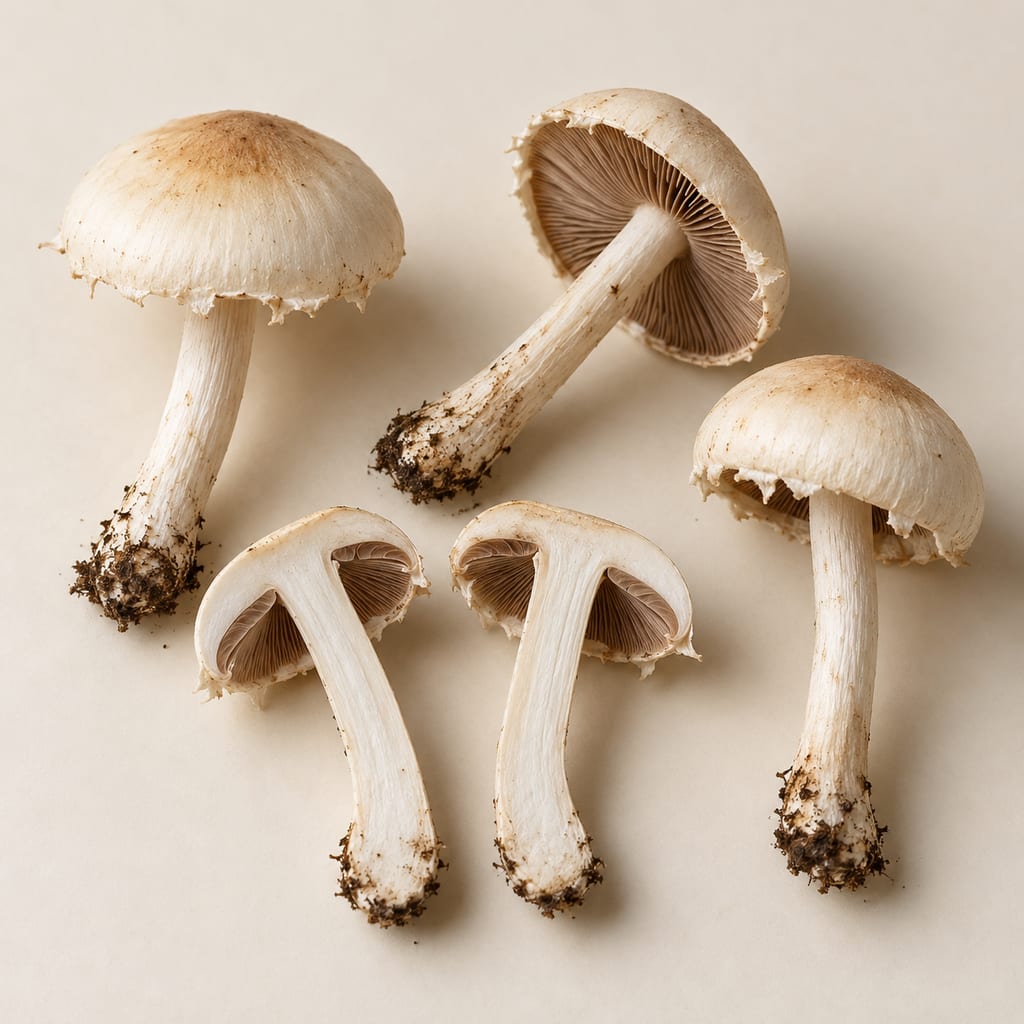
Agrocybe dura
A grassland agaric listed as edible in historical and scientific catalogues for Hong Kong and China. Taxonomic concepts and practical food value vary; the listings do not establish safe identification or culinary practice.
 FermenteaWhere food goes to change
Buckwheat is a triangular-seeded flowering plant whose whole groats and flour cross regional food traditions, from porridge and pancakes to modern sourdough and gluten-free bread.
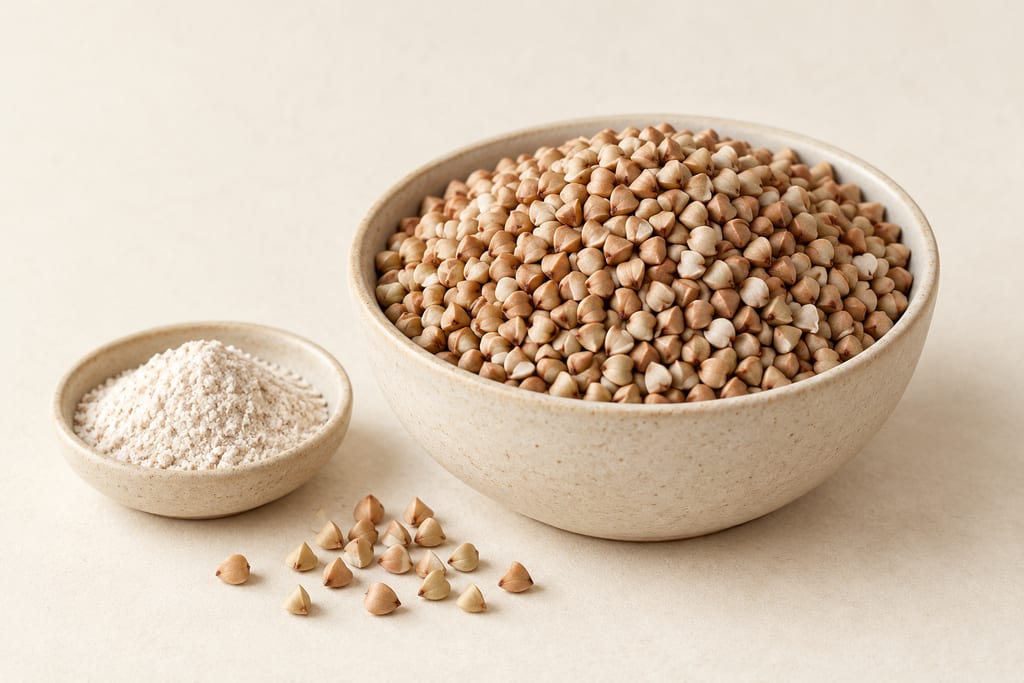
Common buckwheat is Fagopyrum esculentum, a flowering annual in the knotweed family, Polygonaceae. Its familiar black, grey or brown triangular “grain” is botanically an achene, a dry one-seeded fruit. The shell, called the hull, encloses the seed that is eaten. This makes buckwheat a pseudocereal: it is prepared and milled much like wheat or rice, but it is not a grass and is not a true cereal.
The angular hull and small triangular seed distinguish buckwheat from cereal kernels. Whole seed can be dehulled into groats, ground into flour, or roasted before cooking. Roasted groats are often sold as kasha; their toasted aroma is stronger than the mild, earthy, nutty character of raw groats or flour. The name “buckwheat” reflects a comparison between the triangular fruits and beechnuts, rather than a relationship to wheat. German Buchweizen preserves the beech-wheat comparison.
Common buckwheat is not the only cultivated Fagopyrum. Tartary buckwheat (Fagopyrum tataricum) is a second cultivated species. Archaeological reports often identify ancient finds only as Fagopyrum or buckwheat, and researchers caution that many samples cannot reliably distinguish the two species. A record of buckwheat cultivation should therefore not be turned into a claim about common buckwheat unless the source identifies it.
China is central to current accounts of buckwheat domestication, but the precise starting area remains debated. Hunt, Shang and Jones reviewed archaeological plant remains, pollen and genetic work and found a sparse and uneven record. The earliest plausibly agricultural Fagopyrum in their synthesis is pollen evidence from northern China in the mid-sixth millennium calibrated years before present. Pollen is usually identified only to genus, however, and does not by itself prove that the plant was domesticated or identify which cultivated species it represents.
Genetic and biogeographic work has often pointed toward upland southwest China, while the older archaeological and pollen record gives northern China an early place in the story. Hunt and colleagues propose that cultivation could have expanded from populations near the wild ancestor’s range margins, with movement among southwest China, the Chengdu Plain and the southern Loess Plateau. A later study of pollen in southwest China found rising Fagopyrum abundance about 4,000 years ago and argued that cultivation there may have begun earlier than the local pollen record had shown. These findings keep a southwest origin plausible; they do not settle a single domestication site.
Buckwheat became a Eurasian crop through several stages of movement and exchange. The 2018 review interprets the record as evidence that it was pan-Eurasian by the third millennium calibrated years before present, with a possible westward route through the southern Himalaya toward the Caucasus and Europe. Cambridge’s earlier overview instead describes its European arrival through Turkey and Russia in the fourteenth and fifteenth centuries CE and notes Japanese grain finds dated to 3500–5000 BCE. These sources use different evidence and do not justify a single clean migration line. Ancient finds in Japan, evidence from China, and later written crop histories each speak to different parts of the chronology.
Common buckwheat is now grown across temperate parts of the Northern Hemisphere. Its short growing cycle and ability to grow where some other crops struggle helped it become useful in European uplands and less-favoured fields, although exact crop suitability depends on local climate and cultivar. It is also planted as a cover crop, companion crop and green manure; those agricultural uses should be kept distinct from production for food grain.
The historic and modern food map is broad rather than a list of separate origins. In Japan and China, buckwheat cultivation and grain foods are well established, while across parts of eastern Europe whole groats are commonly eaten cooked as a side dish. In France, especially Brittany, buckwheat flour is the traditional base for savoury galettes. The French words sarrasin and blé noir are used for buckwheat in culinary contexts. European and North American bakers also use its flour in breads and other baked foods. These are documented cultivation and use associations; none alone establishes where buckwheat was first domesticated.
The seed is harvested after flowering and fruiting, then dried, cleaned and hulled for food. Grain colour and hulls vary, and the available sources do not provide a universal retail grade or a single standard flour specification. Commercial milling may produce flour from whole or dehulled seed and may separate fractions differently. The 2023 flour review notes that buckwheat flour quality parameters and production processes are less standardized than those for wheat flour. As a result, one bag’s water absorption, colour or baking behaviour should not be assumed to match another’s.
Buckwheat brings starch, protein, fibre, lipids and a distinctive toasted or earthy aroma to doughs. The seed’s composition and the flour’s particle size, hull content and milling route influence how it absorbs water and behaves in a mix. This is a material difference from wheat flour, not a simple one-for-one substitution rule.
Because buckwheat lacks the gluten-forming proteins that build an elastic wheat dough, a high proportion of buckwheat flour changes a loaf’s structure. Bakers use it in partial blends with wheat or rye, and in specifically formulated gluten-free bread mixtures. Research reviews report varied results across formulations: moderate additions can change crumb softness, porosity, loaf volume, flavour and nutritional composition, while larger portions may require starches, hydrocolloids or other structural aids. Those study findings describe their own tested recipes; they are not a universal percentage recommendation for home baking.
Buckwheat can also be fermented as part of a sourdough mixture. A study of gluten-free buckwheat bread tested sourdough made with Lactiplantibacillus plantarum and Levilactobacillus brevis starters and found that texture and sensory outcomes depended on the addition of sourdough and transglutaminase. It does not show that plain buckwheat flour self-leavens reliably, nor that every buckwheat sourdough behaves the same way. Treat the flour as a substrate in an intentionally formulated dough; do not infer a safe fermentation or baking process from the ingredient name.
In fermentation outside bread, buckwheat appears as a grain alternative in koji work and as a source of fermentable starch in some grain beverages. Its hull, particle size and hydration behaviour differ from rice, so a rice process cannot be assumed to transfer unchanged. Soba noodles are a major use of buckwheat flour in Japan, but noodles are not bread and should not be presented as evidence for a bread tradition.
The balance between buckwheat and other flours changes both flavour and dough structure. A wheat-based loaf can use buckwheat as a partial flour contribution while the wheat proteins still provide the main elastic network; increasing the buckwheat share alters the loaf’s volume and crumb. Gluten-free formulas need another way to hold gas and moisture, so published studies use blends and supporting ingredients rather than treating buckwheat flour as a wheat substitute. Reviews describe bread made with rice and buckwheat, with different proportions of husked or unhusked buckwheat, and breads where buckwheat flour is combined with other flours or sourdough. Each result belongs to that test’s exact ingredients and process. For a home baker, the practical lesson is to follow a formula written for the intended buckwheat percentage and form, including its chosen binder or starch, rather than extrapolating a laboratory result or adding flour to an unrelated dough.
Choose the form for the job. Whole groats retain their shape in porridge and side dishes; roasted groats contribute a deeper, toasted flavour; flour disperses through batters and doughs; flakes are rolled pieces sold for cereal-style uses. The sources reviewed here do not set a common shelf life, moisture limit or storage temperature for retail buckwheat, so this page gives no invented storage duration or safety threshold. Follow the package instructions and discard grain or flour that shows clear spoilage or has been contaminated.
For ordinary cooking, groats may be rinsed and cooked by a recipe’s stated method; the source-specific ratio and timing belong to that preparation, not to a universal ingredient rule. In baking, expect buckwheat flour to behave differently from wheat flour. Use a formula designed for its share and form rather than adding water by assumption. Flour may include hull-derived components or be milled from dehulled seed; check the package description when colour and texture matter.
Buckwheat is naturally without wheat’s gluten-forming proteins, which is why it appears in gluten-free baking. That botanical fact does not certify a particular bag or finished loaf as safe for a person with coeliac disease: production, milling, storage and kitchen handling can introduce other grains. Use products and controls appropriate to the reader’s clinical needs, and do not treat the word “buckwheat” alone as a cross-contact guarantee.
Buckwheat can cause a food allergy, including serious reactions and anaphylaxis. Allergy is reported more often in Japan and Korea than in the UK, where it is less common; it is still a meaningful hazard for a reader who is allergic. A wheat allergy is not the same as a buckwheat allergy, because the plants are unrelated. If someone has reacted to buckwheat, they should avoid it and seek advice from an allergy specialist rather than trying a small amount at home. The risk is unrelated to fermentation and is not removed by turning the seed into flour or bread.
Buckwheat has no gluten-forming proteins, but a gluten-free product claim depends on the finished food and its production controls, not just the species. Read the label and follow medical advice. Flour can also become airborne during handling; people with known allergy should follow their clinical plan and avoid exposure.
Buckwheat belongs to several food traditions, not one signature loaf. Earlier European accounts describe porridge and pancakes; contemporary reviews record flour used in bread and bakery products in Europe and North America. In Brittany, galettes are savoury buckwheat pancakes, distinct from a leavened loaf. Buckwheat flour can be mixed with wheat or rye, or used in formulated gluten-free breads. Where a bread recipe or regional loaf is separately documented in the Fermenta catalogue, it should link to this ingredient rather than repeat the ingredient story.
Outside baking, groats are boiled or steamed for porridges and side dishes. Kasha is a roasted-grain form used in Eastern European foodways; the word often names the prepared groats or porridge, not the raw species. Buckwheat flour is used in Japanese soba noodles, and the plant is also associated with tea made from groats, sprouts or husks in East Asia. These uses show how the same seed moves between flour, whole-grain and roasted forms. They do not make every buckwheat food a fermentation.
This page focuses on common buckwheat because the linked candidate and bread evidence use that name. It does not collapse Tartary buckwheat into the same identity, claim a precise domestication homeland, or treat tested laboratory bread formulations as a universal home recipe.
When a recipe names buckwheat flour, check whether it means roasted or unroasted flour, whole or dehulled seed, and a blend or a buckwheat-dominant mix. Those details help explain why two loaves called buckwheat bread may differ in colour, aroma, crumb and handling. They also keep the ingredient profile separate from a recipe’s own method.
Evidence records cultivation and competing origin hypotheses, not a settled national birthplace.
A reported early find association, not proof of domestication in Japan.
The movement chronology differs across sources; this row records the European association without claiming a precise route.
A documented culinary use association, not a claim about crop origin.
A grassland agaric listed as edible in historical and scientific catalogues for Hong Kong and China. Taxonomic concepts and practical food value vary; the listings do not establish safe identification or culinary practice.
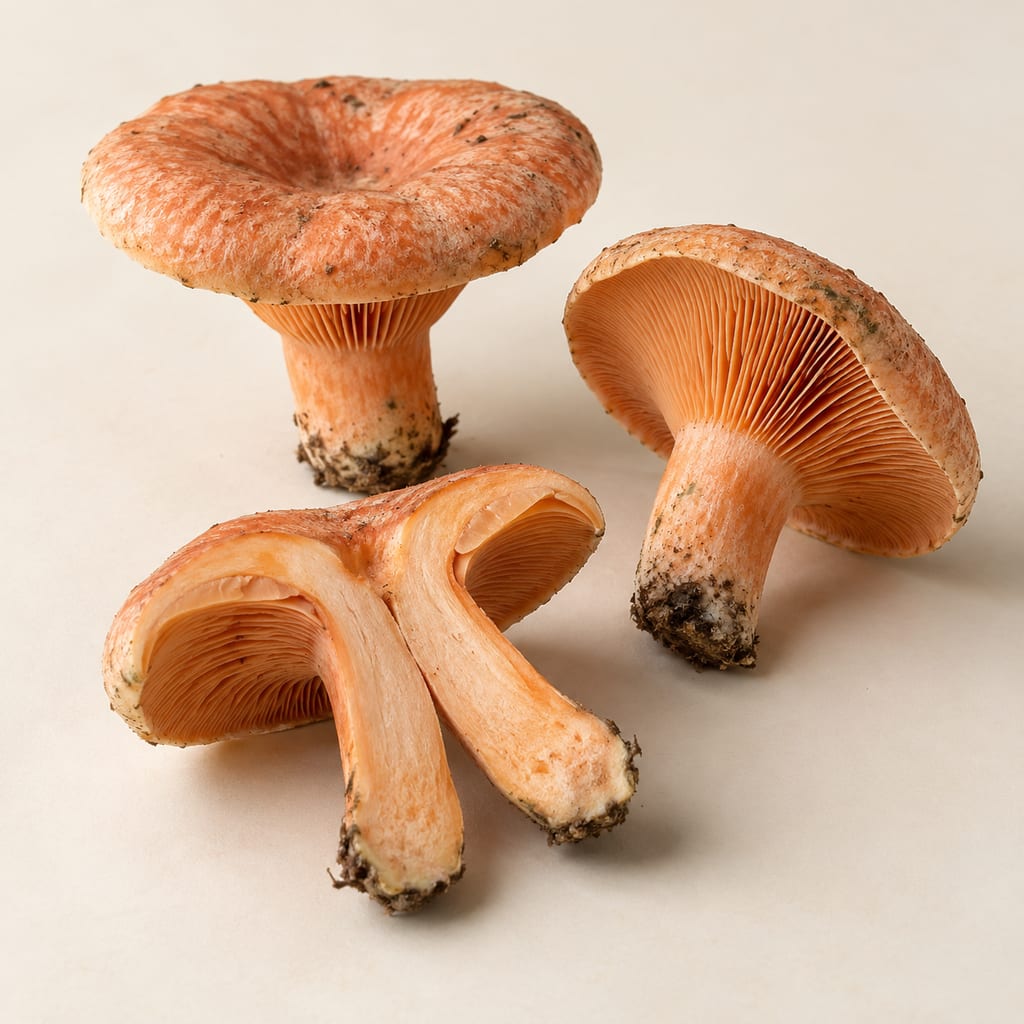
Akahatsu, Lactarius akahatsu, is a wild milkcap of East Asian pine and mixed forests that is sold in Yunnan markets, with its edibility and identity still needing species-level review.
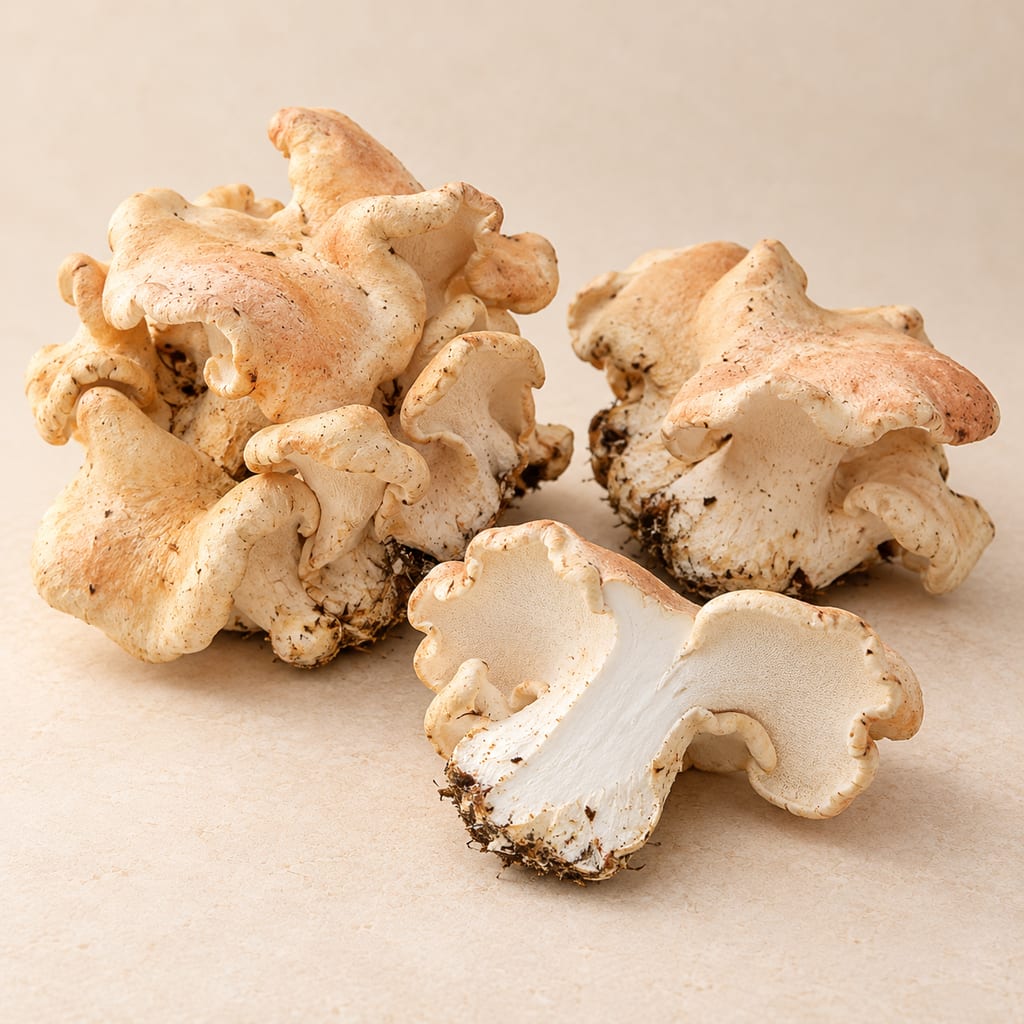
Albatrellus confluens is a ground-growing polypore with fused buff-orange caps. Sources document Chinese market use and regional edibility, but others reject it as too bitter; taxonomy also varies between Albatrellus and Albatrellopsis.
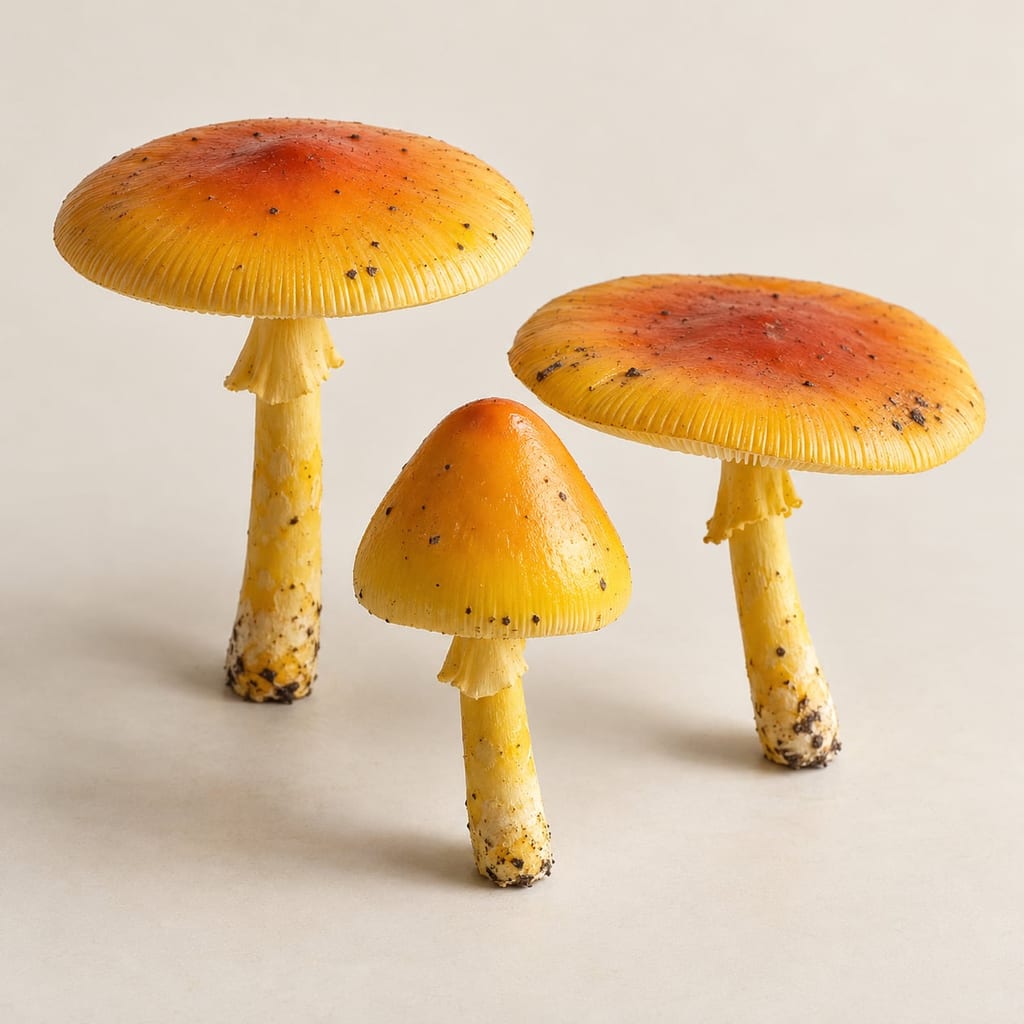
A wild Amanita recorded from China in a 2026 checklist of edible and medicinal fungi. The genus holds deadly species, so this page gives no identification or edibility verdict.
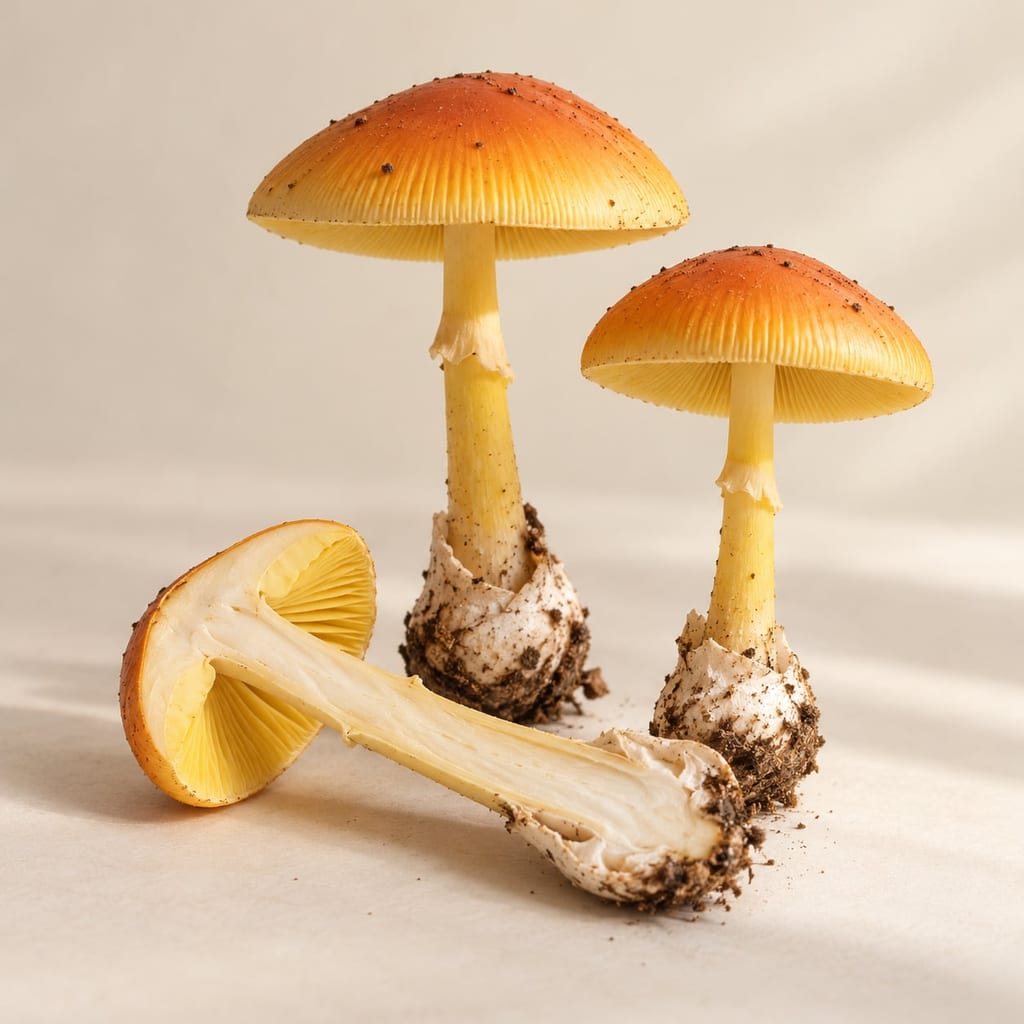
A wild Amanita of China, first reported there and listed as edible in a Yunnan ethnomycology study. The genus contains deadly species, so this page does not support identifying or eating it.
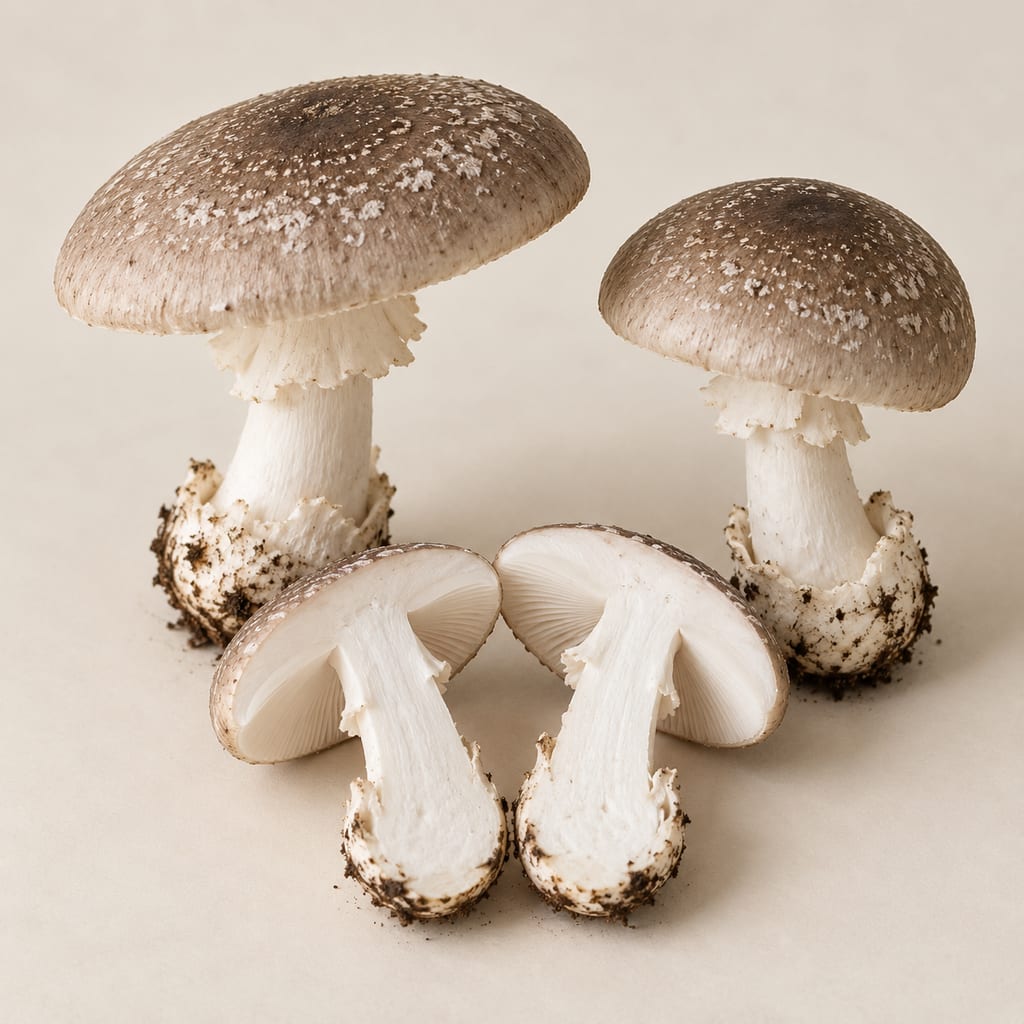
Amanita yuaniana is a Chinese Amanita that a 2023 Yanshan survey and a Yunnan ethnomycology survey list among edible species. No source tests it for safety, and the genus holds the most lethal mushrooms.
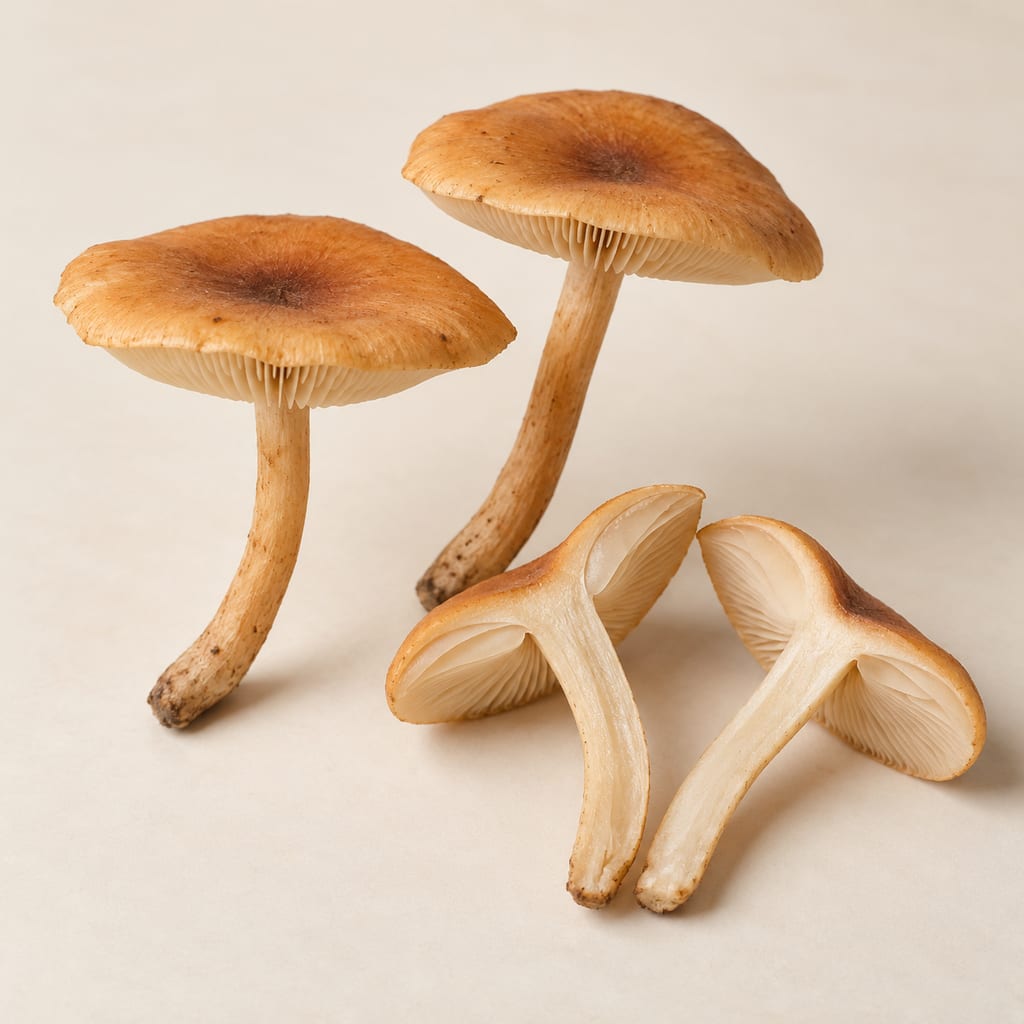
A wood-associated Armillaria recorded in Yunnan and Sichuan, China, and listed as edible in a 2026 Chinese catalogue.
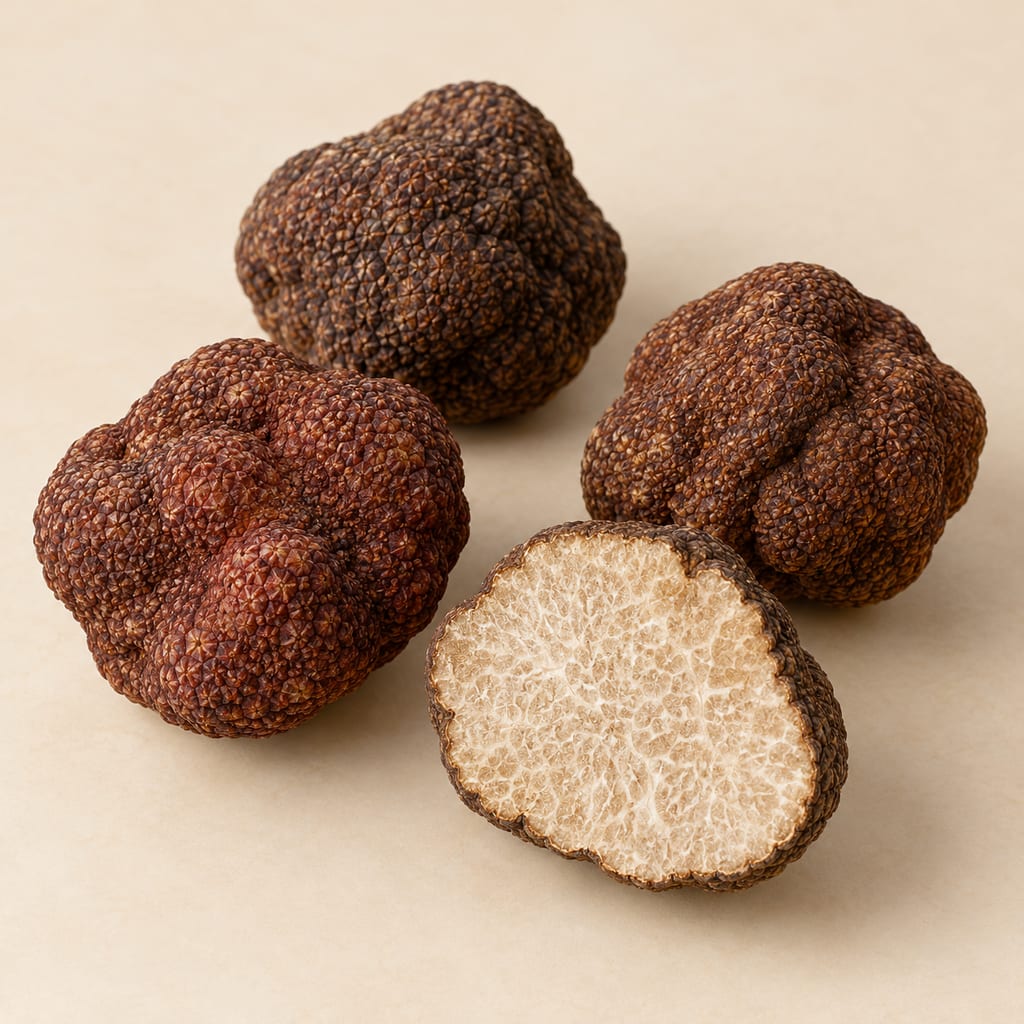
Tuber pseudohimalayense is a wild black truffle from Yunnan, China, listed as edible in a Chinese species catalogue. No independent assessment of its culinary use or safety is available.

At North Abydos in Egypt, a fixed early Dynastic brewery comprised parallel semi-subterranean installations with rows of ceramic mash vats; excavation reports revise their number, scale and estimated batch capacity.

Ají amarillo is the orange-yellow Peruvian chilli cultivar group of Capsicum baccatum, used to colour and season huancaína sauce and ají de gallina. Published heat estimates do not establish one range for the named cultivar.

Toasted almonds are whole sweet almond kernels dry-roasted until golden to brown. Heat replaces their marzipan note with a roasted, nutty one; they thicken and flavour romesco.

Kodiak salmon, halibut and cod cut as seg'aq and hung on an initaq rack to become tamuuq, with kac'amaasaq and kupcuunaq named as different results.

Aniseed is the dried ripe fruit of Pimpinella anisum, an aromatic Apiaceae spice commonly called a seed. It adds a sweet, warm aroma to breads such as Moroccan krachel and South African mosbolletjies, and is distinct from star anise.

A fixed Late Chalcolithic installation in Areni-1 cave combined a shallow clay pressing basin with a large jar set into the cave floor and storage vessels nearby.

Ripe avocado flesh is the soft, buttery, fat-rich pulp of Persea americana, eaten raw. It is low in acid, so it is a fresh ingredient that needs care in chilled dishes.

A portable dome and pan used over a hearth, with embers on the lid and heat from below. Regional peka and saç forms share this principle while differing in materials, pan shape and how the food is cooked.
No community contributions have been published for this entry yet.
Sign in to contribute. Published comments and photos are free to read.
Cambridge University Press, The Cambridge World History of FoodIdentity · History · Geographic association · Recipe use
Buckwheat (II.A.3)Polygonaceae; triangular achenes and pseudocereal distinction; cultivation/use summary; historic Japanese finds; older China-to-Europe account; porridge and pancake use; beech-wheat name derivation.
Cited in: A seed, not a cereal grain; An unsettled domestication story; Where it grows and how it is used; Choosing and preparing it at home; Breads, pancakes and other uses
Vegetation History and Archaeobotany; PubMed recordHistory · Geographic association · Identity
Buckwheat: a crop from outside the major Chinese domestication centres? A review of the archaeobotanical, palynological and genetic evidenceUncertain domestication area; weak species-level identifiability in much of the archaeological record; earliest plausibly agricultural northern Chinese evidence and possible Eurasian expansion route.
Cited in: An unsettled domestication story; Where it grows and how it is used
Foods, MDPI / PubMed CentralIdentity · Cultivation · Recipe use · Preparation · Fermentation role
Buckwheat Flour (Fagopyrum esculentum Moench)—A Contemporary View on the Problems of Its Production for Human NutritionPseudocereal classification; flour production and quality standardization limits; bread, galette, groat and sourdough contexts; culinary associations in Europe, America, France, Russia, Ukraine, Slovenia, Japan and Korea.
Cited in: A seed, not a cereal grain; Where it grows and how it is used; What it contributes to bread; Choosing and preparing it at home; Breads, pancakes and other uses
Foods, MDPI / PubMed CentralRecipe use · Fermentation role · Preparation
Pseudocereals in Bakery Products: A Review of Nutritional Composition, Health Benefits and Bakery ApplicationsBuckwheat use in bread and bakery studies; gluten-free formulation context; variable outcomes across formulas.
Cited in: What it contributes to bread; Breads, pancakes and other uses
Food Bioscience, ScienceDirectFermentation role · Recipe use
Impact of sourdough and transglutaminase on gluten-free buckwheat bread qualityA specific experimental gluten-free bread used buckwheat sourdough cultures Lactiplantibacillus plantarum ŁOCK 860 and Levilactobacillus brevis ŁOCK 1267 and reported formulation-dependent quality effects.
Cited in: What it contributes to bread
Anaphylaxis UKAllergen · Safety
Buckwheat allergyBuckwheat is unrelated to wheat; buckwheat can cause severe allergic reactions; allergy is reported more commonly in Japan and Korea and less commonly in the UK.
Cited in: Allergy and dietary context