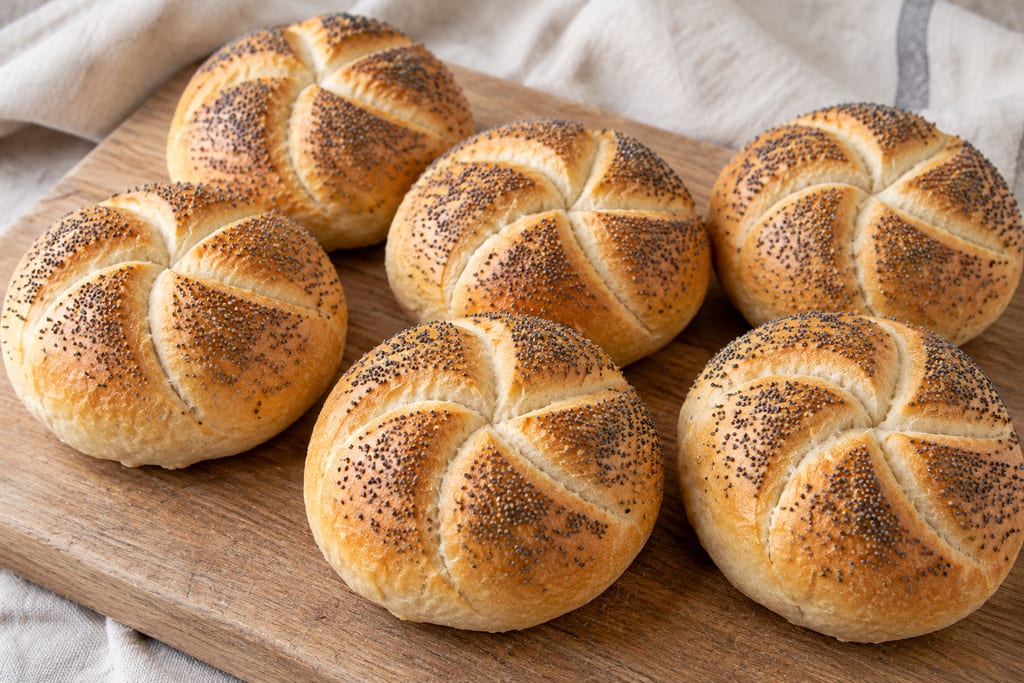
Kaiser rolls
Six stamped yeast rolls with a star-shaped top, brushed with milk and finished with seeds.
 FermenteaWhere food goes to change
Glutenfreies Sauerteigbrot mit ganzen Buchweizenkörnern · Buckwheat sourdough bread · Glutenfreies Sauerteigbrot mit ganzen Buchweizenkörnern
A gluten-free sourdough loaf of about 1 kg. A buckwheat and quinoa starter leavens a dough with cooked whole buckwheat groats, millet and a dark gluten-free bread mix, baked in a lidded pot.
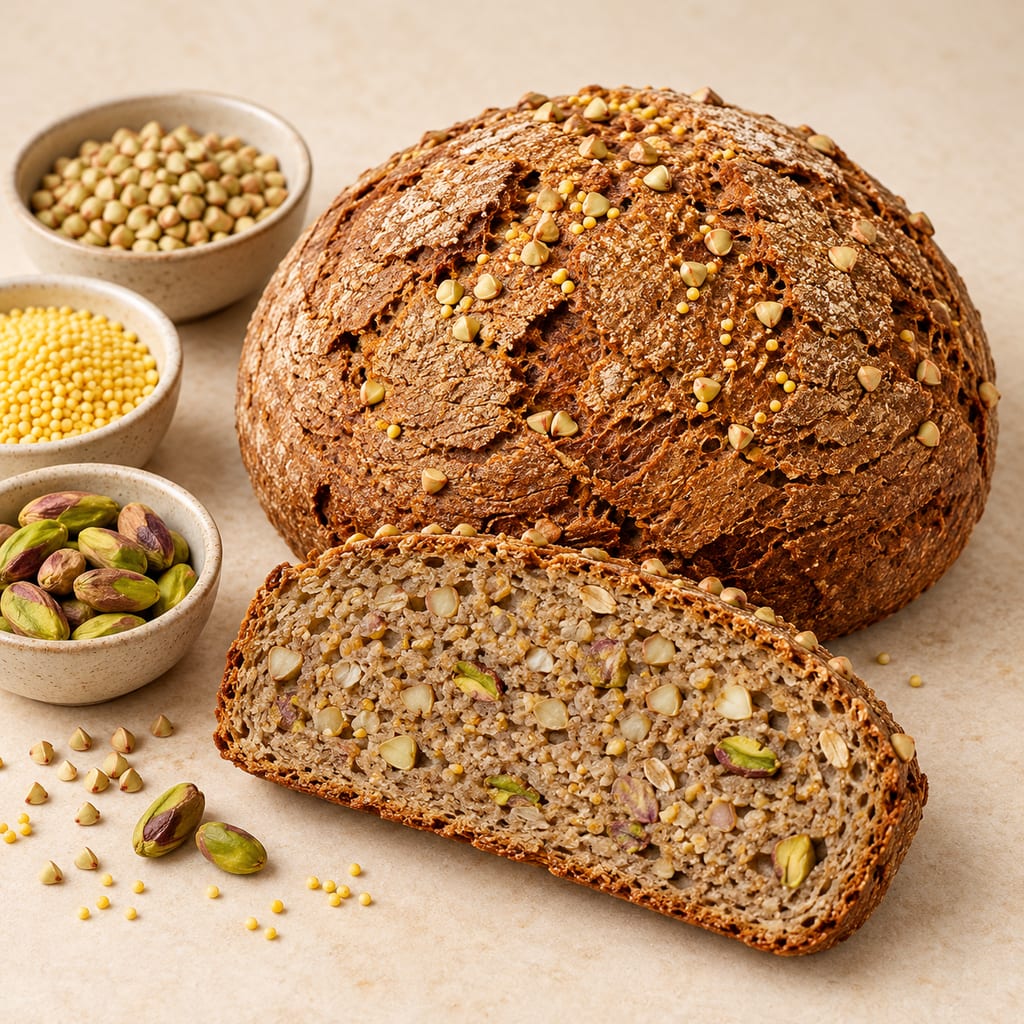
This is a gluten-free sourdough loaf of about 1 kg. Its starter is built from buckwheat and quinoa flour, and its dough carries whole buckwheat groats cooked soft, oat flakes soaked in boiling water, millet flour and a dark gluten-free bread baking mix. Psyllium husk powder, pistachios and a bread spice mix finish the dough, and pumpkin, sunflower or sesame seeds line the proofing basket. It is baked in a lidded cast-iron pot.
Buckwheat is a seed, not a cereal related to wheat, which is why it is a common base for gluten-free sourdoughs. The name of the loaf says nothing about gluten safety on its own. That depends on every ingredient and on how each was handled, as the safety section explains.
The formula is published by an Austrian site on gluten-free baking, Glutenfrei genießen. It first appeared on 15 March 2018 and was updated in 2021 and 2023. The author presents the gluten-free sourdough approach as a method developed over those years, and says the baking-in-a-pot technique was first found on the food blog Kochtrotz.
This is one practitioner's account. It does not document a traditional bread, and nothing in the sources establishes a historical origin for gluten-free sourdough as a category.
The starter is built in one step from 100 g of a refreshed starter, 50 g buckwheat flour, 50 g quinoa flour and 100 g of 40 °C water, whisked in a large glass container. It ferments for 2 to 3 hours at 27 to 28 °C. The author holds that temperature with a styrofoam box and a glass of boiling water. The build is ready when it is bubbly, domed on top and floats when dropped into the dough water.
For keeping the starter between bakes, the author recommends one feeding a week, taking under five minutes, with the starter kept in the refrigerator for a further week. The author also says experienced bakers can vary the ingredients and make the starter with the flours they normally use, as long as it is active. These are the author's practices, not tested storage limits.
The 300 g of ripe starter goes into the mixer bowl with 50 g whole buckwheat groats simmered for 7 minutes in 100 g water, 3 tablespoons of gluten-free oat flakes swollen in 6 tablespoons of boiling water, and 310 ml water. The dry ingredients are mixed separately and added: 250 g dark bread mix (or 200 g light gluten-free flour blend with 50 g linseed meal), 50 g millet flour, 9 g salt, 8 g psyllium husk powder, two handfuls of unsalted pistachios and 5 g bread spice. The dough is mixed for 4 minutes on the lowest speed, rested for 10 minutes and kneaded for 4 minutes more on speed 1.
The author's one firm instruction on texture is that the dough must still be sticky before proofing. A dough that is firm and easy to shape, the author warns, gives a dry bread.
After an hour's rest the dough is floured generously, flattened slightly, folded in from the sides five or six times and rounded. It goes seam side down into a floured basket sprinkled with seeds and proofs under a tea towel for 2 hours at room temperature.
The oven and a cast-iron pot with its lid heat together to 250 °C for at least 30 minutes. The dough is tipped from the basket onto baking paper, lowered into the hot pot and covered. The oven is turned down to 230 °C for 40 minutes covered, then 10 minutes with the lid off. The loaf is done when tapping the base gives a hollow sound. The author finds cast iron or enamel pots work best, with thicker walls giving better results.
The word buckwheat names a flour, not one culture. A laboratory study screened the metabolic activity of 35 lactic-acid-bacteria strains able to grow in buckwheat sourdough and found differences among groups of strains and among individual strains. It used selected strains in a controlled setting. It does not identify the microbes in a household jar or in a shop-bought starter, and it does not define a standard buckwheat culture.
A British seller offers a live buckwheat starter made from buckwheat flour and water, prepared on equipment separate from its wheat starters. The seller itself warns that traces of wheat may be present because preparation happens in a shared space. Those are statements about that product and its premises; they are not independent verification.
For packaged foods sold in the United States, the Food and Drug Administration states that fermentation is not a process for removing gluten, and it sets record requirements for fermented foods that carry a gluten-free claim. That guidance concerns labelling and manufacturers' records. It does not test any starter or loaf, and it says nothing on whether a particular person can eat one.
The practical consequence is that a gluten-free label on the flour does not settle the question for a loaf. The bread mix, the oat flakes, the bought or inherited starter and the kitchen all matter. Anyone who must avoid gluten should check each ingredient's labelling and cross-contact controls.
The source gives no storage guidance for the baked loaf and no room temperature for the rest and the proof. It does not say why each ingredient is in the dough. The formula has not been tested by anyone other than its author in the sources used here, and the page treats it as a documented practitioner recipe, not a validated process.
The author first published the formula on 15 March 2018 and updated it in 2021 and 2023, describing the gluten-free sourdough approach as a method developed in the intervening years. Baking in a lidded pot was taken from another food blog.
Yield 1 loaf (about 1000 g) · Scaling: source batch only
Fermentation does not remove gluten, and a flour choice alone does not establish cross-contact controls. The retail buckwheat starter named in the research is made in a shared space where traces of wheat may be present.
Hazard sourceCheck that every ingredient, including the bread mix, oats and any bought starter, is labelled gluten-free and made with cross-contact controls if the loaf is for someone who must avoid gluten.
Control sourceBubbles, smell and taste do not establish that a starter or loaf is safe or gluten-free.
Biological leavening
Leavened by a sourdough starter built from buckwheat and quinoa flour; no baker's yeast or chemical raising agent is listed.
Sources: Glutenfreies Sauerteigbrot mit ganzen Buchweizenkörnern
One Austrian practitioner's published formula. It does not make the loaf a national or traditional Austrian bread.
Six stamped yeast rolls with a star-shaped top, brushed with milk and finished with seeds.
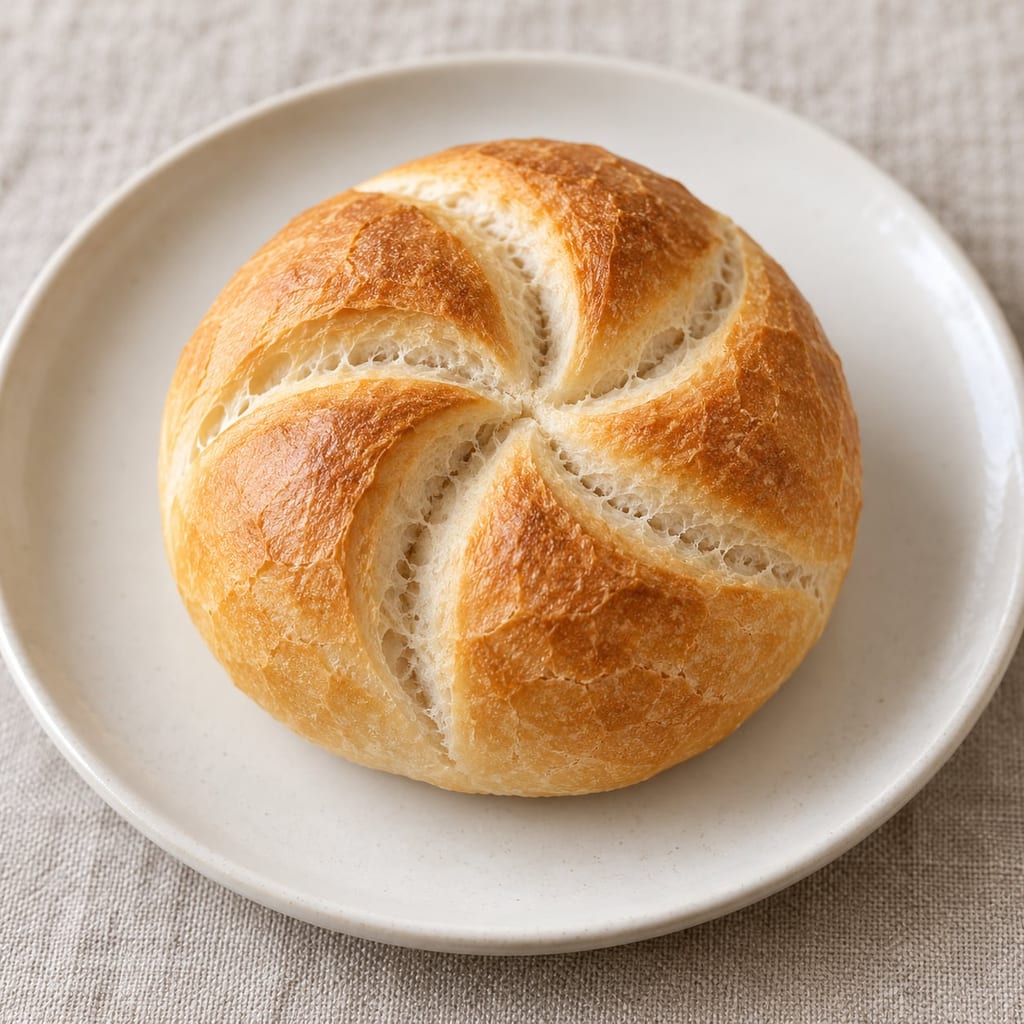
The Kaisersemmel is an Austrian wheat roll with a five-part star, associated with Vienna and the Viennese breakfast. The formula below is a technical bakery batch of 30 rolls from the Austrian ministry.
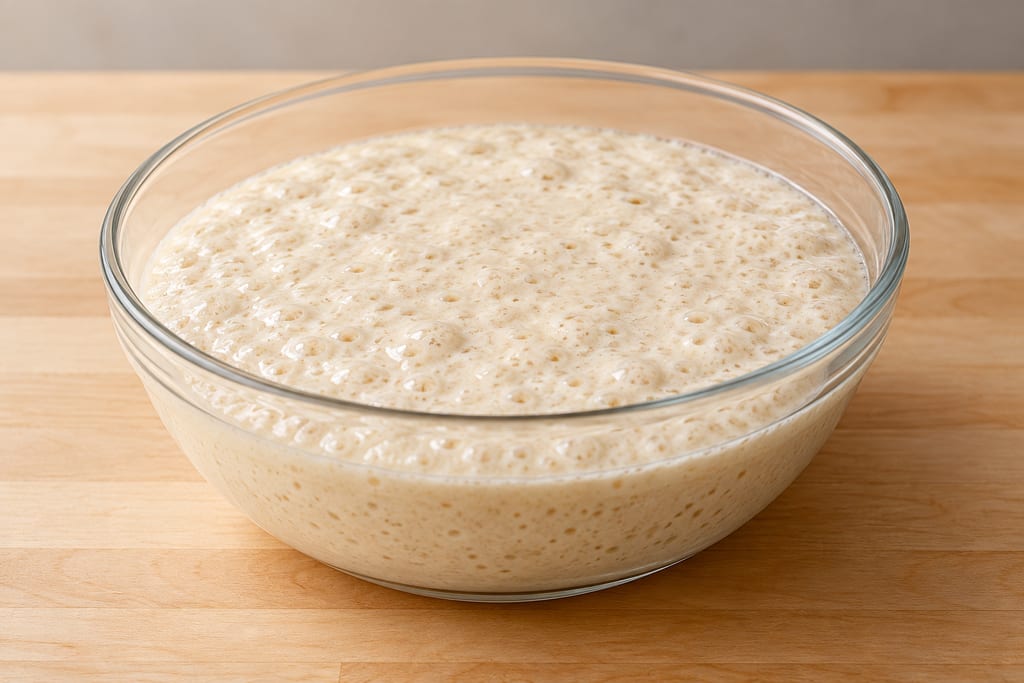
Poolish is a loose, unsalted bread preferment of roughly equal weights of wheat flour and water with a pinch of baker's yeast, left to ripen before it goes into the final dough.
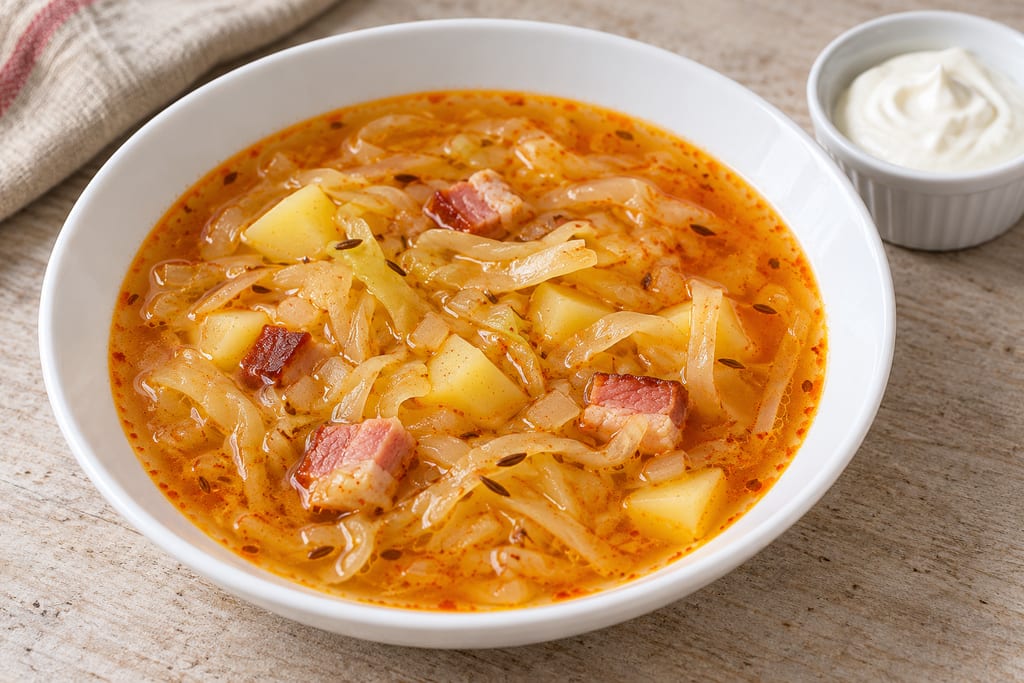
A two-portion cabbage soup with onion, potato and finished Geselchtes, served with garlic sour cream.
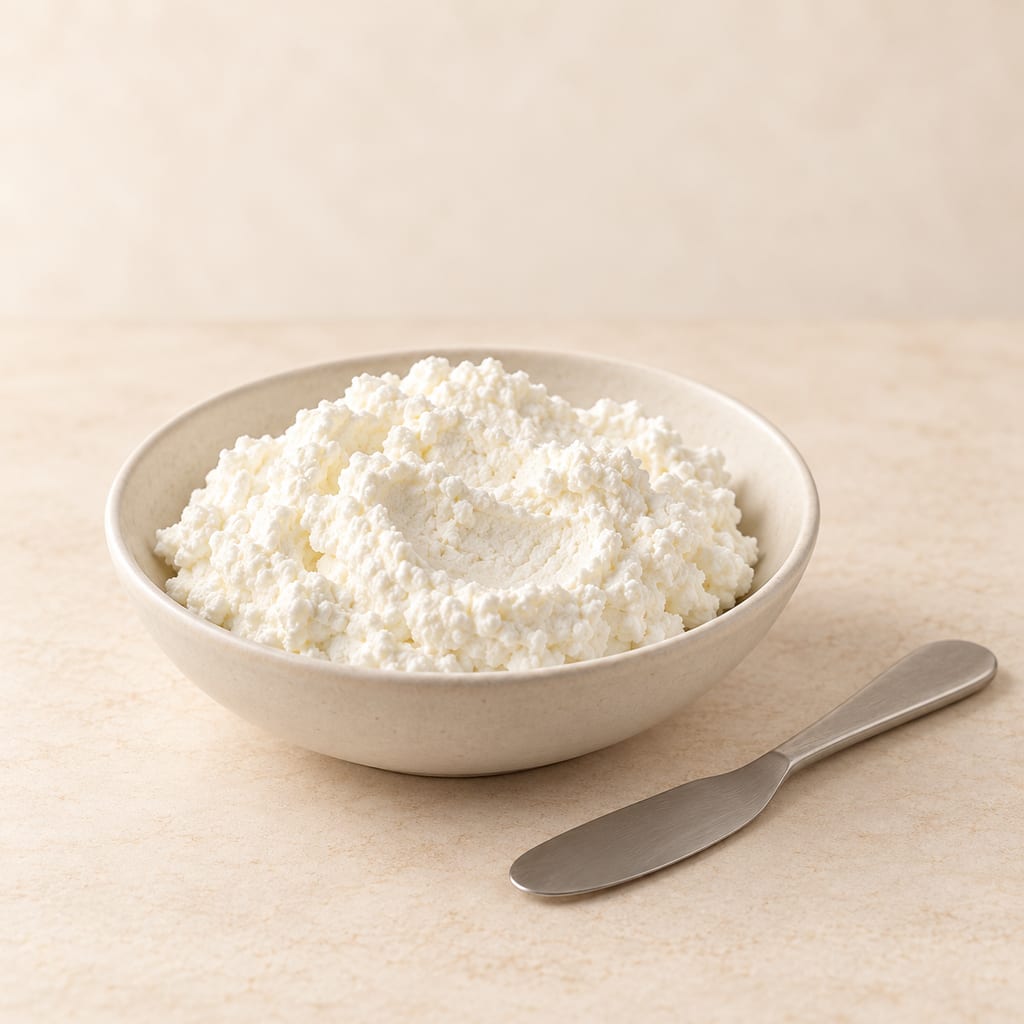
Quark is a soft, fresh curd cheese used in spreads and desserts. This small home batch sets milk with mesophilic culture and rennet before refrigerated drainage.

Wine vinegar is made by the aerobic oxidation of wine's alcohol into acetic acid by bacteria, producing a sour, wine-derived condiment used in dressings, sauces, marinades and preserved foods.
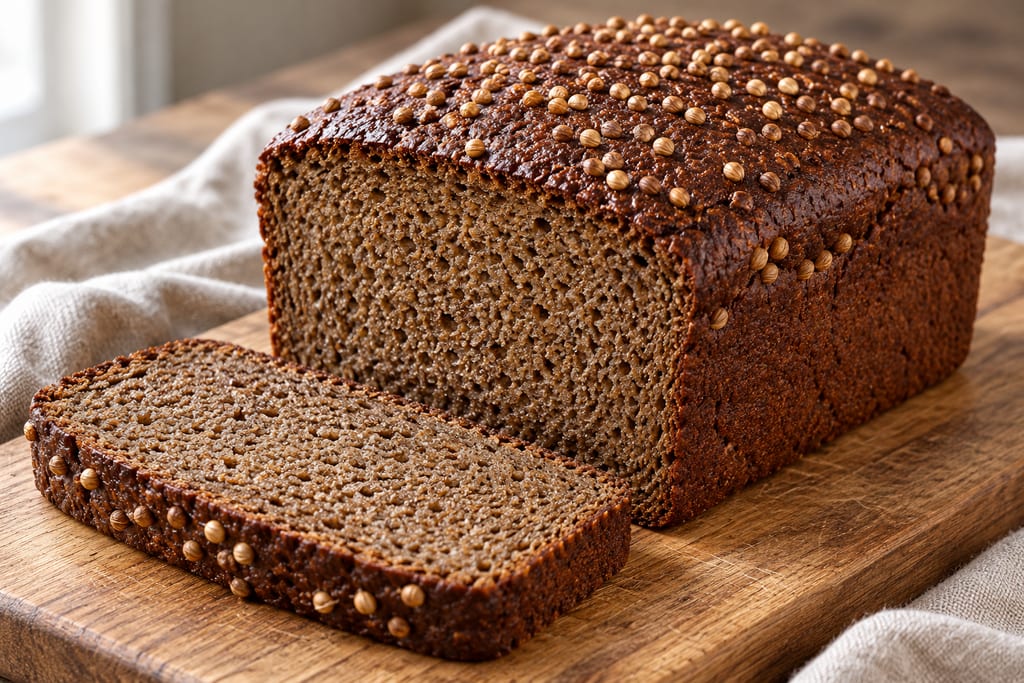
A dark rye sourdough with coriander and roasted barley-malt scald, based on Lily McCann's measured Borodinsk-ish home formula.
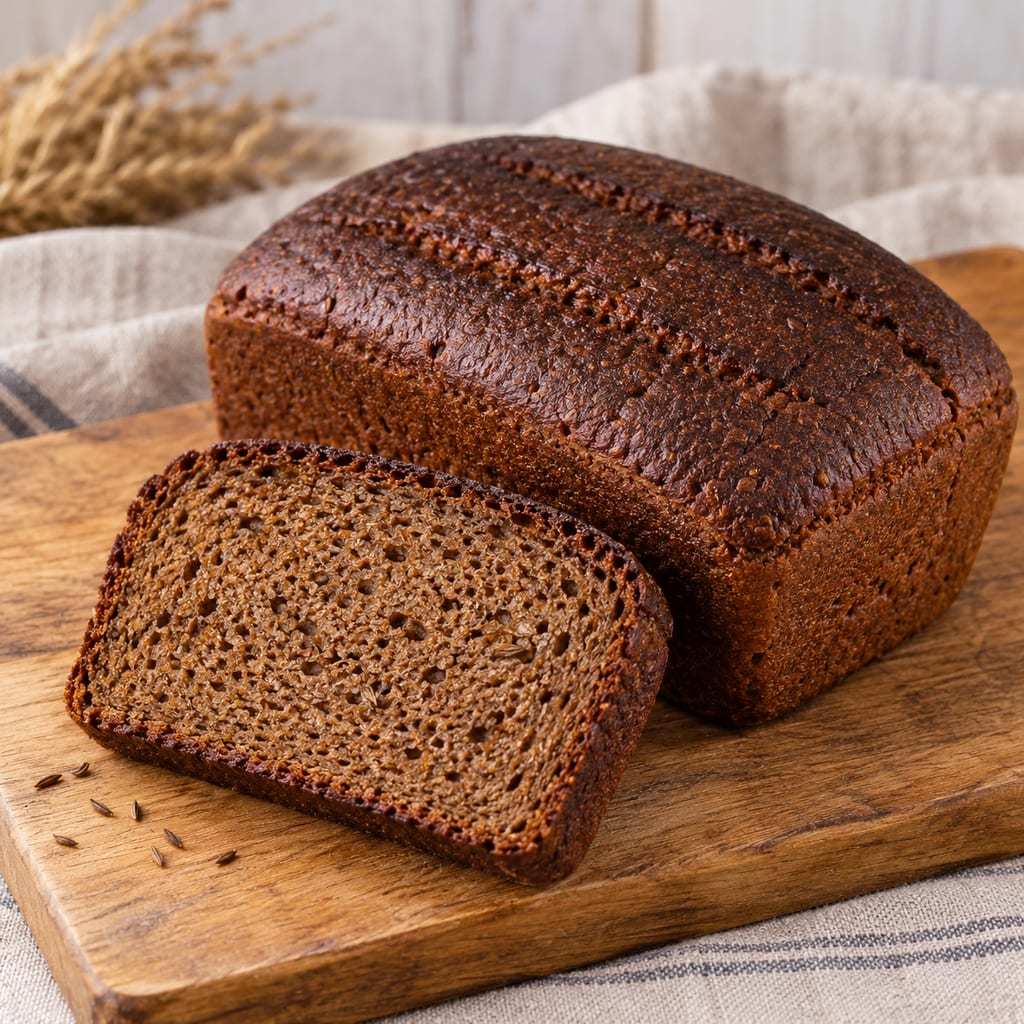
A Lithuanian dark rye loaf made with an overnight rye preferment, caraway, honey and sugar, then proofed in a loaf pan and baked in two stages.
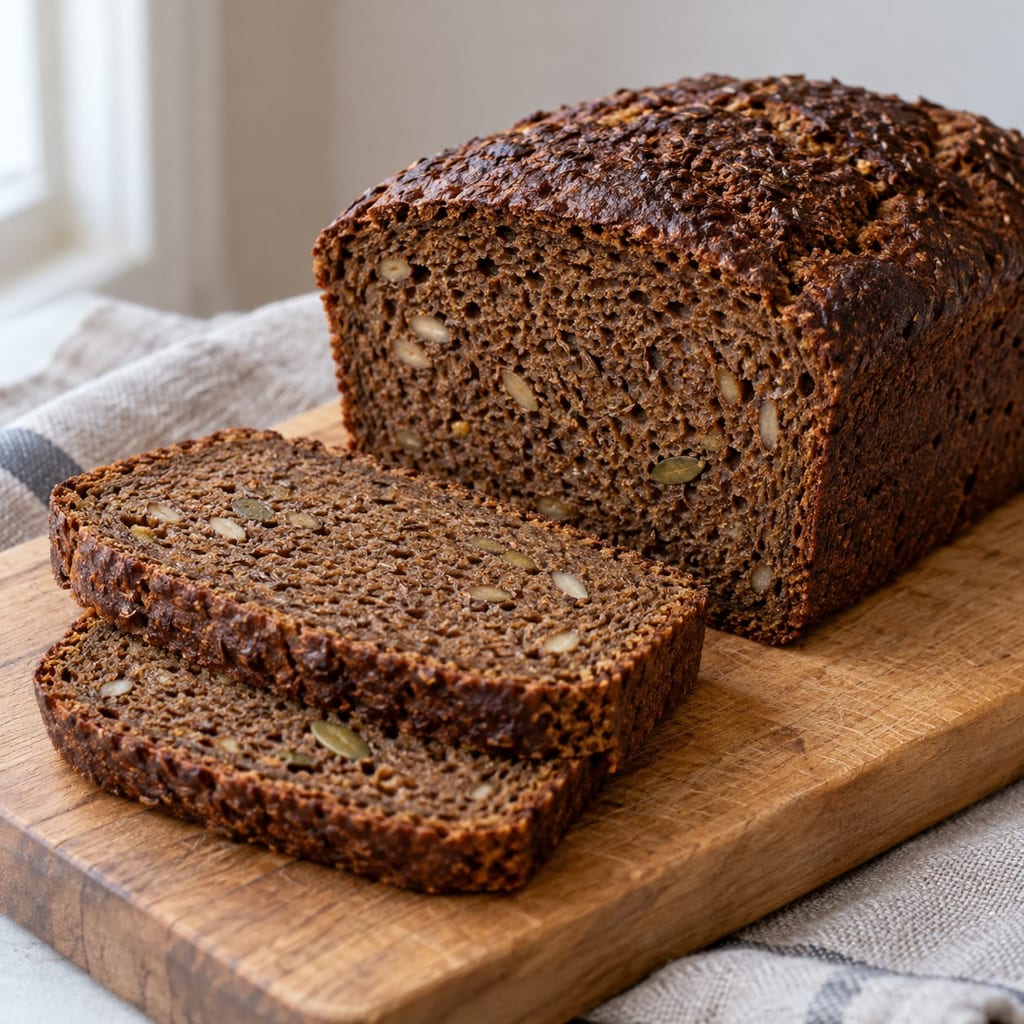
This Estonian rye loaf uses a sourdough preferment, a rye scald and soaked seeds, with a small amount of baker’s yeast. Two tins bake through a staged hot-to-moderate oven schedule.
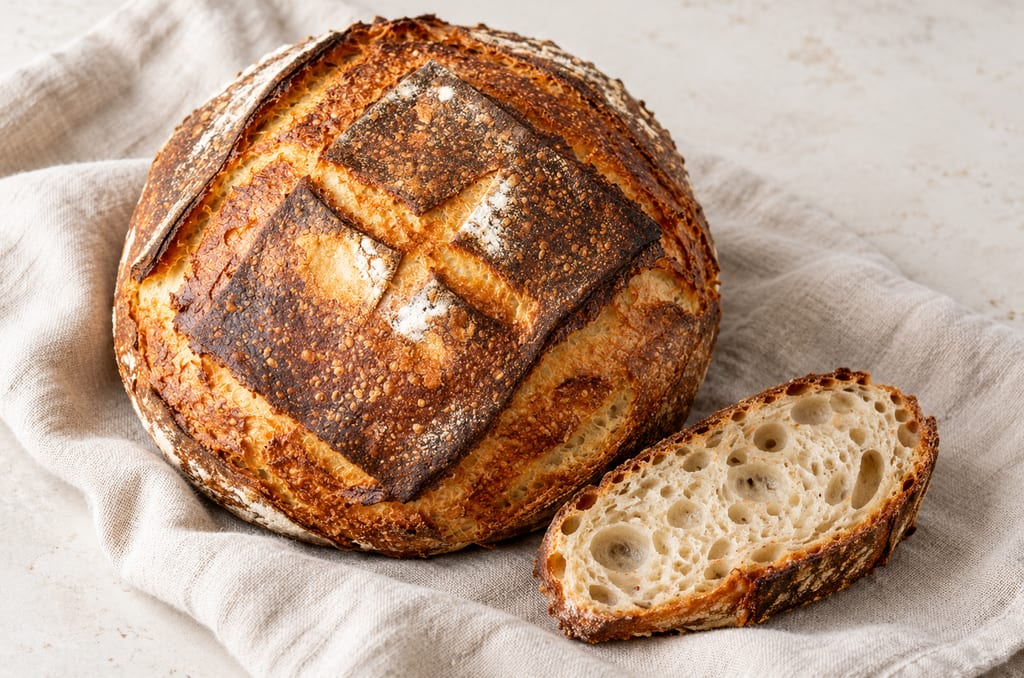
A ripe sourdough starter leavens this modern low-handling loaf. Three hourly folds organize the sticky dough before a long refrigerator rest, final proof and covered bake.
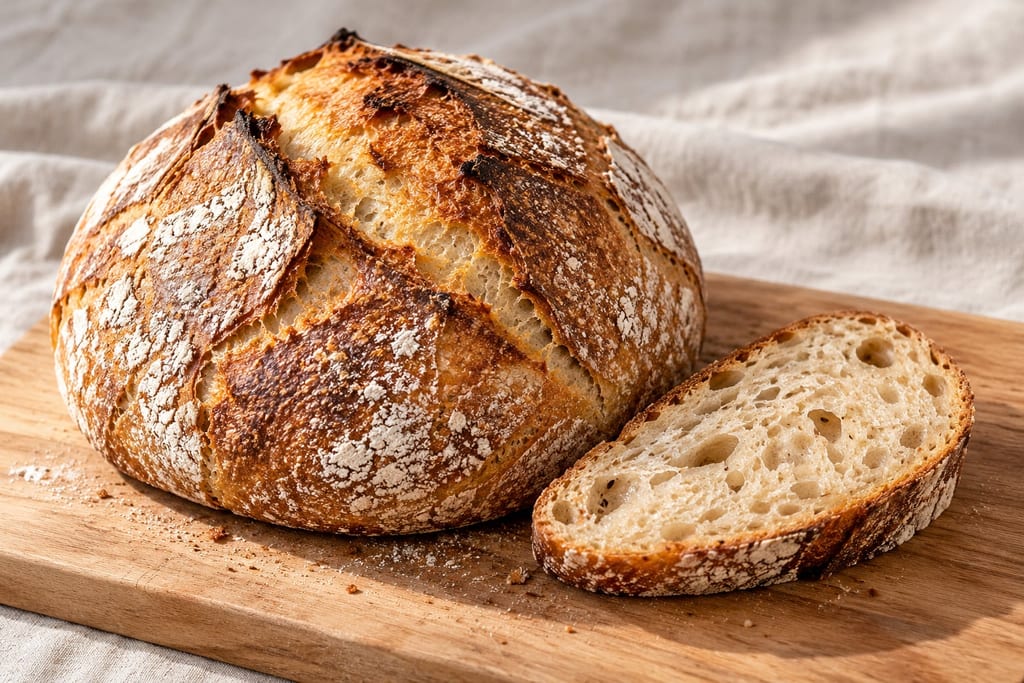
Two large French-style wheat loaves use unfed sourdough starter, whole-wheat flour, long room-temperature fermentation and a covered-pot bake.
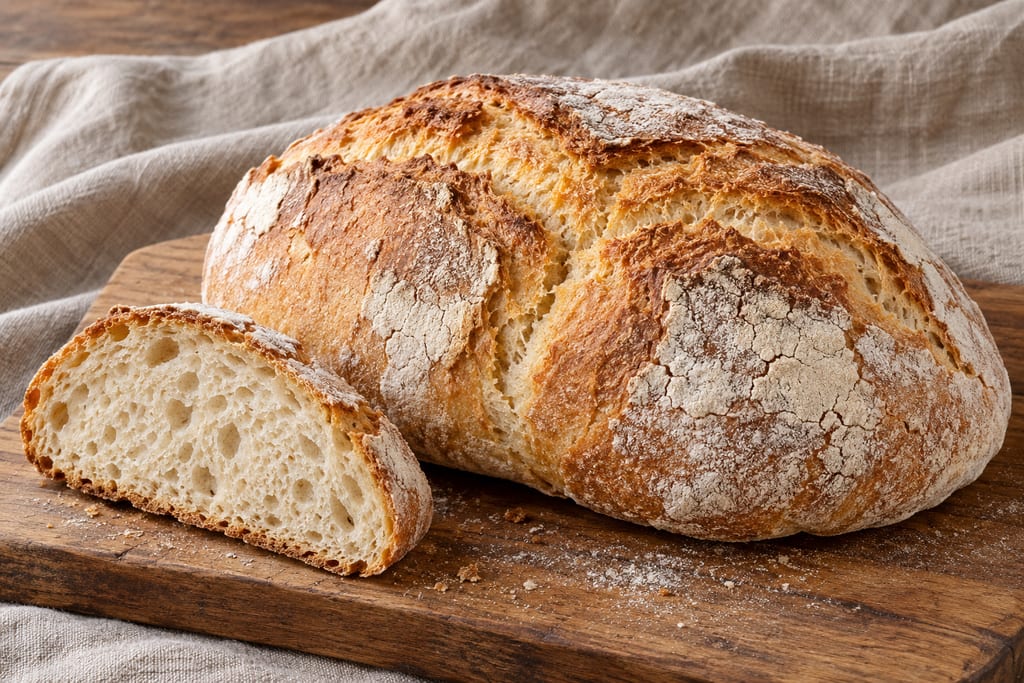
This home sourdough adaptation borrows Pan de Cea’s wheat-forward loaf and central fenda while using a domestic oven and a separately documented modern formula.
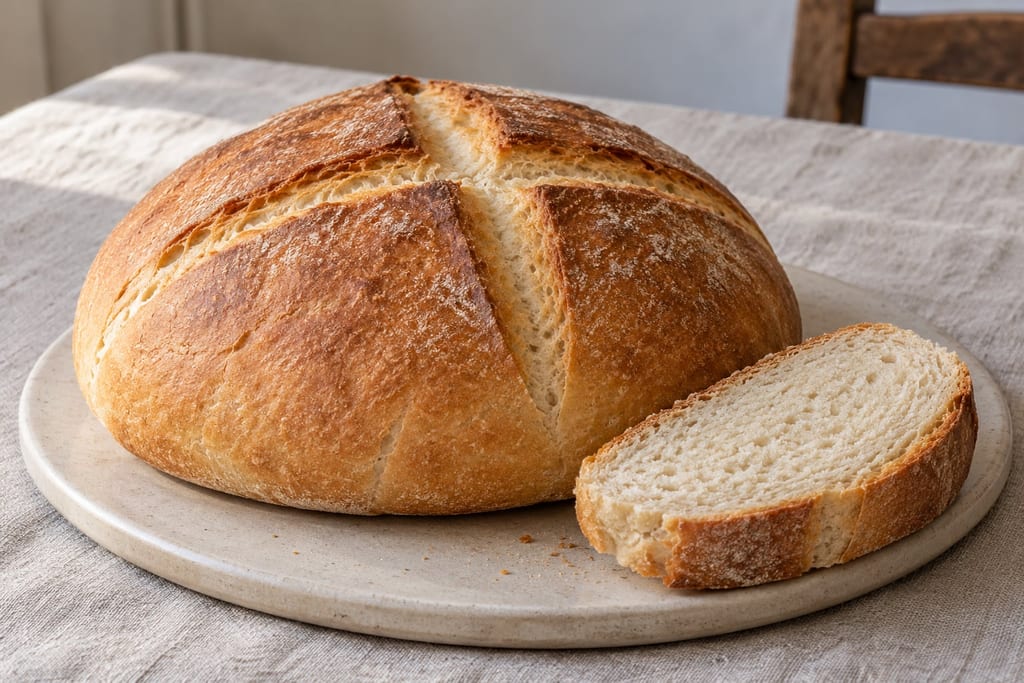
This household Pan de Cruz adaptation uses sourdough and a folded, tight-crumb wheat dough, marked with a cross and baked in a home oven.
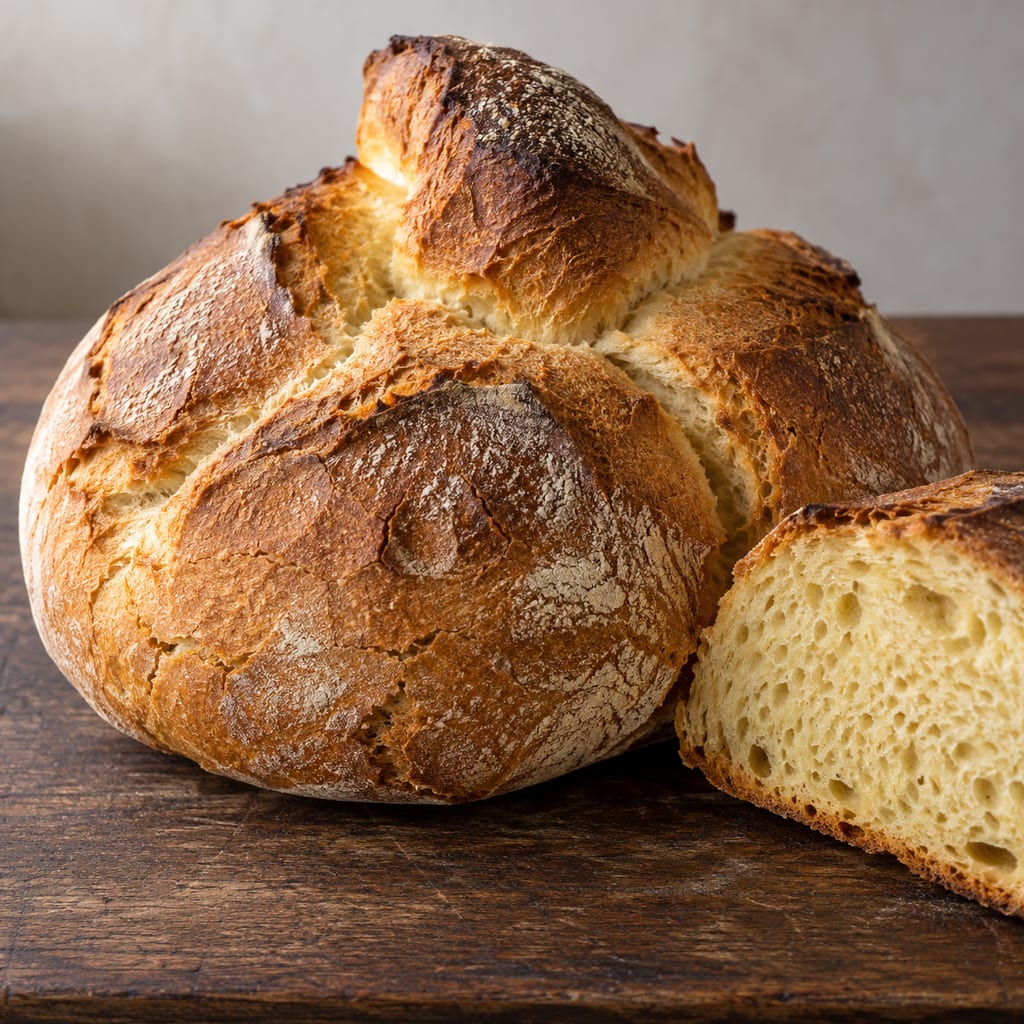
A protected durum-wheat sourdough bread documented by a commercial production specification. The official 100 kg batch and oven process are recorded without inventing a household scale.

Soft, spreadable Calabrian pork sausage made with a great deal of red chilli and fatty pork, stuffed into natural casings, sometimes smoked and matured while staying soft.

A way to add independent temperature logging to an existing food dehydrator without changing its built-in controls or protections. It is a monitoring method, not a rewiring plan.

Pleurotus cystidiosus is the abalone mushroom, a cultivated oyster-type fungus with dark brown caps that grows more slowly and is more demanding than other Pleurotus species.

A dark, balanced vinegar from Emilia-Romagna made by combining cooked or concentrated grape must with wine vinegar, then acetifying and refining it in wood under a protected specification.

A living dairy inoculum that starts controlled cream fermentation, developing acidity and aroma before sour cream or cultured butter is finished.

A small electric incubator holds jars at a selected temperature for yogurt and other documented warm food preparations. Controls, capacity and vessel arrangement vary by model.

Adygean salt is a seasoned table salt associated with Adygea and the wider North Caucasian culinary tradition. Salt is blended with garlic and a variable selection of herbs and spices; the exact mix depends on the named style and maker.

The African Caesar-group mushroom, Amanita masasiensis, is a wild ectomycorrhizal species of central and southern African woodlands, eaten locally. The genus contains deadly poisonous species, so identification needs care.
No community contributions have been published for this entry yet.
Sign in to contribute. Published comments and photos are free to read.
Glutenfrei genießenMethod · History
Glutenfreies Sauerteigbrot mit ganzen BuchweizenkörnernStarter build, dough formula, resting, proofing and baking times and temperatures, dough consistency and starter maintenance notes; first published 15 March 2018, updated 2021 and 2023.
Cited in: A loaf of whole buckwheat and a buckwheat-quinoa starter; Where the formula comes from; The starter and how it is kept; The dough; Shaping, proofing and baking; What the sources do not establish
International Journal of Food Microbiology; PubMedMicrobiology
Multivariate analysis of buckwheat sourdough fermentations for metabolic screening of starter culturesMetabolic activity of 35 lactic-acid-bacteria strains able to grow in buckwheat sourdough differed among groups and individual strains.
Cited in: What research on buckwheat sourdough shows
The Sourdough LabsUse · Safety
Buckwheat Sourdough Starter 50g - Made with Gluten Free Organic Buckwheat FlourA live buckwheat starter sold made with buckwheat flour and water, prepared on equipment separate from the seller's wheat starters in a shared space where traces of wheat may be present.
Cited in: What research on buckwheat sourdough shows; Fermentation does not remove gluten
U.S. Food and Drug AdministrationSafety
Questions and Answers on the Gluten-Free Food Labeling Final RuleFermentation is not a process for removing gluten; fermented foods carrying a gluten-free claim have record requirements.
Cited in: Fermentation does not remove gluten