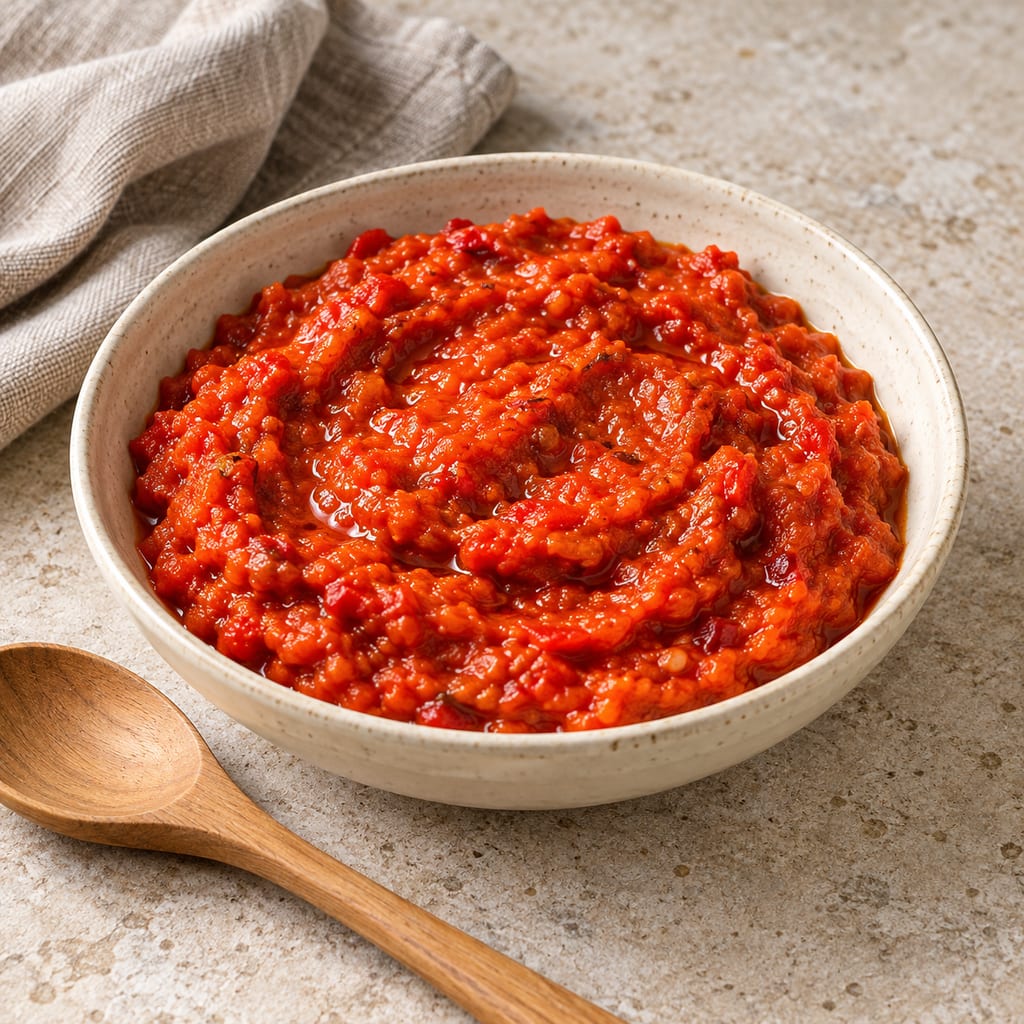
Small-batch ajvar-style relish
A small roasted red-pepper and eggplant relish with sunflower oil, wine vinegar, garlic and salt. It is a modern ajvar-style trial, not a validated winter preserve or a copy of a commercial formula.
 FermenteaWhere food goes to change
Traditional method
Vinaigre de vin (French) · Wine vinegar · Grape wine vinegar · Red wine vinegar · White wine vinegar · Rosé wine vinegar · Vinaigre de vin (French) · Vinaigre de vin rouge (French, red wine vinegar) · Vinaigre de vin blanc (French, white wine vinegar) · Vinaigre de vin rosé (French, rosé wine vinegar) · Aceto di vino (Italian) · Aceto di vino rosso (Italian) · Aceto di vino bianco (Italian) · Vinagre de vino (Spanish) · Vinagre de vino tinto (Spanish) · Vinagre de vino blanco (Spanish) · Vinagre de vino rosado (Spanish) · Vinagre de vinho (Portuguese) · Vinagre de vinho tinto (Portuguese) · Vinagre de vinho branco (Portuguese) · Weinessig (German) · Rotweinessig (German) · Weißweinessig (German) · Wijnazijn (Dutch) · Rodewijnazijn (Dutch) · Wittewijnazijn (Dutch) · Oțet de vin (Romanian) · Acetum (Latin, vinegar) · Vinaigre d'Orléans (French regional wine-vinegar tradition) · Vinagre de Jerez (Spanish protected regional wine vinegar)
Wine vinegar is made by the aerobic oxidation of wine's alcohol into acetic acid by bacteria, producing a sour, wine-derived condiment used in dressings, sauces, marinades and preserved foods.
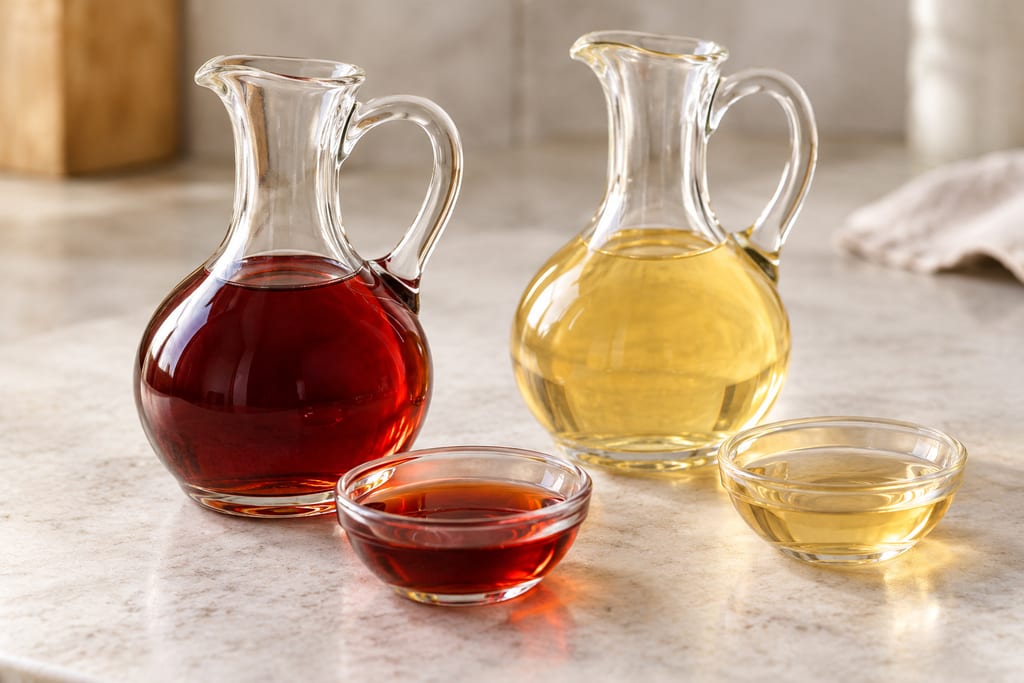
Wine vinegar is a fermented condiment produced when acetic acid bacteria convert the ethanol in wine into acetic acid. Its starting material is grape wine rather than unfermented grape juice, distilled alcohol or cereal wort. Red, white and rosé wines can all be used. The finished vinegar retains some of the original wine's acids, phenolic compounds, minerals and aroma constituents, alongside substances produced during acetification and subsequent ageing. Its defining taste is sour, but the balance of acidity, residual wine character, fruit notes, wood-derived compounds and other volatile substances varies considerably between products. Ordinary wine vinegar may be unaged or matured in a vessel before bottling.
The International Organisation of Vine and Wine defines wine vinegar as a product obtained exclusively by the acetic fermentation of wine, containing at least 60 grams per litre of total acidity expressed as acetic acid and no more than 4% alcohol by volume. Individual countries may impose different limits. Spain's ordinary wine-vinegar standard specifies at least 60 grams of acid per litre and a maximum of 1.5% residual alcohol. Austria's food code applies the same limits to ordinary Weinessig. These values are commercial product definitions rather than universal fermentation targets for home production. A liquid that tastes sour has not necessarily achieved the required acidity or residual-alcohol level.
The microorganisms involved are mainly acetic acid bacteria, often abbreviated AAB. Species associated with wine vinegar include Acetobacter pasteurianus, Acetobacter aceti, Acetobacter cerevisiae, Acetobacter malorum and Komagataeibacter europaeus. These species belong to the family Acetobacteraceae. Their relative importance depends on the starting wine, culture, oxygen supply, acid concentration and production system. They are bacteria, not wine yeasts. Saccharomyces cerevisiae primarily produces ethanol from grape sugars during winemaking, while acetic acid bacteria subsequently oxidise that ethanol in the presence of oxygen. In commercial wine-vinegar making, the wine already exists before acetification begins.
Wine vinegar must also be distinguished from related products. Distilled white vinegar normally starts from dilute agricultural ethanol, not wine. Grape vinegar may refer more broadly to vinegar made from grape-derived substrates, including juice that first undergoes alcoholic fermentation. Traditional balsamic vinegar from Modena or Reggio Emilia follows a separate protected production specification involving cooked grape must. Aceto Balsamico di Modena IGP may contain wine vinegar but is a different product. Protected Spanish products such as Vinagre de Jerez and Vinagre de Montilla-Moriles are wine-vinegar specialities with additional rules for origin, ingredients, ageing and composition.
Vinegar is closely connected with the history of alcoholic beverages because wine exposed to air can undergo microbial oxidation. Nobody can say when it was first made. First-century Roman writers provide a secure documentary starting point. Columella describes vinegar in vegetable preservation and discusses preparations that turn alcoholic or sugary liquids sour. Pliny the Elder describes the tendency of wine to become vinegar and records vinegar combined with honey in oxymel. Both show vinegar in everyday cooking and preserving. Neither explains how wine turns sour, and neither suggests the Romans invented it.
Vinegar making developed as a recognised trade in parts of medieval and early-modern Europe. Orléans in France became a major centre. The Association pour la Protection du Patrimoine et de l'Histoire d'Orléans dates the city's vinegar-makers' corporation to 1394. The craft was linked to wine from the Loire region and to wines transported by river that had become too sour for their intended market. The story that Orléans vinegar began with wine spoiling on river barges is a tradition, not a dated event. Specialist makers subsequently developed controlled methods of adding wine to active vinegar cultures in partially filled barrels.
Scientific explanations developed much later. Antoine Lavoisier recognised the importance of oxidation in the eighteenth century, but did not identify the microbes. A generator method improved by Johann Sebastian Schützenbach in 1823 increased production speed by passing alcoholic liquid over material carrying acetic acid bacteria. In 1864 Louis Pasteur showed that living microorganisms turn alcohol into vinegar. His Études sur le vinaigre, published in 1868, includes his 1864 scientific memoir and a lecture delivered to vinegar makers in Orléans on 11 November 1867. This work connected practical vinegar manufacture with microbiology and helped explain why temperature, oxygen and contamination control mattered.
Industrial submerged acetification developed during the twentieth century, allowing bacteria to grow within aerated liquid rather than only on surfaces or packing material. Barrel methods continued all the same, especially where the wine and the wood ageing define the product. France, Italy, Spain and Austria all maintain recognised wine-vinegar categories. Protected Spanish wine vinegars have formal product specifications, while Italian producers such as Ponti document nineteenth-century family production and the construction of an industrial vinegar facility at Sizzano in 1903. Wine vinegar did not move neatly from accident to factory: slow barrel processes and fast industrial ones exist side by side.
Wine vinegar results from two biologically distinct transformations. During winemaking, yeasts, commonly including Saccharomyces cerevisiae, metabolise grape sugars through glycolysis and alcoholic fermentation, producing ethanol and carbon dioxide. The overall reaction can be represented as C6H12O6 → 2 C2H5OH + 2 CO2. The resulting wine supplies ethanol for the second process. During acetification, acetic acid bacteria oxidise ethanol into acetic acid using oxygen. The overall reaction is C2H5OH + O2 → CH3COOH + H2O. Although traditionally called acetic fermentation, this second reaction is an aerobic oxidation supported by bacterial respiration, not the same anaerobic pathway used by fermenting yeasts.
At the cellular level, ethanol is first converted into acetaldehyde by membrane-associated alcohol dehydrogenase, then into acetic acid by aldehyde dehydrogenase. Acetic acid bacteria commonly use a pyrroloquinoline quinone-dependent alcohol dehydrogenase system linked to their respiratory electron-transfer chain. Electrons ultimately reach oxygen, the terminal electron acceptor. Much of the oxidation takes place at the bacterial membrane, with the resulting acetic acid released into the surrounding liquid. This helps explain why oxygen must reach an active vinegar culture. A completely sealed container that prevents oxygen supply is unsuitable for the active acetification stage, even though sealing becomes appropriate when fermentation has finished.
The bacterial community changes as the environment becomes more acidic. Acetobacter pasteurianus is a key organism in the early stage of wine acetification. As acidity increases, more acid-tolerant species such as Komagataeibacter europaeus may become dominant. Investigators have observed this succession even when a culture was initially inoculated with Acetobacter pasteurianus. Some acetic acid bacteria also produce extracellular cellulose, which can accumulate as a floating pellicle known as the mother of vinegar. The pellicle holds bacteria, but they also live suspended in the liquid. Its look says nothing about which bacteria are in it or how pure the culture is.
Acetic acid lowers the pH and contributes directly to the product's sour taste and inhibitory effect on many microorganisms. Its undissociated form can cross susceptible microbial cell membranes, disrupting internal pH regulation and metabolism. However, pH and titratable acidity measure different properties. A pH reading does not reveal the total grams of acetic acid in a litre of vinegar. The original wine also contributes tartaric and other organic acids, glycerol, phenolics and volatile substances. Acetification can create additional compounds such as ethyl acetate and acetoin. Some bacteria can further oxidise acetate to carbon dioxide and water after ethanol is depleted, a phenomenon called overoxidation that may reduce vinegar yield and quality. Managing ethanol, oxygen and the timing of completion is therefore essential.
Wine vinegar production begins with suitable wine. White, red and rosé wines can all provide the ethanol needed for acetification. The wine must be sound, with no spoilage or contamination. A strong wine may need dilution because high ethanol concentrations can inhibit the acetic acid bacteria used in a small surface-culture process. North Carolina State University Extension documents a home-scale method in which wine originally containing approximately 11–12% alcohol is diluted to 5.5–7% alcohol. This method begins with completed wine rather than grape must, so there is no need to conduct alcoholic fermentation again. You cannot predict the final acidity from the starting alcohol; it has to be measured.
Clean equipment reduces unwanted contamination. The NC State method specifies glass, stainless steel or enamel equipment and cautions against unsuitable reactive metals such as iron or aluminium. Sanitised containers are filled approximately two-thirds full, leaving space above the liquid. A suitable acetic acid bacterial starter is added, and the opening is covered with breathable cloth to permit oxygen transfer while excluding insects. The extension gives an ideal temperature of 80–85°F, approximately 27–29°C, and reports a fermentation period of about three to four weeks. These are documented conditions for that small-scale procedure, not proof of completion or a universal specification for commercial wine vinegar.
There are three principal industrial production methods. In the traditional Orléans surface method, wine is placed in partially filled, ventilated wooden barrels containing active vinegar culture. Bacteria grow near the air-liquid interface and transform ethanol gradually. In the generator method, alcoholic liquid passes over wood shavings or other packing material carrying acetic acid bacteria, with air moving through the system. In submerged acetification, bacteria are suspended directly in the liquid while aeration and agitation supply oxygen throughout the vessel. The submerged method can operate much faster, but requires careful control of oxygen delivery, temperature, bacterial activity and volatile losses. Spanish regional specifications document both surface and submerged processes.
Once acetification has reached its intended endpoint, the producer may separate bacterial films and suspended material through settling or filtration. Clarification improves appearance and helps remove sediment but does not itself prove microbiological stability. Some vinegars are pasteurised before packaging; others are sold unpasteurised with living bacteria. Barrel maturation is optional for ordinary wine vinegar but central to several regional specialities. Ageing can moderate the immediate sensory impression of acidity and change the aroma through reactions between wine-derived constituents, oxygen and wood. Protect the finished vinegar from contamination and from extra air. Its total acidity, residual alcohol and other legal properties require appropriate analysis if it is being sold under a regulated designation.
French vinaigre de vin includes ordinary red and white wine vinegars as well as specialities made by slower methods. Orléans is known for surface fermentation in partially filled wooden barrels, with air reaching the bacterial culture above the wine. The producer Martin-Pouret traces its business to 1797 and continues to use the Orléans method. Its description of the craft connects the city's historical position on the Loire with wine transport and the conversion of sour wine into vinegar. Other French producers select wines from particular grape-growing regions and may mature the vinegar in wood. Vinaigre de vin is a general product category, not a protected name just because it is made in France.
Italy produces both ordinary aceto di vino and a wide range of regional vinegar products. Red wine vinegar and white wine vinegar are standard commercial forms. The producer Ponti documents a process consisting of wine selection, controlled acetification in steel or wooden equipment, mechanical filtration and bottling. Its Italian production facilities include Piedmont, Emilia-Romagna, Veneto and Lazio. Some producers use wines identified by grape variety or appellation, including Chianti or Pinot Bianco. These distinctions concern starting material and flavour. Italian wine vinegar is a different product from Aceto Balsamico Tradizionale di Modena, Aceto Balsamico Tradizionale di Reggio Emilia and Aceto Balsamico di Modena IGP, which have their own composition and production rules.
Spain has several protected wine-vinegar traditions. Vinagre de Jerez comes from suitable wines produced in the Jerez region of Andalusia and is aged in wood under its own PDO specification. The designation distinguishes ordinary Vinagre de Jerez, Reserva and Gran Reserva, with minimum ageing periods of six months, two years and ten years respectively. Vinagre de Montilla-Moriles is based on certified local wines and includes dry and sweetened categories associated with Pedro Ximénez or Moscatel. Vinagre del Condado de Huelva is another Andalusian PDO, associated with wines from the Condado de Huelva production area. Each has its own permitted ingredients, analytical standards and ageing rules.
Austria recognises Weinessig as a separately defined food category. Its food code requires the vinegar to come from wine, allowing dilution with water where appropriate, and specifies a minimum acidity of 6 grams per 100 millilitres with a maximum of 1.5% residual alcohol for ordinary wine vinegar. Elsewhere, wine vinegar is made through both home and industrial processes, including in countries without the same historical emphasis on grape-wine vinegar. Red, white and rosé describe the original wine type, not different species of bacteria. Red wine vinegar generally contains wine-derived phenolics and pigments, while white wine vinegar tends to be lighter in colour. Ageing, dilution, filtration and blending can change these characteristics, so colour alone does not prove origin or quality.
Wine vinegar is used primarily to add acidity, balance richness and provide flavour derived from the original wine. In French cooking, vinaigre de vin is a common ingredient in vinaigrettes, mustard dressings, sauces, marinades and preparations of vegetables. Its sharpness contrasts with oils, animal fats and rich sauces. When combined with oil, vinegar provides the acidic water-based component of a dressing; mustard or other emulsifying ingredients may help the mixture remain dispersed. Wine vinegar also appears in reductions used in classic sauces. Heating can reduce its harsh immediate aroma as volatile constituents evaporate, while concentration and interaction with other ingredients change the finished balance.
Italian cooking commonly uses aceto di vino to dress salads, cooked vegetables, beans and other savoury foods. White wine vinegar can provide acidity without strongly changing the colour of pale ingredients, whereas red wine vinegar is frequently chosen for dishes in which a darker colour and more robust wine-derived flavour are appropriate. Agrodolce preparations combine sour and sweet elements, sometimes using wine vinegar with sugar or other sweet ingredients. Wine vinegar also contributes to antipasti and vegetable preserves. A recipe that uses vinegar is not automatically a safe way to preserve food. Products intended for ambient storage must follow tested acidification and processing procedures.
Spanish wine vinegars are used in dressings, cold soups, marinades, sauces and escabeche preparations. Protected vinegars such as Vinagre de Jerez bring additional wine and wood-derived aroma compounds to the food, while regional products made from different wines may produce a different balance of acidity and sweetness. In an escabeche, vinegar adds acidity alongside oil and seasonings, but vinegar alone does not make the dish safe to keep unrefrigerated. In Austrian and other central European cooking, Weinessig is used in salads, vegetable dressings and sour-savoury preparations. The actual choice between red and white wine vinegar depends on local recipes and the desired finished flavour.
Historically, vinegar was also diluted for drinking or combined with other ingredients. Roman sources document vinegar mixed with honey in oxymel and its use in preserving vegetables. Contemporary uses include flavoured vinegars infused with herbs, spices or fruit, although these products require appropriate ingredient handling and storage. Wine vinegar may be added to fermented vegetables after fermentation, used to acidify a sauce containing fermented ingredients, or form part of a mustard made with fermented wine vinegar. Such combinations do not mean the vinegar itself undergoes another fermentation.
A successful wine vinegar develops a clear sour character while retaining some recognisable qualities of its starting wine. During active acetification, the aroma may change from predominantly alcoholic to distinctly acetic, and a translucent film may form on the surface. This film is commonly called the mother of vinegar. It may be smooth, gelatinous or folded, depending on the microorganisms and culture conditions. Acetic acid bacteria can form a cellulose-rich skin, but a visible mother is not essential. A film also does not mean the vinegar has reached the acidity you want. The final vinegar may be clear or naturally cloudy, depending on filtration, maturation and whether living culture remains.
Slow or incomplete acetification can result from insufficient oxygen, unsuitable temperature, excessive starting alcohol, an inactive culture or inhibitory properties of the wine. The NC State Extension method names oxygen and temperature as the key controls and warns against simply exposing wine to the air without a suitable starter. Existing sulphur dioxide from wine production may also interfere with sensitive microorganisms, although the actual effect depends on the wine and its chemistry. In traditional surface fermentation, disturbing the growing film can temporarily disrupt the process. Industrial submerged systems require controlled aeration and temperature because vigorous bacterial metabolism can produce heat and excessive aeration may cause losses of volatile compounds.
Not every surface growth is a desirable vinegar mother. Fruit flies may enter poorly protected vessels, and vinegar eels or other contaminants can affect uncontrolled cultures. Fuzzy, coloured growth, an abnormal putrid smell or other evidence of spoilage is not normal maturation. A strong solvent-like aroma may indicate an excessive concentration of volatile compounds such as ethyl acetate, though smell alone cannot tell you the cause or whether the batch is safe. Extended exposure of completed vinegar to active acetic acid bacteria and oxygen can cause overoxidation after ethanol has been depleted. Once acetification is complete, settling, filtration, pasteurisation where appropriate and suitable bottling can help stabilise the intended product.
The measurement that counts is total acidity, not taste or pH. Commercial standards often express acidity in grams of acetic acid per litre or grams per 100 millilitres. These values require an appropriate analytical method, commonly titration. A home pH test cannot confirm 5% or 6% acetic acid. North Carolina State University describes home wine-vinegar production, but the National Center for Home Food Preservation and Penn State Extension warn against using homemade vinegar or vinegar of unknown acidity in shelf-stable pickling and canning. Tested American preservation recipes generally require commercially produced vinegar labelled 5% acidity and the specified ingredient proportions. Wine vinegar intended for ordinary dressings and cooking is a different use from vinegar relied upon as a safety-critical preservative. Do not assume a shelf life, a finished acidity or suitability for preserving without measuring.
First-century Roman agricultural and natural-history writings establish vinegar as a familiar food ingredient and wine as a liquid capable of turning sour. Columella's De re rustica, Book XII, describes vinegar in food preservation and methods for making sour liquids. Pliny the Elder's Naturalis Historia, Book XIV, completed during the first century CE, discusses wine turning into vinegar and preparations containing acetum. Neither text says when vinegar was first made, and nothing dates its origin earlier.
Home acetification produces variable amounts of acetic acid. Starting alcohol content, bacterial activity, oxygenation and fermentation completion all affect the result. Sour taste or low pH does not establish a safe titratable acidity for preservation.
Hazard sourceHomemade vinegar may contain less acid than the concentration required by tested pickling and canning recipes. Insufficient acidification can permit dangerous microorganisms, including Clostridium botulinum, to grow in the preserved food.
Hazard sourceLeaving wine exposed to air without an appropriate active culture may allow unwanted organisms to grow. North Carolina State University explicitly warns against relying on uncontrolled exposure to initiate vinegar production.
Hazard sourceAn open fermentation vessel can attract insects, which may enter or contaminate the fermenting liquid. Airflow is required, but the opening must be protected.
Hazard sourceVinegar can react with unsuitable metals, including iron and aluminium, potentially contaminating the product and damaging the equipment.
Hazard sourceThe extension describes chlorine-based equipment sanitization. Chlorine bleach must never be mixed with vinegar or other acidic liquids because hazardous chlorine gas may be released. Sanitizer must be used separately according to its label.
Hazard sourceWine vinegar may retain ethanol after acetification. The amount depends on the process and cannot be assumed to be zero. Commercial standards specify maximum residual alcohol, but the home procedure does not guarantee compliance.
Hazard sourceLow or fluctuating temperatures can slow the bacteria, while excessive temperatures can damage or kill the culture. A stalled process may remain insufficiently acidic.
Hazard sourceMother formation, filtration and bottling introduce handling stages. Finished vinegar may be contaminated by dirty tools, vessels or added ingredients, and unverified batches cannot be assumed stable indefinitely.
Hazard sourceUse a suitable active starter culture rather than relying on uncontrolled exposure of wine to air.
Control sourceDilute the starting wine to the documented alcohol range for the small-batch procedure.
Control sourceUse clean, sanitized, acid-compatible equipment and keep chemical sanitizers separate from the fermenting liquid.
Control sourceProvide oxygen during acetification while excluding insects.
Control sourceMaintain the recommended process temperature.
Control sourceDetermine total acidity analytically before making numerical concentration claims.
Control sourceFor a commercial product represented under the OIV definition of wine vinegar, verify its finished acidity and residual ethanol.
Control sourceFor ordinary wine vinegar commercially produced under the Spanish quality standard, use the applicable national product criteria.
Control sourceFor home canning or shelf-stable pickling, use the vinegar specified by a tested preservation recipe rather than homemade vinegar.
Control sourceUse suitable filtration, heating and packaging controls if following the extension's optional pasteurisation procedure.
Control sourceThis recipe begins with finished grape wine. The alcoholic fermentation of grape juice into wine is a separate process and is not included in these steps.
The source specifies a starting alcohol range but does not provide fixed quantities of wine, water or starter. Do not invent volumes or inoculation ratios.
The reported three-to-four-week fermentation period is an estimate. Completion must not be assumed from time, sour smell or the appearance of a mother.
Do not use homemade wine vinegar for home canning or shelf-stable pickling, even if it appears strongly acidic. University preservation guidance specifically advises against homemade vinegar or vinegar of unknown acidity in these applications.
A pH measurement is not equivalent to total acidity expressed as grams of acetic acid per litre or percentage acidity.
A mother of vinegar is not proof that the culture is pure or that the finished product meets commercial standards.
A starter culture may contain more than one species of acetic acid bacterium. Its microbial composition must not be inferred solely from a commercial name.
Never mix chlorine bleach or other chlorine-based sanitizers with wine vinegar or another acid. Follow sanitizer labels and prevent chemical residues entering food.
No universal residual-alcohol value, finished acidity, yield or shelf life has been established for this home preparation.
The optional extension pasteurisation method is not a substitute for a validated preservation process or proper acidity testing.
Wine vinegar may contain residual alcohol. It must not be described as alcohol-free without appropriate testing.
Protected regional vinegars such as Vinagre de Jerez, Vinagre de Montilla-Moriles and Vinagre del Condado de Huelva have separate production and ageing rules. This basic procedure does not qualify the product for those designations.
A small roasted red-pepper and eggplant relish with sunflower oil, wine vinegar, garlic and salt. It is a modern ajvar-style trial, not a validated winter preserve or a copy of a commercial formula.
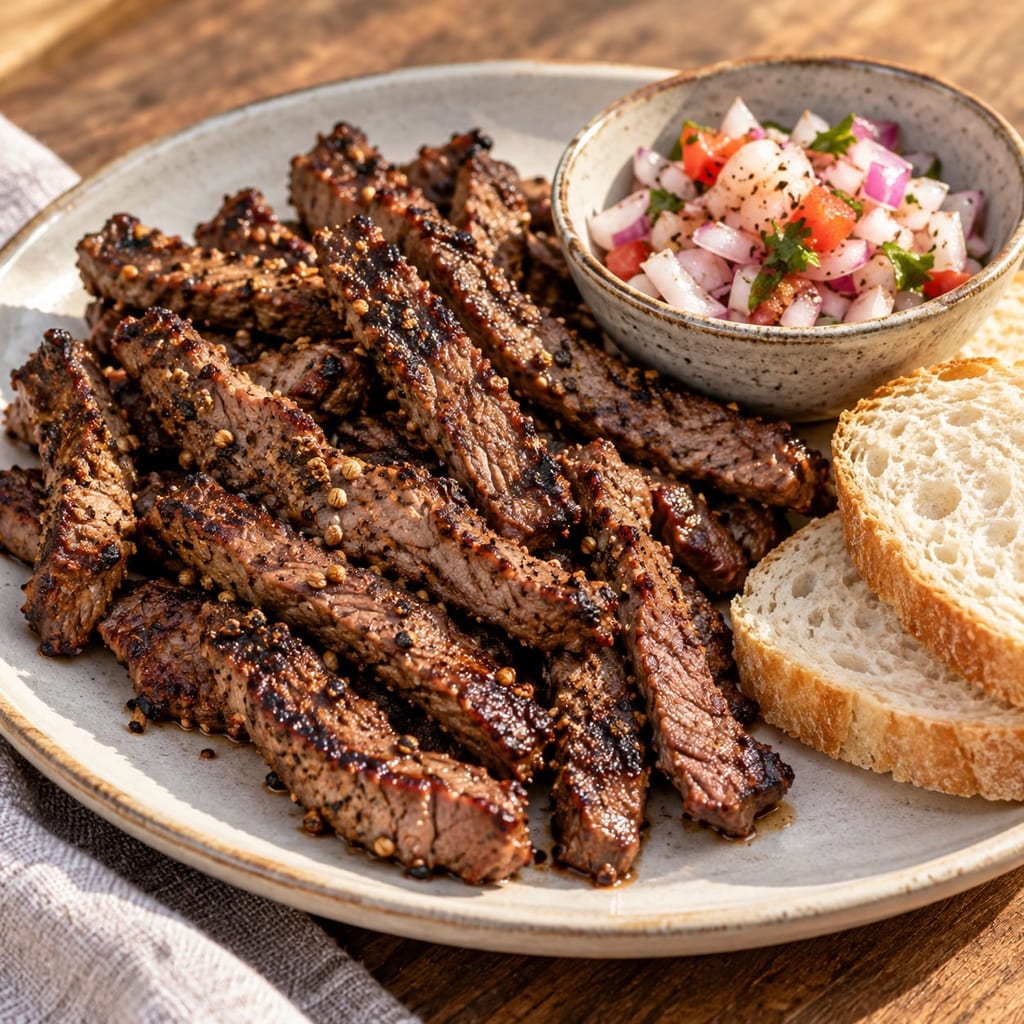
Beef rump takes vinegar, toasted coriander and pepper from the flavour family of tassal, then meets a thermometer-checked braai fire as a fresh-cooked meal.

A cold dip, soup or sauce of strained yogurt, cucumber and garlic, eaten across Greece, Turkey and the wider Balkans and Levant under names that include cacık and tarator.
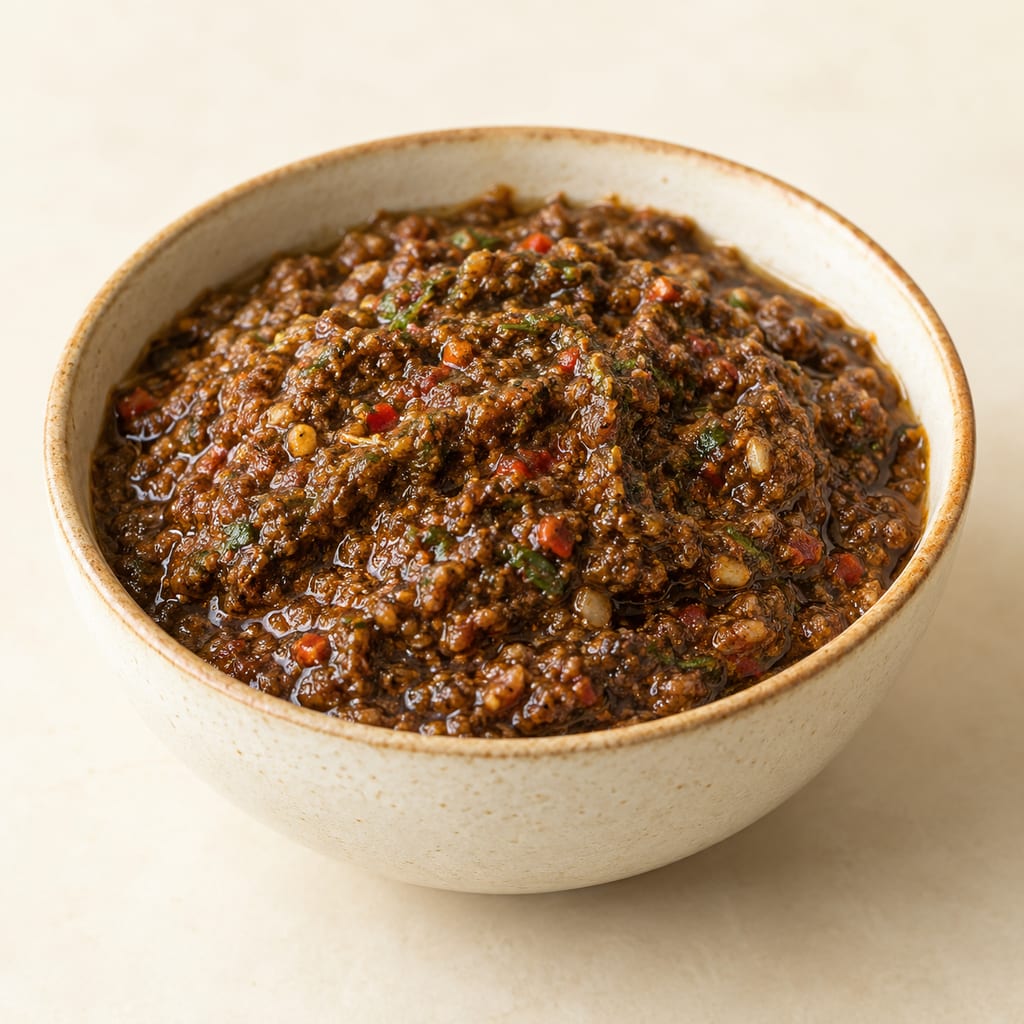
A Jamaican wet jerk paste of ground allspice, Scotch bonnet pepper, thyme, scallion, garlic, ginger and nutmeg, loosened with soy sauce, oil, vinegar and lime, used to marinate meat, fish or tofu before cooking.
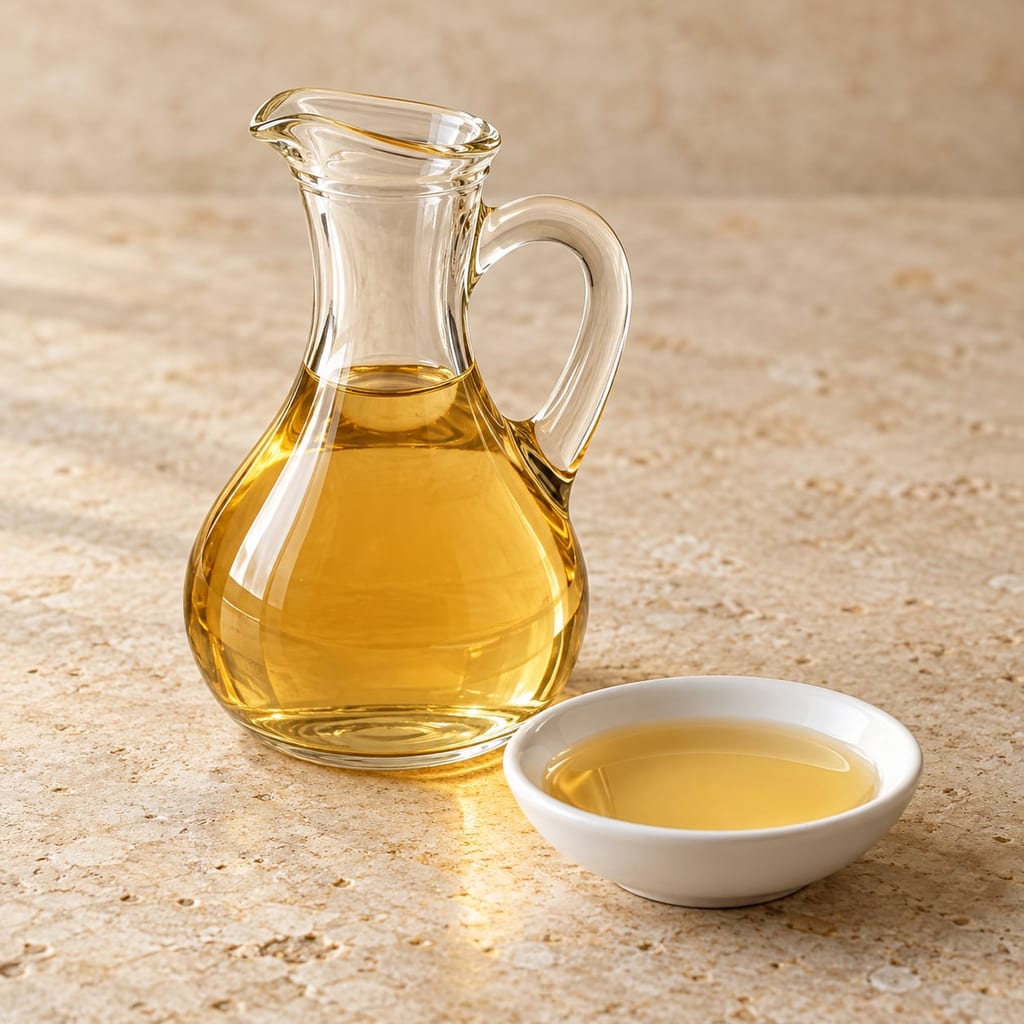
Protected Andalusian wine vinegar made by acetifying certified Montilla-Moriles wine, dry or sweetened with Pedro Ximénez or Moscatel must, and often aged in oak by solera or añada.
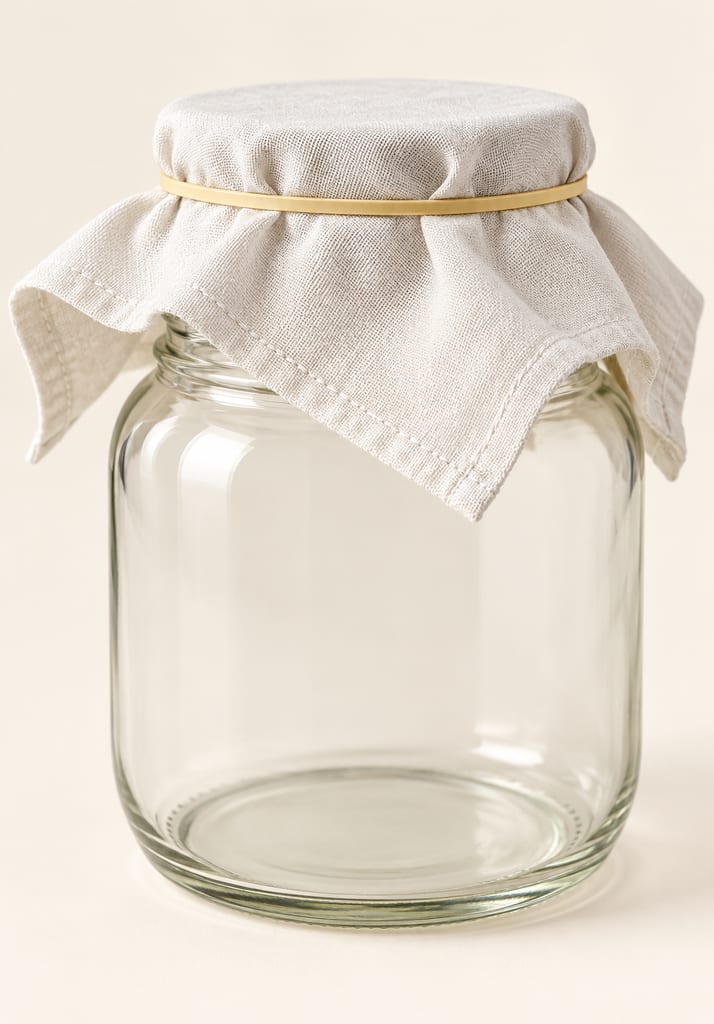
A clean, fine-weave cloth or towel covers an open ferment while allowing air exchange; a band or cord holds it over the vessel mouth.
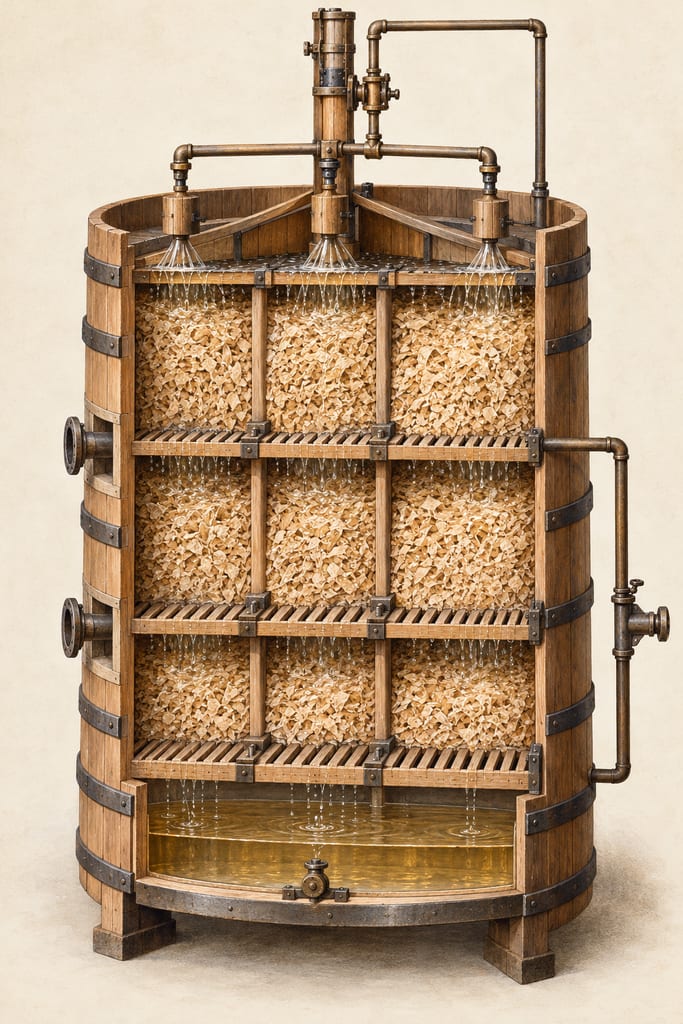
An upright packed bed speeds vinegar acetification by wetting a bacteria-bearing carrier with alcoholic liquid as air rises through it.
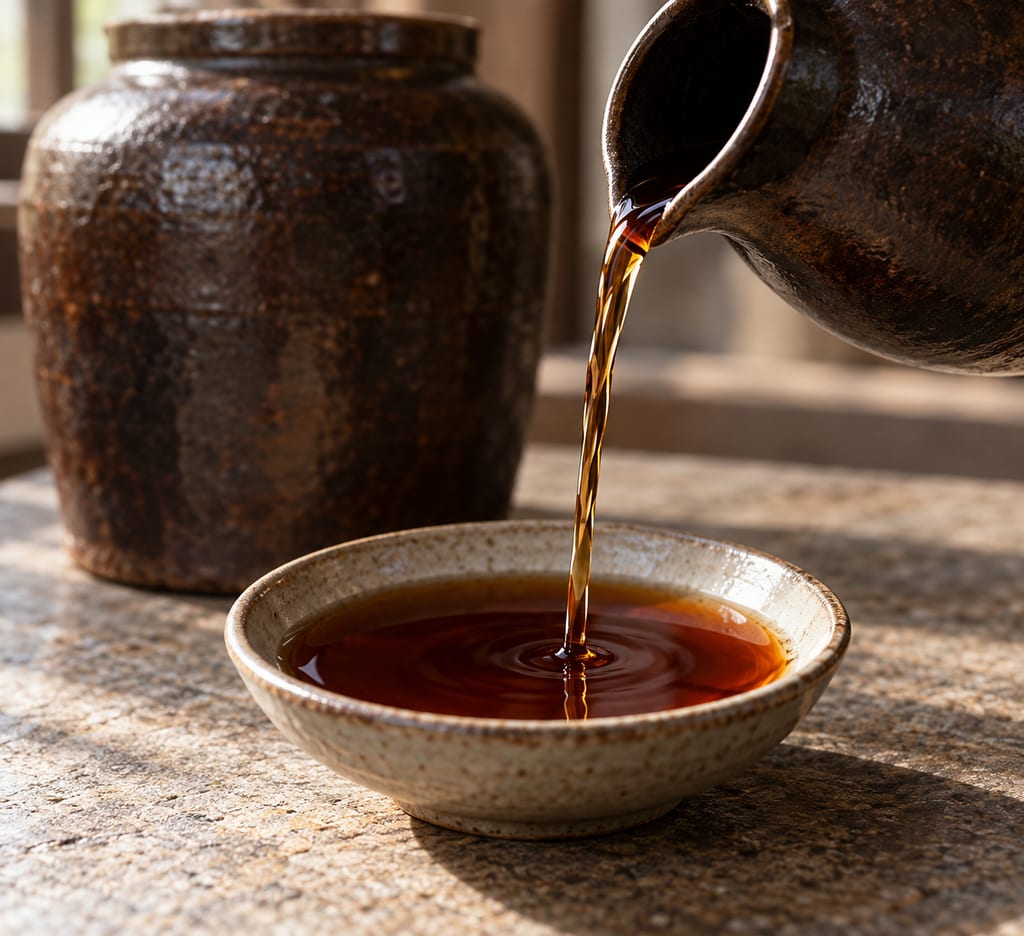
Dark Fujian rice vinegar: glutinous rice and red Monascus koji make a red rice wine, liquid acetification turns it to vinegar, and it ages at least three years.
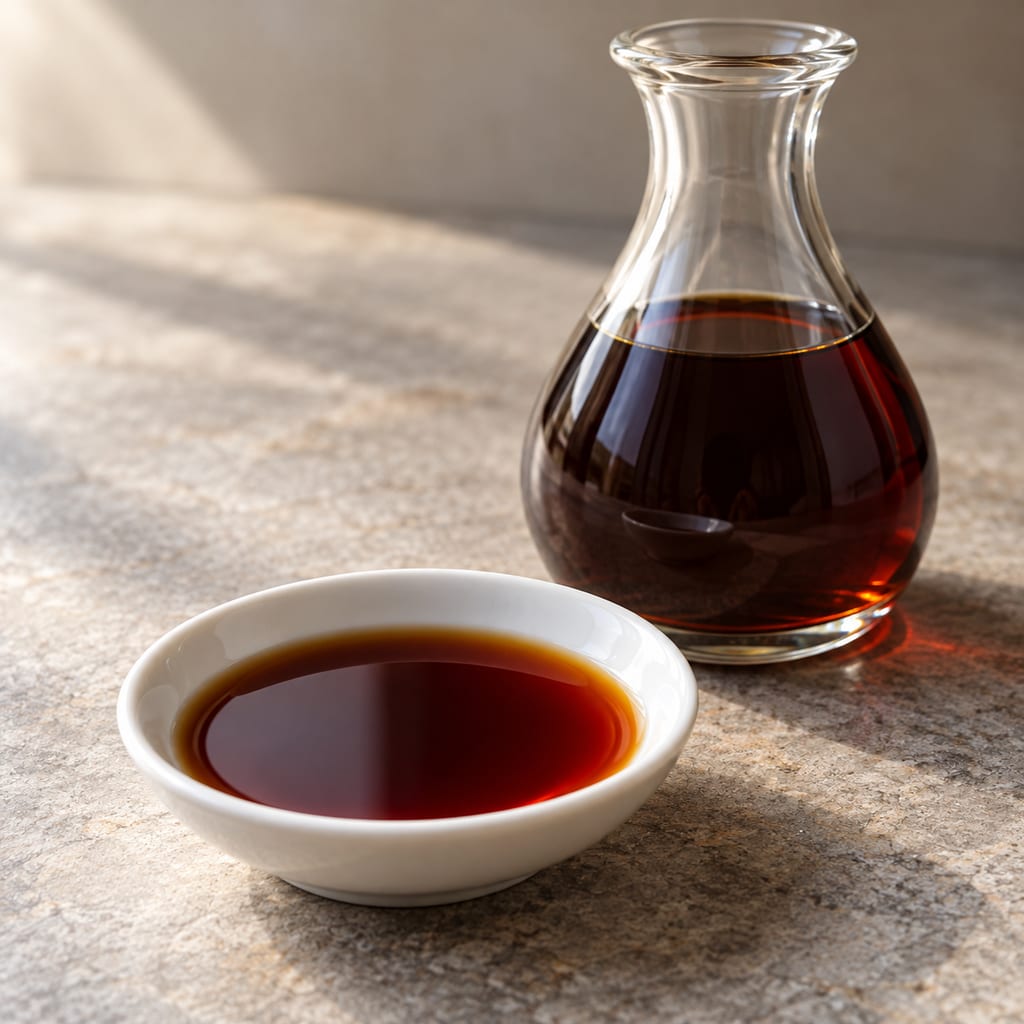
Zhenjiang black vinegar is a Chinese glutinous-rice vinegar made by mixed-culture fermentation, solid-state acetification, roasted-rice extraction and ageing, giving a dark, savoury, mildly sweet condiment.
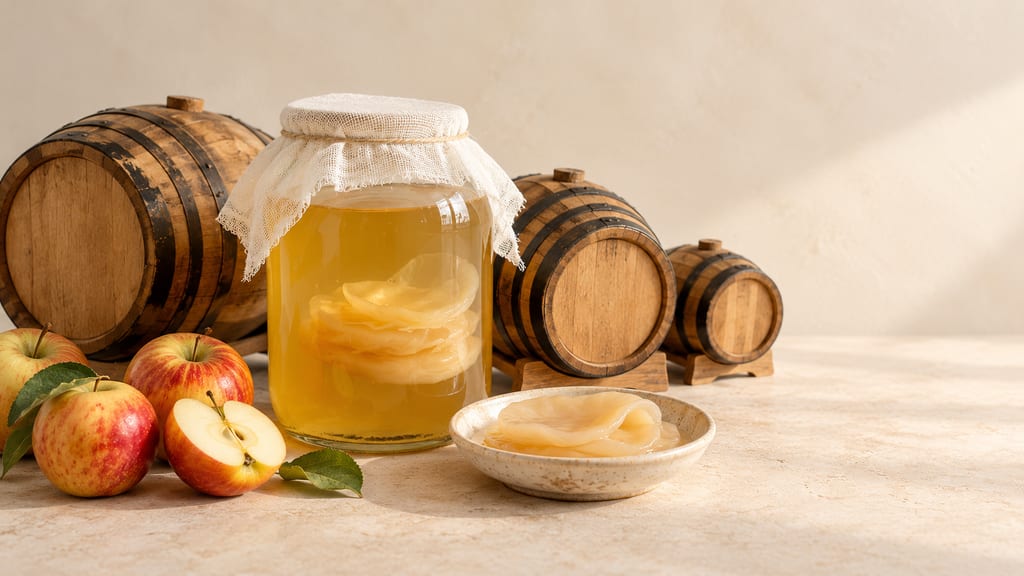
Vinegar forms when bacteria and oxygen turn alcohol into acetic acid. This reference follows wine, fruit, grain and sap through that change, the ways of supplying oxygen, the measurements and the choices that finish a bottle.

Protected Italian vinegar made only from cooked grape must, fermented and aged in a battery of wooden barrels for at least 12 years: sweet, sharp and syrupy.

A warm dip of garlic, anchovy and olive oil, often enriched with butter, that Piedmont serves over a flame with raw and cooked vegetables and bread.
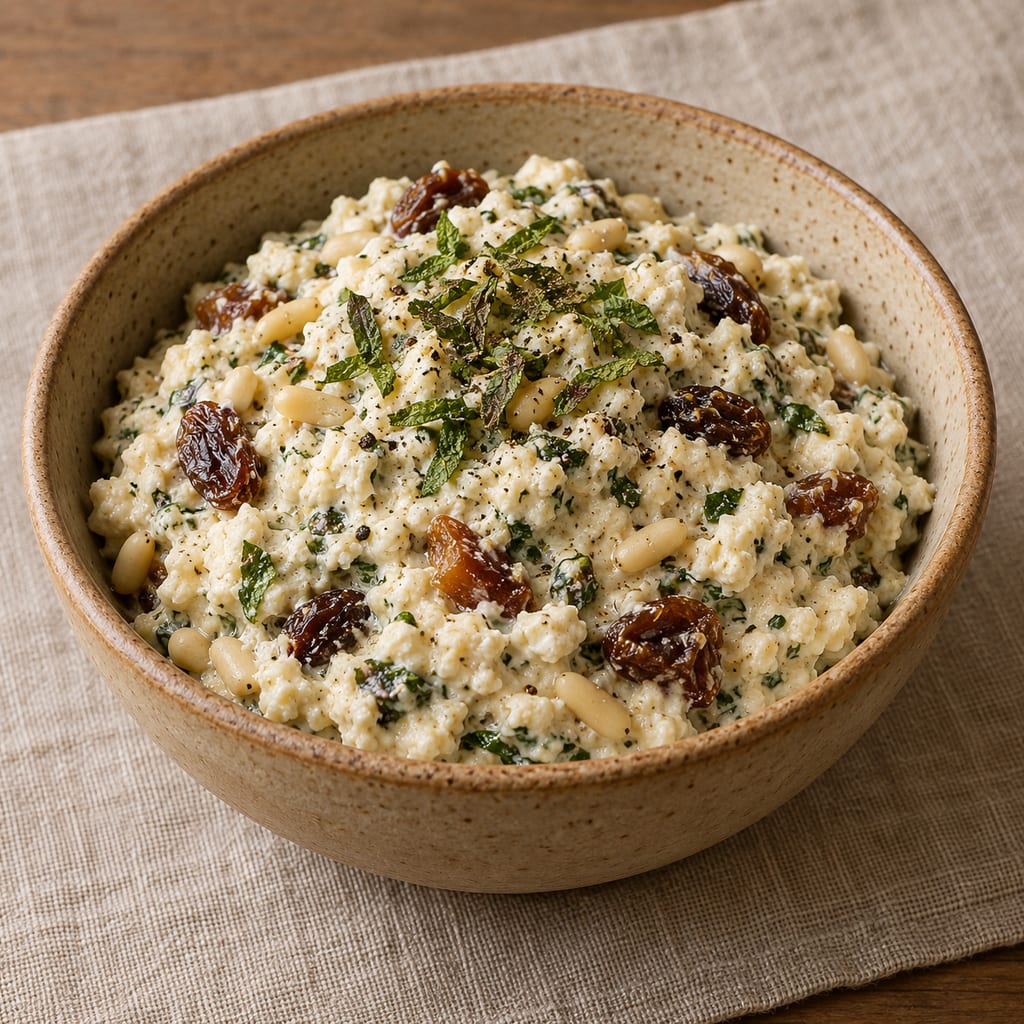
Hypotrimma was a Roman condiment in Apicius's cookery book, a mixture of ground pepper, herbs, nuts, dried fruit, cheese, honey and fish sauce.
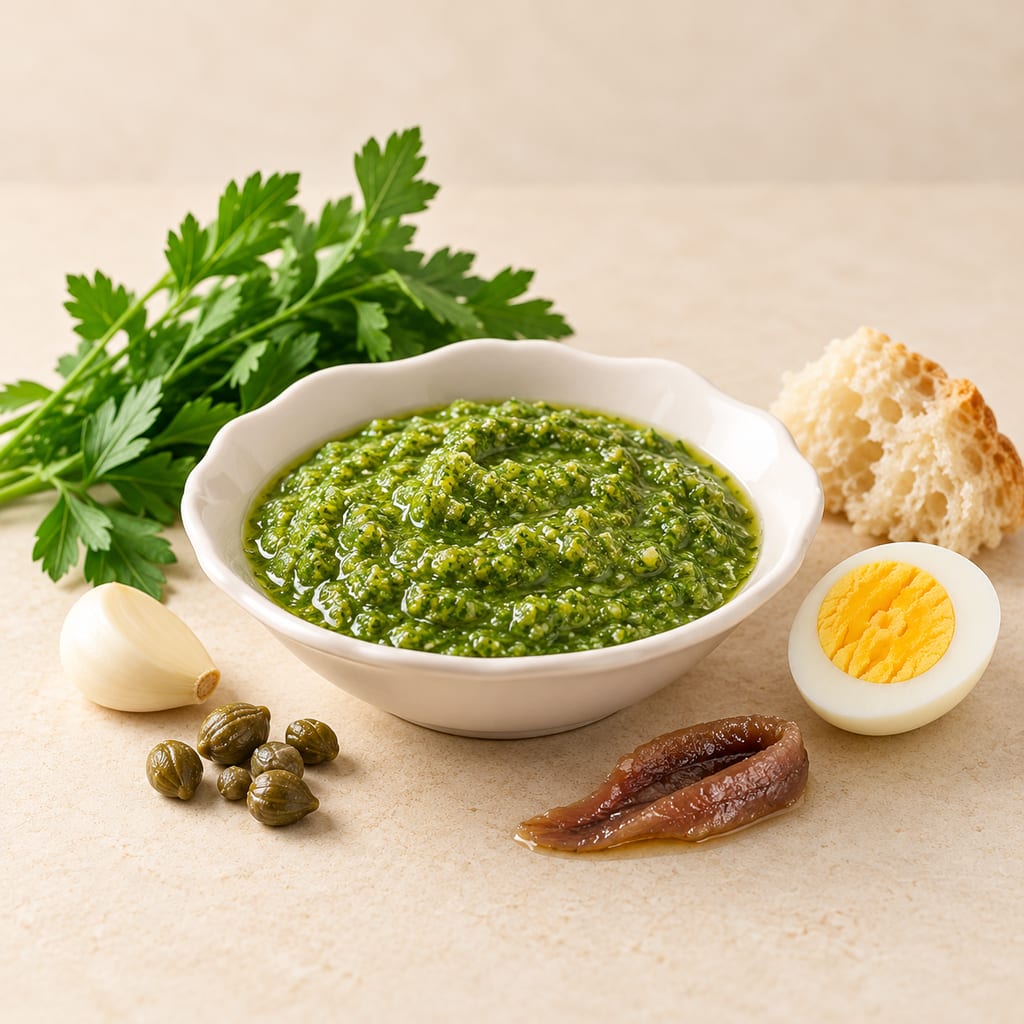
A cold parsley sauce of capers, anchovy, garlic, olive oil and vinegar, with bread or egg in some regional versions, served across Italy with boiled meats and fish.
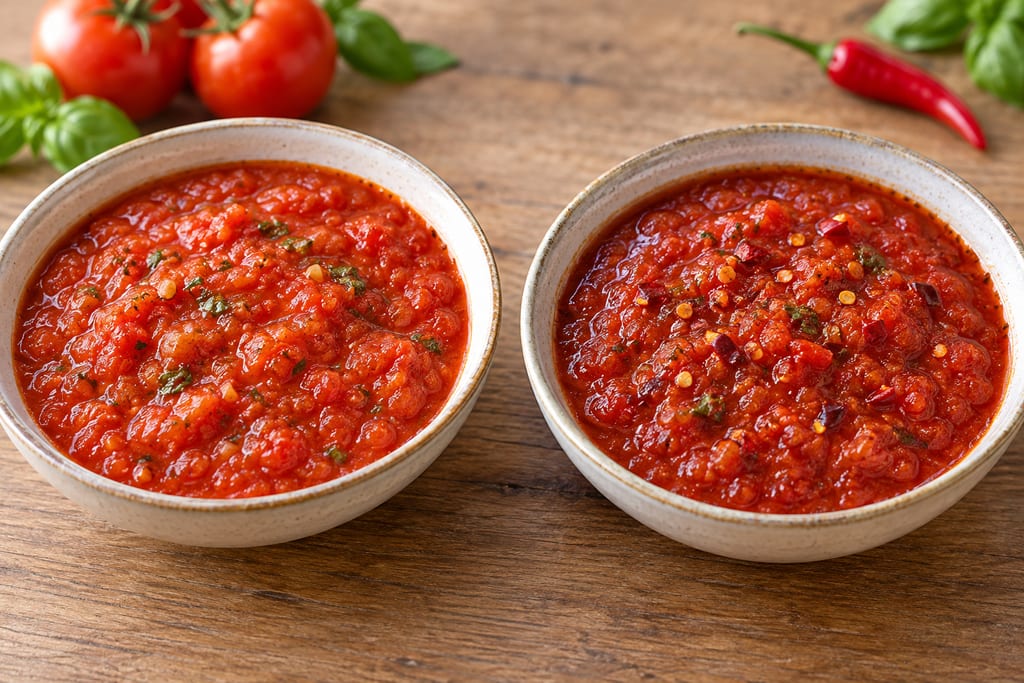
Marinara is a quick Italian-American tomato sauce; arrabbiata is a distinct Roman tomato sauce with red chilli. They share a simple cooked tomato-and-garlic base but are not the same sauce.
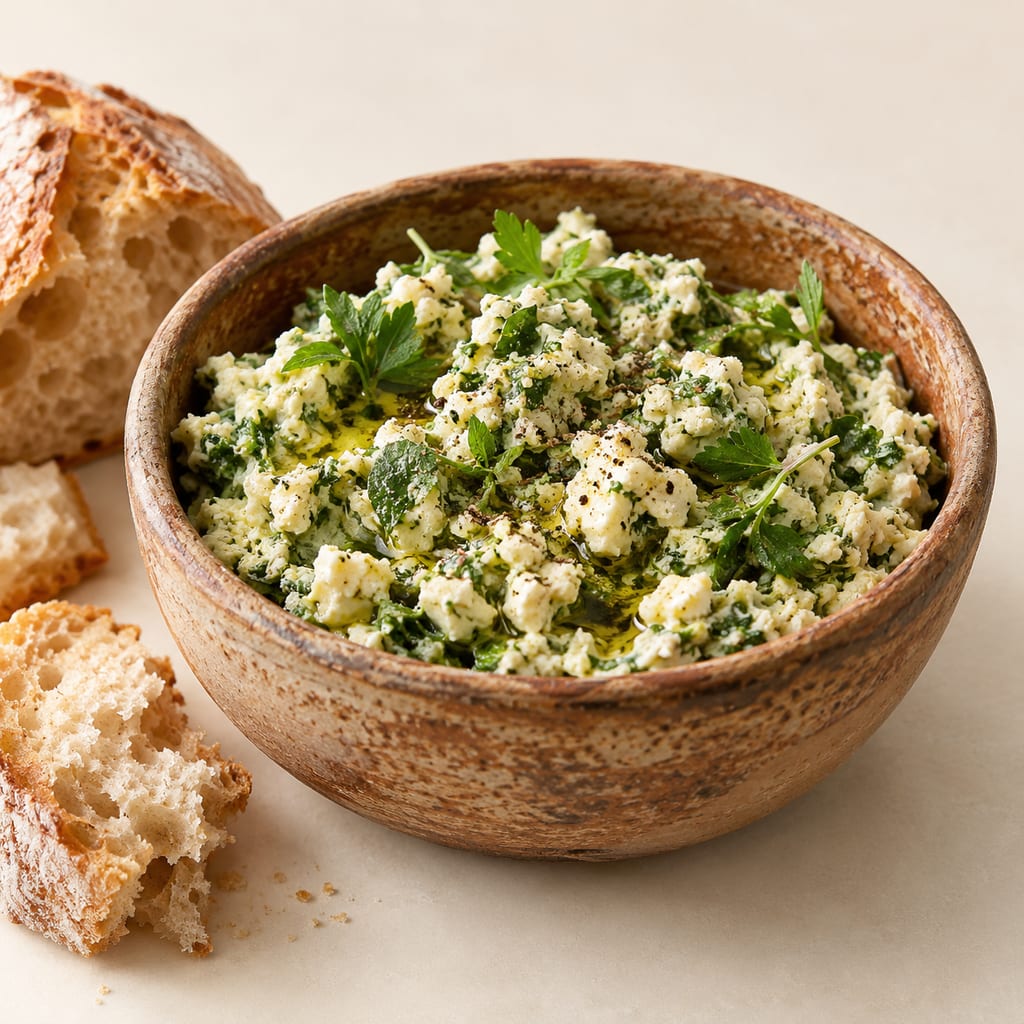
Moretum was a pounded herb and cheese spread of ancient Rome, eaten with bread and named for the mortar in which it was made.
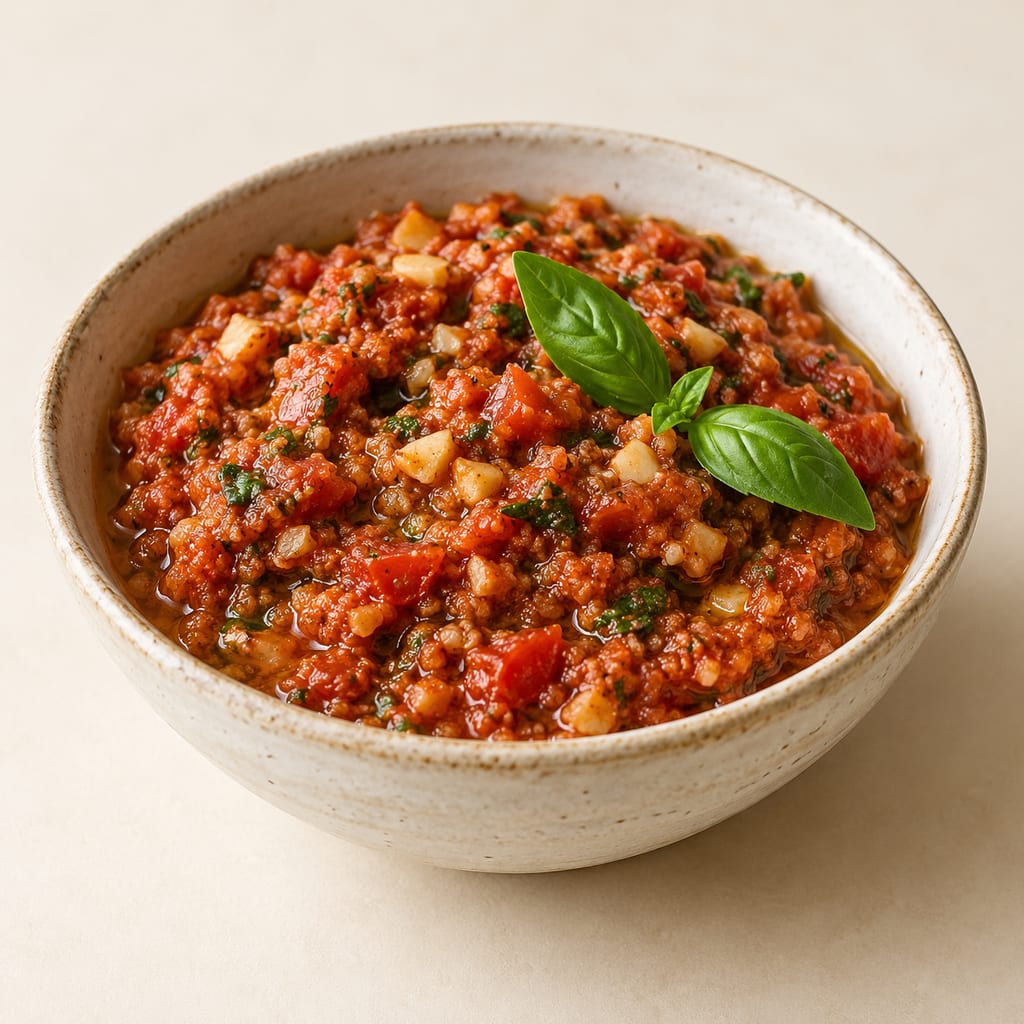
Pesto alla trapanese is a Sicilian sauce of fresh tomato and almonds pounded with basil, a red counterpart to Genoese pesto.
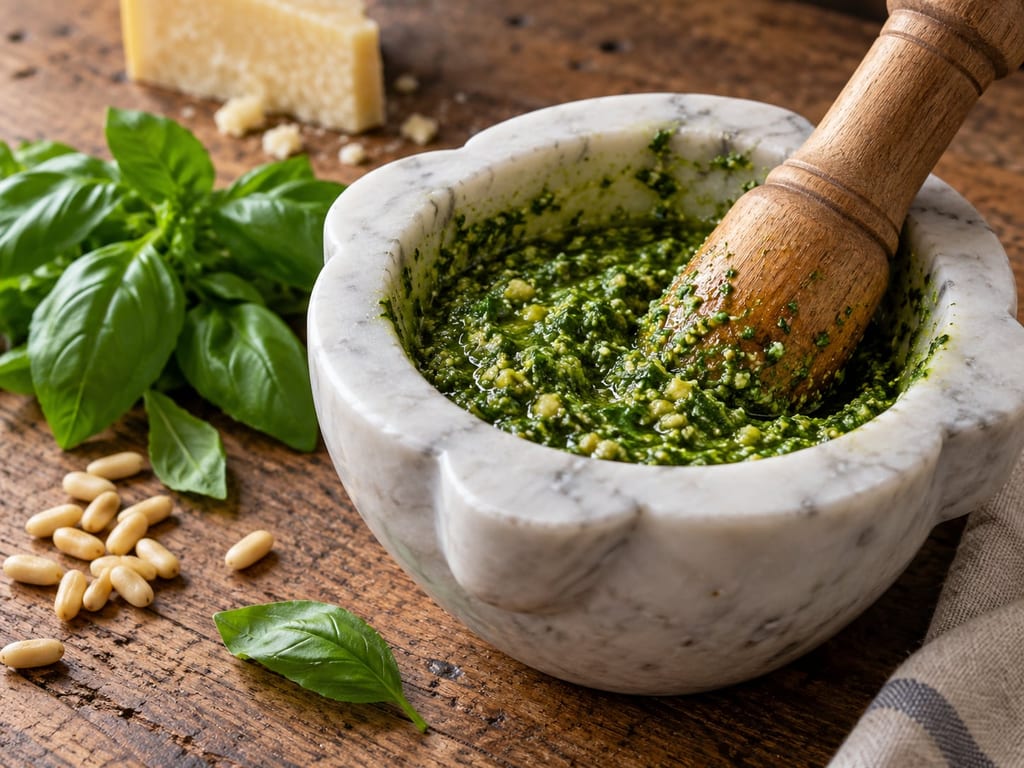
Pesto Genovese is a Ligurian uncooked basil sauce pounded with garlic, pine nuts, salt, hard cheeses and olive oil, traditionally made in a mortar.

A Dominican table and seasoning condiment of sour orange juice, mixed with lime and salt and bottled raw; garlic, oregano or a hot pepper may be added for meat or a spicier bottle.

Japanese reddish-brown vinegar from sake lees matured about three years, turned to vinegar by acetic bacteria; the vinegar of Handa and Edomae sushi rice.

A Swedish-style spirit vinegar made by fermenting neutral alcohol with live vinegar bacteria, with a separate guide to commercial ättika strengths.
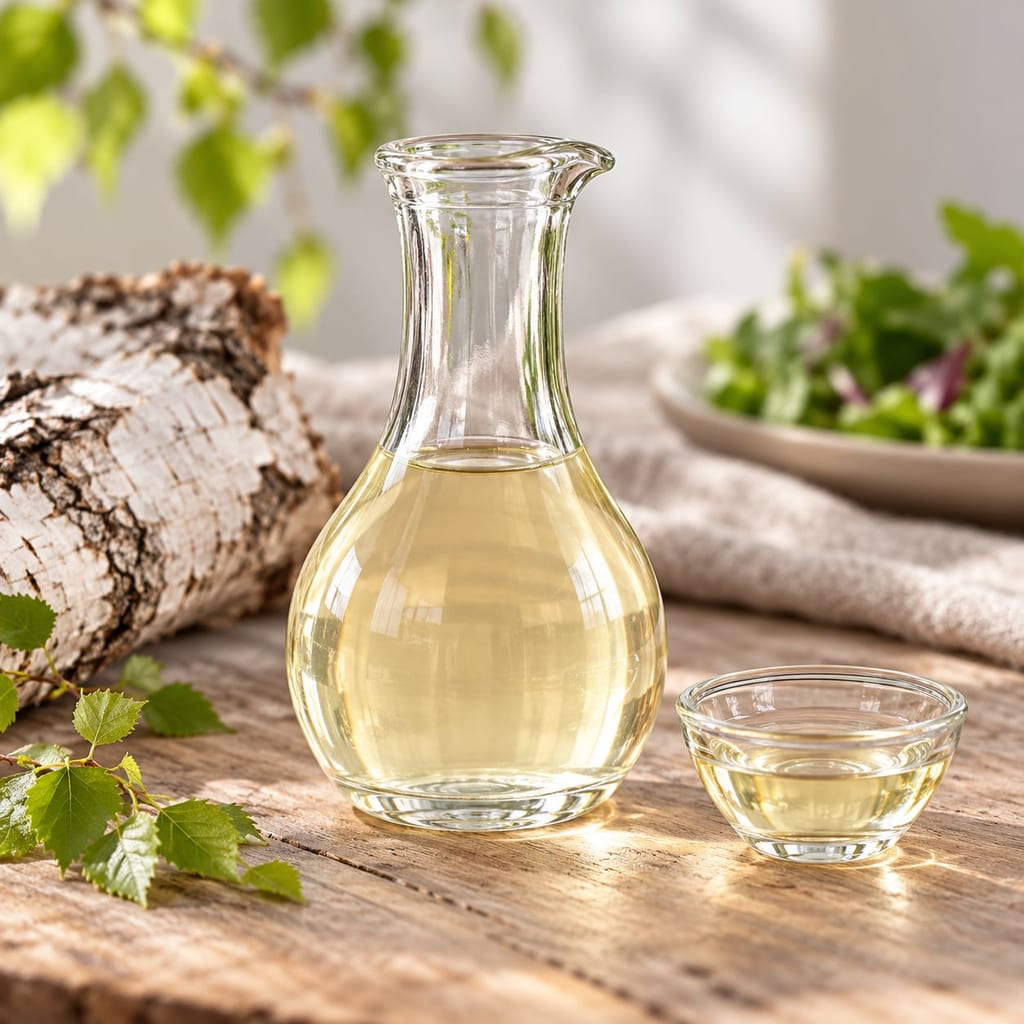
Vinegar from spring birch sap fermented to alcohol and then acetic acid, usually with added sugar or honey because the sap is so dilute; made in Sweden and described in older eastern European accounts.
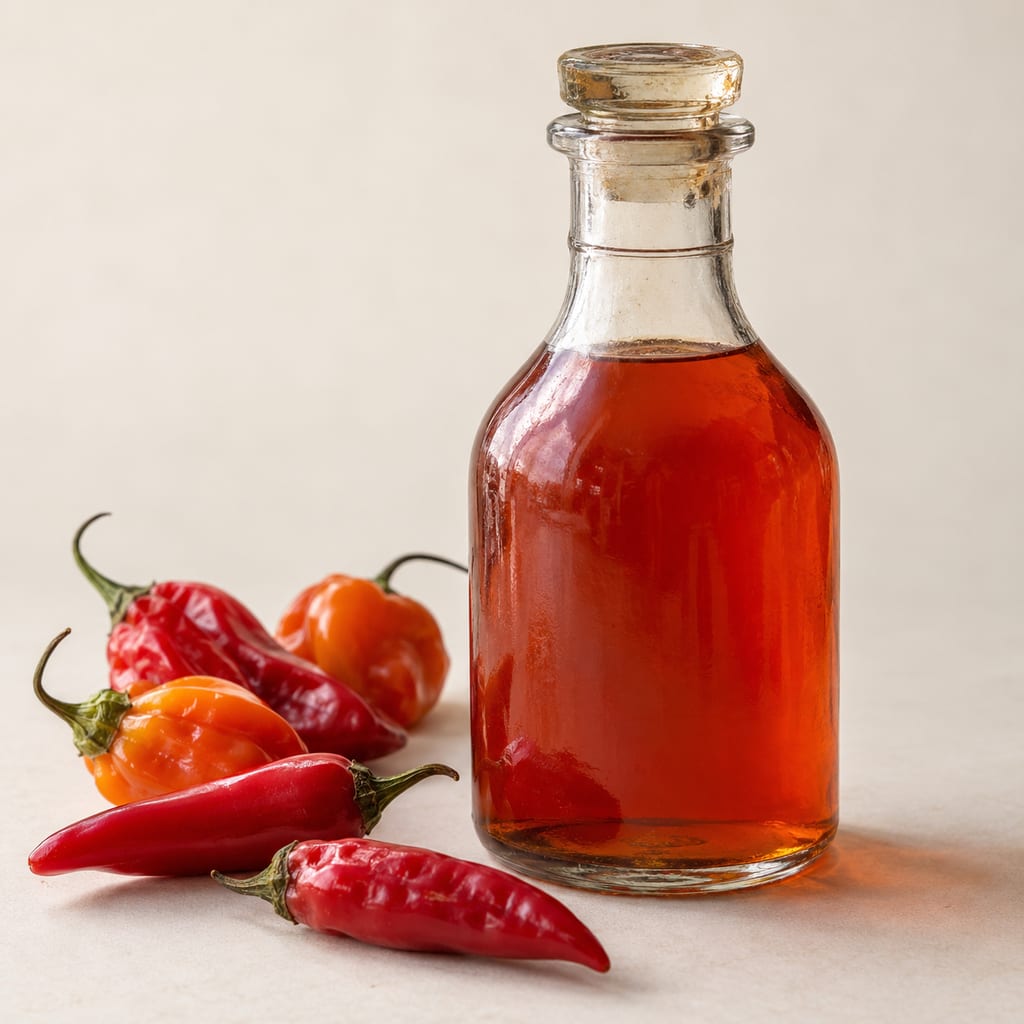
Mary Randolph's pepper vinegar: ripe pepper pods simmered in vinegar until the liquid is reduced to one quart, then strained for use in gravies and catsups. From The Virginia Housewife.
A Japanese mixed seasoning of vinegar, sugar and salt for sushi rice. Ratios vary with the rice batch and style; this version follows Marukan Vinegar's formula for two go of rice.
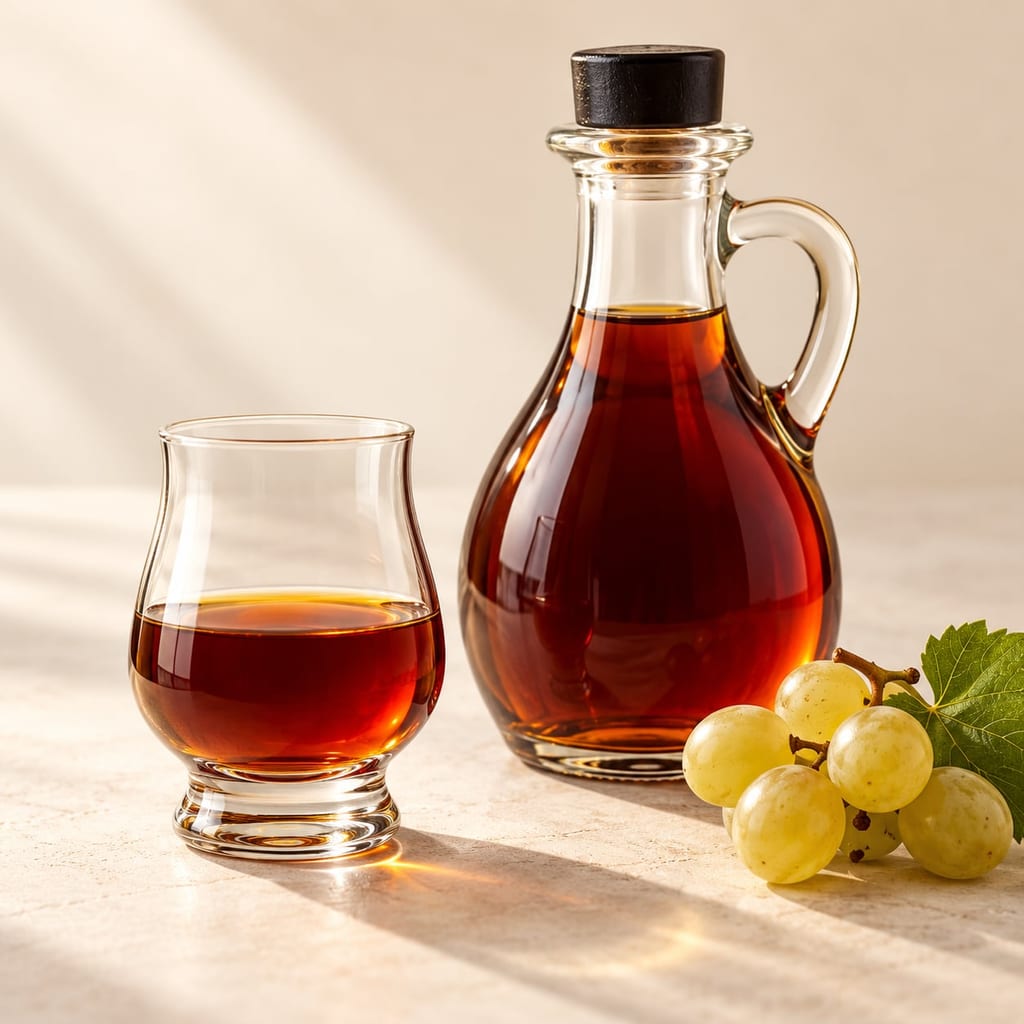
Vinagre de Jerez is made by acetifying eligible Jerez wines and ageing the vinegar in wood. Its protected name belongs to a defined Andalusian zone and a cellar tradition joining wine, oxygen, acetic bacteria and long ageing.
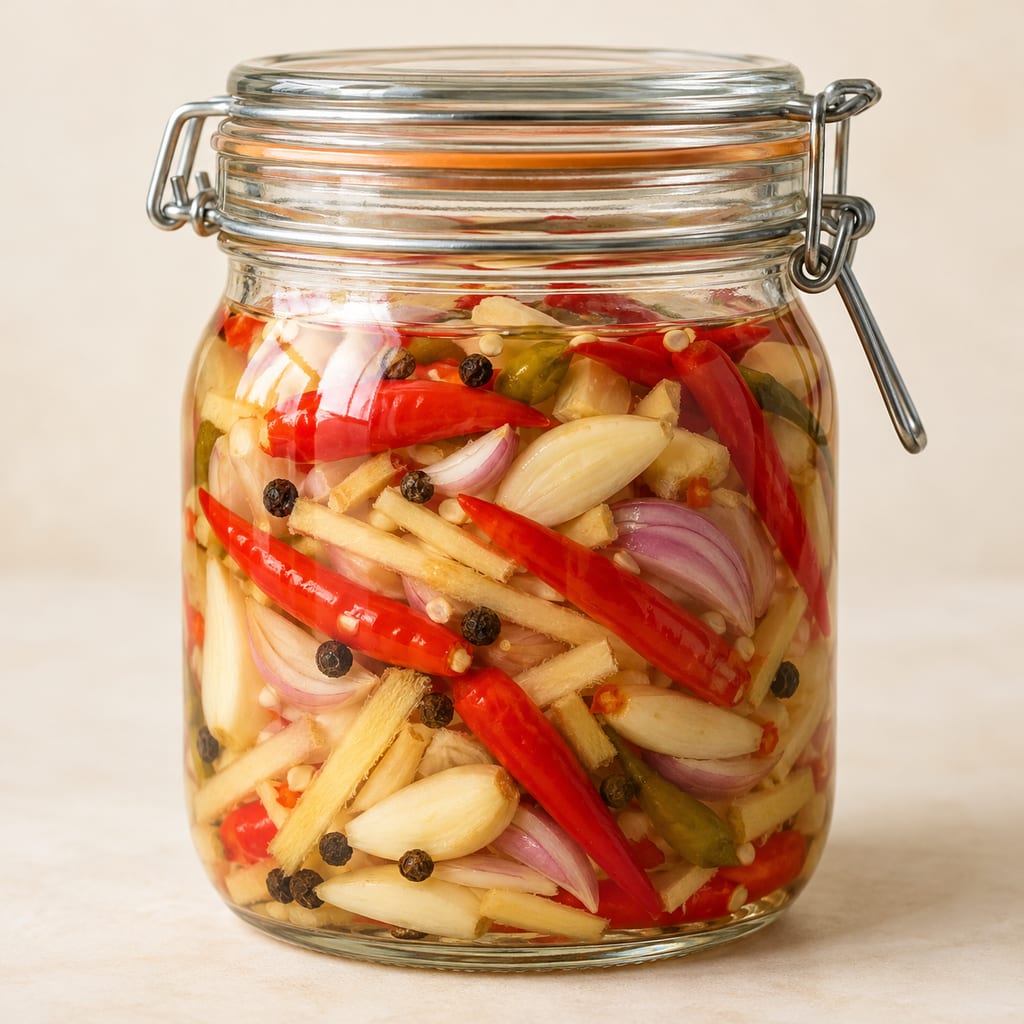
Sinamak is a Philippine spiced vinegar: white, cane or coconut vinegar steeped with chilies, ginger, garlic, onion and peppercorns for days or weeks until it is ready to use as a condiment.
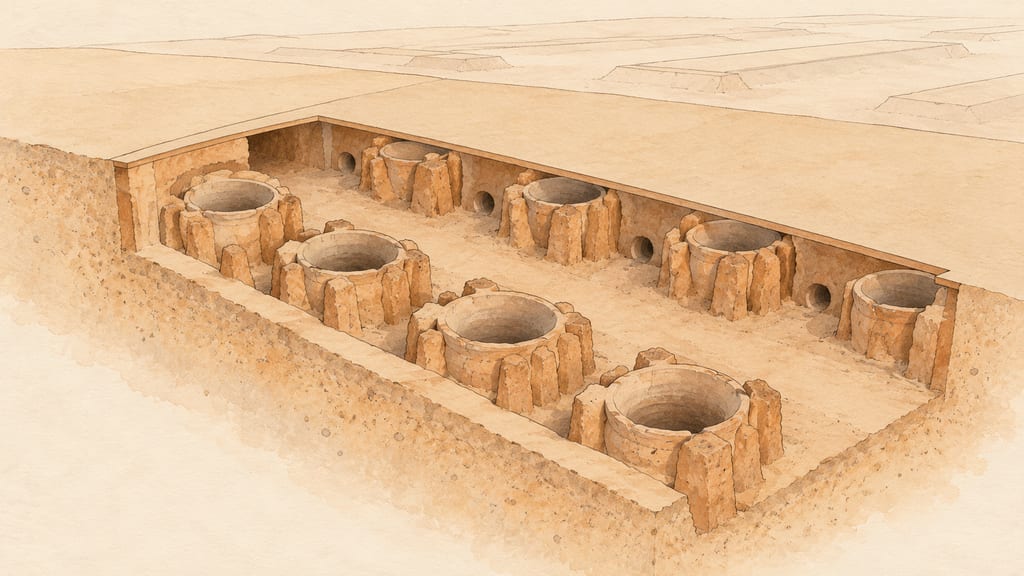
At North Abydos in Egypt, a fixed early Dynastic brewery comprised parallel semi-subterranean installations with rows of ceramic mash vats; excavation reports revise their number, scale and estimated batch capacity.
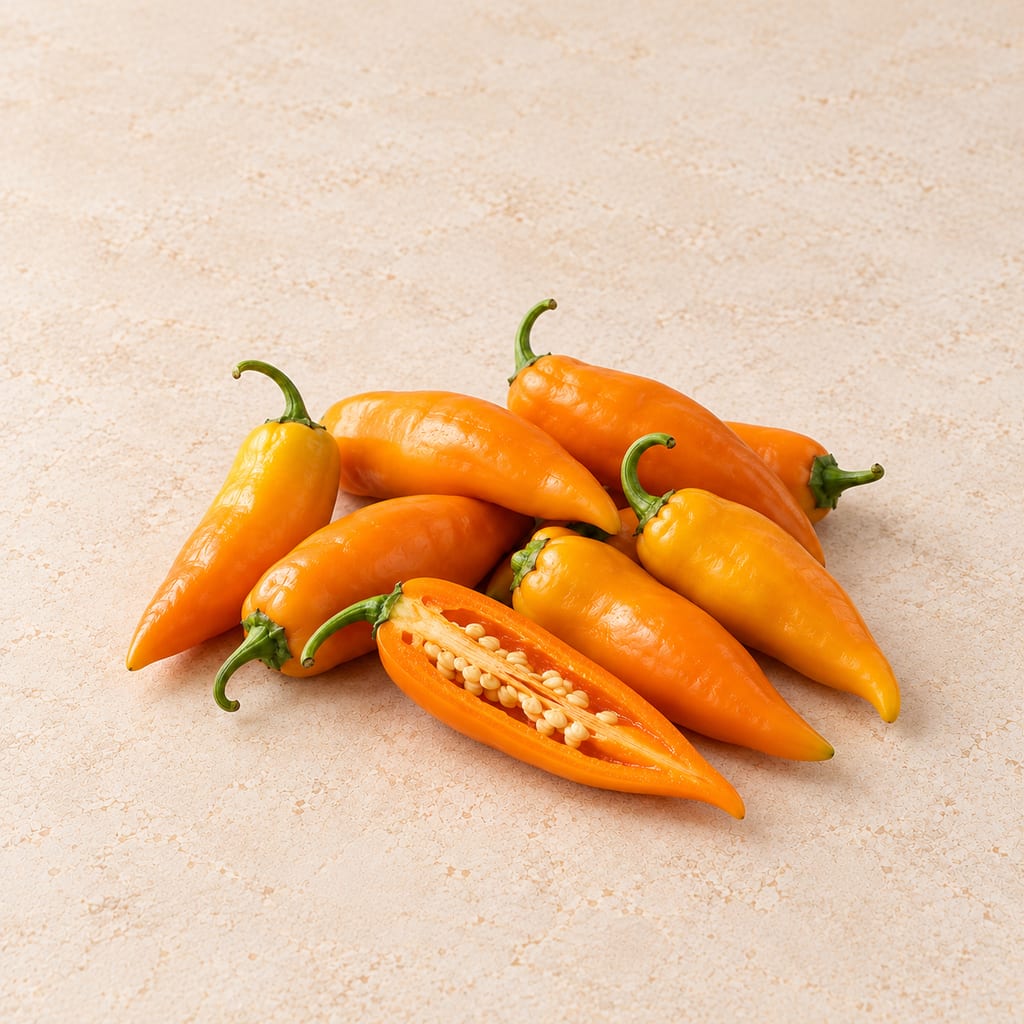
Ají amarillo is the orange-yellow Peruvian chilli cultivar group of Capsicum baccatum, used to colour and season huancaína sauce and ají de gallina. Published heat estimates do not establish one range for the named cultivar.

Toasted almonds are whole sweet almond kernels dry-roasted until golden to brown. Heat replaces their marzipan note with a roasted, nutty one; they thicken and flavour romesco.

Kodiak salmon, halibut and cod cut as seg'aq and hung on an initaq rack to become tamuuq, with kac'amaasaq and kupcuunaq named as different results.

Aniseed is the dried ripe fruit of Pimpinella anisum, an aromatic Apiaceae spice commonly called a seed. It adds a sweet, warm aroma to breads such as Moroccan krachel and South African mosbolletjies, and is distinct from star anise.
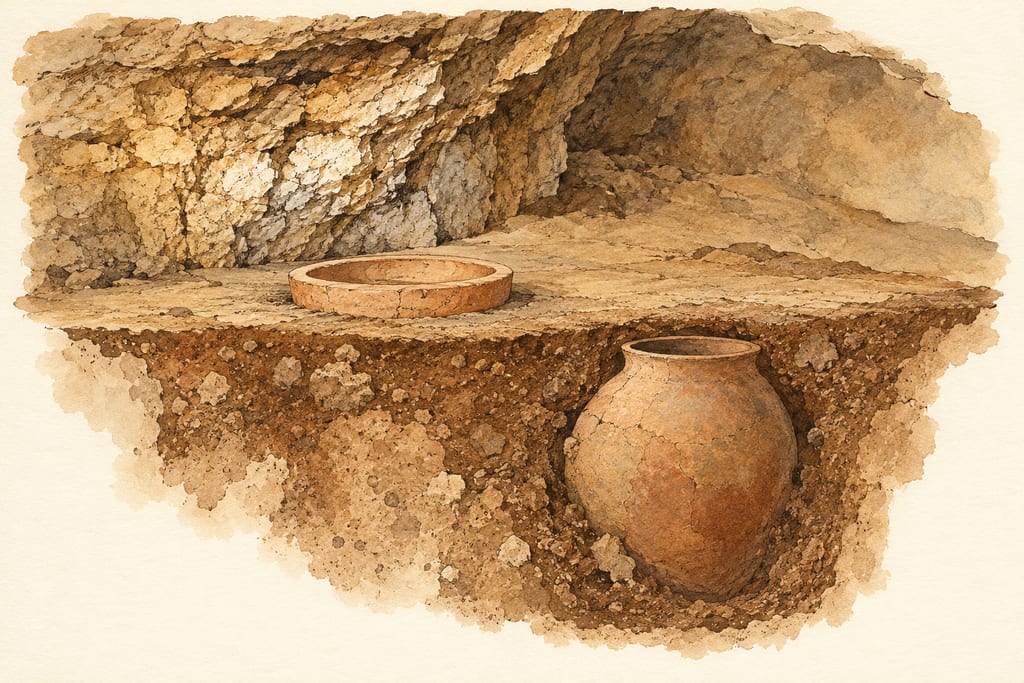
A fixed Late Chalcolithic installation in Areni-1 cave combined a shallow clay pressing basin with a large jar set into the cave floor and storage vessels nearby.

Ripe avocado flesh is the soft, buttery, fat-rich pulp of Persea americana, eaten raw. It is low in acid, so it is a fresh ingredient that needs care in chilled dishes.
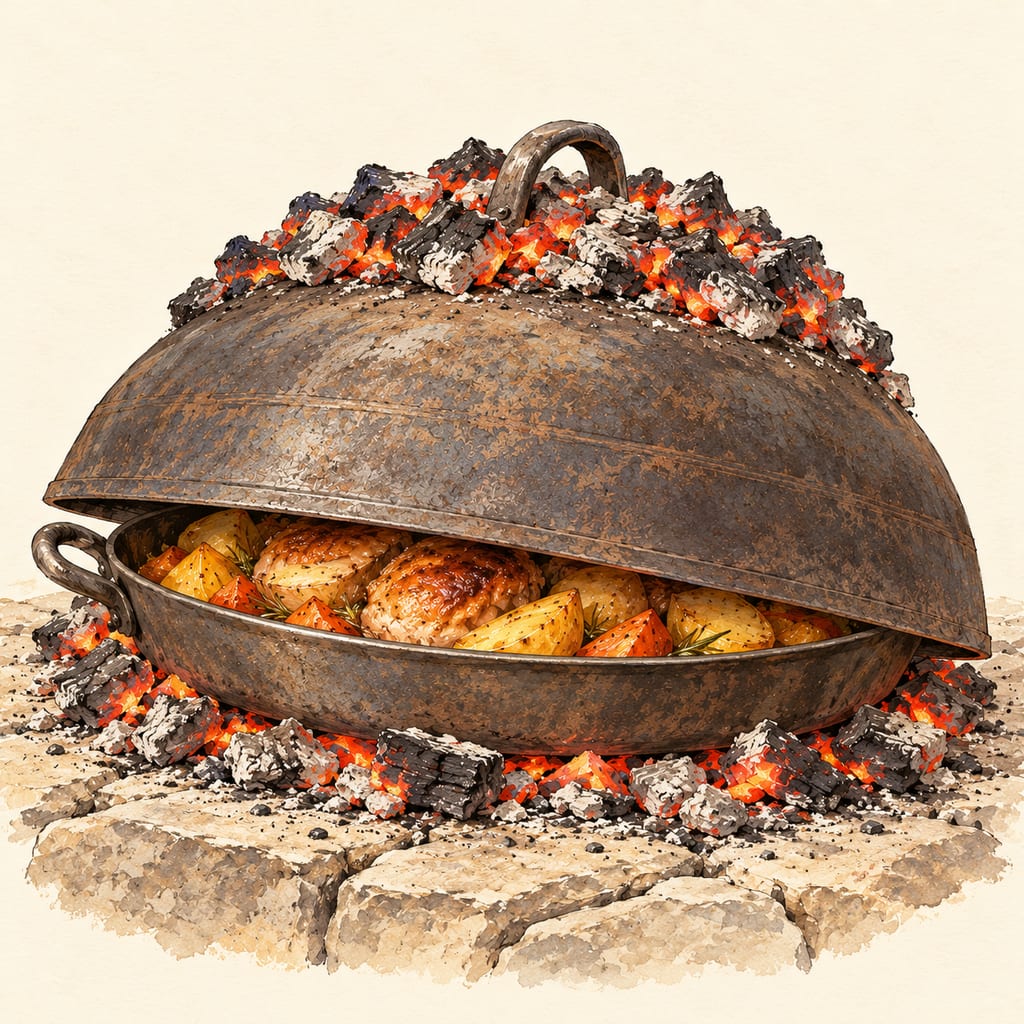
A portable dome and pan used over a hearth, with embers on the lid and heat from below. Regional peka and saç forms share this principle while differing in materials, pan shape and how the food is cooked.
No community contributions have been published for this entry yet.
Sign in to contribute. Published comments and photos are free to read.
North Carolina State University ExtensionReference
Vinegar MakingDefinition of wine vinegar as a product of alcoholic and subsequent acetic fermentation of grape juice
Traditional surface, Orléans, generator and submerged acetification methods
Documented small-batch wine-vinegar procedure
Starting wines commonly containing 11–12% ABV
Dilution of wine to 5.5–7% ABV before acetification
Use of glass, stainless steel or enamel equipment
Avoidance of iron and aluminium vessels
Equipment sanitization before fermentation
Filling fermentation vessels approximately two-thirds full
Recommendation to introduce a suitable acetic acid bacterial culture
Warning against relying on uncontrolled exposure of wine to air
Use of breathable cloth to provide oxygen while excluding insects
Preferred acetification temperature of 80–85°F
Expected fermentation duration of three to four weeks
Formation and handling of the mother of vinegar
Presence of active bacteria in the liquid as well as the surface film
Optional clarification using cheesecloth
Optional pasteurisation at 140–160°F for at least 30 minutes
Optional ageing for six months or longer at 50–60°F
Importance of preventing excessive oxygen exposure after acetification
Absence of a specified universal wine volume, water volume, starter quantity or finished yield
Cited in: What it is; How it works: microbes, enzymes and chemistry; How it is made and why each step matters; How it is eaten; Reading results and problems
International Organisation of Vine and Wine (OIV)Reference
Wine Vinegar — Resolution OIV-ECO 401-2012International definition of wine vinegar
Requirement that wine vinegar be produced exclusively through acetic fermentation of wine
Minimum total acidity of 60 grams per litre expressed as acetic acid
Maximum ethanol content of 4% by volume
Distinction between a formal product definition and a general home-fermentation procedure
Basis for comparing international wine-vinegar standards
Cited in: What it is; How it works: microbes, enzymes and chemistry; How it is made and why each step matters; Reading results and problems
Boletín Oficial del Estado, Government of SpainReference
Real Decreto 661/2012: Norma de Calidad para la Elaboración y la Comercialización de los VinagresSpanish legal definition of vinagre de vino
Definition of vinegar acidity in grams of acetic acid per 100 millilitres
Minimum acidity of 60 grams per litre for ordinary wine vinegar
Maximum residual alcohol of 1.5% by volume for ordinary wine vinegar
Allowance for selected acetic acid bacterial cultures
Allowance for forced aeration using air or oxygen
Allowance for dilution with water to facilitate acetification
Allowance for maturation in suitable vessels including oak
Prohibition on adding acetic acid to vinegar
Differences between wine vinegar and other vinegar categories
Exceptions for protected regional products governed by their own specifications
Analytical and labelling requirements
Consolidated amendments including the update published in February 2026
Cited in: What it is; Reading results and problems
Austrian Food CodexReference
Österreichisches Lebensmittelbuch, Kapitel B 8: Essig — Chemische AnforderungenAustrian definition and analytical requirements for Weinessig
Wine as the required source material, with water dilution permitted where appropriate
Minimum acidity of 6 grams per 100 millilitres
Maximum residual alcohol of 1.5% by volume
Requirement for detectable acetoin
Additional composition requirements for Österreichischer Qualitäts-Weinessig
Separate analytical criteria for red and white wine vinegars
Difference between national commercial standards and home fermentation targets
Cited in: What it is; Regional and historical variations
Austrian Food CodexReference
Österreichisches Lebensmittelbuch: Gärungsessig — EinteilungClassification of fermented vinegars
Recognition of wine vinegar as a distinct product category
Differentiation of wine vinegar from fruit, spirit, grain and other vinegars
Austrian commercial terminology for vinegar products
Cited in: How it is eaten
The Scientific World Journal, WileyReference
Acetic Acid Bacteria and the Production and Quality of Wine VinegarReview of the microbiology of wine-vinegar production
Role of acetic acid bacteria in the aerobic oxidation of ethanol
Importance of Acetobacter pasteurianus in wine-vinegar production
Other identified Acetobacter species associated with fruit and wine vinegars
Succession towards more acid-tolerant bacteria during acetification
Role of Komagataeibacter europaeus in high-acidity processes
Differences between traditional surface acetification and submerged production
Influence of wood contact and ageing on vinegar quality
Potential advantages of defined mixed starter cultures
Risk of overoxidation and loss of acetic acid
Influence of bacterial species on aroma and chemical composition
International Journal of Food Microbiology, ElsevierReference
Population Dynamics of Acetic Acid Bacteria During Traditional Wine Vinegar ProductionMicrobial succession during traditional wine-vinegar acetification
Comparison of acetic acid bacterial populations in two independent vinegar plants
Strain-level investigation of Acetobacter pasteurianus
Dominance of Acetobacter pasteurianus during much of acetification
Detection of Gluconacetobacter europaeus towards the end of some fermentations
Influence of increasing acetic acid concentrations on bacterial strain populations
Use of different wooden barrels
Evidence that wood type and fermentation environment influence bacterial population dynamics
Applied and Environmental Microbiology, American Society for MicrobiologyReference
Evolution of Acetic Acid Bacteria During Fermentation and Storage of WinePresence of acetic acid bacteria on grapes and during winemaking
Succession involving Gluconobacter oxydans, Acetobacter pasteurianus and Acetobacter aceti
Persistence of acetic acid bacteria in wine
Rapid increases in acetic acid following exposure of wine to air
Influence of temperature and wine pH on bacterial growth and metabolism
Microbiological distinction between wine spoilage and deliberate vinegar production
Foods, MDPIReference
A Review on the Interaction of Acetic Acid Bacteria and Microbes in Food Fermentation: A Microbial Ecology PerspectiveEcology and physiological characteristics of acetic acid bacteria
Oxidation of ethanol by membrane-associated alcohol and aldehyde dehydrogenases
Role of oxygen in acetic acid bacterial respiration
Acid tolerance of Acetobacter pasteurianus
Properties of Komagataeibacter europaeus in high-acidity fermentation
Microbial succession under increasing acetic acid concentrations
Potential interactions between acetic acid bacteria and other microorganisms
Variation between controlled and spontaneous mixed microbial communities
Cited in: How it works: microbes, enzymes and chemistry
National Center for Home Food Preservation, University of GeorgiaReference
General Information on PicklingImportance of acidity in safe food preservation
Recommendation to use research-tested pickling formulations
Warning against changing the proportions of vinegar, food and water
Recommendation for vinegar of 5% acidity in relevant tested preservation recipes
Need for sufficient and uniform acidity in preserved foods
Risk from Clostridium botulinum when acidification is inadequate
Difference between vinegar used as a condiment and vinegar relied upon as a critical preservation ingredient
Cited in: How it is eaten; Reading results and problems
Pennsylvania State University ExtensionReference
Let's Preserve: Ingredients Used in Home Food PreservationDefinition of vinegar as the product of successive alcoholic and acetic fermentations
Recommendation for commercially prepared vinegar labelled 5% acidity in home food preservation
Warning not to use homemade vinegar or vinegar of unknown acidity in pickling
Importance of maintaining vinegar-to-water and vinegar-to-food ratios
Importance of acidity for the safety of shelf-stable preserved foods
Distinction between predictable commercial vinegar composition and variable homemade vinegar
Cited in: Reading results and problems
Pennsylvania State University ExtensionReference
Advice About VinegarDifferences in acidity between commercial vinegars
Need to check percentage acidity on product labels
Recommendation for vinegar labelled at least 5% acidity in relevant tested pickling recipes
Warning against substituting homemade vinegar in home canning
Importance of not diluting vinegar unless instructed by a research-tested recipe
Distinction between edible vinegar and stronger cleaning or horticultural vinegar
Need to distinguish specialty cooking vinegars from products suitable for tested home preservation
Association des Amis du Patrimoine Hospitalier d'Orléans (APHO)Reference
Science et empirisme: Pasteur rend hommage aux vinaigriers d'OrléansHistory of vinegar manufacture in Orléans
Historical relationship between Loire wine transport and vinegar making
Creation of the Orléans vinegar-makers' corporation in 1394
Historical accounts of specialist vinegar-making trades
Orléans vinegar production during the early-modern period
Pasteur's visit and work with vinegar makers
Scientific development of controlled acetification
Distinction between traditional producer accounts and verified documentary milestones
Cited in: History
Gauthier-Villars and Victor Masson; digitised by Wellcome CollectionReference
Études sur le vinaigre: sa fabrication, ses maladies, moyens de les prévenir; nouvelles observations sur la conservation des vins par la chaleurPublication of Pasteur's vinegar research in 1868
Inclusion of his 1864 memoir on acetic fermentation
Inclusion of his 11 November 1867 lecture in Orléans
Historical relationship between microbial research and practical vinegar making
Scientific examination of vinegar production and spoilage
Documentary evidence for the nineteenth-century microbiological understanding of acetification
Cited in: History
Martin-Pouret, OrléansReference
Our Home — History and the Orléans MethodProducer account of historical Orléans vinegar making
Connection between wine transport along the Loire and local vinegar production
Company history beginning in 1797
Continued use of traditional Orléans acetification
Use of selected wines and grape varieties
Oak-cask maturation
Production of wine-based vinegars and mustard
Distinction between producer tradition and independent historical verification
Cited in: History; How it is made and why each step matters; Regional and historical variations; How it is eaten
Ponti, ItalyReference
La Nostra StoriaHistory of the Ponti family and vinegar business
Development of commercial vinegar production in Piedmont
Historical association with Sizzano
Expansion of production and industrial facilities
Italian wine-vinegar manufacturing tradition
Distinction between older family history and particular documented factory-production dates
Cited in: History
Ponti, ItalyReference
Aceto di Vino — Caratteristiche, Proprietà e UsiCommercial manufacture of red and white wine vinegar
Selection of wine as the starting material
Controlled acetification
Use of stainless steel and wooden equipment
Clarification and filtration
Culinary uses in dressings, vegetables and savoury dishes
Relationship between starting wine, fermentation and finished vinegar flavour
Cited in: How it is made and why each step matters; Regional and historical variations; How it is eaten
Junta de Andalucía, Government of AndalusiaReference
Denominaciones de Origen Protegidas de VinagresOfficial recognition of the protected Andalusian wine-vinegar designations
Vinagre de Jerez
Vinagre de Montilla-Moriles
Vinagre del Condado de Huelva
Links to regional product specifications
Identification of responsible regulatory bodies
Distinction between ordinary wine vinegar and protected geographical products
Importance of consulting currently applicable product specifications
Boletín Oficial de la Junta de AndalucíaReference
Orden de 20 de enero de 2009 — Modification of the Vinagre de Jerez Designation RulesDocumented Vinagre de Jerez ageing categories
Minimum six-month ageing for the basic designated vinegar
Minimum two-year ageing for Vinagre de Jerez Reserva
Minimum ten-year ageing for Vinagre de Jerez Gran Reserva
Distinction between static vintage ageing and other maturation systems
Recognition of Pedro Ximénez and Moscatel variants
Historical regulatory basis for the protected product categories
Need to check subsequent amendments for current commercial compliance
Ministry of Agriculture, Fisheries and Food, SpainReference
Vinagre del Condado de Huelva — DOP/IGP Product DetailsOfficial identification of Vinagre del Condado de Huelva as a protected regional product
Relevant Andalusian regulatory and management bodies
Existence of an updated product specification effective from 31 July 2026
Need to use the current specification rather than assuming historic regulatory requirements remain unchanged
La Guinelle, FranceReference
La Guinelle — Vinaigrerie Artisanale à BanyulsContemporary small-producer manufacture of vinegar from wine
Artisanal vinegar production near Banyuls-sur-Mer
Continuation of a wine-based vinegar business established in 1999
Regional products including Banyuls, Rivesaltes, Riesling and Muscat wine vinegars
Use of open-air vinegar production and maturation
Distinct regional production example outside Orléans
Banyuls-sur-Mer Tourism OfficeReference
La Guinelle Vinegar FactoryIndependent description of La Guinelle's wine-vinegar production
Vinegar production from local Banyuls wine
Use of open barrels and atmospheric exposure
Geographical context of the Cosprons producer
Distinction between traditional open-barrel production and submerged industrial systems
LacusCurtius (University of Chicago)History
Pliny the Elder, Naturalis Historia, Book XIVWine turning to vinegar
Vinegar with honey as oxymel
Cited in: History; How it is eaten
Read Ancient TextsHistory
Columella, De re rustica, Book XIIVinegar in food preservation
Making sour liquids
Cited in: History
EUR-LexVariation
Single document, Vinagre de JerezVinagre de Jerez protected designation
Cited in: What it is; Regional and historical variations; How it is eaten
EUR-LexVariation
Single document, Vinagre de Montilla-MorilesVinagre de Montilla-Moriles protected designation
Cited in: What it is; Regional and historical variations; How it is eaten
EUR-LexVariation
Single document, Vinagre del Condado de HuelvaVinagre del Condado de Huelva protected designation
Cited in: How it is made and why each step matters
EUR-LexVariation
Product specification, Vinagre del Condado de Huelva (2023)Current Vinagre del Condado de Huelva specification
Cited in: Regional and historical variations