Vinagre de Jerez is made by acetifying eligible Jerez wines and ageing the vinegar in wood. Its protected name belongs to a defined Andalusian zone and a cellar tradition joining wine, oxygen, acetic bacteria and long ageing.
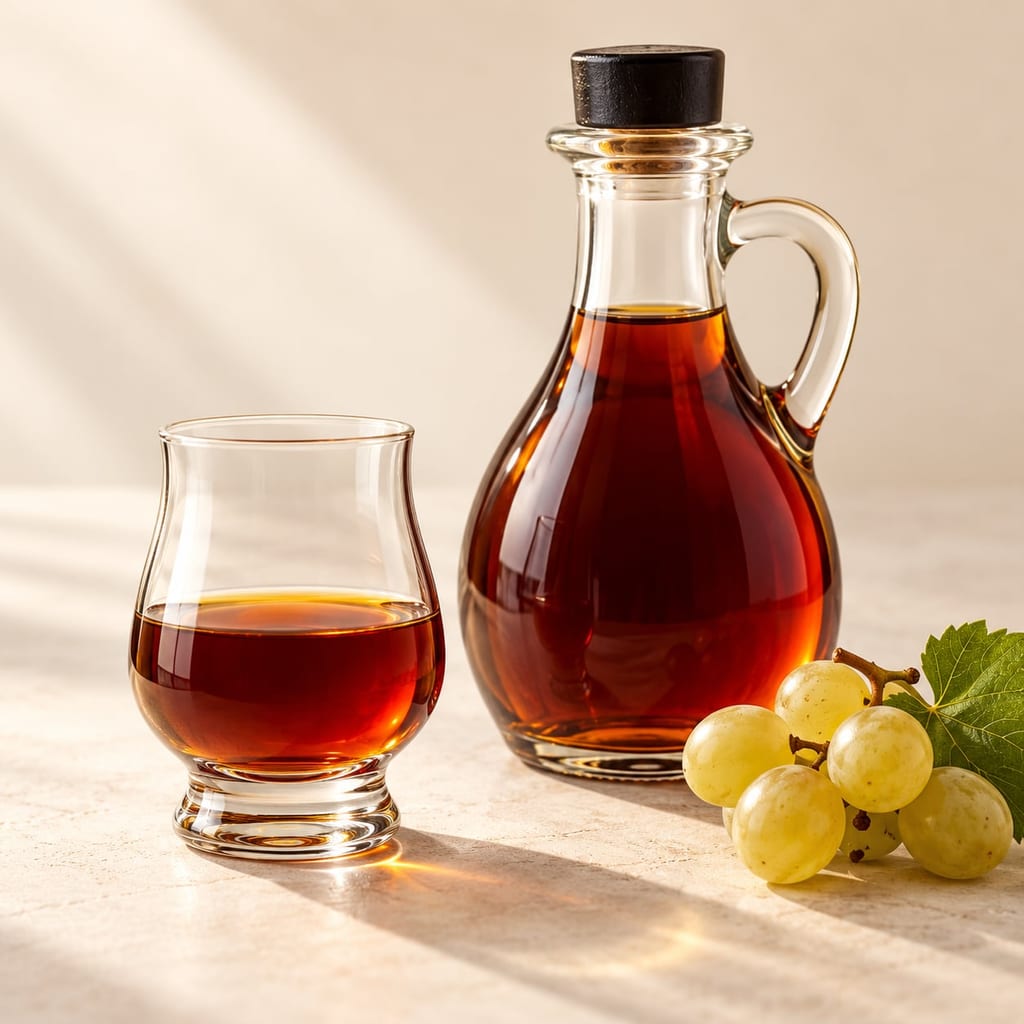
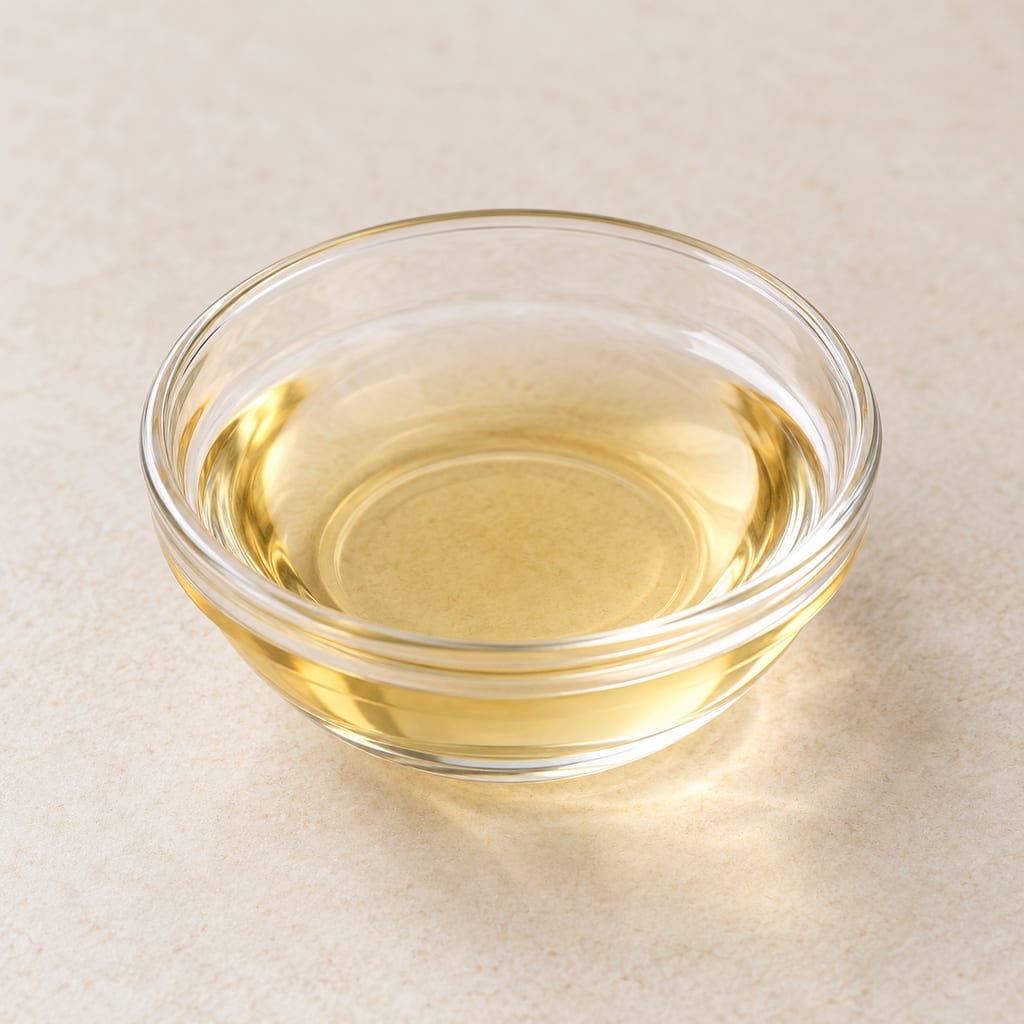
Vinagre de Jerez is not simply wine vinegar given a Spanish name. The protected product begins with a wine that qualifies under the Jerez or Manzanilla denominations, is turned into vinegar by acetic fermentation, and then matures in authorised wooden vessels in the defined area. The rules protect the connection among that source wine, place, process and ageing. The finished liquid is described as old-gold through mahogany, dense or unctuous, with a forceful acetic aroma alongside notes of wine and wood. Its acidity remains clear, but the wine-derived and ageing character gives it a different profile from a sharp, young generic wine vinegar.
That combination matters in the kitchen. Sherry vinegar brings both sourness and a concentrated wine-and-wood character, so it can brighten a dressing while also supplying a savoury, rounded note. The Council names vinaigrettes, cold soups, pickles, sauces and reductions among its uses. A product sold elsewhere as sherry-style vinegar may use a similar taste idea, but it is not the protected Vinagre de Jerez unless it meets the denomination's origin and production rules.
The origin dossier tells a practical story rather than naming a single inventor. Sherry casks were sometimes filled only partly to accommodate the biological ageing of wine. In a warm cellar, an exposed wine lot could become more acidic as aerobic acetic bacteria acted on it. Bodegas separated these “piqued” wines, partly to keep their acidity from affecting neighbouring wine stocks. Instead of discarding every lot, makers aged the acidified wine in separate bodegas and casks, using the region's familiar criaderas y solera system. A spoilage event became a distinct product when buyers valued the resulting vinegar.
The 2008 official dossier says the vinegar existed alongside Sherry wine and became commercially appreciated in and beyond the region. It records protection of the Jerez-Xérès-Sherry mark, including vinegar, from 1960; it does not supply a dated first reference for Sherry vinegar itself. That distinction matters: regional memory and a plausible relationship to old wine practice do not establish a precise ancient origin. The protected record offers a documented path from unintended acetification to a deliberately managed cellar product.
The same story leaves two stages that should not be confused. The vinegar's acidity begins with bacterial oxidation of ethanol; its characteristic age and integration come later from wood ageing and blending. Cask ageing did not itself create the acetic acid.
The protected production zone covers eligible vineyards in eight municipalities in Cádiz province—Jerez de la Frontera, El Puerto de Santa María, Sanlúcar de Barrameda, Trebujena, Chipiona, Rota, Puerto Real and Chiclana de la Frontera—and Lebrija in Seville province. The ageing and dispatch zone is narrower. A bottle therefore represents a defined chain rather than a vague association with southern Spain. The soils, climate and wine-growing practices help make the wine; the protected rules and registered bodegas connect that input to the vinegar.
Palomino is the principal grape named in the official geographical dossier. The dossier links it to the eligible Sherry wine that provides the base, while the regulator describes the Jerez countryside's white albariza soils and Atlantic-influenced conditions. The vinegar is not made from raw grape juice: it takes its character from wine produced under the area's wine rules. The named sweet-wine variants use Pedro Ximénez or Moscatel wines at a later stage, which is why their flavour and chemistry differ from the standard dry category.
The raw material has to be eligible for the appellation. The specification allows current-year wine made from registered grapes and certain wines already ageing under the Sherry and Manzanilla denominations; it forbids adding alcohol to strengthen the incoming base wine for acetification. That regulated selection preserves a link between the vinegar and the local wines rather than treating any imported wine as an interchangeable substitute.
Acetic acid bacteria use oxygen to oxidise ethanol. In the general mechanism described in the vinegar literature, membrane-bound alcohol dehydrogenase first turns ethanol into acetaldehyde; aldehyde dehydrogenase then converts that intermediate into acetic acid. Oxygen is essential to this oxidative metabolism, so acetic fermentation is not the same oxygen-free process by which yeast makes alcohol. The Jerez specification describes directed acetic fermentation and aerobic bacteria, but it does not name a single species that defines every bodega's process.
The denomination describes two production routes. Registered vinegar-making bodegas can use industrial acetifiers that direct fermentation through countercurrent forced aeration in a temperature-controlled generator. This route improves throughput by supplying controlled air and managing heat. In the slower route, wine acetifies in the same wooden vessel in which the resulting vinegar ages; fermentation and ageing happen in parallel. These are distinct production systems, not interchangeable home techniques. The legal text does not state a universal temperature, inoculum percentage, air rate or fermentation duration, so those numbers should not be invented.
A supervised receiving step also needs careful context. The 2008 specification says qualifying incoming wine is mixed with enough vinegar held by the bodega to reach at least 0.5 degrees of acetic acidity, under a regulator's inspection and sampling. That is one monitored stage in a traceable commercial process; it is not the finished vinegar's acidity target. The standard Sherry vinegar category must later meet at least 70 grams of acetic acid per litre and contain no more than 3 percent residual alcohol. Gran Reserva has a higher minimum acidity.
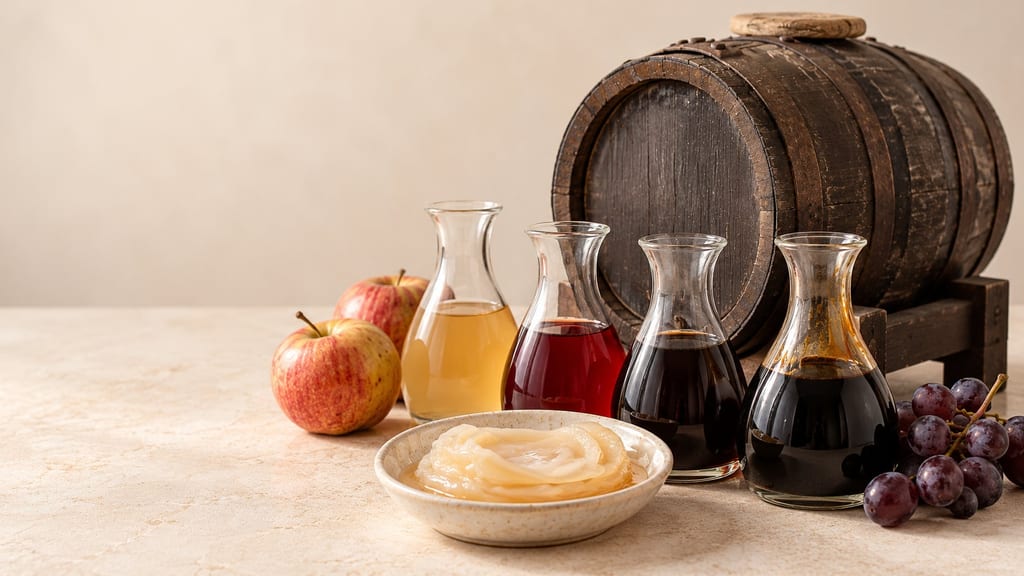
In a criaderas y solera system, casks sit in successive scales. The lowest scale, the solera, holds the oldest blend from which bottling withdrawals are made. A measured part is drawn off; the same volume is replenished from the first criadera above it. That row is replenished from the next younger scale, and the chain continues to the newest stock. Freshly acetified vinegar enters at the highest scale. Each movement mixes younger material into mature stock, so the bottled product is a blend of many harvests and years rather than one vintage. The method's name joins criadera, the nurturing scale, to solera, the scale nearest the floor.
A solera is dynamic: partial withdrawal and replenishment recur through the cask system. Añada ageing is static. A vinegar lot from one acetification remains separate in its own authorised vessel, and it is not blended with other lots during that ageing period. The age and identity of an añada are documented; the method does not imply that a specific single cask or year is used by all Sherry vinegar.
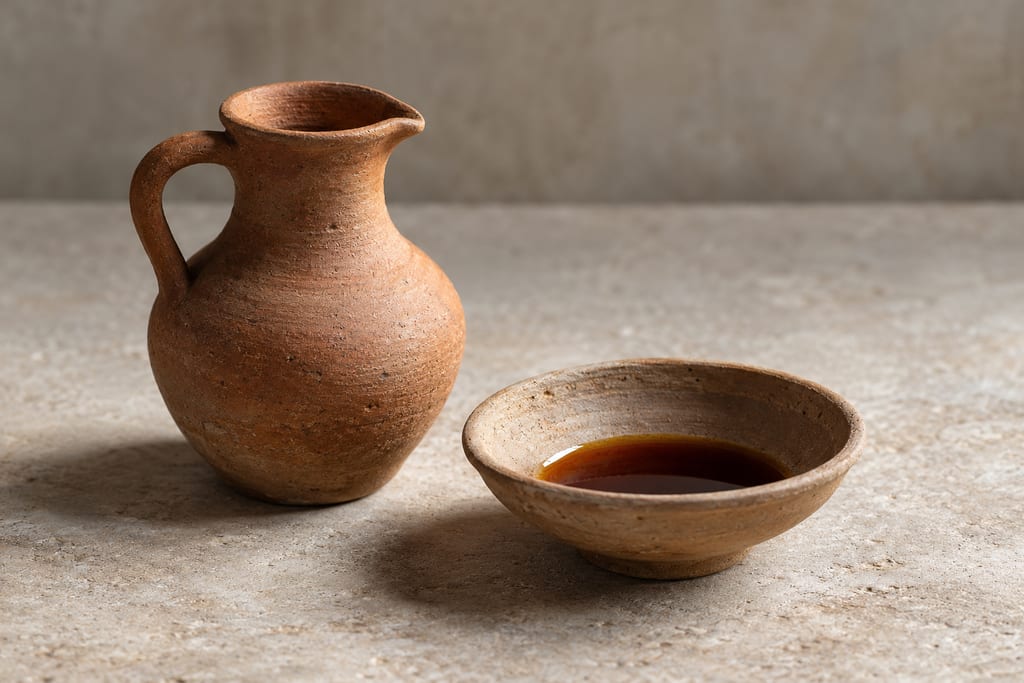
Wood is part of the environment, not a flavouring added after fermentation. The official dossier notes that the type and condition of the casks affect oxygenation and concentration as water gradually passes through the wood. It identifies seasoned American oak as common in the denomination. Research on Jerez vinegar also studies changes during acetification and static or dynamic wood ageing, showing that the vinegar changes beyond the production of acetic acid. Those later transformations help explain why two vinegars with similar acidity can differ in aroma and persistence.
The ordinary Vinagre de Jerez category ages for at least six months. Reserva requires at least two years, and Gran Reserva at least ten. These are minimum periods fixed by the protected specification, not tasting estimates. The denomination tracks ageing through its own records and verification. Longer ageing generally coincides with deeper colour and more pronounced wood and aged-wine notes, but a label category is the reliable guide to the stated minimum, not a promise that every bottle tastes identical.
Pedro Ximénez and Moscatel vinegars are made by adding their corresponding sweet wines during ageing. They may belong to any of the three age categories, and their sweetness is not just a longer-aged version of standard Sherry vinegar. Official descriptions associate Pedro Ximénez vinegar with raisined-fruit and roasted notes, while Moscatel brings a more floral, muscat-grape character. Both are described as semi-sweet. Their permitted analytical limits differ from standard and Gran Reserva vinegar, so their numbers should not be compared as if every style shared one formula.
This is why a recipe that calls for “Sherry vinegar” should not silently substitute one of the sweet-wine types. The standard dry vinegar works when the dish needs clean acidity and wine-aged depth. PX or Moscatel vinegar contributes its own residual sweetness and grape character. A cook can choose among them, but the resulting sauce or dressing will change in balance.
The regulator's culinary guide suggests Sherry vinegar with vegetables, pasta, salads, gazpacho, reductions, grilled meat, fish marinades, mayonnaise, sauces and some desserts. A little acidity can make a rich or oily dish feel less heavy; with fish, the guide specifically points to oily fish such as mackerel. In cold soups and dressings, its wine and wood notes remain noticeable without heat. In a reduction, concentration makes the vinegar's aroma and acidity more prominent, so the choice of age category affects the result.
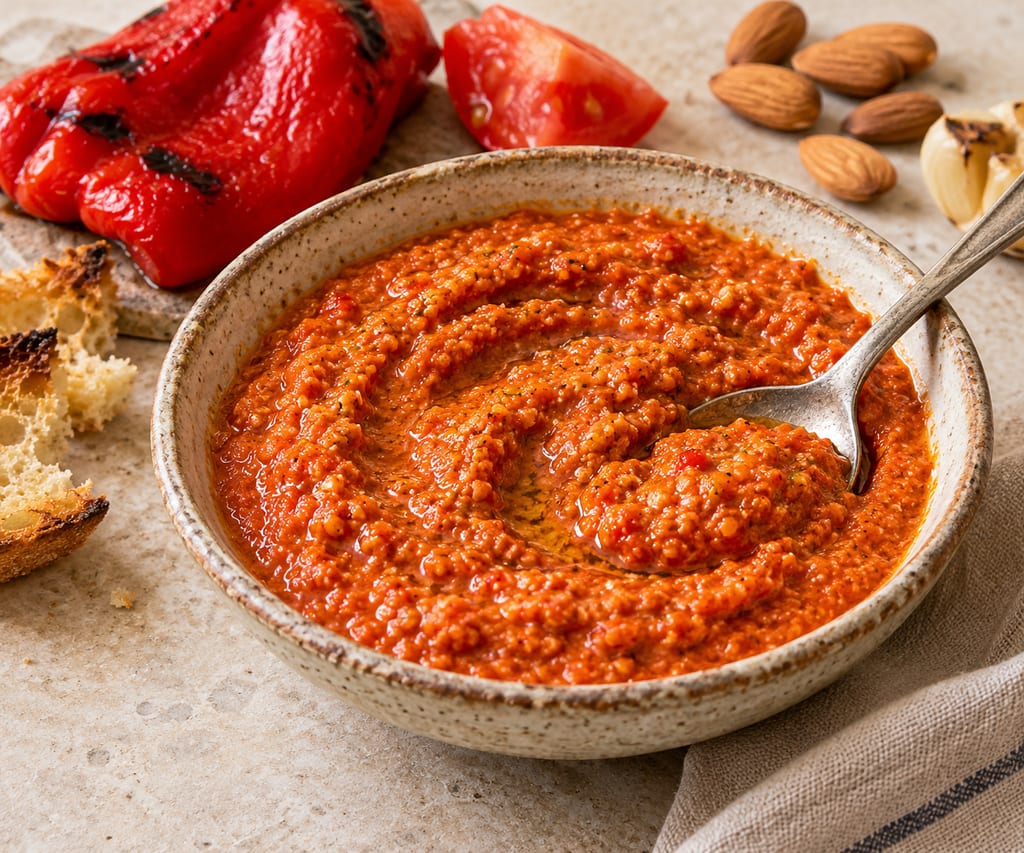
The vinegar also appears as a seasoning in dishes that borrow from different Iberian and Mediterranean traditions. The supplied Fermentea dossier records it as an ingredient in a romesco-style sauce, alongside roasted tomato and pepper, toasted almonds and bread, olive oil, garlic and paprika. There it contributes tang to a nut-thickened sauce. That recipe is a use of Sherry vinegar, not a method for producing it; the two records should stay linked as a condiment and the product used.
Start with a small quantity in a finished dressing, soup or sauce and adjust by taste against the dish's other acids and salt. This is culinary adjustment, not a way to judge whether vinegar fermentation is complete or whether a preserved food is safe. The protected product has certified composition and traceability that a sharp flavour alone cannot verify.
Look for the protected name Vinagre de Jerez and its denomination marks when the place and production route matter. The label's category distinguishes standard, Reserva and Gran Reserva ageing; a Pedro Ximénez or Moscatel designation signals a sweet-wine variant. The basic standard category's regulatory minimum is 70 grams per litre of acetic acid, with no more than 3 percent residual alcohol. Gran Reserva requires a higher acidity and at least ten years of ageing. Those are product controls verified through the denomination, not instructions for a kitchen experiment.
There is no single consumer-scale formula in the cited specification. It does not set a home batch volume, a universal fermentation setpoint, an inoculation dose, a duration to reach finished acidity, or a cask schedule that can be reproduced in a household. The proper way to use this record is to understand what producers do and how the protected styles differ. It would be misleading to turn the commercial rules into a do-it-yourself recipe by filling those gaps with guessed measurements.
For cooking, choose a bottle whose style fits the dish, and keep it sealed according to its own label. Vinegar is acidic, but neither its taste nor a home reading demonstrates that a process met the protected specification or that a preserved food has been safely validated.
The available public specification is detailed about the protected product and its commercial handling, but it is not a scaled recipe for domestic production. It leaves the generator's temperature, oxygen-transfer rate, starter-culture dose, fermentation duration and each bodega's cellar schedule to controlled operators. No universal yield or ingredient ratio follows from those rules. This page therefore records the verified process architecture and its official checkpoints, while leaving absent figures absent.
That limit is useful to the reader. A published Sherry vinegar has moved through an identified supply chain and authorised controls; a home vinegar may be a different, valid wine vinegar, but it cannot claim this protected name. The distinction preserves both the specificity of Vinagre de Jerez and the reader's ability to compare it with other vinegars without mistaking resemblance for origin.
The 2008 protected-origin dossier explains that wine in partly filled casks could acquire volatile acidity as acetic bacteria acted aerobically, and that bodegas separated such lots to prevent their acidity spreading into wine soleras. They later aged and sold the vinegar as a valued local condiment. The dossier documents commercial protection from 1960; it does not date the first batch.
Ingredients
Scaling: source batch only
Wine eligible for Vinagre de JerezA permitted wine from the protected production area; the specification includes current-year wine and qualifying wines already under Sherry or Manzanilla ageing.
Amount not stated
No universal batch volume is published in the cited specification.
Vinegar already held by the registered bodegaUsed under the regulator-supervised receiving and denaturalisation procedure before acetification.
Amount not stated
The specification describes enough to reach 0.5 degrees of acetic acidity for that supervised step; it does not provide a home-scale formula.
Method
Risks and precautions · Standard risk
Unqualified commercial acetification
The denomination requires registered facilities, supervised lot handling, traceability and analytical release; a home approximation cannot establish conformity or final composition.
Hazard source
Treat the 0.5-degree receiving value only as a regulator-supervised step, and use the published category specifications and laboratory controls for any DOP product.
Control source
This page records the protected producer process; it is not a household vinegar-making protocol. The source does not specify a home batch, starter dose, aeration rate, fermentation setpoint or completion time.
The 0.5-degree receiving value is not the final vinegar specification and is not a general safety target.
At a registered vinegar bodega, receive and document only eligible wine from the protected supply chain. The specification prohibits adding alcohol to raise the incoming wine's strength.
Complete the controlled receiving step: the incoming wine is mixed with enough vinegar already held in the bodega to reach at least 0.5 degrees acetic acidity. A regulator's inspector supervises this operation, samples the lot and records the result. This initial figure belongs to that regulated receiving procedure; it is not a general home-fermentation target or a finished-product specification.
Acetify the wine by one of the documented routes. An industrial acetifier can use directed acetic fermentation with countercurrent forced aeration and temperature control. Alternatively, slow acetification takes place in the wooden vessel that will also hold the vinegar for ageing. The source does not give a universal temperature, inoculation rate, aeration setting or duration, so none is supplied here.
Age the vinegar in the authorised wooden vessels by the dynamic criaderas y solera system or by static añada ageing. The protected basic category requires at least six months, Reserva at least two years and Gran Reserva at least ten years.
For a solera, draw only a portion from the lowest row and replenish it with younger vinegar from the next criadera. Replenish that row from the one above, continuing upward; newly made vinegar enters the top scale. An añada instead remains separate in its original ageing vessel, without blending.
Submit lots for the denomination's traceability, analytical and sensory controls. Bottle only through an authorised facility in a suitable container. The DOP is earned by meeting geographic, process, ageing and control requirements together, not by taste or acidity alone.
Places
Marco de Jerez
Traditional preparation · Region evidence
Production covers qualifying sites in eight Cádiz municipalities and Lebrija in Seville province; ageing and dispatch have a more restricted authorised zone. This is a regional association, not a claim that every vinegar has one precise birthplace.
A coarse Catalan-inspired sauce of roasted tomato and red pepper, almonds, bread, garlic, olive oil and sherry vinegar. This modern pepper version is distinct from ñora-based romesco formulations and is not a preserve.
A bottle of vinegar can carry the flavour of wine, rice, dates, palm sap or an orchard harvest. Its name becomes useful when you can tell what was fermented, how the acid developed, and what the maker added or changed afterward.
Garum, Greek garos and Latin liquamen, was the fish sauce of the ancient Mediterranean: fish and viscera salted and left in the sun, then drained off as a savoury liquid.
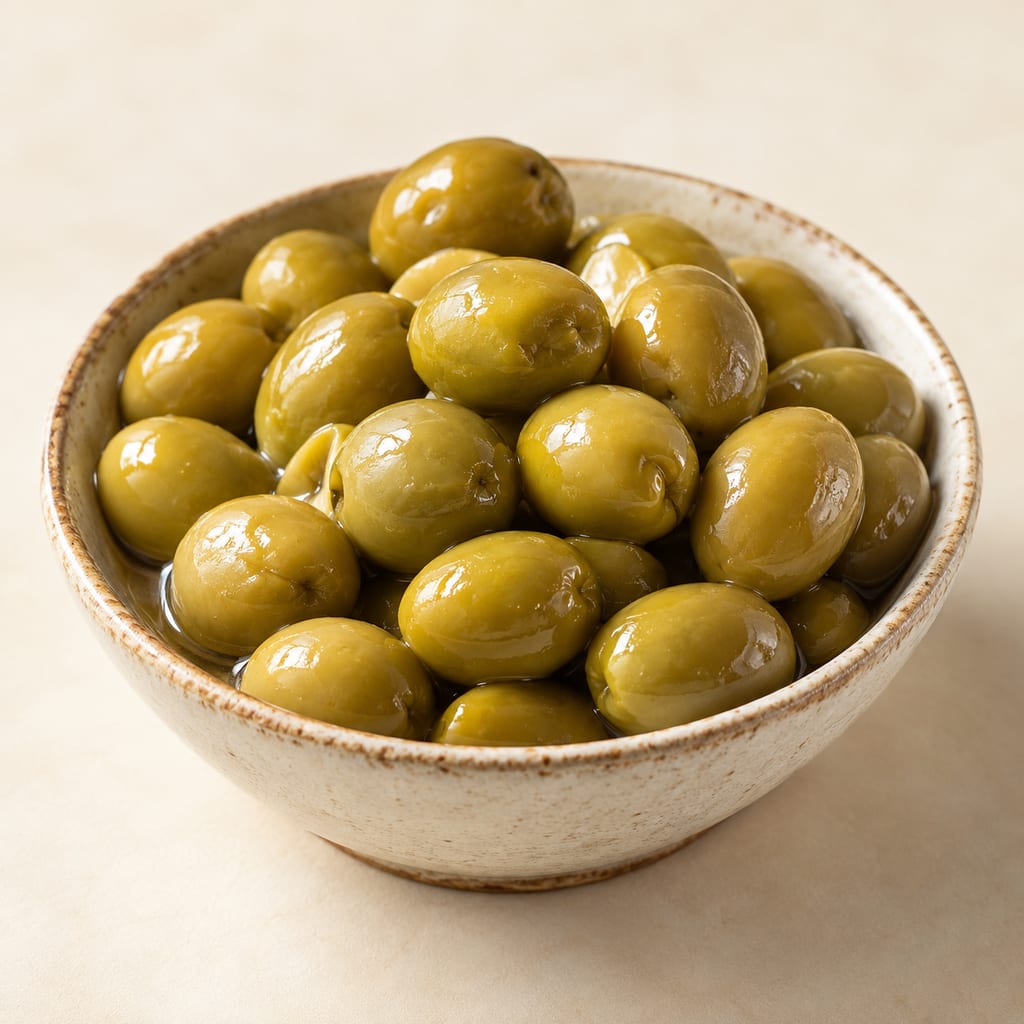
Spanish-style green olives, or Sevillian green olives, are green fruit treated with lye, rinsed, then fermented in brine for two to six months. The household batch here is a UC ANR method.
Protected Italian vinegar made only from cooked grape must, fermented and aged in a battery of wooden barrels for at least 12 years: sweet, sharp and syrupy.
A Dominican table and seasoning condiment of sour orange juice, mixed with lime and salt and bottled raw; garlic, oregano or a hot pepper may be added for meat or a spicier bottle.
Japanese reddish-brown vinegar from sake lees matured about three years, turned to vinegar by acetic bacteria; the vinegar of Handa and Edomae sushi rice.
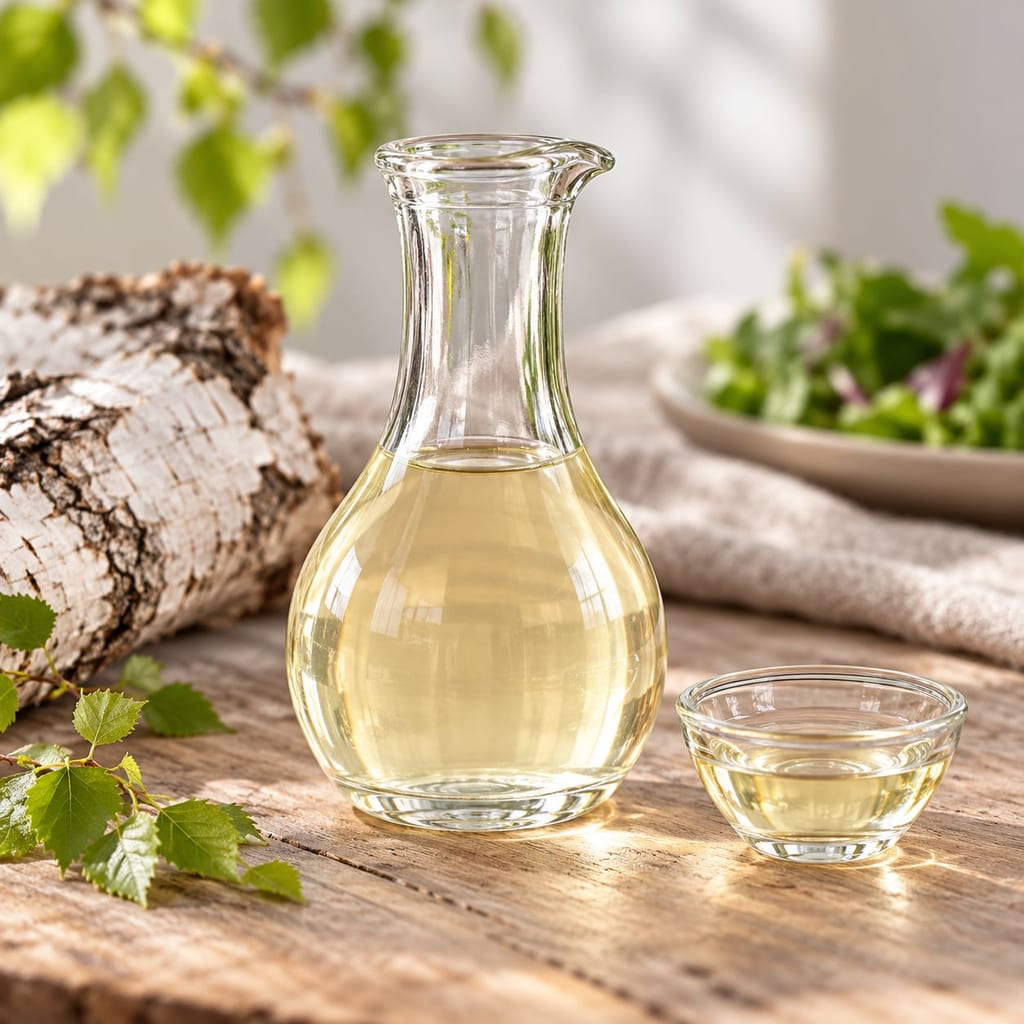
Vinegar from spring birch sap fermented to alcohol and then acetic acid, usually with added sugar or honey because the sap is so dilute; made in Sweden and described in older eastern European accounts.
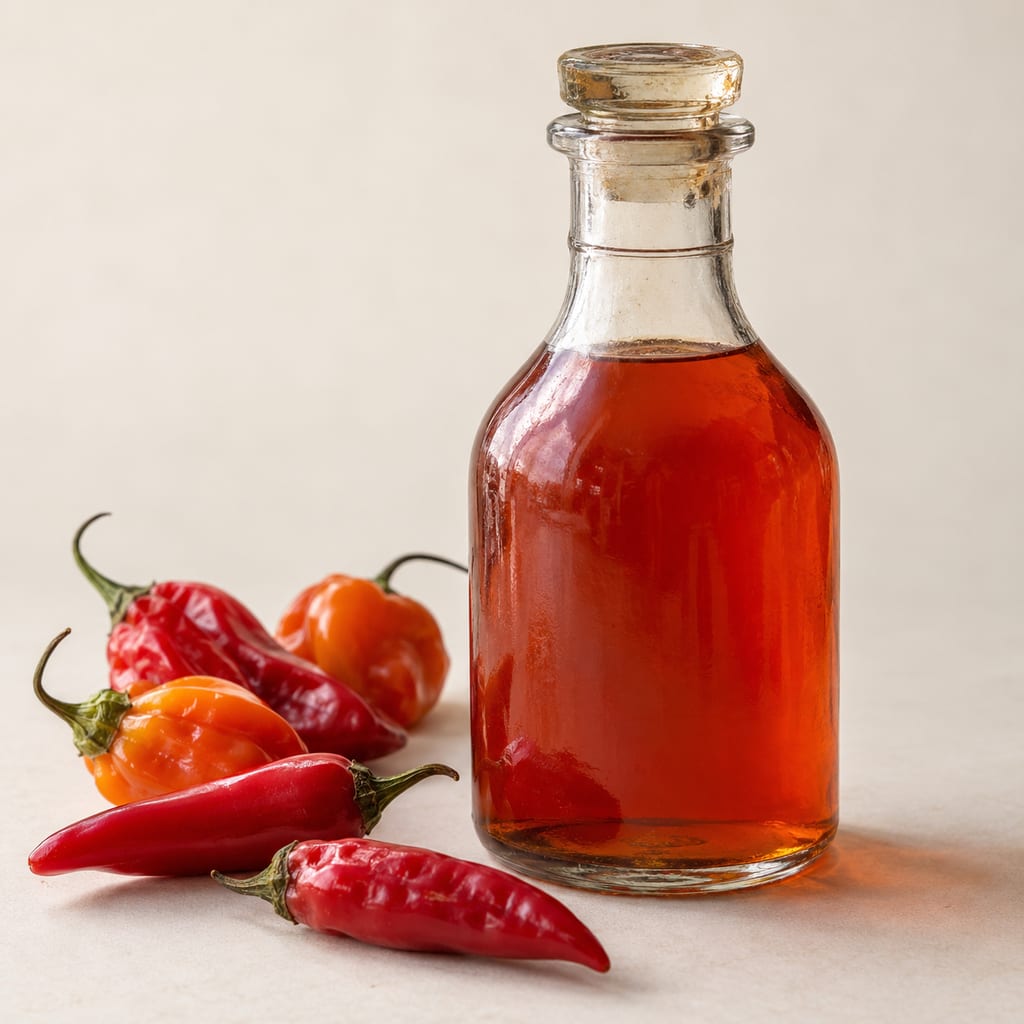
Mary Randolph's pepper vinegar: ripe pepper pods simmered in vinegar until the liquid is reduced to one quart, then strained for use in gravies and catsups. From The Virginia Housewife.
A Japanese mixed seasoning of vinegar, sugar and salt for sushi rice. Ratios vary with the rice batch and style; this version follows Marukan Vinegar's formula for two go of rice.
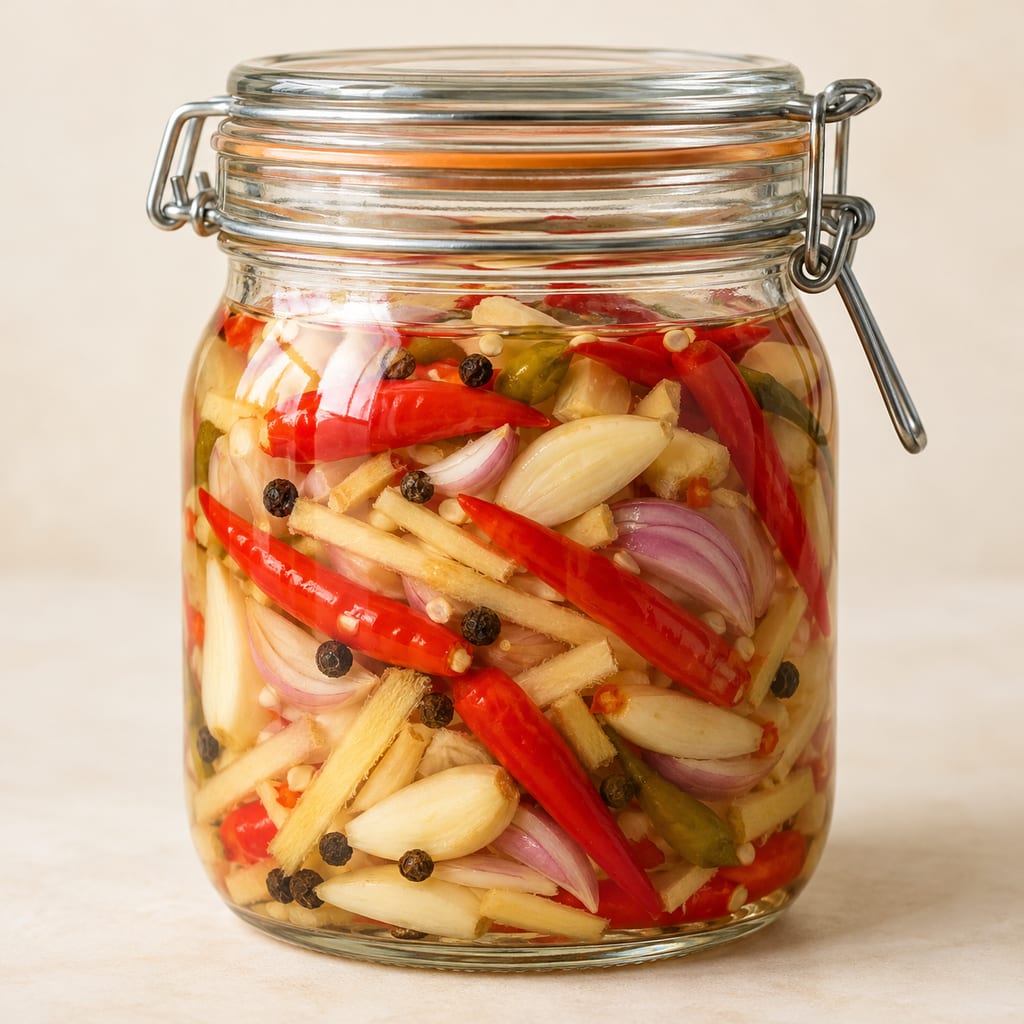
Sinamak is a Philippine spiced vinegar: white, cane or coconut vinegar steeped with chilies, ginger, garlic, onion and peppercorns for days or weeks until it is ready to use as a condiment.
Community
No community contributions have been published for this entry yet.
Share what you made
Sign in to contribute. Published comments and photos are free to read.
Cited in: A vinegar with a wine memory; A former fault becomes a style; The place and the wine; How wine turns to vinegar; Two cellar clocks; Age categories and sweet-wine styles; How to read the product; A production account, not a home batch
Accessed 2026-10-28
Consejo Regulador de las DD.O. Jerez-Xérès-Sherry, Manzanilla-Sanlúcar de Barrameda y Vinagre de JerezProduct description · History · Method · Ageing · Variants