
Vinegar intake
A world of vinegars: what the names tell you
A bottle of vinegar can carry the flavour of wine, rice, dates, palm sap or an orchard harvest. Its name becomes useful when you can tell what was fermented, how the acid developed, and what the maker added or changed afterward.
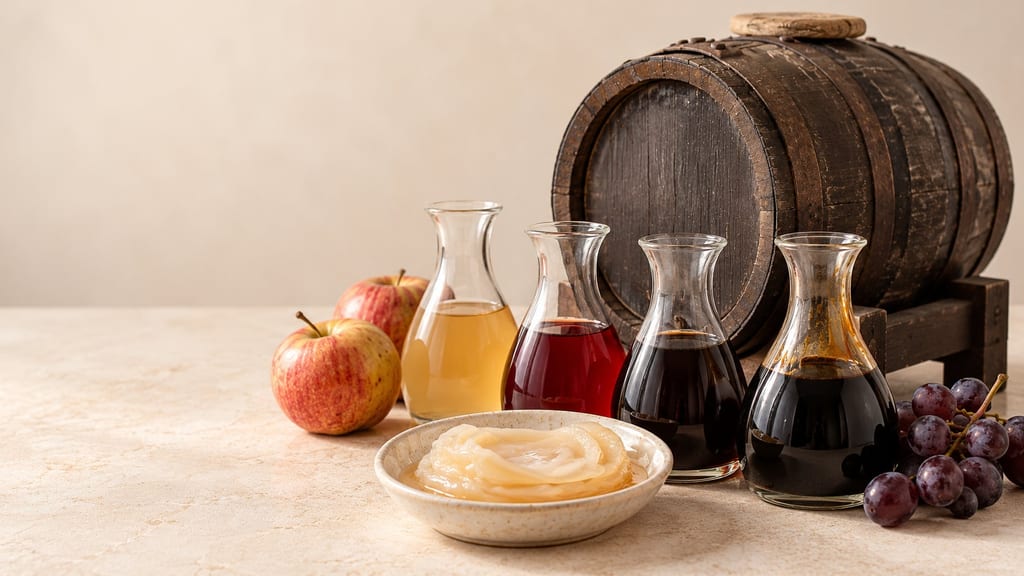
Several vinegars side by side, a reminder that the name follows the ingredient and the craft.
Follow the ingredient, then the craft
Imagine choosing something sour for a dressing. Malt vinegar brings a cereal background; a wine vinegar retains a connection to its wine; a sweet balsamic condiment brings sugar as well as acid. A botanical vinegar may contribute a third flavour, such as herbs infused into a wine-vinegar base. These differences affect the dish more than the number of years printed in large type on a label.
The worldwide family is easier to understand through three questions. What supplied the fermentable material? What route turned it into vinegar? What happened during finishing? An apple can become cider and then cider vinegar, but apple juice can also sweeten an existing vinegar. Rice may supply starch that first needs to be broken into sugars. A herb pictured on a bottle may be an infusion ingredient rather than the source of its alcohol or acid.
Most culinary vinegar production connects alcoholic fermentation with acetification: the oxygen-dependent conversion of alcohol into acetic acid. That common sequence does not erase local distinctions. In one place the working material is a liquid wine; elsewhere it is a damp mass of grain, bran and husks. A third tradition carries several transformations through the same pottery jar. Cooking, extracting, filtering and ageing have their own effects and should not all be called fermentation.
What the name may describe: Fermented starting material. Examples: Cider, malt, date, rice vinegar. What to find out: Did that ingredient supply the fermentable sugars or starch?
What the name may describe: A local production tradition. Examples: Orléans, Zhenjiang, Kagoshima jar vinegar. What to find out: Which ingredients and operations distinguish the method?
What the name may describe: A protected product. Examples: Aceto Balsamico di Modena, Vinagre de Jerez. What to find out: Does the full name and certification match the current specification?
What the name may describe: Finishing or seasoning. Examples: Sushi-su, botanical vinegar, honey-flavoured vinegar. What to find out: What was added after the base vinegar was made?
What the name may describe: A nearby sour food. Examples: Ryukyu moromisu, concentrated sour fruit juice. What to find out: Is acetic fermentation actually part of its identity?
The distinctions overlap. One bottle can be a rice vinegar, a regional jar-made product and an aged vinegar at the same time. Those are three descriptions of one food, not three separate inventions.
Wine, wood and the different meanings of balsamic
Wine vinegar has a readily understood starting point: grape juice has already become wine before its alcohol becomes acid. French vinaigre de vin, Italian aceto di vino and Spanish vinagre de vino name that family. Red, white and rosé identify the wine rather than a new fermentation mechanism. A named grape variety adds another useful clue, but it does not automatically confer a protected vinegar designation.
Orléans gives its name to a particular liquid surface method. At Martin-Pouret, wine acetifies in ventilated oak barrels beneath a bacterial film at the surface, then matures in wood. Air access matters because the bacteria are working at the liquid–air boundary. Wood ageing then continues the story after acid formation. The maker’s current range includes Chardonnay, Syrah, Sauvignon and Merlot vinegars: a practical demonstration that one regional craft can express several wines. Such bottles suit a comparison in the same dressing, where the difference in the base wine has a chance to remain noticeable.
Italy’s balsamic names require a more careful reading. Aceto Balsamico Tradizionale di Modena PDO begins with cooked grape must, the juice before it has become an ordinary dry wine. The published specification requires fermentation and maturation through wooden vessels over at least twelve years. It also requires analytical and sensory assessment. Its identity rests on that complete production system, not simply on darkness, sweetness or a long time in a cupboard.
Aceto Balsamico di Modena PGI follows a different specification. Grape must is combined with wine vinegar and an older vinegar component, and the required stages take place in the designated production area. The 2025 amendment explicitly recognises the Riserva class alongside the other categories and gives it distinct compositional requirements. A bottle labelled PGI is not claiming to be the traditional PDO. Neither name should be shortened in a way that conceals this difference.
Reggio Emilia has its own traditional balsamic PDO and specification. Its existence is another reason to read the whole designation instead of treating “traditional Italian balsamic” as one uniform legal class. Generic balsamic-style products made elsewhere can be interesting foods in their own right; their names do not establish equivalence with either Italian traditional PDO.
Bottle or preparation: Ordinary wine vinegar. Defining distinction: Acetified wine. How to approach it in the kitchen: Assess its acidity and wine character in the intended sauce or dressing.
Bottle or preparation: Traditional Modena PDO. Defining distinction: Cooked must and a specified long maturation system. How to approach it in the kitchen: Use where a small quantity’s sweetness, density and aroma remain perceptible.
Bottle or preparation: Modena PGI. Defining distinction: A specified must-and-vinegar production route. How to approach it in the kitchen: Read the category and ingredients; sweetness and texture vary.
Bottle or preparation: Apple or pear balsamic-style vinegar. Defining distinction: A different fruit base, with product-specific finishing. How to approach it in the kitchen: Treat the fruit identity as useful information, without importing Italian age rules.
Bottle or preparation: Balsamic glaze or cream. Defining distinction: A formulated finishing condiment. How to approach it in the kitchen: Account for its sweetness and thickness separately from its vinegar content.
Sherry vinegar belongs beside these products without being another balsamic. Vinagre de Jerez is a protected wine-vinegar designation; its regulator distinguishes ordinary, Reserva and Gran Reserva categories, as well as Pedro Ximénez and Moscatel styles. The sweet-wine additions in the latter styles matter when seasoning a dish. Dry and sweetened examples are not interchangeable merely because both say Jerez. The familiar cask-aged character can work in cold soups, roasted vegetables and dressings, where acid must remain apparent beside oil or vegetable sweetness.
Orchards, malt houses and modern European bottles
Cider vinegar identifies apples that have passed through alcoholic and acetous fermentation. Perry or pear vinegar follows the comparable pear route. The fruit family extends much further than these familiar names: Gölles in Styria sells raspberry, apricot, plum and tomato vinegars alongside apple and pear balsamic products. This contemporary Styrian range brings berries, stone fruit and orchard fruit into the same vinegar pantry.
This is where “fruit vinegar” can mislead a shopper. A raspberry-fermented vinegar, a wine vinegar infused with raspberries, and a vinegar sweetened with raspberry concentrate all deserve accurate names. The fruit may appear prominently in all three, yet it has done different work. A bottle’s ingredient list and the maker’s process description are more useful than its colour. Nor does a pale vinegar necessarily begin with white grapes: a distilled-alcohol feed can also produce a pale product.
British malt vinegar provides a second cereal route to set beside East Asian rice vinegars. At Sarson’s, malted barley is milled and mashed; yeast then produces an alcoholic liquid. Acetification occurs in wooden vats containing wood wool. The resulting vinegar is a familiar seasoning for chips, sauces and marinades. Its malt background is a flavour choice, not merely the brown version of white vinegar.
The same maker sells a separately labelled distilled malt vinegar. Its ingredient declaration identifies barley, preserving a material distinction from neutral spirit vinegar. Conversely, spirit vinegar describes a route beginning with distilled alcohol, which is then acetified. Distillation and acetification are different operations. “Distilled vinegar” on a label is not proof that a bottle of ordinary vinegar was simply boiled clear.
Some named European condiments are built around vinegar rather than a new base fermentation. Melfor, developed in Mulhouse, is flavoured with honey and an infusion of plants. Honey in that product plays a different role from honey fermented first into mead and then into honey vinegar. The distinction is useful at the table: sweetness and herbal flavour can be deliberate parts of the seasoning, rather than defects in an otherwise dry vinegar.
East Asian grain vinegars: a colour is not a method
“Black vinegar” is a shelf category broad enough to hide quite different crafts. Shanxi aged vinegar, Zhenjiang aromatic vinegar and Kagoshima kurozu are not interchangeable names for one dark liquid. Their raw materials, starter systems and treatment of the fermented material differ. The ingredient and process give the colour its meaning.
Shanxi laochencu 山西老陈醋 has a characteristic heated-grain stage, often translated as fumigation. A study following its production found that acid fermentation and this heating stage contributed different groups of aroma-active compounds; roasted and nutty characters were strongly associated with heating. That is more informative than crediting all of the flavour to age. Ageing acts on an already complex fermented and heated material.
Zhenjiang xiangcu 镇江香醋, also sold under the English spelling Chinkiang, takes another route. In the production sequence investigated in 2024, a glutinous-rice alcoholic mash is combined with wheat bran, rice husks and vinegar starter for layered solid-state acetification. Liquid vinegar is subsequently extracted from the fermented material, heated and matured. “Solid-state” describes the moist fermentation mass; the finished condiment is still a liquid.
The bran and husks are therefore more than picturesque extras. They help distinguish a managed grain-bed process from a vat of liquid wine. Loading, turning and access to air affect that working mass. Copying the grain names into a sealed household jar would not reproduce the process. The 2024 Zhenjiang study also tested a different way of preparing the rice, showing that a named tradition can be the subject of modern process development without every experimental treatment becoming a new regional vinegar.
Japan’s komezu 米酢 names rice vinegar, while kasuzu 粕酢 identifies sake-lees vinegar. Lees are the pressed material left from sake production, not simply another name for sake. Matured lees contribute the dark colour and pronounced savoury character associated with akazu 赤酢. Mizkan’s Mitsuban Yamabuki is a named pure sake-lees example. The Mizkan range includes pure rice, pure sake-cake and spirit-based vinegars; Shiragiku combines several inputs. A brand name alone should not be used as a synonym for a pure lees vinegar.
Kagoshima’s tsubozukuri kurozu brings rice, rice koji and water together in pottery jars outdoors. A further rice-koji layer is sprinkled over the surface. Saccharification, alcohol production and acetification proceed within the same vessel, followed by maturation. “One jar” is an account of the equipment, not a claim that there is only one biological stage. Fukuyama and Hayato in Kirishima are centres of this craft. Sweet potatoes also entered the jars when rice was scarce after the Second World War.
Korean rice vinegar offers another warning against a single universal “Asian rice vinegar” recipe. Two producers near Seoul, observed in a 2025 study, both used nuruk starter but established the acetic stage differently. One producer added seed vinegar; the other relied on spontaneous establishment of acetic acid bacteria, and one observed production failed to establish that stage. Their different outcomes show why nuruk use alone cannot define the whole process.
Grain-vinegar route: Liquid alcoholic feed followed by acetification. Named example: British malt vinegar. Difference worth remembering: Malt supplies sugars through mashing before the acid stage.
Grain-vinegar route: Moist grain mass, then extraction. Named example: Zhenjiang aromatic vinegar. Difference worth remembering: Rice mash, bran and husks belong to a solid-state process.
Grain-vinegar route: Fermented grain with a distinctive heating stage. Named example: Shanxi aged vinegar. Difference worth remembering: Heating contributes flavour before or alongside later maturation.
Grain-vinegar route: Lees extraction and vinegar production. Named example: Japanese kasuzu and akazu. Difference worth remembering: Sake by-products have a different identity from plain rice wine.
Grain-vinegar route: Several transformations within an outdoor jar. Named example: Kagoshima tsubozukuri kurozu. Difference worth remembering: Rice, koji, vessel and local practice operate together.
Grain-vinegar route: Nuruk-based rice fermentation with producer-specific acetification. Named example: Observed Korean rice vinegars. Difference worth remembering: Starter and seed-vinegar choices can change the outcome.
These differences help with cooking. A pale rice vinegar can supply acidity without the colour of a dark grain vinegar. A lees vinegar brings a savoury background that matters in seasoned rice. A heated cereal vinegar can change the aroma of a dipping sauce as well as its sourness. Choose the flavour you want to introduce rather than assuming colour alone predicts the result.
Cane and palm sap: related sugars, different materials
Sugarcane juice, coconut flower sap and coconut water are three different starting materials. The first comes from the cane stalk, the second from the palm’s flowering structure, and the third from inside the nut. “Coconut vinegar” therefore needs a second question: sap or water?
In the Philippine coconut-water process developed by ITDI, added sugar, yeast and vinegar starter accompany the liquid from the nut. That sugar is part of the fermentation feed, even when coconut is the ingredient highlighted in the name. Coconut sap takes its own route through toddy. A finished vinegar flavoured with coconut would be a third preparation and should not be used as evidence for either process.
The Philippine Primo Unaz Sukang Iloko is fermented from sugarcane juice. Its maker recommends it for marinades and alongside grilled or fried foods. Other bottles bearing Iloko or Iloco names still need their own ingredient check. The same restraint applies to spiced products. Adding chillies, garlic or ginger changes the condiment, but it does not make each combination a separate base fermentation.
In Cambodia, Kirum sells a palm vinegar and a version with Kampot pepper. The plain product’s description refers to fermented palm sap, while another line calls its material palm sugar. That wording leaves the exact feed preparation unclear. It still supports a contemporary palm-derived vinegar, but a precise recipe or an ancient origin should not be reconstructed from the sales page.
Bali’s cuka lontar makes the palm identity more specific. Around Sambirenteng in northern Bali, sap from the lontar palm, Borassus flabellifer, goes into ceramic gentong keramik pots for fermentation. The finished vinegar is filtered and used as a seasoning. This is another jar tradition, but its sap feed differs from Kagoshima’s rice and koji. Only a few families were making it in the village during Slow Food’s 2014 observation; the present number remains uncertain.
Sri Lankan coconut toddy vinegar belongs to the sap family. Sugarcane and grapes offer different feeds in northern India, where Punjab Agricultural University has developed controlled juice-to-vinegar processes using specific microbial cultures. Those university processes are particular technologies; the broader South Asian name sirka does not specify a single culture, duration or recipe.
For a cook, the useful comparison is between the finished bottles. Does a cane vinegar taste dry or retain sweetness? Does a palm product carry added spices? Is a coconut-water product sweetened after fermentation or merely made with sugar as feed? Those answers determine how much other sugar or aromatic seasoning a dish needs. The raw material’s sweet taste does not mean its fermented vinegar must remain sweet.
Dates, African palms and contemporary botanical vinegars
Date vinegar connects the fruit’s sugars with the work of extraction and fermentation. Dates are not a ready-made liquid wine: crushing, extracting or dispersing them in water creates the material that the microbes can use. The cultivar, extraction and fermentation route can all matter, so a handful of dates in a jar is not a standard quantity of fermentable material.
In Iraqi experiments, Zahdi dates passed through either a staged alcoholic-and-acetic process or a more simultaneous traditional approach. The experiments produced different results, including differences in remaining sugar. Zahdi is a cultivar identity within the date-vinegar family, not evidence for a separate microbial category. In Oman, starter-culture research used the cultivar Um al Sila collected in Al-Suwaiq. Its named place is a raw-material and research association, not a demonstrated birthplace of date vinegar.
In Algeria’s Ghardaïa region, traditional date vinegars include Deglet-Nour and Temjouhart examples. Their cultivar names connect the condiment to particular date materials. They also appear in local medicinal use and antimicrobial research, but neither customary use nor laboratory activity establishes a treatment.
West African palm-wine vinegar broadens the palm family beyond coconut and nipa. Acetified palm wine seasons dressings and meat preparations. More specific experiments have taken cultures from Ivorian palm wine and studied banana vinegar production. A culture’s source and the vinegar’s substrate are separate facts: banana vinegar does not become palm vinegar because its bacteria came from palm wine.
Contemporary African products also show how fermentation and botanical finishing can work together. At Rozendal in Stellenbosch, regional wines are made into vinegar and matured in oak. Its Fynbos product is then infused with buchu, honeybush, rose geranium, wild olive and wild rosemary. These plants identify the infusion; the wine supplies the base vinegar. Its identity belongs to Rozendal’s contemporary range, rather than to a single inherited recipe shared across South Africa.
The practical lesson is to follow the maker’s formulation. A herbal vinegar can season a chicken marinade or vegetable dish with both acid and aromatics. Calling it simply “wine vinegar” loses useful information, while calling each botanical ingredient a separately fermented vinegar invents information. Both the base and the finishing deserve a place in its description.
The Americas and the Pacific: local harvests, distinct evidence
In Québec, La Villa makes vinegar around maple syrup, honey and northern fruits. Its Renart uses wild cherries; Métis is a cherry vinegar aromatised with roses and other ingredients; Les Voiles is a maple balsamic-style vinegar matured in bourbon barrels. These are different compositions and treatments, not simply three poetic names for one acid.
At the Drummond farm in an older maple-vinegar practice preserved in Cornell’s archive, late-season sap was concentrated and put into oak barrels. This farm history provides one local example, not a single North American origin. In later Cornell trials, maple wine served as the alcoholic feed and toasted oak supplied another way to develop flavour. The ingredient links the two approaches; it does not make their operations identical or establish uninterrupted practice.
Brazilian vinagre de caju starts with the cashew apple, the fleshy part used for juice, rather than the cashew nut. The juice passes through an alcoholic ferment, then receives air for acetic fermentation before filtration and other finishing steps. This is a useful counterexample to the idea that a fruit vinegar must begin with a familiar orchard fruit. It is also a reminder to identify the part of the plant: “cashew vinegar” without that distinction leaves the reader imagining the wrong material.
Cacao-pulp vinegar belongs to another tropical-fruit route. Ecuadorian research on CCN-51 cacao used the mucilage surrounding the beans, with water, yeast and sugar, to produce wine and then vinegar. It was not chocolate fermented into vinegar. The distinction matters both to flavour expectations and to claims about using by-products. Added sugar contributed to the studied formulation, and its reported performance should not be transferred to every cacao-pulp batch.
Guam’s tuba vinegar belongs to household vessels and food memories as well as ingredient lists. An earthenware vinegar-or-tuba vessel appears in Jance J. Beaty’s 1964 magazine illustration, preserved by the University of Guam. Joyce Martratt later recalled her family’s coconut-sap collection and vinegar in salads and fina’denne’. Her recollection gives the sour liquid a place at the table, while the vessel shows how it was held. Neither supplies a complete fermentation protocol for Guam or its Pacific neighbours.
Nipa-sap vinegar also appears in older Papua New Guinea food records. Its present scale and continuity remain uncertain, as do many other Pacific vinegar practices. One island’s palm vinegar cannot fill the gaps for its neighbours.
Whey and other by-products need their own explanations
“Made from a by-product” is a useful beginning, not a process description. Pressed sake lees, coconut water, cacao pulp and cheese whey contain different materials and present different fermentation problems. Being co-products does not make them interchangeable feeds.
Whey is particularly instructive because its carbohydrate is lactose. In a University of Oviedo experiment, lactose-supplemented whey was first fermented with Kluyveromyces fragilis, followed by acetification with bacteria identified as Acetobacter pasteurianus. The choice of yeast was consequential. That particular dairy-derived process does not imply that ordinary bread yeast added to any leftover whey will produce the same result. Nor does fermentation by itself establish that the finished product is free of milk allergens.
The same questions should be asked of coffee-husk, spent-ground or fruit-pomace vinegar leads. Which fraction was used? Was sugar added? Were carbohydrates extracted or hydrolysed first? Was the result a finished food, a laboratory sample or only an experimental feed? “Coffee vinegar” might also mean a coffee infusion in an existing vinegar. Until those details are known, the name is a question worth investigating rather than a complete household method.
Using a sound surplus can be worthwhile, but “surplus,” “cosmetically imperfect” and “spoiled” are different conditions. A by-product claim does not demonstrate food suitability, safety or an environmental benefit. Those depend on the material and the full process, including any inputs and discarded residues. The most informative description names the material and what the producer actually did with it.
Seasoned vinegars and sour neighbours
Seasoned vinegar belongs in a vinegar guide because it is often what a cook actually uses. Japanese sushi-su すし酢 is a straightforward example: a current Mizkan formulation combines rice vinegar with sweeteners and salt. It can be mixed with rice without preparing those seasonings separately. Replacing it with the same volume of unseasoned rice vinegar would change more than acidity; the sugar and salt would also be missing.
Likewise, a sweet-sour syrup or drinking preparation made with vinegar does not represent another acetification process. The distinction lets the cook compare its role with Melfor or a botanical vinegar: the base supplies acid, while the formulation determines sweetness and other flavours. A glaze can be convenient for finishing a plate, but its viscosity does not prove long ageing.
Some neighbouring products need an even clearer boundary. Okinawan Ryukyu moromisu 琉球もろみ酢 is a drink made from awamori moromi residue. Citric acid supplies its principal sourness. It therefore belongs beside the vinegar family as a related sour preparation, rather than being treated as ordinary acetic vinegar just because its translated name contains “vinegar.”
Karnataka’s kachampuli presents a different boundary. Slightly fermented juice of Garcinia gummi-gutta is simmered into a dark, thick sour concentrate for dressing and meat cookery. The short fermentation belongs to the preparation, but its acid profile is not established in the available local account. Its concentrated fruit flavour explains its culinary role more clearly than treating it as ordinary acetic vinegar.
Name encountered: Sushi-su. What must remain clear: Seasoning is added to vinegar; it is not a new fermented raw material.
Name encountered: Melfor. What must remain clear: Honey and plant infusion flavour a named condiment.
Name encountered: Botanical vinegar. What must remain clear: Identify the base vinegar and the infused botanicals separately.
Name encountered: Ryukyu moromisu. What must remain clear: The principal acidity is citric; it is a distinct awamori-derived drink.
Name encountered: Kachampuli. What must remain clear: Slightly fermented Garcinia juice is reduced to a sour concentrate; acetic-vinegar chemistry is not established by this account.
Name encountered: Food-grade acetic-acid preparation. What must remain clear: A formulation’s food suitability does not establish a fermented-vinegar identity.
Name encountered: Wood vinegar or pyroligneous acid. What must remain clear: A biomass-processing product, excluded from this culinary family.
Wood vinegar is an especially misleading name. It is associated with heating biomass and collecting condensates, not with the wine-to-acid route described here. It must never be substituted for culinary vinegar. A food-grade purified acid preparation is a separate category again; food use, composition and production identity are different questions.
Choose by the dish, preserve by a tested method
For everyday cooking, compare bottles in the food where you intend to use them. A spoonful in the same dressing, on the same cooked vegetable or in the same dipping sauce reveals more than comparing labels. Keep the other ingredients consistent, then notice colour, sweetness, savouriness and aroma as well as sourness. This is a flavour comparison, not an acidity measurement.
Read the ingredient and storage information on the particular product. A plain vinegar, a sweetened drinking mixture and an infused condiment need not have the same handling instructions. “Raw,” “unfiltered,” “with mother” and “aged” describe particular features; none tells you the complete formulation or gives a universal storage rule.
Preservation requires a different decision. Use a tested canning or pickling recipe and the commercial vinegar it specifies. Do not substitute homemade vinegar of unknown acidity, change the vinegar–water–food proportions, or assume that a home titration validates a new canning formula. The acid must be sufficient throughout the food, not merely in a small sample of liquid. The culinary interest of a date, maple or jar-made vinegar is not evidence that it can replace the specified vinegar in a shelf-stable preserve.
Related
Discussed in this article

Aceto Balsamico di Modena IGP
A dark, balanced vinegar from Emilia-Romagna made by combining cooked or concentrated grape must with wine vinegar, then acetifying and refining it in wood under a protected specification.
Sherry vinegar
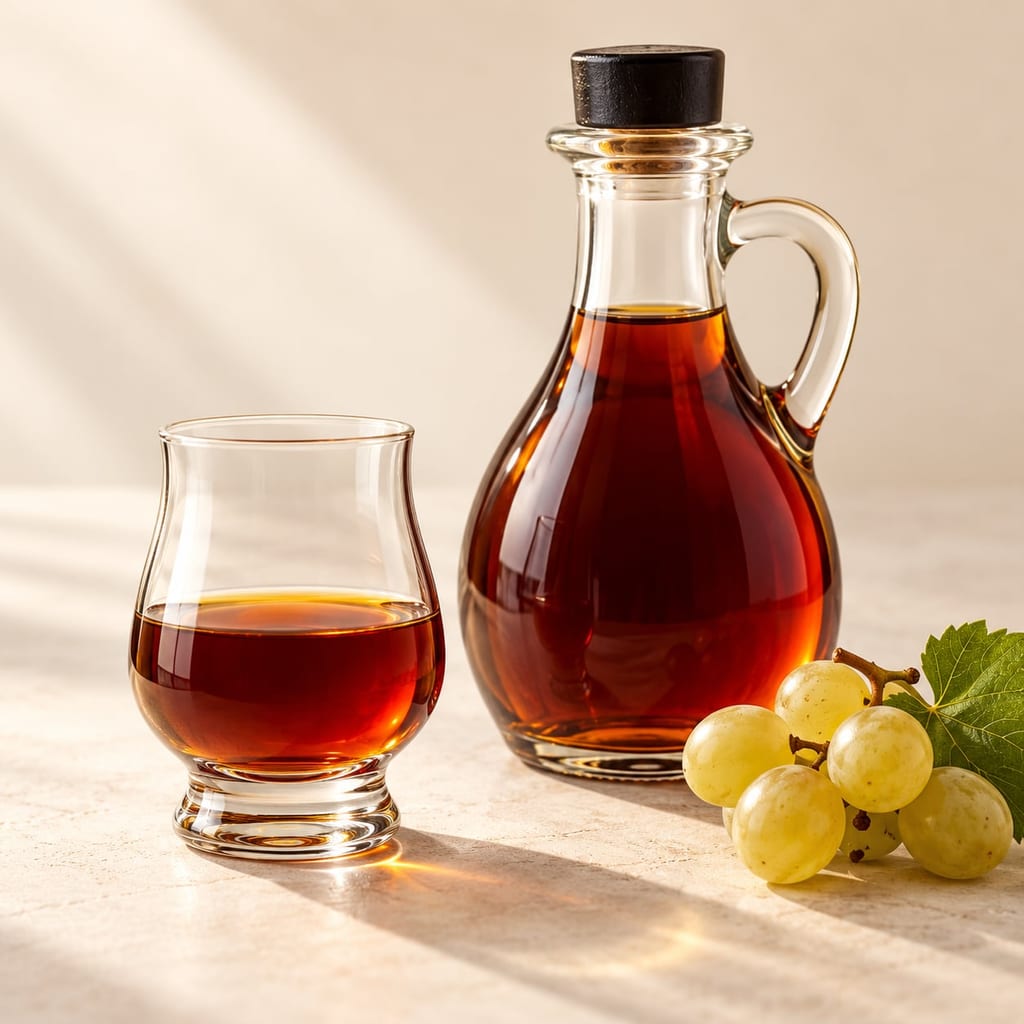
Vinagre de Jerez is made by acetifying eligible Jerez wines and ageing the vinegar in wood. Its protected name belongs to a defined Andalusian zone and a cellar tradition joining wine, oxygen, acetic bacteria and long ageing.
Unseasoned rice vinegar
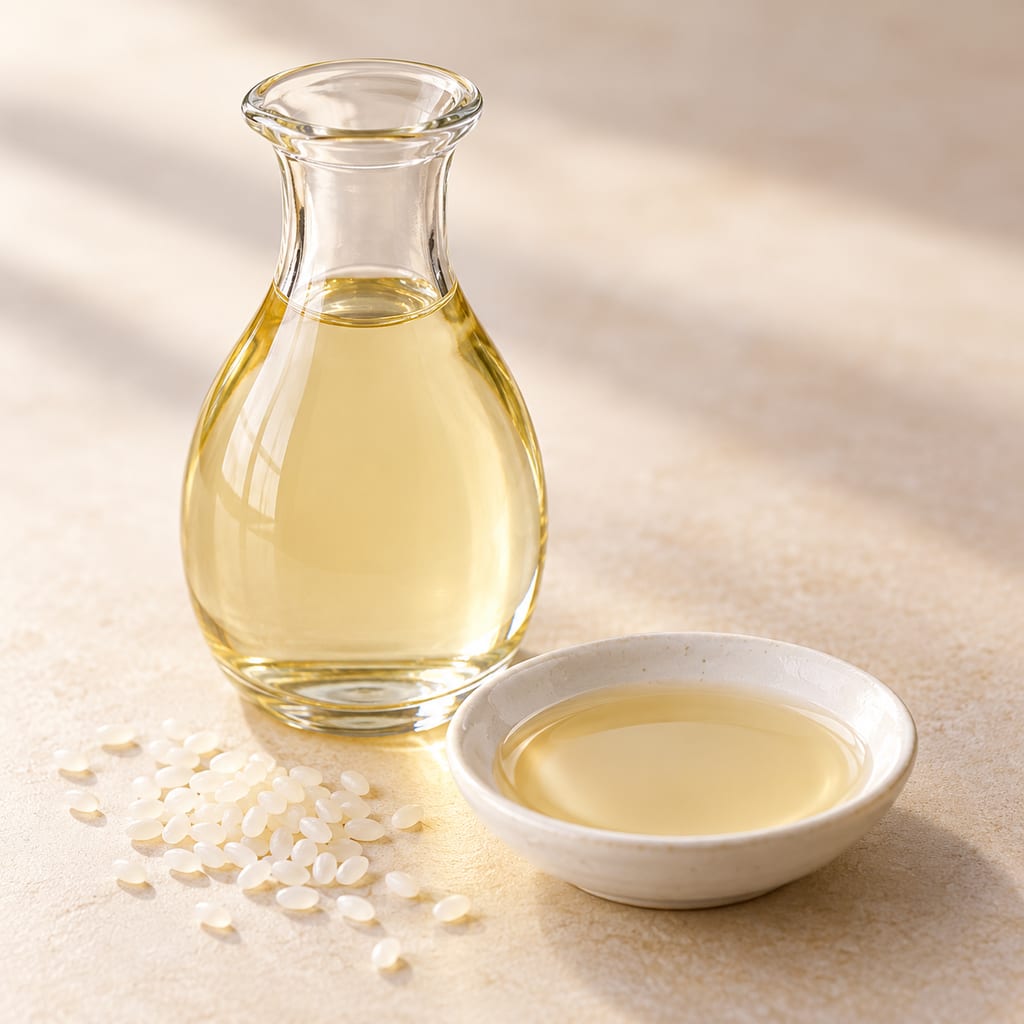
Japanese komezu is a pale, unseasoned rice vinegar made through alcoholic and acetic fermentation; rice, water, koji and yeast shape its character.
Community
No community contributions have been published for this entry yet.
Share what you made
Sign in to contribute. Published comments and photos are free to read.
Sources
FDA
CPG Sec 525.825 Vinegar, Definitions - Adulteration with Vinegar EelsCited in: Follow the ingredient, then the craft; Wine, wood and the different meanings of balsamic; Orchards, malt houses and modern European bottles
Mike Battcock and Sue Azam-Ali; FAO
Fermented fruits and vegetables: A global perspectiveCited in: Follow the ingredient, then the craft; Cane and palm sap: related sugars, different materials; Dates, African palms and contemporary botanical vinegars; The Americas and the Pacific: local harvests, distinct evidence
W. H. Barreveld; FAO
Date palm productsCited in: Follow the ingredient, then the craft; Dates, African palms and contemporary botanical vinegars
Ville d’Orléans
Martin-Pouret: Du vin aigre au vinaigreCited in: Wine, wood and the different meanings of balsamic
Ministero delle politiche agricole e forestali; hosted by Consorzio Tutela Aceto Balsamico Tradizionale di Modena
Disciplinare di produzione della denominazione di origine protetta «Aceto balsamico tradizionale di Modena»Cited in: Wine, wood and the different meanings of balsamic
European Commission
Publication of the communication of an approved standard amendment to a product specification of a geographical indication in accordance with Article 5(4) of Commission Delegated Regulation (EU) 2025/27Cited in: Wine, wood and the different meanings of balsamic
Consejo Regulador Vinagre de Jerez
Vinagre de JerezCited in: Wine, wood and the different meanings of balsamic
Consejo Regulador Vinagre de Jerez
Sherry Vinegar: The Essence of your CuisineCited in: Wine, wood and the different meanings of balsamic
Gölles
GöllesCited in: Wine, wood and the different meanings of balsamic; Orchards, malt houses and modern European bottles
Sarson’s
Malt ProcessCited in: Orchards, malt houses and modern European bottles; East Asian grain vinegars: a colour is not a method
Melfor
Notre histoireCited in: Orchards, malt houses and modern European bottles; Seasoned vinegars and sour neighbours
Jiao Wang et al.; Food Chemistry: X 24, 101918
Identification of aroma active compounds in Shanxi aged vinegar and tracing the source in the entire production processCited in: East Asian grain vinegars: a colour is not a method
Foods 13(7), 1071
Investigation of Zhenjiang Aromatic Vinegar Production Using a Novel Dry Gelatinization ProcessCited in: Follow the ingredient, then the craft; East Asian grain vinegars: a colour is not a method
Mizkan Chef
Japanese Vinegar for RestaurantsCited in: East Asian grain vinegars: a colour is not a method; Whey and other by-products need their own explanations
Japan Ministry of Agriculture, Forestry and Fisheries
Tsubozukuri black vinegarCited in: Follow the ingredient, then the craft; East Asian grain vinegars: a colour is not a method
Vermote et al.; International Journal of Food Microbiology 440, 111283
Metagenomic and meta-metabolomic analysis of traditional Korean rice vinegar productions shows a large variability between producersCited in: East Asian grain vinegars: a colour is not a method
Industrial Technology Development Institute, DOST Philippines
Coconut Food ProductsCited in: Cane and palm sap: related sugars, different materials; Whey and other by-products need their own explanations
Philippine Coconut Authority
Spice Up with Natural and Healthy Coconut VinegarCited in: Cane and palm sap: related sugars, different materials
Dimalupig & Gabrielle Food Products Trading via CITEM IFEXConnect
Primo Unaz Sukang Iloko Natural Pure Sugarcane Vinegar 4LCited in: Cane and palm sap: related sugars, different materials
Slow Food Foundation, Ark of Taste
Lontar VinegarCited in: Cane and palm sap: related sugars, different materials
Punjab Agricultural University
Commercialization of Hybrid Varieties/TechnologiesCited in: Cane and palm sap: related sugars, different materials
Mohammed Hashim Matloob; American Journal of Food Technology 9(5), 231–245
Zahdi Date Vinegar: Production and CharacterizationCited in: Dates, African palms and contemporary botanical vinegars
Zahra S. Al-Kharousi, Zainab Al-Ramadhani, Fatma A. Al-Malki and Nasser Al-Habsi; Foods 13(9), 1389
Date Vinegar: First Isolation of Acetobacter and Formulation of a Starter CultureCited in: Dates, African palms and contemporary botanical vinegars
Brahim Cherif et al.; Algerian Journal of Arid Environment 4(1), 83–93
Ethno-pharmacological Use and Antimicrobial Activity of Traditional Date Vinegar of GhardaïaCited in: Dates, African palms and contemporary botanical vinegars
Konate et al.; Journal of Food Research 4(2), 92
Banana Vinegars Production Using Thermotolerant Acetobacter pasteurianus Isolated From Ivorian Palm WineCited in: Dates, African palms and contemporary botanical vinegars
Rozendal
Fynbos Botanical VinegarCited in: Follow the ingredient, then the craft; Dates, African palms and contemporary botanical vinegars; Seasoned vinegars and sour neighbours
La Villa
La Villa Vinaigres & JardinsCited in: The Americas and the Pacific: local harvests, distinct evidence
La Villa
Découvrez 9 vinaigres disponibles !Cited in: The Americas and the Pacific: local harvests, distinct evidence
Cornell Maple Program
Historic Maple Research ArchivesCited in: The Americas and the Pacific: local harvests, distinct evidence
Stephen Childs, Aaron Wightman, Adam Wild and Ailis Clyne; Cornell University
Cornell Maple Program Final ReportCited in: The Americas and the Pacific: local harvests, distinct evidence
João Pratagil Pereira de Araújo, technical editor; Embrapa
Caju: o produtor pergunta, a Embrapa respondeCited in: The Americas and the Pacific: local harvests, distinct evidence
Cabrera Blanco et al.; UTCiencia 9(2), 89–98
Obtención de vino y vinagre a partir del mucílago de cacao (Theobroma Cacao L.) CCN-51Cited in: The Americas and the Pacific: local harvests, distinct evidence; Whey and other by-products need their own explanations
Jance J. Beaty; Guam Times Weekly; University of Guam archive
The Arts and Crafts of Guam Sketch 1Cited in: The Americas and the Pacific: local harvests, distinct evidence
Joyce Martratt; 36th Wing Public Affairs
Ask Joyce: I heard tuba juice is delicious. What can you tell me about it?Cited in: The Americas and the Pacific: local harvests, distinct evidence
Javier Parrondo, Mónica Herrero, Luis A. García and Mario Díaz; Journal of the Institute of Brewing 109(4), 356–358
A Note — Production of Vinegar from WheyCited in: Whey and other by-products need their own explanations
Mizkan Japan
すし酢Cited in: Follow the ingredient, then the craft; Seasoned vinegars and sour neighbours
Japan Ministry of Agriculture, Forestry and Fisheries
Product Summary (Registration No.44)Cited in: Seasoned vinegars and sour neighbours
Slow Food Foundation, Ark of Taste
Kachampuli VinegarCited in: Seasoned vinegars and sour neighbours
FDA
CPG Sec 562.100 Acetic Acid - Use in Foods - Labeling of Foods in Which UsedCited in: Seasoned vinegars and sour neighbours
Oramahi et al.; Journal of the Korean Wood Science and Technology 50(5), 315–324
Termicidal Activity and Chemical Components of Wood Vinegar from Nipah Fruit against Coptotermes curvignathusCited in: Seasoned vinegars and sour neighbours
National Center for Home Food Preservation, University of Georgia
General Information on PicklingCited in: Choose by the dish, preserve by a tested method
Gaps
- A missing entry does not mean that a place has no vinegar tradition.
- Central Asia, much of Africa, the Caribbean and Central America, and the Pacific islands are not yet documented directly from local sources. No global completeness is claimed.
- Historical continuity: Guam, Drummond farm and Papua New Guinea records establish bounded historical associations, not current national prevalence.
- No numeric safety guidance is drawn from the Shanxi, Algeria or whey sources, which were available only as abstracts or indexed excerpts.
- Current regulator categories are given without numeric age or acid thresholds. The Reggio index alone supports a separate PDO identity, not detailed classes.
- It is not established whether Kirum is made from palm sap or from palm sugar, and product labels can change.
Updated 2026-10-27