
Aceto Balsamico di Modena IGP
A dark, balanced vinegar from Emilia-Romagna made by combining cooked or concentrated grape must with wine vinegar, then acetifying and refining it in wood under a protected specification.
 FermenteaWhere food goes to change
Traditional method
Aceto Balsamico Tradizionale di Reggio Emilia DOP · Traditional Balsamic Vinegar of Reggio Emilia · Traditional Balsamic Vinegar of Reggio Emilia PDO · ABTRE · Balsamico Tradizionale Reggiano
Protected Italian vinegar made only from cooked grape must, fermented and aged in a battery of wooden barrels for at least 12 years: sweet, sharp and syrupy.

Aceto Balsamico Tradizionale di Reggio Emilia is a dark, glossy, syrupy vinegar made from nothing but cooked grape must, from the province of Reggio Emilia in Emilia-Romagna. It holds a European Protected Designation of Origin (DOP). The taste sits between sweet and sour: the sweetness comes from grape sugars concentrated by cooking and evaporation, the acidity from bacteria that turned part of the sugar's alcohol into acetic acid, and the aroma from many years in wood.
The only food raw material is must, the juice pressed from grapes. The rules name local varieties such as Lambrusco, Ancellotta, Trebbiano, Sauvignon, Sgavetta, Berzemino and Occhio di Gatta, plus other varieties registered for the province's DOC wines. No wine vinegar, sugar, caramel, thickener or flavouring is allowed. A culture of acetic acid bacteria, the madre or mother, may be introduced to start acetification, but it is a working culture and not an ingredient in the bottle.
The vinegar must mature for at least 12 years before it can be sold under the name, and the grade called extra vecchio needs at least 25. It ages in a set of wooden barrels of falling size, called a batteria, kept in an attic room and topped up and moved from barrel to barrel year after year. Before release a panel tastes it and a laboratory measures it. It is sold only in an official tulip-shaped glass bottle with a numbered seal, in one of three grades: Aragosta (lobster orange), Argento (silver) and Oro (gold).
Two neighbours share the name and cause constant confusion. Aceto Balsamico Tradizionale di Modena is a separate DOP with its own rules and bottle. Aceto Balsamico di Modena IGP is the cheap supermarket product, and its specification allows wine vinegar in the mix and a far shorter ageing time. This page covers the Reggio Emilia DOP only.
Nobody can date the invention of this vinegar. What survives is a trail of evidence that cooked grape must and prized vinegar were part of the region's life long before the modern rules. Roman cooks made concentrated musts under names such as sapa, defrutum and caroenum and used them as sweeteners and condiments. That shows boiling must down was an old Mediterranean habit. It does not show that the Romans made a long-aged vinegar like today's.
The best-known story concerns the emperor Henry III, who in 1046 was travelling to Rome for his coronation and is said to have asked Boniface of Canossa for a famed vinegar from his lands. The account comes from Donizone's Vita Mathildis, a life of Boniface's daughter Matilda written by a Benedictine monk around 1112 to 1115. So 1046 is the date of the episode and the twelfth century is the date of the text. The passage tells us that the region's vinegar had a reputation. It gives no recipe, no barrels and no chemistry, so it cannot show that the vinegar was the same as the product sold today.
The producers' consortium reports vinegar makers working in Reggio Emilia, Scandiano and other places under the Este between the twelfth and fourteenth centuries, and Este court records show fine vinegar gaining importance in the wider Modena and Reggio area. That supports an established craft. It does not allow every medieval barrel to be called the ancestor of the DOP product.
The record turns specific in the nineteenth century. Dowry lists of local noble families name barrels of valuable balsamic vinegar as part of a bride's property, which fits the idea of a batteria as a family possession kept up over generations. Regional accounts also describe the custom of starting a new set of barrels at the birth of a child. These were habits of wealthy households, and the consortium notes that no archive of ordinary home recipes exists, so they cannot be read as proof that most families kept an acetaia.
The modern product is a regulatory creation built on that older practice. The Reggio Emilia producers' consortium was founded in 1986. Regulation (EC) 813/2000 registered the name as a DOP in April 2000, and Regulation 1279/2013 approved amendments: corrected measurement units, a ceiling of 40 degrees Brix for cooked must, and clearer rules on testing and labelling. Those are dates for the paperwork. They say nothing about when the vinegar making began.
The grapes must come from the delimited area of Reggio Emilia province. The specification asks for fruit that gives must of at least 15 saccharometric degrees and caps the vineyard yield at 160 quintals per hectare. The must is pressed with a yield of no more than 70 percent of the grape weight. Producers pick among the authorised varieties for the character they want, and there is no fixed blend.
Fresh must may be settled or chilled before cooking, but its water fraction may not be frozen, and must treated with additives or preserved by chemical means is excluded. The point is that the process starts from the grape's own sugars and nothing else. Settling lets suspended solids drop out before heat is applied.
The must is then boiled down in open vessels at atmospheric pressure. Evaporation raises the sugar concentration, deepens the colour through browning reactions and changes the aroma. The 2013 amendment sets the limit at 40 degrees Brix for cooked must, replacing an older rule that demanded at least 30 saccharometric degrees. The reason for a ceiling is biological: yeasts and bacteria have to work in this liquid, and a must that is too concentrated barely ferments. Some producers describe cooking for several hours, one producer gives 12 to 14, but the specification fixes no cooking time or temperature.
The cooked must goes through alcoholic fermentation and acetic oxidation, traditionally first in large vessels called badesse. Yeasts convert part of the sugar to alcohol, and acetic acid bacteria then oxidise that alcohol to acetic acid. The rules allow the addition of a bacterial culture, the madre, to help acetification, and they set no yeast strain, bacterial species, dose, temperature or schedule. Oxygen is needed throughout the acetic stage, while evaporation, sugar and rising acidity keep changing the conditions the microbes live in.
Maturation happens in the acetaia, traditionally an attic that follows the seasons: hot summers drive evaporation, cold winters slow everything down. The law forbids speeding ageing by manipulating temperature, humidity or ventilation. A batteria is a row of numbered barrels of different capacities, made of woods the rules list: oak, chestnut, cherry, juniper, mulberry, ash and robinia. Small barrels lose the most water and hold the most concentrated liquid, and each wood adds its own extractable compounds to the vinegar.
Once a year the producer draws a little vinegar from the smallest barrel, tops it up from the next larger barrel, tops that up from the one after, and so on, finally adding younger material at the large end. The Italian terms are prelievo, travaso and rincalzo. The result is a continuing stock in which each barrel holds a blend with a long history of transfers, not a batch filled on one date. The vinegar cannot be offered before 12 years, or 25 for extra vecchio. Then it is assessed and bottled in Reggio Emilia under control. The sources give no starting volumes, barrel sizes or transfer quantities as general rules, because producers differ, and none are invented here.
Four processes run on different timescales: concentration by heat, alcoholic fermentation, oxidation to acetic acid, and slow physical and chemical change in wood. The product is not a wine that went sour. Because the starting liquid is so rich in sugar, much of that sugar survives into the finished vinegar and carries its sweetness.
Grape must already contains fermentable glucose and fructose, so no enzyme has to break down starch first, as in a grain vinegar. Yeasts take the sugar through glycolysis to pyruvate, pyruvate decarboxylase turns pyruvate into acetaldehyde and carbon dioxide, and alcohol dehydrogenase reduces the acetaldehyde to ethanol. In outline one glucose gives two ethanol and two carbon dioxide, with smaller amounts of glycerol, organic acids and aroma compounds on the side.
Cooked must is a hard place for microbes. The sugar concentration ties up water and puts osmotic stress on the cells. Studies of the vinegar's yeasts have found sugar-tolerant species, among them Zygosaccharomyces bailii, Z. rouxii, Z. pseudorouxii, Z. mellis and Z. bisporus, together with Hanseniaspora, Candida stellata and Saccharomyces cerevisiae. One survey examined 133 yeast isolates from 17 cooked-must samples and found ten species, with Z. bailii prominent. These are organisms recorded in research. They are not a required list of cultures, and producers do not inoculate to a standard.
Acetic acid bacteria then oxidise ethanol to acetaldehyde and on to acetic acid, roughly C2H5OH + O2 giving CH3COOH + H2O. The step needs oxygen, which is why it cannot be run as a sealed, anaerobic fermentation. Acetobacter pasteurianus has been identified in traditional balsamic vinegar, and so has an organism formerly named Gluconacetobacter xylinus, now classified as Komagataeibacter xylinus. Strains vary in how well they tolerate sugar, ethanol and acid, so no single species can be assumed to dominate from start to finish.
Heat and time add chemistry that has nothing to do with fermentation. Cooking drives Maillard-type reactions between reducing sugars and amino compounds, building brown pigments and large molecules called melanoidins. In the barrels, evaporation keeps concentrating sugars, acids and dissolved solids, alcohols and organic acids slowly combine into aromatic esters, and the wood gives up phenolic and aroma compounds. None of this proceeds at a constant rate, and it depends on what the liquid already contains.
Analyses of the real vinegar find glucose and fructose as main components, together with acetic, gluconic, lactic, tartaric, malic, citric and succinic acids in varying proportions. Gluconic acid is of particular interest: acetic acid bacteria can oxidise glucose directly, so some acid is made without passing through ethanol. Rheological work ties the syrupy flow to the concentrated solutes and the behaviour of melanoidins. The thickness comes from concentration, not from an added thickener.
Modena and Reggio Emilia are the two centres of the traditional vinegar. They are close and share the basic method of fermenting cooked must and ageing it in barrel batteries, but each has its own DOP, its own rules, its own bottle and its own grading. A food database should keep Aceto Balsamico Tradizionale di Reggio Emilia and Aceto Balsamico Tradizionale di Modena apart and not treat them as two labels for one thing.
Inside Reggio Emilia the differences come from grapes, wood and the individual acetaia. The specification allows several varieties and several woods, so no single blend or barrel order exists. Trebbiano and Lambrusco are the grapes most linked with the area. How a producer arranges the battery changes evaporation rates and what is passed down the line.
Historically the practice belonged to noble and well-off families. The nineteenth-century dowry records and the birth-of-a-child battery are customs of that class. A battery handed down in a family carried its contents and its equipment forward. These customs describe the social life of the vinegar, and they should not be projected onto the present specification, which did not exist in medieval or early modern households.
The three seals separate quality, and only partly age. Aragosta marks a sensory score of 240 to 269 points. Argento marks 270 points or more where gold is not met. Oro needs at least 300 points and at least 25 years of maturation, and it corresponds to extra vecchio. A silver bottle may be older than an orange one, but the ladder is set by tasting, with the age condition added only for gold.
Aceto Balsamico di Modena IGP is a different thing again. It is widely sold, may combine grape must with wine vinegar, and follows a much shorter maturation framework. Balsamic condiments and glazes may add sweetener, colour or thickener. They have their uses in the kitchen, but they are not versions of this vinegar. A maker outside the zone can ferment cooked must and age it in wood, but cannot sell the result under the Reggio Emilia name.
The vinegar is a finishing condiment, used by the drop. Its sweetness, acidity and concentrated aroma are best when the dish leaves them recognisable. It is put on food just before serving, tasted alone from a small spoon, or paired with the foods of the region: Parmigiano Reggiano, boiled and roast meats, vegetables and local first courses.
The pairing with Parmigiano Reggiano is the best documented. A few drops on shavings of cheese give acid and sugar against the cheese's salt, fat and savoury amino acids. Regional literature also describes it on a warm cream of Parmigiano Reggiano with pears, where the grape sugars echo the fruit and the acid cuts through the dairy.
Regional guidance matches grades to dishes. Aragosta, with the sharpest vinegar character, is suggested for carpaccio, raw vegetables eaten with oil as pinzimonio, meat and fish dishes and some cooking. Argento, more developed and sweet-sour, goes with Parmigiano Reggiano, risotto or beef fillet. Oro is for serving cold, over aged or strongly flavoured cheeses, chocolate desserts, custards, strawberries or ice cream, or on its own. These are habits, not legal restrictions.
Heat drives off the volatile aroma compounds that give the older vinegars their value, which is why the mature grades are added at the end of cooking or at the table. The vinegar does not need reducing to a glaze, since ageing has already concentrated it. A dressing can carry it, but a lot of oil or strong flavours will cover what separates it from ordinary wine vinegar.
It is not a substitute for the vinegar in a tested pickling or canning recipe. It has a high residual sugar content and a composition unlike table vinegar, and safe preserving depends on the acidity of the whole recipe. For storage, regional guidance says to keep it in a well-closed glass container away from strongly scented products that could affect its aroma.
Before sale, each batch goes through chemical analysis and a trained tasting panel. The legal description asks for a dark brown colour, clarity, gloss, a flowing syrupy consistency, a persistent aroma and a balance of sweet and sour. Colour and thickness alone prove nothing: a boiled-down grape syrup can look the same and lack the acid, and an ordinary vinegar thickened with sugar can imitate the look without the fermentation or the years.
The amended specification requires total acidity of at least 5 grams of acetic acid per 100 millilitres and a density of at least 1.200 grams per millilitre at 20 degrees C. Total titratable acidity is not pH, because the first counts the acid neutralised in a defined titration and the second measures hydrogen-ion activity, so no pH target can be derived from the legal limit. Density is driven by dissolved sugars and other solids, so a high reading cannot show that acetification went far enough.
The tasting panel scores appearance (27 to 60 points), aroma (44 to 75) and taste (129 to 210), using the median of the individual scores. Below 240 points a vinegar cannot be bottled under the designation. Above that, Aragosta covers 240 to 269, Argento 270 and over where gold is not met, and Oro 300 and over with 25 years of ageing. The score measures conformity and quality. It does not establish microbiological safety.
The usual technical difficulty is too much sugar. Concentrated must makes water scarce for microbes, and research names sugar concentration as a barrier to acetic acid bacteria. If alcoholic fermentation is poor, the bacteria have no ethanol to oxidise. If acetification is weak, the liquid stays sweet and never develops the intended acid. Strong acidity, in turn, slows microbial activity. A slow batch is not necessarily a failure, but progress has to be judged by analysis and not by elapsed time.
A film on the surface can fit acetic acid bacteria at work, but not every film or floating growth is a healthy mother. Fuzzy mould, odd coloured growth or a putrid smell point to contamination. The designation permits an established bacterial mother and does not endorse spontaneous household fermentation of any cooked grape liquid. Work on selected Acetobacter pasteurianus strains shows that controlled inoculation can influence acetification, while yeast studies show the microbial community varies. Without analytical and microbiological evidence, a doubtful batch cannot be declared safe.
Over-concentrated must, poor barrel management or unbalanced aroma can each keep a vinegar from certification. The 40 degree Brix ceiling is a control on cooked must and not a target for the mature product. Flow behaviour depends on composition and on how larger molecules such as melanoidins organise, so extreme thickness does not by itself mean better ageing, and strong sourness does not necessarily mean a higher measured acidity.
When buying, look for the full protected name, the DOP mark, the approved bottle, the numbered seal and the grade. Keep the closed bottle away from heat, sunlight and strong smells. Anyone experimenting with their own cooked-must vinegar should record the origin of the grapes, must concentration, fermentation progress, acidity, vessel materials, transfers and storage. A home product cannot be called Reggio Emilia DOP without meeting the territorial, procedural and certification requirements, however many years it spends in wood.
Cooked grape must was an old Mediterranean ingredient: Roman cooks made sapa, defrutum and caroenum and used them as sweeteners and condiments. A prized vinegar from the lands of Boniface of Canossa appears in Donizone's Vita Mathildis, written about 1112 to 1115, in an episode dated 1046 when Henry III asked for it. The text shows a reputation, not a method.
Vinegar makers are reported in Reggio Emilia and Scandiano under the Este between the twelfth and fourteenth centuries. In the nineteenth century, dowry lists of noble families name barrels of balsamic vinegar as part of a bride's property, and families began a new set of barrels at the birth of a child. The Reggio Emilia producers' consortium was founded in 1986, the name was registered as a DOP in 2000, and the specification was amended in 2013.
Cooked grape must contains fermentable sugar and can support yeasts, bacteria and other organisms. Long fermentation and ageing do not establish which organisms are present. Contaminated vessels or an unsuitable starter can spoil a batch.
Hazard sourceA sweet or sour taste does not show that enough ethanol became acetic acid. The bacteria need oxygen, and high sugar and rising acidity can inhibit them.
Hazard sourceHomemade vinegar has variable acetic acid content. Using it in place of the vinegar in a tested canning recipe can leave the food under-acidified.
Hazard sourceContaminated, damaged or leaking barrels can harm quality and hygiene, and previously used barrels need assessment before reuse.
Hazard sourceToo much concentration raises osmotic stress on the microbes, hinders alcoholic and acetic fermentation and risks crystallisation.
Hazard sourceMeasure the sugar concentration of the cooked must before fermentation. This is a production requirement, not a stand-alone safety limit.
Control sourceDetermine total acidity by laboratory analysis before bottling under the designation. It does not validate a household fermentation.
Control sourceDetermine density of the finished product at the reference temperature.
Control sourceUse food-contact vessels and keep fermentation and ageing equipment clean and in good condition.
Control sourceSupply oxygen during acetic oxidation and protect vessels from insects and debris.
Control sourceWhere inoculation is needed, use an established acetic acid bacteria culture and not unidentified growth.
Control sourceFor preserving, use commercial vinegar of the acidity a tested recipe specifies and never a homemade vinegar of unknown acidity.
Control sourceAcidity cannot be judged by colour, thickness, aroma, a surface film or sourness. Have it measured: the DOP requires at least 5 g acetic acid per 100 mL and a density of at least 1.200 g/mL at 20 degrees C.
Titratable acidity and pH are different measurements, so the legal acidity limit gives no pH threshold. Do not infer one.
Homemade vinegar of unknown acidity must not replace the vinegar in a tested pickling or canning recipe; use commercial vinegar of the stated acidity.
Fuzzy mould, coloured growth or a putrid smell on a batch points to contamination. Discard it and do not taste it to decide.
Do not add sugar, wine vinegar, caramel colour or thickener to a preparation described as Reggio Emilia DOP, and do not sell anything under the name unless it is certified.
The DOP restricts production and bottling to the province; it does not name a single birthplace.
Attests a prized vinegar from the lands of Boniface of Canossa, not the modern method.
Names a centre of vinegar making; does not date the barrel-battery method.
A dark, balanced vinegar from Emilia-Romagna made by combining cooked or concentrated grape must with wine vinegar, then acetifying and refining it in wood under a protected specification.
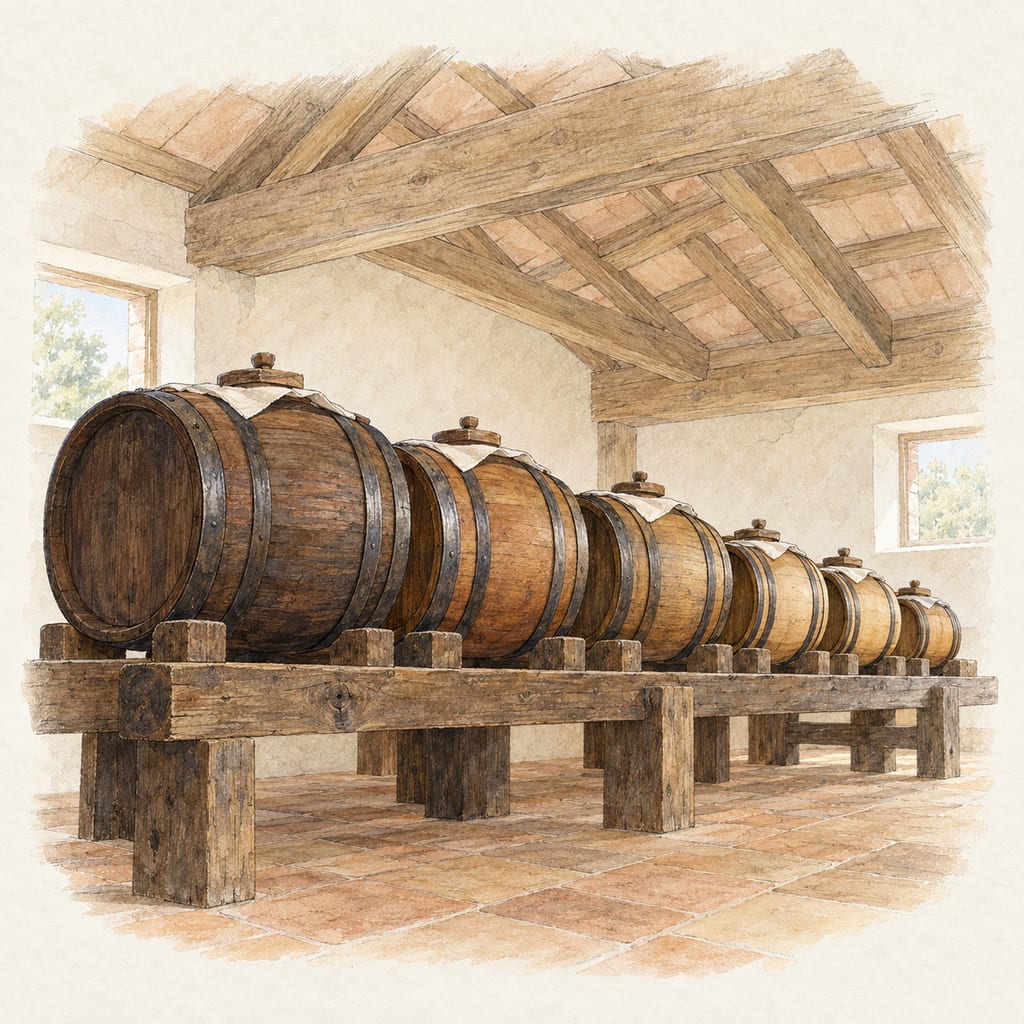
A balsamic batteria is a graduated set of wooden casks for traditional vinegar in Modena and Reggio Emilia. Transfers, evaporation, seasonal conditions and wood contact make the battery work as one system.
Ragu alla bolognese is a slow-cooked meat sauce of minced beef and a little pork, cooked with soffritto, white wine, milk and a little tomato, served with fresh tagliatelle in Bologna.
Small Italian hunter-style salami of lean pork, firm fat, salt, pepper and garlic, mildly acidified and dry-matured; protected as Salamini Italiani alla Cacciatora DOP.

Ferrara’s paired bread twists have four pointed horns joined at a soft centre. This VisitFerrara home recipe uses type 0 flour, water, oil, lard, malt and a choice of sourdough or yeast.

Small Modenese yeast breads cooked between hot plates and served warm.

This Emilia-Romagna home version uses a measured flour-and-milk dough with yeast, shapes it into small diamonds or squares, and fries them in peanut oil.
Eight soft Romagna-style flatbreads made from type 00 wheat flour, lard, honey, baker's yeast, milk and salt. Rest the dough for an hour, roll 3–4 mm rounds and cook them quickly on a hot griddle or heavy pan.
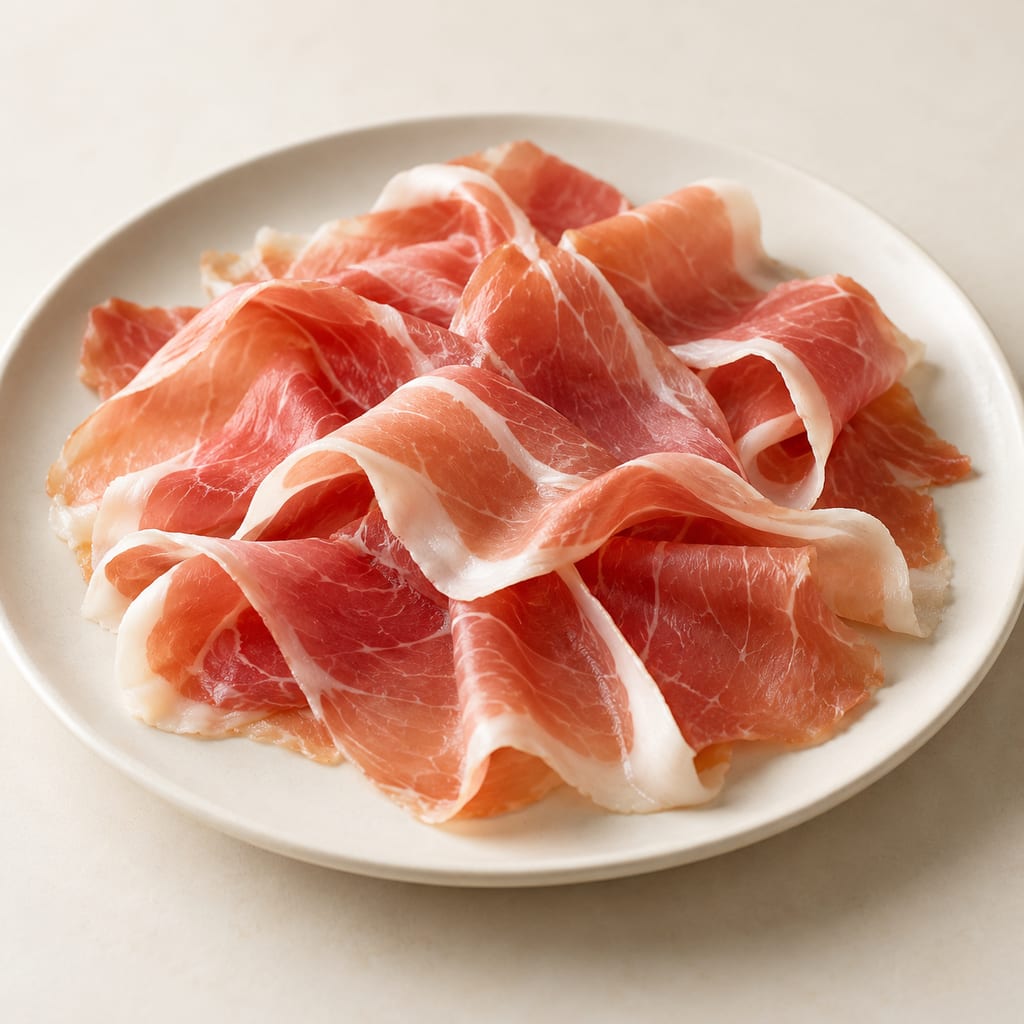
Prosciutto di Parma is a dry-cured, unsmoked ham from the Province of Parma, made from fresh pork legs salted with sea salt and matured for at least 14 months under the protected designation.

A Dominican table and seasoning condiment of sour orange juice, mixed with lime and salt and bottled raw; garlic, oregano or a hot pepper may be added for meat or a spicier bottle.

Japanese reddish-brown vinegar from sake lees matured about three years, turned to vinegar by acetic bacteria; the vinegar of Handa and Edomae sushi rice.

A Swedish-style spirit vinegar made by fermenting neutral alcohol with live vinegar bacteria, with a separate guide to commercial ättika strengths.
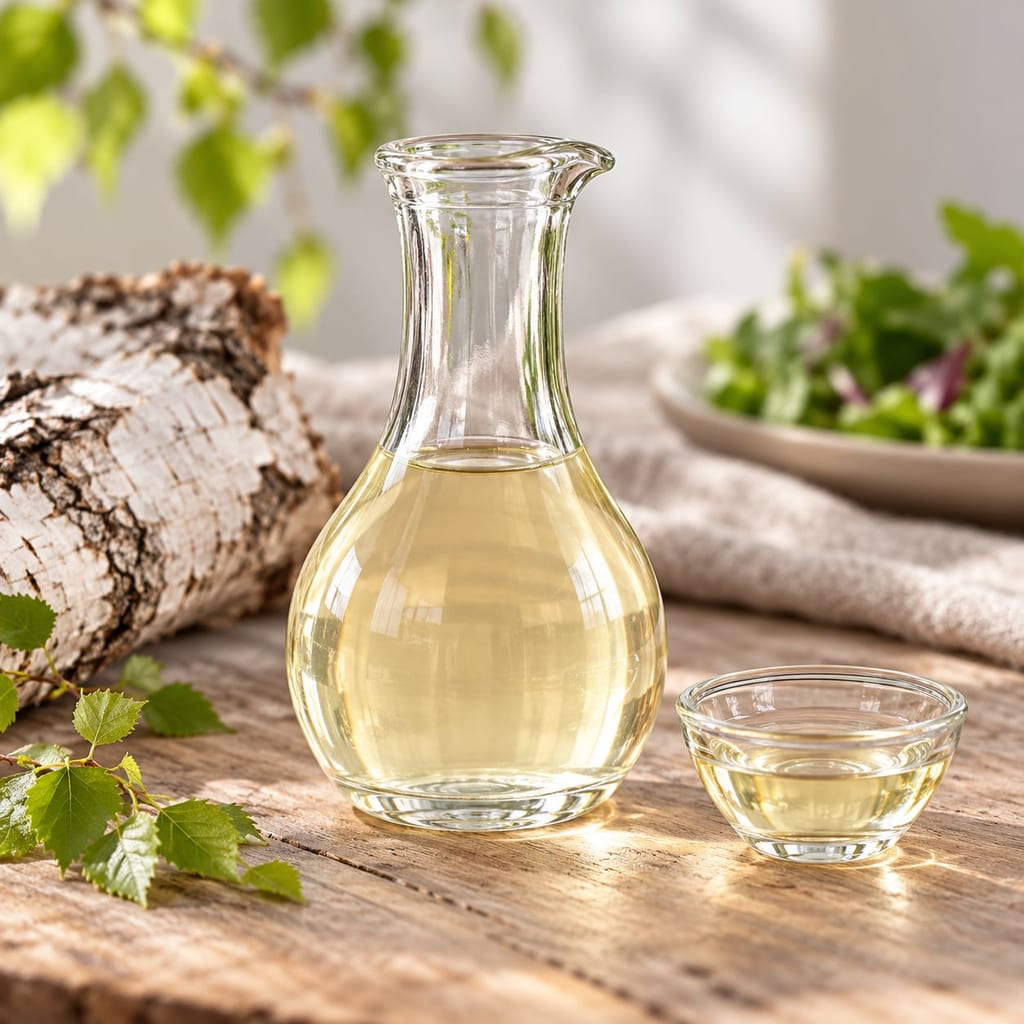
Vinegar from spring birch sap fermented to alcohol and then acetic acid, usually with added sugar or honey because the sap is so dilute; made in Sweden and described in older eastern European accounts.
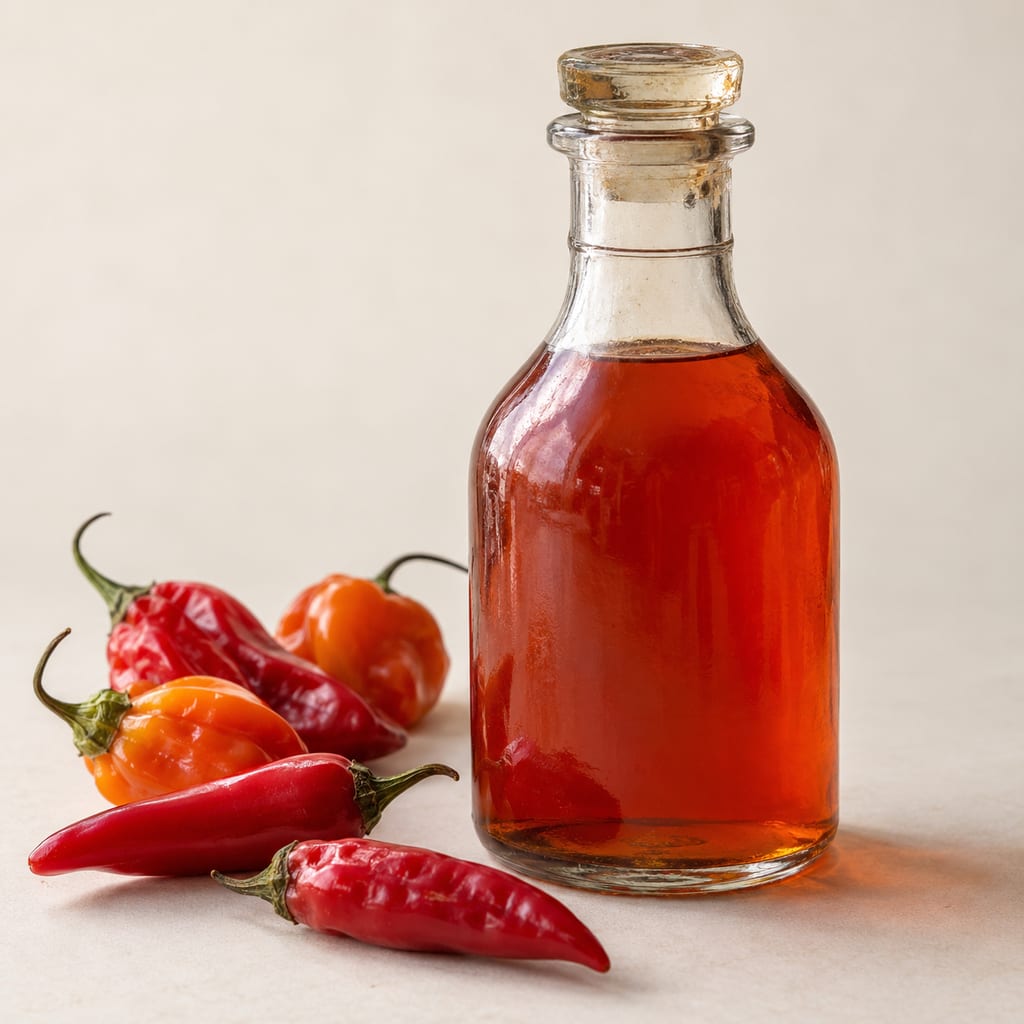
Mary Randolph's pepper vinegar: ripe pepper pods simmered in vinegar until the liquid is reduced to one quart, then strained for use in gravies and catsups. From The Virginia Housewife.
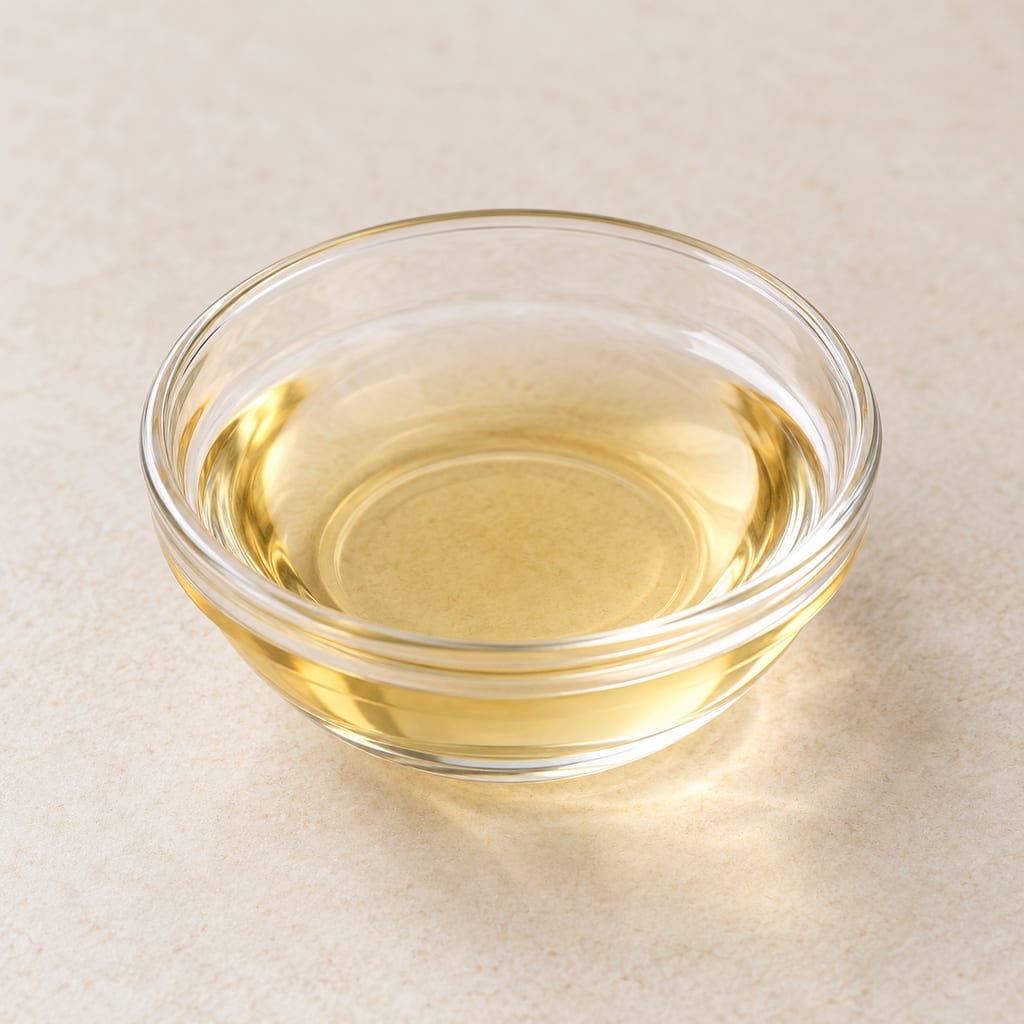
A Japanese mixed seasoning of vinegar, sugar and salt for sushi rice. Ratios vary with the rice batch and style; this version follows Marukan Vinegar's formula for two go of rice.
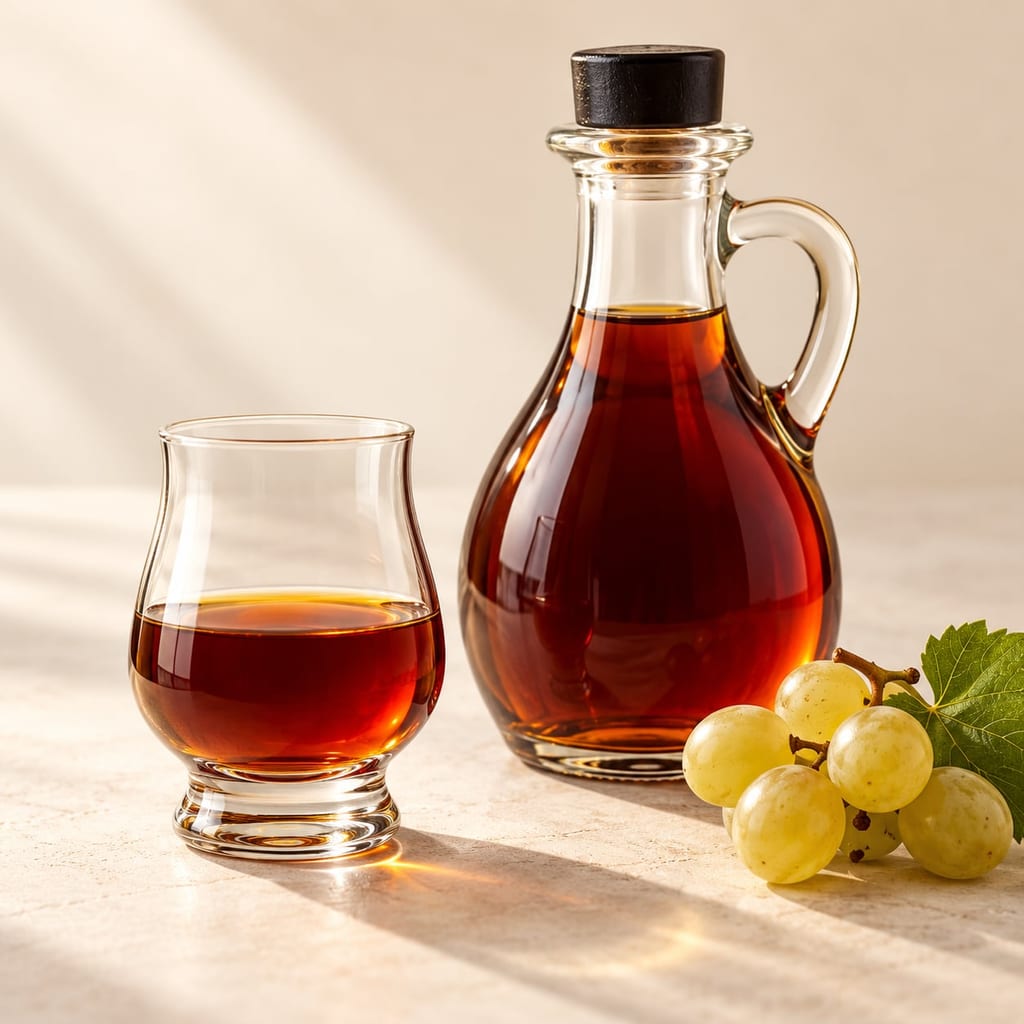
Vinagre de Jerez is made by acetifying eligible Jerez wines and ageing the vinegar in wood. Its protected name belongs to a defined Andalusian zone and a cellar tradition joining wine, oxygen, acetic bacteria and long ageing.
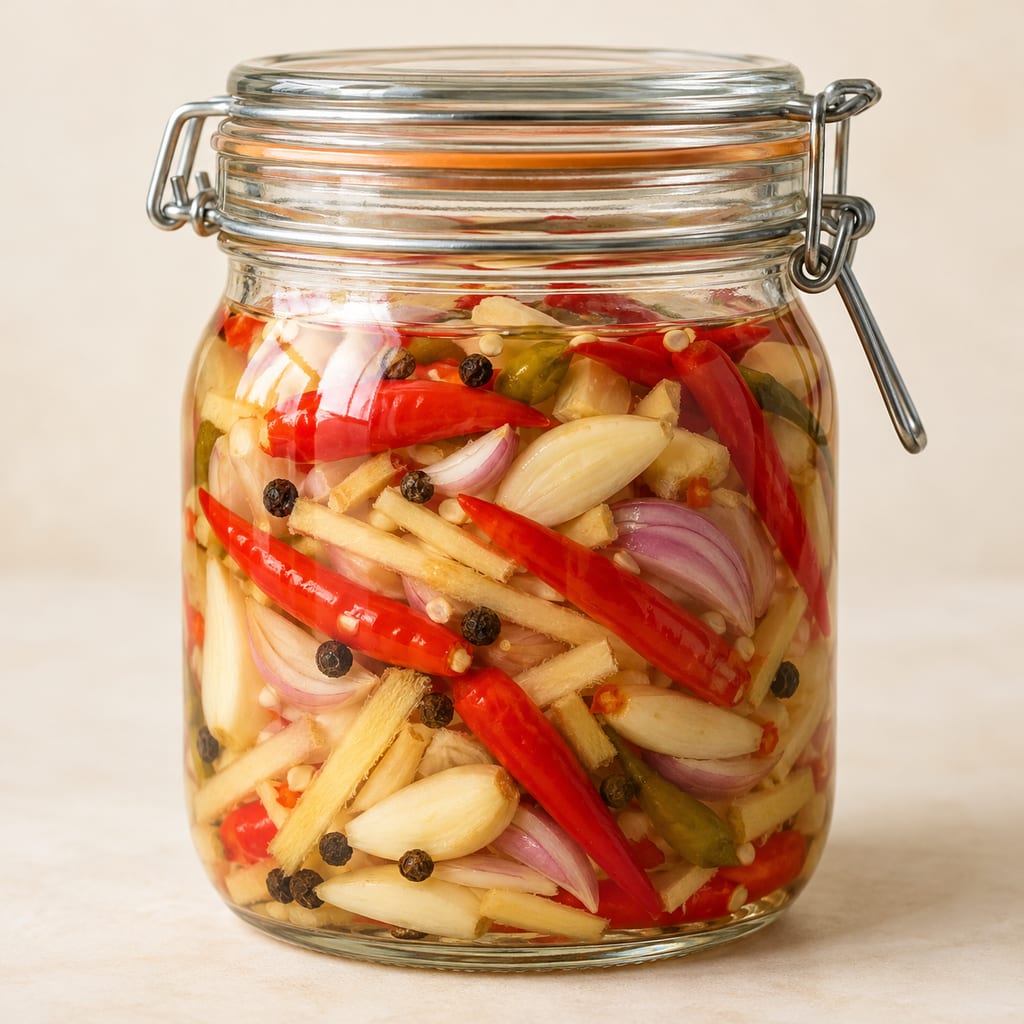
Sinamak is a Philippine spiced vinegar: white, cane or coconut vinegar steeped with chilies, ginger, garlic, onion and peppercorns for days or weeks until it is ready to use as a condiment.

Airag is Mongolia’s fermented mare’s-milk drink, traditionally churned with saved starter in a reusable cowhide khokhuur.

Appam, or hoppers, are South Indian and Sri Lankan rice pancakes made from a fermented coconut-and-rice batter and cooked in a curved pan to a crisp lacy rim and a soft, spongy centre.

Auricularia tremellosa is a wood ear fungus of the genus that supplies most dried wood ear sold in China; its own food record is thin, and the culinary practice described here comes from the closely related wood ear species.

Ayran is Turkey’s cold, savoury yogurt drink: plain yogurt is loosened with water and lightly salted, then whisked smooth or aerated into a soft cap of foam.
A thin stone griddle used over an open hearth. Norwegian archaeology documents the established tradition from the early Middle Ages; a Viking-period origin is only a cautious suggestion linked to Shetland.

Crushed or milled barley cooked in water until the starch softens and the mixture thickens, the plainest way a northern household turned stored grain into a meal, here with apple and hazelnut.

Black carrot is the anthocyanin-pigmented Eastern carrot (Daucus carota var. atrorubens), the purple root that preceded orange types and still colours kanji and şalgam.
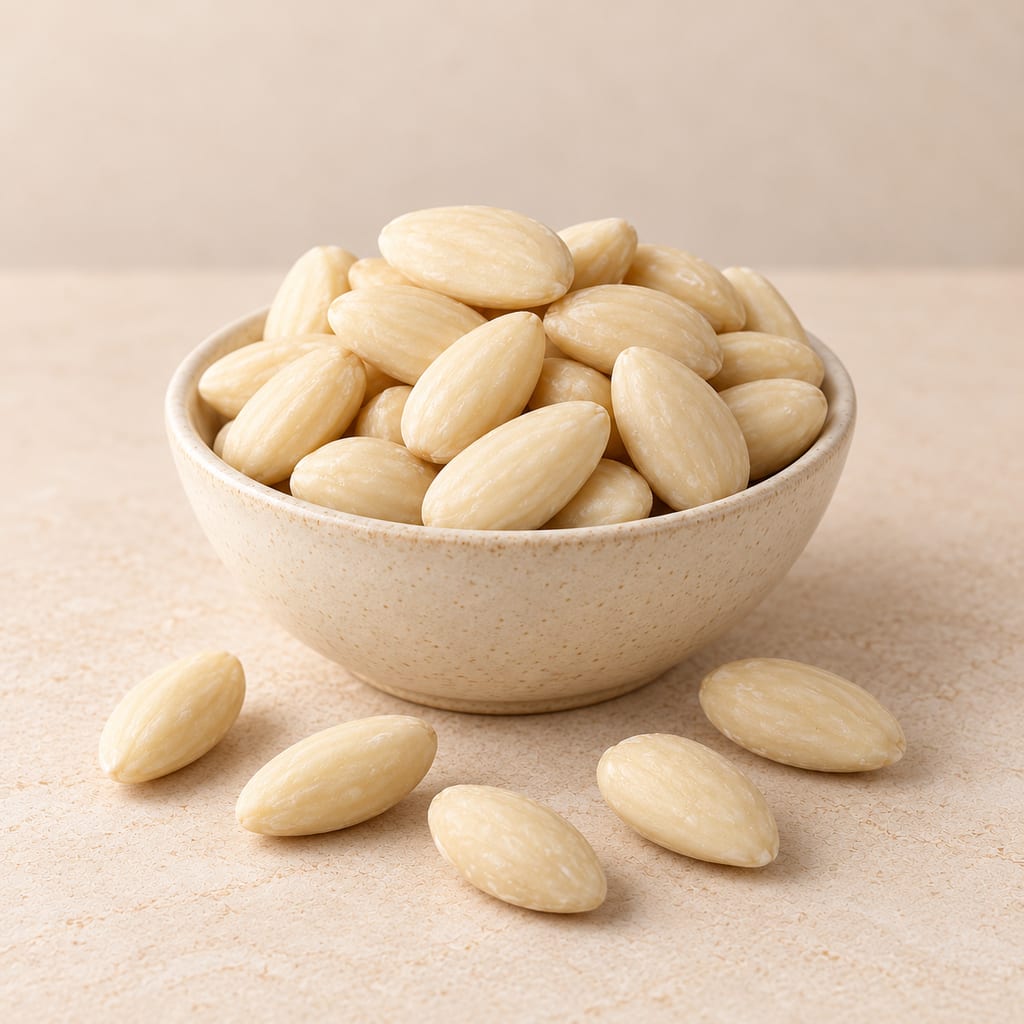
Blanched almonds are sweet almond kernels with the brown seed coat removed. A documented amla murabba cooks ten optional slivered kernels into the finishing syrup with spices and saffron.
No community contributions have been published for this entry yet.
Sign in to contribute. Published comments and photos are free to read.
Italian Ministry of Agricultural, Food and Forestry PoliciesMethod · Safety
Disciplinare di Produzione: Aceto Balsamico Tradizionale di Reggio Emilia DOPPermitted grape varieties and minimum fresh-must sugar
Maximum grape-to-must yield of 70 percent
Cooking in open vessels at atmospheric pressure
Maximum 40 degrees Brix for cooked must
Prohibition of additives and of artificially accelerated ageing
Permitted barrel woods
Minimum 12-year maturation
Minimum total acidity and density
Sensory assessment and bottling rules
Cited in: What it is; How it is made, and why each step matters; How it works: yeasts, bacteria and chemistry; Regional and historical variations; Reading results and problems
Official Journal of the European Union, EUR-LexMethod · History
Single document for Aceto Balsamico Tradizionale di Reggio Emilia (PDO)Production restricted to Reggio Emilia province
Product characteristics and minimum maturation
Registration and 2013 amendments
Cited in: What it is; History; How it is made, and why each step matters
Official Journal of the European Union, EUR-LexMethod · Safety
Publication of an amendment application: Aceto Balsamico Tradizionale di Reggio Emilia2013 specification amendments
Maximum 40 degrees Brix for cooked must
Acidity and density requirements
Consorzio Tutela Aceto Balsamico Tradizionale di Reggio EmiliaInspiration · Method
DOPProtected designation and territory
Cited in: What it is
Consorzio Tutela Aceto Balsamico Tradizionale di Reggio EmiliaMethod · Inspiration
Aceto Balsamico Tradizionale di Reggio Emilia DOPGrapes and cooked must
Initial fermentation in badesse
Acetaia maturation and barrel transfers
Grade descriptions
Consorzio Tutela Aceto Balsamico Tradizionale di Reggio EmiliaHistory
La StoriaRoman cooked-must antecedents
Medieval vinegar making in Reggio Emilia and Scandiano
Nineteenth-century dowry records
Development of the modern specification
Cited in: History; Regional and historical variations
Consorzio Tutela Aceto Balsamico Tradizionale di Reggio EmiliaMethod · History
QualitaAragosta, Argento and Oro seals and score ranges
Laboratory and panel assessment
Numbered seals and bottling
Consortium founded in 1986
Cited in: What it is; History; Regional and historical variations; Reading results and problems
Centro Ricerche Produzioni Animali (CRPA)History · Method
Aceto Balsamico TradizionaleRegional history and dowry customs
Production and uses
Cited in: History; How it is made, and why each step matters; Regional and historical variations; How it is eaten and used
Unione Val d'EnzaHistory
Aceto balsamico tradizionaleHenry III and Boniface of Canossa episode
Donizone, Vita Mathildis
Cited in: History; How it is eaten and used
ColdirettiMethod · History
Ue, approvate le modifiche al disciplinare dell'Aceto Balsamico Tradizionale di Reggio Emilia DOP2013 amendments to the specification
Cited in: History; How it is made, and why each step matters; Reading results and problems
QualiGeoMethod · Use
Aceto Balsamico Tradizionale di Reggio Emilia PDOProtected product summary
Culinary and storage guidance
Cited in: What it is; How it is made, and why each step matters; How it is eaten and used; Reading results and problems
Emilia-Romagna TurismoMethod · Use
Aceto Balsamico Tradizionale di Reggio Emilia DOPRegional description of the method
Culinary uses by grade
Cited in: How it is made, and why each step matters; Regional and historical variations; How it is eaten and used
Reggio Emilia WelcomeUse
Aceto Balsamico Tradizionale di Reggio Emilia PDOCulinary pairings by grade
Cited in: Regional and historical variations; How it is eaten and used
Acetaia San GiacomoMethod
How Balsamic DOP Is BornProducer account of cooking, barrels and annual transfers
Effect of over-concentrated must
Cited in: How it is made, and why each step matters
International Journal of Food MicrobiologyMicrobiology
Yeasts associated to traditional balsamic vinegar: ecological and technological featuresOsmotolerant yeast ecology
Role of yeasts before acetification
Cited in: How it works: yeasts, bacteria and chemistry
Applied and Environmental MicrobiologyMicrobiology
Succession of selected strains of Acetobacter pasteurianus and other acetic acid bacteria in traditional balsamic vinegarAcetobacter pasteurianus in the fermentation
Selected starter cultures and community succession
Advances in Food and Nutrition ResearchMicrobiology · Method
Technological and microbiological aspects of traditional balsamic vinegar and their influence on quality and sensorial propertiesSequential fermentations and wood ageing
Blending of differently aged material
PubMedMicrobiology
Traditional balsamic vinegar research recordMicrobial and chemical features of traditional balsamic vinegar
Cited in: How it is made, and why each step matters; How it works: yeasts, bacteria and chemistry; Reading results and problems
AGRIS, FAOMicrobiology
Traditional balsamic vinegar research recordComposition and rheology of traditional balsamic vinegar
Cited in: How it works: yeasts, bacteria and chemistry; Reading results and problems
Universita di Modena e Reggio EmiliaMicrobiology
Traditional balsamic vinegar research recordChemical composition of Reggio Emilia vinegar
Cited in: How it works: yeasts, bacteria and chemistry; Reading results and problems
Universita di Modena e Reggio EmiliaMicrobiology
Traditional balsamic vinegar research recordYeast populations of cooked must
Cited in: How it works: yeasts, bacteria and chemistry; Reading results and problems
Iseki Food e-JournalMicrobiology
Traditional balsamic vinegar articleRheology and melanoidins
Cited in: How it works: yeasts, bacteria and chemistry; Reading results and problems
National Center for Home Food Preservation, University of GeorgiaSafety
General Information on PicklingVinegar of unknown acidity is unsafe to substitute in tested pickling recipes
Penn State ExtensionSafety
Making Cider Vinegar at HomeOxygen need of acetic fermentation
Food-contact vessels and hygiene
Penn State ExtensionSafety
Let's Preserve: Ingredients Used in Home Food PreservationCommercial vinegar of stated acidity for tested recipes