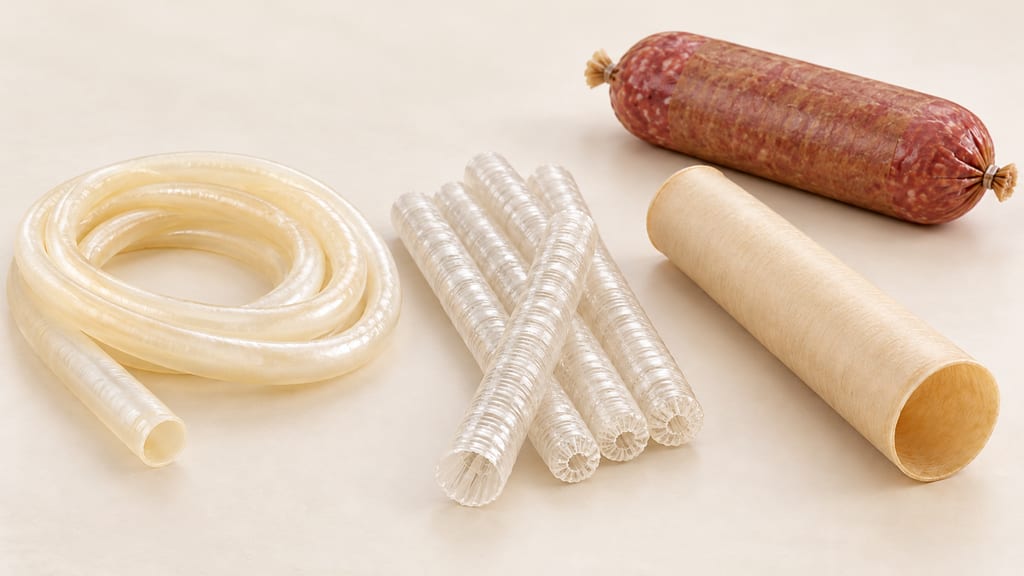
Collagen, cellulose and fibrous sausage casings
Three manufactured casing families: collagen from animal protein, regenerated cellulose, and cellulose reinforced with fibrous paper. Edibility and process properties vary by grade.
 FermenteaWhere food goes to change
Traditional method
Salamini Italiani alla Cacciatora · Salamini Italiani alla Cacciatora DOP · Salamini Italiani alla Cacciatora PDO · Salamini alla Cacciatora · Salame Cacciatore · Cacciatore Italiano · Hunter's salami · Italian hunter's salami
Small Italian hunter-style salami of lean pork, firm fat, salt, pepper and garlic, mildly acidified and dry-matured; protected as Salamini Italiani alla Cacciatora DOP.
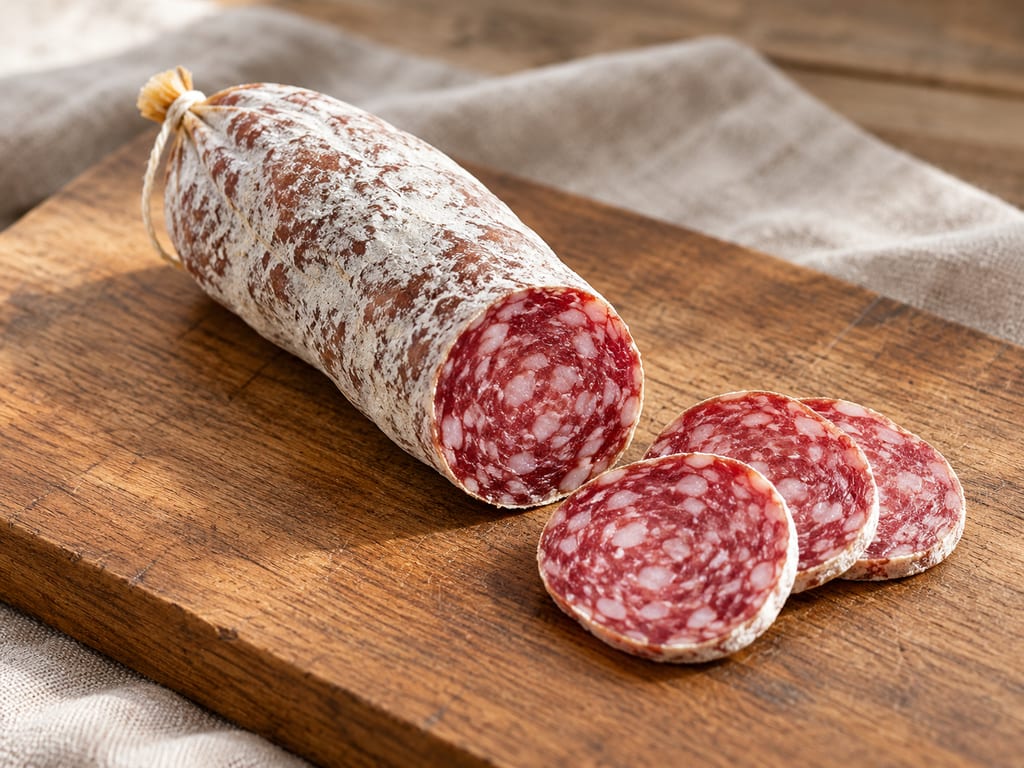
Cacciatore is a small Italian raw-cured pork salami made from lean pork, firm pork fat, salt, pepper and garlic. The name means hunter-style, and the sausage was always small enough to carry. The protected form, Salamini Italiani alla Cacciatora, holds a European Protected Designation of Origin (DOP) that applies only to salami made to the official specification. What follows describes that protected form, and the generic cacciatore or cacciatorino sold elsewhere may resemble it without meeting its rules.
The finished sausage is cylindrical, sometimes slightly curved, and at most 60 millimetres across, 200 millimetres long and 350 grams in weight, though pieces of about 200 grams are common. The inside is an even ruby red with small, evenly spread white fat particles. The texture is compact and not elastic, and the taste is delicate, never strongly sour, smoky or heavily spiced.
The meat is lean pork from skeletal muscle and firm pork fat, and mechanically separated meat is excluded. Pork shoulder is one documented lean cut. Salt, black pepper and garlic are the traditional seasoning, and the specification allows wine, sugar, dextrose, fructose, starter cultures and listed curing or antioxidant additives, which vary by maker. It is all pork: cacciatore does not mean it contains game.
Lactic acid bacteria take part in maturing, yet the product is deliberately less acidic than many fast-fermented salamis. The specification requires a finished pH of at least 5.3 and describes a sweet, delicate taste that is never acid. It also describes a large mesophilic microbial population, dominated by lactic bacteria and cocci. These are product characteristics and not instructions for safety.
It is neither cooked nor conventionally smoked. It is made from raw meat, dried and matured, and sold ready to eat. The DOP covers eleven Italian regions and sets rules on the origin of the pigs, manufacture, maturing, packaging and traceability, and the salami may be sold whole, in portions or pre-sliced under the relevant rules.
Cacciatore belongs to the wider northern and central Italian habit of preserving pork. The name refers to the hunter, and the traditional account has small sausages carried with bread in hunting bags, small and sturdy enough for travel and outdoor work. The consortium, regional authorities and food histories repeat this consistently, but it does not date the first use of the exact name.
Several official and commercial accounts trace the sausage to the Etruscans, who preserved meat with salt, and then the Romans. Another links the spread of small preserved pork sausages to the Lombard migrations of the early Middle Ages. These describe possible antecedents and not a continuous documented history, and no securely dated Etruscan, Roman or Lombard recipe for the modern sausage exists.
The official geographical description stresses the Po Valley and the broader northern and central Italian tradition of pig rearing, tying the product to specialised heavy-pig production and rural preservation. The link to Lombardy is prominent in later descriptions, though the protected area now reaches well beyond it.
The first precise legal date is 7 September 2001, when the European Commission adopted Regulation (EC) No 1778/2001 registering Salamini Italiani alla Cacciatora as a Protected Designation of Origin, published in the Official Journal on 8 September. That protects the modern product and does not date its invention.
The Consorzio Cacciatore Italiano was founded in May 2003 to protect and promote the designation, and the Italian Ministry recognised it by decree of 13 January 2005. Its work includes watching the use of the name and explaining how certified salami differs from imitations.
The specification has since changed. An updated EU single document appeared in October 2019, and Italy approved further ordinary amendments by decree of 13 November 2024, published on 21 November 2024, with the EU communication on 12 May 2025. One change reduced the stated maximum nitrate from 195 parts per million to 150. The result is two layers: an older, incompletely dated tradition of small hunters' sausages, and a precisely documented modern protected product.
Cacciatore develops through salting, microbial activity, enzymatic maturing and controlled loss of water. Salt changes water availability, fermentation can make organic acids, curing reactions help fix the colour, and drying lowers water activity. The product is meant to stay mild and not turn as acid as faster-fermented sausages.
Lactic acid bacteria use available carbohydrate, mostly making lactic acid and lowering pH. A little sugar or dextrose may be added as substrate. The specification describes a finished mesophilic population above ten million colony-forming units per gram, mainly lactic acid bacteria and cocci, and names no mandatory starter species or strain.
Research on other Italian dry-fermented salamis has documented Latilactobacillus sakei, Latilactobacillus curvatus and Pediococcus pentosaceus, with Staphylococcus xylosus found in studies of Salame Piemonte and Ciauscolo. They are comparative organisms and are not verified in every Cacciatore DOP.
Lactic acid changes the charge and water binding of muscle proteins, which helps drying and gives a coherent texture. Cacciatore is deliberately mildly acidified: the finished pH must be at least 5.3 and accelerated fermentation is prohibited. The taste comes from microbial activity balanced with curing and maturing.
Salt dissolves in the watery phase and lowers water activity, which describes the water available to microbes and is not the same as moisture percentage. Some organisms stop growing below particular water activities without dying, so salt, pH, processing temperature and water activity must be assessed together.
Nitrate and nitrite are permitted. Nitrite takes part in reactions that produce nitric oxide, which binds myoglobin to give the red cured colour, and some resident or starter bacteria reduce nitrate to nitrite. Selected coagulase-negative staphylococci add catalase activity that limits oxidation and may contribute to protein and fat breakdown.
During maturing, meat enzymes break proteins into peptides and amino acids, lipases release fatty acids, and controlled oxidation makes volatile aroma compounds such as aldehydes. Too much oxidation, proteolysis or the wrong microbial metabolism gives rancid or bitter defects.
The mild fermentation changes how safety is judged. Unlike a strongly acid sausage, Cacciatore cannot be judged mainly by a low final pH. Its preservation depends on the whole controlled process: raw-material hygiene, permitted curing ingredients, microbial activity, drying and verified stability. A high count of lactic bacteria does not show that pathogens are gone.
Production starts with pork from animals that meet the origin and breeding rules. The specification names Italian heavy pigs from approved genetic backgrounds, including Large White Italiana, Landrace Italiana and Duroc Italiana lines, with a minimum slaughter age of nine months. Selected lean muscle and firm fat are trimmed to remove large connective tissue and soft fat, for a consistent sausage.
The meat and fat are held refrigerated or frozen at no more than 7 degrees C before grinding. This is a raw-material condition and gives no licence to leave ground meat warmer in an unvalidated process. Firm fat stays as distinct particles and does not smear through the lean.
The method calls for grinding through plates with openings of 3 to 8 millimetres, or another system giving an equivalent result. A lean-to-fat ratio of about 70 to 30 appears in modern home recipes, but the specification does not prescribe it. It sets final composition instead, including a maximum fat-to-protein ratio of 2.0.
Salt, pepper and garlic are the characteristic seasonings. Salt changes water availability and extracts salt-soluble proteins that bind the meat, and pepper and garlic give restrained aroma. Optional wine adds flavour, and permitted sugars such as dextrose or fructose feed fermentation. The official text gives no quantities.
The 2024 specification permits starter cultures, sodium or potassium nitrate up to 150 parts per million, sodium or potassium nitrite up to 95 parts per million, and ascorbic acid or sodium ascorbate. These are limits in the specification and not amounts for a home recipe, and a commercial curing-salt blend cannot be turned into a safe dose just by using them.
The mixture goes into natural or artificial casing no wider than 75 millimetres at stuffing, and the sausages may be tied in strings. The casing size affects how fast water leaves. Certified salami must end no wider than 60 millimetres and no longer than 200.
Sausages first dry warm at 18 to 25 degrees C to remove surface moisture, and accelerated fermentation is prohibited. They then mature in ventilated rooms at 10 to 15 degrees C for at least ten days in total, including the initial drying. The specification gives no home-scale humidity schedule, starter dose, pathogen-reduction programme or final water activity.
The finished salami must meet prescribed chemical, microbiological and sensory characteristics, and may then be sold whole, in portions or sliced, including under vacuum or modified atmosphere, with the operations inside the geographical area under the control system. A safe practical recipe therefore needs more than the official description, and the minimum ten days is not a complete validated process.
The DOP covers eleven regions of northern and central Italy: Friuli-Venezia Giulia, Veneto, Lombardy, Piedmont, Emilia-Romagna, Umbria, Tuscany, Marche, Abruzzo, Lazio and Molise. The unusually wide area reflects a shared pork tradition and not a recipe tied to one town. The same requirements apply throughout it.
Lombardy is prominent in accounts of the early history, with hunters' small salamis and the pig-keeping culture of the Po Valley. Other explanations link preserved sausage to the Lombards or earlier Italian peoples, and none brings verified recipes from those periods.
Certified makers can differ within the specification. Grinding may fall anywhere in the permitted range, lean and fat proportions may vary so long as the finished product meets its limits, and some producers add wine while others omit it. Sugars, dextrose and starters also differ. These choices change fermentation, flavour and texture without making separate protected varieties.
Retail labels show the variation. A Coop Cacciatore Italiano DOP lists pork, salt, sugar, dextrose, spices, garlic, ascorbic acid and sodium nitrite, while a Beretta product sold through Tesco lists pork, salt, dextrose, sodium ascorbate, white and black pepper, sodium nitrite, potassium nitrate and dried garlic. Neither reveals raw-meat ratios or starter microbiota.
Regional food writing sometimes separates fine and coarse cacciatore, but the specification sets no named classes by grain size. Strong chilli, pronounced sourness and smoking are not defining features of the protected product.
The word cacciatorino is used more broadly for small Italian cured sausages that may use other meats, stronger spices or local seasoning, and these should be recorded separately unless a source ties them to the DOP. The PDO label, control mark and complete registered name identify the protected product; a familiar name or a small cylindrical shape does not.
Cacciatore is eaten cold and thinly sliced. Its small size means a whole one can be served without cutting a large salami into portions. The flavour is mild, with pork, pepper and a little garlic, and a properly made, ready-to-eat product needs no cooking.
The traditional link is with bread carried by hunters, and sliced salami with rustic bread, sometimes with cheese, is still a familiar way to eat it. The format suits picnics, packed lunches and snacks. Present-day storage must follow the requirements of the specific commercial product, whatever the history.
In Italy it is widely served as antipasto with other salumi, cheeses and vegetables preserved in oil, which the Emilia-Romagna authority names as typical. It is delicate enough to sit with other cured meats without smoke or chilli taking over, and thin slices give a softer bite and spread the small fat particles evenly.
It also appears at aperitivo, on cold-cut boards and in sandwiches. The consortium suggests sparkling wine and regional guides red wine, as pairing suggestions and not required tradition. Bread and mild cheeses suit it because the salami already carries a good deal of salt and savoury flavour.
Emilia-Romagna's food pages suggest sliced, cut-in-strips or diced salami in salads with apple and pomegranate, or with lentils, tomatoes and olives dressed with balsamic vinegar. These are modern uses and not historical hunters' meals. It can go into cooked dishes, though heat changes the fat and dulls delicate aromas, and cooking does not make up for an improperly cured or contaminated product.
Forms include whole salami, vacuum-packed portions and sliced trays under protective atmosphere, each with its own storage and shelf life. The Italian Agriculture Ministry describes storage in cool, dry, ventilated conditions or refrigeration for suitable products, and retailers may give more detail. Opened and sliced product needs care against contamination. It is a concentrated meat product, and the ministry cites an occasional portion of up to 50 grams. A Coop product declares 4 grams of salt and 27 grams of fat per 100 grams, a value that belongs to that product.
A good Cacciatore DOP has a compact, coherent interior, evenly spread pale fat particles and a uniform ruby-red colour, a delicate aroma and a mild taste that is not clearly sour. The specification caps the finished diameter at 60 millimetres, the length at 200 millimetres and the weight at 350 grams. Those are requirements of identity and quality and do not establish microbiological safety.
It also sets a minimum protein content of 20 percent, maximum collagen-to-protein ratio of 0.15, maximum water-to-protein ratio of 2.30, maximum fat-to-protein ratio of 2.00 and a finished pH of at least 5.3. They define the protected product and cannot stand in for validated pathogen reduction or a final water activity specification.
An over-sour flavour can mean the acidification does not match the product. The protected method prohibits accelerated fermentation, and the consortium describes Cacciatore as acidifying less than many salamis, so a fast-ferment profile should not be copied across just because both are called salami.
Inadequate drying is the other problem. Water can leave the surface before the centre is ready, and fast drying can cause case hardening that restricts further loss, so a sausage that feels firm outside may be wetter inside. Water activity must be measured with proper equipment, and the drying programme validated for the real casing size and formulation.
Fat smearing happens when the mixture warms in grinding, so the fat spreads through the lean and the cut face looks greasy. Large pieces of connective tissue give tough inclusions, which is why the method removes them and soft fat before grinding.
The main biological hazards are Salmonella, Listeria monocytogenes, pathogenic Escherichia coli, Staphylococcus aureus and pork parasites, with Clostridium botulinum and C. perfringens in the hazard analysis. They respond differently to salt, temperature, acid and drying, and a lactic bacterial count above ten million per gram does not show they are gone.
The risk is real. USDA FSIS investigated two Salmonella outbreaks in 2021 linked to ready-to-eat Italian-style cured meats, one with antipasto meats and one with salami sticks. In both, the plants followed certain process controls but lacked adequate scientific support for the required Salmonella reduction. They were not attributed to certified Cacciatore DOP, and they show the danger of trusting traditional-style processing without validation.
Staphylococcal enterotoxin matters in early fermentation or drying, because S. aureus may grow under unsuitable conditions before the product becomes stable, and toxin already formed cannot reliably be removed by further drying. Salt, fermentation progress and temperature exposure must be controlled as one process.
Nitrite and nitrate need precise management. The specification permits defined maxima subject to additive law, and they are not suggested additions. The content of a curing-salt blend must be verified, and different products cannot be exchanged by equal weight. Surface mould is not automatically a sign of good maturing, and unidentified growth, slime, abnormal moisture, odd smells or damaged packaging call for assessment against the maker's controls and not for rescue. Vacuum or modified-atmosphere packaging changes microbial conditions, and slicing opens the way to Listeria contamination.
A reproducible production record needs the raw-meat specification, exact lean-to-fat ratio, salt and curing-agent formulation, starter identity if used, casing size, fermentation and drying conditions, pH trajectory, final water activity, pathogen-reduction evidence, packaging and storage. The DOP text sets identity and authorised conditions without replacing a food-safety validation, and its ten-day minimum is not a safe home-curing time.
The name refers to hunters, and the traditional account has small sausages carried with bread in hunting bags. Accounts reaching back to the Etruscans, the Romans or the Lombards describe possible antecedents and none is a dated recipe.
Regulation (EC) No 1778/2001 of 7 September 2001 registered Salamini Italiani alla Cacciatora as a Protected Designation of Origin. The Consorzio Cacciatore Italiano was founded in May 2003 and recognised in January 2005, and an amended specification was approved in November 2024.
USDA FSIS investigated two 2021 Salmonella outbreaks tied to ready-to-eat Italian-style cured meats whose plants lacked adequate scientific support for Salmonella reduction.
Hazard sourceSlicing and reduced-oxygen packaging give routes for post-process Listeria contamination.
Hazard sourceRaw meat can carry Shiga-toxin-producing E. coli, and mild acidification does not alone remove it.
Hazard sourceIt can grow in early fermentation or drying under unsuitable conditions and toxin already formed is not removed by further drying.
Hazard sourceGrowth must be controlled in ready-to-eat cured products.
Hazard sourceRaw pork needs parasite control that salting and drying do not guarantee.
Hazard sourcePermitted levels are defined maxima and curing blends differ; substituting by equal weight can leave controls inadequate or give a chemical hazard.
Hazard sourceHold selected meat and fat before grinding.
Control sourceGrind and stuff within the specification.
Control sourceDry warm in the initial stage without accelerating fermentation.
Control sourceMature in ventilated rooms.
Control sourceCheck composition and pH of the finished product.
Control sourceKeep nitrite and nitrate within the permitted maxima.
Control sourceValidate pathogen reduction, measure water activity and prevent post-process contamination.
Control sourceA raw ground-pork salami that is only mildly acidified (pH 5.3 or above) and dried can carry Salmonella, E. coli, Listeria and staphylococcal toxin. Lactic bacteria counts and a ten-day maturation do not show that pathogens are gone; eat only commercially validated product, or have a food-safety specialist validate a home process first.
The official method gives no humidity programme, starter dose, salt percentage or final water activity. Do not fill the gaps with numbers from other salamis, and do not copy a fast-fermentation profile.
Nitrite and nitrate maxima in the specification (95 and 150 ppm) are not amounts to add; curing blends differ and cannot be swapped by equal weight.
Do not rescue a batch with slime, abnormal moisture, odd smells or unidentified mould by trimming, drying or reheating; discard it.
Sliced and reduced-oxygen packed salami needs the storage and shelf life the maker states; opened product is open to Listeria.
Prominent in the traditional accounts; the DOP area is wider.
One of eleven regions in the DOP area.
One of eleven regions in the DOP area.
One of eleven regions in the DOP area.
Three manufactured casing families: collagen from animal protein, regenerated cellulose, and cellulose reinforced with fibrous paper. Edibility and process properties vary by grade.
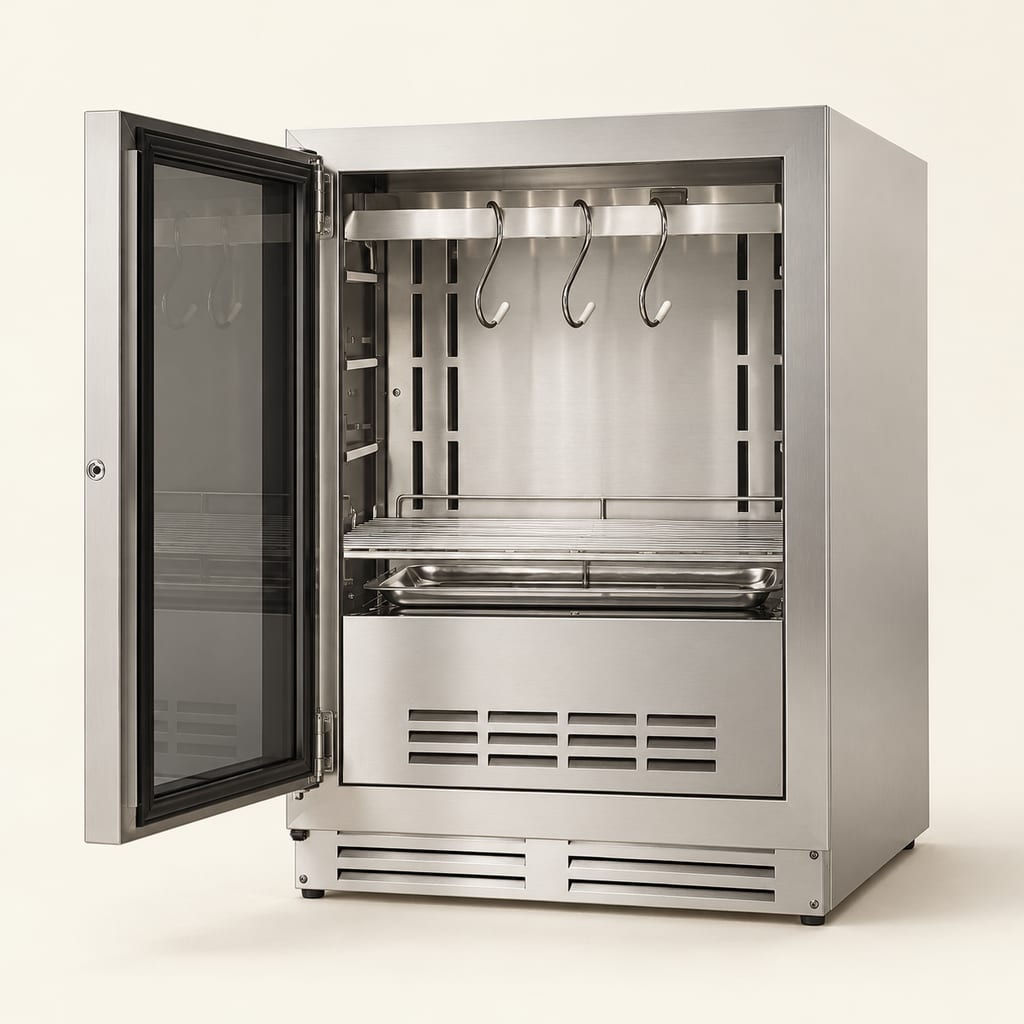
A powered cabinet regulates conditions around food during drying or maturation. Modern models range from small dry-aging cabinets to larger systems; their settings are product-specific, not universal process instructions.

Soft, spreadable Calabrian pork sausage made with a great deal of red chilli and fatty pork, stuffed into natural casings, sometimes smoked and matured while staying soft.

A dark, balanced vinegar from Emilia-Romagna made by combining cooked or concentrated grape must with wine vinegar, then acetifying and refining it in wood under a protected specification.

Protected Italian vinegar made only from cooked grape must, fermented and aged in a battery of wooden barrels for at least 12 years: sweet, sharp and syrupy.
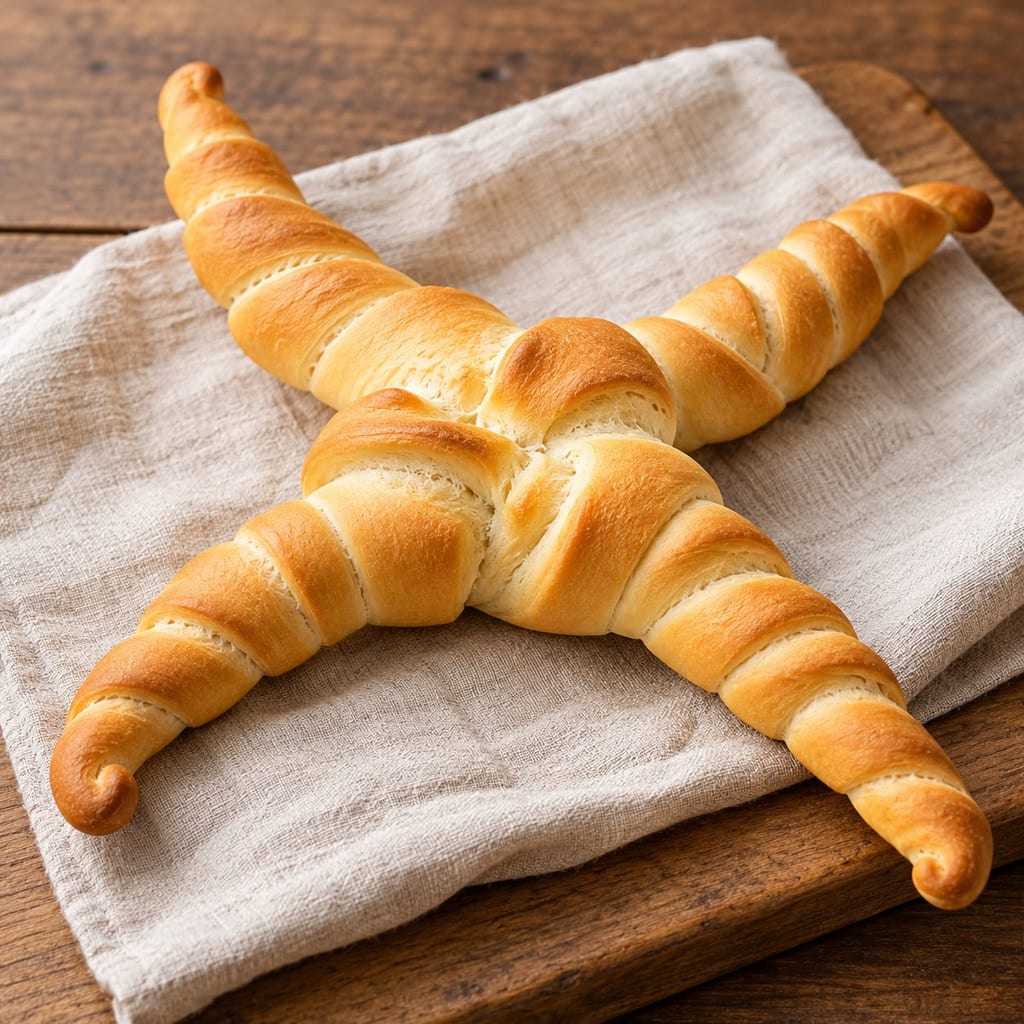
Ferrara’s paired bread twists have four pointed horns joined at a soft centre. This VisitFerrara home recipe uses type 0 flour, water, oil, lard, malt and a choice of sourdough or yeast.
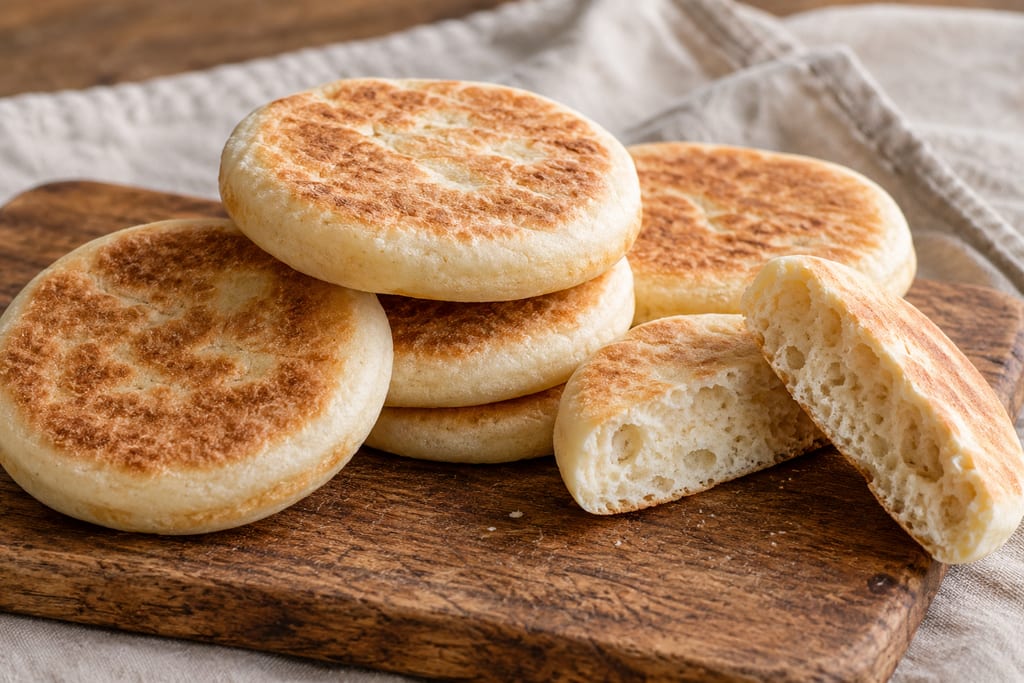
Small Modenese yeast breads cooked between hot plates and served warm.
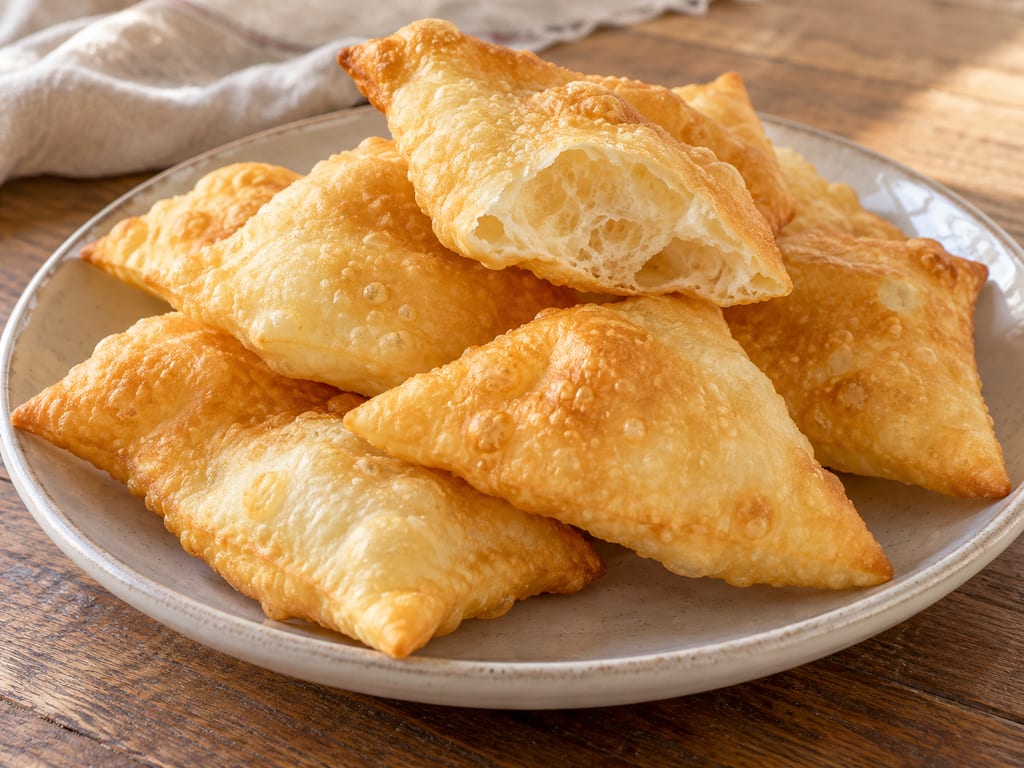
This Emilia-Romagna home version uses a measured flour-and-milk dough with yeast, shapes it into small diamonds or squares, and fries them in peanut oil.
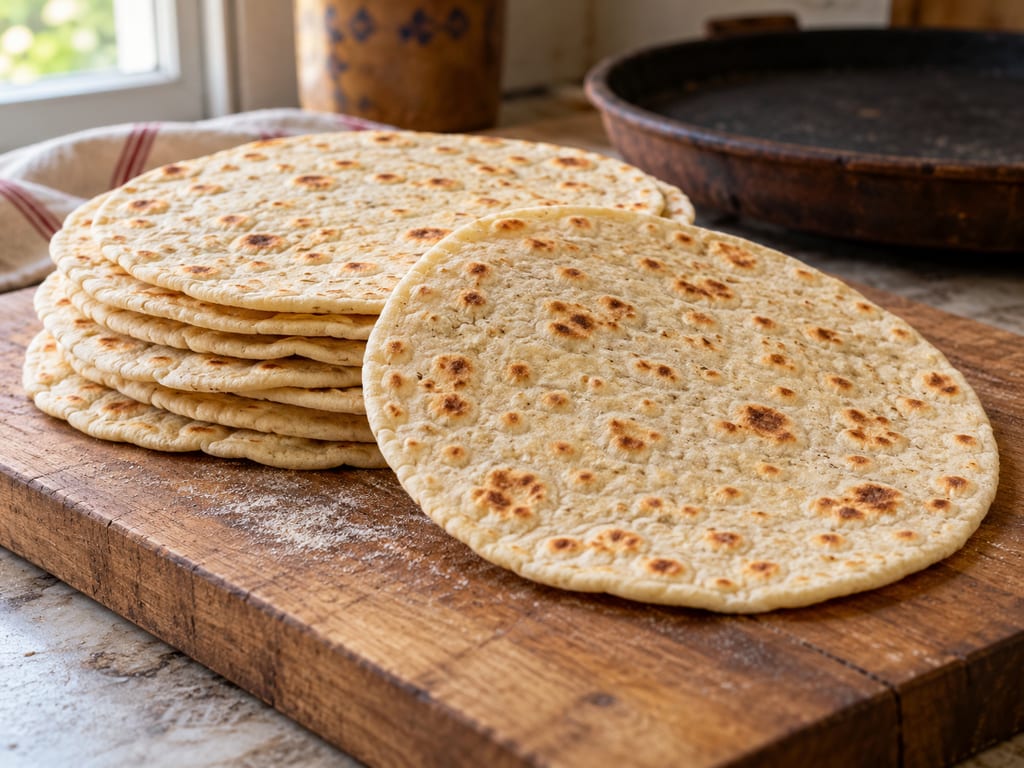
Eight soft Romagna-style flatbreads made from type 00 wheat flour, lard, honey, baker's yeast, milk and salt. Rest the dough for an hour, roll 3–4 mm rounds and cook them quickly on a hot griddle or heavy pan.
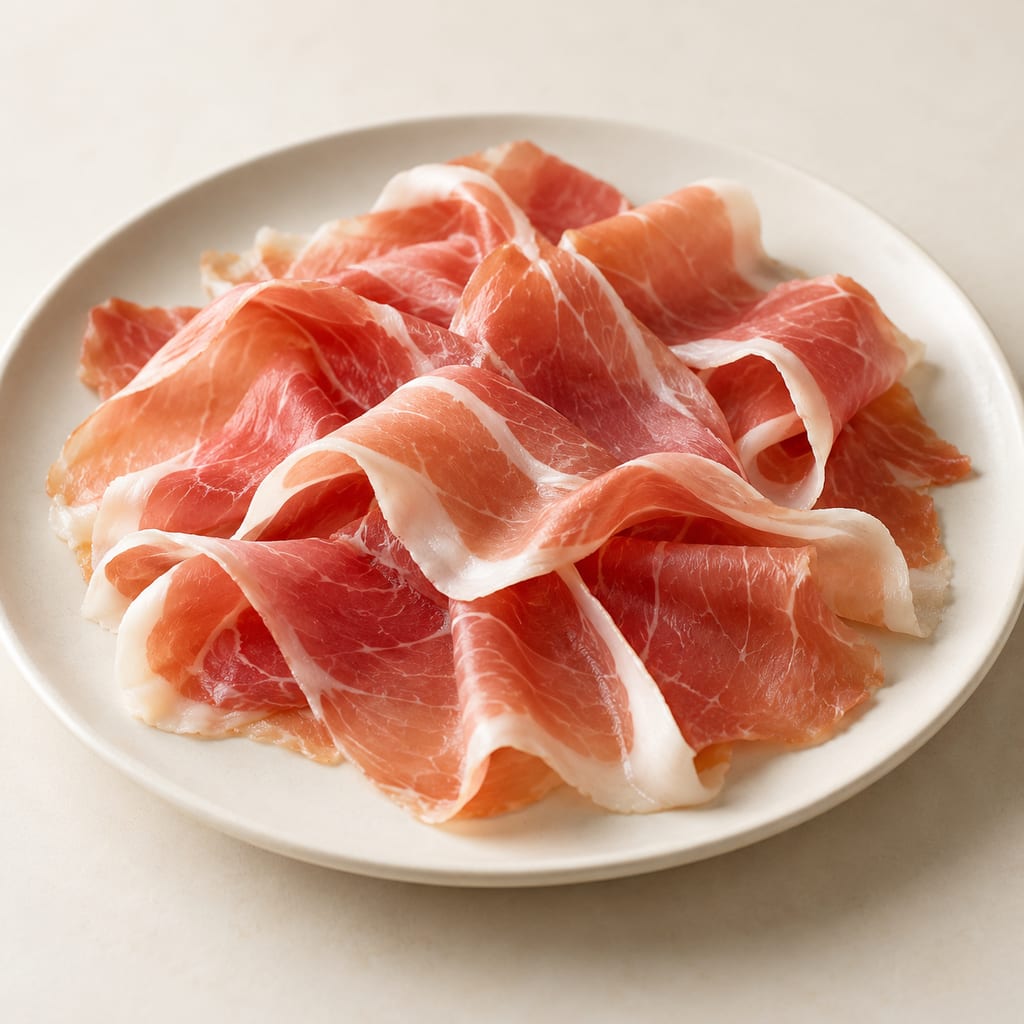
Prosciutto di Parma is a dry-cured, unsmoked ham from the Province of Parma, made from fresh pork legs salted with sea salt and matured for at least 14 months under the protected designation.
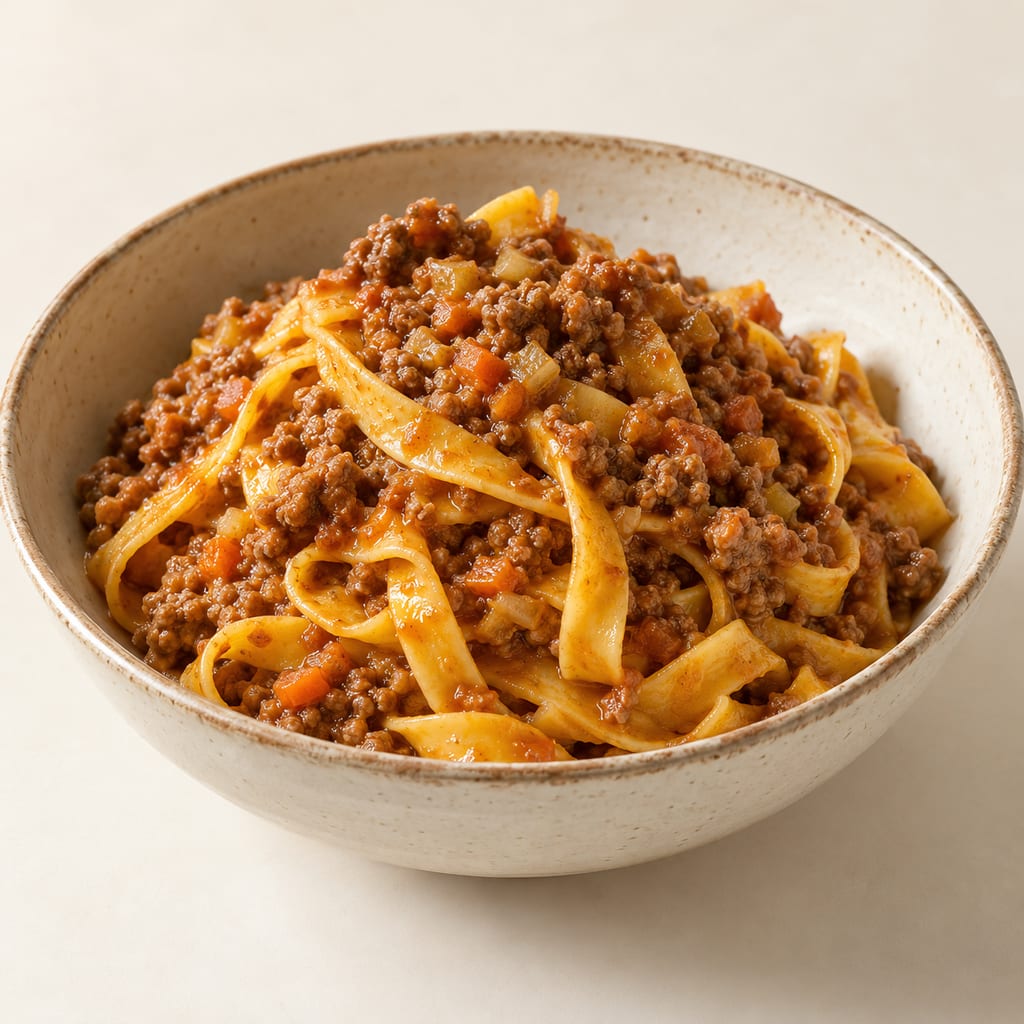
Ragu alla bolognese is a slow-cooked meat sauce of minced beef and a little pork, cooked with soffritto, white wine, milk and a little tomato, served with fresh tagliatelle in Bologna.
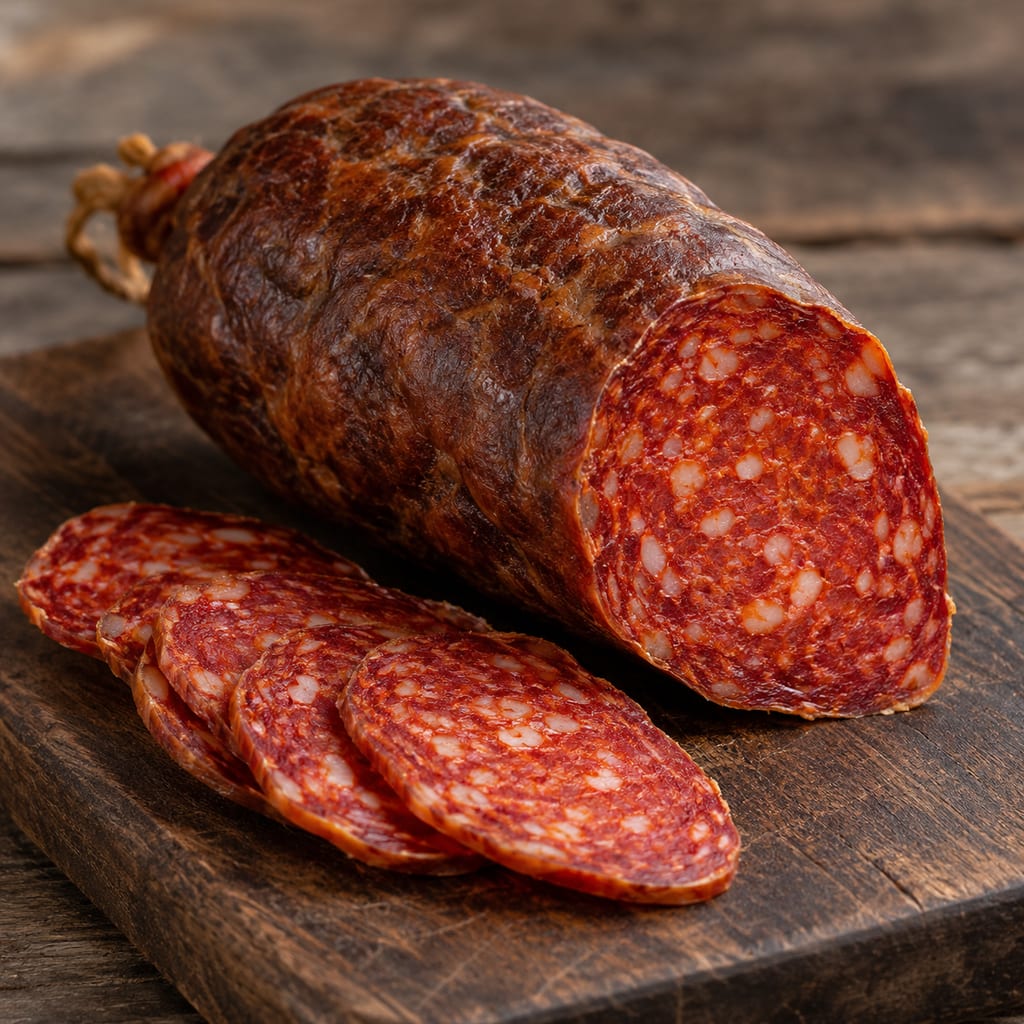
Baranjski kulen is a Croatian protected fermented pork sausage seasoned with sweet and hot paprika, garlic and white pepper, stuffed into a pig’s caecum called katica, cold-smoked and matured.
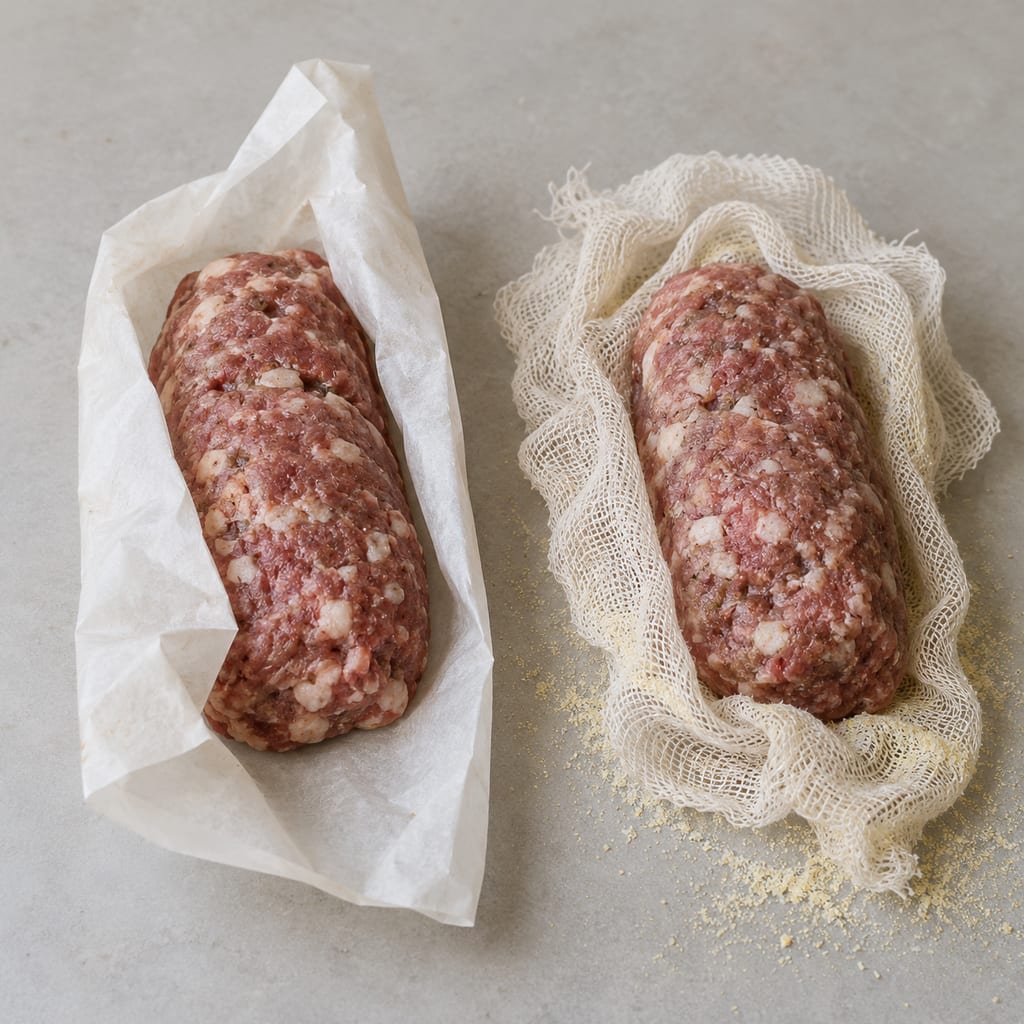
A documentary account of two modern Italian-language home-video experiments in salame without casings. Neither video establishes a safe preparation method or a ready-to-eat product.
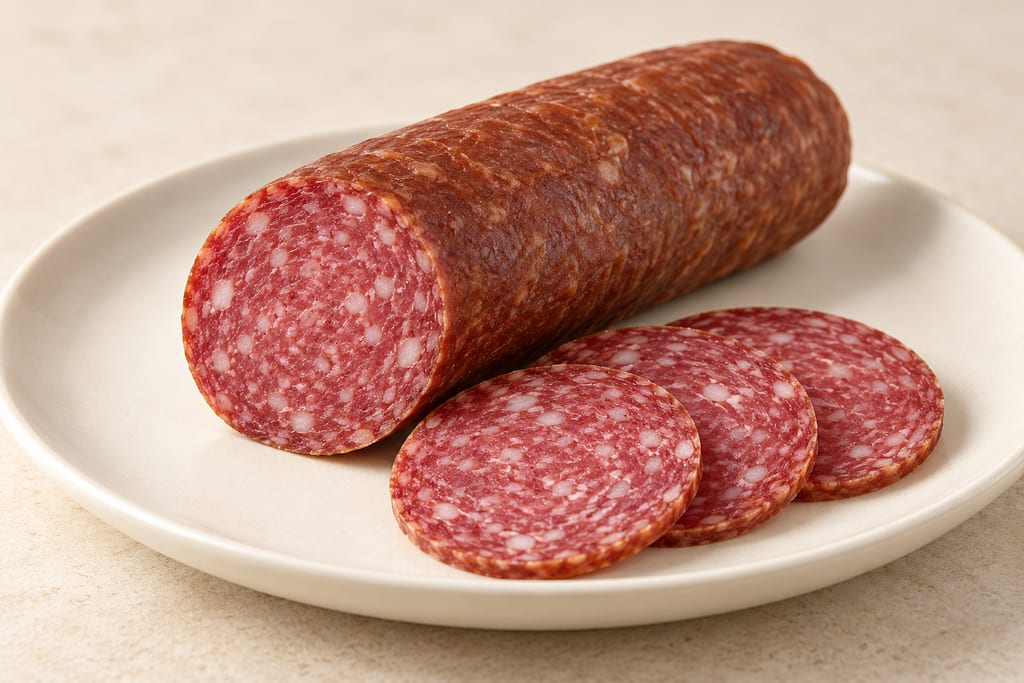
A family of salted minced-meat sausages fermented in casings, then dried and sometimes smoked. This description is not a validated household method; critical safety limits are not established.
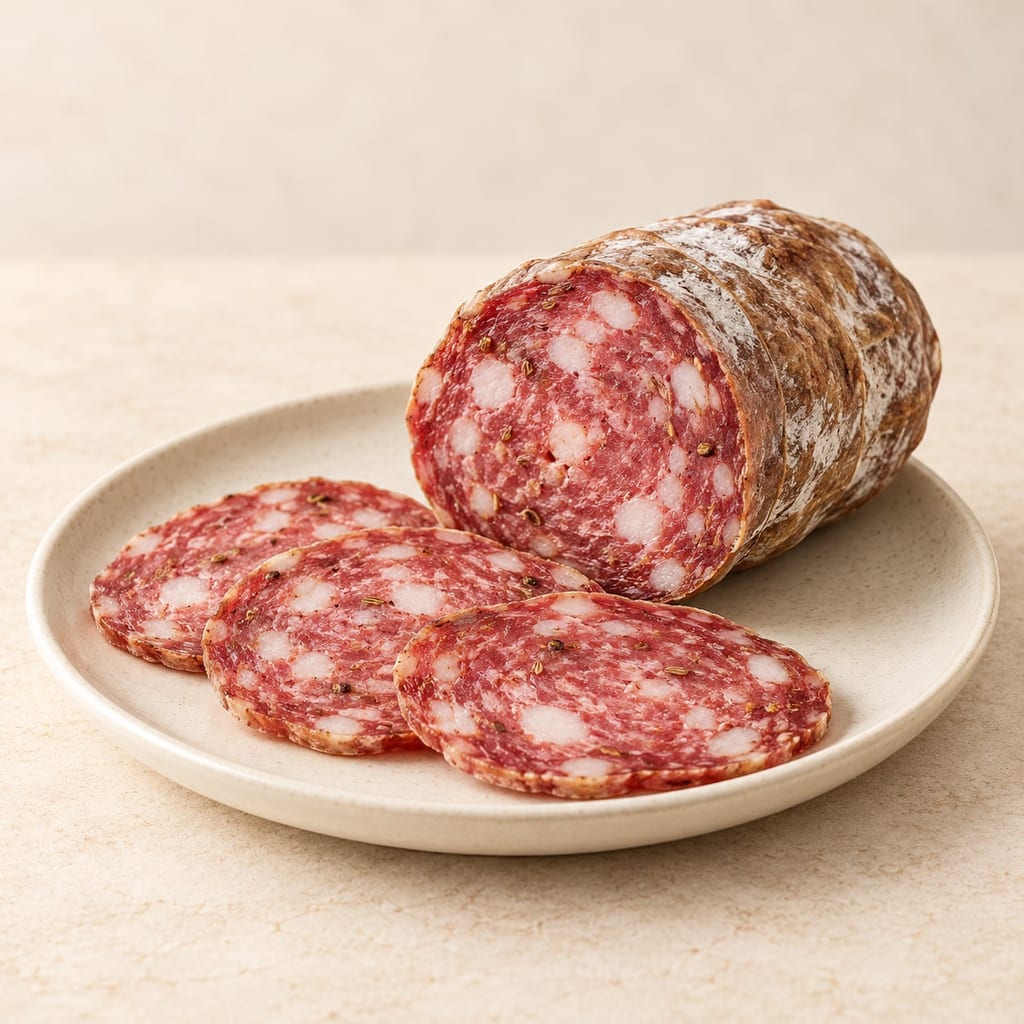
A Tuscan-style fennel salami made with pork and back fat. Toasted fennel, fennel pollen and Sambuca flavor this starter-cultured preparation.
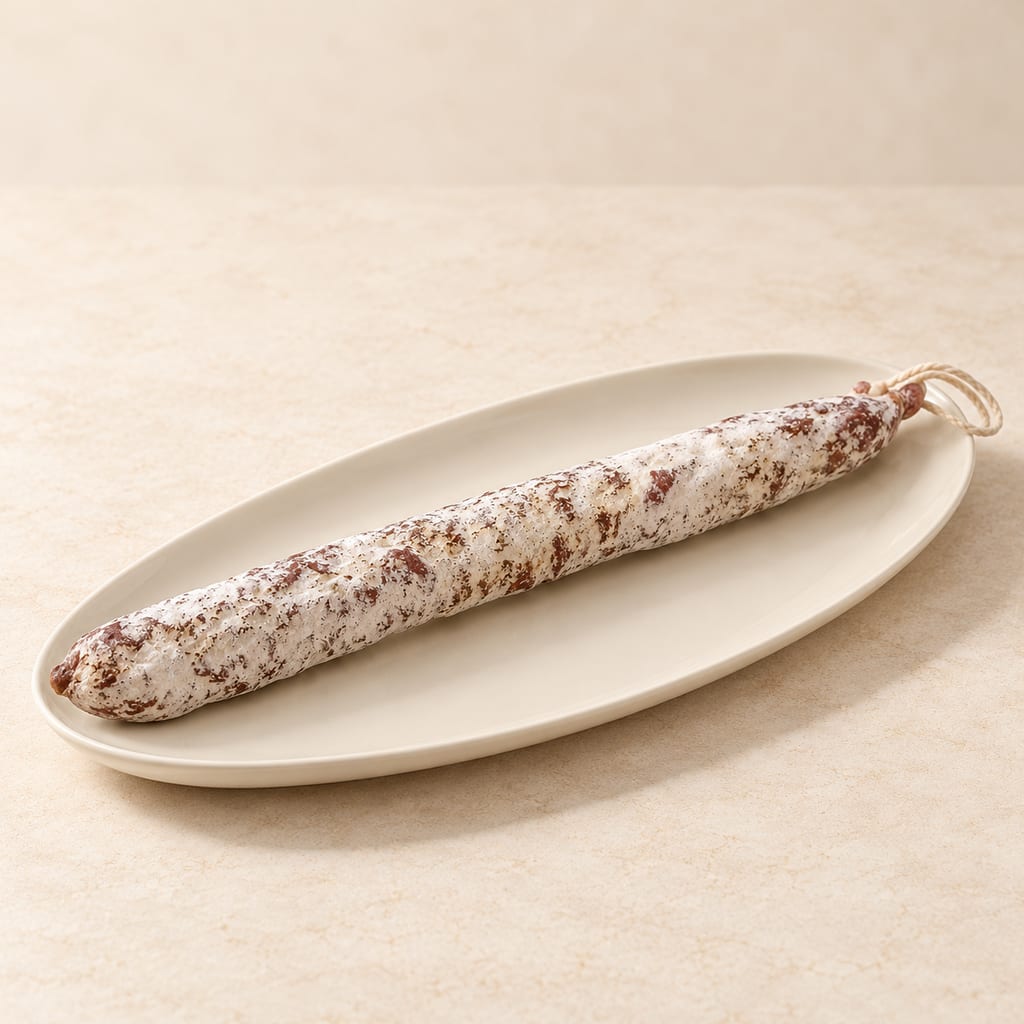
A documentary account of a modern starter-cultured Fuet formula and its place in Catalan sausage culture. The cited raw-pork process lacks matched safety validation, so this page does not present it as a household recipe.
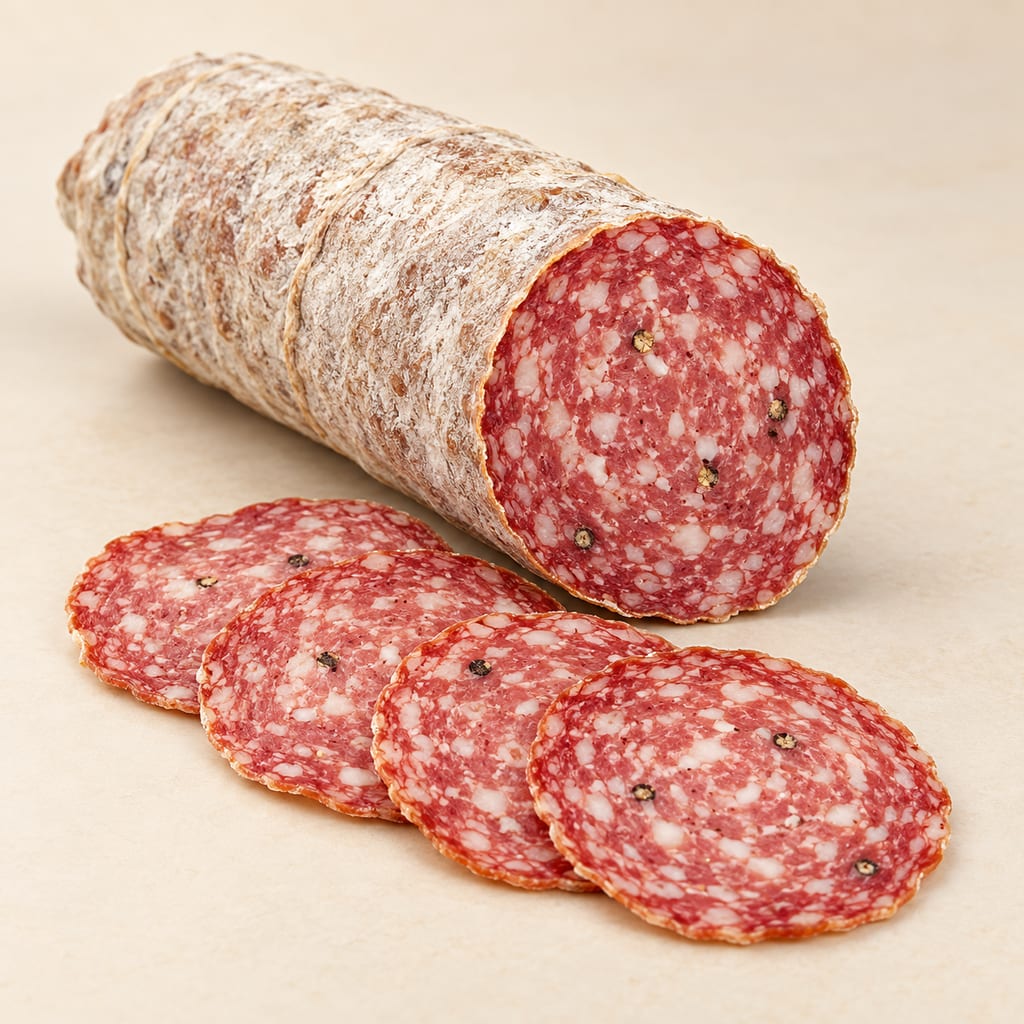
Pork, beef and back fat ferment with a named starter, cure and red wine before the sausages dry in casings. This contemporary formula uses no wood-smoke stage.
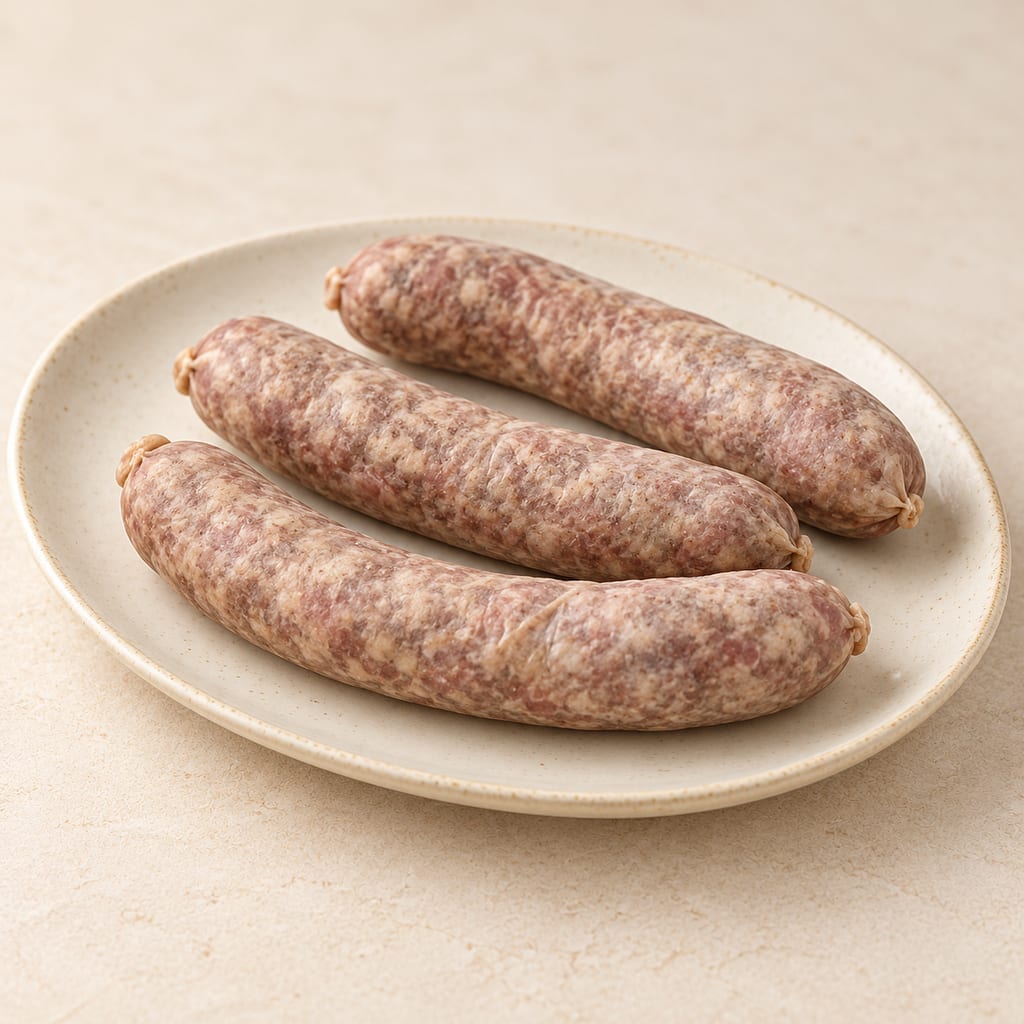
A documentary account of Maltese zalzett and a contemporary starter-cultured adaptation. The cited raw-pork method lacks documented validation for pathogen reduction and is not offered as a preparation recipe.
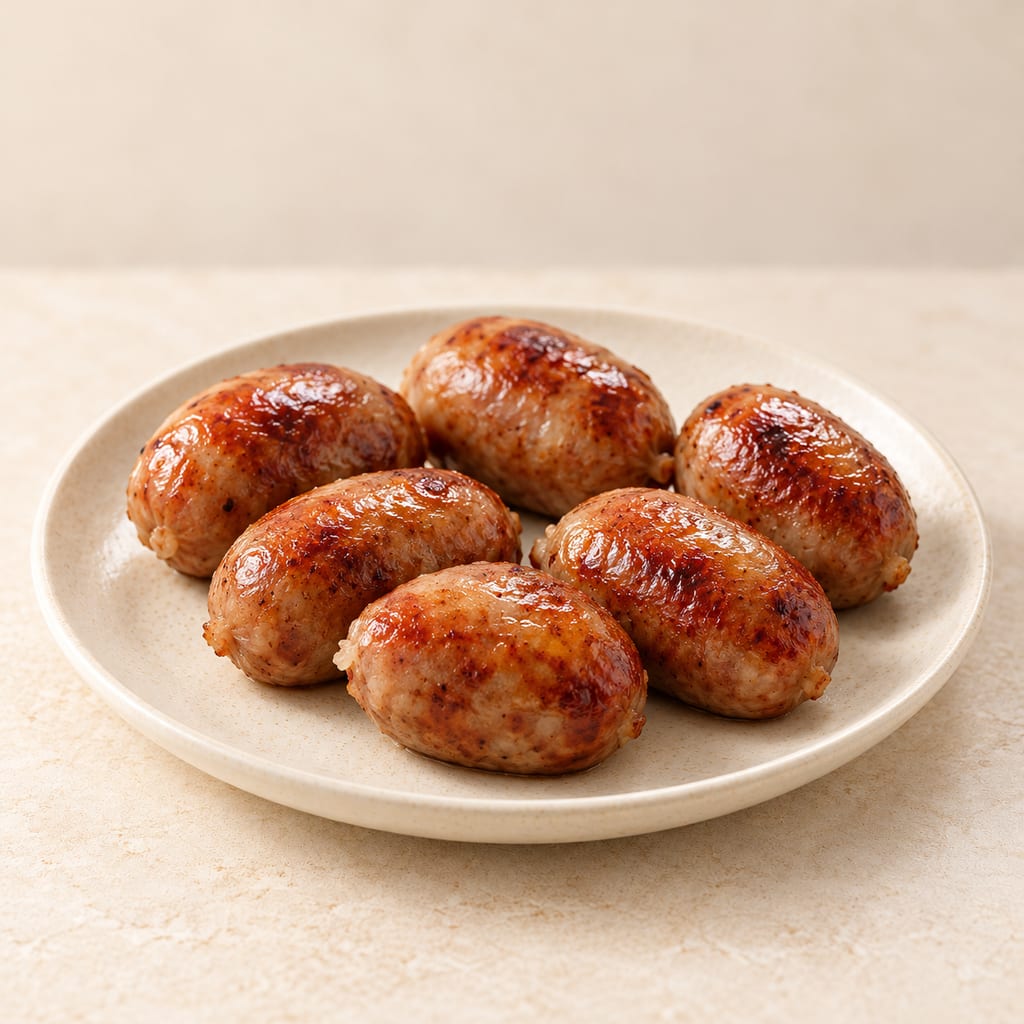
Sai krok Isan is a sour pork-and-rice sausage from northeastern Thailand. This garlic-rich version uses LHP-Dry starter and is cooked after fermentation.

A way to add independent temperature logging to an existing food dehydrator without changing its built-in controls or protections. It is a monitoring method, not a rewiring plan.

Pleurotus cystidiosus is the abalone mushroom, a cultivated oyster-type fungus with dark brown caps that grows more slowly and is more demanding than other Pleurotus species.

A living dairy inoculum that starts controlled cream fermentation, developing acidity and aroma before sour cream or cultured butter is finished.

A small electric incubator holds jars at a selected temperature for yogurt and other documented warm food preparations. Controls, capacity and vessel arrangement vary by model.

Adygean salt is a seasoned table salt associated with Adygea and the wider North Caucasian culinary tradition. Salt is blended with garlic and a variable selection of herbs and spices; the exact mix depends on the named style and maker.

The African Caesar-group mushroom, Amanita masasiensis, is a wild ectomycorrhizal species of central and southern African woodlands, eaten locally. The genus contains deadly poisonous species, so identification needs care.
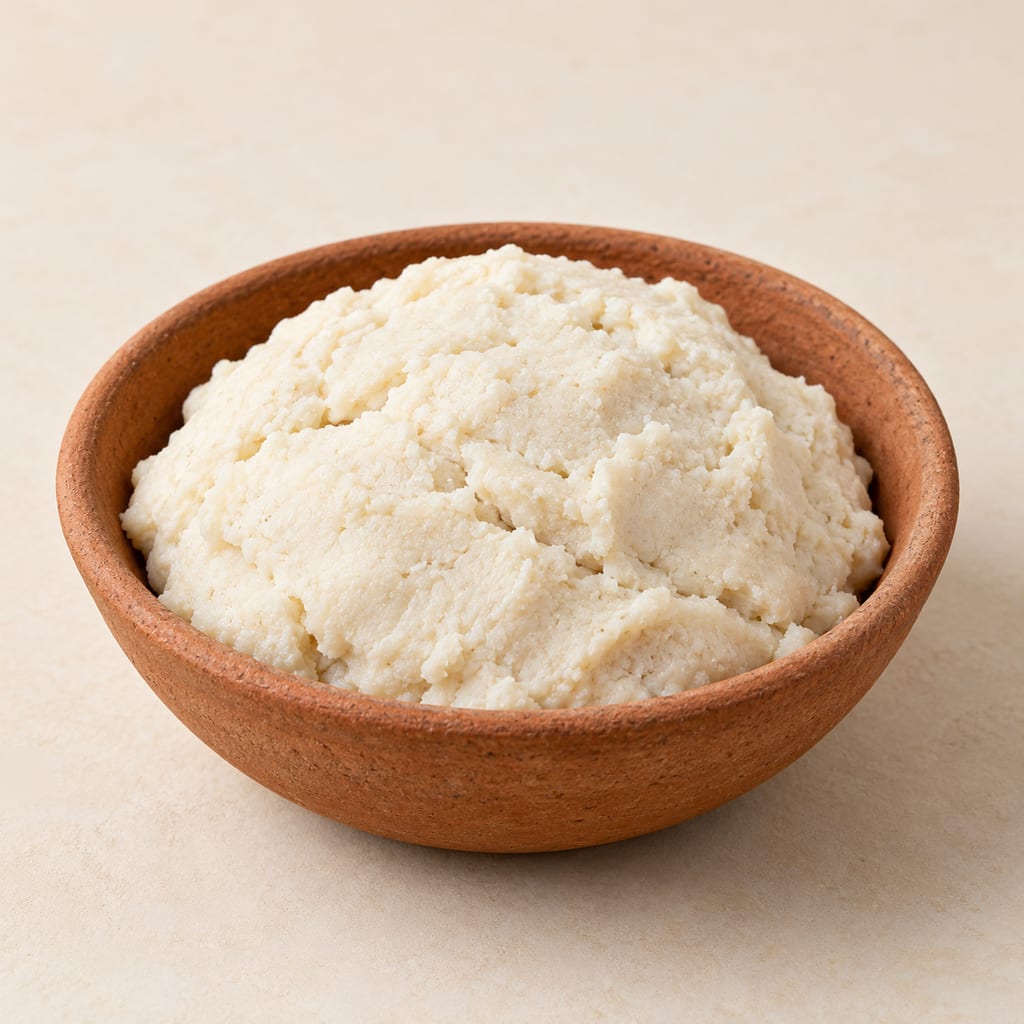
Ghanaian sour cassava dough fermented with traditional inoculum and drained during fermentation. It is used as a base for cooked foods such as banku and akple; process variants and safety outcomes differ.
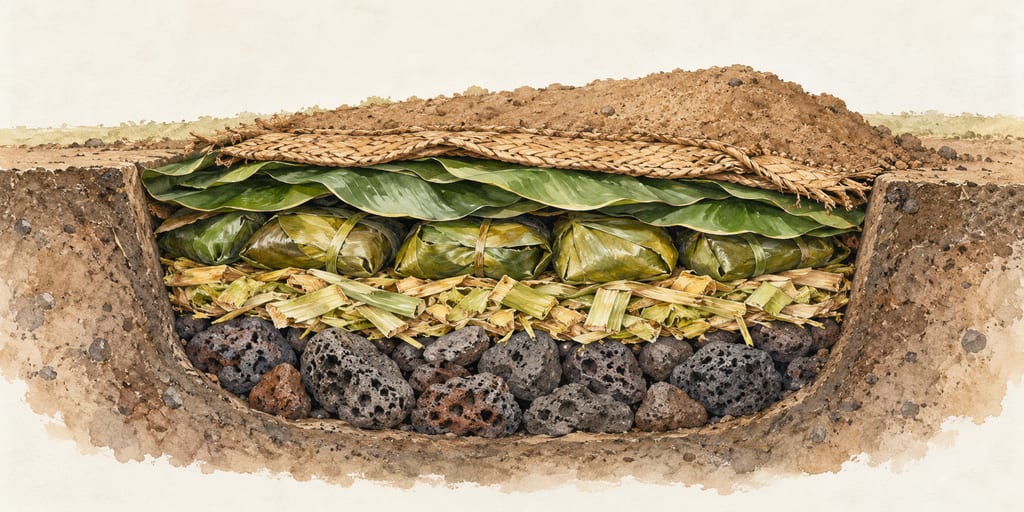
The Tahitian ahimā‘a is a ground oven built in a pit, where hot volcanic stones and layered leaves and earth cook food slowly.
No community contributions have been published for this entry yet.
Sign in to contribute. Published comments and photos are free to read.
Gazzetta Ufficiale della Repubblica ItalianaMethod · Safety
Disciplinare di produzione della DOP Salamini Italiani alla Cacciatora (decree of 13 November 2024)Pig origin, 3 to 8 mm grinding, 7 C holding, casing, drying at 18 to 25 C, maturing at 10 to 15 C for at least ten days
Analytical limits and additive maxima
Cited in: What it is; History; How it works: salt, acid and drying; How it is made, and why each step matters; Regional and historical variations; Reading results and problems
Gazzetta Ufficiale della Repubblica ItalianaHistory
Decreto 13 novembre 2024: modifiche ordinarie al disciplinare2024 amendment
Cited in: History; How it is made, and why each step matters
Ministero dell'Agricoltura, della Sovranita Alimentare e delle ForesteMethod
Disciplinare di Produzione della DOP Salamini Italiani alla CacciatoraConsolidated specification
Cited in: How it is made, and why each step matters
Official Journal of the European UnionHistory · Method
Publication of the communication of an approved standard amendment, Salamini Italiani alla CacciatoraAmendment published 12 May 2025
Cited in: What it is; History; How it is made, and why each step matters; Reading results and problems
European Commission, eAmbrosiaIdentity
Salamini Italiani alla CacciatoraRegistration of the DOP
Cited in: What it is; History; Regional and historical variations
IFCQ CertificazioniIdentity
Salamini Italiani alla Cacciatora DOPCertification description
Cited in: Reading results and problems
Ministero dell'Agricoltura, della Sovranita Alimentare e delle ForesteUse
Salumi DOP: Salamini Italiani alla CacciatoraStorage and a portion of up to 50 grams
Cited in: What it is; How it is made, and why each step matters; How it is eaten and used
Regione Emilia-RomagnaHistory · Use
Salamini Italiani alla Cacciatora DOPRegional description and serving
Cited in: History; Regional and historical variations; How it is eaten and used
Consorzio Cacciatore ItalianoHistory · Use
Salamini Italiani alla Cacciatora PDO: the productHunters' bread story, product description
Cited in: What it is; History; How it is made, and why each step matters; Regional and historical variations; How it is eaten and used
Istituto Valorizzazione Salumi ItalianiHistory
Consorzio Cacciatore ItalianoConsortium founded May 2003 and recognised 2005
Cited in: History; How it works: salt, acid and drying; Regional and historical variations; How it is eaten and used; Reading results and problems
Coop ItaliaVariation · Use
Cacciatore ItalianoLabel ingredients; 4 g salt and 27 g fat per 100 g
Cited in: Regional and historical variations; How it is eaten and used
Emilia-Romagna TurismoUse
PDO Salamini Italiani alla CacciatoraAntipasto uses
Cited in: How it is eaten and used
USDA Food Safety and Inspection ServiceSafety
FSIS ready-to-eat fermented, salt-cured, and dried products guidelinePathogens and validation in fermented sausage
Cited in: How it works: salt, acid and drying; How it is made, and why each step matters; Reading results and problems
USDA Food Safety and Inspection ServiceSafety
Availability of FSIS ready-to-eat fermented, salt-cured, and dried products guideline2021 Salmonella outbreaks linked to Italian-style cured meats
Cited in: Reading results and problems
Official Journal of the European UnionSafety
Commission Regulation (EU) 2023/2108 amending provisions concerning nitrites and nitratesNitrite and nitrate legal limits
Cited in: Reading results and problems
Iowa State University Pork GatewaySafety
Dry and semi-dry fermented and direct acidified sausage validationValidation of fermented sausage processes
Cited in: How it works: salt, acid and drying; Reading results and problems