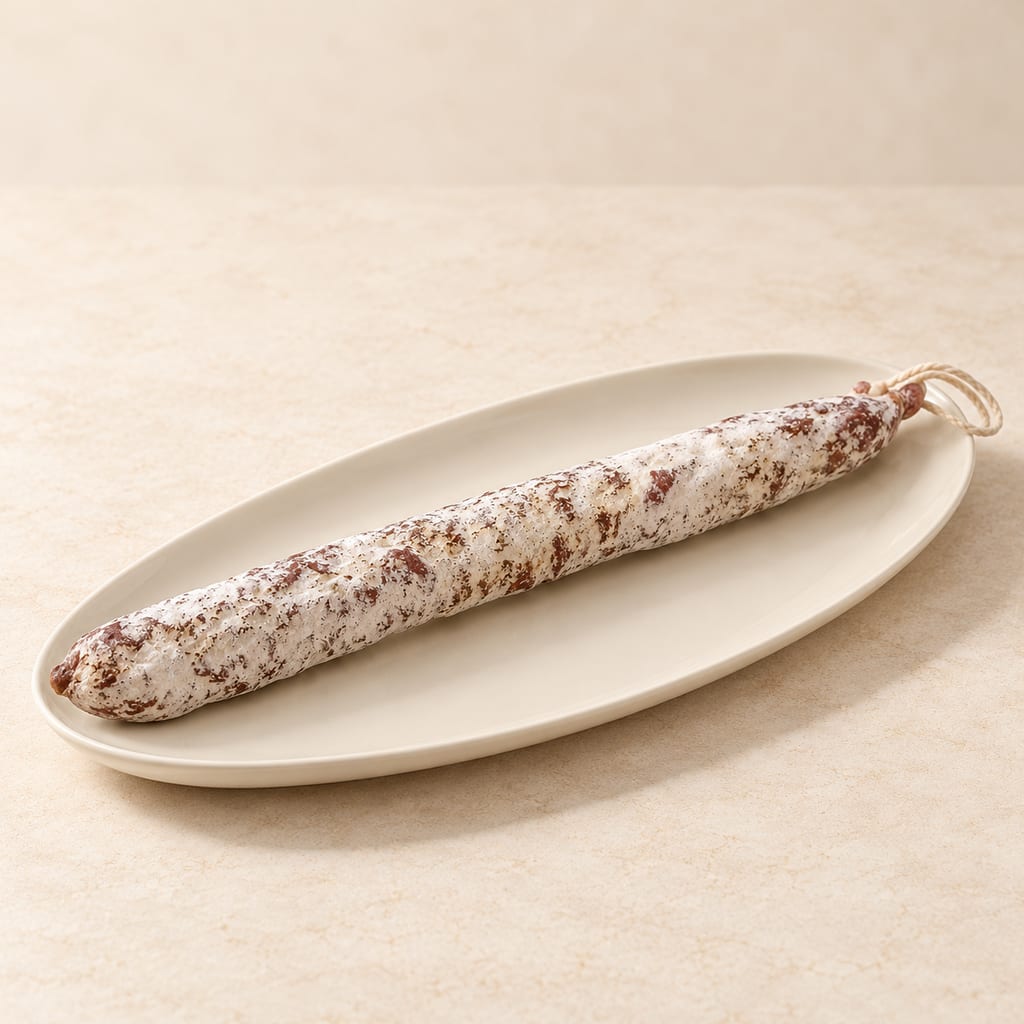
Fuet, starter-cultured
A documentary account of a modern starter-cultured Fuet formula and its place in Catalan sausage culture. The cited raw-pork process lacks matched safety validation, so this page does not present it as a household recipe.
 FermenteaWhere food goes to change
Processing aids
Cleaned, preserved pig intestinal tissue forms a flexible envelope for sausages. Section, calibre and packing affect handling, drying and the finished bite.
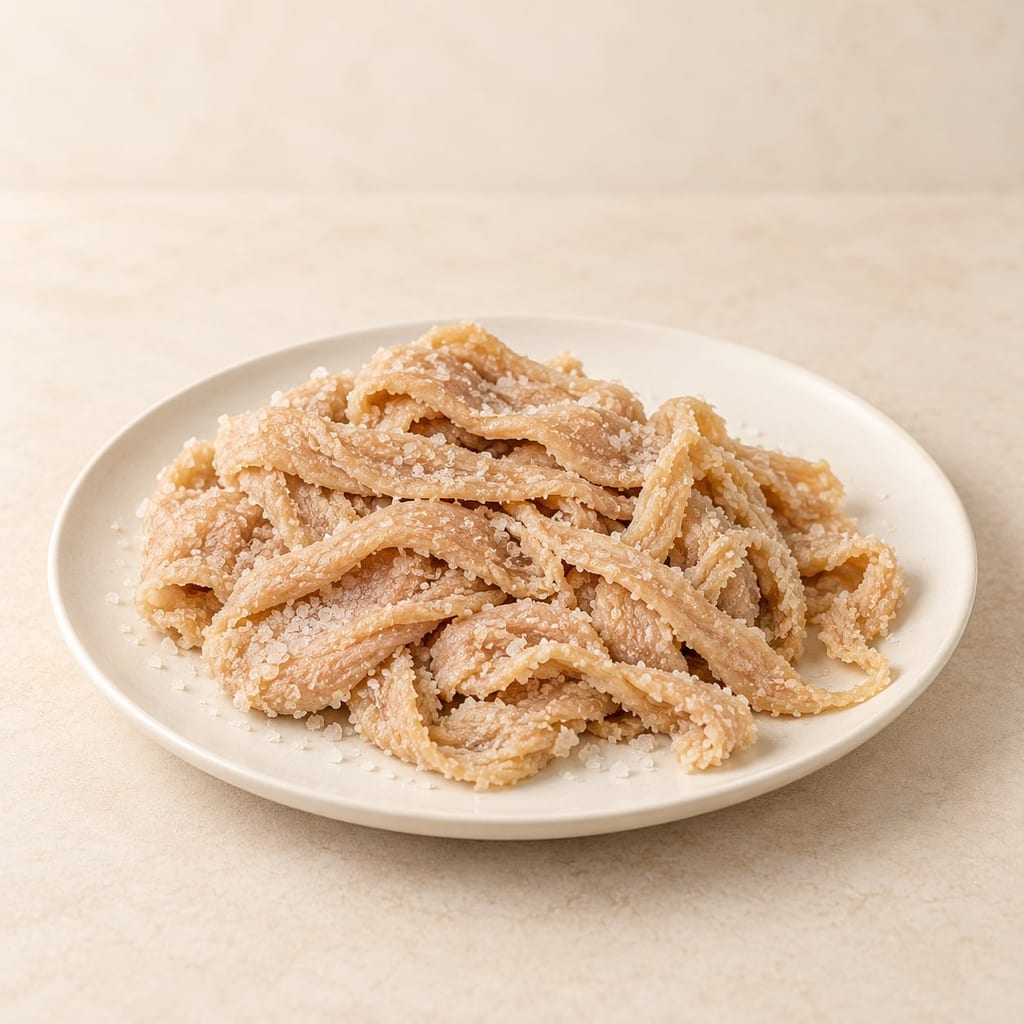
Hog casings are cleaned, prepared tissues from a pig's digestive tract, sold as envelopes for sausage fillings. Unstuffed and salted, they can look like an unpromising tangle of pale ribbons. Rinsed and prepared for filling, a length opens into a flexible tube. That transformation makes an important distinction visible: the casing is an ingredient with a structure of its own, rather than simply the outside surface of the minced meat.
The material gives a sausage its outline, contains the filling and contributes to the bite. It also participates in the physical changes of drying and cooking, contracting or stretching as the food changes within it. The thin skin around a link is therefore part of its texture and manufacture. A loose patty made from the same mixture lacks that envelope and is a different way of preparing and eating the meat.
Hog means domestic pig, commonly classified as Sus scrofa domesticus, with Sus domesticus used in another taxonomic treatment. The trade name alone does not identify a breed, country or exact intestinal section. Small-intestinal rounds, larger intestinal sections and other animal envelopes have different dimensions and construction. A recipe's casing specification is a choice of material, just as its choice of lean meat or fat is.
Animal envelopes belong to a long history of making seasoned meat into convenient portions. In Apicius's De re coquinaria, the Lucanian sausage is made from finely worked pork, seasonings and nuts, pushed into casings and hung in smoke. Other recipes in the same collection describe filled casings that are boiled or fried. The surviving text records a recognizable relationship between filling, envelope and subsequent treatment.
It does not identify the casing's intestinal layer or establish that it was identical to a modern packet of hog rounds. The culinary continuity lies in the idea of enclosing a prepared mixture, while the materials, seasonings and methods have varied. Roman stuffed preparations, a contemporary Catalan dry sausage and a Thai fermented sausage each need their own account. Sharing an envelope does not make them one recipe with different names.
Casing manufacture turned a delicate slaughter by-product into a material that could be sorted, preserved and sold. Cleaning and salting made it possible to prepare the envelope separately from the filling. Modern trade carries that separation further: cleaning, grading and packing may take place at different operations. A sausage maker can buy a measured, selected material rather than prepare an intestine as part of every make.
The intestinal wall contains several layers. On the inside is the mucosa; outside it lie supporting connective tissue and muscle, with an outer covering called the serosa. The submucosa is rich in collagen fibres. In prepared pig small-intestinal rounds, the other layers are removed so that this connective-tissue layer forms the usable casing.
That is why the finished tube can be thin without being a simple sheet of fat or muscle. Its fibrous tissue provides a supporting network. Processing separates a useful layer from a much more complicated organ, removing contents and tissues that are not wanted in that particular casing. The structure comes from the animal; manufacture selects and prepares it for another purpose.
The wider category includes more than small intestines. Different sections are sold under trade names such as rounds, middles and bungs, and older technical descriptions distinguish the layers retained in different products. Sheep and cattle casings have their own anatomical sources and processing conventions. A general instruction to use a natural casing is consequently less precise than a specification naming the animal, section and size.
Commercial preparation begins with separating the intestine from attached tissues and removing its contents. Washing, rollers and scrapers help clean the material and remove unwanted layers. These operations are followed by sorting and preservation. The sequence combines mechanical work with the hygiene controls required for a material obtained during slaughter.
Grading makes natural variation manageable. Casings can be filled with water or air so their condition and dimensions can be assessed. Length, calibre and defects affect what a manufacturer can sell and what a sausage maker can fill consistently. Calibre describes the tube's diameter, while a hank or bundle describes a commercial grouping of lengths. Neither turns an animal tissue into a perfectly uniform manufactured film.
The finished material may be packed in salt or brine, or supplied in a prepared format that makes loading onto a stuffing horn easier. Salt preservation is a distinct stage from rinsing and softening before use. The producer's packing system helps determine what the customer must do next. A tubed product and a dry-salted bundle may both be hog casing while arriving in different working conditions.
A salted casing and a soaked casing handle differently because water changes the material's working condition. Rinsing removes adhering salt and soaking softens the tissue. The prepared casing becomes more flexible for opening, loading and filling. Its physical behaviour is one reason a supplier gives preparation instructions rather than treating the material as ready for immediate use in every format.
During stuffing, the envelope has to contain a moving mixture without tearing. During linking, it must tolerate bending and localized tension. Later, the filling may expand during cooking or contract as it loses moisture. Casing and filling have to change together if the surface is to remain close to the sausage. A loose or damaged envelope affects the product's form even when the filling itself was mixed correctly.
These are properties of a natural material with biological variation. Animal source, intestinal section, cleaning and preservation all help determine its behaviour. Selecting to a size band reduces one source of variation, but it does not make every length identical. A casing that is suitable for one sausage format may be inconvenient or unsuitable for another, even before seasoning or fermentation is considered.
In a drying sausage, water moves from the filling toward the surface and into the surrounding air. The casing lies along that path. Natural casings are used in products that dry and receive smoke, while some synthetic casings are designed to be much less permeable. The envelope's material and condition therefore belong to the physical design of the food.
The same mixture in a narrow link and a broad sausage presents a different distance from centre to surface. Casing selection and product size interact with the drying environment rather than operating independently of it. A close-fitting envelope also follows the shrinking body, helping retain the familiar cylindrical shape instead of hanging loosely around it.
Fat handling can affect this boundary. If softened fat greases the inside of the casing during filling, it can reduce porosity and impede moisture movement. Rapid exterior drying creates a different problem: a resistant outer layer around a wetter centre. These mechanisms explain why cutting, filling and chamber management are separate stages. They address different physical features of the same developing sausage.
The casing holds a mixture that may be fermented, cooked, smoked, dried or used in several of those ways. Its presence does not identify which process has taken place. In a starter-cultured sausage, selected microorganisms act within the mixture, using suitable carbohydrate and changing acidity. The envelope provides form and a surface through which exchange occurs; it is not the named bacterial starter.
There is a separate historical use of fermentation in casing preparation. Older methods allowed intestinal layers to soften so they could be removed by hand, while mechanical cleaning offered another way to achieve the separation. That manufacturing history should not be confused with fermenting the stuffed sausage. The two operations act on different materials for different purposes.
Understanding the distinction helps when reading an ingredient list. Meat supplies the principal body, fat contributes texture and flavour precursors, salt changes protein and water behaviour, and a starter performs a specified microbial role. The casing surrounds those ingredients and helps determine their physical format. Each ingredient has work to do; the envelope does not replace the controls assigned to the food's fermentation and maturation.
Salted casings need preparation before they can move smoothly onto a filling nozzle. Rinsing removes packing salt and brine; soaking softens the preserved tissue. A cold soak followed by a shorter warm-water stage occurs in some supplier preparations, but its duration and conditions depend on the identified product. Preservation and packing affect what must be done before stuffing. The casing's original package connects those operations with the material actually in hand.
With Van Hessen's netted and tubed products, rinsing and soaking precede loading the casing onto the filling nozzle and removing the supporting tube. For CCS salted hog casings, gentle hand massage while submerged separates the strands and prevents dry spots that can interfere with stuffing. The work is practical: salt must be removed, the tissue softened and individual lengths made usable. A tube supports the folded casing during handling; a bundle of loose strands presents a different loading task.
The animal source, calibre and preservation method help identify the casing before it is opened and wetted. A recipe's stated diameter or type remains relevant during loading, linking and filling. A packet sold only as hog casing supplies less detail than a graded product with its own handling instructions. Rinsing and softening prepare that particular material for use; they do not establish a new fermentation schedule or the final condition of the sausage filling.
Salted casings are sold under storage conditions established for their own packing system. Keep them protected and follow the supplier's temperature, packaging and date instructions. A commercial guide's account of salt-preserved transport is not a shelf-life label for a partly used household packet, particularly once its packing salt has been rinsed away.
The preservation stage and the working stage are different. Removing salt and adding water prepares the tissue for stuffing, while also changing the environment in which it is held. Plan the preparation around the recipe and the supplier's directions. Keep unused stock identified and handled as instructed rather than assuming that a familiar smell or colour supplies the missing storage information.
Hog casing is pork-derived and is unsuitable for a vegetarian or pork-free diet. People managing an allergy or a medical dietary restriction need the actual supplier's ingredient and cross-contact information. Cleaning and salting do not change the animal source. Likewise, the words natural or edible describe different features from a religious certification or a claim about the meat inside the casing.
The same class of casing can surround very different foods. The linked preparations include fuet, Spanish chorizo, Maltese sausage and Sai krok Isan. Their seasonings, microbial cultures and treatment of the stuffed mixture remain with those individual recipes. The shared casing gives each filling an enclosing shape, while garlic, paprika, herbs or the character of the fermented meat distinguish the food within it.
Alternatives change more than the name on the packet. Sheep casings, larger animal sections, regenerated collagen, cellulose and plastic differ in dimensions, handling and whether they are intended to be eaten. Some are chosen for smoke permeability, some for cooking or packaging, and some for easy removal. Match an alternative to the preparation's requirements instead of treating all tubes as interchangeable.
At the table, casing is usually encountered as part of the sausage rather than as a food served alone. It helps provide the resistance around a juicy cooked link or the surface of a dried one. Sometimes it is eaten, sometimes peeled away, depending on the material and product. Its contribution is modest in weight but substantial in form: it turns a loose mixture into something that can be linked, hung, sliced and served.
The linked generic ingredient lines do not establish a common intestinal section, calibre, supplier or packing format. Those details and the packet's preparation and storage instructions remain product-specific.
Pork-derived animal tissue; unsuitable for vegetarian or pork-free diets. Obtain exact supplier allergen, ingredient and cross-contact information where needed.
The generic recipe lines do not identify a common animal-rearing, processing or packing location; multinational trade and recipe tradition are separate.
A documentary account of a modern starter-cultured Fuet formula and its place in Catalan sausage culture. The cited raw-pork process lacks matched safety validation, so this page does not present it as a household recipe.
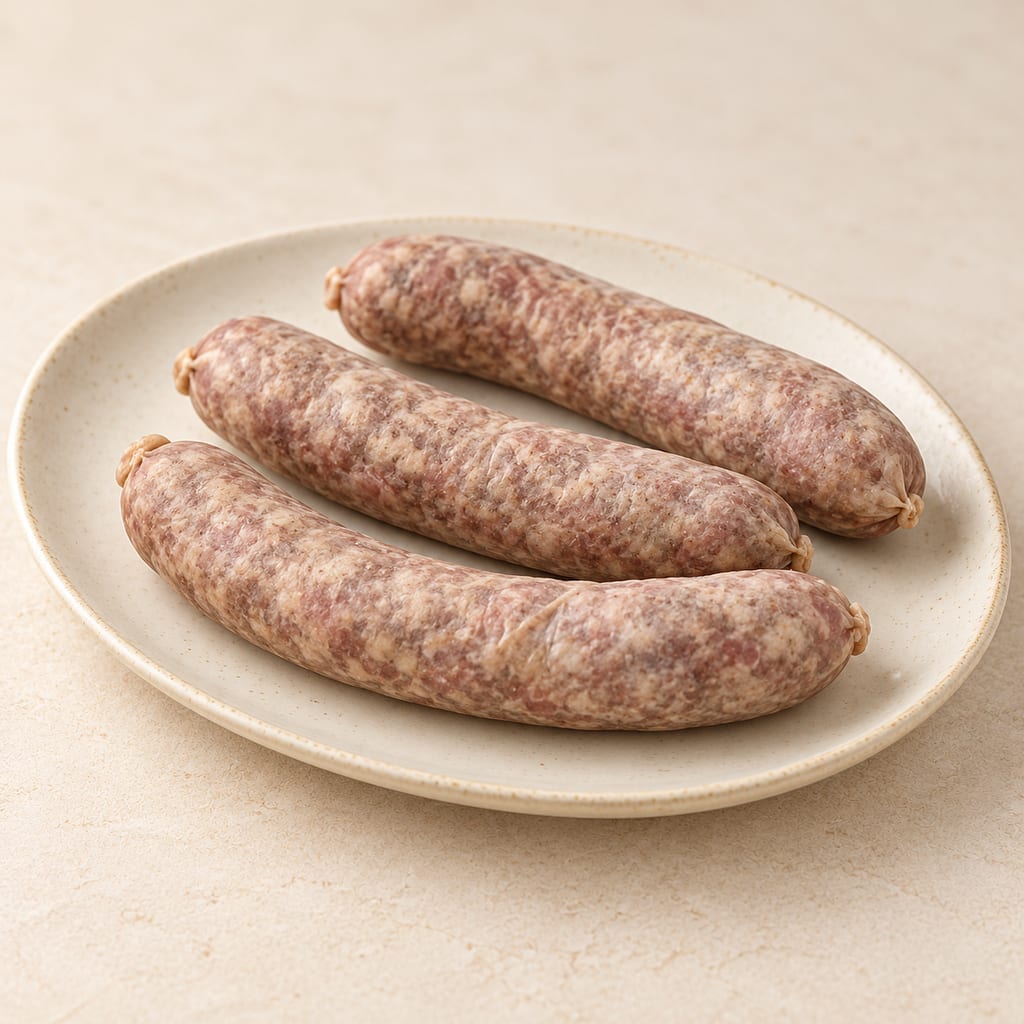
A documentary account of Maltese zalzett and a contemporary starter-cultured adaptation. The cited raw-pork method lacks documented validation for pathogen reduction and is not offered as a preparation recipe.
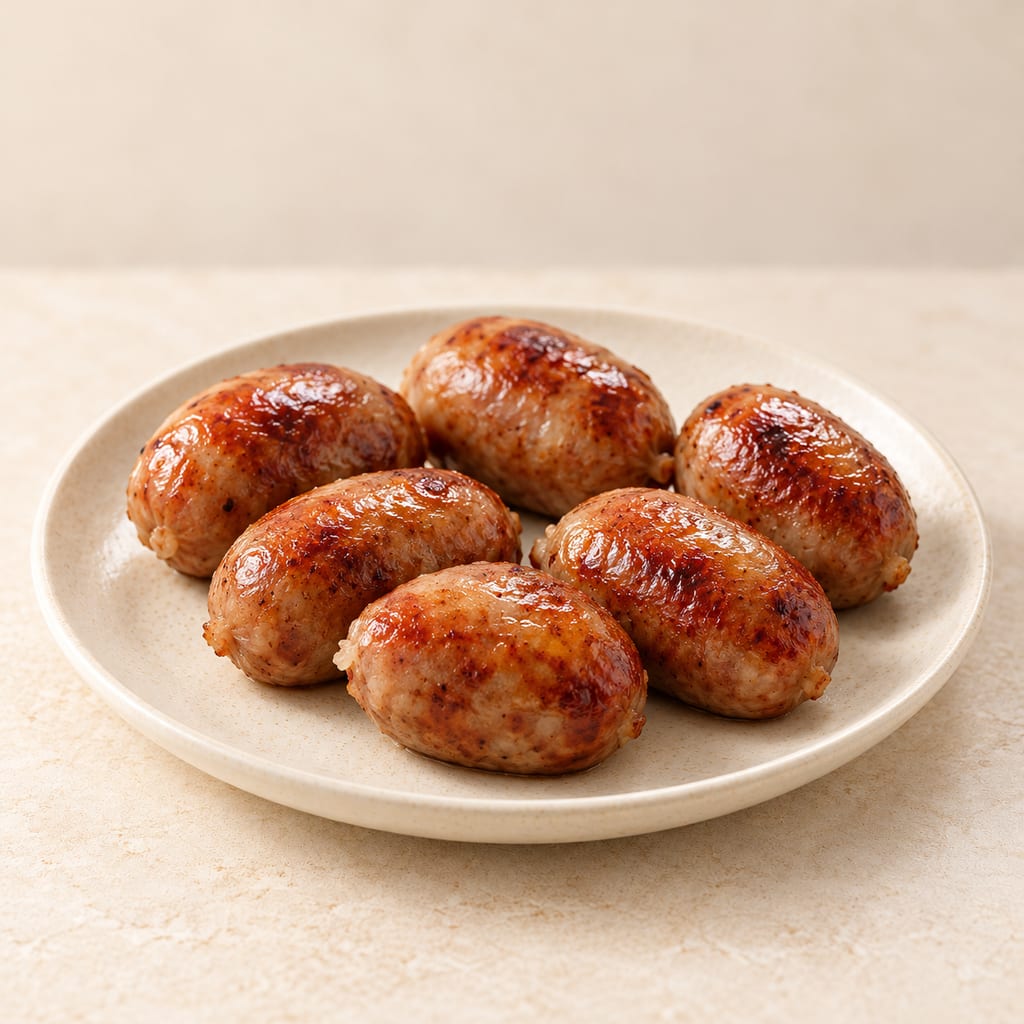
Sai krok Isan is a sour pork-and-rice sausage from northeastern Thailand. This garlic-rich version uses LHP-Dry starter and is cooked after fermentation.
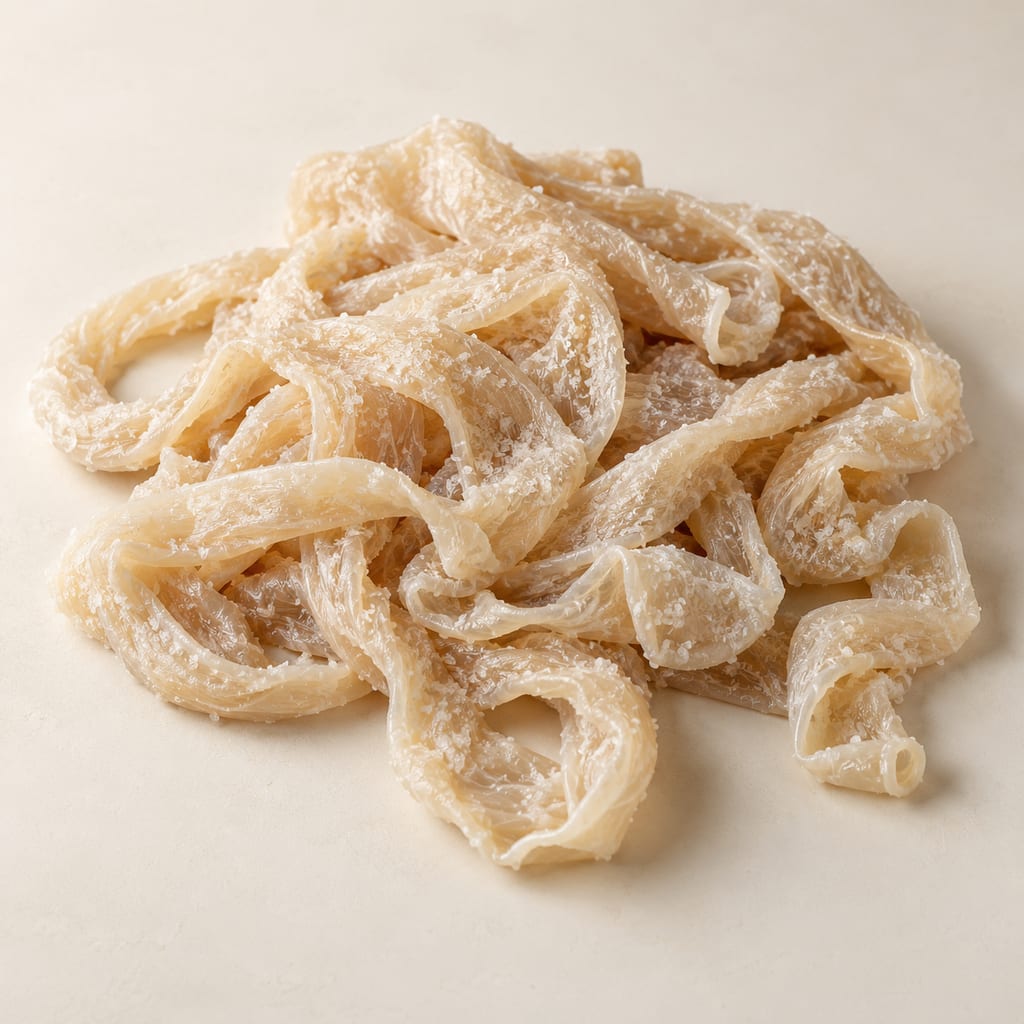
Natural casings are cleaned animal guts, stomachs, bladders and skins used to hold sausage and pudding fillings; the organ, animal and diameter decide the food's shape and drying.
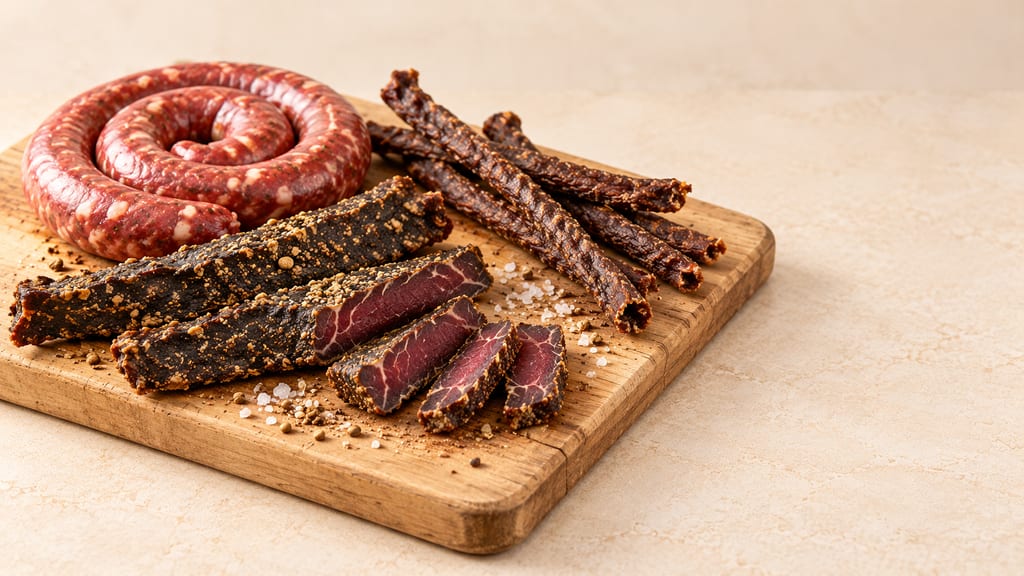
Boerewors, biltong and droëwors share a table but follow different paths from meat to meal. Their histories lead from the braai and butcher's counter to drying lines, household pots and the science of keeping food.
No community contributions have been published for this entry yet.
Sign in to contribute. Published comments and photos are free to read.
Food and Agriculture OrganizationIdentity · Production · Uses
Small-scale sausage production: Sausage casingsNatural hog casings are prepared from intestinal tissue; the collagen-rich submucosa provides much of the retained wall. Mechanical cleaning differs from older fermentation-based cleaning.
Cited in: The skin that gives a sausage its shape; Which part of the pig becomes a casing; From intestine to graded material; Fermentation happens in the filling; One material, many sausage traditions
European Natural Sausage Casings AssociationIdentity · Production · Uses
Community Guide to Good Practice for Hygiene and HACCP in the Production of Natural Sausage Casings, Version VIIICommercial natural-casing production removes unwanted layers, cleans and preserves the retained material, then sorts it by dimensions and quality before packing.
Cited in: Stuffed meat before standardized packets; Which part of the pig becomes a casing; From intestine to graded material; Keeping a preserved ingredient
LacusCurtius / Walter M. Hill editionIdentity · Production · Uses
Apicius, De re coquinaria, Book IIThe Lucanian sausage recipe describes filling casings and smoking them; nearby recipes include boiled and fried stuffed preparations.
Cited in: Stuffed meat before standardized packets
Van HessenIdentity · Production · Uses
Soaking instructionsNetted and tubed casings are rinsed to remove salt and brine, soaked and loaded onto the filling nozzle while the supporting tube is removed.
Cited in: A fibrous wall that changes with water; Rinsing, softening and loading the casing
CCS CasingsIdentity · Production · Uses
Salted Hog Casings: Product Specification CA10043CCS salted hog casings are rinsed and softened. Gentle massage while submerged separates strands and prevents dry spots that can interfere with stuffing.
Cited in: A fibrous wall that changes with water; Rinsing, softening and loading the casing; Keeping a preserved ingredient
Food and Agriculture OrganizationIdentity · Production · Uses
Meat as raw material, non-meat ingredients and basic techniques in further processing of meatCasing materials differ in moisture permeability. Grease can reduce natural-casing porosity and moisture movement; rapid exterior drying can hinder uniform moisture loss.
Cited in: The skin that gives a sausage its shape; A fibrous wall that changes with water; The boundary around a drying sausage; One material, many sausage traditions
NCBIIdentity · Production · Uses
Sus scrofa domesticus taxonomy recordThe domestic pig is named Sus scrofa domesticus, with Sus domesticus also used as a synonym.
Cited in: The skin that gives a sausage its shape; Keeping a preserved ingredient
Food Safety Authority of IrelandIdentity · Production · Uses
Guidance Note33: Manufacturing of Fermented MeatsSugar and starter cultures contribute to acidification in fermented meat; preparation of the enclosing casing is a separate operation.
Cited in: Fermentation happens in the filling
2 Guys & A Cooler / EricIdentity · Production · Uses
Maltese SausageThe starter-cultured and traditional Maltese sausage formulations use hog casings.
Cited in: One material, many sausage traditions; Product details still needed
2 Guys & A Cooler / EricIdentity · Production · Uses
Fuet SalamiThe fuet formulation uses hog casings.
Cited in: One material, many sausage traditions; Product details still needed
2 Guys & A Cooler / EricIdentity · Production · Uses
Spanish ChorizoThe Spanish chorizo formulation uses hog casings.
Cited in: One material, many sausage traditions; Product details still needed
2 Guys & A Cooler / EricUses
Thailand’s – Sai Krok IssanThe starter-cultured Sai krok Isan formulation uses hog casings.