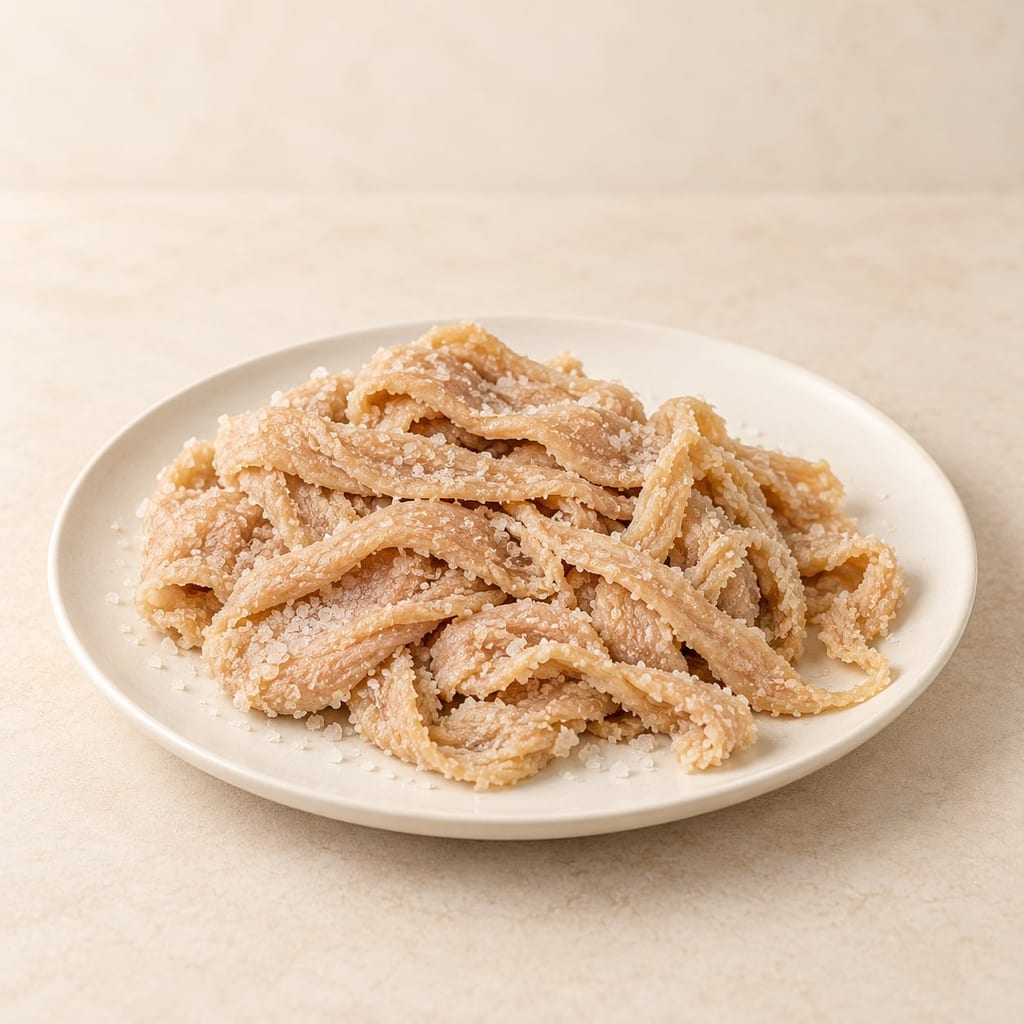
Hog casings
Cleaned, preserved pig intestinal tissue forms a flexible envelope for sausages. Section, calibre and packing affect handling, drying and the finished bite.
 FermenteaWhere food goes to change
Substrates
Natural casings are cleaned animal guts, stomachs, bladders and skins used to hold sausage and pudding fillings; the organ, animal and diameter decide the food's shape and drying.
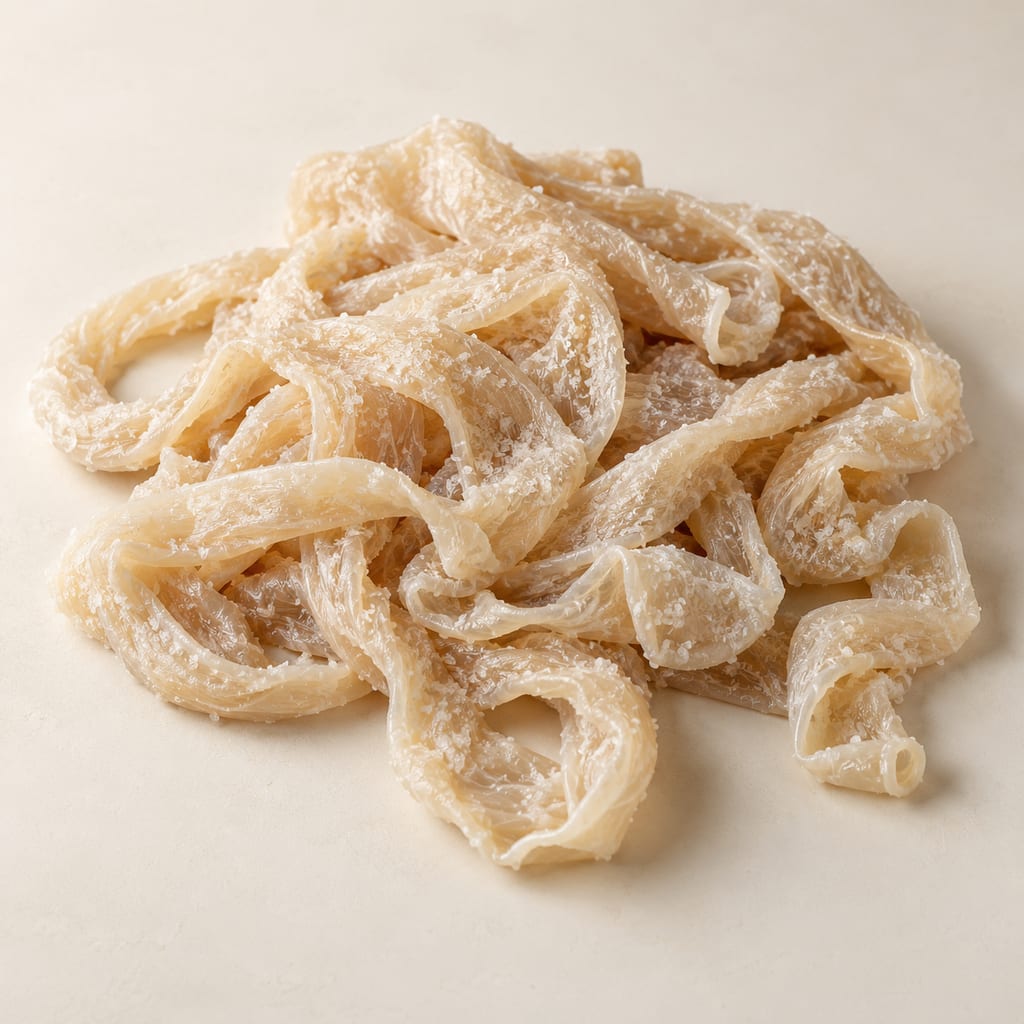
A natural casing is a cleaned part of an animal, most often gut, that holds a filling in a sausage or pudding. It binds the filling, protects it, and lets the sausage shrink and swell as it cooks or dries. Casings come almost entirely from the digestive tract of pigs and ruminants, and each animal supplies several kinds.
A pig gives its stomach; its small intestine, which the trade calls smalls or rounds; its large intestine, sold as caps and middles; the straight final stretch of the large intestine, called the bung; and its bladder. Cattle give the oesophagus (weasands), the small intestine (rounds or runners), the caecum (the bung in cattle), the large intestine (middles) and the urinary bladder. Of the sheep, only the small intestine normally becomes a sausage casing, used for fresh frying sausages, frankfurters, wieners and chipolatas, while the sheep's fore-stomachs go to haggis and similar puddings. A casing can also be built: sewn beef middles join two or more pieces, and other sewn casings join beef middles to small pig bungs, so a large salami in a sewn casing may come from several organs.
The wall of the gut has four layers: the mucosa that lines the inside, the collagen-rich submucosa, two layers of muscle, and an outer serosa. Pig small intestine prepared as casing is stripped until only the submucosa remains, a thin tube of collagen-rich tissue. A pig's large intestine is treated differently: the mucosa and serosa come off, but the submucosa and both muscle layers stay. Natural casing therefore does not mean an untouched gut, and it does not mean one uniform membrane either. A pork round and a pig middle are different materials before anyone fills them.
The trade has its own names for each part of the gut, and they matter because the same filling behaves differently in each. Sheep small intestine is chosen for its fine diameter and delicate bite and holds fine links such as chipolatas, some frankfurters, Nürnberger bratwurst and merguez. Pig small intestine, called hog casing, smalls, rounds or runners, is the general-purpose casing for many fresh, smoked and dried sausages, and the species of the casing says nothing about the meat inside it. Cattle small intestine makes curved and ring-shaped sausages. Pig and cattle large intestine, sold as middles, hold larger sausages and some salamis.
The caecum, or blind gut, is a sack closed at one end, often called a cap or bung, and it suits large irregular sausages that need only one tie. The terminal large intestine, called gentile or culare in parts of Italy, holds substantial salamis and liver sausages.
The names themselves conflict. Among pig casings the bung is the terminal straight end of the large intestine, while among cattle casings the same word means the caecum, and one older manual uses pig bung for the end of the large bowel where the international casing association uses it for the caecum. A catalogue line that says only bung or cap has not said which organ it means or from which animal. Words such as paunch, maw, tripe and bag are looser still, and are best recorded as the original word with the organ beside it when it is known.
Casings are graded by width, and the range is wide. Chinese-style dried sausages go into narrow pig or sheep casings of 18 to 24 mm and are dried at 48 to 50 C for 72 hours, while the protected description of the Nürnberger bratwurst asks for a grilling sausage only 7 to 9 cm long in a tight sheep casing, weighing about 20 to 25 g raw. Each size implies a different speed of heating and drying.
In fermented and dried sausages, diameter is a critical process parameter because it governs heat transfer: the core of a fatter sausage takes longer to reach the intended temperature and acidity, and a thinner sausage dries faster, which may reduce bacteria less than the longer drying of a fat one even when both end at the same water activity. A larger sausage cannot simply borrow the schedule of a smaller one.
Material matters less simply than its reputation suggests. Impermeable, semi-permeable and permeable casings exchange moisture with the air differently, which can change acidification, heat penetration and drying. Yet studies of pork salami fermented and dried in natural, collagen or fibrous casings found no difference in how far bacteria were reduced. Natural describes where the casing came from; on its own it promises nothing about safety.
The species of the casing often differs from the species of the filling, and descriptions that record only one mislead. A Nürnberger bratwurst is pork in a sheep casing, and boerewors is a mixture of beef and pork stuffed into cleaned pork, beef or sheep intestine. This matters most to people who avoid certain animals, because a sausage's name and main meat do not settle whether it suits a diet; the casing counts too.
Some protected foods fix the envelope. Salame di Varzi may be made only in natural casings: plain pig casing, the pig's rectum called budello gentile, or a doubled pig casing sewn together, the cucito doppio, with small salami under 500 g also allowed in curved beef gut. Its 1989 protection law set longer minimum curing times for larger sizes and doubled casings.
Not every animal envelope is a tube. Stomachs and bladders are pouches that hold puddings, minced meat or a whole muscle; caul, a lacy sheet of fat, wraps a filling without enclosing it; skins are sewn into bags or kept as the shape of a limb, as in zampone. Some envelopes are never eaten at all and serve as containers for cheese, butter, oil or fermenting milk. The wider history, regional foods and uses of these envelopes are covered in the survey article on the animal envelopes of sausages, puddings and cheeses.
Manufactured casings arrived as substitutes for gut. In 1925 Erwin O. Freund organised the Visking Corporation and began producing NOJAX casings for frankfurters in the Chicago Union Stockyards. His researchers, working with the viscose process on purified cotton cellulose, found a casing that could be stripped off after cooking, which gave the skinless frankfurter.
Four families are now common. Collagen casings are made mainly from the corium, the inner layer of cattle skin, and may be edible or inedible. Cellulose casings are made from cellulose, and fibrous casings combine cellulose with abaca paper; both are in most cases peeled before sale. Plastic casings come from various polymers. The labels need the same care as the natural ones: synthetic does not have to mean plastic, collagen does not mean plant-based, and natural does not promise a thin or pleasant skin.
A recipe, label or product sheet says most about a casing when it records the animal species of the envelope apart from the contents; the anatomical structure (small intestine, large intestine, caecum, rectum, a named stomach compartment, bladder, oesophagus, skin or caul); the construction (an intact tube, a tied pouch, sewn pieces, a doubled membrane); the contents; the job it does, such as cooking, portioning, maturing or storage; and the date and kind of evidence. Those fields prevent common mistakes: beef sausage does not mean beef casing, a stomach is not a bladder, and a ruminant stomach does not say which compartment.
Sheep casing is specified for the protected Nürnberger bratwurst; this is one documented use, not an origin of casings.
Natural pig and beef casings are required for Salame di Varzi; this is one documented use, not an origin of casings.
Cleaned, preserved pig intestinal tissue forms a flexible envelope for sausages. Section, calibre and packing affect handling, drying and the finished bite.
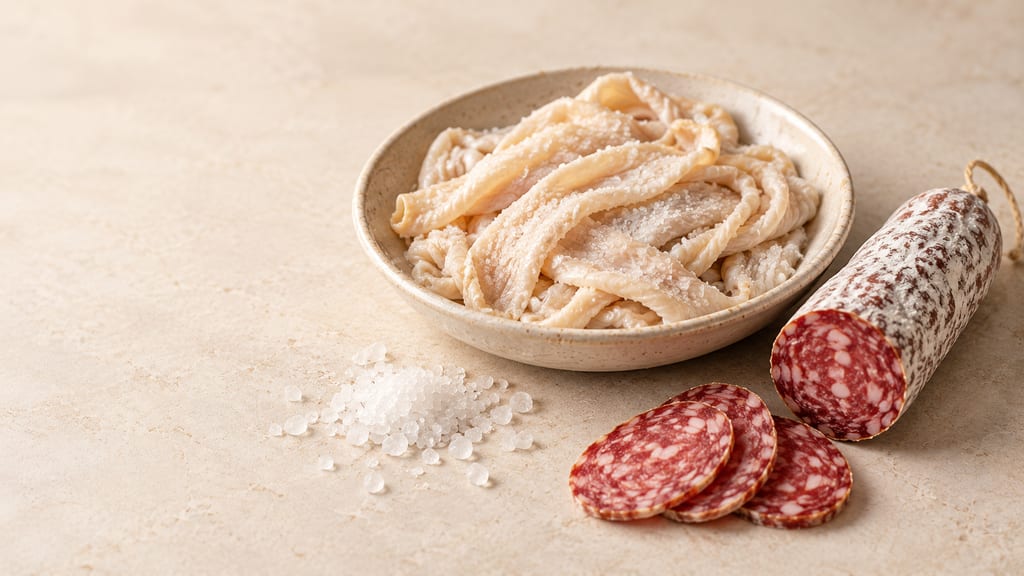
Gut, stomach, bladder, caul and skin have held food for as long as recipes have been written down. Which part of the animal a cook chose still decides a food's shape, how it dries and smokes, and how it is eaten.
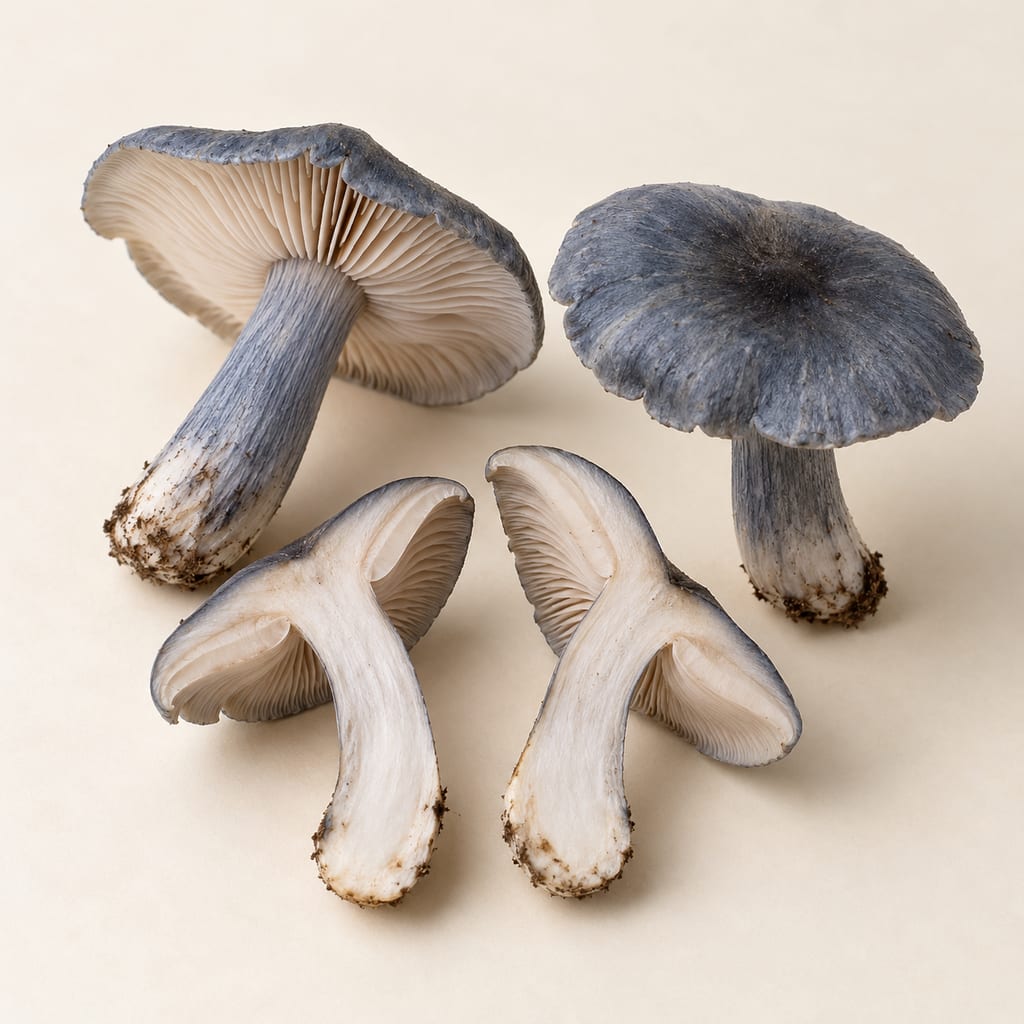
Bloxam's entoloma is a rare pink-gilled mushroom of old grasslands. Historical sources call it edible, but food-use evidence and older identifications remain uncertain; this does not recommend gathering or eating it.
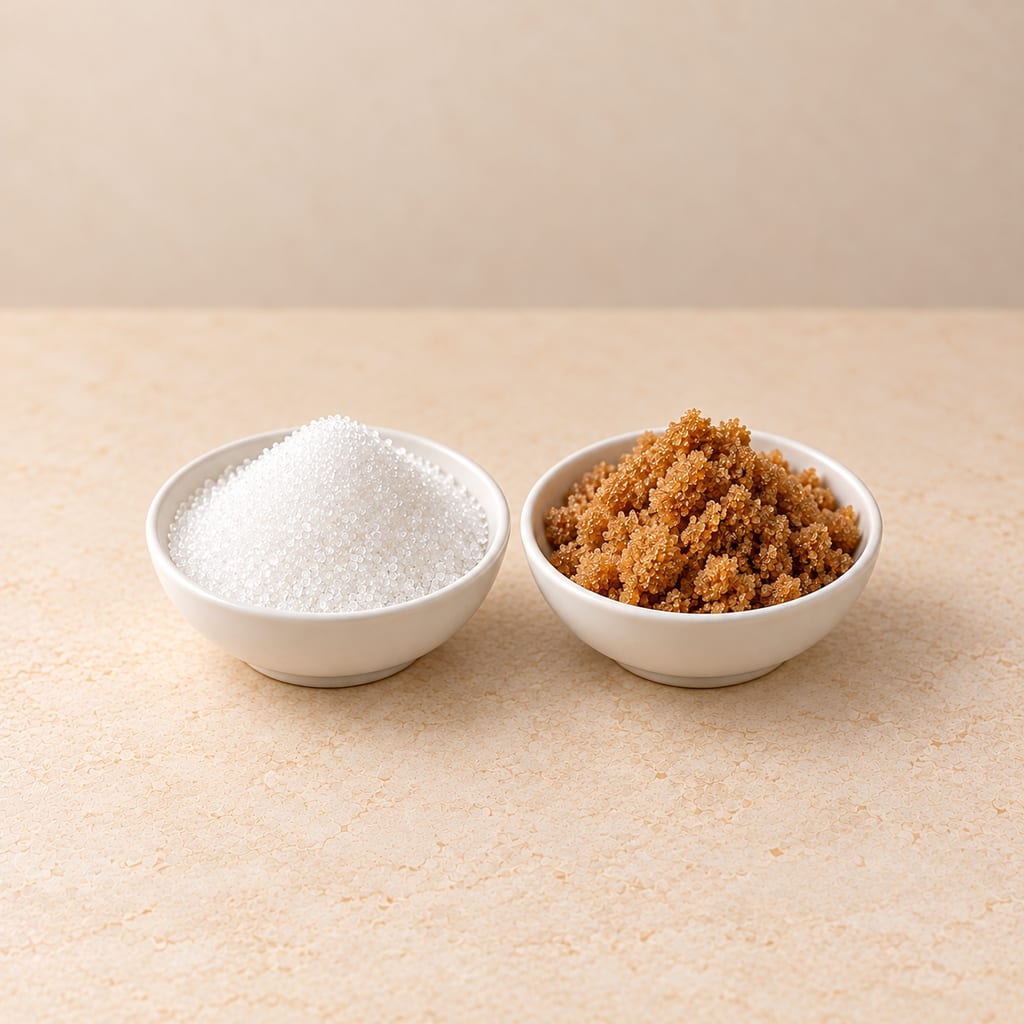
White sugar is refined sucrose, almost pure; brown sugar is sucrose with molasses, left in or added back. Molasses makes brown sugar moister, darker and more strongly flavoured.
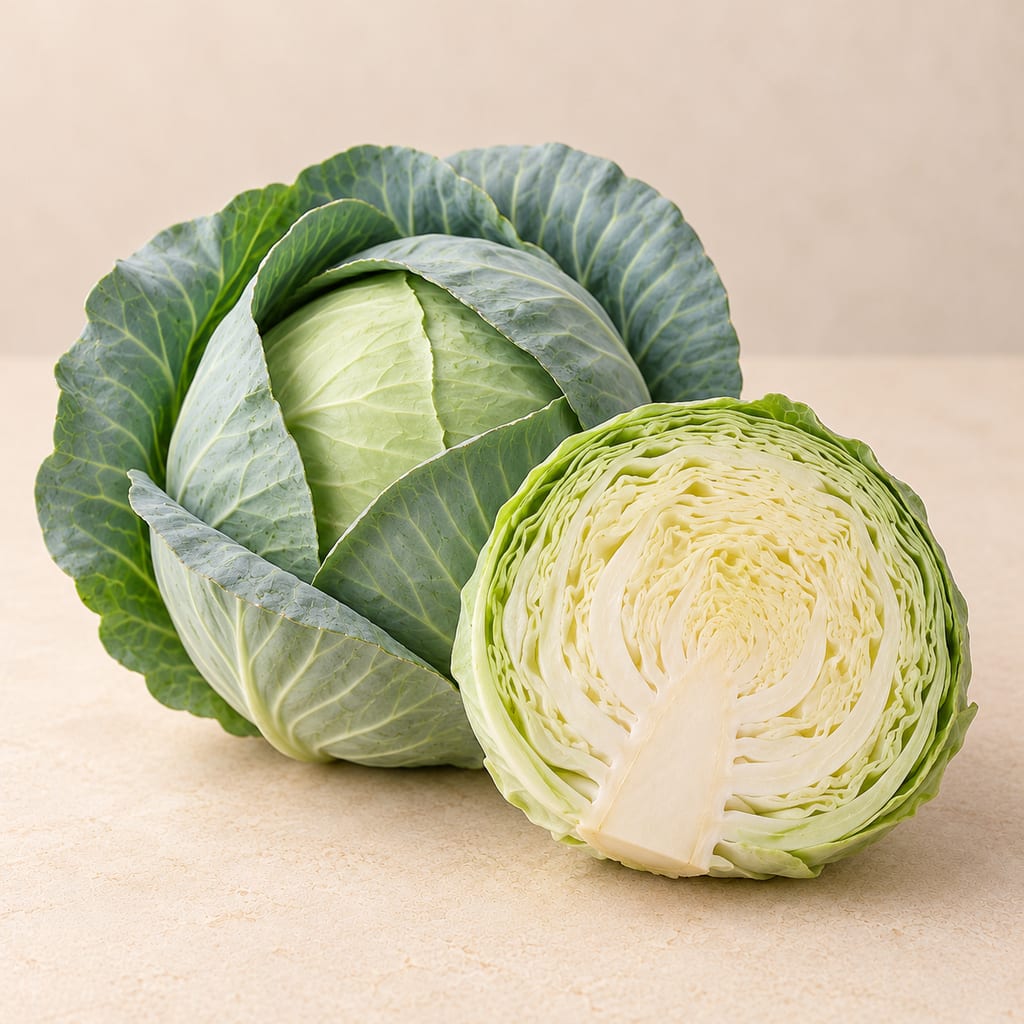
Cabbage is the dense leafy head of Brassica oleracea, a European vegetable that keeps for months and is the classic raw material for sauerkraut, with napa cabbage the base of kimchi.
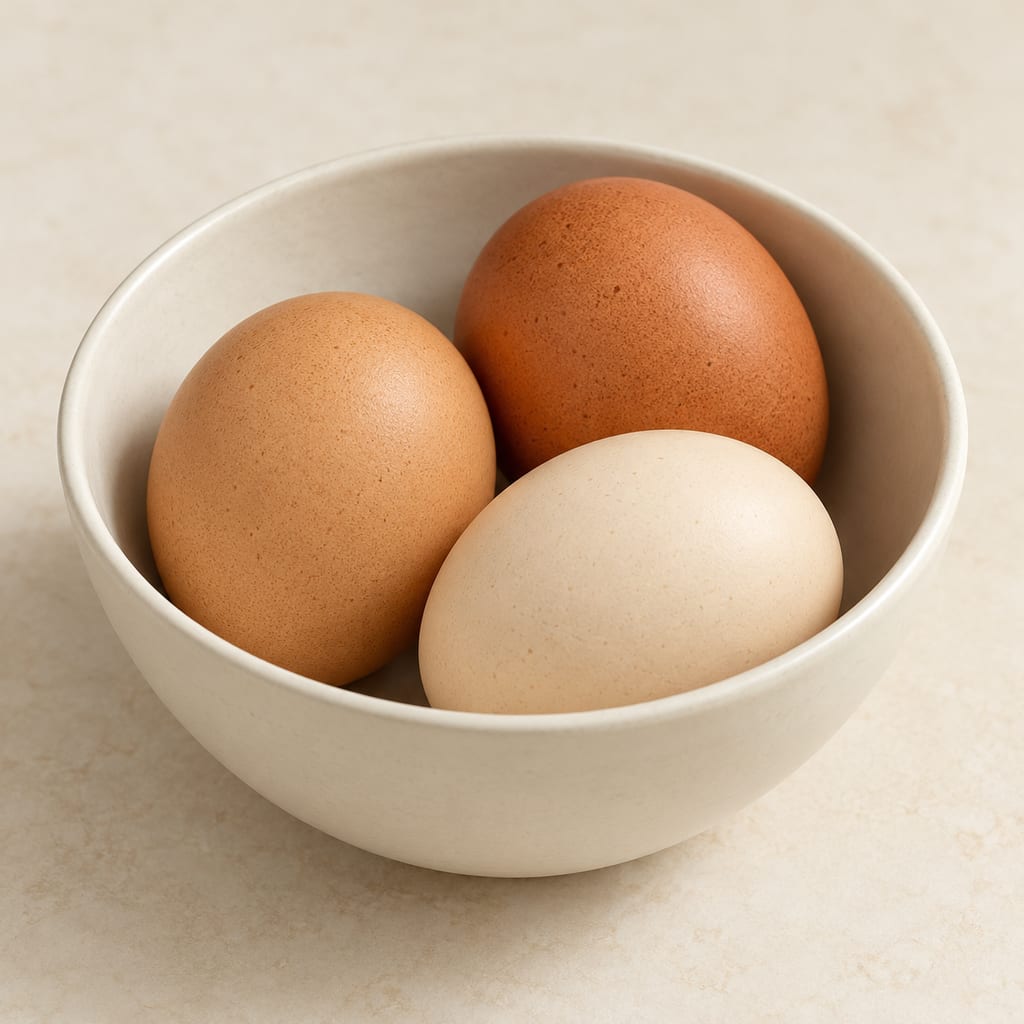
Chicken eggs supply proteins and yolk fats that set and emulsify. Atlas breads use them in enriched doughs, surface washes and a sourdough pancake batter mixed after fermentation.
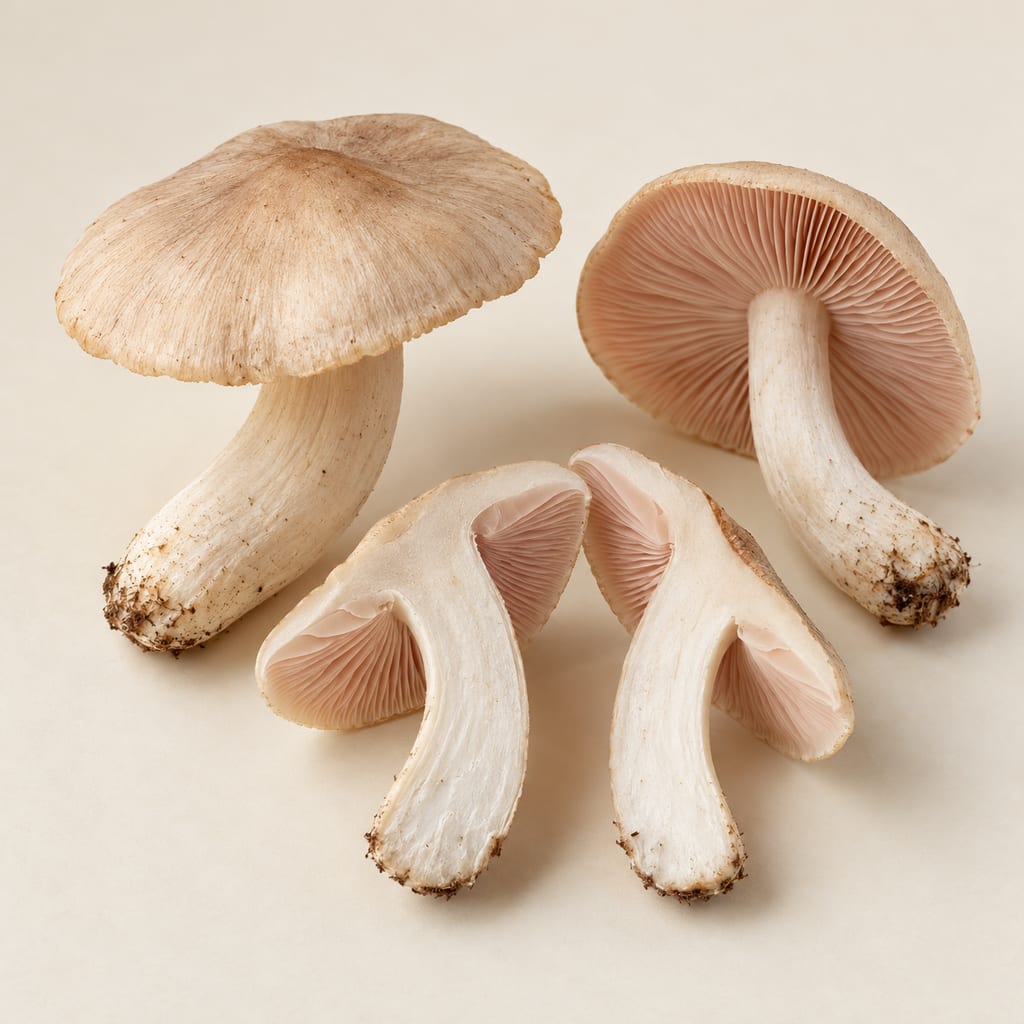
Entoloma sepium is a spring pinkgill associated with Rosaceae. Chinese and European sources list it as edible or conditionally edible, while taxonomic uncertainty and a poisonous lookalike warrant caution.
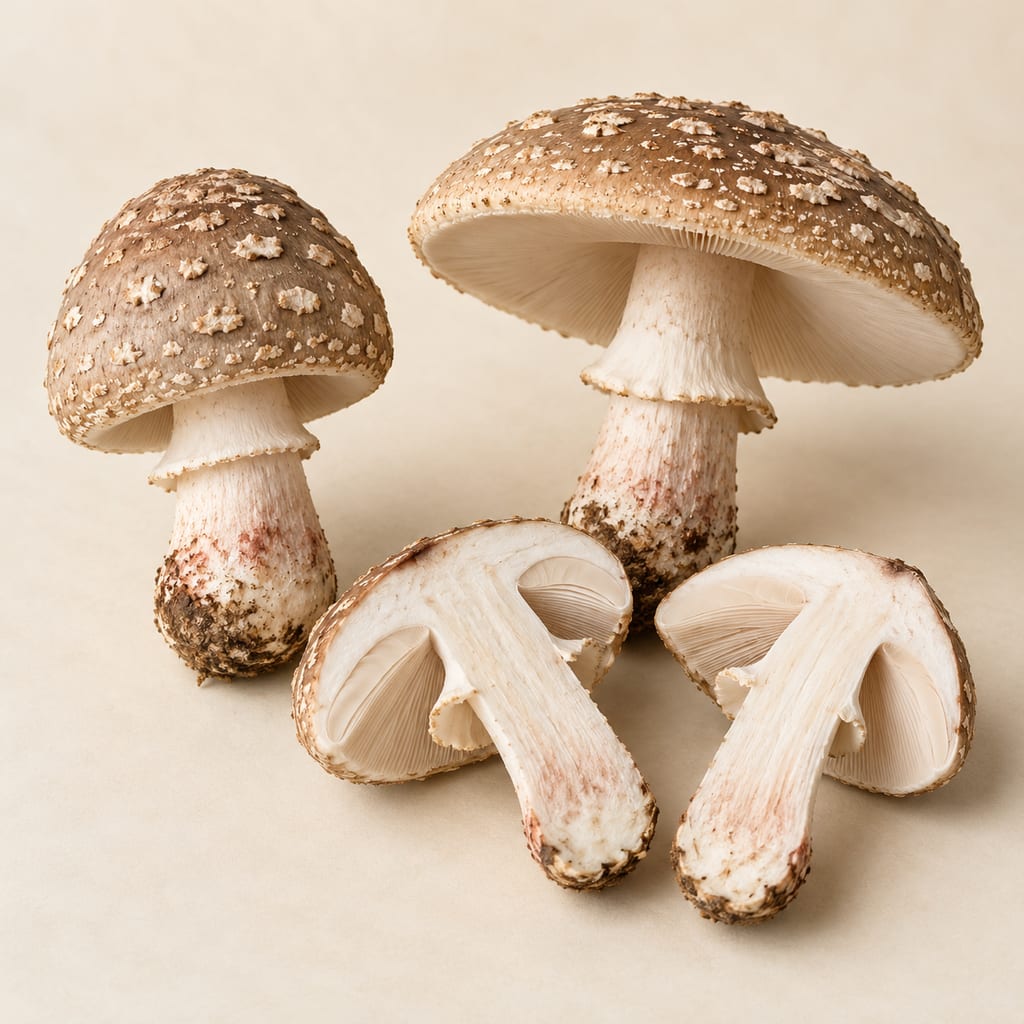
The European blusher, Amanita rubescens, is a woodland amanita whose flesh turns pink when cut. It is eaten only well cooked and is easily confused with the poisonous panthercap.
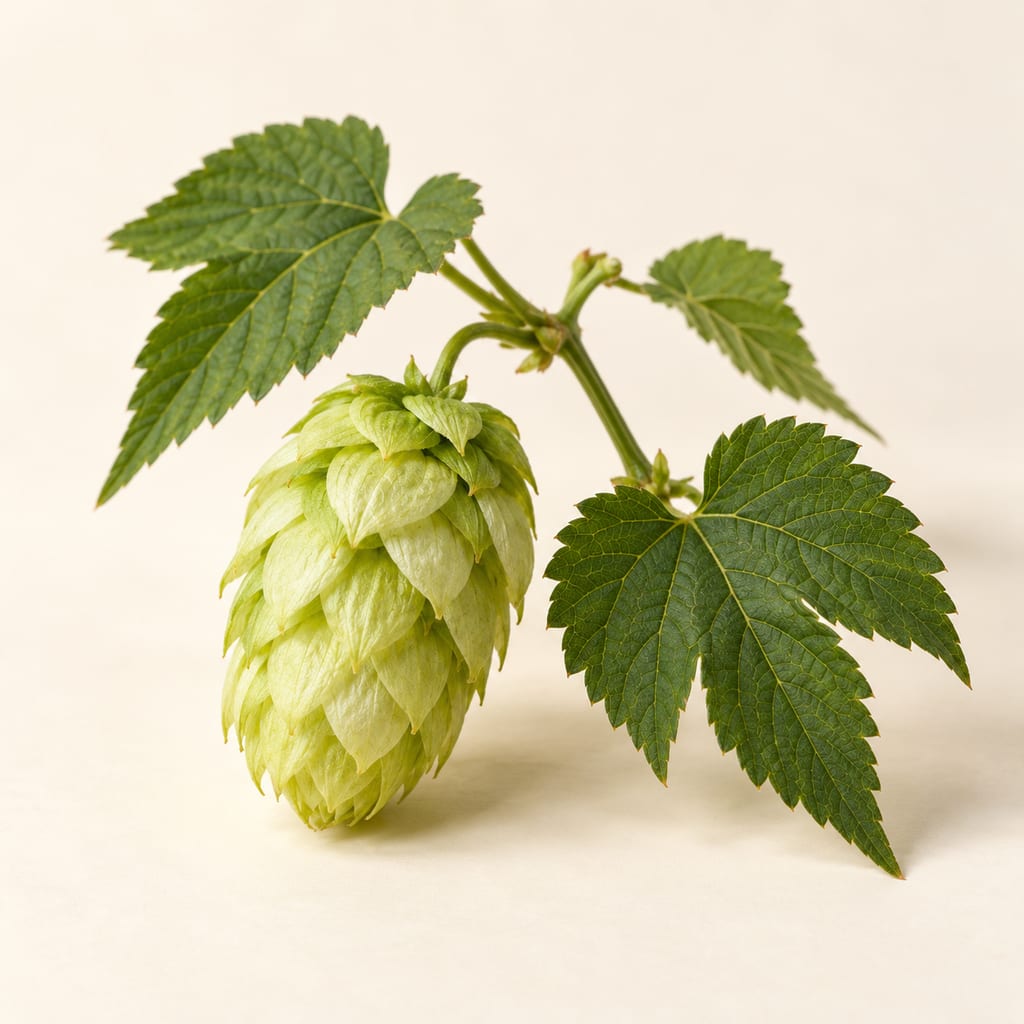
A traditional German aroma-hop land variety, associated with the Hallertau and described with herbal, spicy and floral notes. Cultivar identity, crop analysis and the growing place of a particular lot remain separate facts.
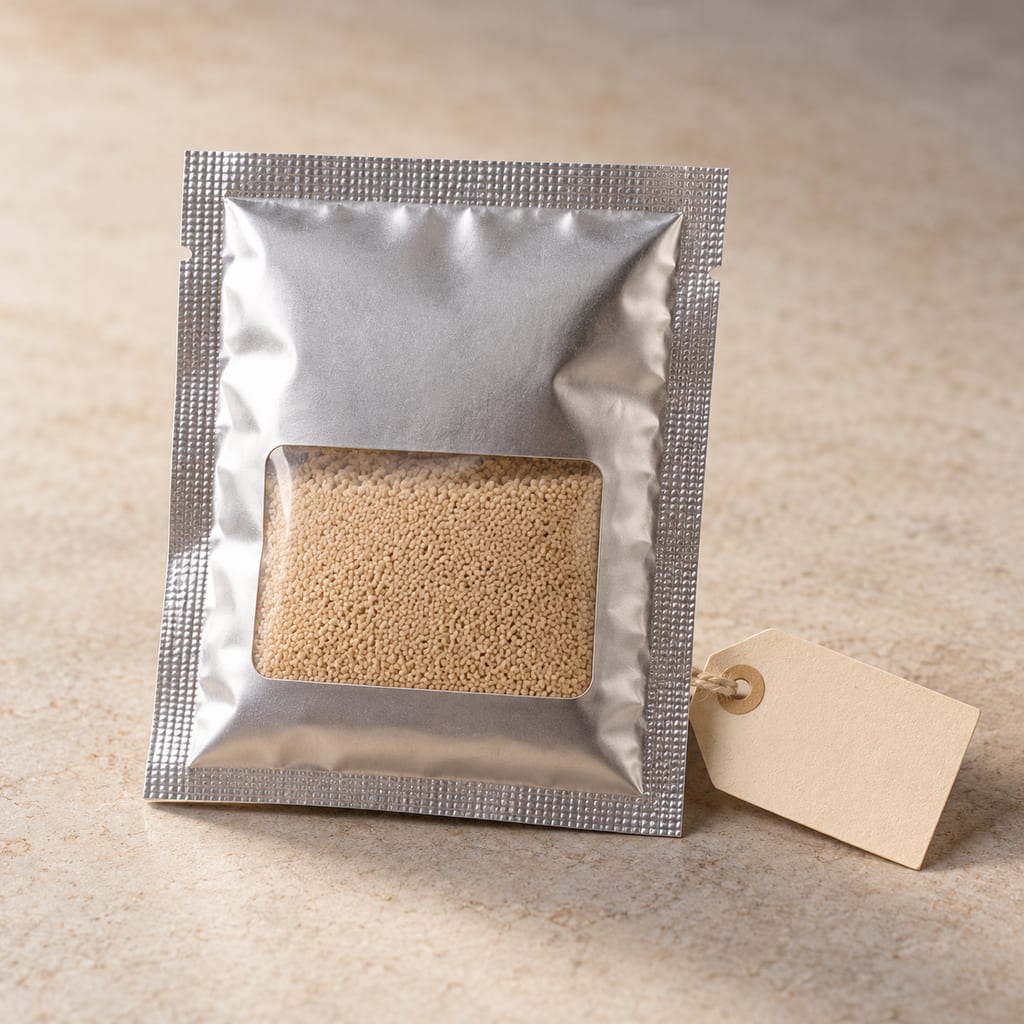
Lager yeast is the bottom-fermenting brewing yeast Saccharomyces pastorianus, a hybrid of S. cerevisiae and S. eubayanus, sold and kept as named strains that are not interchangeable.

At North Abydos in Egypt, a fixed early Dynastic brewery comprised parallel semi-subterranean installations with rows of ceramic mash vats; excavation reports revise their number, scale and estimated batch capacity.

Ají amarillo is the orange-yellow Peruvian chilli cultivar group of Capsicum baccatum, used to colour and season huancaína sauce and ají de gallina. Published heat estimates do not establish one range for the named cultivar.

Toasted almonds are whole sweet almond kernels dry-roasted until golden to brown. Heat replaces their marzipan note with a roasted, nutty one; they thicken and flavour romesco.

Kodiak salmon, halibut and cod cut as seg'aq and hung on an initaq rack to become tamuuq, with kac'amaasaq and kupcuunaq named as different results.

Aniseed is the dried ripe fruit of Pimpinella anisum, an aromatic Apiaceae spice commonly called a seed. It adds a sweet, warm aroma to breads such as Moroccan krachel and South African mosbolletjies, and is distinct from star anise.

A fixed Late Chalcolithic installation in Areni-1 cave combined a shallow clay pressing basin with a large jar set into the cave floor and storage vessels nearby.

Ripe avocado flesh is the soft, buttery, fat-rich pulp of Persea americana, eaten raw. It is low in acid, so it is a fresh ingredient that needs care in chilled dishes.

A portable dome and pan used over a hearth, with embers on the lid and heat from below. Regional peka and saç forms share this principle while differing in materials, pan shape and how the food is cooked.
No community contributions have been published for this entry yet.
Sign in to contribute. Published comments and photos are free to read.
Food and Agriculture Organization of the United NationsIdentity · Method
Small-scale sausage production, chapter 3: Sausage casingsCasing sources by animal
Gut wall layers and preparation
Trade names and sewn casings
Manufactured casing families
Cited in: What natural casings are; What preparation does to the tissue; Trade names and what they mean; Beyond the gut; Manufactured casings; Reading a casing description
Food and Agriculture Organization of the United NationsMethod
Small-scale sausage production, chapter 6: Smoked precooked sausage production (Chinese sausages)Narrow casings and drying schedule for Chinese-style dried sausage
Cited in: Diameter, drying and safety
US Department of Agriculture, Food Safety and Inspection ServiceSafety
FSIS Ready-to-Eat Fermented, Salt-Cured, and Dried Products Guideline (FSIS-GD-2023-0002)Casing diameter as a process parameter
Casing permeability
Cited in: Diameter, drying and safety
European Union; legislation.gov.ukIdentity
Commission Implementing Regulation (EU) No 973/2013 (Nürnberger Bratwürste PGI)Sheep casing and sausage size for Nürnberger bratwurst
Cited in: Diameter, drying and safety; The casing is not the filling
Consorzio Tutela Salame di VarziIdentity
Disciplinare di produzione del Salame di VarziNatural casings and formats for Salame di Varzi
Cited in: Trade names and what they mean; The casing is not the filling
WIPO LexHistory
Law No. 224 of 30 May 1989 on the protection of the appellation of origin of Salame di VarziMinimum curing times by size and casing
Cited in: The casing is not the filling
Company-Histories.comHistory
Viskase Companies, Inc. company historyVisking and NOJAX casings, 1925
Cited in: Manufactured casings
ViscofanIdentity
Viscofan Annual Report 2024: strategy and productsCollagen, cellulose, fibrous and plastic casing families
Cited in: Manufactured casings
Perseus Digital LibraryHistory
Homer, The Odyssey, book 18 (A. T. Murray translation, 1919)Goats' paunches filled with fat and blood as a prize
LacusCurtius (Bill Thayer)History
Apicius, Cookery and Dining in Imperial Rome, book IISausage recipes and caul wrappers