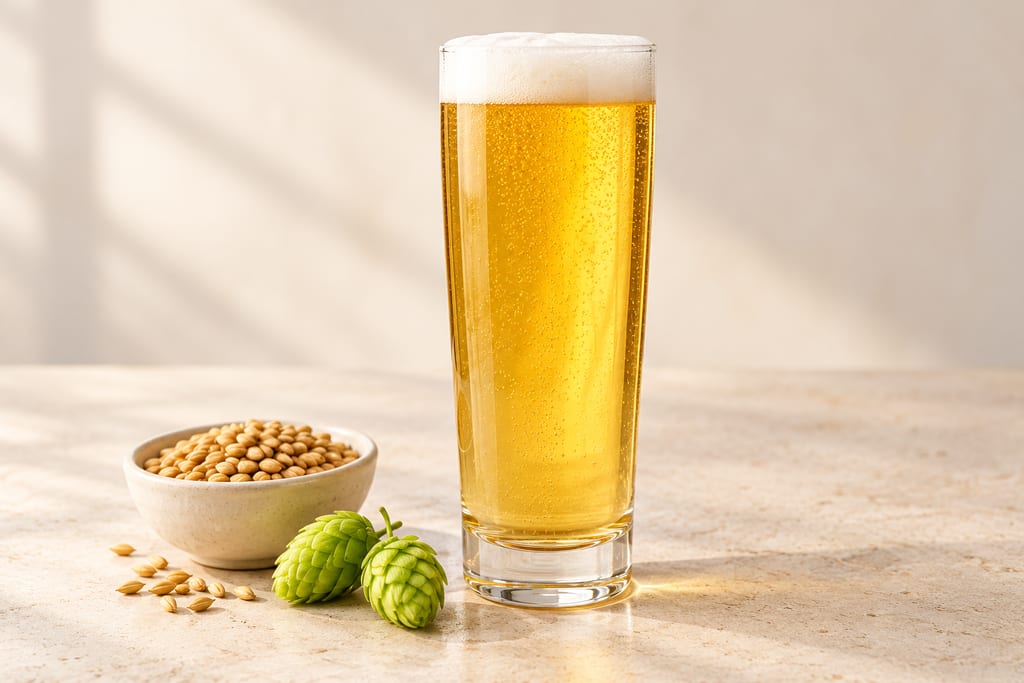
German pils, all-grain
A pale, dry lager with Pilsner malt, Magnum bittering hops and Hallertau Mittelfrüh and Tettnang additions, followed by cold maturation.
 FermenteaWhere food goes to change
Cultures
Lager yeast is the bottom-fermenting brewing yeast Saccharomyces pastorianus, a hybrid of S. cerevisiae and S. eubayanus, sold and kept as named strains that are not interchangeable.
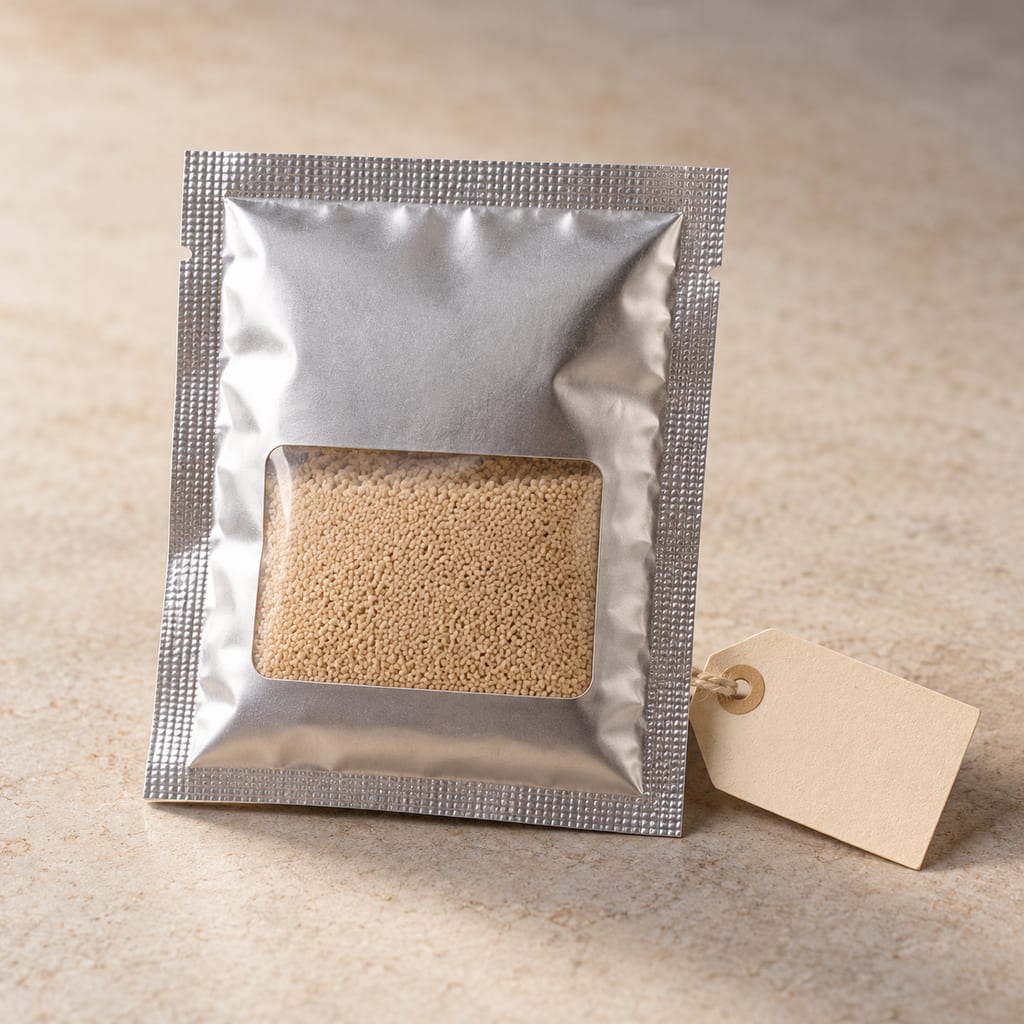
Lager yeast is the culture that ferments lager beer. In the research literature it is usually Saccharomyces pastorianus, a hybrid species with ancestry from the ale and wine yeast S. cerevisiae and the cold-tolerant wild yeast S. eubayanus. Brewers also call it bottom-fermenting yeast.
The name covers several different things, and they do not automatically point to the same organism. It can mean a broad brewing category, a species, a genomic lineage, a named supplier product, or one culture collected from a particular brewery. The National Collection of Yeast Cultures lists a specific accession, NCYC 1048, as a lager-production strain, but that listing does not say which modern product, if any, is equivalent to it. Supplier descriptions apply only to their own named products.
In a kitchen or brewery the ingredient is whatever strain a brewer actually pitches into wort: a dried packet, a liquid culture, or yeast kept and re-used from earlier batches. The working substrate is malt wort and the working rule is a lager-specific pitching and temperature programme. Warm ale conditions and kveik conditions are not to be applied to it.
Genomic work describes S. pastorianus as a hybrid of S. cerevisiae and S. eubayanus. Within it, the Saaz and Frohberg groups are genetically distinct lager lineages. An older genome study reported possible independent origins among the strains it examined; only its abstract was available for this page. These are findings about populations of strains. They do not identify what any given commercial product contains.
That distinction matters in practice. Two products can both be sold as lager yeast and still belong to different lineages, and a collection accession tells you about one preserved culture rather than about the category.
The origin of lager yeast is a scholarly reconstruction, not a witnessed event. Hutzler and colleagues combine brewing records with genomic research to propose a possible hybridisation in Munich. In their account, the historical movement of top-fermenting yeast met mixed pitching cultures that may have included cold-tolerant S. eubayanus, and the hybrid arose from that mixture. The authors present it as a hypothesis.
They also describe bottom fermentation and mixed cultures in earlier regional brewing, so the history is more varied than a single origin story. The Munich seasonal brewing calendar they discuss does not amount to a modern culture-maintenance schedule.
Fermentis identifies SafLager W-34/70 as a dry S. pastorianus product and publishes its own pitching and package-storage guidance. White Labs sells WLP830 German Lager Yeast and Wyeast sells strain 2124 Bohemian Lager. These manufacturer pages are useful for identifying those products. They do not show that all lager yeasts can be handled, stored or substituted in the same way.
One current homebrew German Pils recipe lists W-34/70, WLP830 or Wyeast 2124 as its yeast choices. It describes staged fermentation, a gravity-timed rest and cold conditioning, and offers batch sizes from 5 to 30 gallons with a note that equipment efficiency and kettle size affect scaling. That is one contemporary recipe, not a universal process for lager yeast.
Strain identity, viability and purity matter, and controlled repitching of a lager culture is possible. Keep instructions tied to the named product and the process it was designed for.
What the reviewed sources do not give is a general propagation method, long-term stock storage, slurry-recovery rules, a universal fermentation endpoint or package-safety controls for an unspecified lager culture. Those stay unknown here rather than being filled in from ale practice.
Hutzler and colleagues propose Munich brewing as the setting for the hybridisation; it is a hypothesis, not a proven single origin for all lager yeast.
A pale, dry lager with Pilsner malt, Magnum bittering hops and Hallertau Mittelfrüh and Tettnang additions, followed by cold maturation.
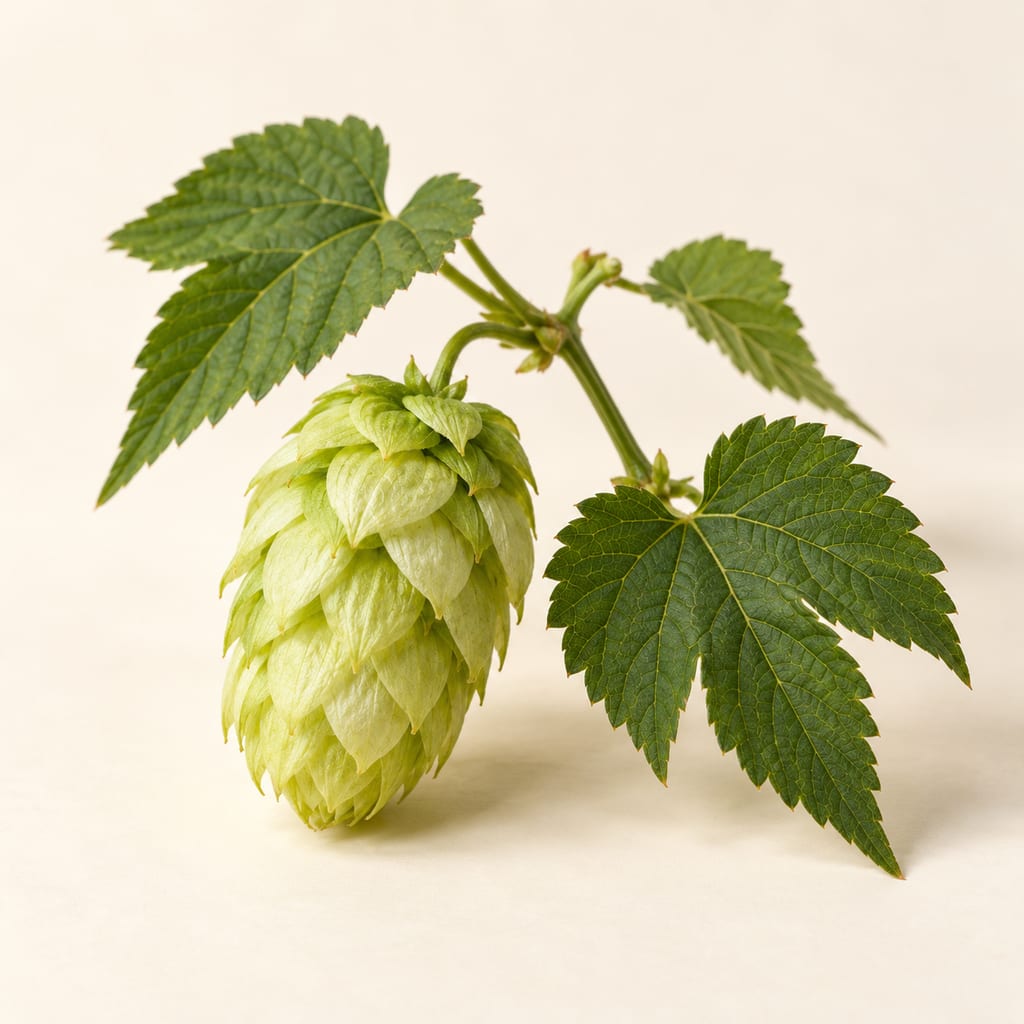
A traditional German aroma-hop land variety, associated with the Hallertau and described with herbal, spicy and floral notes. Cultivar identity, crop analysis and the growing place of a particular lot remain separate facts.
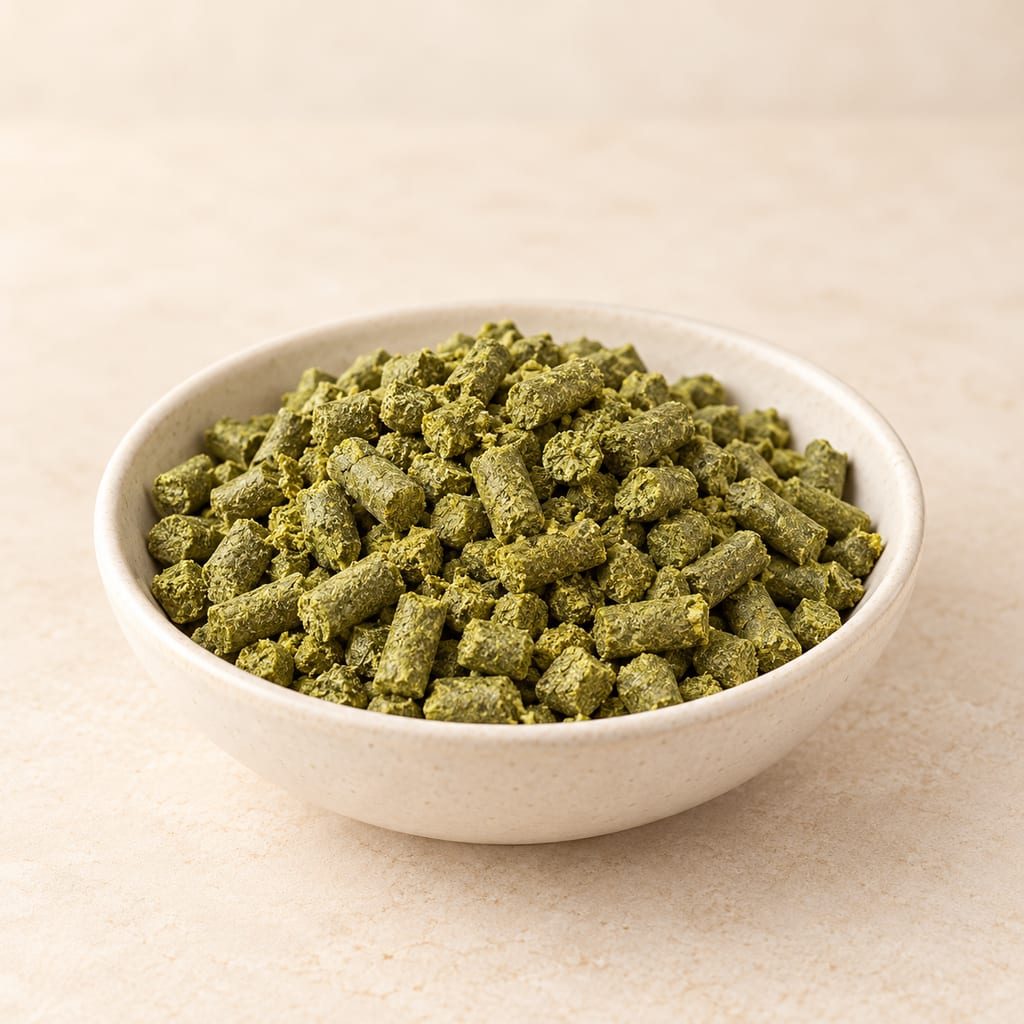
Perle is a German-bred hop cultivar supplied as pellets for beer, with documented spicy aroma and both bittering and aromatic uses. Pellet grade and lot chemistry are unconfirmed.
Saccharomyces pastorianus is the hybrid lager yeast, a cross of the ale yeast S. cerevisiae and the cold-tolerant S. eubayanus, that ferments beer at cool temperatures from the bottom of the tank.
No community contributions have been published for this entry yet.
Sign in to contribute. Published comments and photos are free to read.
FEMS Yeast Research / Oxford AcademicHistory · Science
A new hypothesis for the origin of the lager yeast Saccharomyces pastorianusProposed Munich hybridisation of S. cerevisiae and S. eubayanus
Saaz and Frohberg lineages
Earlier regional bottom fermentation and mixed cultures
Cited in: What lager yeast is; A hybrid species with distinct lineages; Where it came from
Genome Research / PubMedScience
Reconstruction of the genome origins and evolution of the hybrid lager yeast Saccharomyces pastorianusAbstract: genome origins of the hybrid, possible independent origins among strains examined
Cited in: A hybrid species with distinct lineages
National Collection of Yeast CulturesIdentity
NCYC 1048 - Saccharomyces pastorianusNCYC 1048 listed as a lager-production strain
Cited in: What lager yeast is
Fermentis by LesaffreIdentity · Handling
SafLager W-34/70Dry S. pastorianus product with its own pitching and storage guidance
Cited in: What lager yeast is; Named strains and what they say about themselves; Choosing and handling
White LabsIdentity
WLP830 German Lager YeastNamed supplier lager product
Cited in: Named strains and what they say about themselves
Wyeast LaboratoriesIdentity
Bohemian Lager, strain 2124Named supplier lager product
Cited in: Named strains and what they say about themselves
Bräu SupplyUse
German Pils Recipe (All-Grain): 5 to 30 GallonsPils recipe lists W-34/70, WLP830 or Wyeast 2124; staged fermentation, gravity-timed rest, cold conditioning; scaling 5 to 30 gallons
Cited in: Named strains and what they say about themselves; Choosing and handling