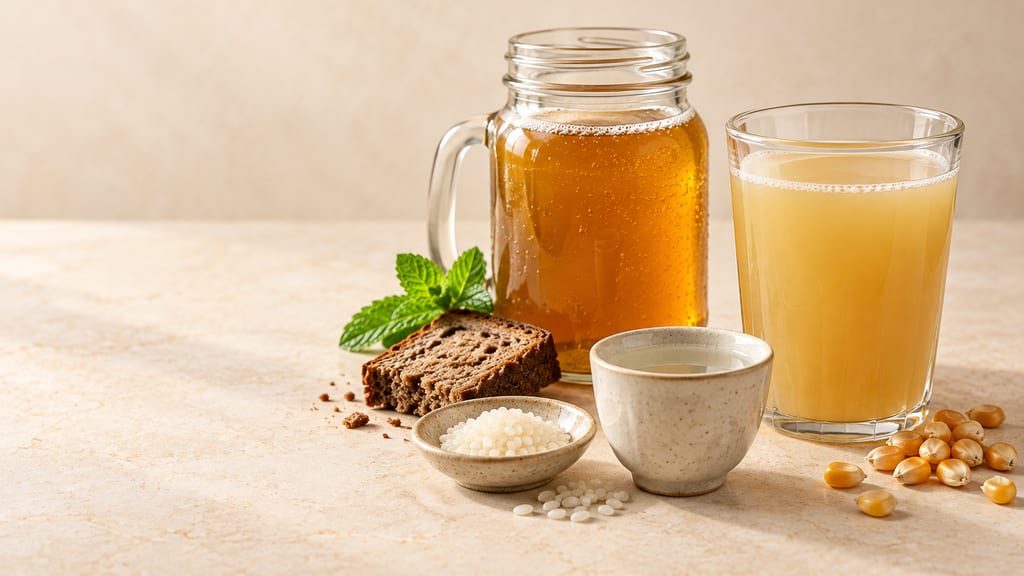
Yeast and the world's fermented drinks
People kept, traded and steered living ferments for thousands of years before anyone saw a yeast cell. This is that history, region by region, and a guide to what a yeast strain is today.
 FermenteaWhere food goes to change
Cultures
Saccharomyces pastorianus is the hybrid lager yeast, a cross of the ale yeast S. cerevisiae and the cold-tolerant S. eubayanus, that ferments beer at cool temperatures from the bottom of the tank.
Saccharomyces pastorianus is a hybrid. It carries genetic material from the ale yeast Saccharomyces cerevisiae and from the cold-tolerant Saccharomyces eubayanus. Brewers call it lager yeast because it ferments at cool temperatures and settles to the bottom of the tank, which is the origin of the word bottom-fermenting.
Because it is a hybrid, its genome is not one copy of either parent. Strains differ in how much of each parent they carry and in the chromosomes they have gained or lost, which is why lager strains are sorted into groups rather than treated as one organism.
A 2023 hypothesis by Hutzler and colleagues proposes that the hybrid arose in Munich in the early 1600s. In that account, bottom fermentation was already established in Bavaria by about 1600, and brewers used mixed top- and bottom-fermenting yeasts. The key step was the arrival of top-fermenting S. cerevisiae in a place where wild S. eubayanus was already present, rather than the reverse.
The authors name two possible sources of the S. cerevisiae parent: the Schwarzach wheat-beer brewery, whose yeast was moved to the Hofbrauhaus in 1602, and Einbeck, whose top-fermenting yeast reached Munich around 1612 to 1615. They lean towards Schwarzach but state that both are plausible, and the question is still open.
Modern S. pastorianus strains fall into two groups. Group I, the Saaz lineage, came from the Burgerliches Brauhaus in Saaz, Bohemia, and ferments more slowly. Group II, the Frohberg lineage, came from the Frohberg brewery in Grimma, Saxony, and ferments faster. Hansen and Lindner distinguished the two in the late nineteenth century.
The two groups also differ in what they can use. Group I strains ferment only about six-sevenths of the extract that Group II strains ferment, which the sources attribute to an inability to use beta-isomaltose. Named strains therefore behave differently in the same wort, and a strain name matters more than the species name.
The wild parent, S. eubayanus, was first described from Patagonia in 2011, and the sources note later finds in Europe, including Ireland. The origin of the wild parent is still unclear. The 2023 hypothesis is a reconstruction from brewing records and genomes, and its authors present it as a new interpretation, not a proven event.
Lost culture collections and inconsistent naming make historical isolates hard to trace. Multiple hybridisation events were probably possible, but only the Munich-derived lineages are known to have survived.
Proposed hybridisation site in a 2023 hypothesis that its authors frame as a new interpretation, not settled fact.
Source of the Saaz (Group I) lineage, from the Burgerliches Brauhaus in Saaz.
Source of the Frohberg (Group II) lineage, from the Frohberg brewery in Grimma.
People kept, traded and steered living ferments for thousands of years before anyone saw a yeast cell. This is that history, region by region, and a guide to what a yeast strain is today.
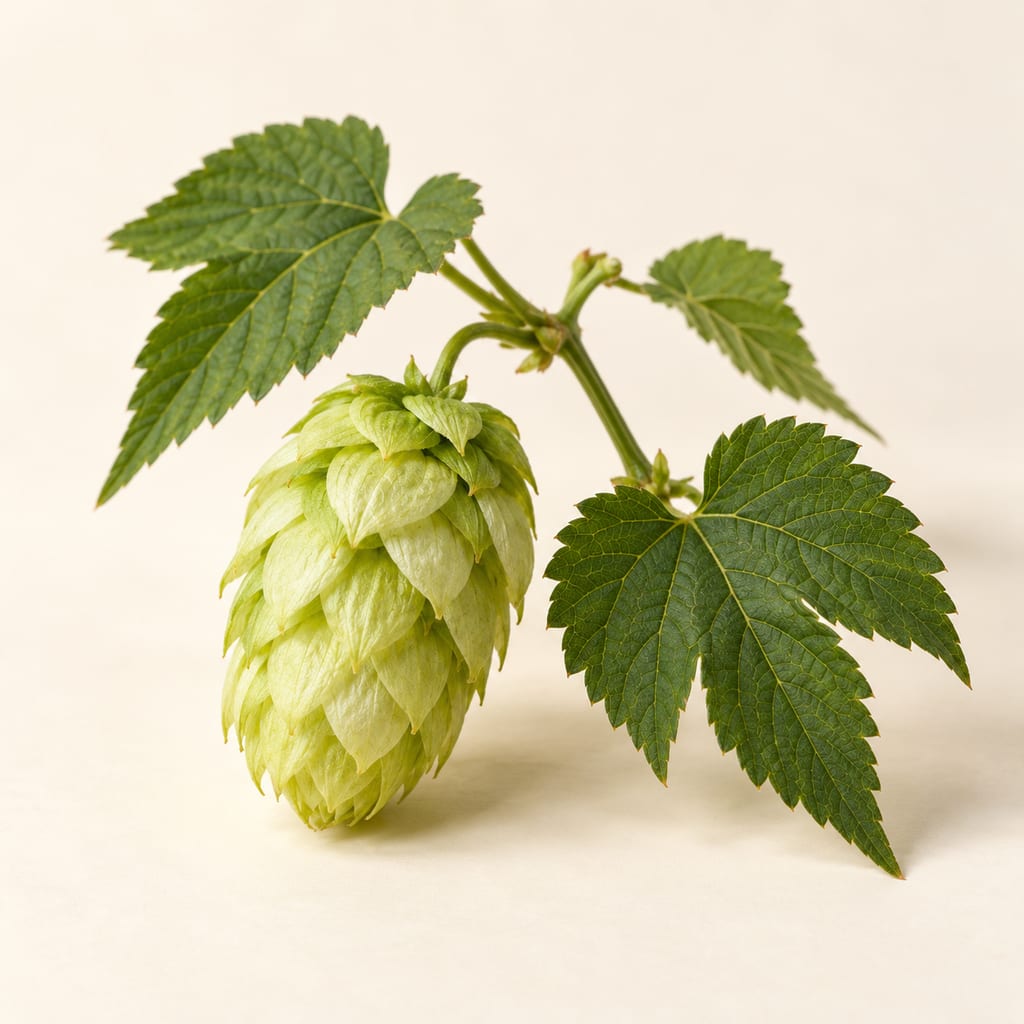
A traditional German aroma-hop land variety, associated with the Hallertau and described with herbal, spicy and floral notes. Cultivar identity, crop analysis and the growing place of a particular lot remain separate facts.
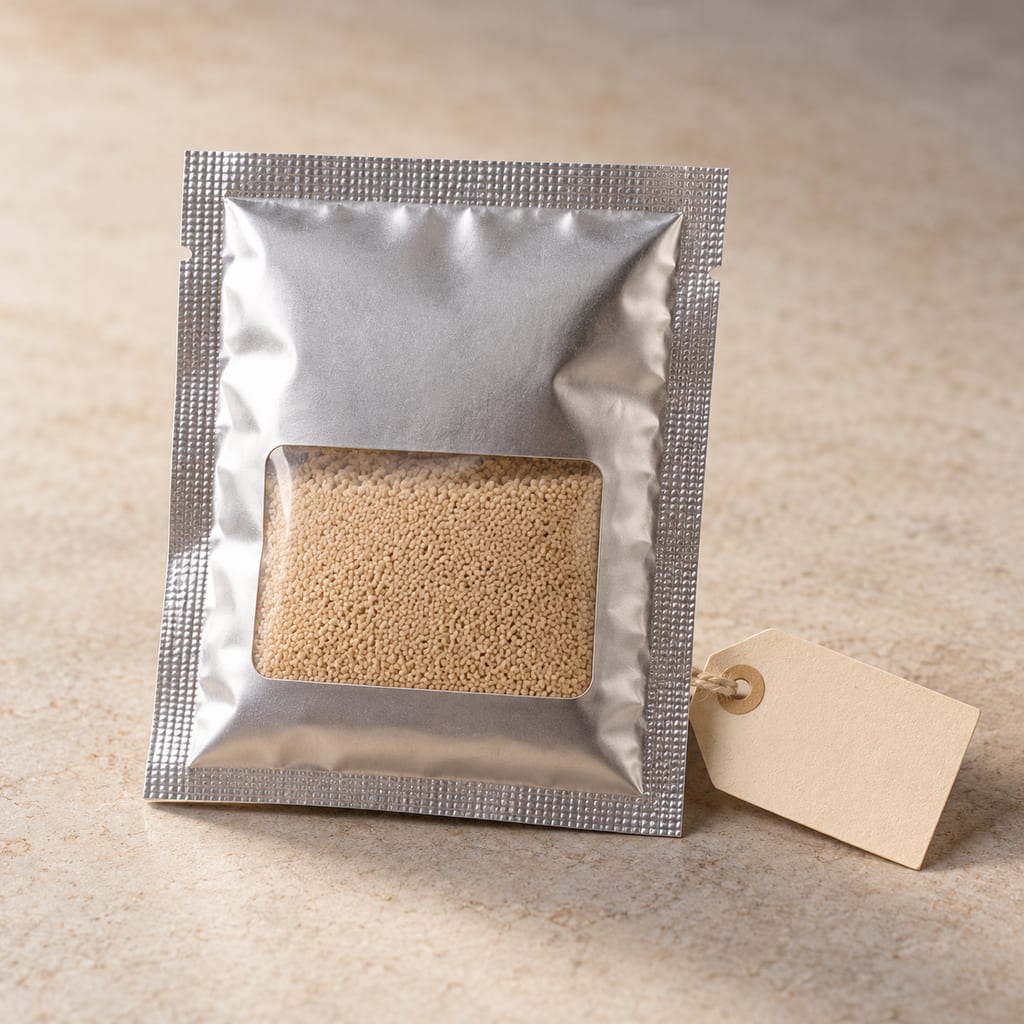
Lager yeast is the bottom-fermenting brewing yeast Saccharomyces pastorianus, a hybrid of S. cerevisiae and S. eubayanus, sold and kept as named strains that are not interchangeable.
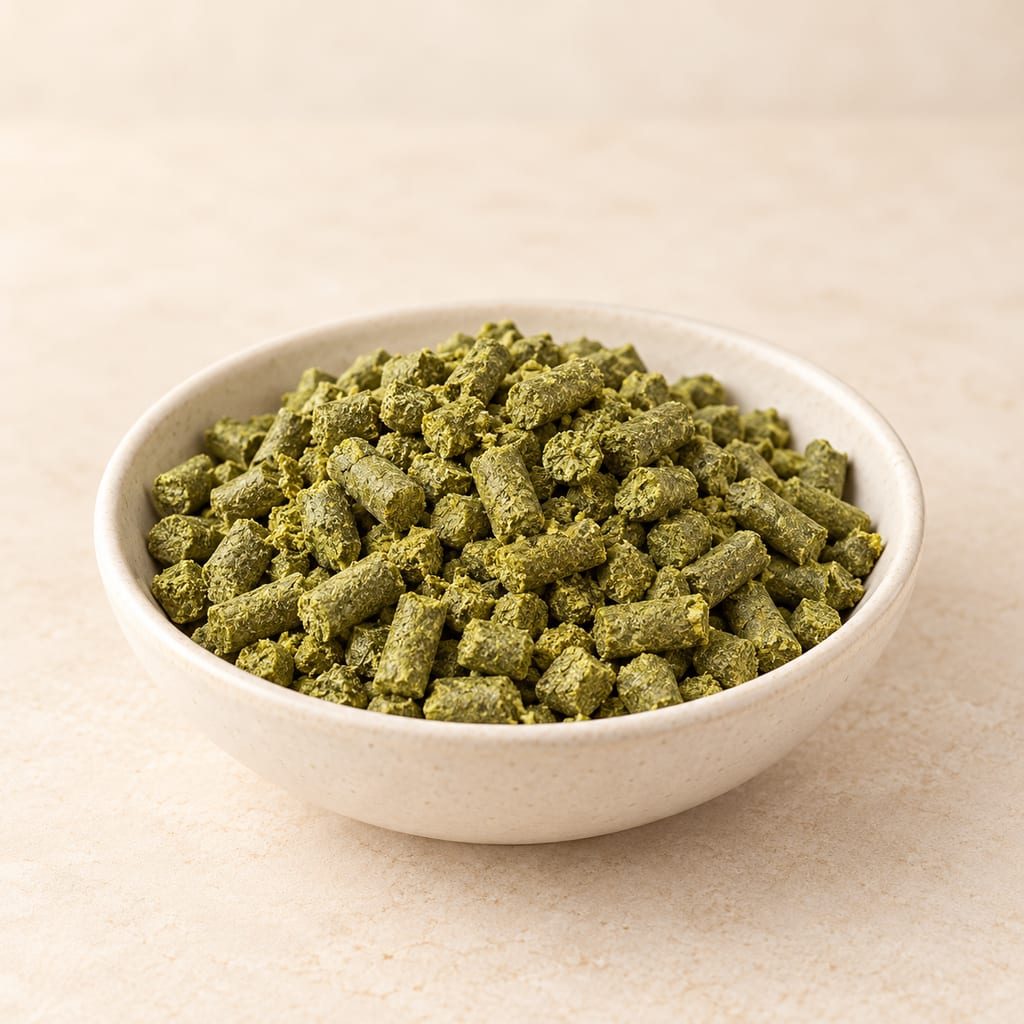
Perle is a German-bred hop cultivar supplied as pellets for beer, with documented spicy aroma and both bittering and aromatic uses. Pellet grade and lot chemistry are unconfirmed.

A gelling polysaccharide extracted from red seaweeds, sold as kanten strips or powder; it sets firm at a low concentration and stays solid until about 85 °C.

A Dominican table and seasoning condiment of sour orange juice, mixed with lime and salt and bottled raw; garlic, oregano or a hot pepper may be added for meat or a spicier bottle.

Cicerbita alpina is an alpine perennial whose tender shoots and leaves have been eaten raw or cooked. Sámi milk preparations and modern Carnian dishes are distinct uses, with serious identification and preservation limits.

Japanese skipjack tuna cooked, then repeatedly smoked and dried over a wood fire by the hand-fired tebiyama method into a hard block for shaving into dashi: the first stage of katsuobushi.

A Swedish-style spirit vinegar made by fermenting neutral alcohol with live vinegar bacteria, with a separate guide to commercial ättika strengths.

A yeast-raised wheat ring shaped from a firm dough, briefly boiled and baked. This source-batch formula gives a gently malted crust and a chewy crumb.

A warm dip of garlic, anchovy and olive oil, often enriched with butter, that Piedmont serves over a flame with raw and cooked vegetables and bread.

Bechamel is a white sauce of milk thickened with a butter and flour roux, one of the French mother sauces, and the base from which Mornay and other cheese and cream sauces are made.
No community contributions have been published for this entry yet.
Sign in to contribute. Published comments and photos are free to read.
FEMS Yeast ResearchHistory · Science · Identity
A new hypothesis for the origin of the lager yeast Saccharomyces pastorianusS. pastorianus is a hybrid of S. cerevisiae and S. eubayanus
Proposed hybridisation in Munich Hofbrauhaus, about 1602-1615; phylogenetic step 1550-1800
Saaz (Group I) from Saaz, Bohemia; Frohberg (Group II) from Grimma, Saxony
Stated uncertainties: exact S. cerevisiae parent and S. eubayanus origin unresolved
Cited in: What the yeast is; Where it came from; Saaz and Frohberg lineages; Wild parent and open questions
Taylor and Francis OnlineIdentity
Supplied catalogue source (Saccharomyces pastorianus)Supplied catalogue source; not independently revalidated