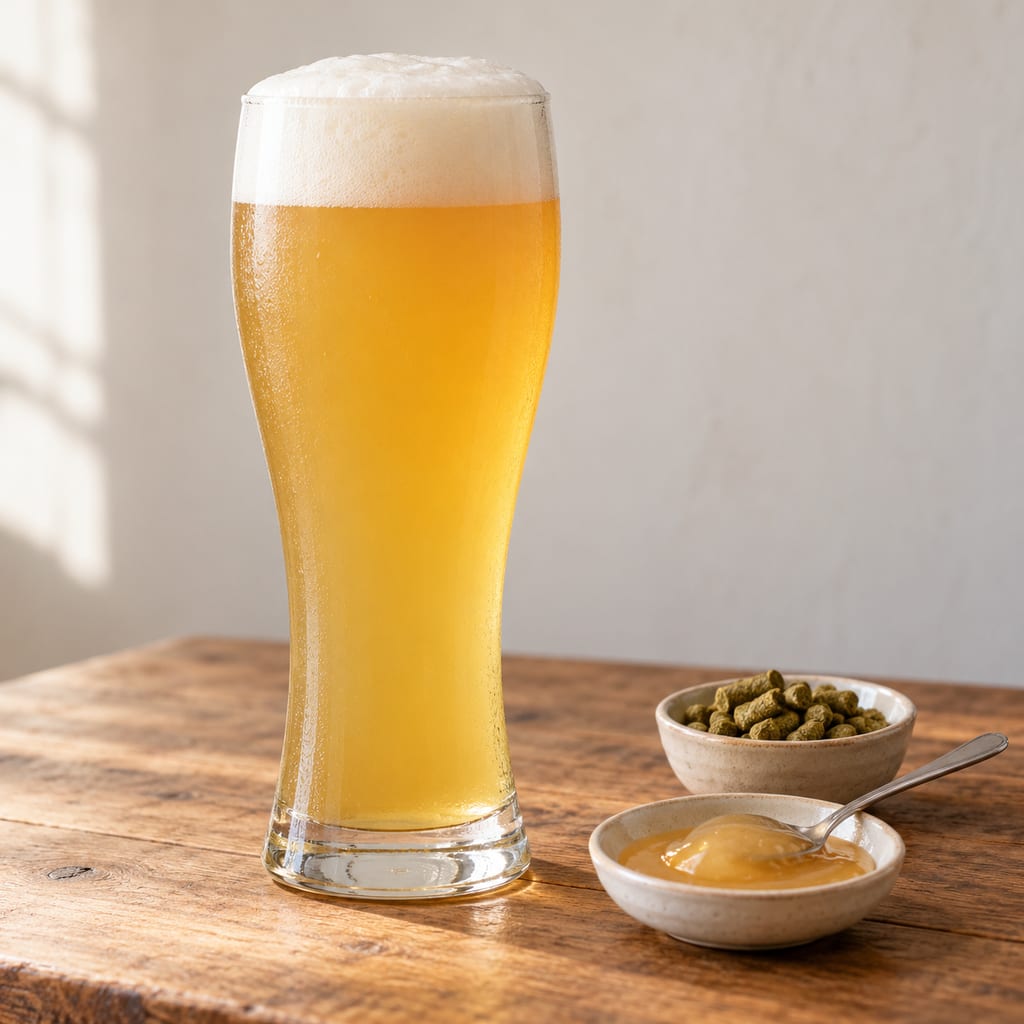
Weizen, extract method
A German-style wheat beer made with wheat extract, a short hop boil and a hefeweizen yeast, using cold water to top up the fermenter.
 FermenteaWhere food goes to change
Spices and aromatics
Perle is a German-bred hop cultivar supplied as pellets for beer, with documented spicy aroma and both bittering and aromatic uses. Pellet grade and lot chemistry are unconfirmed.
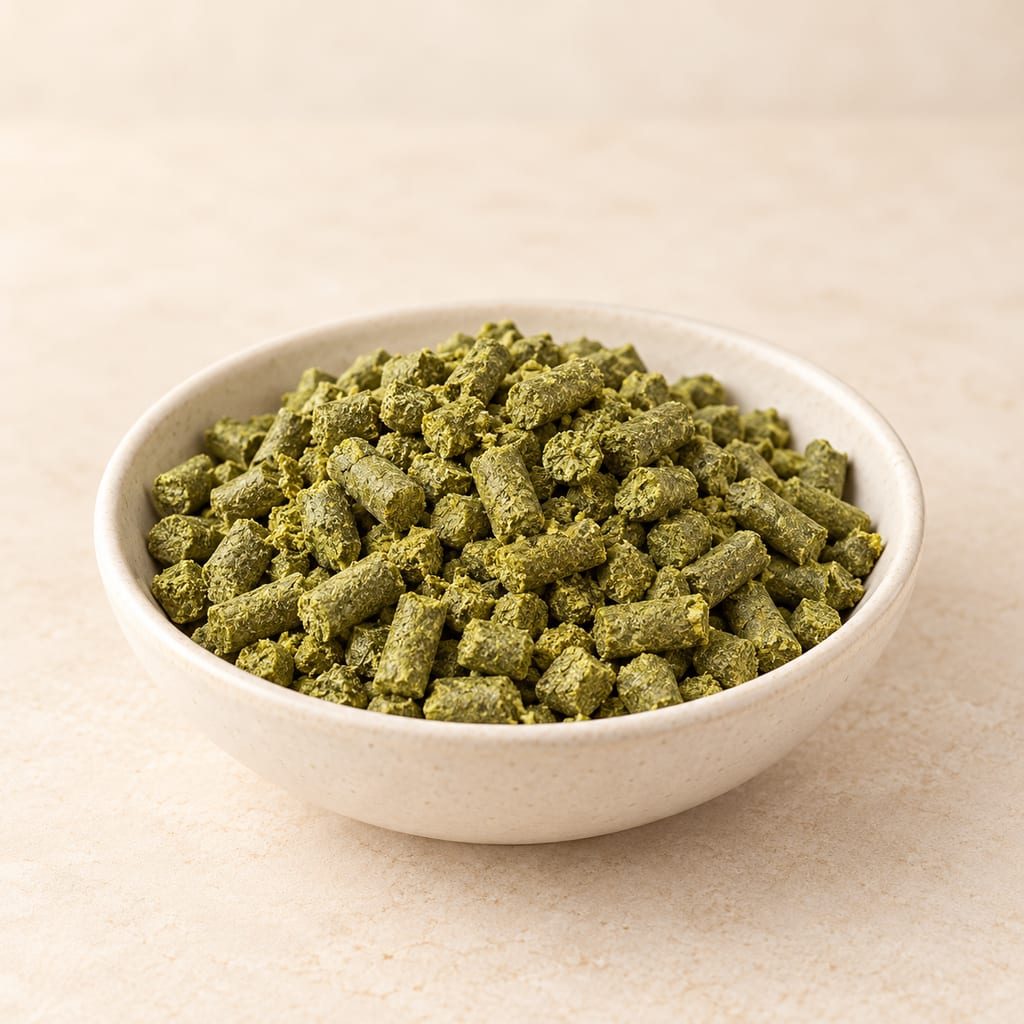
Perle is a named cultivar of Humulus lupulus, the climbing perennial hop in the Cannabaceae family. Here it means dried hops supplied as pellets for brewing. The cultivar identifies the plant material; the word pellets identifies its processed form. Neither tells you the crop year, growing farm, pellet grade or measured composition of a particular packet.
Its documented story begins in the German hop-breeding programme at Hüll, near Wolnzach. The cross was made in 1965, using Northern Brewer as the mother and a Hüll breeding line as the father. Perle was released in 1978. This is a modern breeding history within an older brewing crop, rather than the discovery of a wild hop or an ancient regional beer recipe.
The breeder writes the paternal code as 63/005/027; the USDA accession records 63/5/27. Both records connect Perle with Northern Brewer and German selection. The cultivar collection also records receipt of rhizomes in spring 1980. That date belongs to the collection’s accession history, separately from the cultivar’s release. Neither record identifies the source of the pellets used in a household brew.
Hop gardens support the crop on trellises. Shoots are trained around their supports in spring, and the plants develop cones later in the growing season. Perle is a female cultivar. The cones provide the material that is harvested and processed for brewing, rather than the climbing stems or the broad leaves that dominate the garden earlier in the year.
Modern harvesting separates cones from the cut plants mechanically. Hüll’s account contrasts this with the seasonal hand-picking workforce that once gathered in hop-growing districts. The change in equipment altered the labour of harvest, while the crop still had to pass quickly from field to post-harvest handling. A bag of pellets therefore begins with a seasonal agricultural material, even though its final shape looks standardized.
Within the cones, yellow lupulin carries the resins and aromatic substances used by brewers. This is why the brewing value of hops cannot be read simply from the amount of green plant material. The bitter and aromatic contribution comes from particular constituents within the cone. Different processed hop products retain or concentrate these constituents in different ways.
Freshly harvested cones contain water distributed unevenly through their structure. The thin outer tissues have a large surface relative to their mass, while the central strig holds water behind the surrounding bracts. Drying the outside and drying the centre are consequently different parts of the same operation. A cone that appears dry at its surface may still be losing moisture internally.
During drying, evaporation initially cools the material. As drying progresses and water must move from inside the cone, the balance of air movement, heat and moisture removal changes. Farm drying equipment has to manage that changing load. Simply applying more heat is not a complete description of the process, because the air must also carry the released moisture away.
Drying and subsequent conditioning prepare hops for handling and storage before further processing. The process aims to retain brewing quality while removing water; it is not fermentation. These principles explain why purchased pellets are a different ingredient form from freshly picked, undried cones. They do not supply a domestic drying schedule for garden-grown hops.
For conventional Type 90 production, dried whole hops are milled and pushed through dies to form compact pieces. The powder is held together as a pellet rather than remaining a loose heap of ground cone material. In wort or beer, the pieces disperse again, allowing their constituents to be extracted. The remaining plant solids later have to be separated from the liquid.
This gives the brewer a compact material that is easier to transport, store and portion than intact cones. It also blends the milled material more evenly. That physical consistency does not mean every cultivar or crop has identical chemistry. A pellet can be uniform in shape while differing from another batch in bitter-acid content, oil composition and eventual brewing performance.
Perle pellets are often pictured as short green cylinders with broken ends and loose particles. Shape and colour describe the processed plant material; they do not identify its grade or prove its cultivar. Keep the original product name and lot information with the packet, especially after dividing it into smaller portions.
Type 45 pellets illustrate why the grade matters. Their manufacture selectively removes more cone material and enriches the lupulin fraction. They remain pellets made from dried, ground hops, but their relationship between plant solids and brewing constituents differs from a less concentrated product. A smaller mass can therefore carry a different amount of bittering material.
For this enriched form, the manufacturer bases bittering calculations on alpha-acid content and treats aroma dosing as a separate question involving the oil fraction. The result also depends on the beer in which the hops are used. A recipe written for one form cannot be converted solely by assuming that every green pellet has the same strength.
The Perle ingredient recorded here has no confirmed grade. Type 90 and Type 45 are comparisons that explain the distinction, rather than specifications assigned to this item. Check the supplied product before adapting a formula. Cultivar, processing grade and batch analysis answer separate questions and are most useful when read together.
Brewers use hops both for bitterness and for aromatic character. Early kettle additions give the bitter acids more exposure to boiling, including the conversion of alpha acids into bitter iso-alpha acids. Later additions give a different balance between bittering contribution and retained aroma. The amount ultimately reaching the beer depends on the brewing system and its conditions.
An alpha-acid figure on a packet helps describe bittering potential. It does not measure the entire aromatic contribution, and it is not a flavour score. Equally, a strong raw-hop smell does not tell the brewer how much bitterness a timed kettle addition will produce. Bitter resins and volatile aromatic constituents must be considered alongside the point at which the hops enter the process.
Hops are used here as a botanical brewing ingredient. The beer’s yeast carries out the alcoholic fermentation. Adding the pellets does not inoculate the wort with a selected brewing yeast, and the choice of hops cannot replace the fermentation conditions required by the yeast in the recipe.
Perle’s breeder describes a delicately spicy raw-hop character. The Haas varietal profile uses marjoram, peppermint, lime and pear as sensory references. These words give a reader a vocabulary for comparing impressions; they do not mean that the pellets contain those foods or that every beer brewed with Perle will smell of all of them.
Growing conditions, processing and brewing affect what reaches the glass. Published varietal profiles also give differing chemical values, so none should be substituted for a measurement on the actual lot. The practical question is how a particular packet performs in its intended beer, with its own addition schedule and balance of malt and yeast character.
Perle has sometimes been compared with Hallertauer Mittelfrüh. The USDA accession also records brewery assessments that it was not an equivalent substitute. Similar broad aroma categories therefore do not establish interchangeability. Choosing Perle for its own combination of bittering and aromatic properties is a more precise decision than treating all German aroma hops as one ingredient.
Hop aroma does not pass unchanged from the packet to finished beer. Individual compounds transfer from pellets into wort and beer at different rates, and those rates can differ between hop varieties. Linalool has been used as an indicator of hoppy flavour in this work, but one indicator does not represent every aromatic substance in the mixture.
The distinction helps explain why a brewer cannot predict the glass simply by smelling dry pellets. Boiling, movement into the liquid and subsequent fermentation each alter the mixture encountered by the drinker. A late addition and an early addition of the same cultivar can therefore serve different purposes within one brewing process.
Yeast can also transform some hop-derived aroma compounds. In model cultures supplied with a commercial syrup, ale and lager yeasts transformed geraniol and linalool; the lager yeast also formed certain acetate esters. Other major hop-oil terpenoids were not transformed in that experiment. This establishes selective biochemical changes under the tested conditions, rather than a promised Perle flavour in every fermentation.
The yeast strain and the brewing medium consequently matter alongside the hop name. These experiments were not a trial of the particular Perle pellets in the extract Weizen formula. Their value is in explaining why aroma can develop during fermentation, without assigning an unmeasured outcome to that recipe.
Germany is the documented breeding association for Perle. The breeder also lists German cultivation in Hallertau, Tettnang, Spalt, Elbe-Saale and Baden-Bitburg. These are growing associations, rather than claims that the cultivar originated independently in each district. The place where a cultivar was bred and the place where a crop was harvested need not be the same.
Perle has also been grown in the United States, including Oregon and Washington. Those records show that the cultivar travelled into other commercial hop-growing settings. They do not identify a packet described only as Perle. A supplier’s country declaration can establish a crop association for a particular product; the cultivar name alone cannot.
Likewise, the natural range of Humulus lupulus belongs to the species’ botanical history. It is broader than the history of this selected cultivar. Keep species range, breeding location and crop provenance distinct when interpreting a map or choosing an ingredient.
Hop constituents continue changing during storage. In a trial of Type 90 pellets from four Czech varieties, storage temperature and access to air affected the loss of bitter acids. The experiment compared Saaz, Sládek, Premiant and Agnus, rather than Perle. Its results show why storage conditions matter, without providing an expiry calculation for this ingredient.
The differences between the tested varieties also matter. Stability is not one fixed property shared by all pellets, and a result from one cultivar cannot be turned into a universal correction factor. The condition of stored hops depends on both the material and its history. Recalculating a recipe from an assumed loss rate would require evidence beyond the name on the bag.
For a home supply, protect the hops from oxygen, heat and light. Keep the unused portion cold and well sealed, using packaging that limits air and light exposure. Return the remainder to storage promptly after taking what is needed. A large container repeatedly opened for small additions exposes its contents differently from separately sealed portions.
Follow the actual product’s storage and best-before instructions. General homebrewing advice and a manufacturer’s specification for another pellet grade do not establish the life of an opened Perle packet. Keep its crop, lot and opening information with it so that later brewing decisions retain that context.
The extract Weizen formula associated with this ingredient offers Perle or Liberty hop pellets. It is one documented use of either hop, rather than evidence that every German-style wheat beer uses Perle. The wording also leaves the choice open: it does not establish which cultivar was used in any particular batch.
In that formula, the hops enter when the extract wort returns to the boil. Their position in the process gives them a kettle role before the yeast is added. The source also warns that hop additions can trigger foaming and a boil-over, so the addition needs attention at the kettle. This is a practical handling issue tied to hot wort.
Keep that formula’s quantity and boil duration with the complete recipe. They are not a universal Perle dose or an instruction for late hopping another beer. This ingredient page explains the material; the chosen brewing method supplies the amounts, equipment, timing and fermentation conditions.
Documented cultivar breeding location; not the origin of an unidentified packet.
Documented cultivation; no assigned crop lot.
Documented cultivation in Oregon and Washington; not assigned packet provenance.
A German-style wheat beer made with wheat extract, a short hop boil and a hefeweizen yeast, using cold water to top up the fermenter.
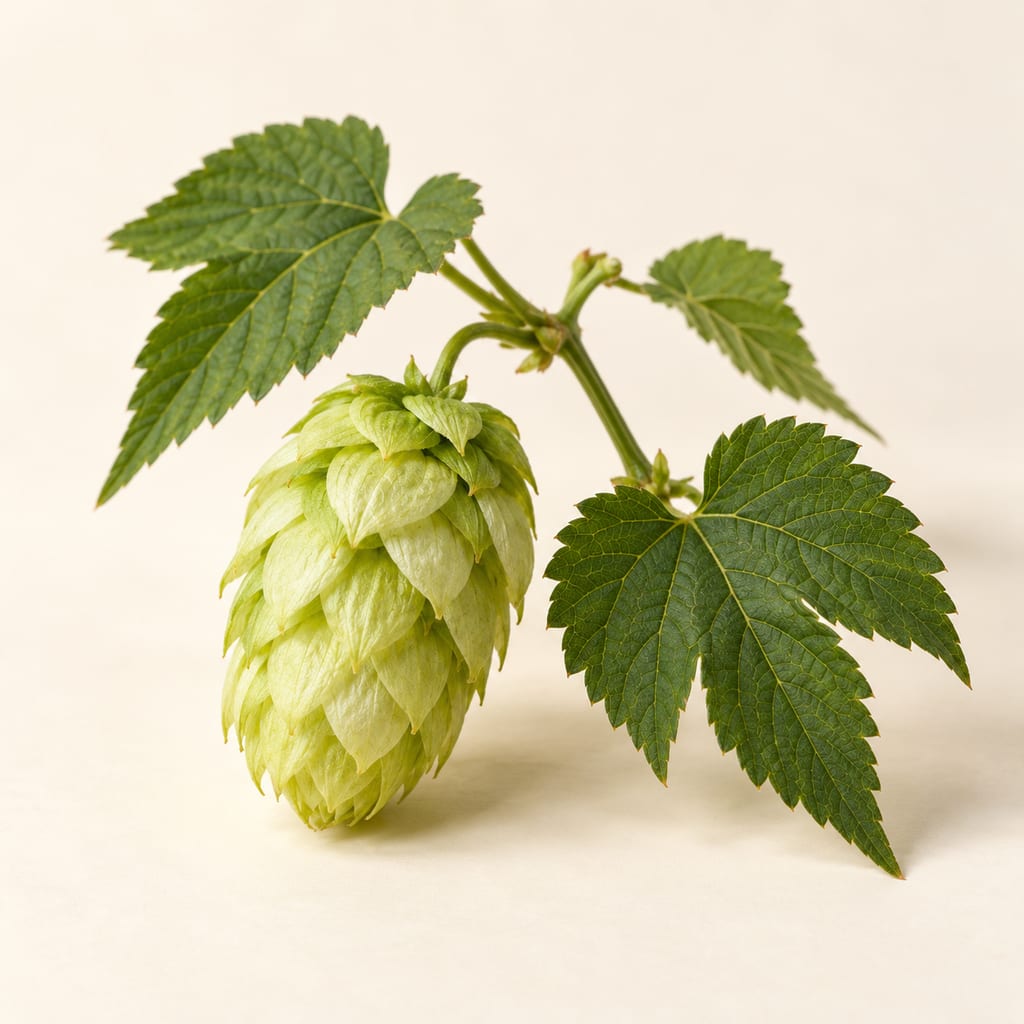
A traditional German aroma-hop land variety, associated with the Hallertau and described with herbal, spicy and floral notes. Cultivar identity, crop analysis and the growing place of a particular lot remain separate facts.
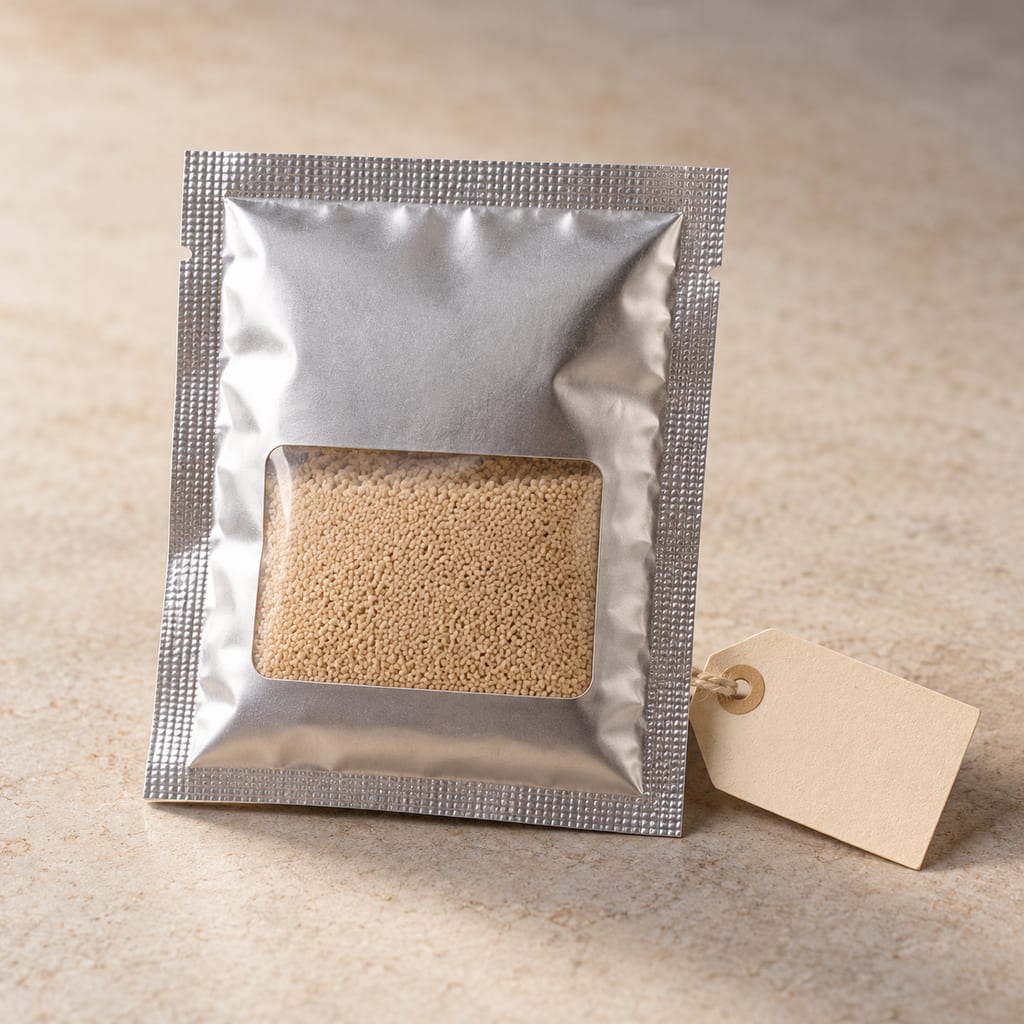
Lager yeast is the bottom-fermenting brewing yeast Saccharomyces pastorianus, a hybrid of S. cerevisiae and S. eubayanus, sold and kept as named strains that are not interchangeable.
Saccharomyces pastorianus is the hybrid lager yeast, a cross of the ale yeast S. cerevisiae and the cold-tolerant S. eubayanus, that ferments beer at cool temperatures from the bottom of the tank.

Soft, spreadable Calabrian pork sausage made with a great deal of red chilli and fatty pork, stuffed into natural casings, sometimes smoked and matured while staying soft.

A way to add independent temperature logging to an existing food dehydrator without changing its built-in controls or protections. It is a monitoring method, not a rewiring plan.

Pleurotus cystidiosus is the abalone mushroom, a cultivated oyster-type fungus with dark brown caps that grows more slowly and is more demanding than other Pleurotus species.

A dark, balanced vinegar from Emilia-Romagna made by combining cooked or concentrated grape must with wine vinegar, then acetifying and refining it in wood under a protected specification.

A living dairy inoculum that starts controlled cream fermentation, developing acidity and aroma before sour cream or cultured butter is finished.

A small electric incubator holds jars at a selected temperature for yogurt and other documented warm food preparations. Controls, capacity and vessel arrangement vary by model.

Adygean salt is a seasoned table salt associated with Adygea and the wider North Caucasian culinary tradition. Salt is blended with garlic and a variable selection of herbs and spices; the exact mix depends on the named style and maker.

The African Caesar-group mushroom, Amanita masasiensis, is a wild ectomycorrhizal species of central and southern African woodlands, eaten locally. The genus contains deadly poisonous species, so identification needs care.
No community contributions have been published for this entry yet.
Sign in to contribute. Published comments and photos are free to read.
Gesellschaft für Hopfenforschung e.V.Ingredient identity · Method
PerleBreeding pedigree, cross in 1965, release in 1978, growing regions and raw-hop sensory description; no lot chemistry inferred.
Cited in: A hop bred at Hüll; Reading Perle’s aroma descriptions; Growing regions and the packet’s origin
USDA Agricultural Research ServiceIngredient identity · Method
Perle (21227)Female cultivar, accession history, parent code and recorded comparison with Hallertauer Mittelfrüh; historical growing associations.
Cited in: A hop bred at Hüll; Reading Perle’s aroma descriptions; Growing regions and the packet’s origin
Royal Botanic Gardens, KewIngredient identity · Method
Humulus lupulus L.Accepted species, family and climbing perennial habit; species range is separate from cultivar origin.
Cited in: A hop bred at Hüll; From a climbing plant to harvested cones
Hop Research Center HüllIngredient identity · Method
CultivationGeneral trellising, training, cone harvest and mechanization; questionable translated washing statement excluded.
Cited in: From a climbing plant to harvested cones
Hop Research Center HüllIngredient identity · Method
Products/UsageLupulin in hop cones and culinary brewing role; medicinal claims and numerical generalizations excluded.
Cited in: From a climbing plant to harvested cones; Bitterness and aroma take different paths
Bayerische Landesanstalt für LandwirtschaftIngredient identity · Method
Trocknung und Konditionierung von Hopfen, second revised edition, August 2020 — Jakob MünstererCone structure and changing heat/moisture transfer during drying; no operating limits transferred.
Cited in: Drying before pressing
John I. Haas, Inc.Ingredient identity · Method
Hops Companion: A Brewer’s Guide to Hop Varieties and Hop Products, fourth edition, 2022Milling and extrusion, dispersion and solids removal; Perle descriptors and documented US cultivation.
Cited in: What the pellet form changes; Reading Perle’s aroma descriptions; Growing regions and the packet’s origin
BarthHaasIngredient identity · Method
Hop Pellets (Type 90 Pellets), revision 7, approved 14 June 2024Grade-specific form, brewing roles, lot variation, barrier packaging and storage factors; not an assigned grade.
Cited in: What the pellet form changes; Pellet grades are different ingredients; Bitterness and aroma take different paths
BayWa AGIngredient identity · Method
Specification: Type 45 Hop Pellets, valid for production from 12 February 2023Lupulin enrichment, reduced vegetative matter, alpha-acid-based dosing and beer-matrix-dependent outcome; comparison only.
Cited in: Pellet grades are different ingredients; Bitterness and aroma take different paths
BrewingScienceIngredient identity · Method
Hop Volatile Compounds (Part II): Transfer Rates of Hop Compounds from Hop Pellets to Wort and Beer — Hanke et al., 2008Original abstract: compound- and variety-specific aroma transfer, linalool as an indicator; full paper not accessed.
Cited in: Aroma continues changing in the brewery
FEMS Yeast Research; original abstract via PubMedIngredient identity · Method
Biotransformation of hop aroma terpenoids by ale and lager yeasts — Andrew J. King and J. Richard Dickinson, 2003Model syrup experiment, geraniol/linalool transformations and lager ester production; no Perle-specific outcome.
Cited in: Aroma continues changing in the brewery
Journal of the Institute of BrewingIngredient identity · Method
Assessment of changes in hop resins and polyphenols during long-term storage — Alexandr Mikyška and Karel Krofta, 2012T90 trial on four named Czech varieties; oxygen and temperature effects, no Perle shelf-life prediction.
Cited in: Protecting the opened supply
American Homebrewers AssociationIngredient identity · Method
How to Store Hops — Dave CarpenterHomebrew cold, dark, oxygen-protected storage and prompt resealing; no universal expiry adopted.
Cited in: Protecting the opened supply
American Homebrewers AssociationIngredient identity · Method
Brewing with Extract: German-Style Wheat Beer (Weizen)Optional Perle or Liberty pellets in the extract Weizen formula; recipe-specific addition and boil-over warning.
Cited in: Perle in an extract Weizen