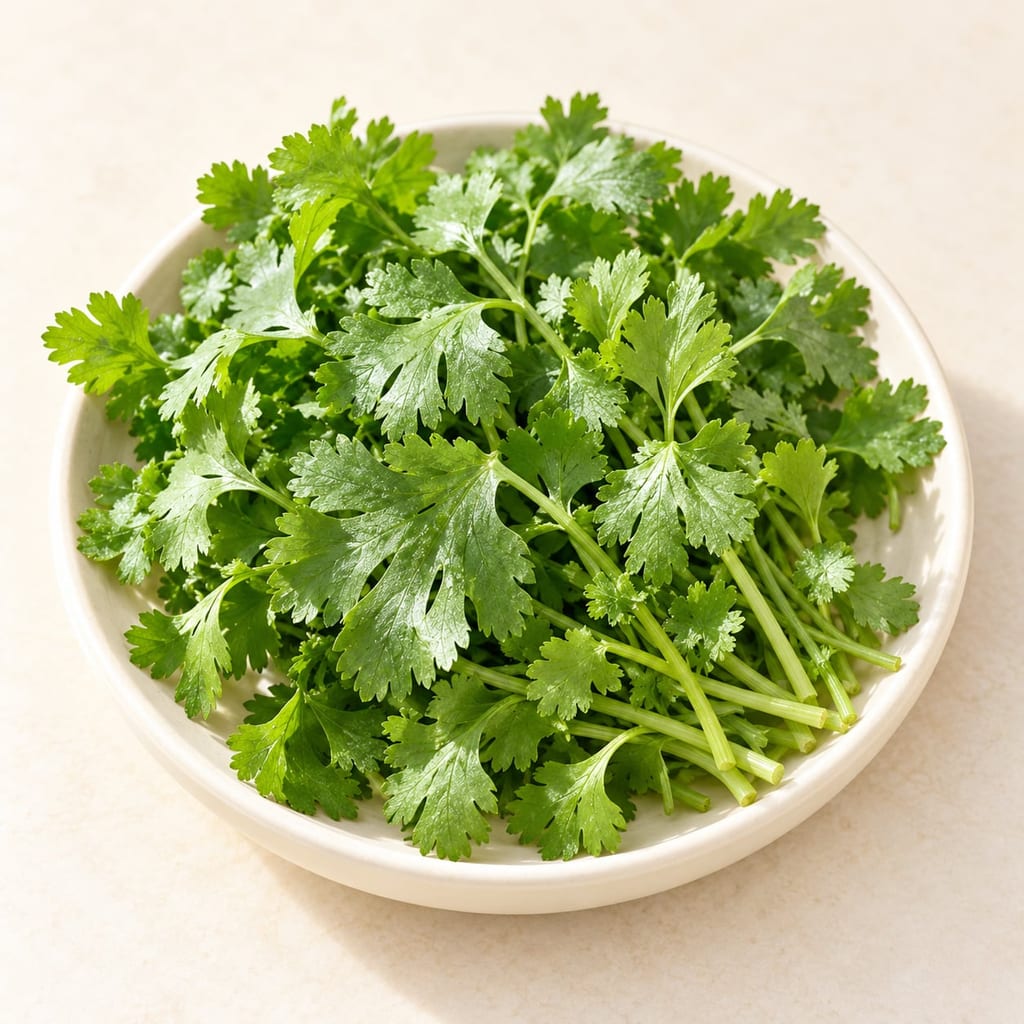
Cilantro
Cilantro is the fresh leafy herb of Coriandrum sativum, the same annual plant that produces coriander spice. Its green, aromatic leaves and fine stems bring a vivid herbal note to foods such as sai krok Isan.
 FermenteaWhere food goes to change
Modern adaptation
Sai krok Isan · Sai-krork-ee-saan · Sai-krork-prieo · ไส้กรอกเปรี้ยว
Sai krok Isan is a sour pork-and-rice sausage from northeastern Thailand. This garlic-rich version uses LHP-Dry starter and is cooked after fermentation.
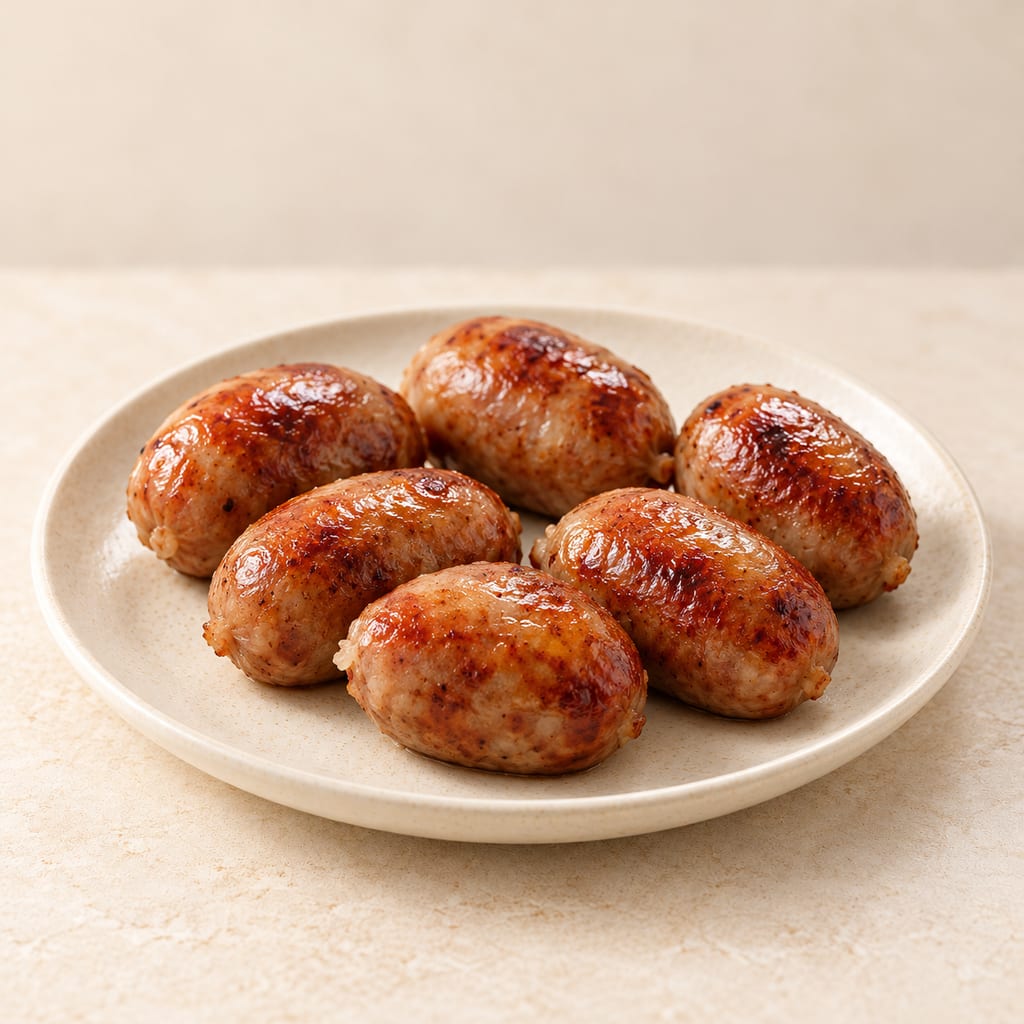
Sour pork sausage is part of northeastern Thailand’s sausage tradition. Pork and fat are mixed with cooked rice and seasonings, packed in casings and fermented. Roasted links are eaten with rice or sticky rice, ginger, shallots and cabbage. This version uses a commercial starter and includes lime leaves and cilantro.
Scaling: source batch only
Slow acidification during warm meat fermentation can permit growth and heat-stable toxin production.
Hazard sourceFermented sausage needs a demonstrated pathogen-reduction process in addition to acidification.
Hazard sourceTrack fermentation temperature and the time needed to acidify, using the degree-hour control appropriate to a validated process.
Control sourceUse a process with demonstrated control of Salmonella and pathogenic E. coli; assess pathogen reduction separately from the pH endpoint.
Control sourceWarm fermentation can allow Staphylococcus aureus to form heat-stable toxin if acidification is too slow; monitor time, temperature and pH together against a validated fermentation schedule.
Heat-stable Staphylococcus aureus toxin can remain after cooking; keep the fermentation within a validated time, temperature and acidification schedule.
LHP-Dry — Commercial lactic starter containing Pediococcus acidilactici and Pediococcus pentosaceus.
Source does not specify maturation humidity.
Regional sausage tradition; this formula uses commercial starter culture.
Cilantro is the fresh leafy herb of Coriandrum sativum, the same annual plant that produces coriander spice. Its green, aromatic leaves and fine stems bring a vivid herbal note to foods such as sai krok Isan.
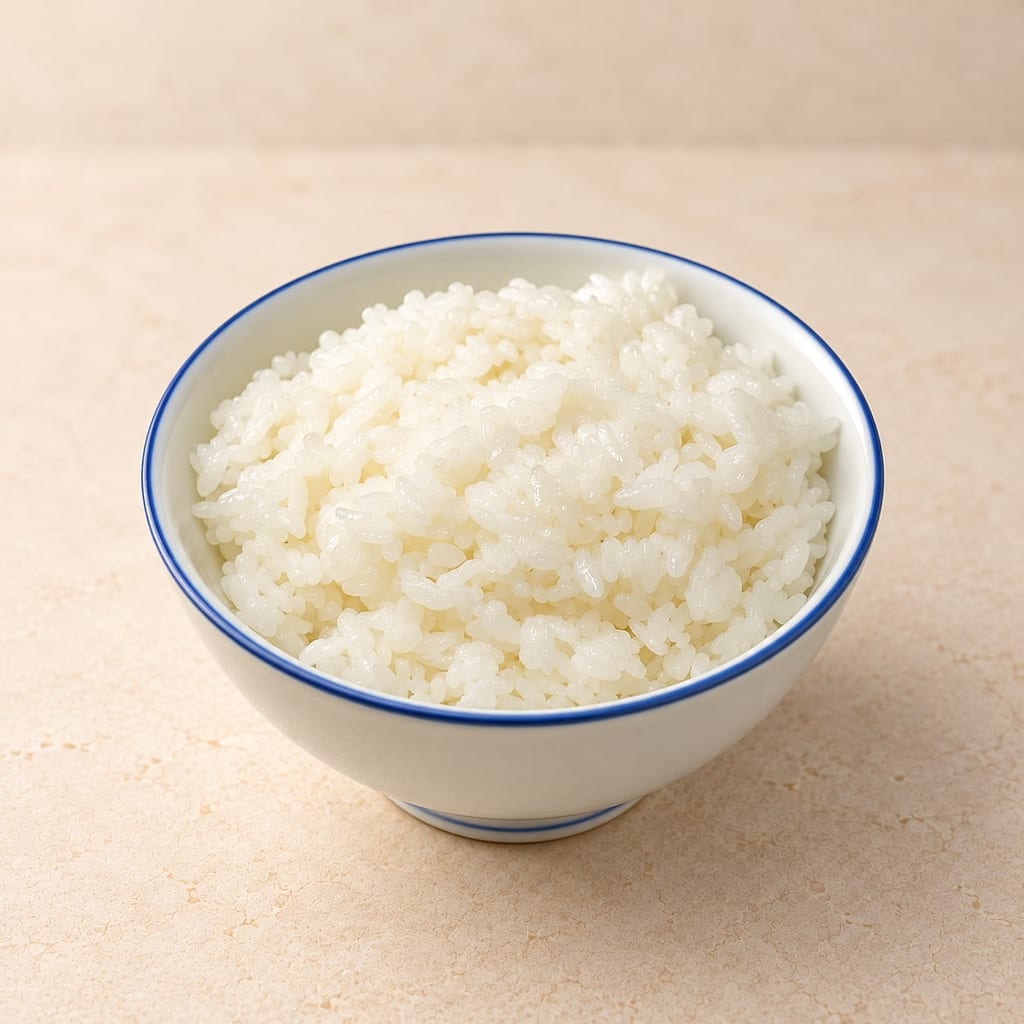
Cooked rice is rice grain heated in water until its starch gelatinizes; in Thai sour sausage it feeds the bacteria that acidify the meat.
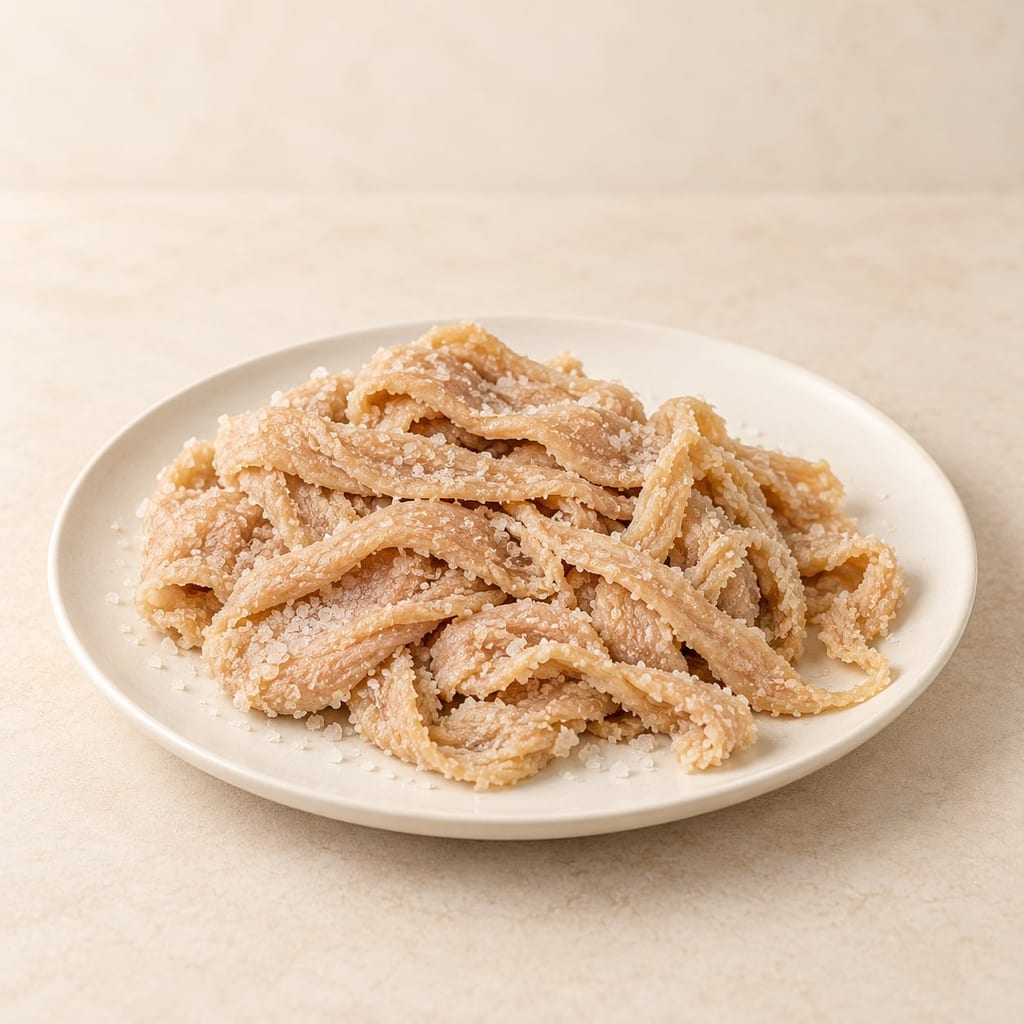
Cleaned, preserved pig intestinal tissue forms a flexible envelope for sausages. Section, calibre and packing affect handling, drying and the finished bite.
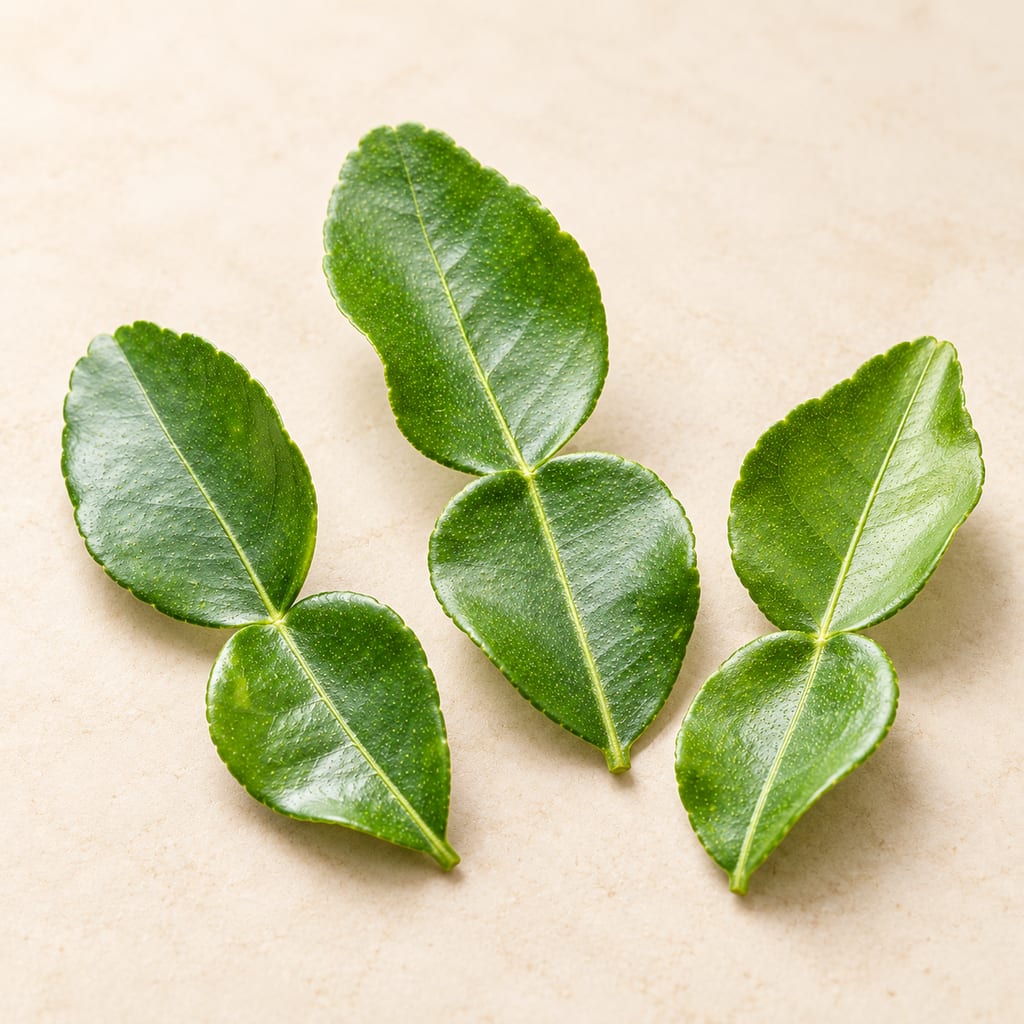
Kaffir or makrut lime leaves are the aromatic foliage of Citrus hystrix, used whole for infusion or finely cut in soups, curries and seasonings.

Dry salami, sour pork with rice, matured sheep and aged blubber follow different paths from animal to food. Their stories connect microbes with climate, slaughter, migration and the meals people share.
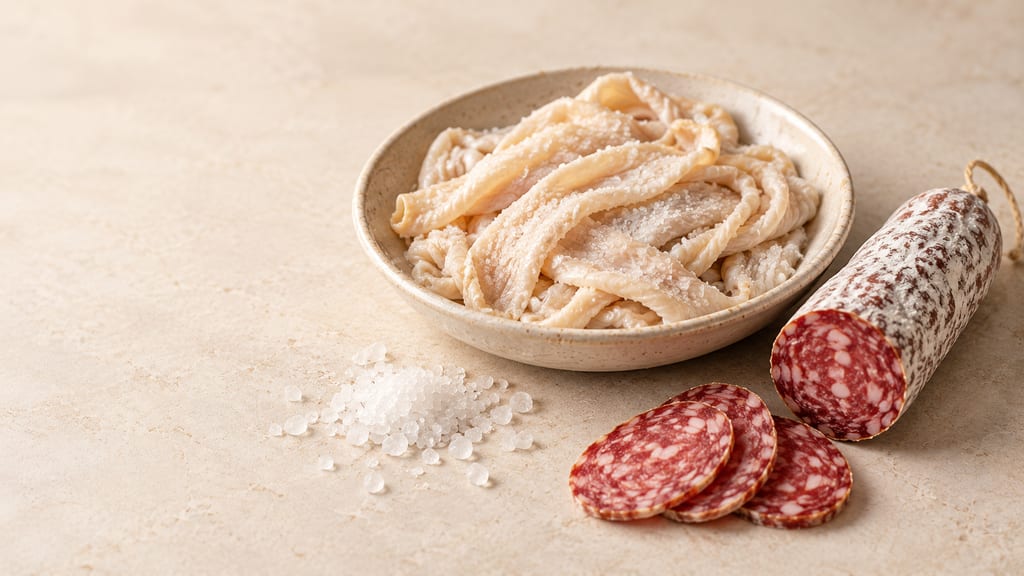
Gut, stomach, bladder, caul and skin have held food for as long as recipes have been written down. Which part of the animal a cook chose still decides a food's shape, how it dries and smokes, and how it is eaten.
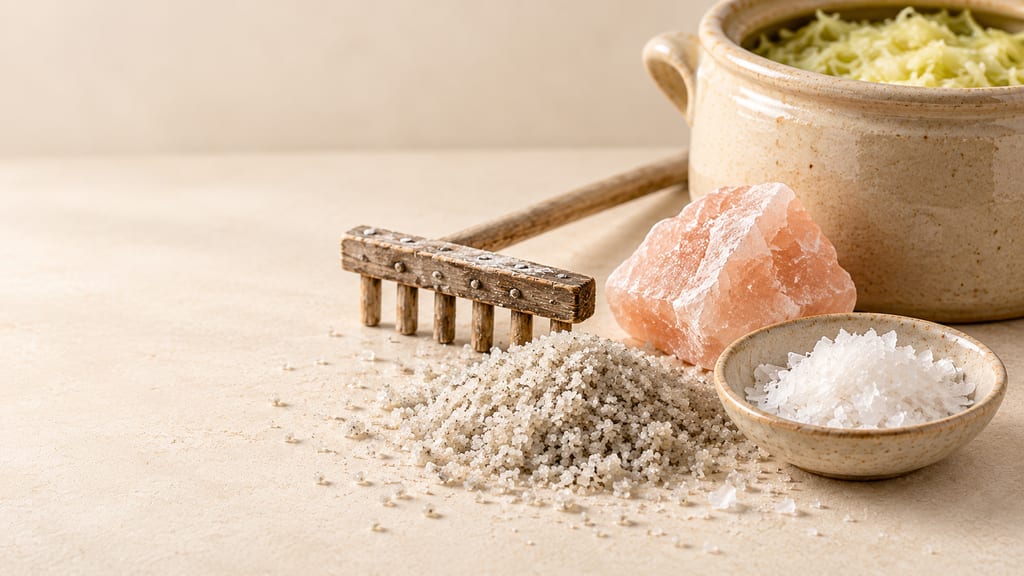
Salt seasons a meal, shapes fermentation and preserves food. Its history follows the people who mine, harvest, trade and transform it, and the choices hidden inside an ordinary packet.
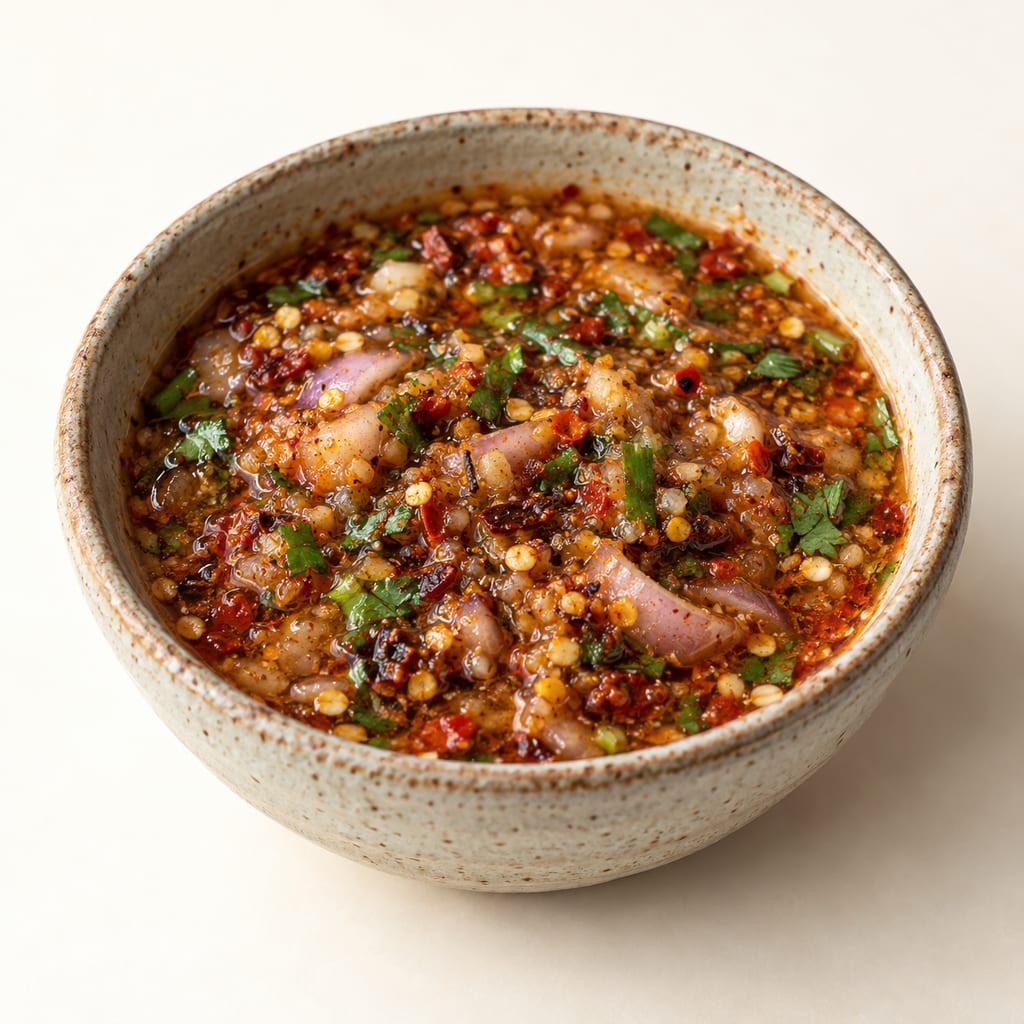
Roasted chillies, shallot and garlic are pounded and loosened with fermented and plain fish sauce, boiled water and lime into a sharp Isan dip for grilled meat and fish.
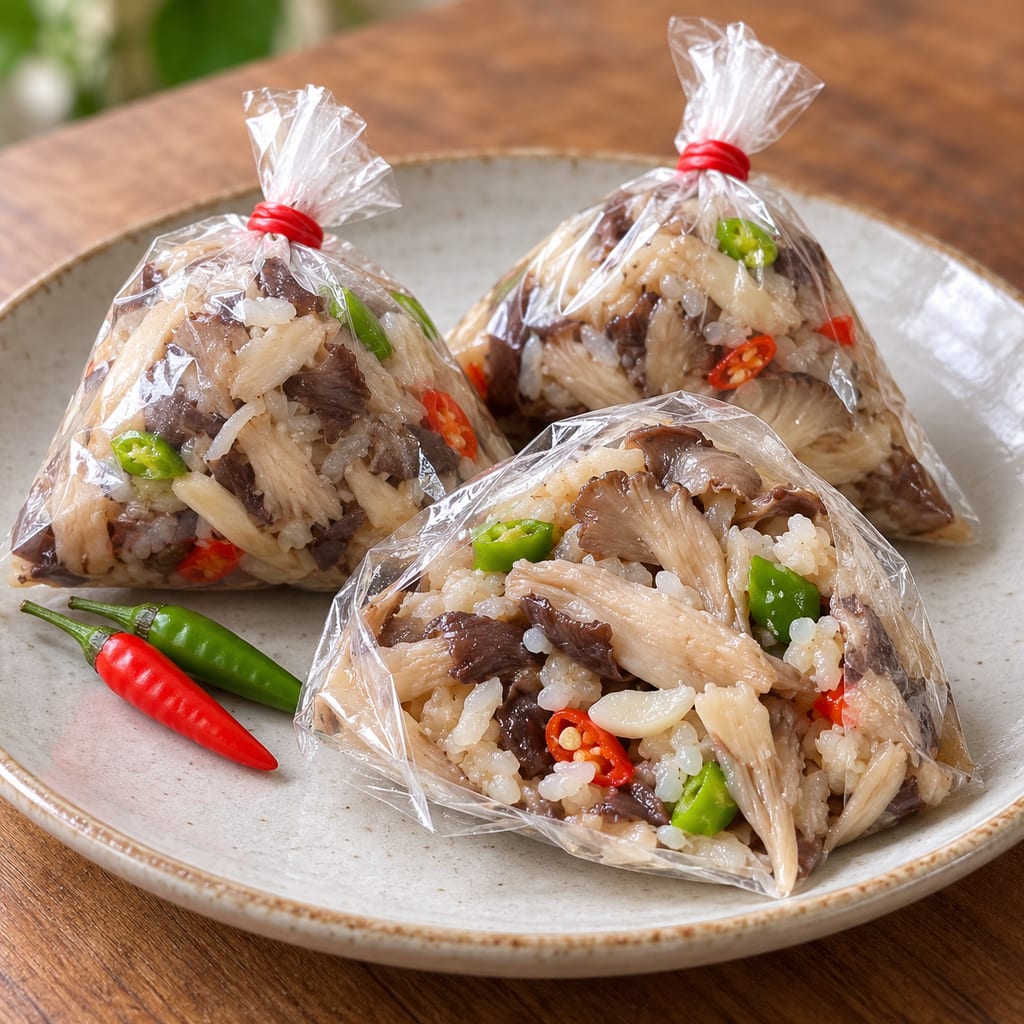
A Thai sour mushroom preparation: shredded steamed oyster mushrooms, cooked rice, garlic and salt packed into small parcels and soured by lactic acid bacteria over a few days.
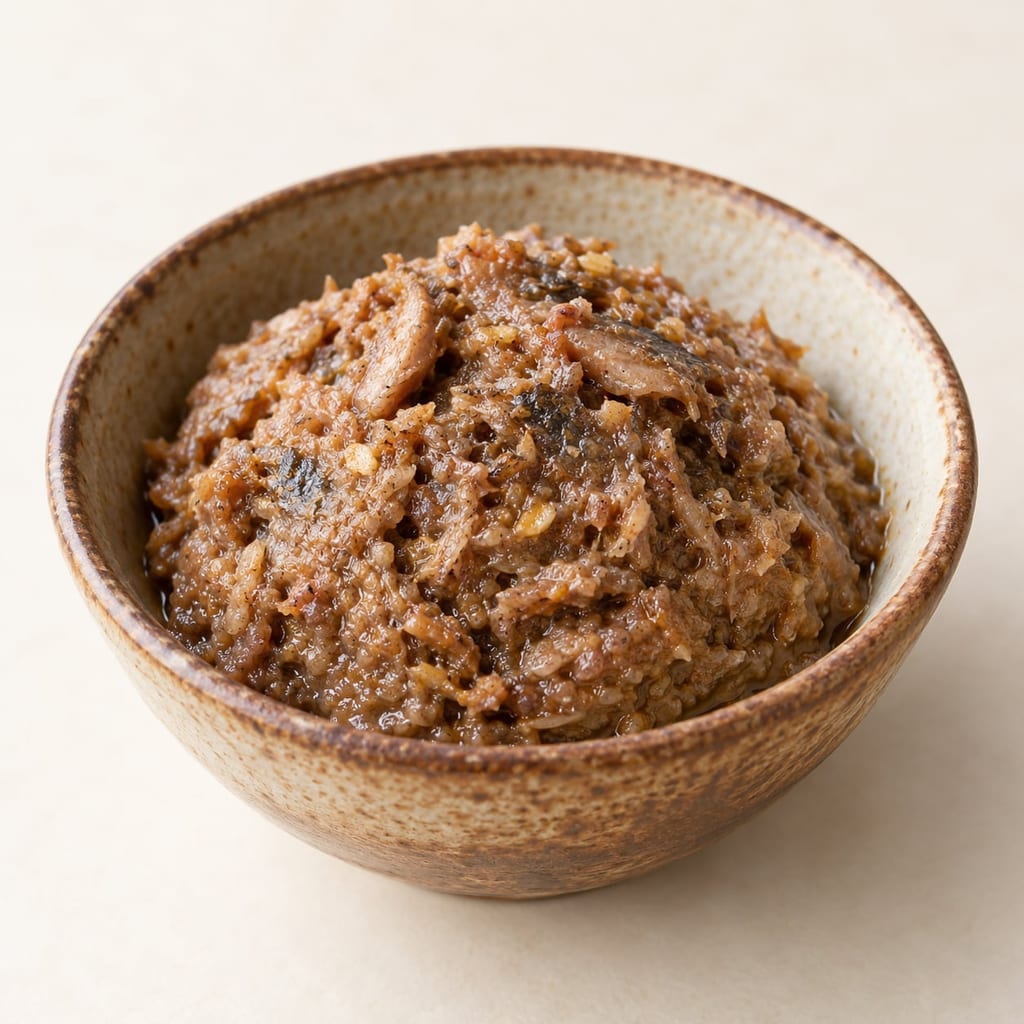
Thai salt-fermented fish paste, matured with rice bran or roasted rice and used as a seasoning in the Northeast and across Thailand. Raw pla ra must be cooked before eating.

Soft, spreadable Calabrian pork sausage made with a great deal of red chilli and fatty pork, stuffed into natural casings, sometimes smoked and matured while staying soft.
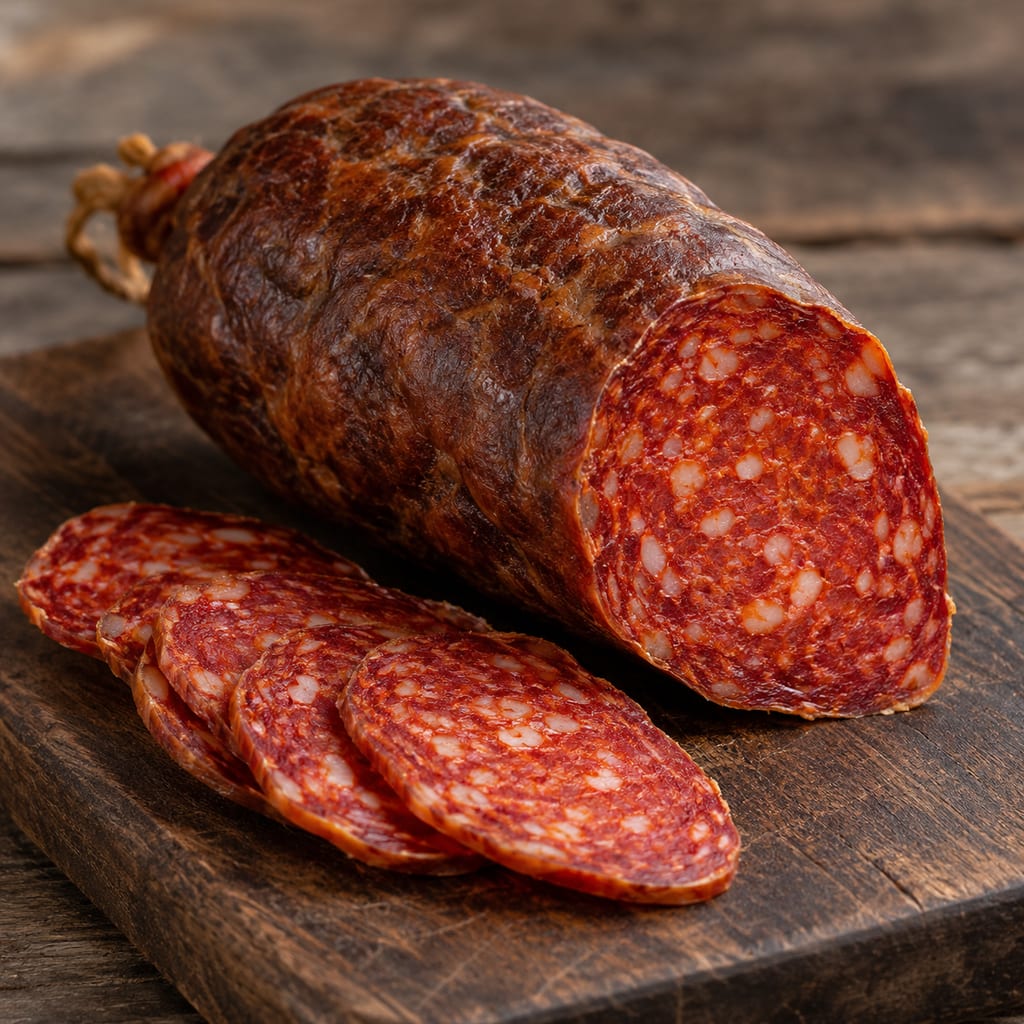
Baranjski kulen is a Croatian protected fermented pork sausage seasoned with sweet and hot paprika, garlic and white pepper, stuffed into a pig’s caecum called katica, cold-smoked and matured.
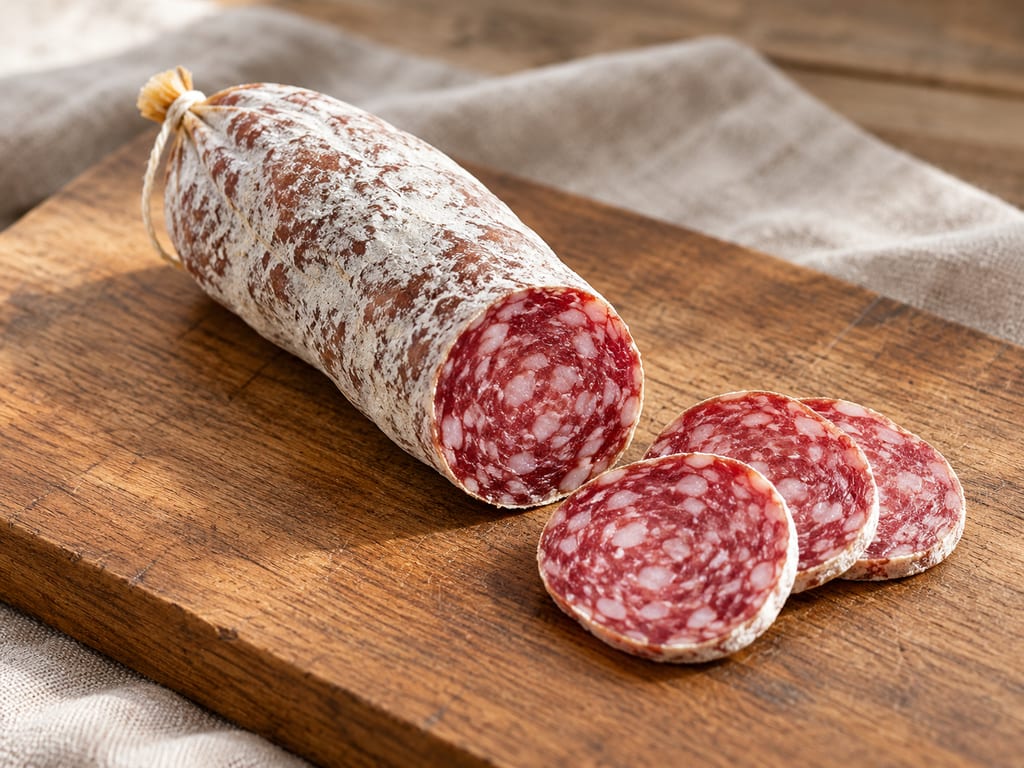
Small Italian hunter-style salami of lean pork, firm fat, salt, pepper and garlic, mildly acidified and dry-matured; protected as Salamini Italiani alla Cacciatora DOP.
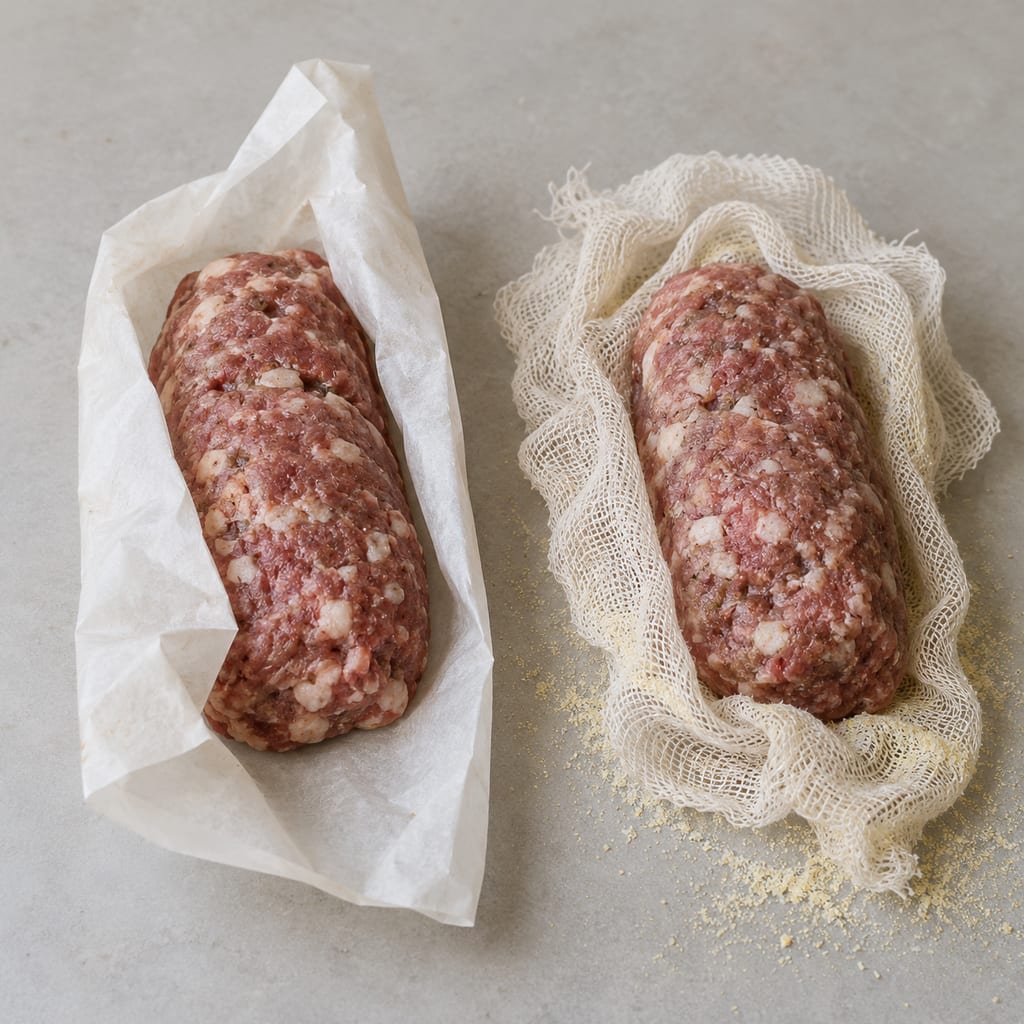
A documentary account of two modern Italian-language home-video experiments in salame without casings. Neither video establishes a safe preparation method or a ready-to-eat product.
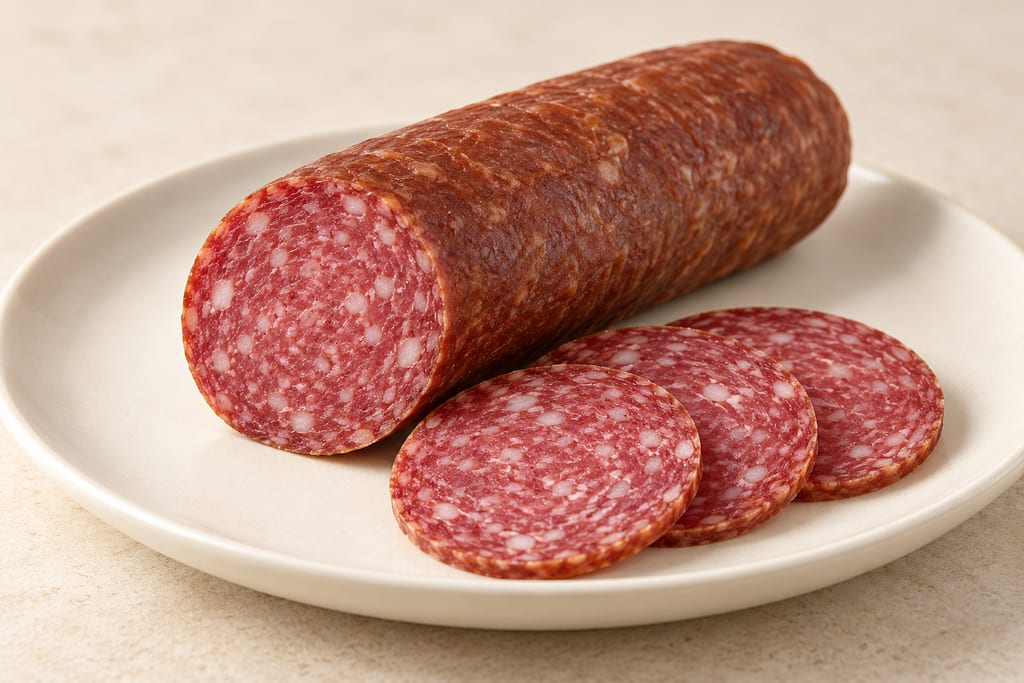
A family of salted minced-meat sausages fermented in casings, then dried and sometimes smoked. This description is not a validated household method; critical safety limits are not established.
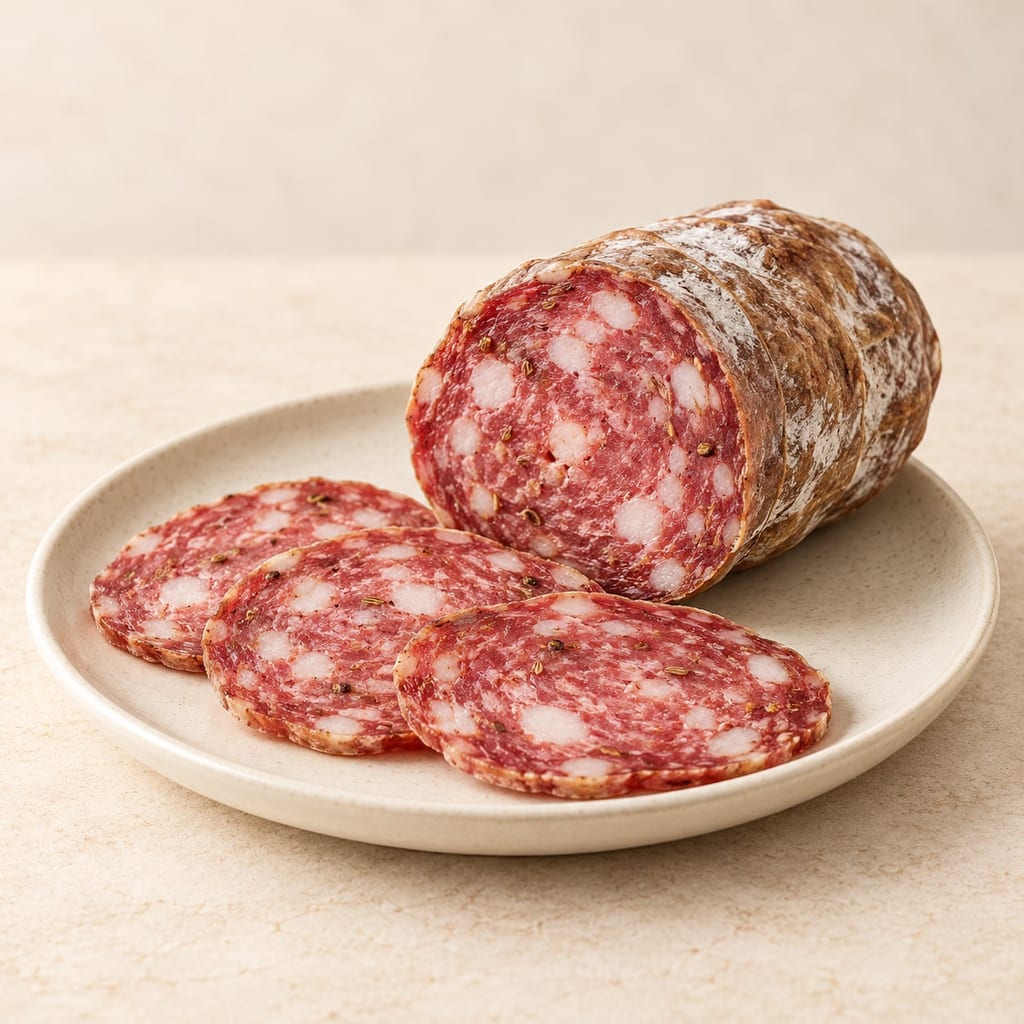
A Tuscan-style fennel salami made with pork and back fat. Toasted fennel, fennel pollen and Sambuca flavor this starter-cultured preparation.
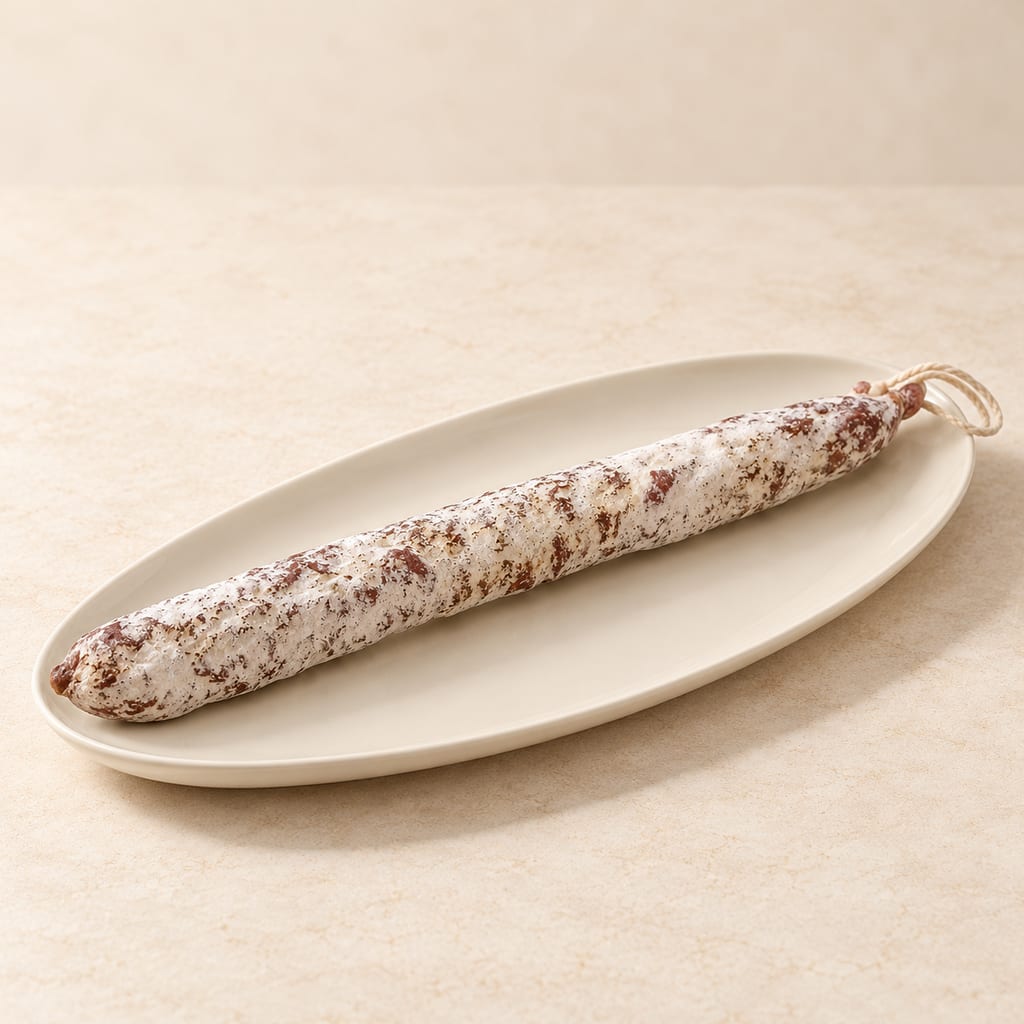
A documentary account of a modern starter-cultured Fuet formula and its place in Catalan sausage culture. The cited raw-pork process lacks matched safety validation, so this page does not present it as a household recipe.
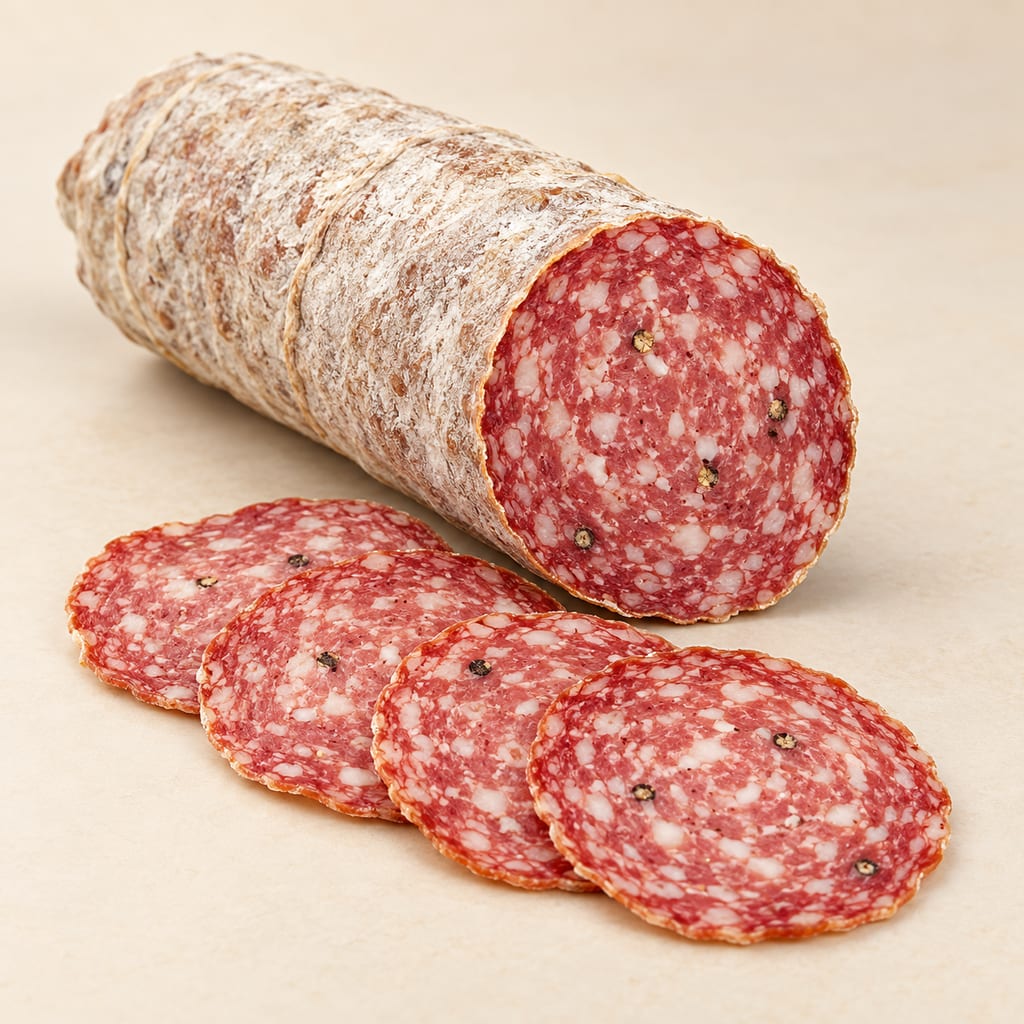
Pork, beef and back fat ferment with a named starter, cure and red wine before the sausages dry in casings. This contemporary formula uses no wood-smoke stage.
No community contributions have been published for this entry yet.
Sign in to contribute. Published comments and photos are free to read.
2 Guys & A CoolerProcess
Thailand’s – Sai Krok Issan1 kg ingredient formula, 10 mm grind, starter dose and rehydration, casings, fermentation instructions, refrigeration, and cooking direction.
USDA FSISSafety
Ready-to-Eat Fermented, Salt-Cured, and Dried Products GuidelineHazard context for fermented meat; not used as recipe validation.
BCCDCSafety
Fermented Foods Safety GuidanceGeneral fermented-food hazard context; not used to validate this pork sausage.
Canadian Food Inspection AgencySafety
Preventive control recommendations for manufacturing fermented and dried meat productsStaphylococcus aureus heat-stable toxin, fermentation time-temperature-pH control, and separate Salmonella and E. coli reduction controls.
Japan International Research Center for Agricultural SciencesHistory · Names · Use
Sai-krork-prieoThai spelling ไส้กรอกเปรี้ยว, local name Sai-krork-ee-saan, pork-rice sausage and roasted serving with rice, ginger, shallots and cabbage; traditional microbial observations are not assigned to this commercial starter.
Chr. HansenCulture identity
Bactoferm LHP-DRY US Product InformationPediococcus acidilactici and Pediococcus pentosaceus; manufacturer dry-addition direction differs from the culinary recipe's rehydration.