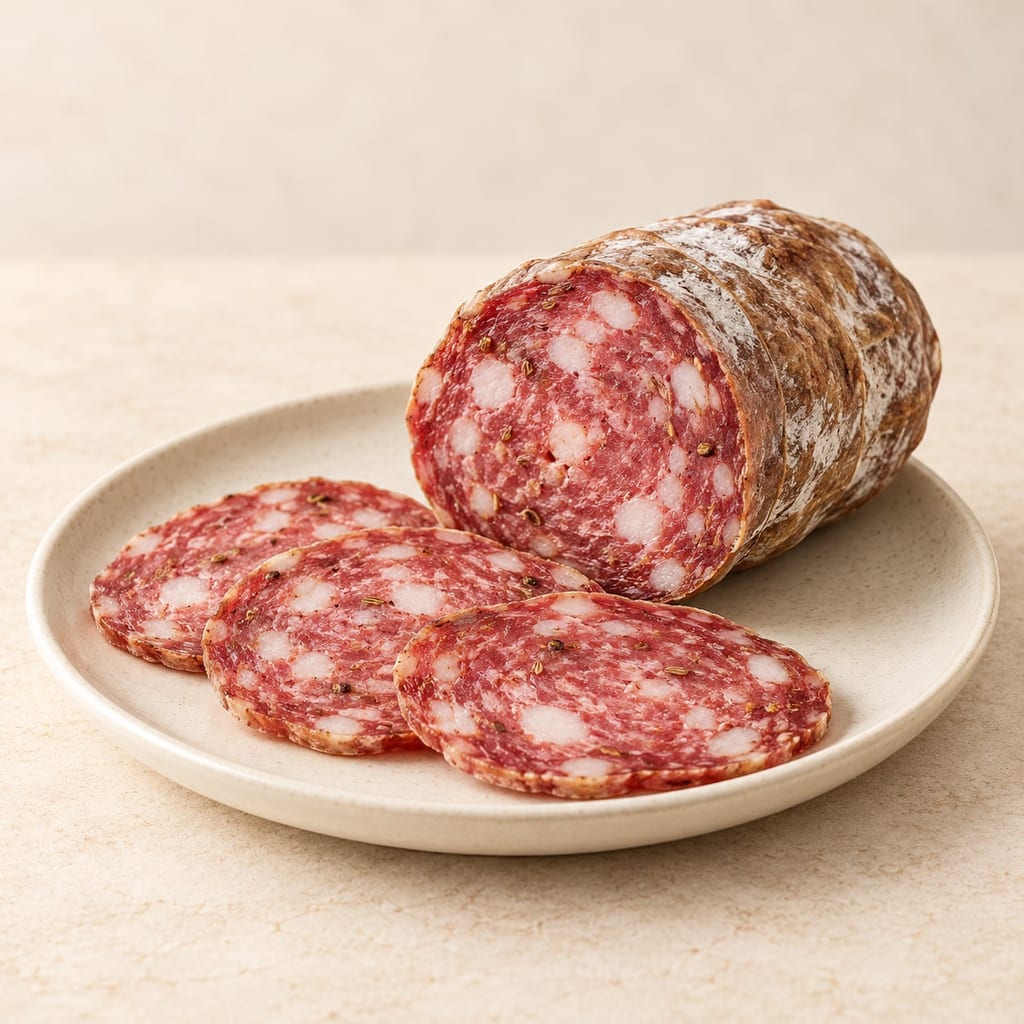
Finocchiona, starter-cultured
A Tuscan-style fennel salami made with pork and back fat. Toasted fennel, fennel pollen and Sambuca flavor this starter-cultured preparation.
 FermenteaWhere food goes to change
Water
Water recovered by evaporation and condensation, with much of its original mineral content left behind; selected recipes use it for culture preparation or brine.
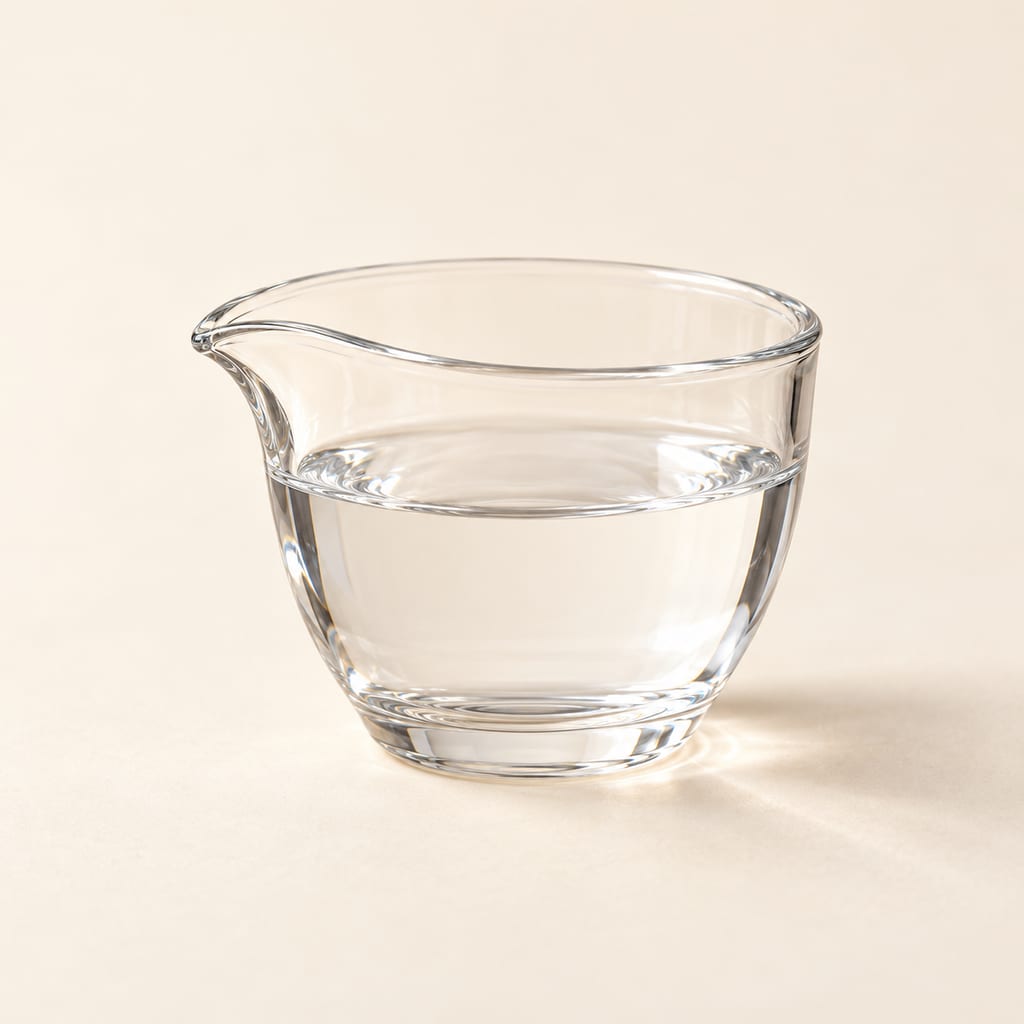
Distilled water is water collected after evaporation and condensation. Its defining feature is the journey through a still: the starting water is heated, vapour leaves the boiling chamber, and cooling turns that vapour back into liquid in a separate collection path. Much of the original dissolved mineral material stays behind. The finished liquid looks like ordinary clear water, but its treatment history and mineral contribution are different.
Distillation has a documented history beyond the modern supermarket bottle. An illustration published in M. Duchanoy's 1780 book about imitating mineral waters shows a barrel, a still, connecting tubes and a receiving vessel. The arrangement makes separation and collection visible as distinct operations. It belongs to a period of attempts to understand and reproduce particular waters, rather than a history in which all water was treated as an interchangeable, colourless background.
In 1850, the engineer Samuel Collett Homersham discussed repeated distillation while arguing about London's water supply. He contrasted the uniform water he believed distillation could produce with the varying dissolved material in ordinary supplies. His pamphlet also questioned its convenience for a city and discussed its behaviour with metal pipes. These are the arguments of a nineteenth-century water-supply advocate, not present-day instructions for plumbing or drinking. They show that the relationship between consistency, manufacture and practical distribution was already a subject of debate.
The modern kitchen encounters distilled water on a smaller scale. A recipe may specify it for a measured culture suspension or a particular brine. The connection with the older apparatus is physical: water has been separated from much of its original dissolved material. The purpose in a food method is more specific than a general promise of purity, and understanding that purpose helps determine when the qualifier matters.
Simply boiling a saucepan of water does not produce a collected supply of distilled water. The vapour must be led away, cooled and recovered. If boiling merely reduces the liquid in the original pan, substances left behind remain in that pan. Distillation makes the condensate the desired product. Keeping the starting liquid and the collected liquid conceptually separate explains both the equipment and the resulting change in composition.
Dissolved calcium and magnesium are among the minerals that distillation can remove from water. These minerals contribute to hardness, a familiar cause of scale when hard water is heated. Their removal changes what the water brings to a food mixture. Water selected for a low mineral contribution is therefore different from water chosen because it comes from a celebrated spring, even though both may look equally clear in a glass.
Separation has limits. Some easily evaporated organic compounds and solvents can pass through a distillation system, and certain pesticides are not removed by this treatment. The apparatus also needs care: bacteria can grow on cooling coils while a system is idle. The physical process, the condition of the equipment and the handling of the collected water each affect the result. A commercial drinking-water product includes controls beyond merely possessing a still.
Distillation also consumes energy to heat and evaporate water and then requires cooling and collection. That helps explain why other treatment methods are widely used for large supplies and specific tasks. A process is chosen for the starting water and the intended result. The word distilled tells the reader how a water was treated; it does not describe every aspect of its manufacture or certify its condition after a container has been opened.
Water names answer different questions. Spring and well describe where water was obtained. Distilled describes a treatment. Under U.S. bottled-water rules, purified water is a broader category that can include water treated by distillation, reverse osmosis or another suitable process. Thus a purified-water label alone does not establish that a product was distilled. Conversely, municipal water can be the starting material for a bottled product that receives further treatment.
Reverse osmosis uses a membrane and pressure to separate water from many dissolved substances. Distillation uses evaporation and condensation. Both can reduce mineral content, but their mechanisms and the performance of particular systems differ. A water softener performs another task, principally removing hardness minerals such as calcium and magnesium; softening alone does not remove germs. These distinctions matter when a food method names a process rather than simply asking for water that tastes pleasant.
Non-chlorinated is a different kind of description again. It refers to a treatment condition or disinfectant residual. Water can have low mineral content without that phrase fully describing its treatment, and a supply without added chlorine may still contain dissolved minerals. Public utilities may use chlorine, chloramine or other approaches. Distilled, soft and non-chlorinated consequently should not be read as three equivalent promises on an ingredient list.
For the cook, the most useful first question is what the method actually specifies. A recipe that asks for distilled water gives a more definite treatment requirement than one that asks only for clean water. A label that includes added ingredients describes a different product from plain distilled water. Reading the product name and ingredient information preserves those distinctions without trying to identify treatment or mineral content from appearance.
One documented use is preparing a commercial starter culture for fermented sausage. In the modern cultured Maltese sausage method, dried Flavor of Italy starter rests in distilled water before being mixed through the meat. Water supplies the liquid for that preparation and helps distribute the measured culture. The recipe assigns a particular water quantity and resting period to its own batch. These instructions belong with that culture and formulation.
The water is only one part of what enters the mixture. The starter supplies organisms, the meat and other ingredients supply the food environment, and the method controls the stages that follow. Distilled water does not itself produce acid or introduce the starter. Describing it as a carrier keeps the roles clear and helps explain why a small volume can be a deliberate ingredient even though it contributes little of the finished sausage's flavour.
The same contemporary sausage page presents a separate traditional-style version without that starter and distilled-water addition. This difference is useful cultural context: a modern culture-handling step should not be projected backward as an ancient Maltese water practice. A named food can have methods from different periods, and the water choice belongs to the method that actually specifies it.
Ventricina provides another precise distinction. Its detailed recipe uses distilled water for the internal starter and non-chlorinated water for a surface mould culture. The liquids carry different cultures to different places in the food. One is mixed into the mince; the other is used on the exterior. Preserving that wording is more informative than collapsing both entries into an unexplained instruction to use special water. It also avoids converting one practitioner's choices into a rule for every commercial culture.
Fermentation methods do not all ask the same thing of their water. For produce fermented in a wet brine, Minnesota's home-preservation guidance recommends soft or distilled water because minerals in hard water can affect colour and texture. Here the water surrounds the produce and carries dissolved salt and other substances. Its composition interacts with the plant tissue as well as with the liquid environment of fermentation.
Fruit-wine guidance offers a contrasting case. Virginia Cooperative Extension advises against distilled water in its home fruit-wine method because it lacks trace elements useful to fermentation. That guidance also explains why fruit musts may need yeast nutrient and why the amount of added water depends on the fruit and its preparation. The relevant question is the complete mixture available to the yeast, rather than a hierarchy in which the least mineralized water is always best.
Brewing gives the contrast a further chemical basis. Calcium and magnesium participate in mash chemistry, while bicarbonate contributes to the water's resistance to acidification. A low-mineral starting water changes the contribution from the water side of the mixture. Malt also supplies material, and the brewer may design additions around a known starting profile. Removing minerals is therefore a way of changing an input, not a complete beer recipe.
These uses explain why a distilled-water instruction should travel with its context. A starter suspension, a vegetable brine, a fruit must and an all-grain mash place water in different surroundings. The source ingredients, culture and later processing determine what else is supplied. Choosing water for one of these purposes does not establish a successful substitution in all the others, even where the same bottle is suitable for food use.
Distilled water also appears as a reference in the measurement of water activity. Water activity compares the vapour pressure above a food with that above distilled water under the same conditions. It describes how the food holds water, rather than simply how much liquid it contains. Dissolved salt, sugar and the food structure change that relationship. This analytical use helps explain why adding water to a ferment and measuring the behaviour of water in the finished food are different questions. A distilled-water ingredient does not determine the final water activity after other ingredients have dissolved or the food has dried.
Commercial bottled drinking water is governed by controls for product identity, quality and sanitary manufacture. In the United States, these include requirements for appropriate processing and bottling equipment, sampling and analysis. Such controls concern the packaged food product. They are separate from the simple explanation of what happens when vapour condenses. For kitchen use, the product's stated purpose and labelling provide information that the transparent liquid cannot show.
Different products can also carry different additions. A water beverage with flavouring or added nutrients has a composition beyond the plain water used in a recipe. Its ingredients deserve the same attention as those on any other food package. Where a method specifies plain distilled water, matching that description is more useful than choosing by a general word such as premium or by the absence of visible particles.
After treatment, clean handling still matters. The collected water can contact equipment, a bottle, a cap and a measuring vessel. Distillation does not turn every later surface into a sanitary one. Follow the product's storage directions, keep food-contact equipment clean and preserve the identity of the water in its container. No general storage duration follows simply from the word distilled, and a culture preparation should retain the storage and timing directions of its own method.
Plain water is not among the United States' named major food allergens. A packaged product's other ingredients and cross-contact circumstances remain a separate question, and the allergen content of a food made with it follows the whole formulation. Using distilled water in milk, for example, does not change the milk ingredient's identity. This is an ingredient selection issue, rather than a health benefit conferred by distillation.
The practical value of distilled water is that it names a controlled change to a familiar material. It removes much of the starting mineral contribution through a physical separation, then provides water for the task the method assigns. Understanding the collection step, reading the label and identifying that task makes the ingredient less mysterious. Its place in the linked preparations comes from their actual directions, while their cultures, quantities and stages continue to define the food.
Distillation is a production treatment available in many places. The linked food methods do not identify a particular water maker or manufacturing location; sausage geography is not ingredient provenance.
A Tuscan-style fennel salami made with pork and back fat. Toasted fennel, fennel pollen and Sambuca flavor this starter-cultured preparation.
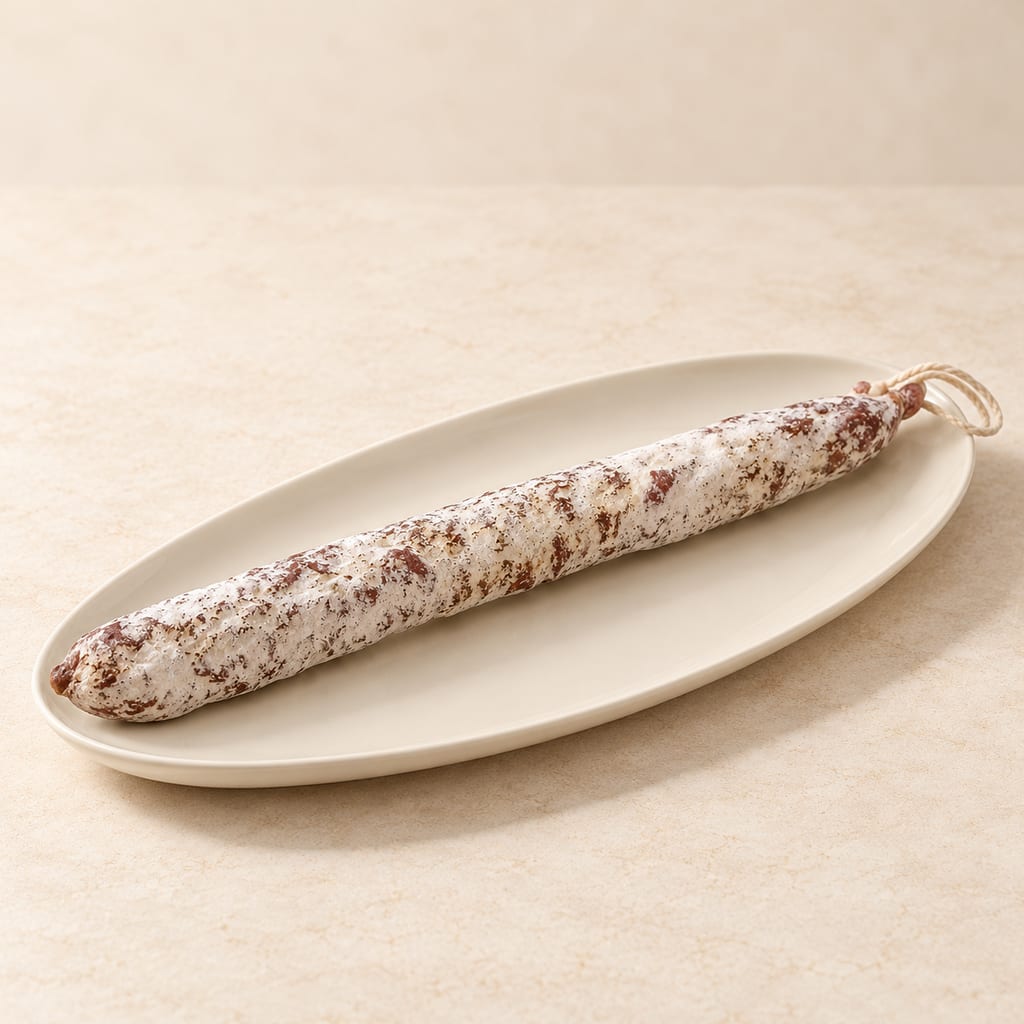
A documentary account of a modern starter-cultured Fuet formula and its place in Catalan sausage culture. The cited raw-pork process lacks matched safety validation, so this page does not present it as a household recipe.
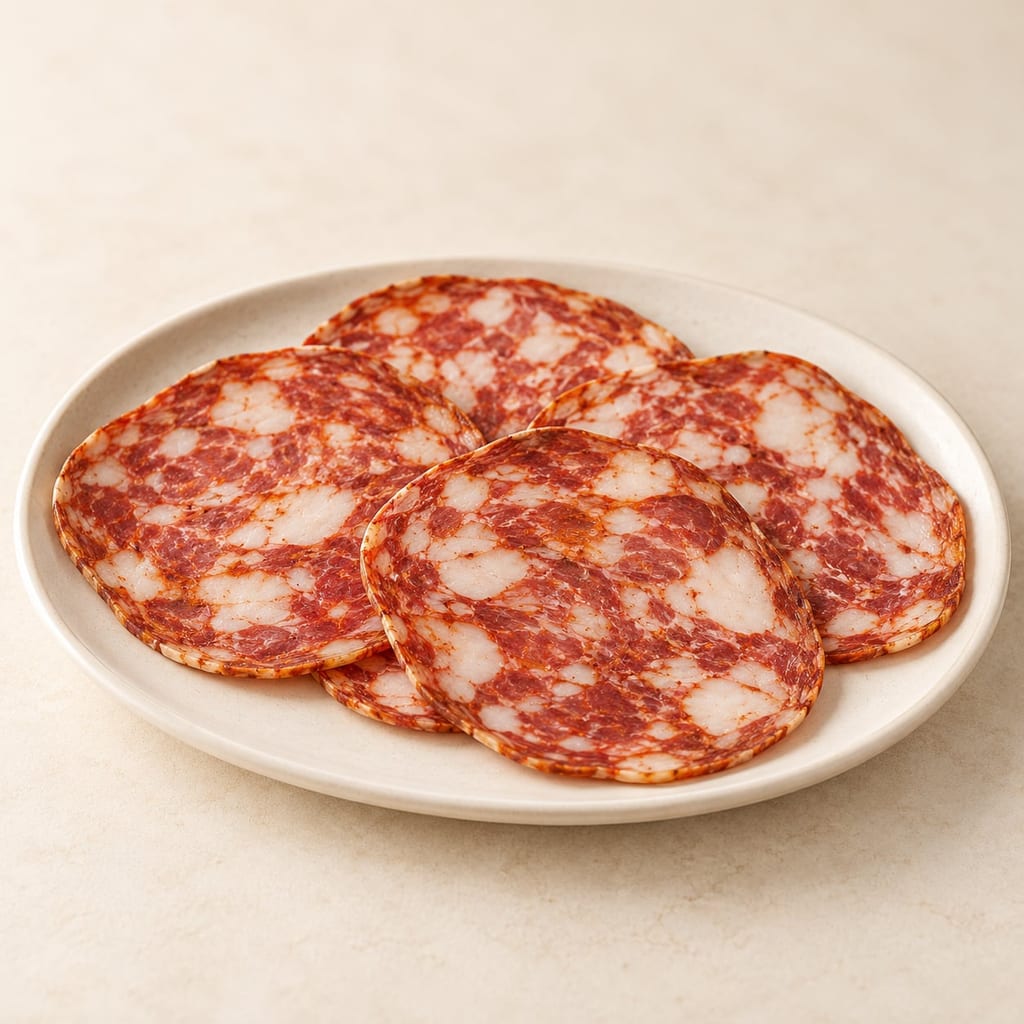
A documentary account of a modern ventricina-style salami source and its Abruzzese context. This page provides no preparation directions or validated home process.
No community contributions have been published for this entry yet.
Sign in to contribute. Published comments and photos are free to read.
U.S. Food and Drug AdministrationIngredient context
Bottled Water Everywhere: Keeping it SafeU.S. bottled-water rules distinguish distilled and purified water, permitted source and treatment descriptions, and sanitary manufacture and sampling requirements.
Cited in: Water collected a second time; What a still separates; Reading the different water names; Buying and handling the finished water; Following its use in a recipe
Wellcome CollectionIngredient context
Diagram of a barrel and water distillation showing the manufacture of mineral water,1780: M0018426The institutional catalogue identifies an illustration in M. Duchanoy's *Essais sur l’art d’imiter les eaux minerales* (Paris, 1780). It documents an apparatus image, not the full book; the archive photograph is dated 1961.
Cited in: Water collected a second time
Samuel Collett Homersham; Wellcome Collection / Royal College of Physicians, LondonIngredient context
Review of the report by the General Board of Health on the supply of water to the MetropolisThe digitized printed page 3 and catalogue record document an 1850 debate over repeated distillation, supply uniformity and the metal pipes used at the time.
Cited in: Water collected a second time
Centers for Disease Control and PreventionIngredient context
About Home Water Treatment SystemsDistillation boils and condenses water, removes many minerals, and has limits for volatile compounds; equipment and cooling systems need appropriate upkeep.
Cited in: What a still separates; Reading the different water names; Buying and handling the finished water
U.S. Geological SurveyIngredient context
Hardness of WaterWater hardness reflects dissolved calcium and magnesium influenced by geology; heated calcium carbonate can form scale. Broad hardness maps do not define a single local water composition.
Cited in: What a still separates
Centers for Disease Control and PreventionIngredient context
About Water Disinfection with Chlorine and ChloraminePublic-water disinfection addresses source and distribution risks; chlorine and chloramine provide residual protection, and utilities may change disinfectants. The U.S. chronology dates chlorine introduction to 1908 and chloramine to 1929.
Cited in: Reading the different water names
2 Guys & A Cooler; EricIngredient context
Maltese SausageThe modern cultured Maltese-style recipe prepares its starter with distilled water; a separate traditional-style method omits that step.
Cited in: A carrier for a measured culture; Following its use in a recipe
2 Guys & A Cooler; EricIngredient context
Ventricina SalamiThe specified starter is prepared in distilled water, while the separate surface-mould preparation uses non-chlorinated water; the instructions distinguish their applications.
Cited in: A carrier for a measured culture
University of Minnesota ExtensionIngredient context
Preserving food at home: FermentationProduce fermentation guidance distinguishes wet brine from dry salting, explains salt and acid movement as liquid emerges, and discusses soft or distilled water for brine preparation. Its scope is produce.
Cited in: Why low mineral content can help or hinder
Virginia Cooperative ExtensionIngredient context
Wine Making for the Home GardenerFruit-wine guidance discusses water added during fruit preparation, dilution, nutrients and the loss of trace elements when distilled water replaces mineral-bearing water. Its scope is fruit wine.
Cited in: Why low mineral content can help or hinder
Journal of the Institute of Brewing; Michael Eumann and Stefan SchildbachIngredient context
125th Anniversary Review: Water sources and treatment in brewingBrewing-water treatment reduces some constraints of local supply; calcium, phosphate, bicarbonate and other ions affect mashing and beer properties, while chlorine-derived compounds can create off-flavours.
Cited in: Why low mineral content can help or hinder
U.S. Food and Drug AdministrationIngredient context
Water Activity (aw) in FoodsThe 1984 FDA inspector guide defines water activity through available water and explains why food composition affects it; measured activity is process-specific.
Cited in: Why low mineral content can help or hinder
U.S. Food and Drug AdministrationIngredient context
Food AllergiesU.S. guidance names nine major food-allergen groups and describes cross-contact; water is not one of those named groups.
Cited in: Buying and handling the finished water