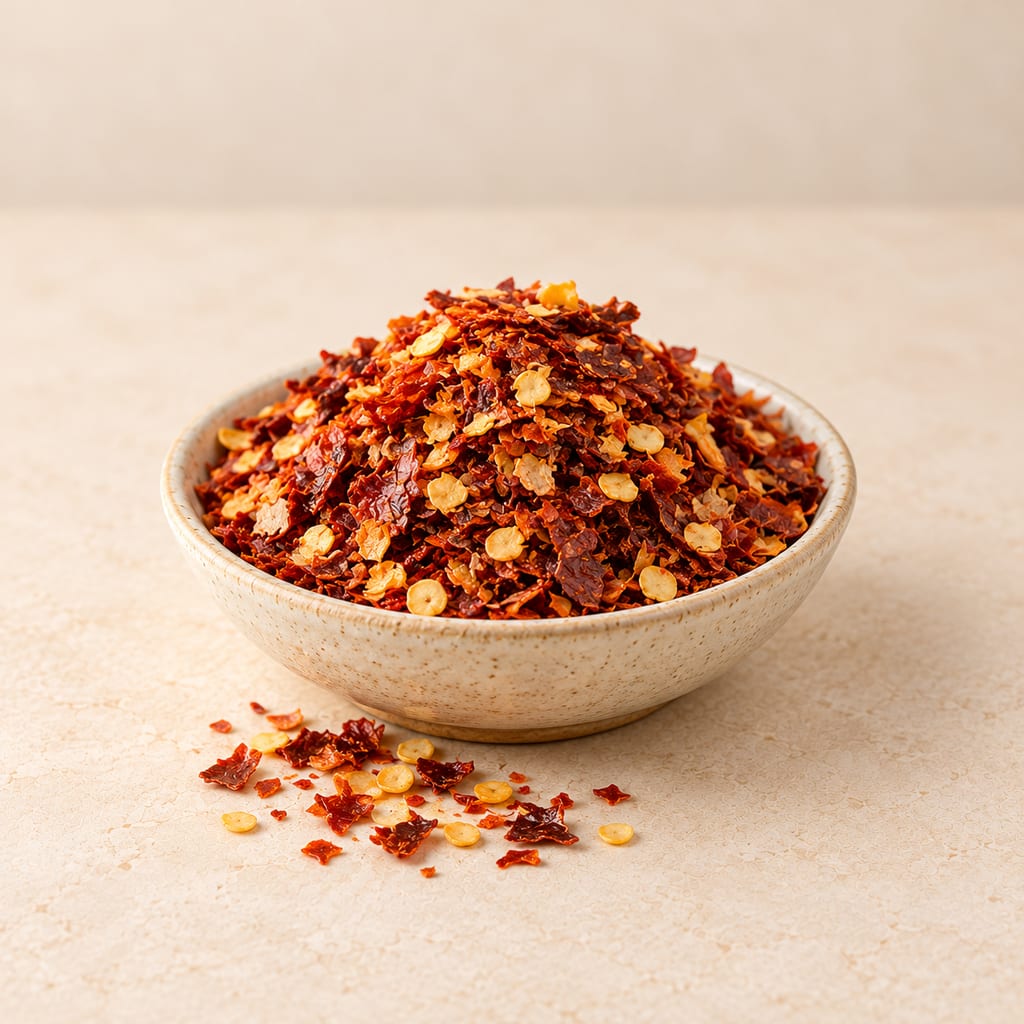
Calabrian pepper flakes
Calabrian pepper flakes are dried red Capsicum annuum from Calabria, crushed into coarse pieces; Peperoncino di Calabria is a protected geographical indication.
 FermenteaWhere food goes to change
Modern adaptation
Sopressata Di Calabria
Calabrian soppressata is a flattened pork salami seasoned with pepper and wine. This entry documents a modern starter-cultured adaptation, not household instructions; the process lacks matched pathogen-reduction validation.
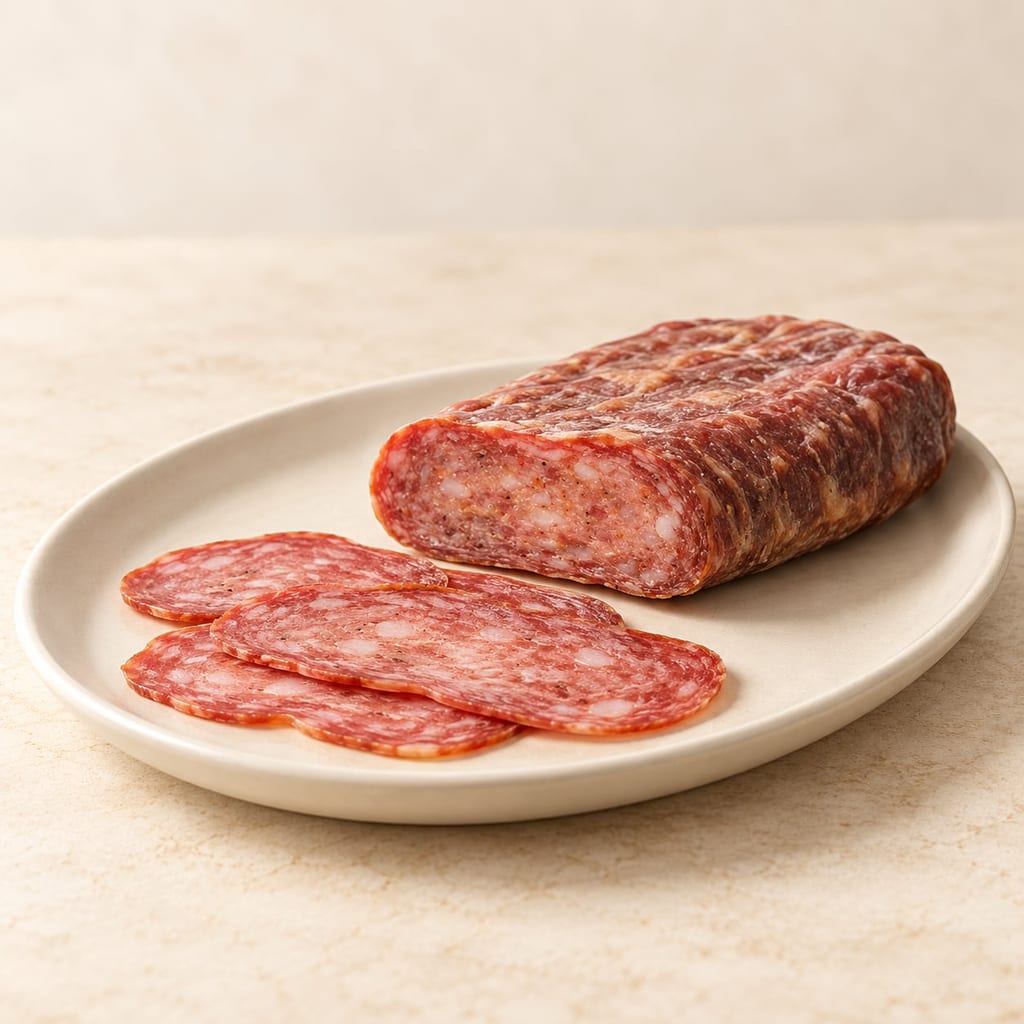
Calabria’s salted-pork tradition includes the suppressate named by Giovanni Fiore da Cropani in Della Calabria Illustrata in 1691. Soppressata di Calabria is now a protected regional sausage, made in hot, sweet and white forms and served as an antipasto with local bread. This pepper-rich starter-cultured recipe is a modern adaptation; its formula is distinct from the protected production specification.
Slow acidification in warm meat fermentation can permit growth and heat-stable toxin production.
Hazard sourceFermentation and drying alone do not demonstrate pathogen reduction for this source formula.
Hazard sourceThis entry is documentary, not a preparation method; do not use it to make ready-to-eat fermented sausage.
The source's acidification and weight-loss targets do not establish control of Salmonella, pathogenic E. coli or heat-stable staphylococcal toxin.
A validated process matched to the exact product is not provided.
T-SPX — Commercial meat starter containing Pediococcus pentosaceus and Staphylococcus xylosus.
Mold 600 — Optional surface culture: Penicillium nalgiovense.
Regional tradition; the selected home recipe is not presented as DOP-certified production.
Calabrian pepper flakes are dried red Capsicum annuum from Calabria, crushed into coarse pieces; Peperoncino di Calabria is a protected geographical indication.
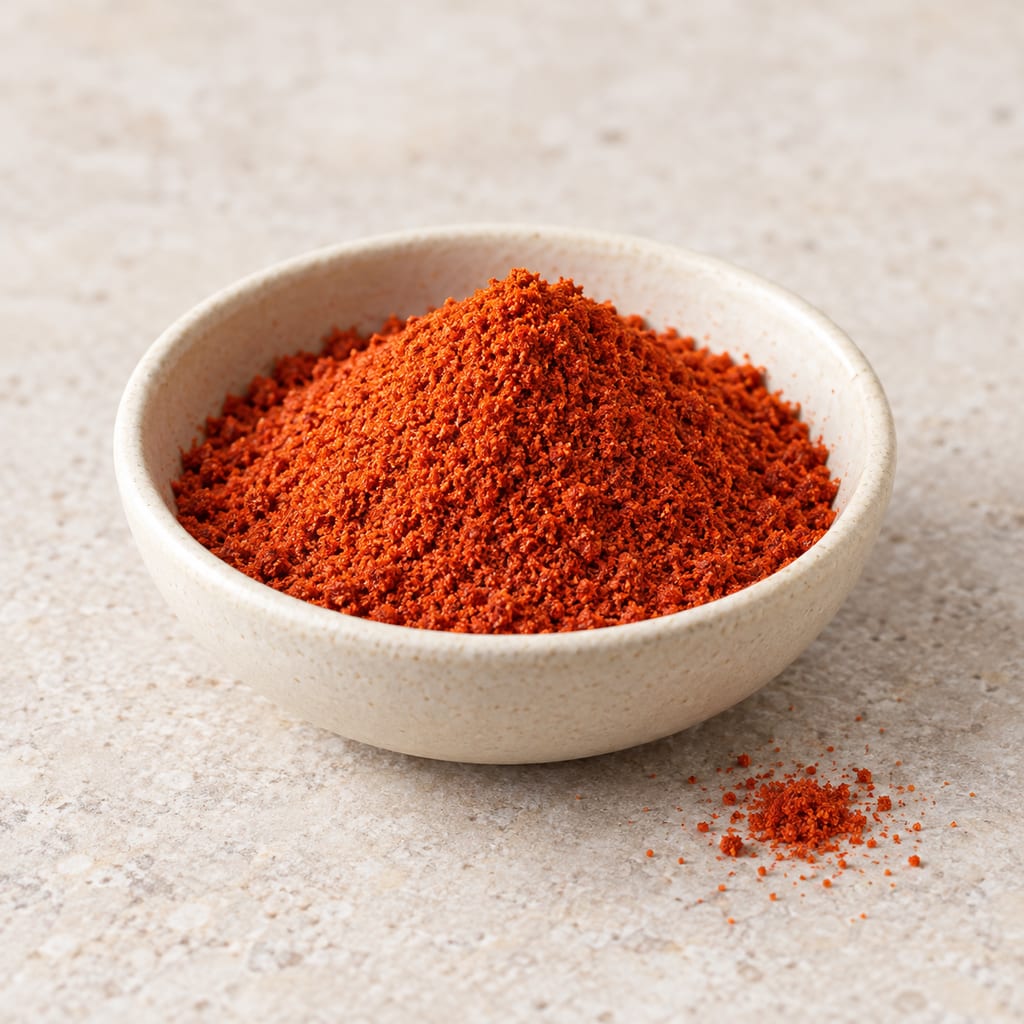
Calabrian pepper powder is a dried, milled chile seasoning. In the linked salami it is measured apart from flakes; the name alone does not show cultivar, exact origin or PGI status.
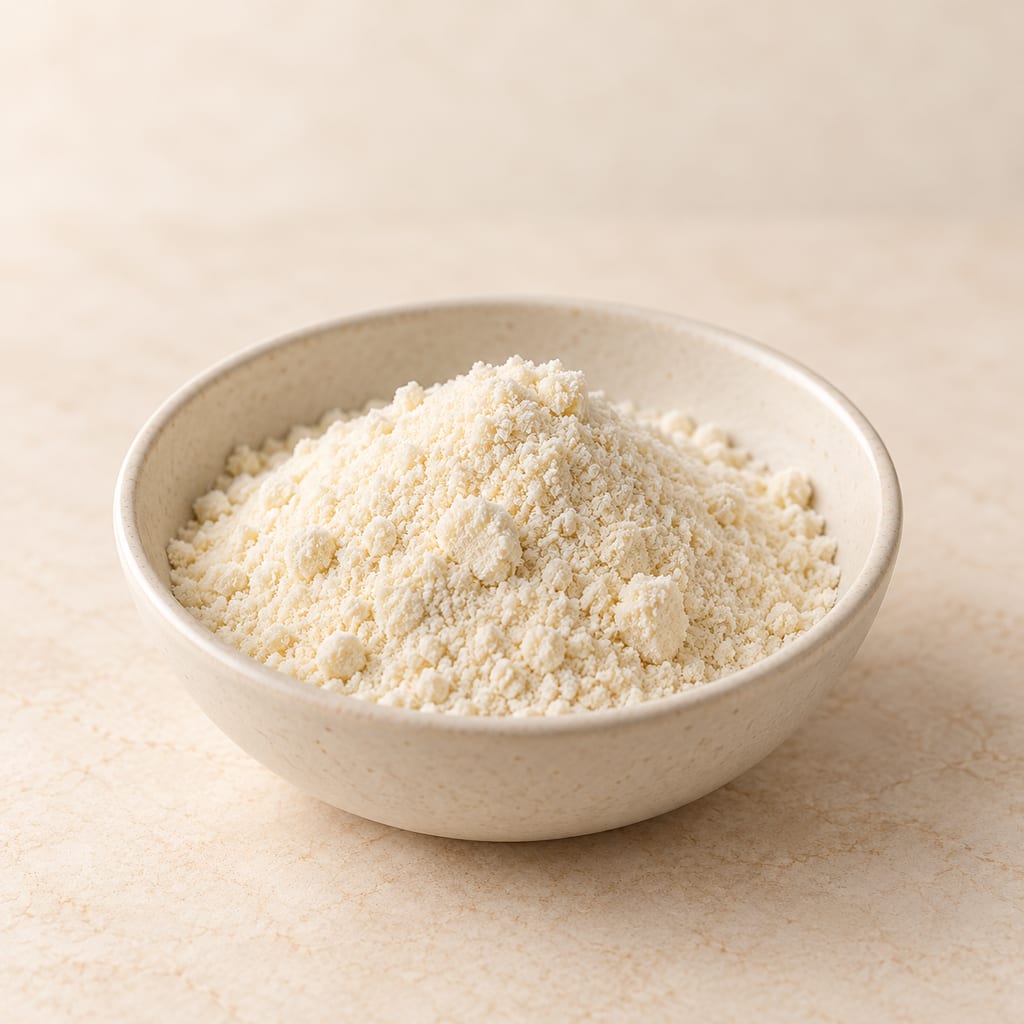
Finely ground dried garlic used to distribute garlic flavour through foods, distinct from coarser dried grades and garlic salt.
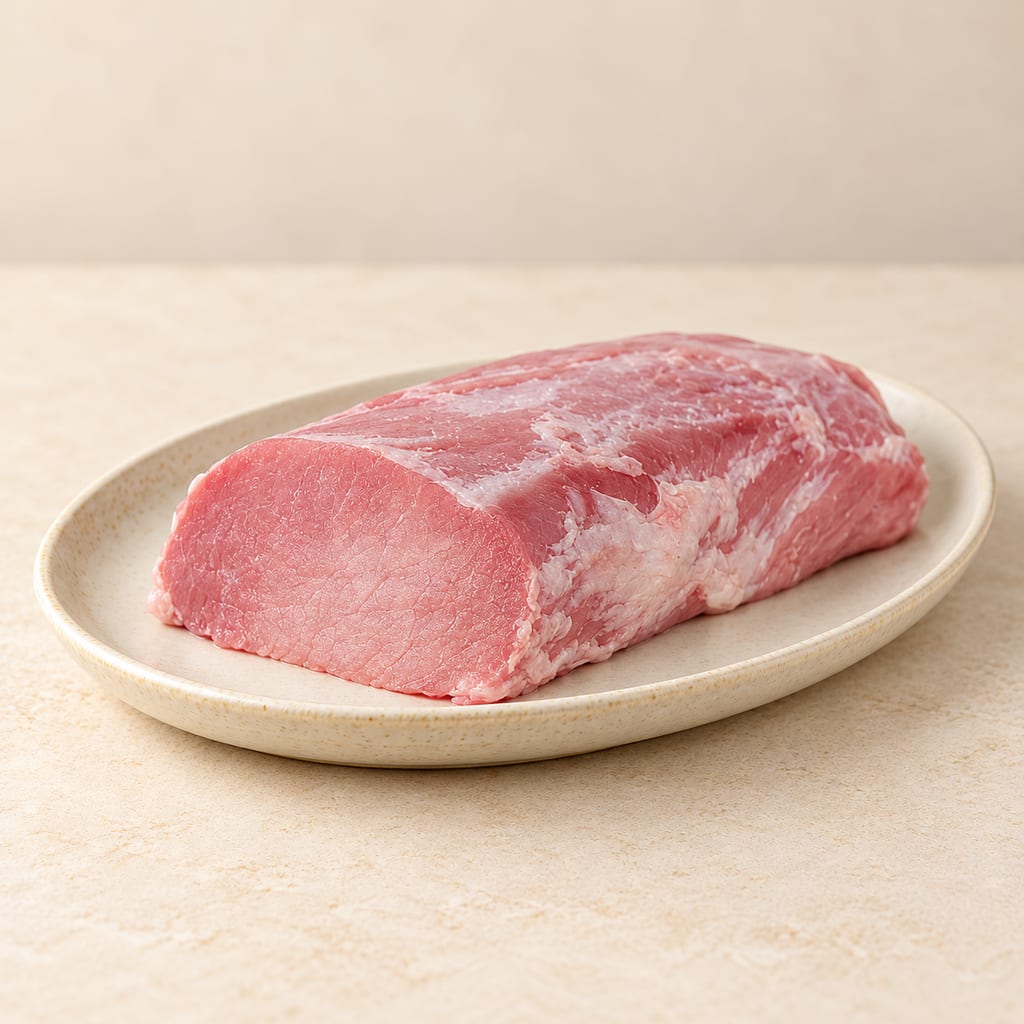
Trimmed domestic-pig muscle supplies the protein framework, water and meat flavor in fermented sausages; cut, condition and handling affect how it binds and ripens.
Mold 600 is a freeze-dried Penicillium nalgiovense culture applied to dry sausage casings, where it develops a pale surface bloom and mushroom-like aroma.
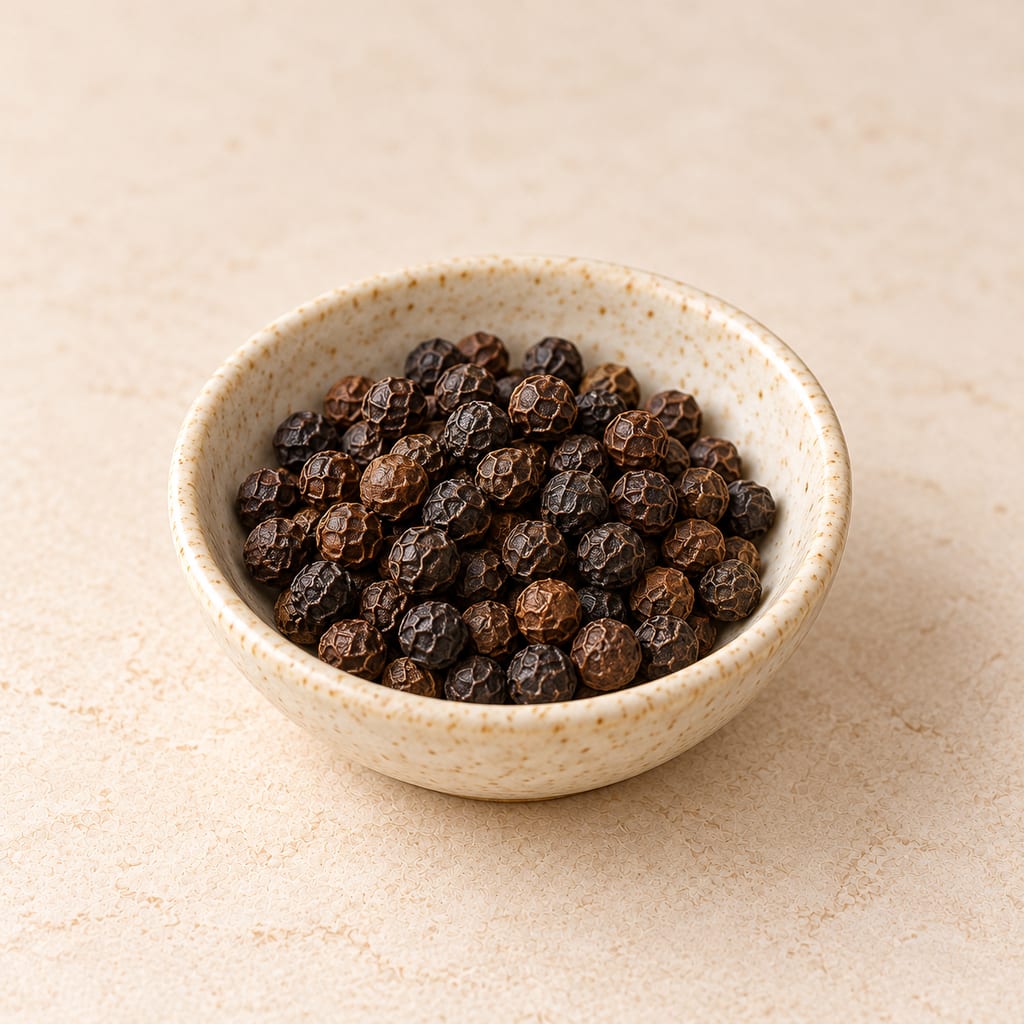
Whole peppercorns are the dried, uncracked berries of Piper nigrum, sold with their pungent seed intact. They season cured sausages such as Genoa-style salami and soppressata di Calabria beside a ground pepper.
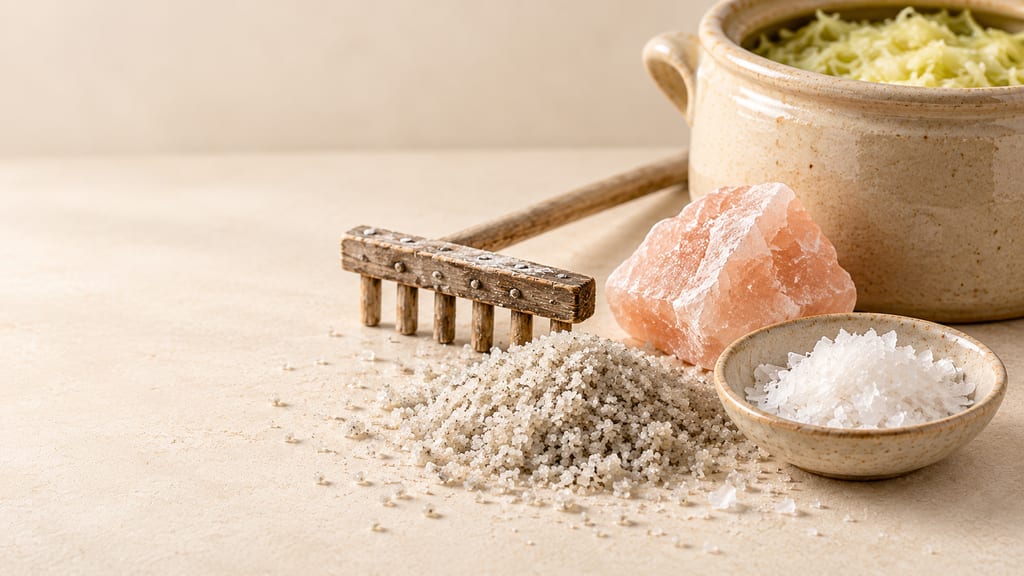
Salt seasons a meal, shapes fermentation and preserves food. Its history follows the people who mine, harvest, trade and transform it, and the choices hidden inside an ordinary packet.
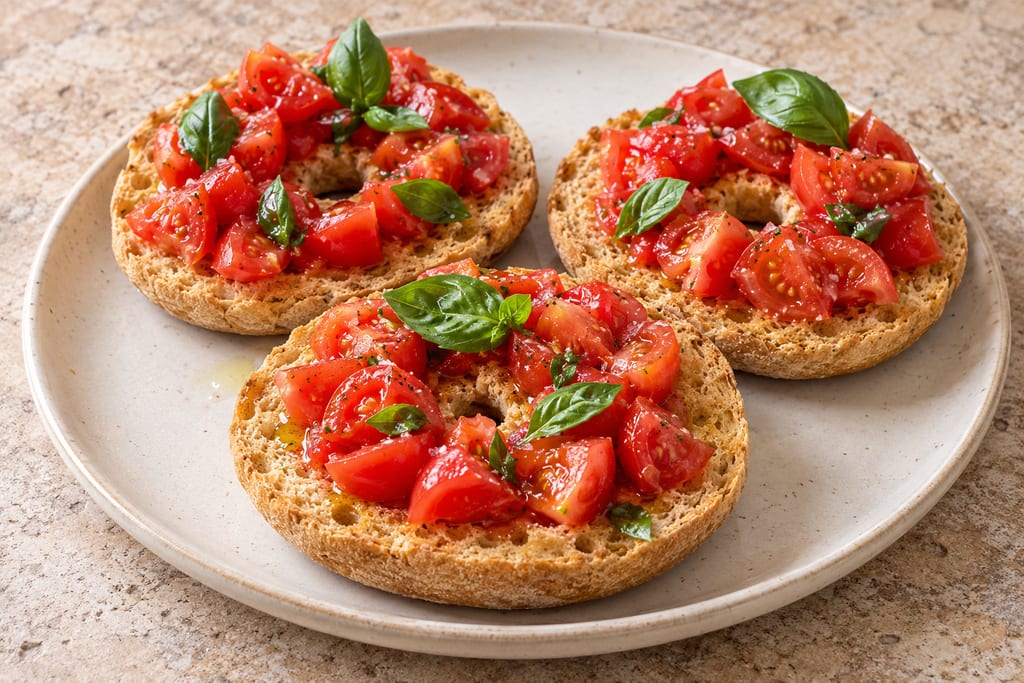
Puglian wheat-and-semolina bread rings are baked, split, then dried in a second bake; briefly moisten and top them before serving.

Soft, spreadable Calabrian pork sausage made with a great deal of red chilli and fatty pork, stuffed into natural casings, sometimes smoked and matured while staying soft.
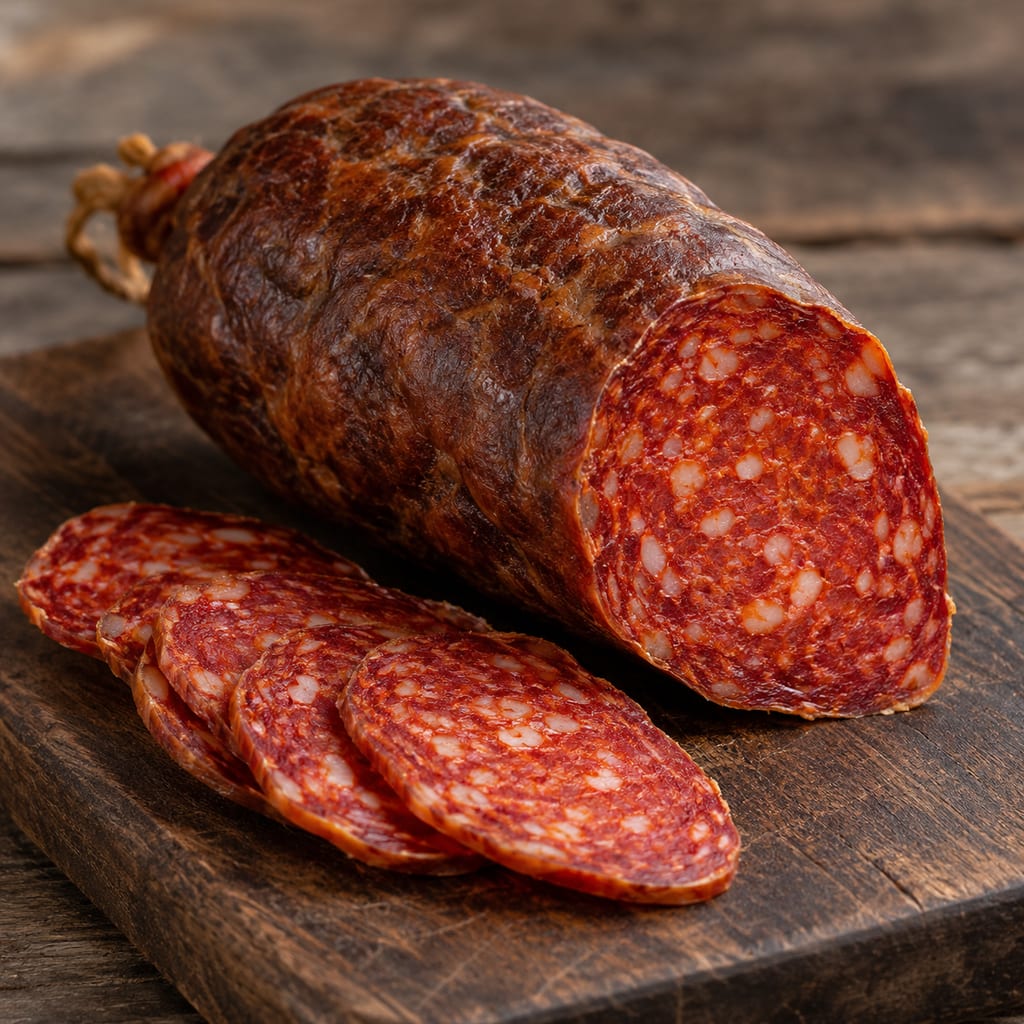
Baranjski kulen is a Croatian protected fermented pork sausage seasoned with sweet and hot paprika, garlic and white pepper, stuffed into a pig’s caecum called katica, cold-smoked and matured.
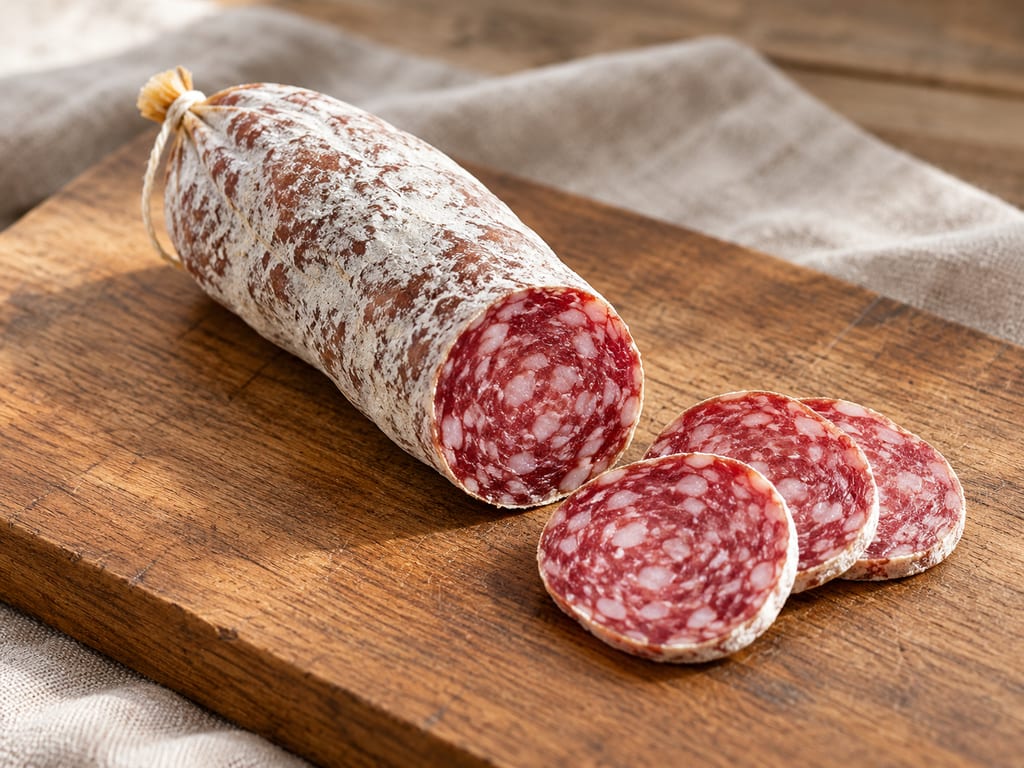
Small Italian hunter-style salami of lean pork, firm fat, salt, pepper and garlic, mildly acidified and dry-matured; protected as Salamini Italiani alla Cacciatora DOP.
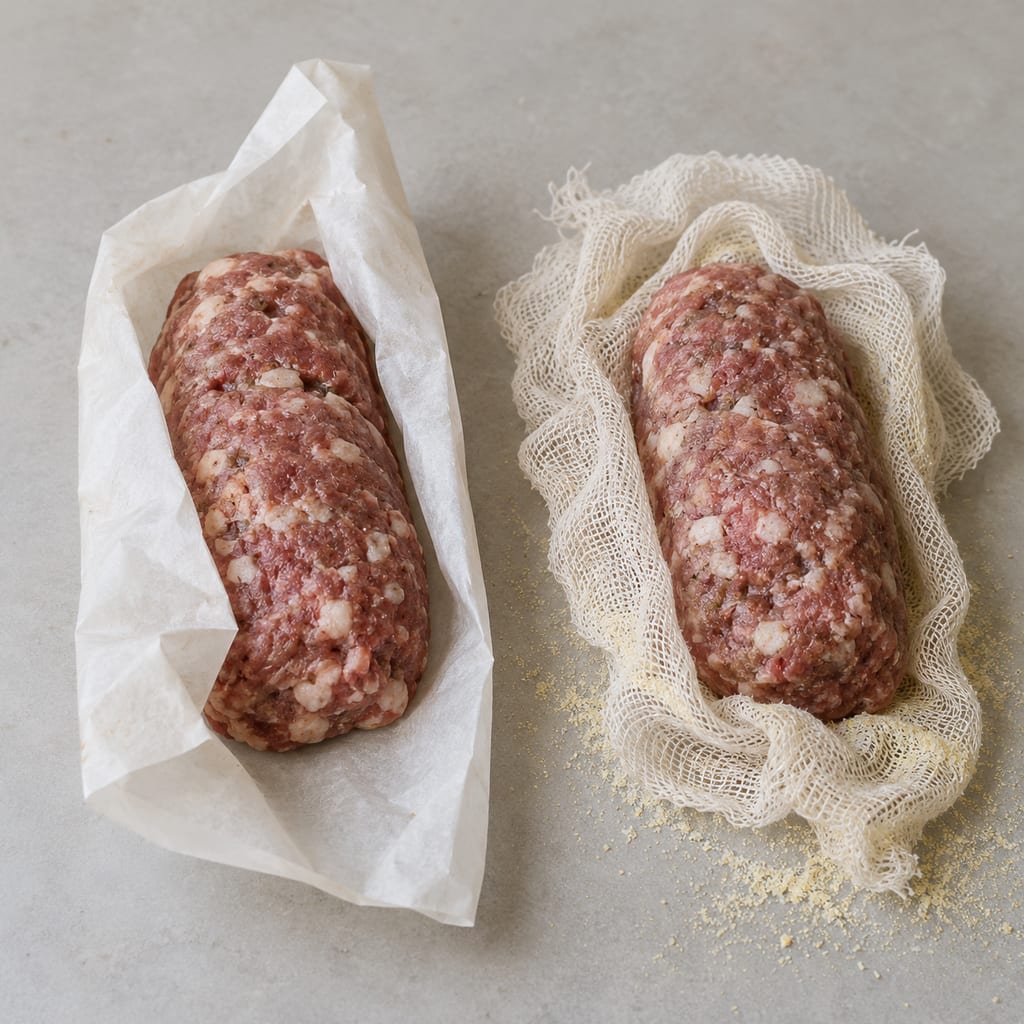
A documentary account of two modern Italian-language home-video experiments in salame without casings. Neither video establishes a safe preparation method or a ready-to-eat product.
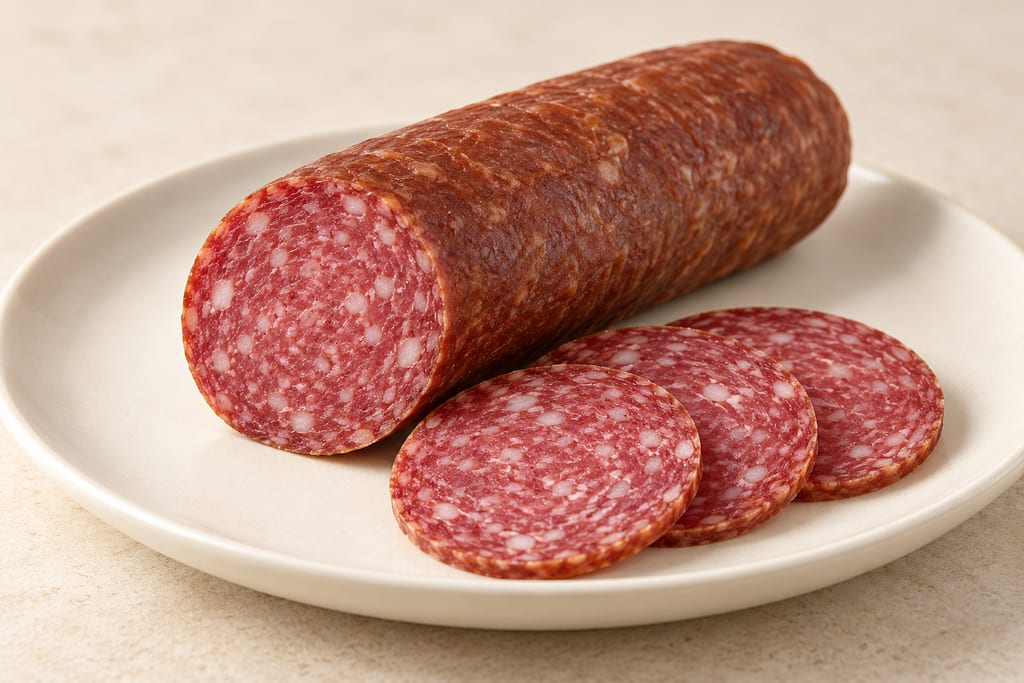
A family of salted minced-meat sausages fermented in casings, then dried and sometimes smoked. This description is not a validated household method; critical safety limits are not established.
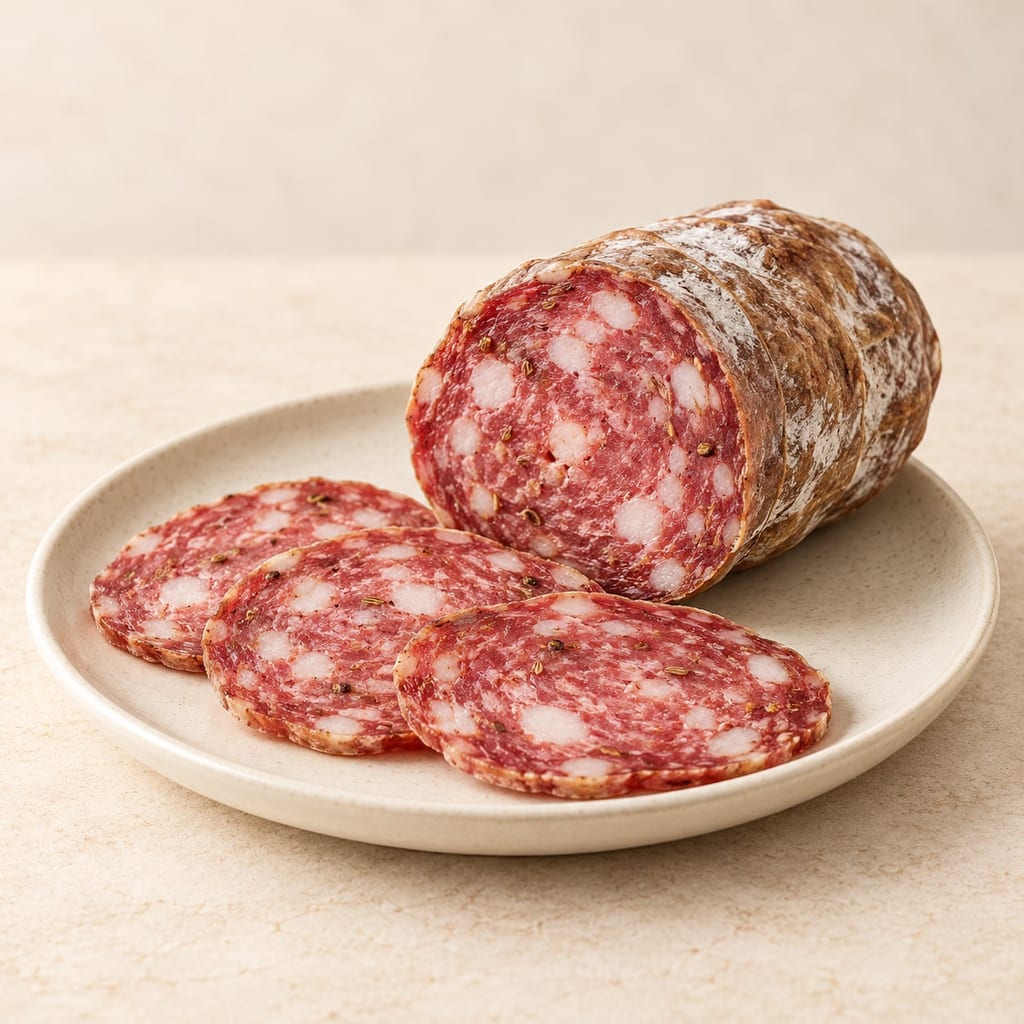
A Tuscan-style fennel salami made with pork and back fat. Toasted fennel, fennel pollen and Sambuca flavor this starter-cultured preparation.
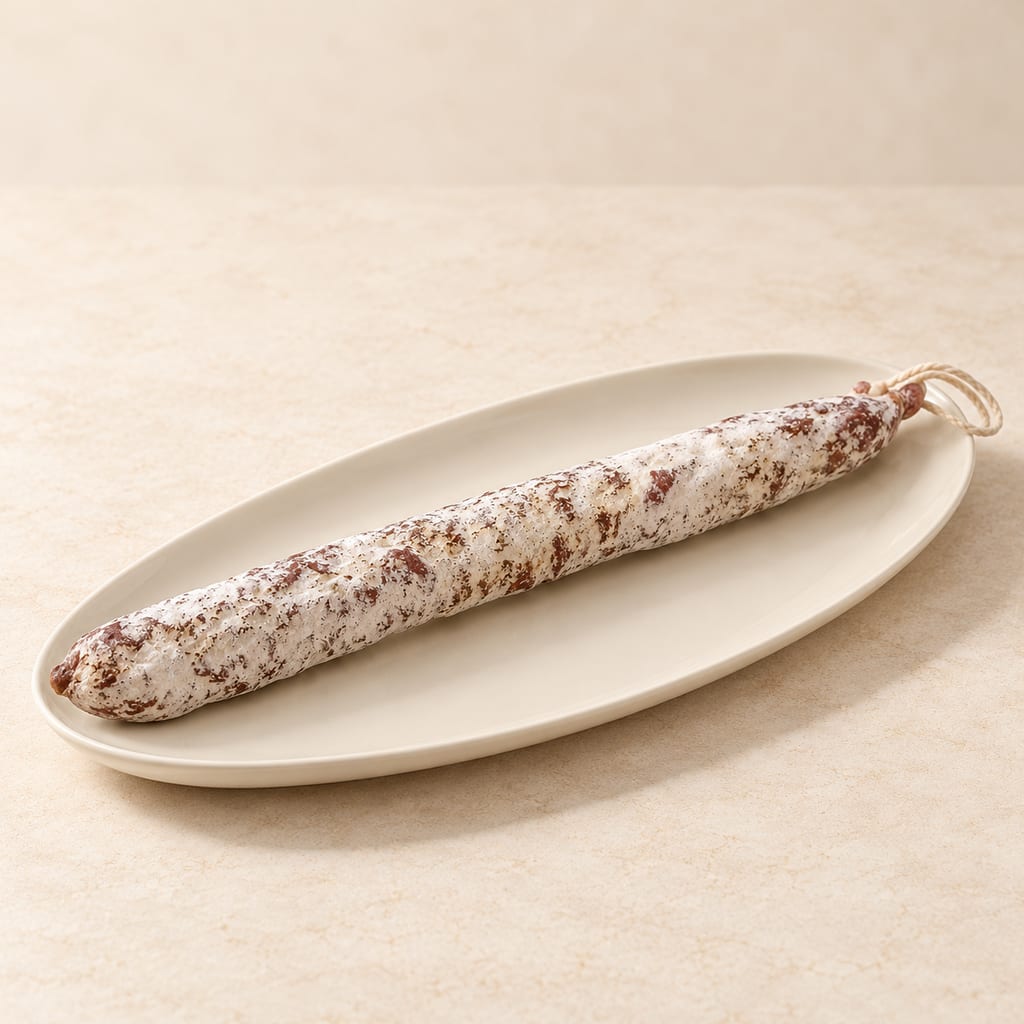
A documentary account of a modern starter-cultured Fuet formula and its place in Catalan sausage culture. The cited raw-pork process lacks matched safety validation, so this page does not present it as a household recipe.
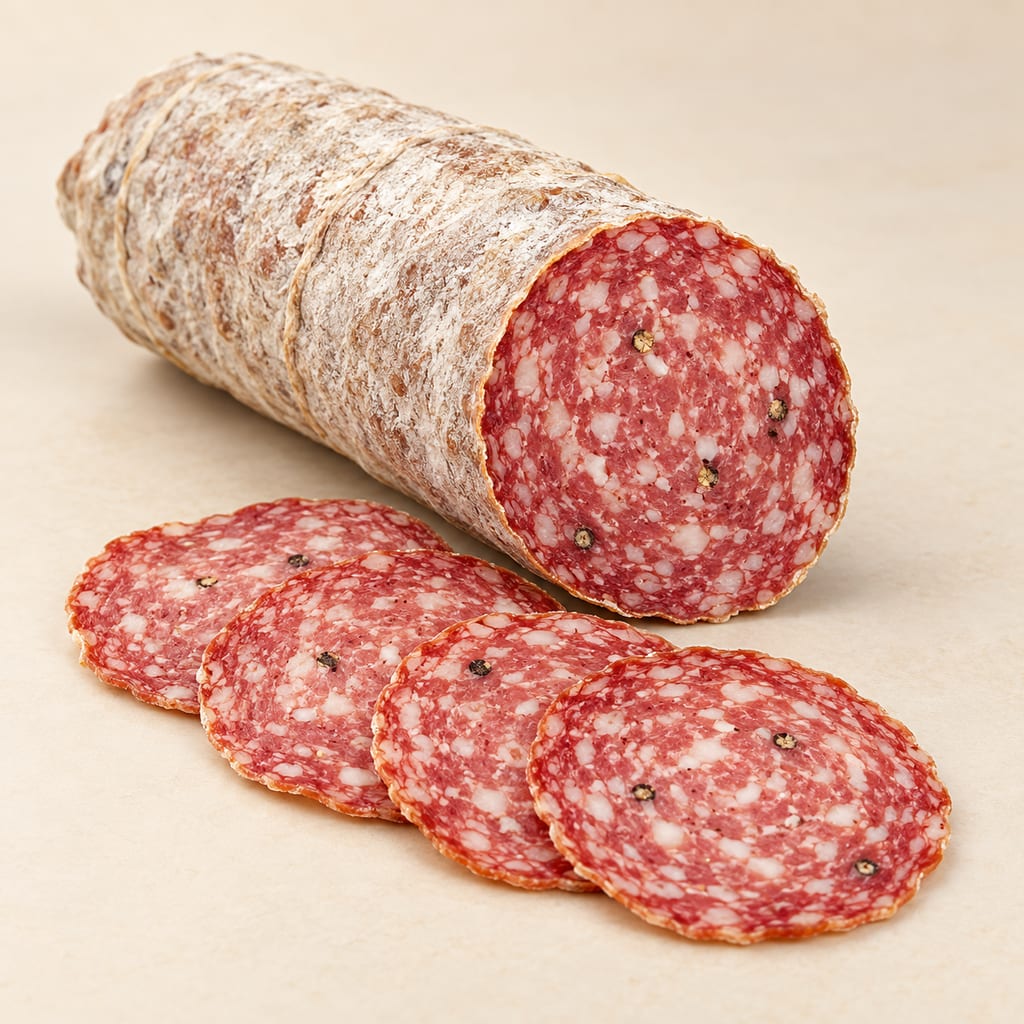
Pork, beef and back fat ferment with a named starter, cure and red wine before the sausages dry in casings. This contemporary formula uses no wood-smoke stage.

A gelling polysaccharide extracted from red seaweeds, sold as kanten strips or powder; it sets firm at a low concentration and stays solid until about 85 °C.

A Dominican table and seasoning condiment of sour orange juice, mixed with lime and salt and bottled raw; garlic, oregano or a hot pepper may be added for meat or a spicier bottle.

Cicerbita alpina is an alpine perennial whose tender shoots and leaves have been eaten raw or cooked. Sámi milk preparations and modern Carnian dishes are distinct uses, with serious identification and preservation limits.

Japanese skipjack tuna cooked, then repeatedly smoked and dried over a wood fire by the hand-fired tebiyama method into a hard block for shaving into dashi: the first stage of katsuobushi.

A Swedish-style spirit vinegar made by fermenting neutral alcohol with live vinegar bacteria, with a separate guide to commercial ättika strengths.

A yeast-raised wheat ring shaped from a firm dough, briefly boiled and baked. This source-batch formula gives a gently malted crust and a chewy crumb.

A warm dip of garlic, anchovy and olive oil, often enriched with butter, that Piedmont serves over a flame with raw and cooked vegetables and bread.

Bechamel is a white sauce of milk thickened with a butter and flour roux, one of the French mother sauces, and the base from which Mornay and other cheese and cream sauces are made.
No community contributions have been published for this entry yet.
Sign in to contribute. Published comments and photos are free to read.
2 Guys & A CoolerProcess
Soppressata di Calabria – Step by Step Video Tutorial2,270 g formula, culture directions, casing size, fermentation and drying conditions, and weight-loss endpoint.
2 Guys & A CoolerProcess
How to make Soppressata di Calabria - Step by Step InstructionsTranscript: 01:58–02:19 starter preparation; 08:09–08:38 source pH check/target; 09:08–09:50 Mold 600 and drying conditions/weight loss. Transcript corroborates process facts; creator’s safety claims are not repeated.
USDA FSISSafety
Ready-to-Eat Fermented, Salt-Cured, and Dried Products GuidelineHazard context for fermented meat; it does not validate this recipe.
BCCDCSafety
Fermented Foods Safety GuidanceFermented-food hazard context; it does not validate this salami.
Canadian Food Inspection AgencySafety
Preventive control recommendations for manufacturing fermented and dried meat productsStaphylococcus aureus heat-stable toxin, fermentation time-temperature-pH control, and separate Salmonella and E. coli reduction controls.
Chr. HansenCulture identity · Method · Safety
MOLD-600 Product InformationPenicillium nalgiovense; surface inoculation after stuffing by dipping/spraying; prepared suspension used on preparation day because of yeast contamination risk. Recipe and manufacturer hydration quantities differ and are kept separate.
Chr. HansenCulture identity
T-SPX Bactoferm Product InformationManufacturer sheet identifies Staphylococcus xylosus and Pediococcus pentosaceus; formulation identity, not validation of this culinary process.
Italian Ministry of Agriculture, Food Sovereignty and ForestryHistory · Geography · Use
Soppressata di Calabria DOPCalabria production region; hot/sweet/white product forms; antipasto with local bread; reports Fiore's1691 mention of Suppressate. Institutional transcription, not a personal reading of Fiore's facsimile. Protected specification not assigned to this modern recipe.
USDA Food Safety and Inspection ServiceSafety · Process validation
FSIS Ready-to-Eat Fermented, Salt-Cured, and Dried Products GuidelineThe guideline says fermentation and drying alone are not generally sufficient to achieve specified pathogen-reduction targets; effectiveness depends on validated combinations of process parameters. It does not validate this recipe.