A ground chile with a regional name
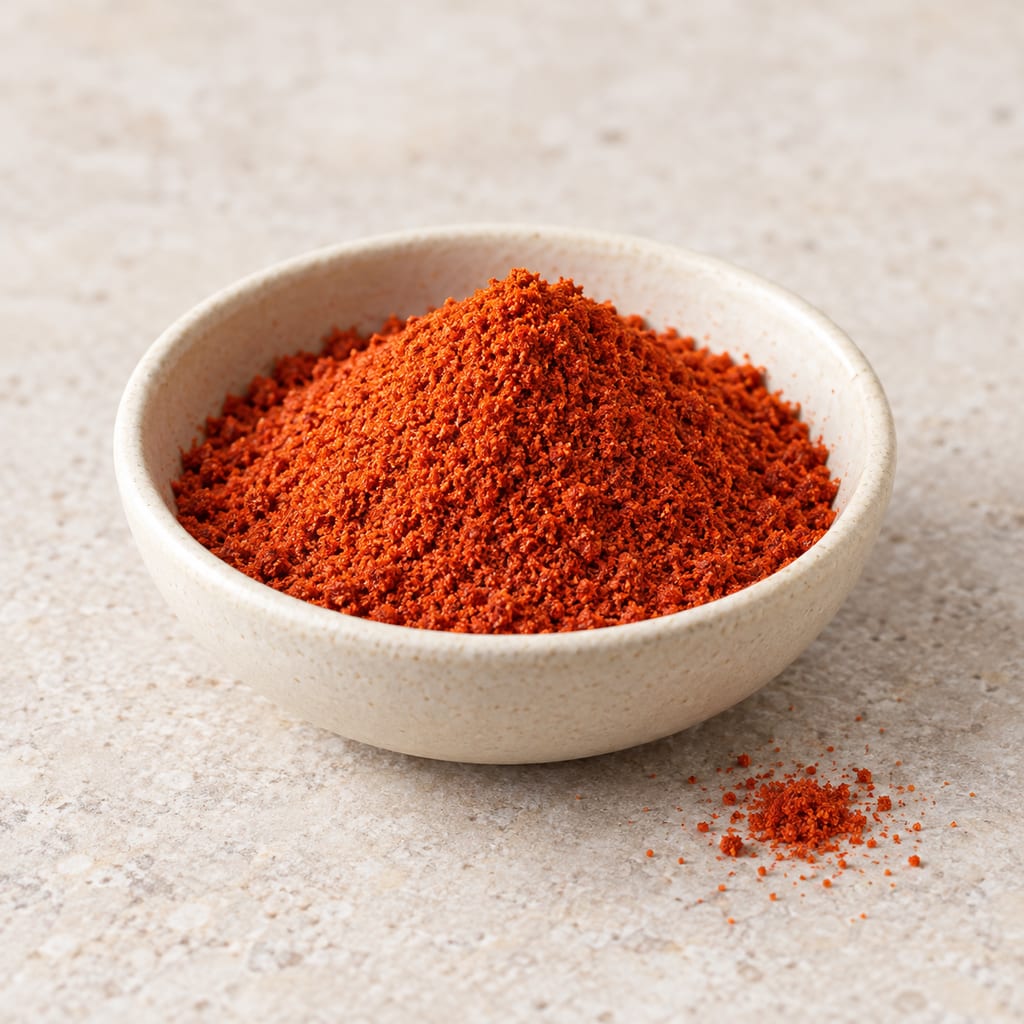
Calabrian pepper powder is dried chile fruit ground for use as a seasoning. Its heat, color and aroma depend on the pepper variety and how the fruit was dried and milled. The regional name on its own does not establish a protected origin.
Sources for this section
A crop that became part of a place
Chilli peppers belong to Capsicum, a genus in the nightshade family, Solanaceae. The genus is native to the Americas, as Kew’s record of its native range shows. The crop that dominates most familiar dried-powder styles is Capsicum annuum, and the species includes many fruit forms. It is an American plant that became a familiar Mediterranean food through movement, cultivation and culinary choice; Calabria’s identity with red pepper is a later regional history, not evidence of a plant native to southern Italy.
The route into Europe began after the voyages to the Americas. An exact first arrival in Calabria is harder to establish. A study of the crop in the Iberian Peninsula describes its entry through Iberia after the voyages and its later spread around the Mediterranean. That account establishes the New World-to-Europe movement, but not a precise first planting in Calabria. The record shows the crop adopted in the region over time, not a single arrival date or birthplace there.
By the nineteenth century, pepper had a place in Calabrian household food. Padula's 1864 writing on life in Calabria is among the regional evidence for its everyday use. Dried pods were useful because they could be kept, carried and added in small amounts. Local use endured and became part of the region’s food identity.
Douglas, writing in 1915, recorded how widely red pepper was eaten in the region. Later writers continued to mark the association. The same pepper can be used fresh, dried, flaked or ground.
Capsicum began in the Americas; it reached Europe through Iberia after the voyages; and in Calabria it acquired the regional character recorded in Padula’s 1864 account and Douglas’s 1915 travel book. Each step rests on a different kind of evidence: a botanical range, a study of the crop in the Iberian Peninsula, and nineteenth- and early twentieth-century writing. None of them dates a first Calabrian planting, or the first time dried fruit was ground into powder. A cook can say that the powder belongs to a long regional habit of eating red pepper without claiming an old recipe for it.
Sources for this section
What the powder is made from
Many fruits turn red at maturity, and the specification for the regional product calls for harvest when the fruit is red. A pepper plant can produce fruits that are narrow or rounded, upright or hanging, thin-walled or fleshy; breeding and cultivation have selected that diversity for different uses. The word “pepper” hides these distinctions. Black pepper is a different plant from chile; the two do not share a botanical identity merely because English calls both pepper.
Pungency comes from capsaicinoids, which generally accumulate in the tissue around the fruit’s placenta. The burn is a chemical sensation rather than a measure of the food’s temperature. The variety matters: genetics play a large part in pungency, while growing conditions also affect the amount and profile. Removing seeds does not turn every pepper mild, and keeping seeds does not establish a particular heat level. The pepper’s cultivar and the amount of pungent placental tissue in the ground product matter more than a seed/no-seed assumption.
The word “powder” describes a physical form, not one standardized pepper. The specification treats the ground product as flakes or fine powder, and only the packet or producer says which a given jar is.
The 2026 EU registration of Peperoncino di Calabria shows what a regulated regional pepper product means. The designation covers specified varieties of Capsicum annuum grown in Calabria, including forms sold fresh or dried, whole or in pieces, as flakes or as powder. The designation lists several varieties rather than naming one single “Calabrian pepper” cultivar.
For the registered product, the defined area is the whole administrative region of Calabria. The name was registered by Commission Implementing Regulation (EU) 2026/1273, adopted on 4 June 2026 and published in the Official Journal on 11 June 2026, entering into force on the twentieth day after publication. A market product may come from Calabria, but only the registered name shows whether it carries the protected designation.
The monograph of wild and cultivated chili peppers describes Capsicum as a genus with many wild and cultivated species and a wide range of fruit forms, so the plain word “chile” says little about what is in a jar. The same is true of the Calabrian name. The registered denomination lists several varieties of Capsicum annuum, and the salami recipe that uses this powder names none of them. A reader of the recipe line therefore knows the form of the seasoning, dried and finely ground, but not its variety, its heat or its place of origin. Those facts belong on the label, if anywhere.
Capsicum is native to the Americas, as the Kew record shows; it does not say which species or origin a particular jar of powder has. Capsaicinoids generally accumulate in the fruit's placental tissue, and both genotype and growing conditions influence pungency, so two peppers sold under the same name can differ in heat. EU food law lists the regulated allergen categories in Annex II of Regulation (EU) No 1169/2011; the label on a given jar states what that product contains.
Sources for this section
From ripe fruit to flakes or powder
For the registered dried product, fruit for drying is picked at full maturity when red. For ground product the stated upper drying temperature is 55 °C, and the finished dried fruit must not exceed 15 per cent moisture. The pepper is then ground into flakes or fine powder and packed within 24 hours. These are the conditions of the PGI specification, not a universal household instruction or a description of every commercial powder.
Drying changes more than water content. As fresh fruit loses water, its soft tissue becomes brittle enough to break into flakes and then powder. Water removal concentrates the solids per spoonful and makes the dried ingredient easier to store than fresh fruit, but it does not make every powder taste alike. Variety and ripeness affect sweetness, pungency and fruit character. In a study of Capsicum annuum red pepper powder, the packaging and an elevated storage temperature changed measured quality, so storage conditions matter to a powder’s character.
Appearance alone cannot identify cultivar, provenance or safety: a duller or browner powder can reflect age, variety or processing. The official specification gives a medium-to-high pungency range of 5,000 to 70,000 Scoville Heat Units for the registered category. That broad span itself is a reminder not to treat a regional name as a fixed heat rating. A particular packet may be much milder or hotter than another and still need its own label or analysis to say exactly where it falls.
Sources for this section
Why powder and flakes are not interchangeable by weight
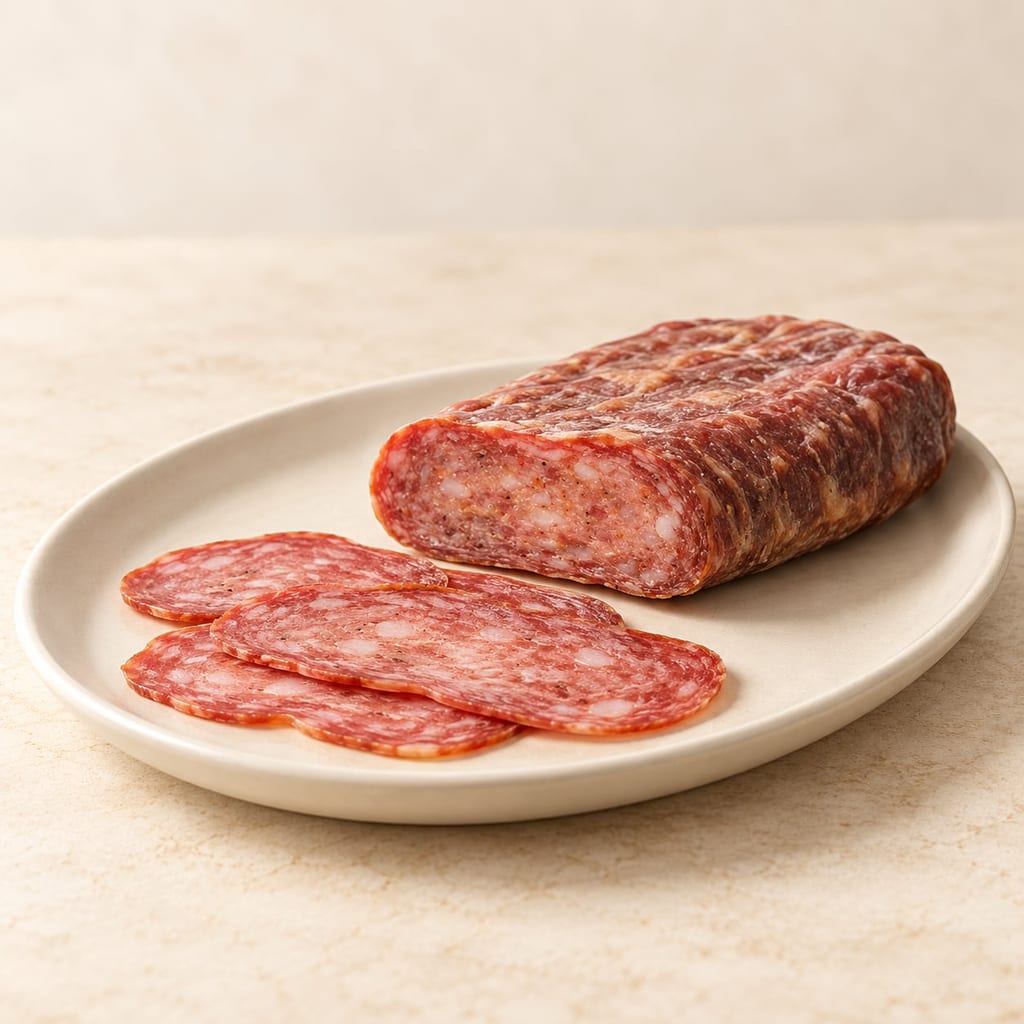
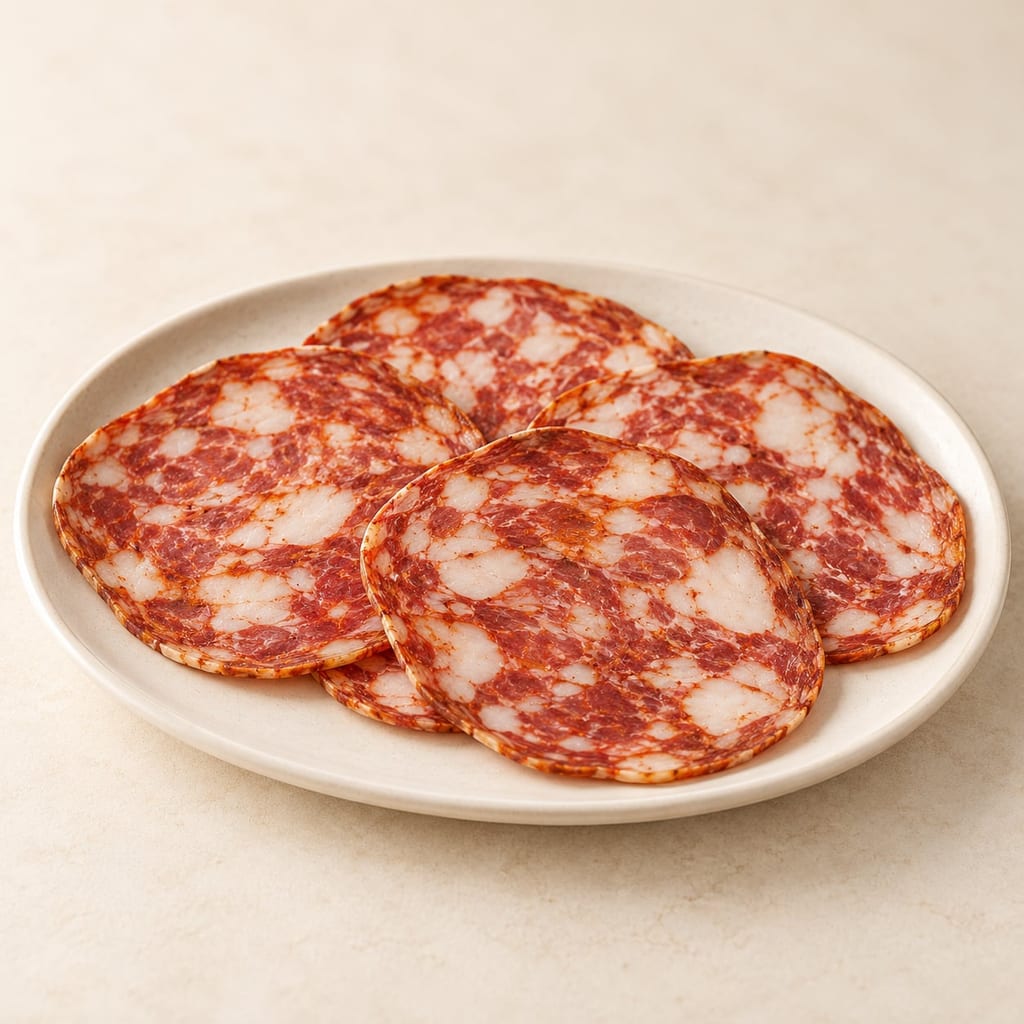
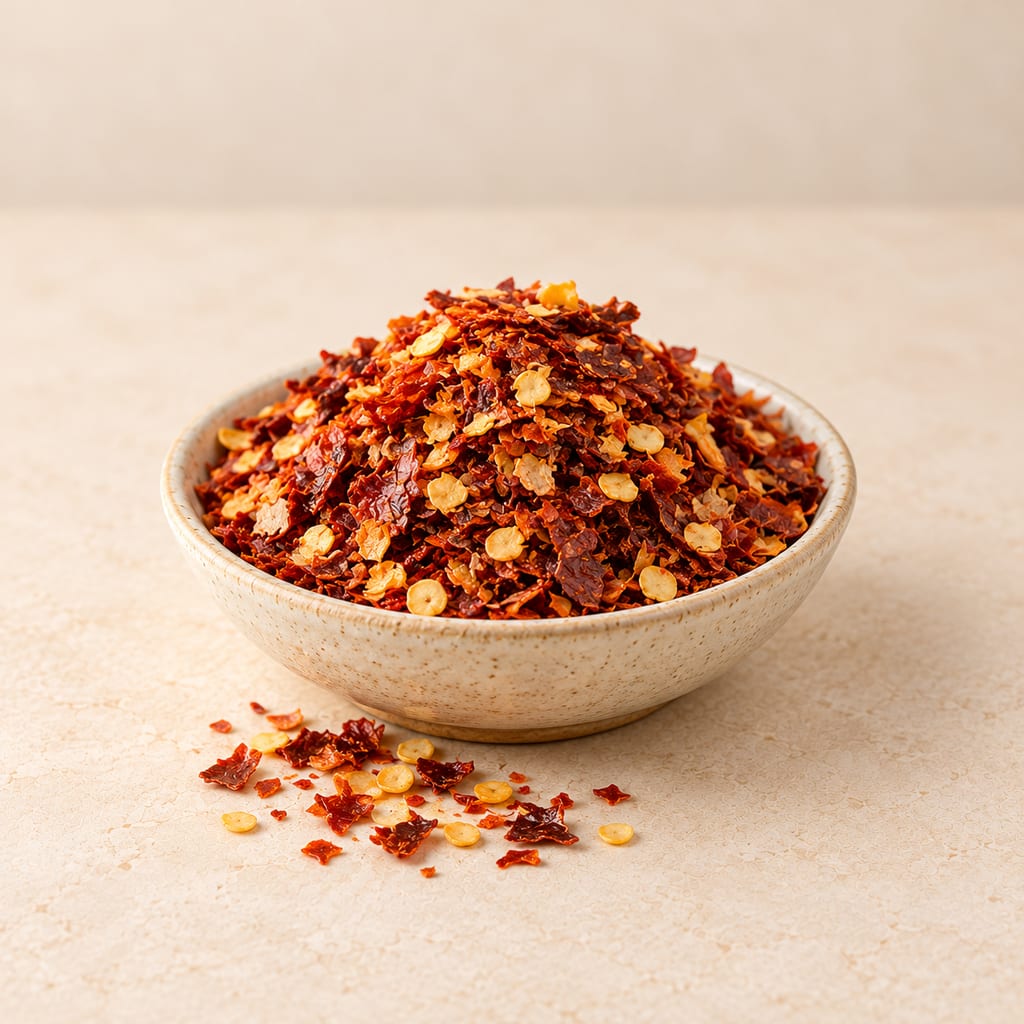
A dry-cured salami recipe from 2 Guys & A Cooler uses both forms side by side: 15.89 g of Calabrian pepper powder and 2.27 g of Calabrian pepper flakes for a 2,270 g batch of meat and fat, with black pepper listed separately. Powder and flakes are thus two distinct seasonings in the same sausage, each added in its own measured amount.
Particle size changes how a spice disperses. Fine powder spreads through a mince and coats more surfaces; larger flakes stay visible as pieces and can create a more localized burst of pepper. This physical difference is enough to matter in a coarse sausage mixture, even before considering cultivar or heat. It is not evidence that powder is always hotter than flakes. Two products ground from different peppers can reverse any simple expectation.
Chile powders sold under other names do not share one formula. The protected Calabrian denomination is narrower: it specifies a geographic area, species, listed varieties and production controls. Other chile powders can be used as a deliberate adaptation, but they differ in heat and flavour and change the character of a Calabrian salami.
Sources for this section
In a dry-cured salami
In the salami the powder is mixed into the meat and fat with the recipe’s other seasonings, curing ingredients and starter culture. It is a seasoning: the acidification of the sausage comes from the starter culture and the controlled fermentation, not from the pepper.
Pepper powder makes a cured meat taste recognizably spicy without being the reason the sausage acidifies or dries; its pungency is a culinary trait, while the meat process depends on separately specified ingredients and conditions.
Chilli use in Calabria is broader than this one sausage. The same pepper can be used fresh, dried, flaked or milled, and a small amount can change a plain dish without changing its main ingredients. There is no single Calabrian pepper method.
The recipe’s own numbers show how little powder it takes. It calls for 15.89 g in a 2,270 g batch of meat and fat, which is under one per cent of the batch by weight, and 2.27 g of flakes, one seventh of the powder’s weight. Both are measured to the hundredth of a gram, because the recipe treats them as two ingredients with separate jobs rather than as one “Calabrian pepper” entry. Anyone adapting the formula does best to keep the two forms apart and measure each, instead of merging them into a single weight of some other chile product.
Sources for this section
Choosing and keeping a powder
When buying a powder for a recipe that names Calabrian pepper, distinguish a culinary description from a verifiable origin claim. A supplier page or label that says “Calabrian” may identify a style or source region, but it does not automatically establish the EU PGI. If the protected product matters, look for the full registered name. A single label still cannot tell you the fruit’s exact heat unless that information is separately declared.
For ordinary use, keep the powder sealed against moisture and away from heat, since packaging and storage temperature affected the quality of the red pepper powder in a study of Capsicum annuum red pepper powder; once the jar is opened, keep it closed between uses and follow the manufacturer’s date. The PGI specification’s 24-hour packing window applies to producers after drying and grinding and is not a home storage duration.
Pure chile powder is plant-derived. Capsicum is not among the allergen categories listed in EU food-information rules, but packaged blends may include other ingredients, and factories can handle allergens. Read the packet’s ingredient and allergen information, especially if the powder is a seasoning blend rather than ground pepper alone.
The name, then, carries two different kinds of information. “Pepper powder” says the fruit has been dried and milled. “Peperoncino di Calabria IGP” says far more: a defined region, an approved species and variety set, production and processing conditions and a protected name. The recipe line “Calabrian pepper powder” in a salami, as a result, names a style of seasoning; whether a given jar carries the protected name is something only its label can show.
Reading a label for this ingredient comes down to a short list: the full registered name if the protected product is wanted, and any declared heat, since the specification gives a range of 5,000 to 70,000 Scoville Heat Units for the registered category. The specification’s own limits show why dryness matters to a ground chile: the finished dried fruit may not exceed 15 per cent moisture, and ground product is dried at no more than 55 °C. A jar that has taken up moisture or been left warm is no longer the product those limits describe, which is one more reason to keep it sealed and cool.
Sources for this section
Places
Unknown
Documented preparation · Place not establishedThe recipe gives no origin, cultivar or PGI status for its powder. Calabria is the production area of the registered protected product, which is not shown for this powder.